Every few seasons, someone in one of my design workshops picks up a trifoliate orange fruit, gives it a hopeful sniff, and then takes a bite. I've stopped warning them. The expression that follows teaches the lesson faster than anything I could say: a full-body recoil, something between turpentine and sour candy, followed by the question I've heard a dozen times: "Why would anyone grow this?" The answer is genuinely strange. For most of its cultivated history, nobody grew trifoliate orange for the fruit at all. They grew it for what it could do for every other citrus tree on the planet.
Poncirus trifoliata is the cold-hardy, deciduous, aggressively thorny relative that saved commercial citrus from root rot and nematodes by becoming the rootstock beneath millions of grafted trees worldwide. The oranges and grapefruits sitting in your grocery store right now are almost certainly growing on its roots. But the plant itself gets almost no credit, no profile, and no Wikipedia article that doesn't immediately pivot to what grows on top of it. That quietly bothers me. Because once you start paying attention to what trifoliate orange actually does in a landscape, including things that make it genuinely difficult to manage, you realize it's one of the more consequential plants most gardeners have never considered growing on purpose.
Trifoliate Orange Origin, History, and Botanical Background
Native Range and Botanical Characteristics of Trifoliate Orange
Most people encounter Poncirus trifoliata as a rootstock curiosity or an impenetrable hedge. That modest introduction does the plant no favors. Its actual origin is far more interesting. Native to the Yangtze River basin and surrounding provinces of central and eastern China, including Sichuan, Hubei, and Zhejiang, it extends northeast through the Korean Peninsula, turning up on forest edges, riverbanks, and mountain slopes up to roughly 2,000 meters elevation.[1][2] Linnaeus formally described it in 1753 under Citrus trifoliata before it was moved into the monotypic genus Poncirus. Unlike virtually every other member of the citrus family, it's fully deciduous, and it can live 50 to 100 years.[3] You're not planting a seasonal curiosity when you put this in the ground. You're making a multi-decade commitment.
That longevity, combined with cold hardiness down through USDA zones 5 to 9 and strong resistance to Phytophthora and other soil pathogens, is precisely what drove its spread from East Asia into Western horticulture.[4][5] I've grafted several orange and lemon varieties onto trifoliate rootstock, and watching those trees hold through Florida freezes that took out ungrafted neighbors is genuinely impressive. Its dwarfing effect on scions and remarkable disease tolerance made it indispensable once citrus growers realized what they had.
The flip side of all that vigor is naturalization. Trifoliate orange has established itself across roughly 25 U.S. states, concentrated in the Southeast, and in Florida it carries a Category I invasive listing from the Florida Exotic Pest Plant Council.[6][7] Having watched self-sown seedlings build themselves into thorny, nearly impassable thickets in landscapes I've managed in Central Florida, I take that listing seriously. The plant offers genuine wildlife habitat and rootstock value, but gardeners in zones 8 and 9 need to stay on top of seedling management.
Visual Characteristics and Morphology
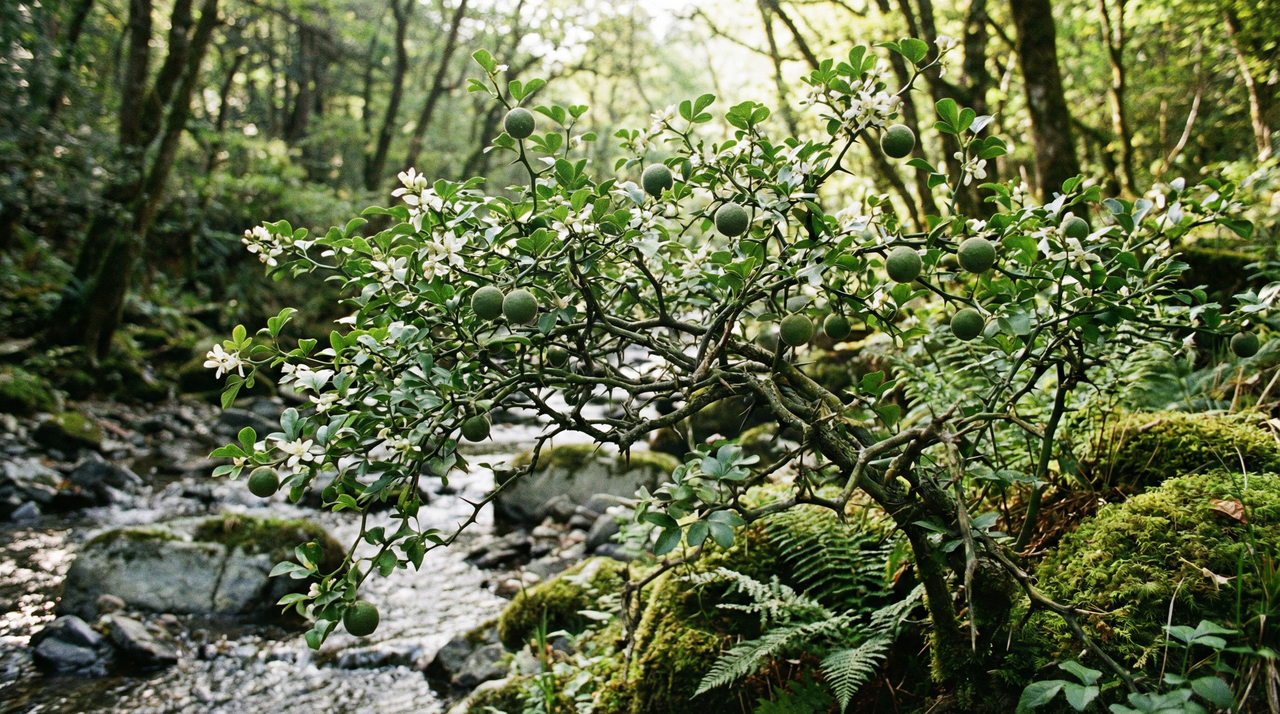
Once you've seen trifoliate orange in person, you won't mistake it for anything else. It grows as a dense, multi-stemmed shrub or small tree, typically 13 to 26 feet tall and somewhat spreading, with gray-brown platy bark that gives it an almost architectural quality in winter.[3] What you notice first, though, are the thorns: stout, straight spines up to 2 inches long stationed at the leaf bases, serious enough to deter most herbivores and absolutely suited to barrier hedging.[3]
The seasonal display unfolds in a surprisingly appealing sequence. In early spring, fragrant white to pale-pink flowers, up to about an inch and a half across, open on bare stems before the leaves fully emerge, drawing bees before most other trees have even leafed out.[3] The trifoliate leaves that follow are glossy, dark green through summer, then turn yellow in fall before dropping entirely, which is what sets this plant so visually apart from its evergreen citrus relatives.[8] By late autumn the small golden fruits, typically an inch and a half to two inches across, glow against bare thorny stems like ornaments.[9]
Those fruits are worth lingering on, because they're genuinely strange. The rind ripens to a bright golden-yellow, and the aroma that hits you is not what you'd expect from something in the citrus family. It's closer to turpentine or kerosene than to orange blossom, something like crushed rue leaves but heavier and more insistent. The pulp is intensely bitter and packed with seeds.[10] The fruits persist on the tree through winter, providing forage for wildlife even after most other food sources have gone. A deep taproot system anchors all of this, giving it real drought tolerance and explaining why it thrives in the rocky, marginal soils of its native range.[4]
Traditional and Cultural Uses in East Asia and Beyond
Records of Poncirus trifoliata in Chinese literature go back to the Han Dynasty, and the plant appears in Li Shizhen's 1596 Bencao Gangmu, one of the foundational texts of Traditional Chinese Medicine.[11] The immature dried fruits, known as Zhi Shi, are classified as bitter and pungent, acting on the spleen, stomach, and large intestine meridians. Traditionally they've been used to break up qi stagnation, resolve phlegm, and address abdominal distention, constipation, and digestive sluggishness.[12][13] That's a centuries-long safety record at traditional doses, though I'd encourage anyone exploring modern concentrated extracts to proceed with real caution and professional guidance, since the phytochemistry here is considerably more complex than a dried fruit preparation.
The plant moved into Japan during the Nara period, where it was incorporated into Kampo medicine, and its formidable thorns made it a natural choice for protective plantings in East Asian folk tradition. Portuguese traders introduced it to Europe in the 17th century as an ornamental novelty, and by the 19th century Western horticulturalists had grasped its most consequential trait: grafted onto trifoliate rootstock, citrus varieties gained cold tolerance and disease resistance that opened up cultivation in regions previously too cold for oranges or lemons.[14]
The bitter fruits have always had a modest culinary presence, showing up in marmalades, herbal teas, and preserves in China and in European liqueurs, and the persistent golden fruit provides meaningful winter forage for birds.[15] What concerns me from a permaculture standpoint is that wild populations in China have faced overharvesting pressure for the traditional medicine trade, making cultivated sources the more responsible choice, especially given how readily this plant can be grown from seed.[16] The thorny hedge role aligns neatly with permaculture edge and barrier guild thinking, but like any vigorous pioneer, it asks something back from the gardener: attention and consistent management.
Trifoliate Orange Varieties and Cultivars
Notable Varieties of Trifoliate Orange
Most gardeners first encounter Poncirus trifoliata through its rootstock reputation, and rightfully so. Its cold tolerance down to -15°F, combined with resistance to Phytophthora root rot and nematodes, makes it the backbone of commercial and home citrus production in ways its small, seedy, November-ripening fruits never could.[17][4] But once you start looking at the named cultivars, it becomes clear that varietal choice shapes far more than rootstock performance alone.
'Flying Dragon' is the one I keep coming back to in design work. It's a dwarf, contorted form that grows just 1-2 feet per year and tops out around 6-10 feet, with twisted stems and wickedly curved spines that make it genuinely impenetrable as a hedge.[8][18] I've grafted satsumas and kumquats onto Poncirus trifoliata 'Flying Dragon' rootstock in several landscape projects, and the dwarfing effect is real and consistent. Stripped of leaves in winter, those contorted silhouettes read as sculpture. Nothing else I've planted delivers that combination of physical security and stark visual drama in the cold months.
Beyond 'Flying Dragon,' the cultivar roster covers a useful range of forms. 'Myrtifolia' stays compact with small, myrtle-like leaves, making it a tidy container candidate. 'Tricolor' brings green, white, and pink variegated foliage that earns its keep as an ornamental even when fruit production is light. 'Monument' grows in a more columnar habit with reportedly better fruit yield, and 'Rubidoux' was selected specifically for extra cold hardiness in rootstock programs.[19][20] At the botanical variety level, var. trifoliata tends toward rounder fruits while var. japonica produces more elongated, pear-shaped ones, though this distinction matters mostly to breeders and collectors.[21] Poncirus has been part of U.S. citrus breeding since the early 20th century, and hybrids like Carrizo citrange (developed in 1923) owe their existence to this species; specimens are preserved at Missouri Botanical Garden, Kew, Arnold Arboretum, and Chicago Botanic Garden, which tells you something about how seriously the research community regards it.[4][22]
Where to Buy Trifoliate Orange Plants and Seeds
For reliable stock, I've had good results with Burnt Ridge Nursery, One Green World, and Raintree Nursery for general specimens, and Madison Citrus Nursery for rootstock-specific material. Four Winds Growers and the Arbor Day Foundation are also worth checking, particularly for 'Flying Dragon' and standard trifoliate forms.[23][24][25] If you need certified disease-free rootstock for grafting, the UC Riverside Citrus Clonal Protection Program is the gold standard, and botanical garden plant sales (Missouri Botanical Garden, Arnold Arboretum) occasionally surface well-documented accessions.[26]
Budget-wise, seeds run $5-15 per packet, small 4-inch seedlings land in the $15-25 range, 1-gallon containers typically cost $25-40, and larger or mature specimens can reach $40-100 before shipping.[27][28] Plan your order for late winter through early spring; dormant shipping in January through April reduces transplant stress considerably, and most specialist nurseries time their inventory around that window.[29]
One thing I want to be direct about: citrus quarantine regulations are real, and they apply to Poncirus. California and Florida both restrict incoming plant material, some states prohibit import entirely, and moving live plants or propagative material across certain borders typically requires a federal import permit (PPQ Form 526) plus phytosanitary certification from an approved source.[30][31][4] I always verify this documentation before a shipment arrives. It's a step that has kept disease out of client orchards, and skipping it isn't a shortcut worth taking. Check current rules with your state agriculture department before ordering, and buy only from suppliers who can confirm their stock meets USDA APHIS standards.[32]
Trifoliate Orange Propagation and Planting Guide
Most plants you propagate from seed are a genetic lottery. Trifoliate orange is the exception. Its seeds are polyembryonic, meaning a single seed typically contains multiple embryos, most of which develop from nucellar tissue rather than fertilization. Those nucellar seedlings are genetically identical to the mother plant, which is exactly why seed propagation is the gold standard for uniform citrus rootstock production.[33][4][34] You're not gambling on traits. You're cloning reliably, with a seed packet.
Seed Morphology, Polyembryony, and Propagation Methods
The seeds themselves are oval to elliptical, 10-15 mm long, 6-10 mm wide, with a hard, woody, light tan coat that's often faintly ridged or reticulate in texture.[35][36] That seed coat is impermeable, which is the first obstacle to getting good germination. Cold stratification at 4-10°C for 30 to 90 days is the standard approach to breaking dormancy, and combining that with scarification (a light mechanical nick or a brief sulfuric acid soak) pushes germination rates up to 70-90% for fresh seed under moist conditions at 20-25°C.[37][38][39] If you're working with the var. amurensis, extend stratification to 60-120 days; that variety earned its superior cold hardiness at a cost in seed dormancy depth.[40]
For vegetative propagation, softwood or semi-hardwood cuttings taken in spring to early summer, treated with IBA at 1000-3000 ppm and stuck in a 1:1 perlite-to-vermiculite mix under high humidity (80-90%) with bottom heat around 70-75°F, root in 4-6 weeks at 50-80% success.[41][4] That's a reasonable rate but still below what seed can deliver for rootstock work. Grafting is where trifoliate orange really shines as a partner plant rather than a subject: T-budding, cleft, and veneer grafting are all viable, with late summer to early fall being the window when bark slips cleanly and take rates are highest.[42] I've done late-summer T-buds on my own seedling-grown rootstock and gotten near-perfect takes when the timing is right, which is a meaningful improvement over the general 70-90% figures you'll see cited. Air layering is also an option, reaching 70-90% success with IBA at 5000 ppm packed into moist sphagnum moss over 2-3 months.[43] One practical note for all these methods: trifoliate orange's CTV resistance makes it a safe propagation partner in tristeza-affected regions, but its susceptibility to Phytophthora root rot means your propagation medium and eventual planting site need excellent drainage from day one.[40][4]
Germination, Viability, and Timeline to Fruiting
After stratification, expect germination in 2-4 weeks under warm, moist conditions.[44] Fresh seed germinates at 70-90%, but store them at room temperature and viability collapses within 1-2 years; even in cold, airtight storage, rates drop to 50-70% after five years.[44][45] Use fresh seed whenever possible and test older batches with a tetrazolium test before committing to a large sowing. One thing I wish someone had told me earlier: label your seedling trays obsessively. Young trifoliate orange seedlings look enough like other Rutaceae family members in those first four to six weeks that I lost track of an entire batch once. Separate trays, permanent markers, dated stakes. Learn from my mistake.
On the question of time to fruit, seed-grown plants take 3-5 years to produce under good conditions, while grafted trees can fruit in 2-4 years.[4][45][46] Climate, soil quality, and irrigation consistency can shift those windows by a year or two in either direction. If fruiting is your goal rather than rootstock production, grafting is worth the extra work.
Soil, Site Selection, pH, and Sun Requirements
Drainage is non-negotiable. I've seen people lose established trifoliate orange trees to Phytophthora root rot because they planted in a low spot that held water after heavy rain, and it's a genuinely frustrating way to lose a plant that's otherwise incredibly tough. Sandy loam with 50-70% sand is the sweet spot, though this species adapts to a surprisingly wide range of textures if drainage is maintained.[3][4] Its taproot wants depth: plan for at least two feet of workable soil, ideally three to four, and it'll thank you with a stability and drought tolerance you won't see in shallower-rooted citrus relatives.[47]
The pH range is genuinely broad, 5.5 to 8.0 with optimal performance between 6.0 and 7.5.[3][4] Push above 7.5-8.0 and you'll start seeing iron deficiency chlorosis: yellow leaves with stubbornly green veins. I've corrected this on established trees with chelated iron foliar sprays in early spring before new growth flushes, and it works, but it's easier to test and amend your soil before planting than to chase pH problems after the fact. Below 5.0-5.5, aluminum and manganese toxicity take over, causing leaf spotting, necrosis, and stunted growth. Lime will bring low pH up; organic matter and a proper soil test before planting will tell you what you're actually working with.[48]
Full sun, at least six to eight hours of direct light daily, produces the best growth, flowering, and fruit set.[49][50] Partial shade is tolerated in hotter climates, but it shows up as reduced flowering and leggy growth. Once established, the plant handles heat to 100°F given adequate moisture during that first year. Compared to more finicky citrus I've grown, this one is almost refreshingly forgiving once you give it the sun and drainage it needs.
Spacing, Planting Technique, and Establishment
Spacing decisions for trifoliate orange depend entirely on what you're asking the plant to do. For thorny hedges and barrier plantings, 3-5 feet between plants creates a dense, nearly impenetrable screen; I've used 4-foot centers in my own landscape designs and seen plants knit into a solid, deer-proof barrier within three years.[46][51] Specimen trees in a home garden need 10-15 feet of space; orchard or rootstock block plantings call for 15-25 feet between trees and 20-30 feet between rows to allow equipment access and full canopy development.[46]
Mature trees typically reach 15-20 feet tall with an 8-15 foot spread, though exceptional specimens can push to 25 feet under ideal conditions.[52][53] If you're working with 'Flying Dragon,' that whole calculation changes: its contorted, compact form tops out at a 4-6 foot spread, making it appropriate for spaces where a standard trifoliate would eventually overwhelm everything around it.[52] Plant in spring after the last frost, dig the hole twice the width of the root ball, and commit to consistent moisture through the first growing season. After that, you'll have a plant that earns its keep with very little fuss.
Trifoliate Orange Care Guide
What I appreciate most about trifoliate orange as a landscape plant is how clearly it communicates with you across the seasons. Unlike a lot of shrubs that just sit there looking the same all year, Poncirus trifoliata runs through a full, dramatic annual cycle that essentially tells you what it needs and when. Once you understand that rhythm, the care almost organizes itself.
Seasonal Rhythm and Growth Cycle
Through December and February, the plant is fully dormant and bare: no leaves, just those green thorny stems holding their ground.[54][55] In cooler zones it's reliably deciduous; farther south it can hold some foliage through winter.[3] Then late March to May, bud break happens fast, with leaves and new shoots pushing out almost simultaneously.[54][56] May into June brings the flowers, large and white and genuinely fragrant, before the foliage fully fills in.[54][55] By September through November, fruits ripen to bright yellow or orange-yellow, small and bitter but visually striking against the fall foliage before leaf drop closes the year.[54][57] I use this calendar as the backbone for every other care decision.
Watering Needs
Once established, trifoliate orange is genuinely drought-tolerant, with deep roots and thick-cuticled trifoliate leaves that limit water loss even under stress.[58] It performs well across a wide range of annual rainfall, from about 20 to 60 inches per year, with the sweet spot around 30 to 50 inches.[59][46] That said, the seasonal rhythm matters. I increase moisture through spring to support new growth, maintain consistent deep watering through summer, then back off as fall arrives and cut watering to the bare minimum during winter dormancy.[60][61] The bigger risk isn't underwatering. Cold, wet, poorly drained soil in winter is far more likely to cause root rot than a dry spell in July.[62] The plant also tolerates moderate salinity up to around 4000 ppm, though hard water above 300 ppm calcium carbonate can trigger nutrient imbalances over time.[63]
Feeding and Nutrient Management
Trifoliate orange is a moderate feeder, nothing like the heavier demands of tropical citrus varieties.[64][65] For young trees in their first three years, I stay conservative, targeting about 0.25 to 1 lb of actual nitrogen annually, then scaling to 1 to 2 lbs for mature specimens.[43][66] A balanced formulation like 8-8-8 or 10-10-10 works well, though higher-nitrogen ratios in the 3-1-1 or 4-1-1 range support faster growth if that's the goal.[48][64] Time the first application in early spring as growth begins, with a second in early summer if needed.[4][64] Stop feeding by midsummer. Late-season nitrogen pushes tender new growth that won't harden before frost. Always water in thoroughly after application to move nutrients down and avoid salt burn.[65][64] I've seen interveinal chlorosis appear on young trees planted in alkaline soils, which typically signals iron or zinc deficiency rather than a feeding problem per se[67][68]; a targeted foliar spray corrects it quickly once you know what you're looking at. Running a soil test every two to three years keeps your NPK applications honest and prevents the kind of nutrient imbalances that look like deficiency but are really just pH drift.[48][69]
Frost Tolerance and Winter Protection
This is where trifoliate orange genuinely earns its reputation. Hardy across USDA zones 5 through 9, it tolerates temperatures down to around -15°F under good conditions[70][46][71], which puts it in a completely different category from Key lime or most other citrus. Mature woody stems shrug off cold that kills back the foliage and flower buds; leaves go below 28°F, buds suffer at 25 to 28°F, but the rootstock and trunk keep going.[4][62] If dieback does occur on young growth, the plant typically resproutes from hardy wood.[72] On mature specimens in my designs, I skip heavy frost blankets entirely and focus instead on what actually matters: 3 to 4 inches of organic mulch pulled around the root zone for insulation.[70] For young trees in zone 5 or 6, trunk wraps through their first two winters give an extra margin. The non-negotiable, though, is drainage. Cold, waterlogged soil will rot roots that would otherwise have sailed through a hard freeze.[62]
Heat Tolerance and Summer Care
Trifoliate orange handles heat respectably, rated for AHS Heat Zones 9 through 3 and tolerating short-term spikes up to around 104 to 113°F without severe damage.[53][73] Growth is happiest between about 59 and 86°F; push consistently above 95°F and you'll see reduced vigor, leaf scorch, and potentially premature fruit drop.[73][74][75] In practice, the mitigation strategy is simple: deep watering in the early morning rather than late afternoon, a consistent 2 to 3 inch layer of organic mulch to keep the root zone cooler, and afternoon shade if you're in a zone 9 spot with intense reflected heat.
Pruning, Maintenance, and Mulching
I'll be direct about the trifoliate orange thorns: they are serious. Training young plants into a central-leader form taught me quickly to wear heavy leather gloves and use long-handled pruners from day one. The thorns don't get more forgiving as the plant matures. The good news is that the pruning itself is straightforward. Do the meaningful work during late winter or early spring while the plant is still dormant[76][9]: remove dead or crossing branches, thin for air circulation and light penetration, and shape young trees to whatever form suits the planting, whether that's a central leader, open center, or even an espalier trained against a wall by selecting and tying flexible young shoots.[9] A light cleanup after fruit harvest removes any lingering dead wood without stressing the tree.[46] Sucker removal is something I stay on top of throughout the season, especially at the base of the trunk. Cut them flush with the rootstock as soon as they appear.[46] Left unchecked, a suckering plant in favorable conditions can get weedy fast, which is also why I always verify local invasive species ordinances before including it in a design. Mulch is the other maintenance habit I don't skip: 2 to 3 inches of organic mulch for established plants through the growing season, bumped to 3 to 4 inches over the root zone heading into winter for cold insulation.[70] It pays for itself in moisture retention, soil temperature regulation, and reduced weeding all at once.
Harvesting Trifoliate Orange: Timing, Technique, and Post-Harvest Care
This is not a plant you wander out to grab a snack from. Everything about harvesting trifoliate orange rewards patience and punishes haste, starting with the fact that those spring flowers won't become ripe fruit for six to eight months.
When to Harvest Trifoliate Orange Fruit
Flowers appear in April and May, and the fruits spend the next 180 to 240 days slowly developing before they're ready to pick from October through December.[46][77] The color shift from green to yellow-orange is your clearest cue, and I've found that waiting until after the first frost often gives the most vivid color signal. New plantings won't start producing meaningfully until year three to five, whether you're growing from seed or grafted stock,[46] so set your expectations accordingly -- this is a long game.
How to Harvest Trifoliate Orange
Wear thick gloves. I'm not being casual about that. I've worked around thorny Key limes and young lemon trees, and trifoliate orange is in a different category entirely. The spines are stiff, long, and positioned exactly where your hand wants to go. Fruits are hand-picked carefully to avoid damaging the branches,[46] and a slow, deliberate approach beats any amount of hurrying.
Flavor Profile and Why Trifoliate Orange Is Not Eaten Fresh
The trifoliate orange fruit is small, one to two inches across, seedy, and genuinely unpleasant raw. Sugar levels sit at just four to six percent Brix, acidity runs three to five percent, and the limonoids -- limonin and nomilin specifically -- intensify as the fruit ripens.[78][79] Think of biting into a fully astringent persimmon before it's ready -- that same sensation of something chemically insisting you stop. The aroma, though, is genuinely lovely: the peel oil is 50 to 70 percent limonene layered with pine, lemon, and bitter orange notes from compounds like γ-terpinene and citral,[80] more terpene-forward than any sweet orange I've worked with. Yields across mature trees range from 20 to 200 fruits depending on age and conditions,[46][39] which is modest but sufficient for marmalade, preserves, or rootstock purposes.
Post-Harvest Handling and Storage for Trifoliate Orange
Don't just set them on the counter and walk away. Wash harvested fruits in cool water around 10 to 15°C with a mild chlorine solution at 50 to 100 ppm, cure them for 48 to 72 hours at 30 to 35°C and 90 to 95% relative humidity, then store at 4 to 7°C and 85 to 90% humidity for up to four to six weeks.[81] These are commercial-scale parameters, but they translate well to a home harvest -- a warm room for curing and a dedicated fridge drawer does the job. Following these steps is the difference between fruit that's ready for the kitchen and fruit that softens into nothing before you get to it.
Trifoliate Orange Preparation, Culinary Uses, and Medicinal Applications
You are not biting into a trifoliate orange off the tree and enjoying it. The fruit is loaded with limonoids like limonin and nomilin, plus the flavanone glycoside poncirin, and the combination is genuinely, aggressively bitter.[82][83][53] I've watched homeowners try one out of curiosity and immediately regret it. But centuries of cooks figured out what to do with that bitterness, and so can you.
Transforming the Bitter Fruit for Culinary Use
The traditional processing routes are well established:
- Long simmering with honey or sugar
- Candying the peel
- Making preserves and marmalades
- Working the juice into pickling brines and liqueurs
The young leaves and shoots offer a gentler entry point. In Japanese cooking they're used to flavor broths, infuse oils and vinegars, and garnish salads.[86][87] I always mention this to clients who've planted it as a hedge and feel like they're getting nothing edible from it. Pinching a few spring shoots costs you nothing and smells wonderful in a warm pan. The fruits themselves store well at room temperature for a few weeks, or up to two months refrigerated, which gives you a comfortable window to process them after harvest.[46]
Medicinal Preparations from Fruit and Leaves
In Traditional Chinese Medicine, the immature dried fruits known as Zhi Shi have been used for centuries to regulate qi, support digestion, and resolve phlegm, with typical decoctions calling for 3 to 9 grams per day.[88][89] That dosage figure is historical context, not a prescription. The leaves can be harvested year-round and dried for tea, traditionally used for digestive support and colds.[90][46] I notice the bright citrusy aroma immediately when I'm pruning and a leaf gets crushed, which makes it easy to understand why they ended up in the medicine chest. Modern extracts have been studied at higher doses,[91] but the clinical picture is still incomplete, and the CYP3A4 interaction potential means I always tell clients to consult a qualified practitioner before going anywhere near internal use.
Non-Food and Practical Uses
The single most important non-culinary application is rootstock. Poncirus trifoliata confers resistance to Phytophthora root rot, nematodes, citrus tristeza virus, and cold, and it induces dwarfing that makes high-density orchard management far easier.[92][93] In my zone 9B work with grafted citrus I've seen this rootstock outperform almost anything else in poorly draining soils where other options fail. Beyond the orchard, its formidable thorns make it an effective security barrier, though placement away from foot traffic is essential.[94][95] And for anyone with a permaculture "nothing wasted" streak, the seeds can be roasted as a caffeine-free coffee substitute, though raw seeds should be avoided in quantity due to potential gastrointestinal irritation. It's a plant that earns its keep through function long before the fruit ever becomes appealing.
Trifoliate Orange Health Benefits
The health story of trifoliate orange is genuinely compelling in places, and genuinely alarming in others. I think it's important to hold both of those truths at the same time rather than leading with one and burying the other.
Traditional Uses and Modern Medicinal Research
Across East Asia, the dried immature fruits have been pharmacopoeia staples for centuries. In Traditional Chinese Medicine, Zhī Shí (the dried unripe fruit) regulates qi, resolves phlegm, and treats indigestion, constipation, and abdominal distension; Korean and Japanese folk medicine extend those uses to nausea, food poisoning, and diarrhea.[96][97] That's a lot of cultural weight behind a plant most Western gardeners know only for its barrier and grafting utilities.
Modern pharmacology has done a reasonable job validating those traditional threads. Poncirus trifoliata extracts show anti-inflammatory, antioxidant, antimicrobial, antidiabetic, anticancer, hepatoprotective, analgesic, and diuretic activities in laboratory and animal work.[98][97] The anti-inflammatory mechanism involves NF-κB signaling suppression and reduced output of cytokines like TNF-α, IL-1β, and IL-6, with flavonoids such as hesperidin contributing COX-2 selective inhibition on top of that.[99] Antioxidant activity runs through the Nrf2/Keap1/ARE pathway, with limonoids like limonin showing both anti-inflammatory and antioxidant action simultaneously.[100] Preclinical data also points toward hepatoprotective effects, α-glucosidase inhibition for blood sugar management, partial mu-opioid receptor analgesic activity, and diuretic action via renal Na+/K+-ATPase inhibition.[101][102]
I find the NF-κB inhibition research genuinely interesting, but I always remind clients that nearly all of this evidence comes from animal models or cell cultures, with very few large human trials to back it up.[101] These aren't proven cures; they're promising signals that warrant more rigorous research.
Key Phytochemicals in Trifoliate Orange
The bioactive profile here is dense. The major compound classes are flavonoids (naringin, hesperidin, poncirin, neohesperidin), coumarins (auraptene, coladin), limonoids (limonin, nomilin), and monoterpenes in the essential oil, where limonene dominates at 40-60% and γ-terpinene runs 15-25%.[103][104] Seeds carry the highest limonoid concentrations; leaves are richest in flavonoids at 5-10% dry weight. Those aren't uniform numbers across a single tree, either. Secondary metabolite levels peak in spring and summer, and shift with soil composition, genetics, and environmental stress; drought-stressed plants tend to upregulate flavonoid production significantly.[105][106] I've noticed similar dynamics in my Florida citrus guild during the dry season, where water-stressed plants produce noticeably more pungent tissue. It's a useful reminder that a wild or drought-pressured trifoliate orange specimen could be considerably more potent, and more risky, than a well-watered nursery plant.
Nutritional Profile and Limitations
The fruit does contain real nutrients. Non-standardized analyses estimate roughly 45-50 kcal per 100g, 10-12g carbohydrates, 2-4g fiber, and 50-300mg vitamin C, which puts it in lemon territory.[107][108] Flavonoid content is high, 250-450mg per 100g with naringin (100-200mg) and hesperidin (50-150mg) leading, alongside meaningful potassium, calcium, and limonoids.[109] The catch is that none of this is particularly accessible. The pulp and seeds are essentially inedible raw, the bitterness is overwhelming even to adventurous palates, and the toxic compounds present in the whole fruit complicate any casual snacking scenario.[46][53] I've made small-batch candied rind from my own trees for demonstration purposes and found the flavonoid complexity intriguing, but even heavily processed it takes real effort to tame. I treat this plant as an orchard workhorse, not a fruit crop, and I think the nutritional data is best filed under "interesting phytochemistry" rather than "eating opportunity."
Safety Considerations and Contraindications
Trifoliate orange contains furanocoumarins including bergapten, psoralen, and xanthotoxin, which are phototoxic compounds that activate under UV exposure and can cause phytophotodermatitis, blistering, and lasting hyperpigmentation on exposed skin.[110][111] These concentrations are highest in leaves, seeds, and unripe fruit, and they rise in spring and summer. I've watched enough gardeners develop serious rashes after pruning without protection that I treat this plant like poison ivy with thorns. Long sleeves, gloves, and sun avoidance after contact aren't optional; the furanocoumarin research fully backs up that caution.
Beyond skin exposure, ingestion can cause nausea, vomiting, abdominal pain, and diarrhea in humans, and the plant is toxic to dogs and cats through similar mechanisms.[53][112] The alkaloid synephrine carries cardiovascular stimulant activity, contraindicated in pregnancy, breastfeeding, hypertension, and heart conditions. The flavonoid compounds are also potential CYP3A4 inhibitors, meaning they could interact with a wide range of medications metabolized by that enzyme pathway.[101][113] Traditional TCM use processes dried peel at 3-9g in decoctions, with drying and boiling reducing some toxin load, but no standardized safe dose exists for modern use and professional guidance is essential before any therapeutic application.[101] The physical thorns alone pose serious injury risk during routine maintenance. In my experience, the plant's greatest value sits in the orchard and the landscape, not the medicine cabinet.
Trifoliate Orange Pests and Diseases
One of the reasons I keep recommending trifoliate orange as a rootstock to citrus growers is how much built-in resistance it brings to the party. Where sweet orange struggles, this plant holds its ground against the diseases that cost commercial growers the most sleep.
Disease Resistance as a Rootstock
Phytophthora root and crown rot is the disease I worry about most in client citrus plantings, and trifoliate orange's strong resistance to both P. citrophthora and P. nicotianae is genuinely remarkable compared to other rootstocks.[46][114] I've watched grafted trees on trifoliate rootstock thrive in spots where previous plantings on weaker rootstocks rotted out within a season. The key amplifier is drainage; the genetics are doing their job, but waterlogged soil overrides them. Pair good drainage with a soil pH between 6.0 and 7.5 and you've unlocked most of the plant's natural defenses.[4] Part of what's happening biochemically is the production of antifungal flavonoids and phytoalexins that actively suppress Phytophthora infection.[46]
Beyond Phytophthora, the disease résumé keeps going. Trifoliate orange offers moderate resistance to citrus canker (Xanthomonas citri subsp. citri), though this varies by cultivar and bacterial strain and matters most in the rootstock role.[46][115] It tolerates citrus tristeza virus through genetic factors that often allow symptomless infection, making it a smart choice in CTV-endemic regions.[46][116] For HLB, I'd be careful with expectations; trifoliate-derived rootstocks delay symptom onset rather than prevent infection, and in well-managed soils I've seen trifoliate hybrids push that delay out by several years, which is a meaningful edge rather than a cure.[117][118] Resistance to Alternaria brown spot and, importantly, to both root-knot nematodes and citrus nematode (Tylenchulus semipenetrans) round out a profile that makes it irreplaceable in nematode-prone soils.[46][119] Breeding programs at USDA and University of Florida have been leveraging these traits for decades, producing hybrids like US-942 and US-812 that stack multiple resistances into one rootstock.[120]
Pest Resistance and Management
The pest picture is similarly impressive, for reasons that feel almost architectural. Those formidable thorns and glandular trichomes physically deter insects, while a cocktail of limonoids, coumarins, flavonoids, and essential oils acts as repellent, antifeedant, or outright toxin depending on the pest.[121] Citrus leafminer finds thick, pubescent leaves far less hospitable for egg-laying than the tender flush of sweet orange.[122] Asian citrus psyllid, the vector behind HLB, shows low preference for trifoliate orange as a host, which further reduces disease transmission risk.[123][124] Scale insects and whiteflies also encounter meaningful resistance through both antibiosis and physical barriers.[125] From a permaculture design standpoint, I've used trifoliate orange as a thorny barrier hedge precisely because that structure disrupts pest movement through the planting while the plant itself requires minimal intervention.
That said, no plant is bulletproof. Under heavy pressure, aphids, citrus thrips, spider mites, and root weevils can still show up.[126][127] I watch for spider mites specifically during dry spells and reach for horticultural oil early rather than waiting for a full outbreak. The plant's deciduous habit in colder zones gives a natural reset that evergreen citrus doesn't get, reducing overwintering pest populations considerably.[128] For an IPM toolkit, I'd prioritize monitoring, good sanitation, restraint with nitrogen fertilizer (excess growth invites aphids and leafminer), and targeted neem oil or insecticidal soap only when populations cross a real threshold.[129] The reward for following those practices is a citrus planting that needs far fewer chemical inputs than one on less-resistant rootstock.[16]
Trifoliate Orange in Permaculture Design
Poncirus trifoliata occupies an unusual position in permaculture: it's genuinely useful, genuinely tough, and genuinely capable of escaping your intentions if you're not paying attention. Understanding what it actually is, botanically and ecologically, makes all the difference in placing it well.
Forest Layer and Guild Placement
Technically, trifoliate orange is not a true citrus at all. It's the sole species in its own genus, a close relative but distinct enough to stand apart from Citrus entirely.[130][61] In the wild, it occupies forest margins, riverbanks, and scrubland edges in central and eastern China[131][132] -- and that edge-dwelling habit tells you exactly where it wants to sit in a designed system. It belongs on the shrub-to-understory-tree boundary, functioning as a thorny, deciduous multi-stemmed shrub or small tree reaching anywhere from 6 to 26 feet depending on conditions and cultivar.[131][133]
Think of it the way you'd think about hawthorn or osage orange: a protective barrier plant with real ecological value, but one that demands respect and room. I've seen trifoliate orange planted too close to a productive guild and watched it shade out comfrey, currants, and young perennials within a few seasons. Its vigorous, suckering habit compounds the competition problem.[10][134] Place it at a guild edge, as a windbreak or living fence, or as a standalone specimen with buffer space, and it earns its keep. Tuck it in too tight, and you'll spend every spring pulling suckers away from your other plants.
Suitable Climate Zones and Hardiness
The defining story here is cold hardiness. Established plants survive down to roughly -15°F to -20°F (-26°C to -29°C), making USDA zones 5 through 9 the comfortable range, with protected microclimates sometimes pushing it into zone 4.[135][53][3][136] That range covers the entire Southeast, most of the Midwest, and milder coastal pockets of the Pacific Northwest, climates where it performs well whether the baseline is humid subtropical or cooler temperate.[6][137]
One thing I've noticed working with established plants in zone 8 and 9 gardens: they shrug off late cold snaps that would set back or kill a younger specimen of the same species. Young plants planted on south-facing slopes with protection from desiccating winter winds establish far more confidently. Beyond frost hardiness, its deciduous canopy also does real work in urban and suburban settings, providing seasonal shade and transpiration cooling that softens heat-island conditions.[138] That cold tolerance, by the way, is precisely why it became the premier rootstock for pushing citrus into cooler gardens -- something worth keeping in mind as you read the ecosystem functions below.
Ecosystem Functions and Permaculture Roles
The rootstock role is where trifoliate orange has arguably had its greatest global impact. Its resistance to Phytophthora root rot and nematodes, combined with the cold hardiness and vigor it passes to grafted trees, makes it the foundational rootstock for citrus production across temperate and subtropical regions.[4][139][10] These specific graft combinations repeatedly demonstrate the rootstock's extreme cold-hardiness during deep freezes. If extending citrus into your design is the goal, this relationship deserves a dedicated plant in the guild.
As a living-system contributor, it delivers on multiple fronts. The fragrant white flowers open in March through May, before the leaves emerge, and they show up reliably before most other woody plants in the garden are doing much of anything.[3] On warm spring mornings I've watched honeybees and native bees work those blossoms intensively -- they're one of the first significant nectar sources of the season.[10][140] The bitter fruits that follow aren't useful to us, but birds and small mammals eat and disperse them readily, adding another layer of wildlife function.[134]
Underground and at the soil surface, the plant does quiet work. Its leaf litter decomposes quickly, cycling calcium and potassium back from deeper soil layers into the surface system -- useful accumulator behavior, though it fixes no nitrogen, so plan your guild accordingly.[141][92] Deep roots break up compacted soils and anchor slopes, making it genuinely useful for erosion-prone sites and disturbed areas needing a pioneer.[142] The thorny branching discourages deer and larger browsing animals almost completely -- in my experience, deer simply won't push through it -- making it an effective living fence and windbreak as well as habitat structure.[10][134]
That vigor, though, comes with a real obligation. In parts of the southeastern United States, particularly Florida and Texas, trifoliate orange has demonstrated genuine invasive potential through both seed and root suckering.[143][142][93] On my own property I walk the perimeter every spring and pull seedlings as soon as I see them. It takes maybe ten minutes, but skipping it even one season can mean a thorny thicket where you least want one. If you're in the Southeast, check your local extension guidance before planting, and commit to active management as part of the design. In cooler zones where spread is less aggressive, that stewardship burden is lighter, but it never fully disappears.
The Plant That Taught Me to Stop Expecting Sweetness
I'll be honest: I planted my first Poncirus on a dare, half-convinced it was a novelty. Years later, it's still the tree I bring clients to first when they want to understand what "functional" really means in a food forest. Not everything in a designed landscape needs to be delicious. Some plants just need to be doing their job, quietly, every single year, while everything grafted onto them thrives.
Sources 143
- Flora of China - Poncirus trifoliata ↩
- Poncirus trifoliata - Kew Science ↩
- Poncirus trifoliata - Missouri Botanical Garden ↩
- Citrus Rootstocks - University of Florida IFAS Extension ↩
- Trifoliate Orange as a Citrus Rootstock - UC Riverside Citrus Research ↩
- Poncirus trifoliata (L.) Raf. - USDA PLANTS Database ↩
- Invasive Potential of Trifoliate Orange ↩
- Poncirus trifoliata - Missouri Botanical Garden ↩
- Poncirus trifoliata - Missouri Botanical Garden ↩
- Trifoliate Orange - University of Florida IFAS Extension ↩
- Bencao Gangmu (Compendium of Materia Medica) ↩
- Poncirus trifoliata in Traditional Chinese Medicine - Journal of Ethnopharmacology ↩
- Trifoliate Orange in Traditional Chinese Medicine ↩
- History of Citrus Rootstocks ↩
- Kew Royal Botanic Gardens - Trifoliate Orange Factsheet ↩
- Sustainability of Rootstock Use in Citrus ↩
- Poncirus trifoliata ↩
- Flying Dragon Trifoliate Orange ↩
- Poncirus trifoliata Cultivars and Varieties ↩
- Trifoliate Orange (Poncirus trifoliata) Plant Profile ↩
- Trifoliate Orange (Poncirus trifoliata) Cultivars ↩
- Citrus Collection ↩
- Madison Citrus Nursery - Trifoliate Orange Rootstock ↩
- Burnt Ridge Nursery - Hardy Citrus ↩
- Trifoliate Orange - Poncirus trifoliata ↩
- Citrus Rootstock Availability - UC Riverside ↩
- Trifoliate Orange Seeds - Poncirus trifoliata ↩
- Flying Dragon Trifoliate Orange - Poncirus trifoliata ↩
- Poncirus trifoliata Seedlings for Sale ↩
- Citrus Quarantine Regulations ↩
- Plant Import Information ↩
- Bringing Agricultural Products Into the United States ↩
- Propagation of Citrus Rootstocks ↩
- Polyembryony in Citrus and Related Genera ↩
- Poncirus trifoliata (L.) Raf. - Trifoliate Orange ↩
- Seed Morphology of Citrus and Relatives ↩
- Germination of Trifoliate Orange Seeds ↩
- Seed Information Database - Poncirus trifoliata ↩
- How to Grow Trifoliate Orange from Seed ↩
- Trifoliate Orange (Poncirus trifoliata) as Citrus Rootstock ↩
- Rooting Cuttings of Woody Plants ↩
- University of California Cooperative Extension - Citrus Grafting Practices ↩
- Propagation of Citrus by Air Layering ↩
- Germination and Storage of Trifoliate Orange Seeds ↩
- Poncirus trifoliata ↩
- Trifoliate Orange ↩
- Poncirus trifoliata Profile - USDA PLANTS Database ↩
- Citrus Rootstocks: Trifoliate Orange ↩
- Trifoliate Orange: Poncirus trifoliata ↩
- Poncirus trifoliata ↩
- Citrus Rootstock Selection and Scion/Rootstock Evaluation ↩
- Poncirus trifoliata ↩
- Poncirus trifoliata - Trifoliate Orange ↩
- Missouri Botanical Garden Plant Finder - Poncirus trifoliata ↩
- UC Master Gardener Program - Poncirus trifoliata (Trifoliate Orange) ↩
- Flora of North America - Poncirus trifoliata ↩
- USDA PLANTS Database - Poncirus trifoliata ↩
- Poncirus trifoliata ↩
- Poncirus trifoliata - USDA Plants Database ↩
- Missouri Botanical Garden Plant Finder - Poncirus trifoliata ↩
- Kew Gardens: Poncirus trifoliata ↩
- Frost Protection for Citrus Trees ↩
- University of Florida IFAS Extension - Citrus Rootstocks ↩
- Growing Trifoliate Orange (Poncirus trifoliata) ↩
- Fertilizing Citrus Trees ↩
- Fertilizer Management for Citrus Trees ↩
- Nutrient Deficiencies and Soil Fertility Management of Citrus ↩
- Citrus Fertilization Guide: Micronutrients ↩
- Nutrient Management for Citrus ↩
- Poncirus trifoliata Plant Finder ↩
- Poncirus trifoliata - RHS Gardening ↩
- Freeze Damage to Citrus: Symptoms and Management ↩
- Citrus Rootstocks: Descriptions and Data ↩
- Trifoliate Orange: Poncirus trifoliata ↩
- Heat Stress in Citrus: Symptoms and Management ↩
- Poncirus trifoliata ↩
- Phenology and Fruit Development in Citrus and Relatives ↩
- Limonoids in Citrus Fruits ↩
- Physicochemical Characteristics of Trifoliate Orange Fruit ↩
- Chemical Composition and Antioxidant Activity of Essential Oil from the Peels of Poncirus trifoliata ↩
- Postharvest Technology of Perishable Horticultural Commodities ↩
- Debitttering of Citrus Fruits: A Review ↩
- Poncirus trifoliata ↩
- Trifoliate Orange - Eat The Weeds ↩
- Trifoliate Orange ↩
- Poncirus trifoliata (L.) Raf. - Species Information ↩
- Poncirus trifoliata (Trifoliate Orange) - Florida EENY-046/IN055 ↩
- Traditional Uses of Poncirus trifoliata in Chinese Medicine ↩
- Chinese Pharmacopoeia on Poncirus trifoliata ↩
- Poncirus trifoliata in Traditional Chinese Medicine ↩
- Medicinal Uses of Trifoliate Orange - NCBI Study ↩
- Poncirus trifoliata as Rootstock for Citrus ↩
- Poncirus trifoliata ↩
- Poncirus trifoliata - Plant Finder ↩
- Poncirus trifoliata - RHS Plant Expertise ↩
- Poncirus trifoliata (L.) Raf. (Rutaceae): A Review of Its Traditional Uses, Phytochemistry and Pharmacology ↩
- Poncirus trifoliata (L.) Raf. (Rutaceae): An Updated Review on Traditional Uses, Phytochemistry, and Pharmacological Aspects ↩
- Pharmacological Activities of Poncirus trifoliata: A Review ↩
- Analgesic and Anti-inflammatory Effects of Poncirus trifoliata Extracts ↩
- Antioxidant and Anti-inflammatory Properties of Trifoliate Orange ↩
- Poncirus trifoliata (L.) Raf. (Rutaceae): A Systematic Review of Its Traditional Uses, Phytochemistry, Pharmacology and Toxicology ↩
- Anti-Diabetic and Hepatoprotective Studies ↩
- Phytochemical Constituents and Pharmacological Activities of Poncirus trifoliata (L.) Raf. ↩
- A Review on the Phytochemistry and Pharmacology of Poncirus trifoliata ↩
- Seasonal Variation of Secondary Metabolites in Poncirus trifoliata ↩
- Drought Stress Effects on Secondary Metabolites in P. trifoliata ↩
- Nutritional Composition of Trifoliate Orange (Poncirus trifoliata) Fruits ↩
- Vitamin Content in Hardy Orange (Poncirus trifoliata) ↩
- Phytochemical Constituents and Antioxidant Activity of Poncirus trifoliata Fruits ↩
- Bioactive Chemical Constituents and Pharmacological Activities of Ponciri Fructus - PMC ↩
- Furanocoumarins in Poncirus trifoliata: Occurrence and Biological Effects ↩
- Trifoliate Orange ↩
- Flavonoids as CYP3A4 Inhibitors In Vitro - PMC ↩
- Rootstock Tolerance to Phytophthora Root Rot of Citrus ↩
- Citrus Canker Management in Florida ↩
- Citrus Rootstocks: Resistance to Diseases and Pests ↩
- Breeding for HLB Tolerance in Citrus Rootstocks ↩
- Huanglongbing and Rootstock Susceptibility ↩
- Citrus Rootstocks: Newer Options for Florida ↩
- Citrus Rootstock Selection Guide ↩
- Chemical and Physical Defenses in Trifoliate Orange Against Insects ↩
- Resistance to Citrus Leafminer in Poncirus trifoliata ↩
- Asian Citrus Psyllid Host Preference Studies ↩
- Host suitability of Poncirus trifoliata for Diaphorina citri ↩
- Pest Resistance in Trifoliate Orange ↩
- Insect Pests of Citrus and Their Management ↩
- Citrus Pest Management Guidelines ↩
- Biological Control Strategies Using Poncirus Rootstocks ↩
- Citrus Leafminer Management in Florida ↩
- Plants of the World Online - Poncirus trifoliata ↩
- USDA Plants Database: Poncirus trifoliata ↩
- Flora of China - Poncirus trifoliata ↩
- Missouri Botanical Garden Plant Finder - Poncirus trifoliata ↩
- Permaculture News - Trifoliate Orange ↩
- USDA Plants Database: Poncirus trifoliata ↩
- Royal Horticultural Society - Poncirus trifoliata ↩
- Oregon State University Extension - Cold-Hardy Citrus for the Pacific Northwest ↩
- USDA Forest Service - Urban Heat Island Mitigation with Woody Plants ↩
- University of California ANR - Citrus Rootstocks ↩
- Royal Horticultural Society - Plants for Pollinators ↩
- Journal of Ecology - Ecological Role of Trifoliate Orange in East Asian Forests ↩
- Invasive Species Information - Poncirus trifoliata in Wildlife and Erosion Management ↩
- USDA Plants Database: Poncirus trifoliata ↩