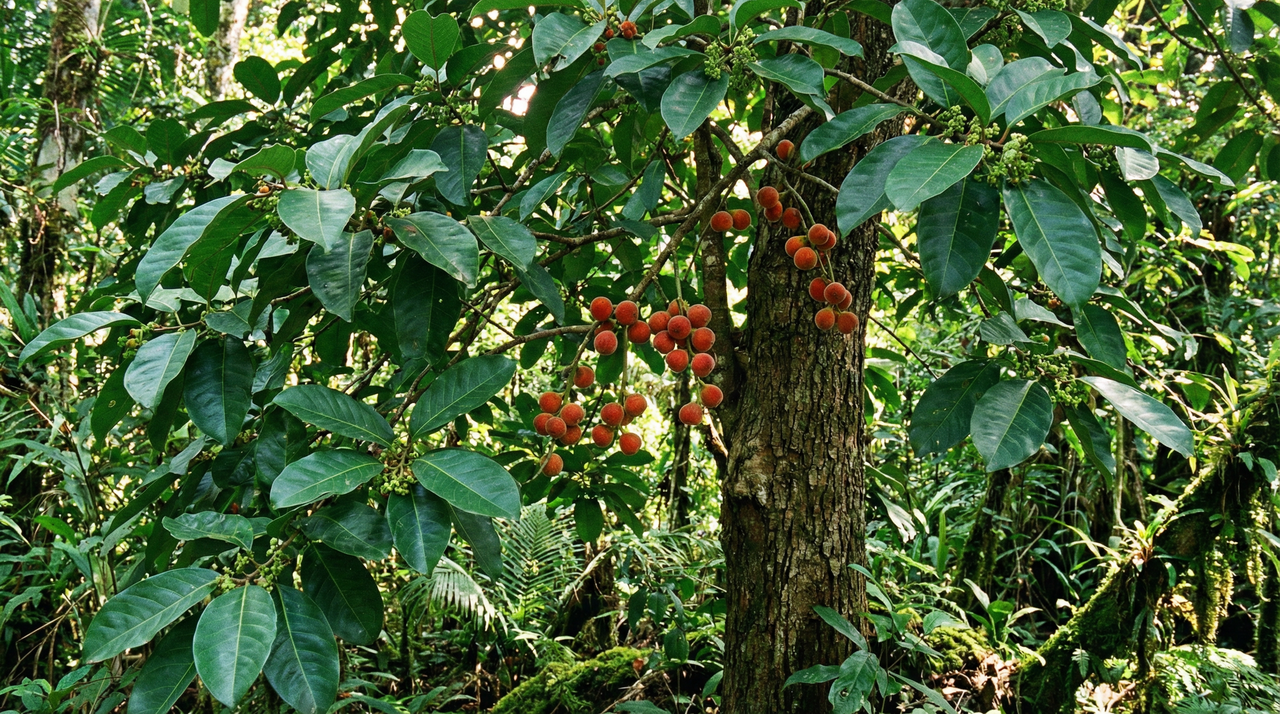
There's a tree that once convinced European naturalists that birds fell dead from its branches, that no animal could survive within a mile of its shade, and that condemned criminals were sent to harvest its poison as their execution. All of it was fabricated, or at minimum wildly embellished, and yet the Upas Tree (Antiaris toxicaria) has spent two centuries trying to live down a reputation it never quite deserved while simultaneously being, in fact, genuinely lethal. That's the strange position this rainforest giant occupies: a tree so thoroughly mythologized that the real story, which involves cardiac glycosides potent enough to stop a heart, indigenous hunters who weaponized its sap for centuries, and bark cloth traditions stretching from Java to West Africa, keeps getting overshadowed by a legend that was debunked before the 1800s even ended.[1]
I've never grown this one myself, and I want to be upfront about that. What I have done is spend enough time studying toxic Moraceae, and enough time in botanical gardens where this tree quietly towers over everything nearby, to understand why it demands serious attention rather than the usual breathless plant-profile enthusiasm. The latex alone, which bleeds from every wounded surface, contains antiarin, a cardiac glycoside that traditional hunters across Southeast Asia and Africa have refined into arrow poison for generations. This isn't a plant you grow curious about and then order online. It's a plant you learn to understand carefully, from a respectful distance, which is exactly what we're going to do here.
Upas Tree Origin, History, and Botanical Background
Few plants carry as much mythological weight as the upas tree, and almost none have had their reputation so thoroughly divorced from reality. The story of Antiaris toxicaria begins in 1789, when Jean-Baptiste Lamarck formally described the species in the Encyclopédie Méthodique Botanique, placing it in the scientific record decades after European travelers had already turned it into legend.[2][3] Linnaeus never included it in Species Plantarum, which tells you something: the plant's infamy preceded its proper science by a wide margin. Today it stands as a single, taxonomically clean species with no recognized infraspecific varieties, those historical subdivisions having been folded into synonymy as modern treatments like Plants of the World Online resolved the confusion.[4][5]
Taxonomy and Discovery of Antiaris toxicaria
Antiaris toxicaria is a dioecious, long-lived perennial tree, meaning individual trees are either male or female, and you'll wait 10 to 15 years from planting before seeing the first fruits.[6][7] Its native range is genuinely vast: sub-Saharan Africa from Senegal to South Africa, Madagascar, the Indian subcontinent, Southeast Asia through to the Philippines, China's Hainan island, and into Oceania including Papua New Guinea and northern Australia, with introduced populations in some Pacific islands and Caribbean botanical gardens.[8][6][9] That breadth across three continents hints at a species well-adapted to opportunism: it's a fast-growing pioneer and hemiepiphytic canopy tree equally at home in lowland primary forest, gallery forest, riverine margins, and disturbed secondary growth up to about 1,000 m elevation.[10][6] Globally the IUCN rates it Least Concern, though localized populations face real pressure from deforestation and overharvesting for timber and traditional medicine, a gap between headline status and ground-level reality that I think deserves more attention from anyone considering it for managed landscapes or forest restoration.[11][12]
Native Range, Habitat, and Visual Characteristics
When I look at photographs of mature upas trees, my first reaction is the same one I get from any of the great Moraceae giants: genuine awe at the scale. These trees commonly reach 30 to 40 m tall, with exceptional specimens pushing toward 60 m, and buttressed trunks measuring 1 to 2 m in diameter at breast height.[7][13] The bark starts smooth and pale on young trees, then develops vertical fissures and a flaky texture as the tree matures. Leaves are alternate, simple, elliptic to ovate, 7 to 25 cm long, glossy green above and paler beneath. Flowers are unisexual: males arranged in pendulous catkin-like spikes, females in small clusters that develop into fleshy, globose syncarps roughly 1 to 3 cm across, ripening from green through yellowish or reddish-brown.[14][15] The whole impression is of quiet, almost placid majesty. Nothing in the visual profile announces what's running through the bark.
The Upas Tree in Folklore, Legend, and Traditional Uses
The Malay word "upas" means poison, and the naming was not subtle.[16] By the 18th and 19th centuries, European accounts, some linked to the voyager La Pérouse, had inflated Javanese folklore into a story of a tree that emitted lethal vapors capable of killing every living thing within miles, leaving a wasteland of bleached bones beneath its crown. That claim was eventually debunked as fantasy, but it took root in European imagination deeply enough to inspire literary works and color perceptions of all toxic plants for decades.[17] I still encounter echoes of this thinking when I teach clients about poisonous species: the leap from "toxic if ingested" to "emanates death" is surprisingly persistent, and the upas tree's history is a perfect case study in why distinguishing folklore from mechanism matters.
The real story is both more grounded and, in some ways, more impressive. Indigenous use of the latex as arrow and dart poison dates to at least the 16th century in Western records, with groups across Indonesia, Malaysia, the Philippines, Borneo's Dayak communities, and Thailand harvesting and carefully preparing the sap into "ipoh," used for hunting and warfare.[18][19] The preparation techniques documented in ethnobotanical literature are precise and complex, which signals the depth of traditional ecological knowledge required to work safely with a plant this potent. I have enormous respect for that expertise. Beyond the poison, the tree also yields durable timber, inner bark fiber for rope and nets, and is used cautiously in traditional medicine across its range for wounds, rheumatism, malaria, and skin conditions, with additional sacred and ritual roles in some cultures.[20][21] The safety details around all of these uses will be covered in the health and preparation sections later in this profile.
Key Facts and Myths About the Upas Tree
In undisturbed humid tropics, with temperatures between 24 and 30°C and 1,500 to 3,000 mm of rainfall annually, the upas tree can live 100 to 300 years or more, growing at a moderate to fast clip and functioning as a keystone canopy species that supports high biodiversity through nectar, pollen, and fruit resources.[22][6] Its pollination is handled primarily by thrips, a small-scale affair for such a massive tree, while seed dispersal falls to fruit bats in the family Pteropodidae and birds including hornbills, which can consume the ripe fleshy syncarps.[23][24] The toxic latex deters most mammalian herbivores from browsing, so the tree effectively uses its chemistry to carve out ecological space while relying on flying vertebrates to move its seeds once the fruit signals it's ready. What makes the chemistry so consequential is its composition: the milky latex contains cardiac glycosides, primarily α- and β-antiarin, along with the ribosome-inactivating protein antiarisin.[20][25] Toxin levels vary geographically, running higher in Asian than African populations, and tend to increase as trees mature.[26] The same compound that indigenous hunters relied on for generations is what makes any modern cultivation conversation a careful one. The legend called it the tree of death; the biochemistry explains, precisely and without embellishment, why that reputation stuck.
Upas Tree Varieties and Sourcing
Notable Varieties of Antiaris toxicaria
There are no cultivars here. No 'Dwarf Javanese,' no variegated selections, no nursery-bred forms. Antiaris toxicaria stands as a single wild species with no formally accepted cultivars or commercially developed varieties, and the reasons for that absence are inseparable from everything else that makes this tree so singular.[22][27] Historical taxonomic literature occasionally floated names like var. toxaria or var. welwitschii, but none of these have held up in modern classification and they never translated into distinct garden forms anyway.[22] Think about how different that is from even other toxic plants I've worked around in landscape design. Certain Euphorbias, castor bean, even giant milkweed have selections bred for form, color, or habit, because someone, somewhere, was willing to propagate and develop them. The Upas tree never got that chance, and its cardiotoxic latex saturating every tissue is the clearest reason why. When the raw material kills, selective breeding programs don't follow.
How to Source an Upas Tree
Short answer: you almost certainly can't, and shouldn't. Every part of this tree carries potent cardiotoxic bufadienolide compounds including antarisin, and handling requires professional expertise and full protective equipment at minimum.[28] The Upas tree is completely absent from mainstream nurseries and retail channels, particularly in the United States, with its toxicity, exacting tropical requirements, and slow establishment making it a non-starter for commercial propagation.[6][29]
Living specimens exist primarily at major botanical institutions like Kew Gardens, the Singapore Botanic Gardens, and the Missouri Botanical Garden, held strictly for conservation and research.[30][29] I've had the chance to visit rare tropical collections at botanical gardens, and the protocols around anything with this level of toxicity are serious. These institutions don't sell to the public, and for good reason. Even if you cleared that hurdle, the tree demands constant tropical rainforest conditions: high humidity, steady warmth, even moisture, fertile well-drained soil, and dappled shade for young plants. Temperate gardens and home settings simply don't qualify.
There's informal bark trading in local Southeast Asian markets across Borneo, Sumatra, Thailand, and Indonesia, where dried bark moves through traditional channels for fiber and medicinal purposes, but that's not a route to live plants.[31] International movement of the species also runs into regulatory headwinds, with potential CITES Appendix II protections and national restrictions requiring phytosanitary certificates and special permits.[32] I check CITES and phytosanitary requirements whenever I'm moving any tropical material across borders; with a species this toxic and this ecologically restricted, the paperwork would be the least of your concerns. The Upas tree shows up in POWO, the USDA PLANTS database, and Flora of China, but search any standard horticultural catalog or RHS plant finder and you'll come up empty.[33][34][35] That gap between scientific documentation and horticultural absence tells you everything about where this tree belongs: in forests and research collections, not gardens. The safety and health benefits sections cover the toxin details fully.
Propagating and Planting the Upas Tree (Antiaris toxicaria)
I want to be direct before anything else: this is not a propagation guide for the casual gardener. The Upas tree is one of those plants where the biology and the safety concerns are completely inseparable, and every step of the process has to be understood with that in mind.
Safety First: Handling the Highly Toxic Latex
Every part of Antiaris toxicaria contains antiarin, a cardiac glycoside so potent it has served as arrow poison for centuries. Skin contact with the latex can cause severe irritation, and more significant exposure risks cardiac events; there is no specific antidote.[20][36] That means full PPE, including chemical-resistant gloves, eye protection, and long sleeves, is non-negotiable from seed extraction through transplanting. Any propagation should happen in a controlled environment, not a home greenhouse. I've worked with enough toxic Moraceae to know that seedlings in this family look deceptively similar at germination, so meticulous tray labeling matters here in a way it simply doesn't with most species. Mislabeling a tray of Upas seedlings isn't a minor inconvenience; it's a genuine hazard.
Seed Morphology, Storage, and Germination
The seeds themselves are ellipsoidal to ovoid, roughly 5-10 mm long with a hard, smooth, dark brown to black coat, and they're packaged inside a small fleshy orange-red syncarpium that resembles a miniature fig.[37][38] Those seeds are recalcitrant, meaning they cannot be dried below roughly 20% moisture without losing viability.[39][40] At ambient tropical conditions, viability can drop in as little as one to two weeks. Even under ideal storage, at 15-25°C and 80-90% relative humidity in permeable moist-substrate containers, you're looking at a maximum window of six to twelve months.[41] I never trust stored tropical tree seed longer than a few weeks, and I always plan collection and sowing within the same rainy-season window. With Antiaris toxicaria seeds, that discipline isn't optional.
When you do sow, scarification is required to break physical dormancy, followed by a 24-48 hour soak in warm water. Sow 1-2 cm deep in a moist, well-drained medium at 25-30°C and 80-90% humidity.[42][43] Germination is hypogeal and typically occurs in two to four weeks, though it can stretch to eight. Even with fresh seed and good technique, success rates run 50-70% and can be erratic enough to require multiple sowing attempts.[41] The Upas tree is also dioecious and freely outcrossing, which means seed progeny show high genetic variability.[44][45] If consistent toxin profiles or growth traits are what you're after, seed propagation won't reliably deliver them. Under stagnant high humidity, young seedlings are also susceptible to whiteflies, aphids, and fungal pathogens, so air circulation and close monitoring during establishment are essential.[42]
Vegetative Propagation Methods
For true-to-type material, vegetative methods are the more reliable path, though "reliable" is relative when latex complicates every cut. Semi-hardwood cuttings taken during the wet season, 10-15 cm long, treated with 1000-3000 ppm IBA and placed in a sand-peat medium under high humidity, can achieve 50-70% rooting in four to six weeks.[46][47] Air layering during active wet-season growth, using 2000-5000 ppm IBA on wounded branches wrapped in moist sphagnum moss under temperatures of 25-30°C and humidity above 80%, is another viable approach for this difficult-to-root tropical hardwood.[48] I've successfully air-layered other challenging tropical hardwoods, but with Antiaris I'd only attempt it under institutional protocols specifically because of the latex exposure risk at every wound site.
Grafting is possible but poorly documented and typically yields only 20-40% success, largely because latex interferes with union formation and compatible Moraceae rootstocks are limited.[49] Tissue culture using shoot-tip or nodal explants on Murashige-Skoog medium with BAP and NAA is the most reliable clonal method, but it requires sterile lab facilities and belongs to conservation research rather than routine horticulture.[42][46]
Soil, Site, and Light Requirements
As a pioneer species of lowland tropical rainforest, the Upas tree developed on disturbed sites with widely varying soil conditions, which explains its surprising adaptability once you meet its one hard requirement: drainage. It performs best in deep, well-drained loamy or sandy-loam soils with 3-6% organic matter and a pH of 6.0-7.0, but tolerates a broader range of roughly 4.5-8.0 and various textures including clay, sand, and limestone, provided the soil never stays waterlogged.[50][51] Avoid heavy clay, strongly acidic soils below pH 5.0 (aluminum toxicity risk), and chalky-alkaline soils above 7.5-8.0, where interveinal yellowing from iron or manganese chlorosis becomes a real problem. I've corrected that kind of chlorosis on related tropical trees by side-dressing with chelated iron and lowering pH incrementally with elemental sulfur, and the same approach would apply here.
Light needs shift with age. Seedlings and saplings establish best under 20-50% of full sun, benefiting from dappled light or partial shade.[52][53] Mature trees, by contrast, are emergent canopy species that need full sun to thrive. Transplanted material must be acclimated gradually to avoid light stress, and container culture is only realistic for very young plants given what this tree ultimately becomes.
Spacing, Planting Technique, and Timeline to Maturity
The scale of a mature Upas tree has to be understood before any site is chosen. At 20-50 meters tall with a canopy spread of 15-30 meters and substantial buttress roots, this tree occupies space more like a large Kapok or emergent Ficus than anything in a typical managed landscape.[6] In tropical agroforestry or forestry contexts, spacing of 10-15 meters between individuals is standard to accommodate crown and root expansion; denser forestry rows of 4-8 meters, yielding 50-400 trees per hectare, are used specifically for timber production.[54][55]
The timeline from seed to maturity is a further deterrent for most growers. Seed-grown trees typically require 10-20 years to reach first fruiting, with fiber harvest possible somewhat earlier at 5-10 years.[56][57] Grafted plants compress that window significantly, producing fruit in 2-4 years and reaching harvestable condition 3-5 years after planting under optimal tropical conditions.[58] That gap between seed and grafted timelines is exactly why the extra safety effort of vegetative propagation earns its place. Even so, the combination of extreme mature size, pervasive toxicity, and strict USDA zone 10b-12 climate requirements confines realistic planting of the upas tree to botanical gardens, conservation collections, and managed tropical forestry operations where the risks can be rigorously controlled.
Upas Tree Care Guide
Growing Antiaris toxicaria is not a casual endeavor. Every requirement it has is non-negotiable, and unlike forgiving tropical generalists, this tree does not reward improvisation. I'd file it alongside the most demanding specimens I've worked with: everything has to be right at once, and the fact that every cut, every pruning session, every fertilizer application happens around a plant producing cardiotoxic latex means that "casual maintenance" simply isn't an option here.
Water Needs for Antiaris toxicaria
In its native rainforest range across Southeast Asia and Africa, this tree receives between 1,500 and 2,500 mm of rainfall annually, growing in consistently moist but well-drained loamy soils with pH 5.5 to 7.0.[6][22] That baseline tells you almost everything you need to know about irrigation in cultivation. In practice, you're aiming to keep soil at roughly 80 to 100% field capacity, with weekly deep watering during dry periods and just enough of a dry interval at the surface to prevent waterlogging.[59][60] Young plants need more attentive moisture management than established trees; mature specimens have some capacity to draw from deeper soil reserves, though neither stage tolerates prolonged drought.
African populations show somewhat greater drought tolerance and occasional deciduous behavior during dry periods compared to their Southeast Asian counterparts, which tend toward strict evergreen habits under consistent moisture.[61][62] It's a useful nuance if you're sourcing propagation material and know your rainfall pattern has a pronounced dry season. Either way, the failure modes are clear: underwatering produces wilting, dry brittle foliage, scorched leaf margins, premature leaf drop, and stunted growth; overwatering leads to yellowing leaves, root rot, and fungal issues, particularly in compacted or clay-heavy soils. When in doubt, I treat it like I'd treat any moisture-sensitive fig relative and check the first few centimeters of soil before watering rather than following a rigid calendar.
Sunlight Requirements
The light story here changes completely depending on the tree's age. Seedlings and young plants do best under 50 to 70% shade or dappled light for the first one to two years; push them into full sun too early and you'll see leaf scorch and repeated setbacks that slow establishment significantly.[63][64] I use 50 to 70% shade cloth in my propagation setup for this exact reason, monitoring closely for the first signs of pale, crisping leaf tips that signal too much exposure. Once the tree is established and climbing toward the canopy, it transitions to full sun preferences, needing at least 4 to 6 hours of direct light daily to sustain dense foliage and vigorous upward growth.[65] Deep shade at any stage causes its own set of problems: reduced vigor, leggy etiolated growth, and interveinal chlorosis that compounds quickly.[66][67] Light stress and water stress also tend to compound each other, so a seedling struggling in full sun during a dry spell is in double trouble.
Feeding and Fertility Needs
Antiaris toxicaria is a moderate feeder rather than a heavy one, preferring fertile, organically rich loamy soil and benefiting from mycorrhizal associations that support its rapid growth without requiring aggressive chemical inputs.[6][68] Where supplemental feeding is warranted, a balanced NPK fertilizer around 10-10-10 or 10-20-10, applied two to three times per year during the wet season, keeps things on track: roughly 100 to 200 grams per young tree, up to 200 to 500 grams for mature specimens, with compost or organic matter as the backbone of the fertility program.[69][70]
Here's where I'd urge real restraint, though. I once pushed nitrogen on a young tropical Moraceae specimen that I was trying to establish quickly and the result was exactly what you'd expect from the research: explosive top growth paired with noticeably heavier sap weeping from every nick and abrasion. On a fig, that's inconvenient. On an Upas tree, it's a safety concern. Excess nitrogen promotes excessive vegetative growth and higher pest susceptibility, and over-fertilization in a plant whose latex contains cardioactive compounds is not a risk worth taking.[71][69] Deficiency symptoms follow the broader Moraceae family pattern: yellowing of older leaves suggests nitrogen deficiency, purplish discoloration and stunted growth points to phosphorus, browning leaf margins indicate potassium issues, and interveinal chlorosis on young leaves suggests iron or magnesium shortfalls. Feed conservatively and let organic matter carry most of the load.
Frost Tolerance and Temperature Requirements
This tree evolved in equatorial rainforests where year-round temperatures sit between 20 and 30°C, so its relationship with cold is simple: it has none.[72][73] Significant damage or death occurs at temperatures below 10°C (50°F), and frost, even a light one, is essentially lethal. Cultivation is realistic only in USDA zones 10b through 12, and even within those zones, any period of unusual cold requires thoughtful microclimate planning.[74][75] I've overwintered mature mangoes and avocados through marginal zone 10b cold snaps using windbreaks, mulching, and frost cloth, but the Upas tree is a different proposition: once it's grown past a few meters, protecting it becomes logistically impossible. Unlike those fruiting trees where the investment makes sense, there's no yield that justifies the infrastructure for most growers. Greenhouse cultivation is the only sensible option outside the tropics, and even then, you're committing to managing a fast-growing, toxic giant in an enclosed space.
Heat Tolerance
On the heat side, the upas tree is more accommodating. It thrives in AHS Heat Zone 12, sustaining daytime highs of 35 to 40°C (95 to 104°F) and tolerating brief spikes to around 45°C (113°F), provided nighttime temperatures recover to at least 15°C and ideally 20 to 25°C.[76] Optimal growth occurs in the 20 to 32°C range. The real threat isn't heat alone; it's heat combined with moisture stress. Under that combination, the tree shows reduced photosynthesis, stomatal closure, wilting, and leaf scorch, triggering internal stress responses that drain energy reserves.[77][78] Seedlings are especially vulnerable because of their shallow roots and high leaf surface area relative to root mass. Mitigation is straightforward in practice: 50 to 70% shade cloth for the first one to two years, a 5 to 10 cm organic mulch layer to buffer root temperatures and retain moisture, and consistent irrigation of around 20 to 30 liters per sapling weekly during hot periods.[64][79]
Pruning and Maintenance
Pruning the upas tree is where cultivation crosses most directly into hazard management. For young trees, late winter or early spring is the right window to shape structure and remove dead or crossing branches before the growth flush begins.[80] On mature specimens, heavy pruning should be avoided entirely; every significant cut triggers copious latex weeping from a tree already saturated with cardioactive compounds.[81] I'll be direct: any cut on this tree requires full protective equipment, without exception. That means nitrile or chemical-resistant gloves, eye protection, long sleeves, and immediate cleanup of any latex that contacts tools or skin. No hedging on this. Have clean water and a change of clothes accessible before you start, and treat any latex-contaminated tool as a biohazard until properly cleaned. This isn't a tree you prune casually, and the scale it reaches makes that reality harder to manage over time.
Seasonal Rhythm
In consistently wet equatorial conditions, Antiaris toxicaria behaves as a true evergreen with little visible seasonal shift. In regions with a pronounced dry season, however, it can drop its leaves to conserve resources, behaving more like a drought-deciduous tropical species until rains return.[82][83] Flowering typically peaks March through June, with Southeast Asian populations concentrated in April through June, followed by fruit development from June through October. That wet-season growth flush is also your cue for fertilizer applications; timing nutrition to coincide with active growth reduces waste and keeps the tree channeling energy productively rather than holding unused nutrients in the soil. If you're in a climate with a true wet and dry cycle, use the onset of rains as your seasonal reset: resume irrigation, apply compost, monitor for new growth, and schedule any light structural pruning before the canopy fills back in.
Harvesting the Upas Tree (Antiaris toxicaria)
I want to be direct before anything else: harvesting any part of this tree is genuinely dangerous. The latex saturating the bark, wood, and fruit carries cardiac glycosides potent enough to kill. I've worked with plenty of other Moraceae species over the years, including figs and mulberries, and their sap alone can cause significant skin irritation. The Upas tree is in a different category entirely. Full protective gear, gloves included, is not optional here. It's the floor, not the ceiling.
Maturation Time and Seasonal Timing
From seed, an Upas tree needs 10 to 20 years before it produces fruit or fiber reliably, though grafted specimens can fruit in as few as 2 to 4 years and bark can be stripped from trees 5 to 10 years old.[84] That timeline alone should give any permaculture designer serious pause. In my practice, when a client asks me to evaluate a long-maturing, high-toxicity tree against a safer fiber alternative, the math rarely works out in the Upas tree's favor.
Flowering runs primarily from March through May, with individual flowers open for only one to two days.[85][86] From pollination, fruits take roughly three to five months to mature, placing most harvests between June and October across tropical Africa and Southeast Asia, with peaks typically in July through September.[21][87][88] In equatorial zones, flowering can occur year-round but still clusters around wet and monsoon seasons, so exact timing shifts with local climate.
The visual cues for ripe Antiaris toxicaria fruit follow a familiar progression: green skin giving way to red, orange, or black, slight softening in the flesh, and easy detachment from the branch.[84][56][89] Those cues are reliable, but recognizing ripeness does nothing to reduce the hazard of handling it.
Harvest Cues, Techniques, and Safety Protocols
Bark harvesting for fiber is best done during the dry season, when latex flow is somewhat reduced.[84][56] Traditional practitioners strip the inner bark from straight boles manually, taking care to leave the outer bark and cambium intact so the tree can regenerate.[84][90] Preserving the cambium is the one genuinely sustainable aspect of this harvest, though "sustainable" still means performing hazardous work on one of the world's most toxic trees.
Fruit should be collected in the morning when fully colored and slightly soft, with seeds extracted promptly before the flesh begins to ferment.[56][89][91] Protective gloves and clothing are required throughout. After stripping bark, the material must be washed immediately to remove sap residue, then submerged for retting, allowed to ferment to break down the toxic latex, and finally sun-dried, scoured, and bleached before it's usable as fiber.[84][92] I've studied traditional fiber processing with nettle and flax, and the retting-fermentation sequence here is broadly analogous, but those plants don't carry cardiac toxins that require complete neutralization before the material is safe to handle without gloves. That distinction matters enormously.
Yield, Sensory Characteristics, and Post-Harvest Processing
The latex has a mild resinous, slightly acrid odor; the ripe fruit emits a faint sweet aroma; the bark registers as earthy and largely neutral; the raw pulp is soft, starchy, and fibrous in texture.[56][93][94][95] Ethnobotanical sources describe the fruit flavor as sweetish but unpalatable, reminiscent of overripe figs with a bitter aftertaste.[6] I'll be honest: I have never tasted the processed pulp, and I have no intention of doing so. The documented risk of cardiac poisoning from even partially detoxified material is reason enough for me to defer entirely to safer native alternatives. These flavor notes exist in the ethnobotanical record not as an invitation but essentially as a warning, and modern sources treat ingestion of any Upas tree part with deep skepticism. The post-harvest processing details for traditional uses belong in the preparation section; what matters here is that no part of this harvest is casual, and the sensory experience is largely theoretical for anyone operating with appropriate caution.
Upas Tree Preparation, Uses, and Safety
Culinary and Edible Uses of Upas Tree Fruit
Let me be direct: the upas tree is not a food plant. Every part, especially the milky latex, contains cardiac glycosides that can trigger severe poisoning within 15 minutes to 2 hours of raw consumption, with symptoms ranging from nausea and irregular heartbeat to respiratory failure.[96][56] Purified toxins carry an estimated lethal dose of just 10 to 20 mg for humans, and children are especially vulnerable. I've worked with oleander and foxglove in landscape settings and taken their cardiac glycoside risks seriously. The upas tree operates at a different level of danger entirely.
The fruit itself is a fleshy red or orange syncarp with sweet, acidic pulp that reportedly resembles overripe figs in texture.[56][97] Thin ethnobotanical records from isolated Southeast Asian and African communities describe consuming the pulp only after repeated boiling, fermentation, or starch extraction, with seeds removed completely.[98][99] No standardized processing protocols exist. The cooked pulp may become starchy and somewhat mucilaginous, similar to cooked okra, but that description lives almost entirely in ethnobotanical warnings rather than any culinary tradition. The look-alike risk adds another layer of danger: Ficus benjamina, jackfruit, and Ficus microcarpa can all be confused with the upas tree, and in the field I always check specific leaf venation and fruit structure rather than relying on general features like buttressed roots or milky sap.[100] The margin for error here is essentially zero.
Traditional Medicinal Preparations
Traditional healers across parts of Africa and Southeast Asia have prepared bitter astringent decoctions from the bark and leaves for purgative effects, used dried bark powder as a topical poultice, and made alcohol tinctures from various plant parts.[101] Expert traditional knowledge developed these preparations over generations to reduce risk, though never to eliminate it. What modern science is clear about: there are no established safe dosages, no approved medicinal applications, and no controlled clinical trials validating any of these uses.[102] Any interest in medicinal applications needs professional medical and botanical consultation, full stop.
Non-Food and Practical Uses
The most historically significant use of the upas tree is its latex, processed by incision, boiling, or fermentation into potent arrow and dart poisons by indigenous hunting cultures across Southeast Asia and Africa.[103][56] That's expert-only territory grounded in generations of specialized knowledge, not something to approach as a curiosity.
The inner bark is a genuinely useful material. Soaking and beating it yields strong fiber for ropes, tapa barkcloth, fishing nets, and paper.[104][50] Having handled paper mulberry bark through similar retting processes, I can say that Moraceae fiber work rewards patience and thorough preparation. The lightweight wood has served for plywood, carvings, boxes, and construction, though it's not especially durable and susceptible to insect damage, and timber harvesting has contributed to localized population declines.[6]
As a shade tree, its form is genuinely impressive, and the toxic sap does deter most herbivores naturally.[105][106] From my experience planning large-scale tropical plantings, any tree that demands full protective gear for routine maintenance requires institutional-level risk management, the kind botanical gardens have and most private landowners don't. That's exactly where the upas tree belongs: admired from a respectful distance, understood deeply, and left to the specialists.
Upas Tree Health Benefits and Medicinal Uses
I want to be transparent about something before we go any further: writing a "health benefits" section for Antiaris toxicaria requires a different kind of honesty than I'd bring to, say, elderberry or ashwagandha. The research is genuinely intriguing, the ethnobotanical record is real, and the preclinical pharmacology is worth understanding. But this plant's chemistry sits in a category closer to foxglove or oleander than to anything I'd recommend someone explore on their own. Keep that framing in mind as you read.
Phytochemical Profile of Antiaris toxicaria
The defining chemistry here is a group of cardiac glycosides called cardenolides: α-antiarin, β-antiarin, neriifolin, and antiriotoxin, concentrated most heavily in the milky latex where they account for 0.1% to 0.3% of dry weight.[107][108][109] These compounds inhibit the sodium-potassium pump (Na+/K+-ATPase) that regulates cardiac muscle function -- the same basic mechanism responsible for both the therapeutic window in digitalis and the fatality in overdose. If you've handled foxglove in a landscape context and respected it accordingly, imagine that potency amplified considerably. But cardenolides aren't the whole story. The latex also contains antiarin, a ribosome-inactivating protein (RIP) that depurinates ribosomal RNA and shuts down protein synthesis at the cellular level, adding a second distinct toxicity mechanism entirely separate from the cardiac pathway.[110][111]
Beyond these primary toxins, the plant produces flavonoids, phenolics, saponins, triterpenoids including tariric acid, tannins, alkaloids, and polyphenols -- the kind of secondary metabolite suite associated with antioxidant, anti-inflammatory, and antimicrobial activity in many less dangerous plants.[112][113] Production of these compounds is not static. Cardiac glycoside concentrations rise during dry seasons under water stress, peak in younger trees, run higher in African populations than Southeast Asian ones, and phenolics increase under low-nitrogen or low-phosphorus soils.[114][115] Any experienced tropical horticulturist will recognize this pattern -- environmental stress and soil poverty routinely intensify secondary metabolite expression across the Moraceae family -- but in this species the practical consequence is that potency is genuinely unpredictable between individuals and populations.
Traditional and Modern Medicinal Research
Traditional healers in West Africa, Malaysia, Indonesia, and across Southeast Asia have worked with Antiaris toxicaria bark for centuries, using carefully prepared decoctions and extracts for wound healing, skin ailments, rheumatism, pain, parasitic infections, and fever.[116][117][118] This knowledge is real and deserves respect. What it doesn't do is translate into anything a non-specialist should attempt to replicate.
Preclinical research has started to explain some of that traditional use. In vitro and animal studies of leaf, bark, and latex extracts show meaningful anti-inflammatory effects comparable to diclofenac via cytokine and COX-2 inhibition, strong antioxidant activity with DPPH/ABTS IC50 values below 100 μg/mL, antimicrobial activity against S. aureus, E. coli, and Candida albicans, and analgesic effects in rodent models that researchers have compared to aspirin, possibly through opioid pathways.[101][119][120] I've seen similarly promising lab profiles from high-phenolic plants I work with regularly, and I'd gently caution against reading too much into them without human clinical validation behind them. Extracts have also shown cytotoxic activity against HeLa, MCF-7, breast, and colon cancer cell lines with LC50 values of 10 to 50 μg/mL, attributed to cardiac glycosides, flavonoids, triterpenoids, and the ribosome-inactivating proteins; preliminary flavonoid data hints at antiviral potential, but that remains far from established.[121][122][123] Cardiotonic and antidiabetic effects have been flagged in pharmacological studies as well, but every single finding sits at the preclinical stage with no robust human trials and no established safe dosage.[124][125][126] Despite those intriguing animal studies, I would never recommend experimental use of Upas preparations to anyone. The therapeutic window is simply too narrow, and the margin between a pharmacologically active dose and a lethal one has never been safely defined for humans.
Nutritional Considerations
There isn't much to say here in practical terms, and that's by design. No part of Antiaris toxicaria appears in the USDA or FAO nutritional databases, and no verified safe serving size exists for any portion of the plant.[56][127] In limited Southeast Asian traditional practice, the sweet fruit pulp has been eaten after extensive processing -- boiling, roasting, complete seed removal -- intended to reduce cardiac glycoside load, and the pulp does contain antioxidant phenolics like hydroxychavicol.[128][129] That ethnobotanical knowledge is real, but it belongs to practitioners with generations of context behind them. Seeds contain measurable potassium, calcium, magnesium, iron, and zinc on paper,[130] but that data is essentially academic given the cardiac glycosides and toxic proteins saturating the same tissue. For actual nutrition from the Moraceae family, safer relatives like mulberry are the obvious alternative.
Safety and Toxicity Profile
The risks here are not theoretical. Every part of the Upas tree is toxic, and the latex is the most dangerous material most people will ever be near in a horticultural setting. The LD50 in animal models sits at approximately 0.1 to 1 mg/kg, and symptom onset is rapid: nausea, vomiting, mouth numbness, a bitter taste, cardiac arrhythmias, bradycardia, hyperkalemia, convulsions, respiratory failure, and potentially fatal heart failure.[131][124][132][133] The upas tree poison history is centuries deep: indigenous groups in Africa, Borneo, and China have used the latex as dart and arrow poison since at least 581 CE precisely because of this potency and speed.[50][134][67] In my professional work with high-toxicity species, full PPE isn't a suggestion -- it's the minimum. For the Upas tree that standard applies to any contact whatsoever: gloves alone are insufficient. The tree is not recommended for cultivation outside controlled botanical or research settings, and the presence of children or pets near one is not an acceptable risk.[50][67] No confirmed safe preparation method eliminates all risk from any plant part, and any suspected exposure requires immediate contact with poison control or emergency medical services, not a wait-and-see approach.[34][98] That's the note this section has to close on, because no amount of promising preclinical data changes the fundamental reality of what this tree is.
Upas Tree Pests and Diseases
Natural Defenses: The Role of Toxic Latex
The upas tree's infamous toxicity isn't just a danger to people; it's an evolutionary defense system that runs on cardiac glycosides. When any part of the tree is wounded, milky latex floods the site almost immediately, delivering α-antiarin and β-antiarin alongside proteolytic enzymes that disrupt insect digestion and steroids that interfere with basic herbivore physiology.[135][136][137] The result is a tree with genuine, if imperfect, chemical armor: mature specimens in natural forest conditions show low overall disease incidence and minimal impact from generalist insect feeders.[138][139]
The catch is seedlings. Young plants haven't fully developed their latex chemistry, which is exactly when they're most vulnerable to pests and pathogens.[140][6] I've seen this pattern with related Moraceae species in nursery settings: a young fig or jackfruit with its latex system still ramping up is far more susceptible to rot and leaf damage than the same plant two years later. For Antiaris, that window is when cultural care matters most, and when the defenses the tree will eventually depend on simply aren't ready yet.
Common Insect Pests
Despite the latex, certain insects have made their peace with the upas tree's chemistry. Defoliating caterpillars from the Lasiocampidae, Noctuidae, and Pyralidae families, including the notoriously adaptable Spodoptera litura, can cause significant foliage loss during outbreak events.[141][142] Leaf beetles (Chrysomelidae) chew through foliage as well, but the more structurally damaging threats are the borers: longhorn beetles like Anoplophora spp. and bark beetles in the genus Xylosandrus tunnel into wood and disrupt vascular tissue in ways no amount of surface latex can prevent.[143] Termites and sap-sucking hemipterans, including aphids and scale insects, round out the cast.
Much like how certain figs attract specific borers despite their milky sap, the cardiac glycosides in Antiaris deter many generalists but not the specialists that have evolved tolerance over time. I've seen this across the Moraceae family in landscape designs. The practical consequence is that insect damage, particularly from borers and sap-suckers, weakens the tree structurally and opens wounds that invite fungal infection, creating a cascade that's harder to manage than the initial pest.[144][145] Severe defoliation events can strip up to 50% of the canopy, especially in fragmented or climate-stressed habitats across Southeast Asia.[146] Monitoring new growth flushes is essential because that's when caterpillar and beetle activity concentrates; catching it early makes intervention both easier and less disruptive to surrounding beneficials.
Fungal and Other Diseases
Fungal pathogens present the most documented disease pressure on this species. Leaf spot diseases caused by Cercospora, Pestalotiopsis, Colletotrichum, and anthracnose pathogens tend to target young leaves and shoots, reducing photosynthetic capacity and slowing growth.[147] Root rot from Phytophthora and Fusarium becomes a real threat in waterlogged or poorly drained soils, particularly in nursery seedlings.[148][149] In older trees, Ganoderma can colonize heartwood, while powdery mildew appears mostly in greenhouse or very high-humidity controlled environments.[144] Bacterial issues like wilt and Xanthomonas infections may occur but are poorly studied, and no major viral pathogens have been identified for this species.[150]
Environmental conditions drive most of this risk. The tree does best at 22-32°C, soil pH 5.5-7.0, and 70-90% humidity with good drainage; push it outside those parameters through waterlogging, cold snaps below 15°C, or extreme heat, and its natural resistance drops sharply.[6][151] Much of what we know about Antiaris disease is extrapolated from broader Moraceae pathology rather than species-specific studies, so I treat it similarly to how I'd treat a problematic fig site: get the drainage right first, and most fungal threats largely manage themselves.
Prevention and Integrated Management
Published research on pests and diseases specific to the upas tree is genuinely sparse; it's not a commercial crop, and no resistant cultivars exist because it remains a wild species.[152][6] In my review of Moraceae pathology and field observations, maintaining vigorous growth through proper drainage and nutrition is far more effective than any reactive treatment. That means well-drained or raised planting sites, appropriate spacing for airflow, consistent sanitation (removing fallen debris and pruning infected material), and balanced nutrition that doesn't overstimulate susceptible new growth.
Because every part of this tree is toxic, I avoid systemic insecticides entirely and rely on cultural methods and targeted biopesticides. Neem-based products and copper-based fungicides, applied with full protective gear and targeted at early-stage infestations, keep intervention low-impact without compromising the surrounding ecosystem or the tree's own chemical defenses.[150][64][153] Regional pest pressures vary significantly across the tree's range in Southeast Asia and Africa, so local agricultural extension services are genuinely useful here, not just a formality. The research gaps are real, and local expertise fills them.[154]
Upas Tree in Permaculture Design
In its native habitat, the upas tree is genuinely impressive from a systems perspective. It's a fast-colonizing pioneer that fills canopy gaps, stabilizes disturbed soils with deep roots, and cycles nutrients through rapid leaf-litter decomposition.[155][156] Birds, bats, hornbills, and monkeys use it for habitat, nesting, and food, while its fruit-bearing branches draw frugivores that disperse seeds across the forest floor.[21][157] When I think about the nutrient cycling I've observed on tropical forest floors, fast leaf breakdown from canopy species like this one does real ecological work. But the permaculture question isn't what a tree does for the forest. It's what a tree can do in a human-managed system, and that's where the upas tree essentially disqualifies itself.
Ecosystem Functions and Guild Roles
On paper, Antiaris toxicaria has several traits that would interest a designer: soil stabilization, wildlife habitat, rapid biomass production, and mycorrhizal associations that support soil biology even without nitrogen fixation.[158] It's also dioecious, meaning you need male and female trees within pollination range for any fruit set to occur, with wind doing most of that work and thrips, beetles, and flies helping at the margins.[159][160] As someone who designs food forests, that dioecious requirement alone would give me pause. I'm already reluctant to commit space to two specimens of a non-productive tree; when that tree's latex contains cardiac glycosides lethal enough to tip poison arrows, the calculus ends there. Any guild pairing, any understory planting, any livestock integration becomes a liability, not a design feature.[155] The only design context where I'd consider evaluating this tree at all is a large institutional restoration project with controlled access, prominent hazard signage, and a team that understands PPE isn't optional.
Climate and Growing Zones
Even setting toxicity aside, the upas tree's climate requirements already exclude the vast majority of North American growers. It wants true tropical conditions: 1,500 mm of annual rainfall at minimum, with optimal performance somewhere between 3,000 and 3,800 mm, temperatures held between 24 and 32°C, and relative humidity that rarely drops below 80%.[156][6] It is genuinely frost-intolerant; even a brief dip below 10°C can damage young specimens, and prolonged cool spells are fatal.[161][21] That puts it firmly in USDA zones 11 and 12, with marginal survivability in the warmest pockets of zone 10b. For growers in zone 9b or even southern Florida's transitional edges, this tree is essentially a botanical curiosity, something you might encounter in a conservation collection rather than a planting candidate for a client site.
Where the climate does fit, the soils are forgiving: well-drained loams at pH 5.5 to 7.0 are ideal, though the tree tolerates sandy or clay soils.[156][162] It's most common below 800 meters elevation and grows rapidly in ideal heat and humidity, though exposed sites need wind protection, especially for young trees.[7] Growth rate is one of its genuinely useful traits for restoration work, but that speed comes with a sap system that's active and hazardous, so routine tasks need to be thought through from a safety standpoint at every stage.
Forest Layer Placement
In a natural forest profile, the upas tree occupies the emergent layer, pushing 30 to 50 meters above the main canopy across lowland rainforests of tropical Africa, Southeast Asia, and the Pacific islands.[6][163] I sometimes compare that structural role to what a mature live oak or bald cypress does in a Florida landscape: emergent canopy presence, wildlife habitat, long-term soil stabilization. The difference is that those trees can anchor a productive system. The upas tree's toxic latex and potential allelopathic effects make it incompatible with mixed food-forest guilds, and the safety protocols required around any maintenance work effectively eliminate it from home-scale or even small community systems.[155][62] Its lightweight timber has seen traditional use, but even that application demands careful handling of the sap-saturated wood.[21] If this tree belongs anywhere in a permaculture framework, it's in large-scale native forest restoration projects where public access is controlled, where its pioneer speed and wildlife value can do meaningful ecological work at a safe distance from people, productive plants, and animals.
The Tree I'll Never Plant and Never Stop Thinking About
I've spent my career putting plants in the ground, so it's strange to feel this much respect for one I'll almost certainly never grow. But the Upas tree does that to you. It's a reminder that not every plant belongs in our systems, that some species are doing exactly what they need to do already, and that our job sometimes is just to leave them to it.
Sources 163
- Foersch's Account of the Upas Tree, Batavian Transactions, 1783 ↩
- Encyclopédie Méthodique: Botanique ↩
- Historical Notes on Antiaris toxicaria ↩
- Plants of the World Online - Antiaris toxicaria ↩
- Flora Malesiana - Antiaris ↩
- Antiaris toxicaria - Useful Tropical Plants Database ↩
- Antiaris toxicaria - Missouri Botanical Garden ↩
- Antiaris toxicaria - Plants of the World Online (Kew Science) ↩
- Antiaris toxicaria - USDA Forest Service ↩
- The Ecology of Antiaris toxicaria in West African Forests ↩
- Antiaris toxicaria - IUCN Red List ↩
- Antiaris toxicaria ↩
- Flora of China: Antiaris toxicaria ↩
- Flora of Tropical East Africa - Antiaris toxicaria ↩
- Antiaris toxicaria - Plants of the World Online ↩
- The 'Tree of Poison' and Its Mythical Transformation ↩
- Folklore of the Upas Tree ↩
- The Upas Tree: Botany and Its Cultural Role in Southeast Asia ↩
- The Upas Tree: An Account of the Poisonous Tree of Java ↩
- Antiaris toxicaria: Traditional Uses and Toxicity ↩
- Antiaris toxicaria - The Upas Tree ↩
- The Upas Tree: Antiaris toxicaria ↩
- Antiaris toxicaria - Pollination and Dispersal Biology ↩
- Fruit Bats as Dispersers of Antiaris toxicaria ↩
- Antiaris toxicaria: A review of its phytochemistry and pharmacology ↩
- Cardiac Glycosides from the Latex of Antiaris toxicaria ↩
- Taxonomy of Moraceae in Southeast Asia ↩
- U.S. National Institutes of Health - PubMed - Phytochemistry of Antiaris toxicaria ↩
- Missouri Botanical Garden Plant Finder - Antiaris toxicaria ↩
- Kew Science: Plants of the World Online (POWO) ↩
- Traditional Uses of Antiaris toxicaria in Southeast Asia ↩
- Trade in Antiaris Species ↩
- Antiaris toxicaria ↩
- USDA PLANTS Database - Antiaris toxicaria ↩
- Royal Horticultural Society - Plant Database ↩
- Handling Precautions for Toxic Plants: Moraceae Family ↩
- Antiaris toxicaria: Biology and Toxicology ↩
- Seed Morphology of Antiaris toxicaria ↩
- Royal Botanic Gardens, Kew - Millennium Seed Bank. Desiccation tolerance database ↩
- Seed Storage of Tropical Tree Species ↩
- Seed storage and germination of Antiaris toxicaria ↩
- Propagation of Antiaris toxicaria: A Review ↩
- Horticultural Techniques for Upas Tree (Antiaris toxicaria) ↩
- Genetic Diversity in Antiaris toxicaria Progeny ↩
- Propagation Techniques for Medicinal and Aromatic Plants: Antiaris toxicaria ↩
- Vegetative Propagation of Antiaris toxicaria Using Cuttings and Tissue Culture ↩
- Rooting of Upas Tree (Antiaris toxicaria) Cuttings with IBA ↩
- Horticultural Practices for Antiaris toxicaria ↩
- Grafting Techniques in Moraceae Family ↩
- Antiaris toxicaria - Useful Tropical Plants ↩
- Antiaris toxicaria ↩
- Ecological Studies on Tropical Trees - Shade Tolerance in Rainforest Species ↩
- FAO - Antiaris toxicaria ↩
- Planting and Management of Antiaris toxicaria in Agroforestry Systems ↩
- FAO Guidelines on Tropical Tree Plantations ↩
- Antiaris toxicaria ↩
- Growth and Phenology of Antiaris toxicaria in Tropical Forests ↩
- Propagation and Cultivation of Antiaris toxicaria ↩
- Soil and Water Requirements for Tropical Trees ↩
- Florida Gardening: Tropical Species ↩
- Flora Malesiana treatment ↩
- Cultivation of Tropical Timber Trees: Antiaris toxicaria ↩
- Antiaris toxicaria Cultivation - PROSEA ↩
- Cultivation of Antiaris toxicaria in Tropical Agroforestry ↩
- Flora of China - Antiaris toxicaria ↩
- Photoinhibition in Tropical Trees - Journal of Experimental Botany ↩
- Upas Tree Care and Cultivation - Missouri Botanical Garden ↩
- Ecology of Antiaris toxicaria in Southeast Asian Forests ↩
- Cultivation of Antiaris toxicaria ↩
- Fertilization Practices for Tropical Trees ↩
- Nutrient Deficiencies in Tropical Trees ↩
- Antiaris toxicaria - Upas Tree ↩
- Antiaris toxicaria - Kew Science Plants of the World Online ↩
- Growing Tropical Trees in Temperate Climates ↩
- USDA Plant Hardiness Zone Map ↩
- Antiaris toxicaria ↩
- Physiological Responses of Tropical Trees to Drought and Heat Stress ↩
- Upas Tree (Antiaris toxicaria) Adaptations to Climate Stress ↩
- Mulching and Irrigation Practices for Saplings in Humid Tropics ↩
- Upas Tree Care and Cultivation ↩
- Toxic Plants in Tropical Horticulture ↩
- Plant Finder - Antiaris toxicaria ↩
- Moraceae - Flora Malesiana ↩
- FLK Leaflet: Botany and Fiber Production of The Upas Tree (Antiaris toxicaria) ↩
- Phenology and Reproduction of Antiaris toxicaria ↩
- Fruit Development in Moraceae Species ↩
- Phenology of Tropical Trees in Africa ↩
- Fruiting Patterns of Moraceae in Southeast Asia ↩
- Missouri Botanical Garden Plant Finder - Antiaris toxicaria ↩
- The Upas Tree - Antiaris toxicaria ↩
- Plants of the World Online - Antiaris toxicaria ↩
- Flora of Tropical East Africa: Antiaris toxicaria ↩
- The Upas Tree: Poison and Myth ↩
- Tropical Trees: Sensory Properties ↩
- Missouri Botanical Garden: Antiaris toxicaria Profile ↩
- Upas Tree Toxicity - Poisonous Plants Database ↩
- Ethnobotany of the Moraceae Family in Tropical Africa ↩
- Toxicity of Antiaris toxicaria Fruits and Traditional Uses ↩
- Ethnobotany of Upas Tree in Southeast Asia ↩
- Moraceae Family Trees in Southeast Asia - Kew Royal Botanic Gardens ↩
- Ethnobotanical Uses of Antiaris toxicaria in Southeast Asia ↩
- Peer-Reviewed Literature on Antiaris toxicaria Toxicity ↩
- Arrow Poisons from Antiaris toxicaria in Africa ↩
- The Upas Tree: Poison and Fiber in Southeast Asia ↩
- Plants of the World Online: Antiaris toxicaria ↩
- Antiaris toxicaria ↩
- Phytochemistry of Antiaris toxicaria: Cardiac Glycosides and Toxicity ↩
- Cardiac Glycosides from the Latex of Antiaris toxicaria ↩
- Cardenolides from the Bark of Antiaris toxicaria ↩
- Toxic Proteins in Moraceae Latex: Focus on Antiaris toxicaria ↩
- Anti-Cancer Potential of Ribosome-Inactivating Proteins from Plants ↩
- Phytochemical and Pharmacological Review of Antiaris toxicaria ↩
- Phytochemical Investigation of Antiaris toxicaria ↩
- Variation in Secondary Metabolites of Tropical Trees Under Environmental Stress ↩
- Soil Nutrient Effects on Secondary Metabolites in Moraceae ↩
- Ethnobotany of Antiaris toxicaria ↩
- Traditional uses and pharmacology of Antiaris toxicaria in West Africa ↩
- Ethnopharmacological survey of Antiaris toxicaria in wound treatment ↩
- Anti-inflammatory and Antioxidant Activities of Antiaris toxicaria Leaf Extract ↩
- Antioxidant and antimicrobial activities of Antiaris toxicaria stem bark extracts ↩
- Cytotoxic cardiac glycosides from the latex of Antiaris toxicaria ↩
- Cytotoxic Potential of Antiaris toxicaria Against Cancer Cells ↩
- Flavonoids and Bioactivity in Antiaris species ↩
- Toxicity and pharmacological properties of Antiaris toxicaria: A review ↩
- Pharmacological Properties of Antiaris toxicaria Lesch. Extracts and Isolated Compounds ↩
- Antidiabetic and Anti-inflammatory Activities of Antiaris toxicaria Leaf Extract ↩
- FAO - Edible Fruits of the World: Ethnobotanical Overview ↩
- Royal Botanic Gardens, Kew - Plants of the World Online for Antiaris toxicaria ↩
- Journal of Ethnopharmacology - Study on Processing of Toxic Fruits ↩
- Nutritional Potential of Antiaris toxicaria Seeds ↩
- Toxicology of Antiarin from Antiaris toxicaria ↩
- Cardiac Glycosides from Antiaris toxicaria with Potent Cardiotonic Activity - PMC ↩
- Toxins from the Upas Tree (Antiaris toxicaria) ↩
- Cytotoxic cardiac glycosides and coumarins from Antiaris toxicaria - PMC ↩
- Chemical Constituents of the Latex of Antiaris toxicaria ↩
- Toxicity and Pharmacology of Antiaris toxicaria ↩
- Secondary Metabolites in Antiaris toxicaria as Insect Repellents ↩
- Plant Defenses Against Herbivory: The Role of Latex in Moraceae ↩
- Population biology of Antiaris toxicaria ↩
- Latex Defense Mechanisms in Tropical Trees ↩
- Insect Pests of Tropical Timber Trees ↩
- Pests and Diseases of Antiaris in Southeast Asia ↩
- Defoliating Insects on Upas Tree (Antiaris toxicaria) ↩
- Diseases of Tropical Trees ↩
- Pests and Diseases of Forest Trees ↩
- Antiaris toxicaria: Ecology and Threats ↩
- Fungal Pathogens of Antiaris toxicaria ↩
- Phytophthora Root Rot in Tropical Hardwoods ↩
- Phytophthora Diseases in Tropical Crops ↩
- Upas Tree (Antiaris toxicaria) Cultivation and Health ↩
- Cultivation and Ecology of Antiaris toxicaria ↩
- Diseases of Tropical Trees: Focus on Moraceae ↩
- Antiaris toxicaria: Ecology and Management ↩
- Diseases of Tropical Timber Trees ↩
- Permaculture Plants: Toxic Trees and Their Roles ↩
- Distribution and Ecology of Antiaris toxicaria ↩
- Poison dart tree - Royal Botanic Gardens, Kew ↩
- Moraceae Family: Nitrogen Fixation and Ecology ↩
- Pollination Biology of Antiaris toxicaria ↩
- Moraceae Family: Pollination Mechanisms ↩
- USDA PLANTS Database: Antiaris toxicaria ↩
- Missouri Botanical Garden: Tropicos - Antiaris toxicaria ↩
- Flora Malesiana: Antiaris toxicaria ↩