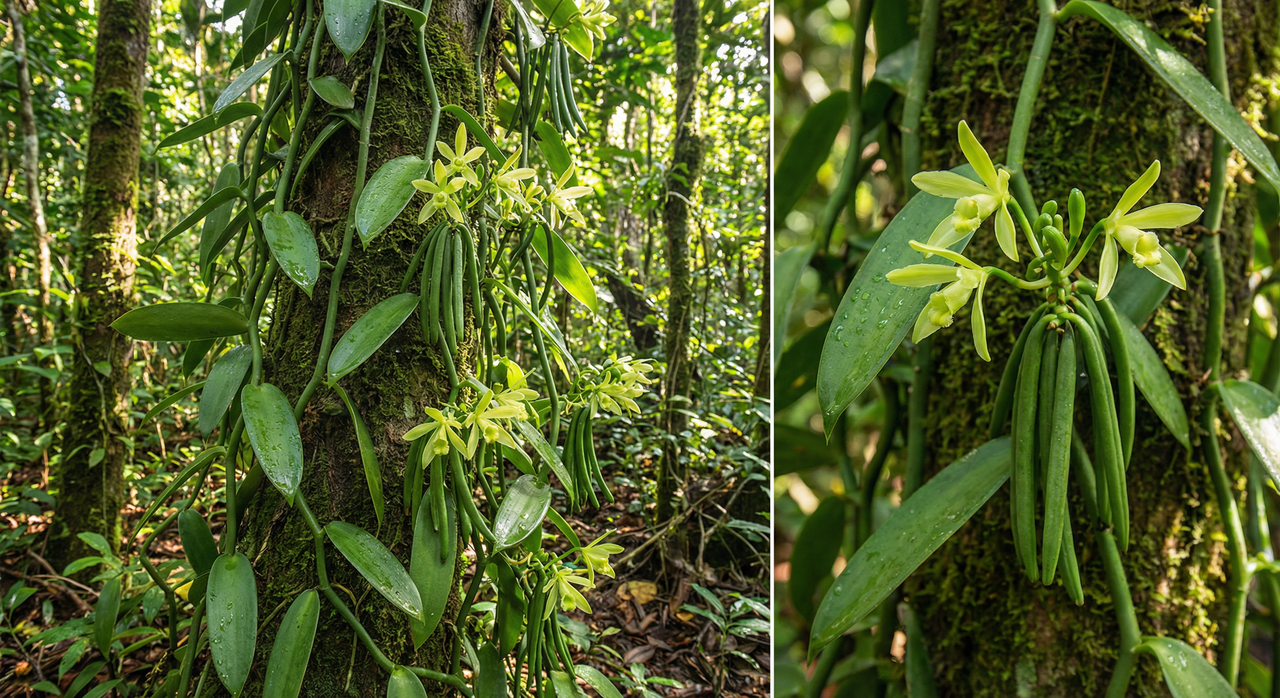
Every vanilla bean you've ever bought started as a flower that was open for less than twelve hours. One morning, that's all you get. Miss it, and there's no pod, no cure, no flavor; just a wilted blossom dropping to the greenhouse floor while you were doing something else. I learned this the hard way during my first season growing Vanilla planifolia in Central Florida, crouching in the humid shade of a food forest at 7 a.m. with a bamboo skewer, trying to remember exactly what I'd read about transferring pollen. The vine had taken three years to reach that moment. Three years of patience, and the plant gave me a single morning to get it right.
What most people don't realize is that vanilla is an orchid, a climbing, hemiepiphytic orchid that evolved in the canopy shade of Mexican rainforests alongside a single bee genus that understood the flower's schedule perfectly.[1] When that relationship was severed by colonization and the vanilla trade went global, humans had to become the bee. Everything downstream, the price, the labor, the rarity, the fraud of synthetic vanillin flooding the market, flows from that one ecological severance. Knowing that changes how you look at the small brown bean sitting in your spice drawer.
Origin and History of Vanilla
Few plants carry as much cultural weight in as small a flower as vanilla. The genus contains over 100 species, but one climbing orchid vine from the rainforests of eastern Mexico gave us the flavor that now perfumes kitchens on every continent. Understanding where vanilla actually comes from -- biologically and culturally -- changes how you see every bean and bottle on the shelf.
Botanical Background and Native Range
Vanilla planifolia, the vanilla orchid scientific name most familiar to growers and cooks alike, is native to the tropical rainforests of Veracruz, Mexico, extending through Guatemala, Costa Rica, and Panama and into parts of northern South America.[2][3] It's a perennial hemiepiphytic climbing vine, meaning it roots in the ground but uses aerial roots to ascend host trees, reaching 15 to 30 meters in the wild with a cultivated lifespan of 10 to 20 or more years.[4][5] From seed, it takes 5 to 7 years to reach flowering maturity; from cuttings, that drops to 3 to 4 years.[6] I've never met a serious grower who starts from seed for that reason. Every vanilla vine I've propagated has been from a cutting, and I always label them the moment I take them because young plants can look deceptively similar to other shade-loving climbers in a humid greenhouse.
The broader genus gives us two other commercially significant species worth knowing. Vanilla pompona grows where vanilla grows naturally across a wider arc: southern Mexico through Central America, into South America as far as Peru and Brazil, and across the Caribbean.[7] Its stems are thicker (up to 3 cm in diameter) and it shows more drought resilience than its more famous cousin.[8] Vanilla tahitensis is a different story entirely: it's a sterile hybrid, predominantly V. planifolia crossed with V. odorata, with no true wild native range. It originated in the Society Islands of French Polynesia and is now cultivated in Indonesia, Madagascar, and Hawaii.[9][10] Think of it as a Pacific flavor innovation built on a Mesoamerican foundation.
Visual Characteristics of Vanilla Orchids
In the garden or greenhouse, V. planifolia is unmistakably architectural. Its succulent stems run 1 to 2 cm in diameter, glossy green and almost waxy, becoming woody near the base with age.[11] The dark green leaves are alternate, leathery, and variable in size -- 5 to 20 cm long, smaller during dry periods and larger when water is abundant, which tells you a lot about how responsive this plant is to its environment.[12] The flowers are cream-yellow to pale greenish-white, 4 to 7 cm long, fragrant, and fleeting: each blossom lasts exactly one day.[13] They appear in racemes and carry a prominent three-lobed lip, the structural feature that positions visiting pollinators. The pods that follow -- the ones we actually care about -- run 10 to 25 cm long, packed with thousands of tiny black seeds suspended in aromatic resinous pulp.[14] The whole vine climbs via adventitious aerial roots covered in velamen, the same spongy tissue you see on tropical orchid roots, which absorb atmospheric moisture and anchor the plant without a taproot.[12] That velamen is why humidity matters so much. I keep my shade house at 80% relative humidity in summer, and the difference in root vigor is visible. In cultivation, most growers keep vines to 3 to 5 meters rather than their wild potential, which makes harvesting and hand-pollination actually manageable.
The other two species diverge noticeably. Vanilla pompona carries thicker stems (up to 3 cm), larger pods (15 to 25 cm), and elliptic-lanceolate leaves with a fruitier overall flavor profile.[15] Vanilla tahitensis runs thinner and more branched, its shorter pods (10 to 15 cm) delivering the distinctive floral-fruity aroma that sets it apart from the richer, creamier character of V. planifolia.[9][16]
Traditional and Cultural Uses
Vanilla's human story begins with the Totonac people of Veracruz, who cultivated V. planifolia somewhere around 1200 to 1400 AD and developed the manual pollination techniques that still underpin every commercial crop today.[17][18] They flavored xocolatl -- a drink of cacao, honey, and chili -- with the cured pods, and used them medicinally for fevers, digestive complaints, and as an aphrodisiac.[19] When the Aztecs conquered the Totonac in the 15th century, vanilla entered imperial tribute systems and ritual ceremonies.[20] Hernán Cortés encountered it in 1519, and by around 1528 it had arrived in Europe, where it spent the next three centuries as an expensive curiosity that refused to fruit outside its native range.[17] Across Central and South America, V. pompona carried its own parallel medicinal tradition for gastrointestinal and respiratory ailments, while V. tahitensis became woven into Polynesian ceremony -- appearing in leis, ritual dances, and rites connecting the plant to love and fertility.[21]
From Mesoamerica to Global Cultivation
The breakthrough that unlocked global production came in 1841 when Edmond Albius, a twelve-year-old enslaved boy on Réunion Island, refined a hand-pollination method that drew on the Totonac knowledge Europeans had observed but never fully adapted.[22] The technique I use in my own setup -- a small wooden skewer, a steady hand, the same motion every morning during bloom -- is a direct descendant of that discovery, and I find it difficult to perform without appreciating the layered history behind a gesture so simple it takes about two seconds per flower. Today, roughly 95% of vanilla is cultivated rather than wild-harvested, with Madagascar producing approximately 80% of global supply.[23] That geographic concentration creates real supply-chain fragility, as anyone who watched vanilla prices spike after Cyclone Enawo in 2017 knows. Meanwhile, wild V. planifolia is listed as Endangered on the IUCN Red List and sits on CITES Appendix II, pressured by habitat loss, overcollection, and climate disruption.[24][6] I source only certified cultivated stock, always, because the conservation data makes the alternative indefensible.
Fun Facts and Ecological Role
The one-day flower lifespan is the biological fact that has most shaped my relationship with this plant. Miss a bloom, miss the window. I do a walk-through every morning during flowering season with a skewer in my pocket, because a flower that opened at dawn will be wilting by early afternoon.[25] In the wild, that same window relies on specific stingless Melipona bees native to Mesoamerica -- which is why vanilla simply will not set pods outside its native range without human intervention.[26] The vanillin we associate with the flavor doesn't exist in the green pod; it develops enzymatically during curing, a transformation I'll always find slightly miraculous.
Ecologically, the vine functions as a hemiepiphyte that supports forest biodiversity rather than parasitizing its host trees. Its seeds are dust-fine and require specific Ceratobasidium fungi to germinate through mycorrhizal association, which is why wild seedling survival rates sit below 10%.[27][6] That biological dependency is one reason the species can't simply recolonize disturbed habitat -- and one more reason ethical cultivation matters as much as it does.
Vanilla Varieties and Where to Buy Plants
Notable Vanilla Cultivars and Flavor Profiles
At the botanical level, Vanilla planifolia is a climbing epiphytic orchid that needs a tree, trellis, or post to scramble up, and it does best under 70-80% shade. The mature pods run 15-25 cm long and cure to that deep brown-black we associate with real vanilla beans.[28][29] Almost every commercial planting in the world is cloned from stem cuttings rather than grown from seed, which keeps flavor consistent but compresses the species into dangerously narrow genetic territory.[30] That's why breeding programs in India, Indonesia, and across Africa are focused squarely on Fusarium wilt resistance and humidity tolerance, with Tahitian cultivars able to handle humidity above 85% while Bourbon-type vines prefer around 75% and are considerably more vulnerable to root rot.[30][31]
The Bourbon cultivar group, centered on Madagascar and Réunion, dominates world production for good reason. These vines yield 5-8 kg of pods per plant annually, and under solid management you can see 500-2000 kg per hectare.[30][32] The vanillin content runs 2-4%, which is what gives Madagascar bourbon vanilla beans that sweet, woody, almost caramel depth most of us picture when we think of vanilla. My own greenhouse-cured Bourbon beans hit exactly that profile, rich and warm with a long finish that's nothing like what comes out of a supermarket extract bottle.
Vanilla tahitensis, a hybrid of V. planifolia and V. odorata, goes a completely different direction. The pods are shorter (13-18 cm) and the vanillin content drops to 1-2%, but what you get instead is a heady floral-fruity aroma with cherry undertones that no Bourbon bean can replicate.[33][34] Named selections include 'Tahiti,' 'Ha'apape,' higher-yielding 'Tihati,' and the disease-resistant 'Manua.' I've grown Tahitian cuttings alongside Bourbon-type vines and noticed the Tahitian plants flower more readily at the humidity levels I maintain, even when the Bourbon vines need a bit more coaxing before they finally set heavier pods after hand-pollination.
Mexican landraces, the ancestral parent material, produce pods with a richer, spicier character and chocolate undertones, though yields are more modest at 3-6 kg per vine per year.[30] Then there's Vanilla pompona, the wild card. No formally named commercial cultivars exist for it, but its fruity cherry-almond profile and 2-3% vanillin content make it interesting as a breeding parent, particularly for temperature tolerance work.[35][36] It's not a plant you'll find at any commercial scale, but it signals where the genus might go as climate pressures intensify.
Sourcing Vanilla Plants in the United States
You won't find vanilla orchid planifolia plants at a garden center. Your realistic options are specialty orchid nurseries: Logee's Plants, Florida-based growers, vendors recommended by the American Orchid Society, and outfits connected to University of Florida Extension programs. Prices typically run $15-$150 depending on whether you're getting a small unrooted cutting or a mature potted plant.[37][38] Most of my best-performing plants came through Florida nurseries working with UF/IFAS tissue-culture programs, and I'd point anyone starting out toward those connections first.
On the regulatory side, importing live V. planifolia requires a phytosanitary certificate confirming the plant is pest and disease free, but no CITES permit is needed since the species isn't listed on Appendix II.[39][24] My advice: request that phytosanitary certificate directly from your supplier rather than trying to navigate APHIS yourself. It saves real headaches and means the plant arrives in good health. Processed vanilla beans fall under FDA food-import rules entirely separate from USDA plant permits, so that's a different conversation.[40]
Tahitian vanilla plants are available through a narrower pool of suppliers, including Logee's Greenhouses and Eureka Farms, generally as cuttings or established plants in the $20-$150 range and subject to the same phytosanitary requirements.[41][42][43] V. pompona is genuinely scarce, occasionally appearing at specialty orchid nurseries for $25-$80; wild-collected material requires CITES documentation, though artificially propagated specimens need only the phytosanitary certificate.[24][44]
You'll see vanilla seeds sold online for $5-$50 a packet, but germination is erratic at best, and starting from seed can add years to an already slow timeline.[45][46] The first time I ordered vanilla, I received a tiny unrooted cutting that needed immediate support, a moss pole, and sustained high humidity just to stay alive. Cuttings from trusted domestic nurseries are the practical starting point, and that's a reality worth factoring in before you spend money on seeds. Vanilla isn't invasive in the U.S., but nearly every grower outside USDA zones 10-11 will need a greenhouse, and without hand-pollination, those pods are never coming.
Propagating and Planting Vanilla (Vanilla planifolia)
Vanilla sits in an interesting spot in my propagation mental map: it's technically an orchid, which means its seeds operate by entirely different rules than anything else I grow in my food forest. Understanding those rules is half the battle, and it explains why almost every vanilla plant I've ever grown has started as a cutting rather than a seed.
Vanilla Seed Biology and Why Cuttings Dominate
Vanilla planifolia seeds are nearly microscopic, measuring just 0.5-1.0 mm long and 0.1-0.2 mm thick, with a thick reticulate seed coat and a thin white aril that, in the wild, helps ants disperse them.[47][48] What they don't have is endosperm, which means they carry no nutritional reserve for germination. Instead, they depend entirely on symbiotic mycorrhizal fungi, typically Rhizoctonia or Tulasnellaceae species, to supply the nutrients a germinating seedling needs. Without those fungi, natural germination rates fall below 10 percent and protocorm development alone can take 6-12 months.[49][50] Even under optimal lab conditions with sterile agar media, germination rates only reach 20-50 percent, seedlings show significant genetic variability from outcrossing, and you're looking at 5-7 years before your first flower.[51][52] That's why vegetative propagation via stem cuttings dominates commercial production across V. planifolia, V. pompona, and V. tahitensis alike.
The practical cutting protocol is straightforward once you have a healthy donor vine. You're looking for semi-mature growth, with cuttings ideally 60-90 cm long carrying 6-8 nodes. Let them callus for a day or two, treat with IBA rooting hormone at 1,000-3,000 ppm, and plant into a well-draining bark-perlite-peat mix at pH 5.5-7.0. Maintain temperatures of 25-30°C and humidity above 80-90 percent, and you can expect 70-90 percent rooting success within 4-8 weeks.[53][54] In my Central Florida greenhouse I usually see roots in 5-6 weeks when humidity stays consistently above 80 percent and I'm using a 50/50 orchid bark to perlite mix. Tissue culture is another option for disease-free mass production with 85-95 percent success in laboratory settings, and grafting onto compatible rootstocks like V. pompona or V. tahitensis achieves 50-80 percent success, though data on V. pompona as a rootstock remains thin.[55][56] Those are specialized tools; for most growers, cuttings are the answer.
One thing worth knowing upfront: even after you have a rooted cutting, getting it to produce pods requires hand pollination. Outside vanilla's native Mesoamerican range the meliponine bees that do this work in the wild are absent, so the job falls to you. The technique developed by Edmond Albius must happen within 12 hours of each flower opening and delivers around 50-70 percent success when done carefully.[57][58] It's fiddly, honestly, but learnable. After several seasons I'm hitting about 60 percent, which feels like a win.
Soil and Site Requirements for Vanilla
Vanilla planifolia evolved as an epiphytic vine clinging to tropical forest trees, anchoring itself into bark and accumulated organic debris rather than true soil.[59][60] That ecology tells you everything you need to know about how to plant it. A sandy loam or bark-perlite-peat blend with 2-5 percent organic matter and a pH of 5.5-7.0 mimics that environment well enough for the roots to thrive.[29][61] Drop below pH 5.0 and you risk aluminum toxicity and magnesium deficiency; push above 7.0 and iron and manganese become unavailable to the roots. I always test my potting mix pH before planting and nudge it up with a little dolomitic lime if it's drifted below 5.5. V. pompona does best with slightly higher organic matter (5-10 percent), and V. tahitensis handles a touch more alkalinity with a 1:1:1 bark-moss-perlite blend.[62]
Light and humidity are just as non-negotiable as the growing medium. Vanilla wants 40-60 percent shade, which translates to 1,000-2,500 foot-candles, in temperatures of 21-30°C during the day with nights staying above 13°C, and relative humidity in the 70-90 percent range.[63][64] Commercial operations typically run 50-80 percent shade cloth. Full sun scorches leaves and triggers photoinhibition; too much shade leads to etiolated, weak vines that rarely flower. I lost a batch of young cuttings early in my greenhouse experiments to waterlogging, even with a well-constructed mix, which taught me to err on the side of letting the surface dry slightly between waterings. Drainage, above almost anything else, is the habit this plant demands. Propagate during the active growth period, spring in northern greenhouses or the wet season in the tropics (March-June), when warmth and humidity give cuttings the best possible start.[65][61]
Spacing, Supports, and Planting Technique
In the wild, vanilla vines reach 15-25 m, but in cultivation you're working with 3-5 m plants that need a sturdy structure to climb.[13][66] Living trees, wooden trellises, or posts 1.8-2.4 m tall all work; the aerial roots grip best when the surface is covered with moss or rough bark rather than smooth timber. Commercial field planting uses 2-3 m between plants within rows and 3 m between rows, putting 400-1,500 plants per hectare depending on management intensity.[67][66] V. tahitensis comes in slightly tighter at 1.5-2.5 m; V. pompona follows the standard 2-3 m recommendation. In a greenhouse or intensive system you can tighten to 1-1.5 m with vertical training, but airflow becomes critical at that density to prevent the fungal issues these humid conditions can encourage. I personally favor 2 m centers on a 2 m trellis, mostly because it keeps every vine reachable for hand pollination without dragging out a ladder. That practical consideration has shaped my whole system design.
Timeline from Propagation to First Harvest
Stem cuttings root in 4-8 weeks and reach first flowering in 2-3 years, with pods realistically harvestable 3-5 years after planting.[68][28] Seed-grown plants extend that to 5-7 years from germination before the first pod. Once a flower is successfully hand-pollinated, the pod needs another 6-9 months to mature on the vine. I compare the wait to getting a young passionfruit vine into full stride: the first couple of seasons feel like little is happening, and then suddenly you have a productive plant you'll harvest from for years. I label every cutting with an exact date so I can track where each vine sits in that arc. Full commercial productivity arrives around years 5-7, and cooler conditions or lower light will push that timeline further.[69] Patience isn't just advice with vanilla; it's the actual skill.
Vanilla Care Guide: Growing Vanilla planifolia Successfully
Caring for vanilla is really about replicating one very specific environment: the humid, shaded understory of a lowland tropical rainforest. Once you accept that as the frame, every decision from how much light to give it, to when to water, to what temperature your greenhouse needs to hold overnight, starts to make intuitive sense. The challenge isn't that vanilla is fussy in some arbitrary way. It's that it evolved in a narrow ecological niche, and drifting too far from those conditions costs you months of growth or years of flowering.
Sunlight and Light Requirements for Vanilla Orchids
In its native Mexican and Central American rainforests, vanilla grows as an epiphytic vine in shaded understories with 50-70% light reduction, bright and indirect but never harsh.[11][66] In temperate or indoor growing situations, you'll need to supplement to reach 12-14 hours of bright indirect light daily; too little and the vine grows weakly and refuses to flower, too much direct sun and you'll see leaf scorch within days.[70][71] I label every new planting right at the start because young vanilla vines in low light look surprisingly similar to other aroids until those characteristic aerial roots emerge. Getting the light wrong early, and then not even being sure which plant you're dealing with, is an expensive mistake when you're three years from your first pod.
Watering Needs and Humidity Management
Vanilla evolved where annual rainfall runs 1500-2500 mm and ambient humidity sits at 70-85%.[72][73] In cultivation, aim for 70-80% humidity, pushing closer to 80% or above during flowering and fruiting, using misting, humidity trays, or a humidifier to prevent flower drop. I check the top inch of the mix with my finger before I water. When it's dry, I water; a bark, perlite, and sphagnum or coir blend drains quickly enough that you can follow a rough schedule of every 5-7 days during active growth and every 10-14 days in cooler months, using rainwater or distilled water at pH 5.5-7.0 with EC below 1.0 dS/m to avoid salt accumulation.[11][66] Prolonged water deficit beyond two to three weeks can cut vigor and yield by up to 50%.[73][74] Overwatering is just as damaging: soft mushy roots, yellowing older leaves, and stem discoloration are the signatures of Fusarium, Phytophthora, or Pythium moving in, while crispy leaf tips and wilting on otherwise dry media tell you the vine is thirsty.[75][71] Vanilla pompona needs even stricter moisture consistency than planifolia, while tahitensis manages moderate drought slightly better thanks to physiological adaptations like thicker leaves.[76]
Feeding and Fertilization for Vanilla Vines
Vanilla is a moderate feeder. During active growth from spring through fall, a balanced orchid formula like 20-20-20 or 30-10-10 diluted to half strength every two to four weeks covers the base, then shift to a phosphorus-rich blend around 10-30-20 once flowering begins.[77][78] Back off or stop entirely in winter dormancy. I've diagnosed iron chlorosis on my own young leaves when my media drifted alkaline; switching to chelated iron and flushing the pot monthly with plain water cleared it within weeks.[79][80] Keep media EC between 1.0-2.0 mS/cm, and don't skip the monthly flush even when plants look healthy. Over-fertilizing produces lush soft growth at the expense of pod aroma, which is exactly the wrong trade-off after years of patient cultivation.[81][29] Organic inputs like fish emulsion, compost tea, or seaweed extract work beautifully alongside synthetic programs and mirror the nutrient delivery vanilla gets from decomposing bark in the wild.
Temperature Tolerance: Heat, Frost, and Seasonal Care
All three species, planifolia, pompona, and tahitensis, have zero frost tolerance. Temperatures at or below 0°C (32°F) are lethal, and prolonged exposure below 15°C (59°F) causes leaf drop and visible decline well before an outright freeze.[11][82] The optimal band is 21-32°C (70-90°F) through the day with nights staying above 18°C (65°F). I bring every container indoors the moment nights threaten 10°C; one hard frost will kill the vine outright, and cold damage shows up as blackening stems and soft rot before you even realize it happened.[11][83] Reliable cultivation outdoors is limited to USDA zones 10-11; everywhere else, a heated greenhouse is non-negotiable.[84] On the heat side, vanilla can handle brief spikes to 35-40°C (95-104°F) but sustained temperatures above 32°C (90°F) cause wilting, leaf curling, chlorosis, and disrupted pollen viability.[85] I watch for the first signs of leaf curl on seedlings in my hottest summers and increase misting before scorch sets in. A 50-70% shade cloth, 2-4 inches of organic mulch, drip irrigation every two to three days, and proper 6-8 foot vine spacing for airflow will carry you through most heat events.[86][87]
Pruning, Training, and Maintenance
Vanilla needs a trellis, living tree, or sturdy post to climb, with vines spaced 1.5-2 meters apart. Annual pruning after harvest or during dormancy keeps the planting productive: remove dead or damaged sections, thin crowded areas, tip-prune to encourage lateral branching, and manage vine length around 1.5-2 meters to improve light penetration and airflow.[33][87] Then comes the task most beginners underestimate. Outside vanilla's native Mexican range, natural Melipona bee pollinators are absent, so every single one-day flower must be hand-pollinated by folding back the labellum and transferring pollen to the stigma.[88][89] I find it meditative, a quiet 30-second task each spring morning, but it's also where most first-time growers give up. Don't. The pod that results from that 30 seconds, after 6-9 months of maturation, is what makes every bit of the wait worthwhile.
Seasonal Rhythm and Lifecycle in Cultivation
In tropical climates, vanilla runs a continuous but rhythmic cycle: new vegetative growth surges in the wet season (roughly May through October), flowering is triggered by drier conditions and shorter days (February through April in the native range), pods then develop over 6-9 months to ripen in the wet season (September through December), and a mild dormancy follows.[3][90] Pompona flowers June through September with pods maturing October through January; tahitensis flowers October through December and ripens pods May through August in their respective hemispheres.[91][92] All three require hand-pollination in commercial and home settings. A well-tended vine is polycarpic, meaning it flowers and fruits repeatedly over a lifespan of 10-20 years or more once established. That long-game reality is the honest truth of vanilla care: you're not gardening toward this season's harvest. You're building a relationship with a plant that will reward patience, attentiveness, and a well-calibrated greenhouse for decades.
Harvesting Vanilla Beans: Timing, Technique, and Yield
When to Harvest Vanilla Pods: Maturity Cues and Regional Seasons
The hardest part of growing vanilla isn't the hand-pollination or the years of waiting. It's knowing exactly when to pick. After hand-pollinating, V. planifolia pods need roughly 240 to 270 days to reach harvestable maturity, while V. tahitensis and V. pompona tend to finish a little earlier in that 6-9 month window.[93][94][95] And of course, none of that clock even starts until your vine is 3 to 5 years old and finally flowering.[93][96] I've found the final few weeks before harvest are when daily observation really pays off, because in high humidity that color shift from deep green to yellow-green is subtle and easy to miss until a pod starts splitting.
The cues you're watching for are pretty specific: pods between 15 and 25 cm long, transitioning from vibrant green to a pale yellow-green, with slight tip dryness or wrinkling and a firm, plump body.[97][98] Squeeze one gently and you might catch the first faint whisper of aroma. You want to harvest at roughly 70-80% maturity, just before any longitudinal cracking appears, because a split pod loses essential oils fast.[99] I've seen growers harvest too early, excited after a 3-year wait, and end up with flat, nearly scentless pods. Trust the visual cues over the calendar.
Regional harvest seasons reflect these maturation timelines closely. Madagascar, the world's dominant producer of V. planifolia, runs June through October with a peak in July and August.[100] Mexico follows a similar May through August window, while French Polynesia's V. tahitensis harvest runs May through September.[101][102] All of these rhythms depend on consistent tropical conditions: temperatures between 21 and 32°C, high humidity, partial shade, and adequate rainfall.[14][66] Your local microclimate will shift these windows, so treat regional charts as starting points rather than firm rules.
Yield Expectations and Flavor Development After Curing
A mature vanilla vine at peak productivity can yield around 1 to 2 kg of cured beans annually, but that figure assumes a vine that's at least 7 years old and receiving intensive care.[66][82] Early years (3 to 5) produce much less, and the green pods themselves cure down dramatically: roughly 1 to 2 kg of fresh pods yield only 200 to 400 grams of finished beans after moisture loss.[103] It's humbling math, but it explains why real vanilla costs what it does.
The curing process is where the real alchemy happens. Those freshly picked green pods contain almost no vanillin in usable form. The 3 to 6 month cycle of killing, sweating, drying, and conditioning triggers enzymatic activity that builds vanillin content in V. planifolia and V. pompona up to 1 to 2% by dry weight.[28] Without the full process, those pods will never deliver more than a faint ghost of vanilla. I've confirmed this myself doing small-batch home curing: a rushed or abbreviated cure produces something thin and disappointing, while a properly conditioned bean fills a room.
The resulting flavor depends enormously on species. Properly cured V. planifolia beans deliver that rich, creamy, sweet profile most people think of as "vanilla," with undertones of caramel, cherry, and wood.[28] If you've only tasted grocery-store extract, the complexity of a properly cured planifolia bean will genuinely surprise you. V. tahitensis, by contrast, builds lower vanillin but accumulates distinct compounds including anisyl alcohol, heliotropin, and guaiacol, producing a floral, fruity, spicy profile with notes of cherry, anise, pineapple, and banana.[104][105][106] The harvest technique and curing discipline you bring to the process shape the final bean as much as the vine itself does.
Vanilla Preparation and Uses
A freshly harvested vanilla pod is, culinarily speaking, almost nothing. I've split one open straight from the vine and held it to my nose expecting that familiar wave of sweetness, and what I got was barely a whisper. The sticky black seeds inside have almost no scent until fermentation begins. That transformation happens only through curing, and you cannot rush it without paying the price in flavor.
Curing Vanilla Beans: The Essential Transformation Process
The traditional curing sequence starts with a brief blanch in 60-80°C water for two to three minutes, followed by sweating the pods wrapped in blankets for 24-48 hours, then repeated cycles of sun-drying and shade-conditioning over several weeks.[96][107][108] My first batch got maybe half the sweat time it needed, and the difference compared to properly cured beans was obvious the moment I scraped them into a custard. Don't shortcut the sweat.
What all that labor produces is remarkable chemistry. Cured Vanilla planifolia pods contain 1-2% vanillin by dry weight as the primary aromatic compound, backed by over 200 supporting volatiles plus natural sugars that round out the flavor.[109][110][111] The resulting pods, typically 15-25 cm long with a smooth, leathery skin, go into desserts, baked goods, ice cream, and homemade extract.[28]
Culinary Flavor Profile and Classic Pairings
The finished flavor is creamy and sweet with a lingering, velvety finish that carries notes of caramel, honey, and warm spice.[110] Homemade extract from my own cured beans outperforms anything from a grocery shelf in custards and ice cream; the depth simply isn't comparable. V. planifolia pairs beautifully with dairy, citrus, stone fruits, coffee, chocolate, and warm spices, and it lifts both rum and bourbon into something worth savoring slowly.[112][113]
Tahitian vanilla (V. tahitensis) carries a floral, fruity, anise-forward character that reminds me of almond extract crossed with anise hyssop; it's lower in vanillin and genuinely shines in fruit-forward desserts and light custards rather than in a classic vanilla cake recipe.[114][115] V. pompona takes yet another direction, with cherry-like, balsamic, and almond notes from compounds like heliotropin and ethyl butyrate, making it a natural partner for ginger in baked goods and sorbets.[116]
Medicinal and Traditional Preparations
The same cured pods behind vanilla ice cream recipes and vanilla icing have a long history in Mexican folk medicine, where they were used for digestive complaints, fevers, and as an aphrodisiac.[117][118] Practical preparations include infusions using 1-2 g of pod per cup, tinctures at 1-2 ml up to three times daily, and standardized extracts at 0.5-2 ml per day; vanilla essential oil contains 2-5% vanillin alongside p-hydroxybenzaldehyde.[3][119] Modern research confirms antioxidant and antimicrobial activities, though large human trials remain limited.[120] I've made vanilla tinctures from my own beans for homemade digestive bitters, and honestly the calming aroma seems to settle an uneasy stomach before any measurable pharmacology kicks in. That said, if you're pregnant or managing a serious condition, please talk to a qualified practitioner before reaching for concentrated preparations; the research on therapeutic doses is still developing.
Ornamental, Perfume, and Other Non-Food Applications
The vine itself earns its place in the garden long before it produces a single pod. I grow mine on a sturdy arbor where its glossy leaves and vigorous climbing habit create a lush living screen that looks nothing like a utilitarian food plant.[28][29] Harvested vine trimmings go straight back into the garden as mulch, a satisfying closed loop in any permaculture system.[121] Beyond the garden, V. tahitensis essential oil, with its lower vanillin profile and pronounced floral character, is particularly valued in perfumery and cosmetics where that softer, rounder scent outperforms the more assertive planifolia.[10][122] Nothing from this plant needs to go to waste.
Vanilla Health Benefits and Medicinal Uses
Vanilla has been doing medicinal work for a long time before anyone called it "medicinal." Indigenous Mesoamerican cultures, particularly the Totonac people, used vanilla primarily to settle the stomach: indigestion, stomachaches, and general digestive discomfort were the core applications, much the way many aromatic culinary herbs earned their place in the kitchen.[123][124] What's satisfying, from a modern research standpoint, is that those traditional uses weren't wrong. They were just missing the mechanistic vocabulary.
Traditional Uses and Modern Research
The bulk of contemporary research on vanilla's health properties focuses on vanillin and its supporting cast of phenolic compounds, and the anti-inflammatory findings are the most robust. Vanillin inhibits the NF-κB signaling pathway, downregulates COX-2 and iNOS expression, and suppresses pro-inflammatory cytokines including TNF-α and IL-6, with measurable reduction in paw edema in rat models.[125][126] Paired with Nrf2 pathway activation that upregulates cellular antioxidant defense genes like HO-1 and NQO1,[127] you start to see why the antioxidant activity is comparably strong: ethanolic pod extracts show DPPH radical scavenging with IC50 values around 50-200 μg/mL, approaching the activity of ascorbic acid.[128][129] For comparison, that puts well-cured vanilla in the same phenolic conversation as cinnamon and cloves, which I find a useful reference point when people are surprised that a flavoring could have any real bioactivity at all.
Antimicrobial activity adds another layer. Vanilla extracts inhibit Staphylococcus aureus, Escherichia coli, and Pseudomonas aeruginosa (including biofilm formation), and show antifungal effects against Candida albicans.[114][130] Vanillin also acts as a TRPV1 receptor agonist and COX-2 inhibitor, producing mild analgesic effects in animal models.[131] Preliminary findings point toward anticancer potential via caspase-mediated apoptosis in cell lines at concentrations of 1-5 mM,[132] and anti-diabetic activity through α-glucosidase inhibition and improved glucose uptake at 50-200 μg/mL.[133]
The neurological findings (anxiolytic effects via GABAergic modulation, memory enhancement through acetylcholinesterase inhibition, antidepressant-like activity) are genuinely intriguing, but I'd hold them loosely.[134][135] Almost all of vanilla's pharmacological evidence lives in in vitro studies and animal models; human clinical trials are limited and inconclusive, and claims about sedative, adaptogenic, or aphrodisiac properties are largely anecdotal.[136][133] The preclinical-to-clinical gap is real and worth being honest about.
Key Phytochemicals in Vanilla
Vanillin is the headliner, making up 1-3% of dry cured pod weight and reaching up to 50 mg/g in concentrated extracts.[133][137] But the supporting phenolics matter too: vanillic acid, p-hydroxybenzaldehyde, ferulic acid, and p-hydroxybenzoic acid collectively push total phenolic content to 20-60 mg GAE/g of dry pod weight, and the whole ensemble works more effectively than vanillin alone.[133] Flavonoids (vitexin, isovitexin, catechins), volatile terpenes including linalool, and glucovanillin (the inactive precursor) round out the chemistry.[138]
None of that bioactive profile exists in the raw green pod. Vanillin biosynthesizes via the phenylpropanoid pathway from phenylalanine, and it's the curing process (blanching, sweating, drying to 25-30% moisture, then conditioning) that enzymatically converts glucovanillin into free vanillin while dramatically increasing phenolic bioavailability and antioxidant capacity.[139][140] I've cured my own test pods from the vanilla vines in my Central Florida food forest using the traditional sweat-and-dry method, and you can genuinely taste the difference between properly cured beans and ones that were rushed. The chemistry backs up what the palate detects.
Growing conditions influence those compounds too. In my experience, running about 60% shade and keeping moisture consistent during pod development produces noticeably darker, more aromatic beans, which tracks with the research showing that 50-70% shade, mycorrhizal associations, optimal soil pH around 5.5-6.5, and harvesting at 6-9 months during the dry season all increase vanillin content, while drought and high heat reduce it.[141][142] Tahitian vanilla (V. tahitensis) carries lower vanillin (0.5-2%) but higher anisyl compounds that still support solid antioxidant and antimicrobial activity,[115] while V. pompona can reach comparable or even higher vanillin levels (1.5-5.2%) with a more resinous, complex volatile profile.[143] The genus-wide pattern holds: cure it well, and the bioactivity follows.
Nutritional Profile of Vanilla Beans
Dried vanilla beans have an impressive-looking nutritional résumé on paper: roughly 288 kcal per 100 g, significant carbohydrates, 5.6 g protein, and standout mineral content with potassium reaching 1,400-2,100 mg per 100 g alongside meaningful calcium, magnesium, iron, and niacin.[144] They also carry 30-50% sugars and a range of phenolic compounds that contribute to antioxidant properties.[145] Vanillin itself has bioavailability above 90% in humans, metabolizing to vanillic acid.[146]
The honest caveat is that vanilla is used in tiny quantities as a flavoring, so those per-100 g values stay mostly theoretical in practice. I keep a few beans in my sugar jar but I'm not counting on them for my daily potassium. Vanilla is flavor-first in the diet, and that's fine; the real nutritional and medicinal story lives in the concentrated phenolic compounds rather than the macros.
Safety and Side Effects
Culinary vanilla from reputable sources is one of the safest flavorings I work with. Vanilla planifolia beans and extracts hold GRAS status with the FDA,[147] and vanillin's oral LD50 in rats falls between 3,300 and 3,978 mg/kg, placing it in the same low-acute-toxicity category as table salt.[148] Genuine V. planifolia contains no significant hepatotoxic coumarin (that's a concern with tonka bean adulteration, not real vanilla), and the curing process eliminates microbial risks present in raw material.[149]
Allergic reactions are genuinely rare, affecting less than 1% of people, and typically show up as contact dermatitis, mild gastrointestinal upset, or occupational asthma in flavor-industry workers who handle concentrated material daily.[150] Fresh plant sap can cause mild skin or mucous-membrane irritation, so I wear gloves when harvesting, but that's an occupational precaution rather than a serious hazard.[151] Culinary use is generally safe during pregnancy; I'd only reach for caution when friends ask about making concentrated homemade tinctures or working with alcohol-based extracts at high doses. Drug interactions at culinary levels are minimal (weak CYP1A2 inhibition, mild anticoagulant effects only at supplemental doses), and vanilla is low-toxicity for pets, with large amounts potentially causing mild GI upset but nothing serious.[136][152] Almost every concern in the literature traces back to concentrated extracts or industrial exposure, not the bean in your kitchen drawer.
Vanilla Pests and Diseases
Vanilla planifolia is, frankly, a high-maintenance patient in the disease department. Growing it in the warm, humid conditions it demands also creates a near-perfect incubator for the fungal and water-mold pathogens that can take a productive vine down fast. I've watched newer growers pour years of care into a plant only to lose it in a matter of weeks to something that was probably lurking in the soil from day one. Understanding the threat landscape before you plant is genuinely the best protection you have.
Major Diseases of Vanilla planifolia
Three pathogens account for most serious losses. Fusarium wilt, caused by Fusarium oxysporum f. sp. vanillae, invades the vascular system and presents as yellowing leaves and progressive wilting before the vine collapses entirely.[153][154] No complete resistance exists in V. planifolia, which is a sobering fact, but Vanilla tahitensis shows notable resistance and is actively used in breeding programs to introduce that trait into cultivated lines.[155] Indian breeding work has already produced cultivars like 'Sreekara' and 'Sree Giri' with high Fusarium resistance, drawing on V. pompona and V. tahitensis genetics.[156][157] I remove and destroy any vine showing wilt symptoms immediately; delaying even a day can cost an entire row.
Phytophthora root rot is the one that humbles complacent growers the fastest. Caused by species including P. meadii, P. nicotianae, and P. cinnamomi, it rots the root zone and causes yellowing foliage followed by plant collapse, with losses reaching 50% in wet conditions.[158][159] After losing several vines to undetected Phytophthora in a poorly drained raised bed, I now prioritize sloped planting and weekly root-zone checks without exception. Vanilla tahitensis tolerates some strains better, but waterlogging is an amplifier across every species in the genus.[160] Anthracnose, caused by Colletotrichum gloeosporioides, rounds out the major trio with dark lesions on leaves, stems, and pods that directly cut into yield; V. tahitensis again shows lower susceptibility here too.[161][154] The practical takeaway is that if you're growing in a high-humidity zone, starting with bred material incorporating tahitensis or pompona genetics is worth every extra dollar spent at the nursery.[157]
Temperature and drainage sit at the center of the environmental risk picture. Vines are most resilient between 20 and 32°C (68 to 90°F) with 70 to 85% humidity; push outside those bounds or let water pool at the roots and you've essentially invited every pathogen on this list to set up camp.[162] When disease does appear, the management toolkit includes soil solarization, certified disease-free planting stock, sanitation, biological controls like Trichoderma and Bacillus subtilis, and targeted fungicides such as carbendazim or phosphonates as a genuine last resort, with immediate removal of symptomatic tissue as the non-negotiable foundation of all of it.[163][164]
Common Insect Pests and Natural Defenses
Here's where vanilla gets a bit of a break. The plant's own chemistry, particularly vanillin, phenolic acids, and flavonoids, acts as a genuine antifeedant and repellent against certain insects.[165][166] I've noticed that the distinctive scent released when a leaf is bruised seems to put certain caterpillars off entirely, which makes sense once you understand what those secondary metabolites are actually doing. Thick, leathery leaves and dense cuticles add a physical layer of defense on top of the chemistry, so the plant isn't defenseless, just not impervious.[167] Mycorrhizal associations with fungi like Tulasnella spp. also bolster overall plant vigor in ways that support baseline immunity.[168]
The pest roster that does get through includes mealybugs (Planococcus citri), scale insects, spider mites, thrips, aphids, leaf beetles, borers, and Spodoptera caterpillars, all capable of causing sap loss, sooty mold, leaf scarring, and reduced vine vigor.[28][169] Mealybug colonies on vanilla look similar to what you'd find on citrus or greenhouse orchids: waxy white clusters tucked into stem joints that are easy to miss until the population is already established. V. tahitensis and V. pompona show better tolerance to several of these insects, including mealybugs and vine weevils, though fruit flies, stem borers, and slugs remain a concern across all three species under stress.[154][157]
Integrated Pest and Disease Management
The hierarchy here is clear and the research backs it up. Cultural practices come first: 50 to 70% shade, 2 to 3 meter spacing for airflow, excellent drainage, rigorous sanitation, regular pruning of dead or symptomatic material, and avoiding overhead watering that keeps foliage wet overnight.[170][171] In my experience with orchids generally, consistent airflow and disciplined scouting prevent more problems than any spray program ever will. Biological allies come next: predatory mites and lady beetles for sap-sucking pests, parasitic wasps for caterpillars, Trichoderma and Bacillus subtilis for soil-borne pathogens, and sticky traps to monitor pressure before it spikes.[172][173] Neem oil and insecticidal soaps handle many pest flare-ups without disrupting the broader system. Targeted fungicides and pesticides are the final option, applied judiciously and only when identification is certain. No vanilla variety is bulletproof, but growers who commit to these practices consistently, rather than reactively, can keep productive vines going for decades.[174]
Vanilla in Permaculture Design
Vanilla planifolia is one of those plants that forces you to think in three dimensions. It's a hemiepiphytic climbing liana, which means it starts life rooted in the ground and then uses adventitious aerial roots to haul itself up into the canopy, eventually reaching 15-30 meters in the wild.[3][11] In a cultivated food forest it tops out around 4.5-6 meters, which is a much more workable proposition, but the vertical instinct is still there. You have to design for it from day one.
Forest Layer and Guild Companions
In the food forest canopy stack, vanilla sits firmly in the vine layer, threading upward through 50-70% shade cast by taller overstory trees.[175] What makes it such a good permaculture citizen is that those aerial roots attach without parasitizing the host. The vine is borrowing structure, not stealing resources.[3] Its thick, fleshy leaves store water internally, an epiphytic adaptation that reduces its competition with ground-layer plants below.[3] The genus as a whole shares this character; Vanilla pompona and V. tahitensis are also hemiepiphytic climbers reaching 10-20 meters, and both benefit from mycorrhizal associations and non-harmful attachment to hosts like Inga or Cecropia.[176][10]
The classic guild companions are nitrogen-fixing trees, and for good reason. Inga species, Gliricidia sepium, and pigeon pea all make excellent living trellises or overstory neighbors, feeding the soil while vanilla climbs.[175][121] In my own experience training vanilla on living Gliricidia poles in a Central Florida microclimate, the vines produced noticeably thicker aerial roots and seemed to establish faster than cuttings I had growing on inert wooden supports. Whether that's the result of the mycorrhizal network connecting through the living wood or simply better humidity around an active host, I can't say for certain, but the difference was consistent enough that I won't go back to dead trellises. At the understory and shrub layers, cacao, coffee, and banana all integrate well, and citrus and mango can anchor the canopy above.[175][177]
One lesson I learned the hard way: don't plant vanilla too close to an established banana mat. The rhizomes crowd the vine's lower roots, and banana is aggressive enough to win that competition even when the vanilla technically occupies a different vertical layer. Keep a generous buffer. The mycorrhizal relationships vanilla forms with fungi like Ceratobasidium spp. are essential for nutrient uptake, and anything that disturbs the soil near the base will set the vine back.[178]
Climate Requirements and Suitable Zones
There's no soft way to say this: vanilla's climate window is narrow. Vanilla planifolia needs daytime temperatures of 21-32°C (70-90°F), nights no cooler than 15-18°C (59-64°F), and annual rainfall of 1500-2500 mm spread evenly through the year.[66][179] Humidity needs to sit at 70-85% consistently.[3] Outdoor cultivation is realistically limited to USDA zones 10-11, with frost sensitivity kicking in at anything below 10-15°C (50-59°F) for any length of time.[180][28][181]
I often compare that 15°C nighttime floor to what I see with true citrus or passionfruit in zone 10b; those plants will take a brief dip and shrug it off, but vanilla won't. It's a different category of cold sensitivity entirely. The broader genus offers a little more flexibility: V. pompona can tolerate elevations up to 1500 meters and brief exposure near 38°C, and both it and V. tahitensis share the same core requirements of 70-90% humidity, 20-32°C temperatures, and a USDA zone 10b-12 footprint.[182][62][175] In my experience, consistent humidity is actually the harder variable to manage in marginal areas like central Florida; temperature is easier to cheat with microclimates and overhead canopy, but keeping the air at 70%+ through a dry spring takes deliberate design. Coconut palms, which thrive in the same zone 10-11 range and tolerate coastal salinity, can anchor the overstory while the dense fronds help hold moisture in the microclimate below.[183][184]
Ecosystem Functions and Pollination Ecology
The pollination story is one of the most extraordinary things about this plant. In its native range, Vanilla planifolia is pollinated almost exclusively by stingless Melipona bees, particularly M. beecheii, which perform buzz pollination to push past the rostellum that physically prevents self-fertilization. Even then, natural success rates are under 1%.[185][186][187] Outside Mexico and Central America, those bees don't exist, which means fruit set anywhere else on the planet depends entirely on human hands.
The technique itself was worked out in 1841 by Edmond Albius, a 12-year-old on Réunion, who discovered that lifting the rostellum with a thin stick and pressing the pollinia to the stigma could do what the bee does naturally. Done correctly on the morning the flower opens, success rates reach 80-90%.[188][189] The flowers are open for a single day, fragrant but nectarless in V. planifolia (a deceptive pollination strategy), while V. pompona actually offers a nectar reward to its euglossine and stingless bee visitors.[190][9] That distinction matters if you're designing a pollinator guild; a V. pompona planting at least has some chance of attracting native visitors in tropical gardens.
Beyond pollination, vanilla contributes quietly to forest health. Its aerial roots participate in nutrient cycling, the vine provides microhabitat for insects and fungi, and those obligate mycorrhizal relationships with Ceratobasidium support fungal diversity in the understory soil.[191] Wild V. planifolia is listed as Endangered on the IUCN Red List due to habitat loss,[192] which is why I source exclusively from certified sustainable nurseries and encourage everyone reading this to avoid wild-collected material. Pollinator decline from deforestation, pesticides, and climate change has already pushed commercial growers almost entirely toward manual pollination, driving up costs and labor in the process.[193][194] Growing vanilla in a biodiverse, pollinator-supportive guild won't replicate what the Melipona bees once did in Mexico, but building that habitat is still the right direction. Even recovering a fraction of natural pollinator services through thoughtful guild planting is a goal worth designing toward.
The Morning I Finally Pulled a Cured Pod from My Own Vine
I'd been growing vanilla in my Central Florida greenhouse for years before I held my first properly cured bean, and I remember pressing it between my fingers and just standing there. Nothing I'd read prepared me for the gap between the vanilla you buy and the vanilla you grow. It's slower, stranger, and more demanding than almost anything else in my food forest, and I keep it for exactly that reason.
Sources 194
- Vanilla planifolia: A Review of Biological Mechanisms Involved in Germination, Growth, Flowering, Pollination and Fruit Set Development ↩
- Vanilla planifolia - Plants of the World Online, Kew Science ↩
- Vanilla planifolia - Kew Gardens ↩
- Vanilla planifolia - Missouri Botanical Garden ↩
- The Biology of Vanilla ↩
- IUCN Red List: Vanilla planifolia ↩
- Vanilla pompona Schiede - Plants of the World Online, Kew Science ↩
- Vanilla pompona - Useful Tropical Plants ↩
- Vanilla tahitensis - Wikipedia ↩
- Vanilla tahitensis - Kew Royal Botanic Gardens ↩
- Vanilla planifolia - Missouri Botanical Garden ↩
- Morphology of Vanilla planifolia - Flora of North America ↩
- Vanilla planifolia - Wikipedia ↩
- Vanilla planifolia - Kew ↩
- Vanilla pompona - Missouri Botanical Garden ↩
- Morphological Comparison of Vanilla Species ↩
- The Story of Vanilla - Kew ↩
- The True History of Vanilla - Smithsonian ↩
- Traditional Uses of Vanilla planifolia in Mexico ↩
- Ethnobotany of Vanilla in Mesoamerica ↩
- Ethnobotany of Vanilla in the Pacific Islands ↩
- IUCN Red List: Vanilla planifolia ↩
- Vanilla production worldwide - FAO ↩
- CITES Appendices ↩
- The Vanilla Orchid: Ecology and Cultivation - Kew ↩
- Vanilla Cultivation Guide - University of Florida IFAS Extension ↩
- Mycorrhizal Associations in Vanilla Orchids ↩
- Vanilla Orchid Care - University of Florida IFAS Extension ↩
- Growing Vanilla - Royal Horticultural Society ↩
- Cultivars and Varieties of Vanilla ↩
- Regional vanilla cultivation guides ↩
- Ivory Coast Vanilla Research ↩
- Tahitian Vanilla Cultivars - USDA Agricultural Research Service ↩
- Kew Gardens - Vanilla planifolia Fact Sheet ↩
- Vanilla Orchids: Natural History and Cultivation ↩
- Plants of the World Online ↩
- Vanilla Orchid Care and Sources ↩
- Cultivating Vanilla in Florida ↩
- Importing Orchids into the United States ↩
- Importing Food Products into the US ↩
- Tahitian Vanilla Orchid Plants ↩
- Rare Tropical Plants for Sale ↩
- Vanilla tahitensis Cultivation Guide ↩
- International Movement of Plants and Plant Products ↩
- Millennium Seed Bank Partnership ↩
- Vanilla Bean Production in Florida ↩
- Morphology and Anatomy of Vanilla planifolia Seeds ↩
- Vanilla planifolia - Morphology and Anatomy ↩
- Mycorrhizal Symbiosis in Vanilla planifolia ↩
- Vanilla Planifolia Seed Biology and Germination ↩
- Vanilla Cultivation Guide - FAO ↩
- Propagation of Vanilla Orchids ↩
- Propagation Techniques for Vanilla (Vanilla planifolia) ↩
- Vanilla Orchid Propagation Guide ↩
- Tissue Culture of Vanilla Species ↩
- Vanilla spp.: Propagation ↩
- Pollination of Vanilla Orchids - American Orchid Society ↩
- Growing Vanilla Orchids: Pollination, Grow Techniques, and Harvesting ↩
- Vanilla planifolia - Kew Science ↩
- Vanilla Cultivation Guide - University of Florida IFAS Extension ↩
- Vanilla Cultivation Guide - FAO ↩
- Vanilla pompona Cultivation Guide ↩
- Light Requirements for Vanilla Production ↩
- Shade Management in Vanilla Orchids ↩
- Propagation of Vanilla planifolia ↩
- Vanilla Orchid Care - University of Florida IFAS Extension ↩
- Vanilla Production Manual ↩
- Vanilla Cultivation Guide ↩
- Missouri Botanical Garden Plant Finder: Vanilla planifolia ↩
- Cultivation of Vanilla in Non-Tropical Regions ↩
- Vanilla Orchid Care Guide ↩
- Vanilla planifolia (Vanilla Orchid) Care Guide - Royal Horticultural Society ↩
- Vanilla Cultivation Practices ↩
- Water Stress Effects on Vanilla planifolia ↩
- Missouri Botanical Garden - Plant Finder (Vanilla planifolia) ↩
- Drought Stress in Vanilla Species ↩
- Fertilizer Recommendations for Orchids - American Orchid Society ↩
- Vanilla Production Guide - University of Florida IFAS Extension ↩
- Nutrient Management for Vanilla Cultivation ↩
- Vanilla Planifolia: Deficiency Symptoms and Fertilization ↩
- Fertilizer Issues in Orchids: Tip Burn and Toxicity ↩
- Vanilla Cultivation Guide - Frost Sensitivity ↩
- Frost Sensitivity in Tropical Orchids ↩
- Growing Vanilla Orchids - American Orchid Society ↩
- Heat Stress Effects on Vanilla planifolia ↩
- Vanilla Production in Florida ↩
- Physiological Responses of Vanilla Orchids to Environmental Stress ↩
- Pollination Biology of Vanilla - Botanical Journal ↩
- Vanilla Production and Processing ↩
- Vanilla Cultivation Manual - FAO ↩
- The Ecology of Vanilla planifolia in Native Habitats ↩
- Orchid Biology: Reproductive Strategies in Vanilla spp. ↩
- Vanilla Production and Management ↩
- Vanilla tahitensis Horticulture ↩
- Growing Vanilla in Florida ↩
- Vanilla Orchid Cultivation Guide ↩
- Vanilla Cultivation and Harvesting Guidelines ↩
- The Vanilla Bean: From Pollination to Harvest ↩
- Vanilla Production and Processing ↩
- Vanilla Production and Trade in Madagascar ↩
- Vanilla Cultivation in Mexico ↩
- Tahitian Vanilla Cultivation ↩
- Vanilla Cultivation Guide - University of Florida IFAS Extension ↩
- Tahitian Vanilla Cultivation and Harvesting ↩
- Aroma Compounds in Tahitian Vanilla - Journal of Agricultural and Food Chemistry ↩
- The Aromatic Compounds of Tahitian Vanilla ↩
- Tropical Vanilla Species: Agronomy and Processing ↩
- Post-Harvest Handling and Curing of Vanilla Beans ↩
- Chemical Composition of Vanilla Beans ↩
- Flavor Profile of Vanilla planifolia ↩
- Vanilla Planifolia: Flavor Compounds and Sensory Profile ↩
- Missouri Botanical Garden - Vanilla planifolia Profile ↩
- Culinary Applications of Vanilla Species ↩
- Geographical Origin and Curing Effects on Vanilla Bean Volatile Composition ↩
- Flavor and Sensory Profiles of Tahitian Vanilla (Vanilla tahitensis) ↩
- Chemical Composition and Antioxidant Activity of Vanilla pompona ↩
- Vanilla: History, Usage, and Medicinal Properties ↩
- Ethnobotanical Uses of Vanilla in Mexico ↩
- Peer-Reviewed Journal Article on Vanillin and Medicinal Properties ↩
- Medicinal Properties of Vanilla Species ↩
- Permaculture Plants: Vanilla - Temperate Climate Permaculture ↩
- Harrison et al., 2021. Vanilla fragrans: Essential Oil Compositions, Bioactivities, and Applications ↩
- Indigenous American Ethnobotany Database ↩
- Ethnobotany of Vanilla Species in the Neotropics ↩
- Vanillin: A review on its anti-inflammatory activity - Phytotherapy Research (2016) ↩
- Anti-inflammatory Effects of Vanillin in Vanilla ↩
- Nrf2 activation by vanillin and antioxidant effects ↩
- Antioxidant and Anti-inflammatory Activities of Vanilla planifolia Extract ↩
- Antioxidant activity of vanillin and its derivatives - J Agric Food Chem (2003) ↩
- Antioxidant and Antimicrobial Activities of Vanilla Extracts ↩
- Analgesic Effects of Vanillin in Animal Models ↩
- Apoptotic induction by vanillin via caspase activation ↩
- Bioactive Compounds and Pharmacological Activities of Vanilla planifolia: A Review ↩
- Preclinical Study on Anxiolytic Effects of Vanilla in Rats ↩
- Antidepressant-Like Activity of Vanillin in Rodents ↩
- Vanilla: History, Cultivation and Benefits ↩
- Biological Activities of Vanilla Orchids ↩
- Bioactive Compounds in Vanilla Species: A Review ↩
- Vanilla Curing: Biochemical Changes and Vanillin Biosynthesis ↩
- Biochemistry of Vanilla Curing ↩
- Secondary Metabolites in Vanilla Species: Biosynthesis and Environmental Regulation ↩
- Secondary Metabolites and Ecological Interactions in Vanilla Species ↩
- Comparative Study: Vanilla Planifolia vs. Vanilla Pompona Phytonutrients ↩
- USDA FoodData Central - Vanilla beans, dried ↩
- Chemical Composition of Vanilla Beans ↩
- Bioavailability of Vanillin in Humans ↩
- FDA GRAS Status for Vanillin ↩
- Toxicity of vanillin and vanillic acid, a study of acute, subacute and subchronic toxicity in the rat ↩
- Coumarin content in vanilla and tonka bean products ↩
- Allergic Reactions to Vanilla - Journal of Allergy and Clinical Immunology ↩
- Contact Dermatitis from Vanilla Plant Sap ↩
- ASPCA Toxic and Non-Toxic Plants ↩
- Fusarium Wilt of Vanilla planifolia ↩
- Disease Resistance in Vanilla Species: A Review ↩
- Fusarium Wilt Resistance in Vanilla tahitensis ↩
- Development of Fusarium-Resistant Vanilla Cultivars in India ↩
- Breeding Vanilla for Biotic Stress Tolerance ↩
- Phytophthora Root Rot in Vanilla ↩
- Phytophthora Root Rot in Vanilla: Varietal Susceptibility ↩
- Management of Vanilla Diseases in Tahiti ↩
- Diseases of Vanilla: A Review ↩
- Environmental Factors Affecting Vanilla Cultivation ↩
- Management of Fusarium Wilt in Vanilla ↩
- Integrated Pest and Disease Management in Vanilla ↩
- Swennen et al. (2006). Antifeedant and Chemosensory-Modulating Effects of Vanilla Extracts Against Callosobruchus maculatus. ↩
- Vanilla Germplasm Evaluation for Insect Resistance ↩
- CABI Invasive Species Compendium: Vanilla planifolia ↩
- Rasmussen & Wallander (2005). Orchid Mycorrhizas: Structure, Function, and Ecology. ↩
- Pests and Diseases of Vanilla ↩
- Integrated Pest Management for Vanilla ↩
- Diseases of Vanilla ↩
- Vanilla Production in Florida: Disease Management ↩
- Integrated Pest Management for Orchids ↩
- Vanilla Production Guide ↩
- Agroforestry Systems for Vanilla Cultivation ↩
- Vanilla pompona - Plants of the World Online ↩
- Vanilla in Permaculture - Permaculture Research Institute ↩
- Mycorrhizal Symbiosis in Orchids ↩
- Vanilla planifolia - Missouri Botanical Garden Plant Finder ↩
- Vanilla planifolia - USDA PLANTS Database ↩
- Growing Vanilla Orchids in Florida - University of Florida IFAS ↩
- Vanilla pompona - Kew Royal Botanic Gardens ↩
- Kew Gardens - Coconut Palm Fact Sheet ↩
- USDA PLANTS Database - Cocos nucifera ↩
- Pollination Ecology of Vanilla planifolia ↩
- Vanilla Orchid Pollination - Kew Royal Botanic Gardens ↩
- Pollination of Vanilla planifolia by Melipona bees ↩
- Hand Pollination of Vanilla ↩
- History of Vanilla Cultivation and Pollination ↩
- Pollination Biology of Vanilla pompona ↩
- Epiphytic Orchids in Neotropical Forests: Nutrient Dynamics ↩
- IUCN Red List: Vanilla planifolia ↩
- Impact of Land Use Change on Vanilla Pollinators ↩
- Vanilla Production and Pollination Challenges ↩