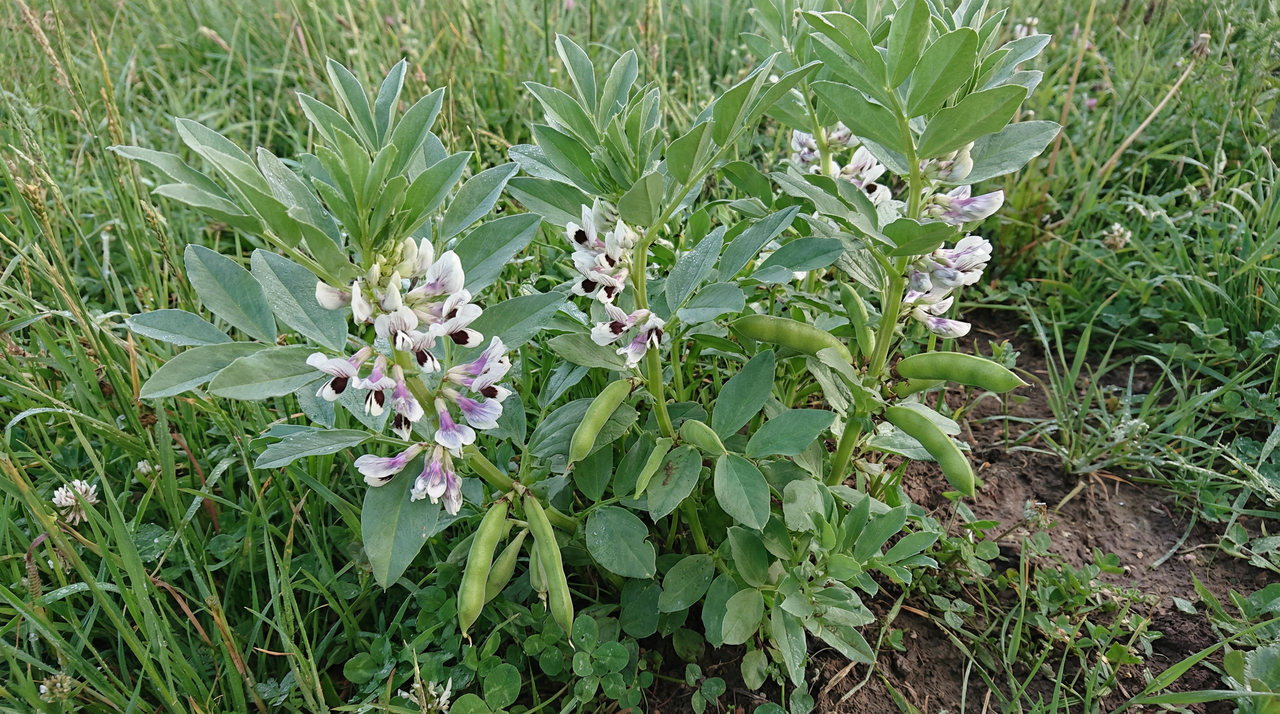
Most gardeners who've killed a fava bean patch think they did something wrong. Bad soil, maybe. Wrong spacing. Too much water, not enough water. What I kept hearing from people in my early workshops was some version of "I followed the instructions and it just... died." Here's what nobody had told them: favas don't die from neglect. They die from heat. Specifically, from flowering during a warm spell, because a few days above 30°C while those delicate black-and-white blossoms are open and the pods simply won't set.[1] The whole secret to this plant is understanding that it runs on a completely different seasonal clock than almost everything else in your food forest.
Vetch, specifically Vicia faba, the broad bean, the fava, the field bean, whatever your grandmother called it, has been feeding people for roughly 10,000 years. That's not a marketing stat; that's a plant that figured something out. It grows through cold, fixes nitrogen into soil that barely deserves the word "fertile," and produces protein-dense seeds in the shoulder seasons when your garden is otherwise just mud and wishful thinking. I've grown it in coastal California winters, in a cold-frame in Vermont, and in a dryland Mediterranean climate where the whole growing window is about fourteen weeks. Each time, it surprised me. Not always pleasantly. But always instructively.
Vetch Origin, History, and Botanical Background
Few plants carry as much human history as Vicia faba, the broad bean, and understanding where it came from makes it easier to understand why it still shows up in gardens, festivals, and folk remedies from Morocco to Massachusetts. The genus Vicia is large and sprawling, but when most people say "vetch" in a food or garden context, they're talking about this one species and its 10,000-year partnership with human civilization.
Native Range and Botanical Characteristics of Vicia faba
Vicia faba traces its wild origins to the Eastern Mediterranean, with native populations documented across Turkey, Syria, Lebanon, and possibly North Africa and the Arabian Peninsula.[2][3][4] Today it's adapted across US temperate zones 3 through 10 and isn't classified as invasive by any major US agricultural authority, which matters if you're designing edible systems and want to plant responsibly.[5][6]
Botanically, broad bean is primarily classified as an annual, completing its entire life cycle in one growing season, though some cultivars will behave as biennials in mild climates.[5][7] It's monocarpic, meaning it flowers, sets seed, and dies rather than cycling back, with a typical lifespan of 80 to 120 days from planting to harvest depending on cultivar and conditions.[8][9] The species also splits into recognizable groups: Vicia faba var. major (the large-seeded types grown for food) and var. minor (smaller-seeded types bred primarily for fodder), each adapted to different climates and agricultural systems.[10] As a cool-season crop that fixes nitrogen through root nodule partnerships, it's one of the most reliable performers I reach for when designing early-spring guild plantings in temperate zones.
Visual Characteristics and Identification of Broad Bean
Broad bean is hard to miss in a garden. It grows upright and bushy, typically reaching 60 to 120 cm tall, though some cultivars push up to 1.8 meters, with a spread of 30 to 60 cm.[11][12] The stems are hollow, angular, sometimes purple-tinged, and the compound leaves carry 5 to 12 broad elliptic leaflets arranged alternately up the stem, each one glossy and substantial compared to most other members of the pea family.[13][9]
The flowers are unmistakable: white with a distinctive purple-black blotch on the standard petal, arranged in short axillary racemes of up to 10 blooms per stem.[14] After pollination, the pods fatten to 5 to 25 cm long, starting bright green before turning black at full maturity, each one cradling 3 to 8 large, flat, kidney-shaped seeds.[15] Drought can shrink the leaf size by 20 to 40 percent, and temperatures below 15°C will noticeably slow leaflet expansion, so a stressed plant looks measurably different from a well-fed one.[16]
I always tell clients that the key ID traits setting broad bean apart from other vetches are its sheer stature, those broad leaflets, and the bold hanging pods that look almost architectural.[17][5] Compare that to garden vetch (Vicia mollis), which grows as a soft, hairy, scrambling plant with tiny 5 to 15 mm leaflets, pale blue-violet flowers under 12 mm long, and small hairy pods barely 2 to 3 cm in length.[18][19] Where broad bean stands tall and commanding, garden vetch looks almost delicate. Same genus, completely different energy in the landscape.
Traditional and Cultural Uses Across Civilizations
Archaeological evidence places broad bean cultivation at sites like Jericho as far back as 9,500 BCE, making it one of the oldest domesticated legumes we know of.[20][21] By around 3000 BCE, Egyptians in the Nile Valley were growing it as a staple, cooking it into porridges, stews, and flatbreads, and the Ebers Papyrus from around 1550 BCE documents its medicinal application for digestive and urinary complaints.[22][23] Egyptian mythology linked the bean to Osiris and incorporated it into funerary rites as a symbol of resurrection, which is a striking early example of a food plant carrying spiritual weight.[24]
In ancient Greece, the broad bean occupied genuinely contradictory territory. It appeared in fertility festivals like the Thesmophoria and was tied symbolically to Demeter and Persephone, yet Pythagoras famously forbade his followers from eating or even touching beans, associating them with souls of the dead and the underworld.[25] Romans were less squeamish and ate broad beans widely in the lower classes as porridge, used them as voting tokens, and wove them into funerary superstitions documented by Pliny.[26] Through medieval Europe, the crop anchored peasant diets and monastic gardens, valued precisely because it fed people and improved the soil in the same growing season.[27] Spanish colonizers then carried it to the Americas in the 16th century, where it was folded into local cuisines alongside indigenous crops.[28]
Mediterranean and North African food traditions remain deeply rooted in this bean. Morocco and North Africa rely on it in bissara, foul, and tagines; the Middle East incorporates it similarly in rural diets and street food.[29][30] In Sicily, favas are still carried as protective talismans against the evil eye, and across Italy, March 19 (St. Joseph's Day) sees broad beans handed out as tokens of luck and fertility in a tradition tracing back to ancient agrarian festivals.[31] I've seen Italian-American neighbors keep a dried fava in their wallet year-round for luck, which always reminds me how unbroken some of these cultural threads really are.
One note that belongs here and can't be skipped: some populations, particularly across Mediterranean and African regions, carry a genetic condition called favism (glucose-6-phosphate dehydrogenase deficiency) that can cause hemolytic anemia from broad bean consumption.[21] In my client consultations with people of Mediterranean descent, I always raise this directly because it's a real clinical concern, not mythology. Garden vetch (Vicia mollis), by contrast, has no comparable culinary tradition and historically served as forage during periods of scarcity rather than as a food crop for humans.[32]
Fun Facts and Symbolic Significance of the Broad Bean
Broad bean holds the distinction of one of the longest unbroken cultivation records of any legume: over 10,000 years from Neolithic Jericho to today's kitchen gardens, with Neolithic seeds already showing the enlarged size that comes from human selection.[20][33] Think about that: people were actively breeding this plant before the wheel, before writing, before most of what we call civilization. That's a partnership worth respecting.
The symbolic baggage it accumulated along the way is remarkable. Pythagoras reportedly died rather than run through a bean field to escape his pursuers, unwilling to trample what he believed housed departed souls. Romans tossed beans over their shoulders at midnight during the Lemuria festival to appease household ghosts. And today, a Sicilian grandmother might slip a dried fava into a grandchild's coat pocket before a job interview, the same protective gesture documented in ethnobotanical records of the island's folk traditions.[34][31] A plant that has been simultaneously feared as a vessel of the dead and celebrated as a symbol of spring fertility across dozens of cultures and three continents is not something you can reduce to a simple vetch definition or a quick entry in a seed catalog. It earned its complexity.
Vetch Varieties and Where to Source Them
Vicia faba splits cleanly into two taxonomic groups based on seed size and intended use: var. faba (sometimes called var. major) covers the large-seeded garden types we grow for eating, while var. equina and var. minor encompass the smaller-seeded field and fodder types.[35][36] That distinction matters in practice because most home gardeners want var. major, even if seed packets rarely say so explicitly. Across both groups, more than 20 distinct named cultivars exist, with seeds ranging from white and green to brown, black, and even spotted patterns depending on the variety.[37]
Notable Varieties of Vicia faba: From Heirloom Classics to Specialized Types
For most kitchen gardeners, three cultivars come up again and again, and for good reason. Broad Windsor is the classic English heirloom: frost-tolerant, easy to shell, sweet and mild, and well-suited to late winter or early spring sowing.[38] Aquadulce Claudia, the French workhorse, produces very high yields with excellent resistance to chocolate spot disease and a delicate nutty flavor.[38] I've grown both side by side, and in a humid spring the difference in chocolate-spot pressure is noticeable. If your springs run wet, Claudia is the smarter bet. Then there's The Sutton, a compact dwarf variety that stays tidy enough to interplant with lettuce in a container or squeeze into a narrow raised bed without staking.[7]
Selection criteria beyond flavor are worth thinking through. Early types mature in 70-85 days while maincrop varieties stretch to 90-110 days or more.[7][39] Winter-hardy cultivars can handle temperatures down to -10°C to -15°C with snow cover, though unprotected plants can show damage at just -5°C.[40][41] Semi-leafless types are worth seeking out if you're in a drier climate; they show improved drought tolerance and better pod set under water stress, though they still appreciate irrigation during flowering.[42]
Sourcing Vetch Seeds in the United States
Domestic commercial production of Vicia faba sits at roughly 1,000-4,000 acres annually, concentrated in California and parts of the Pacific Northwest, a number that has been shrinking under import competition.[43][44] For home gardeners, that context mostly means one thing: buy seeds, not plants. Live seedlings are rarely sold commercially because the taproot is too sensitive to transplant well, so direct seeding from a packet is genuinely the standard approach.[45]
Johnny's Selected Seeds, Seed Savers Exchange, Baker Creek, High Mowing Organic Seeds, and Burpee all carry reliable selections, with standard packets running $3-$6 for 25-100 seeds and bulk organic options around $10-25 per ounce.[46][47][48][49] I've ordered from Johnny's and Seed Savers for years and found their germination rates consistently high. One tip I've learned the hard way: order in fall when suppliers restock. Broad Windsor in particular sells out fast once spring catalogs go live. There are no major federal import barriers for seed purchase,[50] and the crop grows across USDA zones 3-11 as a cool-season annual, so sourcing is rarely the obstacle.[51]
How to Propagate and Plant Vetch (Vicia faba)
Broad bean is one of those crops that genuinely rewards the gardener who understands a little of its biology. Spend ten minutes learning how it germinates and what it needs underfoot, and you'll avoid the mistakes that trip up first-time growers every season. Most of those mistakes come down to two things: planting into cold, waterlogged soil and skipping inoculation. More on both shortly.
Propagation Methods for Broad Bean
Direct sowing is the method here, full stop. Grafting and stem cuttings are technically possible for Vicia faba but remain firmly in the domain of research programs working on disease resistance and trait improvement.[52][53] For the home garden or permaculture plot, you're working with seed, and that's the right tool for the job.
The seeds themselves are oval to kidney-shaped, typically 1-3 cm long, and range from pale green to light tan.[54] Domestication did growers an enormous favor here: wild Vicia faba had small seeds under 1 gram with hard coats and deep physiological dormancy, while modern cultivated forms carry seeds over 2 grams with minimal dormancy and non-dehiscent pods that don't shatter before you can harvest them.[55][56] Stored properly, seeds stay viable for 3-5 years.[57] If you want to save your own seed, broad bean is primarily self-pollinating but crosses at 10-20% rates via insect visitors, so maintain at least 10-20 meters of isolation between varieties to keep your seed stock true.[58][57]
Soil and Site Selection
Get this part right and everything else follows. Fava beans want well-drained loamy or sandy loam soil with 5-10% organic matter.[59] I always work a good layer of compost into new beds before planting, partly to hit that organic matter range and partly because it improves the soil structure that a fava's deep taproot needs. That taproot can push 0.6-2 meters down under good conditions, so compacted subsoil is a real problem; you want bulk density below 1.5 g/cm³ and at least 50-60 cm of workable depth.[60]
Waterlogging is the one thing I will not compromise on. It impairs nodulation, invites root rots from Aphanomyces and Fusarium, and can cut yields by up to 50%.[61] If your garden has a drainage problem, fix it before you plant favas or choose a different spot entirely.
I always test my bed pH before planting legumes because I've watched what happens when it slips below 6.0: yellow, stunted plants that never get their nitrogen-fixing partnership off the ground. The optimal range is 6.0-7.5, with 6.5-7.0 being the sweet spot for both nodulation and yield.[7][62] Below 6.0 risks aluminum and manganese toxicity and shuts down Rhizobium symbiosis; above 7.5 you'll see iron deficiency chlorosis and nutrient lockup.[63] Site selection also means full sun, at least 6-8 hours of direct light daily, with cool conditions and moderate, consistent irrigation through the season.[7]
Spacing, Planting Depth, and Technique
Sow seeds 5-7 cm (2-3 inches) deep at soil temperatures between 10-20°C (50-68°F).[52][64] For bush-type varieties, space seeds 4-6 inches apart within rows set 18-24 inches apart.[65] Taller vining types need a bit more elbow room, 15-20 cm within rows and 60-75 cm between them, plus staking or a trellis to keep them upright.[66] I think about spacing the same way I do with peas: the extra air moving through those rows is doing real work against fungal disease, particularly chocolate spot in humid springs.
Before sowing, inoculate seeds with the appropriate Rhizobium strain. After a few seasons of side-by-side comparisons in my own beds, the difference in early vigor and nodule development between inoculated and un-inoculated plants is obvious enough that I'd never skip it.[59] For planting windows, spring sowings go 2-4 weeks before last frost; in warmer zones (6-8) fall planting from August through October lets you sidestep summer heat entirely.[67]
On transplanting: I've tried starting favas indoors and learned quickly that the taproot doesn't forgive disruption. If you're in a genuinely short-season area and need the head start, use biodegradable pots and move seedlings out at 2-4 true leaves after hardening off.[68] Otherwise, direct sow. It's less fuss and the plants establish better.
Germination Timeline and Early Growth
Under good conditions, expect germination in 7-14 days.[69][9] Soil temperature is the main driver; the workable range is 40-85°F with an optimal window of 60-85°F. Modern cultivated forms carry minimal seed dormancy, so if temperatures and moisture are right, germination is quick and reliable.[7] From sowing to harvest runs 80-100 days in temperate climates, shorter in warmer southern regions and longer in cool northern ones, with flowering beginning around days 60-90.[70]
I label my rows clearly at sowing because young fava seedlings look surprisingly similar to other legumes coming up, especially in a mixed garden bed. Once you're watching for the thick, slightly glaucous stems and the characteristic paired leaflets, you'll recognize them, but it saves confusion in the first couple of weeks. Consistent moisture through this early phase is what the plant needs most; keep the soil evenly damp and it will do the rest.
Vetch Care Guide: Growing Vicia faba Successfully
Broad beans are genuinely forgiving plants, but they do have a narrow comfort zone, and once you understand it, everything else clicks into place. Get the temperature timing right, match the light and moisture to the growth stage, and lean into the nitrogen-fixation partnership instead of fighting it with fertilizer, and you'll get reliable pods and better soil in a single season.
Sunlight Requirements for Broad Beans
Vicia faba wants full sun, defined as 6 to 8 hours of direct light daily.[65] That's the baseline. In cooler climates, give it every hour you can. In zones 8 and above, where late spring temperatures can spike fast, dropping to 4 to 6 hours with afternoon shade once temperatures regularly push past 25 to 30°C can protect yields significantly.[71][72] I learned this the hard way when I grew a row too close to a fence line that cast afternoon shade. The pods were sparse but the plants looked fine, which is the insidious thing about insufficient light: leggy, pale plants with elongated stems and yellowing foliage will still flower, they just won't set many pods.[7][73] Shade-stressed plants are also notably more susceptible to pests and disease, which compounds the problem quickly. On the opposite end, too much intense sun paired with heat causes leaf scorch, chlorosis, and flower drop.[74][75] Position matters more for this plant than for most cool-season legumes.
Water Needs and Irrigation
Plan for about 1 to 1.5 inches of water per week during vegetative growth, stepping up to 1.5 to 2 inches once flowering begins and pods are filling.[76] Once established, the vicia plant tolerates a short dry spell better than you might expect; a 7 to 14 day deficit during vegetative stages won't necessarily wreck a crop.[42][7] During pod fill, though, consistency is non-negotiable. Underwatered plants show it clearly: leaves curl upward, stems go brittle, and pods come out small or abort entirely.[77][78] Overwatering looks deceptively similar at first: lower leaves yellow and progress upward, soil stays wet, and roots go brown and mushy, which opens the door to soil-borne pathogens.[78][79] Vicia faba is actually unusually tolerant of waterlogging for a legume, forming aerenchyma tissue to transport oxygen to roots in saturated conditions, but aim to keep soil moisture around 60% of field capacity rather than testing that tolerance regularly.[80][81] I let the top inch dry out between waterings once plants are well established, and a 2 to 3 inch mulch layer makes this much easier to manage. Use rainwater or low-salinity irrigation water where possible; the crop starts declining noticeably once soil EC exceeds about 1.6 dS/m.[82][83]
Feeding and Soil Fertility for Nitrogen-Fixing Vetch
Here's the thing I tell every gardener who asks about fertilizing their broad beans: don't feed nitrogen. The whole point of growing this plant is the Rhizobium partnership in those root nodules, and dumping nitrogen on the soil suppresses nodulation, pushes excessive leafy growth, delays maturity, and ultimately reduces yield.[7][84] Since I started inoculating my seeds with Rhizobium before planting, I've never added nitrogen to my fava beds, and I now deliberately rotate this crop before brassicas to let them feed on the 50 to 150 kg/ha of nitrogen the vetch residue leaves behind.[85][86] In a new planting bed or soil with low rhizobial populations, inoculation can increase yields 20 to 30%.[7][85] It's cheap insurance.
What these plants do need is phosphorus and potassium, and a soil test is the only honest way to know how much. Broad bean P requirements run moderate to high (roughly 40 to 80 kg/ha P₂O₅ at field scale), with potassium similarly variable (50 to 120 kg/ha K₂O).[87][88] For home garden scale, translate that to working aged compost into the bed before planting and perhaps a compost side-dress at flowering. Test first, amend based on results, and focus pre-plant applications on P and K with any additional support added at flowering and pod-fill rather than guessing.[84][89] Keep soil pH between 6.0 and 7.5 (ideally 6.5 to 7.0); alkaline soils cause interveinal chlorosis on young leaves from iron deficiency, while older leaves with a purple tinge tell me phosphorus is running short.[90][86] That purple-leaf cue has saved more than one crop for me. Incorporating compost to maintain 2 to 3% soil organic matter keeps structure open, supports drainage, and feeds the whole system without shortcuts.[86]
Frost Tolerance and Cold Protection
Mature Vicia faba plants are impressively cold-hardy, surviving brief exposures down to 15°F (-9°C) and rated hardy to USDA zones 3 through 10 and RHS H5 (-15°C).[59][7] Young seedlings are a different story, tolerating only 25 to 28°F before showing damage, and flower buds and open blooms are the most vulnerable tissues of all.[59] Duration matters as much as temperature; prolonged freezing below -7°C can reach the roots even on established plants.[7][76] Frost damage shows as water-soaked, browning tissue progressing to necrosis; if you catch it early, the plant often recovers from the growing tips. Garden fleece or row cover provides 2 to 5°C of protection and is worth keeping on hand for late-winter plantings.[7] I harden off any autumn-started seedlings for at least two weeks before setting them out after losing an entire flat to a surprise frost one November. 'Aquadulce Claudia' is the variety I reach for when overwintering is the goal; three seasons with it have consistently shown better cold survival and earlier pod set compared to standard types.[91][92]
Heat Tolerance and Summer Stress Management
The hairy vetch plant and its relatives are cool-season crops at heart, and Vicia faba is no exception. Optimal growth sits between 15 and 20°C, and once daytime temperatures push consistently past 25 to 30°C, the crop starts failing in ways that are hard to reverse.[93][42] Flowering is the most vulnerable stage: above 30°C, pod set can drop by up to 70% as pollen viability collapses.[94][95] The plant is actually producing antioxidants and heat-shock proteins at the cellular level in response, which is why mulching and early-morning deep irrigation work: they reduce the temperature stress those proteins are struggling to manage.[94] In warm-spring years, I deploy 30% shade cloth the moment daytime temperatures approach 28°C during flowering and have seen noticeably better pod retention for the effort.[96][97] Pair that with 2 to 4 inches of organic mulch, water deeply in the early morning, and choose heat-tolerant cultivars like 'Windsor' or 'Aquadulce Claudia' if your springs tend to run warm.[96][98]
Pruning, Maintenance, and Seasonal Rhythm
Broad beans largely look after themselves once the big three are dialed in. The stems are self-supporting, so there's no staking required, and pruning is mostly about removing diseased or yellowed leaves and pulling spent plants after harvest for composting.[7] One optional trick I use on about half my plants: pinching out the growing tips once a good number of flower trusses have set. The plants that get pinched tend to channel more energy into pod fill than the unpinched ones, though results vary depending on the season. Gently shaking flowering stems on calm or humid days helps with pollination when bee activity is low. A 1 to 3 inch mulch layer after establishment handles moisture retention and weed suppression with minimal ongoing effort. For disease prevention, good airflow matters more than spraying; spacing plants adequately and avoiding overhead watering protects against the fungal diseases that build in still, wet conditions.[99] After harvest, compost the residue to return organic matter to the bed.
Seasonal Growth Cycle of Vicia faba
Seeds germinate in 7 to 14 days at soil temperatures of 10 to 15°C, and vegetative growth accumulates steadily (500 to 800 growing degree days above a 5°C base) through the cool weeks that follow.[7][100] Flowering is triggered by vernalization (4 to 6 weeks of 0 to 10°C temperatures) combined with day lengths exceeding 12 hours, which is why autumn-sown plants that vernalize naturally over winter bloom reliably and early in spring.[8] I time my fall sowings specifically to take advantage of this; the plants vernalize through the winter, then break into growth early enough to flower and fill pods before summer heat arrives. First pods are typically ready 70 to 90 days from sowing, with the sweet spot for pod-fill temperatures sitting between 60 and 80°F.[7][76] In zones 6 to 9, fall-sown plants overwintered under 4 to 6 inches of mulch can yield in early summer when spring-sown plants are still establishing. The vicia plant is monocarpic: it produces one full season of growth, sets seed, and finishes. That's not a limitation so much as a feature once you understand it, because the whole plant becomes a soil amendment the moment harvest is done.
Harvesting Broad Beans (Vicia faba)
Timing your harvest correctly is everything with broad beans, and the good news is the plant gives you clear signals if you know what to look for. From planting to first fresh pod, expect roughly 80 to 120 days depending on variety, with bush types like Sutton running on the shorter end and taller climbing types closer to 100 to 120 days.[101][7] The more useful number to track, once your plants are flowering, is the 40 to 60 day window from anthesis to pod maturity.[102] I start counting from when I see the first real flush of open flowers, and that countdown tells me exactly when to start checking pods seriously.
Timing: Fresh vs. Dry Harvest Windows
For fresh eating, you want pods at 60 to 80 days after planting: plump, bright green, 6 to 10 inches long, with seeds just visible through the pod wall but before the seed coat firms up.[103][7] A practical field rule I've come to rely on: harvest when about 70 to 80 percent of pods show full seed development, or when half to two-thirds of plants are carrying pods at the right stage.[70] Don't treat those percentages as rigid thresholds; they're just a cue to start tasting.
Dry beans are a different operation entirely. At 90 to 120 days, pods turn brown to black, papery, and brittle, and the seeds rattle audibly inside when you shake them.[104][105] That rattle is the sound you want, but I learned the hard way that waiting too long after it starts risks moisture creeping back in during a humid spell. One season I missed a week of prime dry pods and opened them to find the beginnings of mold. Seeds need to hit 15 to 20 percent moisture content for safe storage,[70] and in a wet autumn, that window is shorter than you'd think.
Harvest Techniques and Post-Harvest Handling
Always harvest in the cool of the morning when plants are dry. Use scissors or clean shears to cut pods from the stem; pulling risks snapping off the whole truss or damaging attachment points, which directly reduces later sets.[101] I've made the yanking mistake once and watched the difference in subsequent pod production. Pick every few days to keep the plant producing rather than letting it signal that its seed-set mission is complete.
For fresh beans, shell them and blanch for two minutes before freezing to halt enzyme activity and preserve that bright green color.[106] For dry storage, hang whole plants or gathered pods somewhere warm and airy until the seeds rattle freely, then finish drying in a shaded, well-ventilated space at 68 to 77°F before moving to breathable containers stored at 32 to 41°F and 60 to 70 percent humidity.[70][107]
Flavor Evolution, Yields, and What to Expect
Harvest timing shapes flavor dramatically. Young seeds are sweet, vegetal, and bright, driven by compounds like hexanal and (E)-2-hexenal.[108] As the bean matures, Maillard-reaction byproducts like pyrazines develop earthier, nuttier, roasted notes, and vicine and convicine accumulate to produce that mild but persistent bitterness many people associate with fava beans.[109][110] Sensory testing confirms what most cooks already know intuitively: immature beans score higher for sweetness and overall preference.[111] For mature beans, boiling and peeling the outer skin significantly reduces bitterness.
After growing both Windsor and Aquadulce types over several seasons, I've settled on Windsor for fresh eating. It's genuinely sweeter and less bitter, which means less peeling in the kitchen and a better experience straight from the pod.[112][113] A perfectly timed fresh Windsor bean has an almost potato-like creaminess that over-mature ones simply don't deliver. On the yield side, expect 0.25 to 1 pound per plant under home conditions,[114] though in a well-managed 4x8 bed I regularly pull 8 to 15 pounds of pods per planting. Heat above 30°C or extended drought during pod fill will cut those numbers sharply,[115] which is why timing the planting for cool-season production isn't optional for vetch.
Vetch Preparation and Uses
Edible Parts and Culinary Uses of Vicia faba
Vicia faba gives you two distinct harvests to work with: young pods eaten whole before the seeds bulk up and the fibers toughen, and mature seeds that become the creamy, protein-rich beans most people picture when they think of a broad bean.[116][117] Some Italian traditions eat the very youngest whole pods raw as "fave spurce," but cooking is the right default for most people.[7]
For mature seeds, soaking overnight, boiling for at least 10 to 20 minutes, and discarding the cooking water are non-negotiable steps.[118][119] I now do this without thinking, but early on I didn't understand why it mattered until I actually watched that cooking water go dark and bitter mid-boil. Discarding it and starting fresh for the seasoning stage makes a noticeable difference in both flavor and digestibility. That shift in the pot tells you something real is happening chemically.
Once properly cooked, the flavor transforms completely. The raw nuttiness and slight bitterness mellow into something creamy and rich.[39] Fermentation takes it further still, building umami and savory depth while reducing residual bitterness.[120] After all that, you land on a bean delivering roughly 7 to 8g of protein and 5 to 6g of fiber per 100g serving, along with meaningful folate, iron, and potassium.[121] I make a simple broad-bean spread most springs that becomes a weekly staple precisely because those numbers translate into real, satisfying food.
Beyond pods and seeds, young leaves, shoots, and tendrils are worth harvesting throughout the season before pod formation. I pick them progressively for salads, and their mild, pea-like taste adds variety to early spring meals without waste.[7] Older leaves, stems, mature flowers, and seed coats are best left out of the kitchen due to fiber content and higher concentrations of anti-nutritional compounds.
The contrast with other Vicia species is worth a brief word. Garden vetch (Vicia mollis) is primarily forage, valued for erosion control and nitrogen fixation rather than eating.[32][122] I tried preparing forage vetch seeds once out of curiosity, with the full 12 to 24 hour soak and thorough boil the literature recommends.[123] The result was underwhelming enough that I'll happily leave hairy vetch and its relatives to the soil and the bees, where they genuinely shine.
Traditional Medicinal Preparations
Vicia faba has a long folk medicine tradition with specific preparations tied to specific plant parts: flower decoctions (roughly 2 to 5g dried flowers per 250mL water, steeped) historically used for respiratory complaints, ground seeds taken in 1 to 3g daily doses for gout and inflammation, and fresh leaf poultices applied topically for wound healing.[124][54] I keep notes on traditional dosages in my herbal journal, but I'm careful to direct anyone using this plant medicinally toward a qualified practitioner, especially given the compound interactions covered in the health benefits section. These preparations have genuine heritage. They deserve careful, informed use.
Non-Food Uses in Agriculture and Permaculture
Vicia faba earns its place in any regenerative system well beyond the plate. As green manure and cover crop, it fixes atmospheric nitrogen and contributes meaningfully to soil fertility, extending its usefulness past the harvest window.[125] If you're already saving dried seeds for the kitchen, setting a portion aside to broadcast the following season closes a satisfying loop: the same plant feeds you and feeds the soil with minimal external inputs.
Vetch Health Benefits and Medicinal Uses
When most people talk about vetch's health profile, they're really talking about Vicia faba, the broad bean, and for good reason. This is the species with the deepest medicinal record, the most nutritional data, and, frankly, the most consequential safety warning in the entire genus. The other vetches matter too, and I'll get to them, but the broad bean is where the research lives.
Traditional and Folk Uses Across Cultures
Millennia before anyone ran a cell-line assay, healers across the Mediterranean, Middle East, Africa, and China were already reaching for broad beans. Traditional uses span a remarkable range: diuretics, treatments for diarrhea, hypertension, gout, rheumatism, and colic; topical poultices for sores and skin inflammations; and in Chinese medicine (where the plant is known as bian dou), a remedy for spleen dampness, loose stools, and alcohol detoxification.[126][127][128] Ancient Egyptian, Greek, and Roman physicians documented digestive applications stretching back thousands of years. That's a long and geographically diverse tradition to earn. Bitter vetch (Vicia ervilia) carries a parallel folk record for antidiabetic and anti-inflammatory applications, consistent with its shared phytochemical toolkit, though clinical evidence there is even thinner.[129]
Key Phytochemicals and Bioactive Compounds
The compound that gets the most attention in Vicia faba is L-DOPA, a direct dopamine precursor present at roughly 0.1 to 0.5% of seed weight with real therapeutic interest for neurological conditions including Parkinson's disease.[130][126] But the broader phytochemical picture includes flavonoids (quercetin, kaempferol, apigenin, luteolin and their glycosides), an array of phenolics (ferulic acid, caffeic acid, catechins, tannins), saponins, and minor coumarins.[131][108] These aren't uniformly distributed through the plant: flavonoids concentrate in leaves and flowers, while phenolics and tannins dominate the seed coats and roots, and saponins accumulate in roots and seeds.
What growers can actually influence is worth understanding. Mediterranean landraces, which I tend to favor for their deeper flavor, also carry higher phenolic levels than many modern hybrids.[132] Soil at neutral to slightly alkaline pH favors flavonoid production, and moderate temperatures around 25 to 30°C support isoflavonoid accumulation.[133] Here's where it gets complicated: nitrogen or phosphorus stress increases levels of vicine and convicine, the pyrimidine glycosides present at 0.5 to 2% of developing seed dry weight,[134][135] meaning the same stress conditions that push some beneficial compounds higher also elevate the ones linked to favism risk.[136] I've noticed this in my own trials: beans from underfed plants tend to be more bitter, which tracks with what the research describes.
Evidence from Pharmacological Studies
Modern lab work has found a lot to like in Vicia faba polyphenols. In vitro and animal-model studies show antioxidant activity via DPPH scavenging, anti-inflammatory effects through inhibition of TNF-α, IL-6, NF-κB, and COX-2 pathways, antidiabetic potential through alpha-glucosidase inhibition and improved glucose tolerance, antimicrobial activity against E. coli and S. aureus, and preliminary anticancer findings involving caspase-mediated apoptosis in cancer cell lines.[137][138][139][140] Hypocholesterolemic effects have also been noted. These are real findings, but nearly all of them come from cell cultures or rodent studies. Human clinical trials are limited. That traditional antidiabetic reputation may well hold up, but I'd stop short of presenting any of this as established clinical medicine.
Nutritional Profile of Broad Beans
Where the evidence is rock solid is nutrition. Cooked fava beans deliver around 92 calories per 100 grams alongside 7.6 grams of protein, 16 grams of carbohydrate, 5 to 7.5 grams of dietary fiber, 106 micrograms of folate, 1.5 milligrams of iron, 332 milligrams of potassium, and 33 milligrams of magnesium.[141] The dry seed averages 25 to 30% protein, with some cultivars reaching 35%.[142] That folate number stands out to me; it's meaningfully higher than what you'd get from a similar serving of chickpeas, which I also grow extensively. Cooking improves digestibility and nutrient bioavailability across the board.[143]
Safety Considerations and Contraindications
Start here if nothing else: if you or anyone in your household has glucose-6-phosphate dehydrogenase (G6PD) deficiency, skip fava beans entirely. The pyrimidine glycosides vicine and convicine trigger acute hemolytic anemia, a condition called favism, and the research on this is unequivocal.[144][145] G6PD deficiency affects roughly 400 million people worldwide, with higher prevalence in people of Mediterranean, African, and Asian ancestry.[146] Symptoms include fatigue, jaundice, and dark urine; untreated, it can be life-threatening. Cooking reduces the glycosides by 50 to 90% depending on the method, but it does not eliminate them.[147] In my seed-saving work, I've seen how harvest timing and soil nutrition shift bitterness noticeably; I'd advise anyone with Mediterranean or African heritage to get screened before eating large quantities.
Identification also matters across this genus. Vicia faba seedlings can be confused with common vetch, grass pea, and lupins; I distinguish them in the garden by leaflet shape and stem hairiness. Raw or undercooked seeds of any broad bean variety contain lectins and antinutrients capable of causing digestive upset in anyone, G6PD status aside. Other vetches carry separate risks: bitter vetch contains L-canavanine (reduced roughly 60% by cooking) along with cyanogenic glycosides and beta-cyanoalanine, posing real concerns particularly for pregnancy, neurological conditions, or interaction with certain medications.[148][149] Finally, Vicia faba grown in heavy-metal contaminated soils can bioaccumulate cadmium and lead, making sourcing and growing conditions relevant for any food use.[150] For non-G6PD-deficient adults eating properly grown and fully cooked broad beans, the safety profile is good. Everything else in this genus deserves more caution and more research before casual consumption.
Vetch Pests and Diseases
Vicia faba sits in a comfortable middle position among legumes when it comes to disease resistance: generally tougher than peas and lentils, but not as bulletproof as chickpeas or soybeans.[151][152] I've grown it alongside peas in the same guild and watched the peas collapse to fungal pressure while the favas kept going. That said, "relatively resistant" is not the same as immune, and I've had humbling seasons where conditions turned against me.
Disease Resistance in Vetch
The three fungal diseases that matter most are chocolate spot, Ascochyta blight, and rust. Chocolate spot (Botrytis fabae) is the one that keeps me up at night during wet springs; it can strip up to 50% of yield in humid conditions.[153] I learned this the hard way after a week of overcast, drizzly weather in early spring. The planting had looked perfect on day one and looked like a casualty ward by day ten. Cultivars like 'Aguadulce', 'Express', and 'Windsor' carry partial resistance through QTLs on chromosomes 2 and 6,[153][154] which helps, but I no longer expect any single variety to stay clean. Now I stack genetics with good airflow by keeping planting density between 20 and 30 plants per square meter and timing sowing to avoid the wettest part of the year.[155]
Ascochyta blight (Ascochyta fabae) is another serious one, with ICARDA breeding programs developing moderate to high resistance in cultivars like 'Aurora' and 'Sussex'.[156][157] Worth knowing: susceptibility spikes when temperatures push above 25°C, so early sowing into cooler soil is a practical form of cultural resistance.[41] Rust (Uromyces viciae-fabae) is more polygenic and slower to breed against, but 'Banner', 'Climax', and 'ILB-4704' show solid field resistance.[152][158] Root rots from Aphanomyces, Fusarium, and Pythium show up in waterlogged or low-pH soils and cause damping-off and wilting; favas handle this better than peas, but poorly drained beds are still asking for trouble.[159] Keep soil pH above 6.0 and drainage solid, and you'll head off most of it. Viral diseases like bean yellow mosaic virus carry moderate single-gene resistance, while faba bean necrotic yellows virus is harder to manage and leans heavily on aphid vector control.[152][160] A 3 to 4 year rotation with non-legumes and Trichoderma harzianum as a soil biological in organic plots rounds out the integrated approach.[161][162]
Pest Resistance and Management
The pest lineup on vetch is fairly predictable: black bean aphid (Aphis fabae), pea and bean weevil (Sitona lineatus), and the Bruchus seed beetle are the main offenders, with cutworms, thrips, and spider mites showing up as supporting cast.[163][164] I scout weekly during vegetative growth and use a rough threshold of 15 to 20 aphids per plant before I consider any intervention.[163] In most seasons, ladybugs and lacewings handle it without any help from me, provided I'm not overusing broad-spectrum sprays elsewhere in the garden.
The plant's own chemistry is genuinely interesting. Crush a leaf and you'll notice a distinct, slightly bitter, almost medicinal smell; that's the alkaloids, phenolics, and lectins at work deterring feeding and disrupting insect digestion.[165] Beyond chemistry, glandular trichomes and tough seed coats provide physical barriers, and the plant emits VOCs like (E)-β-ocimene that actively recruit parasitic wasps and other natural enemies.[166] That indirect chemical signaling is one of the things I genuinely love about integrating favas into a guild; they call in help rather than just defending themselves. Cultivars like 'Aquadulce Claudia', 'Windsor', and 'Jetset' show useful resistance to specific pests, with Bruchus resistance tied to pod-wall thickness and Sitona resistance linked to root-exudate chemistry.[167][168] Keep in mind that aphid resistance degrades above 25°C and Sitona damage climbs in cool, wet springs, so no cultivar performs equally in all conditions.[169] The most reliable path is still the integrated one: resistant genetics, timely sowing, 2 to 4 year rotations, and biological allies like parasitic wasps, with neem oil or insecticidal soap as backup when thresholds are crossed.[170][171]
Vetch in Permaculture Design
Fava bean (Vicia faba) earns its place in regenerative systems not by doing one thing well but by doing several things at once: fixing nitrogen, feeding pollinators, building soil structure, and suppressing weeds, all from a single seasonal planting. The trick is knowing where and when your climate actually lets it perform. Get that right, and it's one of the most dependable workhorses in a cool-season food forest or annual guild.
Climate Adaptability and USDA Hardiness Zones
Fava is a Mediterranean plant at heart, and its thermal preferences tell that story clearly. Vegetative growth is happiest between 15-20°C (60-70°F), germination requires 10-18°C, and pollination performs best in that same moderate 15-25°C window.[172][173] Push it past 25°C and yield starts to slip; above 30°C during flowering, you're looking at serious losses.[172][174] On the cold end, mature plants can handle brief frosts down to -6°C to -9°C, and overwintered cultivars like 'Aquadulce Claudia' push through -10°C.[7] Young seedlings are more tender than mature plants, so I always time my fall sowings carefully to let plants bulk up before the hardest freezes hit.
Across USDA zones 3-10, fava is workable as a cool-season annual, but the regional calendar shifts considerably.[5] In the Midwest (zones 3-9), early spring or fall planting is the move. In the mild Pacific Northwest, fall sowing lets it overwinter and hit the ground running in spring.[175] In humid southern zones 7-9, the disease pressure from chocolate spot and rust climbs steeply, so air circulation through proper spacing becomes non-negotiable rather than just nice to have.[176] Moisture requirements are also specific: 400-600 mm annually with consistent soil moisture during pod development, and good drainage throughout because waterlogging will rot the roots before the foliage shows any sign of trouble.[177] As a long-day plant, fava needs extended daylight to trigger flowering, and successful pod maturation typically requires 100-150 frost-free days, so backward-planning from your last frost date isn't optional.[178]
Ecosystem Functions and Soil Benefits
The headline function is nitrogen fixation via a symbiotic relationship with Rhizobium leguminosarum bv. viciae, delivering anywhere from 50-200 kg N per hectare depending on soil conditions, inoculation, moisture, and management.[179][180] That range is impressive on paper, but I've learned to watch soil tests rather than assume the high end. An uninoculated patch in my beds has consistently underdelivered compared to rows where I applied a rhizobial inoculant at seeding. The biology is there in the plant; you just have to give it the right microbial partners to fully activate.
Nitrogen is only part of the soil story. As a vetch cover crop and green manure, fava also improves soil structure, suppresses weeds during its growth window, prevents erosion on bare winter beds, adds meaningful organic matter on incorporation, and acts as a dynamic accumulator, pulling phosphorus and potassium from deeper layers and cycling them toward the surface.[181][182] That deep taproot, which I'll come back to under guild design, is part of what makes this possible.
The pollination story is equally worth understanding. Fava flowers are technically self-pollinating but show 20-60% dependence on insect visitors for full yield, and bumblebees (Bombus spp.) are the stars of the show via buzz pollination and keel tripping.[183][184] When Bombus is working the flowers well, you can actually hear the tripping, a low, rapid buzz distinct from the drone of foraging, and in my experience that sound reliably correlates with noticeably heavier pod set. The yield uplift from active bee visitation can reach 50-70% over self-pollination alone under favorable conditions.[185] That's a strong argument for siting fava near habitat that supports native bumblebee populations. In rotation, placing it after heavy feeders like brassicas and before non-legumes consistently improves subsequent crop yields by 20-30% in intercropping and agroforestry contexts.[186][187]
Role in Forest Layers, Guilds, and Companion Planting
In a temperate food forest, fava slots cleanly into the herbaceous understory layer. At 0.6-1.8 m tall with an upright habit, it fits beneath young fruit trees without competing for the canopy, and its tolerance for partial shade means it can work in sun-dappled positions that would sideline less adaptable annuals.[11][7] The taproot, reaching 1-2 m depth, is genuinely impressive for an annual; in compacted subtropical soils I've found it breaks up hardpan more aggressively than most familiar garden legumes like southern peas, which tend to stay shallower.[188] That root action improves nutrient cycling well below the topsoil horizon and makes it a useful vetch green manure even before you turn the top growth in.
For companion planting, fava works well alongside corn, potatoes, cucumbers, celery, strawberries, onions, garlic, and summer savory.[174][189] Cereal intercropping with fava is particularly well-studied, including the rye and vetch cover crop combination, where the complementary root zones and nitrogen transfer create a more balanced cover than either plant alone.[190] The plant also shows some allelopathic activity that may reduce aphid and nematode pressure in dense polycultures, adding a subtle pest-management dimension to its guild role.[191]
The one design caveat worth flagging: dense plantings undermine nearly every benefit fava brings. Crowded plants compete for light and moisture, suppress nodulation, and create exactly the humid microclimate that invites fungal disease.[192] Proper spacing isn't just about the individual plant; it's what allows the nitrogen, biodiversity, and pollinator benefits to actually flow outward into the surrounding guild rather than stalling inside a tangled, disease-prone thicket.
The Season Vetch Rebuilt My Faith in Struggling Soil
I had a corner of my food forest that just refused to cooperate: compacted, pale, dismissive of everything I planted there. I put fava in almost out of stubbornness, and by spring that patch looked genuinely different. Not dramatic, not overnight, but different in the way soil looks when something has finally been listening to it. I've been growing vetch in some form every cool season since.
Sources 192
- Responses of faba bean to heat stress - Field Crops Research ↩
- Vicia faba - Wikipedia ↩
- Broad bean | Description, Plant, History, Uses, & Facts | Britannica ↩
- Vicia faba L. - Plants of the World Online | Kew Science ↩
- USDA PLANTS Database - Vicia faba ↩
- Vicia faba - Missouri Botanical Garden Plant Finder ↩
- How to grow broad beans ↩
- Vicia faba Cultivation Guide ↩
- Life Cycle and Cultivation of Vicia faba - FAO ↩
- Broad Bean Production Guide - University of California Agriculture ↩
- Vicia faba - Missouri Botanical Garden Plant Finder ↩
- Plant Guide: Fava Bean - USDA NRCS ↩
- Broad Bean (Vicia faba) - RHS Gardening ↩
- Broad Bean Flower Description - Royal Horticultural Society ↩
- Broad Bean (Vicia faba) - Feedipedia ↩
- Morphological Variability in Vicia faba Cultivars ↩
- Vicia faba - Missouri Botanical Garden Plant Finder ↩
- Vicia mollis - Missouri Botanical Garden ↩
- Vicia mollis Description - Kew Science Plants of the World Online ↩
- History of Vicia faba Cultivation ↩
- The Domestication of the Broad Bean (Vicia faba L.) ↩
- Broad Beans in Ancient Egypt ↩
- Plants in Ancient Egypt ↩
- Ethnobotany of the Egyptian Flora ↩
- The Pythagorean Sourcebook and Library ↩
- Food and Society in Classical Antiquity ↩
- Broad Beans in Medieval European Agriculture ↩
- Vicia ↩
- Ethnobotany of Vicia faba in North Africa ↩
- Traditional Uses of Vicia faba in the Middle East ↩
- Fava Beans and St. Joseph's Day Traditions ↩
- Vicia mollis - Wikipedia ↩
- Broad Bean (Vicia faba) in Archaeobotany ↩
- Mediterranean Diet: Traditional Foods and Culture ↩
- Kew Gardens - Vicia faba ↩
- Wikipedia - Vicia faba (Taxonomy Section) ↩
- Broad Bean (Vicia faba) - Gardening Know How ↩
- Seed Savers Exchange - Fava Beans ↩
- Vicia faba: Broad Bean ↩
- Winter Hardiness in Legumes ↩
- Faba Bean Production Guide ↩
- Varietal Differences in Drought Tolerance for Vicia faba ↩
- Vegetables 2022 Summary ↩
- Fava Bean Production in California ↩
- University of California Integrated Pest Management: Fava Bean Pest Note ↩
- Fava / Broad Beans ↩
- Fava Bean ↩
- Fava Bean ↩
- Fava Bean ↩
- Importation of Seeds and Seedlings into the United States ↩
- Fava Bean (Vicia faba) Production Guide ↩
- Faba Bean Production Guide ↩
- Grafting in Legumes: Opportunities and Challenges ↩
- Vicia faba ↩
- The Origin and Domestication History of Broad Bean (Vicia faba L.) ↩
- Seed Dormancy in Vicia faba: Mechanisms and Breaking Methods ↩
- Seed Production Guidelines for Broad Beans ↩
- Self-incompatibility in the faba bean (Vicia faba L.) ↩
- Broad Beans (Vicia faba) ↩
- Root System Architecture of Vicia faba ↩
- Waterlogging Tolerance in Vicia faba ↩
- Rhizobium Nodulation and Soil pH in Vicia faba ↩
- Aluminum Toxicity in Acidic Soils for Faba Beans ↩
- Broad Bean (Vicia faba) Cultivation Practices ↩
- How to Grow Fava Beans NC State Extension ↩
- Broad Bean (Vicia faba) Production Guide ↩
- USDA Plant Guide: Fava Bean ↩
- Michigan State University Extension - Fava Bean Growing Tips ↩
- Vicia faba USDA PLANTS Database ↩
- Phenology of Field Beans ↩
- Growing Broad Beans in Warm Climates - University of California Agriculture and Natural Resources ↩
- Vicia faba Heat Stress Responses - Journal of Agronomy and Crop Science ↩
- University of California Agriculture and Natural Resources: Bean Production ↩
- Royal Horticultural Society (RHS) - Growing Faba Bean (Vicia faba) ↩
- Photoinhibition in Legumes - Plant Physiology Review ↩
- Fava Bean Production Guide ↩
- Missouri Botanical Garden: Vicia faba ↩
- USDA PLANTS Database - Vicia faba ↩
- University of California Integrated Pest Management - Fababeans ↩
- Abiotic Stress Tolerance in Faba Bean ↩
- Vicia faba Agronomy ↩
- FAO: Salt Tolerance of Crops ↩
- USDA: Fava Bean Production Guide ↩
- Nutrient Management in Faba Bean (Vicia faba) ↩
- FAO - Faba bean production guidelines ↩
- Growing Fava Beans - University of California Agriculture and Natural Resources ↩
- FAO Fertilizer Use by Crop in Egypt - Faba Bean ↩
- Fertilizer Recommendations for Cool Season Legumes ↩
- Broad Bean Production Guide - Penn State Extension ↩
- Crops Extension: Fava Bean (Vicia faba) Nutrient Deficiency Guide ↩
- European Native Range Climate Data - Euro+Med PlantBase ↩
- Cold Tolerance of Cover Crops ↩
- Physiological Responses of Vicia faba to High Temperature Stress ↩
- Heat Stress Effects on Faba Bean Production ↩
- Effects of Heat Stress on Germination and Seedling Growth of Vicia faba ↩
- Heat Stress Management in Cool Season Legumes ↩
- Heat Stress in Cool Season Food Legumes: Widening the Scope of Vicia faba Research ↩
- Growing Fava Beans in Warm Climates ↩
- UC IPM: Broad Bean Pests and Diseases ↩
- Broad Bean Growth Stages - UC Davis ↩
- Fava Bean Production Guide ↩
- Fava Bean Production Guide ↩
- Fava Bean Production Guide - UC Davis ↩
- Harvest Timing for Broad Beans - Saskatchewan Ministry of Agriculture ↩
- Harvesting Dry Beans ↩
- Harvesting and Storing Beans ↩
- Post-Harvest Handling of Vegetables ↩
- Flavor and Sensory Characteristics of Fava Beans (Vicia faba L.) at Different Maturity Stages ↩
- Maillard Reaction Products in Cooked Legumes ↩
- Research on Vicine and Convicine in Fava Bean and Human Health ↩
- Sensory Evaluation of Faba Beans (Vicia faba L.) ↩
- Varietal Differences in Broad Bean (Vicia faba) Flavor Profiles ↩
- Sensory Evaluation of Fava Bean Cultivars Including Windsor and Aquadulce ↩
- Vicia faba Yield and Harvest Methods - FAO Guidelines ↩
- Broad Bean (Vicia faba) Agronomy ↩
- Missouri Botanical Garden Plant Finder ↩
- USDA PLANTS Database ↩
- FAO - Faba bean (Vicia faba L.) - Species information ↩
- Fava Bean Toxicity and Preparation ↩
- Impact of Processing on Vicia faba Flavor Compounds: Drying and Fermentation ↩
- FAO - Broad Beans Nutritional Data ↩
- Vetch Toxicity - Poisonous Plants of California ↩
- Anti-nutritional Factors in Vetches ↩
- Plants of the World Online, Vicia faba ↩
- Vicia faba: Agronomy, Physiology and Breeding ↩
- Vicia faba L. (Fabaceae): A Traditional Plant with Potential for Future Novelty in Food and Pharmaceutical Industries ↩
- Ethnobotany of Broad Bean (Vicia faba L.) in the Mediterranean Basin ↩
- Ethnopharmacological Survey of Medicinal Plants Used in Traditional Medicine in Ethiopia ↩
- Ethnopharmacological Review of Vicia Species ↩
- L-DOPA Content in Vicia faba and Its Therapeutic Potential ↩
- Phytochemical Composition and Antioxidant Properties of Vicia faba ↩
- Geographic Variation in Secondary Metabolites of Vicia faba ↩
- Temperature Impact on Vicia faba Secondary Metabolites ↩
- Distribution of vicine, convicine and related compounds in Vicia faba L. ↩
- Vicine and Convicine in Faba Beans: Occurrence and Toxicity ↩
- Nutrient Stress and Metabolite Production in Vicia faba ↩
- In Vitro Anti-inflammatory Effects of Faba Bean Polyphenols ↩
- Alpha-Glucosidase Inhibitory Effects of Vicia faba Extracts ↩
- Pharmacological Properties of Vicia faba L. Seeds: A Review ↩
- Broad Bean (Vicia faba L.) as a Source of Natural Antioxidants ↩
- USDA FoodData Central - Broadbeans (fava beans), mature seeds, cooked, boiled, without salt ↩
- Genetic Variation in Protein Content of Faba Bean (Vicia faba L.) ↩
- Nutritional Profile and Processing Effects on Fava Beans ↩
- Favism - StatPearls - NCBI Bookshelf ↩
- Favism and Vicine in Fava Beans ↩
- Favism and Glucose-6-Phosphate Dehydrogenase Deficiency ↩
- Effect of Cooking on the Content of Vicine and Convicine in Faba Beans ↩
- Toxicity of Vicia species to livestock ↩
- Canavanine Content Quantification in Bitter Vetch ↩
- Heavy Metal Accumulation in Vicia faba ↩
- Disease Resistance in Legumes ↩
- Diseases of Faba Bean ↩
- Resistance to Chocolate Spot Disease in Faba Bean ↩
- Broad Bean Diseases and Management ↩
- Planting Density and Disease Resistance in Vicia faba ↩
- ICARDA Faba Bean Improvement ↩
- Plant Pathology Factsheet: Ascochyta Blight of Faba Bean ↩
- Breeding for Rust Resistance in Vicia faba ↩
- Faba Bean Diseases - UC IPM ↩
- Viral Diseases of Faba Bean ↩
- Breeding for Disease Resistance in Vicia faba ↩
- Biological Control of Faba Bean Diseases ↩
- Insect Pests of Faba Bean: A Review ↩
- Pests of Broad Bean (Vicia faba) ↩
- Role of phenolics and alkaloids in faba bean resistance to insects ↩
- Vicia faba volatiles and tritrophic interactions ↩
- Resistance in Vicia faba to the Seed Beetle Bruchus rufimanus ↩
- Cultivar Resistance to Pea and Bean Weevil in Faba Bean ↩
- Faba Bean Breeding for Pest Resistance ↩
- Integrated Pest Management for Broad Beans ↩
- Integrated Pest Management for Field Beans ↩
- Fava Bean Production Guide - University of California Agriculture and Natural Resources ↩
- Temperature Requirements for Cool-Season Legumes - Oregon State University Extension ↩
- Fava Beans: Planting, Growing, and Harvesting Fava Beans ↩
- Pacific Northwest Vegetable Guide: Fava Beans - WSU Extension ↩
- Fava Bean Cultivation in Southern US - Texas A&M AgriLife ↩
- FAO Agroecological Zones Assessment ↩
- Photoperiodism in Vicia faba - Journal of Experimental Botany ↩
- Nitrogen Fixation in Vicia faba ↩
- Nitrogen Fixation by Faba Bean (Vicia faba L.) ↩
- Ecological Benefits of Legume Cover Crops ↩
- Cover Crops for Soil Health ↩
- Bee Pollination of Broad Bean (Vicia faba L.) ↩
- Bumblebee Pollination Efficiency in Broad Beans ↩
- Self-pollination vs. insect-mediated pollination in Vicia faba: Yield implications ↩
- Journal of Agroforestry Systems: Legume Intercropping with Vicia faba ↩
- USDA Cover Crop Nitrogen Fixation Rates ↩
- Broad Bean (Vicia faba) as a Cover Crop - SARE ↩
- Intercropping with Faba Bean in Agroforestry ↩
- Competitive Interactions in Legume-Cereal Intercropping ↩
- Vicia faba and Biodiversity ↩
- Companion Planting with Legumes ↩