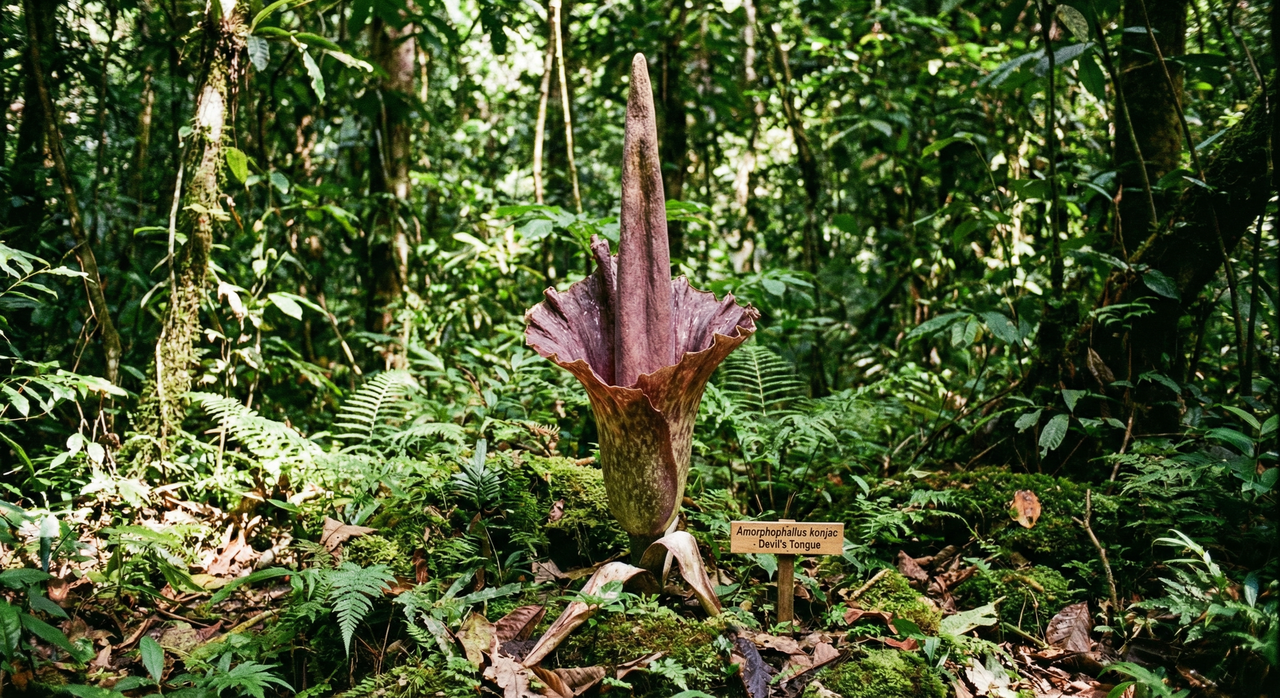
The first time Voodoo Lily bloomed in my garden, I wasn't there to see it. I was there to smell it. From twenty feet away. Before I'd even had my coffee. The spathe had opened overnight into something genuinely purple and genuinely wrong-looking, and the spadix was radiating heat, actual metabolic heat, to better broadcast its scent of rotting flesh to every carrion fly within range.[1] I stood there, mug in hand, deeply impressed and faintly nauseated, watching blowflies work the flower like it was the best day of their lives. That bloom had taken four years to arrive. Four full growing seasons of feeding one enormous mottled stalk, one massive umbrella leaf, and one quietly swelling corm, all building toward a single foul, spectacular morning.
What I hadn't understood before growing it is that Voodoo Lily lives two completely separate lives. Most people know it as a curiosity, a conversation piece, the plant that smells like a corpse. Fewer know it as konjac, the source of the glucomannan fiber behind shirataki noodles and a 2,000-year culinary and medicinal tradition across China and Japan.[2] Same plant. Same corm. One reputation earned in a single stinking hour; the other built across centuries of patient cultivation.
Voodoo Lily Origin, History, and Botanical Background
There's a particular kind of patience required to grow plants that reward you on their own schedule rather than yours. Voodoo lily (Amorphophallus konjac) is that kind of plant, and honestly, it's one of the reasons I keep coming back to it. This is a perennial that can live 20 to 30 years under good conditions, [3] flower sporadically and spectacularly across that whole lifespan, and spend the intervening seasons quietly building one of the most architecturally striking single leaves in the understory plant world. Getting to know it means getting comfortable with a long-term relationship.
Native Habitat and Distribution of Amorphophallus konjac
The voodoo lily is native to the moist forest understories, shaded slopes, and warm grasslands of eastern and southeastern Asia, from China, Japan, and Korea through Indonesia, Vietnam, and India, growing from sea level up to around 1,500 meters elevation.[4][3] It's adapted to warm, humid conditions with a distinct dry-season dormancy, which tells you a lot about what it needs in cultivation: reliable moisture while it's growing, then a clean rest period when conditions shift. The amorphophallus scientific name itself is worth a moment -- it translates roughly from Greek as "shapeless penis," a reference to the bizarre reproductive structure that made Victorian botanists squirm and modern garden visitors stop walking.
Within the genus, the polycarpic habit of A. konjac sets it apart from some of its more famous relatives. The Titan Arum (Amorphophallus titanum) and Elephant Foot Yam (A. paeoniifolius) behave as monocarpic per tuber, though they persist vegetatively through offsets.[3] Titan Arum's estimated wild lifespan runs just 10 to 15 years, and it's now classified as Vulnerable due to habitat loss in its native Sumatra.[5] Konjac, by comparison, is the quiet long-haul member of the genus. First flowering typically takes 3 to 5 years in cultivation,[3] and I've learned to stop expecting it to hurry. I track corm size instead of calendar years now, because a corm under about 15 cm in diameter simply isn't going to bloom, no matter how impatient you are.
Physical Characteristics and Life Cycle
The corm itself is a brown, fibrous-skinned tuber that typically reaches 20 to 30 cm across,[6] and from it emerges each season a single compound leaf on a stout, mottled petiole that can reach 1.5 to 2 meters tall, supporting an umbrella-like canopy of glossy green leaflets spanning 1 to 1.5 meters wide.[3] Growing these in Central Florida's humidity, I've watched that petiole emerge with an almost reptilian texture, grey-green and blotched, that makes new visitors stare and then ask whether it's some kind of snake plant. Labeling them carefully became a habit after I confused a few guests who were convinced I'd planted a young palm.
In a permaculture food forest, that single massive leaf functions almost like a seasonal canopy layer: wide, shade-casting, and clean in its exit each winter. The Titan Arum scales this to something genuinely surreal, producing tree-like leaves up to 3 to 5 meters tall,[7] but even konjac's more modest canopy is dramatic enough to make a design statement. Environmental conditions matter here; soil fertility, moisture, and light all influence how large the leaf and corm ultimately grow.[8]
The voodoo lily flower is the part that earns the plant its common names. The inflorescence appears before the leaf in late spring or early summer: a greenish-white spathe 30 to 60 cm long with a deep maroon-purple interior, wrapped around a dark purple spadix up to 50 to 70 cm tall.[9] Its scent is unmistakable, a short-lived but genuinely offensive rotting-flesh odor designed to attract carrion beetles and flies as pollinators. The comparison to the corpse flower comes up constantly in garden conversations, and while konjac is certainly pungent, it doesn't reach the sustained intensity of Titan Arum's famous bloom. Think of it as the more socially acceptable cousin. After successful pollination, the plant produces a column of bright red berries, each 1 to 2 cm long, before dying back for the season.[10]
Traditional and Cultural Uses Across Asia
People have been cultivating this plant for a very long time, which is itself a kind of endorsement. Documented use of konjac in China stretches back over 2,000 years, with records from Japan beginning in the 6th century where it entered Buddhist vegetarian cooking and served as famine relief.[11] The Bencao Gangmu, the foundational text of traditional Chinese medicine, records konjac for treating diabetes, constipation, asthma, skin conditions, and digestive complaints.[12] In Japan, the high glucomannan content that makes the corm so medically interesting also gave rise to the firm, gelatinous konnyaku and shirataki noodles that have sustained low-calorie traditional diets through the Edo period and into the present.[13]
The genus stretches further. Elephant Foot Yam has its own deep Ayurvedic and cultural traditions across South and Southeast Asia.[14] Its corm requires thorough processing before it can be eaten safely.[15] In Japan, konjac carries cultural symbolism around health and impermanence, appearing in New Year celebrations and Buddhist teaching, while in Kerala the Elephant Foot Yam features in the Onam harvest festival as a symbol of fertility and abundance.[16]
Commercial production has exploded since the 1970s, with China now dominating the global konjac market, but that growth has come with costs. Wild harvesting in Yunnan and Sichuan has caused measurable population declines, and monoculture cultivation brings its own risks of soil degradation and genetic erosion.[17] Some Amorphophallus species are already flagged as Vulnerable by the IUCN.[5] For anyone growing these plants from a regenerative perspective, that context matters. I propagate offsets from established corms rather than sourcing wild-collected stock, and I'd encourage anyone drawn to this plant to do the same. A species with this much cultural and ecological depth deserves cultivation that supports it rather than depletes it.
Voodoo Lily Varieties and Where to Buy Them
If you're expecting a catalog of named cultivars with colorful descriptions and trademark symbols, I'll stop you right there. Voodoo lily doesn't work that way. Unlike, say, hostas or tomatoes, Amorphophallus konjac has no formally recognized horticultural cultivars to speak of. What it does have are two botanical varieties, var. konjac and var. confertus, that differ in ways that genuinely matter to growers but rarely get labeled on the corm you receive in the mail.[18][19][20]
Notable Botanical Varieties of Amorphophallus konjac
Var. konjac is the high-performance option. Corms average 1 to 2 kg at maturity, glucomannan content runs 50 to 60 percent, and under ideal subtropical conditions yields can reach 20 to 30 tons per hectare after just two to three years.[18][19] The tradeoff is sensitivity: it sulks in cold, waterlogged conditions, and it wants the warmth of southern China or Southeast Asia to really perform. Var. confertus flips those priorities. Corms top out at 0.5 to 1 kg, glucomannan sits around 40 to 50 percent, and maturation stretches to three or four years, but it tolerates temperatures down to 10°C, poorer soils, and elevations up to 1,500 meters where var. konjac would struggle or fail.[18][20]
I've grown both side by side and the difference that stood out most wasn't yield; it was survival. During an unexpectedly cool Central Florida winter, my slower-maturing plants came through with barely a stumble while the faster, heavier-producing type needed considerably more coddling. For permaculture designs in marginal climates, that resilience is worth more than a few extra kilograms of corm. Japanese breeding programs have developed selections with improved disease resistance and fiber yields, occasionally marketed simply as 'Konnyaku,' and a few of these turn up through U.S. ornamental specialty vendors.[21] But the serious cultivar development in this genus has happened with Elephant Foot Yam (A. paeoniifolius), which has named Indian cultivars like 'Gajendra,' 'Sree Swathy,' 'Sree Subha,' and 'Sree Athira,' plus a set of landraces named by corm color.[22][23] That's what breeding programs look like when commercial pressure exists. For konjac, most of the interesting work is still happening in Asia, and most home growers will simply receive "a konjac corm" with no variety specified. The difference may only become apparent after a few seasons of watching how the plants respond to your particular winter.
Sourcing Voodoo Lily Corms and Tubers
Voodoo lily is almost always sold as dormant corms rather than seeds or potted plants, with the best availability running from late summer through winter for spring planting. You won't find it at big-box stores. The reliable U.S. sources are specialty nurseries: Plant Delights Nursery, Rare Exotic Seeds, and Mountain Crest Gardens all carry it, with corms typically priced between $5 and $30 depending on size. Smaller specimens run $5 to $10; larger tubers fetch $15 to $25 or more.[24][25][26] I'd encourage buying from vendors who are explicit about disease-free stock; soft rot is a real risk in this genus, and a compromised corm shipped across the country is a bad way to start.
Elephant Foot Yam (A. paeoniifolius) turns up through similar channels, including Plant Delights and Logee's, at higher prices, generally $20 to $60.[27] Fair warning: dormant konjac and elephant foot yam corms look remarkably similar in your hand. I now label my pots on the day I plant, because the foliage is nearly indistinguishable until the inflorescence appears. One last sourcing note if you're tempted to import corms internationally: phytosanitary certificates are required, and both species must comply with USDA APHIS regulations. Neither is listed as a federal noxious weed in the continental U.S., though A. paeoniifolius warrants caution in Hawaii.[28][29][30] And wherever you plant it, keep the bloom's placement in mind. When this thing flowers, the stench is genuinely impressive. I now keep my flowering voodoo lily on the downwind side of the greenhouse, and my neighbors appreciate the consideration.
Voodoo Lily Propagation and Planting
Grow voodoo lily from corms, not seeds. That hierarchy shapes every practical decision that follows.
Propagation Methods for Voodoo Lily
Dividing the mother corm or planting attached cormels during dormancy is by far the most reliable way to multiply Amorphophallus konjac, with success rates running 70 to 90 percent under decent conditions.[31][32][29] You get plants that are genetically identical to the parent, vigorous from the start, and already at a meaningful size. After one early experiment with seed, I now exclusively divide cormels each winter; my stock has multiplied roughly fivefold in three years with almost no effort.
Seed propagation is a different story entirely. Germination rates land somewhere between 30 and 60 percent, seedlings show considerable morphological variability and don't come true to type, and reaching harvestable size takes three to five years from germination.[33][34][32] Those first konjac seedlings I started are now in year four and only just approaching flowering size, which tells you everything about the commitment involved.
The seeds themselves are unusual. They're ovoid, 5 to 8 mm long, nestled in a fleshy red aril inside bright red berries, and they occasionally exhibit polyembryony, meaning multiple embryos can develop from a single seed.[35][36] That polyembryony partly explains the genetic variability you see in seedling populations. The bigger challenge, though, is storage. Konjac seeds are recalcitrant, meaning they're desiccation-sensitive and cannot be dried or chilled like orthodox seeds; if moisture drops below 20 to 30 percent, viability collapses fast.[37][38] I find that behavior familiar from certain palm seeds I've worked with; the instinct to toss them in a dry envelope and stick them in the fridge is exactly wrong.
Sow fresh seed immediately after harvest for the best results, with germination rates approaching 80 to 90 percent under warm, humid conditions (25 to 30°C).[39][40] If you must store seed, keep it moist-cool at 10 to 15°C with 40 to 60 percent moisture content; viability can stretch to 6 to 18 months that way, though it drops sharply after just three to six months at room temperature.[41][42] Physiological dormancy can be broken by scarification, warm stratification, or gibberellic acid (GA3) treatment, with germination following in 30 to 60 days, though the range can stretch to six months.[39][40] Tissue culture is used in research settings for virus-free multiplication, but it's too technically demanding and costly for home or small-scale use; stem, leaf, or root cuttings don't work, and grafting remains experimental.[43][44] For most growers, the corm is the only tool that makes sense.
Soil and Site Requirements
Because konjac evolved in subtropical Asian forest understories, it expects conditions that mimic exactly that: partial to full shade, high humidity (60 to 90 percent), wind protection, and consistent moisture without waterlogging.[32][45][35] Full sun causes leaf scorch; I learned this the hard way before I understood just how strongly this plant reads as understory. Under a canopy, it's perfectly at home.
For soil, aim for fertile, humus-rich, well-drained loam with a pH between 6.0 and 7.0, though it tolerates 5.5 to 7.5 at the extremes.[31][46] Drop below 5.5 and you risk aluminum toxicity and manganese excess; push above 7.5 and you'll start seeing iron-deficiency chlorosis and phosphorus lockout.[47] Before planting a new bed, I always send a sample to the extension service; adjusting to around pH 6.5 has consistently given me larger, cleaner corms than the slightly acidic native soils I started with. If you need to amend, apply agricultural lime to raise pH or elemental sulfur to lower it, both several months before planting so they have time to work.[48][49]
Target 2 to 5 percent organic matter in the soil, ideally in the 3 to 4 percent range; incorporate well-rotted compost or manure before planting.[50][51] For containers, a 1:1:1 blend of loam, coarse perlite or sand, and peat or leaf mold provides the drainage this plant needs.[50] After losing a corm to a poorly drained patch in an early season, I now raise beds slightly or plant into containers with extra perlite; drainage really is non-negotiable.
Spacing, Depth, and Planting Technique
Plant corms and cormels in spring after the last frost threat has passed, with the growing point facing up and the top of the corm sitting 10 to 15 cm (4 to 6 inches) below the soil surface.[32][52] Larger mother corms can be cut into sections, each with at least one viable bud or eye; let the cut surfaces callus for a day or two, then dust with fungicide before planting to reduce the risk of rot.[32][52]
Wear gloves for all of this. Every part of the voodoo lily bulb contains calcium oxalate raphides that cause skin and mucous-membrane irritation.[53][54] Even brief contact during voodoo lily bulb handling can leave your hands itching for hours; the literature is entirely accurate on that point.
Space plants 30 to 45 cm apart within rows and 60 to 90 cm between rows in the ground.[55][56] That generous row spacing matters; the single compound leaf that emerges each summer can reach 1.2 to 1.8 m tall with a spread of 0.6 to 1.2 m, and a cramped plant with nowhere to go is more vulnerable to wind damage. In my experience, giving each plant room to breathe also makes the annual cormel harvest far easier to manage.
Germination and Growth Timeline
The timeline difference between seed and vegetative propagation is stark enough to drive nearly every practical decision in how to grow Amorphophallus konjac. Seed-started plants need three to five years from germination to reach a size capable of producing a harvestable corm or first inflorescence.[31][50] Vegetatively propagated offsets, by contrast, typically produce usable cormels within one to two seasons and reach commercial size in two to four years.[31][50]
My own seedlings stayed stubbornly small for the first two seasons before showing any real vigor, which perfectly reinforces why almost every cultivation guide, commercial or otherwise, starts with a nursery corm. If you enjoy the science project of watching a recalcitrant seed finally sprout after its 30 to 60 day germination window, seeds are a fascinating way to spend a few years. If you want a harvestable corm before the decade turns, start with a division.
Voodoo Lily Care Guide
Everything about caring for a voodoo lily plant makes more sense once you understand where it comes from. This is a creature of the subtropical forest floor, evolved beneath a canopy in warm, humid eastern Asia, where light is filtered and seasonal rhythms are pronounced. That native context isn't just botanical trivia; it's the operating manual. Get the seasonal transitions right and the plant practically takes care of itself. Miss them, and you'll learn about corm rot the hard way. I did, on my first one.
Sunlight Requirements and Shade Preferences
As a classic understory plant, Amorphophallus konjac does best in partial to full shade with dappled or indirect light.[9][57] Full sun causes leaf scorch and actually suppresses tuber development, which defeats the whole purpose of growing it. The symptoms of too much light are hard to miss: scorched patches across that enormous leaf canopy, browning edges, and noticeably smaller corms at season's end. Too little light pulls the plant in the opposite direction, producing pale, etiolated growth and a spindly petiole that looks nothing like the architectural statement you were expecting. I place mine where it gets morning light and solid afternoon shade, and the single leaf reaches its full four-to-six-foot spread every summer. Related species like Elephant Foot Yam can handle more direct sun in genuinely humid tropical conditions,[58][59] but don't extrapolate that tolerance to konjac in a temperate garden. Indoors, an east-facing window is the sweet spot; supplement with LED grow lights if your space runs dim.
Watering Needs and Seasonal Moisture Management
The native habitat of Amorphophallus konjac is consistently moist, well-drained, and humid, with a pronounced seasonal wet-dry cycle.[60][9] That pattern is your watering calendar. During active growth, keep the soil evenly moist but never waterlogged; check the top inch or two and water when it dries out, typically every five to fourteen days depending on your climate. Water deeply enough to reach the root zone twelve to eighteen inches down.[57][61] Plant in loamy, fertile soil rich in organic matter with a pH of 6.0 to 7.0.[62][9] Once the leaf starts yellowing in fall, reduce watering dramatically, down to once every four to six weeks or stop entirely through dormancy. That transition is the most important thing I've learned about managing this species. I lost my first corm to rot because I kept watering out of habit while the leaf was declining. Now I watch that yellowing like a countdown clock. Overwatering shows up as soft, mushy roots, blackened tissue, and sometimes a foul odor that has nothing to do with the bloom.[9][59] Underwatering reads differently: crispy brown leaf edges, wilting, and premature die-back before the natural dormancy window.
Soil, Feeding, and Nutrient Management
Starting with well-rotted compost or aged manure worked in at planting sets up a slow-release nutrient foundation that reduces how hard you'll need to lean on synthetic fertilizers later.[63][64] During the growing season, a balanced liquid fertilizer (10-10-10 or 20-20-20) applied every two to four weeks, or at half strength every four to six weeks, keeps things moving. Shift to a higher-potassium feed mid-season to support corm development.[64][65] The moment the leaf begins to yellow, stop feeding entirely. Continuing into dormancy causes nutrient accumulation and root damage. Over-fertilizing with high-nitrogen formulas is a particular trap: the leaf looks impressively lush but the corm stays small, and the plant becomes more vulnerable to pests and disease.[66][67] I now diagnose potassium shortage by watching the leaf margins. When I see that characteristic yellowing and browning along the edges, I know the corm is going to be disappointing at harvest if I don't correct course.[68][69] Pale leaves with stunted growth typically signal nitrogen deficiency; interveinal yellowing points toward iron, zinc, or boron. Let the plant tell you what it needs rather than following a rigid spray schedule.
Frost Tolerance and Cold Protection
Amorphophallus konjac is reliably perennial in USDA zones 9 through 11. Foliage dies back at 32°F (0°C), but the corm itself can survive short exposures down to around 20°F (-7°C) if it's under a thick layer of mulch.[9][70][71] In zone 8 or colder, dig the corm and store it indoors rather than gamble on that survival window. Frost damage appears as leaf blackening and necrosis starting at tips and margins before spreading inward.[9][72] For marginal zone 8 and 9 gardens, layering frost blankets, mulch, and a cold frame gives meaningful extra protection; the RHS rates this species H1c, meaning it benefits from heated winter protection in the UK climate.[57][73] The reward for that digging-and-storing effort is a corm that comes back bigger and better each season. See the dormancy storage section below for the full protocol.
Heat Tolerance and High-Temperature Care
The optimal growing range for voodoo lily is 70 to 85°F (21 to 29°C), and things start going sideways above 95°F (35°C): photosynthesis slows, wilting appears, and the corm can sustain damage if the heat is prolonged.[74][75][56] Seedling and flowering stages are most vulnerable; mature vegetative plants handle heat a bit better because the large corm provides some buffer.[76][77] In hotter summers, I've found that 30 to 40 percent afternoon shade cloth and a four-inch layer of organic mulch over the root zone make a visible difference; the leaf stays turgid and green instead of wilting by early afternoon. Early morning irrigation helps too, giving the soil a moisture buffer before peak heat hits. Elephant Foot Yam tolerates temperatures up into the mid-nineties and brief spikes to 104°F more readily than konjac,[78][79] so if you're gardening in a region with brutal summers, managing your microclimate with shade and mulch is the practical path rather than simply accepting a struggling plant.
Pruning, Maintenance, and Seasonal Rhythm
Pruning is almost a non-event with this plant. Remove yellowed or dead leaves only after they've fully senesced; cutting green growth redirects energy away from the corm when it needs to be building reserves.[57][80] The one maintenance task that catches people off guard is staking. That single petiole can reach six feet tall and it acts like a sail in wind; I learned that the embarrassing way when a summer storm snapped one clean. Stake early in the season, before you need it.
Overwintering and Dormancy Storage
The voodoo lily life cycle is essentially two acts: a dramatic summer performance followed by a quiet, necessary rest. Active growth runs from spring through late summer, producing that remarkable umbrella-like leaf canopy, then the leaf yellows, dies back, and the plant goes fully dormant for four to six months.[81][65] That yellowing leaf is the signal for everything: stop fertilizing, dramatically reduce water, and start thinking about winter protection.
For gardeners in zones 8 and colder, lift the corm after the first light frost kills the foliage, brush off the soil, and let it dry for a few days before storing. I keep mine in a shaded garage in paper bags or shallow trays of barely damp peat, aiming for 50 to 60°F (10 to 15°C) and around 50 to 60 percent humidity.[82][56] Check monthly for soft spots or mold; catching rot early saves the corm. A warm, fluctuating storage spot or excess moisture is what causes trouble. In warmer zones where the corm stays in the ground, heavy mulch and restrained winter watering accomplish the same goal. The dormancy period isn't something to fight or cut short. The corm is consolidating its resources for the next season's leaf, which will be larger again. A voodoo lily corm that's respected through these annual transitions can be a garden companion for decades, and that long-term payoff is exactly why the patience is worth it.
Harvesting Voodoo Lily (Amorphophallus konjac)
Patience is the defining skill with this plant. Most home growers wait 2-4 years from initial planting before the corm reaches harvestable size, while related Elephant Foot Yam can be ready in as little as 8-12 months via vegetative propagation.[83][84] That timeline can feel long, but the wait is genuinely worth it.
Timing and Signs of Maturity
After several seasons of growing konjac, I've come to trust one signal above all others: complete above-ground die-back. The leaf yellows from the tips inward, then the whole structure collapses. That's your cue. The dormant window between October and February in temperate zones is the right time to dig, and by then the corm should feel plump and firm with rough, brownish, almost corky skin.[85][83] If you want a secondary confirmation, the corm reaches maturity roughly 180-240 days after flowering,[83] though most of us are watching the leaves rather than counting days from a bloom that may only appear once every few years anyway.
Harvest Technique and Post-Harvest Handling
Dig when the soil is moderately damp, never waterlogged. Corms at maturity typically run 10-20 cm across and weigh anywhere from 1-5 kg, and a single slip of the fork can introduce rot almost immediately on a damaged surface.[85][86] I prefer harvesting on a dry overcast day so clinging soil brushes off cleanly rather than smearing into crevices.
Once they're out and cleaned, curing is non-negotiable. Hold the corms at 25-30°C with 80-90% humidity for 7-10 days, then dry them at 50-60°C and 60-70% humidity for another 5-7 days until moisture content drops to around 10-12%.[86][87] After that, store them somewhere cool, dry, and well-ventilated at 10-15°C and 60-70% relative humidity for a shelf life of 6-12 months. Stay well above 5°C to avoid chilling injury and well below 20°C to prevent sprouting and rot.[86][88] I once stashed a batch in my garage through early autumn and lost two corms to premature sprouting before temperatures dropped enough. That lesson stuck.
Yield, Flavor, and Texture
A mature konjac corm carries roughly 60-70% starch on a dry-weight basis and can weigh up to 5 kg or more.[89] One well-grown corm can supply a household with konjac flour or noodles for months. The raw material, though, demands respect. Fresh corms smell aggressively of trimethylamine and dimethyl sulfide, and the calcium oxalate content makes them genuinely inedible without processing.[90][91] I never use konjac until it's been properly detoxified and rinsed; the difference in smell and safety is night and day. Once processed correctly, the flavor becomes almost entirely neutral with a firm, gelatinous, elastic chew that absorbs surrounding ingredients beautifully.[92][93] It's very close to commercial shirataki noodles, which makes sense since that's essentially what you're making. Elephant Foot Yam goes a different direction after detoxification, developing a mild, slightly sweet and starchy texture more reminiscent of potato or taro.[94][95] The genus holds a lot of range once you start digging into it, pun fully intended.
Voodoo Lily Preparation and Uses
Safety First: Why Voodoo Lily Must Be Processed Before Eating
You cannot eat a raw voodoo lily corm. The raw flesh retains those defensive calcium oxalate crystals, triggering severe mucosal and digestive distress if you skip processing.[96][97][98] The leaves and aerial parts are generally avoided entirely. The only edible portion is the corm, and only after it has been properly transformed. This isn't a plant where you can wing it.
From Toxic Corm to Kitchen Staple: Traditional Processing Methods
I've processed small home-grown konjac corms using traditional alkaline methods, and what surprised me most was how completely the raw ammonia-fishy smell disappears after the second rinse. The process itself isn't complicated, just non-negotiable. You peel and slice the corm, soak it in lime water or wood ash solution, rinse repeatedly, then boil for 30 to 45 minutes, discarding the cooking water.[99][100][101] Fermentation over three to seven days is a valid alternative that not only neutralizes the oxalates but develops genuinely pleasant umami complexity. My trials with related Araceae tubers taught me that the extra days of patience are worth it. For the related Elephant Foot Yam, roasting at around 180°C for 20 to 30 minutes produces a soft, creamy result with mild sweet and nutty notes, while fermentation yields sour umami profiles.[102][103] The genus rewards patience at every step.
Culinary Applications and Flavor Profile
Once properly processed, the corm is ground into amorphophallus konjac root powder, a glucomannan-rich flour used to make shirataki noodles and konnyaku, a firm, gelatinous yam cake with a neutral, essentially tasteless quality that absorbs whatever seasonings surround it.[104] The texture is somewhere between okra and firm aloe gel after cooking: springy, slightly chewy, and satisfying in a way that is genuinely hard to describe until you've eaten it. In Japanese cooking, shirataki appears in sukiyaki and oden. Across the broader Asian pantry, konjac shows up in Chinese mock meats, Southeast Asian jellies, and as a gluten-free, zero-calorie thickener in soups and baked goods.[105]
Medicinal Preparations and Dosage Guidelines
The same glucomannan that makes voodoo lily edible is also the medicinal payload. Traditional Chinese Medicine has long used konjac to clear heat, lubricate the intestines, relieve constipation, and support weight and blood sugar management. Related species like Elephant Foot Yam appear in Ayurvedic practice for digestive disorders and inflammation, though the evidence base there remains largely traditional rather than clinical.[106][107][108] For supplemental use, the standard adult dose is 1 gram three times daily, always taken with at least eight ounces of water before meals, with EFSA substantiating health claims around body weight and metabolic benefits.[109] I weigh my home-dried konjac powder rather than estimating by volume because getting into the 1 to 3 gram therapeutic range by spooning it from a jar is genuinely unreliable. And I never serve konjac-based dishes to guests without reminding them to drink plenty of water with it.
Non-Food Uses and Practical Considerations
Beyond the kitchen and medicine cabinet, this genus offers modest non-food value. Leaves of related Amorphophallus species are occasionally used for weaving mats, baskets, and temporary packaging in traditional communities, though konjac has no significant documented role as a fuel, dye, or timber source.[110] In my food forest, the spent corm biomass after processing gets chopped and composted into the mulch layer rather than wasted, a small but satisfying loop that keeps the plant contributing to the system even after harvest.
Voodoo Lily Health Benefits
Most plants earn their medicinal reputation through a cocktail of compounds working in concert. Voodoo lily is different. The vast majority of its documented health effects trace back to a single remarkable molecule: glucomannan. Understanding what that fiber does physically and biochemically explains almost every clinical outcome you'll read about below, which makes this one of the more logically satisfying plants to research.
Key Phytochemicals in Voodoo Lily: Glucomannan and the Genus Profile
Glucomannan comprises 40-60% of the dry weight of an Amorphophallus konjac corm and can absorb up to 100 times its weight in water, forming a viscous gel that's genuinely unlike most dietary fibers.[111][112] That gel is what makes shirataki noodles slippery, what makes konjac jelly wobble, and what physically slows digestion in the gut. Beyond its mechanical viscosity, glucomannan inhibits alpha-glucosidase and alpha-amylase (the enzymes that break carbohydrates into sugar), acts as a prebiotic that feeds beneficial gut bacteria including Bifidobacterium and Lactobacillus, and is fermented into short-chain fatty acids that support intestinal health.[113][114]
The broader genus tells a richer phytochemical story. Elephant Foot Yam (A. paeoniifolius), which I've tasted properly prepared in Asian markets and found firmer and earthier than konjac, contains a much wider array of secondary metabolites: flavonoids including quercetin, rutin, and kaempferol, plus phenolic compounds, saponins, tannins, alkaloids, and steroids. Lab assays show meaningful antioxidant activity with DPPH IC50 values of 25-50 μg/mL and antimicrobial zones of inhibition of 10-20 mm against select bacteria.[115][116][117] Those numbers are promising, but it's important to hold them loosely since virtually all of this data comes from in-vitro and animal studies. What it does suggest is that different species in this genus support different culinary and medicinal niches, and that konjac's clinical story is uniquely dependent on glucomannan in a way that elephant foot yam's is not.
Evidence from Clinical Research on Glucomannan
The human clinical evidence for the plant centers on three outcomes, all well-supported by meta-analyses. For weight management, glucomannan supplementation produces consistent but modest results: around 0.5-1 kg of loss over 5-8 weeks, primarily through increased satiety and delayed gastric emptying.[118][119][120] I've eaten plenty of shirataki noodles alongside similar-calorie portions of rice, and the difference in how full I feel two hours later is real. The fiber works; it just isn't magic. Pair it with a calorie-controlled diet and the effect becomes meaningful.
Glycemic control is where the clinical picture is arguably strongest. Multiple meta-analyses confirm that glucomannan reduces fasting blood glucose and HbA1c in people with type 2 diabetes, driven by those same enzyme-inhibiting and digestion-slowing mechanisms established in the phytochemical research.[121][122][123] On lipids, meta-analyses show significant reductions in total and LDL cholesterol through bile-acid binding in the intestine, a mechanism robust enough that the European Food Safety Authority has formally endorsed related health claims.[124][125] An EFSA endorsement is not trivial; that's a high regulatory bar.
Traditional Chinese medicine has used the konjac corm for over two millennia to treat constipation, obesity, high cholesterol, diabetes, hypertension, and for detoxification.[126] Elephant Foot Yam carries complementary Ayurvedic and Southeast Asian uses for diabetes, inflammation, and digestive disorders, and preliminary animal data shows anti-inflammatory effects comparable to indomethacin, antidiabetic activity via PPARγ activation, and wound-healing properties.[127][128][129][130] Large-scale human trials for elephant foot yam, however, don't yet exist, so I'd treat those findings as interesting leads rather than established guidance.[128]
Nutritional Profile of Voodoo Lily and Related Species
Fresh konjac corms are 90-95% water, calorie-sparse at around 7-37 kcal per 100g, and supply 3.6-4.1g of dietary fiber per 100g in that raw state.[131][132] As a vitamin and mineral source, raw konjac is unremarkable; potassium, calcium, and magnesium are all present but modest, and the micronutrient density is diluted by all that water.[133] What you're really eating is fiber, and that matters most once the corm is processed into konnyaku or konjac flour, where a typical 100-200g serving delivers 3-5g of glucomannan.[131]
Elephant Foot Yam offers a more substantial nutritional package when cooked, with potassium around 325mg per 100g, vitamin C at 10-18mg, and resistant starch that functions as an additional prebiotic alongside its fiber content.[133][134] For practical intake, the EFSA recognizes 3-4g of glucomannan daily for maintenance of normal blood cholesterol and glucose, with a recommended adult range of 1-4g per day (up to 10g) consumed with ample water.[109][135] That last point about water matters more than most people realize, which brings me to safety.
Safety Considerations and Proper Use
Voodoo lily has a dual nature, and ignoring either side of it causes real problems. Raw corms across the Amorphophallus genus are loaded with calcium oxalate raphides, sharp needle-like crystals that penetrate mucous membranes immediately on contact, causing burning, swelling, hypersalivation, nausea, and gastrointestinal distress.[136][137] I learned this firsthand. In my early seasons of growing konjac, I handled raw corms bare-handed and ended up with skin irritation I didn't connect to the plant until I looked it up. Now I always wear gloves, and I harvest only mature corms because younger tubers carry noticeably higher oxalate loads that require much longer soaking to tame.
Proper processing reduces oxalate content by 70-90% through peeling, slicing, soaking, and boiling for 20-60 minutes, sometimes with alkaline agents or fermentation. This mirrors how traditional Asian preparation has always approached both konjac and elephant foot yam.[138][139] The side effects from processed glucomannan supplements are a different category: bloating, flatulence, and abdominal discomfort are common at higher doses, and without adequate water intake there's a genuine risk of esophageal or intestinal obstruction. The FDA banned certain konjac gel candies after pediatric choking fatalities; that's not a footnote, it's a documented regulatory action.[140][141]
Regarding drug interactions, if you take levothyroxine, diabetes medications, or anticoagulants, talk to your doctor before using medicinal doses of glucomannan. The fiber can bind oral medications in the gut and reduce their absorption, and it can potentiate hypoglycemic effects in ways that require blood glucose monitoring. Separate doses by at least one hour, minimum.[142][143] Medicinal doses are not recommended during pregnancy or breastfeeding, and konjac is contraindicated for children under 12, people with swallowing difficulties, gastrointestinal obstruction, or kidney disease due to the oxalate load.[144][145]
If you keep pets, know that Amorphophallus species are toxic to dogs and cats, causing oral pain and gastrointestinal distress, and raw plant contact can cause irritant dermatitis in humans.[146][147] Reputable processed products, konjac flour and shirataki noodles from quality sources, are a different story entirely: glucomannan holds FDA GRAS status and EFSA approval at 3-4g per day for adults when taken with adequate liquid.[148][145] The plant rewards the people who respect it. That's always been true of voodoo lily.
Voodoo Lily Pests and Diseases
For a plant with such theatrical presence, Voodoo Lily holds its own surprisingly well against the insects and pathogens that plague most aroids. That resilience isn't accidental. It's chemistry.
Natural Defenses and Overall Pest Resistance
Amorphophallus konjac sits at a moderate level of overall pest resistance[149][150] -- not bulletproof, but genuinely tougher than most tropical ornamentals I've grown in humid subtropical conditions. A big part of that toughness comes from calcium oxalate raphides, the same needle-like crystals that make raw corm handling unpleasant for humans.[151][152] I've noticed those crystals seem to hit harder in plants grown under drier conditions, which suggests the plant modulates its chemical defenses based on stress -- something I find genuinely fascinating to watch in a garden setting. Beyond the raphides, the plant also produces saponins and other phytochemicals with insecticidal and antimicrobial activity, and the glucomannan that makes up so much of the corm's bulk may contribute indirectly to keeping pathogens at bay.[151][137] Related ornamental Voodoo Lily relatives lean on a similar arsenal -- raphides plus alkaloids, phenolics, volatile compounds, and latex enzymes that collectively deter insect feeding.[153][154] None of this means you can ignore the plant, but it does mean you're starting from a stronger baseline than with, say, a taro or a colocasia.
Common Pests of Voodoo Lily
The usual aroid suspects still show up. Aphids, spider mites, mealybugs, and scale insects are the ones I watch for most closely[155][70], and in humid conditions, slugs can punch irregular holes through the leaf canopy overnight.[153] Spider mites tend to flare when air circulation is poor and temperatures climb; I've found that placing voodoo lily in a spot with gentle airflow solves most mite problems before they start. Below ground, root-knot nematodes (Meloidogyne spp.) are the more serious threat, forming galls on roots, stunting growth, and quietly reducing vigor before you ever notice anything wrong at the surface.[156] Elephant Foot Yam (A. paeoniifolius) faces an even broader insect complex including leaf beetles, tuber weevils, and stem borers, with yield losses up to 50 percent in bad infestations[157] -- a useful reminder of what genus-wide vulnerability looks like when management lapses.
The recommended framework for managing all of this is integrated pest management: crop rotation, good drainage, proper planting density, sanitation, and biological controls like entomopathogenic nematodes and predatory insects before reaching for any spray.[155][158] For ornamental growing specifically, insecticidal soaps, neem oil, ladybugs for aphid pressure, predatory mites for spider mites, and iron phosphate slug bait all align well with permaculture values and avoid the collateral damage of broad-spectrum pesticides.[159][160] I also label my rows carefully in the first season -- young voodoo lily foliage can look surprisingly similar to other plants, and mixing them up means accidentally spreading aphid-vectored viruses between individuals before you even realize there's a problem. Some cultivars offer meaningful built-in advantages; 'Tiegun' shows moderate resistance to nematodes and blight, and hybrids like 'Konjac 437' can reduce yield losses by 20-40 percent under pest pressure.[161][40] After losing an early planting to nematodes, I switched to 'Tiegun' type corms and combined that with improved drainage -- I haven't had a serious pest problem since.
Major Diseases and Their Management
The diseases that cause the most damage to voodoo lily and its close relatives are almost all soil-borne, and almost all of them get worse when drainage is poor. Fusarium wilt (Fusarium oxysporum) tops the list: it causes vascular discoloration, wilting, and corm decay, and it hits hardest in acidic soils below pH 5.5 and at temperatures above 28°C.[162] Southern blight (Sclerotium rolfsii) is the one that catches people off guard -- you'll see white mycelial mats at the base of the stem followed by rapid collapse, especially during warm humid spells.[163] Bacterial soft rot (Erwinia carotovora/Pectobacterium carotovorum) typically enters through wounds in the corm, producing water-soaked lesions and a genuinely foul odor that you'll smell before you see the damage.[164] My honest advice: if you catch that sour, rotten smell at the base of a plant, dig up and destroy the corm immediately. I've tried to save soft-rotted corms and it almost always spreads Erwinia to neighboring plants instead. Konjac mosaic virus (KoMV) rounds out the major threats, transmitted by aphids and infected planting material, showing up as mosaic leaf patterns, distortion, and stunted growth.[165] That's another reason clean corms and aphid control matter together, not separately.
Environmental conditions tie all of these diseases together: waterlogged soil, pH below 5.5, humidity above 80-85 percent with poor ventilation, and temperatures outside the 25-30°C sweet spot all increase susceptibility significantly.[166][167] The cultural management response is straightforward: rotate planting sites every 2-5 years using non-host plants, start with disease-free corms, maintain soil pH between 6.0-7.0, remove debris promptly, and never let water sit around the crown.[168][167] When cultural controls aren't enough, biological agents like Trichoderma harzianum and Pseudomonas fluorescens suppress soil-borne pathogens through competition and induced systemic resistance, fitting naturally into a permaculture soil-health strategy.[169][170] Chemical options exist for specific situations -- metalaxyl for Phytophthora, copper-based bactericides for Fusarium and bacterial issues -- but these work best as part of a broader integrated strategy rather than a first response.[171] Breeding programs have produced cultivars worth seeking out: 'Matsutake' and 'Klamath' both show enhanced Fusarium wilt resistance, while Elephant Foot Yam cultivars like Sree Swathy (Pythium soft rot tolerance) and Sree Athira (anthracnose resistance) demonstrate how much genetic diversity the genus holds for growers willing to do a little research before they plant.[172][173] With good drainage, clean stock, and a long rotation, most home gardeners can keep these plants healthy for years without major losses.
Voodoo Lily in Permaculture Design
Most people discover voodoo lily as a novelty: that weird thing at the plant sale that smells terrible when it blooms. But spend a few seasons with Amorphophallus konjac in a food forest context and you start seeing it differently. It's a shade-tolerant, deep-rooting, mycorrhizal-partnering, biomass-generating understory plant with a dramatic bloom that services fly and beetle pollinators. That's a functional guild member, not a curiosity.
Climate Adaptation and Hardiness Zones
Konjac is the hardiest species in a genus that otherwise skews tropical. It's rated for USDA zones 6-10, though zone 6 survival depends heavily on microclimate and consistent mulch rather than any innate cold-toughness.[174][70] In zones 8-10, corms can stay in the ground year-round where soil doesn't freeze deeply; in zones 5 and below, you're lifting and storing every autumn.[175] I've grown konjac in Central Florida for several seasons and found that 4-6 inches of leaf mulch reliably carries plants through brief dips to 25°F without any lifting.[176][3] What I've noticed is that thick organic mulch does double duty: it insulates the corm and feeds the soil food web simultaneously, which feels very on-brand for a permaculture plant.
Active growth wants temperatures between 20-30°C (68-86°F), with the plant entering dormancy below 10°C and suffering leaf damage below 4°C.[177][178] Humidity matters too; it prefers 60-90% relative humidity and performs best in humid subtropical climates with 50-60 inches of annual rainfall, though it handles drier conditions once established.[179] Compare that to Elephant Foot Yam (A. paeoniifolius), which needs zones 9-12 and optimal temperatures of 25-35°C, with almost zero frost tolerance.[180][181] That contrast is exactly why konjac is the entry point for gardeners designing food forests in warm-temperate and marginal subtropical zones where the genus otherwise wouldn't survive.
Ecosystem Functions and Pollination Ecology
Konjac pulls potassium, calcium, and phosphorus from the subsoil through its large corm, and when the leaf collapses each autumn it contributes a meaningful pulse of organic matter back to the topsoil, potentially 5-10 tonnes per hectare of decomposing biomass.[182][183] I think of that single umbrella leaf as a living parasol all summer: shading the soil, suppressing weeds, conserving moisture, and then collapsing into mulch come autumn. It's a seasonal cycle that does a lot of work without any intervention from me.[184]
The mycorrhizal relationship is worth calling out explicitly. Konjac forms strong arbuscular mycorrhizal associations, with 80-90% root colonization primarily from Glomeraceae, and that partnership can boost tuber yield by 20-30% in low-fertility soils while enhancing phosphorus uptake without synthetic inputs.[185] For anyone designing a system around living soil biology, that's significant.
Then there's the bloom. The spadix heats up 10-15°C above ambient temperature, reaching 32-40°C, and releases a scent that I can only describe as week-old roadkill baking in the sun.[186] It lasts about 1-2 days and it is, genuinely, unforgettable. That thermogenic stench is precision-engineered to attract carrion flies (Calliphoridae, Sarcophagidae) and dung beetles, which the plant briefly traps to ensure cross-pollination via a protogynous dichogamy mechanism.[187] In cultivation, local fly populations can be inconsistent; once I realized I wasn't getting reliable fruit set, hand-pollination with a small brush became part of my routine and results improved immediately. The calcium oxalate raphides that make raw tissue irritating also appear to deter some herbivores and pest insects, providing a layer of natural protection without any intervention on my part.[188]
Forest Layer Placement and Guild Integration
In its native Asian forests, konjac grows in moist, humus-rich understories, and that habitat preference translates directly into food forest placement. It's an herbaceous perennial reaching 1.2-1.8 m tall from a single massive leaf, and it tolerates up to 70% canopy cover, which puts it firmly in the herb layer beneath fruit trees, nitrogen-fixing shrubs, or tall fruiting bushes.[9][189] I've grown it under persimmons and pawpaws with good results; the dappled light suits it and the leaf canopy takes care of most of the weeding underneath.
As a guild plant, konjac functions as both a dynamic accumulator and a living ground cover.[190][191] It doesn't compete aggressively with shallow-rooted neighbors because the corm drives energy investment deep, but you do need to respect the footprint of that single leaf; a mature plant claims a surprisingly wide circle of space during the growing season. Related species like Elephant Foot Yam are used similarly in tropical guilds alongside bananas, cassava, and legumes, though konjac is the better fit anywhere temperatures dip seasonally.[190]
One thing I always remind people is that while the corm is a traditional staple once properly processed, I treat every part of this plant as potentially irritating until it's been cooked or dried thoroughly.[192] The calcium oxalate crystals are real, and handling the corm during harvest without gloves is a mistake you make once. Site the bloom somewhere neighbors won't complain about the smell, preferably not right next to an outdoor dining area, and you'll find this plant earns its place in an understory guild through sheer functional density.
The Plant That Taught Me to Stop Rushing
I dug my first konjac corm after three years of watching a single leaf appear each spring, do its slow, enormous thing, and disappear again. It was heavier than I expected, smooth and cool in my hands, and I remember thinking that nothing in my garden had ever asked so little of me while building so quietly toward something real. That weight felt earned, for both of us.
Sources 192
- Thermogenesis in Amorphophallus: a review of heat production in aroids ↩
- Konjac glucomannan: A review of its chemical structure, properties, and applications ↩
- Amorphophallus konjac - Kew Royal Botanic Gardens ↩
- Distribution and Habitat of Amorphophallus Species - Flora of China ↩
- IUCN Red List of Threatened Species ↩
- Amorphophallus konjac - Missouri Botanical Garden ↩
- Amorphophallus titanum - Wikipedia ↩
- UF/IFAS Gardening Solutions: Amorphophallus konjac ↩
- Amorphophallus konjac - Missouri Botanical Garden ↩
- Amorphophallus konjac - Flora of China ↩
- Konjac: A Comprehensive Review of Its Traditional Uses and Modern Applications ↩
- Compendium of Materia Medica (Bencao Gangmu) ↩
- Konjac Glucomannan: An Emerging Specialty Food and Dietary Supplement ↩
- Amorphophallus paeoniifolius: A Review on Phytochemistry and Pharmacology ↩
- Toxicity of Elephant Foot Yam (Amorphophallus paeoniifolius) and Its Processing Methods ↩
- Cultural and Symbolic Uses of Araceae Family Plants in Asia ↩
- Konjac Cultivation and Wild Harvesting in China: Sustainability Challenges ↩
- Comparative Study of Konjac Varieties in China ↩
- Agronomic Traits of Amorphophallus konjac Germplasm ↩
- Environmental Adaptation of Konjac Cultivars ↩
- Breeding and Cultivars of Amorphophallus konjac - Japanese Agricultural Research ↩
- Amorphophallus paeoniifolius - TNAU Agritech Portal ↩
- Varietal Performance of Elephant Foot Yam (Amorphophallus paeoniifolius) ↩
- Amorphophallus konjac - Konjac Yam ↩
- Konjac Plant - Amorphophallus konjac Corms ↩
- Amorphophallus konjac - Konjac Yam ↩
- Amorphophallus paeoniifolius - Elephant Yam ↩
- Importing Plants and Plant Products into the United States ↩
- USDA PLANTS Database Profile for Amorphophallus konjac ↩
- Hawaii Invasive Species Council Plant List ↩
- Amorphophallus konjac (voodoo lily, snake palm, konjac) ↩
- Amorphophallus konjac - Missouri Botanical Garden ↩
- Genetic Diversity and Population Structure of Amorphophallus konjac ↩
- Propagation Methods and Genetic Variability in Konjac (Amorphophallus konjac) ↩
- Flora of China: Amorphophallus konjac ↩
- Embryological Studies of Seed Development in Araceae ↩
- Seed Storage of Aroids: Recalcitrant Behavior in Amorphophallus ↩
- Recalcitrant Seeds in the Araceae Family: Desiccation Sensitivity and Storage Physiology ↩
- Propagation of Amorphophallus konjac ↩
- Germination and Dormancy in Konjac Seeds ↩
- Seed Storage Behaviour of Amorphophallus konjac ↩
- Seed Storage of Amorphophallus konjac: Implications for Conservation ↩
- Propagation Techniques in Araceae Family Crops ↩
- Propagation of Konjac (Amorphophallus konjac) ↩
- Royal Horticultural Society - Amorphophallus konjac ↩
- Konjac Cultivation Guide ↩
- Amorphophallus paeoniifolius (Elephant Foot Yam) ↩
- Konjac Cultivation Practices - FAO Guidelines ↩
- Vegetable Gardening: Soil pH Management ↩
- Konjac Cultivation Guide - FAO ↩
- Amorphophallus konjac Growing Guide ↩
- Konjac Cultivation Guide ↩
- Toxicity of Araceae Family Plants ↩
- Elephant Foot Yam Production Guide ↩
- Konjac Production Guide ↩
- Amorphophallus konjac - Missouri Botanical Garden ↩
- Amorphophallus konjac Care Guide ↩
- Amorphophallus paeoniifolius Care Guide ↩
- Growing Elephant Foot Yam ↩
- Amorphophallus konjac - Kew Science ↩
- Amorphophallus konjac Care Guide ↩
- Soil and Water Requirements for Konjac ↩
- Amorphophallus konjac (Devil's Tongue) - Growing and Care Guide ↩
- How to Grow and Care for Konjac (Devil's Tongue) ↩
- Amorphophallus konjac | devil's tongue Conservatory Greenhouse/RHS Gardening ↩
- Konjac Plant Care: Water, Light, Nutrients ↩
- Fertilization in Amorphophallus paeoniifolius ↩
- Nutrient Management in Tuber Crops ↩
- Deficiency Symptoms in Amorphophallus paeoniifolius ↩
- Amorphophallus konjac - North Carolina Extension Gardener Plant Toolbox ↩
- Growing Konjac (Amorphophallus konjac) in the Home Garden ↩
- Elephant Foot Yam Growing Guide ↩
- Amorphophallus konjac ↩
- Amorphophallus konjac: Cultivation and Uses ↩
- Physiological Response of Konjac to High Temperature Stress ↩
- Growing Konjac in Temperate Climates ↩
- Heat Stress Effects on Amorphophallus konjac Growth and Yield ↩
- Elephant Foot Yam (Amorphophallus paeoniifolius) - Growing Guide ↩
- Thermal Tolerance in Tropical Root Crops ↩
- Growing Konjac Lily ↩
- Amorphophallus konjac ↩
- Storing Bulbs and Tubers ↩
- How to Plant and Grow Konjac | Amorphophallus konjac | Konnyaku Potato ↩
- Amorphophallus paeoniifolius: Cultivation and Utilization ↩
- Amorphophallus konjac - Missouri Botanical Garden ↩
- FAO: Roots, tubers, plantains and bananas in human nutrition - Chapter 4: Yam ↩
- Journal of Tropical Agriculture: Post-harvest processing and storage of edible aroids ↩
- IITA: Storage of tropical root and tuber crops ↩
- Harvesting and Processing Konjac Corms ↩
- Volatile Compounds in Konjac (Amorphophallus konjac K. Koch) Flour ↩
- Aroma Profile of Raw and Processed Konjac ↩
- Texture Properties of Konjac Gels ↩
- Sensory Evaluation of Konjac Noodles ↩
- Physicochemical and nutritional composition of three varieties of Edible Arum (Amorphophallus paeoniifolius) tubers. ↩
- Elephant Foot Yam (Amorphophallus paeoniifolius) - Culinary Uses and Flavor Profile ↩
- Amorphophallus konjac - Wikipedia ↩
- Toxicity of Calcium Oxalate in Plants - NCBI ↩
- Oxalate Content in Root and Tuber Crops and Its Removal by Processing ↩
- Traditional Preparation Methods for Edible Konjac Corm ↩
- Konjac Flour Production and Calcium Oxalate Removal ↩
- Konjac Processing - FAO ↩
- Culinary Uses of Amorphophallus paeoniifolius ↩
- Processing Techniques for Elephant Foot Yam (Amorphophallus paeoniifolius) for Food Use ↩
- Glucomannan from Konjac: Production and Applications ↩
- Culinary Uses of Konjac in Asia - FAO ↩
- Konjac in Traditional Chinese Medicine - NCBI ↩
- Ethnobotanical Survey of Amorphophallus paeoniifolius in Northeast India ↩
- Review of Traditional Uses and Phytochemistry of Amorphophallus paeoniifolius ↩
- Scientific Opinion on the Substantiation of a Health Claim Related to Glucomannan ↩
- University of Zanzibar - Ethnobotanical Database ↩
- Amorphophallus konjac: A Brief Story of Its Origin, Traditional Uses and Current Market Conditions ↩
- Glucomannan: A Dietary Fiber with Potential Health Benefits ↩
- Review of Amorphophallus konjac Pharmacological Properties ↩
- The Effects of Konjac Glucomannan on Gut Microbiota and Metabolic Health ↩
- Phytochemical and antioxidant studies on Amorphophallus paeoniifolius ↩
- Anti-inflammatory and antioxidant activities of Amorphophallus paeoniifolius (Araceae) tuber extracts ↩
- Antibacterial activity of Amorphophallus paeoniifolius tuber ↩
- Glucomannan Satiety and Weight Loss Study ↩
- Efficacy of Glucomannan on Body Weight, Blood Lipid, and Glucose in Obese or Overweight Adults ↩
- Efficacy of glucomannan on weight loss in overweight and obese adults: A systematic review and meta-analysis ↩
- Glucomannan Meta-Analysis on Blood Glucose ↩
- Meta-Analysis of Glucomannan for Glycemic Control ↩
- Glucomannan, a dietary fiber from konjac root, improves glycemic control in type 2 diabetes ↩
- Konjac Glucomannan Cholesterol Trial ↩
- EFSA Scientific Opinion on the Health Claim for Konjac Glucomannan and Reduction of Cholesterol ↩
- Amorphophallus konjac in Traditional Chinese Medicine ↩
- Traditional Uses and Pharmacological Review of Amorphophallus paeoniifolius ↩
- Anti-inflammatory activity of Amorphophallus paeoniifolius extract ↩
- Antidiabetic Activity of Amorphophallus paeoniifolius Tuber Extract ↩
- Wound healing properties of Amorphophallus paeoniifolius ↩
- Nutritional Composition of Konjac (Amorphophallus konjac) Tuber ↩
- USDA FoodData Central - Konjac Flour ↩
- Nutritional Composition of Elephant Foot Yam (Amorphophallus paeoniifolius) ↩
- Elephant Foot Yam Nutrition Facts - Nutrition-and-You ↩
- Glucomannan: Benefits, Side Effects, Dosage, and Interactions ↩
- Calcium Oxalate Crystals in Plants: Toxicity and Processing ↩
- Toxicity of Calcium Oxalate Raphides in Amorphophallus konjac ↩
- Calcium Oxalate in Konjac - Journal of Food Science ↩
- FAO: Underutilized Tuber Crops ↩
- FDA Import Alert 33-15 - Mini-Cup Gel Candies ↩
- Glucomannan Safety - Mayo Clinic ↩
- Glucomannan Safety - Mayo Clinic ↩
- Konjac Glucomannan Interactions - WebMD ↩
- Glucomannan - Drugs and Lactation Database (LactMed) - NCBI ↩
- EFSA Scientific Opinion on Glucomannan ↩
- ASPCA Toxic and Non-Toxic Plants - Amorphophallus ↩
- Dermatitis from Contact with Amorphophallus Species ↩
- Glucomannan - FDA GRAS Notice ↩
- Missouri Botanical Garden Plant Finder ↩
- RHS Plant Profile ↩
- Chemical Constituents and Bioactivities of Amorphophallus konjac ↩
- Calcium Oxalate Crystals and Defense in Araceae ↩
- Amorphophallus - Missouri Botanical Garden ↩
- Chemical Ecology of Amorphophallus Species ↩
- Integrated Pest Management for Amorphophallus Species ↩
- Pests and Diseases of Konjac (Amorphophallus konjac) ↩
- Insect Pests of Taro and Other Aroids ↩
- Voodoo Lily Cultivation and Pests - University of Florida IFAS ↩
- Pest Management for Aroids ↩
- Integrated Pest Management for Ornamental Plants ↩
- Breeding and Cultivation of Amorphophallus konjac in China ↩
- Fusarium Diseases in Konjac Cultivation ↩
- Southern Blight Pathogen in Konjac ↩
- Bacterial Soft Rot of Konjac: Identification and Management ↩
- Viral Pathogens of Konjac ↩
- Diseases of Taro and Elephant Foot Yam ↩
- Cultivation Practices for Amorphophallus paeoniifolius ↩
- Integrated Disease Management for Konjac ↩
- Biocontrol of Konjac Soil Pathogens ↩
- Diseases of Elephant Foot Yam and Their Management ↩
- Chemical Control Strategies for Konjac Diseases ↩
- Varietal Improvement in Elephant Foot Yam ↩
- Genetic Diversity and Disease Resistance in Amorphophallus Species ↩
- Missouri Botanical Garden - Amorphophallus konjac ↩
- Royal Horticultural Society - Amorphophallus konjac ↩
- Missouri Botanical Garden Plant Finder ↩
- Royal Horticultural Society - Amorphophallus konjac Growing Guide ↩
- University of Florida IFAS Extension - Konjac Cultivation ↩
- USDA Plants Database - Amorphophallus konjac ↩
- USDA Plant Hardiness Zone Map ↩
- Amorphophallus paeoniifolius: Botany, Agronomy and Potential Health Benefits ↩
- Nutrient Accumulation in Araceae Family Plants - Journal of Plant Nutrition ↩
- Dynamic Accumulators in Permaculture - Deep Green Permaculture ↩
- Konjac Cultivation Guide - Propagation and Diseases ↩
- Arbuscular mycorrhizal fungi improve the growth of konjac (Amorphophallus konjac) under phosphorus-limited conditions ↩
- Thermogenesis in the Inflorescence of Amorphophallus konjac ↩
- Pollination biology of Amorphophallus konjac: Beetle and fly interactions ↩
- Elephant Foot Yam: Production and Management ↩
- Flora of China (Amorphophallus konjac) ↩
- Elephant Foot Yam in Permaculture - Permaculture Research Institute ↩
- Food Forest Design with Tuber Crops ↩
- University of Florida IFAS Extension - Toxic Tuber Crops ↩