Most people have never actually eaten wasabi. I don't mean that as a provocation; I mean it literally. That green paste on your sushi board is almost certainly a mixture of horseradish, mustard flour, and green food dye, and has been since before you were born.[1] Somewhere between 90 and 95 percent of wasabi sold globally is a substitute, which means a plant with a thousand-year history in Japanese cuisine and medicine has become, for most of the world, an elaborate fiction. That's a strange thing to sit with.
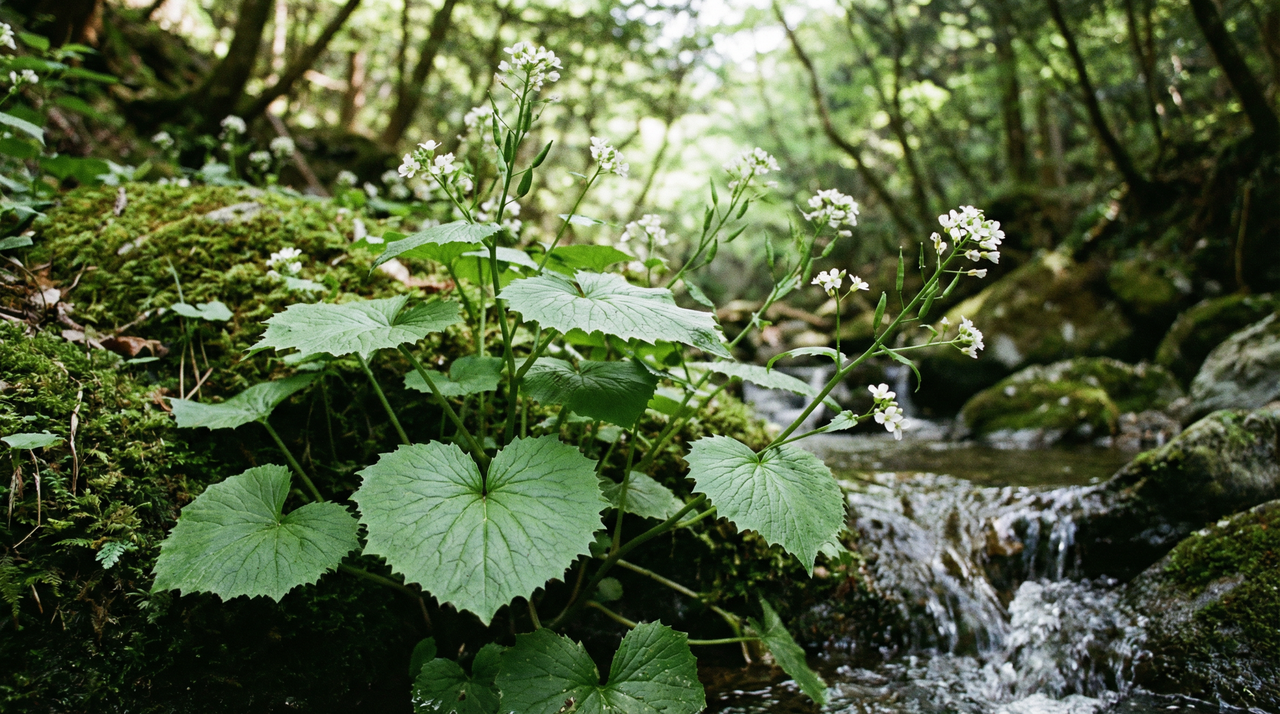
The real plant is Eutrema japonicum, and it grows wild only in the cold, shadow-drenched mountain streams of Japan's main islands, rooted in gravel beds where the water temperature barely fluctuates between seasons. It takes up to two years to produce a harvestable rhizome. Fresh-grated, its heat rises into your sinuses and then disappears cleanly, nothing like the sustained, cheek-burning punch of horseradish. Getting that experience, either growing it yourself or tracking down a source for the genuine article, requires understanding a plant so specifically adapted to its native habitat that replicating those conditions is less like gardening and more like ecological engineering.
Wasabi Origin, History, and Botanical Background
Most global markets rely almost entirely on imitation paste rather than the real rhizome.[2][3] That's not a small detail. It speaks to just how rare, demanding, and ecologically specific the real plant is. True wasabi, known scientifically as Eutrema japonicum, is one of those species that forces you to reckon with what authenticity actually costs.
Native Habitat and Botanical Characteristics of Eutrema japonicum
Eutrema japonicum is a perennial rhizomatous herb in the Brassicaceae family, native exclusively to Japan, specifically the cool, shaded, fast-moving mountain streams of Honshu, Shikoku, and Kyushu at elevations ranging from about 300 to 1,300 meters.[4][5] It grows along riparian zones in organically rich, consistently moist but well-drained soils, and it reproduces both from seed and via vegetative rhizome propagation, typically reaching sexual maturity in two to three years with a wild lifespan of five to ten years or more under ideal conditions.[6] When I'm designing plantings near water features or shaded riparian edges, wasabi's habitat requirements always remind me that some plants are not being difficult for the sake of it. They're telling you exactly what they evolved alongside.
The accepted scientific name is Eutrema japonicum (Miq.) Koidz., with Wasabia japonica still appearing as a recognized synonym in older literature and on nursery tags.[4][7] The plant is polycarpic, meaning it flowers and sets seed multiple times over its life, though commercial growers typically prevent flowering to push energy into rhizome development rather than reproduction.[8] That trade-off makes complete sense once you understand that the rhizome is the whole point, both economically and culinarily.
Visual Identification and Related Species
In the garden or the wild, Eutrema japonicum looks distinctive once you know what you're looking for. Plants typically reach 30 to 60 centimeters tall with a basal rosette of heart-shaped to rounded leaves, each 10 to 25 centimeters long with long petioles, slightly serrated margins, and a cordate base.[9][10] The stems are smooth and green, the rhizome knobby and thickened with fibrous adventitious roots, and in late spring the plant produces small white cruciform flowers in terminal racemes, followed by linear silique fruits containing dark brown-black seeds.[11] Those flowers, by the way, are genuinely charming, about as elegant as anything you'd see from arugula or kale in bloom, and the bees agree.
Leaf shape is actually more variable than most sources suggest. In shaded, high-humidity streamside conditions, leaves tend toward narrower and more elongated forms with longer petioles; in open cultivation, they broaden out.[12] I've seen this same pattern across cool-season brassicas in my own work: shade consistently produces more elongated foliage and, often, more concentrated secondary compounds. For field identification, the knobby rhizome combined with those heart-shaped basal leaves and a preference for cold moving water is usually enough to distinguish true wasabi from lookalikes.
The closest relative worth knowing is Eutrema bulbiferum, sometimes called Japanese wild cabbage or bulbiferous cress.[13] It grows across Japan, Korea, and parts of China at similar elevations, reaching the same 30 to 60 centimeters, but its basal leaves are lyrate and pinnatifid rather than heart-shaped, it grows from a taproot rather than a prominent rhizome, and it spreads vegetatively via axillary bulbils rather than rhizome division.[14] Rural Japanese communities and the Ainu people have foraged it for generations as a milder wild vegetable, using it in salads, pickles, and soups.[15] It's more geographically accessible than true wasabi, and its IUCN status is Least Concern, a meaningful contrast to its famous relative.[16]
Traditional and Cultural Significance in Japan
Wasabi's documented history in Japan stretches back over a thousand years. The earliest written record appears in the 927 AD Engishiki, a legal code that notes wasabi among tribute goods from Shiga Province.[17][18] The 10th-century Honzo Wamyo records it serving dual purposes as food relish and medicine, and by the Muromachi and Edo periods, growers had developed systematized riverbed cultivation using artificial stream channels in regions including Nagano, Shizuoka, and Mikawa.[19] Those elaborate water management systems reflect something I find genuinely moving: a culture so attuned to this plant's needs that they engineered landscapes around it rather than trying to force it to adapt.
Wasabi is woven into washoku, Japan's UNESCO-recognized traditional dietary culture, as a symbol of purity and natural bounty.[20] It's traditionally grated fresh at the table for sushi and sashimi to preserve its volatile flavor compounds, and festivals like the Wasabi Matsuri in Nagano and events at Daio Wasabi Farm in Azumino celebrate its cultural weight.[21] In Kampo medicine, it was used for respiratory complaints, digestive issues, and as an antimicrobial preservative, particularly relevant when paired with raw fish.[22]
Global spread has been slow and geographically constrained. Wasabi reached New Zealand in the 1880s through Japanese immigration, and cultivation has since expanded to the Pacific Northwest, British Columbia, the UK, and Germany.[23] But both Eutrema japonicum and Eutrema bulbiferum are listed as Vulnerable on the IUCN Red List, pressured by overharvesting of wild populations, riparian habitat destruction, slow maturation, and the cruel irony that widespread horseradish substitution masks real demand while authentic wild plants quietly disappear.[2][24] Supporting cultivated sources over wild-harvested plants isn't just an ethical preference; at this point, it's a conservation necessity.
Fun Facts: Chemistry, Ecology, and Conservation Challenges
What makes wasabi sting where horseradish merely burns comes down to chemistry. The rhizome contains glucosinolates including glucosinastratin, and when tissue is damaged by grating, an enzyme called myrosinase hydrolyzes them into volatile isothiocyanates, including allyl isothiocyanate (AITC) and longer-chain compounds like 6-methylthiohexyl isothiocyanate.[25][26] The result is a sharp, floral heat that hits the nasal passages and dissipates quickly, very different from the persistent, mouth-coating burn of horseradish paste.[27] I learned to tell them apart by noticing that fresh real wasabi leaves your sinuses clear and your palate clean within a minute, while the commercial green paste lingers and flattens everything. Those same antimicrobial compounds are the reason traditional Japanese cuisine paired wasabi specifically with raw fish rather than simply for flavor.
Ecologically, Eutrema japonicum earns its place in riparian systems by stabilizing stream banks against erosion, supporting water filtration, forming mycorrhizal associations that aid nutrient uptake in gravelly soils, and attracting bees and hoverflies during its May to June bloom.[28][29] Glucosinolate breakdown products also contribute to soil microbial diversity in ways that are still being mapped.[30] Genomic studies have confirmed that Eutrema japonicum possesses unique regulatory genes for glucosinolate biosynthesis compared to other Brassicaceae members, which partly explains why its flavor profile is so difficult to replicate and why cultivation outside its native cool, humid, shaded conditions (optimal 8 to 20 degrees Celsius) remains such a challenge.[31][32] The conservation picture is sobering, but the expanding interest in sustainable cultivation across New Zealand and the Pacific Northwest at least points toward a future where authentic wasabi doesn't have to come at the cost of its wild habitat.
Wasabi Varieties and Cultivars
Before we talk cultivars, the name situation deserves a quick clarification. The real wasabi plant is Eutrema japonicum, so always verify the botanical name when purchasing.[33][34] The plant itself grows 12 to 18 inches tall with glossy, heart-shaped leaves, and the rhizomes you're actually farming typically run 1 to 2 inches in diameter and 3 to 6 inches long once mature.[33][34] Flavor varies meaningfully by cultivar, ranging from mild enough to use freely in cooking all the way to an intense, sinus-clearing punch that makes commercial horseradish paste feel like a polite suggestion.[33]
Notable Cultivars of Eutrema japonicum
The commercial cultivars worth knowing are 'Daruma', 'Mazuma', 'Shingen', 'Midori', and 'Sanpo'.[34][35] For most home growers, 'Daruma' is the one I'd point you toward first. It's compact, matures in 12 to 18 months rather than the usual 18 to 24, adapts well to hydroponic setups, and shows genuine tolerance to root rot and Phytophthora.[34][36][37] When I've trialed it in a shaded, consistently moist microclimate, that compact habit made it much easier to keep cool and humid than the more sprawling types. It fits neatly into a forest floor guild understory in a way that 'Mazuma' simply doesn't.
'Mazuma' and 'Shingen' are the bold-flavor, patient-grower choices. 'Mazuma' produces larger rhizomes with stronger pungency, but it wants 18 to 24 months and has only moderate resistance to root pathogens.[34][37] 'Shingen' goes further still: robust, intensely flavored, high-yielding, and a long wait, though it has proven it can adapt to places like the Pacific Northwest and New Zealand when shade and irrigation are dialed in.[34] I've grated both 'Shingen' and supermarket "wasabi" paste side by side, and the difference is not subtle; the real thing opens the sinuses in a clean, bright wave that fades fast, while the horseradish version just sits there burning. 'Midori' sits in the middle ground: vibrant green foliage, balanced flavor, good yield, and reasonable adaptability to temperate growing conditions.[34]
Japanese breeding programs have specifically targeted disease resistance, focusing on fungal threats from Alternaria, Pythium, and related pathogens. 'Daruma' and 'Kogane' show the strongest improvements.[37][38] Even so, I still rotate planting sites whenever possible; disease-resistance tolerance isn't immunity, and the fungal risks are real enough to stay humble about cultural practices. Anyone who sees "Eutrema giganteum" listed somewhere should know it isn't a recognized species in botanical nomenclature and likely just refers to large-growing selections within E. japonicum.[39][40]
For a more forgiving entry point, Eutrema bulbiferum deserves a mention. It's a distinct but closely related species, sometimes sold under overlapping cultivar names like 'Daruma' and 'Mazuma', and it produces small bulbils along its stems with a milder flavor profile.[41][42] Wild types take 2 to 3 years to mature compared to cultivated E. japonicum's 18 to 24 months, and cultivated selections yield roughly 20 to 30 percent more than wild-collected plants.[43] It's not a substitute for true wasabi, but it's a useful companion plant for growers still getting familiar with what this whole genus actually needs.
Sourcing Authentic Wasabi Plants and Seeds
Finding genuine real wasabi plants in the US requires some effort. Commercial availability is limited primarily to specialty nurseries and online suppliers in the Pacific Northwest, with Jelitto Perennial Seeds and RareSeeds.com among the more reliable options for seeds and starter material.[44][45] Importing plants or rhizomes from Japan means navigating USDA APHIS regulations, phytosanitary certificates, and import permits, which is not a casual errand.[46][47] I always ask suppliers directly for phytosanitary documentation before ordering; it's the fastest way to tell whether you're dealing with someone who takes this seriously.
Expect to pay $15 to $50 for plants, $20 to $100 for rhizomes depending on size and cultivar, and $10 to $30 for seed packets.[48] Seeds exist but germination rates are low and unreliable; rhizomes or tissue-cultured plants are a much better starting point for anyone who doesn't want to spend months nursing a tray of spotty seedlings. Local permaculture networks and botanical garden plant sales sometimes surface small-batch growers who don't show up in a standard web search, so those connections are worth cultivating.
The authenticity problem in the broader wasabi market is genuinely rampant. Most commercial paste contains zero actual rhizome. Once you've actually grated a fresh rhizome yourself and experienced that clean, aromatic heat, the fake stuff becomes immediately recognizable for what it is. Sourcing from ethical, documented suppliers matters both for quality and because wild harvesting of this increasingly rare plant is restricted in parts of its native range.[49]
Wasabi Propagation and Planting (Eutrema japonicum)
If you've spent any time researching how to grow real wasabi, you've probably noticed that nearly every commercial grower and serious home cultivator reaches for the same tool: rhizome division. That's not an accident. Starting from seed is biologically possible, but the combination of erratic germination, plants that don't come true to type, and the sheer unpredictability of the process pushes almost everyone toward vegetative propagation.[50][51] I learned this the hard way through several seed flats lost to damping-off before I stopped arguing with the plant and just started dividing healthy clumps in early spring. Within four to six weeks, those divisions had established in the bed. The seed trays, when they did germinate, were producing one or two seedlings per flat.
Propagation Methods: Why Vegetative Wins for Wasabi
Rhizome division is reliable, fast, and gives you genetically identical plants from a cultivar you already trust. It's the foundation of commercial wasabi production for good reason.[50] Beyond division, researchers have explored other vegetative routes with varying results: stem cuttings (10-15 cm semi-hardwood treated with IBA at 1000-3000 ppm) root at under 50% in high-humidity conditions at 20-25°C over four to eight weeks; layering does better, around 70%; tissue culture achieves 70-90% success with the right MS medium and hormone balance; and grafting onto Brassica rootstocks reaches 60-85%, primarily for disease resistance benefits.[52][53][54] For the home grower, tissue culture and grafting are effectively research-lab territory. Division is what you want.
Regardless of method, sterile tools are non-negotiable. Wasabi's high-humidity requirements create the perfect environment for fungal and bacterial pathogens, and a dirty knife dragged through a rhizome division is an invitation to Phytophthora. Wipe down blades with isopropyl alcohol between cuts, keep humidity high but airflow moving, and treat cut surfaces promptly.[55][52] That pairing of 80-100% humidity with constant gentle airflow is the tension at the heart of growing wasabi successfully, and it starts at propagation, not after.
Seed Biology, Storage, and Germination Timeline
The 18-24 month wait from planting to a harvestable rhizome is the first thing I tell anyone seriously asking how to grow wasabi at home.[56][57] Starting from divisions rather than seed doesn't eliminate that wait, but it shaves weeks off the early establishment phase and gives you uniform plants from day one. Starting from seed adds the germination period on top of everything else, and that's where the biology gets complicated.
Wasabi seeds exhibit physiological dormancy and require cold stratification at 4°C for four to eight weeks before they'll germinate reliably.[58][51] Without that cold treatment, you're looking at 10-30% germination at best; with proper stratification and optimal temperatures of 15-20°C in a moist, well-aerated medium with light exposure, that figure climbs to 60-80%.[59] Fresh seed from the current season can reach 70-90%, which is one reason seeds harvested when fully mature (brown and hard, in late summer) perform better than stored ones.[58] After stratification, expect germination in two to four weeks at those cooler temperatures, with first true leaves appearing four to six weeks post-germination.[60]
The seeds themselves are tiny (1-1.5 mm), brownish with a pitted coat, and mucilaginous when wet. They also exhibit polyembryony, producing two to four embryos per seed, which sounds like a bonus until you realize it complicates the non-true-to-type problem already inherent in seed-grown plants.[51][61] Wasabi is hexaploid with gametophytic self-incompatibility, meaning cross-pollination is required, and offspring vary.[51] For long-term storage, seeds can be kept at -18°C to -20°C with low moisture content (5-7%), potentially maintaining viability for decades, but fresh or recently stratified seed is always your best practical option.[62]
Soil, Site, and Light Requirements for Successful Establishment
Planting successful wasabi beds means rigorously applying its ecological baseline, where water flows constantly over roots and temperatures rarely push past 20°C.[63][64] Replicating that in a home garden or indoor setup means reconciling what sounds like a contradiction: constantly moist soil that also drains perfectly. Waterlogging even briefly invites Phytophthora root rot, which can take out 50% of a planting before you realize what's happening.[65][63] I've watched it happen in my own beds, and now I test drainage before I plant anything.
Soil needs to be rich in organic matter (5-10%), loose, and aerated, with a bulk density under 1.2 g/cm³ and a minimum depth of 20-30 cm (30-50 cm is better) to accommodate the roots without compaction.[63][66] For containers, a mix of 50% peat or coco coir, 30% perlite or coarse sand, and 20% compost gets you close to the right structure.[65] pH should sit between 6.2 and 6.8; the plant tolerates 5.5-7.5, but outside the tighter range you'll see real problems.[63] Low pH triggers aluminum toxicity visible as chlorosis in older leaves; high pH locks out iron and manganese, showing up as yellowing in the newest growth.[67] I've seen beds drift above 7.0 after heavy liming of a neighboring bed, and the chlorosis set in within weeks. Testing every six months with a simple kit and amending carefully with elemental sulfur or agricultural lime keeps pH where it needs to be.[63][68]
Light is the other variable that surprises people. Wasabi needs 70-85% shade, or the equivalent of 50-70% shade cloth, with no more than two to four hours of dappled morning light.[69][70] Direct afternoon sun scorches the leaves, and in my zone 9-adjacent patio trial, a single week of unexpected afternoon exposure in late summer set the plants back by almost a month. Conversely, too little light causes etiolation and pale, weak growth.[71] The forest understory analog, dappled and humid, is the mental model to hold onto.
Spacing, Timing, and Planting Technique
Mature wasabi plants form clumping basal rosettes 12-18 inches tall and wide, which informs how you lay out a bed.[72][9] Standard field spacing runs 12-18 inches between plants and 18-24 inches between rows, roughly four to six plants per square meter.[72][73] That spacing isn't arbitrary; it keeps the canopy open enough to reduce the leaf-to-leaf humidity that drives fungal disease while still allowing rhizomes room to develop. Traditional Japanese streambed cultivation uses similar 30-50 cm intervals, and hydroponic systems can push to 8-12 inches given the controlled environment.[74][75] In my shaded patio beds where I've tried tighter spacing, I make a point of checking airflow between plants regularly, because close spacing in humid conditions is where rot gets a foothold.
Plant in early spring (March through May is optimal) or in fall for USDA zones 7-10.[76][74] Use sterile conditions throughout: sterilized tools, clean containers, fresh growing medium. Avoid compacting the soil around newly planted divisions; wasabi roots are shallow and sensitive, and packed soil cuts off the aeration the plant depends on.[63] Settle plants in gently, keep humidity high, and let airflow do its job. The 18-24 month clock starts the day you plant, and every decision from here forward either protects that investment or undermines it.
Wasabi Care Guide: Growing Eutrema japonicum Successfully
Wasabi is the most demanding plant I've ever grown, and I've grown a lot of difficult plants. Every care decision you make flows from one central reality. This is a cool, shaded, mountain-stream perennial that expects you to replicate those conditions as faithfully as possible. Deviate too far from that template and the plant tells you immediately, usually by dying.
Water Needs and Irrigation for Wasabi
Wasabi's shallow roots sit in that top 6-18 inches of soil, and they expect that zone to stay evenly moist without ever becoming waterlogged.[77][78] Drip irrigation or misting systems work best because they maintain consistent moisture without the surface disruption that can damage those brittle roots. Stress shows up within 2-5 days of inadequate water: wilting, leaf-edge yellowing, curling, stunted growth.[73] Overwater it and you'll see a different but equally alarming picture: yellowing leaves, soft brown roots, wilting that persists despite wet soil, and the creeping onset of Phytophthora root rot.[79]
Water quality matters here more than with almost any other plant I work with. Aim for neutral to slightly acidic water around pH 6.5, chlorine below 0.1-0.3 ppm, electrical conductivity under 0.5 mS/cm, and a temperature of 10-18 °C.[80][81] Rainwater or dechlorinated water is strongly preferred; high mineral content in hard tap water can damage the roots over time. Plan on about 1-2 inches per week, adjusted for temperature and humidity, and dial that back meaningfully during dormancy when the plant's needs drop.[78] Eutrema bulbiferum's thicker, more succulent leaves give it a marginal buffer during brief dry spells, but even that species performs best with consistent moisture.[41]
Sunlight and Shade Requirements
Wasabi wants 50-70% shade, full stop.[69] That number shifts seasonally: push it toward 70-80% shade in summer and ease back to 50-60% in spring and autumn when temperatures are cooler.[82] Too much direct sun and the plant responds fast and badly, with yellowing, wilting, scorched leaf edges, and necrotic spots.[83] I tell clients to keep that symptom list handy because the early signs of sun stress look a lot like drought stress, and it's easy to add more water when what the plant actually needs is shade. Shade cloth at the right percentage is one of the best investments you'll make for this crop. Pair it with humidity above 80% and you've recreated the essential character of those Japanese mountain-stream riparian zones where wasabi does its best work.[84]
Feeding and Nutrient Management
Wasabi is not the heavy feeder you might expect from a brassica family member. It prefers fertile, humus-rich, slightly acidic to neutral soil (pH 6.0-7.0) and a balanced, genuinely low-nitrogen approach using ratios like 5-10-10 or 10-20-20 applied sparingly, always after a soil test.[85] The macronutrient picture is detailed: nitrogen at 150-200 kg/ha supports vegetative growth, phosphorus at 50-80 kg/ha drives root development, and potassium at 150-250 kg/ha underpins disease resistance.[54][73] Calcium, magnesium, and sulfur all have roles too, and micronutrient gaps show up in ways that look alarming once you know what to watch for. I learned to distinguish iron chlorosis on young leaves from nitrogen deficiency yellowing on older leaves only after losing an entire bed one humid summer to a misdiagnosis. Iron chlorosis shows up on the newest growth; nitrogen shows up on the oldest. Get that backwards and you'll fertilize your way into a bigger problem.[86]
My application schedule runs every 4-6 weeks through the active growing season from spring to early fall. I start with a lean nitrogen formula (around 20-10-10) during early vegetative growth, then shift toward a more balanced ratio like 10-10-10 or 5-10-15 as rhizome development kicks in.[87] A base dressing of well-rotted compost at planting, followed by half-strength liquid fertilizer applications, is how I stay out of trouble. Over-fertilizing is a real failure mode here: too much nitrogen pushes lush foliage at the direct expense of rhizome size and flavor intensity, and it makes the plant significantly more susceptible to disease.[36] In hydroponic systems, keep EC between 0.8-1.5 mS/cm and monitor iron and magnesium closely.[88]
Frost Tolerance and Cold Protection
Eutrema japonicum manages brief dips to around -5 °C to 0 °C, and young plants are markedly more vulnerable than established ones.[89][90] Below freezing, leaves and young shoots wilt fast and turn yellow, then brown or black.[91] I learned this the hard way after an unexpected cold snap at 28 °F took out a row of young plants I thought were adequately protected. Now I go straight to 6-8 inches of leaf mulch in any marginal zone, backed up by row covers during cold snaps.[92] For growers in zone 5, movable containers give you the flexibility to bring plants under cover before temperatures plunge. Eutrema bulbiferum handles considerably more cold, surviving down to around -15 °C with good protection and doing well in USDA zones 4-8, which is meaningfully broader than E. japonicum's zone 7-9 range.[93]
Heat Tolerance and Temperature Management
Heat is, in my experience, the factor most people underestimate before they try to grow wasabi. Optimal daytime temperatures run 10-20 °C, with the upper ceiling sitting at a firm 25 °C before stress kicks in.[9][73] Above 28-30 °C the plant wilts noticeably and growth essentially stops. It reminds me of how quickly a hosta collapses in afternoon sun; the difference is that with wasabi, heat also drives down isothiocyanate production, meaning you lose both the plant and the flavor chemistry you waited 18 months for.[94] Wasabi tolerates fewer than 14 days per year above 30 °C, which puts it squarely in AHS Heat Zones 1-3.[95] The mitigation toolkit is the same triad you've already built: 50-70% shade cloth, consistent irrigation, and organic mulch at 5-10 cm to buffer soil temperature.[96] Humidity above 70% also helps by reducing transpiration load on the leaves during warm spells.[97]
Pruning, Maintenance, and Seasonal Rhythm
Remove flower stalks the moment they appear. That's the single most impactful maintenance task with wasabi, and it's where most home growers leave yield on the table. Redirecting energy away from reproduction and back into rhizome development can increase rhizome size by 20-30%.[98] I check plants weekly in spring because a stalk can go from bud to bloom remarkably fast, and once the plant commits to flowering, the rhizome stops bulking. After removing every flower stalk for the first two years, my third-season rhizomes were genuinely twice the size of what I'd harvested in earlier, less disciplined attempts. Thin overcrowded leaves regularly to keep airflow moving through the canopy, and stake any plant that reaches 2 feet to prevent lodging.[87] Always avoid damaging the central growing point; that's the one pruning mistake that can set a plant back months.
The annual rhythm of wasabi follows temperature closely. Vegetative growth kicks off in early spring, flowering typically appears in April through June in year two or three, and summer heat pushes the plant into a semi-dormant holding pattern until cooler, wetter conditions return.[99][100] Winter brings another semi-dormant period where watering drops and the plant rests. Once you internalize that rhythm, what seemed like constant crisis management starts to feel like a predictable seasonal partnership. The plant has a logic to it; your job is to keep the temperature, moisture, and shade within its narrow comfort zone long enough to cross that 18-24 month finish line.[99]
Wasabi Harvesting (Eutrema japonicum)
After 18 to 24 months of careful tending, the harvest moment for wasabi is something you earn rather than simply schedule. The wait is the whole point, and rushing it costs you exactly what you grew this plant for.
When to Harvest Wasabi: Timing, Maturity Cues, and Seasonal Windows
A ready rhizome tells you clearly when it's time: 1 to 2 inches in diameter, 10 to 20 cm long, firm to the squeeze, brown-skinned with that pale green to creamy white interior when nicked.[36][101] The lower leaves will be yellowing and the plant's vertical push will have slowed noticeably.[102] In temperate climates like the Pacific Northwest, the sweet spot runs September through November, with early spring as a secondary window.[65]
I learned the hard way what harvesting even a month too early actually costs. The glucosinolate content peaks somewhere around 12 to 18 months of growth,[103][104] and a young rhizome just gives you something mild and vaguely green, nowhere near the sinus-clearing payoff you waited for. The leaves are fair game earlier, harvestable from around six months and worth using fresh or cooked with their peppery heat,[36] but the rhizome demands patience you can't shortcut.
How to Harvest Wasabi Rhizomes: Technique and Tools
Use a digging fork or a narrow spade and work slowly outward from the plant to loosen the surrounding soil before lifting.[75][105] A bruised rhizome is a compromised one; the goal is to get it out of the ground intact, with the crown cleanly cut using a sharp, sterile blade. Cool, overcast mornings are ideal conditions, both for the plant and for keeping your harvested rhizome from warming up faster than it should.[92] If you're growing the related Eutrema bulbiferum, its small bulbils on the flowering stems are ready in late summer and worth collecting for propagation or eating.[106] Outer leaves on either species can be selectively pruned year-round without disturbing the rhizome, which is a nice bonus harvest while you wait out the long season.[36]
Wasabi Flavor, Yield, and Post-Harvest Handling
The first time you grate a home-grown rhizome and feel that floral, umami heat rise into the back of your sinuses, you'll understand why commercial paste is so often disappointing. Fresh wasabi delivers an initial sweetness, then a sinus-clearing pungency that builds gradually and fades cleanly within 30 to 45 minutes, with umami depth from glutamates and amino acids and a subtly floral finish.[107][108] That experience is entirely different from the longer, tongue-heavy burn of horseradish substitutes. The signature heat stems from volatile isothiocyanates that only activate upon cellular disruption through grating,[109][110] which is why grating at the table matters. Drying above 40°C destroys up to 70% of those volatiles,[111] and the high moisture content of a fresh rhizome gives it that creamy, smooth texture on the grater that feels nothing like grating horseradish.
Post-harvest, move quickly. Brush and rinse with cool water, then get the rhizome down to below 10°C within a few hours.[112] I've seen the flavor visibly fade when people leave freshly harvested rhizomes sitting at room temperature while they sort the rest of the crop. Storage at 0 to 5°C with 90 to 95% humidity gives you a shelf life of one to two months;[113][114] don't freeze it, or you'll lose that texture entirely. The entire 18 to 24 months of careful growing comes down to these last few hours of handling.
Wasabi Preparation, Culinary Uses, and Medicinal Applications
Culinary Uses and Flavor Profile of Authentic Wasabi
Every part of Eutrema japonicum is edible, rhizome, leaves, stems, flowers, and seeds, though the rhizome is what the whole world is chasing.[115][116] Its close cousin E. bulbiferum flips that emphasis toward leaves, bulbils, and young shoots, which makes it a friendlier choice for home cooks who want wasabi-adjacent flavor without waiting two years for a rhizome.[13]
What makes fresh wasabi genuinely irreplaceable is the chemistry of that immediate hit: allyl isothiocyanate delivers a clean, sharp pungency that climbs straight into your sinuses and then dissolves, leaving no smoldering burn behind.[116][117] Because this volatile spike fades rapidly, traditional preparation is simple but unforgiving. Peel the rhizome, grate it fine on a shark-skin oroshigane, and let it rest 10 to 15 minutes for peak pungency before serving.[118] Leave it sitting uncovered and those volatile compounds dissipate fast, leaving something flat and faintly bitter.
Storage is equally demanding. Fresh rhizomes keep best between 32 and 40°F in high humidity, and even then, pungency fades within days of harvest.[119] Given its ephemeral nature, I have gotten strict about sourcing whole rhizomes from growers I trust and grating them myself.[120] The commercial stuff simply cannot replicate it.
Traditionally, freshly grated wasabi sits alongside sushi and sashimi for good reason beyond flavor: its isothiocyanates carry genuine antimicrobial activity against common foodborne pathogens, a practical food-safety function that Edo-period cooks understood long before anyone isolated the chemistry.[121][19] Modern kitchens have expanded its reach into dressings, compound butters, and even craft beers.[122][123] For those growing E. bulbiferum, the leaves, stems, and bulbils bring a milder mustard-like bite to salads and stir-fries, and quick blanching or pickling softens the sharpness into something quite pleasant.[111][124] The bulbils pickled like Chinese zha cai are genuinely worth trying.
Traditional and Modern Medicinal Preparations
Japanese Kampo tradition has long worked with wasabi well beyond the condiment bowl: rhizome paste applied topically to wounds, leaf tea brewed for sinus congestion, and rhizome taken internally for respiratory and digestive complaints.[125][126] Across East Asia, E. bulbiferum preparations have followed similar patterns, including teas, decoctions, and tinctures at roughly 10 to 20 drops two to three times daily, or 1 to 2 teaspoons of dried herb as a daily preparation.[127] I've brewed the leaf tea myself during spring allergy season and found it pleasantly pungent without being overwhelming, a clear nasal effect that felt consistent with why people have reached for it for centuries.
Modern research on wasabi's isothiocyanates, particularly 6-MITC, shows promise for anti-inflammatory, antimicrobial, and potential anticancer applications, though the bulk of that evidence comes from cell studies and animal models rather than human trials.[128] The distinction matters. "Shows promise" is honest; "proven cure" is not.
Non-Food Uses and Safety Considerations
Edo-period records document wasabi's role as a natural fish preservative and digestive aid, traders using its antimicrobial punch to extend the shelf life of raw seafood long before refrigeration existed.[129][130] In the garden, I've found that spent leaves chopped into a bed seem to discourage some soft-bodied pests, consistent with what we'd expect from a plant whose isothiocyanate chemistry shows broad-spectrum antimicrobial activity in the lab.[128] These are observational notes, not clinical claims, and I'd say the same about any folk application.
On safety: wasabi is generally well-tolerated at culinary amounts, but anyone with sensitivities to mustard, horseradish, or other Brassicaceae family plants should approach it cautiously and start with very small amounts. The pungent compounds that make it interesting are also the ones that can irritate a sensitive gut or trigger a reaction in those predisposed. If you're on blood thinners, the conversation with your doctor should happen before wasabi becomes a daily ritual rather than an occasional condiment. Trust what grows in your garden, but respect what it contains.
Wasabi Health Benefits and Medicinal Uses
Most people encounter wasabi as a pungent condiment and give no thought to why it's been part of Japanese medicine for over a thousand years. That history is worth taking seriously, because the chemistry behind the flavor is the same chemistry behind most of the documented therapeutic activity.
Traditional Medicinal Uses of Wasabi and Related Eutrema Species
Eutrema japonicum has a long record in Japanese traditional medicine as an antimicrobial, anti-inflammatory, and digestive aid, used historically for everything from food poisoning to respiratory complaints.[128][131] The closely related Eutrema bulbiferum carries a similar traditional reputation across East Asia, particularly for clearing phlegm, soothing sore throats, and addressing stomach ailments.[132] That overlap between the two species isn't coincidental; it reflects shared glucosinolate chemistry doing the heavy lifting across the genus.
Modern research has started filling in why those traditional uses made sense. Wasabi extracts inhibit pro-inflammatory cytokines and suppress the NF-κB pathway, with effects demonstrated in models of both arthritis and colitis; even leaf extracts show anti-inflammatory activity through their phenolic content.[133][134] Allyl isothiocyanate (AITC) disrupts bacterial cell membranes with particular effectiveness against Helicobacter pylori and a range of foodborne pathogens, which helps explain why pairing raw fish with freshly grated wasabi wasn't just a flavor decision.[135][136] Anticancer research is further behind but intriguing: isothiocyanate compounds, especially AITC and 6-MITC, have shown the ability to trigger apoptosis and cell cycle arrest in colorectal, lung, and bladder cancer cell lines through mechanisms including G2/M arrest and HDAC inhibition.[137][138] Cardiovascular and fibrinolytic effects have also been attributed to the same isothiocyanate family.[136]
I want to be honest about where the evidence actually stands. Most of this research is in vitro or animal-based, and I'm always careful to say that when friends ask whether wasabi is "medicinal."[139][140] Human clinical trials are sparse: a small randomized crossover study did show mild improvement in allergic rhinitis symptoms, and there's a pilot study suggesting anti-inflammatory effects, but nothing approaching the scale of evidence you'd want before making therapeutic claims.[141][142] I rely on the traditional use record and the sensory reality of working with fresh material when I decide how to incorporate it. The preclinical picture is compelling; the human story is still being written.
Key Phytochemicals: Glucosinolates, Isothiocyanates, and Phenolics
Wasabi's bioactivity starts with glucosinolates, particularly sinigrin, gluconasturtiin, and glucobrassicanapin, which sit inert in the plant tissue until cell walls are broken.[143][144] Grating triggers enzymatic hydrolysis, releasing AITC as the primary pungent compound alongside 6-MITC.[145][146] That conversion is the whole game, which is why fresh preparation isn't optional if you're after the plant's actual chemistry.
Concentration varies dramatically by plant part. The rhizome carries the heaviest load at 200-500 mg/kg fresh weight, leaves come in at a moderate 50-150 mg/kg, and stems trail considerably lower.[145][147] The leaves make up for lower isothiocyanates with higher flavonoid and phenolic content, which is worth keeping in mind when you're thinking about using the whole plant. Those flavonoids and isothiocyanates together activate the Nrf2 pathway, upregulating protective enzymes like glutathione S-transferase and NQO1 that shore up the body's own antioxidant defenses.[148]
Growing conditions matter more than most people realize. After years of working with wasabi in shaded, humid microclimates, I can tell you the rhizomes from cooler, shadier spots have a noticeably sharper bite, which tracks with research showing spring harvests yield higher glucosinolate concentrations than fall ones, and that traditional mountain streamside cultivations in Japan carry 20-30% more isothiocyanates than plants grown in warmer conditions.[138] Processing destroys what careful growing builds: drying, heating, or pasteurization can eliminate up to 90% of the isothiocyanate content.[149] Eutrema bulbiferum adds indole glucosinolates like glucobrassicin to the equation alongside its aliphatic compounds, giving it a slightly broader chemical profile, though most of what we know about its phytochemistry is reasonably inferred from the better-studied E. japonicum.[150]
Documented Health Benefits from Research
The strongest research threads converge on three areas: antimicrobial activity, anti-inflammatory action, and antioxidant upregulation. AITC's effectiveness against H. pylori and foodborne microbes is one of the more robustly documented effects, with its mechanism of disrupting bacterial cell membranes well characterized across multiple studies.[30] NF-κB suppression gives the anti-inflammatory story mechanistic credibility, even if the human translation is unconfirmed at scale. The Nrf2 antioxidant pathway activation adds a third arm to the picture, suggesting wasabi's compounds may support cellular defense systems rather than just acting as direct antioxidants. Whether these effects translate meaningfully to human health at culinary serving sizes is the honest question that the research hasn't yet answered.
Nutritional Profile of Wasabi Rhizomes and Edible Parts
A typical 5-10 gram serving of fresh wasabi rhizome isn't going to move the needle on your daily macronutrients.[151] What it does deliver in that small amount is a meaningful contribution of vitamin C (around 40-41.6 mg per 100g, which scales down but still registers), solid potassium, and respectable calcium and magnesium, with B6, vitamin K, and folate rounding things out.[152][153] The rhizome is mostly water, somewhere between 70 and 90 percent, so it's not a caloric food.[152] I think of it the way I think of something like fresh horseradish or mustard greens: the nutritional story is the glucosinolates and the phytochemicals rather than the macros. That's where the real action is, especially in fresh preparation where bioavailability is highest.[154]
Eutrema bulbiferum takes a different angle nutritionally, since the edible parts are primarily young leaves, stem tips, and flowering shoots rather than rhizomes. Those come in at around 20-30 kcal per 100g with vitamin C ranging from 20-70 mg, notable fiber, and antioxidant activity comparable to other brassicas you'd find in a kitchen garden.[155][156] Firm nutritional data on authentic Eutrema japonicum is genuinely limited outside of Japan given how rarely it reaches international markets.[157]
Safety Considerations and Potential Side Effects
At culinary amounts, wasabi is generally safe for healthy adults, and the European Food Safety Authority considers isothiocyanates safe at food use levels.[158][159] The 5-10 gram dab you get with sushi is nowhere near the concentrations that cause problems in toxicological studies on pure AITC. Excess is where things shift: overconsumption can cause GI irritation, nausea, or diarrhea because AITC is genuinely irritating to mucous membranes at high concentrations, with effects that are dose-dependent rather than idiosyncratic.[160][161]
Two groups need specific caution. People with hypothyroidism or iodine deficiency should be moderate with wasabi because glucosinolates can interfere with thyroid hormone synthesis, and cooking reduces but doesn't eliminate that goitrogenic effect.[162][163] I've had this exact conversation with friends who have thyroid conditions: a little wasabi in a meal is probably fine, but daily large amounts from a therapeutic mindset are worth discussing with a doctor. The second group is anyone on anticoagulants like warfarin: 6-MITC has natural antiplatelet properties, and wasabi's vitamin K content adds another variable, so there's a real interaction risk that warrants a conversation with a healthcare provider before incorporating it in medicinal quantities.[140]
Allergies are uncommon but real, particularly for anyone with existing Brassicaceae or mustard sensitivities, where cross-reactivity is documented and can range from contact dermatitis to, rarely, anaphylaxis.[164][165] For pets, wasabi isn't highly toxic but the pungency and plant oils can cause GI upset; leaves and stems carry higher glucosinolate concentrations than the rhizome, so they're the greater irritant risk.[166] For anyone preparing their own fresh rhizomes, grate immediately before serving, cover briefly, and use within 30 minutes to get both the best flavor and the highest bioactive yield before those volatile isothiocyanates dissipate.[159]
Wasabi Pests and Diseases
Wasabi sits in an awkward position as a garden plant: the cool, humid, perpetually moist conditions it absolutely requires are the same conditions that roll out the welcome mat for fungal and bacterial pathogens. I learned this the hard way early on, losing several rhizomes to what I later identified as Phytophthora before I'd even figured out my planting spacing. That experience permanently changed how I approach sanitation with this crop. These days, sterilized tools and pasteurized growing media are non-negotiable for me from day one.
Major Diseases of Wasabi
Phytophthora root rot is the disease every wasabi grower fears most, and for good reason. It causes wilting, root decay, and outright plant death, and the cruel irony is that the cool, moist habitat wasabi needs actively encourages the pathogen whenever temperatures creep above 20 °C or drainage falters even briefly.[167][168] Think of it like basil in waterlogged soil: once conditions tip past the threshold, collapse is fast and total. Fusarium wilt, downy mildew, and Pythium root rot round out the fungal threats, all similarly triggered by temperatures above 20 °C, excess soil moisture, and stagnant air.[169][170][73]
Bacterial wilt (Ralstonia solanacearum) and bacterial leaf spot (Pseudomonas or Xanthomonas) can cause serious losses in humid conditions; maintaining soil pH between 5.5 and 6.5 and avoiding overhead irrigation both help limit their spread.[171][172] Viral diseases, including mosaic and potyviruses, do occur but are far less common and typically arrive via aphid vectors rather than soil. The related Eutrema bulbiferum shows moderate resistance to Alternaria leaf spot, clubroot, and Sclerotinia white mold compared with E. japonicum, hinting at breeding potential, but it remains susceptible to Phytophthora and bacterial soft rot.[173][174] For now, there are no widely available disease-resistant cultivars, and I'll tell you from growing 'Daruma' and 'Kogane' in zone 9b humidity that cultural practices matter far more than genetics here. Soil held at 60-80% field capacity, good airflow, strict sanitation, prompt removal of infected material, and regular crop rotation are your primary toolkit.[175][176] Fungicides like mefenoxam for Phytophthora or copper bactericides are reserved for when cultural controls fall short, and always rotated to prevent resistance. If you see wilting that doesn't recover after watering, pull the plant immediately and do not compost it: Phytophthora can persist in soil for years.
Common Insect Pests and Natural Defenses
Here's where wasabi gets a small reprieve. Its glucosinolates, primarily gluconasturtiin and glucobrassicanapin, hydrolyze into toxic isothiocyanates on cell damage, and the plant also emits herbivore-induced volatile organic compounds that actively recruit natural enemies.[25][177][178] I've actually watched this in my own plantings: lady beetles and hoverflies show up within days of the first aphid activity, which tracks directly with published studies demonstrating that Eutrema leaves actively release volatile organic compounds when damaged. Overall insect pressure runs lower than on kale or cabbage, but certain pests still break through.
Aphids are the most serious, capable of causing up to 70% yield loss through direct feeding and virus transmission.[179][180][181] Monitor regularly and hit populations with neem or insecticidal soap before they establish. Flea beetles leave characteristic shot-hole damage on leaves, root maggots (Delia radicum) attack roots and cause wilting, and thrips produce sporadic scarring; leafminers, spider mites, and chewing beetles generally cause only minor economic damage.[182][183][184] The cool, moist environment that the plant demands also suits slugs and snails perfectly; barriers, diatomaceous earth, or hand removal keep them in check, and occasional soil-borne root-knot nematodes are best avoided through careful sanitation and rotation.[9][185] Across the board, prevention through smart siting, regular scouting, and biological controls gets you much further with wasabi than reaching for a spray bottle.[186][187]
Wasabi in Permaculture Design
Before anything else, picture the site where wasabi actually evolved: a shaded, cool mountain streamside in Japan, somewhere between 300 and 1,300 meters elevation, wrapped in 80 to 95% humidity, with water moving gently but constantly through the root zone, dappled light filtering through a canopy, and temperatures rarely straying outside 8 to 20°C.[188][189][190] That's the benchmark. Every permaculture decision you make about wasabi has to start there, because unlike taro or cardamom (which also want consistent humidity but tolerate a much wider temperature band), wasabi's window is genuinely narrow. You're not nudging it toward better conditions; you're trying to faithfully reconstruct a specific microhabitat.
Climate Requirements and Suitable Growing Zones
The temperature tolerance on paper looks reasonable enough: wasabi can survive brief dips to around -7 to -12°C with protection, and it corresponds roughly to USDA zones 6 through 9.[69][191] The cold end I find far less worrying than the warm end. Above 25°C, you start seeing wilting, leaf scorch, and bolting (the plant sending up a flower stalk early, diverting energy from rhizome development), and above 28°C, rhizome quality degrades noticeably.[69][36] I've noticed the same pattern when trialing cool-season brassicas under shade cloth in a zone 9b setting: even with filtered light and supplemental irrigation, once air temperatures push past that threshold the plants tell you clearly that they're done.
In the US, the Pacific Northwest is the practical home base: coastal Washington, Oregon, and northern California have the cool summers, reliable moisture, and maritime influence that keep temperatures in range without constant intervention.[188][192] Parts of the Northeast, the Appalachians, and pockets of Michigan and North Carolina can work too, but microclimate matters far more than zone designation alone.[193] A sheltered, north-facing slope next to a spring-fed stream in zone 7 is a better wasabi site than a warm, exposed zone 6 garden. Everywhere else, controlled environments (greenhouse, indoor climate chambers) can extend viability, but you're engineering the whole ecosystem from scratch.[194]
If the narrow thermal window is a dealbreaker for your site, the closely related Eutrema bulbiferum pushes hardiness noticeably further, handling minimum temperatures down to -7°C, and in protected conditions reportedly surviving to -20°C, performing across USDA zones 4 through 8 or 5 through 9 depending on the source.[195][9] I think of it the way I think about comparing tender gingers to hardier species in the same genus: same habitat logic, somewhat more forgiving execution.
Ecosystem Functions and Guild Roles
Wasabi isn't just a fussy food crop. In its native riparian habitat it pulls real ecological weight: dense fibrous roots stabilize streambanks and reduce erosion, early colonization of disturbed moist microsites contributes to succession, and leaf litter decomposition adds organic matter to the soil.[196][158] Put it near a water feature in your design and those functions translate directly.
The phytochemistry adds another layer. Wasabi has shown hyperaccumulation of cadmium and zinc, which hints at phytoremediation potential, though I'd still recommend soil testing before counting on it for heavy-metal cleanup rather than treating the research as a green light.[197] More practically, its glucosinolates and the isothiocyanates they break down into act as natural biocides, with documented potential for deterring aphids, nematodes, and some herbivores.[198] Anyone who's used mustard or arugula as a cover crop knows this reputation holds up in practice; wasabi carries the same glucosinolate family credentials.
Come spring, wasabi earns its place in pollinator-friendly guilds too. The small white cruciform flowers that appear in April and May attract generalist pollinators: bumblebees, solitary bees in genera like Andrena and Halictus, hoverflies, small flies, and butterflies.[199][200] The main species is self-incompatible, so cross-pollination is required; E. bulbiferum is more flexible, with a mixed breeding system combining autogamy and outcrossing.[140][201] In shaded, humid conditions, hoverflies and small native bees tend to do more of the work than honeybees, and pollinator scarcity in deep shade can limit fruit set.[140] I've found that interplanting alyssum or mint near any shade guild with flowering brassicas meaningfully improves beneficial insect traffic. Both wasabi and E. bulbiferum also form arbuscular mycorrhizal associations that improve phosphorus uptake in these shaded, moist soils, quietly supporting nutrient cycling in the understory.[202]
Forest Layer Placement and Companion Guilds
Wasabi belongs in the herbaceous understory layer, forming 30 to 60 cm rhizomatous clumps that function as shade-tolerant ground cover in cool, moist temperate forests.[190][191] Every climate requirement described above flows directly from that forest-floor niche, which is why trying to grow it in an open sunny bed or a standard vegetable garden almost always ends in disappointment. E. bulbiferum fills the same understory role across East Asia, reaching 30 to 80 cm and spreading by both rhizomes and bulbils, with edible leaves adding harvest interest when shade and moisture conditions are met.[203][41]
Guild companions that make sense here are other riparian understory plants: ferns, hostas, and moisture-loving natives that share the same humidity and indirect-light requirements.[204] Siting near a pond edge, a fed swale, or a slow-draining rain garden gives you the constant moisture wasabi needs without constant manual intervention. What I'd caution against is overclaiming this plant's integration into permaculture systems based on theoretical extrapolation; large-scale documented examples are genuinely thin, and the honest work is in site assessment first.[205] Get the microclimate right before you design the guild around it. And label your plants: young wasabi foliage can look deceptively like several other woodland herbs at the same stage, a small detail that saves a lot of confusion at harvest time.
The Plant That Taught Me to Stop Forcing Things
I killed my first two plantings. Didn't want to admit it, but there it is. Wasabi has a way of exposing every shortcut you thought you could take, every assumption you made about your site. When I finally stopped trying to make it fit and started designing around what it actually needed, it settled in like it had always belonged there, right at the edge of the water feature, in the shade of the canopy, quietly doing its thing.
Sources 205
- Real Wasabi vs. Fake Wasabi – Serious Eats ↩
- Eutrema japonicum (Wasabi) ↩
- Wasabi vs. Horseradish: Composition Analysis ↩
- POWO - Eutrema japonicum ↩
- Wasabi Cultivation and Biology ↩
- Eutrema japonicum: Life History and Ecology ↩
- USDA PLANTS Database: Eutrema japonicum ↩
- Reproductive Biology of Brassicaceae Species ↩
- Eutrema japonicum - Wasabi ↩
- Wasabi - Eutrema japonicum ↩
- Eutrema japonicum ↩
- Morphological Characteristics of Wasabi (Eutrema japonicum) under Different Environmental Conditions ↩
- Eutrema bulbiferum - Useful Temperate Plants ↩
- Flora of China: Eutrema bulbiferum ↩
- Ethnobotany of the Ainu People ↩
- Eutrema bulbiferum (Japanese Wild Cabbage) ↩
- Engishiki: Procedures of the Engi Era ↩
- The History and Cultivation ↩
- Ethnobotanical Review of Wasabi Use ↩
- Washoku: Japan's Culinary Heritage ↩
- The Wasabi Festival in Nagano ↩
- Wasabi: A Review of the Traditional Uses, Phytochemistry, and Pharmacology ↩
- Invasive Species Compendium - Wasabia japonica ↩
- Conservation Challenges for Wild Wasabi ↩
- Glucosinolates and Isothiocyanates in Wasabi (Wasabia japonica) ↩
- Chemical Composition of Eutrema Species: Focus on Pungent Compounds ↩
- Isocyanate Formation from Various Glucosinolate Hydrolyses ↩
- Symbiotic Relationships in Brassicaceae Family Plants ↩
- Ecological Studies on Eutrema japonicum and Relatives ↩
- Soil Microbial Interactions in Brassicaceae ↩
- Comparative Glucosinolate Profiles in Eutrema bulbiferum and Relatives ↩
- Wasabi: Biology, Cultivation, and Utilization ↩
- Wasabi Plant Profile ↩
- Wasabi - Wikipedia ↩
- Wasabi Cultivars ↩
- Wasabi Cultivation - Oregon State University ↩
- Breeding and Selection of Disease-Resistant Wasabi (Eutrema japonicum) Cultivars in Japan ↩
- Cultivar Evaluation for Pathogen Resistance in Japanese Horseradish (Wasabia japonica) ↩
- International Plant Names Index ↩
- Wasabia japonica - Kew Science Plants of the World Online ↩
- Eutrema bulbiferum - Kew Royal Botanic Gardens ↩
- Royal Horticultural Society (RHS) Plant Database ↩
- Wasabi Cultivation Guide ↩
- Growing Wasabi in North America ↩
- Jelitto Perennial Seeds - Eutrema bulbiferum Seeds ↩
- International Movement of Plants and Plant Products ↩
- Importation of Plants and Plant Products ↩
- Eutrema Bulbiferum Seeds - Japanese Wild Cabbage ↩
- Cultivation of Wasabia japonica and Related Species ↩
- Wasabi Production and Propagation ↩
- Reproductive Biology of Wasabi (Eutrema japonicum) ↩
- Propagation of Wasabi (Wasabia japonica) ↩
- Micropropagation of Wasabia japonica ↩
- Grafting Techniques for Wasabi (Eutrema japonicum) Propagation ↩
- Pests and Diseases of Wasabia japonica ↩
- Wasabi Cultivation Guide ↩
- Growing Wasabi: A Challenging but Rewarding Plant ↩
- Germination Requirements for Wasabi Seeds ↩
- Seed Germination of Wasabi (Eutrema japonicum) ↩
- Phenology of Wasabia japonica ↩
- Polyembryony in Wasabi (Wasabia japonica) ↩
- Seed Storage of Orthodox and Recalcitrant Species ↩
- Wasabi Production Guide ↩
- Wasabi (Eutrema japonicum) Habitat and Ecology ↩
- Wasabi Cultivation in the Pacific Northwest ↩
- Effects of Soil Aeration on Wasabi Growth ↩
- Soil pH Effects on Wasabi (Eutrema japonicum) ↩
- Adjusting Soil pH ↩
- Wasabi Cultivation Guide ↩
- Wasabi Production in the Pacific Northwest ↩
- Growing Wasabi in the Pacific Northwest ↩
- Wasabi Production in the Pacific Northwest ↩
- Wasabi Cultivation Guide ↩
- Hydroponic Production of Wasabi (Eutrema japonicum) ↩
- Wasabi Cultivation Techniques in Japan ↩
- Growing Wasabi: A Guide for Gardeners ↩
- Growing Wasabi: A Comprehensive Guide ↩
- Wasabi (Eutrema japonicum) Production in the Pacific Northwest ↩
- Root Rot in Wasabi Cultivation ↩
- Wasabi Cultivation: A Practical Guide ↩
- Hydroponic Wasabi Production ↩
- Growing Wasabi (Eutrema japonicum) ↩
- Eutrema japonicum ↩
- Eutrema japonicum Plant Profile ↩
- Wasabi Cultivation Guide ↩
- Nutrient Deficiencies and Toxicities in Wasabi (Eutrema japonicum) ↩
- Growing Wasabi in the Pacific Northwest ↩
- Hydroponic Nutrient Management for Japanese Horseradish ↩
- Eutrema japonicum - Wasabi ↩
- Royal Horticultural Society - Wasabi ↩
- Wasabi Production Guide - Frost Management ↩
- Growing Wasabi - Oregon State University Extension ↩
- Eutrema bulbiferum (Japanese Wild Cabbage) ↩
- Physiological Responses of Wasabi to High Temperature Stress ↩
- Wasabi Production and Research ↩
- Wasabi Cultivation Guide ↩
- Effects of Temperature and Humidity on Wasabi Growth ↩
- Management of Wasabi (Eutrema japonicum) ↩
- Wasabi Biology and Cultivation ↩
- Phenology of Eutrema japonicum in Natural Habitats ↩
- Growing Wasabi: A Comprehensive Guide ↩
- Wasabi Production and Marketing ↩
- Glucosinolates in Wasabi: Biosynthesis and Sensory Impact ↩
- Maturity Effects on Eutrema japonicum Flavor Compounds ↩
- Harvesting Wasabi Rhizomes: Best Practices ↩
- Eutrema bulbiferum: Cultivation and Propagation ↩
- Flavor Compounds in Wasabi (Eutrema japonicum) ↩
- Sensory Characteristics of Fresh Wasabi (Eutrema japonicum) ↩
- Volatile Compounds in Wasabi (Eutrema japonicum) Rhizome ↩
- Glucosinolates and Isothiocyanates in Wasabi ↩
- Processing Impacts on Wasabi Pungency and Volatiles ↩
- Postharvest Handling of Wasabi Rhizomes ↩
- Wasabi Production and Storage Guidelines ↩
- Handling and Storage of Japanese Horseradish (Wasabia japonica) ↩
- Wasabi: The Plant and Its Cultivation ↩
- Botany of Eutrema japonicum ↩
- Chemical Composition and Sensory Characteristics of Wasabi ↩
- Wasabi: The Ultimate Guide to Preparation and Use ↩
- Harvesting and Storing Wasabi Rhizomes ↩
- Chemical Composition and Adulteration of Commercial Wasabi ↩
- History and Use of Wasabi in Japanese Cuisine ↩
- Aroma Profile of Japanese Wild Vegetables Including Eutrema Species ↩
- Flavor Profile of Wasabi and Relatives - Journal of Food Science ↩
- Eutrema bulbiferum @ RHS Plantfinder ↩
- Medicinal Uses of Wasabi in Traditional Japanese Medicine ↩
- Wasabi: Traditional Uses and Health Benefits ↩
- Eutrema bulbiferum: A Review of Its Traditional Uses and Phytochemistry ↩
- Medicinal Properties of Wasabi (Eutrema japonicum) ↩
- Ethnobotany of Wasabi (Wasabia japonica) in Japan ↩
- Historical Cultivation and Use of Wasabi in Japan ↩
- Medicinal Plants of Japan - Ethnobotany ↩
- Traditional Uses of Brassicaceae Plants in Japanese Medicine ↩
- Anti-Inflammatory Effects of Wasabi Extract in a Murine Model of Colitis ↩
- Anti-Inflammatory Effects of Wasabi Leaf Extract ↩
- Antimicrobial Activity of Allyl Isothiocyanate from Wasabi Against Foodborne Pathogens ↩
- Medicinal Properties of Wasabi (Eutrema japonicum) ↩
- Allyl Isothiocyanate Induces Apoptosis in Human Bladder Cancer Cells ↩
- Anticancer Effects of 6-MITC from Wasabi ↩
- Wasabi: A Brief Review of Its Bioactivities and Potential Health Benefits ↩
- Review of wasabi pharmacology and traditional uses ↩
- Beneficial effects of wasabi for patients with seasonal allergic rhinitis: a randomized, double-blind, placebo-controlled, crossover study ↩
- Effects of Wasabi Extract on Inflammation: A Pilot Study ↩
- Chemical Composition of Wasabi (Eutrema japonicum) ↩
- Phytochemical Composition of Wasabi (Eutrema japonicum) and Related Species ↩
- Chemical Composition of Wasabi (Wasabia japonica) and Its Bioactive Compounds ↩
- Glucosinolates and Isothiocyanates in Japanese Horseradish (Eutrema japonicum) ↩
- Distribution of Allyl Isothiocyanate and Related Compounds in Wasabi Plant Parts ↩
- Antioxidant and Anti-inflammatory Activities of Wasabi (Eutrema japonicum) ↩
- Processing Impacts on Isothiocyanates in Eutrema japonicum ↩
- Glucosinolates in Brassicaceae: A Review ↩
- Wasabi: The Real Deal ↩
- Wasabi, raw ↩
- Nutritional Composition of Wasabi (Eutrema japonicum) ↩
- Phytochemical Composition of Fresh vs. Processed Wasabi ↩
- Nutritional Composition of Wasabi (Eutrema japonicum) and Related Species ↩
- Phytochemical Analysis of Eutrema Species: Focus on Antioxidants and Phenolics ↩
- Nutritional Composition of Wasabi (Eutrema japonicum) ↩
- Eutrema japonicum - USDA PLANTS Database ↩
- Scientific Opinion on the Safety of Allyl Isothiocyanate ↩
- Toxicity Mechanisms of Allyl Isothiocyanate ↩
- Toxicological Profile of Allyl Isothiocyanate ↩
- Cruciferous Vegetables and Goiter Risk (Thyroid Hormone Journal, 2015) ↩
- Glucosinolates in Brassicaceae: Toxicity and Health Effects ↩
- Allergic Reactions to Wasabi: A Case Report ↩
- Cross-Reactivity in Brassicaceae Allergens ↩
- Toxic and Non-Toxic Plants: Wasabi ↩
- Phytophthora Root Rot in Wasabi ↩
- Phytophthora Root Rot Management in Herbs and Spices ↩
- Wasabi Diseases and Pests ↩
- Downy Mildew on Wasabi ↩
- Bacterial Leaf Spot of Wasabi ↩
- Common Problems in Japanese Horseradish (Wasabi) Production ↩
- Phytopathology Journal Study on Eutrema Disease Resistance ↩
- Disease Resistance in Wild Brassicaceae Species ↩
- Wasabi Production in the Pacific Northwest ↩
- Phytophthora Root Rot Management in Wasabi Production ↩
- Anti-herbivore defenses in Brassicaceae: The case of wasabi ↩
- Volatile organic compounds from Eutrema japonicum leaves in response to herbivory ↩
- Pest Management in Cultivated Wasabi: Field and Greenhouse Studies ↩
- Brassicaceae Pests: Aphids and Leaf Miners ↩
- Integrated Pest Management for Brassicas ↩
- Insect Pests of Cruciferous Crops ↩
- Crucifer Flea Beetles ↩
- Host-Plant Susceptibility of Wasabi to Insects ↩
- Integrated Pest Management for Wasabi ↩
- Wasabi Production in the Pacific Northwest ↩
- Wasabi Pest Management Guide ↩
- Growing Wasabi in the Pacific Northwest ↩
- Wasabi Production in Hawaii ↩
- Eutrema japonicum - Wikipedia ↩
- Eutrema japonicum Profile ↩
- Environmental Conditions for Eutrema japonicum ↩
- Wasabi Production: A Potential Alternative Crop for the Southeastern United States ↩
- Wasabi Production Guide ↩
- Growing Japanese Wild Cabbage (Eutrema bulbiferum) ↩
- Royal Horticultural Society: Eutrema japonicum ↩
- Phytochelatin-Dependent Cadmium and Zinc Accumulation in Eutrema japonicum ↩
- Glucosinolates in Brassicaceae: Pest Management Potential ↩
- Ecology and Reproduction of Wasabi ↩
- Pollination Ecology of Wild Brassicaceae in Japan ↩
- Breeding Systems in Eutrema Species ↩
- Mycorrhizal Associations in Brassicaceae: Eutrema japonicum ↩
- Habitat Preferences of Understory Herbs in Temperate Forests ↩
- Eutrema japonicum (Wasabia japonica) ↩
- Eutrema japonicum (Wasabia japonica) ↩