Nobody looks at a half-inch succulent creeping through a soggy ditch and thinks "there's one of the oldest brain medicines on earth." But that's exactly what Water Hyssop is. I've grown it wedged between pond liner and bog soil, watched it spread quietly across a rain garden edge, and pulled it out of places I didn't want it. It looks like the plant equivalent of background noise. Then you start reading the Sanskrit texts, and you realize Ayurvedic physicians were prescribing this same little creeper to sharpen memory and calm anxious minds somewhere around 300 BCE.[1] Three thousand years of continuous use for a plant most people in the West would step over without noticing.
What gets me isn't just the history. It's the contradiction. The same plant that filters nitrogen and heavy metals out of polluted water[2] is also being studied in clinical trials for cognitive decline. It's simultaneously a revered nootropic, a useful ecological workhorse, and, in the wrong watershed, a plant you have to manage carefully before it takes over. I find that genuinely fascinating, and a little humbling. The most unassuming plants often have the most to say.
Water Hyssop Origin, History, and Botanical Background
Water hyssop is one of those plants that keeps surprising you the longer you know it. I first encountered it creeping along the edge of a Central Florida drainage ditch, looking almost too tidy to be wild, its small succulent leaves catching the light like a mat of living jade. It felt like a garden escapee. It was, in a sense, though the fuller story is far more interesting than that.
Botanical Background and Visual Characteristics of Bacopa monnieri
The water hyssop scientific name is Bacopa monnieri, and its native range spans tropical and subtropical wetlands across Asia, Africa, Australia, and the Americas.[3][4] In the United States it grows natively along the southeastern coastal plain, from Virginia down through Florida and west to Texas.[5] It tends to stay in the lowlands, mostly below 1,300 meters, thriving in shallow water, saturated soils, and the kind of soggy ground most gardeners try to fix rather than plant into.[6]
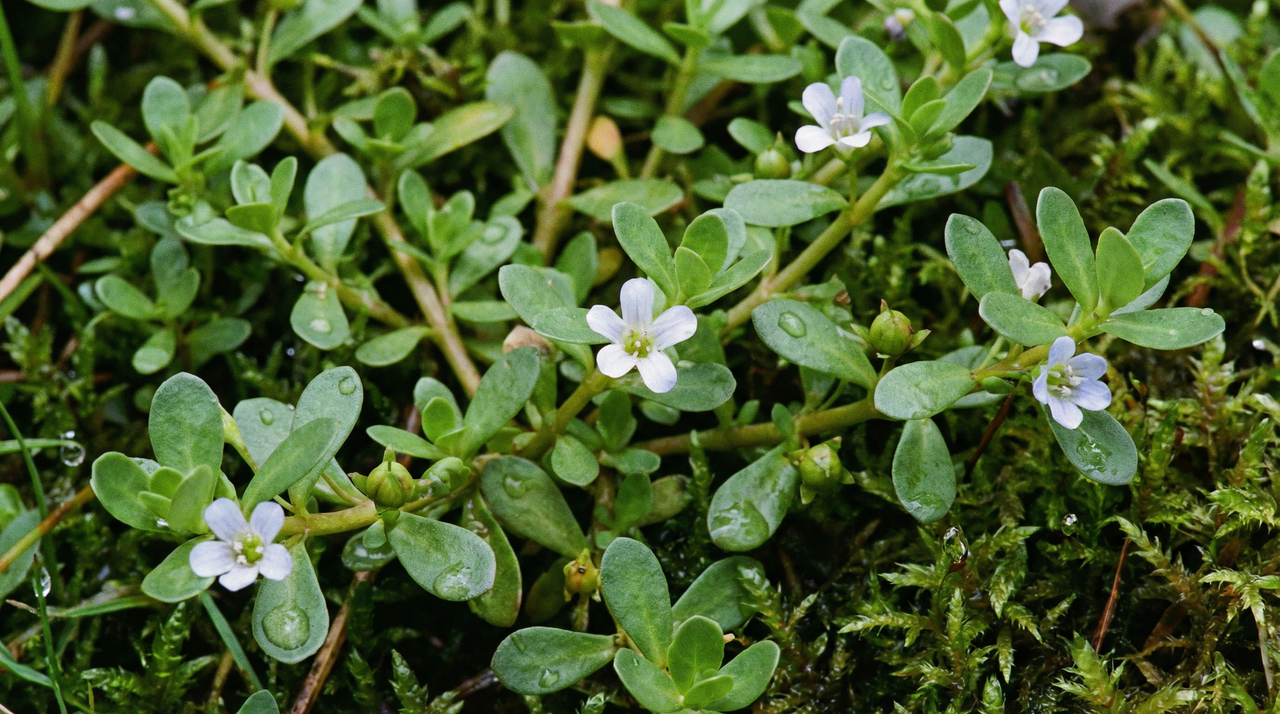
Visually, the plant is easy to underestimate, growing only four to twelve inches tall and spreading via creeping stems up to 45 cm long that root readily at the nodes.[6][7] The leaves are opposite, fleshy, bright green, and oval-shaped with rounded tips, each one five to twenty millimeters long. The flowers are tiny and solitary, white to pale violet with five lobes, appearing individually in the leaf axils.[5] I always tell people the leaves look deceptively like tiny jade-plant succulents until you see them floating at the water's edge or pressed flat against a saturated bank. That fleshy quality is functional: it helps the plant hold water and stay buoyant in shallow flows.
If you're trying to distinguish Bacopa monnieri from its close relative Bacopa caroliniana in the field, look at leaf shape and flower color. Monnieri has rounder, narrower leaves and paler, almost white flowers, while caroliniana carries lanceolate leaves with pointed tips and noticeably brighter blue blooms.[3][5] I label my Brahmi beds carefully for exactly this reason; the two species can look remarkably similar at a glance, especially to visitors unfamiliar with the genus. Plants grown in deep humidity and saturated conditions produce noticeably larger, more succulent leaves and denser mats than those in drier or shadier spots,[8] so the same species can look quite different depending on where it's growing. As a perennial, it can live two to five years or considerably longer through vegetative division, and reaches flowering in as little as three to six months from germination under good conditions.[7][6]
Traditional and Cultural Uses Through the Ages
Part of what makes Bacopa monnieri so fascinating is how it has traveled. Its spread through the Americas, Africa, Australia, and Europe came largely through the aquarium trade, horticultural commerce, and deliberate medicinal cultivation, and in many of those regions it has naturalized so thoroughly that it can behave invasively in wetlands.[9] But long before hobbyists were putting it in fish tanks, it was moving through human culture for a very different reason.
In Ayurvedic medicine, Bacopa monnieri has been known as Brahmi for at least 2,500 to 3,000 years, classified in the Charaka Samhita and Sushruta Samhita as a medhya rasayana, an intellect-promoting rejuvenator used to enhance memory, calm anxiety, support respiratory health, and treat epilepsy.[10][11] The name Brahmi connects directly to Brahma, the Hindu creator god, a naming choice that signals how seriously the tradition regarded this plant's relationship to wisdom and mind.[12] Traditionally it was prepared as decoctions, powders, oils, and fresh juice, sometimes combined with herbs like Ashwagandha, and woven into daily devotional practice through puja and temple garlands.[12] I'm not an Ayurvedic practitioner, but I've read these classical texts in translation, and I grow Brahmi partly because keeping that 3,000-year thread of knowledge alive in a garden feels meaningful in a way that's hard to fully explain.
Its use spread across South and Southeast Asia, appearing in Sri Lankan, Thai, and Myanmar traditional medicine for similarly nervous-system-centered applications.[13][14] It is notably absent from classical Chinese materia medica, so this is not a case of universal ancient use across all Asian traditions. In older European herbal literature that referenced Indian sources, it occasionally appeared under the name "Herb of Grace." Closer to home, the Seminole people of Florida have used infusions and poultices of the plant externally, applying it to wounds and inflammation.[15]
Fun Facts About Water Hyssop
The ecological story of this plant is as compelling as the cultural one. Bacopa monnieri is a documented phytoremediator, helping prevent eutrophication, stabilizing sediments, oxygenating the water column, competing with invasives like water hyacinth, and providing micro-habitat for aquatic insects and small fish.[16][17] I think of it as a living mulch that also happens to filter heavy metals out of the water, which is a genuinely unusual thing for a groundcover to do. In my own backyard rain garden in Central Florida, I've watched it form dense mats along the low edge that intercept nutrient-rich runoff before it reaches the pond, exactly the role the research describes.[7]
The flowering habit adds one more layer of charm. Those small white-to-pale-violet flowers open mainly from spring through fall in temperate climates but can appear year-round in frost-free zones, each individual bloom lasting only a few days.[8][3] It's not a showy plant. The flowers are almost shy. But when you're crouching down to look at a mat of it near the water's edge, knowing you're looking at the same species that ancient physicians called an intellect-promoting rejuvenator, that quietness starts to feel intentional.
Water Hyssop Varieties and Where to Buy
Notable Cultivars of Bacopa monnieri
Water hyssop sits in an odd spot in the horticultural world: it's simultaneously an aquarium staple, a nootropic herb, and a groundcover that most mainstream garden centers have never stocked. That dual identity shows up clearly in the cultivars available. On the ornamental side, you'll find 'Variegata' (the one with creamy white-margined leaves, popular in hanging baskets and aquariums), 'Bright Green' (a compact selection), and 'Dubuis' (a trailing form with especially vibrant flower color).[18][19] The straight species, by comparison, is what you'd reach for if medicinal output is the goal.
All of them share the same basic architecture: a creeping perennial that stays 4 to 6 inches tall with a spread of 12 to 18 inches, carrying small oval succulent leaves and producing tiny white to pale purple flowers with violet veining.[7][20] I usually describe it to clients as something like baby tears but with real wetland grit, and a bitterness that baby tears definitely does not have. Hardy in USDA zones 9 through 11, the plant wants warmth and consistent moisture above almost everything else.[8][21]
Where the cultivars diverge is in how they handle stress. 'Variegata' manages moderate dry spells but performs best with never-let-it-dry-out moisture, while 'Dubuis' handles periodic flooding more gracefully.[22] I've grown both the straight species and 'Variegata' in moist garden edges, and my honest observation is that the species gets lusher and more vigorous when conditions stay reliably wet, while 'Variegata' stays tidier and more compact but needs some protection from drying winds. If your priority is the cognitive compounds rather than aesthetics, that difference matters: medicinal strains typically reach 2 to 5% bacoside content, while ornamental selections tend to run lower, around 1 to 3%.[23]
Globally, brahmi bacopa is assessed as Least Concern, though wetland habitat loss does pressure wild populations.[24] I never use wild-collected material, and I'd encourage anyone sourcing this plant to verify nursery provenance, especially in zone 9B where coastal wetland pressure is real. Cultivated stock is always the right call.
Sourcing Water Hyssop Plants and Seeds
Because water hyssop is classified as occasional in the U.S. horticultural trade, you won't find it at a typical garden center.[25] Your best channels are specialty aquatic nurseries, wetland garden suppliers, and herbal seed houses. I've ordered seed packets reliably from Strictly Medicinal Seeds and Richters Herbs for years, using them to start pond-margin plugs under lights each spring. Seeds run $3 to $10 a packet; live plants in 4-inch pots typically land between $5 and $15.[26][27]
If you're in Florida, Louisiana, or Texas, local availability is noticeably better since naturalized populations have made the plant more familiar to regional growers and water garden retailers.[28] For everyone else, plan ahead: importing live plants can involve USDA APHIS permits, some states flag it for wetland invasiveness monitoring, and seasonal shipping delays are common.[29] Seeds ship more cleanly and let you choose your cultivar intentionally. The good news is that as a dietary supplement, the plant bacopa products are legal and widely available under DSHEA, and the aquarium trade keeps live stock moving through water feature retailers year-round.[30] Just make sure you match whatever form you buy to your actual water and frost conditions before it lands on your doorstep.
Water Hyssop (Bacopa monnieri) Propagation and Planting
Before you buy seeds, consider that seed-grown water hyssop plants don't reliably come true to type. Genetic variability, self-pollination with potential outcrossing, and polyploidy in some populations mean that seedlings can differ noticeably in growth rate, leaf shape, and bacoside content.[31][32] If you're growing this plant medicinally, that variability matters. I've grown out batches from seed and seen real differences in vigor and scent from plant to plant in the same flat. Stem cuttings are how you get around that problem entirely.
Propagation Methods: Why Stem Cuttings Beat Seeds
Stem cuttings are the go-to method for good reason: 80-95% success rates under reasonable conditions versus 30-70% for seeds.[33][34] Take 4-6 inch sections from healthy, actively growing stems, strip the lower leaves, and root them in either water or moist soil at 70-80°F with around 70-80% humidity.[35][36] In my experience, cuttings taken from vigorous summer growth root faster and establish more readily than material from older, woodier stems. You'll typically see roots in one to four weeks, and those new plants are established and spreading in six to eight weeks.
Seeds are possible, but the process is fussier. The tiny seeds must be surface-sown without any covering since they need light to germinate, held at 70-85°F with high humidity, and even then you're waiting 14-21 days just to see sprouts.[37][38] If you do want to save and store seed, germplasm conservation guidelines from the ICAR classify water hyssop as orthodox (desiccation tolerant), meaning it can be stored at low moisture and low temperature for years in an airtight container with a desiccant.[39][40] I learned the hard way that saved seed left in a paper envelope through a humid summer loses viability fast. A small silica gel packet in a sealed jar makes all the difference. For established pots, simple division at repotting time is an easy third option that any home grower can manage with no special equipment.[41]
Soil, Site, and pH Requirements for Wetland Success
Water hyssop is classified as a FACW wetland species, native to marshes, swamps, and the muddy edges of ponds.[3] That origin dictates almost everything about how you site and prepare for it. The soil should stay consistently moist to wet, but it still needs enough aeration that roots don't suffocate in stagnant, compacted muck.[42][43] For in-ground planting, I aim for a loamy or sandy loam with a good dose of compost (around 5-15% organic matter) and some perlite or coarse sand worked in for drainage. For containers, a mix of roughly 40% compost, 30% sand, and 30% perlite in a pot at least 6-8 inches deep handles that balance well, since the fibrous root system only reaches 2-4 inches down anyway.[36]
Soil pH should sit between 6.0-7.5, with the sweet spot for nutrient uptake at 6.5-7.0.[42][36] I always test both my soil and the water in my bog planters, because even a half-point drift shows up as leaf yellowing within two weeks. Above 7.5, iron and magnesium become unavailable and the leaves turn chlorotic; drop much below 6.0 and you'll see root stress and wilting.[44] Lime raises pH, elemental sulfur brings it down, and for aquatic settings, aim for water pH of 6.5-7.5. On sun, this plant handles full sun to partial shade, with four to six hours of direct light being the comfortable range.[8] In hot climates, afternoon shade or 50-70% shade cloth prevents leaf scorch without compromising growth.[45]
Spacing, Timing, and Establishment Techniques
Think of water hyssop the way you'd think about creeping thyme or a vigorous mint: it roots at every node it touches and will fill available ground in a season. That mat-forming habit is an asset in the right place and a nuisance if you haven't planned for it.[8] In a terrestrial garden, space plants 6-12 inches apart (closer for a solid groundcover effect, wider if you want distinct individuals), with rows about 12-18 inches apart to maintain airflow and reduce fungal pressure.[45] In aquatic or hydroponic settings, 4-6 inches is fine since the rooting habit is so reliable that close spacing fills in quickly without crowding becoming a problem. Mature spread can reach 12-24 inches terrestrially and up to 36 inches in aquatic conditions, so factor that into where you site it against neighboring plants.[20]
Plant after your last frost date when soil has warmed to at least 65-70°F. Spring and summer are ideal in USDA zones 8-11.[32] In my experience with wetland edges, containment is essential. I grow it in large pots sunk into the soil so I can lift and divide without it escaping into natural waterways. Always check local regulations before planting near ponds or streams, because in warm, moist regions it can naturalize aggressively.[41]
Germination and Growth Timelines
The timeline comparison here is stark. From seed: germination in 14-21 days, then another 90-120 days before you're looking at a first leaf harvest, typically 3-6 months total.[37][33] From cuttings: roots in one to four weeks, harvest-ready in six to eight weeks.[32] In warm, humid conditions like I work with in summer, cuttings sometimes root in under two weeks and take off so fast it's almost alarming. For anyone growing water hyssop for its medicinal value, the faster establishment and genetic consistency of vegetative propagation isn't just convenient, it's the approach that gives you a reliable, quality harvest on a predictable schedule.
Water Hyssop Care Guide
The single most useful thing I can tell you about caring for water hyssop is this: stop thinking of it as a garden plant that likes moisture and start thinking of it as a wetland plant that tolerates gardens. That mental shift changes every decision you make. Bacopa monnieri evolved in marshes, pond margins, and flooded edges, growing in everything from saturated soil to water 50 cm deep, and it genuinely cannot survive prolonged drought.[3][46] Work with that identity and it's forgiving. Fight it and you'll be puzzled by a plant that collapses in a week.
Water Requirements
In a pot or raised bed, watering every two to three days during active growth is usually right, keeping the top inch moist while letting the very surface dry slightly between sessions.[8][47] The roots are shallow, sitting in the top two to six inches of soil, so deep watering is unnecessary and actually invites root rot by keeping the lower profile anaerobic. What you want is consistent dampness, not a bog. If you're using tap water, let it sit overnight or use rainwater; ideal pH for water hyssop runs 6.0 to 7.5, and in aquarium or hydroponic setups you're aiming for an EC of 0.5 to 1.5 mS/cm with low ammonia and nitrate levels.[48][49]
Learning to read stress symptoms early saves a lot of plants. Overwatering shows up as yellowing or browning lower leaves, wilting despite wet soil, and eventually black mushy roots from Pythium and similar fungal pathogens. Underwatering is faster and more dramatic: rapid wilt, scorched leaf edges, and stunted new growth.[50][51] I've rescued yellowing plants that looked like they were rotting by simply improving drainage and easing back from daily watering. A mix with 20 to 30 percent perlite and pots with multiple drainage holes is non-negotiable for me now, as the roots want perpetual moisture, not perpetual submersion.
Sunlight Needs
Water hyssop does best with four to eight hours of direct sun daily, and the difference between adequate and inadequate light is obvious fast: too little and stems go leggy, leaves pale out, and flowering drops off sharply.[8][36] In Central Florida's intense summer, I give mine afternoon protection rather than full exposure all day; that 2,000 to 5,000 lux range in the hottest hours prevents leaf scorch without sacrificing the light it needs for compact, productive growth.[52] For anyone growing it indoors or in an aquarium, 12 to 16 hours of bright indirect light or grow lights running around 10,000 to 20,000 lux keeps it healthy through winter.
Feeding and Nutrient Management
A balanced fertilizer around 10-10-10 covers general maintenance, but the smarter move is to shift ratios with the plant's stage: nitrogen-forward formulas during vegetative growth for leafy development, then phosphorus and potassium enriched blends when flowering begins.[53][54] For soil-grown plants, slow-release organic options like compost, worm castings, or fish emulsion applied every four to six weeks at about 1 to 2 grams per pot work well.[36][55] In pond or aquarium settings, cut that down to half-strength liquid fertilizer or root tabs; too much phosphate in standing water and you're growing algae instead of bacopa.[56]
I noticed my first nitrogen deficiency as a uniform yellowing on the older leaves while the new growth stayed green. A single application of fish emulsion corrected it within two weeks. That's the tell-tale pattern: nitrogen deficiency hits old leaves first, phosphorus deficiency produces a purplish cast and weak roots, potassium deficiency causes marginal scorching, and iron deficiency shows interveinal chlorosis on young leaves instead.[57][58][36] Pull back on all feeding during winter or low-light periods; a stressed or dormant plant has no use for nutrients and the buildup causes leaf burn and root damage.[59]
Frost Tolerance and Winter Protection
Water hyssop is a tender tropical perennial, hardy outdoors only in USDA zones 9 through 11, with a practical cold floor around 50°F (10°C).[8][60][61] Frost damage is fast and ugly: wilting, then browning or blackening, then tissue necrosis.[42][62] I now routinely move pots indoors before any night threatens to drop below 45°F and keep them under grow lights through winter rather than gambling on row covers, which only help for the mildest of frosts. Stem cuttings root so easily in a glass of water that I always take a few in autumn as insurance; it costs almost nothing and means you're never starting from zero in spring. Mulching is not an effective primary strategy here and can promote the root rot you're already working to prevent.
Heat Tolerance
The optimal temperature window is 68 to 86°F (20 to 30°C), and vegetative plants can handle up to 95 to 104°F when soil moisture never lapses.[63][64] The catch is that "when moisture never lapses" is doing a lot of work in that sentence. Water hyssop reminds me of basil in this way: both collapse dramatically the moment heat and dry soil combine, and both recover only if you catch the wilt early. I've seen pots scorch within a few hours on a 95°F afternoon when the soil dried out even briefly.[65] Seedlings are particularly vulnerable, with germination dropping sharply above 95°F, and flowering quality declines at those temperatures too.[66][67] Afternoon shade and consistent moisture are your two defenses, and they're not optional.
Seasonal Rhythm and Maintenance
In the tropics and subtropics, water hyssop grows continuously year-round with no real dormancy as long as moisture is adequate.[3] In cooler temperate zones it flowers from late spring through autumn, slows below 50°F, and may die back to the roots after a hard frost, resprouting in spring from surviving root tissue or new cuttings.[20] In my zone 9B garden it behaves as a reliable perennial that slows noticeably in January but rarely disappears completely.
For medicinal harvests, the timing sweet spot is 90 to 120 days after planting, cutting the upper 10 to 15 cm of aerial parts when plants hit 15 to 20 cm and are pre-flowering; that cadence allows three to four cuts per year from the same plants.[68][69] I do morning cuts and dry the material in shade at 35 to 40°C down to about 8 to 10 percent moisture; that approach reliably preserves the bitterness I've come to associate with a potent batch.[36] Regular pruning, even outside of harvest windows, encourages the bushy compact habit you want and keeps damaged or pest-affected tissue from dragging the plant down.
Water Hyssop (Bacopa monnieri) Harvesting Guide
Bacopa rewards patience. Unlike a cut-and-come-again salad green where you're harvesting from week three, water hyssop needs time to build the chemistry that makes it worth growing in the first place. Expect flowering around 60 to 90 days after planting, and then wait another 30 to 60 days past that flowering window before taking your first serious harvest.[70][71] That post-anthesis window is when leaves reach full expansion and bacoside content peaks. Harvest too early and you're snipping underdeveloped tissue with lower bioactive content; wait too long past the 60-day mark and stems begin to lignify, turning woody and less useful.[71]
When and How to Harvest Bacopa for Peak Flavor and Medicinal Value
The cue I've learned to watch for is the leaf joints. When the stems stop visibly elongating between nodes and the leaves feel just slightly firmer than the soft, almost rubbery new growth, you're in the right window. Full leaf expansion to about 4 to 6 inches of plant height is your other visual anchor.[70] In my experience with warm, humid conditions, that whole cycle accelerates and I've snipped patches every 6 to 8 weeks from spring through fall without the plant skipping a beat. In zones 8 to 11 where it behaves as a true perennial, this repeated harvest rhythm turns one planting into a season-long medicinal supply. Practically speaking, the pruning you'd do anyway to keep the mat tidy is your harvest. There's no separate process.
Taste, Texture, and Yield: What Water Hyssop Actually Tastes Like
The leaves, stems, and flowers are all edible and all used in Ayurvedic traditions, appearing in teas, powders, chutneys, and salads.[23][72] When I tasted fresh Bacopa for the first time, I immediately understood why the tradition classifies it as cooling and clarifying for the mind. The flavor hits you with an intense bitterness and pronounced astringency, what Ayurveda calls tikta and kashaya rasa, attributed directly to the bacosides and other bioactive compounds.[73][10] There are softer earthy and herbaceous undertones underneath, and the texture is succulent and slightly mucilaginous when chewed, which actually makes it work well raw in smoothies.[74] Drying intensifies everything, especially the bitterness,[75] and the dried aroma picks up a stronger herbaceous, slightly musty character from the plant's volatile compounds.[76][77] After my first overly pungent batch of smoothie, I learned fast to reach for chocolate mint or a spoonful of honey as a buffer. This is not a plant you grow for volume. One mature plant in a moist guild gives you a small handful per cut, but those repeated harvests accumulate across a season into a genuinely useful medicinal supply. Quality and timing are everything here.
Water Hyssop (Bacopa monnieri) Preparation and Uses
Culinary Uses and Flavor Profile of Water Hyssop
The first time I tossed fresh water hyssop leaves into a garden salad, I understood immediately why this plant earned its reputation as a bitter green rather than a culinary staple. Think dandelion, but earthier, with a faint saline edge and a lingering astringency that sits on the back of your tongue.[7] In Indian cooking, the leaves and stems are eaten in salads, chutneys, curries, and stir-fries, with the bitterness tamed by cooking, drying, or pairing with yogurt, honey, spices, or milk.[7][78][79] I now always process mine before eating. Raw leaves can cause gastrointestinal upset, largely from saponins and other antinutritional compounds that cooking or fermentation helps neutralize.[80]
For a simple bacopa monnieri tea, shade-dry the leaves, then steep one to two teaspoons in boiling water for ten to fifteen minutes.[23] I find plants grown in consistently moist, nutrient-rich beds produce leaves with a cleaner flavor than those from drier spots where stress seems to concentrate that muddy saline note. You can also grind dried leaves into powder and blend with warm milk and honey as a traditional churna. The strong flavor means this herb works best as a wellness-focused addition rather than a primary ingredient in any bacopa monnieri recipe.
Side effects are real and dose-dependent: nausea, stomach cramps, and increased stool frequency can occur, especially with large amounts.[81][82] I do not use Bacopa medicinally during pregnancy or while nursing, and I'd suggest the same precaution given the clear gap in human safety data.[83] Before any foraging, confirm identification carefully: key lookalikes include Hydrocotyle species and Limnobium laevigatum. Genuine water hyssop roots at its nodes, carries succulent ovate leaves, and flowers from the leaf axils.[84][85] After years of working with aquatic plants, I still double-check those details before every harvest.
Medicinal Preparations and Dosage Guidelines
Culinary use is secondary to this plant's real identity. Bacopa monnieri is foremost an Ayurvedic cognitive tonic, valued for centuries in preparations like Brahmi Ghrita (a medicated ghee) and fresh-leaf juice, with its reputation for nervous-system support now backed by solid clinical research.[23][78] For the clearest evidence-based guidance on how to use bacopa monnieri for cognitive benefits, the research points to standardized extracts containing at least 55% bacosides at 300 to 450 mg per day, often split across two doses, equivalent to roughly 5 to 10 grams of dried herb by WHO standards.[86][87]
I propagate extra plants specifically for sustainable leaf production rather than collecting from wild populations, which face real pressure from wetland habitat loss.[88][89] If you're purchasing supplements rather than growing your own, choosing cultivated sources from reputable suppliers is the same principle applied at a different scale.
Non-Food Uses and Ornamental Applications
For many gardeners, myself included, the best use of water hyssop might simply be aesthetic. Its trailing, succulent stems, bright green foliage, and small white flowers perform beautifully in water gardens, hanging baskets, pond edges, and containers.[8][90] I use it as living edging along my pond margins where it softens hard lines, suppresses weeds, and gives beneficial insects somewhere to land. The medicinal harvest then becomes a low-pressure bonus rather than the primary goal, which is honestly a pretty good arrangement with a plant this eager to grow.
Water Hyssop Health Benefits and Medicinal Uses
Few plants I've worked with carry the kind of dual credibility that water hyssop does: a 3,000-year track record in Ayurvedic medicine and a growing stack of peer-reviewed clinical trials pointing in the same direction. The reputation isn't folklore dressed up in lab coats. There are real compounds doing real, measurable things in the brain and body, and understanding what they are makes the rest of the plant's story click into place.
Key Phytochemicals in Water Hyssop: Bacosides and Supporting Compounds
The stars of this plant are triterpenoid saponins called bacosides, primarily A and B, which typically make up 2 to 10% of the plant's dry weight and are responsible for the cognitive-enhancing effects water hyssop is known for.[91][92][93] The leaves hold the highest concentration, up to 6% dry weight under ideal conditions (though 0.5 to 2% is more typical), followed by stems, roots, and finally flowers, which is why aerial parts are what every serious extract uses.[91][94]
What I've noticed growing wetland medicinal herbs is that bacoside content isn't fixed; it responds to how and where you grow the plant. Levels peak during and just after monsoon season in tropical regions, at flowering maturity around 90 to 120 days, in loamy soil with a pH of 6 to 7.5, under full sun to partial shade, and at temperatures between 25 and 30°C.[95][96][97] Indian and Southeast Asian strains tend to run higher, between 1.2 and 1.8%.[98] Shade-drying harvested material also preserves far more potency than oven drying, which can knock bacoside levels down 10 to 20%.[99][100] Small choices in cultivation and post-harvest handling genuinely shift the quality of what ends up in the cup or capsule.
Bacosides don't work alone. A supporting cast of flavonoids including apigenin, luteolin, and quercetin glycosides contributes antioxidant and anxiolytic activity; alkaloids like brahmine and herpestine add antimicrobial and antioxidant effects; and phenolic acids like chlorogenic acid round out the free-radical scavenging capacity.[92][101][102] Together, they make this a more complex plant pharmacologically than any single compound summary suggests.
Cognitive, Mood, and Neuroprotective Benefits
Bacopa monnieri has been classified as a Medhya Rasayana in Ayurveda, meaning it was prescribed specifically to enhance memory, sharpen intellect, and support longevity.[103][104] I find it genuinely satisfying when that level of traditional confidence gets tested and largely holds up. Modern clinical trials and meta-analyses, using standardized extracts at 300 to 450 mg/day containing 50 to 55% bacosides over 12-week periods, have demonstrated meaningful improvements in memory, attention, cognitive processing speed, anxiety, and depression symptoms, particularly in older adults and those with mild cognitive impairment.[105][106][107][108][109]
The mechanisms make the outcomes feel logical rather than mysterious. Bacosides inhibit acetylcholinesterase, keeping acetylcholine available longer for memory and learning; activate the Nrf2 pathway to upregulate antioxidant enzymes like HO-1 and NQO1; suppress NF-κB to reduce inflammatory cytokines TNF-α and IL-6; upregulate BDNF in the hippocampus to promote neurogenesis and synaptic plasticity. They also inhibit monoamine oxidase to boost serotonin and dopamine, and modulate GABAergic signaling for calming effects.[110][111][112][113][114][115] For a daily cup of water hyssop tea compared to stronger nootropics I've worked with, the subjective experience is notably gentler: a quiet steadiness in focus rather than a sharp edge, which tracks with the GABAergic calming layer sitting alongside the cholinergic boost.
Preclinical work also shows promise for neuroprotection against Alzheimer's-related amyloid-beta pathology, anticonvulsant effects, and benefits for blood sugar regulation, though the human trial data for these applications is still thin and warrants caution.[23][116][117] One pharmacokinetic reality worth understanding: bacosides peak in the blood 4 to 6 hours after ingestion and build cumulatively, which is why consistent use for 4 to 12 weeks is where the benefits show up.[118] That variability in natural bacoside content, driven by the growing factors I mentioned above, is also why I've learned to trust standardized extracts over wildcrafted material for cognitive support specifically.
Nutritional Profile of Water Hyssop
Water hyssop is primarily a medicinal herb, and its nutritional numbers reflect that reality. Fresh leaves and aerial parts are low-calorie (roughly 20 to 30 kcal per 100g), mostly water (85 to 90%), with about 2 to 3g protein, minimal fat, and 3 to 5g carbohydrates.[78][119] Drying concentrates everything significantly: roughly 40 to 50% carbohydrates, 15 to 20% protein, and 10 to 15% fiber in dried material, and the mineral contribution is genuinely nice; dried herb runs around 256 mg calcium, 81 mg magnesium, and 8.2 mg iron per 100g, along with trace zinc, copper, and manganese.[120][121] Fresh leaves offer 10 to 20 mg vitamin C per 100g, though cooking degrades that 20 to 30%.[99]
Typical use is 2 to 5g dried herb per day as tea or added to food, or 300 to 450 mg of standardized extract.[122][79] At those amounts, the mineral content is a pleasant bonus rather than a meaningful dietary contribution. I enjoy the occasional water hyssop tea in my garden, but the real value is still firmly those concentrated bacosides, not the micronutrients.
Safety, Side Effects, and Contraindications
The safety profile of water hyssop is genuinely favorable: at therapeutic doses of 300 to 450 mg/day standardized extract (or 5 to 10g dried herb) for up to 12 weeks, it's well-tolerated in adults, with a wide safety margin in toxicology studies and low toxicity to dogs, cats, and horses.[123][124][125][126] That said, around 20 to 30% of users experience some gastrointestinal side effects: nausea, cramping, bloating, or diarrhea, particularly early on and at higher doses.[127][23] In my experience with the clinical dosing range, those GI effects are usually mild and largely disappear when you take it with food. Rarer concerns include sedation, bradycardia at high doses, skin reactions, and isolated hepatotoxicity reports, so these are worth knowing even if they're uncommon.
The contraindications deserve clear attention. Bacopa side effects and interactions become more serious in specific populations: avoid use during pregnancy and breastfeeding, in young children, and in people with bradycardia or thyroid disorders.[127][128] If you're on sedatives, CNS depressants, thyroid medications, cholinesterase inhibitors, anticholinergics, or any drug metabolized through CYP3A4, talk to your doctor before adding bacopa.[129][130] All plant parts carry equivalent safety in traditional and regulatory assessments, but proper identification matters: there are similar-looking aquatic plants in the field, and growing water hyssop in contaminated water or soil can lead to heavy metal accumulation in the plant tissue.[131][3][132] Another reason I always recommend sourcing from reputable, tested suppliers rather than foraging from ornamental ponds or ditches of unknown quality.
Water Hyssop Pests and Diseases
Pest Resistance and Management in Bacopa monnieri
One of the things I love most about growing water hyssop in water features is how little pest drama there is. In fully aquatic or pond-margin plantings, Bacopa monnieri is genuinely tough, largely because its wetland habitat keeps most terrestrial insects at arm's length.[133][134] A lot of that resilience is built-in. The same bacosides, alkaloids, and flavonoids that give this plant its nootropic reputation also function as antifeedants and feeding deterrents against aphids, mosquito larvae, and lepidopteran pests[135][136][137] -- similar in principle to how neem compounds work, just produced by the plant itself. The leaf trichomes add a physical layer on top of that, secreting sticky exudates that trap small insects before they can settle in.[138]
Move it into a pot on a humid patio, though, and the calculus changes. In terrestrial or greenhouse conditions, aphids, spider mites, whiteflies, thrips, leaf beetles, and slugs are all possibilities worth watching for.[139][59] I've noticed that potted plants I move under cover during cold snaps are the ones that occasionally develop aphid colonies by late spring -- never the pond-edge specimens. Unchecked pest damage also creates entry points for fungal and bacterial secondary infections,[139] so catching problems early matters more than the pests themselves.
For management, I skip broad-spectrum sprays entirely in my water gardens to protect fish and beneficial insects. Insecticidal soap handles aphids well, yellow sticky traps catch whiteflies in greenhouse situations, and introducing ladybugs or predatory mites deals with soft-bodied pests without chemical runoff.[140][141][142] There are no widely available cultivars bred specifically for pest resistance,[3] so I select vigorous, locally-adapted stock rather than chasing specialty varieties -- healthy plants grown in the right conditions outperform stressed ones every time.
Common Diseases and Prevention Strategies for Water Hyssop
Bacopa monnieri has moderate resistance to fungal pathogens, partly because those same bacoside compounds offer some antimicrobial activity, but bacterial resistance is weaker and its wet growing conditions can work against it.[143][144] Fungal problems are by far the most common issue I've encountered: root rot from Fusarium, Pythium, or Phytophthora and leaf spot from Alternaria or Cercospora are the two to know.[143][145] Root rot shows as wilting and blackened roots despite adequate water; leaf spot appears as dark lesions on the foliage. I once caught a leaf spot outbreak early during routine pond maintenance and knocked it back with a neem oil application before it spread -- that early recognition is everything. Bacterial leaf spot (Xanthomonas) and soft rot (Erwinia) can occur under persistently high humidity, and viral infections like mosaic or potyviruses are occasionally reported in propagated stock, though they're the least common concern.[143][146]
The good news is that consistent cultural practices prevent most of this. Good drainage, adequate spacing for airflow, a pH between 6.0 and 7.5, temperatures in the 65-75°F range, and clean water quality dramatically reduce disease pressure.[144][147] I sterilize any tools between plants, quarantine new acquisitions for a couple of weeks, and only bring in disease-free planting material.[144] When something does show up, neem oil, copper-based fungicides, or Trichoderma applied at the first symptoms handle most early fungal infections without collateral damage to the surrounding ecosystem.[36][148] No disease-resistant cultivars exist yet, though researchers see real potential in harnessing the plant's own metabolites for that purpose.[143][149] Until then, the best disease resistance strategy is simply growing this plant in conditions it was born for.
Water Hyssop in Permaculture Design
Most of my wetland planting work starts with a problem: a low, boggy corner that stays saturated after rain, a pond margin that erodes every time we get a summer storm, or a swale that needs vegetative cover fast. Water hyssop has become one of my first calls for all three. It's a creeping, mat-forming perennial that spreads by stolons rooting at every node, building dense living coverage over consistently moist ground in a way that few other plants can match at its scale.[150][151][152]
Ecosystem Functions and Ecological Roles
The mat it forms does real physical work. Those fibrous roots bind soil particles tightly enough to reduce sediment runoff visibly, and I've watched pond edges I planted with water hyssop stay firm through heavy summer rain events that previously carved small gullies through bare soil.[153][151] Beneath the surface, it's also quietly pulling work that matters for water quality: a 2020 phytoremediation study documented its capacity to absorb excess nitrogen and phosphorus, and to accumulate heavy metals including arsenic and cadmium from contaminated water.[154][151] In a rain garden or bioswale context, that's a meaningful ecological service layered right into your groundcover.
The underwater architecture it creates also supports aquatic invertebrates, zooplankton, and small fish, giving life to what would otherwise be bare pond margins or silty swale bottoms.[150][155] It manages this because its tissues include aerenchyma, air-filled channels that let it function whether it's growing emergent or fully submerged, which gives it a resilience through fluctuating water levels that most groundcovers simply don't have. The small white to pale blue flowers draw bees, flies, and butterflies throughout the season, and the plant's mixed reproductive strategy, including both insect-mediated pollination and self-pollination, means it keeps setting seed even under challenging conditions.[156] For pollinator support in the wet zone of a food forest, that consistency is worth a lot.
Some sources list water hyssop as a mild aphid deterrent in companion plantings. My honest experience is that this effect varies too much by site to rely on it as a design feature, though it's a reasonable secondary benefit to note.[150] Its classification as a Facultative Wetland species and its tolerance of moderate salinity up to around 5-10 ppt also open up some interesting brackish-edge applications that most companion plants can't handle.[157]
Climate Preferences and Hardiness Zones
Water hyssop is reliably perennial in USDA zones 9 through 11, and it can be pushed into zone 8 with some protection or grown as an annual in cooler climates.[150][158] It can tolerate brief dips to around 20°F (-7°C) when dormant, but prolonged frost below that threshold will kill it back.[52] In my region of humid subtropical Florida, it behaves as a permanent fixture. For gardeners further north, growing it in containers that overwinter indoors is a practical workaround that many aquatic plant growers already use.
Optimal growth happens between 68°F and 86°F (20-30°C), and it can push through temperatures up to 95°F (35°C) as long as moisture never lapses.[159][157] Its preference for 60-100% relative humidity and consistently waterlogged or saturated soils tells you exactly which permaculture zone it belongs in: the wet edge, not the upland beds. Soil pH between 6.0 and 7.5 suits it well, it tolerates full sun through partial shade, and it's native to tropical and subtropical wetland climates across Asia, Africa, Australia, and the Americas, which explains its comfort in a wide range of humid environments.[160][161] Try to place it anywhere drier than that, and you're fighting its nature rather than working with it.
Suitable Forest Layers and Guilds
Water hyssop sits firmly in the herbaceous groundcover layer, specifically the lowest, most consistently saturated zone of a food forest system. Think pond margins, swale floors, bog gardens, and rain garden edges where it stays between 4 and 15 cm tall and spreads outward to fill available space.[3][162] I've used it most successfully as a living edge around small ponds, where it looks lush within a few weeks of planting and noticeably reduces sediment runoff after heavy rain compared to bare-soil sections of the same bank.
As a living mulch, it does several things at once: weed suppression, moisture retention, and soil binding, all without the aggressive root competition that would stress neighboring wetland trees or shrubs.[163][164] It pairs naturally with rice and other wetland crops, and in a wetland agroforestry context it builds biodiversity without muscling out the canopy species it's meant to support.[165] Compared to other mat-forming options I've worked with in moist zones, like low-growing mints, water hyssop handles actual flooding far more gracefully and contributes a medicinal harvest on top of its structural role.
One thing I always tell people when they're planning a wet-zone guild around this plant: label your divisions. The stolons root so readily at nodes that when you're moving mats between areas of the system, it's easy to lose track of what came from where, which matters if you're also growing selected medicinal strains alongside ornamental stock. And keep the invasive potential genuinely in mind. In non-native wetlands across parts of the southeastern U.S. and Australia, water hyssop can spread enthusiastically along ditch lines and crowd out more delicate native species.[3] I've seen it happen in my own region, though regular harvesting keeps it in check—and frankly, that's a feature in a medicinal groundcover: the management is the yield.
The Plant That Made Me Rethink What a Weed Looks Like
I still think about the first time I pulled Water Hyssop out of a drainage ditch on a site visit, certain it was just another opportunistic creeper clogging the flow, then looked it up that evening and felt genuinely humbled. Three thousand years of Ayurvedic use, a growing stack of neuroscience, and a quiet talent for cleaning up water I'd already dismissed it from. It reminded me that the plants doing the least glamorous work in the lowest, wettest corners of a landscape are often the ones most worth paying attention to.
Sources 165
- Bacopa monnieri, a Neuroprotective Lead in Alzheimer Disease: A Review on Its Properties, Mechanisms of Action, and Preclinical and Clinical Studies ↩
- Phytoremediation potential of Bacopa monnieri for heavy metal contaminated water ↩
- Bacopa monnieri (Water Hyssop) ↩
- Bacopa monnieri ↩
- Bacopa monnieri in Flora of North America ↩
- Bacopa monnieri - Missouri Botanical Garden ↩
- Bacopa monnieri - Wikipedia ↩
- Bacopa monnieri - Missouri Botanical Garden ↩
- Global Distribution of Bacopa monnieri ↩
- Historical Review of Brahmi (Bacopa monnieri) in Ayurveda ↩
- Bacopa monnieri in Ancient Indian Medicine ↩
- Ethnobotanical Studies on Bacopa monnieri in Traditional Medicine ↩
- Traditional Uses of Bacopa monnieri in Sri Lanka ↩
- Traditional Uses of Bacopa in Southeast Asia ↩
- Ethnobotany of the Florida Seminole ↩
- Phytoremediation Potential of Bacopa monnieri in Aquatic Ecosystems ↩
- Ecological Roles of Aquatic Plants in Wetland Restoration ↩
- Bacopa monnieri - Missouri Botanical Garden ↩
- Bacopa monnieri - Royal Horticultural Society ↩
- Bacopa monnieri Plant Profile - Missouri Botanical Garden ↩
- USDA Plants Database - Bacopa monnieri ↩
- Environmental Tolerance in Bacopa Species ↩
- Bacopa monnieri: Cultivation and Varieties ↩
- Bacopa monnieri - Plants of the World Online (Kew Science) ↩
- Bacopa monnieri ↩
- Bacopa Monnieri Seeds ↩
- Bacopa monnieri (Brahmi) Seeds ↩
- Bacopa monnieri ↩
- Federal Noxious Weed List ↩
- Dietary Supplement Health and Education Act (DSHEA) ↩
- Propagation of Bacopa monnieri: A Review ↩
- Bacopa monnieri (Brahmi): Propagation and Cultivation ↩
- Vegetative Propagation Techniques for Aquatic Herbs ↩
- Stem Cutting Propagation of Aquatic Plants ↩
- Bacopa monnieri: Cultivation and Propagation Guide ↩
- Bacopa monnieri Propagation Techniques ↩
- Growing Bacopa from Seed ↩
- Seed Germination of Bacopa monnieri (L.) Pennell: A Medicinal Plant ↩
- Seed Storage of Medicinal and Aromatic Plants ↩
- Germplasm Conservation of Bacopa monnieri ↩
- Bacopa monnieri ↩
- Bacopa monnieri (Brahmi) Plant Profile ↩
- Soil and Water Requirements for Wetland Plants: Bacopa monnieri ↩
- Growing Bacopa: Soil and pH Requirements ↩
- Growing Bacopa Monnieri ↩
- Water Hyssop (Bacopa monnieri) Care ↩
- Bacopa monnieri Growing Guide ↩
- Bacopa monnieri ↩
- Hydroponic Cultivation of Medicinal Plants: Bacopa monnieri ↩
- Bacopa monnieri Plant Care Guide ↩
- Water Stress in Aquatic Plants ↩
- Bacopa monnieri Cultivation Guide ↩
- Nutrient Requirements for Bacopa monnieri Cultivation ↩
- Bacopa monnieri Growth Responses to Fertilization ↩
- Organic Cultivation of Medicinal Herbs: Bacopa monnieri ↩
- Bacopa Monnieri Care Guide ↩
- Agronomic Practices for Bacopa monnieri Cultivation ↩
- Nutrient Management for Bacopa monnieri ↩
- Bacopa monnieri in Pond Ecosystems ↩
- USDA Plant Hardiness Zone Map ↩
- Bacopa monnieri Care Guide ↩
- Bacopa monnieri - UF/IFAS Assessment ↩
- Thermal Tolerance Mechanisms in Medicinal Plants: Focus on Bacopa monnieri ↩
- Bacopa monnieri ↩
- Combined Drought and Heat Stress in Bacopa monnieri ↩
- Heat Stress Responses in Bacopa monnieri Seedlings ↩
- Abiotic Stress Effects on Vegetative Growth of Bacopa monnieri ↩
- Cultivation Practices of Bacopa monnieri: A Medicinal Herb ↩
- Harvesting and Post-Harvest Handling of Medicinal Plants ↩
- Cultivation and Propagation of Bacopa monnieri (L.) Wettst.: A Review ↩
- Agronomic Practices for Bacopa monnieri ↩
- Culinary and Medicinal Uses of Brahmi (Bacopa monnieri) ↩
- Bacopa monnieri: A Review on Phytochemistry and Pharmacological Properties ↩
- Ethnobotany of Bacopa monnieri ↩
- Sensory Evaluation of Herbal Infusions Including Bacopa monnieri ↩
- Phytochemical and pharmacological review of Bacopa monnieri ↩
- Volatile constituents of Bacopa monnieri ↩
- Ethnobotanical Uses of Bacopa monnieri ↩
- Brahmi (Bacopa monnieri): An Overview of Its Culinary and Medicinal Uses ↩
- Preparation and Toxicity of Bacopa monnieri ↩
- Bacopa monnieri: Overview ↩
- Safety and Efficacy of Bacopa Monnieri in Cognitive Enhancement ↩
- Assessment Report on Bacopa monnieri ↩
- Bacopa monnieri and Similar Aquatic Plants ↩
- Identification of Invasive Aquatic Plants ↩
- Bacopa monnieri in the Treatment of Cognitive Disorders: What Have We Learned from the Clinical Trials? ↩
- WHO Monographs on Selected Medicinal Plants ↩
- Sustainable Sourcing of Ayurvedic Herbs: Bacopa monnieri ↩
- Aquaculture of Bacopa monnieri: A Review ↩
- Bacopa monnieri ↩
- Bacopa monnieri: A review on nutraceutical properties ↩
- Phytochemical Profile of Bacopa monnieri: A Review ↩
- Bacosides from Bacopa monnieri: Chemistry and Bioactivity ↩
- Phytochemistry and pharmacological activity of Bacopa monnieri: a review ↩
- Effect of seasonal variation and soil types on secondary metabolites of Bacopa monnieri ↩
- Geographic and environmental factors affecting bacoside profiles in Bacopa monnieri ↩
- Optimization of cultivation practices for enhanced bacoside yield in Bacopa monnieri ↩
- Influence of abiotic elicitors on bacoside content in Bacopa monnieri ↩
- Effect of Processing on Bioactive Compounds in Bacopa monnieri ↩
- Impact of Drying Methods on Bacosides in Bacopa monnieri ↩
- Flavonoids in Bacopa monnieri: Isolation and Bioactivity ↩
- Alkaloids, Flavonoids, and Terpenoids in Bacopa monnieri ↩
- Charaka Samhita: Medhya Rasayanas ↩
- Bacopa monnieri: A Review of Ethnopharmacology, Phytochemistry, and Pharmacological Actions ↩
- Meta-analysis of Bacopa monnieri for cognitive enhancement ↩
- Meta-Analysis of Randomized Controlled Trials on Cognitive Effects of Bacopa monnieri Extract ↩
- Chronic Effects of Bacopa monnieri on Human Memory: Double-Blind Placebo-Controlled Trial ↩
- Effects of Bacopa monnieri on Anxiety and Depression: A Randomized Controlled Trial ↩
- Effects of a Standardized Bacopa monnieri Extract on Cognitive Performance, Anxiety, and Depression in the Elderly: A Randomized, Double-Blind, Placebo-Controlled Trial ↩
- Bacopa monnieri and AChE Inhibition: Mechanisms and Evidence ↩
- Antioxidant Effects of Bacopa via Nrf2 Pathway ↩
- Bacopa monnieri and Neuroprotection via Nrf2 and NF-κB ↩
- BDNF Upregulation by Bacopa monnieri ↩
- Monoamine Oxidase Inhibition by Bacopa Extracts ↩
- Monoamine Oxidase Inhibition and GABAergic Effects of Bacopa ↩
- Pharmacological attributes of Bacopa monnieri extract: current updates and clinical manifestation ↩
- Anticonvulsant and Neuroprotective Effects of Bacopa monnieri in Animal Models of Epilepsy ↩
- Pharmacokinetics of Bacopa monnieri (L.) Wettst. Constituents in Rats ↩
- Nutritional and Phytochemical Analysis of Bacopa monnieri ↩
- Nutritional Composition and Antioxidant Properties of Bacopa monnieri (L.) Wettst ↩
- Proximate Composition and Mineral Content of Bacopa monnieri ↩
- Bacopa monnieri in the Treatment of Alzheimer's Disease and Other Neurological Disorders ↩
- Safety and Efficacy of Bacopa monnieri Extract in Older Adults: Prospective Study ↩
- Bacopa monnieri, a Nootropic Herb with a Role in Alzheimer's Disease: A Review ↩
- Toxicity Studies of Bacopa monnieri ↩
- ASPCA Animal Poison Control ↩
- Bacopa monnieri - Drugs and Lactation Database (LactMed®) ↩
- Effects of Bacopa monnieri on the thyroid gland ↩
- Interactions between Bacopa monnieri and cytochrome P450 enzymes ↩
- Bacopa monnieri: Overview, Uses, Side Effects, Precautions, Interactions, Dosing and Reviews ↩
- American Herbal Pharmacopoeia (Bacopa monnieri Monograph) ↩
- Environmental Stress and Secondary Metabolites in Bacopa monnieri ↩
- Missouri Botanical Garden Plant Finder ↩
- Kew Gardens - Exploring Botany ↩
- Chemical Constituents and Biological Activities of Bacopa monnieri ↩
- Insect Antifeedant Activity of Bacopa monnieri ↩
- Secondary Metabolites of Bacopa monnieri and Their Role in Plant Defense ↩
- Trichomes and Glandular Secretions in Bacopa monnieri Against Herbivores ↩
- Pests and Diseases of Bacopa ↩
- Bacopa monnieri Pest Management Guide ↩
- Integrated Pest Management for Aquatic Plants ↩
- Greenhouse Insect Control for Ornamental Plants ↩
- Diseases of Bacopa monnieri: A Review ↩
- Bacopa monnieri in Aquatic Gardens: Care and Common Issues ↩
- Fungal Pathogens Affecting Aquatic Plants Including Bacopa ↩
- Bacterial and Fungal Diseases in Water Hyssop Cultivation ↩
- Disease Management for Ornamental Aquatic Plants ↩
- Pests and Diseases of Water Garden Plants ↩
- Missouri Botanical Garden Plant Finder: Bacopa monnieri ↩
- Bacopa monnieri ↩
- Water Hyssop (Bacopa monnieri) Management in Florida ↩
- Bacopa monnieri ↩
- Bacopa monnieri ↩
- Phytoremediation of Arsenic and Cadmium from Contaminated Water by Bacopa monnieri ↩
- Ecological adaptations of Bacopa monnieri to wetland habitats ↩
- Reproductive Biology and Breeding System in Bacopa monnieri ↩
- Salinity and temperature effects on Bacopa monnieri growth ↩
- Bacopa monnieri ↩
- Bacopa monnieri ↩
- Growing Bacopa monnieri in Florida ↩
- Bacopa monnieri ↩
- Water Hyssop (Bacopa monnieri) - Missouri Botanical Garden ↩
- Soil Stabilization Using Native Wetland Plants ↩
- Companion Planting in Aquatic and Wetland Gardens ↩
- Agroforestry Practices for Wetland Restoration ↩