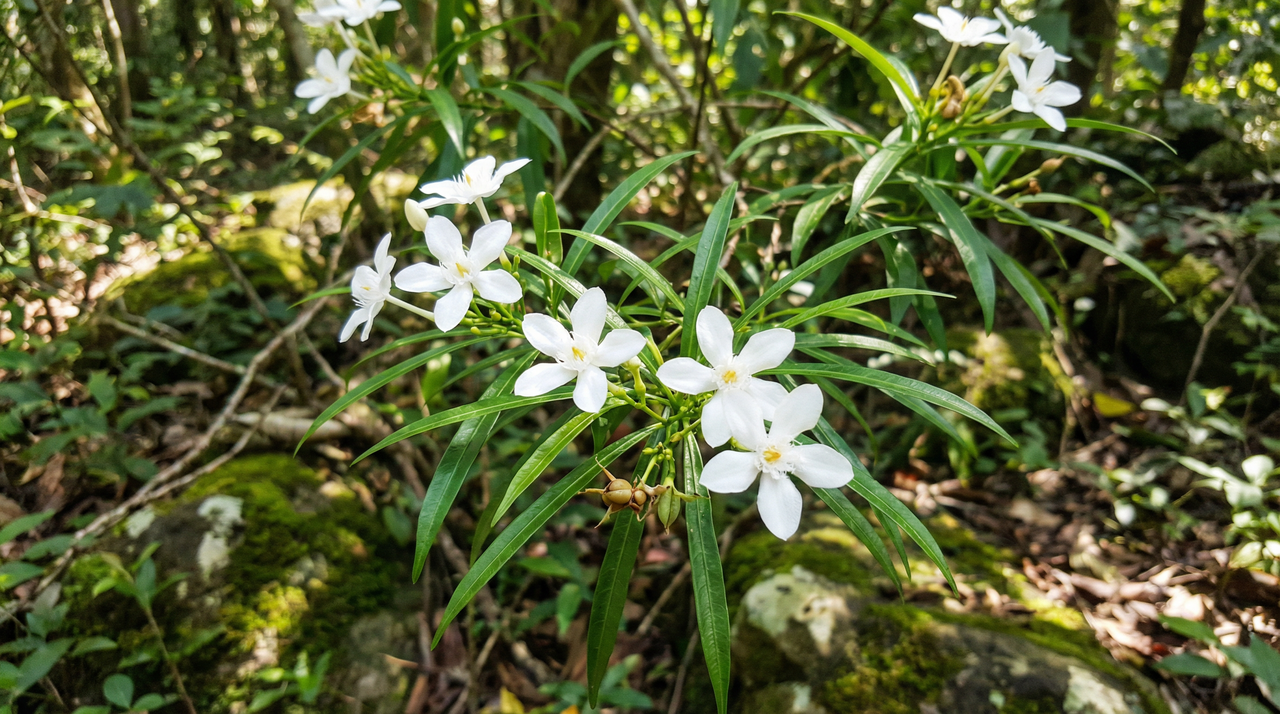
The bark of this small tree spent decades traveling under a name most gardeners today wouldn't recognize. Tellicherry bark, exported from the Malabar Coast port of Thalassery to European pharmacies throughout the 1800s, was a treatment for dysentery serious enough to warrant its own trade route.[1] That bark came from Water Jasmine, a plant most Western growers have never heard of, sitting quietly in the Apocynaceae family alongside oleander and frangipani. The contradiction that keeps pulling me back to this species is that something with that kind of pharmacological legacy, centuries of documented Ayurvedic use, an entire colonial-era export economy built around its medicinal bark, barely registers in permaculture circles outside tropical Asia.
I've worked with enough Apocynaceae to know the family rewards patience and punishes assumptions. Water Jasmine is no different. It looks, at first, like a refined ornamental: clusters of white star-shaped flowers, slender paired pods, a tidy canopy that earns it a spot in Buddhist temple gardens across South and Southeast Asia. But underneath that composure is a phytochemical engine that traditional healers mapped long before any laboratory did. Getting to know this plant properly means holding both of those identities at once, and that turns out to be more interesting than either one alone.
Origin and History of Water Jasmine (Wrightia antidysenterica)
Botanical Background and Native Range
Water jasmine, known botanically as Wrightia antidysenterica, is a deciduous shrub or small tree in the Apocynaceae family with roots stretching across a wide sweep of tropical Asia, from Pakistan and India through Sri Lanka, Bangladesh, Myanmar, Thailand, Vietnam, southern China, and into Malaysia, growing anywhere from sea level up to about 1,500 meters elevation.[2][3][4] That's a genuinely broad footprint for a plant many Western gardeners have never encountered.
In its native range, the water jasmine tree is at home in dry deciduous forests, rocky hillsides, open scrublands, and riverbanks, where it copes with annual rainfall anywhere between 500 and 2,000 mm and distinct wet-dry seasonal cycles.[5][6] That drought tolerance is something I recognize immediately from working with other Apocynaceae relatives, including oleander and plumeria, plants that all seem to thrive on a bit of neglect once established and share that characteristic milky sap when cut. Wrightia follows the same pattern. As a pioneer species, it reaches reproductive maturity in about three years from seed and can live anywhere from 20 to 50-plus years depending on conditions, making it a practical candidate for long-rotation agroforestry systems where Indian farmers traditionally managed it on 10 to 15 year cycles.[7][8]
Visual Characteristics of Water Jasmine
Most plants in cultivation stay in the 2 to 10 meter range, though in ideal conditions the trunk can reach 15 to 18 meters with a straight cylindrical profile 15 to 30 cm across, rough greyish-brown bark that flakes with age, and a broad rounded crown carried on irregularly spreading branches.[9][10] Cut the bark and you get milky white latex, a signature trait of the Apocynaceae family and a useful identification marker in the field. The leaves are simple and opposite, lanceolate to elliptic-oblong, running 3 to 15 cm long with glossy dark green upper surfaces and paler undersides, the whole thing tapering to an acuminate tip.[11][3]
What first drew my attention to this plant, honestly, was the flowers. Small clusters of fragrant white to creamy-white blooms, sometimes with yellowish centers, arranged in terminal and axillary cymes and carrying a sweetness that punches well above their 5 to 10 mm size.[12][13] Only later did I start digging into the bark's medicinal history, but that fragrance is what made me want to know more. Once flowering is done, the plant sets paired, slender follicles 7.5 to 20 cm long that ripen to yellowish-brown and split open to release flat brown seeds crowned with silky white hairs, each one catching the breeze and drifting away.[14][15] I've watched similar wind-dispersed seeds from related species travel remarkable distances on a light afternoon breeze, and the sight of them is genuinely charming.
Traditional and Cultural Uses
Carl Linnaeus formally described this species in 1767 as Echites antidysenterica, and that species epithet is essentially a 258-year-old clinical note: it means "against dysentery," and the name stuck because the plant earned it.[16][17] The inner bark, traded under the name Tellicherry bark (after the port city now known as Thalassery in Kerala), was imported to Europe through the 1800s and even listed in the British Pharmacopoeia for its astringent, gut-calming properties.[18] Think of the dry, mouth-coating tannin you get from strong black tea or a piece of oak bark, and you have a reasonable sensory reference for what made this bark so valued by colonial-era physicians.
Long before European trade routes found it, Ayurvedic and Unani practitioners, along with Adivasi communities including the Irula, Kurumba, and Mishing peoples, were preparing bark decoctions and leaf powders to address dysentery, diarrhea, psoriasis, eczema, asthma, fever, and wounds, among many other conditions.[19][20] The bioactive alkaloid wrightine, among other compounds, provides real antimicrobial action against gastrointestinal pathogens, which is why the traditional knowledge and the modern laboratory results tend to line up so well here.[17] The plant has since naturalized in parts of Africa, the Caribbean, and northern Australia, grown ornamentally and medicinally in places far from its origin, without earning a reputation as invasive.[21][22]
Fun Facts and Conservation Notes
The water jasmine plant travels under several common names depending on where you encounter it: Sweet Indrajao, Tellicherry bark, Eastern canella, Pala indigo, Eastern Indian lilac, and occasionally confused with Wrightia tinctoria in older texts.[21] It's maintained in living collections at Missouri Botanical Garden and the Royal Botanic Gardens, Kew, which tells you something about the esteem it has earned among botanists.[23][24]
The conservation picture is nuanced. Globally, many populations are considered Least Concern given the species' wide distribution, but regional assessments flag it as Vulnerable in areas where deforestation and overharvesting for the medicinal trade have thinned local populations.[25][26][27] When demand for medicinal bark outpaces regeneration, even a widespread species can become locally vulnerable, which is exactly why I prioritize nursery-grown stock over wild harvesting in any design I create. The fragrance, the drought toughness, the deep ethnomedical history: all of it is worth preserving, and the best way to do that is to grow your own rather than strip what remains in the wild.
Water Jasmine Varieties and Sourcing
Absence of Formal Cultivars and Natural Variations
If you go looking for named cultivars of Wrightia antidysenterica, you won't find any. Major botanical databases including Plants of the World Online and The Plant List record zero formally recognized varieties, horticultural selections, or infraspecific taxa for this species.[28][29] No breeders have been quietly developing a compact ornamental form or a high-alkaloid bark selection. What you get is the straight wild species, full stop.
I'll be honest: I find that refreshing. I've grown plenty of plants where the cultivar market has outrun the plant's actual biology, and you end up chasing named selections that perform nearly identically to the open-pollinated original. Water jasmine sidesteps that entirely. What you will notice, if you grow plants from different seed sources, is that natural morphological variation is real. Leaf size ranges from roughly 5 to 10 cm, flower color shifts from white to pale yellow depending on origin, and overall growth habit varies noticeably across its native range.[30] These are regional ecotypes, not cultivated selections, and they don't come with labels.
When I've germinated seeds from different Indian batches side by side, the resulting seedlings showed clear differences in leaf glossiness and branching density within the first growing season. That kind of variation is worth tracking. Label your seedlings by seed source from day one. There are no breeding programs working on this species, and cultivation remains focused on its medicinal, ornamental, and afforestation value rather than horticultural refinement.[9] For permaculture purposes, that wild-type genetic diversity is an asset, not a limitation.
Sourcing Water Jasmine Plants and Seeds
Germplasm of this species is held in conservation collections including India's National Bureau of Plant Genetic Resources and botanical gardens in Thailand and Malaysia,[31] which tells you something about where the center of gravity for this plant really is. If you're in India, sourcing is genuinely accessible: the National Medicinal Plants Board runs programs that include this species, and regional nurseries in Kerala and Tamil Nadu, agricultural cooperatives, and institutions like the Kerala Forest Research Institute are all realistic options.[32][33]
In the US, expect a hunt. Commercial availability is sporadic at best, limited to specialty tropical nurseries, rare plant sellers online, and occasional import batches.[4][34] I've navigated this territory with other obscure tropical medicinals, and patience plus cultivated relationships with specialty importers are genuinely the most useful tools you have. The regulatory side, at least, is straightforward. Water jasmine carries no CITES listing, so there are no restrictions on international trade under that framework.[35] Importing plants or seeds requires a phytosanitary certificate from the country of origin and compliance with standard USDA APHIS import guidelines; there are no special permits beyond that, and the species isn't classified as a federal noxious weed.[36][37][38] Having done similar imports before, I can confirm the phytosanitary certificate is the real paperwork hurdle, and a reliable overseas supplier usually handles it routinely.
On price, seeds generally run somewhere in the $5 to $20 range and small saplings anywhere from $20 to $100, though those figures shift considerably with vendor, plant size, and timing. Treat them as rough orientation, not a shopping list. The bigger variable is simply finding a reliable source at all.
Propagating and Planting Water Jasmine (Wrightia antidysenterica)
Water jasmine is one of those plants where understanding the seed completely changes how you approach the whole propagation question. Once you've held a mature seed in your hand, a lot of the practical decisions start to make obvious sense.
Understanding Water Jasmine Seeds: Morphology, Storage, and Germination
The first time I encountered Water Jasmine seeds, I thought someone had handed me a packet of milkweed. Each one is a small ellipsoid, 5-6 mm of smooth brown-to-reddish-brown seed coat topped with a 10-15 mm tuft of creamy-white silky hairs called a coma, perfect for catching a breeze and drifting away from the parent plant.[39][40][41] That fluffy coma is also your freshness indicator. Seeds that have lost most of their silky hairs tend to be older stock; I've learned to trust the fluff as a quick viability check before committing to a sowing session.
The good news on storage: Water Jasmine seeds are orthodox, meaning they tolerate desiccation well. Kept at 5-10% moisture content, sealed in airtight containers with a desiccant, and stored at 5-10°C, they hold viability for 5-7 years, and seed banks report up to 10-20 years at sub-zero temperatures.[42][43] For home growers without a seed bank, a sealed glass jar with silica gel in the fridge will do the job.
Sowing them isn't quite as forgiving as storing them. The hard seed coat imposes physical dormancy, so you need to scarify before anything germinates. I get consistently good results with gentle sanding on a piece of fine sandpaper rather than reaching for sulfuric acid; at home scale, acid treatment is a risk I don't think is worth it when mechanical scarification works just as well. After scarifying, soak seeds in water for 24-48 hours, then sow in well-drained sandy loam at 25-30°C with 60-70% moisture and indirect light.[44][45] With fresh seed and good technique, expect germination in 10-20 days at 60-80% rates.
Vegetative Propagation Methods for Consistent Medicinal Traits
Here's where I have to be honest with anyone growing Water Jasmine specifically for its medicinal bark: seeds are the accessible entry point, but they're not the reliable one. Because the species has moderate genetic heterozygosity and cross-pollinates freely, seedlings show real variation in their bioactive compound profiles.[46] If consistent alkaloid content matters to you, vegetative methods are the better investment.
For most growers, semi-hardwood cuttings are the practical sweet spot. Take 10-15 cm stems in spring from healthy growth, ideally early morning, treat the cut ends with 1000-2000 ppm IBA rooting hormone, and set them in a 1:1 sand-and-peat mix under 80-90% humidity at 25-30°C. Roots develop in 4-6 weeks with 60-80% success rates.[47][48] Air layering during the monsoon season, wounding a stem, applying rooting hormone, and wrapping with moist sphagnum moss, also achieves roots in 4-6 weeks and works particularly well on established plants you want to propagate without losing the mother tree's genetics.[49]
Grafting onto Wrightia tinctoria rootstock is the method I'd recommend to anyone serious about medicinal production. Chip budding achieves 70-80% success, accelerates fruiting, and does the best job of preserving the parent plant's chemistry.[50] It requires more skill than cuttings, but the payoff in consistency and time-to-harvest is real. Whatever method you choose, spring or early monsoon is the optimal window, and sterile nursery conditions aren't optional given the fungal pressure in warm, humid environments.[49]
Soil, Site Selection, and Planting Techniques
In its native habitat, Water Jasmine grows on lateritic, alluvial, and calcareous slopes across India, Sri Lanka, and Southeast Asia, often in moist deciduous forest with 1500-3000 mm of annual rainfall.[51][52] Those rocky, well-drained slopes tell you everything you need to know about site selection: this tree does not want wet feet. Waterlogging causes root rot fast, and I mean within 48 hours in my experience. Drainage is the single non-negotiable.
In terms of soil composition, aim for well-drained loamy or sandy loam with a pH of 6.0-7.5 and moderate organic matter.[53][54] Below pH 5.5 or above 8.0, you'll see chlorosis and eventual necrosis. If you notice interveinal yellowing on young leaves, test your pH immediately. I've corrected this in client landscapes by adding elemental sulfur in early spring and watching the green return within six weeks. It's very fixable, but much easier to prevent.
Prepare planting pits about 0.5 m deep, amending the backfill with roughly 20% coarse sand or perlite and 10% compost, then mulch with 5-10 cm of organic material kept clear of the trunk.[55] The plant needs at least 4-6 hours of direct sun daily; in extreme heat, some afternoon shade prevents scorch.[9][56]
Spacing, Timing, and Establishment for Long-Term Success
Water Jasmine reaches 10-15 meters tall with a canopy spread of 8-10 meters at maturity, growing at a moderate 30-60 cm per year.[57][4] I once planted three of them too close together, thinking I could manage canopy competition with pruning. Within four years I was removing one because bark quality on the remaining trees had declined from the crowding. Now I always give them the 5 m breathing room the research recommends. For medicinal production, plant 4-5 m between individuals and 5-6 m between rows; for agroforestry integration, 5-8 m gives neighboring species a fair share of light.[58]
Plant at the onset of the monsoon, June to July in most of South and Southeast Asia, so the rainy season does the establishment work for you.[59] For the first three months, irrigation of roughly 10 mm per week is critical. Once the deep taproot establishes, the plant becomes genuinely drought-smart, similar to moringa or well-established acacias; in my subtropical garden, mature plants need deep watering only every 10-14 days through the dry season.[60] Light pruning in the dry season improves airflow and reduces fungal pressure, a small habit that pays dividends later.
Timeline from Propagation to First Harvest
Seeds germinate in 10-20 days under good conditions, but the wait from seedling to productive plant is longer than most growers expect. Seed-grown plants reach flowering in 2-3 years and first significant fruit harvest in 3-5 years.[61][60] Grafted plants trim that window to 2-4 years, often fruiting in their second or third year, which is a compelling argument for the extra propagation effort when you're planning a medicinal planting.[45]
For bark, the real prize, full commercial maturity arrives at 5-7 years, with initial harvest possible at 4-5 years in well-managed systems.[62][63] In my experience, consistent warmth, good nutrition, and a well-draining site can shave months off these benchmarks. This is a plant worth planning for; the early decisions you make about propagation method, spacing, and site preparation determine both how quickly you harvest and how long the tree keeps giving.
Water Jasmine Care Guide
Most of the care decisions you'll make with Water Jasmine trace back to one fact: this tree evolved in monsoon-driven tropical dry forests, where the rains come hard, then stop for months. Understanding that rhythm makes the whole cultivation picture click into place.
Watering Needs and Drought Tolerance
Wrightia antidysenterica develops a deep root system that can extend one to two meters into the soil,[64][65] which is exactly why established plants are so forgiving during dry stretches. I've watched this same pattern in transplanted container specimens: the ones I watered deeply and infrequently in year one developed those anchoring roots and barely needed intervention by year two. The ones that got frequent shallow irrigation stayed dependent much longer. During establishment, aim for a deep soak every seven to ten days through the growing season, keeping the top inch or two of soil moist but never waterlogged.[66][15] Once mature, back off considerably and reserve supplemental irrigation for extended dry spells. Winter watering can be reduced further still.
The plant tolerates low to moderate salinity in irrigation water and prefers a soil pH of 6.0 to 7.5.[64][67][68] Drainage matters far more than frequency, and well-drained sandy or loamy soil is non-negotiable here. Overwatering shows up as yellowing leaves, softening at the stem base, and surface fungal growth; under-watering produces crispy leaf margins, wilting, and early leaf drop.[65][64] Because these symptoms can overlap with nutrient deficiencies, a soil test is always your first diagnostic move before adjusting irrigation.
Fertilizing and Nutrient Management
Water Jasmine has moderate nutrient needs. A balanced NPK formula (10-10-10 or 15-15-15) applied two to three times between March and October in split doses keeps it growing well without pushing it into lush, unproductive vegetative excess.[69][70] I learned this the hard way: one season I applied too much nitrogen to a young specimen and the following year's flowering was noticeably diminished. If you're growing this plant partly for its bark quality and medicinal value, that trade-off matters. More isn't better here. Organic alternatives I'd reach for first include well-rotted farmyard manure (around 5-10 kg per plant at monsoon onset), compost, vermicompost, or neem cake.[71] Hold off on any feeding during winter dormancy entirely.
Watch for micronutrient deficiencies if your soil pH creeps above 7.5, iron and zinc become less available and you'll see it in the foliage.[72][73] Uniform yellowing of older leaves usually points to nitrogen; purple-tinged young growth signals phosphorus; scorched leaf margins suggest potassium.[74] A soil test before the growing season removes most of the guesswork.
Heat and Frost Tolerance
Water Jasmine is comfortable between 20 and 35°C (68-95°F) and can handle sustained heat up to 38-40°C (100-104°F), with brief exposure to 43°C (110°F) tolerated through stomatal closure and other physiological adaptations.[75][76] Young plants and seedlings are the most vulnerable, showing leaf scorch and wilting under intense afternoon sun, especially during their first summer. I protect them the same way I protect newly planted citrus in my Central Florida design work: 30-50% shade cloth over the canopy during peak afternoon hours, and two to three inches of organic mulch at the base to moderate soil temperature and hold moisture.[77][78] Deep early-morning irrigation on hot days rounds out the routine.
On the cold end, treat it like you'd treat a bougainvillea or plumeria: frost-tender, full stop. Rated H1c by the RHS and suited to USDA zones 10-11 (marginally zone 9b with protection), it shows damage below 5°C (41°F) and can't survive freezing temperatures at all.[79][9][80] If you're in zone 9b, container culture with a warm sheltered spot for winter is your most reliable path.
Pruning, Maintenance, and Seasonal Rhythm
Knowing the plant's annual rhythm makes pruning intuitive. Water Jasmine is semi-deciduous to deciduous, dropping its leaves through the dry winter months (roughly November through March), then flushing new growth when monsoon rains arrive in June. Flowering happens March through May, and fruiting follows from June through August.[81][82] I time any shaping cuts right after leaf drop, when the structure is fully visible and the plant isn't spending energy on new growth.
Light pruning during that dormant window removes dead, diseased, or crossing branches and opens the canopy for airflow.[83][84] For those growing it as a medicinal source, the sustainable bark-harvest rule is to strip no more than 20-30% of bark from branches (never the trunk), only on trees at least three to five years old, and no more than once every two to three years.[83][84] I've spoken with small-scale medicinal growers who've held to that discipline and kept their trees productive for fifteen-plus years. It's a slow practice, but the tree rewards patience.
Harvesting Water Jasmine (Wrightia antidysenterica)
Timing and Maturity Cues for Fruits and Bark
Water jasmine follows a rhythm worth learning before you touch a single branch. Flowering runs March through June, with the most prolific bloom typically landing in April and May.[17][85] Fruiting follows directly, stretching from July through December, with seeds reaching full maturity somewhere between August and November.[17][86] From anthesis to ripe fruit takes roughly four to six months, and the follicles tell you clearly when they're ready: those paired pods, 10 to 15 cm long, shift from green to a yellowish-brown and begin splitting open to release their winged, white-tufted seeds.[17][87] I've learned to watch for that exact shade of yellowish-brown rather than waiting for full split -- by the time follicles are wide open, plenty of seeds have already caught the wind.
Bark is where the real harvest priority lies, and patience is non-negotiable. Plants need at least four to six years of growth before bark harvest is appropriate, and dry-season timing matters enormously: October through March, when sap flow is minimal, is when alkaloid concentration peaks and the risk of fungal degradation is lowest.[88][89] The difference in aroma between bark from a four-year stem and a seven-year one is real and noticeable: the older wood carries a warmer, more resinous depth that tells you the compounds have had time to accumulate. Sustainable practice targets stems at least 8 to 10 cm in diameter on a five-to-seven year rotation, leaving 40 to 50 percent of that season's growth intact so the tree recovers rather than struggles.[90][91] I made the mistake of stripping too aggressively from one young tree and watched it sulk for a full growing season. Now I debark one side of a branch and leave the other alone.
Yield, Flavor Profile, and Sustainable Practices
The bark, known in Ayurveda as Kutaja, delivers a sensory profile that connects its kitchen and medicinal roles in one sniff. The aroma is genuinely lovely: warm, sweet, and spicy with a strong resemblance to cinnamon or cassia, which makes it an easy reference point for anyone unfamiliar with the plant.[17][92] The taste is something else: predominantly bitter, with astringent and slightly pungent notes, and a rough fibrous texture that requires drying and crushing before it's usable in any form.[17][93] I've stirred a small pinch of the powdered bark into digestive teas and the bitterness is immediate and distinctive -- you understand instantly why Ayurveda prizes it for gut complaints, because the same compounds responsible for that taste are what drive its therapeutic action.
In South Asian regional cuisines, processed bark turns up in curries, rice dishes, and meat stews where it contributes a bitter, aromatic note.[17] I'd approach it honestly though: culinary documentation is considerably thinner than the medicinal record. This is a regional specialty with deep traditional roots, not a pantry staple you'll find written up in recipe books. Treat it accordingly, learn from the medicinal tradition first, and let the culinary applications come later.
Water Jasmine Preparation and Uses
Culinary Uses of Water Jasmine
Let me be direct: water jasmine is fundamentally a medicinal plant, and the Apocynaceae family it belongs to deserves respect. The bark contains alkaloids like wrightiandine at roughly 1-2% concentration, enough to cause nausea, vomiting, and gastrointestinal distress if consumed carelessly.[94] No parts are broadly regarded as casual edibles, and any internal use warrants medical supervision.[95] I'd also add: it can be mistaken for Wrightia tinctoria, Alstonia scholaris, or Tabernaemontana divaricata, and misidentification means mild poisoning is a real possibility.[96] If you're in frangipani country and think you know your Apocynaceae by sight, double-check with a local botanist anyway. The family has humbled better observers than me.
That said, narrow culinary traditions do exist. Young leaves and petioles appear cooked in curries in parts of Malaysia and India, and flowers turn up occasionally in Kerala and Southeast Asian kitchens. The most documented exception is the inner bark, dried, sun-bleached, and ground into a coarse powder used as "tellicherry bark" in South Indian cooking.[97][98][99] When properly processed it carries a bitter-aromatic profile somewhere between cinnamon and gentian, which explains why it bridges the spice rack and the medicine cabinet in Kerala tradition. The leaves do contain 12-15% protein, vitamins A and C, calcium, and iron with meaningful antioxidant activity,[100][101] useful in nutrient-poor contexts, though this is secondary detail rather than a reason to treat the plant as a salad green. And because localized overharvesting is a real threat despite its Least Concern IUCN status, sustainable collection means removing no more than 20-30% of bark per tree with a 3-5 year recovery window between harvests.[102][103]
Medicinal Preparations
This is where water jasmine earns its reputation. Known in Ayurveda and Siddha systems as Kutaja, the bark has been prepared as decoctions, powders, tinctures, and pastes for dysentery, diarrhea, skin disorders, wounds, and inflammation for centuries.[104][105] Modern antibacterial research has validated the core of that tradition, with bark extracts showing activity against E. coli, Salmonella, and other gram-negative pathogens.[106][107] The preclinical evidence is genuinely strong.
Traditional dosage guidelines suggest 50-100 ml of bark decoction twice daily or 3-6 g of bark powder per day divided into doses.[108][105] Because alkaloid levels vary significantly by plant, season, and preparation method, and human clinical data remains thin, I always recommend working with a qualified Ayurvedic practitioner rather than relying on those numbers alone. This is especially true for pregnant individuals and children, where safety evidence is simply insufficient.[109] The bark, properly dried and decocted, does have a distinctive quality that signals its potency; but potency cuts both ways.
Non-Food Uses in Permaculture and Crafts
Beyond medicine, this tree earns its place in a designed system through sheer material usefulness. Bark fibers yield strong cordage for agricultural and household use, the reddish heartwood resists termites and suits furniture, tools, and cart-making, leaves produce a yellow dye for natural textiles, and the modest leaf and branch biomass feeds mulch beds, fodder systems, or compost piles.[110] In my landscape-design work, I specifically look for understory trees that offset imported materials, and termite-resistant wood combined with harvestable fiber is a combination you don't find everywhere. The biomass yield won't blow you away, but in a mature tropical guild it quietly does its job. For a tree whose primary reputation is medicinal, that's a genuinely useful second story.
Water Jasmine Health Benefits and Medicinal Uses
Most ornamental plants carry a quiet medicinal history if you dig deep enough, but water jasmine wears its therapeutic identity right there in the scientific name. Wrightia antidysenterica translates roughly to "the Wrightia that fights dysentery," and that's not hyperbole. This plant has been a cornerstone of Ayurvedic, Siddha, and Indian folk medicine for treating dysentery and diarrhea for so long that it appears in the Charaka Samhita under "Atisara" and "Prasrava," both classical Sanskrit terms for gut disorders.[105] Beyond the gut, traditional healers have reached for its bark decoctions to address asthma, skin ailments, wounds, piles, urinary disorders, snake bites, and leucoderma, among other conditions.[111][112]
Traditional and Modern Medicinal Research on Water Jasmine
What I find compelling about this plant is how closely the preclinical science tracks with centuries of empirical use. Ethanolic bark and leaf extracts reduce castor oil-induced diarrhea in rat models through opioid receptor agonism and calcium channel modulation, slowing intestinal motility and secretion in exactly the way a traditional bark decoction would need to work.[113][114] The antimicrobial activity against E. coli, S. aureus, and Shigella occurs via cell membrane disruption and DNA gyrase inhibition, which helps explain why it was trusted for infectious dysentery specifically rather than just symptomatic relief.[115] The effect is somewhat analogous to how berberine-containing plants work, but with its own distinctive alkaloid signature rather than a shared active compound.
The anti-inflammatory data is striking too. Extracts perform comparably to indomethacin in carrageenan-induced paw edema models, suppressing TNF-α, IL-6, COX-2, and NF-κB signaling pathways.[116] Antioxidant activity via DPPH radical scavenging reaches IC50 values comparable to ascorbic acid, tied to upregulation of SOD and catalase enzymes and correlated with flavonoid and phenolic content.[116][117] Wound healing is accelerated through collagen synthesis and fibroblast proliferation, with analgesic effects comparable to aspirin via prostaglandin inhibition.[118] More exploratory work points to acetylcholinesterase and alpha-glucosidase inhibition, and preliminary anticancer signals via apoptosis induction and G2/M cell cycle arrest in breast and colon cancer lines, though these findings are early-stage.[119][120]
Traditional preparation involves simmering 10-20 g of dried bark in 200-300 ml water, taken once or twice daily.[121] Limited human trials using 500 mg to 2 g daily bark extract reported 70-80% symptomatic improvement in dysentery patients, which is genuinely encouraging.[122] While the lab data lines up beautifully with what Ayurvedic practitioners have observed for centuries, the absence of large-scale randomized controlled trials means we cannot make unqualified clinical claims. The research is promising and directionally consistent; it's simply not yet complete.
Key Phytochemicals in Water Jasmine: Alkaloids, Flavonoids, and Terpenoids
The pharmacological story makes sense once you understand what this plant is actually producing. The bark holds the highest concentration of indole alkaloids, including wrightine, conessine, and wrightiamine, running 0.5-2.0% w/w and responsible for most of the antimicrobial and gut-motility effects.[17][123] Leaves carry proportionally more flavonoids, including rutin, quercetin, and kaempferol glycosides, which drive the antioxidant and anti-inflammatory benefits.[124] Roots and stems contribute triterpenoids and steroids like lupeol, ursolic acid, and β-sitosterol that support wound-healing and analgesic activity, while phenolics and tannins (gallic acid, ellagic acid) add astringent and antimicrobial properties.[17][125]
Potency isn't fixed, and this is something I've noticed working with other medicinal shrubs in the same family. Plants harvested during dry periods tend to produce higher alkaloid concentrations, and those grown in southern Indian or Kerala populations show greater compound diversity.[126][127] Soil conditions and plant maturity matter too, with older plants, generally those past the three-year mark, accumulating measurably higher secondary metabolite levels.[128] I only harvest from mature plants for this reason; there's real variation in the strength of the resulting material depending on when and where it's grown.
Nutritional Profile of Water Jasmine
Water jasmine is overwhelmingly a medicinal plant, not a dietary one. It doesn't appear in major nutritional databases like the USDA, and no one in traditional practice ever relied on it as a caloric staple.[17] The leaves do contain modest nutrients on a dry-weight basis: roughly 8-12% protein, 10-15% fiber, and small amounts of vitamin C, beta-carotene, potassium, and calcium, with fresh leaves supplying perhaps 45-60 kcal per 100 g.[129] While I occasionally see leaves used in small amounts in traditional preparations, the bark is the real medicinal portion, and it carries alkaloid and tannin levels, up to 2-3% and 20% respectively, that make it something to dose carefully rather than consume freely.[17]
Safety Considerations for Water Jasmine
The same alkaloids responsible for water jasmine's therapeutic reputation require genuine respect. Acute toxicity is low at proper doses, with an LD50 above 2000 mg/kg in rats, but overuse can cause gastrointestinal irritation, nausea, and vomiting, and the seeds, bark, and latex carry the highest alkaloid concentrations by far.[130][111] Serious toxicity cases more commonly involve livestock, particularly cattle and goats, showing colic, diarrhea, and potential cardiac effects, but that's partly because animals graze without the dosage awareness humans apply.[131]
After working with multiple Apocynaceae species in design and cultivation, I've learned to label medicinal and ornamental plantings carefully. The milky latex and bitter alkaloids in this family are unmistakable the moment you handle the foliage, and that sensory cue is a useful reminder that you're working with genuinely bioactive material. I never recommend self-medicating with water jasmine bark during pregnancy or alongside blood-pressure medications; the alkaloid effects on smooth muscle are too unpredictable without clinical monitoring. Pregnancy, lactation, children under 12, and known hypersensitivity to Apocynaceae are all firm contraindications, and the potential for hepatotoxicity or cardiac disturbance with excessive intake remains a real concern even if human clinical toxicology data are limited.[121] If you suspect an overdose, skip the home remedies and seek professional care immediately; treatment is supportive, focusing on fluid replacement and symptom monitoring.[132] The traditional texts themselves warn against overuse for good reason.
Water Jasmine Pests and Diseases
Water jasmine is one of those plants where its medicinal reputation and its garden resilience come from exactly the same place. The alkaloids, flavonoids, and triterpenoids that make the bark and leaves so valuable in Ayurvedic medicine also function as the plant's first line of defense against insects and pathogens. That said, I've learned from growing other Apocynaceae relatives that "naturally resistant" doesn't mean "indestructible," and water jasmine is no exception.
Natural Resistance from Bioactive Compounds
The plant's chemical arsenal is genuinely impressive. Leaf extracts contain alkaloids including wrightiamide, wrightiandine, and jaborine, alongside phenolic compounds and flavonoids that disrupt insect physiology at a biochemical level.[61][133] Methanolic leaf extracts show significant larvicidal activity against Aedes aegypti mosquitoes and measurable toxicity to armyworm species like Spodoptera litura, with field observations suggesting lower herbivore pressure compared to more susceptible crops nearby.[134][135] The milky latex common to Apocynaceae adds a physical deterrent on top of all that chemistry. I pay closest attention to young shoots, where the latex is thinner and the leaves are most tender.
Common Pests and Vulnerabilities
Despite the biochemical defenses, water jasmine shows moderate susceptibility to generalist pests: aphids, whiteflies, scale insects, leaf-feeding caterpillars, and stem borers can all show up, particularly on new growth.[136][137] The sap-feeders are the ones I watch most carefully. Aphid and scale colonies produce sticky honeydew that invites sooty mold and can vector viral issues, which weakens the plant faster than the insects alone would. In my humid subtropical garden, I apply a diluted neem spray at the first sign of that honeydew stickiness rather than waiting until I can actually see the colony, because by that point you're already managing an established infestation rather than preventing one.
Fungal Diseases and Root Rot
Water jasmine's bioactive compounds provide real antifungal and antimicrobial baseline protection,[84][138] but humidity and poor drainage can overwhelm those defenses. Leaf spot diseases (Alternaria, Cercospora, and Colletotrichum are the main culprits), powdery mildew in low-airflow situations, and root rots driven by Phytophthora, Fusarium, or Rhizoctonia are all documented vulnerabilities.[139][140] Root rot is the one that catches growers off guard because by the time you see wilting or yellowing, the root system is already compromised. Think of it like a gardenia in saturated soil: the symptoms appear above ground, but the problem started below weeks earlier.
Prevention and Management Strategies
The environmental sweet spot sits at 20-35°C, 60-80% relative humidity, and well-drained soil with pH 6.0-7.5.[141][142] Sustained humidity above 85% with poor airflow is where things start going wrong. Spacing plants at least 3-4 meters apart, avoiding overhead irrigation, pruning during dry weather, and resisting the urge to push growth with heavy nitrogen all reduce pressure significantly.[143][144] In agroforestry settings, intercropping with nitrogen-fixing trees can reduce fungal spread by 30-50%, which fits neatly into the kind of medicinal guild design already covered in the permaculture section.[145]
When cultural prevention isn't enough, copper-based fungicides address leaf spot and powdery mildew; neem oil handles aphids, mealybugs, and scale within an IPM framework.[137] No disease-resistant cultivars exist, which is why I source wild-type or locally selected material specifically for its phytochemical integrity rather than any pest-resistance marketing claim.[146] U.S. cultivation data is genuinely thin since the plant is only reliably hardy in USDA zones 10-11, so container growing remains the safest path for anyone in zone 9 or cooler.[147][148] Respect its native dry-scrubland preferences and most pest and disease problems stay minor.
Water Jasmine in Permaculture Design
Before you get excited about adding water jasmine to your food forest guild, the first question you need to ask is a simple geographic one: do you actually live where this plant can survive? I've watched gardeners in marginal climates fall in love with tropical Apocynaceae at a nursery and then lose them the first cold snap. Getting the climate fit right from the start saves a lot of heartbreak.
Climate and Hardiness Zones
Water jasmine is squarely a tropical to subtropical species, happiest in the 20–35 °C (68–95 °F) range typical of Köppen Aw and Am climates.[9][149] It can shrug off a brief spike to 40–45 °C but starts to struggle below 10 °C and takes real frost damage below 5 °C.[9] In USDA terms, that means zones 10a through 12 for reliable outdoor cultivation, with zone 9b being a stretch that requires consistent frost protection.[150][151] In the US, southern Florida, coastal Southern California, and protected pockets of Texas and Louisiana are your realistic outdoor options; anywhere north of those regions means greenhouse or container culture over winter.[152]
I've kept zone-10 Apocynaceae alive through the occasional Central Florida cold snap with heavy mulch, frost cloth draped over the canopy, and a bit of luck. That strategy can extend what's possible, but I wouldn't count on it as a long-term plan for a specimen you're also relying on for medicinal bark. For soil, the plant wants well-drained sandy or loamy ground in the pH 6.0–7.5 range, with annual rainfall of 600–1,500 mm; it handles seasonal dry periods reasonably well once established but will not forgive waterlogged roots under any conditions.[9] Where winters are cooler and drier, it may shed its leaves and behave more deciduously; in consistently warm, humid conditions it stays evergreen.[9]
Ecosystem Functions and Guild Roles
What makes water jasmine genuinely interesting from a permaculture standpoint isn't nitrogen fixation or deep mineral accumulation. It does neither of those things in any meaningful way.[20] Its ecological value comes from somewhere else entirely: its flowers. The tubular white blooms are 8–12 mm across, fragrant, and nectar-rich, drawing honeybees, wild bees, Nymphalidae and Pieridae butterflies, and nocturnal moths through a pollinia-based mechanism typical of the Apocynaceae family.[153][154] If you've grown frangipani, you already have a feel for how this family works: that same sweet, persistent scent that seems to intensify in the evening, pulling in moths from across the garden. Water jasmine operates on the same principle.
Flowering runs March through July, peaking April to June when pre-monsoon temperatures sit in the 25–35 °C range.[9] The breeding system is self-compatible but strongly outcrossing through protandrous dichogamy, and seed set is genuinely pollinator-dependent; habitat fragmentation can reduce reproductive success by up to 40%.[155][156] That number matters for guild designers: if you're integrating this species near fruiting trees that also depend on insect pollination, having water jasmine in flower during the pre-monsoon warm-up is a genuine service to the whole system. Beyond flowers, the plant contributes structural habitat for birds and small animals, cycles nutrients through leaf-litter decomposition, and its deep taproot helps stabilize soil and control erosion on slopes.[157][20] Seeds are dispersed with ant assistance through myrmecochory, and the rootstock can resprout after fire, giving it real resilience in disturbed landscapes.[20] One other note worth making: because this species faces pressure from overharvesting in its native India and Sri Lanka, sourcing plants from reputable nurseries rather than wild-collected stock is a straightforward way to keep your permaculture practice genuinely regenerative.[158]
Forest Layer and Companion Planting
In its native dry deciduous forests and open woodlands, water jasmine occupies the understory to sub-canopy layer, reaching 6–15 m as a large shrub or small tree.[159][160] In a designed food forest, it slots naturally into that same layer beneath taller canopy trees, or it can anchor a mixed hedgerow. The species handles full sun to light shade, which gives you real flexibility in placement.[161] I tend to position understory shrubs like this one where they catch morning sun and settle into dappled light through the afternoon; that pattern maps closely onto what this plant experiences in its native habitat, and in my experience those placements tend to produce the best flowering.
There's also a quiet weed-suppression benefit to consider. Water jasmine shows mild allelopathic effects through root exudates that can inhibit germination of nearby weeds.[162] I've noticed similar dynamics around other aromatic flowering shrubs in my garden, where weed pressure at the drip line stays lower than you'd expect without much intervention. It's subtle, not a replacement for mulch, but it's a useful edge-of-guild behavior. The plant forms mycorrhizal associations that improve its own nutrient uptake,[162] though it does show moderate competition with grasses and herbs for light and water, so give it some breathing room rather than crowding it at the base.
For companions, banana is a natural pairing. Both want the same warm, humid conditions, the same well-drained humus-rich soil, and both benefit from the pollinator traffic water jasmine draws in.[163][162] I manage banana and Apocynaceae together routinely and the pairing works well precisely because their requirements overlap so completely. Beyond banana, other warm-climate medicinal or fruit-tree species that prefer the same drainage conditions make good neighbors; the underlying logic is always to match the site requirements first, then look for functional complementarity in pollination timing and canopy layering.
The Tree That Made Me Rethink "Ornamental"
I'll be honest: I almost passed on Water Jasmine the first time I encountered it at a small medicinal plant nursery in South Florida, because I couldn't figure out what category it fit into. Too pretty to feel serious, too pharmacologically loaded to treat as just a flowering tree. That tension is exactly why it stayed with me. Some plants ask you to hold two things at once, and I think that's worth something in a food forest designed for the long haul.
Sources 163
- Botanical History of Wrightia antidysenterica ↩
- Wrightia antidysenterica ↩
- Wrightia antidysenterica ↩
- Wrightia antidysenterica - Wikipedia ↩
- Wrightia antidysenterica: Distribution and Ecology - ResearchGate ↩
- Tropical Trees of India: Habitat Requirements - Botanical Survey of India ↩
- Wrightia antidysenterica: A Review on its Pharmacognosy and Phytochemistry ↩
- Tree Lifespans in Tropical Dry Forests of Asia ↩
- Wrightia antidysenterica - Useful Tropical Plants Database ↩
- Wrightia antidysenterica ↩
- Wrightia antidysenterica ↩
- Wrightia antidysenterica - Flora of China ↩
- Wrightia antidysenterica: A Review on its Phytochemistry and Pharmacological Activities ↩
- Wrightia antidysenterica ↩
- Wrightia antidysenterica ↩
- Mantissa Plantarum ↩
- Wrightia antidysenterica: A Review on Phytochemistry and Pharmacology ↩
- British Pharmacopoeia 1867 ↩
- Wrightia antidysenterica: A review on ethnopharmacology and phytoconstituents ↩
- Wrightia antidysenterica ↩
- Wrightia antidysenterica (Eastern canella) ↩
- Global Biodiversity Information Facility - Wrightia antidysenterica ↩
- Wrightia antidysenterica ↩
- Wrightia antidysenterica ↩
- Wrightia antidysenterica ↩
- IUCN Red List: Wrightia antidysenterica ↩
- Plants of the World Online ↩
- The Plant List - Wrightia antidysenterica ↩
- Plants of the World Online - Wrightia antidysenterica ↩
- Morphological and Genetic Diversity in Wrightia Species - ResearchGate ↩
- Germplasm Conservation of Wrightia Species ↩
- Wrightia antidysenterica - Medicinal Plant Database ↩
- Propagation and Cultivation of Wrightia antidysenterica ↩
- Rare Tropical Plants for Sale ↩
- CITES Species+ Database ↩
- USDA APHIS Plant Import Information ↩
- Federal Noxious Weed List ↩
- Plants and Plant Products Import Requirements ↩
- Wrightia antidysenterica ↩
- Wrightia antidysenterica ↩
- Wrightia antidysenterica ↩
- Seed Storage of Wrightia antidysenterica: Orthodox Behaviour and Viability ↩
- Germplasm Conservation Guidelines for Tropical Trees ↩
- Seed Germination and Dormancy in Wrightia antidysenterica ↩
- Wrightia antidysenterica: Propagation and Cultivation ↩
- Genetic Diversity and Population Structure of Wrightia antidysenterica ↩
- Propagation of Medicinal Plants: Wrightia antidysenterica ↩
- Vegetative Propagation Techniques for Tropical Trees ↩
- Propagation of Medicinal Plants: Wrightia antidysenterica ↩
- Propagation of Wrightia antidysenterica by Grafting Techniques ↩
- Soil Requirements for Medicinal Plants in India ↩
- Flora of India: Wrightia antidysenterica ↩
- Wrightia antidysenterica: Cultivation and Propagation ↩
- Soil pH Effects on Growth and Biomass Production of Wrightia antidysenterica Roxb. ↩
- University of California Agriculture and Natural Resources - Soil Best Management Practices for Trees ↩
- Wrightia antidysenterica - Missouri Botanical Garden ↩
- Cultivation of Wrightia antidysenterica ↩
- Wrightia antidysenterica: Botanical Description and Uses ↩
- Journal of Medicinal Plant Research: Horticultural trial on organic amendments for Wrightia antidysenterica seedlings ↩
- Cultivation and Propagation of Wrightia antidysenterica ↩
- Wrightia antidysenterica: Botanical and Pharmacological Profile ↩
- Cultivation and Utilization of Wrightia antidysenterica ↩
- Sustainable Harvesting of Tellicherry Bark (Wrightia antidysenterica) ↩
- Wrightia antidysenterica - Missouri Botanical Garden ↩
- Ecophysiology of Wrightia antidysenterica in Dry Forests ↩
- Wrightia antidysenterica - Missouri Botanical Garden ↩
- Wrightia antidysenterica - Royal Horticultural Society ↩
- Wrightia antidysenterica - Soil and Water Requirements for Medicinal Plants in India ↩
- Cultivation of Wrightia tinctoria and Wrightia antidysenterica ↩
- Horticultural Practices for Medicinal Plants ↩
- Nutrient Management in Medicinal Plants ↩
- Soil pH and Micronutrient Deficiencies in Tropical Trees ↩
- Nutrient Deficiencies in Tropical Trees ↩
- Symptoms of Nutrient Excess in Tropical Trees ↩
- Physiological Responses of Wrightia antidysenterica to Heat and Drought Stress ↩
- USDA PLANTS Database: Wrightia antidysenterica ↩
- Managing Heat Stress in Trees ↩
- Mulch Fundamentals ↩
- Wrightia antidysenterica ↩
- Wrightia antidysenterica ↩
- Seasonal Phenology of Wrightia Species in India ↩
- Phenology and Seed Biology of Wrightia antidysenterica ↩
- Cultivation and Management of Wrightia antidysenterica ↩
- Wrightia antidysenterica: Botanical and Pharmacological Review ↩
- Flora of India, Volume 3 ↩
- Wrightia antidysenterica: A Review on Its Phytochemistry and Pharmacological Profile ↩
- Pharmacognostical and Phytochemical Studies on Wrightia antidysenterica ↩
- Determination of alkaloid content in Wrightia antidysenterica based on harvest timing ↩
- Medicinal Plant Cultivation Guidelines: Wrightia antidysenterica ↩
- Sustainable harvesting guidelines for Wrightia species ↩
- Flora of China: Wrightia antidysenterica ↩
- Ayurvedic Pharmacopoeia of India, Volume I ↩
- Wrightia antidysenterica: A Review on Its Phytochemistry and Pharmacological Activities ↩
- Wrightia antidysenterica: A Review on its Phytochemistry and Pharmacological Activities ↩
- Wrightia antidysenterica: A Comprehensive Review on Phytochemistry and Pharmacological Activities ↩
- Wrightia antidysenterica - Flora of India ↩
- Missouri Botanical Garden: Wrightia antidysenterica ↩
- Kew Science: Wrightia antidysenterica ↩
- Flora of India: Wrightia antidysenterica ↩
- Phytochemical Screening and Nutritional Evaluation of Wrightia antidysenterica Leaves ↩
- Antioxidant Activity and Mineral Content in Wrightia antidysenterica ↩
- Wrightia antidysenterica - IUCN Red List ↩
- Sustainable Harvesting of Medicinal Plants in India ↩
- Kutaja (Wrightia antidysenterica): Botanical Description and Uses ↩
- Ayurvedic Pharmacopoeia of India, Volume 1 ↩
- Antibacterial activity of Wrightia antidysenterica bark ↩
- Chemical Constituents of Wrightia antidysenterica Bark ↩
- Wrightia antidysenterica: A Review on Phytochemistry and Pharmacological Activities ↩
- Toxicity of Apocynaceae Plants in India ↩
- Flora of India - Wrightia antidysenterica Uses ↩
- Pharmacological Activities of Wrightia antidysenterica: A Review ↩
- Medicinal Plants of India: An Ethnobotanical Survey ↩
- Pharmacological Review of Wrightia antidysenterica ↩
- Antidiarrhoeal Activity of Ethanolic Extract of Wrightia antidysenterica Leaves in Rats ↩
- Phytochemical and Antimicrobial Screening of Wrightia antidysenterica ↩
- Anti-inflammatory and Antioxidant Activities of Wrightia antidysenterica ↩
- Antioxidant and Anti-inflammatory Mechanisms of Wrightia Species ↩
- Wound Healing and Analgesic Properties of Wrightia antidysenterica Extracts ↩
- Bioactive Compounds and Enzyme Inhibitory Activities of Wrightia antidysenterica ↩
- Anticancer Potential of Wrightia antidysenterica Stem Bark ↩
- Wrightia antidysenterica: An Updated Review on Traditional Uses, Phytochemistry, and Pharmacology ↩
- Clinical Evaluation of Wrightia antidysenterica in Dysentery: A Preliminary Study ↩
- Chemical Constituents and Biological Activities of the Genus Wrightia ↩
- Secondary Metabolites from Wrightia antidysenterica Leaves and Their Bioactivity ↩
- Isolation of Alkaloids from Wrightia antidysenterica and Their Antimicrobial Activity ↩
- Seasonal Variation in Alkaloid Content of Wrightia antidysenterica Roots and Stem ↩
- Geographical Variation in Bioactive Compounds of Wrightia antidysenterica ↩
- Influence of Soil and Environmental Factors on Secondary Metabolites in Wrightia Species ↩
- Nutritional Composition of Selected Medicinal Plants in India ↩
- Toxicological Studies on Wrightia antidysenterica Stem Bark Extract ↩
- Wrightia antidysenterica: A Comprehensive Review of Its Phytochemistry and Pharmacology ↩
- Case Report: Overdose of Ayurvedic Preparation Containing Wrightia antidysenterica ↩
- Secondary Metabolites in Wrightia spp. for Pest Defense ↩
- Insecticidal Activity of Wrightia antidysenterica Leaf Extracts Against Mosquito Larvae ↩
- Ethnobotany and Pharmacology of Wrightia antidysenterica ↩
- Pests and Diseases of Medicinal Plants in India ↩
- Cultivation and Pest Management of Wrightia antidysenterica ↩
- Antimicrobial Activity of Wrightia antidysenterica Extracts ↩
- Wrightia antidysenterica: A Review on Phytochemistry and Pharmacology ↩
- Fungal Diseases of Medicinal Plants in India ↩
- Cultural Guidelines for Wrightia spp. ↩
- Useful Tropical Plants ↩
- Integrated Disease Management in Horticulture ↩
- Management of Diseases in Medicinal Plants ↩
- Agroforestry Systems for Disease-Resistant Medicinal Plants ↩
- Biodiversity and Conservation of Wrightia Species in Tropical Asia ↩
- Plants Profile for Wrightia antidysenterica ↩
- Wrightia antidysenterica - Plants of the World Online ↩
- Wrightia antidysenterica: An Overview ↩
- USDA Plants Database - Hardiness Zones ↩
- Wrightia antidysenterica: Cultivation and Propagation ↩
- Wrightia antidysenterica ↩
- Pollination Biology in Apocynaceae ↩
- Floral Morphology and Pollination in Wrightia Species ↩
- Impact of Habitat Fragmentation on Pollination in Tropical Shrubs ↩
- Reproductive Ecology of Medicinal Plants in the Western Ghats: Focus on Apocynaceae ↩
- Plants of the World Online - Wrightia antidysenterica ↩
- Ecological Threats to Medicinal Plants in India: Case of Wrightia antidysenterica ↩
- Wrightia antidysenterica R.Br. ↩
- Medicinal Plants of India - Habitat and Distribution ↩
- Wrightia antidysenterica ↩
- Flora of India: Wrightia antidysenterica ↩
- Permaculture Companion Planting Guide ↩