Most people who grow water lilies have never eaten one. That struck me as strange the first time I read through Egyptian burial inventories and found rhizomes listed alongside bread, beer, and onions as provisions for the afterlife. This wasn't an ornamental plant dressed up in religious symbolism. It was food, medicine, and cosmology all at once, so central to Nile Valley life that priests cultivated it in temple pools and physicians prescribed it in the same papyri that recorded surgical techniques.[1] Somewhere between ancient Egypt and the modern water garden, we collectively forgot that part.
I've grown Nymphaea lotus in Florida ponds where the summer water temperature barely drops below bathwater-warm, and I'll admit it took me embarrassingly long to make the connection between the plant I was deadheading and the starchy rhizomes that fed entire populations along the Nile. The flowers close at night and reopen each morning, a cycle the Egyptians read as a daily act of creation. That's the kind of detail that sounds poetic until you actually watch it happen, and then it just feels obvious that someone would build a theology around it. There's a lot this plant does that feels obvious in hindsight, and that's exactly why it's worth paying close attention.
Origin and History of the Egyptian Lotus (Nymphaea lotus)
Botanical Background and Native Range
The water lily known scientifically as Nymphaea lotus is native to the Nile basin and the broader tropical and subtropical regions of Africa, the Mediterranean, the Middle East, and parts of southwestern Asia, where it roots into the mud of shallow lakes, slow rivers, and wetlands under full, unobstructed sun.[2][3] It's a polycarpic perennial, meaning it flowers year after year rather than spending itself in a single season, and it spreads through thick horizontal rhizomes that can persist for a decade or more under favorable conditions.[2][4] The broader genus covers a remarkable geographic spread: Nymphaea caerulea, the blue Egyptian lotus, hails from northeastern Africa and the Nile corridor; Nymphaea nouchali grows across South and Southeast Asia into parts of Africa; and Nymphaea odorata, the fragrant white water lily I've watched bloom in Central Florida ponds, is the North American native that tolerates cooler winters far better than the tropical N. lotus ever could.[5][6][7]
Globally, N. lotus is listed as Least Concern by the IUCN, but that status masks real local pressure from wetland drainage, pollution, and overharvesting across its native African range.[8] And if you're in Florida or anywhere with warm, slow-moving water, check your state regulations before planting. N. lotus has naturalized in parts of the United States and can form dense stands that crowd out native aquatic vegetation.[9][10] Container culture in a pond is usually the responsible answer, and it's one I recommend to every client before they fall in love with one of these at a nursery.
Visual Characteristics of the Egyptian Lotus
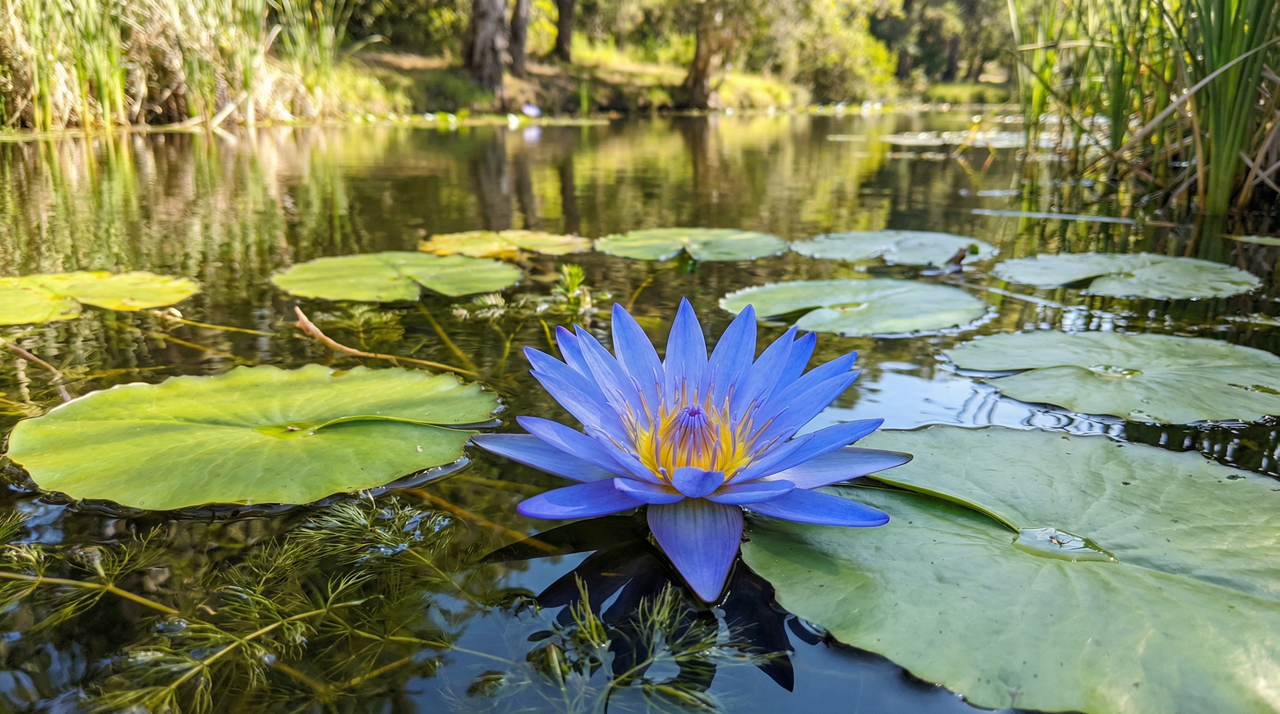
Understanding why this plant seized human imagination for five thousand years is easier once you've actually seen one. The rhizome alone is impressive: thick, fleshy, and horizontal, growing up to two or three meters long, it sends up petioles anywhere from 45 to 90 centimeters depending on water depth, and the plant can sprawl one to five meters across a still water surface.[2][11] The leaves are peltate (meaning the stem attaches near the center of the leaf rather than the edge), orbicular, and can reach 25 to 60 centimeters across. They're glossy bright green on top, often with a striking purplish-red underside, and that waxy, leathery texture causes water to bead and roll right off.[2][11]
The flowers are what stop people in their tracks. Bowl-shaped, white to pale pink, sweetly fragrant, and 10 to 20 centimeters across with 15 to 25 petals surrounding a cluster of yellow stamens, they hold themselves 15 to 30 centimeters above the water surface and last four to five days each, blooming from late spring through autumn.[11][12] I make a point of being at the pond at dawn when water lilies are in bloom because that daily opening is genuinely one of the more beautiful things a garden can offer. After pollination, the plant produces spongy, flask-shaped capsules containing small, buoyant, dark seeds dispersed by water currents.[2] The blue lotus relatives run slightly smaller in leaf and flower; N. odorata produces similarly fragrant white blooms but tops out at 7 to 13 centimeters across and manages on hardier, tuber-forming rhizomes suited to temperate winters.[7]
Traditional, Cultural, and Symbolic Uses
Seeds and images of Nymphaea lotus appear in predynastic Egyptian archaeological sites dating to roughly 4000 to 3000 BCE, and from the Old Kingdom onward the plant saturates tomb paintings, amulets, and burial offerings.[13][14] The symbolism was precise: a flower that sinks beneath dark water each night and rises at dawn embodied the sun god Ra's daily journey, making it the living metaphor for creation and rebirth.[15] By the time the Ebers Papyrus was compiled around 1550 BCE, the white lotus and its blue relative were already established medicines, prescribed for pain relief, sedation, inflammation, and aphrodisiac effects, and woven into perfumes and garlands for pharaohs.[16][17] Theophrastus and later Roman physicians picked up the thread in the 4th century BCE onward, describing its garland use and medicinal applications including diuretic and gynecological treatments.[18]
The genus carries similar weight far beyond the Nile. Nymphaea caerulea and N. nouchali appear in Hindu and Buddhist iconography as symbols of purity and enlightenment, associated with deities like Lakshmi and Brahma.[19] Meanwhile, the Ojibwe, Cherokee, Iroquois, and other North American peoples developed entirely independent traditions around N. odorata, using boiled or roasted rhizomes and seeds as food, and applying the plant medicinally for diarrhea, fevers, and skin conditions.[20] These rhizomes, properly cooked, lose their astringency, which makes the ethnobotanical record feel far more practical than mystical once you've actually prepared one.
That practical tradition continues today. Rhizomes, young leaves, and seeds of N. lotus remain active in African and Asian ethnomedicine for diabetes, gastrointestinal complaints, fever, and inflammation.[21] The concern worth naming is that the commercial boom in "blue lotus" products has generated real ethical questions around cultural appropriation and benefit-sharing with the communities whose knowledge underlies that market.[22] If you're growing or sourcing water lily products, knowing where your plant came from and supporting propagators who work ethically rather than wild-harvesting from pressured native populations is the responsible path.[23]
Fascinating Ecology and Adaptations
The rebirth symbolism the Egyptians built around this plant wasn't just poetic. It was accurate observation. Nymphaea lotus flowers close each night through nyctinasty and reopen each morning, tracking the sun with heliotropism, and they generate their own internal heat through floral thermogenesis that can raise internal temperature 10 to 15 degrees Celsius above ambient air, drawing in beetle pollinators with warmth and fragrance simultaneously.[24][25] Watching the flowers open at dawn, it's genuinely easy to see why a civilization concluded something sacred was happening. The plant's other adaptive features are equally purposeful: aerenchyma tissue transports oxygen down to submerged roots, flexible petioles adjust as water levels rise and fall, and those buoyant seeds disperse passively with every current.[26]
N. odorata adds another layer worth knowing: its root exudates have allelopathic effects that can suppress competing algae and plants, giving it a quiet competitive edge in the wetland communities it inhabits.[27] Across the genus, water lilies provide habitat, cycle nutrients, and anchor wetland food webs, which means the plant the Egyptians called sacred was also quietly holding their riparian ecosystems together.[26] That combination of ecological utility and transcendent beauty in a single species is rare, and it explains a lot about why this flower has never really left human consciousness in five thousand years.
Water Lily Varieties and Where to Buy Them
Notable Varieties of Egyptian Lotus and the Nymphaea Genus
Nymphaea lotus is not a cultivar-collector's plant. Compared to the rest of the genus, it offers a modest palette: the straight species, a white-flowered form sometimes called 'Alba', 'Variegata' with creamy-margined leaves, the thermal-water-adapted var. thermalis (often pink-flowered), and a few ornamental selections like the double-flowered 'Double White Lotus' and the aquascaping favorite 'Red Tiger Lotus' with its striking burgundy foliage.[28][29][4] Breeding has pushed flower color, size, and regional adaptability forward, but the list stays short.[30] I've grown both the straight species and 'Variegata' in client water features, and I'll say this: 'Variegata' earns its spot even on grey days when the flowers stay shut, because the leaf patterning carries the design on its own.
Step outside N. lotus into the broader genus and the choices get dizzying fast. Nymphaea odorata has been cultivated and crossed since the 19th century, producing cultivars like 'Snow White', 'Pocono', 'Minnehaha', 'Peach Glow', and 'Sultry Pink', each selected for petal count, fragrance intensity, and sometimes disease resistance, with botanical varieties spanning white, pink, and red forms across different habitats.[31][32] Nymphaea alba adds its own cultivar trail: the dwarf AGM-winning 'Gonnere', 'James Brydon' with its pink blooms and red sepals, the highly fragrant 'Marliacea Albida', and several semi-double whites.[33] Then there's the blue-flowered corner of the genus, where Nymphaea caerulea and N. nouchali overlap enough taxonomically that nursery labeling can get slippery in the real world. Together they offer botanical varieties covering blue, pink, white, and mixed colors alongside cultivars like 'Blue Star', 'Blue Moon', 'Sacred Blue', 'Nile Blue', and 'Perry's Blue Emperor', several of which carry the RHS Award of Garden Merit.[34][35][36] If you've ever ordered a "blue lotus nymphaea caerulea" plant and received something labeled nouchali instead, you're not alone; the trade treats them almost interchangeably, which reflects genuine botanical complexity rather than supplier carelessness.
How to Source and Buy Nymphaea lotus
Before anything else: Nymphaea lotus carries no federal noxious-weed designation and isn't restricted under the Lacey Act, but that only tells part of the story.[37][38] Because the plant has naturalized in parts of Florida, I always double-check current Florida Fish and Wildlife Conservation Commission guidelines before specifying it for local pond projects.[39] California buyers should verify state rules too, and if you're after the blue lotus relatives (N. caerulea or N. nouchali), know that Louisiana and Texas have imposed restrictions tied to their psychoactive reputation, even though neither species is CITES-listed.[40][41] Containment matters everywhere, full stop.
Nymphaea lotus is genuinely easy to find. Specialist aquatic nurseries like Pond Megastore, Lilyblooms Aquatic Gardens, Van Ness Water Gardens, and Florida Aquatic Nurseries all carry it as tubers, rhizomes, potted plants, or seed, with the best selection arriving in spring and running through summer.[42][43][44] Rough price ranges: seed packets run $5-20, tubers $10-30, and potted plants anywhere from $15-80 depending on size and form.[45][46] I personally prefer ordering from nurseries that are members of the International Waterlily and Water Gardening Society because the stock tends to arrive properly labeled and disease-free, which matters more than saving a few dollars on a tuber. Most of these same suppliers stock the odorata cultivars and the blue-flowered relatives, so one order can cover real variety exploration. Order in spring, plant with containment in mind, and you're set up for a long season of growth.
Water Lily Propagation and Planting (Nymphaea lotus)
If someone asks me how to grow a water lily in their pond, my first question is always: do you already have an established plant, or a friend who does? Because if the answer is yes, rhizome division is where you want to start, and nearly everything else follows from there.
Propagation Methods: Rhizome Division vs. Seed
Rhizome division remains the most reliable way to propagate Egyptian lotus, with success rates above 80% when done correctly.[47][48] The key is making sure each division carries at least one bud or growing eye. I always do a quick cut-face inspection before I plant: a healthy division is firm and pale cream to white inside. If it's soft, discolored, or smells off, that piece goes in the compost, not the pond. Do this during dormancy or early spring, replant divisions horizontally in aquatic containers filled with heavy loam, start them under just 4 to 6 inches of water, and plan to divide again every 2 to 4 years as the plant fills its pot.[47][49] The best part: divisions usually flower that same season.
Growing a water lily from seed is a different commitment entirely. It's the path I choose when I'm deliberately working toward a new color form, not when I want flowers by August. Germination rates run 50 to 80% with fresh seed, but plants typically take 1 to 3 years to reach first bloom.[47][50] Seeds need scarification first (nicking or filing the hard coat), followed by soaking in warm water at 25 to 30°C until they begin to split, then sowing into loamy soil under shallow water kept at 24 to 29°C.[47][51] In my experience, the biggest variable isn't scarification technique, it's maintaining that warm water temperature consistently enough for germination to take hold. Stem cuttings and tissue culture are options for commercial growers, but they're not practical for home pond work, and grafting isn't standard practice with this genus at all.[52][47]
Seed Morphology, Dormancy, Storage, and Germination
Egyptian lotus seeds are tiny: 1.2 to 1.5 mm long, dark brown to nearly black, ellipsoid, with a hard impermeable coat and a spongy white aril that helps them float and disperse in moving water.[2][53] Anyone who's handled Nelumbo seeds knows how substantial those feel by comparison; these are delicate things. That hard coat is also what causes physical dormancy, so scarification isn't optional, it's the mechanism that unlocks germination. Once you've broken through, seeds need 12 to 16 hours of light and warm, moist conditions at 25 to 30°C; under those parameters, germination runs 70 to 95% and takes 2 to 4 weeks.[54][55] I always label every seed flat, because Nymphaea seedlings are nearly indistinguishable from other aquatic seedlings in those first weeks, and a mix-up will cost you months.
The good news for anyone growing Egyptian lotus from seed is that it's an orthodox species: seeds tolerate drying down to 5 to 15% moisture and can be stored 2 to 10 years with viability above 50% for up to 5 years at 4 to 5°C in airtight containers with silica gel, or much longer at -18 to -20°C.[56][57] That's a forgiving window if you're collecting pods from your own pond. It also means that online seed purchases aren't a gamble, provided you verify the seed is genuinely fresh or has been properly stored. The blue lotus relatives (N. caerulea and N. nouchali) don't share this flexibility; those are recalcitrant species that need moist storage in sand or sphagnum at 70 to 90% humidity and stay viable only 1 to 3 years.[57][58] Know which species you're working with before you store anything dry.
Soil, Site, and Water Conditions for Successful Establishment
Egyptian lotus is an unambiguous heavy-soil plant. It wants nutrient-rich muddy silt or clay-loam, the kind of substrate that would make a vegetable gardener wince, because it relies on that density for anchorage, moisture retention, and feeding.[2][59] Sandy or gravelly substrates simply don't hold rhizomes or nutrients the way this plant needs, and lightweight potting mix clouds the water without feeding the plant. For container planting, fill with 6 to 12 inches of true heavy loam or a purpose-made aquatic soil mix, plant the rhizome horizontally about 10 to 15 cm deep with the growing tip angled upward, and start with just 2 to 6 inches of water over the crown, increasing gradually to 12 to 36 inches as the plant matures.[60][61]
Water pH should sit between 6.5 and 7.5, with the plant tolerating a broader range of 6.0 to 8.5 if values are stable.[60][62] I test my pond water weekly for the first month after planting because in the warm, high-organic water I work with in Florida, even a 0.5-unit swing can lock out iron and send leaves into chlorosis before you've noticed anything's wrong. Peat will nudge pH down; crushed limestone brings it back up. Aim for gradual adjustments, because rapid fluctuations stress the plant more than a value sitting steadily at the edge of the tolerance range does.[63] Full sun is non-negotiable: a minimum of 6 hours daily, ideally 6 to 8, with water temperature holding between 21 and 29°C.[64][60] Insufficient light produces pale, elongated leaves and sparse flowers; too much heat without adequate depth can scorch leaf margins.
Spacing, Container Choice, and Planting Technique
Egyptian lotus is a large plant at maturity: leaves reach 12 to 18 inches across, and rhizomes spread 3 to 5 feet through the substrate.[65] Containers should be at least 12 to 18 inches in both diameter and depth, and plants spaced 24 to 36 inches apart in a pond, with larger specimens needing up to 3 to 6 feet of separation.[66][60] I try to keep 30 to 40% of the pond surface open for light penetration and air circulation; crowded ponds develop low-oxygen pockets and persistent algae problems that no amount of care fixes after the fact.
Plant in spring once water temperature has consistently cleared 20°C (68°F), placing rhizomes or divisions horizontally with the growing tip facing up.[67] Use sterile cutting tools and watch the establishment period for soft rot at the cut ends, which signals Pythium or Phytophthora taking hold before the plant has a chance to root in.[68] Getting the planting depth, substrate, sun exposure, and spacing right at this stage is genuinely most of the work; the ongoing care that follows is much simpler once the plant is well-rooted and in the right place.
Water Lily Care Guide (Nymphaea lotus)
Growing Nymphaea lotus well is essentially an exercise in replicating a warm, shallow African wetland. Get the temperature, depth, and light right, and this plant rewards you with some of the most dramatic nocturnal blooms in the water garden. Let any one of those variables slip, and the leaves tell you immediately.
Water and Temperature Needs
For mature plants in a pond setting, aim for 12 to 24 inches of water above the planting basket.[69][70] Container growers can get away with 8 to 16 inches, and seedlings should start in just 2 to 4 inches before you gradually raise the level as they establish. In Central Florida summers, evaporation takes a real toll; I top up my pond almost daily during July and August, and I've watched leaves begin to wilt within a few days when the depth dropped below 8 inches. Keep the water still, dechlorinated, and in the pH range of 6.0 to 7.5.[69] Partial water changes every two to four weeks prevent stagnation without disrupting the plant. Consistency matters more than any single reading; stable level is the goal, not a particular watering schedule. N. lotus can tap its rhizome reserves through a short drawdown of two to four weeks,[71] which gives it a little resilience that Blue Lotus species simply don't have since those must stay continuously submerged.
Sunlight Requirements
Six to eight hours of full sun daily is strictly non-negotiable for healthy foliage and reliable blooming.[72][73] Drop below that, and flowering declines noticeably; keep dropping and you'll see chlorosis creep in on the newer leaves. If you notice your plant producing a lot of leaf but very few buds, light is usually the first suspect. In intense heat, a 30 to 50 percent shade cloth over the pond during the worst afternoon hours protects against leaf scorch while still delivering enough light for strong growth.[74] I'll come back to that in heat tolerance, but the underlying principle is that you're managing light intensity, not duration.
Feeding and Nutrient Management
The Egyptian lotus is an especially hungry plant. During the growing season, push slow-release aquatic fertilizer tablets directly into the substrate near the crown every four to six weeks, once water temperatures are consistently above 70°F.[75][76] A balanced 10-10-10 or a slightly phosphorus-heavy formula like 10-14-8 works well; the extra phosphorus supports flowering. Never drop fertilizer loose into the water column. I made that mistake once early on and ended up with an algae bloom that took three weeks to clear.[77] Hold off on feeding for the first two to three months after planting and stop entirely once the plant goes dormant.
Reading the plant's leaves tells you a lot about its health. Yellow older leaves usually signal nitrogen deficiency; purplish coloring with poor flowering points to phosphorus; brown leaf margins suggest potassium shortfall.[78][79] The one I see most often in my slightly alkaline pond is interveinal chlorosis on the young leaves, which is classic iron deficiency. I correct it by pushing a chelated iron tablet into the soil near the crown rather than adjusting the pH of the whole pond. Keep pH in that 6.0 to 7.5 range and iron uptake stays manageable.[80]
Frost Tolerance and Overwintering
Nymphaea lotus is firmly tropical, rated for USDA zones 9 to 11.[81][82] Growth stops below 50°F and foliage dies at frost, though submerged rhizomes can survive brief dips to around 25°F in deeper water. For gardeners outside zone 9, the protocol is to lift tubers in late fall and store them in cool (40 to 60°F), dark conditions in barely moist sand or peat until water warms back to 60 to 68°F in spring.[83] I store mine in a dark corner of the garage and check monthly for rot. The early mistake I made was letting the sand dry out completely over winter; I lost a rhizome that way. Barely moist is what you want, not bone-dry. This is where N. odorata has a real advantage over Egyptian lotus; it's cold-hardy down to zone 3 and can simply stay submerged through winter without any intervention.
Heat Tolerance
The sweet spot for Nymphaea lotus is daytime temperatures between 68 and 86°F with warm nights.[2] Once pond water climbs past 90°F, you start to see wilting, scorched leaf margins, and flower buds dropping before they open. Seedlings are especially vulnerable to that kind of heat stress. In the humid subtropical summers I garden in, a 30 percent shade cloth draped over the pond during the hottest part of the afternoon makes a noticeable difference; blooms are larger and more consistent, and I see far less scorch.[84] Keeping the plant at the deeper end of its preferred range (closer to 24 inches) also helps buffer root temperature. Good aeration and stable water levels round out the toolkit.[85]
Pruning, Maintenance, and Seasonal Rhythm
Active growth runs from March through October once water temperatures stay above 68°F, with flowering peaking in July and August.[2][86] The flowers are nocturnal, opening at dusk and closing by midmorning, and each bloom lasts three to five days. It's one of the genuinely rewarding things about this plant: evening is the best time to check the pond. Weekly maintenance during the growing season means cutting spent flowers and yellowing leaves off cleanly underwater at the base.[70] Cutting underwater rather than snapping stems at the surface keeps the petioles from rotting and fouling the water, and I've noticed it also reduces aphid pressure significantly since you're removing the weak tissue they prefer.
Division is the other critical task. After about three years, my Nymphaea lotus rhizomes become congested enough that flowering drops by nearly half. Dividing in early spring, when new shoots are 4 to 6 inches tall, has reliably doubled my bloom count by midsummer.[87] Retain sections with at least one strong growing point, replant in fresh aquatic soil, and start the season with the same shallow depth you'd give a new plant before gradually lowering it to mature depth.
Harvesting Water Lily (Nymphaea lotus): Timing, Technique, and Edible Yield
The first thing to understand about harvesting Nymphaea lotus is that you need to be patient before you can be productive. Grown from seed, Egyptian lotus typically takes 1-2 years to reach its first bloom under good conditions.[54][59] I now always start extra rhizome divisions alongside any seed work, because that path to harvest is just faster and more reliable in a productive pond garden.
When to Harvest Flowers, Seeds, and Rhizomes
In temperate climates, peak flowering runs through July and August when water temperatures settle into the 20-25°C range.[88][70] Those windows shift with local conditions, so let water temperature guide you more than the calendar. Flowers open in the morning and close by afternoon,[88] which means morning is your window for cutting them. Seed pods are ready 4-6 weeks after pollination, when they turn from green to brown and begin to split open.[2][89] That 40-60 day maturation window holds fairly consistently across the genus; related species like N. odorata and N. caerulea follow similar timelines of 30-45 days.[30][90] Rhizomes are a different story altogether: wait for full dormancy in fall or winter, after the foliage has died back, before you dig.[69]
Harvesting and Post-Harvest Handling Techniques
For flowers, snip the stem below the water surface when the bloom is fully open in the morning.[2] There is something genuinely lovely about being at the pond edge before the sun is fully up, catching that sweet fragrance before the petals have any intention of closing. If you want dried water lily flower for culinary or medicinal use, air-dry harvested blooms in a shaded, well-ventilated spot below 40°C for 3-7 days until crisp, then store them in airtight containers at 15-20°C with humidity below 60%.[19][91] For rhizomes, once dormancy arrives, lift them carefully, clean off mud gently, ensure each section has at least one growing point, and store them horizontally in moist sand or peat at 4-10°C, checking regularly for rot.[92][70] Seeds come last: watch the pods closely, and cut the stem near the base as soon as browning and splitting begin so the seeds don't disperse into the pond.[19][93]
Flavor, Texture, and Culinary Yield of Egyptian Lotus
Egyptian lotus was a staple food in ancient Egyptian culture, with rhizomes and seeds appearing prominently across traditional recipes and historical records.[94][95] The rhizomes are the most substantial yield from a mature plant: they reliably offer the highest caloric yield and bulk sustenance of any part of the harvest.[4][96] I reach for that water-chestnut comparison often because it gives people an immediate sensory reference that's already in most kitchens. Seeds are nutty and nutritious but can carry noticeable bitterness; a simple boil takes the edge off reliably, and they can also be dried, parched, and ground into flour.[94][97] Young leaves are edible raw or cooked but are mucilaginous and can be bitter; petals are delicate and subtly sweet.[4][98] A quick boil in changed water has always been enough in my kitchen to bring leaves and rhizomes into genuinely pleasant eating territory. This same pattern holds genus-wide: Blue Lotus and American white waterlily rhizomes are similarly starchy and mild once cooked, their seeds nutty with manageable bitterness, their petals sweet and floral.[99][100] Flavor intensity does vary with growing conditions, and specimens grown in rich, warm pond soil tend toward a fuller, more aromatic character than those raised in leaner substrates.[101]
Water Lily Preparation and Uses
Culinary Uses and Flavor Profile of Water Lily
Long before it became a pond ornamental, Nymphaea lotus was a kitchen staple. Ancient Egyptians incorporated its rhizomes, seeds, and flowers into breads, porridges, and ritual offerings, treating it as both sustenance and sacred symbol.[102][103] That culinary history is largely forgotten in Western cooking, but the preparation techniques are genuinely approachable once you treat the plant the way it deserves: like a serious root vegetable and leafy green that happens to grow in water.
The rhizome is exactly where I would start. Young rhizomes peel to a crisp, starchy flesh with a mild flavor somewhere between a water chestnut and a cucumber, though boiling for one to two hours softens the bitterness considerably and brings out something closer to a mild potato.[4][92] Seeds are worth the effort too: nutty, faintly sweet, and somewhere in the almond-to-chestnut range, they can be eaten raw, roasted, boiled, or ground into flour for porridges. Nutritionally they're solid, running 20-25% protein with useful amino acids alongside 50-60% carbohydrates and meaningful minerals.[104][105] Young leaves and stems round out the edible picture, soft enough for soups and curries when cooked or mildly vegetal eaten fresh, with up to 10g protein per 100g fresh weight plus vitamin C, potassium, calcium, and iron.[105][106] Flowers are better suited to teas and infusions than bulk cooking; their volatiles including linalool, geraniol, nerol, and eugenol deliver aromas of green apple, anise, and honey, though they turn noticeably bitter if you steep them too long.[107][108] I've learned that the hard way with my own home-grown petals: five minutes in near-boiling water gives you something pleasantly jasmine-like, but push it to ten and the bitterness takes over. Related species show similar culinary logic, with Nymphaea nouchali's rhizomes and leaves common in Asian soups and curries, and N. odorata rhizomes yielding a potato-like texture when roasted.[109][110]
One non-negotiable regardless of plant part: source matters enormously. I only harvest from ponds I know are clean, and I'd urge the same caution here because water lilies can bioaccumulate heavy metals and pollutants from contaminated water.[111] Thorough cleaning and cooking reduce bitterness, tannins, and alkaloid content across all edible parts, and proper identification is essential since look-alikes such as Nuphar lutea can cause confusion.[112][4] Cultivated sources in known-clean systems are always the safer choice over wild harvesting.
Medicinal Preparations from Water Lily
Traditional use of Nymphaea lotus as medicine spans Egyptian, African, and Ayurvedic traditions, with documented applications for sedation, pain relief, inflammation, and digestive complaints.[108][113] The practical preparations that carried those uses were straightforward: flower infusions using 3-5g of dried flowers steeped 10-15 minutes, taken as one to two cups daily; rhizome decoctions at 5-10g dried per day; or alcohol tinctures at a 1:5 ratio dosed at 1-5ml daily.[114][115] Related species like Nymphaea nouchali and N. caerulea show supporting preclinical evidence for anxiolytic, anti-diabetic, and sedative effects, though human clinical trials remain limited, and N. odorata has traditional applications for respiratory and skin conditions.[116][117] I keep my own use to occasional flower tea, partly because I respect the deep history and partly because the alkaloid profile can be genuinely unpredictable. If you take any CNS medications, talk to your doctor before exploring these preparations.
Non-Food Uses and Precautions for Water Lily
The practical utility of Nymphaea lotus extended well beyond food and medicine historically. Petals and roots yielded yellow and blue dyes, stems provided fiber for mats, ropes, and baskets, and the entire plant was woven into Egyptian ceremony and art in ways the health and history sections cover more fully.[118][102] For modern growers, the more pressing non-food consideration is safety. The plant contains alkaloids including nuciferine, nornuciferine, and aporphine derivatives that can cause nausea, dizziness, or hallucinations in larger amounts or when improperly prepared.[119][117] Pregnant or breastfeeding individuals, children, and anyone with liver or kidney conditions should avoid medicinal use entirely, and there are real interaction risks with sedatives, antidepressants, and alcohol.[120] Having grown Nymphaea in my own Florida ponds, I'm also mindful that while it isn't federally listed as invasive in the U.S., it can become weedy in warm contained systems if left unmanaged, so containment and sourcing from clean, cultivated water bodies aren't optional considerations; they're simply part of growing this plant responsibly.[111][121]
Water Lily Health Benefits (Nymphaea lotus)
Most people who ask me about water lily's medicinal properties arrive with one of two entry points: they've read something about blue lotus and psychoactive effects, or they've stumbled across Ayurvedic references and want to know if the plant growing in their backyard pond is actually useful. The honest answer is that both threads lead somewhere real, but neither tells the whole story.
Traditional Medicinal Uses Across Cultures
The ethnobotanical record for Nymphaea lotus and its close relatives is genuinely impressive. This isn't a plant that one culture decided was medicinal and others ignored. Egyptian physicians cited it in the Ebers Papyrus, one of the oldest surviving medical texts, while Ayurvedic practitioners documented it for its cooling and calming properties, traditional Chinese medicine incorporated it for heart and kidney support, and Native American healers used regional species for digestion and fever.[122][123][124][125] That kind of convergence across unconnected healing traditions signals something worth paying attention to.
Modern preclinical research is starting to validate many of these uses. Anti-inflammatory effects are among the best documented, with extracts showing significant inhibition of pro-inflammatory cytokines including TNF-α and IL-6, COX-2 enzyme activity, and the NF-κB pathway across multiple Nymphaea species.[126][127] Strong antioxidant activity follows closely, with DPPH radical scavenging IC50 values in the range of 20 to 50 µg/mL and measurable upregulation of endogenous enzymes like SOD and catalase.[128][129] Antimicrobial effects against both gram-positive and gram-negative bacteria, including S. aureus and E. coli, have been documented with MIC values of 0.5 to 2 mg/mL, attributed to alkaloids and tannins disrupting cell membranes and biofilm formation.[130][131]
The neuropharmacological profile is where things get especially interesting. Preclinical studies show analgesic, sedative, anxiolytic, and anticonvulsant activities mediated through GABA-A receptor modulation and opioid pathways, with effects in rodent models that compare favorably to reference drugs.[132][133][134] If you're familiar with how passionflower or valerian work through GABA modulation to ease anxiety and promote sleep, the mechanism here is broadly analogous, though the specific alkaloids involved are different. There's also early-stage work on antidiabetic potential through α-glucosidase inhibition, cytotoxic activity in cancer cell lines, and hepatoprotective effects in animal models.[135][136]
I grow water lilies primarily for their ecological role in pond systems, not as a medicine cabinet. But I do respect this ethnobotanical record, and I think it deserves honest framing: virtually all of this evidence is preclinical, meaning in vitro or animal studies, with very limited human clinical trials conducted.[137][138] The traditional knowledge is real. The pharmacological promise is real. The human evidence is not yet there at a clinical level.
Key Phytochemicals and Their Biological Activities
Nymphaea lotus contains a genuinely diverse secondary metabolite profile. The major classes include alkaloids (nuciferine, apomorphine, nupharidine, roemerine), flavonoids (quercetin, kaempferol, myricetin and their glycosides), phenolic acids like gallic and ferulic acid, tannins, saponins, steroids including β-sitosterol, terpenoids, anthocyanins, and a seed oil rich in linoleic and oleic fatty acids.[139][140][141] Where these compounds concentrate matters quite a bit for how you use the plant: leaves and flowers carry the heaviest load of flavonoids, phenolics, and anthocyanins, while rhizomes and roots contain higher concentrations of alkaloids and steroids, and seeds run high in oil, up to 28% with linoleic acid making up 50 to 60% of that fraction.[142][143]
What I've observed in my Central Florida ponds aligns with what the research describes about environmental influences: plants growing in clean, well-balanced water produce more robust rhizomes and livelier blooms, while stressed plants in nutrient-depleted or contaminated conditions look and presumably perform differently. Research confirms this, showing higher flavonoids and phenolics in summer and in tropical African populations, with alkaloid levels shifting based on water temperature, pH, and nutrient status.[144][145] These compounds evolved primarily as the plant's defense system against herbivores, pathogens, and UV radiation, and they happen to be the same ones driving most of the antioxidant, anti-inflammatory, antimicrobial, and neurological activity researchers are chasing.[146][147] Most of the mechanistic understanding still comes from isolated compounds or crude extracts in controlled conditions, not from how those compounds behave in a whole plant eaten as food or medicine by a human being.
Nutritional Value and Edible Uses
Before becoming a subject of formal pharmacological inquiry, it was utilized as food. Rhizomes run 70 to 80% starch and deliver roughly 300 to 350 calories per 100 grams dry weight. Seeds offer 20 to 25% protein alongside 50 to 60% carbohydrates and 350 to 400 calories per 100 grams dry.[148][149][150] Both parts supply meaningful minerals: potassium, calcium, phosphorus, iron, and magnesium are well represented, along with vitamins C, E, A precursors, and several B vitamins, though exact values shift considerably depending on growing conditions and water quality.[151][152] I'd frame this as a respectable starch and mineral source within a varied diet rather than any kind of nutritional revelation.
The proper preparation step is strictly non-negotiable. Boiling or roasting for 20 to 30 minutes is essential to degrade tannins, oxalates, lectins, and alkaloids to safe levels, and it makes a real difference in digestibility and flavor.[153][154] I've cooked various aquatic edibles over the years, and the bitterness in raw water lily rhizome is noticeable. A good rolling boil transforms the raw rhizome into a digestible, nutrient-dense staple. Skipping that step isn't a shortcut; it's just an unpleasant and potentially unsafe decision. Nutritional data across the genus also shows significant regional and seasonal variability, and plants can bioaccumulate heavy metals from contaminated water, which makes sourcing every bit as important as preparation.[155]
Safety Considerations and Potential Side Effects
Nymphaea species are generally considered low in acute toxicity, with rodent LD50 values above 2000 mg/kg.[156][157] Unlike true lilies in the genus Lilium, which are nephrotoxic to cats, Nymphaea causes only mild gastrointestinal upset in pets.[158] Contact with plant sap can cause skin irritation or allergic dermatitis in sensitive individuals, though the non-airborne pollen keeps hay fever risk low.[159][160]
High doses are where things get more complicated. The alkaloids nuciferine and apomorphine can cause nausea, vomiting, diarrhea, drowsiness, dizziness, and mild hallucinogenic effects at elevated amounts, and Nymphaea caerulea in particular is sought out more for its psychoactive properties than its nutritional value, which means dosage caution matters even more.[161][162] I always advise caution with any plant that contains psychoactive alkaloids: while traditional doses appear low-risk for healthy adults, I'd recommend starting extremely conservatively and consulting a healthcare provider before using it medicinally, especially if you take anything for anxiety, depression, or sleep, since the sedative effects can potentiate CNS depressants including benzodiazepines, antidepressants, and alcohol.[163][164] Pregnancy, breastfeeding, young children, and anyone with liver or kidney impairment fall into the contraindicated category.
Source matters as much as dose. I would never harvest from an unknown or untested pond for food or medicine. Aquatic plants accumulate what's in their water, and heavy metals don't cook out. Clean, unpolluted water isn't optional; it's the baseline.
Water Lily Pests and Diseases
Nymphaea lotus is a reasonably tough plant when its environment is right, but "reasonably tough" is doing some heavy lifting in that sentence. After years designing water gardens in humid subtropical conditions, I've learned that this species sits in a narrow ecological sweet spot where water quality, circulation, spacing, and nutrition all need to align before its natural defenses kick in properly. Let any of those slip, and you'll see problems fast.
Common Diseases of Nymphaea lotus
The fungal threat list alone is long enough to be humbling. Leaf spots and blotch from Cercospora piaropi, Septoria nymphaeae, Phyllosticta nymphaeae, Mycosphaerella aquatica, Rhizoctonia solani, Colletotrichum spp., and anthracnose are all documented across Nymphaea lotus and its close relatives including N. nouchali, N. caerulea, and N. odorata.[165][166][167] On top of those, bacterial soft rot from Erwinia carotovora, bacterial blights from Pseudomonas and Xanthomonas spp., and bacterial leaf blight are all part of the same genus-wide vulnerability picture.[165][167] Root and crown rot caused by Phytophthora, Pythium, and Fusarium are arguably the most serious of all, especially in stagnant or poorly aerated water, though N. lotus does show relative resistance to Fusarium crown rot compared to N. tuberosa.[167][168] Viral infections, including potyviruses and water lily mosaic virus, round things out with mottled or distorted leaves, stunted growth, and reduced flowering, often transmitted by aphids.[165][166]
N. lotus has genuine moderate disease resistance relative to other water lilies, partly due to thicker leaf cuticles and its native wetland adaptations, and that resistance improves substantially under good growing conditions.[86][169] I see far fewer foliar problems once water is kept moving with even a small fountain or airstone. High humidity and poor circulation are the biggest triggers I've observed, and the data backs that up: temperatures outside 20-30°C, pH outside 6.5-7.5, and nutrient imbalances, especially excess nitrogen, push most fungal, bacterial, and oomycete problems over the edge.[170][171] It's the same story I see with basil and tomatoes on dry land: the disease pressure was always there; the environment just invited it in.
Early symptoms to watch for include yellowing leaves with brown-black circular lesions (sometimes with yellow halos), water-soaked areas, sunken anthracnose lesions on leaves or flowers, wilting, and root blackening.[70][172] Pull infected leaves the moment you see them. Algae overgrowth from excess nutrients adds another layer of trouble by smothering leaves and reducing oxygen exchange, which indirectly increases susceptibility to the pathogens above; controlling it with barley-straw extracts, beneficial bacteria, improved aeration, and restrained fertilization is worth the effort.[69][173]
Key Pests Affecting Egyptian Lotus
Waterlily aphids (Rhopalosiphum nymphaeae) are typically my first pest encounter of the season, colonizing leaf undersides and leaving behind honeydew, sooty mold, and curled foliage. Water lily leaf beetles (Galerucella nymphaeae, Donacia spp.) and their larvae skeletonize leaves in a way that's impossible to miss. China mark moth (Nymphula nitidulata) caterpillars cut characteristic oval discs from leaf edges to construct protective cases, leaving a punched-out look across the pad surface. Snails, thrips, spider mites, and leafhoppers round out the cast across N. lotus and its close relatives.[70][174][175] What makes pest management non-negotiable beyond the cosmetic damage is that feeding wounds serve as direct entry points for secondary fungal and bacterial pathogens, and aphids actively vector viruses.[172][176]
N. lotus does bring its own chemical defenses to the table: flavonoids, phenolics, and alkaloids contribute to moderate pest resistance in tropical settings, and leaf extracts of several Nymphaea species show measurable insecticidal and larvicidal activity in bioassays.[113][177] I think of those thicker leaves as armor you can see. On the cultivar front, no specifically pest-resistant selections of N. lotus are widely documented yet, though related species have produced cultivars like 'Blue Star' and 'Peter Slocum' from N. caerulea with enhanced tolerance through thicker foliage and higher alkaloid content, and N. nouchali selections like 'Red Flare' show moderate leaf-spot and soft-rot tolerance.[178][179] I trial IWGS-recommended selections each season and have consistently found that thicker-leaf plants need far less intervention, which is the closest thing to a breeding takeaway we have right now for this species.
Integrated Prevention and Management
The management ladder for pests and diseases in a pond ecosystem has to start with culture, not chemistry. Proper spacing, good water circulation, balanced fertilization, regular removal of dead and dying foliage, and clean tools are the first line of defense for both categories at once.[171][180] Once those are dialed in, biological controls come next: ladybugs, lacewings, predatory mites, Bacillus thuringiensis, mosquitofish, and dragonfly larvae all have roles to play, and Bacillus subtilis and neem are useful biological options on the disease side.[70][181] Aquatic-safe insecticidal soap and neem oil sprays are where I go when manual removal isn't enough.
Chemical options exist but carry real responsibility. I personally never use copper sulfate in any pond that holds fish or amphibians; the aquatic toxicology demands precise calculation to 0.5-1 ppm, and the margin for error is uncomfortable.[171][182] Potassium permanganate dips, propiconazole, metalaxyl, and potassium phosphite are tools for severe outbreaks only, always with strict label compliance and awareness of aquatic regulations. In an honest, well-managed pond ecosystem, I rarely need to reach for any of them. Finally, because species-specific pest data for N. lotus remains thinner than for common ornamental hybrids, your local university extension service is worth a call before making treatment decisions; aphid pressure in zone 9 is a genuinely different situation from what the Midwest trials describe.[174][183]
Water Lily in Permaculture Design
Most people think of water lilies as ornamental pond plants, a pretty face floating in still water. What I've come to appreciate, after years of integrating them into productive aquatic guilds in Central Florida, is that Nymphaea lotus earns its place through function long before it opens a single flower. Its floating canopy, rhizomatous root mass, and ancient pollination strategy make it a genuine ecosystem worker in any still-water permaculture system, provided you match the plant to the right climate from the start.
Climate and Growing Zones for Nymphaea lotus
Nymphaea lotus is functionally a tropical plant through and through. It wants warm, consistently available water far more than it wants any particular rainfall total, thriving at water temperatures between 20 and 35 °C with the real sweet spot around 20-30 °C.[26][184] Growth slows noticeably below 15 °C, and around 10 °C you're fighting for survival rather than productivity.[184] In USDA terms, that puts reliable outdoor cultivation in zones 9 through 11, in the tropical savanna, hot semi-arid, and Mediterranean hot-summer climate types where water sources stay full year-round.[185][186] What actually matters for site selection is water depth and permanence: optimal depth runs 30 to 100 cm, and the plant needs that column to stay accessible, with annual precipitation generally exceeding 1,000 mm or, more practically, a pond that doesn't dry out seasonally.[187]
If you're gardening outside the tropics, the genus still has options. Nymphaea caerulea, the blue lotus, pushes into zones 8 and up in places like Florida, coastal Texas, Louisiana, and southern California, and zone 8 gardeners can overwinter its tubers indoors as they would a dahlia.[69] At the cool end of the genus spectrum, Nymphaea odorata, the American white waterlily, survives USDA zones 3 through 10, tolerating dormancy at water temperatures as low as 5 °C while still thriving where summers push 30 °C.[188][189] For most readers, that spectrum tells you something useful: there's a water lily for nearly every climate, but N. lotus specifically asks for warmth above all else.
Forest Layer and Guild Placement
In a permaculture food forest, we talk about stacking functions across vertical layers from canopy to ground cover. Water systems have their own layering, and Nymphaea lotus occupies the floating-leaved stratum with authority. Its broad peltate leaves anchor to muddy substrates through spreading rhizomes below and spread across the water surface above, creating a canopy that shades out submerged weeds, reduces evaporation, and suppresses the filamentous algae that plagues neglected ponds.[190] I've watched the green-water phase in new ponds clear noticeably within two weeks of the lily pads achieving full canopy closure, which is a satisfying benchmark to share with skeptical clients who expected a slow process.
Below the water surface, the rhizome mat stabilizes sediments and holds the pond bed in place, reducing turbidity and protecting the soil structure that supports the whole aquatic community.[191] Above, the canopy creates shelter for fish fry, frogs, and invertebrates that wouldn't otherwise have refuge in an open-water pond.[2] In aquaponics or polyculture pond systems, this combination of habitat structure and filtration makes it a natural complement to tilapia or goldfish, where nutrient loads from fish waste would otherwise tip the water toward algae dominance.[192] I think of it less as a single plant and more as the horizontal canopy layer of the pond guild, doing at the waterline what a shrub layer does in a food forest: intercepting light, moderating the microclimate, and providing edge habitat. A design note worth holding onto: while the canopy is genuinely useful, its density means it can outcompete native emergent plants in nutrient-rich ponds,[193] so placement relative to natives matters from day one.
For guild companions, I pair Nymphaea lotus with pickerelweed along the pond margins. The emergent flowers of pickerelweed support the same beetle families that pollinate the lily, and water celery in the shallows fills the gap between the lily's floating layer and the pond edge without competing for light.
Ecosystem Functions and Pollination Ecology
The nutrient filtration role here goes deeper than simple shading. Nymphaea lotus absorbs excess nitrogen and phosphorus through its rhizosphere, actively pulling the nutrients that drive eutrophication out of the water column.[194] Related species like N. nouchali and N. caerulea show phytoremediation capacity for heavy metals including cadmium and lead alongside nitrate removal,[195] and I've noticed substantially clearer water in ponds where I've combined water lilies with nutrient-producing fish compared to fish-only systems. The harvested leaves can go into the compost pile, where their mineral content, concentrated potassium and calcium in particular, feeds back into the garden system rather than decomposing in the pond.[196]
The complex pollination biology is one of the genuinely strange and wonderful things about this plant. Nymphaea lotus flowers are protogynous, meaning their female structures mature before the male ones, which promotes outcrossing rather than self-fertilization.[197] The primary pollinators are beetles from the Scarabaeidae and Hydrophilidae families, driving the active cross-pollination process.[198] The flower then traps the beetles overnight, holding them inside as it closes, and releases them the next day dusted in pollen to carry to the next bloom.[199] I always describe this to visitors the way I think about squash bees sleeping inside squash flowers overnight: the plant and the insect have a deal, and the arrangement is ancient, reflecting beetle pollination mechanisms that go back to the earliest flowering plants.[200] Individual flowers last three to five days, and flowering runs June through September at optimal temperatures of 20-30 °C.[201] Shallower water (30 to 90 cm) makes the blooms more accessible to insect visitors, which is a practical depth guideline that serves both function and pollination ecology at once.[202]
On responsible cultivation: N. caerulea has a documented track record of becoming invasive in Florida waterways, and N. odorata can form competitive monocultures in nutrient-rich ponds.[203][204] In warm-zone ponds, I treat all Nymphaea species as contained or closely monitored plantings, choosing native companions and thinning rhizomes regularly. The research on their competitive ability in fertile water is clear enough that I don't treat it as a hypothetical. Check local regulations before you plant, and plan for management from the start rather than as an afterthought. That's not a reason to avoid these plants; it's just honest design.
The Pond I Almost Didn't Build
I put off adding a water feature for years, convinced it would become a mosquito nursery and a maintenance headache. Then a neighbor pulled a rhizome out of her pond and handed it to me dripping, wrapped in wet newspaper, and I had no excuse left. That first summer, watching the buds rise and open before my morning coffee, I understood why people built entire civilizations around this thing. Some plants just ask you to slow down and stay.
Sources 204
- Sacred and Herbal Healing Beers: The Secrets of Ancient Fermentation ↩
- Nymphaea lotus ↩
- Nymphaea lotus ↩
- Nymphaea lotus - Wikipedia ↩
- Nymphaea caerulea - Blue Egyptian Water Lily ↩
- Nymphaea nouchali ↩
- Nymphaea odorata - Wikipedia ↩
- Nymphaea lotus ↩
- Nymphaea lotus ↩
- Florida Invasive Species ↩
- Nymphaea lotus ↩
- Nymphaea lotus ↩
- The Lotus Flower in Ancient Egypt ↩
- Predynastic Egypt: Lotus in Early Artifacts ↩
- The Sacred Lotus in Ancient Egypt ↩
- Pharmacological Review of Nymphaea lotus ↩
- Papyrus Ebers: The Greatest Egyptian Medical Document ↩
- Theophrastus: Enquiry into Plants ↩
- The Sacred Blue Lotus: Nymphaea Caerulea in Ancient Egypt ↩
- Native American Ethnobotany ↩
- Ethnomedicinal uses of Nymphaea lotus L. in Northeast Africa ↩
- Cultural Appropriation in the Herbal Trade: Egyptian Plants ↩
- Invasive Aquatic Plants: Ornamental Trade Impacts ↩
- Nyctinastic Movements in Aquatic Plants ↩
- Heliotropism and Phototropism in Water Lilies ↩
- Nymphaea lotus ↩
- Allelopathy in Aquatic Macrophytes ↩
- Nymphaea lotus ↩
- Nymphaea lotus Cultivars ↩
- Nymphaea lotus - Egyptian Lotus ↩
- Water Lilies: Nymphaea odorata Cultivars ↩
- Nymphaea odorata ↩
- Nymphaea alba - Royal Horticultural Society ↩
- Nymphaea nouchali ↩
- Nymphaea caerulea - Wikipedia ↩
- Water Lily Varieties ↩
- Federal Noxious Weeds List ↩
- Lacey Act Overview ↩
- Invasive Aquatic Plants in Florida ↩
- CITES Appendices ↩
- Nymphaea lotus Profile ↩
- Nymphaea Lotus - Egyptian Lotus ↩
- Tropical Water Lilies - Nymphaea lotus ↩
- Egyptian Lotus (Nymphaea lotus) ↩
- Water Lily Suppliers Directory ↩
- Buy Nymphaea Lotus Plants ↩
- Propagation of Water Lilies (Nymphaea spp.) ↩
- Vegetative Reproduction in Aquatic Plants ↩
- Propagation of Water Lilies ↩
- Growing Water Lilies from Seed ↩
- Aquatic Plant Propagation Protocols ↩
- Micropropagation of Nymphaea Species ↩
- Seed Structure and Development in Nymphaea lotus ↩
- Nymphaea lotus - Growing from Seed ↩
- Seed Dormancy and Germination in Aquatic Plants ↩
- Seed Storage of Water Lilies (Nymphaea spp.) ↩
- Seed Storage of Water Lilies ↩
- Seed Storage of Recalcitrant Species ↩
- Nymphaea lotus ↩
- Water Lilies: Planting and Care ↩
- Growing Water Lilies ↩
- Aquatic Plant Production, Water Plants ↩
- pH Effects on Aquatic Plants ↩
- Nymphaea lotus ↩
- Nymphaea lotus (Egyptian Lotus) ↩
- Nymphaea lotus: Egyptian Water Lily Care Guide ↩
- Propagation of Water Lilies ↩
- Diseases of Aquatic Plants ↩
- Nymphaea lotus - Egyptian Lotus ↩
- Water Lily Cultivation Guide - Royal Horticultural Society ↩
- Ecological Adaptations of Nymphaea lotus in Tropical Wetlands ↩
- How to grow water lilies ↩
- Water Lily Care Guide ↩
- Nymphaea lotus (Egyptian Lotus) Profile ↩
- Nymphaea lotus (Egyptian lotus lily) ↩
- Fertilizing Water Lilies ↩
- Nutrient Requirements for Water Lilies ↩
- Diseases of Waterlilies ↩
- Nutrient Deficiencies in Water Lilies ↩
- Nutrient Deficiencies in Aquatic Plants ↩
- Nymphaea lotus (White Egyptian Lotus) ↩
- Nymphaea lotus ↩
- Overwintering Tropical Water Lilies ↩
- Water Lilies: Cultivation and Troubleshooting ↩
- Temperature Effects on Growth and Physiology of Nymphaea lotus ↩
- Phenology of Aquatic Plants in the Mediterranean Basin ↩
- Water Lily Care and Maintenance ↩
- Nymphaea lotus Growing Guide ↩
- The Biology of Nymphaea ↩
- Nymphaea caerulea: Cultivation and Propagation ↩
- Post-Harvest Handling of Cut Flowers ↩
- Harvesting Aquatic Plants: Guidelines for Nymphaea Species ↩
- Seed Propagation of Water Lilies ↩
- Nymphaea lotus - Useful Tropical Plants ↩
- Ethnobotany of Water Lilies in the Nile Valley ↩
- Ethnobotany of the Egyptian Lotus ↩
- Ethnobotany of Water Lilies ↩
- Traditional Uses of Nymphaea Species in Indian Cuisine ↩
- Nymphaea nouchali - Useful Tropical Plants ↩
- Wild Edible Plants of the Dakotas by Stubbendieck et al. ↩
- Morsy et al. (2020). Phytochemical analysis of Nymphaea lotus alkaloids and sugars ↩
- The Lotus in Ancient Egypt - Ancient History Encyclopedia ↩
- Ethnobotany of the Nile Valley: Ancient Uses of Aquatic Plants ↩
- Nutritional and Phytochemical Evaluation of Nymphaea lotus Seeds ↩
- Nutritional composition of Nymphaea nouchali seeds and leaves ↩
- Egyptian Lotus: Edible and Medicinal Uses - Useful Plants ↩
- Volatile Constituents of Nymphaea lotus Flowers ↩
- Traditional Uses of Nymphaea lotus in Africa - NCBI ↩
- Kew Gardens Fact Sheet - Nymphaea nouchali ↩
- Fragrant Water Lily (Nymphaea odorata) - Traditional and Medicinal Uses ↩
- EPA Aquatic Plant Toxicity and Bioaccumulation ↩
- Edible and Poisonous Aquatic Plants ↩
- Medicinal Uses of Water Lilies in Traditional Medicine ↩
- Phytochemical and pharmacological studies on Nymphaea lotus ↩
- Nymphaea caerulea: A Review of Its Traditional and Modern Uses ↩
- Phytochemical and pharmacological review of Nymphaea nouchali ↩
- Chemical and pharmacological characterization of Nymphaea caerulea L. (blue lotus) ↩
- Ethnobotany of Aquatic Plants ↩
- Toxicity of Water Lilies (Nymphaea spp.) ↩
- Traditional Uses and Safety of Nymphaea lotus in Africa ↩
- Nymphaea lotus ↩
- Traditional Uses and Pharmacognosy of Nymphaea Species ↩
- The Ebers Papyrus: A New English Translation ↩
- Traditional uses and medicinal potential of Nymphaea species in India ↩
- Traditional Ecological Knowledge of Water Lilies - USDA Forest Service ↩
- Anti-inflammatory and analgesic activities of the leaf extracts of Nymphaea lotus L. (Nymphaeaceae) ↩
- Inhibitory effects of Nymphaea lotus flower extract on the NF-κB pathway in LPS-stimulated macrophages ↩
- Antioxidant and Anti-inflammatory Activities of Nymphaea lotus Extracts ↩
- Antioxidant Activity of Nymphaea lotus Extracts ↩
- Antimicrobial Properties of Nymphaea lotus Extracts ↩
- Antimicrobial Properties and Mechanisms of Nymphaea lotus Flavonoids ↩
- Analgesic and Sedative Effects of Blue Lotus ↩
- Neuropharmacological Effects of Nymphaea lotus: Anxiolytic, Sedative, and Anticonvulsant Activities ↩
- Anxiolytic and antidepressant-like activities of Nymphaea nouchali in rodents ↩
- Antidiabetic and Anticancer Potential of Nymphaea lotus: Mechanisms and In Vitro Studies ↩
- Cytotoxic and apoptotic effects of Nymphaea nouchali on cancer cell lines ↩
- Nymphaea lotus: A review of its phytochemistry, pharmacology, and toxicity ↩
- ClinicalTrials.gov search results for Nymphaea lotus ↩
- Phytochemical and pharmacological studies on Nymphaea lotus ↩
- A review on phytochemistry and ethnopharmacological aspects of genus Nymphaea ↩
- Secondary Metabolites from Nymphaea lotus (Nymphaeaceae): A Review ↩
- Phytochemical and Pharmacological Profile of Nymphaea lotus L. ↩
- Distribution of Secondary Metabolites in Aquatic Plants: A Review on Nymphaea nouchali ↩
- Phytochemical Investigation of Nymphaea lotus L. During Different Seasons ↩
- Flavonoids and Phenolics in Nymphaea species: Environmental Influences ↩
- Ecological Roles of Plant Secondary Metabolites in Aquatic Environments ↩
- Phytochemical and pharmacological profile of Nymphaea lotus ↩
- Nutritional and Phytochemical Evaluation of Nymphaea lotus ↩
- Nutritional Evaluation of Nymphaea nouchali Seeds ↩
- Nutritional Composition of Water Lily (Nymphaea odorata) Rhizomes ↩
- Nutritional and phytochemical analysis of Nymphaea lotus L ↩
- Nutritional Evaluation of Nymphaea nouchali Leaves ↩
- Effects of Processing on Anti-Nutritional Factors in Water Lilies ↩
- Toxicity and Safety of Aquatic Plants for Human Consumption ↩
- Nutritional Composition of Nymphaea_species ↩
- Nymphaea lotus: A Review on Phytochemistry and Pharmacology ↩
- Toxicological Profile of Nymphaea caerulea ↩
- Water Lilies - Toxic and Non-Toxic Plants ↩
- Contact Dermatitis from Nymphaea Species ↩
- Hay fever and gardening ↩
- Nymphaea nouchali: Phytochemistry, Pharmacology and Toxicology ↩
- Nymphaea caerulea (Blue Lotus) - Traditional Uses and Pharmacology ↩
- Interactions of Sedative Herbs with Pharmaceuticals ↩
- Nymphaea nouchali (Blue Lotus): Pharmacology, Traditional Uses, and Safety ↩
- Diseases of Water Lilies and Aquatic Plants ↩
- Pathogens of Nymphaea Species ↩
- Diseases of Aquatic Plants: Focus on Water Lilies ↩
- Diseases of Water Lilies ↩
- Water Lily Diseases and Pests ↩
- Diseases of Aquatic Plants: Focus on Nymphaea Species ↩
- Diseases of Water Lilies ↩
- Water Lily Diseases and Insect Pests ↩
- Water Lily Pests and Diseases ↩
- Insect Pests of Aquatic Plants ↩
- Insect Pests of Waterlilies ↩
- Water Lily Pests and Diseases ↩
- Phytochemical analysis of Nymphaea nouchali reveals insecticidal alkaloids ↩
- Disease Resistance in Water Lily Cultivars ↩
- Breeding Tropical Water Lilies for Pest and Disease Tolerance ↩
- Pest Management in Water Gardens ↩
- Pest Management for Water Lilies ↩
- Integrated Pest Management for Ornamental Aquatic Plants ↩
- Pests of Water Plants ↩
- Water Lily Temperature Requirements ↩
- USDA Plant Hardiness Zone Map ↩
- Köppen-Geiger Climate Classification Map ↩
- Biological Flora of the British Isles: Nymphaea alba / Nymphaea candida / Nymphaea lotus ↩
- USDA PLANTS Database - Nymphaea odorata ↩
- Nymphaea odorata - Missouri Botanical Garden ↩
- Aquatic Plant Conservation and Restoration - Academic Journal Article ↩
- Sediment Stabilization by Aquatic Macrophytes ↩
- Aquatic Plants in Agroforestry Systems ↩
- Plant Finder - Nymphaea odorata ↩
- Role of Nymphaea species in Wetland Restoration ↩
- Phytoremediation potential of Nymphaea species ↩
- Photosynthetic Characteristics of the Submerged Aquatic Macrophyte Nymphaea lotus ↩
- Pollination Biology of Water Lilies (Nymphaea spp.) ↩
- Beetle Pollination in Nymphaea lotus ↩
- The Blue Lotus: Ecology and Pollination ↩
- Basal Angiosperm Pollination: A Review ↩
- Royal Horticultural Society - Nymphaea lotus ↩
- Floral Morphology and Ecology of Water Lilies - Flora of Europe ↩
- IUCN Red List - Nymphaea lotus ↩
- Invasive Species of Aquatic Plants ↩