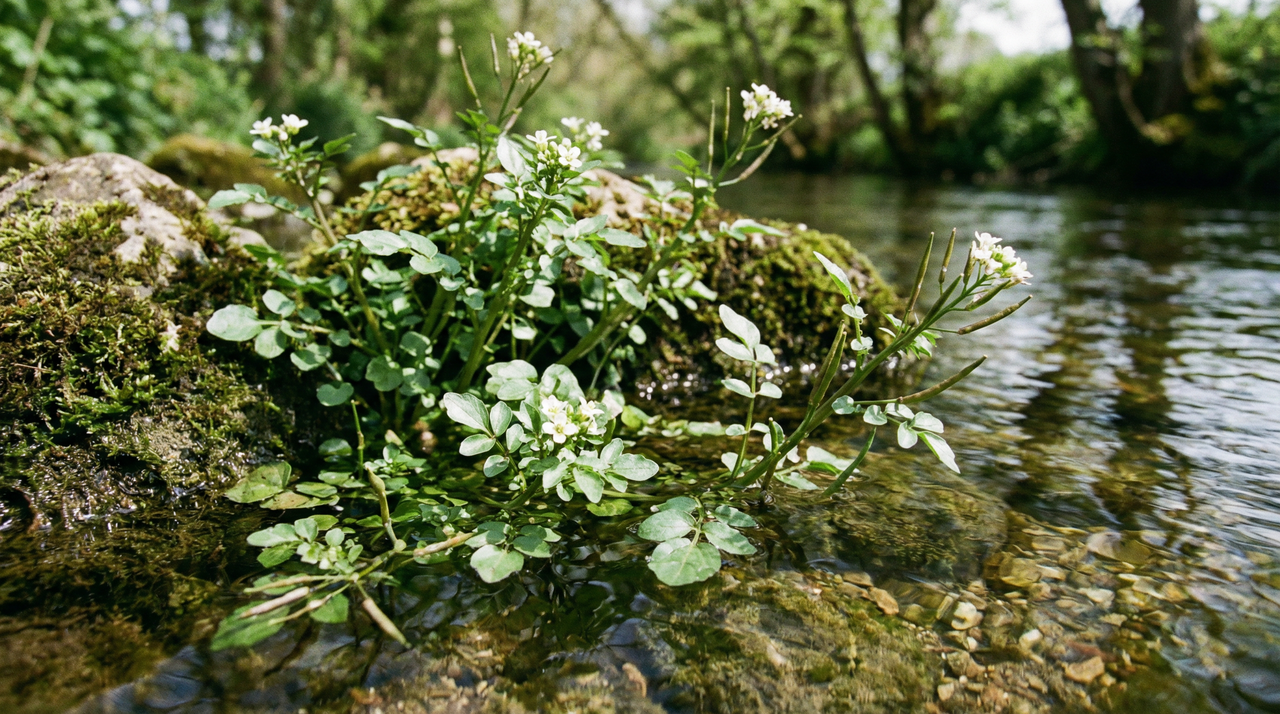
Most people think of watercress as that slightly bitter garnish wilting underneath a slice of smoked salmon, something you push to the side of the plate. I thought the same thing until I crouched down beside a cold spring-fed ditch in the Willamette Valley and pulled a handful straight from the water. The heat in the back of my throat was immediate, almost aggressive, more like fresh horseradish than salad green. That bite isn't just flavor; it's chemistry, a live defense system called glucosinolates that activates the moment you chew it, the same class of compounds scientists are now studying seriously for cancer chemoprevention.[1] A garnish, this is not.
What really gets me about watercress is the contradiction at its center. It's one of the oldest cultivated greens in the Western world, eaten by Roman soldiers and prescribed by Hippocrates, yet most American gardeners treat it like an exotic specialty or a foraging curiosity. It grows wild in nearly every temperate stream on the planet. It can double its biomass in days under the right conditions. And it will absolutely take over a waterway if you let it, which means the plant most people overlook has enough ambition to become an ecological problem. That tension between generosity and aggression is exactly why it deserves a closer look.
Watercress Origin and History
Botanical Background and Visual Characteristics
Watercress, Nasturtium officinale, is an aquatic perennial herb in the Brassicaceae family, native to Europe, western Asia, and North Africa.[2][3][4][5] In the wild it occupies shallow, clean, well-oxygenated streams just 1 to 10 cm deep, spreading by stolons into dense creeping mats as well as reproducing from seed, though most cultivated plants are vegetatively propagated.[6][7] It's a polycarpic perennial that can persist for several years, overwintering as a rosette before bolting to flower, and reaching first bloom from seed in as little as 40 to 60 days under cool, moist conditions.[8][9] I've grown it in a backyard flow-form for several seasons now, and the mat-forming stolon spread is so relentless that I once planted it too close to a pond edge and watched it escape into the lawn within a single season. Physical barriers are non-negotiable in a permaculture water guild.
Up close the plant is immediately recognizable as a brassica. Those hollow cylindrical stems support alternate pinnate leaves with 3 to 11 succulent bright-green leaflets, and come spring the whole mat erupts in small white four-petaled flowers arranged in racemes[10][11] — the same cruciform shape you'd see on arugula or flowering kale, which is a useful field ID hook. Mats spread 30 to 60-plus centimeters and stay relatively low, 10 to 30 cm tall, with fibrous adventitious roots anchoring into stream substrate.[2][12] It thrives in cool water, optimal between 10 and 25°C, and starts to sulk in anything stagnant or warm.[3]
Traditional and Cultural Uses Through the Ages
Watercress has a stronger paper trail of human use than almost any other salad green. Hippocrates reportedly prescribed it around 400 BCE for respiratory complaints and as a general tonic, and Pliny the Elder praised it in Roman salads, for vigor, and as an antidote to poisons.[13][14] Medieval Europe folded it into monastery gardens, Hildegard of Bingen noted its virtues, it appeared in French royal menus by 1393. Herbalists Gerard and Culpeper were still extolling it as a blood purifier centuries later.[15][16] Commercial cultivation followed, with the first English beds established around 1808 in Hertfordshire to supply London markets.[16] That continuous thread from Hippocrates to the greengrocer's shelf shows how a plant rooted in clean streams became a bridge between food, medicine, and ritual.
The cultural reach goes well beyond Europe. Traditional Chinese medicine has long used watercress, known as Sai Peng Tsai, to clear heat, soothe sore throats, and aid digestion.[17] Across other traditions it has symbolized vitality, purification, and renewal, appearing in Celtic cleansing baths, Easter resurrection rituals, and Greek and Roman aphrodisiac lore.[18][19] Its high vitamin C content made it a crucial antiscorbutic for sailors and soldiers long before the science of vitamins existed.[12] When I source watercress for workshops I always choose cultivated beds over wild patches; the research on heavy-metal uptake from contaminated waterways is clear, and I'd rather not risk it. That caution is part of a broader and necessary conversation about overharvesting wild populations and the importance of crediting the indigenous and traditional communities whose knowledge shaped so much of what we now call superfoods.[20][21]
Fascinating Facts About Watercress
A few things about this plant still surprise people even after they've been growing it a while. Under ideal conditions, watercress can elongate its stems by up to 50 mm in a single day, powered in part by aerenchyma tissue that channels oxygen to submerged portions of the plant.[22][23] I've watched it in my own aquaponic bed and that 50 mm figure feels absolutely believable in midsummer before the heat kicks in. The same aerenchyma keeps cut stems buoyant and crisp, which is part of why it needs dedicated scissors rather than a knife — those hollow stems trap silt and blunt a blade faster than you'd expect. Because watercress demands high-oxygen, unpolluted flowing water to thrive, ecologists use its presence as a living indicator of stream health; find it growing abundantly in a stream and you already know the water quality is doing something right.[22]
Watercress is not the nasturtium in your flower bed. Nasturtium officinale and the ornamental Tropaeolum majus share a common name but are completely unrelated. I once had a client excitedly show me what she called "watercress" only to discover she had a patch of edible nasturtium flowers. Both are delicious, but they are very different plants, and I now make that distinction the first stop on every plant walk I lead.
Watercress Varieties and Where to Buy Them
Notable Cultivars of Nasturtium officinale
Watercress isn't a one-size-fits-all crop. Several named cultivars have been selected for specific traits, and the differences in flavor, structure, and nutrition are real enough to influence how I choose what to plant.[24][25] The palette includes 'Silurian', a UK heritage selection with good cold tolerance; 'Red Giant', which has reddish stems and leaves that earn their place in a salad mix on looks and antioxidant content; 'Broadleaf' and 'Meyer's Giant' for maximum biomass per cut; 'Aqua' for fast establishment; 'Upland' for sites where water flow is less reliable; and 'Frilly' for its ornamental serrated leaves.[24][26]
I've grown 'Broadleaf' and a narrower heirloom type side by side, and the difference in flavor is not subtle. The narrower-leaf plants are sharper, peppier, and a noticeably darker green. That tracks with the nutritional data: narrower-leaf types tend to run higher in vitamin C (up to 72 mg per 100 g), vitamin K, iron, and glucosinolates, while broadleaf selections can carry 10 to 15 percent fewer glucosinolates overall, trading phytonutrient density for the sheer volume of harvestable green per plant.[27][28] If you're growing for the health benefits, the narrower types win. If you're growing for a salad market or a big batch of soup, broadleaf gives you more green on the plate. I reach for 'Red Giant' when I want beauty alongside antioxidant-rich leaves, and 'Upland' when my water supply is inconsistent. It behaves a bit like land cress (Barbarea verna) in that regard, more tolerant of drier spells than true aquatic types.
Wild Nasturtium officinale populations are declining in parts of their native range due to habitat loss, pollution, and competition from invasive species, even though the species sits at IUCN Least Concern globally.[29] For permaculture growers, that's a quiet reminder that every clean waterway we protect is also a gene bank for future cultivar development.
Sourcing Watercress Seeds, Plants, and Bunches
Most commercial watercress in U.S. markets comes from California's San Joaquin Valley, spring-fed operations near Brandon, Florida, Missouri, and parts of the Pacific Northwest, where clean oxygenated water is consistently available.[30][31] Living near Florida's spring country, I see that regional production show up on local shelves pretty regularly. For home growing, you have three entry points: seed, live plants, or a fresh grocery bunch rooted in a glass of water. Seed packets run about $3 to $5 for 100 to 200 seeds, bulk seed $20 to $50 per pound, and live plants $5 to $10 each; fresh market bunches retail for $2 to $4 and can double as planting material.[32][33][34]
For seeds, I go back to Johnny's Selected Seeds consistently. Their organic lots have given me near-perfect germination in my spring-fed beds, where cheaper generic packets sometimes disappointed on viability.[35] Hudson Valley Seed Company, Seed Savers Exchange, and Richters Herbs are also solid options.[36][37][38] For live aquatic plants ready to drop into a pond system, Pond Megastore and Logee's both carry it.[39] Fresh bunches are widely available at Whole Foods, Trader Joe's, and Kroger, with additional supply from farmers' markets and regional wholesalers; some product is imported from Canada or Europe during peak demand.[40][41]
Year-round supply is increasingly supported by greenhouse and controlled-environment production, with peak outdoor harvests in spring, early summer, and fall.[42][30] One thing worth knowing before you plant: watercress is considered invasive in parts of Florida and the Northeast and can escape into natural wetlands if given the chance.[43][44] I treat it the way I treat mint: wonderful in a contained system, but I never give it free run of natural waterways. A hydroponic raft, an aquaponic bed, or a lined pond keeps it productive and responsible at the same time.
Watercress Propagation and Planting
Every decision you make about growing watercress flows from one biological reality: this plant evolved in shallow, cool, flowing streams, and it will tell you immediately when you've strayed too far from that template. I've learned to read those complaints as useful feedback rather than frustration.
Seed Characteristics and Biology
Watercress seeds are tiny, only 1.0-1.5 mm long and 0.5-0.8 mm wide, ellipsoid to ovoid, dark brown to black, with a smooth surface shaped by millennia of water dispersal.[45][46] They're produced in curved siliques that split open at maturity, and because the species is self-incompatible, it outcrosses readily, meaning seed-grown plants show real genetic variability.[46] That variability is exactly why commercial growers skip seed entirely and why I've largely given up on it myself.
Propagation Methods
Stem cuttings are the move for home growers. After losing several seed sowings to drying out or damping off, I switched entirely to 4-6 inch cuttings with the lower leaves stripped, set into a shallow tray of constantly refreshed cool water. They root in 7-14 days at 50-70°F with 70-80% humidity, and I've had near-100% success with this method.[47][48] Rooting hormone is optional; in humid climates, you usually won't need it. Commercial operations favor cuttings and tissue culture to maintain clonal uniformity, and vegetative propagation at every scale is more reliable than seed.[24][49]
If you do want to grow watercress from seed, the requirements are specific. Pre-soak for 24 hours, then surface sow or barely cover, keeping soil or water temperature at 50-59°F and pH between 6.0 and 7.5; seeds need light to germinate and cannot dry out at any point.[50] Germination takes 7-14 days under ideal conditions, but the window for failure is wide. One benefit of saving seed: properly stored in cool, dry conditions (around 35-40°F, low humidity), watercress seed stays viable for 3-5 years at home, or decades in seed-bank conditions.[51]
Soil, Site, and Water Requirements
Watercress is an obligate hydrophyte, which means it requires permanent soil saturation or shallow water immersion at 5-15 cm depth with dissolved oxygen above 5-6 mg/L.[52] Think of it like mint in terms of moisture need, except watercress will sulk badly if the water stops moving, whereas mint forgives the occasional dry spell. Stagnant water is almost as bad as drought; roots need that oxygen exchange. The ideal substrate is moist, fertile loam with 3-10% organic matter, pH 6.5-7.5, though it tolerates a range of 6.0-8.0.[2][53] I test my container or aquaponic water weekly; a 0.5-point drift toward acidity is enough to invite Pythium root rot. Gravel, sand, and hydroponic substrates like rockwool all work well as long as water is moving and clean.
Native to shallow streams in Europe, western Asia, and North Africa, watercress thrives in exactly those conditions or in aquaponic and hydroponic systems engineered to replicate them.[54] For light, 4-6 hours of direct sun or morning sun with afternoon shade is the sweet spot.[50] In my shaded backyard stream bed the plants stay deep green and tender well into summer, while containers in full sun require active cooling on hot days. Water temperature drives this relationship more than anything else; keep it in the 50-70°F range and you have far more flexibility on sun exposure.[55] One more thing on water quality: never grow watercress in unknown water sources. It bioaccumulates heavy metals and pathogens, so I only grow mine in controlled containers or aquaponics where I know the water is clean.
Spacing, Planting Technique, and Timeline
For terrestrial plantings, space plants 6-12 inches apart in rows 12 inches apart; in hydroponic or aquatic systems, 4-6 inch spacing or 20-40 plants per square meter allows airflow while encouraging the dense mats that make harvesting efficient.[56][57] I tend toward the wider end in containers specifically to reduce mildew risk. Plant in early spring after the last frost (March through May) or in fall; set cuttings or transplants directly into saturated soil or shallow flowing water and thin regularly to maintain aeration as the mats fill in.[24][58]
The timeline rewards good site preparation. Seeds germinate in 7-14 days; cuttings root in the same window. Either way, first harvest comes in 4-8 weeks, faster in commercial flowing systems.[50][59] Get the water cool, moving, and pH-stable from day one, and the plant basically takes over from there.
Watercress Care Guide: Growing Requirements for Nasturtium officinale
Every watercress care decision flows from one central truth: this plant evolved in streams, and it wants you to replicate that. Water, temperature, and nutrients are the three levers you're constantly adjusting, and getting any one of them wrong shows up fast in the leaves. I've grown it in containers, in a shallow pond edge, and in a recirculating hydroponic trough, and the consistent lesson is that watercress doesn't forgive neglect the way a more terrestrial herb might.
Water Needs and Aquatic Habitat Requirements
Watercress is a semi-aquatic perennial that demands constant moisture, ideally in clean, cool, flowing, oxygen-rich water at a pH of 6.5-7.5, with salinity well under 500 ppm and water depth around 2-6 inches.[2][50][28] In garden beds without a stream, you're committing to heavy irrigation of 1-2 inches per week and perpetually saturated soil. Skip even a couple days in warm weather and you'll see wilting and stunted growth fast; push it past three days dry and you're looking at real damage.[60][61] Stagnant water is a separate problem: it leads to root rot, yellowing, and fungal issues, so even in containers I try to keep water moving or refreshed frequently.[62] Hydroponic systems work beautifully when you keep the water oxygenated, circulating, and changed weekly, with water temperature held between 45-70°F. Once water climbs above 75°F, quality drops and bolting accelerates.[63] In my Florida summers, I rely more on shade and continuous flow to keep water temperatures down than on volume alone.
Nutrient Feeding and Fertilization for Heavy Feeders
Watercress is a serious nitrogen feeder, pulling 5-10 g of N per square meter per day when it's growing well.[64] That uptake rate is actually what makes it so effective at phytoremediation; I've placed it intentionally downstream of my small koi pond, and it scrubs the water while I harvest salad from the same mat. For in-soil growing, a balanced 10-10-10 fertilizer every 2-4 weeks, or roughly 1-2 lbs of nitrogen per 1,000 square feet annually, keeps growth vigorous.[65] In my hydroponic trough, I target 150-250 ppm nitrogen with an EC between 0.8 and 2.0 mS/cm.[66]
I learned to read deficiency symptoms the hard way after noticing pale, yellowing older leaves in my trough last season. That's nitrogen deficiency, the most common issue, and it means bumping up feeding immediately.[67] Purplish leaves with poor root development point to phosphorus; marginal necrosis on older leaves signals potassium; and interveinal chlorosis on young leaves means iron is the problem.[67][68] Tip necrosis and leaf burn, on the other hand, usually mean you've overdone nitrogen. I meter my hydroponic solution religiously because imbalances show up in the leaves within days, and soil pH outside the 6.5-7.5 window locks out nutrients before any fertilizer can help.[2][69]
Sunlight Preferences and Light Management
Watercress is more flexible about light than most people assume, but it has a catch: light interacts directly with water temperature. Ideally it gets 4-6 hours of direct sun paired with cool water, producing deep green, compact growth.[45][50] I once tucked a planting under a dense tree canopy thinking the shade would help it through summer; instead I got spindly, pale, barely edible stems. The plant actually restructures itself to cope with low light, stretching toward whatever it can find, but the result is weak growth that doesn't persist.[70] The other extreme, full summer sun without cool water beneath it, causes scorch, chlorosis, and wilting as photoinhibition kicks in above 77°F.[55] Morning sun with afternoon shade hits the sweet spot in most warm-climate gardens; if you're in a cooler region, full sun is rarely a problem as long as the water stays cold.
Frost Tolerance and Cold Hardiness
Watercress is genuinely cold-hardy, rated for USDA zones 3-11, with optimal production in zones 5-9.[71][3] Light frosts down to 25-28°F cause minimal damage, and in protected conditions the plant can survive considerably colder.[72] Hard freezes below 20°F are the real threat, causing water-soaked leaves that turn necrotic from the margins inward, and if roots freeze solid, you lose the plant.[50] I've mulched with 4-6 inches of straw after the first hard frost and carried plants through brief dips into the low 20s without losing them.[73] Floating row covers add another 4-8°F of protection, and keeping water flowing rather than stagnant buffers soil temperature naturally. In zones below 5, a cold frame or greenhouse is the reliable path to winter survival.[74]
Heat Tolerance and Summer Management
This is where watercress humbles a lot of growers, especially in the South. Optimal growth happens between 50-68°F; above 77°F the plant starts wilting, scorching, and losing photosynthetic efficiency, and temperatures consistently above 80°F can cut yields in half.[75][76] Seedlings and flowering plants are especially vulnerable. In Central Florida summers, I run 60% shade cloth over my water feature and have tasted the difference directly: shaded plants stay tender and peppery while unshaded ones turn harsh and bitter within weeks.[77] Beyond shade, the mitigation toolkit includes increased continuous flow, 2-4 inches of organic mulch around the root zone, good airflow to reduce heat buildup, and evaporative cooling in enclosed growing spaces, all aimed at keeping water below 75°F.[78] Nights that drop below 59°F help the plant recover from hot days, which is why even hot-summer gardeners can often push the season by growing through spring and fall with a summer break.
Pruning, Maintenance, and Seasonal Rhythm
The moment I see flower buds forming, I cut those stems back hard. Bolting is triggered by temperatures above 68°F combined with long days, and once it begins, energy shifts away from leafy growth into seedy, bitter stems that aren't worth eating.[79][80] Regular harvesting does double duty: it removes the oldest, toughest growth and keeps the plant redirecting energy into fresh shoots. I also thin overcrowded mats occasionally to maintain airflow, which matters more than most growers realize for preventing fungal problems in dense, wet plantings.
Overwintering and Year-Round Care
Treated right, watercress behaves as a true perennial. When water stays above freezing, growth is nearly continuous, peaking in spring through early summer.[81] Flowering runs May through September, and in colder zones exposed foliage dies back in winter while submerged rhizomes and basal growth survive to push new shoots in spring.[82] In zones 5-9 with consistent flow and basic frost protection, it can be harvested for most of the year. Further north, mulching or moving plants to a cold frame covers those cold months; in warmer zones the challenge is surviving summer rather than winter, which is where everything covered above about shade, flow, and nitrogen comes back together as a complete system.[83]
How to Harvest Watercress
I learned the hard way that watercress doesn't wait. One early June I got distracted by other beds and came back to find the whole planting already flowering. The leaves were still edible, but the bite had gone harsh and the texture was leathery. Now I mark my calendar and start cutting aggressively the moment plants hit about five inches tall, which typically falls six to eight weeks after sowing.[50][84]
Timing and Maturity Indicators for Peak Flavor
The visual cues are simple: young leaves measuring about an inch to two inches, stems still soft enough to snap cleanly, and no flower buds in sight. Flowering is triggered by longer days and temperatures creeping above 75°F, and once it starts, quality drops fast.[84][85] I watch for the very first tiny flower buds as my cue to harvest everything harvestable for the next couple of weeks. Keep the water cool and flowing, and you can expect to come back every two to four weeks through the season.[86][87]
Harvesting Techniques and Post-Harvest Care
Cut young shoots or pinch back outer leaves and tips, always leaving the lower nodes intact. Those nodes are your regrowth points, and protecting them is what turns a single planting into a cut-and-come-again crop that produces through the whole cool season.[50][88] Everything above ground is edible when harvested young, including the stems and even the flowers, though older stems get woody and aren't worth the trouble.[3]
Post-harvest handling is where most home growers lose this crop. I drop mine directly into ice water the moment it's cut. Anything less and the stems wilt within hours, and that peppery spark fades to something flat and faintly cabbage-like. For serious quantities, hydro-cooling is the professional approach, but for home scale, a bowl of ice water works beautifully. Store at 32 to 35°F in high humidity and you'll hold it well for up to two weeks.[50][89]
Yield, Flavor Profile, and Seasonal Influences
That signature heat is the direct result of the plant's activated glucosinolate defense chemistry.[90][91] Think of it as the mechanism behind that clean wasabi-like tingle you get from a just-harvested spring bunch. My cool-season crops, especially spring and fall harvests, are noticeably hotter than summer ones, and well-fertilized plants punch harder than nitrogen-starved ones, similar to how well-grown arugula has more fire than a stressed plant.[92][93] Heat softens the bite but risks bitterness from bolting, so the sweetest spot is always that cool-season window. Frequent selective harvesting is what keeps both volume and flavor quality high, and commercially that approach supports yields ranging from 10 to 40 tons per acre annually under ideal conditions.[94]
Watercress Preparation and Uses
Culinary Uses and Flavor Profile of Watercress
Every part of watercress is edible, leaves, stems, and flowers alike, and the list of ways to use them is genuinely long: raw in salads and sandwiches, blended into pestos and smoothies, stirred into soups and sautés, or scattered as a garnish.[95][50] That sharp, peppery bite raw watercress delivers comes from glucosinolates breaking down into isothiocyanates, the same compound family you get from arugula or radish, layered over a faint sweetness and a satisfying crunch.[96][97] I've found that watercress harvested from a clean, fast-moving home system has a noticeably cleaner, more vibrant bite than store bunches that have spent days in transit. Source quality genuinely shows up on the palate.
Cooking mellows everything. Brief blanching or steaming tones down the intensity to something earthier and more vegetal, though it can reduce glucosinolate content by up to 50% by inactivating the myrosinase enzymes involved in their breakdown; pickling works through acidification and gets you a similar mildness with a tangy edge.[98][99] In my trials, a quick steam of two to three minutes keeps the color brilliant and preserves more nutrition than a prolonged boil. Nutritionally, a typical serving delivers over 40% of the daily value for vitamin K, plus solid contributions of vitamin C, vitamin A, calcium, and iron, though exact levels shift with growing conditions and water quality.[100]
Culturally, watercress has been a kitchen staple for centuries. British watercress sandwiches and French soupe au cresson are classic preparations; Victorian working-class street sellers called "cress girls" sold it by the bunch, and WWII-era campaigns promoted it as a vitamin C source when citrus was scarce.[101] It also turns up in Italian risottos, Asian stir-fries, and Middle Eastern dishes, a genuinely global green. For pairings, it has a natural affinity with potatoes, onions, cream, salmon, eggs, and citrus, all of which either temper its sharpness or amplify its brightness. Spring and fall are the seasons to seek it out, when cool temperatures between 50 and 70°F produce the most tender, complex-tasting growth.[72]
Safety Considerations for Harvesting and Consuming Watercress
Wild watercress can be confused with toxic look-alikes, most dangerously Hemlock Water-dropwort, which contains fatal neurotoxins, and Giant Hogweed, whose sap causes severe phototoxic burns.[102][103] My habit with any aquatic forage is to crush a leaf and smell it first. Genuine watercress smells unmistakably peppery; if you get anything neutral or unpleasant, walk away. Also look for the rounded leaflets, small white or pink flowers, and forked petioles that distinguish it from related plants. Positive ID before anything goes in a basket.
Even correctly identified watercress carries contamination risk. It bioaccumulates heavy metals, industrial pollutants, and harmful microorganisms from surrounding water, so source matters enormously.[104][105] My own rule: harvest only from clean, actively flowing sources at least 100 meters from roads, agricultural runoff, or any visible development, and always cook wild-harvested plants rather than eating them raw. I keep a dedicated clean-water patch at home specifically for raw eating; anything foraged from the field goes into soup or gets blanched first.
A couple of other cautions worth knowing: extreme raw consumption can interact with susceptible thyroids, mirroring other brassicas.[106] Its high vitamin K content is significant for anyone on warfarin or other anticoagulants. I've seen firsthand how consistently high-vitamin-K greens shift anticoagulant levels in clients; coordinate with your doctor rather than guessing.[107] None of this means you shouldn't eat it; it means eat it thoughtfully and from a clean source.
Non-Food Uses of Watercress
Beyond the kitchen, watercress earns its place in water gardens and bog plantings purely on aesthetic grounds. Its lush, cascading foliage brightens shaded, moist edges where few other edibles will bother, and it does real work as a living groundcover in ponds, shallow streams, and bog garden margins.[24][60] I use it along boggy guild edges precisely because it does double duty: beautiful enough to justify its space, and close enough to grab a handful for dinner. Traditionally, the leaves have also been used to produce soft green natural dyes for textiles, and the fibrous stems processed into material for papermaking and weaving, crafts that fit naturally into a low-waste, whole-plant ethos.[108] They're not practices most of us need, but they're a reminder that this plant has always been more than a salad green to the communities that grew up alongside it.
Watercress Health Benefits and Medicinal Uses
Nutritional Profile and Superfood Status
For a plant that's roughly 95% water, watercress punches well above its weight. At just 11 calories per 100g, it delivers 2.3g of protein, meaningful fiber, and a mineral load that embarrasses most leafy greens on a per-calorie basis.[109] That 100g serving covers over 200% of your daily vitamin K requirement, about 72% of vitamin A, and 41-72% of vitamin C, alongside 120mg calcium and 330mg potassium.[109] The "superfood" label gets thrown at a lot of plants that don't really deserve it, but watercress genuinely earns it.[2][12]
One practical note I'd make to anyone harvesting from wild sources: watercress can bioaccumulate heavy metals and nitrates from polluted water, which is a real concern that shapes everything from sourcing decisions to how you prepare it.[110] Growing your own in a controlled setup sidesteps that entirely, and it's honestly my preferred approach for exactly that reason.
Key Bioactive Compounds and Phytochemicals
That peppery bite watercress is famous for isn't just flavor. It's a biological defense system, and understanding it is the key to getting the most from this plant. The primary mechanism involves glucosinolates, mainly gluconasturtiin, which make up 50-60% of total glucosinolate content. When you chew or chop a leaf, an enzyme called myrosinase is released, converting gluconasturtiin into phenethyl isothiocyanate, or PEITC. That's the compound driving most of watercress's documented health activity.[111][112][113] The plant also carries a supporting cast of flavonoids (quercetin, kaempferol, isorhamnetin glycosides), phenolic acids, and carotenoids that amplify its antioxidant capacity.
Where and when you harvest shapes that chemistry significantly. PEITC concentrations peak in young leaves from 5-6 week-old plants and can reach around 100 µmol per 100g of fresh weight.[114][115] In my own growing experience, the difference in pungency between young leaves harvested in autumn versus mature summer growth is striking. Cooler temperatures, higher light, good nitrogen availability, and even a bit of pest pressure all push those levels up. From a permaculture standpoint, that means a well-fed plant in a thoughtfully managed system isn't just producing more biomass — it's likely producing more bioactive compounds per gram.
These same glucosinolates and phenolics serve the plant as defenses against herbivores, pathogens, and competing algae in aquatic habitats.[116][117] What the plant makes to protect itself, it turns out, does interesting things for us too.
Evidence-Based Medicinal Properties and Research
Watercress has been used medicinally for a very long time. Ancient Greeks and Romans used it for ulcers, hemorrhages, and scurvy. British sailors and WWI soldiers relied on it as a scurvy preventative. Traditional Chinese Medicine used it for heat-clearing and digestion; Hawaiian traditions applied it externally for skin conditions; European herbalists prescribed it as a diuretic, expectorant, and spring tonic for blood purification and respiratory complaints.[118][119] What's striking is how much modern research validates that traditional intuition.
PEITC and the glucosinolate system activate the Nrf2 pathway, boosting antioxidant enzymes like SOD, GPx, and HO-1, while simultaneously inhibiting NF-κB to reduce pro-inflammatory cytokines including TNF-α, IL-6, and IL-1β.[120][121][122] Human trials have shown a 13% boost in antioxidant capacity, reduced CRP and inflammatory markers, and meaningful blood pressure reductions in hypertensive subjects — a meta-analysis specifically supports that last finding.[123][124] Broader meta-analyses on cruciferous vegetables link consistent intake to a 10-20% reduction in colorectal and prostate cancer risk, with PEITC identified as a key driver through apoptosis induction and cell cycle arrest.[125]
The preclinical picture extends further into antimicrobial activity against E. coli and S. aureus, analgesic effects comparable to aspirin in rodent models, expectorant and mucolytic properties, and early neuroprotective and antidiabetic signals in animal studies.[126][127] Most of this data currently comes from in vitro work and animal models. Human-specific RCTs for watercress on many of these endpoints are still sparse.[128][129] The antioxidant, anti-inflammatory, and cardiovascular findings have the strongest human backing right now. The rest is promising and consistent with what we know about brassica chemistry, but deserves more rigorous clinical follow-through.
Safety Considerations and Potential Side Effects
For most people, watercress consumed in normal culinary quantities — roughly 1.5 to 2.5 cups of leafy greens daily — is considered safe, with low allergenic potential and no history of acute toxicity from typical use.[130][45] A small subset of people with Brassicaceae sensitivities may experience reactions, but that's rare.
Two interactions are worth taking seriously. The glucosinolates in watercress, including PEITC, are goitrogenic at high raw doses and can interfere with thyroid function, particularly for anyone with hypothyroidism or iodine deficiency. Cooking largely neutralizes this concern — comparable to kale or broccoli, which many people already moderate for the same reason.[131] The other is vitamin K. At roughly 250mcg per 100g, watercress can reduce the efficacy of anticoagulants like warfarin.[132] If you're on blood thinners, keep your watercress intake consistent week to week and work with your doctor on INR monitoring — steady, predictable leafy green consumption actually stabilizes levels better than avoiding greens altogether.
The biggest risk with watercress is contamination. Wild and poorly sourced watercress has been linked to bacterial contamination (E. coli, Salmonella), liver fluke (Fasciola hepatica from livestock runoff and snails), viral pathogens, and heavy metal accumulation.[133][134] Commercially regulated watercress is substantially safer. For home growers, controlled hydroponic or clean-stream cultivation eliminates the liver fluke and bacterial risks that plagued historical wild harvests entirely. Always identify carefully — there are toxic aquatic look-alikes including water hemlock and hemlock water-dropwort — wash thoroughly, refrigerate promptly, and consume within a few days.[135][136] Anyone prone to kidney stones should also note its oxalate content and moderate accordingly.
Watercress Pests and Diseases
Watercress sits in an interesting spot for a food crop: it's a brassica, which means it inherits the whole catalog of brassica pest pressure, but it grows in conditions that would stress out most of those same pests. That tension is real, and it shapes how I think about managing problems in the bed.
Common Insect Pests and Natural Defenses
The usual suspects show up here: aphids (particularly Myzus persicae and Aphis nasturtii), flea beetles, diamondback moth caterpillars, and cabbage loopers.[137][138] If you've grown kale or broccoli, you know this crowd. What's different with watercress is that the plant fights back harder than most of its cousins. Its glucosinolates, specifically gluconasturtiin and phenethylglucosinolate, hydrolyze on contact to release isothiocyanates that are genuinely toxic to many insects, what researchers call the "mustard oil bomb."[139][140] That peppery bite you taste in a freshly cut stem? That's the same chemistry deterring pests. I've noticed that plants grown in cooler, flowing water have a sharper flavor and seem to shrug off early flea beetle damage more readily than those in warm, still conditions.
Pest-resistant cultivars aren't really a thing here. Commercial breeding has focused on yield and taste, not insect resistance.[141] In practice, I look for broader-leaf types because they establish faster and tolerate early nibbling better than delicate seedlings. The bigger vulnerability isn't cultivar; it's density and humidity. Pack plants too tightly, reduce water flow, and susceptibility climbs noticeably.[137] Ladybugs and lacewings thrive near water features and do real work on aphid populations. I introduce them at the first sign of colonization rather than waiting for visible damage.
Major Diseases and Environmental Factors
Disease pressure is where watercress requires more attention, particularly in aquatic and hydroponic systems. The fungal pathogen list includes downy mildew (Hyaloperonospora nasturtii), white rust (Albugo candida), clubroot, Fusarium wilt, and both Pythium and Phytophthora root rots.[142][143] Bacterial issues come from Xanthomonas campestris and Pseudomonas syringae, typically showing as dark, water-soaked spots that turn necrotic.[144] I've managed mildew on kale plenty of times, but the aquatic environment changes the calculus entirely because pathogens spread through water, not just air.
The cultivars 'U.S. 10A', 'U.S. 21A', 'Broad Leaf', and 'Salad King' show improved resistance to downy mildew specifically, though resistance is partial and doesn't replace good environmental management.[145] The numbers that matter most are water temperature, pH, and nitrogen load. Keep water between 5-15°C (41-59°F), hold pH at 6.5-7.5, and maintain a balanced N:P:K around 1:1:2. Once water temperatures climb above 18°C or nitrogen gets excessive, disease susceptibility increases sharply.[146] No formal USDA disease resistance rating exists for watercress, so observation and monitoring are your most reliable tools.[147]
Integrated Management Strategies
Good management is mostly environmental. Cultural practices -- clean water sources, proper spacing, airflow, sanitation, and careful monitoring of water parameters -- do more work than any spray program.[148] In hydroponic or aquatic systems, sterile substrates, UV-treated or filtered recirculating water, proper aeration, and controlled nutrient loads are non-negotiable for keeping Pythium in check.[149] I've learned firsthand that even a brief lapse in filtration can trigger Pythium collapse in a recirculating system. It recovers slowly, if at all.
For biological options, Trichoderma spp. and Bacillus subtilis are well-suited to this crop, especially given that it's consumed raw and sits in food-safety-regulated territory.[150] Copper-based fungicides, mancozeb, and chlorothalonil are available as chemical options, but for an edible aquatic crop they're genuinely a last resort. Regular scouting, row covers against flea beetles, and targeted interventions only at economic thresholds are the standard framework.[151] The throughline across all of it is the same: consistent flow, controlled temperature, and attentive monitoring. When those are right, watercress is a resilient plant. When they slip, problems compound fast.
Watercress in Permaculture Design
Ecological Functions and Guild Roles
Few plants earn their place in a water system as quickly and completely as watercress. As a fast-growing nitrophilous species, it pulls nitrogen and phosphorus directly from the water column, acting as a living biofilter that reduces the nutrient loads that drive algal blooms and eutrophication.[152][153] I've used this to my advantage in pond systems where fish waste accumulates: a thick edge of watercress visibly clears the water over weeks while yielding a harvestable crop. When I pull that biomass for mulch around nearby damp beds, it returns concentrated potassium, calcium, iron, and sulfur back to the soil, completing a tidy mineral loop.[154]
Below the waterline, its dense root mats grip sediment and hold banks together in the same functional niche that vetiver occupies on dry slopes: constant root pressure, constant stabilization.[155][152] Above the waterline, the dense mat becomes habitat; macroinvertebrates colonize the stems, amphibians shelter under the canopy, and waterfowl forage through the margins.[156] Once it flowers, the small white cruciform blooms pull in hoverflies, halictid bees, beetles, and butterflies, with insect-mediated pollination boosting seed set by 30 to 50 percent over self-pollination alone.[157][158] In a well-designed pond guild, that pollinator traffic spills over to companion plantings at the water's edge.
Early in my design career, a watercress planting I put in without any physical barrier escaped downstream into a neighbor's creek and formed a dense monoculture within two growing seasons, crowding out sedges and other native riparian plants.[159][160] That experience reshaped how I design with it entirely. It's a pioneer in disturbed aquatic habitats and genuinely invasive across much of North America, so I treat it like I treat comfrey: useful, generous, but only welcome inside defined boundaries with regular harvesting as the management strategy.
Placement in Forest Layers and Aquatic Guilds
Watercress belongs to the herbaceous groundcover layer, but that framing only holds if you're thinking in aquatic or riparian terms.[2][161] It creeps and roots at every node, building low mats 6 to 24 inches tall that spread freely given room and moving water.[10][162] Think of it like mint: if you plant it where it can run, it will run. I don't try to integrate it into a standard food-forest stack. Instead, I design dedicated watercress beds at pond margins or in channeled stream sections, treating those spaces as their own guild rather than as an afterthought at the foot of a fruit tree.
The guilds I've had the most success with pair watercress with alders on the pond margins for nitrogen fixation and canopy shade, and with pollinator-friendly emergent plants like pickerelweed in the shallows. The watercress handles the biofiltration and bank stabilization while the alders feed the whole system and the pickerelweed adds vertical structure. That's a functional aquatic guild built around what each element actually does, not just what looks nice together.
Climate Adaptability and Growing Zones
Watercress is technically hardy from USDA zones 3 through 11, tolerating winter temperatures as low as -40°F where flowing water keeps the roots from freezing solid, and performing most reliably across zones 4 to 9.[2][24] The catch is heat. Above 77°F, growth stalls and quality drops fast; the leaves I harvest from my managed pond edge when water temperatures stay below 70°F are noticeably more succulent and peppery than anything I pull in late summer heat.[77]
The non-negotiables are cool, flowing, oxygenated water, high humidity in the 70 to 90 percent range, and a neutral to slightly alkaline pH of 6.5 to 7.5.[28][163] This is why commercial production concentrates in Pacific Northwest spring-fed sources and coastal California; those sites deliver naturally cool, moving water year-round without intervention. In warmer zones like Florida's zone 9b, where I garden, success depends entirely on microclimates: afternoon shade, hydroponic cooling loops, or planting in fall to harvest through the mild winter before heat shuts things down in April.[164] Stagnant water is a hard limit regardless of zone; the plant simply will not thrive without oxygen moving through the root zone.[45][165] The most honest way I can put it: site selection here is nearly everything, and no amount of attentive care compensates for warm, still water.
The Plant That Taught Me to Pay Attention to Water
I'd been designing water features for years before watercress made me realize I'd been thinking about them wrong; I was building habitat, not growing food. The first time I harvested a handful from a backyard rill I'd planted almost as an afterthought, still cold from the flow, and ate it standing there in my boots, something clicked. It doesn't ask much. It just asks that you show up and actually look at the water.
Sources 165
- Watercress and its role in cancer chemoprevention via PEITC - National Institutes of Health ↩
- Nasturtium officinale ↩
- Nasturtium officinale (Watercress) ↩
- Watercress - Nasturtium officinale ↩
- Nasturtium officinale ↩
- Nasturtium officinale: USDA PLANTS Database ↩
- Watercress (Nasturtium officinale R. Br.) in Horticultural Reviews ↩
- Biology and Ecology of Watercress (Nasturtium officinale) ↩
- Watercress Production Guidelines ↩
- Nasturtium officinale (Watercress) - Missouri Botanical Garden ↩
- Watercress - RHS Gardening ↩
- Watercress (Nasturtium officinale) - Kew Royal Botanic Gardens ↩
- Ancient Uses of Watercress in Greece and Rome ↩
- Natural History by Pliny the Elder ↩
- The Complete Herbal by Nicholas Culpeper ↩
- Watercress: A Biography ↩
- Watercress in Traditional Chinese Medicine ↩
- Watercress: Folk Medicine and Symbolism ↩
- Plants in Celtic Mythology ↩
- Sustainability of Wild Foraged Greens ↩
- Watercress: A Historical Perspective ↩
- Nasturtium officinale (Watercress) - Missouri Botanical Garden ↩
- RHS Plant Selector: Nasturtium officinale ↩
- Watercress Varieties and Cultivars ↩
- Horticulture of Watercress: Varieties for Commercial Growing ↩
- Nasturtium officinale Cultivars ↩
- Nutritional Composition of Watercress Varieties ↩
- Watercress Production Guide ↩
- Conservation Status of Aquatic Plants in Europe ↩
- Watercress Production in the United States ↩
- Commercial Watercress Growers and Suppliers ↩
- Watercress Seeds ↩
- Watercress Plants ↩
- Fresh Watercress Pricing ↩
- Watercress Seeds ↩
- Watercress ↩
- Watercress Seeds ↩
- Watercress Plants ↩
- Watercress - Aquatic Plant ↩
- Retail Availability of Watercress in US Markets ↩
- US Watercress Supply Chain Analysis ↩
- Watercress Market Overview ↩
- Invasive Plant Atlas of the United States ↩
- Watercress Production Guide ↩
- Nasturtium officinale (Watercress) ↩
- Nasturtium officinale ↩
- How to Grow Watercress from Cuttings ↩
- Hydroponic Propagation of Aquatic Plants: Watercress ↩
- Propagation of Watercress (Nasturtium officinale) ↩
- How to Grow Watercress ↩
- Seed Information Database - Nasturtium officinale ↩
- Nasturtium officinale - Missouri Botanical Garden ↩
- Watercress Cultivation Guide ↩
- Flora of North America: Nasturtium officinale ↩
- Missouri Botanical Garden - Watercress ↩
- Watercress Production Guidelines - USDA ↩
- Hydroponic Production of Watercress ↩
- Growing Watercress Home Garden ↩
- Watercress Production Guide ↩
- Missouri Botanical Garden - Nasturtium officinale ↩
- Drought Stress in Watercress (Nasturtium officinale) ↩
- Hydroponic Watercress Cultivation Problems ↩
- Environmental Requirements for Aquatic Plants ↩
- Nutrient Uptake and Growth of Watercress (Nasturtium officinale L.) in Hydroponic Systems ↩
- Watercress Production Guide ↩
- Hydroponic Nutrient Solutions for Leafy Greens ↩
- Nutrient Deficiencies in Hydroponic Watercress ↩
- Nutrient Management for Watercress Production ↩
- Hydroponic Production of Watercress ↩
- Light Stress in Aquatic Plants ↩
- Watercress - Growing Guide ↩
- Watercress Cold Hardiness - University of Minnesota Extension ↩
- Frost Damage in Watercress - Extension Services ↩
- Frost Protection for Vegetables - Extension Services ↩
- Watercress (Nasturtium officinale) ↩
- Physiological Responses of Watercress to High Temperatures ↩
- Watercress Production Guide ↩
- Temperature Tolerance in Nasturtium officinale Across Growth Stages ↩
- Watercress Pests and Diseases ↩
- Integrated Pest Management for Watercress ↩
- Nasturtium officinale (watercress) - Missouri Botanical Garden Plant Finder ↩
- Flora of North America: Nasturtium officinale ↩
- Growing Watercress - How To Grow Watercress Plants ↩
- USDA Nasturtium officinale Plant Guide ↩
- Watercress Production Guidelines ↩
- Watercress Production and Marketing ↩
- Growing Watercress in the Pacific Northwest ↩
- Hydroponic Watercress Cultivation ↩
- USDA - Watercress Grades and Standards ↩
- Glucosinolates in Watercress and Their Sensory Impact ↩
- Flavor Chemistry of Watercress (Nasturtium officinale) ↩
- Seasonal Variation in Glucosinolate Content of Watercress ↩
- Effect of Nitrogen Fertilization on the Glucosinolate Content and Flavor of Watercress ↩
- Watercress Production Guide ↩
- USDA PLANTS Database ↩
- Nasturtium officinale ↩
- Phytochemical Content and Biological Activities of Watercress ↩
- Watercress in the Kitchen ↩
- Influence of Maturity and Processing on the Pungency of Watercress ↩
- Brilliant Boosters: Watercress ↩
- Watercress: History and Uses ↩
- Watercress and Its Look-Alikes ↩
- Invasive and Toxic Aquatic Plants ↩
- Contaminant Bioaccumulation in Aquatic Vegetation ↩
- Foraging and Safety of Wild Greens: Watercress ↩
- Missouri Botanical Garden: Nasturtium officinale ↩
- Clinical Guide to Natural Products in Drug Therapy ↩
- Traditional Dyes from Plants: Watercress ↩
- USDA FoodData Central - Watercress, raw ↩
- Heavy Metal Accumulation in Aquatic Plants ↩
- Bioactive Compounds in Nasturtium officinale: A Comprehensive Review ↩
- Phenolic Compounds and Antioxidant Activity of Watercress ↩
- Glucosinolates and Isothiocyanates in Health and Disease ↩
- Phenethyl Isothiocyanate Content in Watercress as Affected by Plant Part and Growth Stage ↩
- Environmental Influences on Glucosinolates in Watercress ↩
- Secondary Metabolites of Watercress: Defense Against Herbivory in Aquatic Environments ↩
- Glucosinolates in Nasturtium officinale: Ecological Roles and Biosynthesis ↩
- Watercress - Traditional Uses ↩
- Nasturtium officinale - Plant Finder ↩
- Antioxidant and Anti-inflammatory Activities of Watercress ↩
- Nrf2 Activation by Watercress Isothiocyanates: Role in Chemoprevention ↩
- Phenethyl Isothiocyanate from Watercress as a Natural Anticancer Agent ↩
- Clinical Trial on Watercress Supplementation and Oxidative Stress ↩
- The Effects of Watercress Supplementation on Blood Pressure: A Systematic Review and Meta-Analysis ↩
- Cruciferous vegetables and cancer risk: A meta-analysis ↩
- Antimicrobial Activity of Nasturtium officinale Extracts ↩
- Pharmacological Properties of Nasturtium officinale: A Review ↩
- Effects of watercress consumption on urinary detoxication biomarkers ↩
- Watercress: A Traditional Herb with Modern Benefits ↩
- Watercress - RHS Gardening ↩
- Goitrogens in Food: Good or Bad? ↩
- Vitamin K and Your Health ↩
- Watercress and Liver Fluke ↩
- Foodborne Illness Risks Associated with Watercress ↩
- Foraging Guide: Edible and Poisonous Aquatic Plants ↩
- Safe Handling of Produce ↩
- Pest Management Guidelines for Watercress ↩
- Insect Pests of Watercress ↩
- Glucosinolates in the Family Brassicaceae: A Review ↩
- Herbivore Resistance in Watercress (Nasturtium officinale): The Role of Glucosinolates ↩
- Missouri Botanical Garden Plant Finder ↩
- Downy Mildew of Watercress - Hyaloperonospora nasturtii ↩
- Diseases of Watercress ↩
- Watercress Diseases and Pests ↩
- Watercress Disease Management ↩
- Watercress Production Guide ↩
- Watercress Production and Pest Management ↩
- Watercress Production and Pest Management ↩
- Hydroponic Watercress: Disease Challenges ↩
- Biological Control Agents for Fungal Diseases ↩
- Integrated Pest Management for Aquatic Crops: Watercress ↩
- Nasturtium officinale - Plant Profile ↩
- Nutrient Removal by Aquatic Macrophytes in Riparian Zones ↩
- Watercress in Permaculture: Ecological Benefits and Uses ↩
- Riparian Plants for Erosion Control ↩
- Watercress (Nasturtium officinale) Ecological Role in Wetlands ↩
- Pollination Ecology of Watercress (Nasturtium officinale) ↩
- Pollination Biology of Watercress (Nasturtium officinale) ↩
- Watercress (Nasturtium officinale) ↩
- Invasive Species Profile: Watercress ↩
- Watercress in Permaculture ↩
- Nasturtium officinale L. ↩
- Commercial Watercress Production ↩
- Watercress Production Guide ↩
- Missouri Botanical Garden: Nasturtium officinale ↩