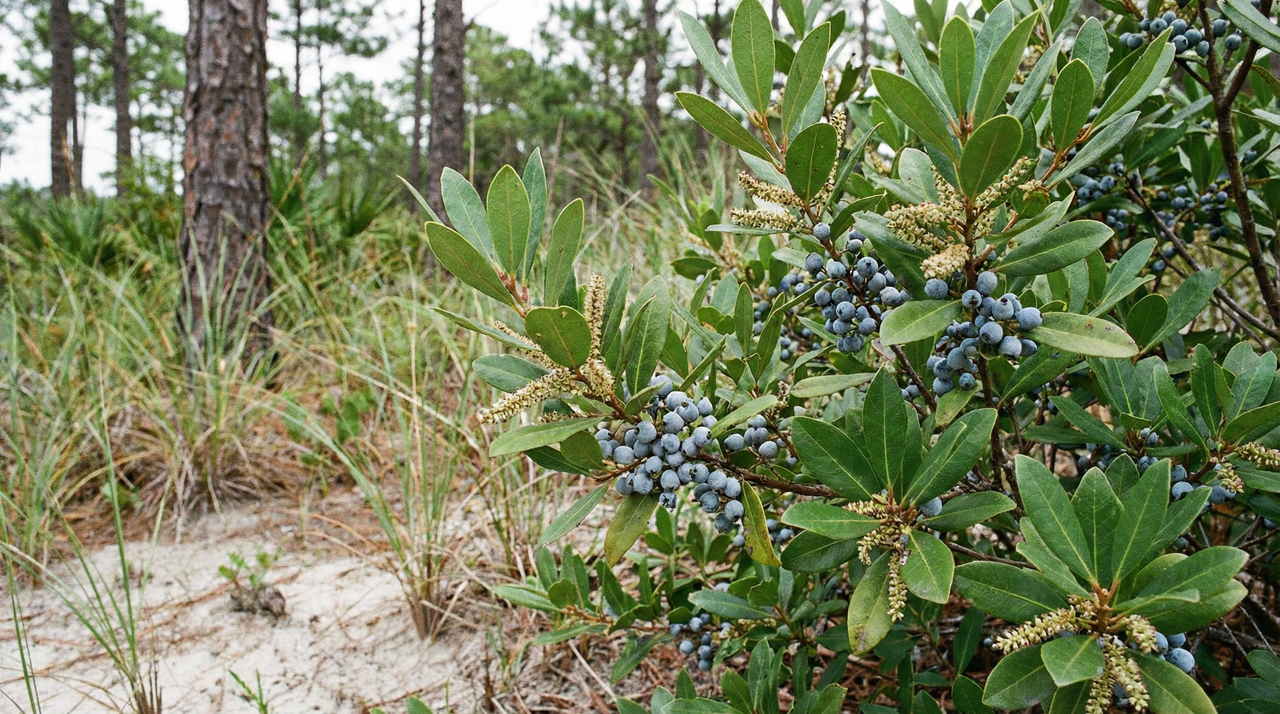
Crush a single Wax Myrtle leaf between your fingers, and you immediately release a sharp, resinous, almost bayberry-meets-bay-laurel smell that stops you cold. That's not an accident. The same terpene-rich chemistry that makes the foliage so aromatic is also what makes this plant deeply uninteresting to most insects and deer, and it's part of why a shrub growing in soggy coastal Carolina soil or dry Florida scrub can look equally unbothered by the world. I've planted it in both situations and watched it shrug off conditions that would end most ornamentals.
Here's what actually surprises people: Wax Myrtle fixes nitrogen. Not in the familiar legume way, but through a bacterial symbiosis with Frankia, the same pathway that gives alder trees their reputation as soil-builders.[1] So while you're harvesting its waxy berries to render into clean-burning candles the way colonial settlers did when tallow ran short, the roots below are quietly feeding the soil around your blueberries and azaleas. That combination of cultural history and ecological function is exactly why this plant earns a serious look.
Origin and History of Wax Myrtle (Morella caroliniensis)
Botanical Background and Native Range
Wax myrtle has one of those botanical identities that requires a quick primer before anything else makes sense. The plant most of us call wax myrtle or southern wax myrtle was first described by Carl Linnaeus in 1753 as Myrica cerifera in Species Plantarum,[2] but the currently accepted scientific name for the southeastern coastal species is Morella caroliniensis, sometimes listed as a synonym of the closely related Morella cerifera.[3][4] It's distinct from the more northerly Morella pensylvanica (northern bayberry), and the Pacific cousin Morella californica is its own separate species native to coastal California and Baja California.[5] I bring this up because nursery labels can be inconsistent, and knowing which species you're dealing with matters once you start thinking about hardiness and ecotype sourcing.
The native range of Morella caroliniensis stretches from the Delmarva Peninsula and New Jersey south through Florida and west to eastern Texas, Oklahoma, and the fringes of northeastern Mexico.[6][7] It's emphatically a coastal plains plant: dunes, pine flatwoods, swamps, marshes, and disturbed edges are its native habitat, and it performs best where the moisture is consistent and the competition isn't crushing it.[8] Typical plants reach 10 to 20 feet tall with a spread of up to 20 feet, though I've seen them push 30 feet in ideal lowland sites; in drier spots they stay considerably more compact.[9][10] Growth is slow to moderate, roughly one to two feet per year early on, and a well-sited plant can live 20 to 50 years or more.[11]
The plant's ecological character is largely defined by its reproductive strategy. Morella caroliniensis is dioecious, meaning male and female flowers occur on separate plants, and pollination is entirely wind-driven with small, inconspicuous spring catkins.[12] Reproductive maturity typically arrives within two to five years.[13] Beyond seed, the plant spreads through an extensive rhizomatous root system, forming dense clonal colonies through suckering and layering.[14] After fire or mechanical disturbance, it rebounds vigorously from basal sprouts.[15] I always flag that suckering habit with clients who are considering this for a small urban garden. It's not invasive, but it will colonize lateral space over time, and in a food forest that's usually a feature rather than a flaw.
Visual Characteristics and Growth Habits
In the field, wax myrtle announces itself through scent before almost anything else. The leaves are alternate, leathery, and elliptic to lanceolate with dark glossy surfaces above and paler resin-dotted undersides, and when you brush against a branch that spicy, resinous fragrance hits immediately.[16][17] For me, that smell is the first sensory cue that I'm in a healthy coastal hammock or dune restoration site. After years of designing landscapes in Central Florida, I've come to trust it the way some people trust the smell of rain on dry earth. The plant also increases those aromatic resin concentrations after browsing or mechanical disturbance, essentially doubling down chemically when stressed, which reminds me of the way basil or mint become sharply more pungent right after you pinch them.[18]
The multi-stemmed colony habit gives it a grayish-brown, scaly bark on mature stems and slender reddish-brown young shoots.[10] Underground, a fibrous and shallow root network spreads via rhizomes, enabling both colony formation and the nitrogen-fixing nodule development through its symbiosis with Frankia actinomycetes.[19] That root architecture is also what makes it such an effective dune and slope stabilizer. Spring flowers are small, pale green catkins rarely more than a few millimeters across, appearing in March through May.[20] The berries that follow on female plants are the plant's most distinctive feature: small waxy drupes maturing from green to a bluish-gray coated in a grayish-white wax that gives them a powdery, smooth texture.[21] I always tag or photograph the male and female plants separately in client gardens because that dioecious nature isn't obvious until the first berry clusters appear, and nothing is more frustrating than realizing two years in that you planted all males. The plant is hardy in USDA zones 7 to 10, with good salt, drought, and poor-soil tolerance, and compact cultivars like 'Don's Dwarf' exist for tighter garden situations.[22]
Traditional and Cultural Uses
The human story of wax myrtle runs deep across the southeastern United States. Cherokee, Seminole, Catawba, Choctaw, Creek, and other tribes used leaves, bark, and berries in teas and decoctions to treat diarrhea, dysentery, fevers, respiratory ailments, and liver complaints, while poultices were applied to wounds, insect bites, toothaches, and skin conditions.[23][24] Foliage also appeared in purification rituals and smudging practices.[25] The breadth of that pharmacopoeia across multiple tribes speaks to a long, observational relationship with the plant's chemistry, not a casual familiarity.
The more widely known chapter in wax myrtle's cultural history is the candle-wax tradition. Rendering the waxy berry coating required about four to five pounds of berries to produce one pound of wax,[26] and a mature shrub yields only half an ounce to two ounces per season, which means candle-making was genuinely labor-intensive. The payoff was worth it: the wax, rich in fatty acid esters including lauric, palmitic, and myristic compounds, produces candles that burn longer and cleaner than tallow with a naturally pleasant scent.[27] I've rendered small batches myself, and the difference from a tallow or paraffin candle really is noticeable. European colonists adopted and then scaled up what indigenous people had practiced for generations, and commercial rendering operations were established along the coasts of South Carolina and Louisiana during the 18th century.[28] During the Revolutionary War, when imported wax became scarce, bayberry candles gained particular significance.[29]
The species is globally secure (G5), but that doesn't mean local overharvesting isn't a concern.[30] In my experience, taking more than a quarter of a shrub's berries in a single season leads to noticeably reduced vigor the following year. Sustainable guidance recommends leaving at least 70 to 80 percent of the crop per plant,[31] which also means leaving food for the birds that depend on those berries through winter. A note on safety: modern sources advise caution for pregnant individuals due to potential emmenagogue effects,[32] and any serious medicinal use of bark or berries is best approached with that history of concentrated traditional knowledge in mind rather than casual experimentation.
Ecological Roles and Fun Facts
Wax myrtle is what ecologists call an actinorhizal plant: its root system acts as a biological engine, steadily improving the fertility of the soils around it by tapping into atmospheric nitrogen.[33] That's why it thrives on nutrient-poor dune sands that would starve most shrubs. The same extensive rhizomatous root system that enables colony-building also binds coastal soils against erosion, making it a genuinely functional pioneer species in restoration plantings.[34]
Then there are the birds. Those small waxy berries persist on female plants well into winter, providing a critical fat-rich food source for dozens of species when little else is available.[35] I've watched cedar waxwings arrive in loose flocks and work through a stand of fruiting wax myrtle with remarkable efficiency, which gives the common name a kind of poetic accuracy. The plant is also generally evergreen in mild climates, though it goes semi-deciduous toward the northern edges of its range, and after fire it rebounds from basal sprouts with the same vigor that made it a dune colonizer in the first place.[8] One more detail I've noticed in my own work: plants grown from locally sourced seed tend to produce noticeably more aromatic foliage and heavier berry crops than those grown from nursery stock originating further north, which reinforces the case for always sourcing regionally appropriate ecotypes when you can find them.
Wax Myrtle Varieties and Cultivars
The wild-type Morella caroliniensis is exactly the kind of plant that makes you rethink what a "landscape shrub" can be. Native from Delaware to Texas, it settles into coastal plains, wetlands, and sandy soils with equal ease, thriving across USDA zones 6-10.[13][36] In the ground, it typically reaches 6 to 12 feet tall and wide, though in ideal conditions it can push 20 feet, with dark, leathery, evergreen leaves that turn bronze or purplish in cold weather and release that signature spicy bayberry scent when you brush against them.[37][7] The waxy gray berries that follow are part of what makes this plant so compelling: they feed more than 20 bird species through winter, including robins, cardinals, and mockingbirds, while the persistent fruit clusters offer unique winter texture.[37][38][7] I keep both a male and a female plant in my own garden specifically so I can harvest a few berry-laden branches each December, both for wildlife feeding stations and for the occasional candle-making project. The plant is dioecious, so that pairing isn't optional if you want fruit.
Its tolerance for salt spray, drought, and nutrient-poor soils makes the straight species a workhorse for coastal and restoration plantings.[39][40] When I'm designing a coastal buffer or a roadside planting where I need something that can handle what other shrubs won't, wax myrtle competes with almost nothing in its native range for sheer durability. But that same vigor, especially its tendency to sucker and spread, is exactly why the cultivars exist.
Notable Cultivars of Wax Myrtle
Morella caroliniensis has fewer named selections than its northern relative Morella pensylvanica, but the cultivars that do exist solve real problems.[22] After years of using wax myrtle in designed landscapes, I've found 'Compacta' and 'Don's Dwarf' far easier to manage than the straight species. Both stay in the 4 to 6 foot range and sucker much less aggressively, which matters enormously in a residential food garden where you don't want a nitrogen-fixing thicket swallowing your blueberries.[41][13] 'Fairfax' takes a different approach, growing in a tighter upright form that makes it a natural for formal hedging or screening.[42] If you want ornamental interest beyond the typical dark green, 'Variegata' offers cream-edged foliage that reads as surprisingly elegant in a mixed shrub border. There are two recognized subspecies (subsp. caroliniensis and subsp. myrtifolia) with minor differences in berry size and wax yield, but these don't change how you grow or select the plant in any practical way.[36]
The closely related southern wax myrtle, Morella cerifera, extends the usable range into zones 7 to 10 and carries its own cultivated selections valued for denser habit.[13] For most gardeners in the Southeast, the two species are nearly interchangeable in practice, and nurseries often stock both under the common name "wax myrtle" without much distinction.
Sourcing Wax Myrtle Plants and Seeds
Both Morella caroliniensis and Morella cerifera are widely available from native plant nurseries and specialty suppliers across the country.[43] Expect to pay $10 to $25 for a one-gallon plant and $25 to $60 for a three-gallon, with seed packets running $8 to $15 for 50 to 100 seeds and bulk options starting around $25 to $50 per ounce.[44][45] There are no regulatory import restrictions on the species, so ordering online from reputable conservation nurseries is straightforward.[46]
My strong preference is to buy from nurseries that propagate from locally sourced seed rather than generic regional stock. Wax myrtle populations adapted to Gulf Coast conditions aren't necessarily the same genetics as populations from the Chesapeake, and that local adaptation matters for long-term performance. Check your state's native plant society for recommended suppliers, or look for plants at native plant sales run by extension programs. If you're establishing a food forest guild or a larger restoration planting where you need dozens of plants, growing from seed is genuinely cost-effective, though the propagation process has its quirks. The care guide and propagation sections cover that in depth.
Wax Myrtle Propagation and Planting
Wax myrtle gives you two very different propagation paths, and they're worth understanding before you commit to one. Seed is slower, genetically diverse, and genuinely tricky without the right pretreatment. Cuttings are faster, more uniform, and far more forgiving. I've used both for restoration plantings along Florida's coast, and my honest advice is to start with cuttings if you want reliable results, then experiment with seed once you've got the biology down.
Seed Propagation: Overcoming Dormancy in Recalcitrant Seeds
The first thing to understand about wax myrtle seed is that it doesn't behave like a packet of basil. The seeds are recalcitrant, meaning they can't be dried and stored conventionally without losing viability fast.[47][48] I learned this the hard way in my first attempt: I dried and stored a batch from a coastal collection in late fall, and by spring I had zero germination. Now I collect berries and either sow them immediately or refrigerate them in moist sand or peat at around 40 °F until I'm ready. If you're keeping them, maintain 25–40% moisture in the medium.
Before anything else, the waxy coating has to come off. Each seed sits inside a waxy drupe with a hard coat underneath, and that physical barrier is a significant germination obstacle.[49][50] Remove the waxy aril by soaking in hot soapy water and rubbing the pulp free, then follow up with either light mechanical scarification or a brief acid treatment to break physical dormancy. After that comes cold moist stratification: 60–120 days at 34–41 °F is the working range (sources vary slightly depending on latitude and seed source), and skipping this step drops germination rates to somewhere between 10 and 50%.[51][52] With proper pretreatment and fresh seed, you can expect 50–70% germination. Sow about ¼–½ inch deep in an acidic sandy mix, keep temperatures at 65–75 °F with some light exposure, and expect seedlings to emerge in 4–8 weeks.[53] Because wax myrtle is dioecious, remember that seed-grown populations will give you a mix of males and females, which is actually useful for building a fruit-producing planting.[54]
Vegetative Propagation: Cuttings, Layering, and Grafting
For most gardeners, cuttings are the practical choice. Take 4–6 inch semi-hardwood cuttings in early summer, June being the sweet spot I've settled on after a few seasons of trial in humid subtropical conditions. The new growth should be flexible but firm enough to handle IBA rooting hormone at 1,000–8,000 ppm. Stick them into a 1:1 perlite-to-vermiculite mix under 80–90% humidity with bottom heat around 70–75 °F, and you'll see roots in 4–8 weeks with 50–80% success.[55][56] One thing I've noticed is that cuttings taken from locally sourced wild populations root faster and seem to carry better salt tolerance than material from out-of-state nursery stock. Worth hunting down a local donor plant if you can.
Layering is another solid option, especially in humid Gulf Coast conditions. Wound a flexible low branch, apply a bit of rooting hormone, bury it in moist acidic soil, and check back in 4–6 weeks. Success rates run 70–90%, making it arguably the least fussy method of all.[57] Grafting onto compatible Morella rootstock is possible and can add cold hardiness by using M. pensylvanica as the understock, with 50–70% take rates using whip-and-tongue or cleft methods in late winter,[58] but it's genuinely more work than most home gardeners need to take on. Tissue culture exists too, reaching 90% success in lab settings, but that's not a kitchen-table operation.[59]
Soil, Site Selection, and Planting Technique
Every propagation method has one thing in common: wax myrtle wants acidic, well-drained soil. The target pH is 4.5–6.5, and while it tolerates up to 7.5, I'd consider anything above 7.0 a problem worth solving before you plant rather than after.[60] If your soil test shows high pH, amend with elemental sulfur at planting; waiting until leaves start yellowing means the chlorosis is already telling you what you should have fixed six months ago. In heavy clay, I always elevate the root zone 3–4 inches to keep the crown out of standing water; root rot in saturated anaerobic soil is the fastest way to lose a plant that would otherwise tolerate almost anything.[61] For containers or transplant staging, a mix of 40% coarse sand, 30% peat or pine bark, and 30% potting soil works well.[62]
Full sun (at least 6 hours direct) gives you the best density, fruiting, and form. Shade is tolerable, but plants grown in it tend toward leggy growth and reduced berry production.[10] Pick your site thoughtfully and you'll solve most future maintenance headaches before they start.
Spacing, Timeline to Fruit, and Establishment Tips
Wax myrtle matures at 6–12 feet tall and wide under typical conditions, occasionally pushing to 15–20 feet in ideal spots, and it spreads by suckering into dense multi-stemmed colonies.[13] Think of it a bit like yaupon holly in its colonial habit: given space, it fills in faster than you expect. For a tight southern wax myrtle hedge or privacy screen, I plant on 4–5 foot centers, and the suckering fills any gaps within a season or two, turning what some people call a nuisance trait into genuinely useful coverage. If you're growing specimens rather than a hedge, 8–12 feet of spacing gives each plant room to develop its full form, and keep everything at least 10–15 feet from structures to accommodate that spreading habit over time.[63]
Plant in spring after the last frost date, or in fall while soils are still warm enough to encourage root establishment. Set the plant at the same depth as the container, water deeply, and mulch 2–3 inches out from the base to hold moisture and suppress weeds through the first couple of seasons.[64] Growth runs 1–3 feet per year once established. Seed-grown plants take 2–5 years to produce their first waxy berries; cuttings and layered plants typically fruit within 1–3 years.[10] The patience required is real, but what you're building is a tough, nitrogen-fixing, wildlife-supporting native that will largely take care of itself once it clears those early hurdles.
Wax Myrtle Care Guide
If you want a native shrub that rewards neglect, wax myrtle is one of the best I've worked with. Its whole biology is tuned for low-input life, and the single biggest mistake I see gardeners make is treating it like a conventional landscape shrub that needs constant attention. The trick is understanding what this plant already does for itself, and then staying out of its way.
Water Needs
Wax myrtle is classified as a Facultative Wetland species, meaning it naturally occurs in swamps, marshes, pond margins, and coastal flats but tolerates drier, non-wetland conditions with ease.[65][34] That dual tolerance is exactly what makes it so useful in permaculture water management. During the first one to two years, keep the soil consistently moist, about an inch of water per week applied deeply and infrequently to encourage roots to chase moisture downward.[10] Once those roots are down, this plant basically waters itself. Established specimens can go two to four weeks without rain and still hold glossy, aromatic foliage.[66] In Central Florida's sandy soils I've watched mature plants sail through dry spells that had neighboring non-native shrubs looking crispy and sad.
Overwatering in heavy soils is the more common field mistake I see. Signs include lower-branch chlorosis, wilting despite wet soil, and premature leaf drop.[67] Underwatering shows up as leaf scorch and marginal browning first, then dieback if it drags on.[10] A two to three inch layer of organic mulch around the root zone goes a long way toward preventing either scenario by holding moisture and buffering soil temperature.[68] The plant prefers slightly acidic conditions and handles salinity up to about 4-8 dS/m, which makes it genuinely suitable for coastal seaside plantings where other shrubs struggle.[69]
Sunlight Requirements
Wax myrtle thrives in full sun to partial shade and earns its place as a pioneer species in open, disturbed, or coastal conditions.[10] Full sun generally produces denser growth and better berry set, but the plant has built-in defenses against photostress, including a waxy leaf surface and the ability to dynamically orient leaves to reduce photoinhibition in intense light.[70] That said, in the hottest parts of its range, I've found that morning sun with some afternoon relief keeps foliage looking its best through July and August. Without adequate soil moisture to back it up, sustained intense sun can cause leaf scorch, browning margins, and curling.[10] Good air circulation helps too, especially in humid southeastern summers.
Feeding and Fertility
Here's where wax myrtle really earns its low-maintenance reputation. As an actinorhizal shrub, it forms a symbiotic relationship with Frankia bacteria in its root nodules and fixes its own atmospheric nitrogen at rates of 50 to 150 kg per hectare per year.[43] Because of that, I never add nitrogen fertilizer to established wax myrtle. It's a stark contrast to non-fixing evergreens that I'm feeding every spring. The Frankia symbiosis also means the plant genuinely prefers lean, acidic soils in the pH 4.5 to 6.5 range, and heavy fertilization can disrupt that relationship, push overly succulent growth, and increase pest susceptibility.[43][71]
The one deficiency I do see in the field is iron chlorosis, which shows up as interveinal yellowing on younger leaves when soil pH climbs above 7.0. I've watched it develop on alkaline Florida soils and found that a single chelated-iron application in early spring usually corrects it within a few weeks.[43] If you're troubleshooting a struggling plant, run a soil test first and focus on phosphorus and potassium levels rather than nitrogen. Most established plants in native or near-native settings need nothing at all.[13]
Frost Tolerance and Winter Care
Morella caroliniensis is reliably hardy in USDA zones 7 through 10, tolerating minimum temperatures down to around 0°F to 10°F in established plantings, with some protection pushing it into zone 6b.[22] Frost damage typically shows up as browning or blackening of leaf tips, marginal scorch, or twig dieback, but mature plants usually recover well with spring pruning to remove dead wood.[72] Don't rush to cut too early; wait until you see where new growth actually emerges. Young plants in exposed sites are more vulnerable, and I learned the value of a simple burlap windscreen the hard way during a young plant's first winter in an unprotected location. Two to four inches of mulch around the base (kept back from the trunk) insulates roots and makes a real difference.[22] New spring growth is the most frost-sensitive part of the plant, so site selection in cold-marginal zones matters.
Heat Tolerance and Summer Care
Wax myrtle is genuinely heat-adapted. Its southeastern native range includes some of the most punishing summer conditions in North America, and Morella cerifera specifically can handle daytime temperatures above 100°F when soil moisture is adequate, with waxy leaves reducing water loss and deep roots accessing moisture that surface-rooted plants can't reach.[10] Heat stress still shows up as leaf scorch or wilting when the combination of high temperature and drought becomes extreme.[73] My go-to mitigations in Central Florida summers are two to three inches of pine bark mulch and thoughtful siting: morning sun, afternoon shade, and good airflow. Deep infrequent watering every seven to ten days during drought periods keeps plants looking glossy even through the harshest stretches without encouraging root rot.[74]
Pruning and Maintenance
Wax myrtle's natural form is graceful enough that I rarely reach for pruners more than once a year. Light late-winter shaping to remove dead, damaged, or crossing branches before new growth begins is usually all it needs.[10] For a wax myrtle hedge, a light pass in early summer after fruit set can help maintain density without sacrificing too many berries. The firm rule I follow: no pruning after mid-summer. Cuts late in the season push soft new growth that hasn't had time to harden before cold weather arrives, and that tender tissue is the first to suffer frost damage.[10] Proper spacing matters more than most people realize, since good airflow between shrubs reduces powdery mildew risk in humid conditions.[10] Top the maintenance list with annual mulching in spring, and this plant really does ask very little else.
Seasonal Rhythm
Wax myrtle follows a clear annual pattern once you learn to read it. Tiny male and female catkins appear from February through April, easy to miss if you're not watching for them.[75] I mark my calendar in February specifically to check for those catkins, because that's also my cue that any remaining shaping cuts should happen now, before pollination. Berries develop from June onward and persist through winter, offering wildlife value long after most fruiting shrubs have gone bare.[13] Peak vegetative growth runs through summer, tapering off as temperatures cool. In mild climates the plant stays evergreen; in colder zones it may drop some or all of its leaves, but mature plants reliably push new growth in spring.[76] That persistent structure, winter berries, and aromatic foliage through cold months makes wax myrtle one of the most year-round useful shrubs I include in a coastal or food forest design.
Harvesting Wax Myrtle
Wax myrtle is not a plant you harvest impatiently. The flowers open from March through June, and those small aromatic drupes won't be ready until August at the earliest in Florida, or as late as November in the more northern parts of its range. That's 90 to 240 days from bloom to maturity depending on where you're growing it.[77][78] For Morella cerifera in the Gulf South, peak harvest lands in November and December.[79] The wait is genuinely the hardest part.
When to Harvest Wax Myrtle Berries, Leaves, and Bark
The berries tell you they're ready by shifting from green to a bluish-gray or silvery color, covered in that characteristic waxy white bloom you can rub off with your thumb.[80][81] I've learned through several seasons in the humid Southeast that waiting for even a light frost noticeably thickens that coating and deepens the aroma. The difference is real and worth the patience. What you want to avoid is the stretch of heavy October and November rains that can hit Florida particularly hard; prolonged wet weather promotes fungal rot and causes the fruits to split and drop before you've had a chance to gather them.[79][81]
Leaves are available year-round, but spring and summer growth is most potent for teas and medicinal uses. If you're after bark for extracts, spring is your window.[80] Those are easy, low-impact harvests you can fit into any season; the berries are the timed event.
How to Harvest Wax Myrtle and Handle the Yield
Pick on a dry day. This isn't fussiness; it's mold prevention, and with the humidity levels I deal with in Central Florida, skipping a wet morning can mean the difference between a clean harvest and one that starts rotting in the bowl before you've finished. Strip whole clusters by hand directly into a container, working your way along the stems. A mature shrub typically yields one to five pounds of berries depending on how good the pollination season was and what the weather's been doing.[65] That's not a blueberry-bush-level haul; a healthy highbush blueberry in a good year can push ten to fifteen pounds, so set your expectations accordingly and plan your planting numbers around what you actually need.
Once you're inside, clean out the debris and dry the clusters at low temperature, keeping humidity below 60 percent to preserve the wax and aromatics.[82] If you're not processing them immediately, refrigerate between 32 and 40 degrees Fahrenheit; they'll hold for one to two weeks under those conditions.[83] Move quickly; the harvest window and the shelf life are both short.
Wax Myrtle Flavor Profile and Yield
I've tried the raw pulp, and it's mealy, dry, and bitter with barely a whisper of sweetness.[84][80] Nobody is snacking on these off the bush, and that's fine. These are processing berries, full stop. The birds get first claim on them anyway.[80] What makes the wax myrtle fruit genuinely exciting is what happens the moment you crush a cluster in your hand: a wave of spicy, piney, bay-leaf-meets-clove fragrance that stops you mid-motion. That scent comes from myrcene, limonene, eugenol, and other volatile compounds concentrated in the waxy coating itself.[85][86] Frost intensifies it noticeably. That aromatic power, not the pulp, is the resource. The preparation and uses section covers what to do with it from there.
Wax Myrtle Preparation and Uses
Most people who grow wax myrtle think of it as a landscape plant and stop there. That's a real missed opportunity. Every time I'm out pruning mine and I strip a branch, that rush of spicy, resinous fragrance hits me and I think: this is a bay leaf. A native, nitrogen-fixing, bird-feeding bay leaf that also happens to repel mosquitoes while I'm working. The leaves of Morella caroliniensis can genuinely substitute for culinary bay in soups, stews, and rice dishes, bringing notes of pine, eucalyptus, and balsam from compounds like myrcene, limonene, and sabinene.[87][86] I dry small batches from late-summer pruning sessions and keep a jar on the kitchen shelf for year-round use. They release their oils beautifully when crushed before going into the pot.
Culinary Applications and Processing of Wax Myrtle Leaves and Berries
The berries are a different story, and this is where new foragers get tripped up. Raw, they're genuinely unpleasant: waxy, astringent, and soapy from their resinous coating and tannin content, which can cause mild gastrointestinal upset.[88] Processing transforms them completely. Boiling the ripe berries to remove the wax, then drying or fermenting the pulp, mellows that bitterness into something mildly sweet-tart that works beautifully in jams, jellies, flavored teas, wines, and as a savory sauce component.[89] I think of the wax-removal step the way I think about rendering tallow: it sounds fiddly until you've done it once, and then it's just part of the process. Harvest in late summer through fall when berries are fully ripe and soft for the best results.[88] The wax itself carries a spicy, nutmeg-like, balsamic aroma from myrcene, germacrene, and myricyl palmitate, which explains why it's been used in bayberry-flavored candies and as a dye source yielding yellow tones, particularly among Cherokee, Creek, and Seminole communities.[80][89]
One safety note I take seriously: positive identification before any foraging. I've identified these plants hundreds of times across Florida landscapes, and the aromatic leaves plus the waxy, grayish-white berry clusters make Morella caroliniensis pretty distinctive once you know it. Still, toxic look-alikes like mountain laurel (Kalmia latifolia) and groundsel bush (Baccharis halimifolia) grow in similar habitat, and confident identification isn't optional. Beyond identification, keep raw consumption of leaves and berries modest; the terpenoids including thujone in unprocessed material can cause digestive distress in significant quantities.
Traditional Medicinal Preparations
Cherokee and other Southeastern tribes used leaf infusions as teas for treating colds, fevers, and respiratory ailments, and similar uses of Morella cerifera leaf teas for congestion, bronchitis, and hay fever appear consistently across the ethnobotanical record.[90][91] When I design a native planting for a client who wants to integrate traditional medicine plants, wax myrtle always earns its spot on that list, not because I'm overclaiming its efficacy, but because this is documented knowledge built over generations that deserves respect. Externally, crushed leaf poultices were applied to wounds, skin irritations, insect bites, and rheumatic conditions across multiple Morella species.[90][92] Traditional dosage guidelines suggest simmering one to two teaspoons of dried leaves or bark per cup of water for tea, up to two cups daily, though these are historical benchmarks without clinical validation. Consult a qualified herbalist or healthcare provider before using wax myrtle medicinally, especially given the precautions already covered in this article's health benefits section.
Non-Food and Practical Uses
The myrica wax from the berries is where this plant earns its most famous historical reputation. Boiled from the berries, it was used for candle-making, waterproofing, soap-making, and textile dyes by both indigenous communities and colonial settlers who prized wax myrtle candles for their clean burn and spicy fragrance.[93][24] I've made small experimental batches in my workshop, and the wax yield is lower than you'd expect from a single harvest, so patience and volume matter. The roots and bark also served for tanning leather, and bark fibers have a history of use in cordage and basketry.[94] The aromatic foliage does real work as a pest deterrent too. I've noticed I get far fewer mosquitoes near wax myrtle hedges when I'm working, which aligns with documented use of the leaves as an insect repellent.[95][96] The berry wax has also been used in skin ointments for its mild antimicrobial properties.[95] For a plant that asks almost nothing of you in the garden, the return on investment across culinary, medicinal, and practical applications is genuinely impressive.
Wax Myrtle Health Benefits
Most plants earn their medicinal reputation from one or two headline compounds. Wax myrtle brings a whole committee. What I notice every time I crush a leaf in the field is that unmistakable resinous hit, simultaneously piney, citrusy, and slightly bitter. That's the chemistry announcing itself, and it turns out the same compounds responsible for that scent are also what the research keeps circling back to when it examines this plant's bioactivity.
Phytochemical Profile of Wax Myrtle
Morella caroliniensis is dense with bioactive compounds across multiple chemical classes. The flavonoid fraction includes myricitrin, quercetin, and kaempferol glycosides; the bark carries tannin concentrations as high as 20 to 30 percent; and the essential oils contribute monoterpenes including myrcene, α-pinene, limonene, and sabinene, while the fruit oils shift toward sesquiterpenes, with germacrene D dominating at up to 60 percent.[97][98] On top of all that, the berry surface carries wax esters like myricyl palmitate.[97]
The antioxidant capacity of the phenolic fraction is genuinely impressive at the preclinical level, with total phenolic content measured at 150 to 200 mg gallic acid equivalents per gram and IC50 values in DPPH, FRAP, and ABTS assays that are comparable to vitamin C.[98][99] I've noticed that midsummer, when the plant is in full active growth in the Central Florida landscapes I work with, the crushed-leaf terpene scent is at its most intense, which aligns with research showing peak phenolic production during periods of vigorous growth. Every one of those compound classes ties to a downstream effect: tannins explain the astringency and tissue-tightening actions, flavonoids drive most of the anti-inflammatory and antioxidant activity, and terpenes account for a significant share of the antimicrobial bite.
Medicinal Research and Traditional Uses
The most consistent preclinical findings center on antimicrobial and anti-inflammatory activity. Essential oil and extracts from Morella caroliniensis show broad-spectrum inhibition of Staphylococcus aureus, E. coli, and Candida albicans, with minimum inhibitory concentrations of 0.5 to 2 mg/mL, apparently by disrupting bacterial cell membranes.[98][100] Anti-inflammatory results are similarly strong in lab models: extracts inhibit COX-2 and the NF-κB pathway, reduce pro-inflammatory cytokines including TNF-α and IL-6, and in rat paw-edema models show activity comparable to ibuprofen.[101][102]
These findings give real chemical grounding to centuries of Cherokee and Seminole use of wax myrtle leaf teas and bark decoctions for diarrhea, respiratory complaints, wounds, and fevers.[103][97] The same tannins that tighten gut tissue and slow diarrhea also explain why astringent teas were taken for congestion and sore throats. When you see consistent ethnobotanical use across multiple Morella species and both Native and colonial traditions, the preclinical data feel less speculative. That doesn't mean proven, but it does mean worth taking seriously.
Earlier-stage in-vitro work also suggests cytotoxic activity against leukemia and breast cancer cell lines, possible α-glucosidase inhibition relevant to blood sugar regulation, and flavonoid-mediated estrogen-receptor modulation.[104][105] All of it is preclinical. No large human trials on any Morella species have been published, and potency varies considerably with geography, season, and extraction method.[100][106] Treat the exciting findings as a research direction, not a treatment claim.
Nutritional Value of Wax Myrtle Berries
The honest nutritional picture here is modest. The edible pulp, once you've boiled away the thick waxy coating that makes up 20 to 35 percent of berry weight, yields roughly 50 to 120 kilocalories per 100 grams, about 15 grams of carbohydrate, 4 grams of fiber, and 10 to 25 mg of vitamin C, along with workable amounts of potassium, calcium, iron, and magnesium.[107][108] These numbers are extrapolated from related species and should be read as approximate. Wax myrtle was never a caloric staple; the berries are small, strongly astringent, and nowhere near abundant enough to build a diet around.[65][109]
When I make a small-batch jelly with the processed pulp, the boiling step that separates the wax also mellows the tannin bite considerably, which aligns with the principle that heat reduces astringency while preserving most of the vitamin C.[53] The real nutritional gift is the same flavonoids and phenolics already covered above, not the macronutrients. Leaves brewed as a digestive tea are the more practical daily option, and that's how most traditional use has treated them.[65]
Safety Considerations and Contraindications
The ASPCA classifies Morella caroliniensis as non-toxic to dogs, cats, and livestock, which I know is a frequent search for anyone planting this in a yard with pets.[110] That said, large quantities of berries can cause self-limiting gastrointestinal upset, nausea, vomiting, and abdominal discomfort that typically resolves within a few hours.[111] The tannins and volatile oils are the primary culprits, and eating a handful of raw, unprocessed berries is a lot like downing several cups of very strong black tea or biting into an unripe persimmon. The chemistry is doing something real to your gut lining. Recommended amounts for processed pulp stay at one to two tablespoons, or ten to twenty berries at most.[111]
The more serious cautions involve specific populations. Pregnancy is a firm contraindication: high-dose use carries documented emmenagogue and potential abortifacient effects.[112][113] I also err firmly on the side of caution with any tannin-rich plant for people on anticoagulants or blood sugar medications. The α-glucosidase inhibition and tannin-anticoagulant interactions are plausible given the chemistry, and my experience with similar astringent herbs has reinforced that these interactions are worth taking seriously rather than dismissing as theoretical.[114][112] Anyone on those medications should talk to a qualified practitioner before using wax myrtle medicinally.
Two additional hazards are worth flagging. The wind-dispersed pollen peaks from March through May in the Southeast and can trigger seasonal allergic rhinitis, and handling the leaves or berries occasionally causes contact dermatitis in sensitive individuals.[115][116] Positive identification is also essential before foraging: the blue-gray waxy berries can be confused with inkberry holly (Ilex glabra), which is toxic. Get the ID right first. Treat wax myrtle as an occasional culinary or topical herb rather than a daily supplement, because long-term safety data simply don't exist yet.[100]
Wax Myrtle Pests and Diseases
Wax myrtle is one of those plants I rarely have to worry about once it's in the right spot. Morella caroliniensis is generally free from serious insect and disease problems when properly sited, and that's not marketing language -- it's the consistent reality I've seen across years of Central Florida landscape work.[117][118] A big reason for that comes down to chemistry. The foliage is loaded with terpenoids, phenolics, and flavonoids, all wrapped in a waxy cuticle that insects find genuinely off-putting.[119][13] Compared to something like beautyberry or even yaupon holly, which I often plant nearby, wax myrtle's aromatic leaves just seem to disappear from the menu for most chewing insects. That built-in resilience is exactly what makes it such a reliable choice for low-maintenance native plantings and restoration work.
Disease Resistance and Management
The same conditions that keep wax myrtle thriving also keep disease at bay, and if I've learned one thing from designing landscapes in zone 9B, it's that poor drainage is the fastest way to turn a problem-free plant into a sick one. Phytophthora root rot, caused primarily by Phytophthora cinnamomi, is the single biggest disease concern, and it's almost entirely a drainage issue.[118][120] I've seen it show up after just a few days of waterlogged soil following heavy summer downpours in flat Central Florida sites. The fix isn't a fungicide -- it's choosing a better spot or amending for drainage before you plant.
Beyond root rot, a handful of fungal pathogens can occasionally appear: leaf spots caused by Septoria, Cercospora, or Mycosphaerella species, rust from Thekopsora minima, powdery mildew, and Botryosphaeria cankers.[118][121] These are genuinely occasional, not chronic. Drought stress increases leaf spot risk, while high humidity paired with poor airflow opens the door for powdery mildew and fungal cankers.[122] A plant growing in well-drained, acidic sandy soil in full sun rarely needs any intervention at all.
Cultural prevention is the whole strategy here. Prune in late winter to remove any diseased tissue and open up airflow, space plants 6 to 10 feet apart, mulch away from the stem base, and skip overhead irrigation.[122][10] If you're on the Gulf Coast or in a particularly humid region and want a little extra foliar protection, the cultivar 'Fairfax' has shown enhanced disease resistance worth considering.[13] Regional conditions vary enough that your local extension office is always a smart first call if something unusual shows up.[10]
Common Pests and Integrated Management
Aphids and scale insects are the most common visitors, particularly woolly alder aphids, Cerataphis species, bayberry whitefly, and armored scales.[119][123] Leafminers and bagworms show up occasionally, and in the Southeast during drought or intense heat, spider mites and scale pressure can tick upward noticeably.[124][123] Japanese beetles, lace bugs, and borers are possibilities but genuinely rare on a healthy, well-sited plant. Pest damage also matters because it can open the door to secondary fungal infection -- another reason to keep the plant vigorous from the start.[125][118]
My approach to wax myrtle pest management has always been integrated and mostly hands-off. I monitor, I make sure plants have good drainage and airflow, and I let the beneficial insects do their work. I've watched lacewing larvae dismantle an aphid colony without any help from me, and for scale outbreaks I've had good results with dormant horticultural oil applied before new growth emerges in spring.[126][127] Insecticidal soap handles minor soft-bodied pest pressure. In years of designing native plantings, I've never reached for a systemic chemical on this plant.
There aren't many cultivars bred specifically for pest resistance -- most selections prioritize form or foliage rather than insect tolerance.[128][129] My honest recommendation for long-term resilience in restoration or permaculture contexts is to source local ecotypes from reputable native nurseries. Locally adapted genetic material tends to outperform any named cultivar when it comes to handling regional pest pressure and disease over the long haul. In coastal restoration sites especially, where salt spray and poor soils would stress most plants, wax myrtle's inherent toughness means it usually manages to look after itself.[10][130]
Wax Myrtle in Permaculture Design
Few native shrubs in the southeastern U.S. pull as much ecological weight as wax myrtle. Before I started working it into food forest designs and coastal restoration projects, I thought of it mostly as a hedge plant. A few seasons of observation changed that completely.
Ecological Functions and Wildlife Support
The big story with wax myrtle is nitrogen fixation. Through a symbiotic relationship with Frankia bacteria in its root nodules, Morella caroliniensis contributes 50-175 kg of nitrogen per hectare annually,[131][132][133] which is a genuinely significant input on the sandy, nutrient-starved soils where it most often grows. I've watched blueberries planted near established wax myrtle thickets push noticeably stronger new growth after the third season, the kind of gradual improvement that doesn't show up in a single growing year but accumulates quietly the way good soil-building does.
As a pioneer species, it moves into disturbed and open sites with minimal fuss, stabilizing eroding slopes, dune faces, and shorelines with a fibrous root system that holds soil even under the kind of lateral forces a coastal site throws at it.[134][135] After a fire, it resprouts vigorously from root crowns,[132][136] which makes it an excellent stabilizer in fire-adapted systems like Florida scrub and sandhills where other shrubs would need years to recover ground.
Wildlife value is real and measurable. Those small, grayish-white waxy berries that persist through winter feed over 40 bird species, including cedar waxwings, eastern bluebirds, northern flickers, mockingbirds, and robins.[134][135][109] The catkins also attract early-season bees before most other flowering shrubs are awake.[95] It's a plant that earns its keep through winter, when the rest of the guild has little to offer wildlife.
Traditional uses extend the plant's value beyond the ecosystem. Colonists and Native American tribes alike rendered the waxy berry coating into clean-burning candles and soap,[24][94] and I've done the same many times in candle-making workshops with clients. I always tell them the same thing, though: these berries aren't a casual nibble. The resins can cause genuine gastrointestinal upset in larger quantities, and the berries aren't recommended for pregnant individuals.[24] For anything beyond wax crafts, consult a qualified herbalist rather than experimenting on your own.
Climate Preferences and Hardiness Zones
Wax myrtle is solidly hardy in USDA zones 7-10, tolerating winter temperatures down to around 0°F and heat well into the 100°F range before showing leaf scorch.[13][22] In zones 5-6, shelter against a south-facing wall, heavy mulching, and anti-desiccant sprays can coax it through winters that would otherwise push it to its limits.[10][137]
For siting, the key variables are drainage and soil acidity. It prefers pH 4.5-6.5 and handles sandy, clay, and nutrient-poor soils with equal composure once established, along with periodic flooding and drought at opposite ends of the moisture spectrum.[138][139] What it won't forgive is standing water at the root crown through freeze-thaw cycles, so good drainage is the non-negotiable piece regardless of zone. Its salt spray and wind tolerance also make it one of the more reliable choices for exposed coastal windbreaks,[10][136] where I've used dense plantings to buffer more tender species through rough seasons.
Pollination and Dioecious Requirements
Wax myrtle is dioecious, meaning male and female flowers appear on separate plants, and wind carries the pollen between them.[140][141] Males produce cylindrical catkins 1-3 cm long; females carry shorter, erect catkins 0.5-1.5 cm with just a few pistils each. Both bloom from roughly March through May before the leaves fully emerge.[140] Optimal pollination happens at 10-25°C with gentle winds and moderate humidity; above 70% humidity, pollen tends to clump and transfer efficiency drops.[142][143]
For anyone planning a productive planting, a ratio of 3-5 males per female is the practical target.[142] One thing I'd tell anyone propagating their own plants: label them early and label them well. Young male and female wax myrtles are visually identical for years, and I've seen more than one home gardener end up with an all-male stand and wonder why the berries never came. If you're working in a site with limited wind flow or high habitat fragmentation, hand-pollination is worth the small investment of time.
Forest Layer Placement and Guild Design
In a food forest, wax myrtle occupies the shrub layer most naturally, though it can push into small tree form at 20 feet or beyond in sheltered, fertile sites.[22][136] Its moderate shade tolerance lets it hold its own in the understory, or you can train it as a dense wax myrtle privacy screen along property edges where its thicket-forming habit via root suckering becomes an asset rather than a liability.[10] That colony-forming tendency also means it'll spread to fill gaps in a restoration planting without much encouragement.
Its best guild companions are acid-loving species: blueberries, azaleas, and oaks all thrive alongside it,[95][135] benefiting from both the nitrogen it fixes and the shared soil chemistry preference. When I brush past a wax myrtle hedge in a client's garden, that sharp, resinous-spicy scent releases immediately from the foliage, which is a useful reminder to site it near pathways where incidental contact happens. It's the kind of aromatic boundary planting that earns its space twice over.
The one nuance worth planning around is allelopathy. Wax myrtle produces root chemicals that suppress competing vegetation,[144][145] which is genuinely useful for weed suppression around its base, but worth watching if you've tucked sensitive companions too close. Give guild partners a little breathing room, especially in the first few years while root systems are establishing. In restoration contexts, that same allelopathic tendency is actually a feature, helping the plant hold ground against invasives on degraded or disturbed sites where it does some of its best work.
The Plant That Made Me Stop Apologizing for "Weedy" Natives
I used to hedge when clients asked about Wax Myrtle, half-expecting them to want something tidier. Then I watched a pair of yellow-rumped warblers work a single fruiting stem for twenty minutes on a cold January morning, and I stopped hedging. It suckers, it spreads, it doesn't ask permission; and honestly, neither do the best plants in any food forest I've ever built.
Sources 145
- USDA Plant Guide: Morella cerifera ↩
- Species Plantarum ↩
- USDA PLANTS Database: Morella caroliniensis ↩
- Morella cerifera (L.) Small ↩
- Flora of North America - Morella californica ↩
- Morella caroliniensis ↩
- Southern Wax Myrtle - Morella cerifera ↩
- Morella cerifera ↩
- Morella caroliniensis ↩
- Morella caroliniensis (Southern Wax Myrtle) ↩
- Population Dynamics of Wax Myrtle in Coastal Wetlands ↩
- Northern Bayberry (Morella caroliniensis) ↩
- Southern Wax Myrtle ↩
- Clonal Reproduction in Myricaceae: Bayberry Case Study ↩
- Response of Morella caroliniensis to Disturbance ↩
- Morella caroliniensis ↩
- Morella cerifera ↩
- Plant Profile: Morella cerifera (Wax Myrtle, Southern Bayberry) ↩
- Nitrogen Fixation in Morella caroliniensis ↩
- Morella caroliniensis ↩
- Southern Wax Myrtle (Morella cerifera var. caroliniensis) ↩
- Morella caroliniensis (Southern Wax Myrtle) ↩
- Ethnobotany of Southern Bayberry in North American Indigenous Practices ↩
- Native American Ethnobotany Database ↩
- Ethnobotany of the Genus Myrica ↩
- Morella caroliniensis: Northern Bayberry ↩
- Bayberry Wax: Composition and Properties ↩
- Traditional Extraction of Bayberry Wax ↩
- Bayberry in American History ↩
- Conservation Status and Sustainability of Wax Myrtle ↩
- Morella caroliniensis: A Southern Native Shrub ↩
- Plants for a Future: Morella caroliniensis ↩
- Nitrogen Fixation in Actinorhizal Plants: Morella cerifera and Relatives ↩
- Ecological Role of Bayberry in Coastal Dunes ↩
- Wildlife Use of Native Plants: Bayberry ↩
- Kew Science Plants of the World Online: Morella caroliniensis ↩
- Morella caroliniensis - Wikipedia ↩
- Bayberry Candle Making and Uses ↩
- University of Florida IFAS Extension - Morella cerifera Fact Sheet ↩
- Missouri Botanical Garden Plant Finder - Morella cerifera ↩
- Southern Wax Myrtle - Morella cerifera ↩
- Bayberry Shrubs ↩
- Northern Bayberry (Morella caroliniensis) ↩
- Buy Northern Bayberry Plants ↩
- Wax Myrtle Seeds ↩
- Federal Noxious Weeds List ↩
- Seed Storage Behaviour: A Compendium of Descriptive Data on the Storage Characteristics of the Seeds of 4300 Tree and Shrub Species ↩
- Seed Storage of Native Plants: Guidelines for the Southeastern United States ↩
- Germination of Myrica cerifera and M. caroliniensis Seeds ↩
- Propagation of Native Shrubs: Wax Myrtle (Morella spp.) ↩
- Northern Bayberry (Morella caroliniensis) ↩
- Morella cerifera (Southern Wax Myrtle) Propagation ↩
- Northern Bayberry (Morella caroliniensis) ↩
- Embryology of the Myricaceae ↩
- Propagation of Morella caroliniensis by Cuttings ↩
- Propagation of Woody Plants by Cuttings ↩
- Propagation of Native Shrubs in Florida ↩
- Propagation of Ornamental Trees and Shrubs ↩
- Micropropagation of Morella caroliniensis ↩
- Wax Myrtle (Morella cerifera) Plant Guide ↩
- Wax Myrtle: Morella cerifera ↩
- Florida Plant Handbook: Morella caroliniensis ↩
- Morella caroliniensis USDA PLANTS Profile ↩
- Southern Bayberry (Morella caroliniensis) Plant Guide ↩
- USDA PLANTS Database - Morella caroliniensis ↩
- USDA Forest Service - Southern Bayberry (Morella caroliniensis) ↩
- USDA PLANTS Database ↩
- USDA PLANTS Database: Morella caroliniensis ↩
- Bayberry: A Shrub for Challenging Sites ↩
- USDA PLANTS Database: Morella cerifera ↩
- Nutrient Deficiency Symptoms in Woody Plants ↩
- Frost Damage on Woody Plants ↩
- Morella caroliniensis (Walter) I. Moore ↩
- Southern Wax Myrtle (Morella cerifera) - UF/IFAS Extension ↩
- Morella caroliniensis (southern bayberry) ↩
- Wax Myrtle ↩
- Missouri Botanical Garden - Plant Finder: Morella caroliniensis ↩
- Phenology of Morella cerifera ↩
- Morella cerifera (Waxmyrtle) | Gulf States Plant Consultancy ↩
- Southern Wax Myrtle (Morella caroliniensis) ↩
- Wax Myrtle (Morella cerifera) Production and Harvest ↩
- Bayberry Production and Handling ↩
- Florida Department of Agriculture and Consumer Services. Bayberry Growing Guide ↩
- Morella caroliniensis - Plant Detail - Missouri Botanical Garden ↩
- Volatile Compounds in Wax Myrtle Fruit ↩
- Essential Oil Composition of Myrica cerifera Leaves ↩
- Southern Wax Myrtle (Morella cerifera) ↩
- Bayberry (Myrica cerifera) - Plant Profile ↩
- Wax Myrtle (Morella cerifera) - Missouri Botanical Garden ↩
- Ethnobotany of Cherokee: Medicinal Plants ↩
- Medicinal Plants of the Southeast ↩
- Ethnobotany of the Southern United States ↩
- Ethnobotany of the Carolinas: Morella caroliniensis ↩
- American Indian Ethnobotany Database - Myrica cerifera ↩
- Permaculture Plants: Bayberry ↩
- Medicinal Plants of the Southeastern United States ↩
- Phytochemical constituents and pharmacological activities of Myrica species: A review ↩
- Antibacterial and antioxidant activities of Morella caroliniensis essential oil ↩
- Antioxidant and Antimicrobial Potential of Wax Myrtle ↩
- Pharmacological Properties of Morella cerifera: A Review ↩
- Anti-inflammatory and antimicrobial screening of Myrica species ↩
- Anti-inflammatory Activity of Myrica cerifera Leaf Extract ↩
- Ethnobotany of Morella cerifera ↩
- Cytotoxic Potential of Morella caroliniensis Leaf Extracts ↩
- Antidiabetic Effects of Southern Bayberry ↩
- ClinicalTrials.gov Search Results ↩
- Nutritional Composition of Bayberry Fruit ↩
- Nutritional and Phytochemical Evaluation of Myrica cerifera Fruits ↩
- Wax Myrtle (Morella cerifera) ↩
- Carolina Bayberry Toxicity ↩
- Bayberry Plant Poisoning Symptoms ↩
- Myrica cerifera (Bayberry) Herbal Monograph ↩
- Bayberry Uses, Benefits and Dosage - Drugs.com ↩
- Bayberry - Uses, Side Effects, and More ↩
- Bayberry Pollen Allergy ↩
- Allergic Contact Dermatitis from Plants ↩
- Morella caroliniensis Plant Finder ↩
- Bayberry Diseases and Insect Pests ↩
- Northern Bayberry (Morella caroliniensis) ↩
- Phytophthora Root Rot in Woody Ornamentals ↩
- Bayberry and Wax Myrtle for the Home Landscape ↩
- Leaf Spots on Shrubs ↩
- Pests and Diseases of Southern Bayberry ↩
- Wax Myrtle ↩
- Diseases and Pests of Bayberry ↩
- Integrated Pest Management for Landscape Plants: Bayberry ↩
- Morella cerifera (Wax myrtle) - Integrated Pest Management ↩
- Northern Bayberry - Missouri Botanical Garden ↩
- Wax Myrtle (Morella cerifera) - Pest and Disease Information ↩
- Wax Myrtle ↩
- Nitrogen Fixation in Bayberry (Myrica spp.) ↩
- Actinorhizal Plants: Morella caroliniensis ↩
- Nitrogen Fixation in Morella caroliniensis ↩
- Ecological Role of Wax Myrtle in Coastal Ecosystems ↩
- North Carolina Extension Gardener Plant Toolbox - Wax Myrtle ↩
- Florida Native Plant Society - Wax Myrtle ↩
- USDA PLANTS Database: Morella caroliniensis ↩
- Wax Myrtle (Morella cerifera and Morella caroliniensis) ↩
- Morella caroliniensis - Missouri Botanical Garden PlantFinder ↩
- Flora of North America - Morella caroliniensis ↩
- Missouri Botanical Garden - Morella cerifera ↩
- Pollination Biology of Morella caroliniensis ↩
- Flower Phenology and Pollination in Myricaceae ↩
- Allelopathy in Morella cerifera ↩
- Ecological Role of Bayberry in Forest Understory ↩