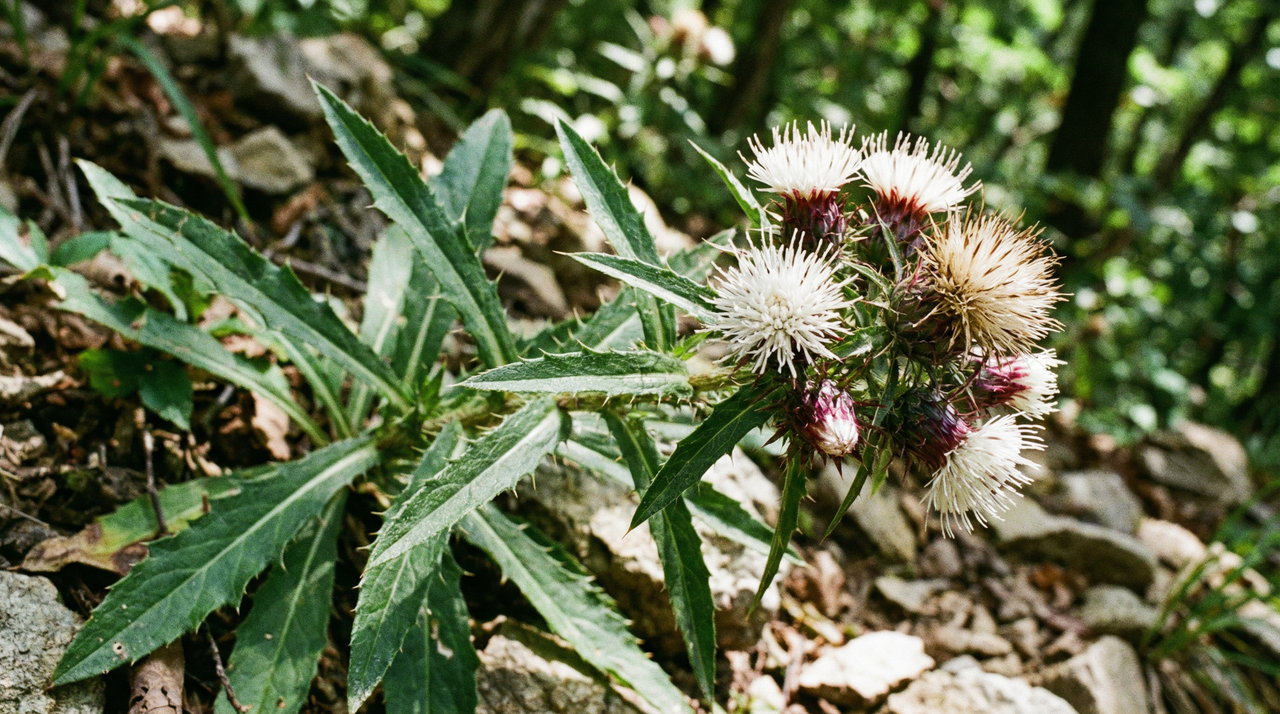
Nobody told me White Atractylodes would smell like that. I'd grown it for a full season before I finally dug a rhizome in autumn, and when I snapped it open, this warm, resinous scent came up that I can only describe as somewhere between a good aged cheese and a forest floor after rain. Not exactly what I expected from a root I'd been reading about in clinical pharmacology papers. But that smell is actually the whole story in miniature: this is a plant that's been sitting quietly in Chinese medicine texts for over two thousand years, classified as a "superior herb" in the Shennong Bencao Jing, and most Western gardeners have never heard of it.[1]
What strikes me every time I work with this plant is the gap between how seriously it's taken in East Asian clinical practice and how completely invisible it is in Western permaculture and herbal gardening circles. It's cold-hardy to zone 5, it plays beautifully with mycorrhizal communities, it feeds pollinators with cheerful thistle-like flowers, and its rhizomes reward patient growers with genuinely potent medicine. That combination shouldn't be this obscure. Once you understand where it comes from and what it actually does underground, both literally and biochemically, it's hard to imagine leaving it out of a serious medicinal garden.
White Atractylodes Origin and History
Most gardeners who encounter white atractylodes rhizome at an herb conference or in a Chinese medicine catalog do a double-take. It looks unremarkable on the outside, a knobby brown root with nothing flashy to recommend it. But that unpretentious exterior carries more than two thousand years of documented use behind it, which is a longer track record than almost any plant I work with.
Botanical Background and Native Habitat
Atractylodes macrocephala is a rhizomatous herbaceous perennial in the Asteraceae family, native to central and eastern China across a sweep of provinces including Anhui, Zhejiang, Jiangsu, Hubei, and Sichuan, among others.[2][3] It grows along forest margins, in meadows, on grassy mountain slopes, and at elevations ranging from 100 to 2,800 meters, threading through both humid subtropical and temperate oceanic climates.[4] That breadth of native habitat is actually useful information for a permaculture designer: this is not a plant that evolved in a single coddled microclimate.
In cultivation, plants typically reach reproductive maturity within two to three years and live roughly three to five years before declining, though they spread clonally via rhizome to persist longer in a well-managed planting.[4] Fresh seed germinates in fifteen to thirty days at 20 to 25°C, with success rates of 70 to 90 percent under good conditions, and medicinal rhizomes are generally harvested on a two-to-three-year cycle.[4][5] Like many of the rhizomatous perennials I use along food-forest edges, it rewards patience; rushing the harvest trades quality for convenience. Its close relative Atractylodes lancea, known as Cang Zhu, has a wider native distribution extending into Japan, Korea, and parts of Russia, while Atractylodes koreana is endemic to the Korean Peninsula, giving the genus a broad East Asian footprint.[6][7]
Wild populations of A. macrocephala have faced significant pressure from historical overharvesting, though cultivated production now supplies most market demand and has eased strain on wild stocks.[8][9] I only source nursery-grown plants or seeds for my designs because of that documented history; choosing cultivated material supports both the medicine and the ecosystems it comes from.
Visual Characteristics of White Atractylodes
In the garden, white atractylodes stands out once you know what you're looking at. Plants grow upright and clump-forming, typically 40 to 120 centimeters tall (occasionally reaching 150 cm in rich cultivated soil), with stout, branched stems that are noticeably covered in white hairs when young.[10][11] The leaves are alternate, ovate to elliptic, five to fifteen centimeters long, with serrate margins and clear pinnate venation. Growing mine in garden trials, I found those broad, toothed leaves and hairy young stems made it easy to distinguish from surrounding perennials at a glance.
Below ground is where the real story lives. The rhizomes are irregular, cylindrical to ovoid, three to ten centimeters long, externally brown to dark brown with root scars and the remnants of old leaf bases, and internally starchy white, which is exactly what the common name references.[12][13] Above ground, flowering happens July through September: small, white to pale yellow tubular disc florets arranged in terminal capitula about four to five centimeters across, followed by small achenes four to six millimeters long.[14] Those achenes lack a pappus, a small but useful identification detail that separates this species from some of its relatives.
Traditional and Cultural Uses in East Asia
The first documented record of Bai Zhu atractylodes as a medicinal herb appears around 200 CE in the Shennong Bencao Jing, where it was classified as a superior herb for tonifying qi, strengthening the spleen, drying dampness, and addressing fatigue, digestive complaints, and edema.[15][16] That text also included it as a support for preventing miscarriage, a use that persisted through centuries of clinical refinement. It became a cornerstone of foundational formulas, most notably Si Jun Zi Tang, where it remains today.
Later classical physicians built on that foundation. Tao Hongjing, writing in the fifth and sixth centuries, commented on regional quality differences in his Bencao Jiji.[17] Then in 1596, Li Shizhen's monumental Bencao Gangmu detailed its warming, drying effects for spleen deficiency, diarrhea, edema, and pregnancy support with a systematic precision that still reads as clinically useful.[18] That two-thousand-year arc from the Shennong text through Li Shizhen is about as robust a longitudinal record as any medicinal plant has anywhere in the world.
Bai Zhu traveled the traditional medicine trade routes to become integral to Japanese Kampo and Korean Hanbang systems under comparable names and applications.[19] The Yao people in Guangxi use it for digestive support and fatigue, extending its reach beyond formal classical medicine into living ethnobotanical practice.[20] Modern cultivation is centered in Zhejiang, Anhui, and Sichuan, which together supply the bulk of commercial demand while relieving what overharvesting had done to wild populations.[9] That shift from wild extraction to cultivated supply is, frankly, one of the more encouraging stories in the TCM herb trade.
Fun Facts About Bai Zhu and Its Relatives
Related Atractylodes species carry symbolic associations with resilience against "dampness" in East Asian folk traditions, occasionally appearing in protective teas or amulets, a cultural layer that reflects how deeply the genus is woven into the region's imagination beyond formal medicine.[21]
The genus also has a persistent identification problem worth knowing about. Bai Zhu is frequently confused with Cang Zhu (Atractylodes lancea), which has narrower leaves, a more pungent rhizome, and TCM functions oriented toward stronger damp expulsion rather than spleen tonification.[22][23] The mix-up can happen even with dried preparations. In my early days sourcing medicinal roots, I learned to check leaf shape and rhizome texture rather than rely on common names alone; that habit prevents accidentally substituting the stronger drying actions of Cang Zhu for the gentler spleen-building qualities of Bai Zhu.
Cang Zhu also demonstrates allelopathic potential in laboratory studies, inhibiting germination of competing plants like lettuce and barnyard grass, and the rhizomatous root system of the genus confers real resilience to disturbances like fire or grazing.[24] I haven't tested Bai Zhu specifically for allelopathy, but I've seen how rhizomatous cousins can influence neighboring plants; it's a good reminder to think carefully about guild companions before tucking this one into a tight polyculture.
White Atractylodes Varieties and Sourcing
There are no named cultivars of Atractylodes macrocephala to choose between, no 'Early Bai Zhu' versus 'Improved Spleen Tonic' at the nursery. This is a species grown almost entirely for its rhizome's medicinal value, and the genetic diversity that does exist hasn't been formalized into commercial lines available to home growers. So the "varieties" question here is really a sourcing question, and that's a more interesting and practical conversation anyway.
Sourcing White Atractylodes (Bai Zhu) in North America
Don't expect to find this at your local garden center. Bai Zhu is a specialty herb, and sourcing it in the U.S. means going directly to suppliers who focus on medicinal and Asian plants. Seeds are your most accessible entry point and I'd start there. Packets typically run $8 to $25, usually containing 50 to 200 seeds, and I've ordered from both Strictly Medicinal Seeds and Horizon Herbs over the years.[25][26] Other solid sources include Mountain Rose Herbs, Richters Herbs, Starwest Botanicals, and the occasional quality Etsy vendor.[27][28] Live plants and rhizomes do show up from specialty Asian medicinal nurseries, but availability is genuinely inconsistent. When you do find them, expect $20 to $50 or more for young plants, and dried atractylodes macrocephala rhizome runs roughly $5 to $15 per ounce or $50 to $150 per pound.
From a regulatory standpoint, you can relax. A. macrocephala isn't on the USDA's federal noxious weed list and carries no specific import bans, though standard APHIS phytosanitary documentation applies to plant material coming from abroad.[29][30][31] In my landscape design work I've grown far more aggressive perennials with no regulatory attention whatsoever, and Bai Zhu is a well-behaved clumping plant that gives no indication of wanting to escape the garden.
Where I'd urge real diligence is quality. In my experience, genuine Bai Zhu rhizomes have a distinctive earthy-sweet aroma and a creamy interior when cut fresh; when something's off, it usually is off, because adulteration with related Atractylodes species is a known problem in the dried herb market.[32] Stick with suppliers carrying FDA, NSF, or USP certification and third-party testing for heavy metals and pesticides. It's a small extra step that matters more with medicinal rhizomes than with most garden purchases.
For context across the genus, Atractylodes lancea (Cang Zhu, sometimes called Japanese Atractylodes or Atractylodes chinensis) tends to be cheaper and easier to find, with seed packets running $5 to $10 and dried rhizome at $15 to $30 per ounce. That lower price reflects higher commercial cultivation volume. I've noticed this pattern across medicinal Asteraceae generally: the more widely cultivated the species, the more sustainable and affordable the supply chain tends to be, per WHO good agricultural collection practices.[33] For Bai Zhu specifically, start with seeds from a reputable supplier, accept that live material requires patience and watchfulness, and prioritize verified quality over the cheapest option you can find.
White Atractylodes Propagation and Planting
There's a moment every seed-curious gardener has with medicinal perennials: you read about the seeds, you order a packet, and then reality sets in. I went through that with Bai Zhu years ago. The seeds of Atractylodes macrocephala are genuinely elegant little things, cylindrical achenes just 1.5-2.0 mm long with a feathery pappus that catches wind for dispersal,[34][35] but they come with built-in complications. Without cold stratification at around 4°C for 30 to 60 days, or a gibberellic acid treatment to break physiological dormancy, germination rates routinely fall below 20-30%.[34][36] Even with proper pretreatment you're looking at 50-80% under ideal conditions of 20-25°C with light,[37] and because the species outcrosses freely, seedlings show real genetic variability. For home medicine gardens where rhizome quality and chemical consistency matter, that variability is a problem worth taking seriously.
Propagation Methods: Rhizome Division vs. Seeds
After my early seed experiments yielded a mixed bag of seedlings with uneven vigor and unpredictable development, I switched to rhizome division and haven't looked back. It's the standard method used by medicinal producers across China for good reason: success rates reach up to 90%, and every division is genetically identical to the parent, guaranteeing the consistent atractylenolide and polysaccharide profile that makes this herb worth growing.[38][39] The technique is simple: in spring or autumn, cut healthy white atractylodes rhizomes into 5-10 cm segments, making sure each piece carries at least one visible bud. Plant these segments at 10-15 cm depth.[38] For growers who need disease-free stock or want to scale up quickly, tissue culture using shoot tips or rhizome segments on MS medium with auxins and cytokinins can yield 4-6 shoots per explant,[40] though that's more lab than garden.
Seeds aren't entirely useless. If you're saving germ plasm or simply experimenting, the good news is that A. macrocephala shows orthodox storage behavior: dry seeds down to 3-8% moisture content, seal them hermetically, and store between -20°C and 15°C, and viability can hold for 5-10 years or more.[41][42] I keep small lots in the fridge with silica gel packets and run a quick tetrazolium test before sowing each season to check viability before committing bed space.[43][44] The related A. lancea produces slightly larger seeds at 3-4 mm that are a bit easier to handle,[45] though both species behave similarly around dormancy and both are better served by rhizome division for production purposes.[46]
Soil, Site Selection, and Planting Technique
This is where understanding the plant's origins pays off. Native to mountainous grasslands, shrublands, and forest edges in central and eastern China at elevations from 280 to 2200 m,[47] Bai Zhu evolved in places with good drainage, seasonal rainfall, and sloping terrain that never sits wet. Replicate that and you're halfway there. The target is well-drained, fertile sandy loam or loamy soil with 2-3% organic matter and a pH of 6.0-7.5; peak rhizome biomass tends to come from beds sitting right around 6.0-6.5.[48][49] I always do a soil test before planting because even a half-point pH shift is enough to noticeably affect rhizome development. Drop below 5.5 and you risk aluminum toxicity; push above 7.5 and you'll start seeing interveinal chlorosis as the plant struggles to access iron and manganese.[50]
Soil depth matters more than most people expect. Rhizomes need at least 30-50 cm of loose, uncompacted soil to develop properly.[48] Heavy clay that compacts or holds water is the enemy here. If your site is marginal, raised beds work well; aim for a mix of roughly 40-50% loam, 20-30% peat or coco coir, and 20-30% perlite or coarse sand, keeping pH in that 6.0-7.0 sweet spot.[51] The plant tolerates full sun to partial shade, reflecting its forest-edge origins,[52] and prefers consistent but moderate moisture at around 60-70% field capacity. Compost worked into the bed before planting covers both the fertility and structure goals without the waterlogging risk that heavier amendments can introduce.[53]
Spacing, Timing, and Establishment
Mature plants reach 60-120 cm tall with a 30-60 cm spread,[54] so spacing decisions have real consequences for both yield and disease pressure. For medicinal rhizome production, 20-40 cm between plants and 50-80 cm between rows gives you approximately 40,000-80,000 plants per hectare,[55] which is the density range used in commercial cultivation. I run my medicinal beds on the tighter end of that range but keep rows wide enough to walk and work comfortably; overcrowding is the fastest route to the fungal issues this genus is prone to. If you're growing primarily for the attractive foliage and late-season flowers rather than harvest, give clumps a full 45 cm so they display well and air circulates freely.[14]
Plant rhizome divisions in spring once soil temperatures reach around 60°F (15°C) after the last frost, or in autumn before the ground hardens, at 5-10 cm depth.[14][56] Seeds, if you're going that route, can be started indoors 6-8 weeks before transplanting at 65-75°F with germination expected in 14-21 days, or direct-sown in spring after stratification.[54] Keep moisture moderate and consistent through the first growing season without letting the soil go soggy. Expect moderate growth in year one as the plant focuses energy belowground; harvestable white atractylodes rhizomes typically develop over 2-3 years, which is the timeline that rewards patient, quality-focused growing rather than rushing to harvest.
White Atractylodes Care Guide
Rhizomatous medicinal perennials are unforgiving in a particular way: they punish both neglect and over-care, and the damage usually shows up underground, where you can't see it until harvest. I've grown enough of them to know that White Atractylodes sits squarely in that category. The good news is that once you understand what it expects from its native cool mountain slopes, the daily decisions become straightforward.
Sunlight Requirements for White Atractylodes
White Atractylodes grows well in full sun to partial shade, but "full sun" needs a qualifier depending on where you garden.[14][57] In intense summer heat, unfiltered afternoon sun triggers leaf scorch, yellowing, and browning at the edges; morning sun with afternoon protection is the sweet spot, and in hotter climates 30 to 50 percent shade may be necessary through the peak of summer.[14] I manage my shadier-leaning rhizomatous medicinals the same way I handle certain Lamiaceae perennials in my zone 9 beds: a canopy that opens in spring and closes back up in July does most of the work for me. The opposite problem, too little light, causes etiolated stems, pale foliage, and leggy growth that tells you the plant is stretching rather than thriving.[58]
Watering Needs and Soil Moisture Management
Consistent moisture in well-drained soil is the core rule here, and getting both halves of that right matters equally.[59][14] The plant prefers loamy or sandy loam soil with a pH of 5.5 to 7.5 and is genuinely sensitive to waterlogged conditions.[14] During the growing season, water deeply when the top inch or two of soil dries out, roughly every seven to ten days under normal conditions and every three to five days in heat or drought.[59] The root system concentrates in the top twelve to eighteen inches, so irrigation should reach that depth; aiming for 60 to 70 percent field capacity encourages roots to grow down rather than stay shallow.[60] Established plants tolerate short dry spells reasonably well, but prolonged drought shrinks and shrivels the white atractylodes rhizome, reducing both yield and quality.[14] Early in my growing career I watered on a loose schedule rather than checking the soil, and the rhizomes I harvested that year were noticeably smaller and less aromatic. Now I check the top inch before every irrigation. Overwatering brings its own damage: root rot, yellowing leaves, soft stems.[61] A two- to four-inch organic mulch layer holds moisture, moderates soil temperature, and reduces how often you need to water; drip irrigation or base watering beats overhead watering for keeping fungal pressure low.[62]
Feeding and Soil Fertility for Rhizome Development
Start with a soil test before you amend anything. A balanced fertilizer leaning toward phosphorus and potassium supports rhizome development, while nitrogen needs to be applied carefully.[63] I learned this the hard way in my first seasons: I was generous with a nitrogen-heavy amendment and got beautiful lush foliage and underwhelming roots at harvest. Excessive nitrogen pushes vegetative growth at the direct expense of the underground part you're actually growing the plant for. Keep soil pH in the 5.5 to 7.5 range; adjust with lime or sulfur only when your test confirms you're outside it.
Frost Tolerance and Winter Protection
White Atractylodes is hardy in USDA zones 5 through 9, tolerating temperatures down to roughly -15 to -20°C once established.[64][65] Its native habitat in temperate mountain ranges of central and eastern China sees winter lows of -10 to -15°C, so the plant is adapted to cold dormancy, with the rhizomes sitting safely underground while the top growth dies back completely.[66] The vulnerability isn't sustained cold so much as repeated thaw-freeze cycles, which can heave young plants and damage developing rhizomes. Two to four inches of organic mulch applied after the ground freezes in zones 5 and 6 prevents that heaving reliably;[67] I've used it successfully even in milder zone 8 winters with young plants, and it matches what the research on rhizome protection recommends. Taper off autumn watering as temperatures drop to encourage the plant into clean dormancy rather than entering winter with saturated soil.[68]
Heat Tolerance and Summer Stress Management
Optimal growth happens between 15 and 25°C. The plant can push through temperatures up to 30 to 35°C, but prolonged exposure above that threshold reduces photosynthetic efficiency and can cut rhizome yield by 20 to 40 percent.[69] Seedlings are the most vulnerable, with their sweet spot sitting at 20 to 25°C.[70] In my hot summers I've seen exactly what the yield data predicts: plants in full sun with no mulch produce noticeably smaller, denser roots than those given 40 percent shade cloth and a thick mulch layer. The combination of partial shading, irrigation every three to five days during dry spells, and five to ten centimeters of organic mulch can drop leaf and soil temperatures by several degrees and preserve rhizome quality through the worst of summer.[37][39] Good airflow through the planting also helps; dense plantings trap heat and humidity simultaneously.
Pruning, Maintenance, and Seasonal Rhythm
This is one of the lower-maintenance medicinal perennials I grow. No structural pruning is needed; remove dead or diseased foliage as you notice it, and cut the tops back in fall to encourage a clean, full dormancy.[71] The seasonal rhythm is satisfying and predictable: rhizomes push up new growth in early spring, the plant builds through summer, flowers appear from July into October, seeds mature and disperse in late autumn, and then the above-ground growth disappears entirely for winter.[72] Once you've watched that cycle once, you'll find the plant practically tells you what it needs at each stage. That kind of clear seasonal cadence is exactly what I look for in a perennial medicinal: predictable, self-sufficient, and deeply connected to its temperate origins.
Harvesting White Atractylodes (Bai Zhu)
Most roots disappoint you if you rush them. White Atractylodes is particularly unforgiving about this. I learned it the hard way when I dug a first-year plant out of curiosity and found something pale, mild, and frankly underwhelming. Nothing like the warm, earthy rhizome I'd been expecting from the TCM literature.
Flavor Profile and Yield of White Atractylodes
What you're working toward, after three to four seasons of patience, is a white atractylodes rhizome with a genuinely layered sensory character. TCM classifies Bai Zhu as bitter, sweet, and acrid with a warm nature,[73][74][75] and when you actually taste a properly dried piece, that progression makes sense. You get a brief sweetness and mild aromatic lift first, then a warming, lingering bitter finish. The dried rhizome itself smells earthy and faintly spicy, with a subtle sweetness underneath.[76][77] The raw root is hard, fibrous, and woody, typically forming cylindrical pieces 3 to 8 centimeters long with longitudinal wrinkles running along the surface.[78][79] I slice fresh rhizome thinly before drying or adding it to long-cooked preparations; the texture tells you immediately this isn't a quick-cook ingredient.
Where you grow it shapes what you harvest. Cooler, higher-altitude sites accumulate more sesquiterpenes, producing roots with a stronger spicy-bitter punch, while warmer lowland conditions tend toward milder, sweeter roots.[80][81] I've noticed this same pattern in other aromatic perennials I grow: stress and cool temperatures concentrate the compounds that give the plant its medicinal identity.
Optimal Harvest Time and Technique
The 3 to 4 year maturity window isn't arbitrary. Early harvests produce paler rhizomes with weaker, more vegetal flavor. The full bitter-sweet-acrid profile only develops after the plant has had enough seasons to build compound concentration, and autumn harvest after the first frost is when those qualities are most intense.[82] Look for the characteristic longitudinal wrinkling and firm density as maturity signs when you dig. Post-harvest drying sharpens the profile further, transforming what starts as a mildly aromatic fresh root into something noticeably more complex.
Comparison with Related Species Like Cang Zhu
I work primarily with Bai Zhu, but understanding Cang Zhu (Atractylodes lancea) helps clarify what makes this species distinct. Cang Zhu is more purely bitter and pungent, strongly aromatic and spicy, with a pronounced bitter aftertaste and none of the sweetness that softens Bai Zhu.[83][84] Regional origin and processing choices amplify or mellow those aromatics, with late autumn harvest and sun-drying preserving volatile content better than steaming.[85] That contrast is useful shorthand: if someone is looking for a gentler, sweeter-edged medicinal rhizome suited to nourishing soups and congee, the properly harvested Bai Zhu is the right choice in this genus.
White Atractylodes Preparation and Uses
Culinary and Flavor Profile of Bai Zhu
The white atractylodes rhizome is a medicinal herb, not a vegetable.[83][86] Leaves, seeds, and other parts of the plant have no documented culinary role. What you're working with is the root, and even that sits firmly in the category of medicinal cuisine rather than dinner-table cooking.[87][88] I've added small amounts to medicinal congee, simmered with ginger and dates, and the transformation over long, slow cooking is real: the initial sweet-pungent edge softens, a subtle warmth opens up, and a faint bitterness lingers in the background. The texture is earthy, woody, and noticeably dry when powdered.[89] It's not unpleasant. It's just not food.
The rhizome's macronutrient profile reflects this medicinal identity: polysaccharides make up roughly 50-60% of its dry weight, with modest protein (10-15%), minimal fat, and a reasonable mineral contribution including potassium, calcium, and magnesium.[90] The real story, though, is in the bioactives. Atractylenolides I, II, and III (typically 0.2-0.5% of dried rhizome weight), essential oils including atractylone and hinesol, and inulin-type fructans all contribute to the immunomodulatory, anti-inflammatory, and gastroprotective actions that make this root worth cooking with at all.[91][92] If you're sourcing starts and encounter Cang Zhu (Atractylodes lancea) sold alongside Bai Zhu, always verify you have the correct species, as the visual markers and flavor profiles differ significantly.[93][94] I've learned to check the rhizome cross-section and leaf shape before buying; it's an easy mistake early on.
Medicinal Preparations, Dosage, and Safety
The standard preparation is a decoction: dried rhizome simmered for 20-30 minutes, typically 9-15 grams per day for adults, up to 30 grams in some clinical formulas.[95][96] Pediatric doses run about a third to half of that. Powder form (for capsules or pills) sits at 3-9 grams daily, and tinctures are typically prepared at a 1:5 ratio with 25-50% alcohol, dosed at 2-4 mL three times daily.[97] The Chinese Pharmacopoeia sets quality benchmarks worth knowing: moisture below 12%, volatile oil above 1.0%, and minimum 0.2% atractylone content; standardized powder extracts typically run 2-5% atractylone.[98] When I'm advising clients sourcing an atractylodes supplement, that atractylone figure is the first thing I ask about.
Safety is genuinely good for most adults at recommended doses, but the contraindications matter.[99] Avoid use with yin deficiency, heat signs, or acute infections. Pregnancy warrants caution given limited safety data. Potential interactions with diuretics, immunosuppressants, and blood-sugar medications are documented clearly enough that I always recommend working with a qualified practitioner, not self-prescribing from an atractylodes tablets bottle off the internet.[100][101] The only side effects I've seen come from exceeding recommended amounts: mild nausea, occasional loose stools. Stay in range and those essentially disappear.
Non-Food and Permaculture Applications
Outside the medicine cabinet, White Atractylodes is a modest contributor to the garden ecosystem rather than a landscape showstopper.[102] Its ornamental value is limited, and it has no meaningful role in dyes, crafts, or fiber.[103] What it does offer in a designed system is reliable, if unspectacular: moderate biomass that breaks down well for mulch or compost, a root system that helps structure the soil, and a place in herbal polycultures where its medicinal value does most of the heavy lifting.[104] Think of it the way I think of certain low-yield herbs in my medicinal guilds: not comfrey, not a dynamic accumulator pulling deep minerals by the bucketload, but a quiet, steady presence that earns its spot through therapeutic value and minor soil contributions rather than biomass volume.
In broader genus terms, its cousins Cang Zhu and the Korean Baekchul (Atractylodes carlinoides) share the same dampness-drying, digestive-supporting applications across TCM and traditional Korean medicine, which speaks to how consistently useful this genus is for regenerative gardeners building dedicated medicinal landscapes.[105][106] For the permaculture gardener, White Atractylodes belongs in a dedicated medicinal guild, planted where its modest flowers can still support pollinators and its leaf litter returns something to the soil each autumn. The ginseng and atractylodes formula pairings of classical TCM translate naturally into the garden guild: grow it near complementary herbs, harvest thoughtfully, and let the therapeutic root justify its place in the design.
White Atractylodes Health Benefits and Medicinal Uses
If you've spent any time studying Chinese herbal medicine, you've already met Bai Zhu in some form, even if you didn't recognize the name. White atractylodes rhizome sits at the heart of TCM's spleen-and-stomach pharmacopeia, and for good reason: this is an herb with over two thousand years of documented use and a modern research portfolio that's quietly becoming one of the more interesting in the Asteraceae family.
Traditional Uses in TCM for Spleen Qi and Dampness
In classical TCM, Bai Zhu's job is to tonify the spleen and qi, dry dampness, and address the cluster of complaints that arise when digestion falters:
- poor appetite
- bloating
- loose stools
- fatigue
- edema
Key Phytochemicals: Atractylenolides, Polysaccharides, and Volatile Oils
The rhizome's pharmacological story runs on three main chemical classes. Sesquiterpene lactones, primarily atractylenolides I, II, and III, do much of the heavy lifting alongside a volatile oil fraction containing atractylone, β-eudesmol, and hinesol, and polysaccharides that can constitute up to 40% of the dried rhizome by weight.[110][111][112]
Each atractylenolide has a distinct signature. Atractylenolide I is the primary anti-inflammatory agent, blocking NF-κB and suppressing TNF-α and IL-6. Atractylenolide II shows hepatoprotective and anti-ulcer activity. Atractylenolide III is the one drawing attention in cancer research, where it induces apoptosis and S-phase arrest in tumor cell lines. The polysaccharides, meanwhile, are where the immunomodulatory and antioxidant effects concentrate.[113][114][115]
One thing I've noticed after harvesting Bai Zhu rhizomes across several seasons is how noticeably more aromatic autumn-dug roots are compared to those lifted earlier in the year. That sensory observation tracks with published phytochemical analyses showing volatile content peaks in autumn.[116] Bran-frying and other Pao Zhi processing methods shift the relative ratios of atractylenolides, which matters when you're choosing between raw and processed material for different applications.[117] The companion species tell a slightly different chemical story: A. lancea leans toward atractylone and atractylodin, while A. koreana can reach β-eudesmol concentrations as high as 30% of its essential oil.[118][119]
Validated Pharmacological Actions
Modern research has confirmed several actions that align directly with TCM applications, and the anti-inflammatory data is where the evidence sits most firmly. Atractylodes macrocephala suppresses NF-κB signaling, reduces pro-inflammatory cytokines TNF-α and IL-6, and inhibits both COX-2 and iNOS, primarily demonstrated in LPS-stimulated macrophage models and rodent colitis and arthritis studies.[120][121] The immunomodulatory picture is similarly well-supported: the polysaccharide fraction enhances macrophage and NK cell activity, boosts antibody production, and helps regulate Th1/Th2 balance by increasing IFN-γ and IL-2.[122][123] The gastroprotective effects are also meaningful, with rhizome extracts reducing gastric acid secretion, increasing mucosal prostaglandins, and elevating protective enzymes SOD and GSH while lowering markers of oxidative damage in ulcer models.[121][124]
Hepatoprotective activity against CCl4 toxicity operates through Nrf2/HO-1 pathway activation, with sesquiterpenes protecting hepatocytes from oxidative damage.[125] Beyond those better-supported actions, a broader spectrum of preclinical findings includes anti-diabetic effects via AMPK activation and GLUT4 translocation, neuroprotective activity, mild sedative effects from β-eudesmol at GABA-A receptors, antimicrobial action against S. aureus and C. albicans, and early-stage anti-cancer research.[126][127][128] Those are genuinely exciting directions, but they're still preclinical. Rigorous human trials specific to Bai Zhu remain limited; the stronger clinical evidence base for digestive and immune applications comes largely from formulas and from studies on the related A. lancea in conditions like gastroenteritis, IBS, rheumatoid arthritis, and allergic rhinitis.[129][130]
Nutritional Profile of the Rhizome
The dried white atractylodes rhizome is mineral-dense relative to its modest caloric load, roughly 320 kcal per 100 g with 65-75 g of carbohydrates dominated by polysaccharides, 10-20 g of fiber, 8-12 g of protein, and 1-3 g of fat.[131][132] Potassium runs 1200-1500 mg per 100 g, calcium 800-1000 mg, and magnesium 300-400 mg, with meaningful phosphorus, iron, zinc, and trace copper and manganese. Vitamin content is poorly documented and appears low.[133][134] At the standard medicinal dose of 6-15 g daily, those minerals contribute a fraction of daily needs, so this isn't a vegetable you're growing for nutrition.[135] The high polysaccharide fraction is where the real nutritional interest lies, delivering prebiotic fiber alongside immunomodulatory compounds simultaneously. When I prepare a Bai Zhu decoction, the thick, slightly gelatinous quality reminds me of a concentrated astragalus or codonopsis tea, that same sense of feeding gut and immune system in one cup.
Safety Profile and Contraindications
Atractylodes macrocephala has a genuinely reassuring acute safety record. The rodent LD50 exceeds 15 g/kg, and two thousand years of use in classical formulas haven't produced a pattern of serious adverse events.[136] High doses occasionally cause nausea, diarrhea, or dry mouth, and rare contact dermatitis occurs, with cross-reactivity possible in people sensitive to other Asteraceae.[137] In my practice, I work within the Chinese Pharmacopoeia range of 6-15 g daily and adjust downward if any signs of dryness emerge; that low toxicity profile gives me real confidence doing so.
TCM contraindications center on yin deficiency with heat signs and interior heat conditions, where a drying herb like Bai Zhu would worsen the pattern.[109] Pregnancy is nuanced: it's the related Cang Zhu (A. lancea) that carries the stronger caution around possible emmenagogue effects, while Bai Zhu itself has historically appeared in supervised pregnancy formulas for digestive support, but professional guidance is non-negotiable there.[138] Processing matters for safety too: stir-frying with soil or honey reduces potential irritants while altering atractylenolide ratios beneficially.[139]
Theoretical drug interactions are worth flagging even without strong documented evidence: the herb's mild diuretic, immunomodulatory, and blood-sugar-lowering properties create plausible concerns with diuretics, lithium, immunosuppressants, and antidiabetic medications.[140][141] Rhizomes are also accumulator tissues, so sourcing from suppliers who test for heavy metals matters practically; the Chinese Pharmacopoeia sets a lead ceiling of 5 ppm, and that standard exists for good reason.[139][142] Correct botanical identification is equally non-negotiable, since unrelated toxic rhizomes can look similar enough to cause real harm if sourcing is careless.
White Atractylodes Pests and Diseases
White Atractylodes has moderate inherent disease resistance, but "moderate" is doing a lot of work in that sentence.[143][61] In the wrong site, with marginal drainage or stagnant humid air, this plant can go from healthy to struggling fast. I learned that lesson watching root rot take out a young Atractylodes planting in a design where I'd underestimated how poorly the subsoil drained after heavy rain. Since then, raised beds or well-amended, high-porosity soil are non-negotiable for any rhizomatous herb in this family that I install.
Common Diseases of White Atractylodes
Root rot is the big one. Fusarium, Rhizoctonia, and Phytophthora species are all capable of causing it, and the symptoms follow a predictable, discouraging pattern:
- wilting
- yellowing leaves
- reduced rhizome yield
- eventually plant death
Breeding programs in China have produced cultivars like 'Zhe Bai No. 1' and 'Zhe Bai No. 2' with improved Fusarium resistance, and related species like A. lancea have yielded 'Zangyin No. 1' and 'Changbai No. 2' with better tolerance to root rot and southern blight.[149][150][151] Promising work, but most Western growers won't have access to those lines. In my experience, consistent soil solarization and three-year crop rotation are far more reliable tools than waiting for the next resistant variety to reach a North American seed catalog.[147][152]
Pests Affecting White Atractylodes
The insect pressure on Bai Zhu covers a lot of ground. Aphids (Myzus persicae in particular) hit young shoots, causing curling and stunting, and as noted above, they carry mosaic virus with them. Thrips produce silvering and leaf distortion, leaf miners tunnel through foliage and reduce photosynthesis, root-knot nematodes (Meloidogyne spp.) induce root galls that compromise the very rhizomes you're growing this plant for, and weevils cause direct rhizome damage.[153][147][154] Spider mites and slugs also show up in the literature. Related A. lancea faces additional pressure from cutworms and root maggots that sever young stems at the base.[155][156]
The plant does have some chemical defenses. The sesquiterpenes (atractylone, β-eudesmol, hinesol, atractylenolides) concentrated in its essential oils and glandular trichomes show insecticidal, anti-feedant, and repellent activity in lab settings.[157][158][159] I've noticed that plants grown in full sun tend to have more intensely aromatic foliage than those in partial shade, which tracks with what you'd expect from a plant producing more of those secondary metabolites under stress. Whether that translates to meaningfully better pest deterrence in the field is still an open question. Overall, A. macrocephala shows comparable, not superior, pest resistance relative to other Asteraceae, so active management is still the expectation.[147][160]
Prevention and Integrated Management Strategies
The IPM framework for white atractylodes rhizome quality starts with cultural practices, because if you get the soil, spacing, drainage, and rotation right, most of the serious threats become manageable before they arrive.[152][161] Rotate out of the same bed every two to three years, keep spacing open enough that air moves through the canopy, and never let water pool around the crowns. For nematode pressure, soil solarization before planting is worth the effort, especially in warmer climates where Meloidogyne populations build quickly.
Biological controls slot in naturally when you're already designing diverse guilds. Trichoderma inoculants applied at planting support fungal suppression in the rhizosphere, Bacillus subtilis helps against foliar pathogens, and aphid populations stay far more manageable when ladybugs and parasitoid wasps have habitat nearby.[162][163] I typically interplant Atractylodes with nectar-rich companions like yarrow or sweet alyssum, which keeps beneficial insects cycling through the guild all season. Neem oil handles early-stage aphid and mite flare-ups without disrupting that beneficial insect population. Chemical fungicides like carbendazim exist as a last resort, but they belong at the back of the toolbox, not the front, especially when your goal is a medicinal-quality rhizome you're eventually going to decoct and consume.[147][164]
White Atractylodes in Permaculture Design
Most medicinal herbs I've worked with fall into one of two categories: the prima donnas that need coddling, or the thugs that take over. White Atractylodes is neither. It's a steady, clump-forming perennial that slots into temperate food forests and medicinal polycultures without drama, and once you understand what it actually needs, it earns its place through reliability as much as through its rhizome's medicinal value.
Climate Adaptability and Growing Zones
White Atractylodes is hardy across USDA zones 5 through 9, tolerating minimum temperatures down to around -20°F (-29°C), though it performs most vigorously in zones 6-8 where summer heat and winter cold stay within its comfort range.[14][165] Optimal growth happens between 15-25°C, and rhizome development specifically favors the cooler end of that range, around 18-22°C, which explains why mountain-grown Bai Zhu from China's Zhejiang province has always been considered superior.[78][166]
Soil drainage is the variable I consider non-negotiable. The plant prefers well-drained sandy loam or loamy soils at pH 6.0-7.5 and is genuinely sensitive to waterlogging.[167][165] In my zone 9 medicinal guilds I learned this the hard way: my first planting in a flat bed developed root rot within one wet season. Now I always mound the beds or work coarse sand into the planting zone in humid climates, and the problem disappears. In the Southeast (zones 7-9), afternoon shade also helps prevent leaf scorch while still delivering enough light for solid rhizome formation. The Pacific Northwest presents the opposite challenge; wet winters rather than hot summers are the real threat, so excellent drainage and a winter mulch layer are essential protection.[167][168] The RHS rates it H5 (hardy to -15°C), and heat stress can appear above 90°F (32°C), especially where humidity is high.[169] Mulching is a simple insurance policy in colder zones, insulating roots and reducing freeze-thaw rot risk.[170] The care guide covers watering and sunlight specifics in more detail, but from a site-selection standpoint, drainage and temperature moderation are the two dials worth getting right before anything else.
Ecosystem Functions and Services
The strongest case for White Atractylodes as a polyculture plant starts with its flowers, not its roots. As a member of Asteraceae it's a reliable pollinator draw, and the biology behind that matters: it's self-incompatible, meaning it depends on cross-pollination to set seed, with bees (particularly Apis cerana) and syrphid flies as the primary visitors.[171][172] The capitulum flower heads carry 20-30 tubular bisexual florets blooming June through August, with optimal pollination at 20-30°C and moderate humidity.[23][172] In my garden, the syrphid flies are as punctual as the honeybees once the flower heads open in July. Planting nearby Rudbeckia keeps those beneficial insects resident through the whole season, which benefits every other flowering plant in the guild.
Where pollinator habitat is fragmented, companion planting with co-flowering natives and avoiding pesticides are the most practical enhancement strategies; hand-pollination has increased seed set 30-50% in related Asteraceae species when insect activity is low.[173][174]
Below ground, White Atractylodes doesn't fix nitrogen, but it contributes in other ways. Its rhizomatous root system improves soil structure over time, and the decaying foliage returns measurable organic matter while supporting beneficial microbial activity; it's also understood to accumulate potassium and phosphorus from deeper soil layers.[129][175] Formal trials specifically on mineral accumulation in this species are limited. My own observations in polycultures suggest the foliage breakdown genuinely improves neighboring herb vigor over multiple seasons, which is typical behavior for rhizomatous Asteraceae, but I'd frame that as informed observation rather than peer-reviewed fact. The ground-cover canopy also suppresses weeds and provides some erosion control on slopes, and related Atractylodes taxa show phytoremediation potential for heavy metals and pest-repellent volatile oils that give the genus real ecological breadth.[176][177]
Forest Layer Placement and Guild Companions
In the food forest stack, White Atractylodes belongs in the herbaceous layer, growing 30-90 cm tall in clumps that occupy forest edges, open understories, and grassland margins in its native range.[66][178] Think of it as playing a similar role to Astragalus or Codonopsis: an upright but non-dominant medicinal perennial that partners beautifully with nitrogen-fixers and low ground-cover herbs without shading them out. It's a guest that improves the neighborhood without trying to own it.
The mycorrhizal relationships are a significant part of why it integrates so well. Arbuscular mycorrhizal fungi colonize its roots at rates of 60-80%, boosting phosphorus uptake and drought tolerance while threading the fungal network through the wider guild.[179][180] This makes it a good candidate for planting under walnut or fruit trees, where it shows minimal allelopathic sensitivity and benefits from the partial canopy shade, especially in hotter climates.
For companion selection, the strongest pairings I've used combine Astragalus as the nitrogen source, mint-family herbs as shallow-rooted ground cover that doesn't compete for the deeper rhizome zone, and comfrey as a biomass mulch provider. Intercropping arrangements like this can increase overall guild productivity 20-30% compared to monoculture beds.[181][180] What I've found works especially well is pairing white atractylodes rhizome production beds with a low Astragalus hedge along the sunny edge; the legume fixes nitrogen, the Atractylodes cycles potassium and phosphorus from depth, and together they build soil fertility across multiple growing seasons without needing external inputs. Avoid heavy feeders like brassicas and tall aggressive competitors that will shade the clumps out before the rhizomes have time to develop.[181] Position the plants where they'll receive direct light for at least half the day; deep shade slows rhizome development and reduces the bioactive concentrations that make this plant worth growing in the first place.
The Plant That Made Me Slow Down in the Garden
I'll be honest: I almost passed on White Atractylodes because it doesn't look like much in spring, just a few cautious leaves pushing through while everything else is already performing. But I've spent three years watching those rhizomes quietly fatten beneath the soil, and there's something humbling about a plant whose real work is invisible. It taught me to stop measuring a garden's value by what's happening above ground.
Sources 181
- Atractylodes macrocephala: A Review of its Traditional Uses, Phytochemistry, and Pharmacology ↩
- Flora of China - Atractylodes macrocephala ↩
- Plants of the World Online - Atractylodes macrocephala ↩
- Atractylodes macrocephala Koidz: Botany, Cultivation, and Medicinal Uses ↩
- Cultivation Guidelines for Bai Zhu (Atractylodes macrocephala) ↩
- Flora of China - Atractylodes lancea ↩
- Flora of Korea - Asteraceae ↩
- Baizhu (Atractylodes macrocephala): A Review of Its Traditional Uses, Phytochemistry, and Pharmacology ↩
- Conservation Status of TCM Herbs: Atractylodes Species ↩
- Atractylodes macrocephala ↩
- Flora of China - Atractylodes macrocephala ↩
- Atractylodes macrocephala ↩
- Flora of China - Atractylodes macrocephala ↩
- Atractylodes macrocephala Koidz. ↩
- Shen Nong Ben Cao Jing (Divine Farmer's Materia Medica) ↩
- Atractylodes macrocephala: Traditional Uses and Symbolism in Chinese Culture ↩
- Bencao Jiji (Collected Notes on Materia Medica) by Tao Hongjing ↩
- Compendium of Materia Medica (Bencao Gangmu) ↩
- Kampo Medicine in Japan: Historical and Modern Uses ↩
- Ethnobotanical Survey of Medicinal Plants Used by Yao People in Guangxi, China ↩
- Atractylodes lancea (Thunb) DC.: A systematic review on ethanobotany, phytochemistry and pharmacology of an important traditional Chinese medicine ↩
- Atractylodes macrocephala ↩
- Flora of China - Atractylodes lancea ↩
- Hu, J., et al. (2007). Screening of allelopathic effects of medicinal plants. Phytomedicine International, 14(2-3), 123-129 ↩
- Atractylodes macrocephala - Bai Zhu ↩
- Atractylodes macrocephala Seeds ↩
- Atractylodes macrocephala - Bai Zhu ↩
- Atractylodes Macrocephala Live Plants ↩
- Federal Noxious Weed List ↩
- PLANTS Database Profile for Atractylodes macrocephala ↩
- Importing Plants and Plant Products ↩
- Dietary Supplements: Quality Issues ↩
- Good Agricultural and Collection Practices (GACP) for Medicinal Plants ↩
- Propagation Methods of Atractylodes macrocephala Koidz: A Review ↩
- Seed Morphology and Germination of Atractylodes macrocephala ↩
- Germination characteristics of Atractylodes macrocephala seeds ↩
- Germination and Seed Viability in Baizhu (Atractylodes macrocephala) ↩
- Propagation Techniques for Atractylodes macrocephala ↩
- Vegetative vs. Sexual Propagation in Perennial Herbs: Case of Atractylodes ↩
- Micropropagation of Bai Zhu (Atractylodes macrocephala) ↩
- Seed storage behaviour of 18 medicinal plants from China ↩
- Seed Storage of Medicinal and Aromatic Plants ↩
- Seed Viability Testing Methods for Medicinal Plants ↩
- Tetrazolium Test for Seed Viability in Atractylodes ↩
- Seed Morphology of Atractylodes lancea ↩
- Germination and Storage Behavior of Atractylodes lancea Seeds ↩
- Flora of China - Atractylodes macrocephala ↩
- Cultivation of Atractylodes macrocephala ↩
- Effect of Different pH Levels on Growth and Biomass of Atractylodes macrocephala ↩
- Effects of soil pH on growth of Atractylodes macrocephala in Northeast China ↩
- Soil Requirements for Medicinal Plants: Atractylodes Species ↩
- Atractylodes macrocephala - Missouri Botanical Garden ↩
- Cultivation Techniques for Atractylodes lancea in China ↩
- Cultivation Techniques of Atractylodes macrocephala Koidz ↩
- Agronomic Practices for Medicinal Plants: Atractylodes spp. ↩
- Royal Horticultural Society - Atractylodes macrocephala ↩
- Royal Horticultural Society - Atractylodes macrocephala ↩
- Atractylodes lancea ↩
- Atractylodes macrocephala Cultivation Guide ↩
- Missouri Botanical Garden Plant Finder ↩
- Atractylodes macrocephala Cultivation Guide ↩
- Cultivation of Atractylodes macrocephala ↩
- Kew Gardens: Plant Profile for Atractylodes macrocephala ↩
- Atractylodes macrocephala ↩
- Atractylodes macrocephala ↩
- Atractylodes macrocephala - Medicinal Plant Profiles ↩
- Perennial Herbs for Cold Climates ↩
- Atractylodes macrocephala - Plant Profile ↩
- Temperature Effects on Growth and Yield of Atractylodes macrocephala ↩
- Thermal Tolerance Mechanisms in Vegetative Stage of Bai Zhu ↩
- Missouri Botanical Garden: Atractylodes lancea ↩
- Flora of China ↩
- Atractylodes macrocephala - an overview ↩
- Bai Zhu (Atractylodes macrocephala) in Chinese Medicine ↩
- 白术 (Bai Zhu) Properties and Taste ↩
- Pharmacology of Chinese Herbal Medicines ↩
- Bai Zhu: Atractylodes macrocephala - Taste and Properties ↩
- Atractylodes macrocephala ↩
- Baizhu (Atractylodes macrocephala Koidz) in Chinese Materia Medica ↩
- Atractylodes macrocephala ↩
- Atractylodes macrocephala Koidz. ↩
- Pharmacopoeia of the People's Republic of China (2020) ↩
- Atractylodes lancea - Wikipedia ↩
- Kew Science - Plants of the World Online: Atractylodes lancea ↩
- Phytochemical Variation in Atractylodes lancea from Different Regions ↩
- Cang Zhu (Atractylodes lancea) in Traditional Chinese Medicine - NCBI ↩
- Bai Zhu (Atractylodes macrocephala) in Traditional Chinese Medicine ↩
- Bai Zhu (Atractylodes macrocephala) - Chinese Dietary Therapy ↩
- Chinese Herbal Medicine: Materia Medica ↩
- Nutritional Composition and Bioactive Components of Baizhu (Atractylodes macrocephala) ↩
- Chemical Constituents and Pharmacological Activities of Atractylodes macrocephala ↩
- Atractylenolides from Atractylodes macrocephala as Potential Therapeutic Agents ↩
- Atractylodes - An Overview ↩
- Atractylodes - Wikipedia ↩
- Chinese Pharmacopoeia (2020 Edition) ↩
- WHO Monographs on Selected Medicinal Plants - Volume 4 ↩
- Chinese Pharmacopoeia 2020 Edition ↩
- Pharmacopoeia of the People's Republic of China (2020 Edition) ↩
- Safety of Atractylodes in TCM ↩
- Drug Interactions with Herbal Medicines ↩
- Atractylodes lancea and Atractylodes macrocephala: Two Traditional Chinese Medicinal Herbs for Modern Arthritis Therapy ↩
- Missouri Botanical Garden ↩
- Royal Horticultural Society ↩
- Permaculture Plants: Medicinal Herbs for Sustainable Gardens ↩
- Cang Zhu (Atractylodes lancea) in Chinese Medicine ↩
- Pharmacological Activities of Atractylodes Rhizome ↩
- Baizhu (Atractylodes macrocephala): A review of its traditional uses, phytochemistry, pharmacology and toxicology ↩
- Bencao Gangmu (Compendium of Materia Medica) ↩
- Chinese Herbal Medicine: Materia Medica (3rd Edition) ↩
- Chemical Composition and Bioactivity of Essential Oil from Atractylodes macrocephala ↩
- Phytochemical and Pharmacological Progress on the Genus Atractylodes ↩
- Polysaccharides from Atractylodes macrocephala Koidz and Their Antioxidant Activities ↩
- Anti-inflammatory effects of atractylenolide I from Atractylodes macrocephala ↩
- Pharmacological activities of atractylenolide II: A review ↩
- Anti-cancer potential of atractylenolide III ↩
- Geographical Variation in Chemical Composition of A. lancea ↩
- Processing Effects on Bioactive Components of Atractylodes Rhizome ↩
- Chemical Constituents and Pharmacological Activities of Atractylodes lancea ↩
- Essential Oil Composition and Bioactivity of Atractylodes koreana ↩
- Pharmacological Effects of Atractylodes macrocephala: A Review ↩
- Anti-Inflammatory Mechanisms of Atractylenolide I via NF-κB Inhibition ↩
- Immunomodulatory Effects of Atractylodes macrocephala ↩
- Immunomodulatory Activity of Polysaccharides from Atractylodes macrocephala ↩
- Gastroprotective mechanisms of Atractylodes lancea on H+/K+-ATPase ↩
- Hepatoprotective Role of Nrf2 Pathway ↩
- Pharmacological Effects of Atractylodes lancea: A Review ↩
- Active Compounds and Mechanisms of Atractylodes macrocephala Koidz ↩
- Anti-cancer Activity via PI3K/Akt ↩
- Clinical Applications of Atractylodes macrocephala in TCM ↩
- Clinical Study on Atractylodes for Gastroenteritis ↩
- Chinese Food Composition Table 2019 ↩
- Chemical Composition and Antioxidant Activity of Atractylodes macrocephala Koidz ↩
- USDA FoodData Central ↩
- Nutritional Composition of Medicinal Plants: Atractylodes Species ↩
- Chinese Pharmacopoeia (2020 Edition) - Atractylodes Rhizome ↩
- Atractylodes macrocephala Koidz: A review of its traditional uses, phytochemistry, pharmacology and toxicology ↩
- Contact Dermatitis from Chinese Herbal Remedies ↩
- Cang Zhu (Atractylodes lancea) - Contraindications and Interactions ↩
- Chinese Pharmacopoeia 2020 Edition ↩
- Herb-Drug Interactions: Atractylodes Species ↩
- WHO Monographs on Selected Medicinal Plants - Volume 4 ↩
- Pharmacopoeia of the People's Republic of China (2020 Edition) ↩
- Cultivation and Disease Management of Bai Zhu ↩
- Diseases of Medicinal Plants: Atractylodes macrocephala ↩
- Diseases and Pests of Medicinal Plants in China ↩
- Diseases of Medicinal Plants: Atractylodes macrocephala ↩
- Diseases of Atractylodes lancea in China ↩
- Root Rot Prevention in Atractylodes: Water and Soil Guidelines ↩
- Breeding and Cultivation of Atractylodes macrocephala Koidz ↩
- Research Progress on Disease Resistance in Atractylodes ↩
- Breeding and Disease Resistance in Atractylodes lancea ↩
- Cultivation and Disease Management of Baizhu (Atractylodes macrocephala) ↩
- Pests and Diseases of Medicinal Plants: Atractylodes macrocephala ↩
- Cultivation Guide for Atractylodes macrocephala ↩
- Insect Pests of Medicinal Plants: Focus on Atractylodes lancea ↩
- Pest Management in Atractylodes Cultivation ↩
- Insecticidal Activity of Essential Oils from Atractylodes macrocephala ↩
- Chemical Composition and Insecticidal Activities of the Essential Oil of Atractylodes macrocephala ↩
- Bioactive Compounds in Atractylodes and Their Pharmacological Properties ↩
- Fungal Pathogens Affecting Asteraceae Family ↩
- Integrated Pest Management for Medicinal Plants ↩
- Medicinal Herb Cultivation in the US - ATTRA ↩
- Cultivation and Pest Management of Atractylodes macrocephala ↩
- Integrated Pest Management in Chinese Medicinal Herbs ↩
- Atractylodes macrocephala (White Atractylodes) ↩
- Flora of China Vol. 19 ↩
- Flora of China - Atractylodes macrocephala ↩
- Growing Atractylodes in the Pacific Northwest ↩
- Atractylodes macrocephala Hardiness ↩
- Atractylodes macrocephala (Bai Zhu) Plant Profile ↩
- Flora of China: Atractylodes ↩
- Pollination Biology of Atractylodes macrocephala ↩
- Royal Horticultural Society: Pollinator-Centric Gardening ↩
- Seed Set and Pollinator Limitation in Korean Endemics ↩
- Ecological Roles of Asteraceae in Traditional Agroecosystems ↩
- Soil Improvement and Phytoremediation Potential of Atractylodes Species ↩
- Insect visitors of Atractylodes lancea flowers ↩
- Habitat and Distribution of Atractylodes Species ↩
- Mycorrhizal Associations in Chinese Medicinal Herbs ↩
- Agroforestry Integration of Understory Medicinal Plants ↩
- Cultivation and Utilization of Atractylodes macrocephala ↩