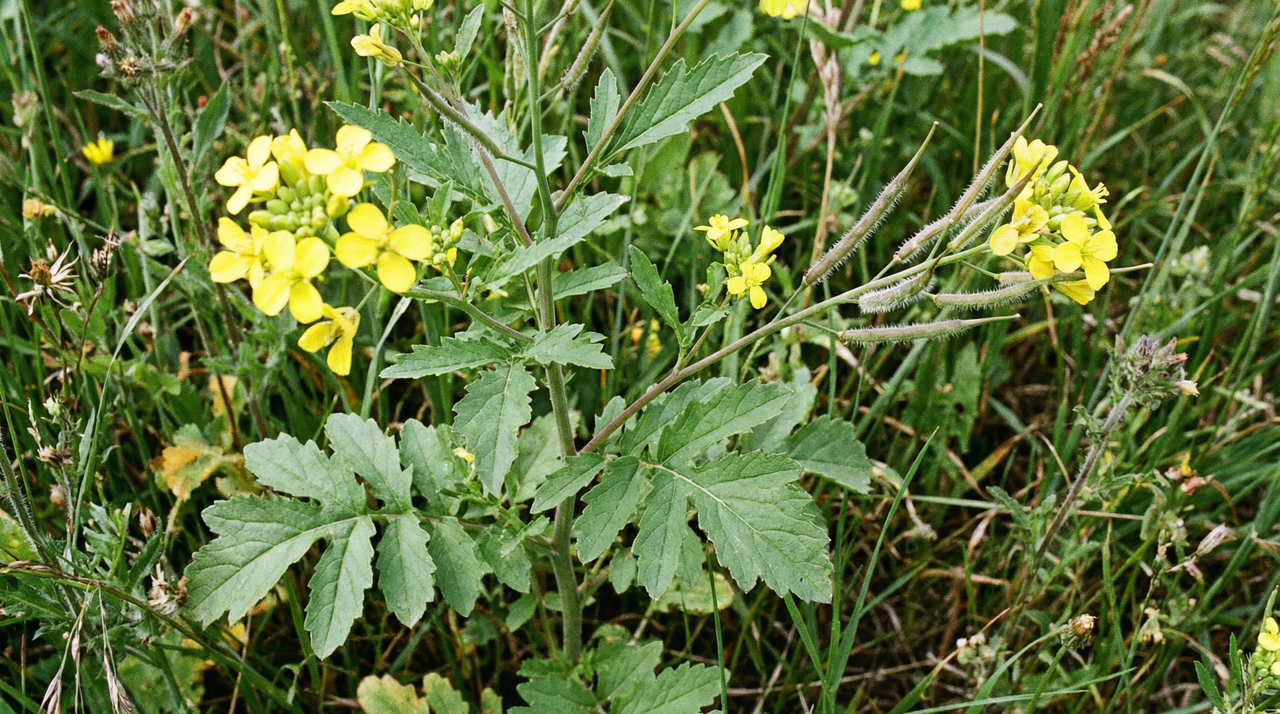
Most people have eaten white mustard hundreds of times without ever questioning what it actually is. That yellow squeeze bottle in the back of the fridge, the one that survived three moves and somehow still works on a hot dog: that's largely white mustard seeds, Sinapis alba, doing quiet, unglamorous work. And yet the first time I crouched down in a cover crop trial and actually looked at a mature white mustard plant, really looked at it, I felt a little embarrassed that I'd spent years treating it as an input rather than a plant. The flowers are genuinely beautiful. The seed pods have this taut, beaked tension to them, like they're holding their breath. And the whole aboveground structure can go from bare soil to knee-high, flowering, and biologically active in about sixty days.[1]
What keeps pulling me back to white mustard, though, isn't the condiment history or even the remarkable glucosinolate chemistry that makes it a legitimate biofumigant for tired, compacted soils. It's the contradiction baked into the plant itself: something this useful, this ancient, this ecologically active gets dismissed as a weed or a grocery-store afterthought in the same breath. That tension is worth sitting with for a minute before we go any further.
White Mustard Origin, History, and Botanical Background
White mustard has been feeding, healing, and occasionally exasperating people for a very long time. Sinapis alba, to use its scientific name, is native to the Mediterranean Basin in the broadest sense: its wild range stretches from Portugal and Morocco in the west to Turkey and Iran in the east, and from southern Scandinavia and the British Isles down to Egypt and Libya.[2][3][4] A member of the Brassicaceae family, it completes its entire life cycle in a single growing season, typically 80 to 100 days from seed to seed under good conditions.[5][6] That rapid, once-and-done lifecycle is central to understanding everything else about this plant.
Botanical Background and Visual Characteristics of Sinapis alba
In the garden, white mustard is unmistakable once you have seen it a few times. Plants reach anywhere from 12 to 36 inches tall, occasionally pushing 4 feet in rich, moist soils, with an upright, branching habit that looks a little like a small, energetic shrub in its prime.[7][8] The lower leaves are deeply lobed and almost lyrate, while the upper stem leaves turn sessile with clasping, ear-like bases that wrap right around the stem.[2][9] I use those auriculate leaf bases as my quick field ID cue when I spot volunteer plants in beds before they set seed. Paired with the bright yellow, four-petaled cruciform flowers arranged in elongated racemes, no other common garden plant looks quite like it in bloom.[2][10] Those flowers appear 30 to 45 days after germination and continue for four to six weeks, giving way to short, beaked pods containing the pale yellow seeds we know from the spice rack.[6][11]
Traditional and Cultural Uses Through the Ages
The cultural history of white mustard spans at least 2,500 documented years, though the seeds themselves appear in Egyptian tombs dating to 3000 BCE and at Bronze Age sites as early as Jericho around 8000 BCE.[12][13] Theophrastus wrote about it in his Enquiry into Plants in the 4th century BCE, Pliny the Elder catalogued its uses in the 1st century CE, and Dioscorides included it in De Materia Medica as both food and medicine.[14][15][16] Egyptians, Greeks, and Romans all reached for it as a condiment, a poultice for pain and inflammation, and a remedy for respiratory and digestive complaints, with medieval European herbalists later adopting the same seeds in plasters for rheumatism.[17] I find it genuinely striking that the same seeds Romans apparently plastered onto sore joints now form the baseline of everyday yellow mustard.
The story doesn't stop at the Mediterranean. Chinese physicians were using Sinapis alba seeds under the name Bai Jie Zi at least by the Tang Dynasty in the 7th century CE, documented in the Bencao Gangmu for warming the lungs, expelling phlegm, and relieving joint pain.[18][19] The plant also wove itself into Christian symbolism through the parable of the mustard seed and into European folklore as a protective charm.[20] Today it remains the primary source of yellow mustard condiment, from German Senf to American barbecue sauce.[21] Few plants have traveled so far, in so many directions, from such a humble Mediterranean origin.
Interesting Facts and Ecological Adaptations
Part of what made white mustard so successful at spreading is pure mechanical cleverness. The pods twist and burst as they dry, propelling seeds several meters from the parent plant.[22] I've watched this happen on a warm afternoon in a cover-crop bed and then found a dense carpet of seedlings within days, which taught me quickly to time my mowing before pods fully ripen. Those seeds also persist in the soil for two to three years and germinate in as few as three to ten days once conditions are right.[23][24] Beneath the soil, a taproot reaching up to 150 cm helps the plant access deep moisture and tolerate both drought and moderate salinity.[23]
The same pungent glucosinolate compounds that define its flavor also function ecologically to suppress competitors as they break down into isothiocyanates that suppress soil-borne pathogens and weeds.[25][26] I've found that same allelopathic chemistry requires a four-to-six week waiting period before sowing sensitive crops like lettuce after incorporation, a detail worth building into your rotation calendar from the start. White mustard can also serve as a trap crop for flea beetles on other brassicas, though it hosts its own share of pests and carries a moderate invasiveness risk in North America and similar Mediterranean climates where its explosive self-seeding can tip from useful to persistent weed very quickly.[27][28] It's a plant that rewards intention and punishes inattention, which is perhaps fitting for something with such a long and opportunistic history.
White Mustard Varieties and Where to Buy Them
What I find most useful about Sinapis alba is that the same species gets pulled in completely different directions depending on who's breeding it and why. You've got cultivars optimized for oil chemistry, others that pack on biomass like a freight train for soil-building work, and quick-turn types bred specifically for mild baby greens. Oilseed types generally produce higher-quality oil than brown mustard, though with somewhat lower yield potential.[29][30] Knowing which category you're shopping in before you open a seed catalog saves a lot of second-guessing.
Notable Cultivars by Use
For oil production, 'Primavera' is the one I keep coming back to in conversation. It's specifically selected for high seed quality and low erucic acid content,[29] which matters if you're pressing your own culinary oil or want seeds with a cleaner, milder flavor profile for homemade mustard condiments. 'Mithila' and 'AC Base' round out the oilseed category if 'Primavera' isn't available through your supplier.[29]
Cover-crop growers in the Pacific Northwest tend to reach for 'IdaGold', which is well-adapted to those cooler, wetter conditions and can generate 5-8 tons of biomass per hectare while suppressing weeds and scavenging soil nitrogen.[29][31][32] I've come to rely on that biomass ceiling when planning soil-building guilds -- it's predictable enough to count on. For drier conditions, 'Surov' was selected for drought resilience and holds up better when rain doesn't cooperate.[29] Midwest growers generally gravitate toward these forage and green-manure types over oilseed selections.[29]
On the salad end of things, 'Pacific Gold' is genuinely fast -- baby-green stage in about 35 days.[30][33][34] Growing it alongside 'Golden Ball' in spring succession beds, I've watched 'Pacific Gold' visibly outpace everything else in its first few weeks -- exactly what you want when you're trying to fill a salad bowl in cool weather. For seed production specifically, 'Albatross' offers 1,200-1,500 seeds per plant with minimal pod shattering, making it easier to harvest cleanly.[30][33] 'Cerena' tends toward higher yields overall, while the heirloom 'Bastard' and 'Tumbler' also appear regularly in seed-production contexts.[30][33]
Sourcing White Mustard Seeds
White mustard seed is genuinely easy to find. Johnny's Selected Seeds, Territorial Seed, Grow Organic, and Burpee all carry it, with Johnny's leaning toward organic cover-crop strains and Burpee emphasizing culinary and home-garden packets.[35][36][37][38] For cover-cropping at scale, bulk seed typically runs $2-$5 per pound.[39][40] Most suppliers include planting windows, spacing guidance, and use-specific instructions in their catalogs,[41][42] which is worth consulting before you order because the recommended rate shifts significantly between a kitchen garden planting and a broadcast cover-crop application.
Before you buy, though -- check your state list. Sinapis alba is not on the federal noxious weed list,[7][43] but it's considered invasive or weedy in parts of California, Oregon, and Washington.[44][45] I treat it as a managed volunteer even in my own beds regardless of where I'm gardening -- it self-seeds freely and can outcompete slower neighbors if you let it go to pod unchecked. If you're in the western U.S., that state-specific due diligence isn't optional; it's the responsible first step.
White Mustard Propagation and Planting (Sinapis alba)
White mustard is about as straightforward as annual propagation gets. Scatter seed, keep things cool and moist, and in a matter of days you have seedlings. The challenge, I've found, isn't coaxing germination. It's getting even coverage and staying ahead of flea beetles before the stand fills in. Nail those two things and white mustard practically grows itself.
Seed Characteristics and Storage
The seeds themselves are tiny (1-3 mm), nearly spherical, and pale creamy yellow with a smooth glossy coat.[46][47] When I first sowed them straight from a bulk bag, they looked disturbingly like inert grit against bare soil. I've learned to mix them with a handful of dry sand before broadcasting, which distributes them far more evenly and helps me see where I've already been. For safe storage, these are orthodox seeds that handle desiccation well and stay viable for years when kept cool and dry.[48] I keep a small jar in the back of my refrigerator, and four-year-old seed I tested last spring germinated above 90%. Research backs that up, showing viability above 95% at 5°C and 30% RH after five years, dropping to around 50% only after five to seven years at room temperature.[48][49] For most home gardeners, a sealed jar in the fridge is more than sufficient.
Propagation Methods: Direct Seeding is Best
White mustard is propagated strictly by seed. Cultivated plants are over 95% self-pollinating, which means saved seed comes back true to type with minimal effort.[50] Tissue culture using MS medium with BAP and NAA is technically possible for rapid laboratory multiplication, but it has no practical place in a home garden.[51] I once tried rooting cuttings out of curiosity and watched them sulk and fail while a pinch of direct-sown white mustard seeds planted the same day was up and growing in under a week. Don't bother with anything other than seed. Germination is optimal between 10-25°C, though the plant will push through anywhere from 5-30°C with adequate moisture and light.[52] Fresh seed can carry some conditional dormancy that eases after one to three months of after-ripening, so if you're getting sluggish germination from a new harvest, a brief cold-dry storage period usually resolves it.[6]
Soil, Site, and Sunlight Requirements
White mustard prefers well-drained loamy or sandy-loam soil with a pH between 6.0 and 7.5 and moderate organic matter.[53][46] It will tolerate poorer, leaner ground, and that tolerance is part of what makes it useful in disturbed beds, but waterlogging is the one condition it genuinely cannot handle. Saturated soil triggers root rot and stunted growth quickly.[54] If your site drains poorly, raise the bed or choose a different location. On pH, soils below 6.0 increase aluminum toxicity while soils above 7.5 lock out iron and manganese, causing yellowing.[53] A basic home soil-test kit has been one of the most useful tools in my shed for this. A single lime application in a slightly acidic bed consistently gives me noticeably faster establishment and lusher growth the following season. Amend with lime or elemental sulfur based on test results before sowing.[55] Full sun is non-negotiable for strong plants; aim for at least 6-8 hours of direct light daily.[56] The taproot can reach 50-100 cm, so loose soil to at least 30-60 cm depth lets it establish quickly and access moisture deeper in the profile.[57]
Germination Timeline and Growth Cycle
The pace of this plant is one of the things I genuinely enjoy about it. Under good conditions, white mustard seeds are up in 4-7 days; in cooler or less-than-ideal soil, expect 7-20 days.[58] From there, plants flower 30-50 days after sowing and set mature seed roughly 30-45 days after that, with the complete cycle wrapping up in 80-100 days under temperate conditions.[59][52] That speed is exactly why I sow it between spring brassicas and fall crops in my Florida beds. It generates a flush of biomass for soil improvement and weed suppression, then gets incorporated before the next planting goes in. Two or even three successions in a single cool season are realistic in warmer climates, and the timing slots fit neatly into most temperate rotations as well.
Spacing, Planting Technique, and Density
Mature plants reach 30-60 cm tall with a 15-30 cm spread, and that size guides every spacing decision.[53] Sow seeds just 6-13 mm deep (a quarter to half inch), press them into contact with moist soil, and water gently. For growing white mustard seeds as a cover crop, broadcast at 1-2 lbs per 1000 square feet (10-20 lbs per acre), sowing thickly so the canopy closes fast and crowds out weeds.[60][61] For kitchen greens, space rows 6-12 inches apart and thin seedlings to 4-6 inches within the row once they're an inch or two tall. Seed production rows benefit from wider spacing (12-24 inches between rows at 4-8 lbs per acre) to improve airflow and reduce disease pressure. For white mustard seeds for planting in subsequent seasons, that wider spacing also lets pods develop and dry more evenly. Planted thickly for green manure, the plan is typically to incorporate the whole stand before flowering, cutting off the biofumigant glucosinolates at their most active and returning all that biomass to the soil in one pass.
White Mustard Care Guide
White mustard is about as close to a low-maintenance annual as I've encountered in a decade of cover cropping and kitchen gardening. It germinates fast, grows dense, and largely looks after itself once established. That said, "low maintenance" doesn't mean "no attention." Getting the timing and stage-specific management right is what separates a productive, tidy cover crop from a weedy mess you're pulling volunteers from for the next two seasons.
Sunlight Requirements for White Mustard
Full sun is non-negotiable. The white mustard plant needs at least 6 to 8 hours of direct light daily to build the kind of dense, weed-suppressing canopy that makes it genuinely useful as a cover crop or greens bed.[62][63] I've sown it along the partially shaded edge of a food forest and watched the stand come up leggy, slow, and patchy, never achieving the thick biomass I needed. In a sunny open bed, the same seed lot was ankle-high in two weeks. Pair full sun with well-drained, fertile loamy or sandy soil and a pH between 6.0 and 7.5[64] and you're setting up a plant that will largely take care of itself from there.
Water Needs and Irrigation for White Mustard
Consistent moisture during the first ten days is the single biggest predictor of a uniform stand. Seedlings need about 0.3 to 0.5 inches of water per week at this stage,[53] and in my experience, the patchy, uneven stands I've seen almost always trace back to the soil drying out right after germination. Once the plants hit 4 to 6 inches and that taproot starts driving down, the whole dynamic shifts. The taproot reaches 45 to 60 cm deep,[65] and I've found that established plants handle 2 to 4 weeks without irrigation without visibly suffering, so I back off watering frequency at that point. Target around 1 inch per week once established, and total seasonal use across the full cycle runs 12 to 30 inches depending on your climate and cycle length.[66] I lost an entire early-summer bed to overwatering in a heavy clay soil before I learned this lesson. A 2 to 4 inch layer of organic mulch makes a real difference, reducing irrigation frequency and buffering the temperature swings that stress young plants.[67]
Feeding and Nutrient Management
How much you feed a white mustard crop depends almost entirely on what you're asking it to do. As a cover crop, it often needs little to no supplemental fertilizer; it scavenges 40 to 60 kg of nitrogen and 80 to 100 kg of potassium per hectare from existing soil reserves, reducing leaching and leaving the following crop measurably better off.[60] For seed production the demands are much higher: 80 to 150 kg N/ha, 40 to 60 kg P, 60 to 120 kg K, and crucially, 30 to 50 kg of sulfur, which is essential for glucosinolate synthesis and can boost seed yield by 10 to 20% when applied.[68][69] Soil testing is worth doing before planting, especially if your pH is above 7.5, where boron, iron, and zinc become unavailable and interveinal chlorosis shows up fast.[70] A chelated iron foliar spray at the first sign of yellowing between leaf veins has rescued more than a few of my brassica beds, turning leaves green again within a week. One mistake I see constantly: loading on nitrogen for a lush, fast-growing cover crop. Excess N delivers exactly that, lush and fast, but the plants get floppy, flowering delays, and pest pressure climbs.[71] When in doubt, less is more.
Frost Tolerance and Cold Hardiness
White mustard is genuinely cold-hardy in the vegetative stage, tolerating temperatures down to around -6°C to -7°C (19 to 21°F),[72] which puts it in USDA zones 3 through 11 and earns it an RHS H5 rating. But that hardiness is stage-dependent. Seedlings start showing wilt and necrosis anywhere below -2°C to -5°C, and flowers are genuinely vulnerable, suffering abortion and poor pollination right around freezing.[73] For fall-sown cover crops, the standard guidance is to plant 4 to 6 weeks before first frost so the stand establishes while conditions are favorable.[74] I've used floating row covers on fall-planted mustard and consistently gotten 4 to 6 additional weeks of growth, which means more biomass and better biofumigation value before termination. Row covers typically add 4 to 8°F of protection,[75] and straw mulch over the root zone improves winter survival significantly in marginal climates. In zone 4 and colder without any protection, overwintering survival is low, ranging from 0 to 30%.[76]
Heat Tolerance and Temperature Stress Management
Cool-season is not a suggestion. White mustard thrives at 15 to 25°C and starts showing real stress above 30°C: reduced photosynthesis, wilting, premature bolting, and at the flowering stage, up to 50% yield loss from heat-induced flower abortion.[77] Compared to kale or collards growing in the same summer heat spike, mustard bolts noticeably faster. Germination also stalls above 30°C, and seed fill during prolonged heat above 28°C can reduce seed size and oil content by 20 to 30%.[78] If you're growing for seed and temperatures climb, nighttime recovery matters: nights above 25°C prevent the plant from repairing heat damage, while cooler nights in the 15 to 20°C range give it a real chance.[79] Practical mitigations include 30 to 40% shade cloth, 3 inches of mulch (which improves soil moisture retention by 20 to 30%), and consistent irrigation.[80] The simpler solution is timing: sow in early spring or early fall and let the plant do its work before the heat arrives.
Pruning, Maintenance, and Seasonal Rhythm
White mustard essentially maintains itself once established. Dense stands shade out competing weeds, the deep taproot doesn't appreciate disturbance, and there's no pruning to speak of in cover-crop use.[81] What does require attention is timing the termination correctly. I made the mistake early on of letting a cover-crop planting go to full seed set, expecting the standing biomass to be a bonus. The following spring I had a vigorous volunteer population I spent weeks managing. Now I mow or incorporate at first flower, which captures maximum biomass and biofumigation value while preventing viable seed set entirely.[82]
The seasonal arc is straightforward: germination and early establishment in the first three weeks with consistent moisture and minimal fertilizer, rapid vegetative growth from weeks three through six with moderate watering and flea-beetle monitoring, then flowering around 40 to 60 days followed by termination or seed harvest.[53] The whole cycle closes in 60 to 120 days depending on sowing time and climate,[83] which means one spring and one fall planting can fit neatly into most temperate rotations without displacing other crops. By late summer, a spring-sown planting has already senesced and the soil is rested; the plant essentially exits on its own schedule and leaves behind a measurably improved seedbed for whatever comes next.[7] Rotate away from other brassicas every three to four years to avoid disease buildup, and that rhythm will keep delivering.[84]
Harvesting White Mustard Seeds and Greens
White mustard runs on two clocks simultaneously, and knowing which one you're watching changes everything about how you approach the patch. Leaves are ready to cut around 30-40 days from sowing, while seeds take 85-100 days to fully develop.[53][81] I've grown white mustard long enough to know that the plant will tell you which track it's on if you pay attention to it daily, especially once pods start forming in late summer. That window between seed-ready and seed-shattered is tighter than any guide will fully prepare you for.
When and How to Harvest White Mustard Leaves and Seeds
For greens, cut outer leaves once they reach 4-6 inches tall, or earlier for a milder baby-leaf harvest. The plant will regrow and give you several rounds before it bolts.[53][84] Young white mustard leaves have a bite that reminds me of arugula -- bright and peppery but not overwhelming. Let those same plants mature toward seed set, and the whole character of the harvest shifts.
For seed harvest, the observable cues are your guide: lower pods turn yellow-brown, seeds inside feel hard, and a gentle shake produces an audible rattle. Optimal seed moisture at harvest sits around 8-12%.[85][53] Wait for 80% of pods to reach that stage before cutting, because harvesting too late costs you 10-20% of the crop to shattering.[85] In hot, humid conditions that window closes faster than the USDA zone guides suggest -- I check mine every morning once pods start yellowing. Cut stems by hand in the early morning while dew is still on the plants, bundle them loosely, and hang or lay flat to finish drying before threshing. Careful handling here saves a surprising amount of seed. Expect seed harvest to fall between late June and August in most temperate climates.[53][86]
Flavor, Yield, and Post-Harvest Handling
The pungency in white mustard comes primarily from sinalbin, the glucosinolate that makes up roughly 90% of its total glucosinolate content and hydrolyzes into p-hydroxybenzyl isothiocyanate when seeds are crushed or chewed.[87][88] The heat is real but gentler than brown or black mustard, which is why I feel comfortable using generous amounts in my own ferments and dressings. That said, I always tell people to start small with home-grown seed until they know how their palate responds. Flavor compounds peak at full maturity and begin to degrade if seeds are left too long on the plant.[87]
Leaf flavor follows the same maturity arc: young leaves stay mild enough for raw salads, while mature leaves develop a stronger bitterness that holds up better to cooking.[89][90] I taste a leaf at different stages before deciding whether a patch is headed for the salad spinner or the sauté pan -- it takes about thirty seconds and saves a lot of disappointment. Fresh white mustard greens store well at 0-4°C in perforated bags with high humidity, staying usable for 7-14 days before bitterness and texture become issues.[91][92] For seeds, well-dried stock in a sealed jar will hold flavor and viability for years. Mature plants reach 2-4 feet at seed harvest, and well-managed seed crops can yield substantially even at garden scale.[53]
White Mustard Preparation and Uses
Identifying and Preparing the Edible Parts of White Mustard
White mustard (Sinapis alba) is most easily visually confirmed at harvest time by its distinctive cylindrical pods that taper into a prominent beak and hold pale, cream-colored seeds.[93][94] Those white seeds are the quickest visual confirmation you've got the right plant; the closely related field mustard (Sinapis arvensis) produces dark seeds, and the pod shapes differ once you know what to look for.[95]
Every part of the plant is edible, and I find it helps to think about harvest in sequence. Seeds come first in culinary importance -- ground into white mustard powder, simmered into a white mustard sauce or condiment, or used whole as a pickling spice. They pack 30-35% protein and 30-40% oil alongside meaningful amounts of vitamin E, selenium, and B-vitamins, plus 1-2% sinalbin glucosinolate that breaks down into the isothiocyanates behind the pungent bite and much of the antioxidant activity.[96][97] Grinding activates that enzymatic flavor release; drying first tones it down, while fermentation builds complexity. That peppery punch is the same chemistry the health benefits section covers in depth -- here it's worth knowing because it shapes how you cook with the seeds.
Young leaves harvested before flowering are genuinely one of my favorite spring salad greens. The flavor is tangy and lightly peppery when raw, bright rather than aggressive in cool weather, and it mellows completely with cooking.[94] I always try to harvest mine in that sweet spot -- cool mornings, before the plant bolts -- because leaves cut in summer heat taste flat and sharp at the same time. They carry good amounts of vitamins A, C, and K plus calcium and iron.[96] For anyone in the household with thyroid concerns, I cook or ferment the leaves rather than serving them raw in quantity; the glucosinolates have real goitrogenic potential at high raw intake, and cooking reduces that effectively.[98] Flower buds and open petals work beautifully scattered over salads as garnishes. Roots are technically edible young but go woody and bitter fast, so I rarely bother.[99]
On safety: white mustard seed is GRAS-listed by the FDA for culinary use at moderate amounts, and for most people it's entirely unremarkable to eat.[100] That said, roughly 1-2% of people carry a genuine mustard allergy that can range from oral tingling to anaphylaxis, so it's worth flagging for guests.[101] Exceeding about 10 grams of seeds per day can cause nausea, and anyone on thyroid medication or anticoagulants should have a conversation with their prescriber before making seeds a daily habit.[102]
Traditional Medicinal Preparations
Long before anyone was fermenting seeds for a condiment, European and Asian herbalists were crushing them into poultices. The traditional mustard plaster -- ground seeds mixed with water or flour and applied to the chest or joints -- works as a counterirritant, drawing circulation to the area to relieve rheumatic pain, inflammation, and respiratory congestion.[103][104] Seeds have also been taken internally as an expectorant and digestive aid across European and Indian traditional medicine.[105] Having experimented with plenty of brassicas topically over the years, my standing advice is to test a small patch of skin first and never leave a poultice on longer than 15-20 minutes; the same isothiocyanates that make the chemistry interesting will cause genuine blistering if you push it.
Non-Food Uses in Permaculture and Beyond
Where white mustard really earns its place in a designed system is in the soil. Grown as a cover crop at 10-20 lbs per acre and incorporated before seed set, the glucosinolates release into the soil as biofumigants, suppressing nematodes, weeds, and a range of soil pests while building organic matter and improving tilth.[106][107] I've seen the difference firsthand: beds where I chopped and incorporated a mustard green manure before planting nightshades showed noticeably less nematode damage in subsequent seasons. It's one of those interventions that feels almost too simple until the evidence shows up in your harvest.
The seed oil has a fatty acid profile suitable for biodiesel production, and the plant has been explored for natural yellow dyes and fiber applications.[108] And then there's the cultural thread that runs through all of it -- seeds appearing in biblical parables, European folklore for protection, Indian prosperity ceremonies, and millennia of Mediterranean kitchens.[109][20] A plant that spans the spice rack, the medicine chest, the cover-crop rotation, and the parable has clearly made itself indispensable across more than one dimension of human life.
White Mustard Health Benefits and Medicinal Uses
Traditional Uses of White Mustard in Medicine
Healers across Europe, Asia, and Africa have turned to white mustard for centuries, primarily for respiratory ailments and pain relief.[110][111][112] The chest poultice, the foot bath, the seed tea for congestion -- these aren't folk superstitions. They're observations that persisted across unconnected cultures for good reason. Modern research is starting to catch up, though most of the current evidence comes from preclinical studies and traditional use documentation rather than the kind of rigorous clinical trials we'd want before calling something a proven treatment.[113][114] The ethnobotanical record deserves respect, and the lab work is genuinely promising -- but white mustard isn't a clinically validated medicine yet.
Key Phytochemicals in White Mustard: Sinalbin and Its Hydrolysis Products
The signature compound here is sinalbin, a glucosinolate that makes up 70-100% of total glucosinolates in the seeds, sitting at concentrations of 20-60 µmol/g or roughly 3-4% of dry seed weight.[115][116][117] When the plant tissue is damaged -- by chewing, crushing, or cutting -- the enzyme myrosinase hydrolyzes sinalbin into p-hydroxybenzyl isothiocyanate (PHBITC), the active compound responsible for white mustard's characteristic mild heat and most of its biological activity. The leaves, stems, and flowers contain lower glucosinolate levels (around 5-15 µmol/g), along with sinalbin, gluconapin, and glucoibervirin, while roots carry even less.[118][119]
Beyond glucosinolates, white mustard contains sinapic acid derivatives, chlorogenic acid, and flavonoids including quercetin and kaempferol glycosides -- compounds that contribute meaningfully to antioxidant activity.[116][120][115] I've noticed that pungency varies noticeably between seedlings grown in different soils, which aligns with phytochemical analyses showing that glucosinolate composition shifts with growth stage, cultivar, and environmental conditions. Seeds from stressed plants tend to pack a harder punch.
Scientific Research on White Mustard Health Benefits
The strongest mechanistic evidence centers on inflammation. Allyl isothiocyanate from Sinapis alba suppresses the NF-κB pathway by blocking IκBα degradation and p65 nuclear translocation, which reduces pro-inflammatory cytokines including TNF-α, IL-6, and COX-2.[121][122][123] That's a meaningful molecular target. Pain relief follows a related but distinct mechanism: allyl isothiocyanate activates TRPA1 receptors, producing the counterirritant effect that underpins the traditional mustard poultice for rheumatic pain and muscle spasms.[124][110] I've made my own mustard poultices for minor muscle strains using a cloth barrier and limited application to about 10-15 minutes -- the warming sensation builds quickly and genuinely feels like it's doing something, but I would not leave one on longer than that on bare skin.
Antimicrobial activity is another well-documented property. Glucosinolate-derived isothiocyanates disrupt microbial cell membranes, achieving minimum inhibitory concentrations of 0.1-2 mg/mL against both Gram-positive bacteria like Staphylococcus aureus and Gram-negative species like E. coli.[125][126][127] Mustard poultices also show a roughly 25% acceleration in wound closure in animal models, attributed to the hyperemic effects that promote granulation tissue and epithelialization.[128]
The preliminary research extends further: isothiocyanates from Sinapis alba induce apoptosis in HCT-116 colon cancer cells through Bax/Bcl-2 modulation and caspase activation,[129][130] seed extracts hit up to 70% α-glucosidase inhibition at 1 mg/mL (suggesting antidiabetic potential),[131] and hepatoprotective effects have been observed against carbon tetrachloride-induced liver damage in animal models.[132][133] These are real findings, but they're all preclinical. Until robust human trials exist, I keep white mustard in my life primarily as a culinary herb and occasional topical remedy -- and I'm comfortable there.
Nutritional Profile of White Mustard Seeds and Leaves
Seeds and leaves are almost nutritionally opposite ends of the same plant. Seeds are energy-dense at 508 kcal per 100g, with 36g of protein, substantial fat, fiber, and minerals including 370mg magnesium and 828mg phosphorus.[134] They're also rich in thiamin (67% DV), folate (41% DV), vitamin E (58% DV), and zinc.[135] The leaves tell a different story: just 27 kcal per 100g, but packed with vitamin K (215% DV), vitamin C (78% DV), and meaningful calcium and iron.[136][137]
In practice, I harvest the young leaves for salads -- they're considerably milder than mature ones and I find them genuinely pleasant raw, which isn't something I'd say about leaves left to develop fully. For vitamin C and glucosinolate content, that early harvest timing matters: boiling greens degrades vitamin C by 20-50% and glucosinolates by up to 60%.[138] Seeds are far more forgiving in storage, staying viable and nutritionally intact for 1-2 years in cool, dry conditions, while leaves lose vitamin C quickly without refrigeration.[139] The seeds also carry sinapic acid derivatives with meaningful antioxidant activity (50-70% DPPH scavenging at 1 mg/mL),[140][141] which means lightly crushing rather than boiling them preserves both flavor and function.
Safety Considerations for White Mustard
At culinary amounts, white mustard has a low toxicity profile for humans and most domestic animals.[142][143] The seeds' glucosinolate content (sinalbin at 3-4% of seed weight) hydrolyzes to isothiocyanates that are mildly goitrogenic and can irritate the gastrointestinal tract in excess,[144] but a spoonful of prepared mustard or a handful of young leaves isn't going to cause problems for most people.
The real contraindications deserve straight talk. Excessive ingestion can bring on nausea, vomiting, diarrhea, or abdominal pain.[145] Topically, the Sin a 1 and Sin a 2 allergens can trigger reactions in sensitive individuals. During pregnancy, internal medicinal doses should be avoided due to potential uterine stimulation,[146] and I followed that guidance personally during my own pregnancies. Anyone on thyroid medication should consult their doctor before using white mustard medicinally, since its goitrogenic activity could interfere with treatment.[147] For livestock and pets, large amounts can cause digestive upset or hypothyroidism, though animals generally self-limit due to the flavor.[148]
Poultices should always be used with a cloth barrier and for no more than 10-15 minutes at a time.[149] Potency varies by growth stage -- seeds carry the highest concentrations -- and plants grown in contaminated soils may accumulate heavy metals, so sourcing matters.[148] Acute issues from normal culinary use are rare and self-limiting. The goal is to use this plant confidently and knowledgeably, not to be afraid of it.
Pests and Diseases of White Mustard
White mustard has a reputation in the brassica world that I think it genuinely deserves: it's one of the tougher members of the family when it comes to disease. That doesn't mean trouble-free, but it does mean you're starting from a position of strength rather than constantly playing defense.
Disease Resistance and Management
The headline is clubroot. While most brassicas are genuinely vulnerable to Plasmodiophora brassicae, white mustard shows high resistance to this soil-borne pathogen, which makes it a smart rotation choice wherever clubroot has become established in a bed.[150][151] Beyond clubroot, it also outperforms oilseed rape and many other relatives against downy mildew, blackleg, and Verticillium wilt.[152][153] The same glucosinolates that give the plant its pungent bite also drive its biofumigation effect in the soil, suppressing pathogens when residues are incorporated at termination.[154][155]
Where it is genuinely vulnerable, moisture is almost always the common thread. Damping-off and root rot (Pythium, Rhizoctonia solani) spike sharply when soil moisture stays above 60% field capacity.[156][157] In my own beds, seedlings in well-drained soil rarely show damping-off even in wet springs, while transplants in heavy clay corners of the same bed can collapse. Downy mildew favors cool, humid conditions between 10-20°C with free water on the leaves; Alternaria leaf spot prefers warmer temperatures around 20-30°C.[158][152] Powdery mildew, Sclerotinia stem rot, and moderate susceptibility to bacterial black rot round out the disease picture.[159][160]
Management is straightforward if you lean on the plant's strengths. A 3-4 year rotation away from other brassicas, liming to adjust soil pH for clubroot control, avoiding overhead irrigation, and starting with certified disease-free seed will handle most situations.[151][152] If you're working clubroot-prone ground, I've had solid results with 'IdaGold', which also shows good resistance to downy mildew; 'Pacific Gold' performs similarly, and 'Santis' is worth seeking out where Alternaria blight is persistent.[161][162] Targeted fungicides exist as a backstop, but cultural practice and cultivar choice will carry you most of the way. And remember: when you terminate a healthy stand by chopping and incorporating the biomass, you're banking that biofumigation benefit for whatever comes next in rotation.
Insect Pest Resistance and Management
The same glucosinolate chemistry that suppresses soil pathogens also gives white mustard a real chemical defense against insects. When leaf tissue is damaged, myrosinase enzymes immediately convert those glucosinolates into isothiocyanates, essentially flooding the wound site with toxic mustard oils that deter further feeding.[163][164] I actually crush a leaf and smell it when I'm deciding whether extra pest management is warranted that season -- a strong, immediate pungency tells me the chemical armor is working. Physical defenses layer on top of that: glandular trichomes can trap or poison small insects, and the relatively smooth stems reduce attractive egg-laying sites.[165]
That said, the defenses reduce pressure rather than eliminate it. Aphids (Myzus persicae, Brevicoryne brassicae, Lipaphis erysimi), flea beetles (Phyllotreta spp.), cabbage root maggots, diamondback moth, and cabbage white butterfly all show up given the right conditions, with regional variation: aphids tend to be the bigger headache in Europe, diamondback moth and cabbage white in North America.[166][167] Flea-beetle pitting on white mustard leaves is noticeably milder than the shot-hole damage I see on arugula or young kale in the same bed -- a useful visual reminder that the defense is real, even if imperfect. One thing worth flagging for mixed plantings: white mustard can act as a pest reservoir for neighboring canola and kale, so it warrants monitoring if those crops are nearby.[143] Cultivars like 'Darwin' and 'Logran' carry higher or more specific glucosinolate profiles, thicker leaves, and more rigid petioles that push resistance further if you're dealing with consistent pressure.[168][169]
My IPM approach here is pretty light-handed. I rarely reach for any insecticide on white mustard because timely releases of lady beetles and regular scouting have kept aphid numbers below economic thresholds in my plantings. Encouraging parasitoids and hoverflies costs nothing, crop rotation keeps populations from building, and incorporating residues at termination delivers a nematicidal biofumigation effect against cabbage root maggots in the soil below.[167][106][170] Local observation still matters -- climate-driven range expansions of pests like diamondback moth mean yesterday's regional advice isn't always reliable today, and trial-and-error in your specific microclimate will always outperform any generalized recommendation.
White Mustard in Permaculture Design
Few annuals earn their keep in a designed system as efficiently as white mustard. It's not a perennial food forest staple in the traditional sense, but I've come to think of it as one of the most useful tools in a temperate permaculture toolkit precisely because it works fast, works hard, and then gets out of the way for whatever comes next.
Climate Adaptability and Growing Zones
White mustard is adapted across an unusually wide range, from USDA zones 3 through 11,[3][58][171] but it's the cool end of that spectrum where it really shows off. Optimal growth happens between 45 and 75°F, and the seed will germinate in soil as cold as 40°F,[172][173] which means I can get it in the ground weeks before most other spring crops are even a consideration. It tolerates light frost down to around 20-25°F,[174][106] making it useful as a late-fall cover that winter-kills cleanly in colder zones, leaving behind a mulched surface ready for spring planting without any manual termination.
Its Mediterranean origins explain a lot about its character.[2][3][175] It evolved as a ruderal plant in disturbed soils, which is exactly why it naturalizes so readily across North America and why it handles the awkward gaps in a rotation that would stump more finicky species. It needs 400-600mm of annual rainfall for optimal growth but can manage as a cover crop with as little as 300mm,[176][177] which puts it within reach for gardeners in semi-arid climates who are working with dryland or low-irrigation systems.
Ecosystem Functions and Soil Benefits
In a designed guild, the plant's aggressive upright habit and dense canopy serve as a rapid ground-cover.[7][178][179] Simple enough looking. But what's happening chemically and ecologically is where white mustard earns its reputation as a permaculture workhorse.
The plant's glucosinolates, primarily sinalbin, break down into isothiocyanates when the tissue is disrupted. That reaction drives biofumigation, suppressing weed germination, soil-borne fungi, and nematode populations in the surrounding soil.[180][181][182] I've used white mustard cover crops specifically to clean up beds that showed signs of soilborne disease pressure, and the results have been consistent enough that it's now a standard rotation move for me before planting nightshades.
As a green manure and seasonal cover crop, it produces 4-8 tons of dry matter per hectare and can reduce nitrate leaching by up to 50% through aggressive nitrogen scavenging.[180][183][184] That distinction matters: white mustard doesn't fix nitrogen the way clover or vetch does. It captures existing soil nitrogen and holds it in biomass until incorporation, which is a fundamentally different service. I think of it as the bank vault in a guild, not the income source. Pair it with legumes for fixation, then let mustard do the scavenging and recycling.
Above ground, those yellow racemes draw steady pollinator traffic from early in the season. Honeybees, bumblebees, solitary bees, syrphid flies, and parasitic wasps all work the flowers,[185][186][25] and I've noticed that seasons following a mustard patch tend to have noticeably better pollination across the whole garden. The seeds that mature and drop also provide winter forage for birds, adding another layer of habitat value without any extra effort on my part.[7][180]
Forest Layer Placement and Guild Design
In food forest and agroforestry contexts, white mustard occupies the herbaceous layer. It reaches full height in just 6-8 weeks,[187][188] and its fibrous root system reaches 0.9-1.5 meters deep, fracturing compacted layers and improving tilth measurably after just a single growing season. The first time I dug into a bed that had hosted a mustard cover the previous fall, the difference in soil structure compared to the untreated beds nearby was striking. It also tolerates partial shade, which makes interplanting under young tree canopy genuinely viable rather than a compromise.
Guild design with white mustard rewards some deliberate thought. It works well alongside legumes, complementing their nitrogen fixation with its scavenging and biofumigation,[61][180] and it pairs productively with nightshades in rotation. Keep it away from other brassicas, though. Its allelopathic chemistry doesn't discriminate within the family, and I've learned from trial and error that placing it too close to established brassica understory plants causes real growth suppression.
The invasiveness profile is moderate but worth taking seriously.[46][189][190] White mustard builds a persistent seed bank and can establish dense stands if you let it go to seed unchecked. My approach is straightforward: mow or incorporate it before pods mature. It's a pioneer by nature, and that pioneer energy is exactly what makes it so effective at preparing ground for longer-lived perennials. Use that, and then manage the transition deliberately rather than letting it decide when it's done.
The Plant That Reminded Me Why I Started Growing Food
I once scattered a handful of white mustard seed into a worn-out bed in late September, mostly as an afterthought, and by October it had covered the soil in a carpet of green so cheerful it embarrassed the rest of the garden. That patch fed me, fed the bees, and quietly fixed what three seasons of vegetables had taken from the soil. It asked for nothing. I think about that bed a lot when I'm tempted to overcomplicate things.
Sources 190
- Managing Cover Crops Profitably, SARE ↩
- Flora of North America: Sinapis alba ↩
- White Mustard (Sinapis alba L.) ↩
- Global Biodiversity Information Facility: Sinapis alba ↩
- Kew Science - Plants of the World Online - Sinapis alba ↩
- White Mustard (Sinapis alba) - Crop Guide ↩
- USDA Plants Database - Sinapis alba ↩
- Missouri Botanical Garden - Plant Finder - Sinapis alba ↩
- Royal Horticultural Society - Sinapis alba ↩
- Missouri Botanical Garden Plant Finder - Sinapis alba ↩
- Royal Horticultural Society (RHS) - Mustard, white ↩
- Archaeobotany of Mustard in the Ancient Near East ↩
- Mustard in Ancient Egypt ↩
- Theophrastus: Enquiry into Plants ↩
- Pliny the Elder's Natural History: Book XIX ↩
- De Materia Medica by Dioscorides ↩
- Mustard in Ancient Rome ↩
- Bencao Gangmu: Compendium of Materia Medica ↩
- Chinese Materia Medica ↩
- Ethnobotany of Mustard Plants ↩
- RHS Plants: Sinapis alba ↩
- Seed Dispersal Mechanisms in Brassicaceae ↩
- Stress Adaptations in Crucifers (Brassicaceae) ↩
- Sinapis alba ↩
- Mustard Cover Crop and Biofumigation Guide ↩
- Allelopathic Potential of Brassica Species ↩
- University of California Integrated Pest Management: Mustard, White (Sinapis alba) ↩
- Trap Cropping for Flea Beetles ↩
- White Mustard (Sinapis alba L.) Production Guide ↩
- Brassica Crops: Mustard Greens and Seeds ↩
- Cover Crops: Mustard Species for Soil Health ↩
- Sinapis alba Plant Guide ↩
- White Mustard Cultivation - Cornell University Extension ↩
- Sinapis alba Varieties and Environmental Adaptation - Royal Horticultural Society ↩
- White Mustard Seeds (Sinapis alba) ↩
- White Mustard Cover Crop Seed ↩
- Organic White Mustard Seed ↩
- Mustard Seeds - White Mustard ↩
- Cover Crop Seed Cost Calculator ↩
- Mustard Seed Production and Costs ↩
- Johnny's Selected Seeds Catalog ↩
- Cover Crop Profile: Mustard ↩
- Federal Noxious Weeds List ↩
- White Mustard (Sinapis alba) ↩
- Sinapis alba - White Mustard ↩
- USDA PLANTS Database ↩
- Missouri Botanical Garden Plant Finder ↩
- Seed Storage of Horticultural Crops ↩
- Genebank Standards ↩
- Mustard (Brassica and Sinapis spp.) Breeding ↩
- Micropropagation of Medicinal Plants: Protocols for White Mustard (Sinapis alba) ↩
- Mustard Production ↩
- Mustard Greens and Mustard Seed Production in California ↩
- White Mustard (Sinapis alba L.) ↩
- Purdue University Extension ↩
- White Mustard (Sinapis alba) Production Guide ↩
- White Mustard as a Cover Crop ↩
- Sinapis alba ↩
- White Mustard (Sinapis alba) Production and Management ↩
- Cover Crop Chart - USDA NRCS ↩
- White Mustard Cover Crop Guide ↩
- USDA PLANTS Database - Sinapis alba ↩
- Missouri Botanical Garden - Plant Finder - Sinapis alba ↩
- Royal Horticultural Society - Plants A-Z - Sinapis alba ↩
- Missouri Botanical Garden Plant Finder: Sinapis alba ↩
- University of Delaware Extension - White Mustard (Sinapis alba) Cultivation Guidelines ↩
- Cover Crop Management: White Mustard ↩
- Nutrient Requirements for Mustard Crops ↩
- Role of Sulfur in Oilseed Crops Including Mustard ↩
- White Mustard as a Cover Crop ↩
- Fertilizer Recommendations for Mustard Crops ↩
- Sinapis alba (White Mustard) ↩
- Cold Tolerance of Brassica Crops Including Mustard ↩
- White Mustard Cover Crop Guide ↩
- Frost Protection for Vegetables and Cover Crops ↩
- Winter Hardiness of Cover Crops in the Midwest ↩
- Heat Stress in Brassica Crops Including Sinapis alba ↩
- Heat Stress Impacts on Seed Yield and Quality in White Mustard ↩
- Temperature Stress in Mustard (Brassica juncea and Sinapis alba): Physiological Responses ↩
- Heat Stress Management in Brassica Crops ↩
- Mustard Production Guide ↩
- Cover Crops: White Mustard ↩
- Impact of Growth Duration on Yield and Biofumigation Efficacy of Sinapis alba ↩
- White Mustard as a Cover Crop ↩
- Mustard Seed Production Guide ↩
- Sinapis alba Cultivation and Harvesting ↩
- Glucosinolates in Sinapis alba ↩
- Volatile Composition of White Mustard (Sinapis alba L.) Seeds ↩
- White Mustard - Sinapis alba ↩
- Flavor Development in Mustard Greens ↩
- Vegetable Storage Guidelines ↩
- Postharvest Handling of Leafy Greens ↩
- Missouri Botanical Garden Plant Finder: Sinapis alba ↩
- USDA PLANTS Database: Sinapis alba ↩
- Wild Mustard (Sinapis arvensis) vs White Mustard (Sinapis alba) - Invasive.org ↩
- USDA FoodData Central - Mustard seed, yellow ↩
- Glucosinolates in Sinapis alba - Review ↩
- Glucosinolates in Brassica Vegetables ↩
- Royal Horticultural Society: White Mustard Fact Sheet ↩
- FDA Substances Added to Food (formerly EAFUS) ↩
- Mustard Allergy ↩
- White Mustard - Sinapis alba ↩
- Uses and Side Effects Related to Medicinal Products: Mustard (Topical) - National Center for Complementary and Integrative Health ↩
- Traditional Uses and Phytotherapy of Mustard Plasters ↩
- White Mustard - Sinapis alba L. ↩
- White Mustard Cover Crop Management ↩
- Sinapis alba | BioFumigation Research & Application ↩
- Mustard Oil for Biodiesel Production ↩
- Cultural significance of mustard plants ↩
- Mustard (Sinapis alba) in Traditional Medicine ↩
- Ethnobotany of Sinapis alba in North Africa ↩
- Ayurvedic Uses of Mustard Seeds ↩
- Sinapis alba L. (White Mustard): Phytochemical Profile and Health-Promoting Effects—A Review ↩
- Therapeutic Potential of Mustard Seeds: A Systematic Review ↩
- Phytochemical Profile of Sinapis alba L. Seeds and Their Antioxidant Potential ↩
- Glucosinolates in Brassica and Sinapis Species: Profiles and Health Benefits ↩
- Glucosinolates in Sinapis alba: Distribution and Biosynthesis ↩
- Phenolic Compounds in White Mustard (Sinapis alba L.) Leaves ↩
- Secondary Metabolites of White Mustard (Sinapis alba L.) ↩
- The Ecological Role of Glucosinolates in Sinapis alba ↩
- Anti-Inflammatory Mechanisms of Sinapis alba via NF-κB Inhibition ↩
- Allyl Isothiocyanate Ameliorates Inflammation in DSS-Induced Colitis by Suppressing NF-κB Activation ↩
- Anti-Inflammatory Effects of Sinapis alba Seed Extract via Cytokine Suppression ↩
- Analgesic Effects of Sinapis alba via TRPA1 Activation ↩
- Antimicrobial Effects of Allyl Isothiocyanate from White Mustard ↩
- Antibacterial Activity of White Mustard (Sinapis alba L.) Seed Essential Oil ↩
- In Vitro Antimicrobial Activity of Glucosinolate-Derived Isothiocyanates from Sinapis alba ↩
- Wound Healing Properties of Mustard Poultices from Sinapis alba ↩
- Anticancer Potential of Isothiocyanates from Sinapis alba ↩
- Glucosinolates from Sinapis alba: Anticancer Potential in Vitro ↩
- Antidiabetic Activity of Sinapis alba: α-Glucosidase Inhibition ↩
- Hepatoprotective Effects of Sinapis alba Extract ↩
- Hepatoprotective Effects of White Mustard in Rats ↩
- Mustard, white, seeds, whole ↩
- Spices, mustard seed, yellow ↩
- Mustard greens, raw ↩
- Mustard greens, raw ↩
- Effect of cooking on glucosinolates in Brassica vegetables ↩
- Storage stability of mustard seeds ↩
- Glucosinolates in Brassica and Sinapis species ↩
- Phytochemical Composition of White Mustard (Sinapis alba L.) ↩
- MOBOT - Missouri Botanical Garden - Ornamental Plant Database ↩
- USDA PLANTS Database - Sinapis alba Fact Sheet ↩
- Glucosinolates in Sinapis alba: Biosynthesis and Toxicity ↩
- Mustard Allergy ↩
- Sinapis alba (White Mustard) - Drugs and Lactation Database (LactMed) ↩
- Goitrogenic Effects of Brassica Vegetables ↩
- Brassica spp. Toxicity in Animals ↩
- Royal Horticultural Society: Sinapis alba ↩
- Resistance of White Mustard (Sinapis alba) to Clubroot Disease ↩
- Clubroot of Crucifers ↩
- Diseases of Crucifers: White Mustard ↩
- Fungal Pathogens of Mustard Crops in the Brassicaceae ↩
- Biofumigation with Brassicas for Disease Management ↩
- Biofumigation with Mustard for Pathogen Control ↩
- Susceptibility of Sinapis alba to Soil-Borne Pathogens ↩
- Environmental Factors Affecting Sclerotinia Disease in Brassicas ↩
- Downy Mildew Management in Mustard Crops ↩
- Diseases of Crucifers ↩
- Brassica Diseases: Identification and Management ↩
- Cover Crop Management for Diseases ↩
- Evaluation of Sinapis alba Cultivars for Alternaria Blight Resistance ↩
- Insect Resistance in White Mustard (Sinapis alba L.) ↩
- Glucosinolates in plant protection against insect herbivores ↩
- Trichome-mediated plant-herbivore interactions in Brassicales ↩
- Pest Management in Cruciferous Crops ↩
- Integrated Pest Management for Flea Beetles in Cruciferous Crops ↩
- Evaluation of Mustard Cultivars for Resistance to Insect Pests ↩
- Glucosinolate Variation and Pest Resistance in Brassicaceae Cover Crops ↩
- Climate Change and Insect Pests in Crucifers: A Review ↩
- White Mustard (Sinapis alba) ↩
- Cover Crop Profile: White Mustard ↩
- Mustard Greens Production Guide ↩
- White Mustard as a Cover Crop ↩
- White Mustard (Sinapis alba L.) ↩
- White Mustard Cover Crop Guide ↩
- Brassica Cover Crops: Mustard Species ↩
- Sinapis alba - Missouri Botanical Garden ↩
- Sinapis alba - Kew Gardens Plant Profile ↩
- Cover Crop Benefits of White Mustard - SARE ↩
- Biofumigation with Brassicas - USDA ARS Research ↩
- Biofumigation with Brassicas - Penn State Extension ↩
- USDA Extension - Mustard as Cover Crop ↩
- Root Growth and Nitrogen Uptake of Cover Crops ↩
- Pollination Ecology of Sinapis alba ↩
- Ecological Role of Brassicaceae in Agroecosystems ↩
- Cover Crops: Mustard ↩
- White Mustard (Sinapis alba) in Agroforestry Systems ↩
- Plants of the World Online - Sinapis alba (Kew Science) ↩
- Sinapis alba - Missouri Botanical Garden Plant Finder ↩