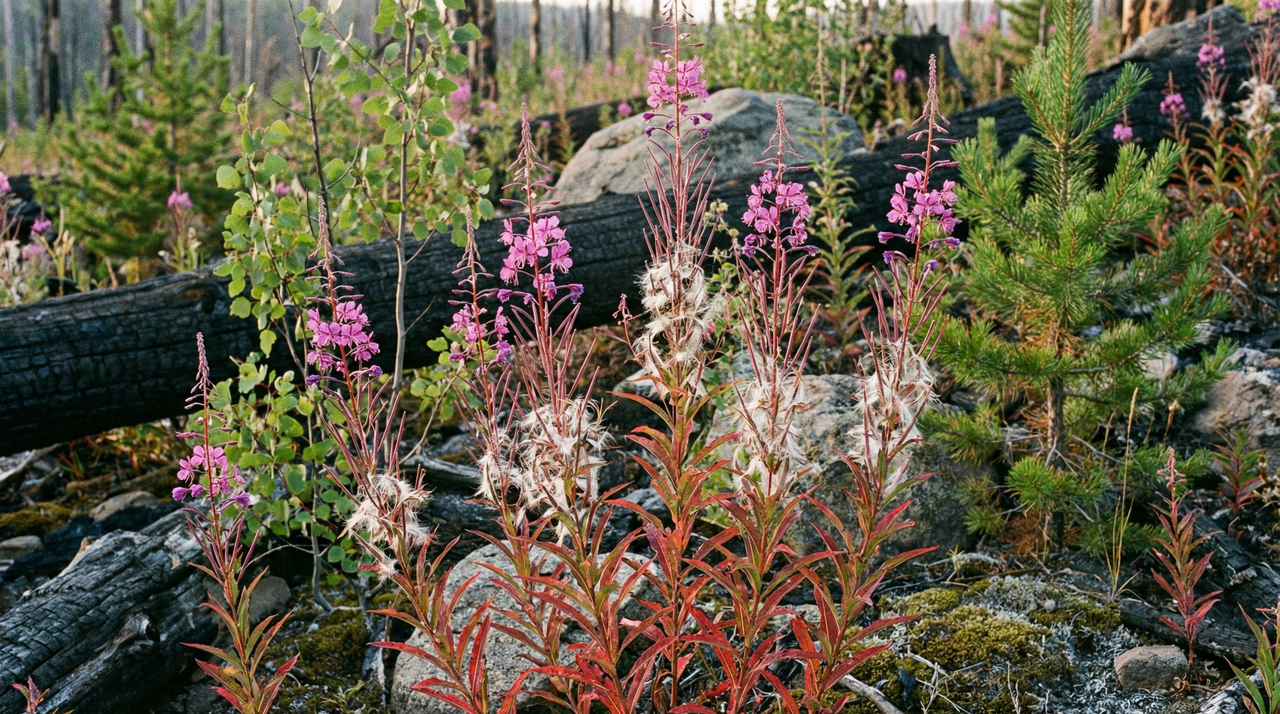
Most people see willowherb for the first time without knowing what it is: a blaze of magenta racing up a burned hillside, covering ground that was ash and char just weeks before. What stops me every time isn't the color, though that's genuinely stunning. It's the speed. I've watched fireweed colonize a logging clear-cut so aggressively that by midsummer you couldn't see the stumps. One season. That's not a metaphor; that's what this plant actually does.[1] And yet somehow, despite being one of the most ecologically important pioneer plants in the entire Northern Hemisphere, it spends most of its life being mistaken for a weed, pulled out of gardens, or simply walked past.
This is also an exceptional food plant. The young shoots taste like mild asparagus with a faint green bitterness that disappears the moment you hit them with heat. Indigenous communities across North America, Siberia, and Scandinavia have eaten it for centuries, brewed it into tea, folded it into pemmican, used it medicinally.[2] A plant that heals burned landscapes and feeds people. I keep waiting for fireweed to get the attention it deserves, and I think we're finally getting there.
Willowherb Origin, History, and Botanical Background
Most gardeners know willowherb, or fireweed, as that tall magenta wildflower that appears seemingly overnight after a landscape gets cleared, burned, or logged. But its reach goes far beyond any single disturbed patch. Epilobium angustifolium, the rosebay willowherb whose scientific name translates roughly to "narrow-leaved epilobium," is native to temperate and boreal regions across the entire Northern Hemisphere, from Europe and Asia to North America, growing anywhere from sea level up to 10,000 feet and present in 49 U.S. states.[3][4][1] That kind of range tells you something important about what this plant is built for.
Botanical Characteristics and Visual Identification of Fireweed
I've identified fireweed in the wild long before its showy flower spikes appear in midsummer, and the trick is learning to read its early-season look: reddish stems, softly hairy, rising cleanly from the ground, with long lanceolate leaves that are unmistakably willow-like. That's actually where the common name willowherb comes from. The leaves run 5 to 15 centimeters long, sessile, finely toothed, and glabrous above, arranged alternately up stems that can reach 2 meters or more.[4][5] By midsummer those stems are topped with terminal racemes of four-petaled pink to magenta-purple flowers, 2 to 2.5 centimeters across, opening progressively from the base upward over several weeks.[6]
After flowering, narrow capsules 3 to 8 centimeters long split open into four valves to release thousands of tiny seeds, each one fitted with a silky white coma that catches the wind and carries it remarkable distances.[4][7] Beneath the ground, shallow fibrous roots connect to spreading rhizomes that are the plant's real engine of persistence. Fireweed is a long-lived perennial, polycarpic by strategy, capable of surviving 5 to 20 or more years in the same site while its rhizomes quietly extend its territory year after year.[8][9] This isn't a plant that blooms once and disappears. It settles in.
Fireweed Ecology: Pioneer of Burned Landscapes
The fire ecology of this plant is genuinely dramatic. Fireweed seeds can remain viable in the soil for decades, waiting. When fire removes the competing vegetation and floods the soil with light and nutrients, those seeds germinate fast and in extraordinary numbers.[1][10] It's the same opportunistic response I've watched in other pioneer plants on disturbed edges, but fireweed does it at a scale that's hard to ignore. A single plant can produce between 10,000 and 80,000 seeds in a season, and its rhizomes can spread a colony by 10 to 20 meters in favorable conditions.[11][4] Those roots and rhizomes are also doing real ecological work: stabilizing bare slopes, reducing erosion on stream banks, and facilitating the slow succession of shrubs and trees that will eventually follow.[12][13] It tolerates acidic to alkaline soils across a pH range of 4.5 to 8.0, handles drought, flooding, and subarctic cold, and grows well from cool temperate zones all the way into boreal climates.[9]
Traditional Indigenous Uses and Cultural Symbolism
Long before fireweed became a subject of restoration ecology papers, Indigenous peoples across its native range had deep and practical relationships with it. Inuit communities boiled the young shoots and added leaves to pemmican; Siberian groups prepared the roots as a dietary staple; across North America, many nations brewed leaf tea for digestive complaints.[14][15][16] These are representative examples rather than an exhaustive catalog, but together they sketch a picture of a plant that people knew how to use across an enormous geographic and cultural range.
What strikes me most, from a regenerative-gardening perspective, is the symbolic weight fireweed carries in many Indigenous traditions: hope and healing after destruction. Seeing a burned hillside carpeted in magenta within a single season gives that symbolism real weight. The plant's behavior after fire isn't just ecology; it's the kind of observation that builds traditional knowledge over generations.
Global Spread and Introduction History
Fireweed's ornamental appeal eventually carried it well beyond its native hemisphere. It was introduced to New Zealand and Australia in the late 19th century through horticultural trade, primarily as an ornamental, and its wind-borne seeds did the rest, naturalizing rapidly across disturbed sites in both countries.[17][18] In my work helping clients introduce native plants into their landscapes, I've seen firsthand how fireweed's enthusiasm for new ground can surprise people. It isn't invasive across its native range, but in areas where it has no ecological context or natural checks, its rhizomatous spread and prolific seed output can tip it toward weedy behavior. That history is a useful reminder that the same traits making it a gifted ecological healer in one place can make it a management challenge in another, which is exactly why I steer clients toward using it in restoration settings rather than small ornamental beds where it can quickly overwhelm more delicate companions.
Notable Facts About Fireweed
Fireweed's reproductive toolkit is beautifully engineered for rapid colonization.[11] Rhizomes extending the colony by meters every year.[1] I've watched a single volunteer plant in a cleared bed turn into a solid colony within two growing seasons, and I wasn't even in a post-fire landscape. In a burned or freshly logged site with no competition, these numbers translate into a magenta carpet that spreads faster than most people expect. That speed is exactly why land managers and restoration practitioners use it deliberately: it stabilizes bare, eroding ground, builds biodiversity, and holds the site while slower species get established.[12] The plant's gifts come packaged with vigorous ambition, and understanding that from the start shapes every decision about where and how to grow it.
Willowherb Varieties and Where to Buy
Willowherb doesn't have the breeding history of, say, a modern daylily or a named tomato series. What exists instead is a small, tasteful collection of ornamental selections layered on top of the straight species, and honestly, that suits the plant's character perfectly. Epilobium angustifolium has been doing its own thing across the boreal and temperate Northern Hemisphere for millennia; it doesn't need a lot of human tinkering to be useful or beautiful.
Notable Cultivars and Subspecies of Willowherb
The three cultivars you're most likely to encounter are 'Alba' (also sold as 'Album'), 'Mount St. Helens', and the double-flowered 'Contessa'.[19][20][5] 'Alba' is the one I've used most in meadow-style guilds, where its white flowers create contrast without competing visually with the magenta of straight-species stands nearby. 'Mount St. Helens' is notably more compact, which matters in a layered planting where you want season-long pollinator support from fireweed without it dominating shorter companion species. I've placed it at the edge of mixed native plantings where the full-size species would have crowded out everything around it. 'Contessa' is rarer and harder to source; the double flowers are striking but, in my view, trade some of the open-faced quality that makes fireweed so valuable to bees.
Below the cultivar level, the species breaks into two subspecies: E. angustifolium ssp. angustifolium and ssp. circumpolaris, with North American populations often referenced as var. angustifolium or var. macranthum.[1] These aren't garden-center selections; they're wild ecotypes chosen for ecological restoration, and that's exactly how they should be used. The related great hairy willowherb (Epilobium hirsutum), sometimes called great willowherb, has a white-flowered 'Album' selection of its own,[19] but that's a different species with different habits, and the cultivar options there are even more limited than with rosebay willowherb.
Sourcing Willowherb Plants and Seeds
While its aggressive growth surprises some gardeners, fireweed is native across the United States and is not classified as invasive or listed as a noxious weed at the federal or state level.[21][22][23] Buying it from a native-plant specialist directly supports regional seed stock and biodiversity rather than risking ecological harm. I regularly recommend it for disturbed-soil restoration in the Southeast precisely because it carries none of the baggage that more aggressive pioneer species do.
For seed, suppliers like Prairie Moon Nursery, Ernst Conservation Seeds, and Roundstone Native Seed are good starting points. Larger restoration projects can often source bulk seed wholesale from the same regional specialists. In my experience, cold-stratified seed purchased from reputable native-plant sources is the most economical path when you're covering a significant area. For smaller gardens, potted starts from a specialty nursery give you faster establishment, and that's usually where you'll find named cultivars like 'Alba' if they're in stock at all. 'Alba' tends to move quickly and isn't always available; I've had to get on waitlists more than once. Pricing isn't standardized anywhere and shifts with season, region, and whether you're buying seed versus plants,[24][4] so check nursery sites directly for current figures rather than relying on any single reference.
Willowherb Propagation and Planting Guide
Fireweed didn't earn its reputation as nature's first responder by being fussy about reproduction. This plant has evolved two remarkably efficient strategies: a seed so perfectly engineered for wind travel that it can colonize a burned hillside within weeks, and a rhizome system that expands steadily year after year once a colony gets going. Understanding both strategies is what makes the difference between a frustrating first attempt and a thriving patch.
Seed Characteristics, Dormancy, and Germination Requirements
Each fireweed seed is tiny, between 0.8 and 1.2 mm long and weighing just 0.02 to 0.05 mg, with a 10 to 15 mm white silky pappus that carries it on the wind.[4][25] Handling a seed packet for the first time is genuinely surprising. These are almost more like dandelion fluff than conventional epilobium seeds, and getting them to behave in a tray takes a little strategy.
The main hurdle is physiological dormancy. Seeds need either cold moist stratification (30 to 90 days at around 4°C) or exposure to smoke before they'll wake up, mimicking the post-fire conditions they evolved to exploit.[26][27] Northern populations tend to need the longer end of that range. Once dormancy is broken, surface sow onto moist growing medium and don't cover the seed: germination requires light.[28] At 15 to 20°C, fresh seed germinates in 10 to 30 days at rates of 70 to 90 percent.[27] If you dry willowherb seeds down to 3 to 5 percent moisture and seal them in an airtight container at cool temperatures, they can hold viability for 10 to 20 years.[29]
Willowherb seedlings are easy to miss in the flat. They look a bit like small willow leaves pressed into a rosette, slender and slightly pale green. I always tell gardeners to mark their trays clearly, because in a bench of mixed starts these can get potted up as "mystery plants" far too easily. Once you know what you're looking for, they're distinctive enough.
One genetic note worth keeping in mind: fireweed outcrosses at rates above 90 percent, so seed-grown plants will be genetically variable and may hybridize with related species like E. ciliatum.[30][31] For restoration planting or pollinator strips, that variability is a feature. For culinary selections or named ornamental cultivars, go vegetative.
Vegetative Propagation: Cuttings and Division
I've started fireweed both ways, and if you want a usable patch within a single season, division is your friend. Separating rhizomes from a mature clump in spring or fall and replanting immediately gives you near 100 percent success.[32][33] The divisions I planted in April were flowering by late June of that same year. Seed-grown plants needed considerably more patience before they got there.
Softwood cuttings are the other reliable route. Take 4 to 6 inch sections from non-flowering shoots in early summer, stick them into a moist perlite-sand mix, keep humidity around 70 to 80 percent, and they'll root in 3 to 4 weeks.[34][35] A little rooting hormone and bottom heat speeds things up but isn't strictly necessary with healthy material. Grafting and tissue culture aren't worth considering for home use; seed, cuttings, and division cover every practical scenario given how vigorously this plant grows.[36]
Soil, Site Selection, and Sunlight Needs
One reason fireweed is so useful in permaculture edges and restoration patches is that it doesn't demand good soil. It colonizes rocky, nutrient-poor, and heavily disturbed ground with ease, adding organic matter back through rapid biomass turnover.[1] That said, it performs best in moist, well-drained loamy or sandy soils in the pH range of 5.5 to 7.0, with 6.5 sitting near the sweet spot.[5][37] I always test before planting in reclaimed beds because even a half-point swing outside that window shows up in slower establishment. Drop below 5.5 and you risk iron chlorosis; push above 7.5 and phosphorus uptake becomes limited.[38]
Drainage matters more than most people expect. Fireweed develops a taproot that can reach 50 to 150 cm in well-drained conditions, which explains its drought tolerance once established.[39] Prolonged waterlogging is a different story: wilting, yellowing, and mushy roots are the warning signs, and they appear faster than you'd expect in a plant with this reputation for toughness.[40]
For light, be direct about the requirement: 6 to 8 hours of full sun daily is the minimum for good vigor, flowering, and seed set.[41] It tolerates brief afternoon shade in hot climates, but in prolonged partial shade it gets leggy and stingy with flowers. I've seen it planted on a woodland edge where someone assumed "partial shade is fine" and the stand was half the height and barely bloomed.
Spacing, Planting Technique, and Timeline to Maturity
Space willowherb plants 12 to 18 inches apart in garden settings.[5] In my early plantings I learned to go 18 inches minimum or be ready to thin every other year, a lesson that saves serious weeding time later because rhizomes spread up to 1 meter per year under good conditions.[33] For restoration work the math is different: 10 to 20 plants per square meter gets you the dense coverage that actually holds disturbed soil.[9]
Transplants outperform direct seeding at establishment: expect 70 to 90 percent survival from transplants versus 40 to 70 percent from direct sowing.[9] The USDA recommends fall seeding or spring to fall transplanting, which aligns with the plant's natural colonization timing.[5]
Set realistic expectations for the timeline. From seed, a willowherb plant germinates in 10 to 30 days, spends the first year forming a basal rosette, flowers in its second summer, and reaches full perennial maturity with reliable seed production by year two or three.[1][42] The encouraging part for foragers: if you start seed early enough, you can harvest tender spring shoots from first-year plants the following season without waiting for flowers.[33] Division short-circuits that whole waiting period, which is why I always recommend acquiring a nursery plant first and expanding from there.
Willowherb Care Guide: Growing Fireweed Successfully
Fireweed has a reputation for toughness, and that reputation is mostly earned. But I've watched enough gardeners struggle with leggy, flower-shy plants to know that "low maintenance" doesn't mean "no attention required," especially in the first year. The trick is learning to give it what it actually wants rather than what you'd give a typical garden perennial.
Water Requirements for Fireweed
During establishment, willowherb needs consistently moist, well-drained soil, roughly one inch of water per week.[5][43] I've raised first-year seedlings that wilted dramatically during a single dry week while mature clumps two feet away looked perfectly fine. That gap in drought tolerance is real, and it narrows considerably after the plant's first full growing season. Once established, deep watering every seven to ten days during dry spells is usually enough, letting the top inch of soil dry slightly between sessions.[3][44] Prolonged drought still reduces vigor and cuts flower production even in mature plants, so don't abandon irrigation entirely in a dry summer.
Learn to read the plant rather than the calendar. Overwatering shows up as yellowing leaves and wilting despite wet soil, which is the root rot signal you don't want to ignore.[45] Underwatering looks like leaf curl, browning tips, and stunted growth. If you have access to collected rainwater, use it; it sits at an ideal pH and low salinity that fireweed genuinely prefers.[46] Tap water works fine if you let it sit overnight to off-gas chlorine.
Fertilizing and Feeding Fireweed
This is where I've seen the most well-intentioned mistakes. Fireweed is a pioneer of post-fire clearings, roadsides, and nutrient-poor disturbed soils; it genuinely does not need fertilizer in natural or restoration settings.[47][48] I learned this the hard way: my first fireweed bed got a generous layer of compost at planting, and the plants were lush and gorgeous and produced almost no flowers. Rich soil pushes nitrogen uptake, which drives vegetative growth, floppy stems, reduced blooming, and increased spreading.[49]
If your soil is genuinely depleted, a single spring application of a balanced, low-nitrogen formula like 10-10-10, or a thin layer of compost, is all it needs.[50] Uniform yellowing throughout the plant signals nitrogen shortage; purplish leaf color with reduced flowering suggests phosphorus deficiency; scorched leaf margins point to potassium.[51] Use those cues to diagnose before reaching for a fertilizer bag.
Frost Tolerance and Cold Hardiness
Few perennials match fireweed's cold credentials. Because established root systems are so well adapted to profound cold, they simply wait out the deepest freezes securely underground.[5][52] The roots are tough. The new growth is not. Emerging shoots are vulnerable to damage at just -5 °C to -10 °C, so a late frost in early spring can set the plant back significantly.[53] I always label my fireweed rows carefully because those first shoots look deceptively similar to other early-spring perennials until the characteristic reddish tint appears. A single layer of frost cloth over newly emerged shoots buys you real insurance.
Heat Tolerance and Summer Management
Fireweed is fundamentally a cool-summer plant, rated AHS Heat Zones 1-6 with optimal growth between 15-25 °C.[54] It can handle brief highs of 30-35 °C if nights cool down, but sustained heat combined with drought produces the full stress picture: wilting, chlorosis, and visibly reduced flowering.[55] I use the same afternoon-shade strategy for fireweed that I use for bleeding heart: site it where it catches morning sun and escapes the worst of the afternoon heat. Add two to three inches of organic mulch and keep moisture consistent, and the plant recovers surprisingly well when temperatures moderate.[56] Caring for a fringed willowherb or any Epilobium in a warmer garden really comes down to siting and mulch more than anything else.
Light Needs and Site Selection
Full sun to partial shade, with at least six to eight hours of direct light daily, gives the best flower production.[3] Less light means fewer blooms and lankier stems. I tend to place fireweed where it gets strong morning sun and dappled afternoon cover, which mirrors the woodland-edge and forest-clearing habitats it colonizes naturally. In cooler climates, a fully open site works beautifully; in warmer zones above 7, that afternoon shade shifts from optional to genuinely important.
Pruning, Maintenance, and Seasonal Care
The two tasks that keep willowherb a welcome garden plant rather than a determined colonizer are deadheading and division. Cutting spent flower spikes promptly extends bloom time and, more critically, prevents the thousands of wind-carried seeds each plant produces from dispersing across your garden.[57] In my experience, cutting spent spikes back to the ground in late summer is the single most effective step for preventing unwanted seedlings the following spring, while still leaving the rhizomes intact to store energy for next year.
Each spring, clear away dead foliage and pinch young shoots to encourage bushier growth rather than a single tall spike.[57][58] I divide my clumps every three years or so, not because the plant demands it, but because it's the easiest way to share divisions with neighbors while keeping the patch from creeping beyond its welcome boundaries. Stems can reach six feet in good conditions and may need staking in exposed, windy spots.[50] A two-to-three-inch layer of organic mulch handles moisture retention, weed suppression, and temperature regulation in one go, which means less work overall and a steadier, more resilient plant through summer.
Harvesting Willowherb (Fireweed)
What I love about fireweed is that it keeps giving from April through October if you know what to look for. Most foragers discover it through the spring shoots, but the plant offers something useful at nearly every stage of its season. That's a rare quality in a wild edible, and it rewards people who pay attention to the plant rather than just showing up once.
When to Harvest Willowherb: Timing for Shoots, Flowers, and Seeds
Spring shoots are where I always start. The window is brief: harvest when they're between 4 and 8 inches tall, typically April through June depending on your elevation and latitude, before any flower buds appear.[3] Once the plant starts pushing toward bloom, the shoots toughen and their mild sweetness shades toward bitterness. I've learned to taste a small piece raw right in the field -- the moment that crisp snap is gone and bitterness creeps in, I stop harvesting that patch and let it flower instead.
Flowers follow from June through September, peaking in July and August when the blooms are fully open and vibrantly pink-purple.[1] Seeds ripen roughly 30 to 45 days after flowering, though in cooler northern regions that window can stretch to 50 days, and in warm conditions it can compress to 25.[59][60] Watch for the pods to dry and split open into fluffy white tufts -- that's your cue. If you've planted willowherb from seed rather than foraging wild stands, expect to wait one to three years before the colony is mature enough to harvest meaningfully.[36] Over-harvesting a first-year planting is a common early mistake, and it sets the colony back considerably.
How to Harvest and What Willowherb Tastes Like
Young shoots, leaves, stems, flowers, and roots are all edible, each at its own moment in the season.[3] For shoots, I pinch or cut the top several inches rather than pulling the whole stem -- this encourages branching and extends the harvest window by a few weeks. Flowers are best picked individually at peak bloom; grabbing whole flower clusters tends to damage developing seed heads you might want later. Roots can be lifted in spring or fall, but because fireweed spreads readily by rhizome, I only ever take a few from the outer edge of a patch so the main colony stays intact for next year's bloom.
Yield, Flavor Profiles, and Texture of Different Parts
Early shoots possess a delightful snap -- slightly sweet, a little nutty, with a clean earthy scent when raw.[8][61][62] The flowers carry a honey-floral sweetness that makes them obvious candidates for jelly and tea; roasted roots go sweet and carrot-like, or can be dried and ground into flour.[8][63]
Texture shifts noticeably with heat. Raw young parts are crisp and clean, perfect for salads, but cooking turns them mucilaginous in a way that reminds me of okra or young mallow leaves from my Florida garden -- not unpleasant, just something to work with rather than against.[62][61][64] Older material can develop mild bitterness, but there's no strong astringency or lingering aftertaste across any part. Richer soils tend to produce plumper, sweeter shoots, but the honey note in the flowers stays remarkably consistent regardless of site -- something I've noticed across many seasons of harvesting the same colonies year after year.[63] Each harvest window brings its own distinct flavor, which means the different parts complement rather than duplicate each other in the kitchen.
Willowherb (Epilobium angustifolium) Preparation and Uses
Culinary Uses and Edibility of Fireweed
Fireweed earns its place in the forager's kitchen through sheer generosity: young shoots, willowherb leaves, flowers, and tuberous roots all have their moment across the growing season, with shoots and leaves best in spring, flowers through summer, and roots harvested in fall.[65][1] I've eaten the spring shoots raw straight from the patch, and the flavor genuinely surprised me the first time: delicate, slightly floral, with a clean, satisfying snap. I get a better result from brief steaming rather than a hard boil, which can dull the flavor and leave you with something vaguely stringy.
Young leaves go well raw in salads or wilted into a spinach-like green, while the flowers bring a mild sweetness to garnishes and make a genuinely lovely tea with hints of rose and mint.[1][63] If bitterness is an issue with older leaves, a 5 to 10 minute boil resets things; stir-frying and pickling are also solid options.[1] The fall roots can be roasted, boiled, dried into flour, or eaten fresh, though they sometimes need that boil to temper any sharpness.[1][15] Beyond those basics, the plant turns up in jams, jellies, syrups, and infusions, and as a pioneer species of disturbed soils, it carries a respectable load of vitamins A and C that makes foraging it feel like a genuine nutritional win rather than a novelty.[1][66]
One thing I always tell foraging friends: harvest from clean, undisturbed sites, start with a small amount, and wait before eating more.[1] And please don't assume this applies to the whole genus. New Zealand willowherb (Epilobium melanocaulon) has no documented history of safe consumption in any major food-plant database, and I cross-check multiple sources before I experiment with any related species.[67][68]
Medicinal Preparations and Herbal Uses
For herbal use, harvest young leaves, stems, and flowers and dry them quickly in a shaded, well-ventilated spot at under 40°C (104°F), or run a dehydrator on its lowest setting. Drying takes one to two weeks depending on humidity. I've found that in warmer, wetter climates you really can't dawdle here; slow drying at too much heat strips out the volatile compounds you're actually after. A standard willowherb tea runs one to two teaspoons of dried aerial parts per cup of boiling water, steeped and taken two to three times daily, with tincture preparations typically landing at one to two milliliters two to three times daily.[69][70]
Maori traditions around New Zealand willowherb used leaves and stems prepared as decoctions, poultices, and infusions at similar dosages, which is a useful reminder that herbal use varies meaningfully across the genus even when the methods rhyme.[71][72] The practical takeaway is to know your species before you brew anything. If you're pregnant, nursing, or on medications, check with a healthcare provider first; the research is promising but human clinical trials remain limited, and none of this replaces professional guidance.
Willowherb Health Benefits and Medicinal Uses
After years of working with pioneer plants in restoration landscapes, I've noticed something that still strikes me as quietly remarkable: the same chemistry that lets fireweed colonize a burn scar and endure environmental stress also seems to calm inflammation in the human body. That's not coincidence. It's the plant's own survival toolkit, and we've been borrowing from it for a very long time.
Traditional and Modern Medicinal Research on Willowherb
Indigenous peoples across North America, Siberia, and Europe used fireweed (Epilobium angustifolium) for digestive complaints, urinary tract conditions, prostate health, skin wounds, and respiratory issues, with roots sometimes applied as a purgative and the stem's latex used topically on wounds.[73][74][75][76] Māori healers in New Zealand applied Epilobium melanocaulon to boils, sores, and urinary conditions, while Native American communities used the closely related fringed willowherb (Epilobium ciliatum) for wound healing and respiratory complaints.[77][74] The consistency across cultures separated by oceans suggests these weren't accidental discoveries.
Modern research has started to catch up. Fireweed extracts show strong antioxidant activity, reaching up to 80% DPPH radical scavenging at 100 μg/mL, and the anti-inflammatory effects work through NF-κB inhibition and measurable reductions in TNF-α and IL-6.[78][79] Antimicrobial activity against Staphylococcus aureus, E. coli, and Candida albicans has also been documented, driven largely by ellagitannins, particularly oenothein B.[76][80] Preclinical studies also point toward wound healing through upregulation of growth factors like VEGF and TGF-β, plus analgesic, diuretic, and antidiabetic potential via enzyme inhibition, though these findings come from in-vitro and animal models.[81][82] Human clinical trials are limited; the strongest evidence involves modest improvements in urinary symptoms associated with benign prostatic hyperplasia.[83][84] The genus is genuinely promising, but honest engagement with willowherb benefits means acknowledging we're still waiting on robust human data.
Key Phytochemicals in Willowherb
The medicinal effects described above don't happen by accident. Leaves and flowers carry the highest concentrations of active compounds, with total phenolics ranging from 10 to 15% of dry weight and flavonoids reaching up to 20 mg/g.[85][86] The key players are hydrolyzable ellagitannins (especially oenothein A and B), flavonoids including quercetin, kaempferol, and myricetin glycosides, plus phenolic acids like rosmarinic and chlorogenic acid, ursolic acid, coumarins, and saponins.[87] These compounds work synergistically in crude extracts, producing greater antioxidant and antimicrobial effects than isolated fractions alone.[88] That's one reason a simple tea can be effective in ways that a purified supplement of any single constituent might not be.
Concentrations shift meaningfully with environment and timing. Plants flower in peak summer, and that's when total phenolics and flavonoids are highest.[89] At elevations above 1000 m, increased UV exposure drives higher ellagitannin production.[90] These compounds exist first to serve the plant, functioning as herbivore deterrents, allelopathic agents, and pollinator signals, and that ecological role gives them their potency for us, too.[91] E. melanocaulon and E. ciliatum share similar flavonoid and ellagitannin profiles, including oenothein B, which supports their traditional applications even though the analytical data for those species is thinner.[92][84]
Nutritional Profile of Willowherb
You don't have to approach fireweed as medicine to benefit from it. I include young spring shoots in garden salads and brew the leaves into tea during foraging season, and it's genuinely good eating. Young shoots up to about 10-15 cm, tender leaves, and flowers are all edible raw or cooked, with the shoots functioning as a crisp, delicate spring green.[3][1] By midsummer, the leaves develop noticeable bitterness and toughness; catch them early and you're rewarded with something genuinely delicious rather than medicinal-tasting.
Nutritionally, it's a solid wild green: roughly 35 kcal per 100 g, about 3 g of protein, 3 g of fiber, 50-100 mg of vitamin C, around 100 mg calcium, and 300 mg potassium, along with vitamin A and magnesium.[93][94] The values are approximations from small studies and will vary by location and season, but even conservatively, this is a genuinely nutritious edible with high antioxidant capacity that any forager or kitchen gardener would be glad to have available.
Safety Considerations and Contraindications
Willowherb is non-toxic. It contains no alkaloids, cyanogenic glycosides, or other major toxins, and it has a long, cross-cultural history of consumption as both food and medicine.[8][95] Eating a lot of it at once may cause mild gastrointestinal upset, but that's the extent of the overconsumption risk for most people.[1]
That said, some situations call for real caution. In my work with clients, I'm direct about this: if you're pregnant or breastfeeding, avoid using willowherb medicinally. The data on possible hormonal effects is limited but meaningful enough to take seriously.[96][97] If you're on anticoagulants, diuretics, or blood sugar-lowering medications, check with your healthcare provider first, because the plant's mild diuretic and anti-inflammatory activity can produce additive effects.[98] The same caution applies for E. melanocaulon, and for all species, avoid harvesting from roadsides, industrial areas, or any site with potential soil contamination, since E. ciliatum in particular has been noted for possible heavy metal accumulation.[99][100]
On identification: I've learned to double-check the hairless stems and distinctive 2-3 cm pink flowers before harvesting, because in the field, fireweed can be confused with purple loosestrife or other willowherbs, and that's an easy mistake to make.[1][101] Get the ID right, harvest from clean ground, and properly identified willowherb is a safe, genuinely useful plant for both the kitchen and a home herbal practice.
Pests and Diseases of Willowherb (Fireweed)
Natural Defenses and Pest Resistance
Fireweed earns its reputation as a tough pioneer partly because it comes chemically armed. The plant produces high concentrations of ellagitannins like pedunculagin and casuarictin, along with flavonoids and salicylic acid, that make its tissues genuinely unpleasant for generalist feeders.[102][103] I've nibbled young fireweed leaves in the field and the astringency is immediately obvious, which tells you something real about why many insects simply move on. Layered on top of that chemistry, glandular trichomes on the stems and leaves act as a physical trap for small insects and a deterrent for larger herbivores.[104] Below ground, its associations with arbuscular mycorrhizal fungi strengthen systemic defenses even further, improving the plant's nutritional status and priming its immune responses.[105] The result is a plant with moderate to strong resistance across a wide range of insect pressures.[36][48]
Common Insect Pests and Integrated Management
Aphids are the pest you're most likely to actually see on willowherb in a garden setting. Species like Macrosiphum euphorbiae and Pleotrichophorus brevicornis cluster on the tender new growth in late spring, causing leaf curling and reduced vigor, and can occasionally vector viruses.[36][106] I watch for them on the top few inches of new shoots and hit colonies early with a strong hose blast before populations build. In a polyculture planting, ladybugs usually handle it from there without any intervention from me. Leaf beetles (Chrysolina fastuosa and related species) are the next most notable concern, capable of skeletonizing foliage during outbreaks in dense stands.[107][108] Beyond those two, a range of secondary pests including leaf miners, stem borers, cutworms, and sawflies can appear depending on region and habitat, though none are consistently severe across all growing conditions.[36] The willowherb hawk moth caterpillar (and related Lepidoptera like Rheumaptera hastata) feeds on foliage but rarely causes lasting damage to an established plant with the growth rates fireweed puts on.
My management philosophy here is fully IPM: support the predators, diversify the planting, and only reach for insecticidal soap or Bt as a last resort.[109] Broad-spectrum pesticides undermine exactly the beneficial insect community that keeps this epilobium weed-adjacent species in check. No specific cultivars have been bred for pest resistance; the ornamental selections like 'Album' and 'Mount St. Helens' were chosen for looks, not toughness.[110] Compared to its relatives, though, fireweed genuinely holds its own. I've grown fuchsia in the same garden and dealt with far more aphid and mite pressure there than I ever have on fireweed.[111]
Disease Susceptibility and Cultural Prevention
Fungal issues dominate the disease picture, and even then, healthy plants in well-sited conditions rarely suffer seriously.[5][66] No major bacterial or viral diseases are widely reported.[112] Rust caused by Puccinia epilobii is the most frequently cited problem, followed by powdery mildew from Erysiphe epilobii, leaf spot from Septoria epilobii, and root rot from Fusarium or Phytophthora in persistently wet soils -- all of them triggered or worsened by humidity, shade, and stress.[113][114] In humid summers, I've found that spacing plants for airflow does far more than any fungicide could. The rapid regrowth does the rest. Remove infected material, skip overhead watering, and the plant typically outgrows the problem on its own.[115] This is a pioneer species built for disturbed, stressed environments; its adaptability makes most disease problems genuinely self-limiting when you give it decent drainage and sun.
Willowherb in Permaculture Design
If there's one plant I reach for when a client hands me a site that's been clearcut, burned over, or scraped raw by construction equipment, it's fireweed. Epilobium angustifolium earns its pioneer reputation not through marketing but through performance: this is a tall herbaceous perennial, typically landing somewhere between two and six feet, occasionally pushing eight feet in rich, moist conditions, that rushes into disturbed ground and immediately starts doing the work of stabilization and succession.[116][21] It belongs in the herbaceous layer of a food forest design, or at the shrub layer edge where sun meets shadow, not tucked into a shaded understory.
Forest Layer and Guild Roles
One misconception I hear often from designers who are new to fireweed is that it must be a nitrogen fixer because it thrives in such impoverished soils. It isn't. What it does instead is form arbuscular mycorrhizal associations that give it a serious advantage at scavenging phosphorus and other nutrients from post-disturbance ground where little else can compete.[117][118] That distinction matters when you're designing guilds: I pair fireweed with actual nitrogen-fixers like lupines, which are natural co-colonizers in many successional landscapes, and let each plant do its particular job rather than expecting fireweed to do everything.[3] Willows, reed grasses like Calamagrostis, and asters are other common companions at this early stage of succession, giving you a loose but ecologically coherent guild that sets the table for whatever woody species come next.
What I love about using fireweed at forest edges and in restoration plantings is how much it delivers while the slower species are still getting established.[3] Its rhizomes knit bare soil together within the first season in a way that clients can actually see, which matters enormously when you need people to trust the process. It suppresses early opportunistic weeds, starts building organic matter, and offers edible and medicinal yields before a single canopy tree has closed its canopy. It's a working plant in every sense, not a placeholder.
Climate and Hardiness Zones
Fireweed is genuinely, impressively cold-hardy. The USDA lists it across zones 2 through 7, sometimes stretching to zone 8 in cooler microclimates, and the RHS gives it an H7 rating, meaning it handles temps below -20°C (-4°F) without complaint; dormant plants have been documented surviving lows approaching -40°C to -45°C.[119][5][120] For context, that's tougher than most of the cold-climate perennials I've worked with in northern gardens. Where it struggles is on the warm end: optimal growth runs between 60 and 75°F, and performance drops off noticeably above 90°F, making it a poor fit for zones 9 and 10 where summer heat is prolonged and relentless.[5][121]
Soil moisture matters here too. It wants consistently moist, well-drained loamy ground, and while it develops moderate drought tolerance once established, extended dry periods will set it back.[122][123] Its elevation range is remarkable, from sea level to over 3,000 meters in the Alps and Rockies, but hot and humid lowlands are where it genuinely fails to thrive.[4][124] If you're working at the southern edge of its range, afternoon shade and a cool, north-facing slope can extend viability considerably. In the coldest zones, a light mulch layer prevents frost heaving and protects the root crown through severe winters.[125]
Ecosystem Functions and Services
The rhizomatous spread that makes fireweed such an enthusiastic colonizer after fire, logging, or clearing is also what makes it highly effective for structural repair. Its aggressive surface coverage locks in loose ground, and wind-dispersed seeds ensure it finds every gap in a disturbed site without any help from the gardener.[3][1] I've watched restoration sites go from raw mineral soil to a closed herbaceous mat in a single growing season, which is as close to ecological magic as this job gets.
On the pollinator side, I've watched bumblebees work fireweed flowers from dawn until dusk on warm summer days, and that observation lines up with what the research shows: nectar and pollen production peaks in the 15 to 25°C range, and the long sequential bloom through summer makes it one of the most reliable mid-season nectar sources I plant for bees, butterflies, hoverflies, and hummingbirds.[126][127] Its flowers are protandrous, meaning pollen is shed before the style elongates and bends to receive it, a design that actively reduces self-pollination and keeps genetic diversity flowing through the colony.[1]
As a succession facilitator, fireweed modifies soil conditions and suppresses early weeds while simultaneously competing for light and nutrients with the grasses and forbs around it.[128][129] Early in my design practice I planted it too densely in a restoration guild and found it crowding out slower-establishing forbs I'd wanted to hold. The lesson was simple: give it room to do its pioneer work, but manage density intentionally so it hands the baton to the next successional layer rather than hoarding the stage. In pollinator gardens, restoration plots, and wildflower borders, it earns its place precisely because it does multiple jobs at once while asking very little in return.[5]
The Plant That Taught Me to Stop Apologizing for Pioneers
I used to hedge when I recommended fireweed, always adding "but watch the spread" before anyone even asked. Then I watched a burned slope outside Asheville come back, fireweed first, and I stopped. Some plants don't need defending. They need space, and the respect of someone who actually pays attention. That's the whole job, honestly, with this one and most others worth growing.
Sources 129
- USDA Forest Service: Fireweed Plant of the Week ↩
- Plants For A Future: Epilobium angustifolium ↩
- USDA PLANTS Database - Epilobium angustifolium ↩
- Flora of North America: Epilobium angustifolium ↩
- Epilobium angustifolium ↩
- Epilobium angustifolium ↩
- Fireweed (Epilobium angustifolium): Plant Guide ↩
- Epilobium angustifolium ↩
- Fireweed (Epilobium angustifolium): Ecology and Management ↩
- Fire Ecology of Fireweed ↩
- Reproductive Biology of Fireweed ↩
- Fireweed (Epilobium angustifolium): A Review of Its Ecology and Use in Revegetation ↩
- Response of Epilobium angustifolium to Disturbance ↩
- Traditional Ecological Knowledge of Fireweed ↩
- University of Michigan's Native American Ethnobotany Database ↩
- Traditional Uses of Fireweed by Indigenous Peoples ↩
- Naturalised and Invasive Plants of New Zealand - Epilobium angustifolium ↩
- Declared Plants of Australia - Willowherb ↩
- Epilobium angustifolium 'Alba' - White Fireweed ↩
- Fireweed (Epilobium angustifolium) Varieties and Cultivation ↩
- Epilobium angustifolium (Fireweed) Profile ↩
- Fireweed - Epilobium angustifolium ↩
- Federal Noxious Weeds List ↩
- USDA PLANTS Database - Epilobium angustifolium ↩
- Seed Morphology and Dispersal in Epilobium angustifolium ↩
- Fireweed (Epilobium angustifolium) Plant Guide ↩
- Seed Dormancy and Germination in Fireweed ↩
- How to Grow Fireweed ↩
- Seed Storage Behaviour of Epilobium angustifolium ↩
- Breeding System and Gene Flow in Epilobium angustifolium ↩
- Genetic Variation and Population Structure in Fireweed (Epilobium angustifolium) ↩
- Vegetative Propagation Techniques for Native Plants ↩
- Epilobium angustifolium: Biology and Ecology ↩
- Propagation of Fireweed (Epilobium angustifolium) ↩
- Native Plant Propagation Guidelines: Epilobium spp. ↩
- Fireweed: Biology and Management ↩
- pH Tolerance in Pioneer Plants ↩
- Fireweed (Epilobium angustifolium) Habitat and Ecology ↩
- Root Architecture of Fireweed (Epilobium angustifolium) in Post-Fire Succession ↩
- Drought and Waterlogging Tolerance in Epilobium angustifolium ↩
- Epilobium angustifolium - Missouri Botanical Garden ↩
- Growing Fireweed from Seed ↩
- Royal Horticultural Society: Epilobium angustifolium Growing Guide ↩
- University of Minnesota Extension: Drought Tolerance of Native Perennials Including Fireweed ↩
- Royal Horticultural Society: Epilobium angustifolium ↩
- Tolerance of Epilobium angustifolium to Environmental Stressors ↩
- USDA Plant Guide: Fireweed (Epilobium angustifolium) ↩
- Kew Gardens: Epilobium angustifolium Plant Fact Sheet ↩
- Nitrogen and Phosphorus Uptake in Epilobium angustifolium after Bushfire ↩
- Missouri Botanical Garden: Fireweed (Epilobium angustifolium) Plant Profile ↩
- Ecological Adaptations of Epilobium spp. in Oligotrophic Soils ↩
- Royal Horticultural Society: Epilobium angustifolium ↩
- Cold Hardiness of Native Alaskan Plants ↩
- Missouri Botanical Garden: Epilobium angustifolium (Fireweed) ↩
- Physiological Responses of Fireweed to Environmental Stress ↩
- Royal Horticultural Society: Epilobium angustifolium ↩
- Missouri Botanical Garden: Epilobium angustifolium (Fireweed) ↩
- Royal Horticultural Society: Epilobium angustifolium ↩
- Phenology of Fireweed (Epilobium angustifolium) in Alaska ↩
- Seed Development in Epilobium angustifolium ↩
- Fireweed: Foraging, Nutrition & Identification ↩
- Fireweed Edibility and Uses ↩
- Fireweed: Edible and Medicinal Uses ↩
- Fireweed: Foraging, Identification, and Uses - Practical Self Reliance ↩
- USDA PLANTS Database ↩
- Fireweed (Epilobium angustifolium) ↩
- New Zealand Plant Conservation Network – Epilobium melanocaulon ↩
- Kew Gardens – Plants of the World Online ↩
- Fireweed ↩
- Epilobium angustifolium ↩
- Maori Medicinal Plants: Rongoa ↩
- Epilobium Species: A Review of Phytochemistry and Pharmacology ↩
- USDA PLANTS Database - Epilobium angustifolium ↩
- Traditional and Ethnobotanical Uses of Fireweed ↩
- Traditional Uses and Modern Validation of Epilobium Species ↩
- Epilobium Species: A Review of the Medicinal Uses ↩
- Maori Medicinal Plants ↩
- Anti-inflammatory and Antioxidant Activities of Epilobium angustifolium ↩
- Antioxidant activity of fireweed via Nrf2/HO-1 pathway activation ↩
- Antimicrobial properties of Epilobium extracts against bacterial strains ↩
- Wound healing promotion by Epilobium angustifolium through growth factors ↩
- Antidiabetic potential of Epilobium angustifolium extracts ↩
- Efficacy of Epilobium parviflorum extract in benign prostatic hyperplasia: A pilot study ↩
- Epilobium Species: A Review of the Phytochemistry and Biological Activity ↩
- Phytochemical Profile and Biological Activities of Epilobium angustifolium ↩
- Phytochemical constituents of Epilobium species and their pharmacological activities ↩
- Phytochemical and Pharmacological Importance of Epilobium Species ↩
- Synergistic Effects of Flavonoids in Fireweed Extracts on Antimicrobial Activity ↩
- Seasonal Variation of Phenolic Compounds in Epilobium Angustifolium ↩
- Effects of Altitude on Secondary Metabolites in Fireweed (Epilobium angustifolium) ↩
- Chemical Ecology of Fireweed: Secondary Metabolites in Pollinator and Herbivore Interactions ↩
- Phytochemical screening and antioxidant activity of Epilobium melanocaulon ↩
- Nutritional Composition of Fireweed (Epilobium angustifolium) ↩
- Antioxidant Activity and Phenolic Composition of Epilobium angustifolium ↩
- ASPCA - Toxic and Non-Toxic Plants ↩
- Fireweed: Uses, Side Effects, Interactions ↩
- Epilobium Species Community Herbal Monograph ↩
- Herbal Medicines: Epilobium - Uses, Interactions, and Side Effects ↩
- Heavy Metal Accumulation in Wild Plants ↩
- Epilobium Species: A Review of the Medicinal Uses ↩
- Fireweed (Epilobium angustifolium) - Potential Allergic Reactions ↩
- Chemical Ecology of Fireweed ↩
- PubMed SRD: Epilobium Phytochemical Database ↩
- Kew Gardens Fact Sheet: Epilobium angustifolium ↩
- Flora of North America: Epilobium angustifolium entry ↩
- Aphids of the Rocky Mountains: Epilobium Hosts ↩
- Insect Pests of Fireweed ↩
- Herbivory on Epilobium angustifolium ↩
- Integrated Pest Management for Native Plants ↩
- Epilobium angustifolium Cultivars - RHS Plant Finder ↩
- Flora of North America - Onagraceae ↩
- Diseases of Fireweed (Epilobium angustifolium) ↩
- Fungal Pathogens of Epilobium Species ↩
- Fungal Pathogens of Epilobium Species ↩
- Diseases of Fireweed (Epilobium angustifolium) ↩
- Epilobium angustifolium ↩
- Mycorrhizal Associations in Pioneer Species: Case of Epilobium angustifolium ↩
- Fireweed in Ecosystem Restoration ↩
- USDA Plants Database - Epilobium angustifolium ↩
- Royal Horticultural Society - Epilobium angustifolium ↩
- California Native Plant Society - Fireweed Cultivation Notes ↩
- Fireweed (Epilobium angustifolium) - Missouri Botanical Garden ↩
- Drought Tolerance of Fireweed - Journal of Ecology ↩
- USDA Plants Database: Fireweed ↩
- Fireweed (Epilobium angustifolium) Plant Guide ↩
- Pollinator Value of Fireweed ↩
- Missouri Botanical Garden Plant Finder: Epilobium angustifolium ↩
- Restoration benefits of pioneer species in degraded landscapes ↩
- Plant-Plant Interactions in Disturbed Habitats ↩