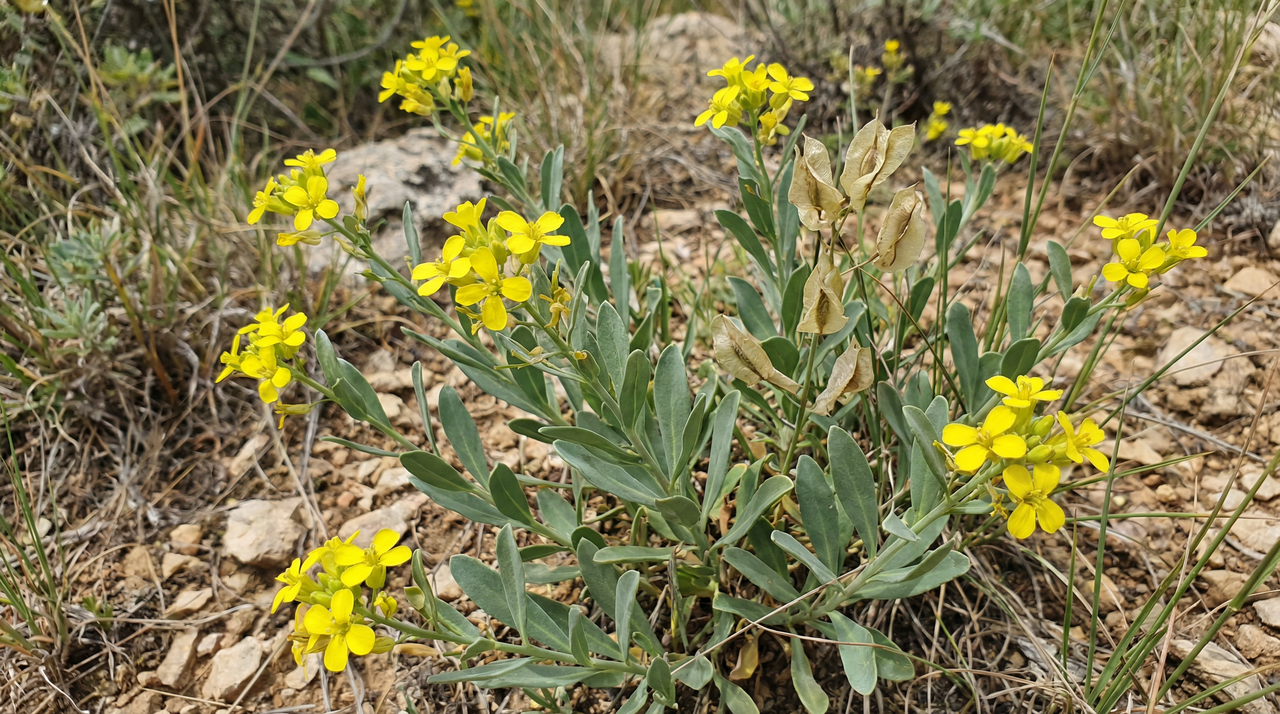
Growing woad means navigating a stark contradiction: this heritage plant produces spectacular natural blues, but its aggressive seeding habits make it a noxious weed in fields across the American West. Julius Caesar wrote that the Britons painted their bodies with it before battle, and for a long time historians treated that as quaint folklore.[1] What's less romantic, and more interesting to me as someone who grows this plant, is that woad powered a multi-million dollar medieval European dye trade for centuries before synthetic indigo made it economically obsolete almost overnight.
Here's what catches most people off guard: the blue isn't really in the leaf. It's locked inside a precursor compound called indican, and you have to ferment and oxidize the plant to coax any color out of it at all. That process is half chemistry experiment, half gamble, and entirely absorbing. I've done it in a five-gallon bucket in my backyard. But growing woad responsibly means sitting with a harder truth too, because in parts of North America, this same heritage dye plant spreads aggressively, poisons surrounding soil, and lands on state noxious weed lists. A plant that built cathedrals and dyed Viking sails is now pulling double duty as an ecological problem. That tension is worth understanding before you order seed.
Woad Origin, History, and Botanical Background
Woad, Isatis tinctoria, is a biennial herbaceous plant in the Brassicaceae family, the same sprawling mustard clan that gives us kale, radishes, and horseradish. Like most of its relatives, it follows a familiar two-act lifecycle: a low basal rosette in year one, then a bolting, flowering, seed-setting finale in year two before dying off.[2][3] It's native to the steppes and disturbed habitats stretching from southeastern Europe and the Mediterranean through western and central Asia, the Caucasus, Anatolia, and into parts of the Himalayas. That range alone tells you something: this is a plant built for rocky, open ground and tough, variable climates.
Here in North America, woad is a very different story. It's classified as a non-native invasive species and listed as a noxious weed in California, Idaho, Oregon, Utah, Washington, Montana, Wyoming, and others, where it has taken over thousands of acres of rangeland.[4][5] A single plant produces between 2,000 and 10,000 seeds, which disperse on the wind and can remain viable in the soil for five or more years.[6][7] I've come across woad spreading through disturbed western rangelands and you know it instantly: crush a leaf and that sharp, mustardy Brassicaceae smell hits you before you've even checked the rosette color. Those blue-green, glaucous leaves are unmistakable once you've seen them. The genus has other interesting members, including polycarpic perennials like Isatis costata and Isatis constricta that flower repeatedly over many years, and high-altitude specialists like Isatis cardiocarpa from Central Asian steppes, but none carry the same fraught ecological baggage in North America that tinctoria does.[8]
Botanical Profile and Visual Characteristics of Isatis tinctoria
In its second year, woad reaches 60 to 120 cm tall, throwing up erect, striated stems from a deep taproot.[9] The leaves are lanceolate to oblanceolate with that signature blue-green cast, and the canopy of bright yellow cruciform flowers arrives in terminal racemes from May through July. After pollination, the plant sets elongated cylindrical siliques, 10 to 20 mm long, each containing a small reddish-brown seed just 1 to 2 mm across.[10] It prefers full sun and well-drained, neutral to alkaline soils, which explains its affinity for disturbed roadsides and overgrazed range.[11]
The genus looks different depending on which species you're examining. Isatis cardiocarpa is easily separated by its cordate (heart-shaped) seed pods, 8 to 12 mm, and its preference for saline or arid steppe soils at elevations up to 4,500 meters.[12] Isatis constricta is a more compact plant, topping out at 30 to 60 cm, with deeply lobed or pinnately dissected leaves quite unlike the smooth oblanceolate foliage of tinctoria.[13] These distinctions matter practically: knowing the genus helps you avoid misidentifying a weed as an ornamental, or vice versa.
Traditional and Cultural Uses of Woad Through the Ages
Woad's dye history stretches back at least 5,000 years, with archaeological evidence placing it at Neolithic Hallstatt sites in Austria around 2,500 to 2,000 BCE and possibly as far back as Bronze Age Eurasian cultures.[14][15] The Celtic ritual use is the part most people know: warriors painting their bodies blue before battle, a practice documented by Julius Caesar, Pliny the Elder, and Tacitus in their accounts of Picts and Britons.[16][17] The symbolism around these Celtic woad tattoos and body paintings was bound up with bravery and warrior identity, which is a far cry from how most of us think about a garden biennial today.
Romans adopted woad for textile dyeing and documented it in Pliny's Natural History, scaling what had been ritual into industry.[18] By the medieval period, cultivation had become a major economic engine across Saxony, Thuringia, Languedoc, and Lincolnshire, with dedicated guilds controlling production and trade for wool dyeing. That economy held until the 17th to 19th centuries, when higher-yielding Asian indigo from Indigofera tinctoria and eventually synthetic dyes dismantled it.[19] I've done small-scale woad fermentation for natural dyeing myself, and even understanding the chemistry makes the medieval guild economy feel less foreign: extracting reliable blue from leaf fermentation is skilled, labor-intensive work.
Medicinal traditions run parallel but differently distributed across the genus. In European herbalism, woad leaves and roots were applied topically for ulcers, inflammation, and sores, even invoked against plague.[20] The more developed medicinal tradition belongs to Isatis indigotica and Isatis cardiocarpa in Asian systems, documented as "Ban Lan Gen" in Chinese medicine since at least the Han Dynasty and used across Kazakh, Kyrgyz, and Uyghur ethnobotanical traditions for fevers, sore throat, and respiratory infections.[21] The clinical antiviral data that's been making headlines recently is largely drawn from indigotica, not tinctoria, a distinction worth holding onto.
Woad as Invasive Species and Modern Revival
The blue in woad comes from indican, a glucosinolate precursor in the leaves that, when fermented in alkaline conditions, converts to indoxyl and then oxidizes in air to insoluble indigo blue, with indirubin (a red compound) as a byproduct. Historical European yields reached 30 to 50 kg of pure indigo per hectare from leaves containing 5 to 10% extract before the industry collapsed under competition from Indigofera.[22][23] The same biochemical pathway that made woad economically indispensable also hints at why the plant's phytochemical profile has attracted renewed pharmacological interest.
In North America, though, the plant's productivity works against it. Woad forms dense monocultures through allelopathy, suppressing native species while its long-lived seed bank keeps re-establishing even after apparent control.[24] The research on seed longevity and allelopathic effects is unambiguous, so anyone wanting to grow it outside its native range needs a genuine containment strategy, not just good intentions. The contrast with its close relative Isatis constricta couldn't be sharper: that species is critically endangered, endemic to California's Kingston Mountains, and has almost no dye tradition behind it.[25]
Modern interest in woad is genuine and growing, driven by the sustainable natural dye movement and by preliminary research into antiviral and anti-inflammatory compounds, particularly indirubin and tryptanthrin, with in-vitro activity against influenza and even SARS-CoV-2 being explored.[26][27] What we have, then, is a plant with a 5,000-year cultural resume, a complicated ecological present, and a cautiously promising future: a heritage dye crop worth growing deliberately and managing responsibly, not one to scatter casually into the landscape.
Woad Varieties and Sourcing
Notable Varieties and Related Species of Woad
Woad varieties rely less on distinct cultivar names and more on centuries of quiet, place-based selection. Modern breeding programs at institutions like the University of Reading and agricultural research groups in Switzerland have pushed dye yields up significantly, with some improved selections producing two to three times the indican content of traditional strains.[28][29][30] But those programs rarely release formal named cultivars to the public.[30][31] What growers actually have access to are landraces: strains from places like Lincolnshire in England and Thuringia in Germany, selected over generations for cold hardiness and high indican production.[31][32] When I've grown packets labeled as European landrace seed from Strictly Medicinal alongside other offerings, the difference in first-year rosette size and leaf vigor has been obvious, even within the same sowing. That variability is exactly why sourcing from dye-focused suppliers matters if your goal is a usable blue.
The named varieties you'll see in heritage seed catalogs, things like 'Dyer's Delight' and occasionally 'Persian Woad' from niche ornamental markets, represent the practical ceiling of what's available to home growers right now. They're worth seeking out over generic unlabeled packets, but don't expect the consistency of a modern vegetable cultivar. You're still working with something closer to a population than a variety.
The broader Isatis genus offers a few cousins worth knowing, mostly for context. Isatis costata, sometimes called Persian woad, is a biennial or perennial from Central Asian mountains, reaching two to three feet with gray-green lanceolate leaves; it's hardy through zones 5-9 and valued for drought tolerance and low-water landscaping.[33][34] Isatis constricta, from Turkey, is a compact perennial adapted to arid conditions with gray-green lance-shaped leaves, useful in xeriscape design but genuinely rare in commerce.[35] Isatis praecox is sometimes treated as a subspecies of I. tinctoria and shows up in a handful of ethnobotanical catalogs, but it has minimal commercial presence and no recognized cultivars.[36] Then there's Isatis cardiocarpa, the heartleaf woad from Central Asia, a perennial with handsome heart-shaped seed pods that might catch your eye in plant lists. Don't order it. It's a federal noxious weed in the United States, prohibited from interstate movement or sale, and listed as a Class B noxious weed in Colorado.[37][38] Full stop.
Where to Buy Woad Seeds and Plants
For Isatis tinctoria seed specifically, the most reliable US-based sources are Strictly Medicinal Seeds, Horizon Herbs, Sheffield's Seed Company, Seed Savers Exchange, Johnny's Selected Seeds, and High Mowing Organic Seeds.[39][40][41] If you want European landrace material, Magic Garden Seeds and Pflanzenvielfalt both ship internationally.[42][43] For dye-specific growers, Botanical Colors occasionally sells domestically grown seed, which sidesteps import paperwork entirely.[44] Expect to pay somewhere between three and ten dollars per packet depending on supplier, purity claims, and whether the seed is certified organic. Live plants are rarely offered, so plan on starting from seed.
If you're sourcing for dye work, quality matters beyond germination rate. Leaves harvested at peak maturity, just before the plant flowers in its second year, carry 0.8 to 1.5% indican content; younger leaves yield brighter blues but lower overall volume.[45][46] Seed from suppliers who specify landrace origin or dye-crop lineage gives you a better starting point than generic unlabeled packets, because the genetic starting point shapes everything downstream.
Now for the part I wish more seed catalogs would print in bold: dyer's woad is listed as a legally restricted noxious weed across many western states, where it competes aggressively with native rangeland vegetation in arid and semi-arid environments.[47][48][49] There are no federal import restrictions on Isatis tinctoria, but state noxious weed laws can govern interstate movement, and the list of affected states changes over time.[50][51] I always check my state's current list before ordering any woad seed. Unlike Japanese indigo, which tends to stay where you put it, woad has a taproot and a seeding habit that make it behave more like a feral mustard once it gets comfortable in dry climates. Check before you order, not after the packet arrives.
Woad Propagation and Planting Guide
Growing woad from seed is the most practical path for almost every gardener, and getting that seed right from the start makes everything downstream easier. Vegetative methods like root cuttings or crown division are possible for clonal replication, and tissue culture exists for conservation work, but neither is something most growers will bother with.[52][53] This is fundamentally a seed story.
Understanding Woad Seeds: Morphology, Storage, and Viability
Woad seeds are small, oblong to elliptical, and brown to dark brown, roughly 2-3 mm long by 1-2 mm wide, with fine longitudinal ridges and no wings.[10][54] One thing I wish someone had told me earlier: young woad seedlings look almost identical to other brassicas for the first few weeks. I now label every flat the moment I sow it, because nothing slows down a dye project quite like realizing your "woad" tray was actually turnip greens.
The good news about woad seeds is that they store exceptionally well. Fresh seed tests at 85-95% viability by tetrazolium and germinates at 50-80% under optimal conditions.[55][56] Stored cool and dry at 4-10°C with low humidity, viability routinely holds for 5-10 years and can exceed 20 years in seed-bank conditions.[57] My personal method: dry the seed until it snaps rather than bends, seal it with a silica packet, and refrigerate it. I've pulled three-year-old woad seed from that setup and still hit germination rates above 80%.
Be thoughtful about where your seed comes from. Woad self-seeds prolifically and is listed as a noxious weed in several western states.[55] Always source from reputable suppliers and grow it in contained beds where you can monitor volunteers, not scattered through a food forest guild where containment becomes nearly impossible.
Germination Timeline and Stratification Needs
Woad seeds have physiological dormancy, and cold stratification is the key to breaking it reliably. Two to four weeks at around 4°C is generally enough for cultivated I. tinctoria.[52][58] In my experience, seeds from good commercial sources germinate reasonably well with a simple 3-week refrigerator chill, while wild-collected material often needs the full 6 weeks or longer before germination evens out.
Expect emergence in 7-14 days when soil temperature sits between 15-21°C (60-70°F), with a minimum soil temperature of around 7°C (45°F).[9][58] That cool-soil sweet spot matters because woad is biennial: it forms a vegetative rosette in year one and bolts, flowers, and sets seed in year two.[59] Autumn sowing lets rosettes overwinter and positions plants to begin dye-leaf production earlier in spring.[60] The decision sequence is simple: store your seed properly, give it a cold chill, then sow into cool, well-drained soil at the right season for your goals.
Soil, Site Selection, and Site Preparation
Drainage is non-negotiable. Woad demands well-drained, loamy or light-to-medium textured soil with a pH of 6.5-7.5, and it tolerates a range of 6.0-8.0.[9][55] Drop below pH 6.0 and you risk iron chlorosis and manganese toxicity; let water sit around the roots and you've lost the plant. Root rot is the most common failure mode I see in first-year woad growers, and it almost always traces back to a poorly drained site or a waterlogged container.
Plan for depth. The taproot needs at least 30-60 cm of loose, friable soil with 2-5% organic matter to develop properly.[61] I think of it like horseradish in that sense: another deep-rooted brassica that punishes shallow or compacted ground. For containers, a mix of roughly 40-50% loam, 30% compost, and 20-30% sand or perlite works well.[9] Full sun, a minimum of 6-8 hours daily, is required for strong growth and good dye quality.[9][61] Keep soil consistently moist through germination and the first four to six weeks after transplanting; once established, that deep taproot makes plants surprisingly resilient through dry spells.[61]
Spacing, Planting Technique, and Early Care
Mature woad plants reach 60-120 cm tall with a spread of 30-45 cm, and most first-time growers underestimate how much room the second-year bolting stems need.[60] I've seen crowded plants lodge badly when they flower, and tight spacing creates the humid microclimate that encourages damping-off, Alternaria, and aphid colonies to take hold.[61] Space plants 30-45 cm apart within rows and leave 45-75 cm between rows; if you're growing primarily for leaf harvest, the tighter end of that range works, but wider spacing helps with air circulation and keeps self-seeding manageable.[60][59]
Direct sow after the last frost or start indoors 4-6 weeks earlier in sterile media using bottom watering to reduce damping-off pressure from the start.[61][60] I grow woad only in contained raised beds now, after learning firsthand how quickly self-sown volunteers appear in adjacent guild plantings. Check your local regulations before ordering woad seeds if you're in the western US; the plant is non-negotiable to contain where it's listed as noxious.
Woad Care Guide: Growing Isatis tinctoria Successfully
Woad is genuinely low-maintenance once you understand what it actually wants, which is quite different from what a first-time grower might assume. Having worked with brassicas for years, I find that the biggest mistakes happen when gardeners either overthink the inputs or ignore the plant's biennial rhythm entirely. Get the fundamentals right and woad largely looks after itself.
Sunlight Requirements for Optimal Growth and Dye Quality
Full sun is non-negotiable here. The woad plant needs at least 6 hours of direct sunlight daily, and in my experience the indigo precursor quality tracks closely with light exposure.[62][63] The pale, floppy plants I've seen growing under tree canopy tell the whole story: insufficient light causes leggy growth, chlorosis, and reduced flowering, and nothing about the harvest is satisfying.[64] Good air circulation around the planting matters too, both for disease prevention and for keeping the canopy open. If you're gardening in a genuinely hot, arid climate, some afternoon shade can prevent leaf scorch on more delicate related species like Isatis praecox and I. cardiocarpa,[65] though I'd address that through mulching and irrigation rather than shade for I. tinctoria itself.
Water Needs and Drought Tolerance
Drainage comes first. Woad wants well-drained loamy or sandy soil with a pH of 6.0 to 7.5, and it simply will not tolerate waterlogged roots.[62][66] During establishment I aim for about half an inch to an inch of water weekly, keeping the soil evenly moist but not saturated. Once plants are settled in, I switch to a deep, infrequent regime: 1 to 1.5 inches weekly through the vegetative phase, pulled back to about 0.75 to 1 inch during flowering, letting the top 5 cm dry out between sessions.[66][67] I used to water far more than that as a beginner, until I realized the taproot reaches 30 to 60 cm and really doesn't need babying.[68]
Established plants are genuinely drought-tolerant, capable of going 2 to 4 weeks without irrigation and performing well in sites receiving as little as 200 to 500 mm of annual rainfall.[68][9] The symptoms of getting water wrong are fairly clear: overwatering leads to soft blackened roots, yellowing leaves, and wilting even in moist soil; underwatering shows up as marginal scorch, stunted growth, and failure to flower.[67][69]
Feeding and Nutrient Management
I soil-test before planting any brassica, woad included, and over several seasons I've adjusted my fertility inputs steadily downward as I learned just how moderate this plant's appetite really is. A balanced 10-10-10 fertilizer applied in early spring, supplemented with compost side-dressings during active growth, is genuinely enough.[70][71] The critical warning I'd pass on is this: excess nitrogen produces exactly the outcomes you don't want, including leggy stems, delayed flowering, and higher pest pressure.[72] For anyone scaling up to field production, general macronutrient guidance for the genus runs to 50 to 150 kg/ha nitrogen in split applications, 40 to 80 kg/ha phosphorus for roots and flowering, and 80 to 120 kg/ha potassium for overall resilience.[73] Sulfur (20 to 40 kg/ha) is worth noting too, since it supports glucosinolate production and may influence dye precursor levels.[73] Deficiency symptoms mirror other brassicas: uniform chlorosis on older leaves signals nitrogen shortage, purplish discoloration points to phosphorus, marginal necrosis suggests potassium, and brittle leaves with poor flowering indicate boron deficiency.[74]
Frost and Heat Tolerance
Cold hardiness is one of woad's genuine strengths. It's rated for USDA zones 4 to 8, survives temperatures down to -29 °C, and holds an H6 rating from the RHS.[75][55][76] That said, young rosettes are more vulnerable than mature plants; frost damage shows up as blackened leaves and wilting, though plants frequently recover from the rootstock come spring.[77] I treat first-winter woad rosettes the way I treat tender brassica transplants: in zones 4 to 5, I cover with 4 to 6 inches of straw; in zones 6 to 8, 2 to 4 inches is enough. Row covers add another 4 to 8 °F of buffer on hard frost nights, and I hold off cutting back dead stems until early spring.[78][79]
The heat picture is almost the mirror opposite. As a cool-season plant, woad grows best between 15 and 25 °C and starts showing real stress above 30 °C, including wilting, leaf scorch, and premature bolting that tanks both leaf yield and dye quality.[9] I've watched it bolt in high summer heat exactly as the research describes, and now I time 30 to 50 percent shade cloth proactively rather than reactively. Keeping 5 to 10 cm of organic mulch over the root zone and maintaining good airflow both help significantly.[80] If you're gardening in an arid climate, Isatis cardiocarpa handles heat and drought better than I. tinctoria and may be a more honest fit for your site.
Seasonal Rhythm and Lifecycle
After growing woad for several seasons, I now watch the rosette size in late fall as my best predictor of strong second-year bloom. The lifecycle is textbook biennial: year one builds a basal rosette, the first winter provides the vernalization that triggers second-year bolting, and then the plant flowers in late spring to early summer (typically May through June), sets seed, and dies.[81] In favorable conditions it can behave as a short-lived perennial, though you shouldn't count on it. Related species complicate the picture slightly: I. constricta and I. praecox straddle biennial and short-lived perennial behavior, while I. cardiocarpa is more reliably perennial.[82] Understanding this rhythm matters enormously for timing leaf harvests and managing self-seeding, both of which I cover in the sections below.
Pruning, Maintenance, and Invasiveness Management
Day-to-day maintenance is light. Keep weeds down to reduce competition, thin to 12 to 18 inches between plants for adequate airflow, and harvest basal leaves before bolting in the second year to encourage lateral growth and extend the leafy phase.[83] That said, the most important maintenance task with woad is seed management, and I say this from hard experience. I once allowed a patch to self-seed freely in a mixed guild and spent the next two seasons pulling volunteers from places I'd never intended to plant. A single mature plant reaches 1.2 to 1.8 meters when in flower and produces an impressive quantity of viable seed.[63][84]
Woad is listed as a noxious weed across parts of the western United States, where it forms dense stands, reduces native plant biodiversity, and exhibits allelopathic effects on neighboring species.[84][85] Check your local regulations before you plant, deadhead spent flower stalks before seed matures if you're in or near any at-risk region, and treat containment as part of standard seasonal maintenance rather than an afterthought.
Harvesting Woad (Isatis tinctoria)
Woad's biennial lifecycle gives you two genuinely different harvest windows, and understanding which one you're in changes everything about how and what you take from the plant. In year one, you're after leaves. In year two, you can harvest leaves again before the plant bolts, then shift your attention to roots or seeds depending on what you're growing it for. Watch the plant, not the calendar; local climate and seasonal rhythms matter far more than any fixed date I could give you.
Optimal Timing and Growth-Stage Cues for Leaves, Roots, and Seeds
For dye work, the target is young, blue-green leaves around 10 to 15 cm long, harvested during the first-year rosette or in the second year before the plant starts to bolt.[86][87] That pre-bolting window is the sweet spot for indican content, and you can come back for multiple cuts every three to six weeks through late spring and summer.[86][88] After running dye trials myself, I've noticed the leaves' sharp, sulfurous smell fades noticeably once bolting begins, which turns out to be a reliable sensory cue that indican levels are dropping. You don't need a lab; just put your nose over the patch.
Medicinal root harvest typically happens in first-year autumn or late fall after the first frost, when precursors concentrate in the taproot.[89][90] For seeds, wait until the second-year pods turn brown or black, feel dry and brittle, and rattle when you shake the stem. Aim to harvest at roughly 70 to 90 percent maturity, somewhere between 40 and 90 days post-flowering, so pods don't shatter before you collect them.[91][92][93] Temperature matters too; harvesting in cool conditions preserves leaf quality, and I've watched a hot spell above 29°C degrade a flush of otherwise-perfect leaves before I could even get scissors on them.
Harvest Techniques and Sustainable Practices
For woad leaves, cut or strip during the target growth stage rather than pulling the whole rosette. For seeds, cut the flowering stems once pods have matured, then thresh them to separate.[91] The tall second-year stalks can lodge badly in wind, so stake or tie them with twine before they're fully upright.[83] My own practice is to bag seed heads before they fully dry, catching any early shatterers before they hit the soil. Woad seeds persist in the seedbank and the plant is classified as a noxious weed in parts of western North America, so managing self-seeding isn't optional; it's part of responsible stewardship.[83][82]
Yield, Flavor Profile, and Important Safety Considerations
Historically, young woad leaves and shoots were eaten as a potherb during famine conditions across parts of Europe and Asia.[94] The flavor is bitter, pungent, and sharp, driven by glucosinolates including glucobrassicin and sinalbin that peak in spring leaves and mellow somewhat by summer.[95][96] Think mustard greens or raw kale cranked past the point of pleasant. Boiling or fermenting traditionally softened that edge, but this is famine food history rather than modern culinary recommendation.
The same glucosinolate chemistry that makes woad medicinally interesting also creates real risks: gastrointestinal irritation, goitrogenic potential, hepatotoxicity in livestock, and contact dermatitis are all documented concerns.[94] Today, woad's value lies in dye and medicine, not the kitchen. Treat edibility as historical context rather than a harvest goal.
Woad (Isatis tinctoria) Preparation and Uses
Woad is not a kitchen plant. It never really was. The historical record holds a few references to young leaves eaten as a potherb or famine food, but that context tells you everything you need to know about when people turned to it for eating.[14][97] I grow woad every season and I've never once thought of it as a harvest for the table. Its real value lives elsewhere.
Limited Culinary Role and Safety Considerations
Young leaves carry a bitter, mustard-heat flavor that signals their glucosinolate load before you've finished chewing.[14][98] I once blanched a small leaf early in my dye-plant years just to understand what I was growing. The lingering bitterness and mustard burn immediately made clear why woad never became a culinary herb. Boiling or blanching reduces glucosinolate content by roughly 30 to 70 percent,[95][99] but the same compounds that cause bitterness also drive goitrogenic activity and gastrointestinal upset at higher intakes.[100][101] The nutritional profile of related Isatis species shows decent fiber, moderate protein, and some vitamin C,[98][102] but specific data for I. tinctoria is thin, and no culinary tradition exists to guide dosing. Before any foraging consideration at all, accurate identification is essential: woad's waxy bluish-green leaves and distinctive triangular reddish-brown seed pods can be confused with Barbarea vulgaris or Sinapis arvensis.[103] Given all of that, consumption is genuinely inadvisable except under strict caution and in very small quantities.
Traditional and Modern Medicinal Preparations
In Traditional Chinese Medicine, the root (Ban Lan Gen) and leaf (Da Qing Ye) are prepared as decoctions, with typical dosages of 9 to 30 grams of dried root or 10 to 15 grams of dried leaf per day; tinctures are generally used at 1 to 2 ml two to three times daily, not exceeding 30 grams total.[104][105][106] European folk traditions similarly used leaf preparations for fever, inflammation, and wound treatment.[107] Compared to preparing something like echinacea tincture from my garden, woad root decoctions are straightforward but demand more respect around dosage limits. Having reviewed the LactMed data and spoken with herbalist colleagues, I keep woad preparations away from pregnant friends entirely and never push past that 30-gram daily ceiling in my own work.[108][100] Modern applications have drifted into niche natural cosmetics, where extracts appear in anti-aging and anti-inflammatory skincare formulations,[109] though none of this is FDA-approved medicine. Always consult a qualified practitioner before using woad therapeutically.
Dye Production and Non-Food Applications
The process I come back to every season is the fermentation vat. Leaves are harvested, composted briefly to break down cell walls, then submerged in an alkaline water bath where bacterial fermentation converts indican precursors into the indigoid pigment that produces woad blue.[8][110] Temperature and pH shift the final hue dramatically; I've pulled everything from pale sky to deep slate depending on vat conditions. The yield is lower than tropical indigo, which is part of why woad dye vs indigo dye comparisons always favor Indigofera for commercial use, but for small-batch dyeing with woad-dyed linen or wool, the results are extraordinary. Related species like I. constricta and I. cardiocarpa share this indigo-producing potential through comparable leaf chemistry,[111] though I. tinctoria remains the standard for artisanal woad plant dye work. Today that work is thriving quietly in natural dye communities and small conservation agriculture programs in Europe,[112][113] and for any regenerative gardener interested in growing their own color, few plants make a stronger case than this one.
Woad Health Benefits and Medicinal Uses
Woad has a medicinal reputation that runs parallel to its dye history, and the two are more connected than most people realize. The same indole chemistry that gives you blue pigment also produces some genuinely interesting pharmacological compounds. That said, I want to be upfront: this is a plant I grow for its dye value and its role in the garden ecosystem, not as a supplement. The reasons for that caution will be clear by the end of this section.
Traditional Medicinal Uses Across Isatis Species
Long before anyone was running clinical trials, healers across two continents had already identified woad as a plant worth reaching for when things went wrong. In Traditional Chinese Medicine, the dried root of the related Isatis indigotica, known as Ban Lan Gen, has been used for centuries to clear heat, detoxify, and treat fever, sore throat, and respiratory infections.[114][115] Similar patterns appear across the genus: Isatis constricta was used in Central Asian folk medicine for fevers, wounds, and respiratory ailments, while I. praecox and I. cardiocarpa share comparable TCM roles for clearing heat and treating skin conditions.[114]
European tradition followed a different path but arrived at similar conclusions. Woad was applied as an astringent for wound healing and skin conditions, and during plague periods it was valued for what we would now call antiseptic properties.[116][117] I think about this the same way I think about traditional echinacea or elderberry use: the empirical record is real, but the mechanism wasn't understood until modern chemistry caught up. With woad, that chemistry is legitimately complex.
Moving from tradition to the lab, preclinical research documents anti-inflammatory effects through inhibition of TNF-α, IL-6, and the NF-κB pathway, with animal models showing 40-60% reductions in paw edema and suppression of COX-2.[118][119][120] Antiviral activity has been documented in vitro and in animal models against influenza, HSV, and hepatitis C, with indole alkaloids like indirubin and tryptanthrin as the likely key drivers.[121][122] Antimicrobial effects against Staphylococcus aureus, E. coli, and Candida albicans have been demonstrated with MIC values often below 100 μg/mL.[123][124] Additional preclinical work points to analgesic activity comparable to aspirin, in vitro anticancer activity against leukemia cells via apoptosis (attributed to indirubin), and hepatoprotective effects in rat liver damage models.[118][125][126]
Human clinical data is sparse. Small-scale studies on I. indigotica suggest some symptom relief for upper respiratory infections, but high-quality randomized controlled trials are limited and the overall evidence quality is low.[127][128][129] The preclinical picture aligns beautifully with the traditional record, and I find that genuinely compelling, but it's not the same as robust human evidence. I continue to grow woad primarily for its dye value and its ecological role, not as a daily remedy.
Key Phytochemicals in Woad: Glucosinolates, Indoles, and Flavonoids
The pharmacological activity described above traces back to a specific cast of compounds. Isatis tinctoria contains alkaloids including tryptanthrin and indirubin, flavonoids like quercetin, kaempferol, and rutin, phenolic acids, and a suite of indole glucosinolates including glucobrassicin and sinigrin.[130][131] When glucosinolates hydrolyze, they yield bioactive isothiocyanates, and those same breakdown pathways that produce dye precursors like indican are linked to the antiviral and anti-inflammatory effects researchers are now measuring.
Concentration varies significantly by plant part. Seeds carry the highest glucosinolate loads (roughly 20-45 μmol/g dry weight), leaves run lower (10-15 μmol/g), and roots are rich in isatin and indole alkaloids.[132][133] Indigo precursors peak in leaves during autumn. This is exactly why Ban Lan Gen (the dried root preparation) and leaf-based preparations have distinct traditional roles: the chemistry genuinely differs by part. As a grower, I've noticed that woad rarely suffers serious pest pressure, and those glucosinolate levels explain it. The same compounds that deter insects in the garden are the ones warranting caution before anyone reaches for a home remedy.
Nutritional Profile and Limitations as Food
While I do not consider woad a food plant, the leaves do contain a nutritional profile broadly comparable to other brassicas: modest vitamin C (estimated 20-50 mg/100g), some beta-carotene, trace B vitamins, protein, calcium, and potassium.[134][135] These figures are largely extrapolated from related brassicas and limited analyses, so treat them with real skepticism.[136][137] The elevated glucosinolate levels that give woad its pharmacological interest are the same ones that cause gastrointestinal distress with raw or large-quantity consumption and that put it firmly in a different category than kale or mustard greens.[136] Historical famine use exists, but it's not a template for today.
Safety Considerations and Contraindications
Woad's glucosinolates, particularly the indolic types, act as goitrogens, meaning chronic or high-level exposure can disrupt thyroid function and cause enlargement.[138] The seeds are the real concern: they carry approximately nine times the glucobrassicin concentration found in leaves.[138] Because of that, I never experiment with woad seeds medicinally and I'd advise anyone else to stick to researched standardized extracts only. Acute ingestion of raw plant material typically causes nausea, vomiting, abdominal pain, and diarrhea.[139]
Handling fresh plant material can cause allergic contact dermatitis in sensitive individuals, something I've seen firsthand when processing leaves for dye work without gloves.[140] Gloves are non-negotiable in my process now. For livestock, the risks are far more serious: woad infestations in pastures have caused respiratory distress, muscle weakness, tremors, and death in cattle and sheep.[141][63] Acute toxicity in humans is considered mild to moderate, with rodent LD50 values generally above 2-5 g/kg, and severe human poisonings are rare, but that's no reason for complacency.
Woad is contraindicated in pregnancy and lactation due to insufficient safety data and its potential as an emmenagogue.[142] Anyone with thyroid disorders, liver conditions, or taking anticoagulants, immunosuppressants, or drugs metabolized by liver CYP enzymes should avoid it without professional guidance.[143][144] The preclinical pharmacology is genuinely interesting and the traditional record is long. But the absence of robust human trials, combined with real toxicity potential, means this is a plant I respect from a careful distance, grown for its place in the landscape rather than for self-prescribing.
Woad Pests and Diseases
Common Diseases of Woad and Prevention Strategies
Standardized disease resistance ratings for woad are sparse in the literature, so growers need to work from what we do know: Isatis tinctoria is highly susceptible to blackleg (Leptosphaeria maculans) and also vulnerable to powdery mildew and rust, while showing moderate resistance to Alternaria leaf spot, Sclerotinia stem rot, and black rot.[145][146] What matters most in practice is that environmental conditions do most of the work here. Humidity above 70% with prolonged leaf wetness opens the door to white rust and downy mildew; waterlogged soil invites crown and root rot. Keeping plants in that sweet spot of neutral to slightly alkaline pH, good drainage, and temperatures between 60 and 75°F genuinely shifts the odds in your favor.[147][148]
I've found that ensuring excellent airflow and avoiding overhead watering in humid, rainy periods is far more effective than reaching for reactive sprays. That matters especially because there are no cultivars bred for disease resistance.[149] Commercial operations sometimes rely on copper-based fungicides when problems escalate, but copper doesn't align with how I like to manage dye plants I'll later be handling intensively. Strict crop rotation and certified disease-free seed from reputable suppliers are the practical alternatives, and in my experience they're usually sufficient when site conditions are right. Related species tell a cautionary tale: Isatis cardiocarpa can be even more vulnerable to clubroot and blackleg, while Isatis praecox fares reasonably well under ideal conditions, suggesting the genus is genuinely variable rather than uniformly robust.[150]
Insect Pests and Natural Resistance Mechanisms
Specific pest research on woad is limited, and much of what we work from is extrapolated from broader Brassicaceae knowledge.[151] The strongest data point is aphid deterrence: glucosinolates like sinigrin hydrolyze into isothiocyanates that make woad notably less hospitable to Myzus persicae than many of its brassica relatives.[152][153] I've grown woad alongside cabbage in guild plantings and the aphid pressure on woad is consistently lower, which matches that chemistry. Beyond the chemical layer, woad also deploys glandular trichomes that produce sticky exudates and can emit volatiles that recruit parasitic wasps after herbivore damage.[154][155] When I examine woad leaves closely under a hand lens, those trichomes are clearly visible, and I suspect they're doing real work against early-season flea beetles.
That said, woad isn't immune to the usual brassica suspects. Flea beetles, cabbage root maggots, diamondback moth, and Pieris caterpillars will all visit given the chance, though woad shows low susceptibility to diamondback moth specifically and moderate overall resistance compared to many crucifers.[151][156] Pest damage is also worth managing proactively because wounded tissue creates infection pathways for the fungal diseases mentioned above. No cultivars with enhanced pest resistance exist,[157] so cultural practices carry the load: crop rotation, proper plant spacing for airflow, row covers during vulnerable seedling stages, and habitat for beneficial insects. Copper fungicides are sometimes used commercially, but I strongly prefer integrated approaches because they keep my dye plants safer for harvest and support the broader guild ecology. Encouraging parasitic wasps and ladybugs, maintaining good soil health, and managing pH to reduce clubroot pressure are the tools I reach for first.[158][159]
Woad in Permaculture Design
Woad is one of those plants that makes you work for your design choices. It offers genuine ecosystem services, a fascinating cultural lineage, and real utility in a well-managed polyculture. But it also has a track record of escaping into wildlands across North America and Australia, forming dense monocultures that crowd out native vegetation and earning noxious weed status in several U.S. states.[160][84] I keep coming back to it anyway, because the right designer, in the right climate, with the right containment strategy, can use woad thoughtfully. The wrong approach just creates more work for land managers downstream.
Climate Adaptability and Hardiness Zones
Woad is reliably hardy in USDA zones 4 through 8, behaving as a short-lived perennial across that range and tolerating temperatures as low as -15°C to -34°C once its taproot is well-established.[161][9][55] Its native range spans temperate and Mediterranean Europe, North Africa, and western Asia, where it thrives with annual rainfall in the 500-1000 mm band and cool-season growing conditions that most temperate gardeners can easily replicate.[14][162] Full sun and well-drained sandy or loamy soil are the baseline requirements; once established it handles drought reasonably well, but consistent moisture through the first year keeps transplants or direct-sown rosettes from stalling.[9]
At the cold edge of zone 4, a protective layer of straw mulch or natural snow cover shields overwintering rosettes against hard freezes.[14][55] I've pushed it the other direction too. My zone 9B summers run well above the 30°C threshold where woad starts showing heat stress, so I've had to give it afternoon shade and supplemental irrigation to keep it producing through the warm months. It's doable, but it's not where this plant naturally wants to be. For anyone in the temperate sweet spot of zones 5 through 7, woad can even pull double duty as a cool-season cover crop.[14][55] The broader genus stretches these limits considerably: Isatis sibirica handles -40°C in zones 3 through 8, and Isatis cardiocarpa thrives at elevations up to 4000 m in harsh Central Asian winters.[163][164] That range is worth knowing, but the adaptability that makes woad useful in temperate systems is the same quality that makes its containment non-negotiable.
Ecosystem Functions and Guild Roles
Woad forms dense monocultures that outcompete native vegetation when it escapes cultivation,[160][84] and that reality has to sit at the front of any permaculture conversation about this plant. Once you've accepted that containment is the price of admission, the functional list is genuinely impressive. Its glucosinolates break down into isothiocyanates that suppress soil pathogens and pest insects through biofumigation, an effect I've noticed when I chop and drop woad biomass ahead of transplanting, similar to what I get from mustard cover crops but without the need for solarization tarps.[165] The plant also accumulates potassium and calcium in its tissues, making its biomass useful as chop-and-drop mulch or green manure for building soil organic matter.[166][167]
The deep taproot system does real structural work in the soil:
- stabilizing erosion-prone slopes
- aerating compacted subsoil
- cycling nutrients from deeper horizons up into the system.
Pollination Ecology and Pollinator Support
Woad's yellow cruciform flowers, blooming from May through July, attract a generalist mix of bees, flies, butterflies, and beetles.[170] I've watched native bees work those flower clusters during the early-summer lull when not much else is in bloom, and it's genuinely useful bridge forage in a mixed polyculture. The plant is self-compatible but sets seed better with cross-pollination, and pollination efficacy is noticeably higher in its native Mediterranean range than in introduced areas where habitat fragmentation and pesticide pressure limit visitor diversity.[171][172] If you're growing woad in a region where pollinators are already stressed, companion planting with borage, dill, or clover nearby helps close that gap, and minimizing any pesticide use in the vicinity is the single most effective thing you can do to support good seed set.[173] Wind pollination is negligible given the flower morphology and sticky pollen, so physical pollinator access matters.[171]
Forest Layer Placement and Guild Considerations
Structurally, woad belongs in the herbaceous layer. It forms a first-year basal rosette, bolts to 0.5-1.2 m in year two, and performs poorly under any significant canopy shade, which immediately limits its forest garden applications.[9][161] Where it can work is in sparse-canopy situations: wide alley-cropping corridors, open silvopasture edges, or sunny herbaceous guilds with robust neighbors that can hold their own against competition. The allelopathy issue is real and practical. Because of its isothiocyanate release I keep woad at least 1 m from delicate herbs; that spacing rule comes from both the research and from losing a patch of calendula the first year I tried interplanting them.[174] It's a heavy nitrogen feeder on top of that, so placing it near nitrogen-fixing companions like clover helps offset its soil demands without depleting the guild.
The broader genus offers some genuinely better-behaved alternatives for trickier placements. Isatis constricta, a compact perennial reaching 10-60 cm, shows milder allelopathy and accumulates calcium and potassium on low-nutrient soils, which makes it a more reasonable candidate for orchard understories or silvopasture.[175][176] Isatis praecox sends roots 1-1.5 m deep with limited lateral spread, useful for phytoremediation sites where you want vertical penetration without aggressive neighbor interference, though its tendency to form dense stands still demands monitoring.[175] For woad itself, the honest design advice is to treat it as a plant for intentional, contained polycultures with clear physical barriers or regular mowing on every edge. After watching it self-seed with enthusiasm in a test bed, I now site it only in guild pockets bordered by pathways or vigorous mown buffer strips. That structure isn't a limitation so much as the condition under which this plant earns its place in a regenerative system.
The Vat That Changed How I See Heritage Plants
The first time I ran a woad fermentation vat, I ruined it twice before I got blue. Standing over that smell, coaxing something ancient out of leaves I'd grown myself, I understood why whole economies once orbited this plant. I still grow it in a contained raised bed, I still watch it like a hawk for seedlings creeping toward the fence line, and I'd do it all again without hesitation. Some plants ask more of you. Woad is one of them.
Sources 176
- Woad and the Ancient Britons, Journal of the Society of Dyers and Colourists ↩
- Plants of the World Online - Isatis tinctoria ↩
- USDA PLANTS Database - Isatis tinctoria ↩
- Dyers Woad - Invasive Plant Atlas of the United States ↩
- Dyers Woad - Washington State Noxious Weed Control Board ↩
- Population Dynamics of Invasive Dyer's Woad in the Intermountain West ↩
- Invasive Species Profile: Dyer's Woad (Isatis tinctoria) ↩
- Isatis Species: Botany and Uses ↩
- Isatis tinctoria ↩
- Flora of North America: Isatis tinctoria ↩
- Isatis tinctoria ↩
- Flora of China: Isatis cardiocarpa ↩
- Isatis constricta ↩
- Isatis tinctoria ↩
- The History of Woad Cultivation in Europe ↩
- The Picts and Woad ↩
- Tacitus: Agricola and Germania ↩
- Pliny the Elder: Natural History, Book 20 ↩
- Medieval Dyeing and Woad Trade ↩
- Pharmacological Activities of Isatis tinctoria L. and Isatis indigotica Fortune: A Review ↩
- Ethnopharmacological Uses of Isatis Species in Traditional Chinese Medicine ↩
- The Biosynthesis of Indole Alkaloids and Related Compounds in Isatis tinctoria ↩
- Dye Yields from Isatis tinctoria: A Review of Historical and Modern Methods ↩
- Isatis tinctoria (Woad) - Global Invasive Species Database ↩
- Isatis constricta ↩
- Isatis tinctoria in Traditional Chinese Medicine: From Ancient to Modern Research ↩
- Phytochemistry and Pharmacology of Isatis tinctoria: A Review ↩
- The Cultivation of Woad (Isatis tinctoria) for Indigo Dye Production ↩
- Woad (Isatis tinctoria L.) - Cultivation and Dye Production ↩
- Woad Varieties and Breeding for Dye Yield ↩
- Historical and Modern Cultivars of Isatis tinctoria ↩
- The Cultivation of Woad (Isatis tinctoria L.) ↩
- Isatis costata - Kew Royal Botanic Gardens ↩
- Isatis costata - Missouri Botanical Garden ↩
- Flora of China - Isatis constricta ↩
- Isatis Species: Taxonomy and Uses ↩
- Federal Noxious Weeds ↩
- Plants of the World Online: Isatis cardiocarpa ↩
- Isatis tinctoria Seeds ↩
- Woad Seeds (Isatis tinctoria) ↩
- Isatis tinctoria - Woad Seed ↩
- Isatis tinctoria - Dyer's Woad Seeds ↩
- Woad (Isatis tinctoria) Seeds ↩
- Dye Plants Seed Catalog ↩
- Woad (Isatis tinctoria) - Production and Uses ↩
- Chemical Composition and Dye Yield of Woad Leaves ↩
- Isatis tinctoria (dyer's woad) ↩
- Noxious Weed List ↩
- Dyer's Woad ↩
- Noxious Weed List for Isatis tinctoria ↩
- Invasive Plant Inventory ↩
- Propagation of Isatis tinctoria L. (Woad): A Review ↩
- Micropropagation of Dye Plants: Isatis tinctoria ↩
- Seed Anatomy of Isatis tinctoria ↩
- USDA PLANTS Database ↩
- The Millennium Seed Bank: Banking Nature for the Future ↩
- Long-term Seed Viability in Brassicaceae ↩
- Seed Germination of Woad (Isatis tinctoria L.) ↩
- Isatis tinctoria - Woad ↩
- Woad (Isatis tinctoria) Production Guide ↩
- Woad (Isatis tinctoria) Growing Guide ↩
- Isatis tinctoria ↩
- Isatis tinctoria (Dyer's Woad) ↩
- Photoinhibition in Plants - NCBI ↩
- Environmental Stress in Brassicaceae: Light and Heat Effects ↩
- Isatis tinctoria Cultivation Guide ↩
- Woad Plant Care Instructions ↩
- USDA PLANTS Database ↩
- Root Rot in Brassicaceae Plants ↩
- Isatis tinctoria ↩
- Woad (Isatis tinctoria) Production and Pest Management ↩
- Fertilizer Management for Dye Plants - University of California Agriculture ↩
- Cultivation of Isatis tinctoria: Agronomic Practices ↩
- Nutrient Deficiencies in Brassica Crops ↩
- Isatis tinctoria ↩
- Isatis tinctoria ↩
- Frost Damage in Herbaceous Plants ↩
- Woad (Isatis tinctoria) Production and Utilization ↩
- Frost Protection for Perennials ↩
- Cultivation of Isatis Species in Arid Climates ↩
- Isatis tinctoria ↩
- Isatis constricta - Flora of China ↩
- Isatis tinctoria L. ↩
- Dyer's Woad: Isatis tinctoria ↩
- Invasive Plant Atlas: Isatis cardiocarpa ↩
- Harvesting Isatis tinctoria: Timing for Optimal Dye Yield ↩
- Woad Cultivation Guide ↩
- Woad Cultivation for Indigo Dye Production ↩
- Ban Lan Gen (Isatis Root) Harvesting Guidelines ↩
- Medicinal Uses and Seed Collection of Isatis constricta ↩
- Woad: The Plant ↩
- Woad (Isatis tinctoria L.) Cultivation and Seed Production ↩
- Isatis tinctoria ↩
- Isatis tinctoria L. (Woad): A Review of its Traditional Uses, Phytochemistry, and Pharmacology ↩
- Glucosinolates in Isatis tinctoria: Seasonal Variation and Biosynthesis ↩
- Chemical Composition and Traditional Uses of Woad (Isatis tinctoria) ↩
- Woad (Isatis tinctoria) - Drugs.com ↩
- Phytochemical and pharmacological studies on Isatis tinctoria ↩
- Effects of Cooking on Glucosinolates in Brassica Vegetables ↩
- Toxicity of Isatis Species ↩
- Glucosinolates in Brassicaceae: Toxicity and Health Effects ↩
- Nutritional and Phytochemical Composition of Isatis Species ↩
- Identification of Dyer's Woad - Utah State University Extension ↩
- Traditional Chinese Medicine: Isatis tinctoria ↩
- British Herbal Pharmacopoeia - Isatis tinctoria ↩
- Chinese Pharmacopoeia (English Edition) ↩
- Ethnobotany of the genus Isatis ↩
- Isatis tinctoria - Drugs and Lactation Database (LactMed) ↩
- Pharmacological Review of Isatis tinctoria ↩
- Woad Plants: Dyeing and Medicinal Properties ↩
- Isatis cardiocarpa: A Review of Its Botany and Uses ↩
- Isatis tinctoria L. (Brassicaceae): A Review of Phytochemistry and Pharmacology ↩
- Ethnobotany of Dyes and Pigments ↩
- Traditional Uses and Pharmacology of Isatis Species ↩
- Ban Lan Gen (Radix Isatidis): A Comprehensive Review on Traditional Uses, Phytochemistry, Pharmacology, and Clinical Studies ↩
- Historical Phytotherapy of Woad in Europe ↩
- Woad (Isatis tinctoria) - Historical Uses in Europe ↩
- Anti-inflammatory and Analgesic Effects of Isatis tinctoria Extracts ↩
- Isatis tinctoria L. (Brassicaceae): A Review of Phytochemistry, Pharmacology, and Clinical Applications ↩
- Pharmacological Activities of Isatis tinctoria L. and Its Constituents ↩
- Antiviral Effects of Isatis Root Extract and Its Constituents Against Influenza Virus ↩
- Antiviral Effects of Isatis tinctoria against SARS-CoV-2 ↩
- Antioxidant and Antimicrobial Properties of Woad (Isatis tinctoria) ↩
- Antimicrobial Activity of Isatis Species: A Review ↩
- In Vitro Anticancer Activity of Indirubin from Isatis tinctoria ↩
- Hepatoprotective Effect of Isatis tinctoria in Rats ↩
- Pharmacological Activities of Isatis tinctoria L.: A Review ↩
- Clinical Study on Isatis indigotica for Upper Respiratory Tract Infections ↩
- Efficacy and Safety of Isatis Root Granules in Treating Acute Upper Respiratory Tract Infection ↩
- Phytochemical and Pharmacological Progress on the Genus Isatis ↩
- Isatis tinctoria L. (Brassicaceae): From the Field to the Pharmacological Activity ↩
- Glucosinolates in Isatis tinctoria L.: Distribution and Biosynthesis ↩
- Glucosinolates in Isatis cardiocarpa: Distribution and Biosynthesis ↩
- Nutritional Composition of Isatis tinctoria Leaves ↩
- Brassicaceae Family Nutrition - USDA Nutrient Database ↩
- Nutritional Composition of Selected Wild Edible Greens ↩
- USDA FoodData Central Search Results for Isatis ↩
- Distribution and Variation of Indole Glucosinolates in Woad (Isatis tinctoria L.) ↩
- Isatis tinctoria L. (Woad): A Review of Its Botany ↩
- Contact Dermatitis to Woad (Isatis tinctoria) ↩
- Isatis tinctoria (woad) - Saskatchewan Ministry of Agriculture ↩
- Isatis tinctoria (Woad) - Drugs and Lactation Database (LactMed) ↩
- Safety and Toxicity of Traditional Chinese Medicines: Isatis Root ↩
- Traditional Uses and Toxicity of Isatis constricta in Central Asian Folk Medicine ↩
- European Plant Protection Organization (EPPO) Database ↩
- Field Observations of Disease Incidence in European Woad Populations ↩
- UC IPM: White Rust of Crucifers (Albugo candida recommendations) ↩
- USDA PLANTS Database: Isatis tinctoria ↩
- Breeding objectives for isatis tinctoria and isatins production (2015) ↩
- Journal of Phytopathology - Isatis tinctoria: susceptibility to blackleg ↩
- Insect Pests of Woad (Isatis tinctoria): A Review ↩
- Glucosinolates in Isatis tinctoria L. and Their Role in Plant Defense ↩
- Aphid management strategies in horticulture: The role of plant secondary metabolites ↩
- Trichomes and Glandular Secretions in Isatis tinctoria ↩
- Induced Volatiles and Herbivory in Isatis Species ↩
- Insect Pests of Cruciferous Crops ↩
- A review of the insect pests of woad (Isatis tinctoria L.) and their natural enemies ↩
- Integrated Pest Management for Brassica Crops ↩
- Best Management Practices for Cruciferous Vegetables ↩
- PLANTS Database - Isatis tinctoria ↩
- Royal Horticultural Society - Woad ↩
- Woad (Isatis tinctoria) - North Carolina Extension Gardener Plant Toolbox ↩
- Plants of the World Online - Isatis sibirica ↩
- Flora of China - Isatis cardiocarpa ↩
- Biofumigation and Glucosinolates in Brassicaceae ↩
- Woad (Isatis tinctoria) in Permaculture Systems ↩
- Dynamic Accumulators in Permaculture Design ↩
- Heavy Metal Accumulation in Isatis praecox for Phytoremediation ↩
- Flora of China - Isatis cardiocarpa ↩
- Insect Pollinators of Woad (Isatis tinctoria) ↩
- Pollination Biology of Isatis tinctoria ↩
- Pollination Ecology of Isatis constricta in Disturbed Habitats ↩
- Enhancing Pollinator Habitats for Crop Pollination ↩
- Allelopathy in Brassicaceae ↩
- Root System Architecture of Isatis praecox Under Agroforestry Conditions ↩
- Flora of North America: Isatis constricta ↩