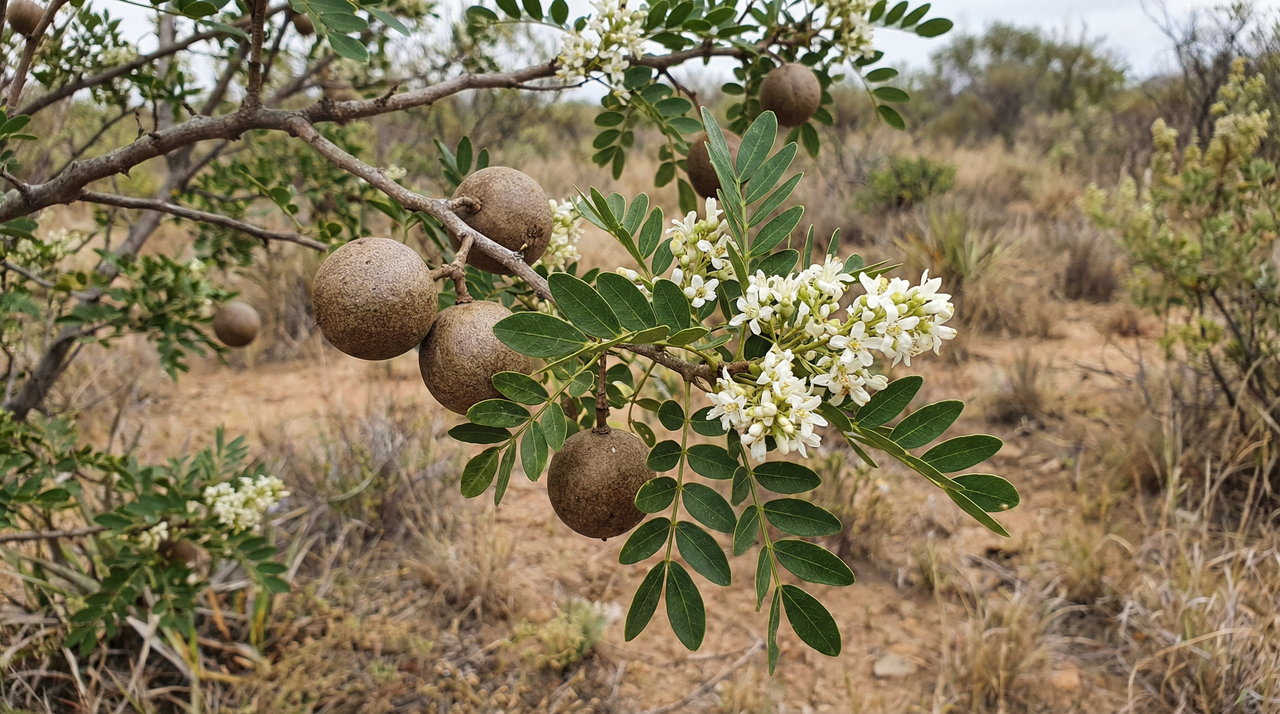
The first time I cracked open a wood apple, I genuinely wasn't sure I'd gotten a ripe one. The shell didn't give so much as shatter, like I'd taken a mallet to a small river stone, and what came out was dark, sticky, and smelled improbably like a pineapple that had been left in a spice drawer. Not unpleasant. Just deeply strange and nothing like what the plain, dusty exterior had suggested. That gap between how this fruit presents itself and what it actually delivers is, I think, the whole story of Limonia acidissima in a nutshell (in a literal one, actually).
Most Western gardeners who've heard of it at all probably know it as a curiosity, an exotic footnote from South Asian markets. What they're missing is that this tree has been feeding people, elephants, and entire forest ecosystems for millennia, it's woven into Hindu ritual and Ayurvedic medicine both, and it produces a fruit so chemically complex that researchers are still mapping its phytochemical profile. The hard shell that makes harvest feel like a demolition job is the same shell that protects the pulp through a brutal dry season. There's a logic to all of it, once you start pulling the layers back.
Wood Apple Origin, History, and Botanical Background
If you've never encountered wood apple before, the scientific name alone tells you something useful: Limonia acidissima, which translates roughly to "the most acidic Limonia." That's a promise the fruit keeps. Native to tropical dry forests stretching from the Indian subcontinent through Myanmar, Thailand, Vietnam, Malaysia, Indonesia, and into southern China, this Rutaceae deciduous tree has been quietly earning its keep in South and Southeast Asian landscapes for millennia.[1][2] You'll find it growing in scrublands, along riverbanks, and in dry deciduous forest patches up to about 900 meters elevation, often in conditions that would stress less resilient species. From a permaculture lens, that drought-tolerant toughness is the first thing to appreciate.
Botanical Profile and Visual Characteristics of Limonia acidissima
One quick note on taxonomy before we go further, because this plant carries a fair amount of name confusion. You may see Limonia pinnatifolia in older references; current authoritative sources, including Kew's Plants of the World Online, treat that as a synonym now aligned with Limonia acidissima as the accepted name.[3][4] More importantly, wood apple is sometimes conflated with Dillenia indica, the so-called "true" elephant apple, which is an entirely different genus that can reach 30-40 meters tall.[5] I always verify against Kew's POWO before specifying any plant for a client, and with wood apple, that extra step matters.
The tree itself grows slowly to moderately, typically reaching 9-15 meters with a spreading, rounded crown 8-10 meters wide and a single straight trunk covered in rough, gray-brown fissured bark.[6][7] The branches are slender and spreading, sometimes spiny, and the pinnately compound leaves with their leathery elliptic-lanceolate leaflets drop seasonally, giving the tree a deciduous rhythm tied closely to monsoon patterns.[8] Lifespan runs 40-100+ years in cultivation, with wild specimens reportedly pushing past 150 years.[9] For a food forest designer, a tree that outlives its planter by generations is a serious long-term asset. First fruiting from seed takes 7-10 years, though grafted plants can deliver in 3-5, and once it starts bearing it keeps going annually for decades.[1][10]
The flowers are small, greenish-white to pale pink bells, blooming primarily March through May with a possible secondary flush in autumn across tropical ranges.[11] Then comes the fruit, and this is where wood apple earns every common name it's collected. The mature capsule is a hard-shelled, woody, round-to-turnip-shaped orb ranging 5-12 centimeters across and weighing anywhere from 50 to 400 grams, brown at maturity with a rind so dense you genuinely need a hammer or rock to crack it open.[12][7] When cracked open, the fruit immediately releases a rush of aromatic, slightly resinous scent somewhere between citrus peel and earthy spice. Inside, fibrous pulp holds numerous kidney-shaped seeds, and that pulp shifts from fiercely sour when unripe to a sweeter, complex sweetness as it fully matures.[13]
Traditional, Cultural, and Historical Significance
Two thousand years of documented use is not a small claim, but that's what the record shows for wood apple in Ayurvedic medicine. Ancient texts including the Charaka Samhita and Sushruta Samhita reference it as a digestive aid, a treatment for fevers, diarrhea, and dysentery, and as a rasayana, a rejuvenative tonic.[14][15] The Mahabharata names it 'Kalaspaha,' associating it with medicinal potency and forest spirits. When I'm building a design that incorporates plants with traditional Ayurvedic profiles, I cross-reference those ancient texts against modern ethnobotanical surveys, and with wood apple the convergence is striking.
Ethnobotanical surveys have documented over 50 distinct traditional uses across communities including the Santals, Oraons, Bhils, Chakma, Karen tribes, and rural communities from Kerala to Bangladesh to Vietnam to Sri Lanka.[16][17] Fruits address gastrointestinal complaints and postpartum recovery; bark and leaves treat skin conditions and respiratory ailments; roots appear in fever preparations. Different plant parts, prepared as decoctions, pastes, or powders, cover an impressively broad pharmacopoeia across dozens of ethnic groups who arrived at similar applications independently.[18]
Culinary history runs just as deep. In Kerala and Tamil Nadu, unripe wood apple fruit is dried and used as the souring agent 'kodampuli' in fish curries and pickles, a role sometimes confused with Garcinia cambogia.[19][15] Ripe pulp goes into beverages, chutneys, and fresh preparations across South and Southeast Asia. Historical records document cultivation in Java from at least the 4th century CE, and Hindu temple gardens were growing it by the 15th century.[19] Ritually, the fruit is offered to goddess Durga during Navratri and appears in purification ceremonies, while Sinhalese Buddhist traditions in Sri Lanka use it in folk ceremonies for warding off evil.[20]
By the 18th century, British colonial records were documenting wild harvesting in the Ganges basin for medicinal exports.[21] Today, overharvesting in dry forests across India and Vietnam, combined with habitat loss and ongoing bioprospecting disputes under the Nagoya Protocol, puts real pressure on wild populations.[22] From what I've seen in regenerative projects, shifting from wild collection to intentional cultivation is the most direct way to protect culturally vital species like this one.
Fun Facts and Ecological Role
The name "elephant apple" hints at the ecological story here. In South Asian dry forests, elephants actively seek out the fruit, as do monkeys, deer, squirrels, hornbills, and bulbuls, making the tree a genuine wildlife hub.[23][24] Seeds pass through animal digestive systems and get dispersed across the landscape, contributing to forest regeneration in a way few cultivated fruit trees can claim. Flowers attract bees and butterflies, leaves support browsing herbivores, and the whole tree functions as what I'd call a keystone species in the systems it inhabits. I think about native Florida trees like live oak or saw palmetto that serve similar anchor roles for wildlife in food forests here, and wood apple fills an analogous niche in its native dry-forest context.
Globally, Limonia acidissima sits at Least Concern on the IUCN Red List given its wide distribution, though local populations face real threats from deforestation and overharvesting.[25][2] Wild trees can exceed 100 years, though cultivated specimens more commonly live 40-70 years. Its multipurpose profile, food security value, and the preliminary evidence supporting many of its traditional uses make it a plant worth growing intentionally rather than simply harvesting from wild remnants.[19] The high tannin content does warrant some moderation in consumption, and cyanogenic compounds in the seeds mean seed removal matters, but the ripe pulp has a long, well-documented history of safe use across diverse cultures.[26] For a subtropical food forest, that combination of resilience, wildlife value, deep cultural roots, and culinary utility is hard to beat.
Wood Apple Varieties and Sourcing
Regional Landraces of Limonia acidissima
If you go looking for named wood apple cultivars, you won't find them. Limonia acidissima has no formally recognized cultivars anywhere in the botanical or horticultural record.[27][1] What exists instead is a spectrum of regional landraces, shaped by centuries of informal selection across India and Southeast Asia. Growers in Kerala and Tamil Nadu have long favored larger-fruited forms with thicker pulp, while smaller wild types persist through central India and higher-yielding selections have been documented in Odisha and Andhra Pradesh.[27][28] That's genuinely useful information for a seed-saver or a patient grower willing to select over generations. If your seed packet specifies a southern Indian provenance, you've probably got better odds of larger fruit; if the source is unspecified, you're essentially growing a lottery ticket, which isn't necessarily bad, just honest.
A word of caution for anyone researching this plant online: if you come across references to Limonia pinnatifolia, don't chase that name. It's not a currently recognized species in major botanical databases, and much of the literature using it actually refers to Dillenia indica or other taxa entirely.[29][30][31] I've spent enough time down taxonomic rabbit holes with obscure Rutaceae to know that mislabeled material is genuinely common here, and there are no commercial cultivars attached to that ghost name regardless. Stick to Limonia acidissima and verify your source.
Sourcing Wood Apple Plants and Seeds
Wood apple is scarce in Western nurseries in a way that even most rare-fruit enthusiasts haven't encountered. No major U.S. nurseries specialize in the species, and there's no documented commercial cultivation footprint in USDA databases.[32][33][34] Comparing it to citrus rootstock availability feels almost absurd; this is several categories rarer than anything a standard tropical nursery would carry. When mature trees do surface through premium retailers, prices run $100 to $300 or more, with occasional 3-gallon specimens appearing around $75.[35] For most growers, seeds are the realistic entry point, available occasionally from specialty online retailers, Sheffield's Seed Company, Montoso Gardens in Hawaii, and Logee's Plants, typically at $5 to $20 per packet.[33][36][37][38] Vendor availability shifts constantly, so I'd verify current stock before planning around any specific supplier.
On the regulatory side, importing fresh fruit or live plants requires phytosanitary certification and possible USDA APHIS inspection or cold treatment; the species isn't listed under CITES, so there's no international trade restriction beyond standard plant import requirements.[39][40][41] I always check the current USDA APHIS list before ordering any tropical fruit tree, and wood apple is no exception. If all else fails, dried pulp from Indian grocery stores gives you a taste of what you're working toward, even if it won't grow in a pot. I've started more than a few obscure tropical seeds from mail-order packets and learned quickly to label every seedling meticulously, because young wood apple can look remarkably similar to curry leaf or certain citrus relatives in the first year. Start extra pots, stay patient, and the first tart, resinous fruits will eventually justify the wait.
Wood Apple Propagation and Planting Guide
Growing wood apple from scratch is really a decision about time. Seed is the easiest entry point, but you are committing to a long wait. Grafted or air-layered stock gets you fruit years sooner. Understanding that tradeoff upfront makes every subsequent choice easier.
Seed Characteristics, Germination, and Timeline
Seed-grown Limonia acidissima trees typically take 7 to 15 years to produce fruit, with flowering often starting around years 5 to 7.[42][7] If you have the patience for that, seeds are free and surprisingly easy to germinate. If you don't, graft.
The seeds themselves are ellipsoid to oblong, averaging about 1.35 cm long by 0.6 cm wide, with a hard coat that causes physiological dormancy.[43][44] A 24-hour soak or light mechanical scarification breaks that dormancy and makes a real difference: germination rates range from 40 to 90 percent depending on pretreatment, with fresh seed germinating in 2 to 4 weeks at 25 to 30 °C in well-drained sandy loam.[45][46] I've started wood apple from fresh scarified seed and was pleased at how quickly the sprouts appeared. The first true leaves look surprisingly like miniature citrus, which makes sense given they're both Rutaceae.
Here's the catch: wood apple produces polyembryonic seeds containing both zygotic and nucellar embryos, resulting in 50 to 80 percent genetic variation among seedlings.[44][47] I learned to label every flat meticulously after watching two seasons of seedlings develop noticeably different leaf shapes and growth rates. Most won't replicate the parent tree's fruit quality. Seeds do stay viable for 1 to 2 years under cool, dry storage, but fresh is always better.[44] Also worth flagging: older sources sometimes list this tree as Feronia limonia or Limonia pinnatifolia, but all reliable modern cultivation data is indexed under Limonia acidissima. The name Limonia pinnatifolia is now generally considered an outdated synonym or confused with Dillenia indica, a botanically distinct species with a broadly similar but not identical fruiting timeline.[48]
Vegetative Propagation Methods
Wood apple can be propagated by seed, grafting, air layering, semi-hardwood cuttings, root suckers, and tissue culture.[49] Grafting is the commercial gold standard: veneer, cleft, or whip-and-tongue grafts onto 2 to 3 year old rootstocks deliver 60 to 80 percent success, cut the juvenile phase to 3 to 4 years, and preserve cultivar traits exactly.[49][50] Timing matters: monsoon season, when the cambium is actively flowing, is when grafts take best. I achieve closer to 75 percent take on cleft grafts when I keep the union shaded for the first 10 days, a small detail that makes that published 60 to 80 percent range very achievable on a home scale.
For home gardeners who find grafting intimidating, air layering is the most forgiving option. Success rates run 70 to 90 percent, with roots forming in 4 to 6 weeks during active growth.[45] Semi-hardwood cuttings treated with IBA at 3000 to 5000 ppm root in 6 to 8 weeks under high humidity, though they require more attention to maintain that environment consistently.[45][51] Root suckers are occasionally used but unpredictable. Tissue culture remains a laboratory method with no practical home application yet. Whichever vegetative route you choose, grafted material delivers fruit in 3 to 5 years, and optimal tropical conditions can push that to 2 to 3 years.[42][52] The tree is self-fertile with hermaphroditic flowers pollinated primarily by bees and flies, so even a single tree will set fruit.[53]
Soil, Site Selection, and Planting Technique
Wood apple is native to tropical and subtropical dry deciduous forests across South and Southeast Asia, growing on slopes up to 1000 m elevation in full sun.[7] It wants a minimum of 6 to 8 hours of direct sun daily and is best suited to USDA zones 10 to 12, though it can briefly tolerate temperatures down to 28 °F (-2 °C).[7][54][55] In a zone 9b situation I'd give young trees frost cloth and treat any freeze event as a genuine threat.
Soil drainage is non-negotiable. Wood apple thrives in sandy loam or loam with a pH of 6.0 to 7.5 (it tolerates a range of 5.5 to 8.0), at least 1 to 1.5 m of rooting depth for its deep taproot, and 2 to 5 percent organic matter.[56][57] Once that taproot is established the tree is genuinely drought tolerant, somewhat like a citrus rootstock that has found its depth. Heavy, compacted, or waterlogged soils are a different story entirely: they invite Phytophthora root rot and nutrient lockout that can kill a young tree before it has a chance.[58] In my experience, once root rot sets in on a young grafted tree it is almost impossible to reverse. I plant every wood apple on a 30 cm raised mound, even in well-drained sandy loam. It feels like overkill until the first wet season proves it isn't.
Spacing and Establishment
Mature wood apple trees reach 6 to 9 m tall with a canopy spreading 6 to 10 m wide, occasionally pushing to 12 to 15 m in ideal conditions.[59][60] Standard orchard spacing is 8 to 12 m, with a 10 m by 10 m grid being the most common recommendation, supporting around 100 trees per hectare.[59] In a food forest context that spacing also gives you room to develop productive understory layers beneath and between the canopies.
Planting pits should be 60 cm by 60 cm by 60 cm, enriched with 10 to 15 kg of well-rotted organic manure before the tree goes in.[61] I've found that staking each tree for the first two years prevents wind rock on sandy soils and sets up a straight trunk that needs far less corrective work later. Early establishment pruning should focus on removing competing leaders and weak branches to develop a single strong-trunk framework.[61][62] The propagation method you choose determines when you first bite into a wood apple, but honest site selection and soil prep determine whether you ever do at all.
Wood Apple Care Guide and Seasonal Maintenance
Once you understand where wood apple comes from, its care requirements make intuitive sense. This is a tree shaped by South Asian dry forests, where searing heat alternates with monsoon rains and soils drain fast. Match those rhythms and the limonia acidissima tree rewards you with years of low-maintenance productivity. Fight them and you'll chase problems that better siting would have prevented.
Sunlight Requirements and Light Management
Wood apple wants full sun: six to eight hours of direct light daily for strong flowering and fruit set.[63][64] I position it the same way I position young mango in Central Florida landscapes: full south or southwest exposure with nothing blocking afternoon sun. The exception is newly planted seedlings in an unusually hot summer, where a shade cloth at the hottest part of the afternoon prevents leaf scorch while roots establish. Once a wood apple plant is a few years old, that concern mostly disappears. Established trees handle heat in ways young ones simply can't.
The symptoms are worth memorizing. Too much sun without adequate water shows up as browning leaf margins, yellowing, and eventual leaf drop.[63] Too little light produces the opposite: spindly, elongated stems, pale washed-out foliage, sparse branching, and almost no flowers.[65] If your wood apple leaves look etiolated and chlorotic, it's not a soil problem; move the plant before you amend anything.
Water Needs and Drought Tolerance
Here's the split that catches new growers off guard: mature wood apple trees are genuinely drought tolerant, needing water only every ten to fifteen days during prolonged dry spells, roughly fifty to a hundred liters per tree.[66][7] That deep taproot is doing real work, and I've learned to trust it rather than reflexively water on a fixed schedule. Young trees in their first two years are a completely different story: they need evenly moist soil, typically watering every three to five days at around twenty to thirty liters per week during the growing season.[57][7] My approach with young plants is deep, infrequent watering rather than frequent light sprinkles; it encourages the taproot to chase moisture downward, which is exactly the drought resilience you're building toward.
Drainage is non-negotiable. The limonia plant will not tolerate waterlogged roots, full stop. Overwatering shows up as yellowing leaves and wilting that looks deceptively like drought stress; the difference is that soggy soil eventually causes root rot.[67][68] Drip irrigation at a water pH of 6.0 to 7.5 is ideal; the tree tolerates moderate salinity but prefers rainwater or low-salt sources where possible.[69][70] During winter dormancy, when wood apple leaves yellow and drop naturally, dial back water significantly. I made the mistake of compensating for that leaf drop with extra irrigation early in my experience with this tree, which slowed spring recovery noticeably.
Soil, Fertilization, and Nutrient Management
Wood apple prefers well-drained loamy soil with a pH between 6.0 and 7.5, though it tolerates up to 8.0.[66][71] My default in permaculture food-forest designs is to amend annually with ten to twenty kilograms of compost or well-rotted farmyard manure per tree. For a species that can live fifty to a hundred years, building soil biology now pays dividends for decades, and organic matter does that in ways synthetic fertilizers don't.
For stage-specific feeding: young trees in years one through three need roughly 200 to 300 grams of nitrogen, 100 to 150 grams of phosphorus, and 200 to 250 grams of potassium annually, split into two or three applications.[71][72] Mature trees need significantly more; around one to two kilograms of nitrogen and proportional phosphorus and potassium, timed to pre-monsoon (March to April) and post-monsoon (September to October) windows.[71][72] During fruiting, shift toward higher phosphorus and potassium ratios to support flower and fruit quality rather than vegetative push.[73][66] Always apply around the drip line, away from the trunk, and water in immediately after.
I've learned to watch wood apple leaves closely for micronutrient signals. Iron chlorosis (young leaves yellowing while veins stay green) is common in slightly alkaline soils; I correct it fast with chelated iron foliar spray before it affects fruit set. Zinc deficiency produces small, rosetted leaves; boron shortage can cause fruit cracking and shoot dieback.[57][72] Annual soil testing from the root zone catches these early. Over-fertilizing is a real risk; root burn from excess synthetic nitrogen sets trees back more than modest deficiency ever would.
Heat and Frost Tolerance
Wood apple's native range in tropical and subtropical South and Southeast Asia tells you most of what you need to know: optimal growth happens between 20 and 35°C, and the tree handles brief spikes to 45°C, though prolonged heat above 40°C causes leaf scorch, wilting, premature fruit drop, and poor fruit set.[7][74][75] Seedlings are the most vulnerable; germination and early growth decline sharply above 40°C.[76] Established trees have impressive physiological defenses built in, including thick cuticles, sunken stomata, antioxidant enzymes, and proline accumulation for osmotic adjustment during stress.[76][77] Mulching and supplemental irrigation during extreme heat events support these natural mechanisms considerably.
On the cold end, this is not a frost-hardy species. Mature limonia acidissima trees tolerate brief dips to around 5°C with potential damage; young wood apple plants are more sensitive and can suffer significantly below 10°C.[1][78] You'll see varying minimum temperature thresholds cited across sources, partly because of ongoing taxonomic confusion between Limonia acidissima and Dillenia indica; treat any claim of cold hardiness below 5°C with skepticism unless it's clearly attributed to the correct species. In zone 9b, I use frost cloth over young trees and a thick root mulch; it's genuinely worthwhile given the drought resilience you get back once the tree matures.
Pruning, Maintenance, and Seasonal Rhythm
Prune in the dry season, before new growth flushes, removing dead, diseased, crossing, or crowded branches to open the canopy to air and light.[79][80] I keep cuts to around twenty-five percent of the canopy at most; heavy pruning genuinely suppresses flowering and delays fruiting. For young trees, I train toward a vase shape with three to five main scaffold branches to encourage light penetration through the canopy center, which matters in guild plantings where understory companions need some filtered light.
All of this care fits a clear annual rhythm: the wood apple tree flowers through the dry season from March to May, fruits and pushes vegetative growth during the monsoon from June through September, then sheds leaves and rests from November through February.[1][56] Once I started mapping my interventions to those phases instead of a fixed calendar, management got simpler. Feed before the monsoon, prune during dormancy, reduce watering as the tree rests in winter, and let the seasonal cues from the tree itself guide the timing. That's a rhythm worth respecting.
Harvesting Wood Apple (Limonia acidissima)
When to Harvest Wood Apple: Timing, Maturity Cues, and Phenology
Wood apple operates on a slow, monsoon-driven clock. Flowering typically happens during the dry season, somewhere between February and April depending on latitude and irrigation, and from that point fruits spend 8 to 12 months developing before they're ready to pick.[81][82] Peak harvest in South and Southeast Asia generally runs December through March, once the monsoon rains have wound down and triggered the final push toward maturity.[83][84] That said, elevation, microclimate, and water management can all shift this window by several weeks in either direction, so treat those months as a starting point rather than a fixed calendar.
The practical maturity cues I look for are a rind shift from green to dull yellow-brown, a slight give when pressed firmly, and the first whisper of that distinctive fruity aroma.[85] I've also started cutting sample fruits a week or two before I plan to harvest to check seed hardness; fully lignified, dark seeds are a reliable internal indicator that the fruit has run its developmental course. Fruits are normally picked slightly before peak ripeness because they continue to soften off the tree.[86] This matters more than it sounds, because leaving them on the branch too long in humid conditions invites rot.
Pest pressure can push the whole timeline back by one to two months if fruit flies, aphids, or borers go unmanaged.[71] In my experience, consistent monitoring for fruit fly activity from mid-development onward is the single biggest factor separating a December harvest from a February one. The related species Limonia pinnatifolia matures faster, in six to eight months, and its fruits won't ripen further after picking, so if you encounter that relative, the harvest approach is meaningfully different.[87]
Expected Yield, Flavor Evolution, and Aroma Profile
The flavor shift between an unripe and a ripe wood apple is dramatic enough that the two can feel like different fruits. Unripe pulp sits at pH 2.5 to 3.0 with titratable acidity around 5 to 7 percent; as the fruit matures, acids drop to 2 to 3 percent and sugars climb to 12 to 15 percent, producing a sweeter, more complex result.[88][89] The aroma tells the same story: crack open an unripe fruit and you get sharp, green-herbaceous citrus notes driven by limonene; crack a fully colored one and the room fills with something fermented and tropical, closer to pineapple-banana with a musky depth from β-caryophyllene and esters like ethyl acetate and ethyl butanoate.[90][91] Even ripe fruit, though, carries a phenolic bitterness and astringency from tannins that lingers on the palate; that quality fades through processing rather than fresh eating.
The raw pulp itself is fibrous, sticky, and mucilaginous in a way that surprises first-timers. I'd describe it as a cross between young guava and coconut meat, slightly mealy, low in juice, adhering stubbornly to the seeds.[92] I've also noticed that fruits sourced from Indian suppliers tend to read more phenolic and bitter, while Thai-origin material often leans brighter and more citrus-forward, a genuine geographic variation in the chemistry that's worth knowing if you're comparing accessions.[93] A well-managed mature tree will produce somewhere in the range of 200 to 300 fruits per year, with soil fertility and tree age being the biggest variables.[27][28] That's a genuinely useful harvest from a tree that also pulls canopy, habitat, and deep-root soil work all at once.
Wood Apple Preparation and Uses
Culinary Uses and Flavor Transformations
The ripe pulp is where everything begins. Fresh from a cracked shell, it hits you with that unmistakable sweet-sour punch: tangy citrus up front, earthy undertones, and a pungent fermented edge that catches first-timers off guard.[94][95] Unripe fruit is aggressively sour and astringent from high tannin levels, so ripeness really does matter here.[96] Processing transforms the experience dramatically: cooking breaks the tough fibers down into a gelatinous paste perfect for jams, chutneys, and wood apple juice or sherbet; drying concentrates everything into a caramelized sweetness that reminds me of tamarind paste with a deeper citrus-fermented edge; and fermentation mellows the sharpness while layering in umami notes.[97][98]
Before any of that happens, the seeds have to go. They contain cyanogenic compounds and alkaloids that can cause nausea, vomiting, and abdominal pain, so this is a non-negotiable step in processing.[99][100] I break the shell with a hammer (there's really no elegant alternative), then scoop the pulp into a bowl of water and work it through a double layer of cheesecloth to strain out the seeds and fibrous stringy bits. I never let children or pets near the unprocessed fruit until every seed is removed; the risk, while low in small amounts, isn't worth taking.
Once processed, the pulp earns its place as a kitchen staple across Odisha, Maharashtra, Bengal, and Assam, where it substitutes for tamarind as a souring agent in curries and pickles, and pairs naturally with cumin, chili, jaggery, ginger, and garlic.[57][101] The spiced sherbet (masala wood apple, essentially) is the preparation I find most rewarding: just strained pulp, water, jaggery, and a pinch of black salt. Leaves are occasionally used in teas or as a minor vegetable, but the rind and other plant parts are really for medicinal use rather than the plate.[96] One sourcing note worth flagging: recipes from Assam sometimes list this fruit under the synonym Limonia pinnatifolia, and older literature can blur the lines between wood apple, bael (Aegle marmelos), and elephant apple (Dillenia indica). I've learned to check leaf shape and spine patterns before harvesting anything unfamiliar from a tree someone else labeled.[1][102]
Traditional Medicinal Preparations
Many of the same plant parts that go into the kitchen also feed the medicine cabinet. Fruit pulp decoctions and powders address digestive complaints; leaf infusions are used for coughs and oral health; bark decoctions appear in traditional protocols for fever and diarrhea; and leaf poultices are applied topically to wounds.[7][103] I make a small batch of leaf tea occasionally when a cough won't quit, staying within the traditional 50-100 ml daily range and treating it as a gentle folk remedy rather than a clinical intervention.[104][105] Dosage guidance in the literature is loose: roughly 3-6 g of fruit pulp extract per day, or 1-3 g of concentrated extract under supervision. These figures come from Ayurvedic tradition rather than standardized clinical trials, and most pharmacological studies are still working from animal models, so professional guidance matters here before using any preparation therapeutically.
Non-Food Applications
Beyond food and medicine, wood apple is genuinely useful at the whole-tree level, which is part of why it has persisted in rural landscapes for so long. The dense hardwood goes into furniture, tool handles, agricultural implements, and general construction.[106][107] The bark and fruit rind yield tannins used in leather tanning and dyeing, seeds and wood get fashioned into beads and decorative items, and the bark has traditional applications in rope-making with the fibrous hull occasionally used as packing material.[108][7] In tropical landscapes it also earns its space as a shade tree, and the canopy functions I've seen noted in ethnobotanical surveys confirm what you'd expect from a deep-rooted, long-lived tree: it holds its ground in poor soils while quietly providing for everything around it. For a regenerative system, that whole-tree utility is the point.
Wood Apple Health Benefits and Medicinal Uses
Spend any time reading the ethnobotanical literature on wood apple and a pattern emerges quickly: the same uses show up across dozens of communities separated by centuries and geography. Digestive relief, wound care, fever management, respiratory support. That kind of consistency doesn't happen by accident. After working through a substantial body of pharmacological research on Limonia acidissima, I'm genuinely impressed by how well the preclinical science aligns with what traditional practitioners figured out empirically a long time ago.
Key Phytochemicals in Wood Apple
The pharmacological story of wood apple starts with an unusually rich mix of bioactive compounds. The fruit pulp, leaves, bark, and seeds each have distinct phytochemical signatures, and understanding where the good stuff concentrates helps make sense of why different plant parts have different traditional applications. The pulp is richest in flavonoids (quercetin, rutin, kaempferol) and phenolic acids (gallic acid, ellagic acid, chlorogenic acid), while the bark and leaves carry higher tannin loads and alkaloids like dictamnine and skimmianine, and the leaves pack volatile monoterpenes including limonene and β-pinene.[109][110] The limonoids, particularly nomilin and limonin, contribute both antimicrobial activity (measured MIC values of 50-100 μg/mL against Staphylococcus aureus and E. coli) and anti-inflammatory action through suppression of pro-inflammatory cytokines.[111]
Total phenolic content in the pulp runs 200-300 mg GAE/100g, giving the fruit strong free radical scavenging capacity with DPPH IC50 values typically in the 20-50 μg/mL range.[112][113] Geography and season matter here more than you might expect. Indian samples tend to show higher antioxidant activity than Bangladeshi ones, post-monsoon fruits carry 20-30% more phenolics than early-season fruit, and soil pH above 6.5 correlates with better flavonoid accumulation.[114][115] I've observed something similar with citrus relatives in my own landscape work: fruits from well-drained, slightly acidic soils harvested after the rainy season consistently smell more complex and make more flavorful preserves. The numbers from the research reflect what experienced growers already notice in the field.
One quick note worth flagging for anyone digging into the literature: Limonia pinnatifolia is simply a synonym for Limonia acidissima, so studies using either name are describing the same tree.[116] The confusion with Dillenia indica, which shares the "elephant apple" common name, is a different matter entirely. That's a Dilleniaceae species with its own distinct triterpenoids, and conflating the two leads to real errors when you're reading older studies or sourcing plant material.[110] Always check the Latin name.
Traditional and Scientific Medicinal Research
Ayurvedic texts and Indian folk traditions have long turned to wood apple for digestive complaints (diarrhea, dysentery, indigestion), respiratory issues, wound and ulcer care, fever, and skin conditions. Leaves and bark were typically applied as poultices for inflammation and wounds; fruit addressed gut problems.[117] That's a coherent pattern, and it's one the preclinical science is now starting to explain mechanistically.
Animal and in vitro studies show meaningful antioxidant and anti-inflammatory effects: DPPH IC50 values as low as 25.3 μg/mL, upregulation of SOD and catalase, and inhibition of COX-2, 5-LOX, and NF-κB pathways with effective doses of 100-400 mg/kg in rodent edema models.[118][119] Antimicrobial testing shows aqueous fruit extracts inhibiting S. aureus at MIC values of 0.5-2 mg/mL and E. coli at around 1.25 mg/mL, with tannins and flavonoids acting on microbial membranes.[120] In streptozotocin-induced diabetic rat models, fruit extracts at 200-500 mg/kg produced up to 45% blood glucose reduction, partly through inhibition of α-amylase and α-glucosidase.[121][122] Hepatoprotective and analgesic effects have also been documented in animal models.[123]
What's absent is large-scale human clinical trial data. None exists yet for Limonia acidissima.[124] I think it's important to say that plainly rather than bury it. The preclinical picture is genuinely promising, and the convergence between centuries of traditional use and measurable biological activity in the lab gives me real confidence in the fruit as part of a healthy, balanced diet in the tropics. That's different from claiming it treats disease, and we're not there yet without the human studies to back it up.
Nutritional Profile of Wood Apple
A 100g serving of ripe wood apple pulp delivers roughly 50-112 kcal, 1-2g protein, 7-28g carbohydrates, and about 8g dietary fiber, with 0.3-1g fat.[125] The wide ranges reflect real differences between wild and cultivated fruit, ripeness stage, and regional soil conditions; wild-harvested fruits are often higher in minerals. You'll find modest vitamin C (4-30mg), vitamins A and E, and decent potassium (193mg), calcium (85mg), phosphorus (55mg), and magnesium (23mg) per 100g.[126]
Beyond the macro picture, that phenolic content (200-300mg GAE/100g) puts wood apple pulp firmly in functional food territory, with DPPH scavenging capacity reaching 80-90% in some samples.[127] The fiber includes pectin, which is partly why the pulp thickens so readily into chutneys or sherbets. I've started using it the way I'd use tamarind in smoothies and savory sauces: a small amount goes a long way, and the natural pectin gives it a body that most fruit additions just don't have. Processing matters for nutrient retention: quick sun-drying or short boiling preserves 70-80% of vitamin C, and fermentation actually increases phenolic bioavailability by 15-25%.[128] The seeds contain oil rich in oleic and linoleic acids but also anti-nutritional tannins and phytic acid that roasting reduces; they're not part of normal culinary use.[129]
Safety and Considerations for Use
Ripe wood apple pulp has a strong safety track record. Centuries of culinary use across India and Southeast Asia have produced no documented cases of severe toxicity, and animal studies confirm low acute toxicity with LD50 values above 2000mg/kg for extracts.[130] I'm comfortable recommending it as a regular food for most healthy adults. The caveats are specific and evidence-based, not vague boilerplate.
Unripe fruit is a different matter: tannin content runs 5-15% dry weight before full ripeness, and eating too much can cause nausea, diarrhea, and abdominal cramping.[131] The seeds aren't food. They carry limonoids that have shown toxicity in livestock at high doses and cause digestive irritation in people; skip them entirely.[1] Coumarins present in the leaves (up to 0.5-1%) have theoretical CYP450 inhibition and photosensitization potential at high concentrations, though there's no established clinical risk from eating ripe pulp in normal dietary amounts.[132]
For anyone on antidiabetic medication, the demonstrated glucose-lowering effects in animal studies mean there's a plausible additive interaction worth discussing with your doctor before using concentrated Limonia acidissima extracts.[133] Pregnancy warrants caution too, given traditional records of emmenagogue effects. A high-dose ethanolic extract study (400mg/kg) noted elevated BUN and renal markers in hyperuricemic rats, but that dose is far beyond anything you'd encounter eating the fruit, and no comparable effects appear at culinary consumption levels.[134] Traditional Ayurvedic guidance suggests 5-10g of pulp or powder daily under practitioner oversight for medicinal purposes, and allergic reactions are rare.[26] Ripe fruit in reasonable amounts: safe and nourishing. Concentrated extracts, unripe fruit, or seeds: proceed with care and professional guidance.
Wood Apple Pests and Diseases
For a tree that produces such a fragile-looking flower, wood apple comes surprisingly well-armored. Understanding where that armor holds and where it doesn't is what separates a productive tree from a frustrated grower.
Natural Resistance Mechanisms in Wood Apple
The bitter tannins and phenolic compounds concentrated throughout Limonia acidissima work as built-in antifeedants, discouraging a lot of the insects that would happily devastate a citrus tree nearby.[135][136] The rock-hard fruit rind is a genuine physical barrier that boring insects struggle against; I've worked with guava and citrus in similar climates, and the fruit fly success rate on wood apple is noticeably lower just by virtue of that shell. Then there are the extrafloral nectaries on young shoots. I've watched ants swarm those glands, patrolling against aphids in a way that feels like the tree is recruiting its own security detail.[137] It's one of those elegant plant strategies that makes you want to design around it rather than over it.
Common Insect Pests and IPM Strategies
Natural defenses don't eliminate threats entirely. Fruit flies (Bactrocera spp., Dacus spp.) and fruit borers like Deudorix epijarbas are the most economically significant, causing premature drop and internal rot. Leaf feeders including chrysomelid beetles, leaf-eating caterpillars, and leaf miners (Phyllocnistis citrella) can defoliate young growth, while sucking insects like aphids, mealybugs (Pseudococcus spp.), and scale push additional stress onto trees already contending with heat.[138][139] Fruit fly pressure peaks during the monsoon, when temperatures above 80°F and humidity over 70% accelerate pest life cycles considerably.[140][141]
For management, I reach for an IPM framework before anything else: sanitation, proper spacing for airflow, pheromone traps and yellow sticky traps for fruit fly monitoring, and biological allies like Trichogramma wasps and predatory ants.[142][143] Neem oil stays in my toolkit as a last resort rather than a first response. Interestingly, indigenous selections like 'Katha' and 'Kaith' show moderately better borer resistance due to thicker rinds, though no commercially available resistant cultivars exist yet for this species.[144] It's also worth knowing that leaf and fruit extracts from wood apple itself show insecticidal and repellent activity against aphids and stored-grain pests, a reminder that the plant's own chemistry can be part of the solution.[145]
Major Fungal and Other Diseases
Compared to its citrus relatives, wood apple holds up reasonably well against some of the worst tropical diseases; its thicker bark and tougher foliage give it meaningful tolerance to citrus canker and huanglongbing.[146][147] I've watched citrus greening devastate Zone 9B plantings while nearby Limonia trees kept going. That resilience is real, and it's part of why I recommend it for mixed tropical guilds.
Still, several fungal pathogens cause genuine problems. Powdery mildew (Oidium spp.) hits young shoots and leaves in humid conditions; anthracnose (Colletotrichum spp.) attacks both foliage and fruit; leaf spots from Cercospora, Alternaria, and Phyllosticta cause necrotic lesions and defoliation; and fruit rots from Colletotrichum gloeosporioides, Fusarium oxysporum, and Botryodiplodia theobromae can push post-harvest losses to 20-30% without management.[147][148] Root rot from Phytophthora spp. in waterlogged soils is arguably the most preventable of the group, and the most damaging when ignored.[149] Pest damage compounds all of this; fruit fly wounds and borer galleries open direct pathways for fungal colonization.[150]
Environmental Factors and Integrated Management
Humidity above 80% and monsoon wet periods are when fungal pressure spikes most sharply; soil pH maintained at 5.5-6.5 and good drainage keep the tree vigorous enough to resist opportunistic pathogens.[151][152] Site selection, which the propagation and care sections address directly, does more disease prevention work than any spray program.
For integrated disease management, I always start with cultural tools: removing infected debris, pruning to open canopy airflow, avoiding overhead irrigation, and ensuring drainage is genuinely excellent before planting. Trichoderma spp. soil drenches are a practical biological option that fits comfortably into a food-forest approach.[153][154] Copper-based fungicides can address anthracnose and powdery mildew at key stages, but I use them sparingly; consistent fungicide applications disrupt the soil biology I work hard to build in regenerative systems.[155] No commercially available cultivars of Limonia acidissima offer documented disease resistance yet, though local landraces show variable tolerance and breeding programs are actively selecting wild accessions for improved anthracnose and Phytophthora resistance.[156] With consistent hygiene and early monitoring, this remains a low-maintenance tree by tropical standards.
Wood Apple in Permaculture Design
Before you fall in love with the idea of a wood apple tree anchoring your food forest, you need to know whether your climate can actually support one. I learned this lesson the hard way with other subtropical Rutaceae species in Central Florida: site a frost-sensitive tree in the wrong microclimate and one hard freeze can set it back years, sometimes fatally if it's still young. Limonia acidissima is hardy in USDA zones 9b through 11, with truly reliable performance in zones 10 and 11.[7][55] Brief dips to 25-30°F (-4 to -1°C) are survivable for an established tree, but young plants have almost no buffer.[157] In zone 10, expect some leaf drop in cooler winters with a healthy flush of regrowth in spring; in zone 9, you're really looking at a container specimen that needs to come indoors when temperatures drop.[54][158]
Climate Suitability and USDA Hardiness Zones
In the continental US, southern Florida and protected pockets of southern Texas are the realistic in-ground options.[54][159] I always site wood apple on a south-facing slope or against a thermal mass where cold air won't pool on still winter nights. Rainfall flexibility is one of its genuine strengths; it performs well across a wide band of 600-1500 mm annually and, once the taproot is established, handles dry spells with real composure.[7] A quick note for those who encounter "Limonia pinnatifolia" in the literature: most botanical databases now treat that name as either synonymous with or confused against Dillenia indica, a different tree entirely. The wood apple we're talking about here is Limonia acidissima, full stop.[160]
Ecosystem Functions and Ecological Roles
What draws me to this tree beyond the fruit is what it does for everything else in the system. In its native tropical dry deciduous forests, wood apple functions as a genuine keystone species. Elephants, langurs, spotted deer, and hornbills all eat the fruit, carrying seeds across the landscape as they go.[161][162] That wildlife magnetism translates directly to a food forest: birds and insects that find the canopy hospitable stay to pollinate everything else around it. The dense, thorny canopy provides nesting and shelter, and the deep taproot stabilizes soil on slopes where heavy subtropical rains would otherwise cause erosion.[163][56] I've specified it on sloped garden sites in Florida specifically for that root architecture. When leaves and fallen fruit decompose beneath the tree, they feed microbial communities and improve organic matter, benefiting everything planted in that understory guild.[164]
Wood apple does not fix nitrogen. As a member of the Rutaceae family, it has no symbiotic nitrogen-fixing relationship to offer the soil.[165] That gap has to be filled by companions, which I'll come back to in a moment.
Successful fruiting depends heavily on getting pollination right. The flowers are small, fragrant, and hermaphroditic, visited primarily by bees (especially Apis spp.), flies, butterflies, and ants.[1][53] Here's the detail that catches growers off guard: the flowers are self-incompatible, meaning cross-pollination between at least two individuals is necessary for reliable fruit set.[166] Flowering peaks March through May under warm, moderately humid conditions, and pollinator scarcity during that window will tank your harvest.[167][168] In years when I've had low bee activity on isolated trees, hand-pollination has made a real difference, consistent with research showing a 30-50% improvement in fruit set from manual transfer.[166] Plant at least two trees if you can, and design the surrounding guild to support pollinator habitat year-round.
Forest Layer, Growth Habit, and Guild Companions
Wood apple reaches 5-10 m at maturity, occasionally stretching to 15 m, with a spreading rounded canopy and stiff thorny branches.[1][169] In a food forest, it slots naturally into the upper canopy or sub-canopy layer depending on the scale of your system, providing shade that the mid and ground layers can be designed around rather than fighting against.[170] It also forms associations with arbuscular mycorrhizal fungi that improve both nutrient uptake and drought resilience once the tree establishes, so avoiding synthetic fungicides near the root zone is worth factoring into your care plan from the start.[171]
Because wood apple doesn't fix nitrogen, the guild around it needs to do that work. In my own designs, pairing it with leguminous nitrogen-fixers as neighbors fills that gap while the developing canopy is still thin enough to let them thrive. Once the canopy fills in, shade-tolerant understory companions take over: ginger and turmeric work beautifully in that dappled-light zone, suppressing weeds and contributing to soil health while the wood apple drops its leaf litter overhead.[170][172] The key word throughout is patience. This is a slow-growing tree, and the full ecological payoff, the canopy shade, the litter fertility, the bird and insect habitat, accumulates over years. Choose the microclimate carefully, plant companions that support the soil while you wait, and this tree will eventually anchor a guild that rewards the whole system.
The Tree That Made Me Rethink What "Useful" Means
Wood apple is a fruit that initially masks its complexity, demanding physical effort to reach a pulp that is distinctly fermented, floral, and ancient. Nothing in my training had prepared me for a fruit that smells like something already alive. I still grow it because it keeps humbling me, and in this work, that's worth more than I can say.
Sources 172
- Limonia acidissima - Wikipedia ↩
- Limonia acidissima - Plants of the World Online (Kew Science) ↩
- Plants of the World Online - Limonia pinnatifolia ↩
- Taxonomy of Limonia acidissima ↩
- Dillenia indica L. ↩
- Wood Apple (Limonia acidissima) - Plant Profile ↩
- Limonia acidissima - Useful Tropical Plants ↩
- Missouri Botanical Garden Plant Finder - Limonia acidissima ↩
- Limonia acidissima ↩
- Wood Apple Cultivation Guide ↩
- Plants of the World Online (Kew Gardens) ↩
- Missouri Botanical Garden Plant Finder - Limonia acidissima ↩
- Nutritional and Functional Properties of Elephant Apple (Limonia acidissima) Fruits ↩
- Ethnomedicinal uses of Elephant Apple (Limonia acidissima) throughout Asia: A review ↩
- Traditional Uses of Elephant Apple in Ayurveda ↩
- Ethnobotanical Survey of Limonia acidissima L. among the Tribals of Mayurbhanj District, Orissa, India ↩
- Traditional Uses of Limonia acidissima in Bangladesh Folk Medicine ↩
- Medicinal and nutraceutical potential of Limonia acidissima fruits ↩
- Wood apple (Limonia acidissima), a crop with potential for food security ↩
- Limonia acidissima: A Review on its Traditional Uses, Phytochemistry and Pharmacology ↩
- Sustainability and Wild Harvesting of Tropical Fruits in Southeast Asia ↩
- Intellectual Property Rights and Traditional Knowledge on Limonia acidissima ↩
- Wildlife Utilization of Elephant Apple in South Asia ↩
- Seed Dispersal by Vertebrates: Role of Limonia acidissima ↩
- Limonia acidissima ↩
- Traditional Uses and Safety of Wood Apple in Ayurveda ↩
- Wood Apple (Limonia acidissima) - Fruit Research ↩
- Indian Fruit Crops: Limonia acidissima ↩
- Plants of the World Online | Kew Science ↩
- The Plant List - Limonia ↩
- Limonia Species Information ↩
- Limonia acidissima - Wood Apple ↩
- Tropical Fruit Trees Availability in USA ↩
- USDA PLANTS Database - Limonia acidissima ↩
- Garden Advisory Service - Growing unusual fruits ↩
- Limonia acidissima - Elephant Apple, Wood Apple Tree - Seeds ↩
- Exotic Fruit Trees - Limonia acidissima ↩
- Rare Tropical Plants for Sale ↩
- Fruits and Vegetables Import Requirements (FAVIR) ↩
- Importing Plants and Plant Products to the US ↩
- CITES Species Database ↩
- Wood Apple (Limonia acidissima) Cultivation Guide ↩
- Flora of India ↩
- Limonia acidissima L.: A Review on Phytochemistry, Ethnomedicine and Pharmacology ↩
- Propagation of Wood Apple (Limonia acidissima L.) ↩
- Seed Germination Guidelines for Feronia limonia (syn. Limonia acidissima) ↩
- Genetic Variability in Seedlings of Limonia acidissima ↩
- Plants of the World Online - Kew Science ↩
- Propagation Techniques of Wood Apple (Limonia acidissima L.) ↩
- Grafting Methods for Limonia acidissima ↩
- Vegetative Propagation Techniques for Feronia limonia ↩
- Limonia acidissima: Propagation and Cultivation ↩
- Wood Apple (Limonia acidissima): Cultivation and Uses ↩
- Tropical Fruits in Florida ↩
- USDA Plant Hardiness Zone Map ↩
- Limonia acidissima - Wood Apple ↩
- Cultivation of Wood Apple (Limonia acidissima L.) ↩
- Wood Apple Cultivation Guide - Agri Farming ↩
- Wood Apple (Limonia acidissima) Cultivation ↩
- Limonia acidissima ↩
- Limonia acidissima (Wood Apple) Cultivation Guide ↩
- Pruning and Training of Fruit Trees ↩
- Tropical Fruit Trees: Light Requirements and Common Issues ↩
- Tropical Fruit Trees: Light Requirements ↩
- Limonia acidissima Cultivation Guide ↩
- Cultivation of Wood Apple (Limonia acidissima L.) ↩
- Limonia acidissima - Wood Apple ↩
- Limonia acidissima ↩
- Limonia acidissima: Cultivation and Management ↩
- Soil and Water Requirements for Underutilized Fruits ↩
- Package of Practices for Cultivation of Wood Apple (Limonia acidissima) ↩
- Cultivation of Wood Apple (Limonia acidissima L.): An Underutilized Fruit Crop ↩
- Fertilizer Management for Tropical Fruit Trees ↩
- Drought and Heat Stress Tolerance in Limonia acidissima ↩
- Physiological Responses of Wood Apple to Abiotic Stresses ↩
- Morpho-Physiological Adaptations of Limonia acidissima to Abiotic Stresses ↩
- Heat Stress Effects on Seedling Growth of Limonia acidissima ↩
- Tropical Fruit Trees: Cold Tolerance Guide - University of Florida IFAS Extension ↩
- Wood Apple Cultivation Guide ↩
- Pruning Techniques for Tropical Fruit Trees ↩
- Limonia acidissima: A Review on Phytochemical and Pharmacological Investigations ↩
- Wood Apple (Limonia acidissima) Cultivation Guide ↩
- Woodapple (Limonia acidissima Gaertn.) ↩
- Wood Apple (Limonia acidissima Gaertn.) ↩
- Cultivation of Wood Apple (Limonia acidissima L.) ↩
- Fruit Ripening and Harvesting in Tropical Trees ↩
- Maturity Indices for Tropical Fruits: Focus on Limonia Species ↩
- Physicochemical Changes in Limonia acidissima Fruit During Ripening ↩
- Physicochemical and Sensory Characteristics of Wood Apple (Limonia acidissima L.) Pulp ↩
- Volatile Constituents of Limonia acidissima Fruits ↩
- Volatile Compounds and Sensory Profile of Elephant Apple (Limonia acidissima) ↩
- Wood Apple (Limonia acidissima) - Characteristics and Uses ↩
- Geographic Variation in Chemical Composition of Limonia acidissima Fruits ↩
- Wood Apple (Limonia acidissima): A Review of Its Phytochemistry and Pharmacological Activities ↩
- Limonia acidissima L.: A Review on Phytochemistry, Ethnomedical Uses and Pharmacology ↩
- Limonia acidissima L.: Botany, Traditional Uses, Phytochemistry and Toxicology ↩
- Effect of Drying and Fermentation on the Quality of Wood Apple Pulp ↩
- Feronia limonia (Wood Apple) Pulp Processing ↩
- Wood Apple (Limonia acidissima): A Review on Nutritional and Pharmacological Aspects ↩
- Phytochemical and Pharmacological Profile of Limonia acidissima L.: A Review ↩
- Wood Apple (Limonia acidissima) - An Important Medicinal Plant ↩
- Dillenia indica L. ↩
- Medicinal Properties of Limonia acidissima: A Review ↩
- Ayurvedic Pharmacopoeia of India ↩
- Journal of Ethnobiology and Ethnomedicine - Ethnomedicinal uses of plants in the flood plains of the river Ganga ↩
- Plant Finder - Missouri Botanical Garden ↩
- Wood Properties and Uses of Limonia Species ↩
- Ethnobotanical Uses of Limonia acidissima in India ↩
- Phytochemistry and pharmacological activities of Limonia acidissima: A review ↩
- Phytochemical and Pharmacological Profile of Limonia acidissima L.: A review ↩
- Limonin: A Promising Phytochemical from Limonia acidissima with Potential Biomedical Applications ↩
- Antioxidant and Antiglycation Activity of Wood Apple (Limonia acidissima L.) Fruit Pulp ↩
- Free Radical Scavenging Potential of Elephant Apple (Limonia acidissima) ↩
- Phytochemical Composition and Geographic Variation in Wood Apple from India and Bangladesh ↩
- Seasonal Variation in Secondary Metabolites of Limonia acidissima Fruits ↩
- Limonia acidissima - Kew Science Plants of the World Online ↩
- Medicinal Uses of Limonia acidissima in Indian Traditional Medicine ↩
- Antioxidant and Anti-inflammatory Activities of Wood Apple Fruit Extract ↩
- Anti-inflammatory Activity of Limonia acidissima Leaf Extract in Carrageenan-Induced Rat Paw Edema ↩
- Antimicrobial Properties and Minimum Inhibitory Concentrations of Limonia acidissima Extracts ↩
- Hypoglycemic Effect of Elephant Apple (Limonia acidissima) in Streptozotocin-Induced Diabetic Rats ↩
- Antidiabetic Activity of Limonia acidissima Fruit Extract in Streptozotocin-Induced Diabetic Rats ↩
- Antidiabetic and Hepatoprotective Effects of Elephant Apple in Rats ↩
- Phytochemical and pharmacological profile of Limonia acidissima L.: A review ↩
- Nutritional Composition of Wood Apple (Limonia acidissima L.) ↩
- Nutritional Composition of Limonia acidissima L. Fruit ↩
- Bioactive Compounds and Nutritional Composition of Elephant Apple (Limonia acidissima) ↩
- Effect of Processing on Vitamin C Retention in Elephant Apple (Limonia acidissima) ↩
- Anti-nutritional Factors in Seeds of Underutilized Fruits Including Limonia acidissima ↩
- Pharmacological Review of Limonia acidissima ↩
- Wood Apple (Limonia acidissima L.): Chemistry, Traditional and Medicinal Uses, and Biological Activities ↩
- Phytochemical and Pharmacological Profile of Limonia acidissima ↩
- Pharmacognostic and pharmacological profile of Limonia acidissima L. (Rutaceae): A review ↩
- Ethanolic Extract from Limonia acidissima Attenuates Serum Uric Acid via URAT1 in Hyperuricemic Rats ↩
- Phytochemical and Pharmacological Importance of Wood Apple (Limonia acidissima L.): A Review ↩
- Defensive Role of Tannins in Tropical Fruit Trees Against Herbivory ↩
- Extrafloral Nectaries in Rutaceae: Ecological Implications for Insect Defense ↩
- Pests and Diseases of Wood Apple (Limonia acidissima L.) ↩
- Insect Pests of Wood Apple (Limonia acidissima) ↩
- Pest Management Guide for Wood Apple in India ↩
- Monsoon Effects on Fruit Fly Activity in Tropical Horticulture ↩
- Integrated Pest Management for Tropical Fruits ↩
- Fruit Fly Control in Wood Apple ↩
- Varietal Screening for Pest Resistance in Limonia acidissima ↩
- Insecticidal Activity of Limonia acidissima Leaf Extract Against Stored Grain Pests ↩
- Comparative Disease Resistance in Rutaceae Family ↩
- Diseases of Wood Apple (Limonia acidissima L.) ↩
- Integrated Pest Management for Elephant Apple (Limonia acidissima) in India ↩
- Phytophthora Diseases in Fruit Crops ↩
- Disease Incidence and Management of Elephant Apple (Limonia acidissima) a Potential Tropical Fruit Tree of North East India ↩
- Wood Apple (Limonia acidissima) Production Guidelines ↩
- Disease Resistance in Limonia acidissima: A Review ↩
- Integrated Pest Management for Wood Apple (Limonia acidissima) ↩
- Disease Management of Elephant Apple ↩
- Management of Colletotrichum Diseases in Tropical Fruits ↩
- Breeding for Disease Resistance in Limonia spp. ↩
- Feronia limonia ↩
- Subtropical Fruit Trees for South Texas ↩
- USDA PLANTS Database - Limonia acidissima ↩
- Wood Apple (Limonia acidissima) ↩
- Fruit Dispersal by Elephants: Role of Wood Apple Trees ↩
- Elephant Apple Tree: Ecology and Distribution in India ↩
- Ecological Traits of Limonia acidissima in Tropical Dry Forests ↩
- Ecological Importance of Limonia acidissima in Tropical Dry Forests ↩
- Rutaceae Family: Nitrogen Fixation and Symbioses ↩
- Pollination Biology of Limonia acidissima L.: Implications for Conservation ↩
- Reproductive Biology of Wood Apple (Limonia acidissima) in Indian Subcontinent ↩
- Horticulture of Limonia acidissima: Propagation and Cultivation ↩
- Wood-apple (Limonia acidissima L.) ↩
- Layered Agroforestry with Wood Apple ↩
- Mycorrhizal Associations in the Rutaceae Family ↩
- Permaculture Plants: Wood Apple ↩