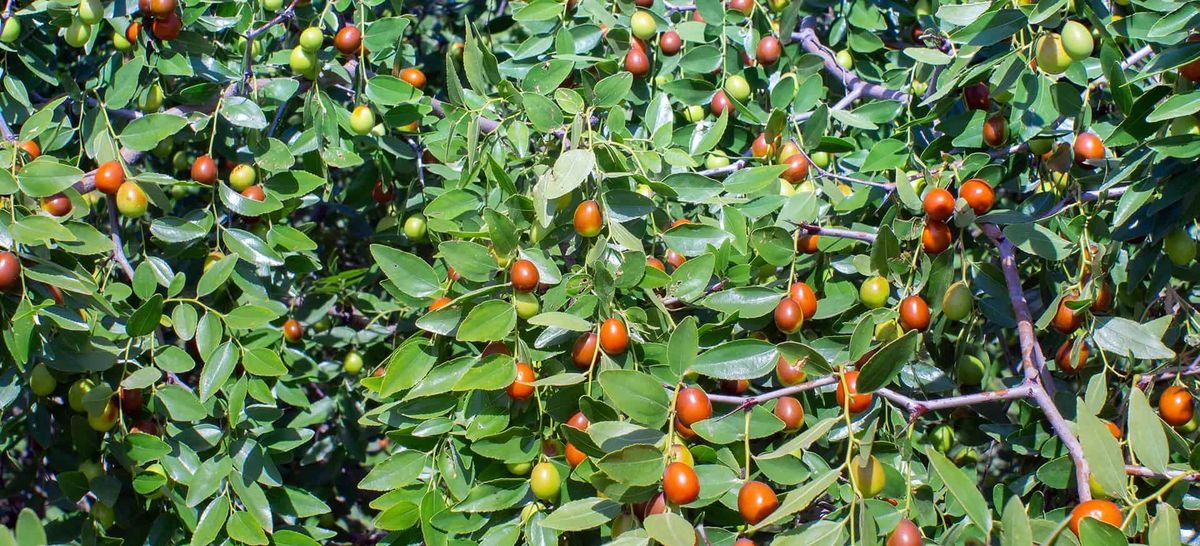
Most people who've eaten an Indian jujube don't know it. They bit into something at a roadside stall in Rajasthan, or a neighbor handed them a small yellowish fruit that tasted like an apple crossed with a date, and they filed it away as "some tropical thing" without a name. I did exactly that the first time, somewhere in a food forest planting in central Florida, where a gnarly, thorny tree I'd nearly written off as a scrub weed was quietly dropping fruit into the mulch. The fruit was sweet, faintly astringent, and dense in a way that made me stop and actually pay attention. That tree, I later learned, had been in the ground for over thirty years. Nobody had irrigated it in decades.
That detail still gets me. Ziziphus mauritiana has been feeding people through droughts, on eroded hillsides, in soils that would discourage a cactus, for somewhere around four thousand years.[1] It shows up in Vedic texts, in Ayurvedic medicine, in the trade networks that preceded the Silk Road. And yet here in the United States, most growers have never heard of it, or they confuse it with its Chinese cousin and wonder why the flavor is so different. The two plants share a genus and a common name, but they're not the same tree, and that confusion has quietly kept Indian jujube on the margins of conversations where it absolutely deserves a seat.
Origin and History of Indian Jujube (Ziziphus mauritiana)
Botanical Background and Native Range
Indian jujube (Ziziphus mauritiana) is a perennial tree in the Rhamnaceae family, native to a broad arc of tropical and subtropical territory spanning southern and central Asia, tropical Africa, and northern Australia, with India recognized as the primary center of origin and domestication.[2][3][4] It occupies a striking range of habitats, from dry deciduous forests and savannas to scrublands and disturbed margins, anywhere from sea level up to about 1,500 meters elevation. That ecological flexibility is no accident. This is a tree built for hardship: once established, it tolerates temperatures from -2°C to 48°C, thrives on poor soils where other fruit trees simply quit, and typically lives 30 to 50 years in cultivation, with some wild specimens pushing well past 100.[5][6] In permaculture terms, a tree you plant once and your grandchildren harvest from is exactly the kind of legacy species worth centering a guild around. Those qualities also explain how it eventually moved along ancient trade corridors to Africa and the Mediterranean, arrived in Australia in the 1880s, and was formally introduced to Florida in 1912, where it has since naturalized across central and southern parts of the state.[7][8]
Visual Characteristics
In the landscape, Z. mauritiana makes itself known quickly. It's a small to medium-sized tree, typically reaching 3 to 12 meters in cultivation, though specimens in ideal native conditions can push to 15 meters, with a spreading rounded canopy, rough gray-brown fissured bark, and dense zig-zag branches armed with paired axillary spines (one straight, one hooked).[9][6] Below ground, a deep taproot system reaching 2 to 5 meters anchors the tree and pulls moisture from subsoil layers that keep it alive through droughts that would finish most other fruit trees.[10] I've watched established trees in Central Florida sail through dry spells without a drop of supplemental water while nearby citrus struggled visibly. The leaves are alternate, leathery, glossy on top, and noticeably fuzzy underneath, a detail I find genuinely useful for quick ID in the nursery row.[11][12] In its native dry-season habitats the tree drops those leaves; in consistently wet tropics it behaves more evergreen; in cooler subtropics it turns yellow and partly defoliates in autumn. The flowers are small, greenish-yellow, and inconspicuous, borne in axillary clusters, blooming in peaks through spring and summer in the tropics.[13][14] The fruit that follows is a crisp drupe, 2 to 6 centimeters long, ripening from green through yellow to reddish-brown, with a sweet-tart, apple-like flavor in the fresh state and a single light-brown seed inside.[15][16]
Traditional and Cultural Uses
India's relationship with this tree goes back to the Indus Valley Civilization, roughly 3,300 to 1,300 BCE, and it appears in Ayurvedic texts including the Charaka Samhita and Sushruta Samhita, where it is called "Ber" or "Badara" and prescribed for insomnia, ulcers, and digestive complaints.[4] It holds genuine spiritual weight in Hinduism, planted near temples as an offering associated with Lord Ganesha, a practice that probably contributed as much to its spread across the subcontinent as any deliberate orchard planting.[17] Seeing trees deliberately planted for spiritual and medicinal purposes in tropical agroforestry systems was part of what cemented my own commitment to prioritizing long-lived, multi-use species in every food forest guild I design. From India, the tree traveled the Silk Road to the Middle East and Mediterranean, and was established across sub-Saharan Africa by the first millennium AD, reaching the Caribbean in the colonial era and Australia in the 1880s.[18][19] China developed its own parallel tradition, cultivating jujube for over 4,000 years and integrating it into Traditional Chinese Medicine as "Da Zao," prescribed for tonifying Qi and supporting longevity. Across this wide range, indigenous communities found uses for every part of the plant: the Khasi and Garo tribes of northeastern India, Kenyan Kikuyu communities, and Tanzanian farmers all relied on bark, leaves, seeds, and roots to treat everything from wounds and fever to dysentery and asthma, while the high-protein leaves fed livestock through lean seasons.[20][21] The FAO now actively promotes its low-input cultivation for food security and nutrition in arid and semi-arid zones, recognizing what traditional communities understood for millennia: this is a tree that gives generously with almost nothing in return.[22]
Interesting Facts About Indian Jujube
The fruit's role as a Silk Road trade commodity helps explain why its genes spread so widely before formal botanical records existed.[17][3] That deep taproot system, the same one that keeps a mature tree alive in drought, also makes it valuable for soil stabilization and carbon sequestration in degraded landscapes. In my Central Florida food forest, I monitor my trees through each dry season and do a bit of light pruning to keep them from spreading into the adjacent scrub. Unmanaged thicket formation is a real possibility in warm climates with the right soil conditions, even if the species isn't formally listed as invasive in Florida or by California's Invasive Plant Council.[23][10] Responsible stewardship and reliable fruit production can coexist, but it does take some attention. For growers new to the genus, the quickest way to distinguish Indian jujube from its cousin Chinese jujube (Ziziphus jujuba) is to flip a leaf over: the fuzzy pale underside is a reliable tell, and the rounder fruit with reddish-brown skin and noticeably more acidic fresh flavor confirm it.[16][17] With over 300 named cultivars worldwide, the selection is wide enough to match almost any warm-climate growing context, and its proven capacity for marginal land agroforestry underscores just how much productive potential this tree carries into the future.[24]
Indian Jujube Varieties and Where to Buy Them
The genetic breadth of Ziziphus mauritiana is genuinely staggering. Over 300 cultivars exist globally, with more than 100 recognized in India alone, classified by fruit shape, size, maturity window, flavor, and regional fit across arid, humid, and subtropical conditions.[25][26][27] Cultivar choice isn't cosmetic. It's a climate-smart decision that shapes what ends up in your basket and how well the tree holds up when conditions get difficult.
Notable Indian Jujube Cultivars
For fresh eating, Umran and Gola are the primary selections I consistently recommend to clients. Umran produces large fruits in the 25-40 g range with Brix readings of 18-22 and notably high vitamin C content, making it a standout for straight-off-the-tree eating.[25][26] Gola ripens earlier and runs smaller (roughly 15-20 g), but what it lacks in size it makes up for in juiciness.[25][28] If you're planting in a hot, dry landscape, though, Kaithli is the one I'd reach for first. It handles drought and heat better than most, and well-adapted trees in suitable conditions have shown yields reaching 100-150 kg per tree in trials.[29][30] I frequently recommend it to clients in Central Florida who need a tree that won't struggle through hot summers and occasional dry spells. Mundia skews late-season and performs better in humid climates, which makes it worth considering if you're in a wetter subtropical zone.[25][26]
The US market tells a different story. Selections like 'Li' and 'Lang' were shaped by fresh-market priorities: larger fruits, lower seed content, sweeter flavor, and a crunchier texture that snacks well off the counter.[16][10] Compared to many traditional Indian landraces, which tend toward smaller size and sharper acidity, they feel genuinely more approachable for backyard snacking. That's not a knock on the Indian types -- it's just a different breeding philosophy responding to a different market.
Sourcing Indian Jujube Plants and Seeds in the US
Indian jujube is still a niche offering here. Your best bets are specialty tropical nurseries: Just Fruits and Exotics and Eureka Farms in Florida, One Green World, Ty Ty Nursery in Georgia, and Logee's Plants all occasionally carry stock. Seeds show up from Rare Exotic Seeds, Sheffield's Seed Company, and sellers on Amazon and Etsy, typically in packets of 10-20 for $5-15. Grafted trees generally run $30-60; seedlings start lower, around $20-50.[31][32] When you find grafted stock, buy it over seedlings if you care about fruit consistency. I've helped install a lot of subtropical food trees over the years, and the quality difference between a verified cultivar and a random seedling is real enough to be worth the price gap. Look for straight stems, disease-free foliage, and clean roots before anything else.
Timing your purchase for spring establishment gives the tree its best shot at settling in before summer heat peaks.[26][33] Before you order anything, though, check your state's current rules. Ziziphus mauritiana is considered potentially invasive in parts of Florida and Texas, Hawaii bans Ziziphus species outright, and vendor restrictions follow accordingly -- RareSeeds.com, for instance, won't ship to certain states.[34][35] Living in Florida, I've watched these regulations shift, and I always tell clients to confirm with FDACS and their local extension office before placing any order. If you're sourcing from outside the US, live plants require USDA APHIS permits and phytosanitary certificates; small seed packets may clear with declaration and inspection, but the rules tighten considerably for anything rooted.[36][37]
Indian Jujube Propagation and Planting Guide
Every time I've introduced someone to indian jujube, the first question is whether to start from seed or buy a grafted plant. It seems like a simple choice until you understand what seeds actually deliver here, and then the whole decision snaps into focus.
Seed Propagation, Storage, and Germination
The seeds themselves are tidy little ovals, roughly 8-12 mm long with a hard, woody endocarp and three small germination slits along the surface.[3][38] One thing I appreciate about ziziphus seeds is that they're orthodox and desiccation-tolerant, meaning you can store them properly and count on them later. Viability holds at roughly 70% after 12 months when stored at 4°C and 25% relative humidity, versus a steep drop to around 30% at room temperature, and well-managed cold storage can preserve 70-90% germination for one to five years.[39][40][41]
The hard coat creates physical dormancy, so you'll need to scarify before sowing. Scarified seeds sown at 25-30°C in well-drained medium can hit 80-95% germination.[42][41] For indoor starts, sow six to eight weeks before last frost at 70-85°F and expect seedlings to emerge in two to four weeks. The process is genuinely satisfying.
Here's the pivot point, though. Because indian jujube is highly heterozygous and cross-pollinated, seed-grown trees are not true to type.[43][44] Some seeds even produce two to five seedlings via polyembryony, mixing zygotic and nucellar embryos in one stone.[45] I've grown seedling lots that produced perfectly palatable fruit after five years of guessing, but I've never gotten consistency. Seeds are ideal for rootstock production or for experimenters willing to play the genetic lottery.
Vegetative Propagation: Grafting, Layering, and Cuttings
The day I grafted onto Z. jujuba rootstock everything changed. Cleft or veneer grafting onto that rootstock routinely achieves 70-90% success, and the rootstock brings hardiness and disease resistance that seedling-raised trees often lack.[43][42][46] Timing matters: aim for the rainy season or late winter to early spring when temperatures sit at 20-30°C. My grafted trees were fruiting reliably by year three while seedlings from the same season were still sorting themselves out.
If grafting feels like too much of a commitment, air layering is a forgiving middle ground. Select pencil-thick, one-to-two-year-old branches during the monsoon season, make two circular cambium wounds 2-3 cm apart, apply IBA at 5,000-10,000 ppm, pack with moist sphagnum or coco peat, and wrap tightly with black polythene. Roots form in four to six weeks and success rates run 60-90%.[47][48] Semi-hardwood cuttings (6-8 inches with several nodes) are another option, rooting in six to ten weeks with IBA at 3,000-5,000 ppm, bottom heat around 24-29°C, and 80-90% ambient humidity, though success rates of 40-70% are more variable and humidity management can be fussy in dry climates.[49] Tissue culture using nodal explants on MS medium can reach 80-100% multiplication rates,[50] but that's firmly in laboratory territory for now.
Soil, Site, and Light Requirements for Indian Jujube
Few trees match indian jujube's soil tolerance. It handles a pH range of 4.3-9.5 (optimal between 6.0-7.5) and grows in everything from sandy loam to clay, saline soils, and alkaline profiles.[51][52][41] The one thing it absolutely will not forgive is waterlogging. That deep taproot, which can push 10-15 m down through at least 1-2 m of workable soil,[51] needs to breathe. I lost a young tree in a low spot during an early planting because one wet Florida summer was enough to blacken the roots. I now treat drainage the same way I would for citrus: if water sits for more than an hour after rain, the site needs amending or raising.
Sun is non-negotiable. Indian jujube needs at least six to eight hours of direct light daily; shade triggers etiolation, chlorosis, and dramatically reduced fruit set.[53][54][41] Young transplants can scorch in intense afternoon exposure, but the silvery leaf pubescence does real work here. I've watched those fine hairs noticeably reduce wilting on fresh transplants during Central Florida summers when unprotected plants nearby struggled. Before planting, run a soil test, incorporate 5-10 kg of compost or aged manure per hole, and mulch well to hold moisture and suppress weeds.[10][55]
Planting Indian Jujube: Spacing, Technique, and Initial Training
Transplant seedlings or grafted indian jujube plants in spring when they reach 1-2 feet tall, handling roots gently to minimize disturbance. In Florida that window runs February through April; in Texas, March through May.[41][56] Standard orchard spacing of 15-20 feet between trees in rows 20-25 feet apart works out to roughly 200-300 trees per hectare, while high-density plantings can go down to 5 m × 5 m.[41][56]
Plan for the mature tree. Left unpruned, these grow 15-30 feet tall with canopy spreads of 15-25 feet, occasionally pushing taller in ideal conditions.[57][58] I use a central-leader system for the first two to three years on most subtropical trees, and indian jujube responds particularly well to it. After that, annual structural pruning removes dead, diseased, and crossing branches while opening the canopy to light and airflow.[59] The thorny habit makes early training essential; a well-structured young tree is manageable at harvest, while a neglected one becomes a genuine obstacle. Label your rows carefully too. Young ziziphus seedlings can look surprisingly similar to other Rhamnaceae, and sorting them out later is a headache nobody needs.
Indian Jujube Care Guide
Few trees earn the phrase "set it and forget it" as honestly as a mature Indian jujube. I've watched established specimens push through brutal Florida summers on rainfall alone, producing heavy crops in soils that would stress most fruit trees into submission. But that toughness is earned, not given. Getting there requires understanding the real difference between a young tree finding its feet and a mature one that's essentially running on autopilot.
Water Needs and Drought Tolerance
The drought tolerance numbers are genuinely staggering: Ziziphus mauritiana survives in climates with as little as 150 mm of annual rainfall and handles up to 2,000 mm without complaint.[35][60] That range is almost comical. The reason it works is structural: the tree develops a taproot that can reach 10 to 15 meters deep, giving it access to moisture that shallower-rooted species never touch, and it's genuinely water-efficient, producing 2 to 4 kg of fruit per kilogram of water under semi-arid conditions.[60] I think of it the same way I think about figs and pomegranates: the first couple of years look unremarkable, but the root system is doing serious work underground.
Those first one to two years are the exception to the hands-off rule. Young trees need regular, deep watering to drive that root development.[41] Once established, mature trees generally need about 1 to 2 inches of water per week during dry spells, with deep irrigation every 10 to 14 days in arid conditions; I use soil moisture at 30 to 60 cm depth as my guide and irrigate when moisture drops below roughly 50% field capacity.[10] Well-drained sandy loam with a pH between 5.5 and 7.5 is the ideal foundation for all of this.[61] Overwater and you're looking at Phytophthora root rot; underwater at the wrong moment and you'll see leaf wilting, marginal necrosis, and fruit drop or cracking.[61][62] Both extremes are avoidable once you know what to look for.
Heat Tolerance
This tree is native to the hot, arid-to-semi-arid zones of southern Asia and tropical Africa, where annual temperatures run 20 to 45°C and low to moderate rainfall is the norm.[63] That context matters, because it explains why the tree handles sustained heat up to 45 to 50°C and short spikes beyond that through actual physiological adaptation rather than just tolerance by default.[64] Optimal growth sits between 25 and 35°C daytime, and recovery from heat stress is strongly tied to nights dropping to 20 to 25°C.[65]
The vulnerability points worth watching are stage-specific. Seedlings lose chlorophyll above 40°C; flowering above 42°C causes 50 to 70% flower drop; fruiting trees experience cracking, accelerated ripening, and premature drop during heat events.[66] Varieties like 'Gola,' 'Kaithali,' and 'Umran' have documented heat tolerance if you're selecting for that.[67] For young plants in a hot climate, a 30 to 50% shade cloth buys real protection, and 5 to 10 cm of organic mulch reduces soil temperature by 5 to 7°C while stretching irrigation intervals.[68] In my hottest subtropical summers I lean on evening drip irrigation and windbreaks more than anything else.
Frost Tolerance
Indian jujube is rated for USDA zones 8 through 11, tolerating brief dips to around -12°C (10°F) in ideal conditions, but it performs best where winter minimums stay above -1°C (30°F) and prolonged freezes don't occur.[69][35] Mature trees handle brief frosts down to about -4°C (25°F) with minimal lasting damage, but young shoots, leaves, and buds start showing injury at -1 to -2°C (28 to 30°F), which usually means browning, defoliation, and reduced fruit set.[70]
I lost a season's worth of new growth to a surprise 28°F dip on a young tree I hadn't adequately protected, and it was an effective lesson. Now I put 4 to 6 inches of organic mulch around the base every fall and site young trees against south-facing walls where possible.[58] If a frost event is forecast, frost blankets or burlap over the canopy can prevent the worst of the damage. Prune for cold-related dieback only after frost risk has passed in late winter, and avoid pruning in late fall, which encourages tender new growth right when the tree should be hardening off.[58] Cold hardiness improves meaningfully with age, which is one more reason getting trees through those first two winters intact pays dividends for decades.
Soil pH and Fertility Needs
The jujube tree's pH adaptability is genuinely broad: it will grow across a range of 4.3 to 9.6, with optimal performance between 6.5 and 8.0, and it tolerates saline and alkaline soils as long as drainage is adequate.[57] The catch in high-pH soils, and I've seen this in my own alkaline beds, is micronutrient lockout. Interveinal chlorosis on young leaves signals iron deficiency; small, rosetted leaves point to zinc.[71] Once I identified the pattern, foliar applications of chelated iron and zinc fixed the problem within weeks.
For young trees (1 to 3 years), a balanced NPK fertilizer applied at 0.25 to 2 pounds per tree annually, split across 2 to 4 applications during the growing season, is the baseline.[72] Mature bearing trees need 1 to 2 lbs of nitrogen per year, divided into 3 to 4 applications, with rates always calibrated to a current soil test.[72] Nitrogen drives vegetative growth, phosphorus supports roots and fruiting, and potassium matters most for fruit quality and drought resilience during the fruiting period.[73] Ten to 20 kg of organic farmyard manure annually works well as a base amendment, especially in sandy soils.[74] I've watched nitrogen-heavy feeding produce lush, beautiful foliage and almost no fruit on young ziziphus trees; always soil test first, and treat the published rates as a starting ceiling rather than a default target.
Pruning, Training, and Maintenance
I use an open-center system for Indian jujube in home gardens and food forests: select 3 to 5 main scaffold branches at 60 to 80 cm height and remove everything competing with that framework early.[75] Open centers improve light penetration and airflow through the canopy, which matters in humid subtropical conditions where fungal pressure is real, and they make harvest far more manageable on a thorny tree. Annual pruning in late winter or early spring after harvest removes dead, diseased, or inward-growing wood, water sprouts, and unproductive branches, targeting 10 to 15% canopy thinning for mature trees.[75][72] Avoid pruning during active growth; sap loss is significant and the tree wastes energy it should be putting into fruit.
Fruit thinning at 60 to 90 days after pollination reduces crop load, prevents premature drop, and noticeably improves size and quality in the remaining fruit.[76] Over-pruning is its own trap: push past 15 to 20% canopy removal and you'll get a flush of vegetative regrowth that suppresses fruiting for a full season.[76] I've seen it happen on trees that looked like candidates for aggressive shaping. Patience and a light hand almost always produce better results. Coordinate your pruning schedule with frost risk in your zone, since late-winter timing serves both frost safety and the tree's seasonal rhythm.
Indian Jujube Harvesting Guide and Post-Harvest Care
Time to First Harvest and Fruit Development Timeline
The first question every new grower asks is how long until they see fruit. With seed-grown indian jujube, expect to wait 2-4 years for first production, while grafted trees can begin fruiting in 1-3 years and hit their stride commercially around year four or five.[26][58][77] This is a real reason to choose grafted stock if you can get it. Once the tree does bloom, fruits need roughly 120-150 days to reach maturity, though early cultivars can ripen in as little as 90 days and late ones stretch toward 180 depending on variety and climate.[78][79]
Regional timing varies more than most fruit guides admit. In India, the main harvest runs August through November (peak in October), timed to the monsoon flush.[80][58] In subtropical Florida and similar zones, fruiting stretches from late summer through fall into winter, roughly August to February depending on the tree and the year.[81] I find that harvest window overlaps with guava and late citrus here, which helps me think about storage and processing logistics as a whole garden system rather than one fruit at a time. In true tropical climates, trees can produce two crops annually: a main season from June to September and a secondary crop from November to February, and managed irrigation can push that harvest window earlier by a month or two.[80][82]
Maturity Indicators and Optimal Harvest Window
Because fruits on a single tree ripen asynchronously, you can't rely on calendar alone. Instead, read the tree itself. A ripe indian jujube will shift from green to yellow, then deepen toward red or maroon; it will reach its full 2-5 cm diameter; it will yield just slightly under a gentle squeeze while still staying firm; and the stem will release cleanly without tugging. Taste confirms it: Brix levels at peak run 15-25°, with most growers targeting above 18° for that sweet-tart apple-date quality.[83][84][85] In my Central Florida trees, I've learned to start watching the moment I see the first hint of yellow riding up the shoulder of the fruit. By the time full red develops in humid summer heat, the window to crisp texture is already narrowing fast.
A good practical rule: begin harvesting when 70-80% of fruits on the tree show clear maturity signs, rather than waiting for everything to fully ripen at once.[85] Plan on multiple rounds through the canopy over several weeks.
Hand-Harvesting Techniques and Post-Harvest Handling
I always harvest early morning before the sun cranks up, which keeps the fruit cool and firm and avoids the sap that can irritate skin on hot days. Gentle hand-picking or clippers are the right tools; you can also shake branches lightly over a tarp for volume harvesting, though I prefer clippers for fruit I'm eating fresh.[86][87] Avoid harvesting in rain or high humidity if you can help it since wet fruit is an invitation for fungal problems in storage.[88]
Post-harvest handling deserves more attention than most home growers give it. Sort immediately and remove any bruised or cracked fruit because one damaged piece will accelerate spoilage across the whole batch. From there, refrigeration at 8-10°C with 85-90% relative humidity can extend shelf life to 2-4 weeks; going below 5°C risks chilling injury, and without refrigeration you're looking at 1-2 weeks at room temperature.[86][89][90] For small home harvests, I skip the formal curing step entirely and go straight to the refrigerator, but I am meticulous about sorting. For longer preservation, sun-drying or dehydrating at 50-60°C produces dried indian jujube with concentrated sweetness; dried ziziphus jujuba-style processing extends usability well beyond the fresh window and is worth exploring when you have a big harvest year.[86][89]
Yield Expectations and Flavor at Harvest
At peak ripeness, indian jujube fruits are oval to round, 1-5 cm long, and have shifted to red, purple, or brown depending on cultivar.[91][92] The flavor progression tells you exactly where you are in that window: unripe fruits carry sharp tannins and astringency that make you pucker; as they ripen, that gives way to the sweet-tart, apple-crossed-with-date quality that makes this fruit genuinely addictive when you catch it right; fully ripe and past peak, the texture softens from crisp-juicy to mealy and the brightness flattens.[41][91] The aroma at that sweet spot is genuinely complex, floral and fruity with honey and tropical undertones driven by volatile compounds including linalool, ethyl acetate, and hexanal.[93] The aftertaste lingers pleasantly without any bitterness or umami edge.[94] All of this is why harvest timing matters so much here; a day or two either side of peak changes the experience completely.
Indian Jujube Preparation, Uses, and Benefits
Culinary Uses and Flavor of Indian Jujube Fruit
The first time I bit into an underripe indian jujube, I nearly swore off the tree entirely. That green, tannic pucker is a real deterrent. Wait for the full yellow-to-red blush, though, and the transformation is remarkable: a crisp, apple-like texture with sweet, faintly tangy flesh reminiscent of a cross between a date and a pear.[95][96] That fruit is worth waiting for, and the nutritional profile makes patience feel even more justified: up to 130 mg of vitamin C per 100 grams, meaningful amounts of potassium, calcium, iron, and magnesium, plus a solid load of dietary fiber and polyphenols that support everything from immune response to inflammation management.[97][98]
Fresh snacking is the obvious starting point, but the ziziphus fruit handles processing beautifully. Across South Asian and African kitchens, it shows up dried, candied, stirred into murabba and chutneys, pressed into juices and sherbet, and ground into ziziphus jujuba powder for porridges and supplement preparations.[99][26] In African contexts, ripe fruits are eaten fresh or dried as snacks and incorporated into porridges and beverages, which speaks to how broadly this tree has been adopted across different foodways.[100]
Beyond the fruit, the leaves can be brewed into tea, cooked as a mild green, or used in traditional preparations, though their slightly bitter taste means they're more often employed medicinally than culinarily.[99][101] Seeds are a different story. They contain saponins, tannins, and trace cyanogenic compounds that require roasting, soaking, or fermentation before use; I've tried both soaking and roasting in my kitchen and found roasting does a better job removing bitterness while leaving the kernel workable for powder.[102][103] Skip that processing step and digestive discomfort is likely. Bark, roots, and sap are not edible at all and belong strictly to medicinal contexts.[99]
One safety note I take seriously: always be certain of your identification. The resemblance between small jujube fruits and Atropa belladonna berries is close enough that I double-check every small-fruited plant in new gardens before anyone eats anything.[104] Ripe indian jujube fruit is broadly safe for most people, but anyone managing blood sugar with medication should know the fruit has measurable hypoglycemic activity and may amplify those drugs' effects.[103]
Traditional Medicinal Preparations
The ethnobotanical footprint of this tree spans Ayurvedic, Unani, and African healing traditions, with documented uses for coughs, fevers, digestive disorders, diabetes, insomnia, anxiety, and skin conditions.[98][105] For those who want to work within those traditions carefully, the general dosage guidance runs 3 to 6 grams of powdered fruit per day mixed with water or honey, 50 to 100 grams of fresh fruit daily, and leaf extracts studied at 250 to 500 mg per day.[106][107] I'm comfortable using the fruit as everyday food and have deep respect for these traditions, but I'd always recommend consulting a practitioner before using concentrated extracts or decoctions therapeutically, particularly given how preliminary most human clinical data still is.
Non-Food and Practical Uses
The utility of this tree doesn't stop at the kitchen. Leaves are harvestable year-round for fodder, peaking after the monsoon, and the bark yields fiber suitable for rope-making.[58][3] The wood itself is genuinely durable, used for construction, furniture, tool handles, and fuel, which matters in food forest design when you're thinking about what a tree contributes across its whole lifespan.[108] Leaves and bark yield yellow and red dyes. Those formidable thorns, which make harvest slightly exciting, also make the tree one of the most effective living fence plants I've used in dryland-inspired landscapes; a dense planting needs very little else to create a stock-proof boundary that also produces food and fodder.[109] For anyone designing a productive, low-input system in a hot climate, this tree rewards thinking about every part, not just what goes on the plate.
Indian Jujube Health Benefits and Medicinal Uses
What I find most compelling about Indian jujube from a medicinal standpoint isn't any single compound but the sheer density of chemistry the plant produces across its different parts. The fruit, leaves, seeds, and bark each carry distinct profiles, and together they explain why so many traditional systems reached for different parts of this tree for different problems.
Key Phytochemicals in Indian Jujube
Ziziphus mauritiana synthesizes an impressive range of secondary metabolites: alkaloids like magnoflorine and frangufoline, flavonoids including quercetin, rutin, kaempferol, and vitexin, phenolic acids such as gallic and chlorogenic acid, tannins, saponins, triterpenoids like betulinic and oleanolic acid, and the coumarin scopoletin.[105][110] These aren't uniformly distributed: leaves concentrate flavonoids like vitexin and phenolic acids, ripe fruit carries quercetin and kaempferol, seeds hold the triterpenoids and saponins, and bark is where the alkaloids and tannins accumulate.[111][112] That distribution is exactly why Ayurvedic practitioners made leaf poultices for wounds while African healers reached for bark decoctions for fever.
Growing conditions shift these profiles considerably. Plants under drought stress tend to show elevated antioxidant concentrations, and flavonoid levels peak during the rainy season.[113][114] I've noticed this in my own trees: fruit from a drier season tends to be more astringent and noticeably more pungent, which now makes biochemical sense. The various metabolites work together through free-radical scavenging and NF-κB modulation, and whole-plant extracts routinely outperform isolated compounds in bioactivity assays, suggesting genuine synergy.[115][116]
Medicinal Properties and Research Findings
The strongest research territory for Indian jujube health benefits is antioxidant and anti-inflammatory activity. In vitro DPPH scavenging by leaf and fruit extracts is comparable to ascorbic acid, driven largely by quercetin and rutin.[117][118] On the inflammatory side, extracts inhibit COX enzymes and suppress NF-κB signaling, reducing markers like TNF-α and IL-6 in animal models.[100][119] Antimicrobial activity against Staphylococcus aureus, E. coli, and Candida albicans has also been demonstrated,[120][121] which aligns neatly with the traditional uses of leaf poultices for wounds and eye infections in Bangladesh and bark decoctions for dysentery across African systems.[21][122][123]
Preclinical studies also point toward vulnerary, sedative, and neuroprotective effects, the latter two apparently involving GABA modulation and BDNF upregulation respectively, though human clinical evidence for these remains thin.[124][125] The antidiabetic findings are more developed: alpha-amylase and alpha-glucosidase inhibition in vitro, 25-30% blood glucose reduction in rat models, and one small human trial of 30 participants that reported improved glycemic control and reduced HbA1c after 12 weeks.[126][127] Promising, but I always tell clients on blood-sugar medication to loop in their doctor before using this fruit medicinally; one small study isn't sufficient justification to adjust a pharmaceutical routine.
Nutritional Profile of Indian Jujube Fruit
At 79 kcal per 100 g with roughly 20 g carbohydrates, 1.2 g protein, and 1.9 g dietary fiber,[128][129] this is everyday snack-food nutrition rather than medicinal-dose territory. What earns it the tonic reputation is the micronutrient density: 50-90 mg vitamin C per 100 g,[130][131] which puts it well ahead of most oranges and makes it a practical source of vitamin C in subtropical regions where citrus doesn't thrive. Potassium runs 250-531 mg/100 g, calcium 21-56 mg/100 g, and iron 0.48-1.8 mg/100 g.[130][131] The phenolic load is substantial too: DPPH scavenging up to 80-90% and FRAP values of 100-500 μmol TE/g, contributed by gallic acid, chlorogenic acid, catechin, quercetin, rutin, and kaempferol.[132]
Processing matters. Drying concentrates carbohydrates to 70-80% and may preserve stable phenolics, but vitamin C drops to 20-40 mg/100 g; cooking cuts it further, with steaming gentler than boiling.[133][134] Eat the ripe pulp fresh when you can. Leaves are used traditionally as teas or decoctions for digestive complaints and fever, but seeds are a different story and not something to casually crack open and eat.[135][136]
Safety Considerations and Potential Side Effects
Ripe Indian jujube fruit is widely eaten across Asia and Africa, recognized as safe in traditional diets, and acute toxicity studies put the LD50 of extracts above 2000 mg/kg, indicating very low toxicity at dietary levels.[137][138] The cautions that do exist are specific and worth taking seriously. Seeds contain cyclopeptide alkaloids, mauritine and frangulanine among them, that can cause gastrointestinal distress if eaten raw in quantity.[139][137] I always tell people: eat the sweet pulp, discard the seed. They contain compounds that can cause severe gastrointestinal distress if improperly processed. Unripe fruit carries a high tannin load that can cause nausea, vomiting, or diarrhea, so let the fruit fully ripen before eating.[137]
For anyone using the plant medicinally rather than as food, traditional Ayurvedic dosage guidelines suggest 3-6 g dried leaf powder daily, and a reasonable limit for fresh fruit is around 5-10 fruits per day.[140] Drug interaction potential includes additive hypoglycemic effects with antidiabetics, enhanced sedation with CNS depressants, and blood-pressure lowering alongside antihypertensives.[141][105] Fruit as food appears safe during pregnancy, but concentrated medicinal extracts are a different category and warrant a conversation with a healthcare provider. The pollen is a documented seasonal allergen capable of triggering rhinitis and asthma in endemic areas,[142] so in regions where the tree is common I advise clients with spring respiratory sensitivities to note the flowering period and watch for symptoms. Normal dietary use of ripe fruit carries minimal risk; the cautions cluster around seeds, unripe fruit, and concentrated preparations.
Pests and Diseases of Indian Jujube
Common Diseases and Cultivar Resistance
In humid conditions, the fungal pressure on Indian jujube is real and worth understanding before you plant. Anthracnose, caused by Colletotrichum species, shows up as dark, sunken lesions on leaves, twigs, and ripening fruit. Powdery mildew coats foliage and developing fruit in a white, dusty layer. Fruit rots from Alternaria, Fusarium, and Rhizopus trigger premature drop and post-harvest decay, sometimes taking a significant portion of the crop before it reaches the kitchen.[143] Leaf spot and root rot round out the list, with root rot from Phytophthora or Fusarium being especially punishing in poorly drained soils.[144][145]
My most practical advice: choose your cultivar with disease pressure in mind. I've grown 'Gola' side by side with a random seedling, and the difference in anthracnose incidence was dramatic enough that I'd never skip named selections again. 'Arka Suprabhat' carries strong resistance to both anthracnose and powdery mildew, while 'Gola' and 'Umran' offer moderate resistance to those same diseases plus some tolerance to fruit rot and leaf spot.[146][143] No cultivar eliminates fungal risk entirely, but in a humid subtropical garden, starting with a resistant selection is far more effective than reaching for a spray calendar.
Major Insect Pests and Natural Defenses
Fruit flies are the pest that keeps orchardists up at night. Bactrocera dorsalis and Bactrocera zonata are the primary culprits, with larval infestation routinely causing 20-50% fruit damage in unmanaged plantings and up to 60% yield loss through premature drop.[147][148][149] If you're in Florida or California, the pest roster shifts slightly toward Caribbean fruit fly, Mediterranean fruit fly, San Jose scale, and aphids, but the management logic is the same.[144][150]
The secondary cast of foliage pests is long but mostly manageable: 1) leaf beetles, 2) bark-eating caterpillars, 3) leaf webbers, 4) mealybugs, 5) leaf miners, 6) hairy caterpillars, 7) aphids, and 8) eriophyid mites.[147][151] The tree isn't defenseless, though. Its tannins, saponins, phenolics, and alkaloids function as feeding deterrents and growth inhibitors, while thorns and sticky leaf trichomes create physical barriers that trap small insects.[152][153] I've noticed that the same trichomes that slow down aphids also seem to attract predatory spiders and lacewings, turning that physical structure into a kind of built-in beneficial insect habitat. Cultivars like 'Umran', 'Kaithali', 'Gola', and 'Balkrishna' show moderate insect resistance tied to thicker skin and higher defensive chemical levels, though nothing is fully immune.[154][153]
Integrated Pest Management for Indian Jujube
The IPM framework I rely on starts with monitoring, not spraying. A few methyl-eugenol bait traps hung through the food forest let me track fruit fly pressure in real time; when catches are low I often skip intervention entirely, which is exactly the kind of decision tree that makes this approach satisfying rather than reactive. Those traps can remove over 70% of adult fruit flies when populations spike, reducing the need for anything else.[148][149] For seasons with higher pressure, physical fruit bagging is remarkably effective; after a frustrating early crop that was largely lost to fruit flies, I started bagging clusters on my most susceptible tree and saw damage drop to near zero.
Cultural practices come before any spray decision. Good pruning, sanitation, and thoughtful site selection (covered in the care guide) can cut overall pest populations by 40-50% on their own.[155] Biological controls follow: Trichogramma wasps for caterpillar egg parasitism, Bacillus thuringiensis for active larvae, and habitat plantings that support generalist predators. When targeted chemistry becomes necessary, spinosad for fruit flies and neem-based products for foliage pests are the tools I reach for, capped at two or three applications per season and always timed to actual pest activity rather than a schedule.[156][57] One hard rule: Bactrocera dorsalis is a regulated quarantine pest in many regions, so if you find larvae in your fruit, bag it and report it to your local extension office rather than composting. Early detection genuinely protects neighboring gardens, and the extension agents I've worked with on this are grateful for the call.
Indian Jujube in Permaculture Design
If you're designing a food forest or agroforestry system in the warmer half of the continental U.S. and you haven't put Indian jujube on your plant list, I'd gently suggest you're leaving productive ground uncovered. This is a tree built for conditions that defeat a lot of other fruit producers: relentless heat, poor soils, unreliable rain, and the occasional light freeze that keeps subtropical growers perpetually nervous. In my experience planting and maintaining food systems across Central Florida, it consistently outperforms trees that technically belong here.
Climate Suitability and Hardiness Zones
Indian jujube is solidly at home in USDA zones 9-11, with some cold-hardy mature specimens hanging on in zone 8b when the conditions are right.[157][158] A mature tree can shrug off a brief dip to around -4 to -7 °C (20-25 °F), though young trees are considerably more vulnerable and a prolonged freeze will set them back hard.[6] On the heat end, it's almost absurdly unfazed, capable of surviving temperatures up to 48-50 °C (118-122 °F) and producing its best fruit when temperatures stay above 30 °C.[159][158] That combination of frost resilience and heat tolerance makes it genuinely unusual.
The drought story is equally compelling. While 100-150 cm of annual rainfall produces optimal fruiting, the tree can survive on as little as 25-50 cm once its deep taproot is established.[160][161] Compared to something like loquat or mulberry, which I also use heavily in Florida designs, Indian jujube needs dramatically less supplemental irrigation once it's past its first season. That deep root system does the work for you. In the U.S., it performs best across southern Florida, coastal and inland California, southern Texas, Arizona, and Hawaii, and determined growers in zone 7 have pulled it off with windbreaks and heavy mulching.[157][10][162] It prefers lower humidity but adapts reasonably well to humid climates as long as drainage and airflow are good; skip either one and you'll be fighting fungal problems from the start.[3][108]
One thing I always mention to clients in Florida: this tree can naturalize and has invasive potential in parts of the state, and it earns its pioneer-species designation legitimately, colonizing disturbed sites fast and beginning to fruit in just 2-3 years.[163][22] I only recommend it where we actually want a pioneer doing pioneer work, or where the design includes a management plan to contain its spread. Plant it thoughtfully.
Ecosystem Functions and Guild Roles
What earns Indian jujube a real role in a permaculture guild, rather than just a spot in the fruit patch, starts with its flowers. Those small, greenish-yellow blooms are hermaphroditic and largely self-pollinating, but cross-pollination by insects meaningfully improves fruit set, size, and quality.[164][165] I've watched honeybees and native long-tongued bees absolutely swarm the blooms during peak flowering, usually in early spring here in Florida.[166][167] That's why I always plant nectar-rich companions nearby and why I recommend at least two compatible cultivars with overlapping bloom times in any guild design; some varieties show partial self-incompatibility, and hedging that bet with a second tree can raise fruit set by 15-30 %.[168][164][169] On smaller installations where I can't fit two trees, I've resorted to hand-pollination with a soft brush during the 6-10 a.m. peak window, and it genuinely works.
Beyond fruit, this tree is pulling ecosystem weight in several directions at once. Its fruit draws birds, beneficial insects, and mammals, extending the food web well past the human harvest window.[170][3] It doesn't fix nitrogen, so it won't replace a moringa or a leucaena in that respect, but its leaf litter decomposes readily into organic matter, its foliage can serve as fodder or green manure, and those deep roots provide serious erosion control and soil stabilization on slopes or degraded sites.[3][109][171] Planted in a line, it forms an effective windbreak or shelterbelt, and those thorns make it one of the better living fence candidates I've worked with, deterring deer while still offering a full season of fruit for anyone willing to harvest carefully.[171][172]
Forest Layer and Companion Planting
In a stacked food forest, Indian jujube slots comfortably into the mid-canopy or sub-canopy layer, typically reaching 5-10 m with a spreading, somewhat irregular crown, though it can push to 15 m in ideal conditions.[173][108] Its successional role as a pioneer species means it establishes fast on disturbed or compacted ground, making it genuinely useful for jump-starting a new planting where other trees would struggle to get traction.
Its deep taproot means water competition with neighboring plants stays low, which is why it pairs well with understory legumes, vegetable guilds, and shorter perennials without dominating them the way a shallow-rooted tree would.[174][175] It shows minimal allelopathy, which matters when you're planting densely, and it improves soil structure over time through its leaf litter and microbial associations.[176] For fruiting, it wants full sun, so I typically position it where it anchors a sunny edge rather than crowding out the zone below. One practical handle I've found: regular pruning keeps it to a manageable 3-4 m, which protects the layers beneath and makes harvest a lot less athletic.[177]
Young trees do appreciate some protection in the first season, especially in exposed sites. I've had good results using temporary shade cloth or a fast-growing nurse shrub nearby while the taproot develops, then removing the nurse plant once the jujube establishes. After that first year or two, it largely takes care of itself, which is exactly the kind of low-maintenance backbone a productive dryland guild needs.
The Tree That Made Me Rethink What "Low-Maintenance" Actually Means
I planted my first Indian jujube in a patch of sandy, compacted soil I'd basically written off, mostly just to see what would happen. Three years later it was shading out weeds, feeding pollinators, and dropping fruit faster than I could process it. I hadn't irrigated it in months. That tree quietly reset my expectations for what a food plant owes you, and honestly, I've never looked at a "difficult" site the same way since.
Sources
- Indian Jujube – Fruit Facts, CRFG ↩
- Ziziphus mauritiana Lam. - Plants of the World Online (POWO) ↩
- Ziziphus mauritiana - Kew Royal Botanic Gardens ↩
- The Origin and Domestication of Ziziphus mauritiana ↩
- Ziziphus mauritiana - Useful Tropical Plants ↩
- Ziziphus mauritiana - Indian Jujube ↩
- Ziziphus mauritiana ↩
- Historical Introduction of Tropical Fruits to Australia ↩
- Ziziphus mauritiana - Missouri Botanical Garden ↩
- Indian Jujube for Florida ↩
- Ziziphus mauritiana - Missouri Botanical Garden ↩
- Ziziphus mauritiana - Flora of China ↩
- Ziziphus mauritiana - CABI Compendium ↩
- Indian Jujube (Ziziphus mauritiana) - Purdue University ↩
- Ziziphus mauritiana - Missouri Botanical Garden ↩
- Indian Jujube (Ziziphus mauritiana) ↩
- Ziziphus jujuba Mill. and Ziziphus mauritiana Lam. ↩
- Ziziphus jujuba: Economic Botany of a Staple Crop of Ancient China ↩
- The Jujube Tree: A Review of Its Botany, Cultivation, and Uses ↩
- Ethnobotany of Ziziphus mauritiana Lam. (Rhamnaceae): A review ↩
- Traditional Uses of Ziziphus Species in Indian Medicine ↩
- Ber (Ziziphus mauritiana) ↩
- Ziziphus mauritiana ↩
- Ber (Ziziphus mauritiana) Production and Research ↩
- Ber (Zizyphus mauritiana Lamk.) Varieties ↩
- Cultivars of Indian Jujube (Ziziphus mauritiana) ↩
- Varieties of Indian Jujube ↩
- Fruit Quality Attributes of Selected Ziziphus mauritiana Cultivars ↩
- Varietal Performance of Ber (Ziziphus mauritiana) Cultivars in Arid Regions ↩
- Morphological and Pomological Diversity in Ziziphus mauritiana Landraces ↩
- RareSeeds Product Page: Ziziphus mauritiana ↩
- Seed Savers Exchange Catalog ↩
- Propagation and Nursery Management of Jujube ↩
- Invasive Plant Species in Florida ↩
- USDA PLANTS Profile ↩
- Importation of Fruits and Vegetables Regulations ↩
- Seeds and Seedling Import Regulations ↩
- Seed Characteristics of Ziziphus Species ↩
- Conservation of Ziziphus Genetic Resources: Seed Storage Studies ↩
- Seed Physiology of Ziziphus mauritiana: Desiccation Tolerance and Storage ↩
- Indian Jujube Production in Florida ↩
- Propagation of Ber (Ziziphus mauritiana) ↩
- Propagation Techniques for Indian Jujube (Ziziphus mauritiana) ↩
- Propagation of Jujube (Ziziphus mauritiana) ↩
- Polyembryony in Ziziphus mauritiana Lam. ↩
- Rootstock Compatibility in Ziziphus Species ↩
- Propagation of Ber (Ziziphus mauritiana) by Air Layering ↩
- Vegetative Propagation of Jujube ↩
- Ziziphus mauritiana (Indian Jujube): A Guardian Tree of South Asia ↩
- Micropropagation of Indian Jujube (Ziziphus mauritiana Lam.) ↩
- Ziziphus mauritiana: Botany, Horticulture, and Utilization ↩
- Indian Jujube (Ziziphus mauritiana) ↩
- Ziziphus mauritiana: Botany, Horticulture, and Utilization ↩
- Ecological Adaptations of Ziziphus mauritiana in Tropical Dry Forests ↩
- Soil Management for Jujube Orchards ↩
- Ber Cultivation Guide ↩
- Ziziphus mauritiana - Indian Jujube ↩
- Indian Jujube Growing in the Florida Home Landscape ↩
- Orchard Spacing and Density for Ber (Ziziphus mauritiana) ↩
- Drought Tolerance in Ziziphus mauritiana - Research Paper ↩
- Ziziphus mauritiana - Kew Science ↩
- Drought Stress Effects on Jujube Trees ↩
- Jujube (Ziziphus mauritiana): Production and Postharvest Management ↩
- Indian Jujube (Ziziphus mauritiana): Production and Improvement ↩
- Physiological Responses of Indian Jujube to High Temperature ↩
- Physiological Responses of Indian Jujube to High Temperature During Flowering ↩
- Drought and Heat Tolerant Varieties of Ziziphus ↩
- Heat Stress Management in Ber (Ziziphus mauritiana) ↩
- Ziziphus mauritiana Lam. ↩
- Ziziphus mauritiana (Indian Jujube) ↩
- Nutrient Deficiency Symptoms in Indian Jujube (Ziziphus mauritiana) ↩
- Indian Jujube Growing in the Florida Home Landscape ↩
- Nutrient Management in Ber (Ziziphus mauritiana) ↩
- Cultivation of Ber (Ziziphus mauritiana) ↩
- Pruning and Training of Ber (Ziziphus mauritiana) ↩
- Horticultural Practices for Indian Jujube ↩
- Propagation and Orchard Management of Ber (Ziziphus mauritiana) ↩
- Ziziphus mauritiana: Botany, Horticulture, and Utilization ↩
- Fruit Development in Indian Jujube (Ziziphus mauritiana) ↩
- Ber (Ziziphus mauritiana) Production in India ↩
- Fruiting Habits of Jujube in Subtropical USA ↩
- Influence of Climate and Irrigation on Ziziphus Fruiting ↩
- Maturity Indices for Ber (Ziziphus mauritiana) Fruits ↩
- Ziziphus mauritiana: Botany, Horticulture, and Utilization ↩
- Maturity Indices and Harvesting of Indian Jujube (Ziziphus mauritiana) ↩
- Harvesting and Postharvest Management of Ber (Ziziphus mauritiana) ↩
- Ziziphus: Production and Utilization ↩
- Ber Cultivation in India: Harvesting Techniques ↩
- Post-Harvest Management of Ber (Ziziphus mauritiana) ↩
- Postharvest Technology of Horticultural Crops ↩
- Ziziphus mauritiana ↩
- Fruit quality and physico-chemical properties of ber (Ziziphus mauritiana Lam.) cultivars ↩
- Identification of Volatile Compounds in Ber (Ziziphus mauritiana Lamk.) Fruit ↩
- Nutritional and Sensory Evaluation of Ziziphus mauritiana Fruits ↩
- Indian Jujube ↩
- Ber (Ziziphus mauritiana) ↩
- Nutritional Composition and Medicinal Properties of Ziziphus mauritiana ↩
- Ziziphus mauritiana Lam: A Review of Its Traditional Uses, Phytochemistry and Pharmacological Activities ↩
- Ziziphus mauritiana: A Review on Nutritional and Medicinal Properties ↩
- Traditional and Cultural Uses of Ziziphus Species in Africa ↩
- Edible Uses of Ziziphus mauritiana ↩
- Detoxification of Anti-Nutritional Factors in Ziziphus Seeds ↩
- Toxicity Profile of Ziziphus Species ↩
- Atropa belladonna | Missouri Botanical Garden ↩
- Medicinal Uses of Ziziphus mauritiana in Traditional Healing ↩
- Pharmacological Activities of Ziziphus mauritiana ↩
- Traditional Uses and Phytochemistry of Ziziphus mauritiana ↩
- Ziziphus mauritiana ↩
- Zizizphus mauritiana in Permaculture Systems ↩
- Secondary Metabolites from Ziziphus Species: A Review ↩
- Phytochemical screening and antioxidant activity of Ziziphus mauritiana Lam. leaves and fruits ↩
- Triterpenoids from the leaves of Ziziphus mauritiana ↩
- Phytochemical Variations in Ziziphus mauritiana under Different Soil Conditions ↩
- Seasonal Dynamics of Phenolics in Indian Jujube Fruits ↩
- Phytochemical and Pharmacological Review of Ziziphus mauritiana ↩
- Flavonoids and Triterpenoids in Ziziphus Species: Bioactivity Studies ↩
- Antioxidant activity of Ziziphus mauritiana Lam. leaves extract ↩
- Phytochemical and Pharmacological Review of Ziziphus mauritiana ↩
- Modulation of NF-κB and Cytokines by Ziziphus mauritiana Extracts ↩
- Antimicrobial Activity of Ziziphus mauritiana Leaf Extracts ↩
- Antimicrobial mechanisms of Ziziphus mauritiana against S. aureus ↩
- Traditional uses of Ziziphus mauritiana in African folk medicine ↩
- Folk medicinal practices involving Ziziphus mauritiana in Bangladesh ↩
- Wound Healing Activity of Ziziphus mauritiana Leaf Extract ↩
- Sedative and Anxiolytic Effects of Ziziphus mauritiana Lam. in Rodents ↩
- Alpha-amylase inhibitory activity of Ziziphus mauritiana ↩
- Antidiabetic Potential of Ziziphus mauritiana Seed Extract in Clinical Settings ↩
- Ziziphus mauritiana (Indian Jujube) ↩
- Nutritional Composition of Ber (Ziziphus mauritiana Lam.) ↩
- Bioactive Compounds in Ziziphus mauritiana Fruits ↩
- Nutritional Composition of Indian Jujube (Ziziphus mauritiana) ↩
- Phytochemicals and Antioxidant Properties of Ziziphus Fruits ↩
- Effect of Drying on Bioactive Compounds in Ber Fruit ↩
- Impact of Processing on Vitamins in Ziziphus mauritiana ↩
- Medicinal Uses of Ziziphus mauritiana ↩
- Toxicity and Safety of Ziziphus Seeds ↩
- Ziziphus mauritiana: A Review of Its Traditional Uses, Phytochemistry, Pharmacology, and Toxicology ↩
- Toxicological evaluation of the hydro-alcoholic extract of Ziziphus mauritiana Lam. leaves ↩
- Antiplasmodial and antimycobacterial cyclopeptide alkaloids from the root of Ziziphus mauritiana ↩
- Traditional Uses and Dosage in Ayurveda ↩
- Pharmacological Activities of Ziziphus Species: A Review ↩
- Seasonal Allergen Profile in Delhi ↩
- Diseases of Ziziphus mauritiana and Their Management ↩
- Pests and Diseases of Jujube in Florida ↩
- Indian Jujube Cultivation - FAO ↩
- Breeding for Disease Resistance in Ber (Ziziphus mauritiana) ↩
- Insect Pests of Indian Jujube (Ziziphus mauritiana) ↩
- Management of Fruit Flies in Ziziphus mauritiana ↩
- Bactrocera dorsalis on Ziziphus ↩
- Integrated Pest Management for Jujube in California ↩
- Insect Pests of Ber (Ziziphus mauritiana) ↩
- Chemical Composition and Insecticidal Activity of Ziziphus mauritiana Essential Oils ↩
- Biochemical Basis of Resistance in Ziziphus mauritiana to Fruit Borer ↩
- Pest Resistance in Ber Cultivars ↩
- Integrated Pest Management in Ber (Ziziphus mauritiana) ↩
- Pest Management Strategies for Indian Jujube ↩
- Ziziphus mauritiana ↩
- Ziziphus mauritiana (Indian Jujube) ↩
- Ziziphus mauritiana: A Review of Its Horticultural Potential ↩
- Ziziphus mauritiana: Cultivation and Uses ↩
- Indian Jujube (Ziziphus mauritiana) - Production Manual ↩
- Jujube Production in Texas ↩
- Ziziphus mauritiana ↩
- Indian Jujube (Ziziphus mauritiana Lam.) ↩
- Pollination Biology of Ziziphus mauritiana ↩
- Ziziphus mauritiana 'Indian Jujube' - University of Florida IFAS Extension ↩
- Ziziphus mauritiana: Botany, Horticulture, and Utilization ↩
- Self-Incompatibility in Ziziphus Species ↩
- Management of Pollination in Ber Orchards ↩
- Ziziphus mauritiana: The Indian Jujube ↩
- Agroforestry Systems Involving Ziziphus mauritiana ↩
- Agroforestry Uses of Indian Jujube ↩
- Plant Finder - Ziziphus mauritiana ↩
- Agroforestry for Sustainable Livelihoods ↩
- Intercropping Systems Involving Ziziphus Species: Benefits and Challenges ↩
- Ecosystem Services Provided by Ziziphus mauritiana in Food Forests ↩
- Agroforestry Systems with Ziziphus mauritiana ↩
About the Author
Samiksha is a Certified Permaculture Designer and Teacher. Raised on a regenerative farm, she has over 20 years of experience learning and growing with local and indigenous communities.