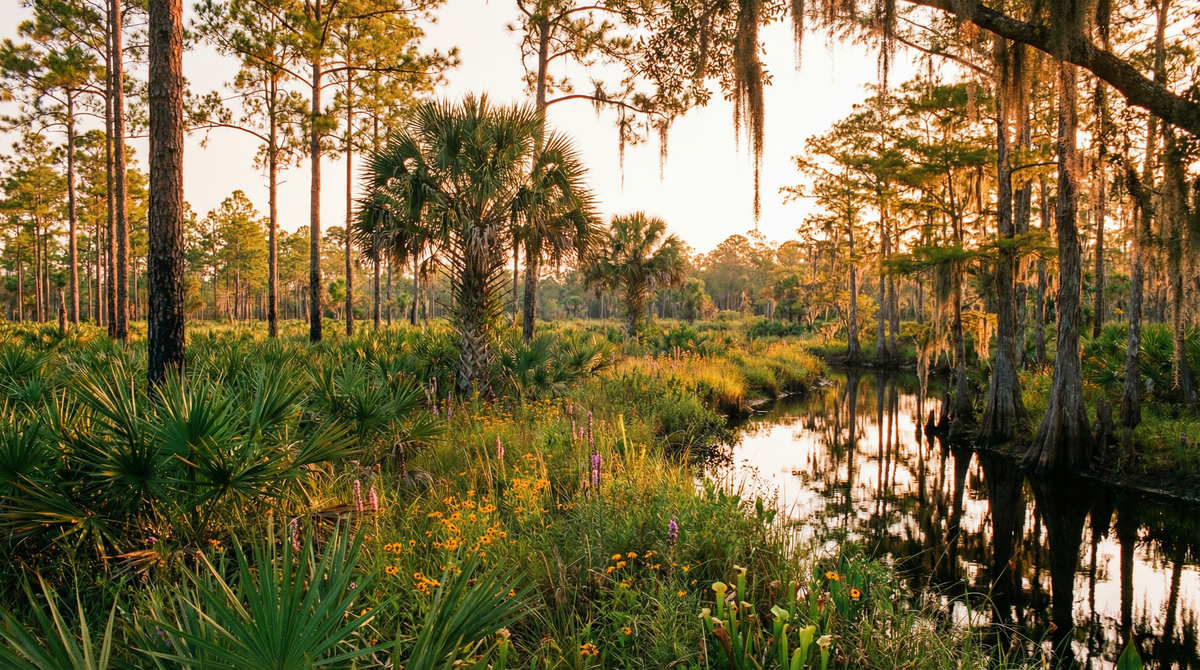
Growing in Florida
Florida offers permaculture practitioners an extraordinary canvas for year-round food production. With its subtropical to tropical climate, abundant rainfall, and diverse ecosystems, the Sunshine State presents both unique opportunities and challenges for regenerative growing.
From the temperate Panhandle to the tropical Keys, Florida's varied climate zones support an incredible diversity of food-producing plants. This guide will help you understand the unique conditions and best practices for creating thriving permaculture systems in the Sunshine State.
Understanding Florida's Climate Zones
Florida spans USDA Hardiness Zones 8b through 11a, creating distinct growing regions:
North Florida (Zones 8b-9a)
The Panhandle and northern regions experience occasional frosts and support temperate fruit trees like peaches, blueberries, and muscadine grapes alongside subtropical species.
Central Florida (Zones 9b-10a)
The heart of Florida's citrus belt, this region balances mild winters with hot, humid summers. Ideal for avocados, mangoes, and a wide variety of tropical perennials.
South Florida (Zones 10b-11a)
True tropical growing conditions allow for year-round production of bananas, papayas, coconuts, and other frost-sensitive species.
Florida Soil Types & Improvement
Florida's soils present unique challenges that permaculture design can address:
Sandy Soils
The dominant soil type across most of Florida, sandy soils drain quickly and require consistent organic matter additions. Chop-and-drop mulching, cover cropping, and compost applications build humus over time.
Muck Soils
Found in former wetlands and the Everglades Agricultural Area, these organic-rich soils are highly productive but require careful water management.
Building Living Soil
Focus on fungal-dominant compost, biochar applications, and perennial ground covers to create thriving soil ecosystems in Florida's challenging conditions.
Water Management Strategies
Florida receives 50-60 inches of rainfall annually, but its distribution creates feast-or-famine conditions:
Wet Season (June-October)
Heavy afternoon thunderstorms and hurricane season bring abundant moisture. Design swales, rain gardens, and retention areas to capture and slowly release this water.
Dry Season (November-May)
Extended dry periods require thoughtful irrigation planning. Drip systems, hugelkultur beds, and deep mulching help retain moisture during these critical months.
Rainwater Harvesting
Roof catchment systems are highly effective in Florida. A 1,000 sq ft roof can capture over 30,000 gallons annually—enough to sustain a substantial food forest through dry periods.
Integrating Florida Native Plants
Native species form the backbone of resilient Florida food forests:
Canopy & Understory Natives
Live oaks, sabal palms, and red mulberry provide structure and wildlife habitat. Understory natives like beautyberry, wild coffee, and coontie add ecological function.
Edible Native Species
Incorporate native edibles like saw palmetto berries, prickly pear cactus, and Florida wild lime into your polycultures for zero-input food production.
Pollinator Support
Native wildflowers including blanket flower, tickseed, and passionflower support Florida's native bee and butterfly populations while enhancing crop pollination.
Seasonal Planting Guide
Florida's reversed growing calendar surprises many newcomers:
Fall & Winter (October-February)
The prime vegetable season! Cool-season crops like tomatoes, peppers, lettuce, broccoli, and root vegetables thrive in Florida's mild winters.
Spring (March-May)
Transition period for warm-season crops. Plant heat-lovers like sweet potatoes, okra, and southern peas as temperatures rise.
Summer (June-September)
Focus on tropical perennials, heat-tolerant greens like Malabar spinach, and maintaining established food forest plantings through the rainy season.
Pest & Disease Management
Florida's warm, humid climate creates year-round pest pressure:
Common Challenges
Fungal diseases, nematodes, and a diverse insect population require integrated management approaches. Build biodiversity to attract beneficial insects and predators.
Permaculture Solutions
Companion planting, beneficial insect habitat, and diverse polycultures reduce pest pressure naturally. Avoid monocultures and maintain healthy soil biology to build plant resilience.