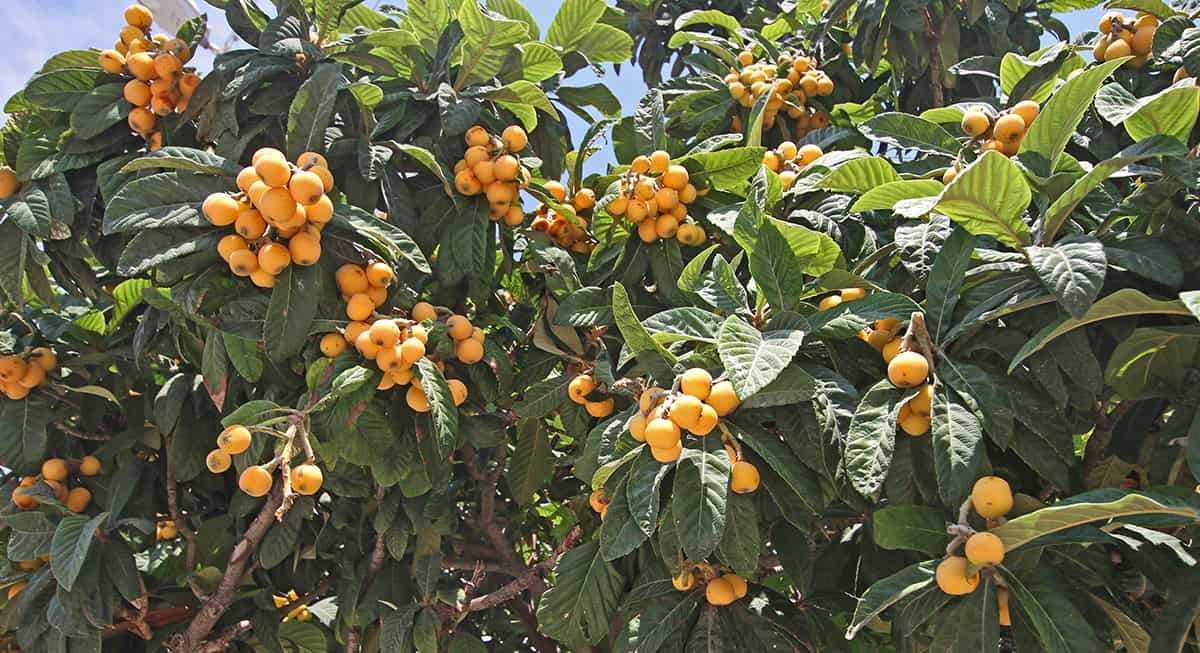
Here's the thing nobody warns you about when you plant a loquat: you will harvest fruit in spring, before almost anything else in your garden is producing. You will stand there eating something that tastes like an apricot and a mango had a child together and genuinely wonder why this tree isn't in every backyard in the South. I've grown loquats in zone 9B for years, and I still get that same mild shock every February when I'm pulling ripe fruit off the tree while my neighbors are still waiting on their citrus to finish. The timing alone is enough to make a case for it. But here's the contradiction that actually hooked me: loquat blooms in winter.[1] The flowers open when most fruiting trees are dormant, quiet, biding their time. Loquat is already doing the work.
That inverted rhythm is the whole key to understanding this plant. Once you see it, everything else about how to site it, care for it, and harvest it starts making intuitive sense in a way it simply doesn't if you treat it like a conventional fruit tree. So that's where we're starting.
Loquat Origin, History, and Botanical Background
Most people encounter loquat as a neighbor's tree or a curiosity at the farmers' market, and they spend about thirty seconds wondering what on earth it is. The answer is Eriobotrya japonica, an evergreen fruit tree with roots deep in the mountain forests of China, a history that spans continents and millennia, and a quiet way of making itself indispensable in warm-climate gardens once you give it a chance.
Botanical Characteristics and Native Habitat of Eriobotrya japonica
Loquat is native to the subtropical forests of central and southeastern China, where it grows as an understory tree at elevations between roughly 2,000 and 6,500 feet in provinces like Guangdong, Fujian, Sichuan, and Hubei.[2][3][4] That origin matters enormously for anyone trying to site this tree: the mild, humid winters and reliably warm summers of those mountain valleys are the climate template loquat is always reaching toward, which is why it thrives in zones 8 through 10 and sulks everywhere else. It's a polycarpic perennial, meaning it flowers and fruits repeatedly for decades rather than exhausting itself after one reproductive push, with a healthy lifespan of 20 to 50 or more years under good conditions.[5][3]
One thing I wish someone had told me early on is how dramatically the propagation method affects fruiting timeline. Because of its genetic variability and time to maturity, the propagation method you choose heavily dictates whether a tree successfully performs in the landscape.[4][6][3] In my Florida food forest designs, I always specify grafted trees. A decade is a long time to wait for fruit in a client's garden, and the performance difference simply isn't worth the gamble. Outside its native range, loquat has naturalized in parts of Florida, Hawaii, and Australia, generally presenting low to moderate invasive risk, so it can be planted in most warm U.S. landscapes with reasonable confidence.[7][8]
Visual Features: How to Identify a Loquat Tree
In the landscape, loquat reads as a handsome, well-behaved evergreen, typically reaching 10 to 25 feet tall with a rounded, spreading canopy of similar width.[9][10] The leaves are the most distinctive feature up close: large, leathery, elliptic blades 4 to 10 inches long with conspicuously serrated margins and 12 to 20 pairs of prominent veins arching toward the leaf edge.[9][11] New growth emerges with a rusty, felted surface that weathers to a deep glossy green. Those leaves combined with the gray-brown fissured bark and stout young stems give loquat a year-round architectural presence that few fruiting trees can match.
Flowers appear from late autumn through early spring, small creamy-white five-petaled blooms carried in panicles that can hold 20 to 100 individual flowers each.[9][12] The fragrance is warm and sweet, noticeable from several feet away on a still morning. Fruit follows in spring: small rounded to pear-shaped pomes ripening from green to yellow-orange, each about an inch to two inches across, with one to five large brown seeds inside.[5][9] The root system is fibrous and shallow, spreading horizontally near the soil surface rather than driving deep, which means it's efficient at catching surface moisture but can be competitive with nearby understory plants and unstable in high winds.[13][4] I've learned to keep loquat away from paved walkways for exactly this reason; the surface roots can heave pavement over time. Gardeners sometimes confuse loquat with medlar, Callery pear, or firethorn, but medlar is deciduous, Callery pear is significantly more invasive in North America, and firethorn's fruit clusters are far smaller and hold no edible flesh worth pursuing.[14][15]
Traditional and Cultural Uses Across Continents
Loquat's cultural journey began in China, where records of its cultivation trace back over 2,000 years to the Han Dynasty.[5][16][17] From there, the tree reached Japan during the Nara period around 710 to 794 CE, arrived in Portugal in 1789, and made its North American debut in California and Florida during the 1870s and 1880s.[5][16][17] Wherever it landed, the medicinal applications traveled with it.
In Traditional Chinese Medicine, the leaves (known as Pi Pa Ye) have been prescribed for more than two millennia to clear lung heat, resolve phlegm, and soothe coughs, sore throats, and bronchitis, with the fruit used separately to cool the stomach, quench thirst, and ease digestion.[18][19] Japanese Kampo practitioners use the same leaf under the name biwa for respiratory complaints, Korean Hanbang applies it to asthma and bronchitis, and Mediterranean folk traditions reached for leaf decoctions whenever throat infections or digestive distress appeared.[20][21] I've made Pi Pa Ye tea myself during mild winter coughs and found it genuinely soothing, which I appreciate more knowing that the same preparation has been in continuous use since before the Common Era. In Chinese culture, the loquat also carries symbolic weight as an emblem of prosperity and spring, while Japanese classical poetry and Heian-period art treated it as a meditation on transience.[22]
Fun Facts: Longevity, Pollination, and Landscape Presence
A well-placed loquat can outlast the garden design around it, fruiting reliably for decades as a polycarpic perennial.[5][3] The fragrant winter flowers are self-fertile, making the species highly accessible for growers who only have space to plant a single specimen.[23][24] What I love about watching loquat bloom in late autumn is how busy those panicles get with bees and flies at a time when almost nothing else in a warm-climate garden is offering nectar, which makes for a genuine ecological contribution during an off-season window when pollinators have slim pickings. As for the fruit itself, ripe loquats deliver a sweet-tart flavor that reads like a blend of peach, apricot, plum, and cherry with faint floral and citrus undertones, a combination that makes them one of spring's most anticipated harvests in any warm-climate garden.[25][26]
Loquat Varieties and Where to Buy Them
With over 50 named horticultural cultivars plus three botanical varieties (var. japonica, var. atrovirens, and var. kansui), Eriobotrya japonica offers far more choice than most gardeners realize.[27][28] After years of watching generic nursery seedlings disappoint -- whether through lackluster flavor, disease problems, or a decade-long wait to fruit -- I now always specify named cultivars when designing food forests. The variety you choose shapes everything.
Notable Loquat Cultivars for Home Gardens
Think of choosing a loquat cultivar the way you'd choose an apple variety: the species is just the starting point. For most US home gardens, a handful of cultivars stand out for real reasons.[4][29] Advance produces large fruit on a vigorous tree and shows good fire blight resistance, which matters enormously in humid climates. Champagne gives you very large fruit on a compact tree -- useful when space is tight. Gold Nugget is my personal favorite for flavor: a dwarf tree with genuine dessert quality. Christmas and Wolfe round out the short list for reliable productivity in Florida gardens, while Nova pushes cold hardiness into zone 7 for growers in marginal climates.[30][31]
Flesh color is a reliable shortcut to flavor expectation. White-fleshed types tend toward mild, honey-sweet notes; orange-fleshed cultivars lean tangier and more assertive.[32][33] I describe it to clients as the difference between biting into a mild apricot versus a tangy peach -- both good, but very different experiences. Climate also shifts that sweetness dial; in hotter zones, some cultivars lose their edge.[4][31] The early-spring harvest window -- March through May in most suitable climates -- is what makes cultivar selection feel urgent; loquats ripen months before apples or peaches, so getting the right variety producing reliably is genuinely exciting.[34]
Sourcing Loquat Trees and Seeds
For trees, specialty nurseries like Larry's Nursery and Fast Growing Trees carry named cultivars, and Southern Living Plants distributes through garden centers regionally.[35] Big-box stores (Home Depot, Lowe's, Walmart) stock loquats seasonally, but those are usually unnamed seedlings. I've learned the hard way that saving twenty dollars on an unidentified tree can cost you five years of mediocre fruit. Young plants run $15-45 while fruiting-size trees typically land between $75-250, and the premium for a grafted named cultivar is almost always worth it. Domestically, there are no federal interstate shipping bans, though California, Florida, Arizona, and Texas each have state-level nursery stock regulations worth checking before you order.[36][37] As for importing from abroad: don't. USDA APHIS permits, phytosanitary certificates, and a potential 6-12 month post-entry quarantine turn what sounds like a simple purchase into a regulatory project most gardeners have no reason to take on.[38][39] Buy domestic, buy named, buy grafted.
Loquat Propagation and Planting Guide
Loquat propagation starts with an unusual seed. Each one is oval to ellipsoid, roughly 1.5-2.5 cm long, with a hard, shiny, dark brown to nearly black coat[40][41] that feels almost like a polished stone when you pull it from the fruit pulp. What I find genuinely fascinating, and what I now point out to any client curious about growing from seed, is what's hiding inside: loquat seeds exhibit polyembryony, producing anywhere from 2 to 5 embryos per seed, sometimes as many as 10.[42][43] Some of those embryos are zygotic, meaning sexually produced and genetically variable; others are nucellar, clonal copies of the parent tree. Cracking one open under a loupe is a genuinely odd botanical surprise.
Because recalcitrant loquat seeds lose viability extremely quickly, prepare your soil mix and pots before you extract them from the fruit.
Propagation Methods for Loquat
You can propagate loquat by seed, grafting, semi-hardwood cuttings, air layering, or tissue culture.[44][45][46] Fresh seed is the accessible starting point, with germination rates of 70-90% when sown immediately after fruit harvest, and it's genuinely satisfying to plant something you just ate. The catch is genetic variability: even with nucellar embryos in the mix, seed-grown plants frequently don't match the parent cultivar.[30][47] If you care about replicating a specific flavor or fruit size, seed is a gamble.
Loquat seeds are also recalcitrant, meaning they can't tolerate drying below about 20% moisture content without rapidly losing viability.[48][49] If you can't sow immediately, store them moist at 4-10°C with around 30-50% moisture content and 50-60% relative humidity; under these conditions they'll hold viability for 3-6 months, occasionally longer under more specialized conditions.[49][50] Seed viability testing is straightforward with tetrazolium chloride staining, a 0.1-1% TZ solution at 30-40°C will turn viable embryos red within 4-24 hours if you want a quick read before committing to a sowing tray.[51]
Seeds also exhibit physiological dormancy and benefit from cold stratification at 4-10°C for 30-60 days, or light scarification, to get uniform germination.[52][30] Grafting, with success rates between 70-95%,[44][46] is the commercial standard and the route I now recommend to homeowners who want named cultivars and reliable fruit. For anyone interested in long-term germplasm conservation, the recalcitrant nature of these seeds means conventional seed banking isn't an option; cryopreservation at -196°C or vegetative propagation are the preservation strategies of record.[53][49]
I used to start everything from seed. I waited six years for one tree to fruit, and the result was underwhelming -- smallish, tart, not anything like the 'Champagne' or 'Gold Nugget' I'd been hoping to replicate. These days I come to site visits with a clear recommendation: buy a grafted tree if you want specific fruit in a reasonable timeframe. Seed-grown loquats take 5-7 years under typical garden conditions to reach meaningful production, sometimes longer.[54][55] Grafted trees bear fruit in 2-3 years after grafting.[54][56] That's not a small difference when you're planning a food forest for a client with kids who want to pick something.
Soil, Site Selection, and Sun Requirements
Drainage is the non-negotiable. Loquat performs beautifully in well-drained, fertile loamy or sandy loam soils with around 2-5% organic matter, but it's genuinely sensitive to waterlogging; heavy clay or compacted soils with poor drainage invite root rot fast.[4][57] I've seen loquat tolerate moderately poor soils without complaint, but standing water will finish one off quicker than cold will. Compared to citrus, which can handle occasional soggy feet for a short stretch, loquat has less tolerance for it. Amend heavy clay with sand, compost, or perlite, and mulch generously to retain even moisture without pooling.[54]
Optimal soil pH sits between 6.0 and 7.0, with a tolerance range of roughly 5.5 to 7.5.[58][59] Push below 5.5 and you're risking aluminum and manganese toxicity along with phosphorus deficiency; go above 7.5 and iron, zinc, and manganese deficiencies follow.[58] I learned this early and the hard way. One of my first loquat plantings went into slightly alkaline soil, and within a season I had interveinal chlorosis spreading across the new growth. The fix was sulfur and patience, but I've done a soil test before every planting since. If your pH needs adjusting, lime at 1-5 lb per 100 square feet raises it; elemental sulfur at 0.5-2 lb per 100 square feet brings it down.[54][60]
For light, full sun means at least 6 hours of direct sun daily for best fruit production.[4][61] Loquat does tolerate partial shade, a reflection of its origins as an understory tree, but too little light brings on chlorosis and a noticeably reduced fruit set. In warm climates like Florida's, a south or southeast exposure with afternoon light is ideal; in hotter inland zones, a bit of afternoon shade is worth considering to prevent leaf scorch.[62] For containers, I use a mix of around 50% loamy soil, 30% coir, and 20% perlite to keep drainage sharp while holding enough moisture for the roots to do their job.[63]
Spacing, Planting Technique, and Time to First Fruit
Standard loquat trees mature at 15-30 feet tall with a similarly wide canopy, so home landscape spacing of 15-20 feet between trees is the baseline, with a minimum of 12-15 feet if you're tight on space.[9][64] I typically space them at 18 feet in Florida food forest designs, which gives the canopy room to develop its rounded, spreading habit and lets air move freely between trees once they mature. In commercial orchards, 15-25 feet within rows and 20-25 feet between rows is standard, supporting 50-80 trees per acre.[65]
For tighter urban lots, the options open up considerably. Dwarf cultivars on dwarfing rootstock need only 10-15 feet, and espalier or hedge forms can be planted as close as 5-8 feet while still setting reasonable fruit.[64] I've used espalier against south-facing walls in narrow side yards several times and gotten good harvests from trees that would have been impractical at standard spacing. The key with any training form is that proper spacing improves air circulation, which directly reduces fungal pressure, and improves light penetration into the canopy for photosynthesis.[66]
When you plant, dig a hole 60-90 cm deep and wide to give roots room to establish without circling.[66] Rootstock choice influences the final tree size and spacing requirements; open-center or vase training keeps the canopy accessible and well-lit over time, which pays dividends at harvest.[66][67] Get the spacing and soil right at planting, and you're setting up a tree that can produce for decades. Skimp on either, and you'll be correcting problems long after the tree is too established to move.
Loquat Care Guide: Watering, Feeding, Temperature Tolerance, and Maintenance
Everything about loquat tree care makes more sense once you internalize the seasonal rhythm: flowers open October through February, fruit follows three to four months later, and then the tree rests and rebuilds through summer. That cycle dictates when you prune, when you fertilize, and when you start paying close attention to the forecast. Work with it and the tree practically runs itself. Work against it and you'll be wondering why your beautiful tree never fruits.
Watering Needs and Soil Moisture Management
Loquat wants well-drained soil with a pH between 5.5 and 7.5 and will tolerate dry spells once it's settled in, but young trees are a different story.[4][68] For the first one to two years, weekly watering isn't optional. Established trees need roughly one to two inches per week, applied deeply every ten to fourteen days during dry stretches rather than shallow daily sprinkles that never reach the roots.[4][68] I use a long screwdriver as my moisture probe: if it slides in easily past three inches, the tree can wait. If it stops short, it's time to water.
Overwatering is at least as dangerous as drought. Too much moisture leads to yellowing leaves, wilting, premature fruit drop, and eventually Phytophthora root rot.[30][69] In my zone 9B landscape, the summer rainy season can deliver four inches in a week, so I've learned to plant in slightly raised beds or on gentle slopes and never skip that drainage check. A two-to-four inch layer of organic mulch pulled six inches back from the trunk does triple duty: it conserves moisture, suppresses weeds, and can cut irrigation needs by up to 50%.[4][70] Honestly, in Florida that mulch layer is non-negotiable.
Fertilizing and Nutrient Management
Loquat is a moderate feeder. I apply a balanced fertilizer, something like a 10-10-10 or 8-3-9, two to three times per year: once in early spring after bloom, once in late spring, and optionally once in early summer.[4][71] Young trees get a quarter to a half pound per application; mature trees can take one to two pounds. The rule I repeat to every client: stop fertilizing by midsummer. Late-season nitrogen pushes soft, leafy growth that's exactly what gets burned in an early freeze.[4][71]
Micronutrients are where Florida and California soils tend to quietly fail. In alkaline soils above pH 7.0, iron, zinc, and boron become unavailable regardless of what you're adding to the ground.[71][72] I had a tissue test come back showing low boron, which explained the cracked fruit I'd been seeing on one tree for two seasons. A simple foliar spray cleared it up within a year.[73] Once you know what to look for, the leaves tell the story: pale older foliage means nitrogen, interveinal chlorosis on young leaves means iron, small rosetted leaves point to zinc, and brown leaf margins suggest potassium scorch.[73][30] A soil test every two to three years keeps you ahead of these issues before they cost you a harvest.
Frost Tolerance and Cold Protection
Loquat is reliable in USDA zones 8 through 10, and with some effort it can survive zone 7.[4][5] Mature wood can survive down to about 12-15°F, which sounds reassuring until you remember that the flower buds are killed at 26-28°F.[4][74] The tree survives; you just lose the crop. That distinction matters a lot when you're deciding how much protection effort is worth it.
My most reliable microclimate trick is planting against a south-facing wall, which can add five to ten degrees of warmth on a cold night.[13] When a freeze is forecast, I drape young trees with breathable row-cover fabric secured all the way to the ground so cold air can't pool underneath, never plastic.[75] And because the tree blooms in autumn, avoid any spring pruning that stimulates tender new growth before your last frost date has safely passed.[13]
Heat Tolerance and Summer Stress Mitigation
Loquat's sweet spot is daytime temperatures between 70 and 86°F.[76] Above 95°F the tree starts showing stress: flower drop, fruit sunburn, leaf scorch.[77] I've noticed it responds similarly to citrus in that regard; both want protection from sustained high heat during fruit set. The difference is that loquat flowers in winter, so by the time summer heat arrives the fruit is usually already on the ground or in the kitchen.
In hot, humid summers, I've had good results using 30-50% shade cloth in the afternoon hours combined with deep, consistent irrigation.[46][12] The mulch layer cools the root zone and maintains moisture so the tree isn't fighting heat and drought simultaneously. In guild plantings I've designed, positioning taller companions to provide afternoon shade has reduced stress symptoms noticeably without any shade cloth at all.
Pruning, Maintenance, and Seasonal Rhythm
The best time to prune a loquat is right after harvest, in late summer or early fall, before the tree sets its autumn flower buds.[54][68] Remove dead or crossing branches, thin for airflow, and manage height. With young trees I spend the first two years deliberately establishing three to five main scaffold branches in an open vase shape; that framework supports heavy spring crops without needing staking later, and I've seen it prevent the limb splits that plague young trees loaded with fruit.[54][68]
Fruit thinning is worth the effort. Reducing clusters to one or two fruits spaced four to six inches apart improves individual fruit size and prevents branch breakage under a heavy load.[54][68] Plant in full sun with wind protection, space trees fifteen to twenty feet apart, and stake young trees in exposed sites for the first year or two. Bloom runs October through February; fruit ripens three to four months later in April through June depending on your zone and cultivar.[78] Once harvested, cool fruit quickly to 32-41°F and store at high humidity for the best two-to-four week shelf life.[79][80] Process your harvest quickly, relying on immediate refrigeration, as the tender fruit degrades rapidly once brought indoors.[9]
Harvesting Loquats: Timing, Technique, Flavor, and Storage
What makes loquat fruiting season genuinely unusual among backyard fruit trees is the reversed calendar: flowers open in autumn through winter, and the fruit spends 90 to 180 days developing before it's ready to pick in spring.[81][82] That long developmental arc means you're watching clusters quietly swell through winter while everything else in the garden is dormant.
When to Harvest Loquats by Region and Climate
The loquat season shifts considerably depending on where you garden. Florida growers can start picking as early as December and as late as May.[4] In coastal California, zone 9 trees typically ripen March through June while zone 10 runs February to May.[83] Texas gardeners in zone 8 often see the first ripe fruit in February with peak harvest arriving in April and May.[31] Across USDA zones 8 through 10 broadly, late winter to early summer covers most situations.[84]
Those windows shift based on late frosts, soil quality, pruning habits, and irrigation -- all the factors the care guide covers in depth.[4][54][56] In my zone 9B garden in Florida, protecting the winter blooms from a surprise cold snap has extended my harvest window by several weeks in good years. No amount of calendar math replaces watching the individual clusters. The moment I catch the first faint pineapple-tropical scent drifting off a cluster on a warm morning, I know picking is close.
How to Harvest Loquats and Identify Ripe Fruit
Ripe loquats turn a rich orange or yellow, soften just slightly under gentle pressure, and develop that signature aroma as starches convert to sugars.[31][33] Unripe fruit is firm and disappointingly astringent, so patience pays off. Fruit that's mature but still slightly firm can finish ripening off the tree, which is useful if you need to pick ahead of a storm or a hungry bird flock.[31]
The thin, slightly fuzzy skin bruises easily if you grab and pull. I always support the fruit from below and twist gently rather than tugging. Once ripe, refrigerate fruit promptly: ripe loquats hold only 3 to 5 days in the fridge at 32 to 41°F, while mature-but-firm fruit lasts up to two weeks.[31][84] That short window is nothing like citrus sitting on the counter for weeks. I've learned the hard way that a big harvest means eating fresh immediately or heading straight to the kitchen to make jam.
Loquat Flavor, Aroma, and Texture at Peak Ripeness
A ripe loquat is round to pear-shaped, one to two inches across, with thin yellow-to-orange skin and juicy flesh that melts the way a perfect apricot or plum does.[85][4] The flavor sits somewhere between peach, apricot, mango, and citrus, driven by 10 to 14 percent sugars (fructose, glucose, sucrose) balanced against low malic acid that keeps things bright rather than flat.[86][87] The aroma is genuinely complex: floral and fruity notes of apricot, pineapple, and rose come from linalool, γ-decalactone, and various esters and aldehydes working together.[88][89] To me it smells like apricot crossed with lychee, which is exactly what makes picking at true peak ripeness worth the patience. An underripe loquat is a pale, tannic letdown; a perfectly ripe one is something else entirely.
Loquat Preparation, Culinary Uses, and Medicinal Applications
Eating Loquat Fruit Fresh and Its Sweet-Tart Flavor Profile
My favorite way to eat a loquat is standing in the garden, still warm from the sun. A quick rinse under cool water, then I squeeze the blossom end gently until the flesh pops free of those big central seeds. That small technique matters; if you bite in carelessly around the seeds, you get a faint bitterness that can mislead you about the fruit's real character. The flesh itself is something special: a sweet-tart combination of apricot, peach, plum, and citrus with a bright tangy finish,[54][90] ranging from 12 to 18 Brix at peak ripeness depending on cultivar and season. Underneath that flavor is genuine nutrition: vitamins A and C, dietary fiber, and beta-carotene antioxidants.[91] The skin is thin and edible,[9][30] though I usually peel mine when making anything cooked.
Versatile Recipes and Culinary Applications for Loquat
Beyond fresh eating, loquat rewards experimentation. Loquat jam is probably the most popular preservation route, and a recipe for loquat jam is genuinely simple: the fruit's natural pectin means it sets without much fuss. Loquat syrup steeped with ginger or cinnamon makes a gorgeous drizzle over yogurt; loquat honey (fruit simmered with raw honey until thick) is something I keep in my pantry all summer. The fruit also goes beautifully into pies, tarts, sorbets, chutneys, and wine, and in Chinese cooking it appears in both savory soups and candied forms, while Mediterranean cooks fold it into salads alongside cheeses.[45][92] Flavor pairings that consistently work: ginger, honey, citrus, vanilla, almonds, mint, basil, and warm spices like cinnamon.[93] I grow mint and basil near my loquat as part of the guild anyway, and those same herbs end up in the fruit bowl. You can also dry slices for snacks or pickle them in vinegar for something unexpectedly savory.[94]
Preparing Loquat Leaves for Traditional Medicinal Teas and Extracts
Loquat leaf tea has a long history in traditional Chinese medicine as a remedy for respiratory ailments, coughs especially.[95][96] The brew is mild and earthy, somewhere between lemon balm and a light green tea. I harvest young spring leaves for the best flavor, dry them thoroughly (any moisture invites mold), and steep 3 to 10 grams of dried leaf in hot water, one to three times daily.[97] Consume it in moderation; the leaves are generally considered safe in small amounts but do carry mild toxicity at high doses.[95] Modern research points toward anti-inflammatory, antimicrobial, and even anticancer properties in the leaves, though most of that work is still at the lab stage and needs clinical validation.[98]
Non-Food Uses of Loquat Wood, Seeds, and Leaves
The tree gives beyond the harvest. Loquat wood is dense and decay-resistant, used traditionally for furniture, carving, and small crafts.[99] Seed oil has been applied topically for skin conditions in some cultures, though internal use is rare and inadvisable given that the seeds contain cyanogenic glycosides.[98] I've always told clients to treat loquat seeds the way they'd treat apple or cherry seeds: beautiful, glossy, and not for eating. That's not alarmist; it's just accurate. In a permaculture system where you're thinking about every output from a tree, the prunings feed the mulch pile, the leaves feed the medicine cabinet in small quantities, and the wood from an old tree has genuine craft value. The seeds' insecticidal potential has been noted in research, but handling them requires the same caution their chemistry demands.[98] Know the whole plant, use what's safe, and respect what isn't.
Loquat Health Benefits and Medicinal Uses
Most people discover loquat through the fruit, and that's a perfectly reasonable place to start. But once you've grown one for a season or two, you start to notice that almost every part of this tree has a documented relationship with human health, some stretching back more than two thousand years. The fruit soothes, the leaves have been steeped and sipped across East Asia for generations, and the phytochemistry underlying all of it is genuinely interesting. Understanding these properties also helps you appreciate why loquat earns its place in a food forest beyond sheer productivity.
Traditional Uses in Asian Medicine
In Traditional Chinese Medicine, loquat leaves have long been the go-to remedy for respiratory complaints: coughs, excess phlegm, irritated throats.[100][101] Japanese Kampo tradition followed the same path, using loquat syrup specifically as a cough suppressant that's still found in pharmacies throughout Japan today. The fruit itself had its own role: cooling, thirst-quenching, and settling digestive discomfort.[102] Even the bark shows up in historical records for skin conditions and diarrhea, though that application is rarely used now.[103]
What I find compelling is that the respiratory use isn't just folk wisdom waiting to be debunked. Clinical trials have shown that loquat leaf extract syrup meaningfully reduces cough frequency and severity in patients with upper respiratory infections.[104] That's one of the few areas where human trials back up centuries of traditional syrup use, and it earns real credibility in my book. Most of the broader pharmacological research is still in cell and animal models, which I'll note where relevant, but the respiratory data is considerably more mature.
Key Phytochemical Compounds
The bioactivity across the whole plant traces back to a remarkably diverse set of secondary metabolites. Loquat contains flavonoids, triterpenoids (including ursolic acid, oleanolic acid, and corosolic acid), phenolic acids like chlorogenic acid, carotenoids, and minor alkaloids, with the mix varying dramatically by plant part.[105][106][107] Leaves are the richest source of triterpenoids and flavonoids, with chlorogenic acid concentrations ranging from 20 to 50 mg per gram dry weight and ursolic acid at 1 to 5 mg per gram.[108][109] The fruit peel is elevated in phenolic acids and flavonoids; the seeds, on the other hand, concentrate amygdalin, a cyanogenic glycoside you'll want to treat very differently.
The fruit pulp delivers its own worthwhile polyphenol load: quercetin, kaempferol, rutin, chlorogenic acid, and carotenoids together add up to roughly 200 to 500 mg of polyphenols per 100 grams fresh weight, putting antioxidant capacity in a range comparable to apples.[110][111][112] I've noticed that fruit from the hotter, sunnier spots in my zone 9B landscape tends to taste more intensely flavored, which likely reflects the concentration of these compounds in response to light and heat stress. Growing conditions genuinely move the needle here.
Pharmacological Research and Health Effects
The anti-inflammatory and antioxidant mechanisms are the best-documented actions, and they work in concert. Loquat leaf extracts inhibit NF-κB signaling and suppress COX-2 expression, which dials down pro-inflammatory cytokines like TNF-α and IL-6 in arthritis and colitis models.[113][114][115] Simultaneously, high phenolic content scavenges free radicals and activates the Nrf2 pathway, upregulating protective enzymes with DPPH assay performance comparable to ascorbic acid.[116][117]
The antidiabetic research has some of the strongest mechanistic data. Loquat extracts inhibit α-glucosidase and α-amylase (slowing glucose absorption), activate AMPK, and inhibit PTP1B, collectively improving insulin sensitivity and glucose metabolism; animal studies show hypoglycemic effects at 200 to 600 mg/kg doses.[118][119][120] Beyond these core actions, research in cell and animal models points to hepatoprotective effects via Nrf2 modulation and TNF-α suppression,[121] neuroprotective properties through acetylcholinesterase inhibition,[122] anticancer activity via caspase-driven apoptosis and PI3K/Akt inhibition in colon and breast cancer lines,[123][124] and cardioprotective and anti-obesity effects.[125][126] These are genuinely promising directions, but since most remain pre-clinical, I treat them as reasons to follow the research rather than to make health claims at the garden gate.
Nutritional Profile of Loquat Fruit
The edible part is the juicy pulp surrounding the seeds, with a sweet-tart flavor that draws comparisons to peach and orange.[127][128] Per 100 grams, it clocks in at about 47 calories with 12 grams of carbohydrates, modest fiber, and very little fat or protein.[87] Vitamin C is low at just 1 mg (1% DV), and vitamin A from beta-carotene is modest too, around 3% DV.[87] Loquat won't replace your citrus on the vitamin C front, and I tell people not to expect it to.
Where the fruit nutrition genuinely shines is potassium, at 266 mg per 100 grams, alongside smaller amounts of calcium, iron, magnesium, and phosphorus.[87] Pair that mineral content with the polyphenol profile discussed above, and loquat earns its place in a varied diet as a reliable spring fruit that bridges the gap before summer berries appear. Cooking reduces some of these benefits, with boiling cutting vitamin C by up to 50%; steaming retains more, around 70 to 80%.[129][130] Nutrient levels also shift with cultivar, ripeness, and season, with early spring harvests typically highest in vitamin C.[129]
Safety Considerations and Potential Side Effects
Here's where I get direct, because the safety picture for loquat really does require clarity. The fruit pulp is safe. The large brown seeds are not. Loquat seeds contain amygdalin, a cyanogenic glycoside averaging 2 to 3 mg per gram of seed weight, which releases hydrogen cyanide during digestion.[110][108][131][132] There is no reliable home method to fully neutralize them. After seeing how quickly even a small amount of seed material can pose a risk, I always tell gardeners plainly: the sweet pulp is the prize, and the seeds go straight to compost, never the kitchen. The pulp itself contains negligible cyanogenic glycosides and is widely and safely consumed.[110][133]
Acute seed ingestion can cause nausea, vomiting, headache, dizziness, and rapid breathing, escalating in severe cases to confusion, seizures, or coma.[134][135] Dogs and cats are similarly vulnerable, with seeds posing the highest risk to pets.[136] Amygdalin levels can vary by cultivar and environmental stress, so drought-grown fruit may carry higher concentrations in the seeds.[137]
Loquat leaf tea has a well-established traditional dosage range of 3 to 10 grams of dried leaf per day, not exceeding 15 grams, and I'd suggest waiting until your tree is at least three years old before harvesting leaves for this purpose; younger plants haven't developed the same secondary metabolite profile as mature ones.[138][120][139][140] Leaf preparations can interact with cytochrome P450-metabolized drugs, enhance the effects of antidiabetic medications, and possibly affect blood thinners through antiplatelet activity. Leaf use is contraindicated during pregnancy and breastfeeding without medical guidance.[139]
Loquat pollen carries moderate allergenic potential, particularly for people already sensitive to Rosaceae family plants, and can trigger allergic rhinitis, asthma, or contact dermatitis.[141][142][143] One identification note worth mentioning: Cherry Laurel (Prunus laurocerasus) is a toxic look-alike that can be confused with loquat in the landscape. The distinguishing difference I always check first is the leaf underside. Loquat leaves have distinctly fuzzy, almost woolly undersides; Cherry Laurel leaves are glossy and smooth. Cherry Laurel also flowers in spring rather than autumn or winter and produces small black drupes rather than loquat's orange-yellow pomes.[144][145] If you're ever unsure, run a finger across the leaf underside before tasting anything. That single tactile check has saved confusion more than once in my landscape work.
Loquat Pests and Diseases
Loquat sits in an interesting middle ground as far as fruit trees go. It's not the pest magnet that peaches can be, but it's not trouble-free either. The honest picture is a tree with genuine natural defenses against many fungal problems, yet real vulnerability to a handful of high-impact threats that can escalate quickly if you're not paying attention. Understanding that split profile is what separates gardeners who lose trees from those who harvest decade after decade.
Common Diseases and Resistance
Loquat shows moderate resistance to the most common fungal leaf spot pathogens, including Pestalotiopsis, Mycosphaerella, and Cercospora, but it's genuinely susceptible to bacterial leaf spot caused by Xanthomonas campestris pv. eriobotryae, which can cause serious defoliation if conditions favor it.[146][147] I've seen the characteristic yellow halos around dark lesions on loquat leaves look nearly identical to what I've watched spread on neglected apple trees, and in both cases early sanitation of fallen leaf debris made a meaningful difference in slowing the cycle. Phytophthora root rot is the other high-severity threat, especially in poorly drained soils, with young trees being particularly vulnerable.[148] I'll be honest: I learned this the hard way after losing a young tree in heavy Florida clay before I understood that "well-drained" isn't optional, it's foundational.
Anthracnose (Colletotrichum spp.) is worth watching in humid regions, causing leaf spots, fruit rot, and defoliation, and poor airflow makes everything worse.[149][150] Fire blight (Erwinia amylovora) is a concern but loquat performs noticeably better than susceptible pear varieties, so it's a monitoring situation rather than a crisis-management one.[151] Cultivar choice shapes all of this considerably: 'Wolfe' shows higher resistance to fungal leaf spot, 'Advance' performs better against fire blight, 'Golden Nugget' resists fungal leaf spots and powdery mildew, and 'Champagne' holds up better against anthracnose and canker.[152][58] Picking the right variety for your local disease pressure is genuinely one of the smartest upfront decisions you can make with this tree.
Environmental triggers matter as much as variety. High humidity promotes fungal problems, poor drainage invites root rot, frost damage below 25°F increases susceptibility across the board, and overhead watering or dense planting accelerates disease spread.[146][54] Good spacing of 15 to 20 feet, drip irrigation instead of overhead watering, and consistent pruning for airflow prevent more loquat tree diseases than copper sprays ever will.[153][9] That said, copper-based fungicides are the recommended tool when bacterial leaf spot or fire blight do appear, and for Phytophthora, resistant rootstocks like 'E19' provide a more durable solution than any spray program.[146][153] Rust, powdery mildew, canker, and ringspot viruses round out the disease picture but are considerably less common than the bacterial and fungal issues described above.[146]
Major Insect Pests and Natural Defenses
The primary loquat tree pests to know are fruit flies (Bactrocera dorsalis and Ceratitis capitata), soft scales, leafrollers, and psyllids; secondary pressure comes from aphids, thrips, mites including eriophyid species, leaf miners, and codling moths.[154][155] What I find reassuring is that loquat comes with built-in armor. The tree produces phenolics, flavonoids, and triterpenoids that deter feeding insects, its leaf trichomes create a physical barrier, and trees growing in mycorrhizal-rich soils show enhanced defense responses through AMF associations.[156][157] I've genuinely noticed that the established trees in my designs, the ones with diverse understory plantings and healthy fungal networks, seem to shrug off minor pest pressure that troubles younger isolated specimens. Cultivars like 'Advance', 'Wolfe', 'Tanaka', and 'Golden Yellow' show reduced susceptibility to various insects as well, so variety selection pulls double duty here.[158]
IPM is the framework that makes the most sense for this tree: monitor regularly, prioritize spacing and airflow and sanitation, and lean on biological controls like ladybugs, parasitic wasps, and predatory mites before reaching for horticultural oils or insecticidal soaps.[159][160] Encouraging those predatory wasps and beneficial insects has reduced my reliance on any sprays to near zero on mature trees. Regional tactics do vary: California growers focus on dormant oil applications for scale, Florida gardeners deal with Mediterranean fruit fly using traps and fruit bagging, and eriophyid mite pressure in drier climates like New Mexico calls for targeted management; kaolin clay is a useful barrier for psylla wherever they're a problem.[160][161] A well-sited loquat with the right cultivar and healthy soil ecology is genuinely one of the more resilient fruit trees you can grow in a subtropical or warm-temperate food forest.
Loquat in Permaculture Design
Loquat earns its place in a food forest not just because it produces fruit but because of what it does the rest of the year. Its evergreen canopy intercepts winter rain, its leaf fall steadily improves soil structure, and its flowers open when almost nothing else is blooming. That combination of contributions is what I look for when I'm building out a subtropical guild, and loquat delivers on most of them without requiring much from you in return.
Ecosystem Functions and Guild Roles
Loquat functions as a dynamic accumulator of potassium and calcium, pulling minerals into its large, leathery leaves and returning them to the soil surface as they drop and decompose.[162][163] It won't fix nitrogen, so I don't rely on it for that job, but in my warm-climate designs I've watched a thin, tired soil under a young loquat visibly improve its tilth over a few seasons just from the steady leaf-litter input. You don't need to oversell the chemistry; the mulch effect alone is genuinely useful.
The biodiversity value is equally real. Loquat provides nectar and pollen for pollinators through late fall and winter, fruit for birds and other wildlife that aid in seed dispersal, and dense root mass that controls erosion on slopes.[164][165][166] In my experience, those winter flowers become a magnet for bees on mild afternoons when the rest of the landscape is dormant. Watching a loquat buzzing with honeybees in December is one of those moments that justifies the whole design philosophy.
On pollination: loquat is largely self-fertile, but cross-pollination from compatible varieties significantly improves fruit set, size, and yield.[167][168][46] Key pollinators include honeybees, native bees, beetles, and syrphid flies, which are especially effective in the cooler temperatures when loquat blooms.[167] Optimal pollination happens between 59 and 68°F with moderate humidity, and blooms are damaged below 28°F (-2°C).[169][170] In my designs, I plant multiple varieties where space allows and tuck in borage nearby; the syrphid fly activity around those cool early blooms increases noticeably. Frost cloth during a cold snap protects both the blooms and the pollinators' window to do their work.[169][171]
Forest Layer and Food Forest Placement
In its native habitat across the rocky slopes and stream margins of subtropical south-central China, loquat grows as an understory or mid-story tree within humid monsoon forest.[9][172] That origin translates directly to its food-forest role: an evergreen tree reaching 15 to 25 feet with a broad, rounded canopy that fits comfortably in the mid-story or small canopy layer.[173][174] I think of it as functioning similarly to a small citrus in a guild but without the aggressive thorniness, while still delivering steady soil-building leaf drop like a deciduous fruit tree would.
The evergreen canopy creates genuinely useful microclimates. Tender understory herbs that would struggle through a dry Florida winter settle in comfortably on loquat's north side, buffered from wind and shaded from the harshest afternoon sun. That windbreak quality is real and worth designing around deliberately.
Two cautions belong squarely in the design conversation, though. Loquat has a shallow, fibrous root system that competes aggressively for surface moisture and nutrients.[175] Early in my career I planted one too close to a young avocado and watched the loquat dominate the surface moisture; both trees struggled until I gave them proper spacing and heavy mulch to reduce competition. Now I treat the root zone as a no-go area for other deep-rooted companions and manage it with surface mulch instead. The second issue is invasive spread: because birds disperse seeds so effectively, loquat has naturalized aggressively in parts of Florida and Australia.[175] I only site it where spread is welcome or where I can manage seedlings, because that's an ethical design choice, not just a garden-hygiene one.
Climate Adaptation and Hardiness Zones for Loquat
Loquat's subtropical origins explain its sweet spot cleanly: USDA zones 8 through 10, where mature trees can handle brief dips to 10-15°F but young trees and flowers need protection below 20°F.[176][46][13] It grows best in the 60-80°F range with 30 to 50 inches of annual rainfall and moderate to high humidity, and once established it handles dry periods reasonably well as long as drainage is good.[46][9] That drought tolerance is part of why it performs so well across Mediterranean-climate zones in California, the Mediterranean basin itself, and parts of Australia and South America, where the warm, dry summers concentrate fruit sugars into a noticeably sweeter harvest.[177][178]
Zone 7 is possible but requires deliberate effort: heavy mulching, trunk wrapping, and a sheltered microclimate at minimum.[5][4] I've helped clients push loquat into zone 7b edges using a south-facing wall and heavy frost cloth over the canopy during blooms, and the trees have survived brief dips to 12°F. But fruit set was reduced, and honestly, zone 8 is far more reliable if you're after consistent harvests rather than horticultural bragging rights. Site it carefully, work with its subtropical preferences rather than against them, and loquat rewards you with year-round structure, winter-flowering beauty, and a spring harvest that arrives before almost anything else in the garden.
The Tree That Taught Me to Pay Attention in February
Most of my food forest blooms when everyone's watching, in that warm, generous stretch from April through October. Loquat blooms when nobody expects anything, when the yard is quiet and the pollinators are scarce and a frost might still come through and ruin everything. There's something I respect about that kind of timing. My oldest tree has fruited through late freezes, through drought, through my own early planting mistakes, and every spring it delivers anyway, unhurried and completely indifferent to my impatience.
Sources 178
- Loquat Growing in the Florida Home Landscape, UF/IFAS ↩
- Flora of China - Eriobotrya japonica ↩
- The Loquat: Botany, Horticulture and Uses ↩
- Loquat Growing in the Florida Home Landscape ↩
- Eriobotrya japonica ↩
- Loquat (Eriobotrya japonica): Production and Uses ↩
- USDA PLANTS Database: Eriobotrya japonica ↩
- Invasive Plant Atlas of the United States - Eriobotrya japonica ↩
- Eriobotrya japonica ↩
- Eriobotrya japonica ↩
- Flora of China - Eriobotrya japonica ↩
- Eriobotrya japonica ↩
- Loquat Growing in the Florida Home Landscape ↩
- Loquat Tree Identification and Look-Alikes ↩
- Medlar vs. Loquat: Similarities and Differences ↩
- The Loquat: Botany, Horticulture and Uses ↩
- Cultural History of Loquat in East Asia - Journal of Ethnobiology and Ethnomedicine ↩
- Traditional uses and pharmacological properties of Eriobotrya japonica ↩
- Compendium of Materia Medica (Bencao Gangmu) ↩
- Folk Medicinal Uses of Eriobotrya japonica in Japan and Korea ↩
- Mediterranean Ethnobotany of Introduced Fruits ↩
- Cultural History of Loquat in East Asia ↩
- Eriobotrya japonica: Pollination and Ecology ↩
- Frugivory and Seed Dispersal in Eriobotrya japonica ↩
- Flavor Compounds in Loquat Fruit ↩
- Loquat Fruit Composition ↩
- USDA PLANTS Database - Eriobotrya japonica ↩
- Royal Horticultural Society - Loquat tree cultivars ↩
- Loquat Varieties - California Rare Fruit Growers ↩
- Varieties of Loquat for Home Gardens ↩
- Loquat - Texas A&M AgriLife Extension ↩
- Eriobotrya japonica - Missouri Botanical Garden ↩
- Royal Horticultural Society Plant Database ↩
- Loquat Growing Guide ↩
- Missouri Botanical Garden Plant Finder - Eriobotrya japonica ↩
- Shipping Plant Material ↩
- California Nursery Stock Regulations ↩
- Importing Plants and Plant Products into the United States ↩
- Nursery Stock Regulations ↩
- Eriobotrya japonica - Loquat ↩
- Morphological Characteristics of Loquat (Eriobotrya japonica) Seeds ↩
- Polyembryony in Loquat (Eriobotrya japonica Lindl.): Implications for Propagation ↩
- Embryology and Polyembryony in Eriobotrya japonica ↩
- Loquat Production in California ↩
- Propagation of Loquat (Eriobotrya japonica) ↩
- Loquat Growing in the Florida Home Landscape ↩
- Propagation of Loquat (Eriobotrya japonica Lindl.) ↩
- Recalcitrant Seeds: Their Biology and Storage ↩
- Storage Physiology of Loquat (Eriobotrya japonica) Seeds ↩
- Germination and Storage of Loquat Seeds ↩
- Methods for Testing Seed Viability in Eriobotrya japonica ↩
- Seed Germination and Dormancy in Eriobotrya japonica ↩
- Seed Storage Behaviour of Tropical Tree Species ↩
- Loquat Production in Florida ↩
- Growing Loquat in Florida ↩
- Growing Loquats ↩
- Soil Management for Fruit Trees ↩
- Eriobotrya japonica - University of Florida IFAS Extension ↩
- Soil pH and Nutrient Availability for Fruit Trees - NC State Extension ↩
- Loquat Production in North Carolina ↩
- Eriobotrya japonica (Loquat) ↩
- Royal Horticultural Society - Loquat ↩
- Loquat Growing Guide ↩
- Loquat Growing in the Florida Home Landscape ↩
- Loquat Production in California ↩
- Selecting Fruit Trees for the Home Landscape: Loquat ↩
- Training and Pruning Deciduous Fruit Trees ↩
- Loquat Production in California ↩
- Loquat Production in California ↩
- Loquat Production in California ↩
- Loquat Production in California ↩
- Micronutrient Deficiencies in Loquat ↩
- Nutrient Deficiencies in Loquat Trees ↩
- Eriobotrya japonica ↩
- Eriobotrya japonica: Cold Tolerance and Injury ↩
- Loquat: Botany, Horticulture, and Uses ↩
- Growing Loquats in California ↩
- Loquat Production in California ↩
- Postharvest Handling of Loquat (Eriobotrya japonica) ↩
- Loquat: Recommendations for Maintaining Postharvest Quality ↩
- Loquat Fruit Development and Maturity ↩
- Phenological Stages of Loquat (Eriobotrya japonica) ↩
- Growing Loquats in California ↩
- Loquat: Harvest and Storage ↩
- Loquat Tree Care - University of Florida IFAS Extension ↩
- Journal of Food Science - Chemical and Sensory Profiles of Loquat Fruit ↩
- USDA FoodData Central - Loquats, raw ↩
- Volatile Compounds and Aroma Characteristics of Loquat Fruit (Eriobotrya japonica Lindl.) ↩
- Characterization of the Key Aroma Compounds in Loquat Fruit ↩
- Loquat (Eriobotrya japonica Lindl.): A Review of Chemistry, Nutritional Composition and Health Benefits ↩
- Eriobotrya japonica (Loquat) ↩
- Loquat - Eriobotrya japonica ↩
- Culinary Uses of Loquat Fruit ↩
- Loquat Production in California ↩
- Traditional Uses of Loquat Leaves ↩
- Traditional Uses of Loquat in Chinese Medicine ↩
- Traditional Uses and Pharmacological Properties of Eriobotrya japonica Leaf ↩
- Loquat (Eriobotrya japonica): Traditional uses, phytochemistry and pharmacology ↩
- Eriobotrya japonica ↩
- Loquat (Eriobotrya japonica): A Review of Its Traditional Uses and Phytochemistry ↩
- Traditional Chinese Medicine: Use of Loquat in Respiratory Disorders ↩
- Traditional Uses and Pharmacological Profile of Loquat (Eriobotrya japonica) Leaf ↩
- Eriobotrya japonica: A Review of Its Traditional Uses, Phytochemistry, and Pharmacology ↩
- Clinical trial of loquat leaf extract for cough relief ↩
- Secondary Metabolites from Loquat (Eriobotrya japonica) Leaves and Their Biological Activities ↩
- Chemical constituents of loquat (Eriobotrya japonica) leaves, fruits, and seeds and their antioxidant activity ↩
- Comparison of the antioxidant activities and phenolic constituents of loquat (Eriobotrya japonica) seeds, leaves, peel, and fruits ↩
- Phytochemical Composition of Eriobotrya japonica Leaves ↩
- Triterpenic Acids in Eriobotrya japonica ↩
- Phytochemical Composition of Eriobotrya japonica Fruit - Peer-Reviewed Article ↩
- Antioxidant Activity of Loquat (Eriobotrya japonica) Fruit Extracts ↩
- Phytochemical Composition and Antioxidant Properties of Loquat Fruits ↩
- Anti-inflammatory effects of Eriobotrya japonica leaf extract on NF-κB and COX-2 pathways ↩
- Anti-inflammatory Studies on Eriobotrya japonica ↩
- Anti-inflammatory effects of Eriobotrya japonica leaf extracts in vitro and in vivo ↩
- Antioxidant and Anti-inflammatory Effects of Loquat Leaf Extract ↩
- Antioxidant and Nrf2 activation by loquat leaf polyphenols ↩
- α-Glucosidase inhibitory activity of loquat leaf extracts and anti-diabetic targets ↩
- AMPK-mediated antidiabetic effects of Eriobotrya japonica ↩
- Hypoglycemic and antidiabetic effects of loquat (Eriobotrya japonica) leaf extract ↩
- Hepatoprotective role of Eriobotrya japonica in oxidative stress models ↩
- Neuroprotective acetylcholinesterase inhibition by loquat extracts ↩
- Flavonoids from loquat induce apoptosis via caspase activation ↩
- Anticancer apoptosis induction by Eriobotrya japonica targeting PI3K/Akt ↩
- Cardioprotective antioxidant mechanisms of loquat leaf extract ↩
- Anti-obesity effects via PPARγ modulation in Eriobotrya japonica ↩
- Missouri Botanical Garden Plant Finder - Eriobotrya japonica ↩
- North Carolina Extension Gardener Plant Toolbox - Eriobotrya japonica ↩
- Effect of Cooking on Vitamin C in Loquat Fruit ↩
- Seasonal Variation in Nutrient Content of Loquat ↩
- Toxicity of Loquat (Eriobotrya japonica) Seeds and Potential Health Risks ↩
- Cyanogenic Glycosides in Plants and Their Biosynthesis ↩
- Case Report: Loquat Allergy and Pollen-Food Syndrome ↩
- Case Report: Cyanide Poisoning from Loquat Seeds ↩
- Loquat Toxicity ↩
- Loquat Tree (Eriobotrya japonica) - Pet Poison Helpline ↩
- Loquat (Eriobotrya japonica) Seed: Its Phenolic Compounds and Potential Anti-Diabetic Activity ↩
- Loquat Leaf Extract ↩
- Drug Interactions with Loquat Leaf Extracts ↩
- Pharmacological Activities and Safety of Eriobotrya japonica: A Review ↩
- Allergic sensitization to Eriobotrya japonica pollen ↩
- Cross-reactivity in Rosaceae family allergens ↩
- Contact dermatitis from loquat (Eriobotrya japonica) ↩
- Cherry Laurel vs. Loquat (Numen) ↩
- Gardening A to Z: Prunus laurocerasus ↩
- Loquat Diseases and Pests ↩
- Bacterial Leaf Spot of Loquat ↩
- UC IPM: Loquat (Eriobotrya japonica) ↩
- Loquat Diseases and Pests ↩
- Eriobotrya japonica ↩
- Fire Blight Resistance in Fruit Trees ↩
- Cultivar Resistance in Loquat to Diseases ↩
- Loquat: Diseases and Pests ↩
- Loquat: Pests ↩
- Insect Pests of Loquat ↩
- Secondary Metabolites from Eriobotrya japonica and Their Insecticidal Activities ↩
- Arbuscular Mycorrhizal Fungi Enhance Defense Responses in Eriobotrya japonica Against Insects ↩
- Loquat Production in California ↩
- Integrated Pest Management for Loquats ↩
- Loquat Pest Management Guidelines ↩
- Insect Pests of Loquat in Florida ↩
- Dynamic Accumulators in Permaculture ↩
- Soil Organic Matter Dynamics in Orchards ↩
- Ecological Role of Eriobotrya japonica in Subtropical Forests of China ↩
- Seed Dispersal by Birds in Chinese Subtropical Forests ↩
- Permaculture Plants: Loquat ↩
- Eriobotrya japonica - Japanese Medlar ↩
- Pollination Requirements of Eriobotrya japonica ↩
- Loquat Production in California ↩
- Effects of Temperature and Humidity on Loquat Pollen Viability ↩
- Anthracnose Disease Management in Loquat ↩
- Flora of China: Eriobotrya japonica ↩
- Eriobotrya japonica ↩
- Ecological Role of Loquat in Subtropical Forests ↩
- Invasive Potential and Competition of Eriobotrya japonica ↩
- Loquat (Eriobotrya japonica) ↩
- Plant Finder Entry for Eriobotrya japonica ↩
- PLANTS Profile for Eriobotrya japonica ↩
About the Author
Audrey Jones is the past President/Director of Central Florida Fruit Society. With over a decade of experience in all aspects of farming and food production, including crop selection, propagation, installation and maintenance, harvest, processing, and marketing.