Every few years, some plant gets crowned the next miracle superfood, and the hype machine runs it straight into the ground before most gardeners even figure out where to put it. Moringa has had that treatment. I've watched it get marketed in smoothie powders and capsules and expensive little sachets for nearly a decade, and what frustrates me is that the hype, however breathless and annoying, isn't actually wrong. It's just missing the point. The first time I harvested fresh leaves from a tree I'd grown from seed in my Central Florida garden, less than three months after I'd pushed that little winged seed into a pot of sandy mix, I was standing in front of something that had been feeding and healing people for literally thousands of years before anyone put it in a wellness blog.
Here's the thing that reframes the whole plant for me: Moringa oleifera grows so fast it almost seems impatient. We're talking a tree that can hit ten feet in its first year, push roots deep into poor, dry soil, and still produce edible leaves while your tomatoes are throwing a tantrum about the heat. Ancient Ayurvedic texts describe it treating over 300 conditions.[1] That's not magic. That's a plant with serious chemistry, serious roots, and a very long memory.
Moringa Origin, History, and Traditional Uses
Botanical Background and Native Range
Moringa oleifera is native to the southern foothills of the Himalayas in northern India, where it evolved under intense tropical sun and seasonal drought.[2] Its relatives found their own harsh corners of the world: Moringa peregrina colonized the arid Arabian Peninsula and the Horn of Africa, while Moringa stenopetala settled into the semi-arid savannas of Ethiopia and northern Kenya at elevations between 500 and 1,500 meters.[3][4] All three share the same preference for high light and excellent drainage; what differs is just how extreme a climate each one learned to endure. Arab traders carried M. oleifera into Africa, and Portuguese and Spanish colonial trade extended it to the Americas between the 16th and 19th centuries, while M. stenopetala spread across East Africa through migration and food-security programs.[5][6]
What really surprised me when I first planted moringa from seed in my Central Florida food forest was how fast the whole lifecycle kicked in. M. oleifera flowers within 3 to 6 months of sowing and can produce its first pods by 6 to 8 months, with full seed production possible in year one.[7][8] My first-year trees hit 3 to 4 meters in a single growing season. A well-cared-for tree lives 20 to 25 years, sometimes stretching to 50.[9][10] The arid-adapted relatives share similar potential lifespans but establish more slowly and enter a pronounced deciduous dormancy when conditions get extreme.[11][12] That deep taproot, which can drive 3 to 5 meters into the soil, is the reason for so much of this resilience, and it's something I think about constantly when designing a guild around these trees.
Visual Characteristics and Identification
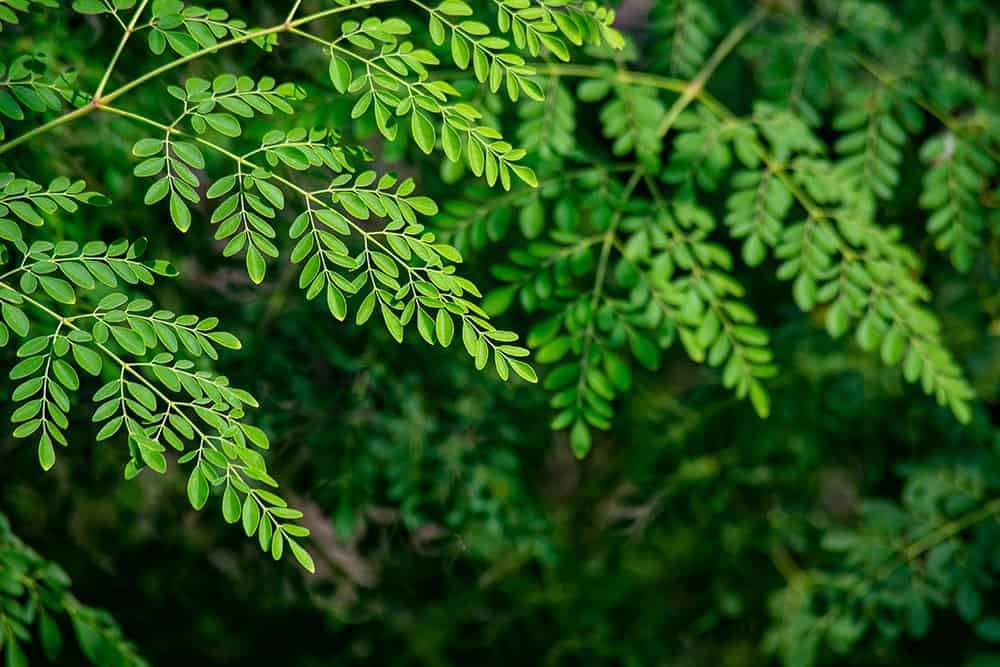
The classic moringa tree is hard to mistake once you've seen one. It grows with a slender trunk, reaching 10 to 12 meters at maturity with a trunk diameter of 15 to 30 centimeters, and the canopy spreads into that distinctive open umbrella shape.[13][14] The leaves are tripinnate, with a rachis 30 to 60 centimeters long carrying small elliptic leaflets just 1 to 2 centimeters each.[15] People often expect something that looks tropical and tough; instead they get something feathery and almost delicate, like a tree-sized version of a carrot top. That softness is deceptive. The pods are anything but delicate: long, triangular, anywhere from 20 to 120 centimeters, containing 15 to 25 dark brown winged seeds about 8 to 12 millimeters across.[16][17]
Moringa peregrina is the slimmer, quieter cousin: typically 4 to 8 meters tall, unarmed, with smaller leaflets and smooth gray bark that becomes fissured with age. Its leaves are thicker and waxier than M. oleifera's, adaptations that earn it even greater drought tolerance under brutal high-light conditions.[18][19] If you're trying to confirm M. oleifera in the field or at a market, look for that tripinnate leaf structure paired with the dramatically long pods and the slender but upright trunk. Those three features together don't belong to anything else.
Traditional and Cultural Uses Across Regions
The earliest records of moringa use in India date to around 2000 to 1500 BCE, and by the time of the Charaka Samhita and Sushruta Samhita (roughly 300 and 600 BCE), Ayurvedic practitioners had catalogued its uses under the name Shobhanjana across more than 300 ailments.[20][21] Leaves for nutrition and eye health, pods for digestion, seeds for purification, roots for cardiac complaints: each part of the tree had a precise role. Meanwhile, M. peregrina was already documented in ancient Egyptian texts around 2000 BCE for Ben oil extraction, and it later appeared in medieval Islamic medical writing, including the works of Avicenna.[22][23]
As the tree moved along trade routes, its cultural meaning traveled with it and took new forms. In East Africa, M. stenopetala became embedded in the ceremonial life of Borana Oromo, Samburu, and Maasai peoples, planted near homes for spiritual protection and served at marriage and birth celebrations.[4] In India, moringa leaves are still offered in Hindu worship and eaten during religious fasting. In the Philippines, where it's known as malunggay, it anchors traditional dishes like pinakbet and remains a trusted galactagogue for nursing mothers.[24] Ben oil from M. peregrina lit lamps and anointed skin in Arabian and ancient Egyptian ritual, a symbol of purity carried across centuries.[23]
All three species are currently listed as Least Concern on the IUCN Red List, though local populations face real pressure from overgrazing, urbanization, and overharvesting.[25][26] Learning the depth of that traditional knowledge changed how I work with this tree. I've seen larger moringa plantings strip soil nutrients quickly when leaves are harvested heavily without amendments, and I've become much more deliberate about interplanting with nitrogen-fixers and composting consistently. That discipline is, in a real way, a form of respect for the indigenous stewardship that kept this tree productive for millennia before the rest of the world caught on.[27]
Moringa Varieties and Where to Buy Them
Moringa oleifera doesn't have a sprawling catalog of named cultivars the way tomatoes or peppers do. Formal botanical variety selection has been limited, but targeted horticultural breeding has produced a handful of selections that genuinely change what you can expect from your tree in terms of speed, pod size, and stress tolerance.[28][29] For most home growers, variety choice is one of the biggest performance levers you have.
Notable Moringa Varieties and Landraces
The PKM-1 and PKM-2 hybrids from Tamil Nadu Agricultural University are the most practically useful selections available. PKM-1 is the speed demon: it can push 4 to 6 meters of growth per year and reaches harvestable pods in just 6 to 8 months.[30][31] I've grown PKM-1 seed side-by-side with generic landrace material in my Central Florida garden, and the difference in pod production through the long rainy season was obvious. PKM-2 trades some of that raw speed for stronger drought resistance and more consistent leaf production through dry spells, which matters if you're in a seasonally arid climate.[32] The PKM series also shows improved resistance to shoot borers and certain fungal problems, and selected arid-region types can tolerate soil salinity up to 8 to 10 dS/m.[33]
If you're after enormous pods specifically, the Waghur variety from Maharashtra produces pods that can reach 80 cm with strong drought tolerance and impressive pod yields.[34] For seed oil production, the Ben cultivar and certain improved lines like Periyakulam-1 are selected for fat content, with seeds reaching around 38% oil.[34][33]
Beyond oleifera, landraces from Ethiopia, India, and the Philippines show natural variation in pod length, leaf size, and nutritional profiles.[29] I've trialed M. stenopetala in my garden and while it's genuinely more drought-hardy, it grows noticeably more slowly in humid summers. Moringa peregrina accessions from Yemen and Saudi Arabia emphasize compact growth and can push seed oil content up to 40%, but these remain mostly germplasm material rather than commercial offerings.[35][36] For most gardeners, oleifera in a well-chosen selection is still the right starting point.
Sourcing Moringa Plants, Seeds, and Products in the US
M. oleifera is genuinely easy to find in the US. The domestic market for moringa leaf powder alone exceeds 50 million dollars annually, which means the supply chain is deep.[37] Seeds are available from Baker Creek Heirloom Seeds and Johnny's Selected Seeds in non-GMO packets of 10 to 25 seeds with growing instructions,[38][39] and seed packets typically run $5 to $25. Live plants from nurseries like Miami Fruit in Florida and Edible Landscaping in Virginia ship nationwide and are well-suited for subtropical gardens.[40][41] Young plants generally cost $10 to $50 each depending on size and certification.
On regulations: moringa seeds and plants can be imported under USDA APHIS rules with a phytosanitary certificate, and the species is not listed as a federal noxious weed.[42][16] I've imported moringa seed multiple times and the APHIS process is straightforward once you have that certificate in hand. California requires declaration and inspection through CDFA; Florida follows USDA guidelines with additional invasive-species checks, though small personal quantities clear both states routinely.[43][44] One thing I'd emphasize from hard experience: always buy from a named, reputable supplier and ask about harvest date. A batch of seed with poor germination taught me to look for purity above 90% and recent harvest documentation, because adulteration with look-alike species like M. stenopetala does happen in the bulk market.[45][46]
Stenopetala seeds appear occasionally through Baker Creek, and peregrina is rarely offered domestically at all; your best bet for that species is USDA GRIN or international germplasm partners.[47][48] Neither stenopetala nor peregrina is CITES-listed or federally noxious, so import rules mirror oleifera, though live plants may need additional permits.[49][50] Availability for both species fluctuates, so set up alerts with specialty nurseries and check back seasonally.
How to Propagate and Plant Moringa
Pick up a fresh moringa seed and you'll notice something immediately: three papery wings radiating from a hard, brown, wrinkled sphere about the size of a large pea. Those wings are the plant's wind-dispersal strategy, and the oily white kernel inside is what gives the seed both its nutritional punch and its storage challenges. Moringa oleifera seeds are globose to ovoid, 8-12 mm across, and monoembryonic, meaning one seed, one plant.[51][52] Once you know what you're working with, choosing how to propagate becomes a lot more intuitive.
Moringa Seed Morphology and Propagation Methods
You can propagate moringa by seed, semi-hardwood cuttings, grafting, air layering, or tissue culture.[53] For most home growers, seed is the obvious starting point: it's easy, inexpensive, and requires no special equipment. The tradeoff is genetic variability. Seedlings grown from open-pollinated seed won't always mirror their parent in pod size, productivity, or leaf density, which is why I've started taking cuttings from my best performers rather than relying entirely on seed.
Semi-hardwood cuttings of 15-30 cm from branches about 3-5 cm in diameter root at 70-95% success when dipped in IBA at around 1000-3000 ppm, then set in well-draining sandy loam at 25-30°C with high humidity and indirect light for 2-6 weeks.[54][55] I've found that taking 30-cm cuttings from pencil-thick branches in early summer and dipping them in 0.5% IBA has given me clonal trees that produce noticeably larger pods than my seedling-grown neighbors, which is a pretty convincing demonstration of why vegetative propagation matters if you've found a variety worth preserving. Grafting (cleft or whip methods) hits 60-90% success during active growth using compatible moringa rootstocks, while tissue culture using MS medium with BAP and NAA yields 4-6 shoots per explant in 4-6 weeks -- useful for large-scale nursery production, not so much for a backyard food forest.[56][57]
If you're working with related species, the rules change. Moringa peregrina seeds have a thick, woody testa without prominent wings and require scarification before they'll germinate reliably; hot water, mechanical abrasion, or acid treatment gets germination up to 70-90%.[58] Moringa stenopetala is the opposite problem: its seeds are recalcitrant, meaning they're desiccation-sensitive and germinate readily without any pre-treatment but won't survive the cool, dry storage conditions that suit oleifera.[59] Know your species before you plan your propagation approach.
Seed Viability, Storage, and Pre-Treatment
Fresh moringa oleifera seeds soaked in water for 24 hours at around 30°C will germinate at 80-95% in 7-14 days when sown 1-2 cm deep in moist, well-drained soil at 25-35°C.[53][60] That warm soak is the single most reliable thing I've done to improve germination. In my Central Florida summers, freshly harvested seed treated this way pops in under 10 days almost every time.
Stored seed is a different story. Moringa seeds are orthodox, tolerating drying to 5-12% moisture and cool storage at 4-10°C in airtight containers, where they stay viable for 2-5 years.[61][62] Leave them at room temperature and viability drops within 6-12 months, partly because the seed's 30-40% oil content makes it prone to rancidity over time.[63] If you're unsure about a batch, a simple germination test on a damp paper towel will tell you what you're working with before you commit to a whole bed of seed. Older or suspect seed benefits from scarification or an extended re-soak if germination rates look disappointing.[53]
Soil, Site Selection, and Sun Requirements for Moringa
The single most common mistake I see people make with moringa is planting it in poorly drained soil. This tree does not tolerate wet feet. It wants sandy loam or loam with excellent drainage, and it will develop root rot fast in heavy clay or any site that holds standing water.[64][65] In Florida's heavy summer rains, I dig extra-deep holes and backfill with coarse sand to give the taproot a clear path through the soil profile. That taproot eventually reaches 3-5 meters or more and is what makes an established tree so remarkably drought-tolerant.[66]
Moringa oleifera tolerates pH from 4.5 to 9.0, but it performs best between 6.0 and 7.5. Push above 7.5 and you'll often start seeing interveinal chlorosis, that yellow leaf with green veins that signals iron or manganese lockout in alkaline conditions.[67] In my experience a light foliar spray of chelated iron during the rainy season greens those new leaves back up quickly while you work on correcting the underlying pH. Moringa peregrina, by contrast, actively prefers alkaline sandy desert soils at 7.0-8.5, while stenopetala is somewhat more forgiving of wet spells and handles a similar broad pH range.[68][69]
For light, moringa needs a full-sun position with at least 6-8 hours of direct sun daily.[70] Shade it and you'll get etiolated, leggy stems and pale leaves that tell you exactly what the plant needs. Young seedlings are the one exception: if you're transplanting in summer heat above 35°C, a bit of afternoon shade for the first few weeks prevents leaf scorch while they establish. Once the taproot takes hold, they handle full tropical sun without complaint.[71]
Spacing, Planting Technique, and Early Care
Spacing depends entirely on what you're growing moringa for. If you want a continuous supply of fresh leaves, high-density planting at 0.5-1 m centers yields 20-50 tons of fresh leaves per hectare per year with frequent hard pruning to keep plants shrubby.[72][73] For pod production or orchard-style trees, 3-5 m spacing gives each tree room to develop canopy and makes harvesting pods much more practical. I planted my first food-forest guild too densely, around 1.5 m apart, and while leaf production was fine, harvesting pods became an awkward tangle and airflow suffered. I now use 3 m centers as my baseline and prune to manage height, which keeps the guild balanced and the chickens happy underneath. Peregrina and stenopetala, given their 6-12 m mature height and wide canopy spread, need the full 3-5 m orchard spacing as well.[74]
For planting, dig holes 50-100 cm deep to give that taproot somewhere to go immediately.[68] Amend heavy or depleted soils with compost, and if drainage is even slightly questionable, add coarse sand or perlite to the backfill. Container growing works well in a 12-18 inch (30-45 cm) deep pot using a 1:1:1 sand-loam-compost blend or a 40-60% sand/perlite mix.[17] Seedlings are ready to move to their permanent home at 45-90 cm tall, usually around 2-4 months from germination. After losing an early batch to damping-off in a waterlogged nursery mix, I switched to a 50% sand-perlite blend for the first 4-6 weeks of seedling growth and haven't lost one since. Once that taproot gets down into good soil and finds its footing, moringa becomes genuinely self-sufficient in a way few fast-growing trees manage.
Caring for Moringa Trees: Water, Sun, Soil, and Seasonal Needs
Moringa is one of those plants that will forgive a lot once it's settled in, but it's surprisingly demanding during that first year. The three things that really matter are full sun, well-drained soil, and protection from frost. Get those right and you're most of the way there.
Water Requirements and Drought Tolerance
Young trees need consistent moisture to get that taproot going. For the first six to eight weeks, I water mine almost like a vegetable, giving 1-2 inches every week or two and letting the top inch dry out between sessions.[75][76] After that, you can start easing off. A mature tree in my Central Florida sandy soil needs almost no supplemental water once summer rains kick in; established plants can go three to six weeks without a drop before showing stress.[77][78] That deep taproot, which can push 10-15 feet down in free-draining soil, is doing all the work.[77] Think of Moringa the way you'd think of basil's opposite: where basil collapses and dies in a dry week, Moringa just slows down and waits. Drip irrigation is the smart setup if you're in a drier climate, watering deeply and infrequently and letting the top 2-3 inches dry before the next run.[75] Yellowing leaves and premature leaf drop usually signal overwatering; wilting and crispy foliage signal the opposite.[79]
Sunlight, Heat Tolerance, and Temperature Preferences
Full sun, all day. Moringa oleifera is suited to USDA zones 9-11 and thrives in AHS heat zones 10-12, with optimal daytime temperatures between 77-95°F (25-35°C).[80][81] My trees shrug off 95°F days as long as the roots are mulched and they get an occasional deep soak. What I've noticed is that the leaves become noticeably more pungent and growth slows when summer humidity stays above 80% for extended stretches, more so than on a dry 95°F day. Above 35-38°C, flowering and pollen viability can drop, which matters if you're growing for pods.[81] Seedlings are most vulnerable to heat extremes, so 30-50% shade cloth during establishment in very hot climates is worth it.[76]
Feeding and Soil Fertility Needs
Moringa is a genuinely light feeder. It prefers low-to-moderate fertility in loamy or sandy, well-drained soil with a pH of 6.2-7.0.[82] In my experience with Florida's sandy soils, compost alone is usually enough after the first year. I've also learned the hard way that excess nitrogen produces tall, lush, leafy trees that refuse to flower.[83] If you're going the fertilizer route, a balanced 10-20-10 applied 2-3 times yearly works well, and organic compost or manure can improve yields by 20-30% over unfed trees.[84] Get a soil test first. In sandy Florida soils I see zinc and iron chlorosis far more often than nitrogen shortage, and annual testing has saved me from over-fertilizing more than once.[82]
Frost Tolerance and Cold Protection
This is the make-or-break issue for anyone growing moringa outside the tropics. Leaf damage begins below 50°F (10°C), and a hard freeze at or below 32°F (0°C) will kill an unprotected tree outright.[85] Established plants can sometimes regrow from the base after a brief dip to 25-30°F, but the leaves, buds, and young stems usually take the hit first.[85] After losing my first tree to an unexpected Central Florida freeze, I now grow one in a large container that moves under the lanai cover when frost threatens. Heavy mulching (4-6 inches over the root zone), frost blankets, and a south-facing sheltered site are your primary tools for in-ground trees.[86] Moringa peregrina survives brief dips to 23-28°F, offering a small buffer over oleifera, but neither species is truly frost-hardy.[87]
Pruning, Maintenance, and Seasonal Rhythm
My biggest early mistake with moringa was letting young trees race upward into 15-foot whips. Harvesting from a ladder is nobody's idea of a productive food forest. Top seedlings at 2-3 feet to force branching, then maintain that multi-stemmed, waist-height hedge with regular cuts after each harvest and a harder prune in late winter or early dry season.[88][89] In my garden I cut plants back to 3-4 feet each winter and they rebound with fresh, tender growth by early spring. Keep 2-4 inches of organic mulch around the base year-round; bump that to 4-6 inches heading into winter.[90] Stake young trees in exposed or windy sites until the trunk firms up.
The seasonal cues are worth learning. In subtropical growing conditions, leaf yellowing in December or January is a natural signal to prune hard and ease off on water and fertilizer.[91] The tree is telling you it's heading into its cool-weather slowdown. Come spring warmth, it bursts back vigorously, often faster than you expect. That recovery rhythm is what makes moringa so rewarding: a tree that drops every leaf in a cold snap or drought and looks completely dead can be putting out new growth within weeks of conditions improving.[92]
Harvesting Moringa Leaves, Pods, and Seeds
The question I hear most from new moringa growers is some version of "when do I actually get to eat this thing?" The honest answer depends on what part you're after. Leaves come fast: most seedlings are ready for their first leaf harvest 60-90 days after planting, and once established, you can cycle back through every 30-60 days for the rest of the season.[93][84] Pods are a longer game. From seed, expect your first moringa tree seed pods somewhere between 6 and 12 months, with the faster end of that range reserved for trees in full tropical conditions or those started from grafts.[94] If you've grown citrus from seed versus from a grafted rootstock, you already understand the difference grafting makes to that waiting period.
Timing and Maturity Cues for Moringa Harvest
For edible moringa oleifera seed pods, the window is specific and forgiving it is not. You want pods that are bright green, somewhere between 20 and 40 centimeters long, firm enough to hold their shape but tender enough to snap cleanly when you bend them.[95] In my Central Florida garden, I've learned to watch for that snap test the way I watch green beans: if they bend instead of breaking, I've waited too long and the flesh will be fibrous and stringy rather than crisp. Seeds should be visible inside but not hardened. That window from flowering to ideal eating size runs about 60-90 days, with pod development peaking when temperatures hold between 77 and 95°F.[96] In subtropical zones like USDA 9+, that typically means peak pod season runs May through October.[97]
If you're letting pods go for seed, the cues flip entirely. You want brown, dry pods beginning to split open, which happens roughly 3-4 months after flowering.[66] The related Moringa peregrina follows the same logic but on a much slower calendar, with meaningful pod harvests not arriving until 2-4 years from seed and those pods targeted primarily for seed and oil rather than fresh eating, typically in the dry season between May and August in its native range.[98][99] Moringa stenopetala operates on a seasonal Ethiopian rhythm, with leaves peaking in the rainy season and pods maturing 1-3 years from planting.[100] Both of those comparisons make M. oleifera's 60-90-day pod timeline feel like a gift.
Flavor Profiles at Different Harvest Stages
Timing and flavor are directly linked with moringa. Fresh leaves carry a pungent, slightly bitter bite that reads like a cross between mustard, horseradish, and arugula.[101] That intensity mellows considerably when you cook or dry them, which is why dried moringa leaves and moringa dried leaf powder taste noticeably gentler than a fresh handful straight off the branch. Young pods caught at peak tenderness taste closer to crisp green beans or asparagus, but let them mature past that window and the flesh turns fibrous and the flavor loses its brightness.[102] Raw seeds are bitter and peppery; roast them and something closer to a nutty, faintly sweet flavor emerges, almost like a peanut with an edge.[103] The flowers, if you get to them before the tree drops them, are mild and lightly sweet, somewhere in the neighborhood of cauliflower with floral undertones.[14] I leave the roots largely alone: the horseradish intensity is real, and the safety profile is clear enough that I don't treat them as everyday food.[17]
Sustainable Harvesting Techniques
The rule I come back to every season is simple: never strip more than half the foliage at any one time.[104] I've kept trees bushy and productive for multiple years by cycling through 4-6 week leaf harvests rather than cutting back hard all at once, and the 50% threshold is what makes that rhythm sustainable rather than exhausting for the tree. Use hand shears or selective plucking for lower branches; a long pole pruner handles the higher growth without you having to climb. For pods, a hooked pole pruner or a gentle twist-and-cut preserves the branch rather than tearing it.[105] I pick leaves in the early morning whenever I can: the foliage is cooler, turgid, and in my experience the flavor is brighter and less wilted before the afternoon heat sets in, which aligns with what the research suggests about nutrient retention at harvest.[104] Treat it consistently this way and a well-sited tree has no trouble remaining productive for a decade or more, with peak yields generally falling in years 2-5.[94]
Moringa Preparation and Uses in the Kitchen, Medicine, and Garden
Culinary Uses and Nutritional Power of Moringa Leaves, Pods, Flowers, and Seeds
Every part of this tree wants to feed you. Young leaves, immature pods, flowers, and seeds are all edible and genuinely nutritious.[106][107] Raw leaves clock in at around 9.4 g protein, 185 mg calcium, and 4 mg iron per 100 g, and dried leaf powder concentrates those numbers dramatically, hitting roughly 27 g protein and over 2,000 mg calcium per 100 g.[108][109] Moringa stenopetala pushes that even further with dried leaves containing roughly 9,000 mg calcium and an extraordinary vitamin A profile, and its leaves have a genuinely milder flavor than oleifera right off the tree.[110]
Raw moringa leaves taste something like a peppery nettle crossed with young radish greens, which can catch people off guard. I grow several oleifera trees in my Central Florida food forest, and I've noticed that leaves harvested during the warm rainy season are noticeably milder and more pleasant raw than dry-season leaves. Cook them, though, and that sharpness mellows into something closer to spinach with a faint earthy note. Immature pods taste like green beans with a slightly sweet finish; seeds go nutty and peppery when roasted; flowers are delicate and floral.[111] The transformation cooking creates is real and worth leaning into.
The leaves do contain anti-nutrients including tannins, oxalates, and glucosinolates, but boiling can reduce oxalate content by 50-70%, and fermentation brings similar results.[112] I blanch or sauté pods like green beans, blend young leaves into smoothies, and stir-fry the leaves with garlic and coconut milk, which is a pairing that shows up across South Asian and East African cooking for good reason. Traditional dishes like Indian sambar and dal, Ethiopian wot stews with lentils and spice, and Kenyan sukuma-style leaf preparations all use bold aromatics to complement moringa's flavor.[113][114] One firm caution: the roots contain toxic alkaloids including spirochin and should not be eaten beyond the trace amounts used in some traditional preparations.[115]
Traditional and Modern Medicinal Preparations
The simplest way most people start using moringa medicinally is leaf tea: one to two teaspoons of dried leaves steeped per cup, one to two cups daily.[116] Powder is the other common form, with typical adult dosages running 1-6 g per day; children start at 1-5 g under supervision.[117] Drying method matters more than most people realize. I've tested both a simple solar dehydrator and a standard kitchen oven, and keeping the temperature under 50°C (122°F) is what preserves that bright green color and sweet-grassy aroma I want in a good leaf powder.[118] Go hotter and you lose vitamin C fast.
Moringa's use in Ayurvedic, Siddha, Unani, Ethiopian, and Arabian traditional medicine spans inflammation, diabetes management, anemia, and wound care.[119] I always tell workshop participants that while these leaves are genuinely nourishing, pregnant women should avoid medicinal doses entirely; the research on uterotonic effects is clear enough that I won't take chances.[120][121]
Non-Food Applications from Water Purification to Cosmetics and Timber
The use that surprises people most in my workshops: crushed moringa seeds can clarify murky water. The seeds contain natural coagulants that bind suspended particles, and I've used this in small garden water-filtration experiments with genuinely satisfying results.[122] The oil pressed from those same seeds, called ben oil, contains up to 75% oleic acid and resists rancidity exceptionally well, making it a stable base for homemade salves, skin care, and hair treatments.[123] Moringa peregrina's version of this oil has documented anti-inflammatory and antimicrobial properties and carries centuries of use in Middle Eastern cosmetics and lamp fuel.[124]
Beyond oil, the wood is durable and pest-resistant enough for tool handles and light construction, and the bark fiber has been twisted into ropes and mats across the tree's native range.[125] If you're harvesting your own leaves and want to store them, fresh leaves keep one to two weeks refrigerated with moderate humidity; dried powder in an airtight container away from heat and light stays viable for six to twelve months.[118] That shelf life is what makes a moringa harvest feel genuinely abundant rather than urgent.
Moringa Health Benefits and Medicinal Uses
Few plants carry the kind of cross-cultural medical credibility that moringa does. Ayurvedic practitioners have been prescribing it for centuries to address anemia, arthritis, respiratory complaints, and skin conditions.[126] Meanwhile, across the African continent, traditional healers reach for it to manage hypertension, diabetes, malnutrition, malaria, and infectious disease.[127] The WHO has formally recognized its role in primary health care in developing countries,[128] which is not something you can say about many plants. What I find compelling about moringa isn't just that these traditions exist; it's that modern pharmacology keeps finding the mechanisms that explain them.
Traditional and Modern Medicinal Research on Moringa
The anti-inflammatory evidence is among the strongest we have. Clinical studies show moringa extracts reduce inflammatory biomarkers including CRP and IL-6, with Level II-III evidence from randomized controlled trials and cohort studies in conditions like arthritis and metabolic syndrome.[129][130][131] The mechanism runs through inhibition of NF-κB and MAPK pathways, which dials down pro-inflammatory cytokines like TNF-α and IL-6 and suppresses COX-2 and iNOS expression.[132][133] On the antioxidant side, moringa activates the Nrf2 pathway, triggering upregulation of endogenous enzymes like superoxide dismutase and glutathione peroxidase rather than just scavenging free radicals directly.[134]
The antidiabetic data is where I've seen the most consistent human trial results. Leaf extracts show measurable improvements in blood glucose and insulin sensitivity in type 2 diabetes patients, with mechanisms that include α-glucosidase and α-amylase inhibition, AMPK activation, pancreatic β-cell protection, and enhanced insulin secretion.[135][136][137] Cardioprotective effects, neuroprotective actions including acetylcholinesterase inhibition, and preclinical anticancer work through isothiocyanate-driven apoptosis round out a pharmacological picture that is genuinely impressive.[133][138] I'll be honest with you, though: the preclinical data and small-trial results are consistent enough to take seriously, but larger, higher-quality randomized controlled trials are still needed before we can make definitive clinical claims.[139][130] The traditional confidence is centuries old; the science is catching up, not there yet. One more thing worth knowing: efficacy varies significantly by plant part, with leaves generally outperforming seeds in pharmacological activity, which tracks with how traditional systems have used them.[140]
Key Phytochemicals in Moringa Leaves, Seeds, and Pods
These bioactive compounds exist in moringa primarily because the plant evolved them for defense against herbivores, pathogens, and environmental stress.[141] The main players are flavonoids (quercetin and kaempferol), glucosinolates (particularly glucomoringin, which converts to the isothiocyanate moringin), phenolic acids, phytosterols like β-sitosterol, and niazimicin.[142][132][143] They're not distributed evenly: leaves are richest in phenolics and flavonoids, seeds concentrate glucosinolates, flowers carry their own flavonoid and phenolic acid profile, and roots hold isothiocyanates at concentrations that make them useful medicinally but risky as food.[144]
Here's something I've noticed in my own Central Florida garden: moringa plants that go through a dry spell between rains produce noticeably more pungent leaves. That sharper flavor is actually the plant ramping up its phytochemical production under stress. The research confirms it: drought conditions induce higher concentrations of quercetin, total phenolics, and vitamin C, while soil salinity tends to suppress them.[145][146] I routinely harvest the youngest leaves for teas and powders, and there's solid science behind that habit: younger leaves contain higher concentrations of most phytochemicals including glucosinolates and vitamin C than mature ones.[145] If you're drying your harvest, keep temperatures between 40 and 60°C to preserve phenolic content; freeze drying is even better if you have the means.[147]
Nutritional Profile of Moringa
A hundred grams of fresh moringa leaves provides around 64 kcal, 9.4 grams of protein, and a vitamin and mineral package that genuinely earns the "superfood" label: vitamin A (378 µg RAE), vitamin C (up to 220 mg), vitamin E (10.33 mg), plus calcium at 185 mg, iron at 4 mg, and meaningful amounts of magnesium, phosphorus, and potassium.[109][66] The dried powder is even more concentrated: around 2000 mg calcium and 1324 mg potassium per 100 grams.[148] I often tell gardening clients that a single tablespoon of moringa powder delivers calcium comparable to a glass of milk, which tends to land differently than a nutrient table does.
Cooking trades vitamin C (boiling can destroy 70-80% of it) for better mineral bioavailability, since heat reduces phytate content by 40-60% and frees up those minerals for absorption.[149] That trade-off is why moringa has been so effective as a frontline nutrition intervention: its mineral and protein density holds up through cooking, making it practically valuable for treating malnutrition in communities where it grows easily.[150] Related species follow similar patterns: M. stenopetala leaves show comparable protein content at 20-30% dry weight with strong vitamin A, C, iron, and calcium numbers,[151] confirming that nutritional density is a genus-wide trait, not an anomaly of a single species.
Safety, Dosage, and Precautions for Moringa
The leaf is safe. Rat toxicity studies put the LD50 above 2000 mg/kg body weight,[152] and clinical trials show a good safety profile with mild adverse effects (nausea, diarrhea, heartburn) in fewer than 5% of participants. Short-term use up to 6 grams daily has not produced serious events.[153] For most adults, 3-6 grams of leaf powder daily is a reasonable target; clinical trials have used 1.5-8 grams.[113]
That said, a few populations need to be careful. During pregnancy, culinary amounts of moringa leaves appear safe based on traditional use and limited studies, but high doses and consumption of the roots, bark, or seeds should be avoided because of potential abortifacient effects observed in animal studies.[154][155] Anyone with hypothyroidism should use it cautiously, since the glucosinolates and isothiocyanates can interfere with thyroid function and iodine uptake; if you're on levothyroxine, check with your doctor first.[153] I tell clients who take blood pressure or diabetes medications to start at 1-2 grams daily and monitor their readings, because moringa's real hypotensive and blood-sugar-lowering effects can compound those drugs in ways that matter clinically.[153][156] The same caution applies to warfarin, given moringa's vitamin K content and possible blood-thinning properties.[153]
The roots and bark are a different matter entirely. They contain the alkaloids moringine and spirochin, which can cause paralysis in significant doses.[148] Raw seeds carry toxic lectins and alkaloids that can cause serious gastrointestinal distress above 1 g/kg body weight.[157] Cooking, drying, roasting, or fermentation reduces antinutritional factors significantly and is how traditional cultures have always eaten this plant.[158] If you're buying powders rather than growing your own, source carefully: some imported moringa products have shown heavy metal contamination including lead at levels exceeding proposed safety limits.[159] And if you're growing from foraged or unknown material, make sure you've got the right plant. Early on I learned to nick a root cutting and check for that sharp horseradish-like scent that's unmistakably moringa; some Senna and Leucaena species can look similar at a glance but won't pass that test.[160]
Moringa Pests and Diseases
After several seasons raising moringa from seed, I've come to genuinely appreciate how much of the pest and disease management this tree does on its own. Healthy, well-sited specimens in their second year or beyond tend to shrug off what would flatten other tropical food plants. That resilience isn't luck; it's chemistry and structure working together.
Natural Resistance and Defense Mechanisms
Moringa produces glucosinolates, isothiocyanates, alkaloids, flavonoids, and phenolics that function as both antimicrobials and insect antifeedants.[161][162] Layered on top of that chemical arsenal are physical defenses: glandular trichomes, a thick waxy cuticle, and leathery leaf texture that insects find harder to chew through than the comparatively soft leaves of something like papaya.[163] The tree even releases volatile organic compounds that recruit natural predators when herbivore pressure mounts.[164] In my experience, papaya ends up heavily defoliated by caterpillars in the same beds where moringa escapes with minimal damage. The arid-adapted relatives reinforce this pattern: Moringa peregrina's waxy leaves and thick bark give it even stronger baseline resistance in dry settings,[165] and M. stenopetala shows roughly 20-30% less insect damage than M. oleifera in comparative trials, though it faces a similar overall threat spectrum.[166]
Common Diseases of Moringa
The diseases that actually cost growers something are mostly fungal, and almost always traceable to drainage failures or persistent humidity above 80%. Root rot from Phytophthora, Fusarium, and Pythium is the headline threat; foliar issues like powdery mildew, anthracnose, and Cercospora leaf spot follow close behind.[167] I've lost young trees to Phytophthora in poorly drained spots during Florida's heavy summer rains, so I now mound planting sites or grow in large raised beds; the difference is dramatic. Bacterial diseases, primarily Xanthomonas and Pseudomonas leaf spots and the more serious Ralstonia wilt, spread via rain splash and show up as water-soaked lesions that progress to necrosis when soils stay warm and wet.[167][168] Mosaic viruses, including Moringa yellow mosaic virus, are a third category but cause the most recognizable symptom that confuses new growers: mottled, stunted leaves that get misdiagnosed as nutrient deficiency. They're transmitted by whiteflies and are generally less economically damaging than the fungal problems.[169] If your moringa plant leaves are turning yellow and you're ruling out drainage and nutrition, check the undersides of leaves for whitefly colonies before assuming the worst. Root-knot nematodes (Meloidogyne spp.) round out the soil-borne concerns; they weaken roots and open the door for secondary fungal infections, and management relies on soil solarization, organic matter, and marigold companions rather than resistant cultivars, which don't really exist in the trade yet.[170]
Major Insect Pests
The most economically damaging drumstick tree insects are the ones that target the productive parts directly. Helicoverpa armigera pod borers can infest up to 100% of pods on neglected trees, and shoot borers like Noorda moringae tunnel into stems causing wilting and up to 50% yield loss if left unchecked.[171] A step below those in severity are aphids, whiteflies, thrips, spider mites, leaf beetles, and caterpillars in the Spodoptera group; the caterpillar in drumstick trees that most home growers encounter is from this genus, and while the plant's compounds provide some deterrence, young or stressed specimens can still get hit hard.[172] That first 6-8 week window after germination is the most vulnerable period I've observed across multiple seasons; seedlings haven't built up their full chemical defenses yet, and I check leaf undersides daily during that stretch. The PKM-1 and PKM-2 varieties from Tamil Nadu show improved tolerance to pod borers through sheer vigor and faster growth,[173] but I still rely primarily on cultural practices and healthy local seedlings because truly resistant named varieties remain scarce on the market.
Integrated Pest and Disease Management
Prevention does most of the work. Proper spacing of 10-12 feet for air circulation, excellent drainage, deep but infrequent watering, and removing infected debris reduce disease pressure before it builds.[170][174] Overhead irrigation and excessive nitrogen are two things I've watched people do to otherwise healthy moringa trees and then wonder why they suddenly have aphid or fungal problems. For organic interventions, a 5% neem spray applied at the first sign of whitefly colonies or caterpillar clusters has consistently kept pod-borer damage below 10% in my plantings. Trichoderma worked into the soil at planting gives solid biological protection against root pathogens, and Bacillus thuringiensis handles caterpillar pressure without harming beneficial insects.[175][176] Marigolds interplanted nearby suppress both nematodes and some insect pressure, which fits naturally into the guild planting approach covered earlier in this profile. The broader IPM principle is to monitor regularly and act when infestation hits 10-15% rather than waiting or spraying on a calendar schedule,[174] protecting the predatory insects that are already doing some of that work for you. In my garden, consistent sanitation and timely neem applications have prevented the need for anything stronger in all but the wettest seasons.
Moringa in Permaculture Design
Few trees earn their place in a food forest as decisively as moringa. I've been growing it in my Central Florida system for years now, and what keeps drawing me back isn't just the nutritional value or the biomass output. It's how well the tree thinks like a permaculture designer: deep roots that don't compete with neighbors, rapid leaf drop that feeds the soil, and a canopy structure that creates exactly the kind of dappled light my understory plants want. Once you understand its ecological logic, fitting moringa into a guild stops feeling like design work and starts feeling obvious.
Climate Adaptation and Hardiness Zones
Moringa oleifera is reliably perennial in USDA zones 9b through 12, with peak performance in zones 10 through 12.[80][177] Frost hits it hard; even a light freeze damages foliage, and while established trees can sometimes shrug off brief dips near 20°F with good mulching and protection, that's the exception rather than the plan.[178][179] In zone 8, I'd treat it as a warm-season annual or keep it in a large container you can wheel under cover. Young plants are always more vulnerable than older ones, so that first winter matters most.
The genus opens up the climate envelope considerably. In Arizona, the Sonoran Desert Southwest, and arid parts of California and Texas, Moringa peregrina handles rainfall as low as 150 to 400 mm per year while M. oleifera prefers 800 to 1000 mm when it can get it.[180][181] I keep M. peregrina in the driest, most exposed corner of my garden precisely because it shrugs off conditions that would stress anything else, while M. oleifera produces far more leaf biomass in my humid subtropical microclimate. Knowing which species fits which microsite is half the design work.
Ecosystem Functions and Guild Roles
The flowers are genuinely beautiful and the bees know it. Moringa oleifera produces fragrant, nectar-rich blooms that honeybees and native bees mob enthusiastically, with flowering triggered by dry periods followed by rain and optimal pollination happening between 77 and 95°F.[182][183] I've learned to hand-pollinate with a soft brush on cooler mornings when bee activity slows, and the research backs this up: hand pollination can boost fruit set by 20 to 50% where pollinators are scarce.[184] Since adding borage and marigolds as moringa companion plants in my guild, I've noticed visibly higher visitation even during the humid, somewhat overcast periods of Florida summer. M. stenopetala adds another pollinator dimension entirely: its tubular flowers attract sunbirds alongside bees, which made for a memorable morning watching birds work the blossoms the first season I grew it.[185]
Beyond pollination, moringa earns its keep through sheer biological generosity. The canopy provides shade and habitat that actively reduces temperature and evaporation stress for understory plants, functioning as a nurse tree in both subtropical and desert contexts.[186] The deep taproot stabilizes slopes and resists erosion by up to 70% on grade, while generating almost no root competition at the surface for shallower neighbors.[187] Every rainy season I watch that leaf litter disappear faster than almost anything else in my system, breaking down rapidly and releasing nitrogen, phosphorus, and potassium directly into the soil profile beneath my bananas and ginger.[188][189] One clarification worth making clearly: moringa is not a nitrogen-fixing legume.[190][191] The fertility improvement is real, but it comes from rapid decomposition and microbial activity, not root nodules. This misconception circulates widely in permaculture communities and I've repeated it myself, so I want to be explicit: pair it with actual nitrogen-fixers like pigeon pea or leucaena for that function, and let moringa do what it actually does, which is nutrient cycling at remarkable speed.
The plant's compounds also deter aphids and some nematodes, reducing pest pressure across the guild, and the seeds serve as a natural water coagulant with genuine utility in off-grid water purification.[125][192] That said, moringa carries mild allelopathic properties that can suppress sensitive neighbors if spacing is too tight, a lesson I learned the hard way with a row of basil planted directly under a young tree that never really thrived.
Forest Layer Placement and Companion Planting
Left unpruned, moringa reaches 10 to 12 meters with a loose, open umbrella canopy, placing it comfortably in the canopy or sub-canopy layer of a tropical food forest.[106][193] Most growers, including me, keep it pruned to a multi-stemmed shrub of 2 to 3 meters for easier harvest and better light management. Even at full height, the feathery tripinnate leaves cast a forgiving 50 to 70% shade rather than a solid ceiling, creating the dappled light that shade-tolerant understory crops genuinely prefer.[194]
For companion plants, moringa works well alongside maize, beans, sorghum, millet, and cassava when spacing is adequate.[194] After several seasons of trial, I've settled on 4 to 6 meter spacing between trees to keep the canopy from closing over my cassava and sweet potato patches too aggressively. The allelopathic compounds in the roots are mild but real, and tight spacing amplifies them; give companions room and they thrive on the leaf litter and shade, crowd them and results get unpredictable.[195]
Species choice shifts the design possibilities significantly. M. peregrina stays in the 3 to 10 meter range with taproots exceeding 10 meters and mycorrhizal partnerships that pull phosphorus and water from deep in the soil profile, making it a true nurse plant for desert guild design.[196][58] M. stenopetala runs taller (up to 15 or even 20 meters in good conditions), carries higher leaf protein for fodder, and brings stronger drought tolerance as an upper-canopy presence in savanna-style systems.[197] Across the genus, regular pruning is the key management lever that controls light penetration, generates chop-and-drop biomass at up to 20 to 30 tonnes per hectare annually, and keeps these fast-growing trees integrated into a guild rather than dominating it.[68][67]
The Tree I Keep Coming Back To
I've grown a lot of plants that demanded my attention and gave back just enough to justify the effort. Moringa isn't one of them. The first time I coppiced mine hard in late summer, convinced I'd pushed it too far, it had new growth within ten days. That kind of generosity changes how you think about a garden, and about what plants are capable of when you stop treating them like they're fragile.
Sources 197
- Moringa oleifera: A review of the medical evidence for its nutritional, therapeutic, and prophylactic properties ↩
- Moringa oleifera Lam. ↩
- Moringa peregrina - Plants of the World Online ↩
- Distribution and Conservation Status of Moringa stenopetala ↩
- Moringa oleifera ↩
- Ethnobotanical Study of Moringa stenopetala in Southwestern Ethiopia ↩
- Moringa oleifera: A Review on Nutritive Importance and Its Medicinal Application ↩
- Moringa Cultivation Practices ↩
- Moringa oleifera - Wikipedia ↩
- Moringa oleifera: A review on nutritive importance and its medicinal application ↩
- Moringa stenopetala: A Review of Its Nutritional, Medicinal, and Socio-Economic Values ↩
- Moringa peregrina: A Review of Its Botanical, Phytochemical, and Pharmacological Profile ↩
- Moringa oleifera - Plant Finder ↩
- Moringa oleifera ↩
- Moringa oleifera leaf morphology ↩
- USDA PLANTS Database - Moringa oleifera ↩
- Moringa oleifera - Missouri Botanical Garden ↩
- Moringa peregrina - Wikipedia ↩
- Moringa peregrina - Plants of the World Online ↩
- Moringa oleifera: A Food Plant with Multiple Medicinal Uses ↩
- Historical Uses of Moringa oleifera in Traditional Medicine ↩
- Moringa in Ancient Egypt and the Mediterranean ↩
- Ethnopharmacological Review of Moringa peregrina in Arabian Traditional Medicine ↩
- Ethnobotanical survey of Moringa oleifera in the Philippines ↩
- Moringa peregrina ↩
- IUCN Red List Assessment: Moringa stenopetala ↩
- Access and Benefit-Sharing under the Nagoya Protocol ↩
- Cultivars and Genetic Diversity in Moringa oleifera ↩
- FAO - Moringa Production Guide ↩
- TNAU - PKM Varieties of Moringa ↩
- PKM Varieties of Moringa ↩
- Moringa Cultivation Guide - Tamil Nadu Agricultural University ↩
- Research on Moringa Varieties and Stress Tolerance - Journal of Horticultural Science ↩
- Moringa oleifera: A Review on Nutritive Importance and Its Medicinal Application ↩
- Moringa peregrina - Kew Science ↩
- Germplasm of Moringa peregrina: Collection and Evaluation ↩
- USDA Foreign Agricultural Service Reports on Herbal Imports ↩
- Moringa Seeds ↩
- Buy Moringa Seeds Online ↩
- Moringa Oleifera Live Plant ↩
- Moringa Oleifera ↩
- Importation of Plants and Plant Products ↩
- Plant Quarantine Manual ↩
- Florida Plant Import Regulations ↩
- Moringa oleifera ↩
- Moringa oleifera Lam. - USDA Plants Profile ↩
- Moringa Stenopetala - Ethiopian Moringa Seeds ↩
- Germplasm Resources Information Network (GRIN) - Moringa oleifera ↩
- Importing Plants and Plant Products into the United States ↩
- CITES Species Database ↩
- Moringa oleifera Lam. ↩
- Seed Morphology and Anatomy of Moringa oleifera Lam. ↩
- Propagation of Moringa oleifera: A Review ↩
- Vegetative Propagation of Moringa oleifera by Cuttings ↩
- Propagation of Moringa ↩
- Propagation of Moringa oleifera by Grafting Techniques ↩
- Micropropagation of Moringa oleifera via Tissue Culture ↩
- Propagation of Moringa peregrina: Breaking Seed Dormancy and Germination ↩
- Seed storage behaviour of Moringa stenopetala ↩
- Viability and Longevity of Moringa Seeds ↩
- Longevity of Moringa oleifera Seeds Under Different Storage Conditions ↩
- Seed Storage Behaviour of Moringa oleifera Lam. ↩
- Storage Physiology of Moringa oleifera Seeds ↩
- Moringa oleifera Plant Guide ↩
- Moringa oleifera - Missouri Botanical Garden ↩
- Moringa oleifera: A Review on Nutritive Importance and Its Medicinal Application ↩
- Soil Requirements for Moringa Cultivation ↩
- FAO - Moringa peregrina: A Tree for Arid Regions ↩
- Ecological and Physiological Adaptations of Moringa stenopetala ↩
- Physiological Responses of Moringa oleifera to Drought and Heat Stress ↩
- Photoinhibition Tolerance in Moringa Species ↩
- Cultivation Practices for Moringa oleifera ↩
- Moringa oleifera: Cultivation and Utilization ↩
- Cultivation of Moringa peregrina in Arid Regions ↩
- USDA Plant Guide: Moringa oleifera ↩
- FAO Guidelines on Moringa Cultivation ↩
- Moringa oleifera: A Review of Its Nutritional, Therapeutic and Industrial Importance ↩
- Physiological responses of Moringa oleifera to drought stress ↩
- Missouri Botanical Garden Plant Finder - Moringa oleifera ↩
- Moringa: Miracle Tree or Just Another Plant? ↩
- Physiological Responses of Moringa oleifera to Heat Stress and Mitigation Strategies ↩
- Nutrient Management in Moringa oleifera: A Review ↩
- Effect of NPK Fertilizers on Moringa oleifera Yield ↩
- Moringa Production and Utilization - University of Florida IFAS Extension ↩
- Moringa oleifera - North Carolina Extension Gardener Plant Toolbox ↩
- Moringa oleifera - Cultivation and Cold Tolerance ↩
- Moringa peregrina - RHS Gardening ↩
- Moringa Cultivation and Its Uses ↩
- Moringa Production Guide ↩
- Moringa oleifera: A Review of Its Cultivation and Uses ↩
- Phenology of Moringa oleifera in Tropical and Subtropical Regions ↩
- Moringa oleifera Growing Guide - Royal Horticultural Society ↩
- Moringa oleifera: A Food Plant with Multiple Medicinal Uses ↩
- Propagation and Cultivation of Moringa oleifera ↩
- Production and Processing of Moringa oleifera Leaves and Pods ↩
- Moringa oleifera: A Review on Nutritive Importance and Its Medicinal Application ↩
- Growing Moringa in California ↩
- Moringa peregrina: A Review of Its Botanical Characteristics and Uses ↩
- Moringa peregrina: A Review of Its Botanical, Phytochemical and Pharmacological Profile ↩
- Moringa stenopetala: Cultivation and Utilization in Ethiopia ↩
- Moringa oleifera: A Food Plant with Multiple Medicinal Uses ↩
- Flavor Profile of Moringa Pods and Seeds ↩
- The Drumstick Tree (Moringa oleifera) in the Food and Nutritional Security Arena ↩
- Moringa Production and Harvest Handling ↩
- Harvest and Post-Harvest Handling of Moringa ↩
- Moringa oleifera - Missouri Botanical Garden Plant Finder ↩
- Moringa (Moringa oleifera) - Royal Horticultural Society ↩
- USDA FoodData Central - Moringa leaves, raw ↩
- USDA FoodData Central - Moringa leaves, dried ↩
- PMC: Moringa stenopetala (Baker f.) C. Wright: A review on botany, nutritional and medicinal properties ↩
- Moringa oleifera: A Review on Nutritive Importance and Its Medicinal Application ↩
- Anti-nutritional Factors in Moringa Species ↩
- Moringa oleifera: A Review on Nutritive Importance and Its Medicinal Application ↩
- Culinary Uses of Moringa stenopetala in Ethiopian Cuisine ↩
- Toxicity of Moringa Roots - Phytochemical Review ↩
- Moringa: Benefits and Safety ↩
- Moringa oleifera: A review on nutritive importance and its medicinal application ↩
- Post-Harvest Handling of Moringa Leaves ↩
- Journal of Ethnopharmacology - Therapeutic potential of Moringa oleifera ↩
- Safety of Moringa Species During Pregnancy ↩
- EFSA opinion on Moringa oleifera leaves ↩
- Moringa, a multipurpose tree for food security ↩
- Traditional Uses of Moringa peregrina in Arid Regions ↩
- Health Benefits of Moringa peregrina: Antioxidant and Anti-inflammatory Properties ↩
- World Agroforestry Centre (ICRAF) Moringa Species Profile ↩
- Moringa oleifera in Ayurveda - PubMed Review ↩
- Traditional Uses in African Medicine - Journal of Ethnopharmacology ↩
- WHO Monograph on Moringa oleifera ↩
- Meta-Analysis of Moringa oleifera Effects on Inflammation ↩
- Systematic Review of Clinical Trials on Moringa oleifera ↩
- Anti-Inflammatory Properties of Moringa oleifera: A Review ↩
- Moringa oleifera Isothiocyanate Moringin Inhibits TNF-α-Induced NF-κB Activation ↩
- Journal of Ethnopharmacology Review on Immunomodulatory Properties ↩
- Antioxidant and Anti-Inflammatory Activities of Moringa oleifera Lam. via Nrf2 Pathway ↩
- Evidence-Based Complementary Medicine on Antidiabetic Effects ↩
- Anti-Diabetic Effects of Moringa oleifera through AMPK Activation ↩
- Moringa oleifera Leaf Extract for Treating Type 2 Diabetes: A Systematic Review and Meta-Analysis ↩
- Phytochemicals from Moringa oleifera and Their Anticancer Potential ↩
- Pharmacological Activities of Moringa oleifera: A Review ↩
- Phytochemical Variability in Moringa oleifera Cultivars: A Review ↩
- Phytochemical and Pharmacological Properties of Moringa oleifera ↩
- Food Chemistry Review on Phytochemical Profile ↩
- Moringa oleifera: A Review on Nutritive Importance and Its Medicinal Application ↩
- Phytochemicals of Moringa oleifera: a review of their nutritional, therapeutic and industrial significance ↩
- Environmental and cultivation factors influence the phytochemical profile of Moringa oleifera ↩
- Impact of abiotic factors on the accumulation of bioactive compounds in Moringa oleifera ↩
- Effect of drying methods on the phenolic content and antioxidant activity of Moringa oleifera leaves ↩
- Nutritional Value of Moringa oleifera Lam. Leaf Powder Extracts ↩
- Effect of cooking on nutrient content of Moringa oleifera leaves ↩
- Moringa oleifera: A review on nutritive importance and its medicinal application ↩
- Nutritional Potential of Moringa stenopetala Leaves: Protein, Mineral, and Vitamin Profiling ↩
- Acute and Subchronic Toxicity of Moringa oleifera Leaves in Rats ↩
- Moringa oleifera: An Updated Comprehensive Review of Its Pharmacological Activities ↩
- Safety of Moringa oleifera in pregnancy and lactation: A systematic review ↩
- Safety and efficacy of Moringa oleifera during pregnancy: A systematic review ↩
- Drug Interactions with Moringa ↩
- Toxicity of Moringa oleifera seeds ↩
- Antinutritional Factors in Moringa oleifera ↩
- Heavy metal contamination in imported Moringa products ↩
- Missouri Botanical Garden Plant Finder - Moringa oleifera ↩
- Moringa oleifera: A review on nutritive importance and its medicinal application ↩
- Glucosinolates and Isothiocyanates from Moringa oleifera ↩
- Trichome-Mediated Insect Resistance in Moringa oleifera ↩
- Volatile Organic Compounds in Plant Defense: Moringa Case Study ↩
- Moringa peregrina: Botany, Ethnobotany and Future Prospects ↩
- Pest and Disease Resistance in Moringa Species ↩
- Diseases of Moringa oleifera: A Review ↩
- Bacterial Wilt in Tropical Trees including Moringa ↩
- Pathogens Affecting Moringa Cultivation ↩
- Moringa Diseases and Pests Management ↩
- Insect Pests of Moringa oleifera Lam. in India and their management ↩
- Pests and Diseases of Moringa Species ↩
- Cultivation of Moringa - TNAU Agritech Portal ↩
- Integrated Pest Management for Moringa ↩
- Organic Production of Moringa in Florida ↩
- Integrated Pest Management for Tropical Trees ↩
- USDA PLANTS Database - Moringa oleifera ↩
- Moringa oleifera - Purdue University ↩
- Growing Moringa in the Desert - University of Arizona Extension ↩
- Ecological Requirements of Moringa peregrina in Southern Arabia ↩
- FAO - Moringa Production Guidelines ↩
- Pollination Ecology of Moringa oleifera ↩
- Climate Change Effects on Flowering Phenology of Moringa oleifera ↩
- Hand Pollination Techniques for Moringa Breeding ↩
- Pollination Biology and Breeding System of Moringa peregrina (Moringaceae) in a Hyper-Arid Environment ↩
- Biodiversity and Ecosystem Services Provided by Moringa oleifera ↩
- Ecological and Economic Importance of Moringa peregrina in Arid Environments ↩
- Ecological Roles of Moringa oleifera in Nutrient Cycling and Soil Health ↩
- Nutrient Cycling by Moringa Leaf Litter in Tropical Agroecosystems ↩
- Missouri Botanical Garden Plant Finder ↩
- USDA PLANTS Database ↩
- Moringa oleifera - Kew Royal Botanic Gardens ↩
- Moringa oleifera in Agroforestry Systems ↩
- Intercropping Studies with Moringa in Multilayer Systems ↩
- Allelopathic Effects of Moringa oleifera on Understory Vegetation ↩
- Nurse Plant Effects of Moringa peregrina in the Arabian Desert ↩
- Drought Tolerance of Moringa stenopetala Due to Deep Taproot ↩
About the Author
After ten years of living on Ometepe, Rachael is passionate about the connection between nature, food, and homes. She believes in returning to living in homes made from local materials and eating food grown close by.