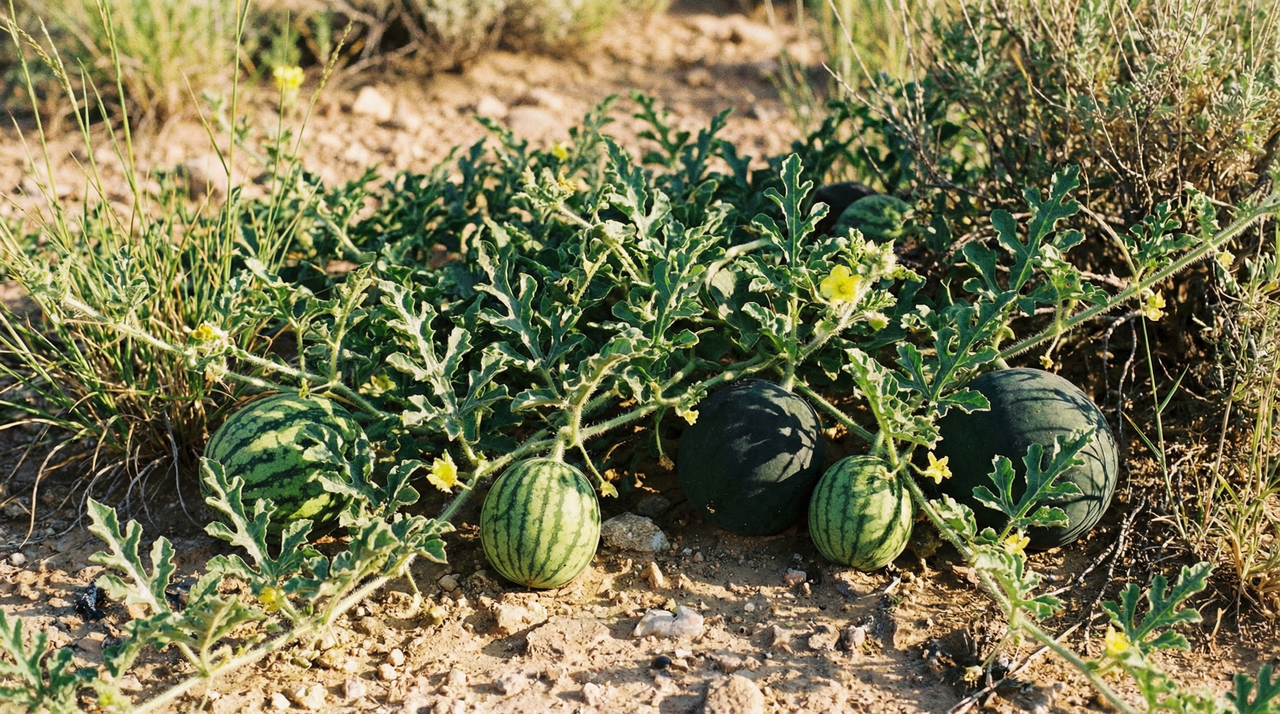
Most people think of watermelon as the laziest fruit in the garden: just throw some seeds in warm soil, give it room to sprawl, and wait for summer to hand you something cold and sweet. I believed that too, until I dug into where this plant actually comes from. The Kalahari Desert. Not a lush river delta, not a tropical rainforest. A semi-arid expanse where the Khoikhoi people once tracked down wild Citrullus fruits during dry season not because they tasted good, but because they needed the water stored inside to survive.[1] That pulp wasn't dessert. It was a canteen.
There's something genuinely disorienting about holding a grocery-store watermelon, knowing that. Five thousand years of human selection separated the bitter, pale-fleshed survival fruit of southern Africa from the cool, candy-sweet thing sitting on your picnic table. And all that time, nobody was breeding for flavor first; they were following water, then sugar, then size, reshaping the plant so thoroughly that most modern cultivars have almost no memory of where they came from. Almost. Grow one through a drought and watch how hard it fights to fruit anyway, even on cracked soil, and you'll start to see the Kalahari underneath.
Watermelon Origin and History
Botanical Background and Native Range
Every backyard watermelon patch carries the DNA of a desert survivor. Citrullus lanatus originated in the Kalahari Desert and surrounding arid regions of southern Africa, where annual rainfall rarely exceeds 500 mm and soils are sandy, low in organic matter, and quick to drain.[2][3] Wild populations in Botswana, Namibia, and South Africa didn't just tolerate those conditions; they evolved specifically for them. In truly favorable spots, wild plants can persist for five to ten years as short-lived perennials, which surprises most gardeners who think of watermelon as a simple warm-season annual.[4][5] Domestication selected heavily against that persistence, producing the monocarpic, annual vines we grow today that flower, set seed, and senesce within a single season.[4]
A close relative worth knowing is Citrullus afer, the egusi melon, a true perennial vine native to sub-Saharan African savannas that can survive in arid conditions for several years.[6][7] It's a useful contrast because it shows where the genus started before human selection pushed C. lanatus toward annual habits and quick fruiting cycles. The deep taproot system cultivated watermelons inherited, reaching one to two meters or more into the soil,[8] is a direct legacy of that Kalahari ancestry. I've found in sandy soils that deep watering in the first few weeks after transplanting encourages that root system to dive early, and it pays dividends later when July heat arrives and you're not scrambling to keep vines alive.
Visual Characteristics
The vining habit is the first thing you notice: long, trailing stems with coiled tendrils that sprawl six to ten feet in every direction if you let them.[8] Early in the season, before those tendrils appear, the seedlings look deceptively similar to cucumber or squash starts. I learned that lesson the hard way early in my gardening years, mixing up rows and spending weeks guessing what I'd actually planted. Now I label everything before it goes in the ground. The deeply lobed, palmate leaves and the distinctive angular, pubescent stems become more recognizable once the plant is a few weeks old.[8][9] The flowers are small, yellow, and funnel-shaped, each one unisexual, appearing separately as male and female on the same vine.[1] The fruit itself is technically a pepo, a botanical berry with a hard rind, and cultivated varieties range from perfectly round icebox types to elongated giants, with flesh colors running from the familiar red through orange, yellow, and white.[10]
Traditional and Cultural Uses
The domestication story begins with the Khoikhoi people of southern Africa, who harvested wild watermelons as a source of food and, critically, water in landscapes where surface water disappeared for months at a time.[11] From there, cultivated watermelon reached ancient Egypt by around 2000 BCE, with seeds recovered from tombs including that of Tutankhamun, where the fruit was placed as provisions for the dead.[11][12] From Egypt, trade routes carried it to Persia and Arabia by the 9th century, then eastward along the Silk Road to China, where written records first mention it around 997 CE.[13] Medieval Europe received it around the 10th century, and Spanish colonizers brought it to the Americas in the late 15th and early 16th centuries, after which Cherokee, Iroquois, and other Indigenous groups quickly adopted it into their agricultural traditions.[13]
Traditional medicinal systems across cultures found uses for nearly every part of the plant: dried seeds in Chinese medicine to clear heat and promote urination, Ayurvedic preparations for pitta imbalances and urinary complaints, and African ethnobotanical applications for heatstroke, hypertension, and gastrointestinal ailments.[14][15] The related egusi melon deepens that picture considerably. Its notoriously calorie-dense seeds were ground into soups, used as vital famine food, and employed medicinally across West and Southern Africa for everything from wound healing to managing diabetes and hypertension.[16][17] The San people relied on its water-storing fruits during droughts, much as their ancestors used wild watermelon, making these plants genuine survival infrastructure rather than culinary novelties.[17]
Genetic studies show that modern cultivars carry significantly less diversity than their wild relatives, with domestication estimated at around 4,000 years ago.[12] The FAO maintains over 1,000 accessions in ex situ collections, but habitat loss continues to pressure wild populations, and there are real concerns about biopiracy, specifically, the patenting of traits derived from African genetic material without acknowledgment of the indigenous communities who identified and stewarded those traits for millennia.[12][18] I think about that when I'm sourcing seed. Choosing suppliers who are transparent about provenance and who support indigenous seed sovereignty is a small but meaningful way to honor the knowledge systems that gave us this plant in the first place.
Fun Facts About Watermelon
The Guinness World Record for the heaviest watermelon stands at 350.5 kg (772 lb 12.5 oz), grown by Chris Kent in Tennessee in 2013. The transformation from the small, bitter, hard-seeded fruits of the Kalahari to something approaching that scale is one of the most dramatic examples of human plant selection I can think of. Wild watermelons are essentially water tanks wrapped in a tough rind, with flesh that can reach 92 percent water by weight, a trait that evolved as pure drought survival strategy.[19][20] When I'm harvesting and I hear that hollow thump, I'm hearing the same water storage that kept people and animals alive in the Kalahari.
Wild populations relied on large animals, including elephants and ungulates, to disperse seeds across the savanna.[21] Cultivated watermelon, by contrast, depends almost entirely on bees, both managed honeybees and wild native species, for pollination.[22] Today's commercial production is dominated by China at roughly 60 million metric tons annually, while the United States produced over 1.3 billion pounds in 2022 alone.[23][24] Culturally, the fruit carries layered meaning across the African continent, where it symbolizes fertility, abundance, and resilience, and in the American South, where its history holds both hardship and enduring community identity.[13] Every slice carries more history than most people realize.
Watermelon Varieties and Sourcing
Notable Watermelon Cultivars: From Heirlooms to Seedless Triploids
Not all watermelon cultivars have been bred to serve the same overarching purpose. Citrullus lanatus subsp. lanatus covers the dessert types most of us grow for summer slices: high sugar content (Brix above 10), good heat tolerance up to around 95°F, and the juicy flesh we're all chasing.[25][26] Var. citroides, the citron watermelon, sits in a completely different lane: hard rind, low sugar (Brix 4 to 6), and flesh that belongs in a jar of preserves rather than a picnic cooler.[25][26] Within those dessert types, the market further splits into seeded diploids and seedless triploid hybrids, then by size: icebox types (6 to 10 inches across, 10 to 15 pounds) for small families or tight spaces, and picnic types that can run 20 to 50 pounds when conditions are right.[27][28]
After trialing both seeded heirlooms and seedless triploids in client gardens, I keep coming back to the heirlooms for flavor. 'Crimson Sweet' consistently impresses, and 'Moon and Stars' and 'Georgia Rattlesnake' both carry 19th-century pedigrees that have survived for good reason.[29][2] For clients in northern zones or high-desert climates where summer is compressed, I almost always steer toward Prescott, which matures in 75 to 80 days and handles cooler nights far better than most standard varieties.[30] Seedless triploids like 'Millionaire' are genuinely convenient, but they need diploid pollinators planted alongside them and can show reduced yields in heat above 95°F, something worth weighing if you're gardening in a hot, humid summer.[25][31]
The genus's wild relatives offer a striking contrast. Citrullus afer, the egusi or tsamma melon of southern and West Africa, produces small fruits (4 to 6 inches) with bitter pale flesh and nutrient-dense black seeds; those seeds are the whole point of the crop, meant to be eaten roasted or ground into soups.[32][33][34] I keep a few egusi plants tucked into my food forest every year precisely for that drought tolerance and the harvest of nutritious seeds, and breeders rely on it as a genetic donor for disease and drought resistance in commercial hybrids.[25][34]
Where to Buy Watermelon Seeds and Plants
Watermelon is one of the easiest crops to source in the U.S., which makes sense given that commercial production topped 1.4 billion pounds across 70,000 acres in 2023.[35] Seeds for heirloom watermelon varieties, seedless triploid hybrids, and standard crimson sweet watermelon types are stocked at virtually every garden center; transplants typically run $0.50 to $2.00 per plant, with full flats available from wholesale suppliers in the $25 to $60 range depending on cell size.[36][37] I personally prefer starting from seed rather than buying flats because it gives me full control over variety and timing, and with watermelon, variety selection genuinely matters for your climate and kitchen goals.
Citrullus afer is a different story. Heirloom watermelon seeds and even black diamond watermelon seeds are easy to find, but egusi and tsamma melon seed requires specialty channels: Baker Creek, Seed Savers Exchange, and Sheffield's are reliable sources, with packets running $3 to $20 for 10 to 50 seeds.[38][39] Live plants are rare and pricey at $10 to $30 each when you can find them, and importing propagating material requires USDA APHIS permits and phytosanitary certificates.[40] For most gardeners, ordering a seed packet from a reputable domestic supplier is the practical path in.
Watermelon Propagation and Planting Guide
Understanding Watermelon Seeds: Morphology, Storage, and Polyembryony
Pick up a cultivated watermelon seed and you'll notice something immediately: it's substantial. Typically 8-15 mm long, oval to elliptical, with a smooth, hard, shiny testa that's black or dark brown,[41] these seeds feel purposeful in the hand in a way that wild-relative seeds simply don't. Having handled both cultivated watermelon seed and the smaller, rough-coated, muricate seeds of Citrullus afer (egusi), the difference is genuinely striking -- the cultivated seed has a heft and smoothness that speaks to generations of selection pressure.
The good news for seed savers is that watermelon seeds are orthodox storers. Dried to 3-7% moisture content and kept in a cool, dry spot, they'll remain viable for 4-5 years at room temperature, or up to 8-10 years under cooler conditions around 5-10°C.[42][43] That's a long window for a home gardener. The tricky part isn't storage; it's genetic fidelity. Watermelon is highly outcrossing, and modern F1 hybrids saved and replanted will frequently produce seedlings that look nothing like the parent.[44] I learned this the hard way after saving seed from a gorgeous striped hybrid and ending up with an entire row of pale, misshapen fruit the following summer. I now label rows meticulously the first season, and I only save seed from open-pollinated or heirloom lines.
There is a fascinating exception: some cultivars, including Crimson Sweet and Charleston Gray, express polyembryony, producing multiple embryos per seed through nucellar embryony, some of which are genetically identical to the maternal plant.[45] For those lines, seed saving can deliver reliably true-to-type plants -- a useful trait worth knowing if you're committed to maintaining a particular open-pollinated variety across seasons.
Cultivated watermelon has minimal dormancy when seeds are properly post-harvest handled, which is one reason germination is so straightforward.[46] Citrullus afer sits at the other end of the spectrum, with physical dormancy imposed by an impermeable seed coat that can persist 1-3 years and typically requires scarification or sulfuric acid treatment to break.[47] It's a useful reminder that the easy germination we take for granted in cultivated watermelon is the product of domestication, not a genus-wide trait. For disease-prone gardens, grafting watermelon scions onto resistant rootstocks like bottle gourd or Cucurbita moschata achieves success rates over 90% and substantially reduces Fusarium wilt pressure;[48][49] after losing several beds to Fusarium myself, grafting is now a standard part of my rotation in humid conditions. Stem cuttings are technically possible but succeed poorly outside controlled research settings,[50] so seed and grafting are the two methods worth knowing.
Optimal Soil, Site Selection, and Sunlight Requirements
Watermelon's origins in the Kalahari explain almost everything about what it wants from a planting site. Its native habitat is arid, sandy, and low-fertility, and the plant evolved a deep taproot that can reach 1-2 meters or more to track moisture through porous soils.[51] Recreate that drainage profile and you've solved most of the establishment puzzle. The ideal is well-drained sandy loam or loamy sand with around 3% organic matter and a pH between 6.0 and 6.8 (the narrow sweet spot being 6.2-6.5).[52][53] I test my beds every season and correct accordingly, because I've watched pH drift below 6.0 produce interveinal chlorosis and stunted fruit set, and creep above 7.5 trigger iron and manganese deficiencies that show up just as the fruit is sizing.[54]
Compacted soil is the other silent killer. Once bulk density passes roughly 1.4 g/cm³, roots can't penetrate freely, nutrient uptake suffers, and root rots like Phytophthora and Fusarium gain a foothold -- yield losses of 20-50% are well documented under compaction stress.[55] A minimum of 60-90 cm of workable soil depth is what the research recommends for mature plants, and I'd add: if your bed doesn't pass the screwdriver test (push a screwdriver in with light hand pressure to 6 inches), loosen before you plant. For in-ground beds, 2-4 inches of compost or aged manure worked into the top layer plus a good mulch cover will handle both the organic matter and moisture retention goals.[52] Container growers need at least a 5-10 gallon pot and a mix of equal parts coir or peat, perlite or vermiculite, and compost for the drainage and aeration the roots expect.[52]
Sun is non-negotiable. Eight-plus hours of direct light daily is the target; less than six leads to etiolation, poor flowering, and fruit that never fully develops.[56] The one exception I'd note is that in true desert conditions, afternoon shade on developing fruit can actually protect quality rather than reduce it.
Spacing, Planting Technique, and Timeline for Success
The single mistake I see most often in home gardens is underestimating how much ground a watermelon vine intends to claim. Vines spread 10-15 feet on average and can run as wide as 20 feet under good conditions.[57] Standard spacing is 18-36 inches between plants within a row, with rows set 6-8 feet apart; for hill planting, space hills 6-8 feet apart with 2-3 plants per hill.[58] Bush cultivars tolerate tighter spacings, and trellising can bring vining types into smaller gardens by redirecting that horizontal energy upward. The airflow that generous spacing creates isn't just tidiness -- it's a direct disease-management strategy that reduces powdery mildew and Fusarium pressure meaningfully.[59]
Timing the planting comes down to soil temperature. Watermelon seeds germinate best at 80-90°F soil temperature, with 70-95°F as the workable range and a typical 3-10 day emergence window under consistently moist but not waterlogged conditions -- light is not required for germination and can actually inhibit it.[29][60] My personal threshold is 75°F on a consistent soil thermometer reading before I direct seed, because an early planting I rushed into cool, damp soil once produced nearly total damping-off losses rather than the head start I was hoping for. Direct seeding at 1-2 inches depth suits USDA zones 7-11 once that temperature is met; gardeners in zones 3-6 should start transplants indoors to extend the season before setting seedlings out after last frost.[61]
For seed saving, pull seeds from fully ripe fruit, wash away all pulp, and dry them in the shade for 1-2 weeks before sealing in a cool, airtight container.[62] Done right, that seed will still plant watermelon from seed reliably four or five years from now -- all the patience built into this deep-rooted, sun-hungry plant is already encoded in the seed waiting to germinate.
Watermelon Care and Growing Guide
Caring for watermelon is really about understanding what the plant is: a heat-loving vine from one of the driest places on earth, now being asked to produce enormous, sugar-dense fruit in your backyard. That tension between its arid origins and its heavy cultivated demands shapes everything from how you water to how you feed. Get those two things right, and the rest tends to follow.
Water Requirements and Irrigation for Watermelons
Watermelon needs about 1 to 2 inches of water per week, applied deeply and infrequently, roughly every 5 to 7 days, so moisture reaches down into the 12 to 18 inch root zone where it actually matters.[52] Young vines can get by toward the lower end of that range, but once fruit is sizing up, bump it closer to 2 inches a week.[52] In cooler spring weeks in a Zone 5 garden, half an inch is plenty; summer heat pushes that to 1 to 2 inches, and then you want to taper off 1 to 2 weeks before harvest to concentrate sugars in the fruit.[63]
The plant's wild cousins, like egusi melon, survive on 200 to 600 mm of annual rainfall with roots diving 2 to 3 meters deep,[64] but cultivated watermelon isn't nearly that forgiving. Miss 7 to 10 days of water during flowering or fruit set and you're looking at up to 50% yield loss, blossom-end rot, and undersized fruit.[65] Overwatering is just as readable: yellowing leaves from the base up, wilting despite wet soil, and increased disease pressure are the giveaways.[65] When in doubt, dig down 6 inches. If it's dry there, water. If it's moist, wait.
Feeding and Nutrient Management
Watermelon is a heavy feeder, and that means a soil test before planting is non-negotiable, not a nice-to-have.[66] The mistake I see most in home gardens is throwing on extra nitrogen to push growth, which backfires badly. Too much nitrogen produces lush, sprawling vines with almost no fruit, delayed maturity, lower Brix readings, and cracking or hollow heart.[66][67]
A sound program looks like this: incorporate a balanced starter fertilizer before planting, then sidedress at vining (3 to 4 weeks after transplanting) and again at fruit set (5 to 8 weeks).[68] Phosphorus matters for root development early; potassium becomes more important as fruit fills.[68][69] Keep soil pH between 6.0 and 6.8: too far outside that range and calcium availability drops, triggering blossom-end rot, while magnesium deficiency shows up as interveinal chlorosis on older leaves.[70] Boron is the sneaky one. In sandy soils especially, low boron leads to hollow heart and cracked fruit.[71] After seeing it firsthand in a dry season, I now apply a light boron foliar spray at fruit set any time my soil test comes back low. For organic growers, compost, blood meal, bone meal, and wood ash can build a solid fertility program, and fertigation through drip irrigation lets you dial in delivery precisely.[52][72]
Frost Tolerance and Cold Protection
Watermelon has zero frost tolerance. Any exposure below 32°F causes damage; below 28°F the vine is severely injured or killed outright.[73][74] Frost damage looks like blackened leaf edges, wilting that won't recover, stem darkening, and in seedlings, outright collapse.[75] The fix is simple: don't plant outside until after your last spring frost, and make sure soil temperature is above 65°F before seeds or transplants go in the ground.[76] If you want to push the season, floating row covers buy you 4 to 8°F of protection and can move your planting date 2 to 3 weeks earlier.[77] I always start transplants indoors and harden them off carefully before they ever see outdoor temperatures, because the transplant shock from skipping that step often looks exactly like a nutrient deficiency, and I've watched gardeners chase a nitrogen problem that was actually cold stress.
Heat Tolerance and Management
Watermelon was born in the Kalahari, so it loves heat, but it does have a ceiling. The sweet spot for growth and fruit development is 86°F to 95°F; above 100°F the plant starts to struggle.[78] The real vulnerability is at flowering: temperatures above 90°F reduce pollen viability, so you see blossom drop and poor fruit set right when you least want it.[78][79] In my Central Florida summers, I routinely put up 30% shade cloth during the hottest weeks and it makes a genuine difference in fruit set and final sweetness. Reflective mulch, early-morning irrigation, and cultivar selection (Crimson Sweet holds up better than many) round out the toolkit.[80][81]
Sunlight Needs
Full sun, at least 6 to 8 hours of direct light daily, is non-negotiable for watermelon.[82] Too little light and vines etiolate, fruit stays small, and sugar accumulation drops off noticeably. The only time I shade watermelons intentionally is during extreme heat above 100°F, and even then I'm careful to use shade cloth that filters rather than blocks, since these plants are genuinely sun-hungry by design.
Pruning, Maintenance, and Seasonal Care
Watermelon vines don't need constant pruning, but a little management goes a long way. I think of it the same way I manage indeterminate tomatoes: keep 2 to 3 main leaders, remove suckers that crowd the canopy, and strip lower leaves to open up airflow at the base.[83][84] That airflow is your first line of defense against fungal problems in humid climates. If space is tight, train vines vertically on a 5 to 6 foot trellis and use fabric slings to support the developing fruit so the stems don't bear all the weight.[83] Seedlings need almost none of this attention; the pruning work really begins once vines are running.
After harvest, pull and destroy any diseased material rather than composting it, and till healthy vine residue back into the soil to build organic matter.[85] I rotate watermelons out of any bed for at least three years after growing them, which is the most practical thing you can do to prevent Fusarium buildup from turning a great growing spot into a problem area.
Seasonal Rhythm and Growth Timeline
Watermelon needs 70 to 100 frost-free days from seed to harvest, with most standard varieties hitting maturity at 70 to 90 days and large types sometimes pushing 100.[57][86] The calendar looks like this: sow after your last frost date with soil temperatures at 70°F or above; vines push vegetative growth through spring; yellow monoecious flowers appear 8 to 10 weeks from seed and need bees to set fruit; then fruit spends 30 to 50 days maturing after pollination.[87][88]
Optimal daytime temperatures run 70 to 85°F with nights staying above 60°F; once nights drop below 50°F, growth stalls noticeably.[87] The flowering and fruit-set window is when the whole season can hinge: water stress or temperature swings outside the 77 to 86°F sweet spot during those weeks are the primary reasons fruit sets poorly or drops altogether.[87] Match your irrigation and shade strategies to this phenological calendar, and the vine tends to reward you. Neglect either one during that 4 to 6 week window and the rest of the season's care doesn't fully compensate.
Watermelon Harvesting Guide: Timing, Techniques, and Storage
When to Harvest Watermelons: Maturity Indicators and Timeline
The calendar gives you a starting point, not an answer. Watermelons typically reach maturity 70-90 days from direct seeding or 80-100 days from transplanting, with fruit developing fully 30-50 days after pollination.[89][65][53][90] Cultivar matters here: a Sugar Baby icebox type clocks in around 75 days while a Crimson Sweet needs closer to 85-90.[56] What actually tells you it's ready, though, is the fruit itself.
After years of growing watermelons in humid subtropical conditions, I've developed a hierarchy of cues I trust. The tendril closest to the fruit dries and turns brown, the ground spot shifts from white to creamy yellow, the rind loses its gloss and goes dull, sugar webbing becomes more pronounced on the skin, and the fruit produces a deep hollow thud when thumped.[65][91][92][93][94] When the tendril is borderline, I put most of my confidence in that creamy ground spot and the hollow thump. Those two together have never sent me home with a disappointing melon. For an objective check, a refractometer reading of 10-12% Brix on the juice confirms peak sweetness.[65] I've cut melons at 8-9% Brix and at 11-12%, and the difference in the glass is not subtle.
Regional climate compresses or stretches these windows considerably. Southeast and Texas growers harvest as early as April through June; California's season runs June through September; the national peak falls in June and July.[53][52][95] If you're growing egusi melon (Citrullus afer), the closely related seed crop, the maturity signals shift entirely: you're watching for hardened seeds rather than juicy flesh, a yellow-brown rind, and a similar 10-12% Brix, with a longer timeline of 80-120 days from planting.[96][97] Knowing what you're growing for changes which signals you watch.
How to Harvest and Handle Watermelons Properly
I harvest early in the morning before the heat builds, every single season. Cut the stem 2-3 inches above the fruit with clean pruning shears, leaving a short handle stub; pulling or twisting damages the vine and opens the fruit to decay.[89][52] Then get it into shade immediately. Skipping that step on a 90-degree morning accelerates softening and off-flavors faster than most people expect.
Treat each fruit gently. Use padded containers, never stack deeply, and don't drop them. Once in from the field, whole watermelons hold for 2-3 weeks at 50-60°F with 85-90% relative humidity without losing quality.[89][98] A cool basement or a shaded insulated cooler works fine for home gardeners; you don't need commercial infrastructure to get this right.
Watermelon Yield, Flavor at Harvest, and Postharvest Storage
A healthy vine typically sets 2-4 fruits of marketable size.[65][56] When all the maturity cues align and Brix hits that 10-12% target, you get everything the fruit promises: high sugar, crisp texture, and that unmistakable refreshing aroma.[65][56] Honestly, the moment I cut into a perfectly ripe, just-picked watermelon and that fragrance hits is one of my favorite rewards in the whole garden year.
Watermelon Preparation, Uses, and Health Considerations
Edible Parts, Nutrition, and Flavor Profile
What I love about watermelon from a zero-waste gardening perspective is how much of the plant is actually edible. The sweet, juicy pulp is obviously the star, but the rind, seeds, and even young leaves are all on the table.[99][100] That comprehensive edibility traces directly back to the plant's African origins, where every part of the melon mattered for survival during dry seasons.[101] The sweet flesh is an excellent low-calorie hydration source that provides meaningful amounts of vitamin C, beta-carotene, potassium, and lycopene[100][102] -- with the health details behind those compounds covered more thoroughly in the health benefits section.
The flavor itself is a study in why this fruit has been cultivated since ancient Egypt, with evidence of cultivation from tomb paintings around 2000 BCE.[103] Fructose, glucose, and sucrose drive the sweetness, while that distinctive fresh, green, melon-like aroma comes primarily from the volatile compound (E,Z)-2,6-nonadienal, finishing with a subtle cucumber-like aftertaste that I find particularly pronounced in heirloom varieties.[104][105] When I grow Prescott heirlooms, that intensity of sweetness and rich juiciness is exactly what makes them worth the extra days to maturity -- sliced with feta, torn mint, and a splash of balsamic, they're genuinely a different fruit than anything from a grocery store.[106][107] Citron-type varieties sit at the opposite end, with mild, cucumber-forward flavor and low sugar around 5-7% Brix -- better suited to pickles and preserves than fresh eating.
Culinary Preparation, Safety, and Storage
The rind gets composted in far too many kitchens, and I've made a point of changing that habit in my own. It works beautifully in stir-fries, pickles, jams, and salads, and the seeds roast into a genuinely satisfying snack -- similar in character to pepitas once you get past the thinner hull.[99] Seeds can also be pressed for oil. In my Central Florida garden, dehydrating the flesh at 135°F for 8-12 hours until leathery and pickling the rind are two ways I stretch the harvest well past summer.[108]
On safety, I've learned to treat washing as non-negotiable: scrub the entire watermelon under running water before cutting, because any bacteria on the rind transfers straight to the flesh the moment your knife goes through.[109] For pickled rinds, you need a vinegar brine that gets the pH below 4.6 -- that's what prevents botulism, not the salt or the jar size.[110] Whole melons keep at room temperature for up to two weeks; once cut, refrigerate and use within 3-5 days.[111] Commercial varieties have had cucurbitacins bred down to low levels[112], but I always remind people to carefully identify any wild cucurbits before eating -- Citrullus colocynthis (bitter apple) is a look-alike that causes severe gastrointestinal distress and can be fatal.[113]
Medicinal and Traditional Preparations
Across African, Chinese, and Indian traditions, watermelon has been used fresh, juiced, and in rind infusions as a diuretic, hydration source, and remedy for reducing blood pressure.[114][115] These ethnobotanical uses make sense given the lycopene and citrulline content covered elsewhere in this profile, and preparation method does matter -- aqueous, ethanol, and methanol extracts yield different bioactive profiles from the same tissue.[116] The close relative Citrullus afer (egusi melon) shows an even longer list of traditional applications across Africa -- hypertension, diabetes, wound healing, gastrointestinal complaints, and anthelmintic use -- with seed oil and leaf extracts applied topically for skin infections.[117][118] I value these traditional practices as rich ethnobotanical knowledge, but I always recommend working with a qualified healthcare provider before using any plant preparation medicinally, particularly with wild Citrullus species where cucurbitacin concentrations can be genuinely hazardous.[16]
Non-Food Uses and Industrial Applications
Watermelon seeds have real utility beyond the kitchen. The oil is cold-pressed for cosmetics, used as a cooking fat, and has even been investigated for biodiesel production.[119] Hull fibers from the seeds are finding use in composite materials, and seed shells get crafted into jewelry and decorative objects.[2] Egusi melon seeds yield an oil prized as a skin moisturizer and wound treatment, and the plant holds ceremonial significance in some Bantu traditions around fertility and protection[120][121] -- a reminder that the genus carries cultural weight well beyond fruit bowl status. From a permaculture standpoint, a plant that yields fresh eating, pickles, roasted snacks, pressed oil, and raw materials from a single vine is exactly the kind of multi-functional species worth designing around. I keep seeds from my best melons every year, partly for replanting and partly because I've started experimenting with small-batch seed oil pressing -- a satisfying use of what would otherwise be kitchen scraps.
Watermelon Health Benefits and Medicinal Uses
While commonly treated as a simple vehicle for summer hydration, this fruit contains a remarkably dynamic biochemical profile. What's actually happening inside that red flesh is considerably more interesting. The fruit concentrates two compounds that have generated real scientific attention: lycopene, the carotenoid responsible for that deep red color, and citrulline, an amino acid precursor with measurable cardiovascular effects. Those two compounds drive the majority of the health research, but they're working alongside a broader cast of phenolics, flavonoids, and trace triterpenoids that make this plant biochemically richer than its sweet, watery reputation suggests.
Key Phytochemicals in Watermelon: Lycopene, Citrulline, and Cucurbitacins
The secondary metabolites in watermelon aren't distributed evenly across the plant. Flesh holds the lycopene, rind carries higher phenolic concentrations than the flesh itself, seeds accumulate flavonoids and phenolics, and leaves and stems contain the bitter triterpenoids called cucurbitacins.[122][123] That metabolite map matters practically: the part of the plant you eat shapes what you're actually getting.
Red-fleshed varieties deliver roughly 4.2 to 4.5 mg of lycopene per 100 g, making watermelon one of the more concentrated food sources of this antioxidant carotenoid, with antioxidant benefits linked to cardiovascular health and skin protection.[124][125][126] Citrulline sits alongside it at 150 to 300 mg per 100 g of flesh, with concentrations running higher closer to the rind.[126][127] Once absorbed, citrulline converts to arginine in the body, which then drives nitric oxide production. That conversion pathway is the direct mechanism behind watermelon's cardiovascular reputation.
Supporting those headline compounds are phenolics and flavonoids including quercetin, kaempferol, and rutin, which contribute antioxidant and anti-inflammatory effects with associated potential anticancer properties.[128][129] Then there are the cucurbitacins, bitter triterpenoids with pharmacological potential including anti-inflammatory and anticancer activity in laboratory studies.[130][131] Cultivated varieties have been selectively bred for low cucurbitacin content, so levels in commercial fruit are minimal. Wild relatives like Citrullus afer carry far higher concentrations. I learned this the hard way one July when a drought-stressed melon from my own garden came off the vine tasting genuinely bitter. I spit it out and composted the whole thing. That bitterness is a real signal: environmental stress including drought, heat, and poor soil conditions can push cucurbitacin production upward, and a bitter melon should be discarded rather than eaten.[131][132] Growing conditions also influence lycopene: high nitrogen inputs can reduce lycopene content, while stronger light intensity tends to increase flavonoid accumulation.[133][134] The ripest melon from a heat-soaked garden, fully stressed by summer and picked at peak, often has noticeably deeper color and fragrance. In my experience, that's not imagination; it's chemistry.
Medicinal Research and Traditional Uses
The strongest clinical territory for watermelon's health benefits centers on citrulline and blood pressure. Consuming around 2 cups of watermelon juice daily, which delivers roughly the citrulline equivalent of 6 g of L-citrulline supplementation, has been shown in studies to reduce blood pressure by 4 to 5 mmHg in individuals with mild hypertension over 6 to 8 weeks.[135][136][137] That's real, dose-dependent evidence. When gardening friends mention mild hypertension, I often suggest they try incorporating fresh watermelon juice through harvest season alongside whatever other lifestyle changes they're making. It's a food-first approach, not a medication, but the mechanism is legitimate and the evidence is there.
Beyond that cardiovascular core, the research picture is promising but needs honest framing. Watermelon seed extract demonstrates antioxidant activity comparable to ascorbic acid in laboratory assays, fruit pulp extracts reduced paw edema in rats by 45% in anti-inflammatory studies, and rind extract lowered blood glucose by 30% in a diabetic mouse model.[16][138][139] Lycopene's antioxidant effects may reduce cancer risk, and cucurbitacins demonstrate cytotoxicity against cancer cells in vitro, though their concentrations in edible cultivars are far too low to be clinically meaningful on that front.[140][141][142] Watermelon extracts also show antimicrobial activity against E. coli and Staphylococcus aureus, analgesic effects comparable to aspirin in animal models, anti-inflammatory activity through inhibition of pro-inflammatory cytokines like TNF-α, and diuretic properties.[101][101][143][144] Nearly all of this sits in animal and in-vitro territory. Large-scale human trials are scarce, so treat the findings as encouraging rather than conclusive.
The ethnobotanical record is worth acknowledging too. Citrullus lanatus originated in southern Africa, where it was used for hydration, antioxidant support, and food by indigenous peoples long before the biochemistry had names.[145][138] Its wild relative Citrullus afer has been used in African folk medicine for digestive disorders, fever, and urinary issues, with preclinical evidence pointing to antidiabetic, anti-inflammatory, and antimicrobial activity through inhibition of NF-κB and COX-2 pathways.[146][147][148] Human trials for C. afer are lacking. It's a useful contrast, though: the wilder the melon, the more pharmacologically potent and the less immediately edible.
Nutritional Profile of Watermelon
A 100 g serving of raw watermelon flesh delivers 30 calories and over 91 g of water.[149] That combination makes it one of the most effective hydrating foods for summer heat without any significant caloric cost. The carbohydrate load is modest at 7.55 g, with 6.2 g of that as natural sugars and 0.4 g fiber, alongside 0.61 g protein and 0.15 g fat.[149] These aren't remarkable numbers on their own, but the micronutrient picture adds up: 8.1 mg vitamin C (9% DV), 569 IU vitamin A, 112 mg potassium, 10 mg magnesium, and modest amounts of calcium, phosphorus, and iron per serving.[100][150]
The real nutritional excitement, as I noted in the phytochemicals section, is the lycopene and citrulline. Those stand apart from the standard vitamin profile. Seeds tell a different story altogether: they concentrate oil (30 to 35% of seed weight, rich in linoleic acid) along with protein, flavonoids, and phenolics.[140] I roast mine with a little salt and eat them like sunflower seeds. By contrast, egusi melon seeds (from C. afer) contain 45 to 55% oil and 28 to 35% protein, with potassium running up to 600 mg/100 g and magnesium around 300 mg/100 g, though anti-nutritional factors like phytates and tannins require roasting or processing to reduce them before consumption.[151][152] That contrast illustrates how domestication shifted the plant toward hydrating flesh and away from the seed-dense, oil-rich profile that made wild relatives so valuable in lean seasons.
Safety Considerations and Potential Side Effects
Cultivated watermelon is genuinely safe for the vast majority of people. The flesh is nutritious, hydrating, and non-toxic in normal consumption.[131][153] Cucurbitacin levels in commercial fruit pulp typically fall below 0.1 mg/kg, far below any threshold for concern, because selective breeding has systematically reduced them from wild ancestors.[131][132] The exception is environmental stress: drought, high heat, or poor soil conditions can elevate cucurbitacin production, which you'll taste immediately as bitterness. Discard any melon that tastes bitter without hesitation.
Seeds are non-toxic and edible when chewed or roasted. Rinds are safe if cooked after thorough washing but can cause digestive upset consumed raw in large amounts.[154][155] The ASPCA classifies watermelon as non-toxic for dogs and cats, with the usual caveats that seeds pose a choking hazard and rinds can cause blockages in pets.[156]
Allergies are uncommon in the general population, affecting fewer than 1% of people, but prevalence rises to around 10% among those with pollen allergies due to cross-reactivity with ragweed, grass, or birch pollen, often presenting as oral allergy syndrome.[157][158] The primary allergens are profilin (Cit l 2) and lipid transfer proteins (Cit l 3), with potential cross-reactions to other cucurbits, peaches, and nuts. If you tend to react to cucumber or cantaloupe, stay attentive with watermelon too. My own rule before sharing fruit with family: always taste a small piece myself first. A melon that's sweet and clean is safe. Bitterness or an unusual aftertaste warrants more caution.
Watermelon has a close look-alike worth knowing: Citrullus colocynthis (bitter apple or colocynth) contains high cucurbitacin levels and causes severe gastrointestinal distress. True watermelons are larger, sweet, and have red flesh; wild cucurbits in the same genus tend to be smaller and intensely bitter.[159][160] If you're ever foraging or working with wild Citrullus relatives, taste is your best field test and the rule is simple: if it's bitter, stop eating.
A few medical considerations deserve direct mention. Citrulline functions as a vasodilator, which means it can interact with antihypertensive medications or PDE5 inhibitors; if you're on blood pressure medication, the effect is real and blood pressure monitoring is warranted.[161] Watermelon's potassium content (112 mg per 100 g) can be problematic for individuals managing kidney disease or hyperkalemia.[162] During pregnancy it's generally safe and may help with hydration and constipation, but excessive intake should be avoided given the natural sugar load and mild laxative effects.[163] Finally, always scrub the rind under running water before cutting. Bacterial contamination including Listeria can transfer from rind to flesh on the knife blade, and washing thoroughly before any cutting is the simplest, most effective prevention.[164] I do this every single time, without exception.
Watermelon Pests and Diseases
Watermelon does not have a single, universal fixed disease resistance profile. It's not like saying "this species is resistant to mildew" the way you might say a particular apple is scab-resistant. Resistance in watermelon is almost entirely cultivar-specific and pathogen-race dependent, which means the variety you choose matters enormously, and it matters differently depending on which races of which pathogens are active in your local soil.[165][166] That's the starting point for any honest conversation about keeping a watermelon patch healthy.
Major Diseases and Cultivar Resistance
The disease list for watermelon is long: Fusarium wilt, anthracnose, powdery and downy mildew, verticillium wilt, gummy stem blight, bacterial wilt, watermelon mosaic virus, cucumber mosaic virus.[167][168] Of these, Fusarium wilt is the one that keeps growers up at night. The fungus (Fusarium oxysporum f. sp. niveum) persists in soil for years, thrives when temperatures push above 25°C, and favors the slightly alkaline pH range of 6.5 to 7.5 that sandy melon beds often sit at naturally.[166][169] After losing a full bed to it one particularly humid summer, I started grafting all my watermelons onto bottle-gourd rootstock. I haven't had a wilt failure since. Varieties like 'Crimson Sweet' and 'Sugar Baby' carry Race 1 resistance and are easy enough to find at local nurseries; Race 2-resistant material like 'Triad' is harder to source but worth hunting down if you know Race 2 is in your soil.[165]
Foliar diseases hit hardest during the warm, humid weeks of midsummer. Powdery mildew (Podosphaera xanthii) develops between 60 and 90 percent relative humidity at temperatures of 20 to 25°C; varieties like 'Verona' and 'Summer Gold' offer stronger resistance, and many modern cultivars at least slow it down.[170][165] Downy mildew is a cooler-night threat, spreading fast when nighttime temperatures drop to 15 to 20°C, and it shows up first as the yellowing and browning of leaves that growers often misread as a nutrient problem.[171] If you see yellowing on leaves during a stretch of cool, wet nights, scout hard before assuming it's a feeding issue. Bacterial wilt, vectored by cucumber beetles, is one where I've learned to be decisive: if a plant wilts in the morning and hasn't recovered by evening, pull it immediately and bag it. Waiting gives the beetles time to carry the bacteria to every healthy vine nearby. Broader-spectrum cultivars like 'Excalibur' and 'Fascination' offer some protection across several of these threats, which helps simplify variety decisions for home growers.[172][165]
In sandy soils, root-knot nematodes (Meloidogyne spp.) add another layer of trouble, causing root galls that strangle plant uptake just as fruits are sizing up. Some cultivars like 'Charleston Gray' carry partial resistance, and grafting onto resistant rootstocks amplifies that protection considerably.[165][49] The wild relative egusi melon (Citrullus afer) carries moderate to high resistance to Fusarium wilt, root-knot nematodes, and some viruses, and breeders are actively drawing on that germplasm to transfer these traits into cultivated lines.[173][174] It still gets hammered by powdery mildew and anthracnose, so it's no silver bullet, but the direction of breeding is genuinely hopeful. The practical prevention toolkit remains rotation (three to four years away from cucurbits), prompt removal of infected debris, spacing wide enough for air to move through the canopy, drip irrigation to keep foliage dry, and resistant varieties or grafted plants from the start.[175][65]
Common Insect Pests and Natural Defenses
The primary pest lineup includes cucumber beetles, aphids, whiteflies, squash bugs, spider mites, and thrips.[176][177] Cucumber beetles are the most consequential because of their role vectoring bacterial wilt; aphids and whiteflies carry mosaic viruses. The plant does have real defenses: cucurbitacins and phenolic compounds deter or poison feeding insects, leaf trichomes slow movement across the surface, and volatile organic compounds signal to natural enemies that prey is available.[178][179][180][181] I've noticed that wild-type seedlings I've grown from specialty seed feel noticeably hairier than supermarket hybrid transplants, and the leaves have a faint bitterness you can smell when you brush them. That's the cucurbitacin signature. Commercial cultivars have largely traded those defenses for palatability, which means active management fills the gap.
Commercial varieties generally lack strong resistance to cucumber beetles, squash vine borers, and spider mites.[182][133] Spider mites in particular are easy to miss until they've already done real damage; I learned to flip leaves and check the undersides every day during dry stretches, especially in my greenhouse beds where the first silvering of the leaf surface shows up fast. Egusi melon, by contrast, carries dense glandular trichomes, higher cucurbitacin concentrations, and spiny stems that give it meaningful resistance to root-knot nematodes, cucumber mosaic virus, and other pests that overwhelm cultivated lines.[183][184] That genetic reservoir is where breeders are looking for the next generation of insect-tolerant cultivars. For now, the practical answer is an integrated approach: reflective silver mulch to confuse cucumber beetles (I've seen it cut beetle pressure noticeably in seasons I've used it), wide spacing, encouraging predatory beneficial insects, using entomopathogenic nematodes in the soil, and reaching for targeted sprays only when monitoring confirms a threshold has been crossed.[185][75] Prevention, rotation, and observation are still the cheapest and most effective tools in the melon patch.
Watermelon in Permaculture Design
Gardeners often view this sprawling vine primarily as a cultivated crop rather than a resilient wild species. But knowing where it came from changes how you design with it. Watermelon (Citrullus lanatus) originates in the Kalahari Desert and surrounding savanna regions of southern Africa, where its wild ancestors weren't just surviving, they were feeding entire ecosystems.[186][187] Elephants, antelopes, and birds relied on the fruit as a water source through dry seasons.[10] That context matters because the same genetics that made wild watermelon a keystone forage plant also make the cultivated vine a genuinely useful contributor in a designed system, provided you respect its appetite.
Ecosystem Functions and Benefits
The pollinator story alone is worth paying attention to. Watermelon produces bright yellow, inch-or-so-wide unisexual flowers, with male blooms appearing in clusters and solitary females opening a few days later.[188] Those flowers offer both nectar and pollen, attracting honey bees and, especially, native squash bees (Peponapis pruinosa).[189][190] I keep a small hive near my melon beds specifically because watermelon is monoecious and genuinely depends on insects for cross-pollination. In the early part of the season, before bee activity ramps up, I'll hand-pollinate the first female flowers with a soft brush just to make sure early fruit set happens. If temperatures climb above 95°F or rain hits during bloom, pollination efficiency drops noticeably,[191][192] so planting borage or marigolds nearby as bee magnets isn't just garden aesthetics, it's functional design.[61]
Below ground, the vine is working harder than most people expect. Its deep, extensive root system pulls potassium and phosphorus up from subsoil layers, functioning as a modest dynamic accumulator, and the vine biomass itself breaks down into useful mulch or compost material.[174][193] Above ground, the sprawling vines knit together into dense cover that suppresses weeds, protects the soil surface, and, once fruit ripens, feeds birds and mammals with what doesn't get harvested. I find it similar to sweet potato in its smothering effect on weeds once it fills in, though watermelon drinks considerably more during fruit set. One thing to be clear about: watermelon does not fix nitrogen. Pair it with legumes if your guild needs that function.
Rotation matters, too. Moving watermelon to a new bed every three to four years, away from other cucurbits, keeps soil-borne problems like Fusarium wilt from building up.[194] Its cousin Egusi melon (Citrullus afer) is worth mentioning as a breadth contrast here: where cultivated watermelon wears out a bed if left in place, Egusi behaves as a perennial in native African savannas, shows stronger drought tolerance, and is valued as a disease-resistant rootstock for grafting onto cultivated varieties.[7][195] I've trialed grafted watermelon onto Egusi rootstock in a bed with a history of wilt issues and saw meaningfully better vine health, though it's not something I do routinely across my whole garden.
Forest Layer and Guild Placement
In a food forest sketch, watermelon belongs at the ground layer, unambiguously. Vines run six to twenty feet long but the plant sits only six to twelve inches off the ground,[196] and it needs six to eight or more hours of direct sun to thrive.[197] That means the south-facing edge of a guild, out from under any canopy, is where I always site it. Let it trail into open space rather than compete with the shade that taller guild members cast.
For guild companions, nitrogen-fixing legumes are the first thing I reach for. Beans and peas interplanted at the same spacing compensate for what watermelon can't provide itself, and the legume root zone contributes to the same soil watermelon's deep roots are working through.[198] Corn works in a loose Three Sisters arrangement, basil, nasturtium, and marigolds help with pest deterrence, and mint (contained, always) draws beneficials.[199] Keep watermelon away from potatoes, cucumbers, and other cucurbits; shared pathogens and pests make those combinations a liability. Hills should be spaced 36 to 48 inches apart to allow air movement through the canopy.[199]
The honest trade-off is that this vine is a generous ecological contributor and an aggressive competitor at the same time. It takes what it needs in water and nutrients without apology during vegetative growth, and its dense habit, while excellent for weed suppression, creates the humid conditions that favor fungal diseases if air circulation is poor.[174][200] For gardeners in hotter, drier conditions where those fungal pressures are lower, Egusi melon is worth exploring as an alternative ground-layer plant; its vines stretch up to ten meters, it handles arid conditions even better than cultivated watermelon, and it can serve as living mulch or rootstock in the same layer.[7][201]
Climate and Hardiness Zones
Watermelon is a frost-sensitive warm-season annual. It will grow across USDA Zones 3 through 11, but "grow" covers a lot of ground. Real success, the kind where you're pulling heavy, sweet fruit without heroic intervention, happens in Zones 7 through 11 where the frost-free window stretches to 70 to 90 days and the vine accumulates the 1,200 to 2,500 growing degree days (base 50°F) it needs to complete its cycle.[202][57]
The temperature biology is fairly specific. Germination stalls below 75°F, growth slows under 60°F, and a single frost event kills seedlings outright.[202] The sweet spot for vine growth and fruit development sits between 70 and 85°F, with heat tolerance holding reasonably well up to 95°F before pollination problems emerge.[203][204] It's no coincidence that Florida, Georgia, Texas, California, and Arizona dominate U.S. commercial production; those long, hot, sandy-soil growing seasons are exactly what the plant is asking for, with Florida alone accounting for 20 to 25 percent of national output.[205][206]
In my Zone 9B garden, high humidity is the variable I watch most. The warmth is a gift; the fungal pressure that comes with it is not. I balance that by siting plants where afternoon air movement is reliable and by not crowding the guild. For growers in cooler zones, early-maturing cultivars, indoor starts, black plastic mulch to pre-warm the soil, and row covers can extend the effective season enough to get fruit.[65] One lesson I learned the hard way: row covers must come off when the female flowers open. Leave them on and you lock out the bees, end up with zero fruit set, and spend the rest of July hand-pollinating in the heat. Egusi melon, if you're in Zone 9 to 11 and want something that pushes even further into arid conditions, prefers warmer zones still and shows stronger adaptation to dry heat, though it shares watermelon's frost sensitivity below 50°F.[7][207] The cultivated watermelon is well adapted from sea level up to around 1,500 meters elevation, with best performance below 1,000 meters,[208] which covers the vast majority of gardens where someone is likely to be reading this and wondering whether it will work for them.
The Melon I Grew Up Eating Whole, Standing Over the Sink
My grandmother never bothered with plates. She'd crack a watermelon on the counter edge, hand you a chunk, and send you outside. I didn't understand then that I was eating something with roots in the Kalahari, something people had carried across continents for thousands of years because it held water when nothing else did. I grow it now mostly for that reason; not the nostalgia, but the reminder that the most ordinary things in a garden often have the longest, most quietly extraordinary story.
Sources 208
- Watermelon | Description, Fruit, Cultivation, & Facts | Britannica ↩
- Citrullus lanatus - Wikipedia ↩
- Watermelon (Citrullus lanatus) - Kew Science ↩
- The Wild Watermelon: Citrullus lanatus in Natural Habitats - Botanical Journal ↩
- Domestication and Life History of Citrullus lanatus - Plant Physiology ↩
- Citrullus afer ↩
- Citrullus afer - Useful Tropical Plants ↩
- Watermelon Plant Description - University of Florida IFAS Extension ↩
- Royal Horticultural Society Plantfinder ↩
- Citrullus lanatus - Missouri Botanical Garden Plant Finder ↩
- The End of the Journey: The Origin of Watermelon (Citrullus lanatus) from the Kalahari Desert ↩
- Whole-genome resequencing of domesticated and wild watermelons ↩
- Missouri Botanical Garden Plant Finder - Citrullus lanatus ↩
- Ethnobotany and Ethnopharmacology of Citrullus lanatus ↩
- Ayurvedic Uses of Watermelon in India ↩
- Ethnomedicinal Uses of Citrullus afer in Southern Nigeria ↩
- Indigenous knowledge of Citrullus species in southern Africa: Use and conservation ↩
- Biopiracy and Indigenous Knowledge in Plant Genetic Resources ↩
- The Watermelon (Citrullus lanatus (Thunb.) Matsum. & Nakai) Genome ↩
- Watermelon, raw ↩
- Seed Dispersal by Elephants in Savanna Ecosystems ↩
- Pollination Ecology of Watermelon (Citrullus lanatus) in Southern Africa ↩
- FAOSTAT: Watermelons Production Quantity ↩
- Watermelons 2022 Summary ↩
- Watermelon Production Guide - USDA ARS ↩
- Citrullus lanatus Taxonomy and Cultivars - UC Davis ↩
- Watermelon Cultivars - USDA Agricultural Research Service ↩
- Watermelon Types: Seeded, Seedless, Icebox, and Picnic - Extension Services ↩
- Citrullus lanatus (Watermelon) ↩
- University of Florida Watermelon Cultivation Guide ↩
- Seedless Watermelon Heat Stress - HortScience Journal ↩
- Watermelon - Citrullus lanatus (Wild Relatives) ↩
- Agronomic Performance of Egusi Melon (Citrullus spp.) ↩
- Citrullus Species in Southern Africa ↩
- Watermelon: Production, Acreage, Yield, and Value ↩
- Vegetable Seedling Costs in the US ↩
- Watermelon Transplants Pricing Guide ↩
- Tsamma Melon Seeds (Citrullus afer) ↩
- Tsamma Melon Seeds for Sale ↩
- Importing Plants and Plant Products into the United States ↩
- Morphological Characterization of Watermelon (Citrullus lanatus) Germplasm ↩
- Seed Storage of Horticultural Crops ↩
- Longevity of Vegetable Seeds Under Storage ↩
- Watermelon Breeding and Isolation Distances ↩
- Polyembryony in Watermelon (Citrullus lanatus): Implications for Breeding ↩
- CABI Datasheet on Citrullus lanatus ↩
- Seed Morphology and Germination of Citrullus afer Wild Watermelon ↩
- Grafting Watermelons for Disease Management ↩
- Grafting Techniques for Watermelon Production ↩
- Vegetative Propagation of Watermelon: A Review ↩
- Citrullus lanatus - Kew Science ↩
- Watermelon Production in Florida ↩
- Watermelon Production Guide - University of Georgia Extension ↩
- Missouri Botanical Garden Plant Finder - Citrullus lanatus ↩
- Effects of Soil Compaction on Root Growth and Yield of Watermelon ↩
- Watermelon Production - University of Florida IFAS Extension ↩
- Watermelon (Citrullus lanatus) in the Garden ↩
- University of California Master Gardeners - Vegetable Planting Guide ↩
- University of California Agriculture and Natural Resources - Watermelon Production Guide ↩
- Seed Germination of Vegetables ↩
- Watermelon Production in Florida ↩
- Seed Saving Guidelines for Watermelons ↩
- Watermelon Production Guidelines ↩
- Drought Tolerance in Wild Relatives of Watermelon (Citrullus spp.) ↩
- Watermelon Irrigation and Water Management ↩
- Nutrient Management for Watermelons ↩
- University of California IPM Online: Watermelon Fertilization ↩
- Watermelon Production in Florida ↩
- Fertilizer Guidelines for Watermelon (University of California Agriculture and Natural Resources) ↩
- Watermelon Nutrient Management Guide ↩
- Boron Deficiency in Citrullus lanatus ↩
- Organic Production of Watermelon - USDA National Organic Program ↩
- Frost Injury to Horticultural Crops ↩
- Cold Injury in Watermelon Production ↩
- UC IPM: Watermelon Production Guidelines ↩
- Origin and Domestication of Watermelon ↩
- RHS - How to grow watermelons ↩
- Physiological Responses of Watermelon to Heat Stress at Different Growth Stages ↩
- Heat Tolerance in Watermelon: Breeding and Management Strategies ↩
- Use of Reflective Mulch to Improve Watermelon Yield Under Heat Stress ↩
- Shade Cloth Effects on Watermelon in Humid Conditions ↩
- Watermelon Production Guide ↩
- Vine Training and Pruning in Cucurbitaceae ↩
- Watermelon Production Guide ↩
- Watermelon Production in California ↩
- Watermelon Production Guide - University of Missouri Extension ↩
- Watermelon Production in Florida ↩
- Citrullus lanatus - Missouri Botanical Garden Plant Finder ↩
- Watermelon Production Guide ↩
- Watermelon Production Guide ↩
- Harvesting and Storing Watermelons ↩
- Maturity Indices for Cucurbit Harvest ↩
- Watermelon Production in California ↩
- Watermelon Harvesting and Postharvest Handling ↩
- Vegetables 2023 Summary ↩
- Harvesting and Post-Harvest Handling of Egusi Melon ↩
- Harvest Indices for Egusi Melon (Citrullus lanatus) ↩
- Postharvest Handling of Watermelons ↩
- Missouri Botanical Garden Plant Finder - Citrullus lanatus ↩
- USDA FoodData Central - Watermelon, raw ↩
- Ethnobotany of Citrullus lanatus in Africa ↩
- Lycopene content in watermelon - USDA and research summary ↩
- Traditional Uses of Watermelon in Ancient Egypt ↩
- Watermelon Composition and Flavor ↩
- Volatile Compounds in the Fruit of Watermelon (Citrullus lanatus) ↩
- Flavor Pairing Study on Watermelon ↩
- Watermelon Varieties and Flavor Profiles ↩
- Dehydration Guidelines for Fruits ↩
- USDA Food Safety for Fresh Produce ↩
- National Center for Home Food Preservation: Pickling Rinds ↩
- USDA Watermelon Storage Guidelines ↩
- Cucurbitacin in Watermelon - NCBI ↩
- USDA PLANTS Database - Citrullus colocynthis ↩
- Ethnopharmacology of Citrullus lanatus ↩
- Watermelon Uses in Traditional Medicine - NCBI ↩
- PubMed Central - Ethnobotanical studies on Citrullus lanatus ↩
- Citrullus afer - PROTA ↩
- Traditional Uses and Toxicity of Citrullus Species in Africa ↩
- Watermelon Seed Oil for Biodiesel - ScienceDirect ↩
- Traditional uses and nutritional potential of Citrullus afer in South Africa ↩
- Medicinal properties of wild melon (Citrullus afer) seeds ↩
- Lycopene and Phenolics in Watermelon Fruit Parts ↩
- Secondary Metabolites in Watermelon: A Review ↩
- Lycopene from Watermelon: Health Benefits ↩
- USDA National Nutrient Database for Standard Reference - Watermelon ↩
- Bioactive Compounds in Watermelon: A Review ↩
- Citrulline Content in Watermelon Fruit ↩
- Flavonoids and Phenolic Acids in Watermelon Fruit ↩
- Phenolic compounds in Citrullus lanatus ↩
- Cucurbitacins and Other Triterpenoids in Citrullus lanatus ↩
- Cucurbitacin Content in Watermelon Cultivars ↩
- Cucurbitacins in Citrullus lanatus: Occurrence and Bioactivity ↩
- Influence of Soil Properties on Watermelon Secondary Metabolites ↩
- Environmental Factors Affecting Lycopene in Citrullus lanatus Cultivars ↩
- L-Citrulline from Watermelon: A Review of Cardiovascular Benefits ↩
- L-Citrulline from Watermelon Supplementation Improves Blood Pressure in Adults with Prehypertension ↩
- Watermelon and Blood Pressure: Clinical Evidence ↩
- Phytochemical Composition and Pharmacological Properties of Watermelon (Citrullus lanatus) ↩
- Antidiabetic Effects of Watermelon Extracts in Animal Models ↩
- Medicinal Properties of Watermelon (Citrullus lanatus): A Review ↩
- Cucurbitacins in Citrullus lanatus: Toxicity and Bioactivity ↩
- Cucurbitacins from Citrullus Species: Molecular Targets and Therapeutic Potential ↩
- Analgesic and Anti-inflammatory Activities of Citrullus lanatus Seed Extract ↩
- Diuretic Effect of Watermelon Rind in Experimental Models ↩
- The Origin and Domestication of Watermelon (Citrullus lanatus) ↩
- Traditional Uses of Wild Melons (Citrullus spp.) in West Africa ↩
- Antidiabetic Activity of Citrullus afer Leaf Extract in Alloxan-Induced Diabetic Rats ↩
- Antioxidant and Anti-inflammatory Effects of Citrullus afer Extracts ↩
- USDA FoodData Central - Watermelon, raw ↩
- USDA FoodData Central - Watermelon, raw ↩
- Proximate Composition and Mineral Content of Wild Melon Seeds (Citrullus afer) ↩
- Nutritional Composition of Egusi Seeds (Citrullus lanatus and Citrullus colocynthis) and its Relation to Other Melon Seeds ↩
- USDA Plants Database - Citrullus lanatus ↩
- Watermelon Seeds: Benefits and Nutrition - Healthline ↩
- Can You Eat the Rind of a Watermelon? - The Food Safety Dad ↩
- ASPCA Toxic and Non-Toxic Plants - Watermelon ↩
- Allergens in Cucurbitaceae: Focus on Watermelon ↩
- Oral Allergy Syndrome and Cross-Reactivity in Cucurbitaceae ↩
- Citrullus colocynthis - Wikipedia ↩
- Identification of Wild Cucurbits in Africa - Kew Gardens ↩
- Citrulline Supplementation and Blood Pressure ↩
- Potassium Content in Fruits and Kidney Disease ↩
- Safety of Citrulline in Pregnancy ↩
- Listeria Outbreak Linked to Watermelon - CDC ↩
- Watermelon Variety Resistance to Diseases and Pests ↩
- Fusarium Wilt of Watermelon ↩
- Cornell Vegetables: Watermelon Disease Management ↩
- Watermelon Production Guide - Pests and Diseases ↩
- Watermelon Diseases and Disorders: Fusarium Wilt ↩
- Powdery Mildew on Watermelon ↩
- Downy Mildew of Cucurbits ↩
- Anthracnose of Watermelon ↩
- Screening of Citrullus spp. for Resistance to Fusarium oxysporum f. sp. niveum ↩
- Genetic Resources of Citrullus Species for Disease Resistance Breeding in Watermelon ↩
- UC IPM Program: Watermelon Cultural Practices ↩
- Watermelon Insect Pests ↩
- Insect Pests of Watermelon ↩
- Cucurbitacin: A Review of Chemical Occurrence and Biological Activities ↩
- Phenolics in Watermelon and Insect Resistance ↩
- Trichomes and Insect Resistance in Cucurbits ↩
- Volatile Organic Compounds in Plant Defense Against Herbivores ↩
- Watermelon Pest Management ↩
- Genetic Resources of Citrullus Species for Pest and Disease Resistance ↩
- Wild Cucurbits as Sources of Resistance to Nematodes and Viruses ↩
- Integrated Pest Management for Watermelons ↩
- The Origin and Domestication of Watermelon (Citrullus lanatus) ↩
- Ecological Role of Wild Watermelon in Arid Ecosystems ↩
- Pollination of Watermelon: A Review ↩
- University of Florida IFAS Extension: Watermelon Pollination ↩
- Pollinator Interactions with Watermelon in African Savannas ↩
- Effects of High Temperature on Bee Pollination ↩
- Pollination Management for Watermelons ↩
- Dynamic Accumulators in Permaculture ↩
- University of California Agriculture and Natural Resources: Cucurbit Growing Guide ↩
- Horticultural Uses of Wild Cucurbits in Africa ↩
- Missouri Botanical Garden - Citrullus lanatus ↩
- Food Forest Design with Vining Crops - Permaculture Magazine ↩
- Intercropping Watermelon with Legumes: Nutrient Competition and Benefits ↩
- Permaculture Research Institute: Companion Planting Guide ↩
- Root exudate ecology in cucurbits ↩
- Plants of the World Online (Kew Science) ↩
- Watermelon Production - USDA ARS ↩
- Watermelon - Citrullus lanatus - North Carolina Extension ↩
- Drought Adaptation in Citrullus lanatus ↩
- USDA NASS Vegetables 2022 Summary ↩
- Watermelon Production in Florida - University of Florida IFAS ↩
- USDA Plant Hardiness Zone Map ↩
- Elevation and Habitat of Citrullus lanatus - FAO ↩