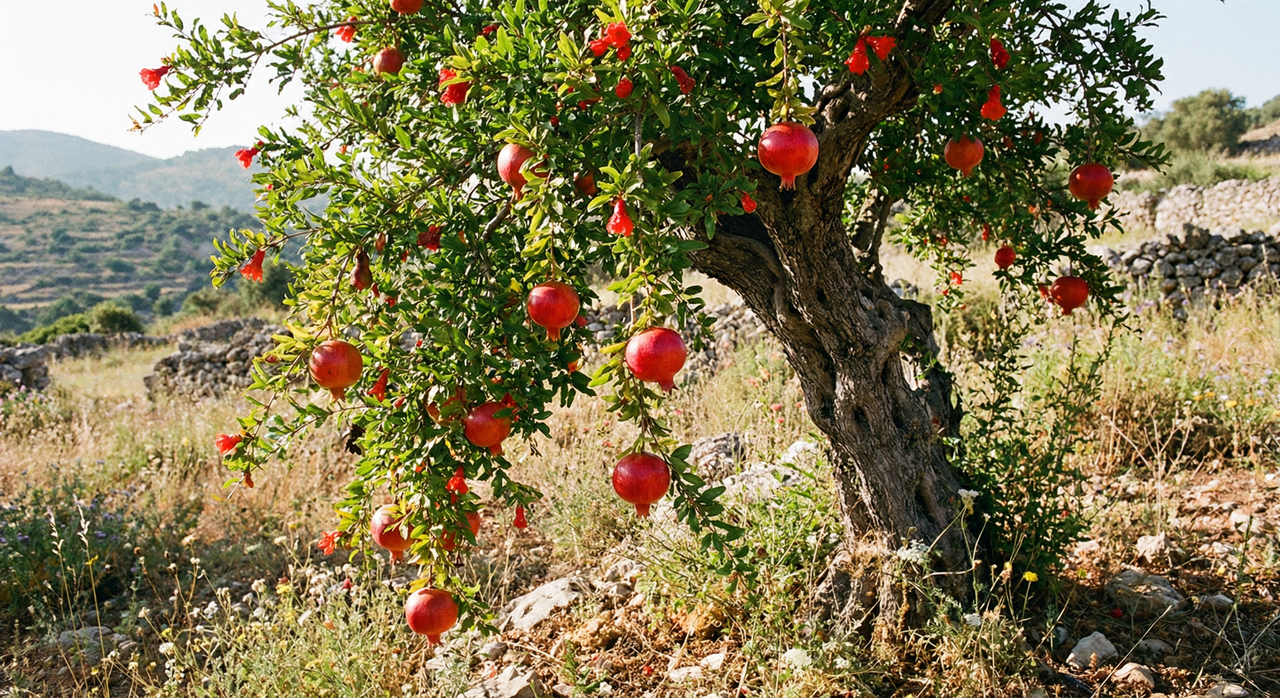
Every pomegranate I've ever cut open has done the same thing to me: stopped me mid-task. There's something almost unreasonable about the inside of that fruit, the way a thousand perfect arils sit packed in their chambers like some botanical jeweler decided to outdo herself. But here's what I didn't understand for years, even after I'd grown pomegranates in three different climates: I was only ever looking at the pretty part. The rind, which most of us trim off without a second thought and toss into the compost, carries a higher concentration of phenolic compounds than the juice, the arils, or anything else on the plant.[1] We've spent centuries breeding for the part we can see and taste, and casually discarding the part with the most concentrated chemistry.
That tension, between what pomegranate looks like and what it actually is, runs through everything about this plant. It's sold as a trendy superfruit and it's also one of the oldest cultivated crops on earth, domesticated somewhere on the Iranian Plateau roughly four to five thousand years ago. It looks delicate enough to star in a still-life painting, but the shrub itself will root into dry, rocky slopes where most fruit trees simply refuse to grow. If you've ever written it off as too fussy, too tropical, or too much work for a home garden, I'd like to make a case for reconsidering.
Pomegranate Origin, History, and Cultural Significance
Botanical Background and Native Range
Picture a rocky hillside somewhere in what is now Iran or the Caucasus: thin, well-drained soil, brutal summer heat pushing past 40 °C, and maybe 300 millimeters of rain falling mostly in winter. That's where Punica granatum evolved, and those origins explain almost everything about how it behaves in the garden today.[2][3] Its native range stretches from Iran and the Caucasus east through Afghanistan, Pakistan, and into the Himalayan foothills, a sweep of scrublands and riverbanks where drainage is excellent and summers are reliably punishing.[2] I grow pomegranates in Central Florida, where summers are waterlogged rather than dry, and the thing that keeps mine healthy is replicating that drainage piece faithfully. Get the drainage right and an established plant's deep taproot does the rest.
Genetic and archaeological evidence points to a single domestication event somewhere around 2000 to 3000 BCE.[4][5] From that single point of origin, it has since naturalized across the Mediterranean and crept into disturbed habitats in warm parts of the southern United States.[6] As a deciduous shrub or small tree typically reaching 3 to 6 meters, it can live 200 years or more, though most cultivated plants stay productive for 20 to 30 years.[7][8] That longevity is part of what makes it such a compelling anchor plant in a food forest: you're planting something that may outlast you.
Traditional and Cultural Uses Across Civilizations
After domestication, pomegranate moved fast. Mesopotamian records mention it by 3000 BCE, Egyptian tombs and artifacts carry it by 1500 BCE (a dried specimen turned up in Tutankhamun's tomb), and Spanish colonizers carried it to the Americas in the 16th century.[9][10] Few plants have carried such consistent messages of abundance and rebirth across five thousand years. In ancient Persia it symbolized fertility and paradise; in Greek mythology it anchored the Persephone story and the rhythm of the seasons; in Judaism its seeds (traditionally counted at 613, matching the Torah commandments) make it a centerpiece of Rosh Hashanah tables; the Quran names it as a fruit of paradise; Persian Nowruz, Hindu rituals connected to Ganesha, and Buddhist traditions all claim it as a symbol of prosperity.[8][11][12] Watching my own trees drop their leaves in winter while the fruit hangs on like small lanterns, I'll admit that ancient symbolism doesn't feel so distant.
Traditional medicine put the whole plant to work. Ayurvedic and Unani practitioners used the fruit, rind, and bark for digestive disorders, dysentery, and as an anthelmintic; Hippocrates and Dioscorides prescribed it for parasites and wounds; Traditional Chinese Medicine employed it to cool the blood and treat prolapse; Persian and Mediterranean traditions reached for it against fevers, skin ailments, and inflammation.[1][13][14] I've used pomegranate rind tea myself for occasional digestive upset with good results, but I always cross-check against current safety data, especially with pregnant clients. Many of these traditional uses predate modern validation, and the clinical picture will be discussed in the health benefits section; the point here is the sheer depth of knowledge accumulated across cultures over millennia. That history carries an obligation. As growers, sourcing heritage cultivars from nurseries that support regional conservation or fair-trade programs is one small way to honor the communities whose knowledge built this plant's reputation.[15]
Visual Characteristics and Fun Facts
In person, pomegranate has a presence that photographs don't quite capture. It's a multi-stemmed shrub with reddish-brown young stems armed with conical thorns, glossy opposite leaves, and flowers that are a genuinely stunning orange-red, somewhere between a tropical hibiscus and a crumpled silk scarf, 2.5 to 5 centimeters across with a crowd of stamens inside.[7][16] Those flowers reliably draw native bees to my garden every season, a quiet ecosystem service that rewards anyone nearby. The fruit itself is technically a balausta, a leathery berry unique to the genus, 5 to 14 centimeters across with a thick rind and hundreds of fleshy arils packed inside.[17] Plants under drought stress develop deeper taproots and smaller leaves, a plasticity that reflects their origins on those rocky Iranian hillsides.[18] The flowers are hermaphroditic and largely self-fertile, though cross-pollination improves set.[19] For a plant that has circled the globe and accumulated five thousand years of mythology, it turns out to be remarkably good at taking care of itself.
Pomegranate Varieties and Where to Buy Them
Punica granatum typically grows 12 to 20 feet tall as a deciduous, multi-stemmed shrub or small tree,[20] which means you get a lot of design flexibility before you even start thinking about fruit. And there is a lot to think about: over 500 named cultivars exist worldwide, each selected for a different combination of fruit size, skin color, aril juiciness, flavor, and climate tolerance.[21] The single most useful filter for narrowing that list is seed texture. Soft-seeded types have tender, fully edible arils and are the choice for fresh eating straight off the tree; hard-seeded types hold up better to juicing and processing but can feel woody when you chew them.[22][23]
Popular Pomegranate Cultivars
'Wonderful' is what most U.S. gardeners will encounter first, and for good reason: it's the dominant commercial variety in this country, producing deep-red fruit 3 to 4 inches across with intensely juicy arils and a tart-sweet flavor that leans more toward tart.[24][25][26] I've grown it alongside 'Eversweet,' and the difference at harvest is immediate: 'Wonderful' has that almost tannic bite that makes excellent juice, while a ripe 'Eversweet' aril eaten straight off the tree is genuinely sweet and the seed practically dissolves. If you're planting primarily to juice or to make molasses, 'Wonderful' is a reliable workhorse. If you want something you'll snack on in the garden, reach for a soft-seeded selection.
The Spanish Mollar varieties, including Mollar de Elche and Mollar de Aragon, represent that soft-seeded ideal taken to an extreme. Their juice content runs 80 to 90 percent, the flavor is mild and sweet, and the seeds are tender enough that most people don't notice them at all.[25] For gardeners in hotter, drier climates, 'Texas Red' and 'Eversweet' bring good drought tolerance along with soft seeds and high juiciness in a more modest 2 to 3 inch fruit.[27] 'Pink Lemonade' is worth a spot if you want something visually different: the arils are pale pink, nearly seedless, very sweet, and genuinely unusual on a charcuterie board.[25] Beyond those, regionally recommended cultivars like 'Parfianka,' 'Angel Red,' 'Acco,' 'Rabab,' 'Utah Sweet,' and 'Kashmiri' are worth researching for your specific zone, and the dwarf 'Nana' works well in containers or as a low ornamental hedge where fruit is secondary to form.[28][7][29]
Sourcing Pomegranate Plants and Seeds
Pomegranates are genuinely easy to source within the U.S., both from local nurseries and online retailers.[18][30][31] Named cultivars commonly available for purchase include 'Wonderful,' 'Eversweet,' 'Parfianka,' 'Angel Red,' 'Mollar de Elche,' 'Rabab,' 'Acco,' and 'Hicaz,' among others.[32][15] Expect to pay a bit more for soft-seeded types: they typically command a 20 to 30 percent price premium over standard hard-seeded varieties because fresh-eating demand is high.[32] That premium is justified if you're growing for the table rather than the juicer, and I'd say it's worth every cent. Seeds are available online in packets of 10 to 50 for roughly $3 to $15; small nursery trees in 1 to 3 gallon containers run $20 to $50, and bare-root plants usually land between $15 and $30.
One practical note on labeling: young pomegranate plants from different cultivars look remarkably similar in the first season or two, and I've made the mistake of letting pots sit unlabeled through a busy spring. Tag everything immediately and photograph the label. On the regulatory side, importing pomegranate material from outside the U.S. requires phytosanitary certificates and USDA APHIS approval, and certain propagules may be prohibited outright.[33][34] I stick exclusively to domestic nurseries that are already inspected and carry regionally adapted stock. It's simpler, safer, and there are enough excellent U.S. sources that the overseas route rarely offers anything you can't find closer to home.
Pomegranate Propagation and Planting Methods
The single most important decision you'll make before growing a pomegranate is whether to start from seed or from vegetative material. I've done both, and while I love the curiosity of seed-grown plants, most home gardeners are genuinely better served by skipping that experiment. Seed-grown pomegranates typically take 3-5 years to produce a meaningful harvest, and that's under good conditions.[35][36][37] Vegetatively propagated plants, whether from cuttings, layering, or grafted nursery stock, typically fruit in 2-3 years.[35][27] If you're designing a productive food forest, those two extra years matter.
Understanding Pomegranate Seed Biology and Storage
Pomegranate seeds are more biologically interesting than most people realize, and understanding their structure helps explain why germination can be frustrating without proper prep. Each seed is polyembryonic, containing both zygotic and nucellar embryos, surrounded by a hard woody testa and chemical inhibitors in the endosperm that create layered physical and physiological dormancy.[38][39] I like to explain it this way: the same hard coat that keeps a seed viable in storage for 2-5 years at ambient conditions, or 10-20 years when dried to 5-10% moisture and held below freezing in an airtight container,[39][40] is exactly what makes germination tricky without a little intervention.
Fresh seeds germinate at 50-80% at 20-25°C, typically sprouting within 10-21 days.[41] Scarification, either by lightly sanding the seed coat or a brief acid soak, combined with cold stratification at 4-10°C for 30-60 days, pushes that figure up to 70-90%.[41] One thing I always tell people who start seeds from a fresh fruit: label everything immediately. Early pomegranate seedlings have a feathery, carrot-like look that makes them easy to confuse with something else entirely, and the polyembryonic nature means multiple seedlings can emerge from a single seed, which genuinely surprises first-time growers.
Timeline to First Fruit: Seeds vs. Vegetative Propagation
Seeds are best reserved for rootstock production or deliberate breeding work, where their genetic variability is actually the point.[42][43] Pomegranate is highly heterozygous and outcrossing, so seed-grown offspring can differ dramatically from the parent plant in fruit size, flavor, seed texture, and color. If you planted seeds from a 'Wonderful', you would not reliably get 'Wonderful' fruit. For anyone who wants a known variety producing in a predictable window, vegetative propagation is the straightforward path.
Vegetative Propagation Methods: Cuttings, Grafting, and Layering
Semi-hardwood cuttings are my go-to, and the research backs the intuition. Cuttings 15-20 cm long with 3-4 nodes, taken in late summer, treated with IBA rooting hormone, and placed in a sand-perlite mix under 80-90% humidity at 70-85°F, root at 60-80%.[44][45] If you can get softwood cuttings in early summer, IBA at 1000-3000 ppm can push success rates to 70-90%, while winter hardwood cuttings are slower and more variable at 50-80%.[45] I've noticed that cuttings taken after a hot, dry stretch root noticeably more vigorously than those taken during humid periods, which aligns with the fact that fungal problems like damping-off and anthracnose are a real threat in high-moisture propagation environments.[37][46] Sanitation and airflow matter as much as hormone concentration.
Air layering in late spring or early summer, using rooting hormone and moist sphagnum moss wrapped in film, achieves 70-90% success within 2-3 months and is a great option when you want to clone a specific branch without cutting it from the parent plant.[47][48] Grafting onto pomegranate seedling rootstock in spring or summer using cleft, whip, or bud methods also achieves 70-90% success and is the commercial standard for superior yields and disease resistance.[37][49] Grafting onto citrus rootstock fails due to incompatibility, which occasionally trips up gardeners with citrus-heavy nursery infrastructure.[37][49] In my own garden I've stuck with cuttings and air layering because they require no special equipment and still reliably deliver fruit by year three. Tissue culture exists as a laboratory-scale option achieving over 70% shoot induction, but acclimatization survival drops to 50-70% and it's not practical outside a commercial sterile facility.[50]
Soil, Site Selection, and Planting Technique
If propagation is the start of the investment, soil and siting are where it either pays off or quietly fails. Pomegranates need full sun, at least 6-8 hours daily, and well-drained soil above almost everything else.[7][51] They tolerate a wide pH range, from 5.5 up to 8.5, and handle sand, loam, and moderately heavy clay, but they will not tolerate waterlogging.[37][52] Extended saturation chokes fine feeder roots, and I've watched young plants decline fast in poorly drained spots. In my Central Florida gardens, I always work generous perlite and coarse sand into heavy soils before planting, and the only times I've lost young pomegranates were when I skipped that step.
Sandy loam with good aeration and at least 60-90 cm of workable depth is the ideal, and a leaner soil actually tends to produce better fruiting by preventing the excessive vegetative growth that comes with over-rich conditions.[53][52] Think of it like figs or olives: drainage is everything, and fertility is something to moderate rather than maximize. For containers, a mix of 50% potting soil or compost, 30% perlite, and 20% coarse sand provides the drainage and structure these plants expect.[28] Always run a soil test before adding lime or amendments; the pH tolerance is wide enough that uninformed additions can do more harm than good.
Spacing and Establishment
Pomegranates mature into dense, multi-stemmed plants reaching 10-20 feet tall and nearly as wide, so respect that future size from the day you plant.[54] I tell clients to think about spacing the way they would for a large viburnum or osmanthus: give them 10-15 feet between plants, with 15-20 feet between orchard rows, and avoid the temptation to crowd them because constant corrective pruning is a poor substitute for adequate spacing.[55][56] High-density commercial plantings push to 200-300 trees per acre with intensive pruning, but that's a different system entirely.
If you're starting from seed indoors, sow ¼-½ inch deep about 6-8 weeks before your last frost date and transplant once the seedlings are sturdy and frost risk has passed.[54] Water transplants consistently, roughly an inch per week or whenever the top inch of soil goes dry, until the root system establishes.[57] Begin light pruning from the start to shape the framework and direct energy toward fruiting wood rather than dense interior growth. Label your rows if you've grown multiple seed-sourced plants; those early seedlings look remarkably similar, and by year two you'll be glad you kept records.
Pomegranate Care Guide: Sunlight, Water, Feeding, Temperature, and Maintenance
Pomegranate is one of the most forgiving fruit trees if sited well, and one of the most frustrating if you ignore fundamental site requirements. The care fundamentals aren't complicated, but they're interconnected in ways that trip up a lot of home gardeners. Get the light right, don't drown it, feed it modestly, and give it a thoughtful prune each dormant season. That's the whole story, really. Let me fill in the details.
Sunlight Requirements and Light Stress
Pomegranate needs full sun, at minimum 6-8 hours of direct sunlight daily, and ideally a sheltered site that avoids frost pockets.[7] That preference isn't arbitrary. This is a plant that evolved on hot, rocky slopes in the Iranian Plateau and surrounding regions, so shade is genuinely alien to it. Starve it of light and you'll see the consequences quickly: etiolated, weak stems with wide internodes, dramatically reduced flowering, chlorotic foliage, and leaf drop.[58][59] No flowers means no fruit, full stop.
The other extreme is worth understanding too. In USDA zones 10-11, where midday sun combines with high UV and reflective soils, pomegranates can experience leaf scorch, bleaching, and photoinhibition.[51][60][60] In my own landscape design work, I've seen south-facing masonry walls amplify both light and heat dramatically, which can be a feature or a problem depending on your climate. In a zone 8 or 9 garden, that reflected warmth is a gift. In coastal zone 10, you may want something taller to provide afternoon relief during peak summer.
Water Needs and Drought Tolerance
Here's where I've seen the most confusion among home gardeners, particularly in Central Florida where I've grown pomegranates for years. The plant is genuinely drought-tolerant once established, capable of surviving weeks to months without supplemental irrigation.[37][57] That toughness comes from real physiology: a deep root system reaching 1-2 meters, a thick leaf cuticle, sunken stomata, and high water-use efficiency.[61][62] But "drought-tolerant" doesn't mean "ignore it during fruiting season," and that distinction matters enormously for fruit quality.
Mature trees in temperate gardens with well-drained soil typically need deep watering only every 2-4 weeks during the growing season.[63][64] When you do water, go deep: 12-24 inches is the target, delivering 1-2 inches per session.[65][66] In my experience, inconsistent summer watering is the single most common cause of fruit splitting in home gardens. The tree puts out fruit under dry conditions, then a heavy rain or irregular deep watering causes rapid moisture uptake and the skin can't expand fast enough. Regular irrigation during fruiting prevents exactly that.[37][57]
Overwatering is equally destructive. Consistently saturated roots quickly lead to suffocation and decline, and in humid climates like mine, this is a real risk.[67][64] Let the top 2-3 inches of soil dry between waterings and never let roots sit in standing water. The plant thrives in a soil pH of 5.5-7.5 with moderate salinity tolerance, so if you're in an area with alkaline irrigation water, factor that in when you're diagnosing nutrient issues.[68][69] A 2-4 inch layer of organic mulch around the root zone helps enormously with moisture retention and keeps summer soil temperatures manageable.[61]
Feeding and Soil Fertility
Pomegranate is not a heavy feeder, and more gardeners make trouble by overfeeding than by underfeeding. Excessive nitrogen in particular triggers exactly what you don't want: lush vegetative growth at the expense of flowers and fruit, delayed blooming, and in arid regions, salt buildup in the root zone.[67][7][67][70]
Needs shift by growth stage. During the establishment phase (roughly the first 2-3 years), the plant benefits from slightly higher nitrogen ratios to develop roots and canopy. Once it moves into consistent fruiting, balanced NPK with increasing potassium becomes the priority.[71][27] For a mature fruiting tree, a reasonable annual target is 1-2 pounds of actual nitrogen, 0.5-1 pound of P2O5, and 1-1.5 pounds of K2O, split across 2-3 applications during the growing season.[72] I personally test my soil every two years, and I've found that supplementing with composted manure in my sandy soils noticeably improves fruit quality without the salt buildup I once saw from synthetic fertilizers.
Potassium's connection to fruit cracking is direct and worth emphasizing: potassium deficiency shows up as marginal leaf browning and, critically, cracked fruit skin.[70] Iron deficiency (interveinal chlorosis on young leaves) tends to appear in alkaline soils above pH 7.0, and both zinc and boron deficiencies have been reported in pomegranate orchards.[73][70] A soil test before you fertilize blindly isn't optional advice; it's the only way to know what you're actually correcting. Apply fertilizer in split applications, typically pre-bloom in spring and again post-harvest, and water thoroughly afterward.[27][67]
Frost Tolerance and Cold Protection
Pomegranate is reliably hardy in USDA zones 7b-11, with optimal performance in zones 8-10. Mature, dormant plants can handle brief cold snaps down to 5-10°F (-15 to -12°C), but prolonged exposure below 20°F (-7°C) causes serious damage or outright death, with young plants and active new growth most vulnerable.[74][37] That dormancy advantage is real: the same plant that shrugs off 15°F in January would be killed by 25°F in March if a late freeze caught it pushing new leaves.
Frost damage often isn't obvious until after a thaw, when you'll see browning or blackening of foliage, wilting shoots, bark splitting, and sometimes fruit discoloration or cracking.[75] In Central Florida, occasional freezes are part of life, and I handle marginal cold events similarly to how I manage my citrus: I site pomegranates against south-facing walls or fences to capture reflected warmth, apply 4-6 inches of organic mulch (kept away from the trunk) to buffer soil temperatures, and water before a hard freeze to release stored soil heat.[76][37] Breathable frost cloth over smaller plants during extreme events is worth having on hand. If damage does occur, wait until spring to prune out dead wood; cutting too early can stimulate new growth that's then hit by the next cold snap.
Heat Tolerance and Heat Stress Management
On the other end of the temperature spectrum, pomegranates are genuinely heat-tolerant, rated for AHS Heat Zones 8-10 and capable of handling daytime temperatures up to 104-113°F (40-45°C) when irrigation is adequate.[77][78] Optimal growth happens at 77-95°F (25-35°C) with cooler nights, which is why arid regions like California's Central Valley produce such high-quality commercial fruit.
That heat tolerance has limits. Seedlings struggle above 95°F (35°C), flowering is disrupted above 100°F (38°C), and fruit development suffers above 104°F (40°C).[79][80] My 'Wonderful' trees in hot, humid summers will drop flowers during prolonged 95°F+ spells unless I'm watering deeply in the early morning and have some shade protection during the worst weeks. A 30-40% shade cloth during extreme heat events, organic mulch to buffer root zone temperatures, and deep, infrequent irrigation timed for early morning are the practical tools.[81][82] Those dropped flowers directly translate to reduced yield, so heat stress during bloom deserves real attention.
Pruning, Seasonal Maintenance, and Ongoing Care
I learned the pruning lesson the hard way: heavy summer cuts cost me a significant portion of the next year's crop on one of my older trees. Pomegranates fruit on short spurs at the tips of the previous season's growth, so anything you remove in summer is fruit you won't see next fall. I now do essentially all structural pruning in late winter or early spring while the plant is still dormant, removing dead, damaged, or crossing branches and working toward an open vase shape with 3-5 main scaffold branches.[83][84][77] That open architecture also improves airflow, which matters in humid climates where fungal pressure is a real concern.
During the season, the main maintenance tasks are sucker removal and fruit thinning. Root suckers should come off immediately at soil level; left alone, they redirect energy and create a thicket that's difficult to manage.[37] Three to four weeks after bloom, I thin clusters down to 1-2 fruits each. The remaining fruit will be noticeably larger and better quality, and the tree handles the crop more easily through the long development period.[37]
Mulch is probably the single most underrated maintenance tool for pomegranates. A 2-4 inch layer of organic material around the root zone conserves moisture, moderates soil temperature, and suppresses the weeds that otherwise compete for water and nutrients, just keep it a few inches away from the trunk to prevent rot.[85][76] A well-sited, consistently cared-for pomegranate can remain productive for decades. That long-term payoff is what makes the early attention to siting, irrigation discipline, and annual pruning so worthwhile.
Pomegranate Harvesting: Timing, Technique, and Flavor at Peak
Pomegranate is not a plant that rewards impatience, and I say that as someone who has watched young trees in my Central Florida garden sit quietly for years before delivering anything worth harvesting. From planting, seed-grown trees typically take 3-5 years to bear their first significant crop, while grafted stock usually comes around in 2-3 years.[86] Once the tree is established and flowering, each individual fruit then needs another 120-180 days to reach maturity.[86][87] That's a long runway. Label your young trees well, give them the care the previous sections describe, and trust the process.
When to Harvest Pomegranates: From Planting to Peak Maturity
The tricky part is knowing when that long wait is finally over. Pomegranates don't ripen after picking, so timing genuinely matters.[88] Pull one too early and the arils are pale, acidic, and disappointing. Leave one too long and you risk cracking. What you're watching for is a cluster of cues that build together: the skin shifts from green toward red, pink, or yellowish-brown depending on variety; the fruit reaches its full size of roughly 3-5 inches across; and the arils inside turn deeply colored, plump, and separate easily from the pith. Bite into a seed and it should be firm and crisp rather than soft or rubbery. The flavor lands on that signature sweet-tart balance rather than sharp acidity alone.[86][37]
In Florida, I've learned to weight the taste test heavily because our humid summers can mute external color signals or cause slight softening before the arils are truly ready. Here, harvest windows typically run August through November.[89] California and Arizona growers are usually waiting until late September through December, while Texas falls somewhere in between.[90][27] The commercial benchmark 'Wonderful' typically hits maturity around 150-170 days post-flowering, with its best flavor coming when cool nights have had a chance to deepen both color and sweetness.[87]
How to Harvest Pomegranates Without Damaging the Fruit or Tree
I pick in the early morning before the heat builds, both for the tree's sake and my own. The technique is simple: grip the fruit firmly, then either twist it gently free or clip the stem cleanly with pruners. Either way, you want to avoid tearing the skin.[86][88] A punctured or torn rind is an open invitation for decay and insects, and with arils that juicy just beneath the surface, even a small breach can ruin an otherwise perfect fruit in a matter of days. Handle them like the treasure they are after a multi-year wait.
What to Expect: Yield, Flavor, Texture, and Aroma of Fresh Pomegranate Arils
The arils are everything. Each one is a small gel-like sac surrounding a crunchy seed, delivering a sweet-tart flavor with a Brix typically landing between 12 and 18 degrees and a pH of roughly 3.0-4.0.[91] The aroma is fresher and more complex than most people expect from a store-bought fruit: berry-like and citrusy with subtle floral undertones from volatile compounds including limonene and hexanal.[92][93] That aroma alone is one of the better arguments for growing your own.
Texture varies meaningfully by cultivar. 'Wonderful,' which I grow, produces firm, distinctly crunchy arils.[94] I've also tasted 'Mollar de Elche' at a friend's grove, and the contrast is striking: softer, more tender seeds with juice that practically floods your mouth on contact.[95] Neither is better; they're just different experiences. The mild, lingering astringency that comes after swallowing, from tannins concentrated mostly in the peel and seed coats, is actually part of what makes fresh pomegranate so refreshing rather than cloying.[96]
Ripeness, cultivar, and climate all shape what ends up on your tongue. Fuller ripeness softens the acidity and amplifies sweetness; cooler nights before harvest build color and flavor complexity; and warmer growing conditions can push sweetness even higher.[97][98] In my experience, fruit harvested at true peak ripeness from a home garden has a brightness that commercial fruit rarely matches, and that's the real reward for the years of patience this plant asks of you.
Pomegranate Preparation and Uses
Culinary Uses and Flavor Profile
Everything edible on a pomegranate starts with the arils, those translucent seed sacs packed with juice and a satisfying crunch from the white seed inside.[99][100] I learned fast that the bowl-of-water trick is non-negotiable: score the fruit into quarters, submerge it, and pull the arils free underwater. The white pith floats, the arils sink, and your shirt stays clean. Before I figured that out, I looked like I'd lost a fight with a beet.
Flavor varies more than most people expect. Cultivars like 'Wonderful' and 'Angel Red' strike a balanced sweet-tart note, while varieties with higher organic acid loads lean bracingly sour.[101][102] That spectrum matters when you're choosing what to grow: sweeter types are better for fresh eating and salads, while the more acidic ones shine when you're reducing them into molasses. Persian cuisine uses that molasses extensively, and the way it balances sweet and sour in rice dishes or walnut stews reminds me of what aged balsamic does in Italian cooking.[103] In Middle Eastern cooking, fresh arils scattered over fattoush or tabbouleh are non-negotiable, not optional garnish.
Processing shifts everything. Juice develops fruity-floral-earthy notes with enhanced sweetness, while wine and jam move toward deeper caramelized, fermented tones.[104][105] My own home-pressed juice, left in the fridge for a week, develops a quiet molasses-like depth I didn't expect the first time. As for the rind, I never eat it raw because the bitterness is genuinely intense, but I dry it to use as anardana-style seasoning in curries or steep it as a tea.[7][29]
Medicinal Preparations
Traditional Ayurvedic and Unani systems have used nearly every part of this tree medicinally: bark decoctions, leaf infusions, tinctures, topical poultices, and plain fruit juice (around 100-200ml daily).[1][106] I'm comfortable sharing those traditional dosage ranges, but I want to be direct: I'm not a doctor, and if you're pregnant, on medication, or considering bark-based preparations, please talk to a qualified practitioner first. The short-term-use warning on bark decoctions (3-5 days maximum) exists for real reasons.
Modern standardized preparations center on peel extract (500-1000mg daily), seed oil (1-2g daily), and ellagitannin supplements standardized to roughly 40% punicalagin (200-500mg daily), with clinical trials typically running 4-12 weeks.[107][108] For home use, a simple dried-rind tea or an arils-and-juice routine is where I'd start before considering anything more concentrated.
Non-Food Uses
The rind and bark yield natural dyes, yellow from the fruit peel and red from the bark, used historically in textiles and cosmetics.[109] I've mordanted wool with pomegranate peel and gotten a warm, straw-to-gold tone I couldn't replicate with anything else in the garden. The dense wood is useful for tool handles and walking sticks, burns slowly and hot, and makes excellent charcoal. Bark fibers have traditionally been twisted into rope and woven into coarse mats. These aren't high-volume applications, but for a permaculture grower, they matter. After years with these trees, I save almost everything: arils for the table, rind for tea and dye, prunings for the fire. The most sustainable use is the one that wastes nothing.
Pomegranate Health Benefits and Medicinal Uses
People have been reaching for pomegranate as medicine for thousands of years, and modern biochemistry is doing a pretty good job of explaining why. What makes this fruit genuinely interesting from a health standpoint isn't any single compound but a whole constellation of polyphenols that work together in ways we're still untangling.
Key Phytochemicals Driving Pomegranate's Benefits
The dominant compounds are the ellagitannins, and the one you'll see cited most often is punicalagin, a molecule found in significant concentrations almost nowhere else in the plant kingdom.[1][110] Punicalagin hydrolyzes in the body to ellagic acid, which then gets metabolized by gut bacteria into urolithins, the compounds researchers believe drive much of the downstream anti-inflammatory activity. Alongside the ellagitannins, pomegranate carries flavonoids including anthocyanins (delphinidin, cyanidin, and pelargonidin glycosides), flavonols like quercetin and kaempferol, and phenolic acids like gallic acid.[111] The seeds also contribute punicic acid, a conjugated linolenic acid with its own anti-inflammatory and anticancer potential in preliminary research.[112]
The peel contains 2 to 8 times more total phenolics than the arils, with punicalagin concentrations up to 20 mg/g dry weight.[113] Polyphenols as a class account for up to 92% of the antioxidant activity in pomegranate juice.[1] That's why peel extracts show up so heavily in research even though most of us are eating the arils, not the rind. Growing conditions shape these numbers meaningfully: drought stress can increase anthocyanins and flavonoids by 40 to 60%, and alkaline soils above pH 7.5 can suppress total phenolics by 30 to 50%.[114][115] I've noticed this firsthand: fruit harvested after a dry spell consistently tastes more complex and tart, which I now understand reflects a measurably higher antioxidant load rather than just my imagination.
Nutritional Profile of Pomegranate Arils and Juice
A cup of raw arils (about 174 g) gives you roughly 144 calories, 3 g of protein, about 7 g of fiber, and 24 g of sugars alongside nearly 78% water by weight.[116] The standout micronutrients per 100 g are vitamin K at around 14% DV, vitamin C at about 11% DV, and 38 µg of folate.[117] That same 100 g serving delivers 0.5 to 1.5 mg/g punicalagins, 10 to 50 mg ellagic acid, and 15 to 100 mg anthocyanins depending on cultivar and ripeness.[113] A glass of 100% juice concentrates those bioactives further, with 1000 to 1500 mg/L punicalagins and roughly 2000 mg/L total polyphenols typical for commercial preparations.[113] For everyday nutrition, arils are the complete package; for therapeutic concentrations, juice or standardized extracts are what the clinical trials have actually tested.
Evidence-Based Health Benefits and Research Highlights
Ayurvedic practitioners, ancient Greek physicians, and Middle Eastern herbalists all used pomegranate as an astringent, expectorant, and treatment for parasites, digestive complaints, and wounds.[1][118] Modern research is validating a lot of that intuition, though the strength of evidence varies considerably by application.
The most solid clinical ground is cardiovascular. A meta-analysis of randomized controlled trials found pomegranate juice consumption significantly reduces systolic blood pressure in hypertensive patients.[119] I recommend it fairly regularly to friends managing metabolic syndrome because those drops, while modest, show up consistently across trials rather than as a one-off finding. The mechanism runs through NF-κB inhibition and reductions in inflammatory cytokines including IL-6, TNF-α, and CRP, with punicalagin doing much of the heavy lifting.[120][121] Clinical data also support modest improvements in fasting blood glucose and insulin sensitivity in type 2 diabetes, and endothelial function improvements have been documented as well.[122][108]
Beyond cardiovascular applications, the research pipeline gets more exciting but considerably less definitive. Punicalagin and ellagic acid induce apoptosis in breast, prostate, and colon cancer cell lines, and neuroprotective effects have appeared in memory studies and Alzheimer's models.[123][124] Peel extracts show genuine antimicrobial activity against MRSA, E. coli, S. aureus, and Candida, though mostly in vitro.[125] Animal studies support analgesic, wound-healing, and antispasmodic activity.[126][127] Systematic reviews are consistent in their conclusion: promising preclinical and small-trial evidence, but larger well-standardized human trials are still needed across most of these applications.[128] I grow pomegranate because the fruit is genuinely delicious and the antioxidant payload is real. That's enough, without overstating what the cancer or neuro research can actually support yet.
Safety Considerations and Potential Side Effects
Ripe arils and 100% juice are well-studied and broadly safe in typical food amounts. Clinical trials have used up to 500 mL of juice daily with adverse events limited mostly to mild gastrointestinal discomfort.[129][130] Start moderate if you're new to it and observe how your digestion responds.
The parts that aren't the ripe fruit are a different story. Bark, roots, and unripe rind contain high concentrations of tannins and alkaloids including pelletierine and pseudopelletierine, which can cause nausea, vomiting, diarrhea, and potentially more serious toxicity in larger doses.[131][132] I keep those parts entirely out of my kitchen; they belong in external traditional preparations and only under knowledgeable professional supervision. Allergic reactions and contact dermatitis are possible, particularly in people with latex or pollen sensitivities due to cross-reactive proteins.[133]
The drug interaction question deserves a direct answer rather than a vague disclaimer. Pomegranate juice inhibits CYP3A4 and CYP2C9 enzymes, which means it can raise blood levels of statins, calcium-channel blockers, warfarin, certain immunosuppressants, and some diabetes medications.[134] Think of it as similar to the grapefruit juice interaction most people have heard of, but for a broader drug class. If you take any of those medications and want to use pomegranate juice therapeutically rather than just as an occasional kitchen ingredient, a conversation with your prescribing physician is genuinely necessary, not optional. As a food-amounts addition to meals, the fruit is considered low risk during pregnancy and for children; concentrated extracts and supplements during pregnancy should wait for medical guidance.[129] Pet owners should also note that leaves, stems, and rind can cause gastrointestinal upset in dogs, cats, and horses.[135]
Pomegranate Pests and Diseases
No pomegranate cultivar is bulletproof. Disease resistance varies widely depending on which variety you're growing, what your local climate throws at it, and how well your cultural practices set the tree up to defend itself.[136] That's not cause for alarm; it's cause for thoughtfulness. The growers I've seen struggle most with pomegranate health are the ones chasing symptoms rather than building resilient systems from the start.
Major Diseases and Environmental Triggers
The two diseases that cause the most consistent loss are Phytophthora root rot and anthracnose, and they're almost mirror images of each other in terms of what invites them in. Phytophthora thrives in waterlogged or poorly drained soils, causing root decay, wilting, yellowing leaves, and stunted growth that can spiral into significant yield loss if you don't catch it early.[137][136] I've dug around the base of troubled trees more than once, and the difference between healthy roots (white, firm, fibrous) and infected ones (dark, mushy, unmistakably foul) is something you remember. Anthracnose, meanwhile, is a humidity problem: Colletotrichum gloeosporioides hits hardest when humidity exceeds 80% and temperatures sit in that 68 to 86°F sweet spot, causing serious fruit loss in tropical and subtropical growing regions.[136][138] Hot, rainy summers make anthracnose a genuine watch-point; the drier stretches in between are actually doing you a favor.
Beyond those two, pomegranates face moderate pressure from Verticillium wilt, Botryosphaeria dieback, bacterial leaf spot, Fusarium wilt, powdery mildew, and rust.[139][140][136][141] Bacterial issues like Xanthomonas leaf spot are more prevalent in India and parts of Asia than in North America. What almost all of them share is a preference for the same environmental conditions: high humidity, waterlogged soil, excess nitrogen promoting soft succulent growth, and soil pH below 5.5.[142] Push the fertility too hard and you're essentially rolling out a welcome mat.
Cultivar Resistance and Rootstock Choices
Cultivar selection is one of the most practical levers you have. 'Wonderful' offers moderate resistance to bacterial leaf spot and Fusarium wilt, particularly in drier regions, and it's been my benchmark variety for a reason. 'Eversweet' holds up better against root rots. 'Angel Red' resists bacterial leaf spot. 'Utah Sweet' and 'Soft Seed' show reduced susceptibility to certain fruit rots.[37][143] I learned early on that even 'Wonderful' benefits from grafting onto better rootstocks on wet sites; rootstocks like 'A25' can improve Phytophthora resistance where drainage is imperfect.[144] Now I evaluate new varieties not just on fruit quality but on how they're likely to hold up under local pest pressure. That instinct has saved me a lot of replanting.
Common Pests and Integrated Management
On the insect side, the usual suspects are mealybugs, scale insects, aphids, and fruit flies (Anastrepha spp. in warmer regions).[145][20] None of these are particularly dramatic when the tree is healthy and well-sited; they tend to pile on when something else is already wrong.
My approach has always been prevention first. Spacing trees 4 to 6 meters apart for airflow, ensuring excellent drainage, pruning out 20 to 30 percent of old wood annually, keeping nitrogen balanced (never excessive), and removing infected material promptly handles the vast majority of problems before they escalate.[146][147][148] I avoid blanket fungicide applications and instead monitor closely, reaching for copper bactericides, targeted biologicals, or pheromone traps only when cultural practices aren't enough. Good spacing in a food forest guild isn't just design aesthetics; it's disease management. I think about pomegranate's airflow needs the same way I do with figs or citrus: get that right at planting and you'll spend a lot less time troubleshooting later.
Pomegranate in Permaculture Design
Every good permaculture design starts with matching a plant to its ecological biography. For pomegranate, that biography is written in the semi-arid Mediterranean basin: hot, dry summers, mild wet winters, and somewhere between 15 and 30 inches of annual rainfall.[149][150] Understand that rhythm and you understand almost every placement decision that follows.
Climate and Hardiness Zones for Pomegranate
Pomegranate is reliably hardy in USDA zones 7 through 11, with the sweet spot sitting in zones 8 to 10.[7][151] It can handle brief dips to around 10 °F (-12 °C), but sustained cold causes real dieback and can wipe out a developing fruit crop entirely.[152] After losing several early-season buds to a surprise late frost in zone 8b, I stopped treating pomegranate as bulletproof and started siting it deliberately. Now I plant against south-facing block walls, pile on 4 to 6 inches of mulch around the crown before winter, and keep a frost blanket within reach. That combination has made the difference.
Beyond cold, the other non-negotiable is drainage. Pomegranates want full sun, at least 6 to 8 hours daily, with good air circulation to keep humidity-driven fungal problems in check.[153][154] Rainfall much above 40 inches annually pushes Phytophthora root rot from a theoretical risk into a practical one. In humid climates, raised berms and sloped siting are worth the extra effort. The global commercial track record backs all of this up: California produces roughly 70 percent of U.S. pomegranates, and the plant thrives across similarly dry regions from Iran and India to Chile and South Africa.[87] For gardeners on the colder edge of zone 7, cultivars like 'Russian 26' extend fruiting reliability without requiring a greenhouse.[8]
Ecosystem Functions and Services of Pomegranate
Those big, orange-red flowers are a genuine pollinator magnet. Honeybees, bumblebees, butterflies, and hummingbirds all work the blooms, and fruit set can climb to 80 to 90 percent when managed hives are nearby.[37][155] Like my citrus, pomegranates set far heavier crops when I keep two hives in the vicinity. Optimal pollination happens between 25 and 30 °C with moderate humidity, so placement in a warm, sunny microclimate does double duty: it satisfies the tree's own preferences and creates the conditions pollinators need.[156]
Below ground, the deep taproot system pulls potassium, calcium, and phosphorus up from the subsoil and deposits them back on the surface through leaf litter and seasonal prunings.[157] I've used pomegranates on slopes in sandy Central Florida soil precisely for this: their roots knit the ground quickly and cut erosion noticeably after heavy summer rains. The fruit also feeds birds and small mammals, with seed dispersal happening mainly through wildlife that eat the arils whole.[158]
It's equally important to be clear about what pomegranate doesn't do. It is not a nitrogen fixer, not an effective windbreak, and it won't carpet the ground as a living mulch.[158] Design around those gaps rather than hoping this plant will fill them. Climate shifts are creating mismatches between when flowers open and when pollinators peak, and domesticated varieties often show reduced floral attractiveness compared to wild types.[159] Planting diverse flowering companions that bridge the seasonal gaps is a practical way to buffer that risk.
Forest Layer, Guilds, and Companion Planting
At 2 to 5 meters tall with a multi-stemmed, rounded canopy, pomegranate sits naturally in the shrub or small-tree layer of a food forest.[160][161] Its flexibility is a genuine asset: train it to a single trunk for an open canopy understory, espalier it flat against a wall to exploit heat reflection in a marginal zone, or let it sucker freely as a hedgerow. Each form serves a different design intent.
Guild planting with pomegranate rewards caution over enthusiasm. It performs well alongside nitrogen-fixing legumes and aromatic herbs like basil and mint, and low covers such as nasturtium can suppress weeds without competing aggressively at the root zone.[162][163] That said, the root system is deep and wide, and leaf leachates carry mild allelopathic compounds that can slow germination of some understory species.[164][165] My approach is to space companions at least 10 feet from the trunk and spend the first season observing before I commit to a dense understory planting. Results genuinely vary by site, soil, and species pairing.
A mature tree yields roughly 20 to 30 kilograms of fruit per year under good management,[166] and I'd rather protect that yield through airflow, appropriate irrigation, and integrated pest management than rely on the plant itself to repel insects or suppress disease.[152] One well-placed pomegranate, properly sited and guild-supported, brings food, dye, fiber, wildlife habitat, and soil-building function from a single canopy footprint. That's a return on investment worth designing for carefully.
The Tree That Made Me Slow Down
I remember the first time I harvested a pomegranate I'd grown myself, standing in the garden in October with fruit-stained fingers, genuinely surprised that I'd been patient enough to wait. That's the thing about this plant nobody tells you upfront: it doesn't just feed you, it teaches you to stop rushing. Every season I grow pomegranates, I trust the process a little more and second-guess it a little less.
Sources 166
- Pomegranate and its Many Functional Components as Related to Human Health: A Review ↩
- Kew Science Plants of the World Online - Punica granatum ↩
- FAO - Pomegranate Production Guidelines ↩
- Genetic Diversity and Origin of Pomegranate (Punica granatum L.) as Investigated by Nuclear and Plastid DNA Markers ↩
- Phylogenetic Analysis of Punica granatum Reveals a Single Domestication Event ↩
- USDA PLANTS Database ↩
- Punica granatum - Missouri Botanical Garden ↩
- Pomegranate - Wikipedia ↩
- History of Pomegranate Cultivation in the Mediterranean ↩
- Davidson, L. (2005). The History and Literature of the Pomegranate. Palarch's Journal of Archaeology of Egypt/Egyptology ↩
- Pomegranate Symbolism in Judaism ↩
- Fruits in the Quran: Pomegranate ↩
- Traditional Uses and Pharmacological Profile of Punica granatum ↩
- Punica granatum in Traditional Chinese Medicine ↩
- Sustainable Cultivation and Harvesting of Pomegranate ↩
- Royal Horticultural Society - Punica granatum ↩
- Missouri Botanical Garden Plant Finder ↩
- USDA PLANTS Database - Punica granatum ↩
- The Pomegranate: Botany, Horticulture, and Breeding ↩
- Punica granatum - Missouri Botanical Garden ↩
- The Pomegranate: Botany, Horticulture, and Breeding ↩
- Pomegranate Cultivation - USDA National Agricultural Library ↩
- Pomegranate Varieties and Characteristics - University of California Agriculture ↩
- Wonderful Pomegranate Cultivar Information - University of California Agriculture ↩
- Pomegranate Varieties - University of California Agriculture and Natural Resources ↩
- Wonderful Pomegranate Variety History ↩
- Pomegranate Cultivars and Characteristics - Texas A&M AgriLife Extension ↩
- Pomegranate Cultivars - Royal Horticultural Society ↩
- Pomegranate - Kew Gardens ↩
- Growing Pomegranate in California ↩
- Pomegranate (Punica granatum) - Royal Horticultural Society ↩
- Pomegranate Production and Marketing ↩
- Importation of Fruit from Certain Countries ↩
- Plants for Planting Manual ↩
- Pomegranate Management Guide ↩
- Pomegranate Cultivation and Management ↩
- Pomegranate Production in California ↩
- Pomegranate Propagation & Seed Biology ↩
- Seed Storage Behaviour: Punica granatum ↩
- Seed Storage of Horticultural Crops ↩
- Seed Germination of Punica granatum: Effects of Scarification and Stratification ↩
- Pomegranate Production and Propagation ↩
- Propagation of Pomegranate ↩
- Vegetative Propagation of Pomegranates by Cuttings ↩
- Propagating Pomegranates from Cuttings ↩
- Challenges in Fruit Tree Propagation: Pomegranate ↩
- Pomegranate Production and Propagation ↩
- Home Fruit Production: Pomegranate ↩
- Graft Compatibility in Pomegranate ↩
- Micropropagation of Pomegranate (Punica granatum) Using Nodal Explants ↩
- Royal Horticultural Society - Punica granatum Growing Guide ↩
- Pomegranate Cultivation Guide ↩
- Pomegranate Production Guidelines ↩
- Pomegranate Planting Guide ↩
- Pomegranate Production Guidelines ↩
- University of Florida IFAS Extension: Pomegranate Growing ↩
- Growing Pomegranates in the Home Garden ↩
- University of California Agriculture & Natural Resources - Pomegranate ↩
- University of Florida IFAS Extension - Pomegranate ↩
- Pomegranate Disorders and Diseases ↩
- Drought Tolerance in Pomegranate: Physiological and Agronomic Aspects ↩
- Root System Adaptations of Pomegranate to Drought ↩
- Missouri Botanical Garden ↩
- University of California Agriculture & Natural Resources ↩
- Pomegranate Production Guidelines ↩
- Irrigation Management for Pomegranates ↩
- Pomegranate Irrigation and Water Management ↩
- Pomegranate Production Guidelines ↩
- Salinity Tolerance of Pomegranate ↩
- Nutrient Management for Pomegranates ↩
- Pomegranate Production in California ↩
- Fertilizer Recommendations for Pomegranate ↩
- Pomegranate Production Guidelines ↩
- Missouri Botanical Garden - Punica granatum ↩
- Frost Injury to Pomegranates - University of Florida IFAS ↩
- Cold Protection for Citrus and Other Subtropical Plants ↩
- Punica granatum - Pomegranate ↩
- Pomegranate Growing in the Home Garden ↩
- Heat Stress Effects on Pomegranate (Punica granatum L.) Physiology and Fruit Quality ↩
- Physiological Responses of Pomegranate to Environmental Stresses ↩
- Pomegranate Cultivation Guide ↩
- Water Management for Pomegranate ↩
- Royal Horticultural Society - Pomegranate ↩
- Pomegranate Production in Florida ↩
- Pomegranate (Punica granatum) Plant Profile ↩
- Growing Pomegranates in the Home Garden ↩
- Pomegranate Production Guidelines ↩
- Harvest and Postharvest Handling of Pomegranates ↩
- Growing Pomegranates in Florida ↩
- Pomegranate Production in California ↩
- Sensory and Chemical Analysis of Pomegranate Juice ↩
- Volatile Composition and Sensory Properties of Pomegranate Arils and Juices ↩
- Aroma Compounds in Pomegranate Fruits: A Review ↩
- Postharvest Quality of 'Wonderful' and 'Mollar de Elche' Pomegranates ↩
- Sensory and Physicochemical Characterization of Pomegranate Cultivars ↩
- Pomegranate Sensory Evaluation ↩
- Pomegranate Fruit Quality and Flavor Chemistry ↩
- Volatile Compounds in Pomegranate Arils Across Ripeness Stages ↩
- Pomegranate: Botany, Horticulture, and Uses - HortScience ↩
- Pomegranate: Production, Processing and Health Benefits ↩
- Sensory Evaluation of Pomegranate Cultivars ↩
- Flavor and Aroma Composition of Pomegranate Juice ↩
- Ethnobotany and Culinary Uses of Pomegranate ↩
- Sensory Analysis of Processed Pomegranate Products: Juice, Wine, and Molasses ↩
- Effect of Processing on Pomegranate Juice Flavor ↩
- Traditional Uses of Punica granatum in India ↩
- Pomegranate Juice and Extracts Provide Similar Levels of Plasma and Urinary Ellagitannin Metabolites ↩
- Pomegranate Seed Oil Dosage in Clinical Trials ↩
- Dyeing with Pomegranate Rind ↩
- Secondary Metabolites from Punica granatum: A Review ↩
- USDA Database for the Flavonoid Content of Selected Foods, Release 3.3 ↩
- Punicic acid from Punica granatum seeds: A review of its biological activities ↩
- Pomegranate Phenolics: Composition and Bioactivity ↩
- Drought-induced enhancement of flavonoids in pomegranate leaves ↩
- Influence of soil pH and salinity on antioxidant activity and total phenolic content in pomegranate juice ↩
- Pomegranate, raw ↩
- Pomegranates, raw ↩
- Traditional uses and pharmacological activities of Punica granatum: A review ↩
- Effects of pomegranate juice consumption on blood pressure: A meta-analysis of randomized controlled trials ↩
- Punicalagin Attenuates NF-κB Activation and Inflammatory Cytokine Production ↩
- Antioxidant activity of pomegranate juice and its relationship with phenolic composition ↩
- Pomegranate Juice and Diabetes: A Systematic Review ↩
- Pomegranate and Cancer: A Review ↩
- Pomegranate Juice Augments Memory and fMRI Activity in Middle-Aged and Older Adults with Mild Memory Complaint ↩
- Antimicrobial activity of pomegranate fruit constituents against drug-resistant bacteria ↩
- Analgesic and anti-inflammatory effects of the methanolic extract of Punica granatum in rats ↩
- Wound healing potential of Punica granatum in an animal model ↩
- Systematic review of pharmacological activities of Punica granatum ↩
- Pomegranate: Usefulness and Safety ↩
- Safety and Efficacy of Pomegranate Juice in Patients with Hypertension ↩
- Chemical Composition and Toxicity of Punica granatum Bark ↩
- Toxicity of Pomegranate Parts: A Review ↩
- Pomegranate Allergy: A Case Report ↩
- Journal of Agricultural and Food Chemistry Review: Drug Interactions ↩
- Pomegranate ↩
- Pomegranate Diseases and Their Management ↩
- Phytophthora Root and Crown Rot of Pomegranate ↩
- Anthracnose and Other Fungal Diseases of Pomegranate ↩
- Verticillium Wilt in Fruit Crops ↩
- Botryosphaeria Dieback of Pomegranate ↩
- Pomegranate Rust Disease ↩
- Pomegranate Production Guidelines - University of California Agriculture ↩
- Disease Resistance in Pomegranate Cultivars ↩
- Breeding for Disease Resistance in Pomegranate ↩
- UC Agriculture and Natural Resources - Pomegranate Pest Management ↩
- Pomegranate Production Guidelines ↩
- Integrated Pest Management for Pomegranate ↩
- FAO Guide to Pomegranate Cultivation and Disease Management ↩
- Climate and distribution of pomegranate (Punica granatum L.) ↩
- Pomegranate Production Guidelines ↩
- USDA PLANTS Database - Punica granatum ↩
- Growing Pomegranates in the Home Landscape ↩
- Pomegranates in the Home Landscape - University of Florida IFAS Extension ↩
- University of Arizona Extension - Growing Pomegranates ↩
- Pollination Biology of Punica granatum ↩
- Pomegranate Pollination and Bees ↩
- Ecological Role of Pomegranate in Mediterranean Ecosystems ↩
- Biodiversity and Ecosystem Services of Punica granatum ↩
- Journal of Pollination Ecology (2021): Climate Change Effects on Mediterranean Pollinator-Plant Interactions ↩
- Missouri Botanical Garden Plant Finder: Punica granatum ↩
- Punica granatum - University of Florida IFAS Extension ↩
- Permaculture Guilds for Fruit Trees ↩
- Intercropping Systems in Fruit Orchards: A Review ↩
- Allelopathic Potential of Punica granatum ↩
- Root Competition in Pomegranate-Mulberry Intercropping ↩
- Pomegranate - Punica granatum L. ↩