Every fall, someone in my neighborhood drags a 40-pound Hubbard squash to my door like it's a trophy and a problem at the same time. And honestly, I get it. Squash has this way of outgrowing every plan you had for it: the vines eat the path, the fruits pile up faster than you can use them, and suddenly you're making squash soup, squash bread, squash everything, and still giving bags away to strangers. But here's what stops me cold every time I think about it: the people who first cultivated this plant were doing something far more sophisticated than growing a vegetable. Deep in the Andes, thousands of years before anyone had a word for "permaculture," indigenous farmers were selecting, saving, and stewarding Cucurbita maxima into dozens of distinct forms adapted to wildly different altitudes, soils, and seasons.[1] That's not gardening. That's breeding science without the lab.
Most people think of squash as a beginner plant, something you grow because it's easy and hard to kill. There's some truth to that. But easy and simple aren't the same thing, and this plant rewards the people who look closer. The same genus that gave us the 2,749-pound competition pumpkin[2] also gave Andean communities a storage crop, a medicine, a container, and a ritual object, all from one vine. I want to show you what's actually going on with this plant, because once you see it, the overflowing harvest doesn't feel like a burden anymore.
Origin and History of Squash (Cucurbita maxima)
Botanical Background and Native Origins
Every butternut soup, every jack-o'-lantern, every roasted pepita traces back to the Andean highlands of South America, where indigenous farmers were already selecting and cultivating Cucurbita maxima somewhere between 8,000 and 10,000 BCE.[3][4] The native range stretches from Colombia through Peru and Bolivia down into northern Argentina and southern Brazil, a region that gave us one of the most genetically diverse food crops on earth.[5] Its Cucurbit relatives were being domesticated simultaneously but independently across Mesoamerica: C. pepo and C. argyrosperma appeared in Mexico and Central America around the same period, with the earliest physical evidence coming from Guilá Naquitz cave in Oaxaca. Meanwhile, C. moschata emerged from Mesoamerica and northern South America about 8,000 to 10,000 years ago.[6][7] The high-altitude oddity of the genus, C. ficifolia, settled into mountain habitats from Mexico through the Andes at elevations up to 3,000 meters.[8]
As an annual monocarpic vine, C. maxima completes its full life cycle in a single season, though in frost-free tropical climates it can behave as a short-lived perennial.[3] That vigorous annual energy means growth is fast and aggressive once the plant establishes, with vines that hybridize readily across related species and have created no small amount of taxonomic headache over the centuries.[9] The global spread came in the 16th century through Spanish and Portuguese trade networks: squash moved from the Americas into Europe, Africa, Asia, and the Caribbean with remarkable speed, adopted everywhere as both food and ornamental crop.[10]
Visual Characteristics of Squash and Related Species
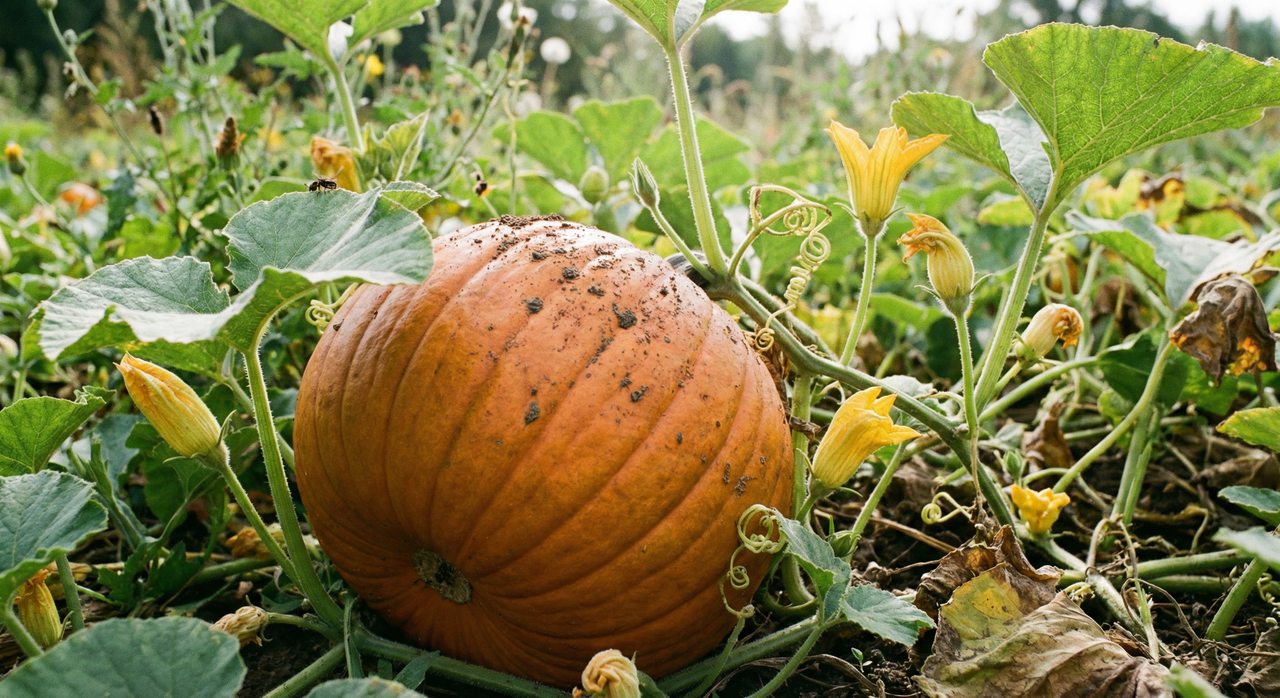
The first time I grew a large C. maxima cultivar in a Florida food forest, the vines hit 30 feet before I'd fully processed what was happening. That's not exaggeration: these plants trail from 10 to 40 feet, sending out angular, rough-hairy stems lined with branched tendrils that grab onto anything nearby.[11] I learned quickly that dedicated beds or serious trellising aren't optional. The leaves amplify the impression of scale, spanning 15 to 30 centimeters across with 5 to 7 palmate lobes and a rough, pubescent texture that scratches the back of your hand.[12] The flowers are trumpet-shaped, bright yellow to orange, and 3 to 6 inches across, with male and female blooms appearing on the same plant.[13]
The fruits themselves are botanically pepo-type berries, a fancy way of saying hard-rinded, fleshy, and wildly variable. Shape ranges from spherical to pear-shaped to turban, colors run from deep orange to blue-gray to pale tan, and weights typically land between 5 and 20 pounds, though competition growers push that ceiling far higher.[11] The most reliable field ID marker for C. maxima is the stem at fruit maturity: it's hard, dry, and distinctly five-angled, which sets it apart from the corky, ridged stems of C. pepo or the smooth stems of C. moschata.[14] Growing multiple species side by side makes these distinctions click: the silvery-pearly seeds of C. argyrosperma, the large bright white seeds of C. ficifolia, and the familiar pale tan flat seeds of C. maxima each tell you exactly what you're handling before the fruit is even open.[15][16]
Traditional and Cultural Uses Across the Americas
The Quechua and Aymara peoples of the Andes didn't just eat this plant; they shaped it over millennia into a nutritional staple, a medicine cabinet, and a storage system. Seeds served as anthelmintics to expel intestinal parasites, as diuretics for urinary complaints, and topically for skin conditions, while the dense flesh fed families through long winters.[17] Across the Americas more broadly, Cucurbita species carried deep ceremonial weight for the Maya, Aztec, Hopi, Iroquois, and many others, appearing in creation stories, harvest offerings, and fertility rituals.[18] The Three Sisters intercropping system, where squash grew alongside corn and beans, is perhaps the most sophisticated expression of that relationship: a resilient polyculture that sustained entire communities.[19] I've run my own version of Three Sisters guilds and the squash component delivers exactly what the original design promised: those huge leaves shade out competing vegetation and hold soil moisture in a way that makes the whole system more resilient.
Beyond food, dried shells became containers, vessels, and ceremonial objects, while seed uses as anthelmintics and treatments for prostate complaints, hypertension, and inflammation traveled with the plant through the Columbian Exchange into African, Asian, and Chinese traditional medicine systems.[20][21] Post-contact adoption reshaped cuisines from Italian tortellini fillings to Caribbean stews to Asian curries. The modern reckoning with that spread is ongoing: biopiracy through seed patents on hybrids derived from indigenous landraces, and the genetic erosion of traditional varieties, remain real concerns.[22][23] When I source seed, I prioritize vendors who credit indigenous origins and avoid patented hybrids derived from landraces. It feels like the minimum a grower can do.
Fun Facts and Cultural Legacy
Competition growers regularly push the species past a ton, with recent record-breakers outweighing two mature cows and shatter every previous record.[24][25] My personal best is nowhere near that, but I've come to appreciate that the same genetic capacity for rapid growth and enormous resource accumulation makes even ordinary garden varieties impressively productive and surprisingly resilient against pest pressure. The 50-pound maxima I hauled out of the garden last October still gave me pause.
The deeper wonder is that all five major domesticated Cucurbita species were developed entirely by indigenous peoples of the Americas, each refined over thousands of years for food, medicine, storage, and ceremony before a single European botanist ever described them.[26][27] The big yellow flowers that native bees swarm every morning in my garden, the edible blooms used in Mexican and Italian kitchens, the pepitas roasted for snacking or pressed into oil across cultures: none of that exists without 10,000 years of careful indigenous stewardship.[28] That lineage is worth remembering every time you pick up a seed packet.
Squash Varieties and Where to Buy Them
Notable Varieties of Cucurbita maxima and Related Species
Cucurbita maxima cultivars fall into five to six recognized horticultural groups: Hubbard, Buttercup, Turban, Sweet Dumpling, Sussex, and a few smaller subgroups depending on the taxonomy you follow.[29][30] Within that framework, a handful of cultivars stand out for home growers. Atlantic Giant is the one people grow on a dare, bred specifically for size and capable of exceeding 1,000 pounds under competition conditions.[31] I've grown it at community harvest events and the garden-grown results are impressive even without competition-level inputs, though nothing like what you see at the county fair. Blue Hubbard is my personal winter staple: those deep blue-grey, bell-shaped fruits store reliably for three to six months, and the flesh is dense, sweet, and fiber-free in a way that makes every soup feel worth the wait.[32] Buttercup produces smaller fruits with golden-orange flesh that's noticeably creamier and nuttier than anything you'd find in the supermarket pumpkin bin. Cinderella (Rouge Vif d'Etampes) brings that flat, ribbed, bright red-orange silhouette with aromatic nutty flesh and an earlier harvest than most maxima types.[33] The Hubbard group as a whole has been selected over generations for large size, long-keeping qualities, and rich flavor, and it earns that reputation.[34]
The related species give you real range. Cucurbita pepo covers zucchini, pattypan, and summer squash types, with standouts like Black Beauty (the classic dark green heirloom), Sunburst pattypan, disease-resistant Gold Rush, and mildew-tolerant Zephyr.[35][36] Cushaw (C. argyrosperma) is the one I wish more gardeners knew: crookneck fruits that mature to a pale yellowish-white with bright orange flesh, weighing four to six pounds, and storing up to three months with seeds worth saving for pepitas. Landrace types like Tepehuanes and Penca trace directly back to southern Mexico and Central America.[37] Butternut (C. moschata) rounds things out with familiar pear-shaped fruits averaging eight to twelve inches and two to five pounds; Waltham Butternut is the reliable workhorse, while Ponca pushes the nutty flavor harder.[38][39] Breeding across all these species is increasingly focused on heat and drought tolerance, which matters. My Central Florida summers have gotten hotter and I've started trialing newer heat-tolerant selections alongside the old standards just to see what holds up.
Sourcing Squash Seeds and Plants
Cucurbita maxima is widely grown across the US with no meaningful regulatory barriers for seed purchase domestically; general USDA APHIS phytosanitary rules apply to imports, and C. pepo imports require permits, but for most home gardeners shopping domestic suppliers it's straightforward.[40][41] Seed packets for maxima typically run $3.95 to $6.95, starter plants $6.50 to $12.00, with specialty heirlooms occasionally hitting $15.[42] Burpee, Johnny's Selected Seeds, Park Seed, Seed Savers Exchange, and Baker Creek all carry solid maxima selections.[43] For cushaw and heirloom moschata types, Baker Creek, Seed Savers Exchange, Southern Exposure, and Native Seeds/SEARCH are where I look first, with packets usually landing in the $3.50 to $5.00 range. Zucchini seed is cheaper still, typically $3 to $8 per packet, and transplants run $2.50 to $5.00.[44][45] I place my Baker Creek and Seed Savers Exchange orders every January to lock in organic, non-GMO seed before the popular varieties sell out. Starting from seed almost always beats buying transplants on both cost and variety selection, especially if you want anything beyond the four options sitting on the nursery bench in April.
How to Propagate and Plant Squash (Cucurbita maxima)
Squash is almost entirely propagated by seed, and that's honestly one of the things I love about it. No cuttings to coddle, no tissue culture to worry about. You start with a seed, you end up with a sprawling vine that feeds your whole neighborhood. But those seeds are worth understanding before you just drop them in the ground.
Understanding Squash Seeds: Size, Shape, and Polyembryony
Pick up a Cucurbita maxima seed and you'll notice it right away: large, flat, elliptical, pale yellow to light brown, anywhere from 1.5 to 2.5 cm long with a smooth hard coat and a prominent hilum along one edge.[46][47] 'Atlantic Giant' seeds lean toward the bigger end of that range; many European cultivars are noticeably smaller. If you've ever planted Cushaw (C. argyrosperma), you'll recognize a completely different look: silvery-gray, metallic-sheened seeds with a thin hull that sets them apart from the whole genus.[48]
Now here's the thing that surprised me the first time I grew 'Atlantic Giant': I sowed one seed and got three seedlings. That's polyembryony, a documented trait in C. maxima where a single seed can contain two to five or more embryos through a process called nucellar embryony.[49][50] It's not a bad batch of seeds. One zygotic embryo typically outcompetes the others and dominates, so you're usually fine just thinning to the strongest seedling. Don't let the extras confuse you.
Seed Storage, Viability, and Saving Your Own
Squash seeds are what seed librarians call orthodox, meaning they survive being dried down significantly without losing viability.[51] Store them at 5–8% moisture content in an airtight jar with silica gel desiccant, keep the temperature between 4 and 10°C, and you can reasonably expect viability to hold for three to ten years, with five years being a practical average.[52] I've pulled four-year-old squash seeds from jars in my seed cabinet and hit 80% germination without drama. Proper storage really does work. For long-term preservation, seed banks freeze at -18°C and report viability lasting twenty to fifty years, but your refrigerator with good desiccant is plenty for home use. Cushaw seeds are impressively durable too, with viability reported at 70% after fifteen years under good storage conditions.[53]
If you're saving seed from your own plants, know that C. maxima is insect-pollinated and happily outcrosses with other maxima varieties growing nearby.[54] To keep a variety true to type, you'll need either a quarter to half mile of isolation from other maxima plants, or hand-pollination with a bit of tape over the flowers.[55] F1 hybrid varieties won't breed true regardless, so save seed from open-pollinated cultivars only. When testing older seeds, the home-scale approach is straightforward: place ten seeds between damp paper towels at 20–30°C and check for germination at seven to fourteen days.[56] Commercial lots target above 85% germination with a floor of 60%.[57] If your home test comes in below that, sow more densely.
Grafting onto C. moschata rootstocks is worth knowing about: it boosts disease resistance and vigor with 80–95% success rates, but it requires precise humidity (80–95%), healing temperatures of 25–30°C, and grafting at the one-to-two true-leaf stage, which is ten to fourteen days after sowing.[58][59] For most home growers, direct seed sowing is simpler and entirely sufficient.
Germination Timeline and Temperature Requirements
Cucurbita maxima is an annual with an 85–120 day seed-to-mature-fruit window depending on cultivar: early types come in around 85 days, large winter types and pumpkins take the full 110–120.[60][61] Germination itself takes 7–10 days in warm soil, stretching to 14 days if conditions are marginal.[62] Soil temperature is the real gating factor: 70–95°F (21–35°C) is the sweet spot, with germination slowing sharply below 60°F (15°C).[63] I keep a cheap soil thermometer in the garden specifically for this. The air temperature might feel warm and fine in late March, but the soil is often still sitting in the mid-60s, and rushed squash seeds will just rot. I wait until that thermometer consistently reads 70°F before I direct-sow.
For timing, direct-sow after the last frost date or start transplants indoors three to four weeks earlier.[62] Sow seeds half an inch to two inches deep; pre-soaking for 12–24 hours can improve germination speed and uniformity. The contrast with summer squash is stark and useful for planning successions: zucchini (C. pepo) starts producing in 45–60 days,[64] which is why it can overwhelm a kitchen by July while your pumpkins are still sizing up. If you want both, stagger plantings accordingly.
Soil, Site Selection, and Site Preparation
Before I do anything else in a new squash bed, I get a soil test. I've seen calcium lockout from low pH cause what looked like blossom-end rot disappear entirely the following season once I corrected the pH, and it taught me not to guess. Squash wants well-drained fertile loam or sandy loam with 3–5% organic matter and a pH between 6.0 and 6.8, though it tolerates a wider range of 5.5–7.5.[61][65] Drop below 6.0 and you risk aluminum toxicity plus phosphorus, calcium, and magnesium lockout; push above 7.0 and iron, manganese, and zinc deficiencies appear as interveinal chlorosis. C. argyrosperma and C. ficifolia share this same tolerance band, so the principle holds across the genus.[66]
The roots need depth. A taproot reaching 18–36 inches is normal, so squash genuinely hates compacted ground. Compaction above 1.4–1.5 g/cm³ bulk density can reduce yield by 20–40%.[67] If your soil stays soggy or packs hard, build up raised mounds at least 12 inches tall rather than fighting the drainage problem all season. Full sun is non-negotiable: six to eight or more hours of direct light for fruiting plants.[68] In gardens where summer temperatures push past 90°F, some afternoon shade cloth can prevent leaf scorch and fruit sunscald, but chronic shade will cut fruit size by up to 30% and opens the door to powdery mildew.[69]
Planting Methods, Spacing, and Technique
A vining C. maxima pumpkin spreads 10–20 feet in every direction. That's not a typo. Standard spacing runs 36–72 inches between plants in rows 6–8 feet apart.[61] The traditional hill method works well at home: make hills 4–8 feet apart, sow three to four seeds per hill, then thin to two plants once true leaves appear.[70] Hills improve drainage and warm up faster than flat ground, both of which favor germination.
If space is tight, trellising on cattle panel or sturdy wire allows vertical growth to 6–10 feet and compresses in-row spacing to 12–24 inches with 4–6 foot rows. I've grown 'Big Max' on cattle panel and still needed five feet between plants to keep air moving. Adequate spacing reduces powdery mildew pressure significantly, and commercial growers work at roughly 1,000–2,000 plants per acre with that airflow goal in mind.[71][72] Bush and compact types can get away with 24–36 inches between plants, which is why I can fit a zucchini into the same bed where a pumpkin vine would consume the whole garden. The rule of thumb: match your spacing to your variety's vigor, your soil fertility, and how seriously you take mildew prevention.
Squash Care Guide: Growing Cucurbita maxima Successfully
Cucurbita maxima is not a low-maintenance plant, and I say that with deep affection. It's a sprawling, sun-hungry, nutrient-guzzling vine that will reward you with spectacular fruit if you match its care to its biology. Once you understand what the plant requires at each stage of its life, the whole season starts to feel logical rather than reactive.
Sunlight Requirements for Healthy Squash Vines
Start with the non-negotiable: squash requires a warm location sheltered from strong wind.[63] In my experience, anything less than six solid hours and the vines stretch toward light, produce fewer female flowers, and fruit set drops noticeably. Site selection is the single decision that most influences everything downstream, so don't compromise here.
Water Needs and Irrigation Best Practices
Early in my squash-growing years I overwatered consistently. The leaves yellowed, stems went soft and mushy, and I lost two vines to root rot before I understood what was happening.[73][66] The shift to deep, infrequent watering changed everything. Squash wants 1 to 2 inches per week, bumped to 1.5 to 2 inches during flowering and fruit set, delivered to a depth of 8 to 12 inches to encourage strong, drought-resilient roots.[61][63] Once established, the plant tolerates some drought, but it's genuinely sensitive at flowering and fruit development; soil moisture should stay in that 60 to 80 percent field capacity range.[12]
If you see afternoon wilting on a hot day and the soil is dry six inches down, water deeply. If leaves are yellowing and stems feel soft in wet soil, pull back and let things dry out. Afternoon wilting on a cool-enough day with wet soil is usually root rot in progress. Drip irrigation is my strong preference here; keeping foliage dry from the start prevents most of the fungal pressure that plagues squash in humid climates.[72][74]
Feeding and Soil Fertility for Heavy-Feeding Squash
Squash earns its reputation as a heavy feeder. It needs high levels of nitrogen, phosphorus, and potassium across the season, with a pH sweet spot of 6.0 to 6.8, ideally 6.2 to 6.5.[75][76] I always start with a soil test before planting; it takes the guesswork out of what to add and how much.
The general pre-plant framework is 2 to 4 lbs nitrogen, 4 to 8 lbs P2O5, and 4 to 8 lbs K2O per 1,000 square feet, applied in thirds: one-third at planting, one-third at flowering, and one-third at fruit set.[77][78][79] During the vegetative push I use a balanced or slightly nitrogen-forward formula like 10-10-10; once fruits are setting I shift to something like 5-10-10 to push potassium toward skin development and storage quality. I use leaf color as my early warning system. Yellowing on older leaves mid-season means nitrogen is running low; I'll side-dress and confirm with a soil test, but the visual cue has saved many vines.[80][81] Purplish leaves flag phosphorus stress; marginal necrosis on older leaves points to potassium. On sandy soils, watch for boron deficiency.
Organically, I start every squash bed with 2 to 4 inches of finished compost worked in before planting.[82][83] Blood meal handles nitrogen side-dressing; rock phosphate and wood ash cover the other two. One caution: too much nitrogen produces beautiful, lush vines with very few flowers. The plant is putting all its energy into leaves, not fruit.
Frost Tolerance and Cold Protection Strategies
Squash has essentially zero frost tolerance. Damage begins at 32°F (0°C), showing up as water-soaked, limp, darkened leaves with blackened margins.[84][85][86] Mature fruits can sometimes tolerate a brief dip to 28 to 30°F, but young plants and seedlings are the most vulnerable part of the equation. Seeds won't even germinate below 60°F, with the real sweet spot being 70 to 95°F; the whole vine needs a frost-free window of 90 to 120 days to complete its lifecycle.[87][63]
In Central Florida's variable springs I start all my squash indoors, three to four weeks before the last expected frost date, and I don't transplant until nights stay reliably above 50°F.[88][63] Floating row covers give 4 to 8 degrees of protection during unexpected cool snaps, and black plastic mulch warms the soil meaningfully before transplanting. In cooler zones, these tools aren't optional; they're the difference between a full harvest and a vine that stalls and sulks.
Heat Tolerance and Summer Stress Management
Cucurbita maxima performs best between 70 and 85°F with nights above 50°F.[89] Once temperatures push past 86 to 90°F, problems stack up fast: wilting, blossom drop, pollen sterility, and sunscald all begin to compound. Prolonged heat stress can cut yields by 50 to 70 percent, and the damage happens mostly during the reproductive stage when flowers and newly set fruit are most vulnerable.[90][91]
I've grown 'Atlantic Giant' and 'Big Max' side by side through Central Florida summers and found both maintain better fruit set above 90°F than many standard varieties.[92][93] If your summers run consistently brutal, C. moschata types like Waltham Butternut tend to show even greater heat adaptation as a genus-wide pattern worth knowing. For C. maxima specifically, a 30 to 50 percent shade cloth during peak heat lowers canopy temperature by 3 to 5°C and can increase yields 15 to 20 percent in my experience.[66] Combine that with 2 to 4 inches of organic mulch, which cools soil by 2 to 4°C, drip irrigation applied in the morning, and wider spacing of 4 to 6 feet between plants for better airflow.[94][95] Mulching isn't optional in a hot, humid climate. I treat it as foundational.
Pruning, Training, and Seasonal Maintenance
Left entirely to their own devices, squash vines sprawl 10 to 20 feet in every direction and create the kind of dense canopy that invites fungal disease. Training vines radially outward from planting hills, or up sturdy 6 to 8 foot trellises, opens the canopy, improves airflow, and makes everything easier to monitor.[96][78] I learned the trellis lesson the hard way: I once lost a 25-pound 'Big Max' when the vine snapped under the fruit's weight. Now I make slings from old T-shirts for any fruit growing vertically, and I haven't lost one since.
Removing excess side shoots, lower leaves, and overcrowded vines cuts powdery mildew risk by up to 30 percent.[97] Thin fruits to 1 to 4 per plant to redirect energy toward size and quality rather than quantity.[98] In areas with low bee activity, hand-pollinating by transferring pollen from male to female flowers can increase fruit set by 20 to 50 percent.[99][100] Early, shallow cultivation followed by mulching handles weed pressure before the canopy closes in; unchecked weeds can cause up to 50 percent yield loss, and the mulch does double duty for moisture and temperature.[101][63]
Seasonal Rhythm and Lifecycle of Squash
Cucurbita maxima is a committed annual with a 4 to 5 month lifecycle from seed to harvest. The first 4 to 8 weeks are all vegetative growth as vines push out 10 to 20 feet; male flowers appear first around 45 to 60 days, with females following shortly after. Fruit sets 5 to 10 days after successful pollination, and harvest comes at 80 to 120 days depending on the cultivar, timed to beat the first frost.[34][72]
The rhythm I follow each year: indoor start in late winter, transplant after the last frost date once soil hits 70°F, heavy balanced feeding through vegetative growth, then a shift to lower-nitrogen higher-potassium feeding once fruits are sizing up. In USDA zones 3 to 5, black plastic mulch and row covers extend the usable season at both ends.[102][101] In warmer climates, the long frost-free window aligns naturally with what the plant needs; the challenge shifts from season extension to heat management rather than cold protection.[3] Understanding that lifecycle as a single arc, rather than a list of disconnected tasks, makes every watering, feeding, and pruning decision feel purposeful rather than reactive.
When and How to Harvest Squash (Cucurbita maxima)
Growing winter squash requires a particular kind of patience. The window from pollination to full physiological maturity runs anywhere from 45 to 90 days depending on the variety.[98][103][104] That long arc makes the harvest moment matter. Get it right and you've got a sweet, dense keeper that will feed you through winter. Rush it, and you end up with bland, short-lived fruit that rots before January.
Timing and Ripeness Indicators for Winter Squash
In my experience, the signs of a ready C. maxima become unmistakable after a few seasons. The rind deepens to a full, even color, the skin goes from slightly waxy to almost matte, and the stem dries and shrivels where it connects to the vine. Most importantly, the rind resists your thumbnail. That's the test I do every fall: press your nail firmly into the skin, and if it leaves a mark without resistance, the fruit needs more time. A truly ripe squash just doesn't give.[105][106][107] Inside, the seeds should be fully developed and dark. Aim for early fall harvest, September through October, always before the first hard frost closes in.
Ripeness also matters for flavor. A properly mature fruit carries higher sugar content and none of the astringency you get from an immature one.[108][109] Those visual and tactile cues aren't arbitrary checkboxes; they're the plant telling you the sugars have finished accumulating.
Harvest Technique and Post-Harvest Curing
When you're ready to cut, use a sharp knife or pruners and leave at least two to four inches of stem attached to the fruit.[98][63][110] I learned the hard way that a short or broken stem is basically an open door for rot, and a fruit you spent four months growing can collapse in two weeks on the shelf. Handle the fruits gently; any skin damage will shorten storage life significantly.
After harvest comes curing, and I can't overstate how much it matters. The goal is 10 to 14 days at 80 to 85°F with good airflow and 85 to 95% relative humidity.[111][112][113][114] I've cured squash on a covered porch and in my garage, and the porch wins every time when temperatures cooperate: consistent warmth plus natural airflow produces a noticeably harder rind and, later in the season when I roast those fruits, a deeper caramel sweetness that skipped-curing squash never quite achieves. The curing process heals any small nicks, hardens the skin further, and sets the fruit up for long-term storage. Once cured, move everything to a cool, dry spot around 50 to 55°F with moderate humidity and good air circulation.[111][110][98]
Compare this to the rhythm of summer squash and the difference is almost comedic. Zucchini demands you check the garden every two to three days, harvesting fruits at six to eight inches before they balloon into baseball bats.[115][116] Winter squash is the opposite: one deliberate cut in October, then months of patience rewarded.
Yield, Flavor Development, and Storage
A healthy C. maxima vine can produce fruits ranging from 8 to 40 pounds depending on cultivar, and the flesh carries 8 to 12% sugar content alongside nutty, earthy undertones and a mild umami quality from naturally occurring glutamates.[117][118][119] Domesticated varieties carry very low levels of cucurbitacins, so bitterness isn't something most home growers ever encounter. If you do taste something sharp and bitter, discard the fruit immediately to avoid cucurbitacin toxicity.
Flavor transformation is part of what makes this species so satisfying to grow. Raw flesh has a green, vegetal, almost cucumber-like aroma.[120][121] Roasting changes everything: Maillard reactions caramelize the sugars, and those grassy notes disappear entirely into something warm, nutty, and rich.[122][123] The high dry-matter content gives the cooked flesh a firmer, more substantial texture than any summer squash can offer.[124] The seeds are edible too, worth roasting alongside the flesh for a pepita-style snack.[125]
Properly cured and stored, a well-grown Hubbard-type maxima will still be sweet and firm in March if you keep temperatures in that 50 to 55°F range. C. maxima's thicker rind gives it a genuine advantage over C. pepo types in long-term storage,[111][110] which is why I grow it specifically for the pantry rather than immediate eating. The squash you roast in February will taste noticeably better than anything you buy at a grocery store in December, and that gap comes directly from harvest timing and curing done right.
Squash (Cucurbita maxima) Preparation and Uses
Culinary Uses and Flavor Profile of Squash
Most gardeners think of squash as a fruit crop and stop there, but the plant offers a full larder if you know where to look. The flesh and seeds are obvious, but male flowers, young leaves, and even tender shoot tips are all edible.[63][12] I harvest male flowers in the early morning before they fully open, when the petals are still cupped and the texture is at its most delicate. Taking just a handful per plant keeps fruit set on track, and they're spectacular stuffed with ricotta and fried or tucked into a quesadilla.[63][126]
The flesh itself starts dense and faintly vegetal when raw, then transforms completely under heat into something creamy, sweet, and faintly nutty.[127] Roasting at high heat coaxes the most flavor out of properly cured fruit; the caramelization at the cut edges does something no other cooking method quite replicates. For sweet preparations, nutmeg, cinnamon, ginger, and cloves are the classic allies, while savory dishes lean on garlic, hardy herbs, and aged cheeses.[128] Beyond the obvious pies and roasted sides, the thick flesh holds up beautifully in long-simmered soups, and dehydrated and ground into flour it adds sweetness and body to baked goods.[129] Lacto-fermented squash is underrated and worth experimenting with if you have a glut.
Seeds deserve their own moment. Home-roasted pepitas from a freshly harvested C. maxima have a richer, nuttier flavor than anything I've bought in a store; the difference is noticeable enough that I now save seeds specifically for eating, not just replanting. In Mexican and Central American kitchens they're essential in pipian and mole.[126] Related species follow similar patterns: butternut (C. moschata) processes well into seed oil, and cushaw (C. argyrosperma) produces especially large, hull-less seeds prized for their oil content.[130][131]
One safety note that applies across the entire genus: bitterness is a warning sign. Cucurbitacins can accumulate in stressed or wild plants, and fruits from species like C. foetidissima can be toxic.[132][133] In my years growing multiple Cucurbita species, I've found that any fruit that tastes noticeably bitter is best discarded. I always taste a small raw piece before committing a whole fruit to a large batch, especially after a drought season when I've noticed the occasional sharp bitterness in my own garden that simply wasn't there in wetter years.
Medicinal Preparations from Squash
Traditional seed-based preparations have a long ethnobotanical record across the Americas and Europe. Ground seeds, seed decoctions made by simmering seeds in water, and cold-pressed seed oil are the three main forms.[134] Traditional dosages for antiparasitic use have ranged from 10 to 30 grams of ground seeds or a comparable decoction; seed oil for prostate support has traditionally been used at around one to two teaspoons daily, with related species showing similar ranges in ethobotanical documentation.[135] These figures come from traditional practice rather than clinical prescription, and anyone managing a health condition should work with a qualified practitioner rather than dosing from a plant profile.
Non-Food and Traditional Uses
Before squash was a kitchen staple, the dried shells were tools. Hollowed and cured gourds served as water vessels, bowls, storage containers, rattles, and decorative objects in pre-Columbian societies.[136] Seeds, leaves, roots, and fruit have also appeared in traditional medicine across cultures for skin conditions, digestive complaints, liver support, inflammation, and urinary tract health.[137][138] I've used dried gourds as winter birdhouses and, honestly, as rattles with my grandchildren. There's something grounding about that continuity. The permaculture ethic of nothing wasted maps onto this plant almost perfectly: vines break down into mulch, surplus fruit feeds livestock, shells become vessels, seeds become medicine.[139] Few plants in the garden carry that kind of depth from root to rind.
Squash Health Benefits and Medicinal Uses
Every time I slice open a deep-orange Cucurbita maxima that's been curing on my porch, I'm struck by how much knowledge is packed into a single fruit. Indigenous communities across the Americas, Mesoamerica, Asia, and Africa figured out most of what researchers are now confirming in labs: that squash, in its many forms, genuinely supports human health. The flesh feeds you, the seeds protect you, and the whole plant has been doing both for thousands of years.
Traditional Medicinal Uses and Modern Research
Native American healers incorporated the plant into their pharmacopeia long before clinical trials existed, and parallel traditions in Mayan, Latin American, Asian, and African medicine document its use for diabetes, inflammation, urinary tract infections, intestinal parasites, and prostate complaints.[140][141][142] That kind of cross-cultural convergence isn't coincidence; it's accumulated observation.
The strongest clinical evidence sits squarely with the seeds. Cucurbita maxima seed extracts inhibit 5-alpha-reductase, the enzyme implicated in benign prostatic hyperplasia, and human trials with pumpkin seed oil at 320-500 mg per day show roughly a 30% reduction in IPSS urinary symptom scores.[143][144][145] I keep a jar of roasted pepitas in my kitchen for snacking, partly because they taste great and partly because, after reading this research, it felt like a sensible habit to pass along to the men in my household. The prostate data is real and unusually well-supported for a food crop.
Beyond prostate health, polysaccharides from pumpkin flesh activate AMPK and PPARγ pathways to improve glucose uptake, and genus-wide alpha-glucosidase inhibition has been documented in animal models; Cucurbita ficifolia fruit decoctions have been used in Mexican folk medicine specifically for blood glucose management.[146][147][148] Cucurbitacins show anticancer potential through JAK-STAT pathway targeting and caspase-mediated apoptosis in cell-line studies,[149][150] and ethanolic extracts of C. maxima demonstrate anti-inflammatory and analgesic effects in animal models comparable to aspirin, with inhibition of TNF-α, COX-2, and NF-κB pathways across the genus.[151][152] Extracts also show antimicrobial activity against E. coli, Staphylococcus aureus, and Candida albicans, which helps explain traditional wound-healing applications.[153][154]
I want to be honest about the evidence landscape here, because I think overclaiming does more harm than good. Most of this research is preclinical, and bioactivity varies significantly by cultivar, plant part, growing conditions, and extraction method.[155][156] The BPH seed oil data is the exception: that's where human trials have actually been run. Everything else is promising but warrants cautious optimism rather than therapeutic claims.
Nutritional Profile of Squash and Its Seeds
Cooked Cucurbita maxima pulp clocks in at around 20 calories per 100 grams, with 4.9 grams of carbohydrate, 1.5 grams of fiber, 177 mg of potassium, and 369 μg RAE of vitamin A driven by an impressive 3,690 μg of beta-carotene.[157][158] Growing C. maxima under Florida's brutal summer sun, I watch the flesh shift from pale yellow to deep burnished orange as the fruit matures; that color change is essentially a visual confirmation of beta-carotene accumulating in real time.
Butternut (C. moschata) pushes even harder on vitamin A, delivering over 450% of the daily value per cooked cup alongside 582 mg of potassium per cup, while zucchini (C. pepo) trades the provitamin A for higher vitamin C and more modest carotenoid content.[159][160] The seeds are a different category entirely: roughly 30 grams of protein, 40-50 grams of unsaturated fat, significant fiber, and 262-535 mg of magnesium per 100 grams, with a 28-gram serving of roasted seeds coming in around 150-160 calories.[161][162] That magnesium and zinc density is why I think the cold-and-flu-season seed-snacking habit in my house has actual nutritional legs, not just family tradition.
The flesh also contains polyphenols in the 50-200 mg GAE per 100 gram range, including chlorogenic and ferulic acids, with antioxidant capacity of 10-30 μmol TE per gram, largely driven by carotenoids.[163][164] Cooking method matters more than most people realize: boiling leaches 50-70% of vitamin C while steaming retains over 90%, but heat actually improves beta-carotene bioavailability by breaking down cell walls.[165][166] I roast rather than boil almost every time, because the trade-off favors carotenoid uptake and honestly the flavor is better anyway.
Key Phytochemicals and Their Roles
Cucurbita maxima contains a dense phytochemical profile: cucurbitacins, chlorogenic and ferulic acids, quercetin, kaempferol, rutin, beta-carotene, lutein, polysaccharides, beta-sitosterol, saponins, and polyunsaturated fatty acids.[167][168] Each of these earns its mention because each links to a distinct biological mechanism rather than simply adding to a list.
Cucurbitacins deserve particular attention because they play two very different roles depending on context. They're defense compounds concentrated in leaves, stems, roots, and immature fruit; in mature, domesticated flesh their levels drop to safe ranges, but stressed or wild plants can carry dramatically higher concentrations.[169][170] Those same compounds contribute to anti-inflammatory, anticancer, and anthelmintic activity in the research literature, which is a good reminder that the line between medicine and toxin is often just dose and context.
Cultivation choices measurably shift phytochemical outcomes. Nitrogen fertilization timing, irrigation regime, harvest maturity, and environmental stress all influence secondary metabolite concentrations; organic or carefully stress-managed crops can yield higher carotenoid and phenolic levels.[171][172] After experimenting with different irrigation schedules in my Central Florida garden, I've noticed that fruit from vines experiencing mild drought stress during the final ripening weeks tends to show deeper flesh color and a more complex aroma when cut. That's not just aesthetics; it's the plant concentrating its secondary metabolites. Across the genus, polysaccharides drive antidiabetic effects, flavonoids and phenolics power antioxidant and anti-inflammatory activity, and seed-specific cucurbitin contributes to the traditional anthelmintic action; Cucurbita ficifolia shows particularly strong preclinical hypoglycemic effects.[173][174]
Safety Considerations for Culinary and Medicinal Use
After years of growing, harvesting, and eating Cucurbita maxima, I can say with confidence that properly grown, fully ripe squash from cultivated varieties is reliably safe for people, pets, and livestock.[175][176] The bitterness test has kept my family safe every single time, and it's the one rule I share with every new gardener who asks me about squash.
Cucurbitacins are heat-stable, meaning cooking doesn't neutralize them, and concentrations can spike up to tenfold in stressed, immature, or wild fruit.[177][178] If a piece of squash tastes even slightly bitter, discard the entire fruit immediately. Toxic squash syndrome causes rapid-onset nausea, vomiting, abdominal cramping, and diarrhea that typically resolves within 24-48 hours with hydration, and no fatalities have been reported from cultivated varieties.[179] I once rogued out a volunteer seedling that had come up from a cross near my compost pile; the first bite was unmistakably wrong, and I didn't need the science to tell me to spit it out. That instinct is the right one.
A few specific populations should exercise additional caution. Large medicinal doses of seed extracts should be avoided during pregnancy due to insufficient safety data and possible uterine stimulant effects; people on antidiabetic medications should monitor for additive hypoglycemic effects, and some theoretical concern exists around anticoagulants given the plant's vitamin K content.[180][181] Rare oral allergy syndrome occurs in pollen-sensitive individuals, and fresh sap can cause mild contact dermatitis in sensitive skin.[182] For home growers concerned about residues on commercial fruit, thorough washing and peeling reduce pesticide levels by up to 80%, though residues on commercial squash generally fall below safety thresholds anyway.[183] Livestock are more susceptible than humans to cucurbitacin toxicity from stressed vines or wild relatives, occasionally resulting in hemolytic anemia or colic, so keep troubled or crossbred vines away from grazing animals.[184]
Pests and Diseases of Squash (Cucurbita maxima)
If you've grown butternut and pumpkin side by side in the same bed, you already know what the research confirms: Cucurbita maxima sits a notch below C. moschata in overall pest and disease resistance, roughly comparable to or slightly behind zucchini.[185][186] My butternuts would sail through a summer with barely a glance from me while the pumpkins needed actual attention. That gap is worth understanding before you plant, because it shapes every decision that follows.
Common Insect Pests and Resistance Profiles
Squash bugs are the first thing most growers notice. C. maxima has moderate resistance through its waxy cuticle and cucurbitacin content, and certain cultivars like Blue Hubbard resist feeding by up to 50% more than susceptible lines.[187][188] That tougher rind and higher cucurbitacin load in Hubbard and Buttercup types actively discourages feeding, which is why those cultivars earn a place in most of my plantings even when I'm not growing for storage.[189] The bigger vulnerabilities are squash vine borers and cucumber beetles, where the species shows high susceptibility, and aphids at moderate levels.[190][191]
Vine borers ended an entire row of mine one humid July before I got systematic about prevention. The resistance these plants do have through trichomes, tough stems, and chemical defenses is real but quantitative; environmental stress like drought or high humidity can erode it by up to 30%.[192][193] No cultivar is immune, and the same variety can perform very differently depending on the year.[194]
Major Diseases and Environmental Influences
C. maxima has a mixed disease record. Some cultivars, including Buttercup and certain Kabocha types, show moderate powdery mildew resistance, and a few lines handle Fusarium reasonably well.[195] The serious threats are downy mildew, Phytophthora blight, bacterial wilt, and viruses like CMV, ZYMV, and WMV.[196][197] Powdery mildew (Podosphaera xanthii) thrives between 68 and 86°F at moderate humidity and weakens plants without usually killing them; downy mildew is nastier, preferring cooler, wetter conditions above 80% relative humidity and capable of devastating defoliation fast.[198][199] Bacterial wilt, vectored by cucumber beetles, can kill a plant outright in days once established, which is one reason beetle management matters beyond the feeding damage alone.[200]
Soil drainage is where I've seen the starkest difference in my own beds. Plants sited in low spots with compacted subsoil show early wilting and crown collapse that the better-drained beds almost never develop; that's Phytophthora doing its work.[201][202] Blossom end rot is another one that caught me off guard early on; it's physiological rather than pathogenic, driven by inconsistent watering disrupting calcium uptake, and it appears suddenly after an erratic dry spell followed by heavy irrigation.[203] Consistent deep watering is the fix, not a spray.
Integrated Pest and Disease Management Strategies
The cultural toolkit is where permaculture growers have a real advantage. A 3 to 4 year rotation away from cucurbit hosts, proper spacing of 24 to 36 inches within rows and 48 to 96 inches between rows for airflow, drip irrigation that keeps foliage dry, and prompt removal of infected debris address the majority of issues before they escalate.[204][205] Row covers until flowering protect young plants from both beetles and borers; I pull them the moment I see the first female flower because the pollinators need access from that point forward.[206]
Monitoring with concrete thresholds keeps intervention targeted. Act on cucumber beetles at 1 per plant or 5 to 10% defoliation; squash bugs at 5 or more egg masses per leaf or 2 nymphs per plant; vine borers at 5 to 10 moths per trap per week or visible entry holes on 5% of stems.[207][208] I check the base of stems every few days in early summer specifically for borer entry holes; catching one early means I can surgically remove the larva rather than lose the vine. When controls are needed, Bt works for borers and neem oil for squash bugs, minimizing the chemical footprint.[209] Start with a resistant cultivar, rotate, space generously, and scout weekly; that combination handles most of what C. maxima faces even in challenging humid summers.
Squash in Permaculture Design
Pumpkin (Cucurbita maxima) evolved in the Andean highlands of South America,[3][210] where it learned to sprawl. That origin story matters in the garden, because a plant shaped by open Andean slopes doesn't stop at the edge of your bed. Those vines spread 10 to 20 feet and form dense, overlapping mats that shade out weeds, hold moisture in the soil, slow erosion, and knit bare ground together within a few weeks of transplanting.[211][212] I've watched a transplanted pumpkin seedling turn a weedy, sun-baked patch into something resembling a cool green carpet in under a month. It's one of those plant behaviors that makes a permaculturist smile.
Below the surface, the roots go down 3 to 4 feet, pulling up potassium, phosphorus, and other subsoil minerals that shallower plants can't reach. Squash doesn't fix nitrogen the way beans do, but it acts as a partial dynamic accumulator, and when the vines die back and decompose, they feed microbial communities and improve soil structure in ways I can literally see the following spring: better tilth, more earthworms, a darker, crumblier top layer.[211][213] My practice now is to chop and drop the spent vines directly onto the beds rather than hauling them to a compost pile. The biomass stays where it was made, and the beds repay you for it.
Ecological Functions and Guild Roles
The flowers are where things get genuinely exciting. Squash is monoecious, meaning male and female flowers appear on the same plant but separately, and it's protandrous, so male flowers open first to encourage outcrossing with other plants.[214][215] The specialist pollinators are squash bees (Peponapis and Xenoglossa spp.), and if you've never watched them work, set your alarm early. They're foraging at dawn, well before honeybees show up, and I'm convinced that early-morning surge is a big part of why fruit set in my pesticide-free beds consistently outperforms neighbors who spray. Bee-mediated pollination can increase fruit set by 50 to 80 percent under good conditions, optimal being 70 to 85°F with moderate humidity and calm, sunny weather.[216][217] Protecting that pollinator community is not optional; it's infrastructure.
The ecological design that best captures what squash does is the Three Sisters guild, where corn provides vertical structure, beans fix the nitrogen that squash can't, and squash carpets the ground beneath both, suppressing weeds and locking in moisture.[218][219] Each plant does what the others can't, and the system produces food with remarkably little external input. For companion planting beyond the classic trio, sunflowers, borage, nasturtiums, dill, and marigolds all attract pollinators and help deter pests.[220][221] I learned the hard way to keep potatoes out of the mix; my first attempt at a mixed bed produced a squash-bug population I'd rather forget. Nasturtiums and marigolds as living borders, combined with rotating the squash family to a new bed every three to four years, keeps disease pressure from compounding.[222][213] The vines also generate impressive biomass, up to 20 to 30 tonnes per hectare for productive species, that feeds the soil food web and sequesters carbon when managed well.[223][224]
Forest Layer Placement and Companion Planting
In food forest design, Cucurbita maxima sits in the herbaceous ground-cover layer, threading its 10 to 20-foot vines beneath fruit trees and shrubs without competing seriously for light once it's established.[225][226] I've found it behaves a lot like sweet potato vine in that role: sprawling, cooling the soil beneath it, and discouraging weeds while producing something edible at the end. The difference is that pumpkin wants more space and will remind you forcefully if it doesn't get it. I give the vines at least 12 to 15 feet of run, or I train them vertically on sturdy trellises when I'm working in a tighter system.
Pairing with nitrogen-fixing legumes is the obvious move, and clover as a living groundcover beneath the vine canopy works beautifully alongside bean companions.[227][228] Cushaw squash (C. argyrosperma) brings an additional layer of usefulness at forest edges, with vines that can reach 20 to 50 feet and a moderate shade tolerance, plus mycorrhizal associations that improve nutrient uptake in lower-fertility soils.[229][230] Zucchini (C. pepo) is worth a candid word here: its broad leaves and potentially allelopathic compounds can crowd out smaller understory plants in tight spaces,[231][232] so it functions best as ground cover where it has genuine room to spread rather than in a densely planted guild where diversity matters.
Climate Adaptability and Zone Considerations
Cucurbita maxima grows across USDA zones 3 to 11, but that range comes with a firm requirement: a frost-free window of 80 to 120 days, and genuinely productive growth concentrated in zones 5 to 9.[233][63] Young plants and ripe fruit both suffer frost damage below 32°F, so the season's bookends are non-negotiable. The sweet spot for daytime temperatures is 70 to 85°F with nights staying between 55 and 70°F; growth slows noticeably below 50°F, and heat stress above 90 to 95°F can disrupt pollination and reduce fruit set.[72][234]
Humidity is where I see a lot of gardeners get tripped up. Relative humidity of 60 to 80 percent supports good growth, but once it climbs above 70 percent with poor airflow, powdery mildew becomes almost inevitable.[235][236] In my experience, ensuring 2 to 3 feet of airflow between plants and avoiding overhead watering after fruit set cuts mildew pressure far more effectively than any single resistant variety alone. In cooler zones 3 to 5, starting seeds indoors 3 to 4 weeks before the last frost date and using row covers or black plastic mulch to warm the soil buys critical time.[98][61] At the other end, zones 9 to 11 call for afternoon shade or early-maturing varieties to dodge the worst summer heat. Butternut (C. moschata) and cushaw (C. argyrosperma) handle heat and humidity better than pumpkin in those southern gardens, while zucchini (C. pepo) matures in just 45 to 70 days, making it the reliable choice where the growing window is short.[46][237] Whichever species fits your climate, rotating beds every three to four years keeps the soil-borne disease load manageable and the system genuinely productive over time.
The Vine That Taught Me to Wait
I've rushed squash exactly once. Pulled a Hubbard too early, ate it anyway, and spent the whole meal thinking about what it could have been with two more weeks on the vine and a proper cure in the barn. That patience it demands, the way it just sits there getting better while you're tempted to harvest, is something I've tried to carry into the rest of my garden. Not every plant teaches you something about yourself, but squash has a way of insisting on it.
Sources 237
- Cucurbita maxima in the south-central Andes: an updated review of the archaeobotanical evidence ↩
- Guinness World Records: Heaviest Pumpkin ↩
- Cucurbita maxima - Wikipedia ↩
- The Squash, the Fire and the Internet: New Insights into the Domestication of Cucurbita maxima ↩
- USDA PLANTS Database ↩
- The Domestication of Cucurbita pepo ↩
- The Domestication of Squash (Cucurbita spp.) ↩
- Flora of North America: Cucurbita ficifolia ↩
- Cucurbita maxima Production Guide ↩
- Introduction of New World Crops to Europe After 1492 ↩
- Cucurbita maxima - Missouri Botanical Garden ↩
- Cucurbita maxima - USDA PLANTS Database ↩
- Pumpkin Flowers - University of Minnesota Extension ↩
- Cucurbita maxima Duchesne ↩
- Identification of Cucurbita Species ↩
- Cucurbita argyrosperma ↩
- The Ethnobotany of Cucurbita in South America ↩
- Cultural Significance of Pumpkins in Native American Rituals ↩
- Native American Agriculture: The Three Sisters ↩
- Ethnobotany of Squash in the Americas ↩
- Pumpkin Seeds in Chinese Traditional Medicine ↩
- Cultural Appropriation in Agriculture: Indigenous Perspectives ↩
- Sustainability Challenges in Squash Cultivation ↩
- Guinness World Records - Heaviest Pumpkin 2023 ↩
- Smithsonian Magazine - Travis Gienger World Record Pumpkin ↩
- Cucurbita maxima: Origin and Domestication ↩
- Native American Ethnobotany Database ↩
- Ethnobotany of the Cucurbitaceae ↩
- Cucurbita maxima at Missouri Botanical Garden ↩
- Winter Squash Types at University of Wisconsin Horticulture ↩
- Growing Giant Pumpkins: Atlantic Giant Variety ↩
- Hubbard Squash Varieties ↩
- Cucurbita maxima at Missouri Botanical Garden ↩
- U.S. Department of Agriculture (USDA): Cucurbita maxima ↩
- The Cucurbita pepo complex: How many species would there be if we really wanted to know? ↩
- Zucchini Varieties Guide - University of California Agriculture Extension ↩
- Cucurbita argyrosperma ssp. argyrosperma & ssp. baldwinii ↩
- Butternut Squash Production Guide ↩
- USDA GRIN - Cucurbita moschata Taxon Report ↩
- Fruits and Vegetables Import Requirements ↩
- USDA PLANTS Database - Cucurbita maxima ↩
- Garden-to-Table: Vegetable Transplants ↩
- Cucurbita Maxima Squashes ↩
- Zucchini Seed Varieties and Pricing ↩
- Heirloom Zucchini Seeds ↩
- Cucurbita maxima ↩
- Morphological Characterization of Cucurbita maxima Germplasm ↩
- Cucurbita argyrosperma - Morphological Characteristics ↩
- Embryology and Polyembryony in Cucurbitaceae ↩
- Polyembryony in Cucurbita Species: A Review ↩
- Seed Storage of Horticultural Crops ↩
- National Sustainable Agriculture Information Service (ATTRA) - Seed Longevity ↩
- Seed Longevity Studies on Cucurbita Species ↩
- Seed Saving and Plant Propagation in Cucurbita Species ↩
- Pollination Biology of Cucurbita maxima ↩
- International Seed Testing Association (ISTA) Handbook ↩
- Tetrazolium Testing for Seed Viability - ISTA ↩
- Grafting Cucurbits for Disease Management ↩
- Vegetable Grafting: Cucurbit Grafting ↩
- Cucurbita maxima ↩
- Growing Pumpkins and Winter Squash ↩
- Propagation of Cucurbita Species ↩
- Growing Winter Squash - University of Minnesota Extension ↩
- Cucurbita pepo ↩
- Pumpkin Production - University of Missouri Extension ↩
- Cucurbita argyrosperma (Cushaw Squash) Production Guide ↩
- Soil Compaction Effects on Crop Yields ↩
- How to Grow Winter Squash ↩
- Sunlight Needs for Pumpkins and Squash ↩
- Pumpkin and Winter Squash Production - University of Missouri Extension ↩
- Winter Squash - North Carolina State University Extension ↩
- Pumpkin Production Guidelines - University of Minnesota Extension ↩
- Missouri Botanical Garden Plant Finder: Cucurbita maxima ↩
- Irrigation Water Quality for Agriculture - FAO ↩
- Pumpkin Soil Fertility Recommendations - University of Minnesota Extension ↩
- Nutrient Management for Vegetable Crops: Cucurbita Species - Penn State Extension ↩
- Fertilizer Recommendations for Squash - North Carolina State Extension ↩
- Pumpkin Production Guidelines - Penn State Extension ↩
- Fertilization of Cucurbit Crops - Oklahoma State University Extension ↩
- Nutrient Deficiencies in Cucurbits - University of Maryland Extension ↩
- University of California IPM: Nutrient Disorders in Cucurbits ↩
- Organic Fertilization for Vegetable Crops - University of Massachusetts ↩
- Fertilizing the Vegetable Garden - University of Minnesota Extension ↩
- Frost Damage in Vegetable Crops - University of Minnesota Extension ↩
- Cucurbit Frost Injury Identification - Cornell University ↩
- Frost Injury to Vegetables - University of Maryland Extension ↩
- Missouri Botanical Garden - Cucurbita maxima ↩
- Frost Protection for Vegetables - Cornell University ↩
- Temperature Management for Squash Production - UF/IFAS ↩
- Effects of High Temperature on Pollen Viability and Fruit Set in Pumpkin - Taylor & Francis ↩
- Heat Stress Responses in Cucurbita Species - Frontiers in Plant Science ↩
- Impact of Heat Stress on Reproductive Biology and Yield in Cucurbita maxima - Scientia Horticulturae ↩
- Screening Heat-Tolerant Pumpkin Varieties - Crop Science ↩
- Mulching Strategies for Soil Moisture Conservation in Pumpkins - Taylor & Francis ↩
- Irrigation Requirements for Cucurbita Species Under Heat Stress - ASHS ↩
- Pruning and Training Winter Squash Vines - University of Minnesota Extension ↩
- Managing Vine Crops for Disease Control - USDA ARS ↩
- Growing Winter Squash - University of Minnesota Extension ↩
- RHS Guide to Growing Squash ↩
- Hand Pollination Guide for Squash - RHS ↩
- Pumpkin Production Guidelines - University of California ↩
- Growing Winter Squash in Cold Climates - University of Minnesota Extension ↩
- Winter Squash Growing Guide ↩
- Growing Winter Squash ↩
- Harvesting and Storing Pumpkins and Winter Squash ↩
- Winter Squash Harvest and Storage Guide ↩
- Winter Squash - Harvest and Storage ↩
- University of California Agriculture & Natural Resources - Growing Winter Squash (Cucurbita maxima & pepo) ↩
- Changes in Sugar Content and Volatile Compounds During Ripening of Pumpkin ↩
- Harvesting and Storing Pumpkins and Winter Squash ↩
- Postharvest Technology of Horticultural Crops ↩
- Winter Squash Production and Postharvest Handling ↩
- Handling and Storage of Winter Squash ↩
- Postharvest Handling of Winter Squash ↩
- Zucchini Growing Guide ↩
- How to Harvest Zucchini ↩
- Flavor Chemistry of Pumpkin (Cucurbita maxima) ↩
- Umami in Vegetables: Glutamate Content in Squashes ↩
- Bitterness in Cucurbits: Role of Cucurbitacins ↩
- Volatile Composition and Sensory Properties of Different Pumpkin (Cucurbita maxima) Cultivars ↩
- Aroma-Active Compounds in Raw and Cooked Winter Squash (Cucurbita maxima) ↩
- Effect of Cooking Methods on Sensory Properties of Hubbard Squash ↩
- Culinary Characteristics of Winter Squash Varieties ↩
- USDA Agricultural Research Service - Squash Composition ↩
- Missouri Botanical Garden Plant Finder - Cucurbita maxima ↩
- Mexican Pepita Recipes and Preparation ↩
- Winter Squash Varieties - USDA Agricultural Research Service ↩
- Food Pairing: Pumpkin with Spices ↩
- Fermenting for Foodies - Fermented Pumpkin Recipe ↩
- Butternut Squash (Cucurbita moschata) - Flavor and Nutrition ↩
- Cucurbita argyrosperma subsp. argyrosperma ↩
- Cucurbita foetidissima - Wikipedia ↩
- Cucurbitacin Toxicity in Squash ↩
- Cucurbita argyrosperma - Traditional Uses and Pharmacology ↩
- European Medicines Agency (EMA) - Cucurbita pepo Assessment Report ↩
- Indigenous Uses of Squash in the Andes: An Ethnobotanical Perspective ↩
- Medicinal Uses of Cucurbita - NCBI ↩
- Ethnobotanical Uses of Cucurbita Species ↩
- Ethnobotany of Cucurbita argyrosperma in Mexico ↩
- Ethnobotanical Uses of Cucurbita Species in Traditional Medicine ↩
- Cucurbitaceae in traditional medicine and ethnobotany ↩
- A Review on the Medicinal Uses of Cucurbita pepo ↩
- Efficacy and Safety of Pumpkin Seed Extract for Benign Prostatic Hyperplasia: A Systematic Review ↩
- Pumpkin Seed Oil for Benign Prostatic Hyperplasia: A Randomized Controlled Trial ↩
- Pumpkin Seed Oil and 5-Alpha-Reductase Inhibition ↩
- Polysaccharides from Pumpkin: Anti-Diabetic Mechanisms ↩
- Antidiabetic Effects of Pumpkin and Its Components - A Review ↩
- Hypoglycemic effect of Cucurbita ficifolia fruit in streptozotocin-induced diabetic rats ↩
- Cucurbitacins as Potential Anti-Cancer Agents ↩
- Bioactive Compounds in Cucurbita Species: A Review ↩
- Anti-inflammatory and analgesic activities of Cucurbita maxima Duch. seed oil ↩
- Antioxidant and Anti-inflammatory Properties of Butternut Squash Extracts ↩
- Antimicrobial properties of pumpkin (Cucurbita spp.) extracts ↩
- Diuretic and wound healing effects of Cucurbita maxima ↩
- The Biological Activities and Medicinal Potential of Cucurbitaceae Family ↩
- Bioactive Compounds and Biological Activities of the Genus Cucurbita: A Review ↩
- USDA FoodData Central - Pumpkin, cooked, boiled, drained, without salt ↩
- USDA FoodData Central - Squash, winter, cooked, boiled, drained, without salt ↩
- USDA FoodData Central: Squash, winter, butternut, cooked, baked, without salt ↩
- Zucchini, raw - FoodData Central ↩
- Seeds, pumpkin and squash seeds, whole, roasted, without salt - USDA FoodData Central ↩
- Nutritional Composition of Pumpkin and Squash Seeds ↩
- Polyphenols and Antioxidant Activity in Winter Squash (Cucurbita maxima) ↩
- Nutritional Composition of Cucurbita Species - A Review ↩
- Effects of Domestic Processing on Nutrient Bioavailability of Pumpkin (Cucurbita maxima) ↩
- Effect of Cooking on Nutrient Retention in Squashes ↩
- Pharmacological Activities of Cucurbita maxima Seeds: A Review ↩
- Phytochemical Constituents and Pharmacological Activities of Cucurbita Species ↩
- Cucurbitacins in Cucurbita Species: Chemistry, Biology, and Potential Applications ↩
- Cucurbitacins: Natural Compounds with Promising Biological and Pharmacological Activities ↩
- Effects of Nitrogen Fertilization on Secondary Metabolites in Winter Squash ↩
- Effects of Organic vs. Conventional Farming on Secondary Metabolites in Squash ↩
- Bioactive Compounds in Fruits of Cucurbita Species: A Review ↩
- Antidiabetic and antioxidant activities of Cucurbita ficifolia extracts ↩
- Cucurbita maxima - Missouri Botanical Garden ↩
- Pumpkin - ASPCA Toxic and Non-Toxic Plants ↩
- Bitter Squash Syndrome ↩
- Toxicity of Cucurbitacins in Humans and Animals ↩
- Poisoning by non-edible squash: retrospective series of 353 patients from French Poison Control Centers ↩
- Herbal Medicine: Biomolecular and Clinical Aspects - Pumpkin ↩
- Updates on the Clinical Evidenced Herb-Warfarin Interactions ↩
- Allergens in Cucurbitaceae Family: Cross-Reactivity and Clinical Implications ↩
- Pesticide Residues in Food - USDA PDP ↩
- Cucurbitacin Poisoning in Livestock - Merck Veterinary Manual ↩
- Comparative Resistance in Cucurbita Species ↩
- Squash and Pumpkin Insect Pest Management - USDA ARS ↩
- Breeding for Resistance to Squash Bug in Cucurbita spp. ↩
- UC IPM: Squash Bugs ↩
- UC IPM Pest Management Guidelines: Cucurbits ↩
- Management of the Squash Vine Borer ↩
- UC IPM: Pumpkin and Winter Squash—Insects & Mites ↩
- Cucurbitacin Content and Insect Resistance in Cucurbita maxima ↩
- Environmental Influences on Pest Incidence in Cucurbita ↩
- HortScience summary of pest resistance in cucurbits ↩
- Cornell Vegetable Program - Cucurbit Disease Resistance ↩
- Downy Mildew of Cucurbits ↩
- Virus Diseases of Squash and Pumpkins ↩
- Powdery Mildew Management in Squash ↩
- Downy Mildew on Cucurbits ↩
- Bacterial Wilt of Cucurbits ↩
- Phytophthora Blight of Peppers and Squash ↩
- Phytophthora Root Rot in Squash - Cornell Vegetables ↩
- Managing Blossom End Rot in Pumpkins ↩
- Extension: Crop Rotation for Disease Management in Vegetables ↩
- USDA ARS: Pumpkin Production Guide ↩
- Integrated Pest Management for Squash and Pumpkins ↩
- UC IPM: Squash and Pumpkin - Insect Pests ↩
- Cucumber Beetle Management in Cucurbits ↩
- UC IPM - Squash and Pumpkins ↩
- Missouri Botanical Garden - Cucurbita maxima ↩
- Permaculture Plants: Squash ↩
- Using Pumpkins in Permaculture ↩
- Cucurbita argyrosperma: A Review of Its Agronomic and Ecological Potential ↩
- Squash Bees and Honey Bees as Pollinators of Cucurbita ↩
- Pollinators of Cucurbita Crops: A Review ↩
- The Distribution and Domestication of Cucurbita maxima ↩
- Pumpkin Pollination Guide - University of Minnesota Extension ↩
- Permaculture Research Institute - Three Sisters Companion Planting ↩
- USDA - Three Sisters Agriculture ↩
- Cornell University: Companion Planting Guide ↩
- Companion Planting Guide - Cucurbita moschata ↩
- Rodale Institute - Crop Rotation Guidelines for Squash ↩
- Ecosystem Services Provided by Vining Crops ↩
- Ecological Interactions of Cucurbita Species in Native Habitats ↩
- Winter Squash in Food Forests ↩
- Permaculture Companion Plants for Squash ↩
- RHS - How to grow Cucurbita ↩
- Three Sisters Planting Guide ↩
- Growth Habits and Shade Tolerance in Wild Cucurbita ↩
- Mycorrhizal Symbioses in Cucurbita argyrosperma: Nutrient Dynamics ↩
- Journal of Agricultural and Food Chemistry (Allelopathy in Cucurbita) ↩
- Missouri Botanical Garden Plant Finder (Cucurbita pepo) ↩
- USDA Plants Database - Cucurbita maxima ↩
- Temperature Requirements for Cucurbita Crops ↩
- Powdery Mildew on Cucurbits ↩
- Managing Powdery Mildew on Zucchini in High Humidity - NC State Extension ↩
- Growing Zucchini in Northern Climates - University of Minnesota Extension ↩