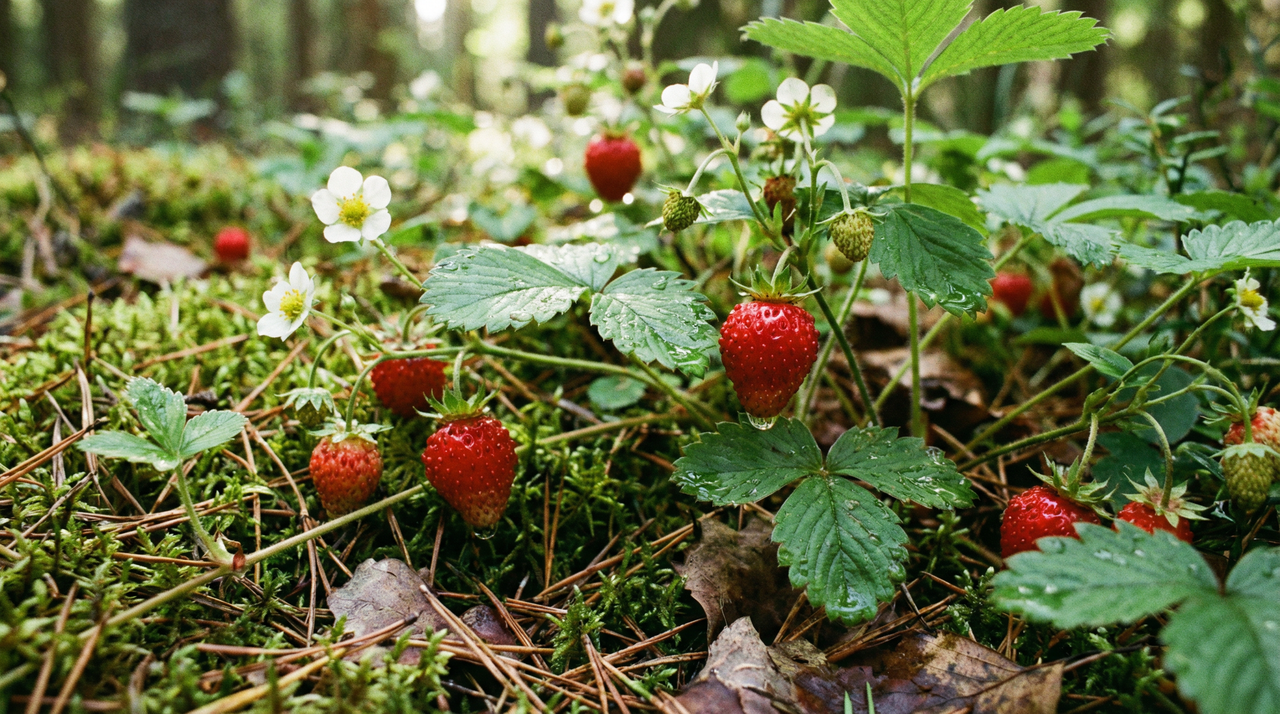
The strawberry you grew up eating doesn't exist in nature. I don't mean that in some vague, everything-is-a-hybrid way; I mean it literally. Fragaria × ananassa, the garden strawberry on every supermarket shelf and in nearly every backyard patch, is an accidental 18th-century hybrid that nobody planned and nobody fully understood for generations after it appeared.[1] Two wild American species ended up together in a French botanical garden, crossed without anyone's help, and quietly produced something the world had never tasted: a strawberry big enough to actually see from a standing height. Before that moment, "strawberry" meant something closer to a woodland weed with fruit the size of a pencil eraser. People loved it anyway, apparently.
What gets me every time I plant a new bed is how much that unlikely origin still shapes everything about growing these plants today, from why runners matter to why your plants start declining just when you think they've hit their stride. Understanding where this fruit came from isn't just a fun backstory. It's practical information, the kind that changes how you site a bed, choose a variety, and decide when to start over rather than patch things up.
The Origin and History of Garden Strawberries
Botanical Background of Fragaria × ananassa
The garden strawberry, known scientifically as Fragaria × ananassa, is a polycarpic perennial in the Rosaceae family, meaning it flowers and fruits repeatedly rather than dying after a single reproductive cycle.[2][3] Plants typically begin producing in their first year, peak in their second, and stay productive for 3-5 years before vigor drops enough to warrant renovation.[4][5] I've noticed this firsthand: the second-year mother plants in my beds are noticeably more abundant and flavorful than the first-year runners, which produces decent fruit but can't quite match the established crowns. Commercial growers often replace plantings every 3-4 years to maximize yield, but home gardeners willing to manage their beds carefully can often stretch that a bit longer.[6]
Longevity depends heavily on getting the soil right from the start. The garden strawberry and both of its wild parents, Fragaria virginiana and Fragaria vesca, prefer well-drained, slightly acidic soil with a pH between 5.5 and 6.8, full sun to partial shade, and perform across USDA zones 4-9.[4][3] That shared preference isn't a coincidence; it's genetics at work. Virginia strawberry (F. virginiana) is native across a staggering range from Alaska south to northern Mexico and coast to coast, spreading via stolons through open woodlands, meadows, roadsides, and disturbed sites.[7][8] Wild strawberry (F. vesca) ranges across temperate Europe, western Asia, and North America, colonizing disturbed sites with similar stolon-spreading persistence.[9] Both are short-lived perennials themselves, typically lasting 2-5 years, which tells you something about why their hybrid offspring also wears out and needs refreshing.
Visual Characteristics of Strawberry Plants
The garden strawberry is a low-growing, spreading plant, rarely topping 30 cm, that propagates itself through stolons (runners) radiating outward and rooting up to 2 feet from the mother plant.[10][11] The leaves are trifoliate (three leaflets per stem) arranged in a basal rosette, rising from the crown on long petioles, with each leaflet ovate to elliptical, serrated along the margins, and measuring roughly 3-8 cm long.[12][10] The undersides are densely hairy, which gives the foliage a matte, wrinkled look and a surprisingly soft feel. I love that texture because it helps me spot volunteer strawberry plants before flowers appear; once you know that dense pubescence, it's unmistakable against most common weeds.
Flowers are white, hermaphroditic, and borne on scapes rising 5-20 cm above the foliage in loose clusters, each with five rounded petals surrounding numerous stamens.[10] Against that bright green foliage, they're genuinely pretty, which is why strawberries pull double duty as edible groundcover in ornamental kitchen gardens. The fruit is technically an aggregate accessory fruit: the fleshy red part we eat is a swollen receptacle, typically 2-5 cm across, with the actual fruits being the tiny, seed-like achenes embedded across its surface.[10][11] Compare that to Fragaria virginiana, whose fruits max out at around 7-12 mm, and you start to appreciate just how dramatically the hybrid scaled things up.[13]
Traditional and Cultural Uses of Strawberries
The garden strawberry's history is surprisingly short. The hybrid we grow today first appeared accidentally in Brittany, France, around 1750-1760, when Fragaria chiloensis, brought from Chile in 1714 by the French explorer Amédée François Frézier, grew alongside Fragaria virginiana, which had arrived in European gardens in the early 17th century.[14][15][16] The resulting cross was first documented in cultivation in 1759 and formally named Fragaria × ananassa by Antoine Nicolas Duchesne in 1766, with the binomial later formalized by Aimé Bonpland in 1810.[14]
Before that hybrid existed, wild strawberries carried centuries of human relationship. Roman writers including Dioscorides and Pliny the Elder documented Fragaria vesca for treating fever, gout, digestive complaints, and urinary problems; by the medieval period it was a fixture of monastery gardens, with Hildegard von Bingen endorsing its medicinal properties and herbalists like John Gerard including it in their 16th-century herbals.[17][18] Meanwhile, Indigenous communities across North America, including the Iroquois, Cherokee, and Ojibwe, wove Fragaria virginiana into food, medicine, and ceremony, using it for digestive remedies and teas, and connecting its spring flowering to themes of renewal and fertility.[19][20] The Mapuche in South America similarly relied on F. chiloensis, the other wild parent, for nutrition and medicine.[21] None of that indigenous heritage extends to the garden hybrid itself, which postdates those traditions by generations and spread globally through European colonial trade rather than any indigenous cultivation.[22]
Modern commercial strawberry production carries a real ecological cost: heavy pesticide use, water-intensive irrigation, soil degradation, and a genetic narrowness that leaves the crop vulnerable to climate shifts.[23][24] In my own patch, I lean on deep mulching, companion planting, and everbearing cultivars that spread harvest over a longer window, reducing the pressure to hit peak production on a single tight schedule. The wild parents are not endangered, but they face real pressure from habitat loss and overharvesting, a reminder that the genus has given us far more than we typically credit.[25]
Fun Facts About Strawberry Origins and Botany
The origin story has a beautifully accidental quality to it: two wild species from opposite ends of the Americas, one from humid eastern forests and one from Pacific coastal dunes, ended up side by side in French gardens and produced a hybrid that would go on to dominate global fruit production. Frézier's Chilean plants turned out to be functionally female and needed Virginia strawberry as a pollen source; the resulting seedlings were the genetic lottery win that became Fragaria × ananassa.[14][16] Understanding that both wild parents spread aggressively via stolons into very different habitats explains why modern cultivars can adapt across such a wide range of gardens, though it also explains why they'll happily take over a bed if you ignore runner management for a season.
The chromosome situation is equally surprising. Garden strawberry is an octoploid, carrying 56 chromosomes (2n=56), compared to the diploid wild relatives.[26][27] That genetic complexity contributes to the hybrid vigor and large fruit size, but it also means seeds don't come true to type, which is why runners are the preferred way to propagate named varieties. And then there's the botanical technicality I now share with every garden visitor: a strawberry is not actually a berry. What we eat is the swollen, fleshy receptacle of the flower; the true fruits are those tiny yellow achenes studding the surface.[10] Once you know that, you see the plant completely differently.
Strawberry Varieties and Sourcing
Every garden strawberry you've ever grown traces back to a happy accident in 1750s France, where botanists crossed Fragaria virginiana from eastern North America with Fragaria chiloensis from the Chilean coast and ended up with an octoploid hybrid that would eventually become the foundation of global breeding programs.[28][29] That's the ancestry. But the most consequential choice you'll make as a grower isn't which cultivar to pick; it's which fruiting type.
June-Bearing, Everbearing, and Day-Neutral Strawberries
Garden strawberries break into three fruiting types, and getting this wrong costs you a whole season. June-bearers are short-day plants that deliver one massive flush in late spring or early summer, often 1 to 3 pounds per plant, and that concentration makes them ideal for preserves and freezing.[30][31] Everbearing types offer two smaller harvests, one in spring and one in late summer or fall, triggered by day length. Day-neutral varieties, developed from everbearing types in the 1970s and 1980s, fruit continuously from spring through frost regardless of day length, though individual fruits tend to be smaller.[32][33] I've grown 'Chandler' (a June-bearer) and 'Seascape' side by side, and once the June-bearers went quiet, 'Seascape' just kept going. That difference in harvest rhythm is exactly what determines whether you're eating fresh strawberries for three weeks or three months.
Climate matters here too. 'Honeoye' and other June-bearers tend to outperform in colder zones 3 to 5, while day-neutral types like 'Seascape' are better matched to warmer zone 9 conditions. Everbearing varieties generally hold up across zones 4 to 9, though they're less cold-hardy at the edges than the best June-bearers.[34]
Popular Cultivars and Wild Relatives
'Albion' has become a go-to day-neutral for good reason: medium-large fruit, genuine sweetness, and solid disease resistance across zones 4 to 9.[35][36] 'Chandler' runs large and mild-sweet, up to 2 to 3 pounds per plant in good conditions, though its zone 5 to 8 sweet spot is narrower. 'Evie-2' is genuinely excellent for flavor and disease resistance in zones 4 to 8.[37] Modern breeding has made resistance to powdery mildew and Verticillium wilt a real priority, and it shows in these newer varieties.[38]
The wild parents are worth knowing, not just as history but as genuine alternatives for certain roles. Fragaria virginiana, one of the original hybrid parents, produces tiny fruits, 0.5 to 1 inch across, with an intense sweet-musky perfume that nothing from a grocery store can match.[39][40] I've foraged these and grown them from native-plant suppliers, and the flavor concentration is a useful reminder of what breeding traded away for size. Fragaria vesca, the woodland or alpine strawberry, is often everbearing, tolerates partial shade, and includes intensely fragrant cultivars like 'Mara des Bois' and 'Alexandria' that have a dedicated following among flavor-first gardeners.[41] The wild relatives also bring stronger resistance to Verticillium and anthracnose, traits breeders continue to mine.[42] When I'm sourcing F. virginiana for restoration-style plantings, I always look for local ecotypes from regional native-plant nurseries rather than generic stock; that regional adaptation matters.
Where to Buy Strawberry Plants and Seeds
Garden strawberry plants are easy to find in spring from any major nursery or seed company. Burpee, Johnny's Selected Seeds, Raintree Nursery, and Fedco all carry solid selections. For wild strawberry and alpine types, Baker Creek, Horizon Herbs, and One Green World are reliable. Fragaria virginiana is best sourced from native-plant specialists like Prairie Moon Nursery, Ernst Conservation Seeds, or Native Plant Trust.[43][44] Bare-root bundles typically run $20 to $35 per dozen, potted plants $5 to $12 each, and seed packets $3 to $6.[45] In my experience, bare-root from a reputable source consistently gives better first-year results than potted transplants, and it costs less.
Buy certified disease-free stock. I learned this the hard way after losing a full bed to Verticillium introduced on non-certified runners. That single shortcut set me back an entire growing season. USDA APHIS regulates interstate movement of plant material to prevent pathogen spread, and California and Florida have additional inspection requirements worth knowing if you're ordering across state lines.[46] The small premium for certified stock is the best investment you can make before planting a new bed.
Strawberry Propagation and Planting Guide
If there's one thing that separates strawberry growing from most other fruits in the garden, it's how strongly the propagation method you choose dictates your whole first season. Get this right and you're harvesting by midsummer. Get it wrong and you're waiting two years for a handful of fruit.
Propagation Methods: Runners, Seeds, Tissue Culture, and Grafting
Runners are the starting point for nearly every garden strawberry bed, and for good reason. Each mother plant produces anywhere from 5 to 20 stolons per season, and those rooted daughter plants come in with a 80-95% success rate when conditions are right.[47][6] I've propagated dozens of cultivars this way in Florida landscape designs, and the simplest approach is just pinning runners to moist soil in late spring or early summer and letting them root for four to six weeks before cutting them free.[48][49] The most common beginner mistake I see is letting the soil dry out during that rooting window. Keep it consistently moist and your success rate climbs considerably.
Seed propagation is a different story entirely, and one I'd steer most gardeners away from for named cultivars. The garden strawberry is an octoploid hybrid, which means its seedlings are highly variable, rarely resembling the parent in fruit quality or vigor.[50][51] I've grown "mystery" strawberries from saved seed before, and while the experience is curious, the results are nothing like the consistent 'Seascape' or 'Albion' plants I rely on in edible landscape work. Seed is really a breeding tool, or a way to grow the diploid wild relatives where genetic diversity is actually the point. If you do want to try it, those achenes (technically the true fruits, each with one embryo embedded on the berry's surface)[52] need 30 to 90 days of cold moist stratification at around 4-10°C before they'll germinate reliably, and even then expect 50-70% germination at best.[51][47] Fresh seed stored dry and cold can remain viable for 5 to 15 years, which is useful if you're building a wild species seed bank for guild planting.[53][54]
Tissue culture is how certified disease-free commercial stock is produced, eliminating viruses that accumulate in vegetatively propagated lines over time.[47][55] It takes 4-6 months to root and acclimate, so it's not a home-garden method, but it's why I always recommend buying certified transplants rather than accepting free runners from a neighbor's unknown-history bed. Grafting onto wild rootstocks like Virginia strawberry exists as a research technique for disease resistance, but it's squarely in specialist territory.[56]
Soil and Site Requirements for Healthy Strawberry Roots
Strawberry roots are shallow, fibrous, and concentrated in the top 15 to 30 centimeters of soil.[6][57] Think of them more like lettuce than like a shrub. That shallow habit makes drainage and aeration absolutely critical: compacted, waterlogged soil doesn't just slow growth, it creates the anaerobic conditions where Phytophthora root rot thrives.[58][59] I've watched beautiful new plantings in heavy Florida clay develop those classic brown, mushy roots after a single heavy summer rain, and it's entirely preventable with the right bed preparation.
The target is a loamy or sandy loam soil with 3-5% organic matter and a pH of 5.5 to 6.5.[6][60] Performance drops outside that range; I've seen iron chlorosis in client beds planted in alkaline soils because the pH was never checked before planting. Now I insist on a soil test the fall before planting and amend with sulfur or dolomitic lime as needed. Working in 2 to 4 inches of compost at bed preparation addresses both organic matter and structure in one step.[61][62] For anyone with heavy or poorly drained soil, raised beds or mounded rows 6 to 12 inches high aren't optional; they're the foundation of everything else.[6] Full sun, six to eight hours minimum, is equally non-negotiable: shade reduces yields by 50% or more and compounds humidity-driven disease problems.[3][63]
Spacing, Planting Technique, and Establishment Timeline
Standard spacing for fruit production is 12 to 18 inches between plants and 3 to 4 feet between rows.[6][64] That might feel generous when you're looking at a bare transplant in spring, but airflow is doing real work here. In my earlier designs I ran beds at 12-inch spacing in matted rows, which produced plenty of free daughter plants but also set up the dense, humid canopy where gray mold gets established. A few seasons of that and I became a convert to wider spacing and deliberate thinning. If you're growing wild species as a groundcover or guild understory layer, 6 to 12 inches works because you're prioritizing coverage over fruit production and those smaller plants handle crowding better.
For containers, one plant per 5 to 7 inch pot or 8 to 12 inches apart in a larger planter keeps roots from competing excessively.[3] The single most important planting technique regardless of system: set the crown exactly at soil level. Buried crowns rot; crowns sitting too high dry out and die back. On a mound or raised bed, plant on the slope so water drains away from that vulnerable crown tissue naturally.[6]
Germination and Fruiting Timelines by Method
The timeline gap between methods is wide enough to shape your whole garden plan. Runner-propagated transplants can begin fruiting 2 to 4 months after planting under good conditions, often within that first season.[47][6] Seed-grown garden strawberries, after their 30-60 day cold stratification and 2-4 week germination window, typically spend the first year in vegetative growth and don't fruit reliably until year two.[65][66] Tissue culture plants follow a similar post-transplant timeline to runners once they've acclimated, with first fruits around 2 to 3 months after going in the ground.[67] Wild relatives like Virginia strawberry and woodland strawberry follow the same 1 to 2 year seed-to-fruit arc but can fruit in the first year from spring-planted runners, usually within 8 to 12 weeks.[68]
I do occasionally grow wild strawberries from cold-stratified seed for biodiversity in food forest guilds, and I always label those seedlings carefully because first-year growth is a small, unassuming rosette that looks nothing like what it will become. Investing in certified disease-free transplants for your main bed and reserving the seed experiment for the wild species is the approach that has consistently given my clients productive, healthy beds lasting the full 3 to 5 years before renovation is needed.
Strawberry Care Guide: Sunlight, Water, Feeding, and Pruning
Caring for strawberry plants is less about memorizing a rigid schedule and more about reading what your plants are telling you. Once I started treating my beds as a conversation rather than a checklist, everything got easier.
Sunlight Requirements for Optimal Growth and Fruiting
Six to eight hours of direct sun is the non-negotiable baseline for a productive strawberry plant.[27][31] In my experience, beds that consistently hit eight hours produce noticeably sweeter fruit than those scraping by at six. Less than six hours triggers the telltale signs of a struggling plant: yellowing leaves, weak growth, and berries that disappoint at the table.[6][69] In hot summers, though, the calculus flips: sustained afternoon sun above 85°F scorches leaves and sunscalds developing fruit, so 30-50% shade cloth becomes a worthwhile investment. Virginia strawberry and the woodland species manage just fine at the shadier end of that range, adapted as they are to meadow edges rather than open sky, but the cultivated hybrid genuinely wants that full-sun exposure to perform.
Watering Needs and Irrigation Best Practices
The standard target is 1 to 1.5 inches of water per week, bumped to 1.5 to 2 inches during active fruiting or heat waves above 85°F.[70][3] I check the top inch of soil with my finger before watering; if it's still damp, I leave it alone. Drip irrigation timed for early morning is ideal because it keeps foliage dry and cuts fungal disease pressure considerably. I learned the overwatering lesson the hard way early on: lost an entire spring bed to root rot because the site drained poorly. The warning signs are unmistakable once you've seen them, yellowing, wilted foliage despite wet soil, roots that look blackened and mushy, and a sour smell rising from the ground.[71][72] Switching to raised beds with a 2-4 inch straw mulch layer solved the drainage problem and also reduced how often I needed to irrigate by holding moisture more evenly between cycles.[73][74]
Feeding and Nutrient Management
Strawberries are moderate feeders, and the most useful thing you can do before reaching for a fertilizer bag is run a soil test.[75][76] Nitrogen drives leafy growth while potassium improves fruit size, sweetness, and how long the berries hold up after picking. Potassium is honestly the nutrient I pay closest attention to because I can taste the difference in my own harvests when it's right. The foliage reads like a report card: yellow young leaves point to iron deficiency (usually a soil pH problem above 6.5), interveinal yellowing on older leaves suggests magnesium, and stunted rosette growth hints at zinc.[77][78] Maintaining soil pH between 5.5 and 6.5 keeps most of those micronutrients available without foliar intervention. Excess nitrogen is the most common mistake in backyard beds: the plants look lush and dark green, then tip-burn appears and disease follows close behind. A balanced 10-10-10 or a good compost dressing is usually plenty; foliar sprays during fruiting can address rapid micronutrient needs if deficiency signs appear mid-season.[79] Virginia strawberry and its wild relatives are worth mentioning here as a contrast: they're light feeders adapted to lean soils and need almost no supplemental fertilizer, which is part of what makes them so useful as low-maintenance guild plants.[80]
Frost Tolerance and Winter Protection
Garden strawberries are tougher than most people give them credit for. Established plants survive in USDA zones 3 through 9, and dormant crowns can withstand temperatures as low as -25°F to -30°F with adequate protection.[81][82] The vulnerability is in the flowers: open blooms are damaged at 27-30°F, so a late-spring frost during bloom can gut a season's yield without touching the plants themselves. My approach is to apply 4 to 6 inches of straw mulch after the first hard frost once plants have gone fully dormant, then pull it back gradually in spring as temperatures stabilize.[6] I label my rows carefully for this exact reason: Virginia strawberry and garden varieties look nearly identical as they break dormancy, and Virginia emerges earlier, which raises its late-frost risk despite being cold-hardy to -35°F or below.[7] Getting the mulch removal timing right on unlabeled beds cost me a few crowns before I learned to mark everything clearly in fall. With proper overwintering, the same plants can return productively for three to five seasons.
Heat Tolerance and Summer Stress Management
Sustained temperatures above 86°F push strawberries into real stress: photosynthesis drops, flowers abort, and yield losses of 20 to 50% are documented during hot flowering and fruit-set windows.[83][53] The plant's ideal range is 59 to 77°F, which explains why coastal and northern gardens often outperform hot inland sites in summer productivity. I've grown older varieties that simply stopped setting fruit once temperatures stayed above 90°F for more than a few days. Switching to 'Seascape' made a noticeable difference: it keeps producing through warmer spells where other cultivars quit entirely.[84][85] The practical toolkit for hot summers: 30-50% shade cloth during peak heat, 2-4 inches of organic mulch to buffer soil temperature, drip irrigation timed for morning, and proper 12-18 inch spacing to keep air moving through the canopy.
Pruning, Maintenance, and Seasonal Rhythm
Post-harvest renovation is one of those garden tasks that feels almost violent but pays off completely. After the main crop is done, I cut back old foliage, thin to three to five strong runners per mother plant, and clear out anything weak or crowded.[86][87] Plants replaced every two to three years stay vigorous; beyond that, productivity declines noticeably. For harvest itself, I pick every two to three days in the morning while the berries are cool and still firm, looking for fully red fruit that slips from the calyx without pulling. Cool harvested berries quickly, ideally to 32°F with high humidity, and they'll hold five to seven days; leave them at room temperature and that window shrinks fast.[88][89] Gentle single-layer storage matters; a bruised berry spoils its neighbors quickly. Underlying all of this is the plant's chilling requirement: garden strawberries need 200 to 400 hours below 45°F to break dormancy and trigger flowering, with June-bearing types requiring closer to 300 hours and day-neutral varieties fruiting more continuously with less dependence on accumulated cold.[90][58] In warmer zones where hitting 300 hours isn't reliable, I've shifted almost entirely to day-neutral types because they simply don't need the same chill accumulation to perform. Understanding that rhythm, the cool-weather trigger, the flush of growth, the heat stress window, and the post-harvest reset, turns a strawberry bed from a mystery into something you can actually manage year after year.
When and How to Harvest Strawberries for Peak Flavor and Yield
Timing and Environmental Cues for Ripe Strawberries
Strawberries don't run on a calendar. They run on temperature, light, and the quiet biological clock set at flowering. From bloom to ripe fruit takes roughly 30 to 45 days,[91] and the window shifts considerably by region: gardeners in zones 7–9 may be picking in April or May, while those in zones 4–6 are often waiting until June or July.[3] [92] Ideal development happens between 60 and 75°F during the day, with cooler nights around 50–59°F; push above 86°F and you risk sunscald, while a late frost can set ripening back noticeably.[58] [48] Wild relatives like Fragaria virginiana and Fragaria vesca follow similar seasonal rhythms but compress their harvest into just 2 or 3 weeks, with a flavor payoff that's worth marking your calendar for.[93]
The most reliable ripeness cue I've found after years of growing these isn't color alone; it's the easy pull. A fully ripe strawberry separates cleanly from the calyx with almost no resistance. Pair that with full red coloring to the shoulders (no white tips), a glossy sheen, and a perfume you can smell before you even reach into the plant, and you've got a berry worth picking.[3] [6] I used to rush this out of impatience and consistently ended up with tart, flat-smelling fruit. Waiting even one extra day after full color appears makes a real difference. Pick in the morning while temperatures are cool, and plan to make passes every couple of days; leaving ripe fruit on the plant doesn't improve it.[94]
Strawberry Yield, Flavor Chemistry, and Ripeness Indicators
Here's something that surprises most people: the luscious red part you eat isn't the fruit at all. It's the swollen receptacle, a structure that exists to carry the real fruits, those tiny dry achenes dotting the surface.[95] [96] That fleshy receptacle is where all the flavor chemistry plays out. Ripe garden strawberries measure roughly 7 to 12° Brix from a mix of glucose, fructose, and sucrose, balanced by citric and malic acids that keep the sweetness from going flat.[97] Anthocyanins and ellagitannins add subtle bitterness and astringency in the background,[98] and fully ripe fruit produces up to three times the volatile compounds of underripe fruit, with mesifurane in particular driving that signature sweet, caramel-fruity intensity.[99] [100] The aftertaste on a properly ripe berry lingers 20 to 60 seconds with floral and honey undertones.[101]
Cultivar genetics and weather shape that profile considerably. Warmer growing conditions push ester production and fruitiness; cooler seasons amplify tartness and deepen color through higher anthocyanin levels.[102] [103] When I've tasted Fragaria virginiana from local woodland edges and compared them to my garden varieties, the difference is humbling. Those tiny berries, rarely larger than a centimeter, deliver musky, pineapple, and forest-earth notes with a depth that the big commercial types simply don't match.[104] They never make it to a grocery store, and honestly, that's the whole argument for growing your own strawberry plant and harvesting at true peak ripeness.
Strawberry Preparation and Uses
Here's a botanical detail that tends to surprise people at the kitchen table: that plump red thing you're slicing isn't technically a fruit. It's an enlarged receptacle, the fleshy base of the flower, and the tiny yellow specks dotting its surface are the actual fruits, each one a dry achene carrying a single seed.[105] Knowing this doesn't change how good a strawberry tastes, but it does reframe how you think about what you're working with in the kitchen.
Culinary Uses and Flavor Profile of Strawberries
That characteristic sweetness comes from sugars registering between 7 and 12 Brix, kept honest by citric and malic acids that deliver the tartness, and the lingering aromatic aftertaste most people associate with "strawberry flavor" is driven primarily by furaneol and related furanones.[105] Those volatile compounds are also exactly why home-grown berries tend to smell so much more alive than supermarket fruit picked days early.
I've eaten a lot of foraged Fragaria vesca berries, and if you've never compared one to a standard garden strawberry side by side, it's a genuinely startling experience. The wild ones punch with musky, almost pineapple-like notes that garden cultivars simply don't have, a reflection of far greater volatile complexity in the smaller-fruited wild and Virginia strawberries.[105] Modern breeding traded some of that complexity for size and shelf life, which is a fair trade for commerce but worth understanding when you're choosing what to grow.
For preserving at home, freezing is your friend. I've been freezing excess from my garden beds for years and find that the aroma holds remarkably well in the frozen state; most volatile compounds survive, though furanones can dip slightly on thawing.[105] Cooking is a different story entirely. Heat-sensitive compounds degrade and the aroma profile shifts toward something mellower and jammy, which is fine if that's what you're making. A strawberry jam recipe or a strawberry jelly recipe depends on that transformation. For strawberry cakes and other baked applications, the same shift occurs, so it's worth tasting as you go rather than expecting raw-fruit intensity from a cooked component.
Traditional Medicinal Preparations from Wild Strawberry
The kitchen is only part of the story. Long before Fragaria ananassa existed, wild strawberry (Fragaria vesca) was a staple of European and traditional medicine, prepared as leaf infusions, fruit teas, root decoctions, and tinctures for their astringent, diuretic, and anti-inflammatory properties.[106][107][108][109] The EMA recommends 1.5 to 3 grams of dried wild strawberry leaves per day for adult infusions,[109] and I keep a few wild strawberry plants specifically for this. A small handful of dried leaves steeped for ten minutes makes a gently astringent tea with a mild, pleasant flavor. It's not something I drink medicinally every day, but it's a nice thing to know how to do with plants you're already growing.
Non-Food Uses of Strawberry Plants
Beyond the kitchen and the tea cup, the Fragaria genus has a few other tricks. Wild strawberry berries and roots have historically been used to produce soft red and pink natural dyes,[110] and while I haven't run a full dye project with them myself, it's a lovely reminder that these plants held practical value well outside of eating. Ecologically, wild strawberry is a reliable ground cover for soil stabilization and erosion control, and it appears regularly as a companion plant in traditional farming systems.[111] In my own garden I use both wild and cultivated types as living mulch between taller plants, where the dense mat of leaves suppresses weeds and keeps soil moisture from evaporating. The fruit is a bonus at that point.
Strawberry Health Benefits and Medicinal Uses
Ask most people why strawberries are good for you and they'll say "vitamin C" and leave it there. That's accurate but barely scratches the surface. The full picture is a lot more interesting, and it stretches back much further than modern nutrition science.
Traditional and Modern Medicinal Uses of Strawberries
The German Commission E, Germany's authoritative herbal regulatory body, formally approves strawberry leaf for urinary tract irrigation and as an adjunct treatment for rheumatism, and strawberry leaf holds a monograph in the European Pharmacopoeia with established quality standards.[112][113] That kind of regulatory weight is rare for a backyard plant. It also gives real credibility to what indigenous and folk healers were doing centuries earlier.
Iroquois and Cherokee peoples used strawberry leaves and fruit to treat stomach disorders, diarrhea, and as a blood purifier, while Ojibwe and Menominee communities used Virginia strawberry roots in decoctions for toothaches, sore throats, fevers, and rheumatism, and applied leaf poultices topically to wounds and inflammation.[114][115] In European herbal traditions, wild strawberry (Fragaria vesca) was employed for gout, arthritis, urinary issues, skin conditions, and scurvy, with that last use directly tied to the fruit's high vitamin C content.[116] When I look at the astringent, tannic leaves on my wild strawberry plants, the digestive and wound-healing applications make intuitive sense. That's not just folk wisdom; it reflects genuine chemistry.
The modern clinical picture is where things get genuinely compelling for anyone watching their cardiovascular health. Strawberry consumption can lower systolic blood pressure by 4-8 mmHg in hypertensive individuals, with measurable improvements in endothelial function and reduced platelet aggregation.[117][118][119] Glycemic control and insulin sensitivity also show improvement with regular consumption, with strawberry extracts demonstrating antidiabetic potential through alpha-glucosidase inhibition and antihypertensive effects via ACE inhibition.[120][121] For anyone curious about strawberry benefits for men specifically, these cardiovascular and metabolic effects are the most clinically supported outcomes in the research.
The preclinical science adds further layers. Strawberry extracts activate the Nrf2 antioxidant pathway and inhibit NF-κB and COX-2 signaling, producing measurable anti-inflammatory effects; Virginia strawberry extracts show 40-60% COX-2 inhibition and 50% reduction in paw edema in rodent studies.[122][123][124] Preclinical data also points toward anticancer, neuroprotective, cardioprotective, and hepatoprotective activity, with beach strawberry extracts showing wound-healing potential through enhanced collagen synthesis.[125][126][127] The wild relatives often show higher phenolic density than the cultivated hybrid, but they also have a thinner human clinical record. EFSA has declined to approve specific health claims for strawberry polyphenols pending more robust randomized trials, and ellagic acid's poor direct absorption means the benefits depend significantly on gut microbiota converting it to urolithins.[128][129] The traditional uses aren't discredited by that; they're validated in principle while we wait for the human trials to catch up.
Key Phytochemicals and Antioxidant Compounds in Strawberries
That vivid red color is doing real biochemical work. Pelargonidin-3-glucoside, the dominant anthocyanin at 70-90% of total anthocyanins, sits alongside ellagic acid, ellagitannins, quercetin, catechins, procyanidins, and phenolic acids in a fruit that contains 100-500 mg total polyphenols per 100 g fresh weight.[130][131] Wild relatives like Virginia strawberry can hit up to 2,000 mg/100 g total phenolics, roughly four to ten times higher than many cultivated varieties, with ORAC values above 10,000 µmol TE/100 g.[132]
The distribution across plant tissues matters, especially for anyone thinking about medicinal preparations. Leaves concentrate ellagitannins (10-50 mg/g dry weight) and flavonoids like quercetin glycosides and kaempferol at far higher levels than the fruit itself.[133][134] A leaf tea and a fresh berry are delivering quite different compound profiles, which is why the traditional uses of each plant part made practical sense even before anyone had a spectrophotometer.
Growing conditions influence this entire chemistry. Plants under higher light intensity and mild abiotic stress, like the slight nutrient-poor acidity that wild strawberry naturally prefers, accumulate more phenolics as a defense response.[135][136] I've noticed this in my own beds: plants in full sun with slightly acidic, moderately lean soil consistently produce berries with deeper color and more pronounced aroma than the same variety grown in rich amended beds. The research explains what my nose was already telling me. Fragaria chiloensis, the beach strawberry, increases secondary metabolites under coastal salinity stress, which is a striking parallel to that same mechanism.[137]
Nutritional Profile of Strawberries
At around 32 calories per 100 g with 7.68 g carbohydrates, 2 g fiber, and just 0.3 g fat, strawberries are one of the more nutrient-dense, low-calorie foods you can grow.[130] The standout is vitamin C at 58.8 mg/100 g, which covers roughly 98% of the daily value in a standard one-cup serving, plus meaningful amounts of folate, manganese, and potassium.[130] For anyone tracking calories in a strawberry, a single medium berry runs about 4-6 calories, making them an easy fit into almost any dietary pattern.
Wild relatives like Virginia strawberry and woodland strawberry push vitamin C even higher, up to 90 mg/100 g, with greater antioxidant capacity driven by stress-induced phytochemical production.[138] Beach strawberry shows comparable vitamin C alongside notably higher iron at 1.3 mg/100 g.[139] Nutrient levels vary 10-20% by season, soil, and genotype, peaking in early summer at full ripeness. Those sun-warm berries straight off the plant that never make it inside? That's peak nutrition, not just peak flavor.
How you store and process berries changes what you actually eat. Refrigeration at 0-4°C preserves 80-90% of vitamin C for 3-5 days; fresh fruit retains more than frozen, and frozen retains far more than dried.[140] Cooking reduces vitamin C 20-50% and polyphenols up to 30%, so for medicinal intent, raw or lightly processed is worth prioritizing.
Safety and Potential Side Effects
Strawberries are non-toxic to humans, pets, and livestock across all Fragaria species, confirmed by USDA, ASPCA, and Missouri Botanical Garden.[141][142] Ripe fruit is safe and nutritious, classified as GRAS by the USDA with no upper limit established for healthy adults.[143] Unripe berries, leaves, and stems contain oxalic acid and tannins that may cause mild stomach upset in large quantities, but that's a common-sense caution rather than a red flag.[141]
Oxalate content is moderate at around 2 mg/100 g, much lower than spinach, so most people with kidney stone concerns can eat strawberries without worry; the low vitamin K (2.2 µg/100 g) is unlikely to affect anticoagulant therapy at normal serving sizes, though anyone on those medications should confirm with their doctor.[144]
Allergies are the most practical concern for most readers. Strawberry allergy affects 1-3% of the population, often presenting as oral allergy syndrome via the Fra a 1 protein with cross-reactivity to birch pollen or latex-fruit syndrome.[145][146] Wild strawberry may trigger milder reactions in sensitive individuals. My rule when a family member has birch pollen sensitivity: start with one small ripe berry, not a bowlful, and wait to see how they respond.
For leaf tea use, the EMA-assessed dosage is 1-2 teaspoons of dried leaf per cup, up to three cups daily for diuretic and mild anti-inflammatory effects.[109] I've used wild strawberry leaves from my own plants in herbal blends and find the mild astringency genuinely pleasant. Medicinal use of leaves or roots during pregnancy should wait for healthcare consultation, and anyone wild-harvesting Virginia or beach strawberry should know that plants near contaminated soils can accumulate heavy metals.[147] For fresh fruit, washing under cool running water for 30-60 seconds before eating and storing in a single layer at 32-36°F covers the basics.[143] After more than a decade of growing and eating strawberries, I've never encountered a toxicity issue beyond occasional stomach upset from unripe fruit. However, I always suggest anyone with known allergies or on ongoing medications loop in their doctor before adding significant quantities of any plant-based medicine to their routine.
Strawberry Pests and Diseases: Identification, Prevention, and Management
Garden strawberries are productive, but they earn that productivity at a cost. Fragaria × ananassa was bred for size, sweetness, and yield, and somewhere in that bargain, a fair amount of disease resistance got left on the table. After years of growing strawberries in Central Florida's punishing humidity, I've come to think of them as a plant that rewards attention and punishes neglect faster than almost anything else in the food garden.
Common Diseases of Garden Strawberries
The disease profile of garden strawberries is dominated by fungal pathogens that love the same warm, wet conditions that strawberries need to thrive. Botrytis cinerea, the gray mold that coats ripening fruit in fuzzy gray fuzz, is the one I watch most closely. It thrives between 50-75°F with humidity above 80%, which describes a Florida spring morning almost perfectly.[148] Dense plantings tightened below that 12-18 inch spacing recommendation create the stagnant air canopy where Botrytis runs rampant.[148][149] I learned this the hard way with a bed I planted too close together in my second year. I now space generously and water only in the morning so foliage dries before nightfall.
Beyond gray mold, the disease roster is broad. Phytophthora crown and root rot (especially P. cactorum) is the one that kills plants outright, particularly in heavy or waterlogged soils. Red stele (Phytophthora fragariae) shows up similarly but leans toward cooler, poorly drained conditions. Anthracnose (Colletotrichum spp.) surges in warm, wet weather, and powdery mildew sneaks in during warm dry spells when you least expect a fungal problem.[150][151] Verticillium wilt is slower and more insidious, especially when soil pH drifts outside that 5.5-6.5 sweet spot.[152]
No strawberry is bulletproof. I've lost entire patches to crown rot in heavy soil and now always insist on raised beds. But cultivar selection genuinely shifts the odds. 'Chandler' carries resistance to Phytophthora crown rot while 'Camarosa' is susceptible to it. 'Florida Brilliance' shows strong resistance to Fusarium wilt, 'Jewel' holds up reasonably well against Botrytis, and 'Albion', 'Seascape', and 'San Andreas' are among the better options for Verticillium wilt resistance.[153][154][155] Resistance ratings do vary by region, year, and testing method, so your local extension service is always worth consulting before you commit to a variety.[156][157] Cultural management, good airflow, drip irrigation instead of overhead watering, and consistent sanitation still do more reliable work in a home garden than any single spray program.[158][159]
Major Strawberry Pests and Their Impact
The pest list for strawberries is long: aphids, spider mites, thrips, slugs, snails, nematodes, tarnished plant bugs, strawberry crown moth, cyclamen mites, and spotted wing Drosophila are all documented problems.[158][160] Spider mites are my personal nemesis in hot dry spells. 'Seascape' shows notably higher resistance to them, and 'Chandler' tolerates mite feeding reasonably well via a thicker cuticle, though I'd stress that these traits are relative: high mite pressure will overwhelm any cultivar eventually.[161][162] Tarnished plant bugs cause that frustrating cat-facing on misshapen fruit with no truly resistant commercial option available.[161]
What I find fascinating, having worked with strawberries in living-soil systems for years, is how much is happening below the surface and inside the plant in terms of defense. Strawberries produce phenolic compounds including flavonoids, tannins, and anthocyanins that have genuine antimicrobial and antifeedant properties.[163] They even release volatiles that attract predatory mites and parasitoids when under insect attack.[164] Strong mycorrhizal associations and beneficial endophytic bacteria like Pseudomonas and Bacillus can trigger systemic resistance throughout the plant.Strawberry Pests and Diseases: Identification, Prevention, and Management
If there's one honest thing I can tell you about growing garden strawberries, it's this: no cultivar is bulletproof. I've lost whole patches to crown rot in heavy clay soil and learned the hard way that a resistant variety in a poorly drained bed is still a struggling plant. The good news is that most of the worst problems are preventable once you understand what triggers them. Fragaria × ananassa is susceptible to a real roster of fungal and oomycete diseases. Botrytis gray mold is probably the most familiar, thriving at 50-75°F with humidity above 80-90% and dense canopies that trap moisture after rain.[148] I've watched it spread almost overnight in a Florida summer planting where plants were packed too tight. Wider spacing and morning-only irrigation made a bigger difference than any fungicide I tried. Phytophthora crown and root rot is the other villain, especially in poorly drained soils, while red stele tends to show up in cooler, saturated beds.[150][151] Anthracnose and powdery mildew round out the list, one loving warm wet conditions, the other preferring warm and dry.[150] Soil pH outside the 5.5-6.5 sweet spot compounds all of this, particularly increasing Verticillium wilt susceptibility when pH drifts too high or too low.[152] Cultivar selection gives you real leverage here. 'Chandler' holds up well against Phytophthora crown rot while 'Camarosa' struggles with it; 'Florida Brilliance' shows strong resistance to Fusarium wilt; and for Verticillium, 'Albion', 'Seascape', and 'San Andreas' all carry useful resistance ratings.[153][154][155] That said, resistance ratings shift by region, testing method, and year,[165] so always cross-reference with your local extension service before committing to a cultivar. UC recommends 'Albion' and 'Camarosa' for California conditions; UF points Florida growers toward 'Florida Brilliance' and 'Florida Beauty'.[156][157] Cultural practices remain your most reliable defense: good airflow through proper spacing, straw mulch to reduce soil splash, and sanitation at season's end.[158] The pest list for strawberries is genuinely long: aphids, spider mites, thrips, slugs, snails, cyclamen mites, tarnished plant bugs, strawberry crown moth, root-knot nematodes, and spotted wing Drosophila (SWD) all show up regularly depending on region and season.[158][160] Some cultivars offer partial relief. 'Seascape' and 'Evie-2' show high spider mite resistance; 'Honeoye' and 'Earliglow' have pubescent leaves that deter aphids somewhat; 'San Andreas' and 'Portola' tend to resist SWD through firmer fruit and earlier ripening.[161][162] I've observed that day-neutral types like 'Seascape' do seem to bounce back faster after heat and mite pressure, which lines up with those resistance ratings. Still, when pest pressure is high, no cultivar trait fully compensates. What I find genuinely fascinating is what's happening beneath the surface. Strawberry plants produce phenolic compounds including flavonoids, tannins, and anthocyanins with real antifeedant and antimicrobial properties, and they emit volatile compounds that actively recruit predatory mites and parasitoids.[163][164] After years working with these plants in living soil systems, I'm convinced that strong mycorrhizal associations and a diverse soil microbiome reduce disease pressure more reliably than any single intervention. Research backs this up: arbuscular mycorrhizal fungi and endophytic bacteria like Pseudomonas and Bacillus strains induce systemic resistance in strawberry plants.[166][167] Build the soil ecology first, and the plants do more of their own defending. The wild ancestors tell a different story. Fragaria virginiana and Fragaria vesca generally carry greater resistance to Verticillium wilt, powdery mildew, and several root rots than cultivated garden strawberries, largely because of their greater genetic diversity and higher phenolic content.[168][169] F. virginiana has been used extensively in breeding programs to introgress resistance QTLs into commercial cultivars, and it's a reason why varieties like 'Albion' exist at all.[170] I've grown F. vesca as a groundcover in shaded guild plantings and noticed visibly less powdery mildew compared to nearby cultivated beds, even in humid conditions. Some accessions approach immunity to powdery mildew entirely.[171] Beach strawberry (F. chiloensis) brings strong resistance to red stele and root weevils, though it's susceptible to Botrytis and anthracnose in humid coastal settings.[56] Practically speaking, these wild species work beautifully in permaculture guilds where resilience matters more than berry size. Their secondary metabolites, trichomes, and extrafloral nectaries provide defenses that cultivated hybrids have partially traded away for yield.[172] Combined with consistent IPM habits, monitoring, and the biological controls that a healthy garden ecosystem provides,[158] the whole picture shifts from reactive management to a system where the plants do most of the work. The garden strawberry sits in an interesting middle space in permaculture thinking: productive enough to justify prime real estate in a food forest, yet ecologically humble enough to tuck into edges, pathways, and understories where it quietly earns its keep. Getting the most out of it means understanding both what the hybrid does well and where its wild relatives fill gaps it can't. Most garden strawberry cultivars (Fragaria × ananassa) perform best in USDA zones 4-9, though the range technically stretches from zone 3 to 10 depending on selection and management.[27][6] Hardy varieties can handle down to 20°F (-7°C) without much fuss; mulched dormant plants can survive -20°F (-29°C) or even -40°F in zone 3 with sufficient insulation from mulch or snow cover.[6] At the warm end, optimal growth happens between 60-80°F, and above 85-90°F the plant starts to struggle, with yields dropping and fruit deforming. That's something I've dealt with directly in Florida's humid summers -- once temperatures consistently climb past that threshold, 30-50% shade cloth becomes a genuine design intervention rather than just an optional accessory. Frost timing matters as much as winter cold. Blossoms are vulnerable at 28-30°F (-2 to -1°C), which means site selection in frost-prone areas deserves real thought. Don't plant in low spots where cold air pools. Humidity is the other variable designers often underestimate: optimal relative humidity for strawberries falls between 60-80%, and anything above 85% invites gray mold and other fungal problems.[3][27] Airflow is a design lever, not an afterthought. California's Mediterranean climate demonstrates the commercial peak of this plant's potential -- the state produced around 91% of all U.S. strawberries in 2023, roughly 2.26 million tons.[173] But the wild parents tell a broader story. Virginia strawberry (F. virginiana) tolerates -30°F to -40°F when dormant and adapts across humid continental, oceanic, and Mediterranean climates.[7] Woodland strawberry (F. vesca) climbs up to 9,800 feet elevation and handles comparable cold.[174] That range matters when you're filling micro-niches in a food forest that the garden hybrid can't reliably occupy. I've used Virginia strawberry on a slight north-facing slope where my garden cultivars would have been fried by summer or heaved by winter, and it's thrived where they would have quit. Strawberry flowers are perfect and self-fertile, which sounds like a win for the home gardener who doesn't want to think about pollination. The reality is more nuanced. Insect pollination delivers 20-50% yield improvements and dramatically reduces the misshapen fruit that results from uneven achene fertilization.[175][176] Honeybees, bumblebees, solitary bees like Andrena and Osmia, and hoverflies all contribute, but bumblebees are particularly effective thanks to buzz pollination (sonication), which dislodges pollen more efficiently than a honeybee's approach.[177] I keep a small apiary, and I've watched bumblebees produce noticeably rounder, fuller berries compared to beds where honeybees were the primary visitors. The research backs up what I see in my own beds. Wild relatives offer a useful contrast here. Virginia and woodland strawberries are largely self-incompatible and depend more heavily on diverse native bee species, hoverflies, and even beetles for cross-pollination.[178][179] Their April-to-June bloom provides critical early-season forage for queen bumblebees coming out of winter.[180] That's a genuinely useful ecosystem function, and it's one more reason to include a patch of wild species somewhere in the design even when you're primarily growing the cultivated hybrid for fruit. Beyond pollination, Virginia strawberry stabilizes soil on slopes via dense stolon mats and supports birds, deer, rabbits, and small mammals with fruit and forage.[181][7] Both wild species accumulate potassium and phosphorus as dynamic accumulators.[182] The garden hybrid doesn't carry these functions as strongly -- it won't fix nitrogen, and its allelopathic and accumulator properties are modest compared to its wild parents -- but it pairs beautifully with clover or beans to bring nitrogen into the same guild.[3] In a food forest, garden strawberry belongs in the herbaceous layer, and it earns its place there as living mulch. Spreading via stolons to form mats 6-12 inches tall and 12-18 inches wide, it suppresses weeds, retains soil moisture, and reduces erosion with minimal management input.[183][184] Through root exudates and phenolic compounds, it exhibits mild allelopathic weed suppression and forms mycorrhizal associations that improve phosphorus and nitrogen uptake, particularly in less fertile soils.[185][186] I've used woodland strawberry under young citrus trees as a living mulch layer, and in my experience it outperforms bare woodchip mulch at retaining moisture and preventing annual weeds from establishing around the drip line. Peak productivity lands in years 2-3, so plan for renovation cycles in the design.[187] The good news is that runners give you a constant supply of replacement plants if you're managing the bed actively. Spacing generously (more on this in the care guide) also keeps airflow adequate, which matters a lot in humid climates where botrytis and other fungal issues crop up in dense plantings. For guild companions, borage is a classic pairing that draws in pollinators and is easy to establish from seed alongside strawberries.[188] Thyme and garlic help deter slugs and work well as edge plants around a strawberry bed. Clover and beans bring nitrogen into the system. The avoidances matter too. I learned the hard way about planting strawberries too close to tomatoes. A bed where I'd let a sprawling tomato share space ended up with Verticillium wilt moving through the strawberry plants by midsummer.[3] Keep solanaceous crops (tomatoes, potatoes, peppers) and brassicas well separated from strawberry beds to avoid shared disease pathways. Virginia strawberry associates naturally with goldenrod, coneflower, and blueberries in native guild plantings, while woodland strawberry integrates well beneath fruit trees intercropped with lettuce or asparagus.[189] Beach strawberry (F. chiloensis), one of the two wild parents of the garden hybrid, brings vigorous coastal groundcover function with strong stolon-based erosion control where salt spray or sandy soils make other options difficult.[190][191] The genus gives designers real flexibility across layers and niches; the key is matching species to function rather than defaulting to the garden hybrid everywhere. I've been growing strawberries for over two decades, and I still can't walk through a June-bearing patch at peak ripeness without eating half of what I pick. That's not a complaint. It's the whole point, really; the best strawberry you'll ever taste is the warm one you eat crouched down in your own garden, stained fingers and all, before it ever sees a bowl. No grocery store, no recipe. Just the plant doing exactly what it was always meant to do.Common Diseases of Garden Strawberries
Major Strawberry Pests and Their Impact
Resistance in Wild Relatives and Breeding Insights
Strawberry in Permaculture Design
Climate Adaptation and Hardiness Zones
Ecosystem Functions and Pollination Services
Forest Layer Placement and Guild Design
The Berry That Never Quite Makes It Inside
Sources 191