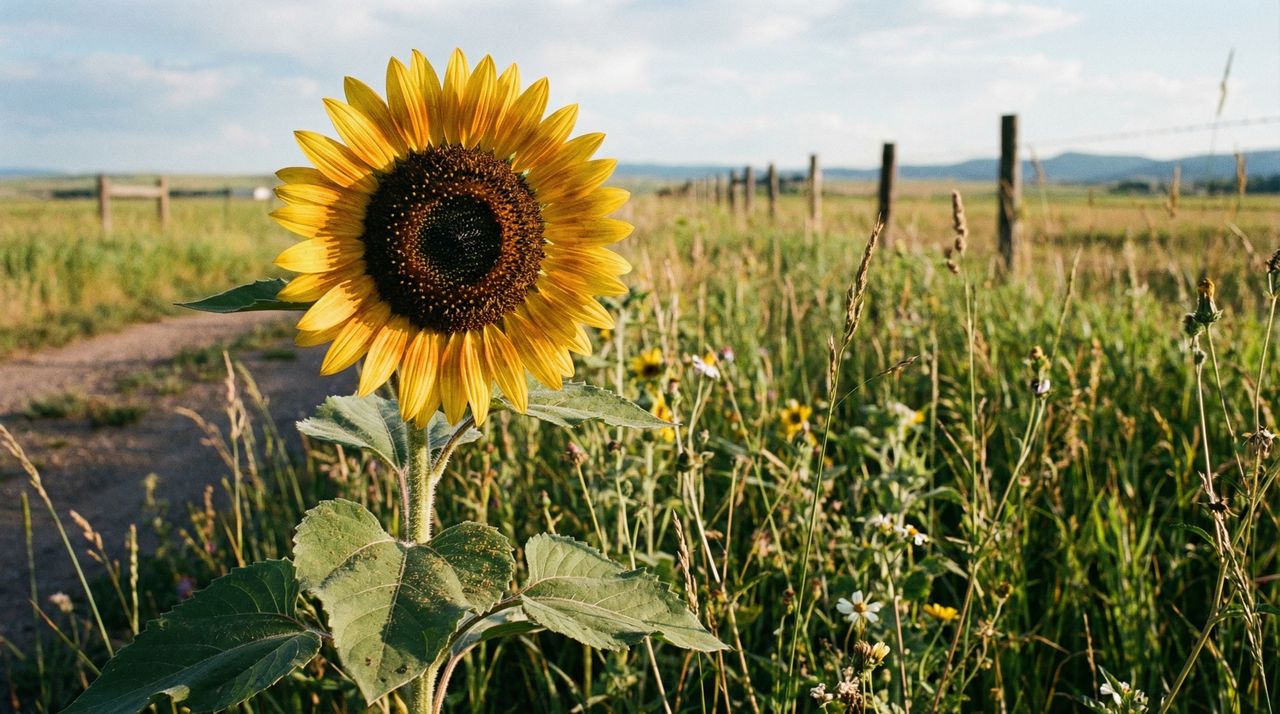
Sunflowers don't actually follow the sun. That's the thing I have to say out loud every single season, usually while standing next to someone who's just read that they do. Young plants track east to west through the day, yes, driven by asymmetric stem growth, but once a sunflower matures and that heavy head opens fully, it stops. Permanently. It faces east for the rest of its life, warming in the morning light to attract the bees it depends on for seed set.[1] The plant most synonymous with cheerful, uncomplicated gardening turns out to be running a surprisingly sophisticated pollination strategy that most growers never notice.
What gets me, after years of working this plant into food forests and annual kitchen beds across very different climates, is how much depth hides behind that familiar face. This is a crop with 5,000 years of indigenous breeding behind it, a root system that mines subsoil nutrients and pulls heavy metals with equal enthusiasm, and a seed architecture that changed the global cooking-oil industry. The shaggy yellow annual you grew from a packet as a kid was doing serious ecological work the whole time. There's quite a lot to say about it.
Origin and History of the Sunflower (Helianthus annuus)
If I had to pick one plant that captures the spirit of North American ecological resilience and indigenous ingenuity in a single stem, it would be the sunflower. Long before it appeared in European still-life paintings or Russian oilseed fields, Helianthus annuus was already a deeply cultivated, deeply understood crop across the continent where it evolved. That history shapes everything about how I think about growing it today.
Botanical Background and Native Range
Helianthus annuus is a true North American native, originating in the central and western United States across the Great Plains, from the eastern edge of the Rockies to the Mississippi River, and from southern Canada down into northern Mexico.[2][3][4] Its native haunts are prairie grasslands, open woodlands, and disturbed sites with well-drained soils. That word "disturbed" is telling. This is a plant that thrives where the earth has been broken open, which goes a long way toward explaining both its ecological personality and its eagerness to partner with human cultivation.
The climate those wild sunflower populations evolved in is temperate and continental in the classic prairie sense: hot summers frequently pushing past 30°C, winters well below freezing, and annual rainfall in the 400-800 mm range, mostly falling in the growing season.[5][6] Under the Koppen-Geiger system this spans Dfa (hot-summer humid continental) and BSk (cold semi-arid), which means the sunflower learned to sprint. Its entire life cycle, from seed in the ground to seed on the head, runs 70-130 days.[2][7][8][9] Most cultivated varieties land in the 90-120 day window, germinating within 7-10 days once soil temperatures reach 10-13°C and flowering 50-65 days after that. It's a monocarpic annual, meaning it puts everything into one reproductive push and then it's done. That boom-or-bust life history is a direct inheritance from prairie ecosystems where seasons are unforgiving and reliability is not guaranteed.
Wild populations reflect that uncertainty in interesting ways. Genetic diversity in the wild is high, with significant variation in stature, seed size, and timing driven by local soil quality, rainfall, herbivory, and competition.[10][11][12] There are even perennial subspecies, such as H. annuus subsp. mollis in parts of southern Texas, that bend the "annual" rule. Modern hybrid cultivars have traded much of that genetic breadth for yield consistency and uniformity, a trade-off that permaculture designers should hold in mind when choosing seed. In my own wildflower meadows I've watched sunflower populations surge in wet years and nearly disappear in drought years, cycling in exactly the boom-bust pattern the ecology predicts. It reinforces why thoughtful management matters when you're integrating this plant into a stable polyculture.
One practical caution that I treat as non-negotiable in regenerative design: do not grow sunflowers in contaminated soils if you intend to harvest anything for food or animal feed. Sunflower is a documented bioaccumulator of heavy metals, and I approach it like a remediation crop in brownfield contexts. In those situations the plants go into the compost pile or the green bin, not the seed jar. Always soil-test first.
Traditional and Cultural Uses by Indigenous Peoples
The archaeological evidence places sunflower domestication in North America around 3000 BCE, with carbonized seeds turning up at sites like Cloudsplitter Shelter in Kentucky and the Hayes site in Arkansas confirming active cultivation between 3000 and 1000 BCE.[13][14][15] The Mississippi Valley and Great Lakes region seem to have been the center of that early selection pressure. This is not a plant that wandered into cultivation passively. Native peoples saw something worth cultivating and over millennia selected for it deliberately.
The range of uses Indigenous nations developed is striking in its completeness. Tribes including the Hidatsa, Mandan, Lakota, Hopi, and Zuni ate sunflower seeds raw, roasted, and ground into flour; pressed them for cooking oil and as a fat binder in pemmican; extracted yellow and purple dyes from petals and hulls for textiles and body paint; and used the fibrous stems for weaving, pipes, and flutes.[16][17][18] Medicinally, preparations from various plant parts addressed wounds, respiratory complaints, fevers, rheumatism, and digestive issues. That's not a single-use crop. That's an entire toolkit growing on one stalk.
The ceremonial dimension runs just as deep. Sunflower was a symbol of the sun, life, and resilience across many cultures, woven into healing ceremonies and harvest rituals and sometimes grown as part of a "four sisters" polyculture alongside corn, beans, and squash.[19][20][21] In Aztec culture the plant represented Huitzilopochtli, the sun god, and featured in religious rites. Having grown traditional tall single-stem types alongside modern hybrids for years, I find it easy to see why. There's still something unmistakably powerful about a 7-foot plant turning its face to follow the light. The prairie vigor never quite bred out.
Spanish explorers introduced the plant to Europe around 1510, where it initially circulated as a botanical curiosity and ornamental.[22][23][24] It was Russian and eastern European breeders in the 1800s who recognized the oilseed potential and transformed it into a major commodity crop through intensive selection. That breeding pipeline eventually looped back to North America as the hybrid cultivars that dominate modern production today, carrying a narrowed genome that has traveled very far from those ancient Kentucky shelter sites.
Visual Characteristics and Fun Facts
Before a sunflower shows you anything above ground worth bragging about, it's already doing impressive engineering below. The root system anchors around a strong central taproot flanked by a network of fibrous laterals, and that taproot doesn't stop. Under optimal conditions it reaches 1.8-2.4 m (6-8 ft), with maximum penetration documented near 3 m (roughly 10 ft).[25][26] After years of using sunflower as a dynamic accumulator in guild systems, I've come to think of that taproot as the plant's real superpower, mining subsoil nutrients and fracturing compaction zones that shallower roots can't reach. It's also the anatomical reason sunflower tolerates drought as well as it does, a trait that will come up again when we get to care.
Then there's heliotropism, which is genuinely one of the more delightful things you can witness in a food garden. Young plants and developing buds track the sun from east to west across the day through differential elongation: cells on the east side of the stem grow faster in the afternoon, physically bending the plant westward to follow the light.[27][26] Walk a row of sunflower seedlings at dawn and every bud is already tilted east, waiting. It's taught me to think about siting them where that daily movement adds something to the garden's visual rhythm. Once the head gets heavy and matures, though, all of that stops. The stem lignifies, the tracking ceases, and the head fixes permanently facing east. I find that detail oddly poetic: all that early dynamism locked into a single orientation at the moment of fruiting.
The record-holders are genuinely absurd. The tallest documented sunflower reached 9.17 m (just over 30 feet), and the largest flower head measured 83.2 cm (nearly 33 inches) across.[28][29] Garden-scale plants are more modest at 1-3 m, but a single head still produces 800-2,000 seeds (averaging 1,200-1,500), with yields in the range of 1,000-2,500 kg per hectare under good conditions and flowering arriving 70-100 days from planting.[30][31][32] That productivity, concentrated into a 70-130 day sprint, is exactly the kind of output that made this plant worth domesticating in the first place.
The hairy leaves (botanists call it pubescence) and that deep root system combine to give sunflower genuine drought tolerance, a trait that connects directly to its semi-arid prairie origins.[33][34] And ecologically, this plant is generous. Late-summer blooms supply abundant nectar and pollen to bees, butterflies, and other pollinators at a time when many other flowers are winding down, and the seeds that follow feed finches, cardinals, squirrels, chipmunks, and deer through fall. Grown organically and thoughtfully, sunflower actively promotes biodiversity, though overharvesting of wild populations can tip that balance.[34][35] The same plant that ancient prairie peoples selected for its abundance can still give abundance today, but like any relationship, it rewards respect.
Sunflower Varieties and Where to Buy Them
Most gardeners think of sunflowers as a single plant, the tall yellow one from childhood. But Helianthus annuus cultivars actually fall into four distinct pipelines: ornamental, oilseed, confectionery, and birdseed.[36][37] Each one was bred for completely different outcomes, and once you understand the differences, you stop growing just one type and start growing two or three on purpose.
The Four Main Sunflower Cultivar Types
Ornamental cultivars are the ones that get cut-flower growers genuinely excited. They range from 3 to 10 feet tall with flower heads anywhere from 3 to 12 inches across, and modern breeding has pushed the palette well beyond classic yellow into deep reds, bronzes, and bicolors that look almost unnatural against a summer sky.[36][38][39] Many are branching multi-stem types that keep producing laterals all season long. In my permaculture beds, I lean toward these branching ornamentals because their canopy is more open and irregular than a single-stem giant, which means understory companions like nasturtium or low-growing herbs still get workable light. A wall of 8-foot single-stem oilseed plants is a different story altogether.
Oilseed types are the industrial workhorses. They're bred for oil content in the 40 to 50 percent range, used for cooking oil, biodiesel, and food manufacturing.[36][40][7] Commercially they're planted dense, 15,000 to 25,000 plants per acre, with shorter, smaller-headed plants than confectionery types.[36][40][7] I grow a handful every year specifically for my chickens. The seeds are small but the oil content makes them a fantastic late-season treat, and watching the hens work over a dried head is genuinely satisfying.
Confectionery types are what most home food gardeners actually want. They produce the big, striped seeds you recognize from the snack aisle, and they need wider spacing, roughly 4 to 6 inches between plants in the row, to push those heads to full size.[36][41][40] They mature in 70 to 100 days,[36][41][40] and the seeds have that familiar nutty, buttery, slightly sweet richness that makes them worth the garden space.[42][2][43] What most people don't realize is that the petals are also edible, offering a mild, faintly tangy flavor with subtle nutty undertones that's not unlike calendula or borage, two plants most permaculture gardeners already have around. I toss them into salads the same way I use borage flowers: fresh, with zero fuss.[42][2][43]
Birdseed varieties round out the four types. They produce small, black-hulled seeds that show up in commercial birdfeed mixes and are genuinely excellent for supporting winter wildlife populations if you leave the dried heads standing.[36] In a permaculture system, they're an easy way to close the loop between annual bed and wildlife habitat without doing anything extra.
Height is the practical variable that catches a lot of gardeners off guard. Dwarf types top out at 2 to 3 feet and work well in containers or tight beds, while giant varieties need staking and real horizontal space.[26][38] These plants are highly adaptable to different season lengths, allowing growers across most climates to find a cultivar that fits their local window.[2][38][39] One hard-won lesson from my own garden: label your varieties at planting time, because a 2-foot dwarf and an 8-foot giant look almost identical at the four-leaf stage. I mixed them up once and spent a whole season with an accidental shade wall where I'd planned an open pollinator strip.
Behind all of this diversity sits 5,000 years of human selection. Native Americans first domesticated Helianthus annuus around 3000 BCE in what is now the central United States, selecting from a wild range that stretched from the Rockies to the Mississippi and into parts of Canada and Mexico.[44][2] Modern breeding programs have built on that foundation to develop lines with resistance to downy mildew and rust, herbicide tolerance through Clearfield technology, and improved heat and drought performance with earlier maturity to suit shorter growing seasons.[40][45][46] The cultivar you buy at a garden center in 2025 carries that entire lineage in its seed coat.
Sourcing Quality Sunflower Seeds and Plants
Finding sunflowers is genuinely not a problem. As a native North American annual, Helianthus annuus is available in every U.S. state through nurseries, garden centers, and online retailers.[12][47][48] Johnny's Selected Seeds, Burpee, and Park Seed all carry extensive selections, and many specialty cut-flower and seed-saving suppliers offer heirloom confectionery types that the big-box stores don't stock.[12][47][48] Because the plant is native here, there are no invasiveness concerns and no special permits needed for domestic purchases; imported seed does move under USDA APHIS phytosanitary regulations, but that's mostly relevant for commercial growers sourcing internationally.[49][50]
Seed quality is where I'd encourage you to be a little picky. Good confectionery seed is typically over 10 millimeters in size, uniform, debris-free, with moisture content below 8 to 10 percent and germination viability above 85 percent.[51][52] Lab standards use tetrazolium staining to verify viability,[51][52] but my own test is simpler: I do a quick float check on a sample and then lay ten seeds on a damp paper towel, fold it up, and check for sprouts after four or five days. If fewer than eight of them crack open, I'm not committing an entire bed to that packet. Reputable seed companies usually publish germination rates, and buying from those sources is genuinely the single best investment you can make before you plant a single seed.
Timing-wise, spring planting after last frost, roughly late April through early June in zones 4 through 9, is the standard window,[53] though commercial seed is available year-round if you're planning ahead. Start with fresh, high-viability stock from a supplier you trust and the rest of the season takes care of itself pretty readily.
Sunflower Propagation and Planting Guide
Sunflowers are genuinely one of the easiest plants I grow, but "easy" doesn't mean you can ignore the fundamentals. Get the site wrong, crowd them together, or plant into cold soil and you'll spend all season wondering why your plants look spindly or collapse in the first summer storm. Get it right and you'll be rewarded with some of the most satisfying plants in the garden: big, fast-growing, and ready to harvest in as little as 70 days.
Understanding Sunflower Seeds: Structure, Pollination, and Saving Seed
What we casually call a sunflower "seed" is technically an achene, a dry single-seeded fruit where the outer hull is the hardened pericarp of the fruit wall rather than a true seed coat.[51][54][55] Inside that hull you'll find two thick, nutrient-packed cotyledons and a well-developed embryo with no true endosperm to speak of; the energy reserve is all in those fleshy seed leaves.[51] Each achene contains just a single embryo, monoembryonic, meaning you'll always get one plant per seed rather than the multiple seedlings you see with something like a beet.[51] At the base you can often spot the hilum, that small oval attachment scar where the achene connected to the receptacle.[2][56] Oil-type achenes run 10-15 mm long and 4-6 mm wide, black or dark brown, with relatively thin hulls; confectionery types are larger, striped or mottled, and noticeably thicker-walled.[2][56][57]
If you're thinking about saving seed, you need to understand the pollination biology first. Sunflowers are protandrous, meaning the anthers shed pollen before the female stigmas on the same flower are receptive, which pushes plants toward cross-pollination even when they technically have the capacity to self.[58][59] The result is an outcrossing rate of 80-95% in field conditions.[58][59] I learned this one the slow way: I spent a couple of seasons saving seed from my favorite 'Mammoth' plants only to get a baffling range of plant heights and petal colors the following year. Now I label rows carefully, grow isolation distances between varieties I want to keep true, and accept that some variation is just part of the deal with open-pollinated selections.[60] Hybrid varieties are even more clear-cut: they simply won't breed true, and second-generation plants will be genetically unpredictable.[60]
For storage, sunflower seeds are classified as orthodox, meaning they tolerate drying down without damage and can be kept for years if conditions are right.[61] In a cool, dry spot at home (5-10°C, low humidity), expect viable seed for 5-10 years; seed banks running at -20°C with around 5-10% relative humidity can maintain viability for 20-40 years or longer.[61][62][63] If you're ever unsure about old seed, the standard germination test (20-30°C, some light, check for radicle emergence at 5-10 days) will tell you quickly, or you can run a tetrazolium test for a faster answer without sacrificing your whole stash.[64][65][66]
What about vegetative propagation? It exists, technically. Stem cuttings from young shoots can root at rates of 40-80% if you maintain bottom heat around 21-24°C and very high humidity (80-90%) for 14-28 days, and tissue culture achieves even higher regeneration rates in a lab setting.[67][68] Grafting onto resistant rootstocks has been studied as a disease management tool, with success rates of 70-90% under controlled conditions.[69] I've tried cuttings myself with moderate success, but I always return to seed for the vigor and simplicity. For home growers, seed propagation with its 70-95% germination rates is the only method that makes any practical sense.[61]
Germination Timeline and Temperature Requirements
Plan your season around a 70-120 day window from planting to harvest, with the exact number depending heavily on variety type.[70][71] Oilseed types tend to mature on the faster end, typically 70-110 days, while the confectionery varieties that produce those big, snackable striped seeds generally need 85-120 days.[70][72] Once a plant reaches full bloom, seeds take another 30-45 days to reach maturity, so flowering is not the finish line; it's closer to the halfway point of the ripening process.[72]
Getting sunflower germination right comes down almost entirely to soil temperature. The optimal range is 70-75°F (21-24°C), at which point seeds typically sprout within 7-10 days.[2][73] Germination can begin at soil temperatures as low as 8-12°C, but expect slower, more uneven emergence.[2][73] The upper boundary matters too: temperatures above 35°C can delay maturity and stress the plant during the most critical reproductive stages, just as soil temps below 10°C will slow things considerably.[74] For most gardens, that means waiting until after the last frost date and then giving the soil a few extra days to warm up rather than rushing the calendar. Once established and growing, sunflowers hit their stride in daytime temperatures of 25-30°C (77-86°F).[73]
Soil, Site Selection, and Sun Requirements
Sunflowers are native to the open prairies and disturbed ground of central and western North America, and that origin tells you almost everything about what they want from a site.[33] Full sun is non-negotiable: at least 6-8 hours of direct sun daily, and more is better.[75] I've tried tucking a few plants into spots that get filtered afternoon light, thinking a heat-loving annual would appreciate some relief from the Florida sun, and the seedlings etiolated fast, stretched, and produced weak stems that flopped before they even flowered. Compare that to the shade-tolerant ginger and turmeric a few beds over, which practically beg for dappled conditions, and you realize quickly that sunflowers are in a different category entirely: they are photon-hungry in a way that few garden plants match.[76]
For soil pH, aim for 6.0-7.5, with the sweet spot sitting around 6.5-7.0.[38][71] Plants can survive a wider range of roughly 5.5-8.0, but at the acidic end you run into aluminum and manganese toxicity, and at the alkaline end iron chlorosis and phosphorus lockout become real problems.[77] When I first tried growing sunflowers in my home garden here in Florida, the soil tested at a fairly acidic 5.8, and the plants looked thin and pale all season. A lime amendment before the following season made a visible difference within weeks of germination. A soil test before you plant is worth the few dollars it costs, and pH can be raised with lime or lowered with sulfur if needed.[38][71]
Drainage matters more than fertility. Sunflowers are highly intolerant of waterlogged conditions; prolonged soil saturation causes root rot and can kill plants quickly.[2][78] A sunflower in waterlogged clay is a short-lived experiment, and I say that from personal observation rather than theory. Their deep taproot systems, which can extend 3-6 feet down in ideal conditions, need loose, well-drained soil to do what they do best: mine deep moisture and nutrients while anchoring the plant against wind.[78] Deep, fertile loam is the ideal, but sandy soils work fine if you're willing to irrigate, while heavy clay should be amended substantially or avoided.[78] Severe compaction reduces root biomass by 30-50% and can cause measurable yield loss, so if you're planting into a bed that's been walked on heavily, loosen it first.[79]
Soil organic matter in the 1-3% range is the target; working in compost before planting improves structure, fertility, and moisture retention, especially in sandy situations.[33] The taproot system also means sunflowers need at least 24 inches of workable soil depth to develop properly, so shallow raised beds with a compacted base underneath can quietly limit what your plants achieve.[78] If you're growing in containers, a mix of roughly 50% potting soil, 30% compost or aged manure, and 20% perlite or coarse sand keeps drainage adequate while maintaining enough moisture and fertility.[80]
Spacing, Planting Depth, and Technique
Direct sowing after the last frost is the standard approach, and it genuinely is the best one for home gardeners.[81] Press seeds 1-1.5 inches deep into moist, prepared soil.[81][82] If you're working with hard-coated confectionery varieties, a 12-24 hour pre-soak in water can speed germination and push rates toward 90%.[82] In areas with persistent damping-off pressure, seed treatments with fungicides like metalaxyl or thiram are an option, though healthy soil with good drainage is usually your first line of defense.[82]
Spacing is where I see the most first-timer mistakes, and it's also where variety choice becomes practical rather than aesthetic. For a home garden with standard varieties, 12-18 inches between plants within rows and 24-36 inches between rows is a reliable starting point.[83][53] Dwarf varieties can be thinned to 6-12 inches; the larger standard types want 18-24 inches; and the true giants that reach 10-12 feet under good conditions need every bit of that 24-inch buffer to develop sturdy stems and full heads.[53][84] Commercial seed production uses tighter in-row spacing of 4-6 inches but with wider 30-36 inch rows, optimizing for harvest efficiency rather than individual plant development.[84]
I've grown oilseed and confectionery types side by side for several seasons now, and the confectionery varieties really do need that wider spacing to build out the large, well-filled heads you're growing them for. Crowd them and you'll get taller, thinner stems competing for light, smaller heads, and seeds that never quite fill in properly.
The consequences of going too dense are concrete and predictable. Spacing tighter than 12 inches increases the risk of powdery mildew and rust because airflow through the canopy drops sharply, and the elevated humidity inside a dense planting is exactly what fungal pathogens want.[84][85] Dense plantings also produce taller, thinner stems that are far more prone to lodging, which is a polite word for your plants tipping over in a summer thunderstorm.[84] At the field scale, densities above roughly 30,000 plants per acre push disease risk up noticeably, though vigorous hybrid varieties can sometimes tolerate the pressure.[84][85] Proper spacing also supports the insect pollinators that move between heads, an important consideration given how much cross-pollination sunflowers rely on for strong seed set.[85] Give each plant the room it's asking for, and the harvest 70-120 days later will make the restraint worthwhile.[71]
Sunflower Care Guide: Sunlight, Water, Nutrients, and Seasonal Management
Every care decision you make with a sunflower makes a lot more sense once you understand what this plant actually is: a prairie annual shaped by millions of years of open skies, boom-bust rainfall, and competitive grassland dynamics. Its needs aren't arbitrary. They're baked in. Work with that biology and you'll spend the growing season marveling at how fast these plants move. Work against it and you'll spend it troubleshooting.
Sunlight Requirements for Healthy Sunflowers
Sunflowers are native to the open, sun-drenched prairies and disturbed areas of central and western North America.[4][12] That heritage means full sun isn't just preferred -- it's genuinely non-negotiable. Six hours is the floor; eight or more is where these plants thrive. In my design work I've had clients try to tuck sunflowers into partially shaded spots to "soften a corner," and every time the result is the same: etiolated stems, small heads, and a plant that never quite commits. If the sun isn't there, pick a different plant.
In hot, humid climates there's one sunlight-adjacent complication worth flagging early. Good air circulation matters as much as light exposure, because still, moist air in dense plantings creates the conditions powdery mildew and other humidity-driven diseases need to take hold.[26] The fix is simple: give plants enough room to breathe and site them where breezes move through. An open microclimate that would have felt natural to the prairie ancestor is exactly what you want.
Watering Needs and Drought Tolerance
Here's something I didn't fully appreciate the first time I grew sunflowers: that taproot is doing serious work. Those deep taproots can mine distant subsoil moisture,[56][2] which is how a plant evolved for the semi-arid conditions and variable moisture of the central plains manages to look unfazed on a hot August afternoon when everything around it is wilting.[2][86] That root architecture is the reason established sunflowers have respectable drought tolerance; they're not dying up top because they're drinking from below.
That said, "drought tolerant once established" doesn't mean "ignore the watering schedule." The standard recommendation is 1 to 1.5 inches of water per week, and deep, infrequent sessions are far better than shallow daily sprinkles that keep the root system lazy and shallow.[77][71][87] Once flowering begins, bump that up to 1.5 to 2 inches per week; the plant is now directing serious energy into pollen, seed set, and filling those heads, and it needs the resources to do it.[81][46] I've learned to trust that taproot in the vegetative stages and water only when the top few inches of soil are genuinely dry, then really soak the bed at flowering. Irrigation water quality matters too: sunflowers are reasonably flexible, tolerating a pH of 5.5 to 8.5 and salinity up to around 2,000-3,000 ppm TDS, with optimal results in the 6.5 to 7.5 pH range.[88][89]
The overwatering failure mode is sneaky because the symptoms look like underwatering at first glance. Lower-leaf yellowing, wilting despite moist soil, stunted growth, and increased susceptibility to root rot and fungal diseases all point to too much water, not too little.[90] If you're seeing those symptoms after a wet week, lay off the irrigation and let the soil breathe.
One quick genus aside worth knowing: swamp sunflower (Helianthus angustifolius) is basically the opposite of the common annual in water terms, preferring consistently moist to wet soils and tolerating periodic flooding with no complaints.[26][91][2][92][93] If you've got a boggy corner where Helianthus annuus would drown, that's the species to look up instead.
Frost Tolerance and Protection Strategies
Helianthus annuus is a tender annual, full stop. It does not overwinter, it does not have dormant roots waiting to return in spring, and it has no meaningful ability to shrug off a hard freeze.[12][94] The frost thresholds are specific enough to be useful: seedlings cannot survive temperatures at or below 32°F, while mature plants can tolerate a brief dip to about 28°F before sustaining real damage, and hard freezes below 25°F are simply fatal.[95][96][97] For successful outdoor establishment, soil temperatures need to be consistently above 50°F.[96][98]
I lost an entire bed of young sunflowers to a late-spring frost several years ago, and I'll be honest: I knew the last frost date had passed and got overconfident. Now I wait for consistently warm soil and I row-cover any seedlings in the ground if there's even a hint of late cold in the forecast. Row covers buy you 4 to 8°F of protection by trapping warmth against the plant's tissues,[99] which is often enough to bridge a surprise cold snap. A 2 to 4 inch layer of organic mulch around the base adds root protection and is cheap insurance.[99]
The damage progression from frost is worth knowing so you can diagnose accurately. Initial symptoms show up as sudden wilting with tissues that look water-soaked or translucent, followed by bronzing, purpling, or browning as cell damage becomes visible.[95][2] Young leaves and buds are the most vulnerable tissues, which is why even a modest dip can set back a crop that looked perfectly healthy the morning before. Site selection is your first line of defense: slopes and elevated spots with good cold-air drainage avoid frost pockets, which aligns perfectly with the open, elevated prairie microclimates where sunflowers evolved.[100][4][12] Because of their flexible maturity times, they can be established successfully as long as the local season provides enough frost-free days to finish maturing.[2][96]
Heat Tolerance and Temperature Management
Sunflowers are rated for AHS Heat Zones 3 through 11,[101][102] which sounds like they can handle anything summer throws at them. That's mostly true during vegetative growth, where they can sustain temperatures up to 35°C (95°F) without severe stress, thriving best with daytime temperatures of 25-30°C and nights in the 15-20°C range.[103][104][105][106] The critical vulnerability comes at flowering. Once anthesis begins, temperatures exceeding 32-35°C cause pollen sterility and ovule abortion,[107][108][109][46] and overall yield loss from sustained heat stress at that stage can run 10-70% depending on how long it lasts and how hot it gets.[107][108]
I've watched this happen firsthand in my summer garden. After a string of days above 95°F during mid-bloom, I opened a head to find huge gaps in seed set that had nothing to do with pollinator access -- it was pollen viability that failed. The plants looked fine from the outside. Now I watch the forecast during flowering and I time irrigation for early morning so the plants go into their peak daytime heat with full turgor and can recover as nighttime temperatures drop back into that optimal 15-20°C range. That daily temperature swing is doing real physiological work for the plant, and you want to protect it.
When sustained heat is unavoidable, the mitigation toolkit is worth using. A 30-50% density shade cloth can reduce canopy temperature by 5-10°C during the worst of it.[110][111] Mulch at 5-10 cm depth retains soil moisture and keeps roots cooler, and windbreaks can reduce evapotranspiration stress by 15-25%.[110][111] If you're in a reliably hot climate and growing primarily for seed, it's worth seeking out varieties specifically bred for heat tolerance -- commercial options like 'Pioneer 63M82' and 'DK 3910' are documented to maintain higher seed set and oil content when temperatures exceed 35°C.[112][111]
Feeding and Nutrient Management
Get a soil test before you plant. A $20 test has prevented more fertilizer problems in my gardens than any feeding schedule I've ever followed. Sunflowers perform best in a soil pH of 6.0 to 7.5, with that neutral-to-slightly-acidic range keeping micronutrient uptake efficient,[33][113] and without knowing where your soil sits, every application you make is essentially a guess.
For a full season's seed production, total macronutrient needs are substantial: 100-150 kg N/ha, 40-60 kg P/ha, and 50-100 kg K/ha, all adjusted downward based on what your test shows is already available.[33][114][115][116] Nitrogen should be split-applied rather than front-loaded: put 50-60% down at planting or during early vegetative growth (around the V4-V6 leaf stage) and hold the rest for budding. Phosphorus and potassium go in mostly at planting. A general NPK ratio of 4:2:2 is a reasonable working framework, shifting toward 4:2:1 during vegetative growth when nitrogen demand is highest, then relaxing to 3:2:2 at budding when the plant starts allocating resources toward reproduction.[33][114][117]
Learning to read deficiency symptoms visually is one of the more useful skills you can develop as a grower. Nitrogen deficiency shows up as uniform yellowing of older leaves working up from the bottom of the plant. Phosphorus deficiency gives you stunted growth and purpling of the lower leaves, which is easy to confuse with cold stress if temperatures are also cool. Potassium deficiency produces scorching along leaf margins. Shift into micronutrient territory and the patterns get more specific: iron deficiency causes interveinal chlorosis in young leaves and tends to appear in high-pH soils where iron becomes unavailable even when it's physically present in the ground; zinc causes similar stunting in alkaline conditions; manganese deficiency produces a grayish-green interveinal chlorosis; and boron deficiency shows up as brittle stems and poor seed fill, which is particularly damaging late in the season when you're counting on those heads to deliver.[118][119][120][121] Iron, manganese, zinc, copper, boron, and molybdenum are all essential micronutrients; when deficiencies appear in alkaline soils, chelated formulations are usually more effective than standard mineral supplements because the chelate keeps the nutrient in plant-available form at higher pH.[119]
The over-application side of the equation deserves equal attention. Excess nitrogen gives you a strikingly lush, dark-green plant with vigorous leaves -- and frequently disappointing heads, because the plant is putting its energy into vegetative growth instead of seeds. It also increases disease susceptibility and can cause leaf tip necrosis.[122][123][124] Potassium over-application causes salt accumulation and the same marginal leaf scorch you'd mistake for deficiency in another context. Over-fertilization generally leads to osmotic stress and root damage as salts build in the soil.[122][123][124] Among the micronutrients, excessive boron is the one to watch; it shows up as leaf margin necrosis that can look alarming.[119] The answer in almost every case is the same: test, adjust, and resist the urge to feed more than the plant is asking for.
Pruning, Staking, and Seasonal Care
Sunflowers are not high-maintenance plants when it comes to pruning. The common annual is a single-stalk grower by nature, so there's very little to cut unless you're working with branching varieties, where pinching the growing tip at 12-18 inches tall encourages a bushier, multi-stemmed form with more but smaller blooms.[125][126][127] For most single-stem varieties, your energy is better spent on support and soil management than on any cutting.
Staking is where I've learned the most from my own failures. For years I'd wait until a tall variety was wobbling before I put supports in, which meant fighting with a plant that was already two feet over my head and already tilting. Now I install bamboo stakes or cages at planting time for anything that's going to exceed six feet, and I've had zero lodging losses since. Tall varieties with heavy heads are genuinely vulnerable to wind damage,[77][125][2][71] and a plant that lodges at the R5 stage, just when seeds are filling, is heartbreaking. Early support is a five-minute investment that pays off every time.
The seedling stage is also when weed pressure matters most. Young sunflowers don't have the competitive advantages their prairie heritage eventually gives them, and weeds established early will compete hard for water and nutrients during that critical first few weeks. Two to four inches of organic mulch laid around the base handles most of it: it suppresses weeds, retains moisture through the dry spells, and keeps soil temperatures moderated in both directions.[77]
Zoom out to the full season and the timeline becomes a useful planning tool. Oilseed varieties typically mature in 80-100 days; confectionery types bred for large, snackable seeds take 100-120 days.[2][128][129] I've grown both in the same garden, and knowing those different end dates changes how I sequence plantings. The fast oilseed types I direct-sow for the birds and beneficial insects; the confectionery varieties I start a bit earlier so they're finishing their seed fill before late-season heat or frost becomes a concern. That planting window shifts dramatically by region, from February or March in zones 10 and 11 to late May or June in zone 3, but wherever you are, the math is the same: count back from your first fall frost date, factor in the maturity window for your chosen variety, and plant accordingly. Every care decision from the first watering to the last stake is really just keeping the plant alive and productive through that single magnificent push toward seed.
Harvesting Sunflowers: Timing, Technique, and Flavor
The harvest window for sunflowers is generous enough that you won't miss it, but narrow enough that it rewards paying attention. I've watched gardeners cut heads two weeks too early and end up with shriveled, chalky seeds that taste like cardboard, and I've watched others wait too long and lose a third of their harvest to birds and mold. Getting the timing right is mostly a matter of learning to read the plant, and once you do, it becomes one of those deeply satisfying seasonal rhythms you look forward to every late summer.
When to Harvest: Visual Cues and Regional Windows
The plant tells you when it's ready. You don't need a moisture meter or a calendar to get this right; you need to know what to look for. The reliable signals, drawn from extension research across the country, line up like a checklist:
- The flower head droops downward, heavy and pendulous, like it's bowing under its own weight
- The bracts (those green leaf-like structures cupping the back of the head) turn from green to brown
- The back of the head itself shifts from green to yellow-brown
- The seeds have developed a firm, clearly patterned black-and-white stripe with a moisture content around 15-20%
I love that drooping moment. By late summer, I walk the garden and the tall stalks are still upright but the heads are hanging heavy, facing the ground like they're done performing and ready to give something back. That's my cue to grab the pruners.[130][131][81][7][132]
In terms of calendar timing, seed maturity arrives roughly 30-45 days after peak bloom, which puts most U.S. home gardeners somewhere between August and October.[33][133] Northern states like North Dakota typically see harvest from September into early October; Texas and other southern states often wrap up in August or early September.[134] Your specific window depends on when you planted and what variety you're growing, but the visual cues above hold true across all of them. Trust the back of the head more than the calendar.
Harvest Techniques for Seeds, Flowers, and Oil
For seed harvest, cut the head once the back has turned fully yellow or brown and the head is drooping. Leave six inches or so of stem attached so you have something to hang onto during drying. Hang the heads upside down in a warm spot, ideally 80-100°F, with strong airflow, for one to two weeks until seeds reach 10-15% moisture.[2][135][53][136] The practical test I rely on is the rattle: when you shake the head and the seeds knock around loosely, they've dried down enough. Properly dried seeds are firm, plump, and slide out of the head with a rub of the thumb. Seeds from treated or sprayed plants should never be used for food; only harvest from pesticide-free crops you've grown yourself or can verify.
The year I harvested in a wet Florida summer, I rushed the process, pulled the heads while the back still had a faint green tinge, and hung them in a space that turned out to be too humid. The seeds never reached that crisp moisture level. They had a dull, slightly musty edge that roasting couldn't fix. I've never skipped the back-of-head check since. Good airflow matters as much as warmth; a breezeway or a shed with an open window works better than a closed garage. Once seeds are extracted, store them in an airtight container and label the variety because, as I'll come back to in a moment, it actually does affect what you taste.
If you're growing sunflowers as cut flowers rather than for seed, the technique is entirely different and the timing is even more precise. Cut in the morning after the dew has dried, when petals are just beginning to open, somewhere between half and three-quarters bloom. Stems should be cut at 18-24 inches above the ground.[26] One thing I've learned from bringing sunflowers inside: change the vase water daily. Those thick stems decompose quickly and cloud the water faster than most flowers, which shortens vase life noticeably if you skip it.
Yield, Flavor Profiles, and Post-Harvest Quality
Raw sunflower seeds have a mild, nutty, slightly earthy flavor and a satisfying crunch. Roast them and something more interesting happens: Maillard reactions develop intense toasty, caramelized notes and deepen the nuttiness into something almost buttery, with a clean finish when the seeds were harvested and dried properly.[137][138][139][140] That bitterness some people associate with sunflower seeds? In my experience it's almost always a sign of seeds that were harvested too early, dried poorly, or gone a little rancid in storage. Fresh, well-dried seeds roasted yourself taste genuinely different from the bagged product at the grocery store.
The oil side of the flavor equation depends heavily on how it's processed. Cold-pressed or unrefined sunflower oil carries a mild nuttiness and a clean, subtly sweet finish, while refined oil is essentially neutral and bland.[141][142][143] Both have their uses, but if you're pressing oil from a home harvest, you're working with the unrefined product, and a light, slightly nutty oil with that smooth low-viscosity texture is exactly what you want on a salad or drizzled over roasted vegetables.
Cultivar choice shapes flavor more than most growers realize. I've grown confectionery and oilseed types side by side for years, and the difference is real: confectionery varieties deliver a noticeably milder, sweeter kernel with gentler nuttiness, while oilseed types tend toward a more assertive, earthy edge because of their higher linoleic acid content.[137][144] High-oleic cultivars reduce that oxidative bitterness and give a cleaner result whether you're eating seeds or pressing oil, and regional growing conditions further influence fatty acid profiles and final flavor in ways that make home-grown genuinely worth comparing to commercial varieties.[145][146] If you're growing for snacking, reach for confectionery types and label your jars. If you're pressing oil, high-oleic lines give you the cleanest, most stable result. This is exactly why I started keeping a harvest journal: the variety I grew, the region, how long I dried it, and how I roasted it. The flavor differences are small but cumulative, and paying attention during this final phase is what separates a seed you're proud to share from one that just tastes like something you bought in bulk.
Sunflower Preparation and Uses
Sunflowers are commonly grown as a snack food or a garden ornamental, but their utility extends much further. What surprises even experienced growers is how much of this plant is genuinely edible and useful, from the roots in the ground to the petals at the top of a ten-foot stalk. I've been growing sunflowers in my Central Florida garden for years, and I'm still finding new ways to use the harvest.
Culinary Uses: Seeds, Leaves, Petals, Buds, Sprouts, and Roots
The seeds are the obvious starting point, and for good reason. Beyond raw snacking and roasted eating, the seeds can be cold-pressed into oil, processed into seed butter, or ground into flour for gluten-free baking.[147][148][149][150][151] I've made sunflower seed butter from my home-roasted harvest and it compares well to peanut butter, with a warmer, earthier flavor that store-bought versions don't quite capture. The cold-pressed oil is genuinely lovely for sautéing garden vegetables because it has a smoke point of around 450°F, which handles high heat without breaking down into off flavors.[147][149] When I can find a cold-pressed version, that's what I reach for.
Moving up the plant, the young leaves and stems are worth knowing about. They can be eaten raw in salads or cooked down like greens, and the texture is similar to spinach, though they do get fibrous as they mature.[147][152][153] In my experience, you want to get to them early, before the heat of summer kicks in and toughens everything up. A leaf the size of your palm and still slightly soft at the stem is ideal. Once they're stiff and hairy, don't bother. I've eaten young sunflower leaves many times, but I always start small because some people react to the Asteraceae family. If you're new to them, taste a tiny amount first and wait a day before eating a larger portion.
The flowers offer a couple of distinct opportunities. Petals are mildly nutty with a faint floral note and work well scattered over salads or steeped briefly in tea as a garnish-forward infusion.[147][152] The immature buds, harvested before the head opens, can be steamed or boiled and have a surprising flavor that reads somewhere between mild cucumber and lightly sweet artichoke.[147][152] Sprouts and microgreens round out the fresh-eating possibilities, providing tender young shoots that are lower in calories and some nutrients than fully mature seeds but useful for adding green texture to dishes when the garden is still getting started.[154]
Roots are the least commonly used part, but they're worth mentioning for the adventurous forager-gardener. They can be peeled and eaten raw, cooked like potatoes, or dried and roasted as a coffee substitute.[155] Flavor and texture vary considerably across plant parts, maturity stages, and cultivars, so what you get from a dwarf ornamental will differ from a confectionery type at peak ripeness.[147] All parts of the plant are edible when properly identified and prepared, but proper identification matters, especially if you're harvesting from a multi-species landscape.
Medicinal Preparations from Sunflower
Sunflower has a long record in folk medicine, and while the phytochemical basis for that tradition gets more research support every year, the preparations themselves are straightforward to make at home. The most accessible is a seed oil taken internally, with adult dosages typically around one to two tablespoons daily.[156][157] Leaf tea is another option: five to ten grams of dried leaves steeped in 250 ml of hot water, consumed one to two cups per day.[156][157][158] For a seed-based preparation, one to two tablespoons of crushed seeds steeped in hot water functions similarly to an herbal infusion.[156][157] Topically, cold-pressed oil has a long history of use for minor skin conditions, and poultices made from the leaves have been used to draw out localized infections.[156][157][158]
In traditional folk practice, seeds and oil were commonly reached for to address respiratory complaints, rheumatic pain, and skin problems, and the plant was used as a diuretic and expectorant as well.[159] I occasionally use a simple leaf soak for minor skin irritations in my own garden practice, particularly after a bad run-in with rough vegetation. That said, I'm careful to emphasize to anyone who asks: these are folk preparations, not clinical treatments. Talk to a healthcare professional before using any part of this plant medicinally, especially if you're pregnant, on medication, or managing a chronic condition.
Non-Food Uses and Practical Applications
If you've grown a tall sunflower variety, you already know how much plant material is left when the seeds are taken. The amount of biomass one plant produces always surprises first-time growers. I can mulch a 4x8 raised bed from just three or four spent plants at season's end, chopping the stalks into sections and dropping them right where I need weed suppression and moisture retention.[160][2][161] The stalks break down quickly in Florida's heat and humidity, and within a season they've added genuine organic matter to the beds below. In drier climates that decomposition takes longer, but the weed suppression value kicks in immediately.
The uses don't stop at the compost pile. Sunflower stalks have been processed historically for their fiber, following a tradition that predates European contact in North America.[160][2] The flower heads yield natural dyes, typically in the yellow-to-gold range, and the plant's oil-rich biomass has attracted serious interest for biofuel production.[160][161] These aren't just historical curiosities. For a permaculture designer, they reinforce something I find genuinely exciting about this plant: a single sunflower can feed you, support your medicinal pantry, mulch your beds, attract pollinators through its entire growing season, and still have fiber and dye potential left over. That kind of stacking function is exactly what makes a plant worth growing year after year.
Sunflower Health Benefits and Medicinal Uses
The health story of Helianthus annuus doesn't begin in a pharmaceutical lab. It begins on the Great Plains and in the river valleys of North America, where people had already worked out, through generations of careful observation, that this plant was worth paying close attention to. The seeds fed families. The leaves and flowers healed wounds. The roots and stems went into teas and decoctions for fevers, coughs, and aching joints. That's a rich empirical tradition, and it turns out the modern science has a lot to say about why it worked.
Historical and Traditional Medicinal Uses
The Zuni, Hopi, Hidatsa, and Lakota are among the Native American nations documented using Helianthus annuus across food, medicine, and ceremony, while the Lakota, Cheyenne, Blackfoot, Sioux, Dakota, and Omaha made similar use of Helianthus maximiliani, the Maximilian sunflower that still dots the tallgrass prairie today.[34][162][35][163] Seeds were eaten raw, roasted, or ground into flour, making them a concentrated calorie source in exactly the way modern nutrition data now confirms.[34][164][163] Maximilian sunflower tubers were similarly eaten by Plains peoples, giving that species a dual role as both food and medicine that mirrors H. annuus almost exactly.[163]
What strikes me when I read through the ethnobotanical record is how completely these tribes used every part of the plant. Leaves and flowers were made into poultices for wounds and skin inflammation. Teas and decoctions from leaves, stems, and roots addressed respiratory ailments: colds, coughs, fevers. The plant served as a diuretic, an analgesic for rheumatism and snakebites, and a digestive aid, and Maximilian sunflower carried nearly identical traditional uses across its Great Plains range, from wound treatment and respiratory support to inflammation and rheumatism.[34][165][164][163][166] That consistency across two species and multiple independent cultures isn't coincidence. It's a signal that these plants contain something real, and the phytochemical research is starting to catch up with what indigenous healers understood empirically.
The alignment between traditional wound-healing applications and modern findings on phenolics and sesquiterpenes is particularly striking. When you know that sunflower flowers and leaves are loaded with antimicrobial compounds, a poultice made from them isn't folk superstition; it's applied plant chemistry. The same reasoning holds for the anti-inflammatory respiratory preparations: the flavonoids and phenolic acids concentrated in sunflower tissues have measurable COX-2 inhibitory activity, which is precisely the mechanism you'd want for treating inflamed airways.
Key Phytochemicals in Sunflower
Sunflower is chemically generous. The plant produces flavonoids including quercetin, kaempferol, luteolin, and rutin; phenolic acids including chlorogenic, caffeic, and ferulic acid; sesquiterpene lactones (among them helenalin); triterpenoids; saponins concentrated in the roots; coumarins like scopoletin in the flowers; carotenoids; tocopherols; and phytosterols. Helianthus maximiliani carries a comparable phytochemical suite.[167][168][137][169] These compounds aren't evenly distributed. Chlorogenic and caffeic acids make up roughly 1-2% of seed dry weight;[170][171] petals accumulate lutein at concentrations up to 50 mg per 100g;[172] the oil holds 500-1000 mg/kg of tocopherols and 200-300 mg per 100g of phytosterols;[173] and the roots are the main site of saponin accumulation, while scopoletin appears primarily in flowers.[174][175]
These compounds do quite different things depending on context. In the plant, flavonoids and phenolic acids provide antioxidant protection and DPPH radical scavenging; the root exudates contribute allelopathic activity that suppresses competing plants; and the floral volatile organic compounds draw in pollinators.[170][176][177] From a permaculture lens, that's a plant doing multiple jobs simultaneously. For human health, those same phenolics and flavonoids translate into the antioxidant, anti-inflammatory, and antimicrobial activities showing up in preclinical research.
One thing I've noticed in my own garden is that seeds harvested after a stretch of hot, dry weather have a sharper, more tannic quality on the palate. That's not imagination. Drought stress measurably increases phenolic content by 20-30%, which means a plant pushing through difficult conditions is actively ramping up its chemical defenses.[167] Wild and heirloom varieties tend to show higher flavonoid diversity than commodity hybrids for similar reasons: selection pressure hasn't stripped out their defensive chemistry in the way that decades of yield breeding has in commercial lines.[178][179] Content also shifts with season, plant part, and soil type,[180] which is why treating sunflower extract as a single standardizable supplement misses the complexity that makes this plant interesting in the first place.
Modern Pharmacological Research and Health Benefits
The strongest and most consistent finding across the preclinical literature is antioxidant and anti-inflammatory activity. Sunflower extracts suppress COX-2, dampen NF-κB signaling, reduce cytokine production, and show DPPH scavenging and metal chelation in assay after assay, with antimicrobial activity against Staphylococcus aureus and E. coli rounding out the antimicrobial picture.[181][182][183] Analgesic effects in animal models have been reported as comparable to aspirin, which aligns nicely with those traditional uses for rheumatism and pain.[181] Helianthus maximiliani shows comparable antioxidant, anti-inflammatory, and antimicrobial results in preclinical assays,[184] which is encouraging given its similar phytochemical profile.
The lipid-lowering data for H. annuus seeds is highly actionable for everyday eaters. Consuming around 30 grams of kernels daily is associated with a 5-10% reduction in total cholesterol in human studies.[185] The seeds also produce ACE-inhibitory peptides with antihypertensive potential, and alpha-glucosidase inhibition plus blood glucose lowering has been observed in diabetic animal models, suggesting a possible antidiabetic role that warrants further human investigation.[186] Wound healing deserves its own mention because sunflower oil has been tested clinically (not just in test tubes), with trials showing benefit for skin barrier repair and wound healing outcomes.[187] Hepatoprotective effects and preliminary anticancer activity, including apoptosis induction in vitro, have also appeared in the literature,[188] though these findings sit firmly at the early, hypothesis-generating stage.
I want to be honest about the evidence base here. The overwhelming majority of this research is preclinical: cell cultures and rodent models, which don't automatically translate into human outcomes.[181][189] Large, rigorous human clinical trials for H. annuus are limited, and for Helianthus maximiliani they simply don't exist.[190] While I love growing both species and I find Maximilian sunflower's late-season blooms invaluable for pollinators, I stick to cultivated H. annuus seed for my own snacks and home salves because the research foundation there is genuinely stronger. If you're considering sunflower in any concentrated medicinal form beyond food, that's a conversation to have with a healthcare provider rather than something to self-prescribe from a plant profile article.
Nutritional Profile of Sunflower Seeds
Seeds are where sunflower delivers the most direct, well-documented, and delicious health benefit. Per 100 grams of dry-roasted kernels without salt, you're looking at roughly 582 calories, 19-21 grams of protein, 51 grams of predominantly unsaturated fat, and 24 grams of carbohydrates.[191][192] Those are respectable numbers on their own, but the micronutrient picture is where sunflower seeds genuinely stand out.
Raw seeds contain 35.17 mg of vitamin E per 100 grams, which means a single ounce of raw seeds gets you close to your full daily recommended intake of alpha-tocopherol.[192] That's why I always label my home-roasted batches with the roasting temperature and duration: roasting destroys 20-40% of that vitamin E,[193][194] so for trail mix where I want the maximum nutritional payload, I reach for raw or very lightly toasted seed. Beyond vitamin E, raw seeds deliver: - thiamin at 1.48 mg per 100g - vitamin B6 at 1.34 mg - magnesium at 325 mg - phosphorus at 660 mg - selenium at 53 micrograms This mineral profile looks particularly good for anyone monitoring heart health or thyroid function.[192]
The seeds also carry those phenolic compounds (chlorogenic acid at 1-2% dry weight), flavonoids, tocopherols, and phytosterols that bridge the nutrition and pharmacology conversations.[195] Black oil varieties run 35-50% oil content versus 25-35% in striped confectionery types; protein content is comparable across both at 20-25%.[196] If you're working with defatted sunflower meal after oil extraction, expect 30-45% protein but a significant loss of vitamin E and some phenolics in the process.[197] The hulls, for those curious about feed applications, are high in insoluble fiber (60-70%) but low in protein, which limits their nutritional value for people but makes them useful as a bulking fiber source in certain livestock feeds.[198]
A quick note on Helianthus maximiliani: while Plains peoples historically ate its seeds and tubers, there's simply no modern nutritional data in any major food database for this species.[199][200] It's grown today primarily as an ornamental and for ecological restoration and wildlife habitat, not as a food crop, so the nutritional story for seed nutrition really belongs to cultivated H. annuus.
Safety Considerations
In all my years growing and harvesting sunflowers, I've never seen a serious problem in people or pets when the seeds are used as food, and the formal safety record agrees with that lived experience. Helianthus annuus is non-toxic to humans, dogs, cats, and horses.[201][202] Seeds and oil are safe and nutritious at normal dietary amounts: roughly 1-2 ounces of seeds or 1-2 tablespoons of oil daily,[201][202] and sunflower oil holds FDA GRAS status.[203] Animal toxicity studies show a very high LD50 of greater than 2000 mg/kg for extracts, and there are no documented serious human poisonings from typical ingestion.[204]
That said, there are specific situations where a little caution is warranted. The most common issue is Asteraceae sensitivity. If you already react to ragweed, chamomile, or other composites, your immune system may cross-react to sunflower pollen or, less commonly, the seeds themselves, with symptoms ranging from contact dermatitis and sneezing to, in rare cases, anaphylaxis.[205] My advice, as someone who gardens with dozens of composites, is simple: if you know you're sensitive to the daisy family, start with a small handful of seeds and pay attention to any itching, sneezing, or throat tightening before you go further. Better to test cautiously than to be surprised.
A few other specific cautions are worth knowing. Leaves and stems contain saponins that can cause mild gastrointestinal upset if eaten in large quantities, so the edible parts for human consumption are seeds, petals, and young sprouts rather than the foliage.[206] For those with livestock in their permaculture systems: sunflower plants under drought stress can accumulate nitrates, and if animals are grazing stressed plants in bulk, nitrate toxicity becomes a real risk.[207] This is the kind of thing a lot of permaculture growers don't think about until it's a problem, so it's worth keeping in mind during dry years. The high vitamin E content in sunflower seeds and oil may theoretically enhance the anticoagulant effects of blood-thinning medications, though clinical evidence of a meaningful interaction is limited; if you're on warfarin or similar drugs, a quick conversation with your doctor before adding sunflower to your daily routine in concentrated form is sensible.[208] Sunflower oil is considered safe in normal culinary amounts during pregnancy, but safety data for concentrated medicinal extracts is insufficient to make a confident recommendation.[209]
On the storage front: whole or shelled seeds should be kept cool, dry, and sealed because improper storage can allow aflatoxin-producing molds to develop.[210] Roasting reduces anti-nutritional factors like phytates, and soaking raw seeds before consuming has a similar effect.[208] Finally, for anyone foraging or growing plants they haven't positively identified: ragwort (Senecio jacobaea) and cocklebur (Xanthium strumarium) are the sunflower look-alikes that deserve caution, since ragwort contains pyrrolizidine alkaloids toxic to the liver and cocklebur is toxic to livestock.[211][212] Positive identification before anything goes in a mouth or a feed trough is non-negotiable. Sunflower itself is wonderfully safe; the plants next to it in a weedy field might not be.
Sunflower Pests and Diseases
Sunflowers have a reputation as tough, low-maintenance plants, and honestly, that reputation is mostly earned. A big part of the credit goes to decades of breeding work that has quietly stacked resistance genes into modern hybrids, turning what was once a fairly vulnerable crop into something much more forgiving. That said, "more forgiving" isn't the same as "bulletproof," and if you grow sunflowers long enough you will eventually meet something that humbles you. Knowing what to watch for, and understanding when the environment is loading the dice against you, is what separates a gardener who panics at the first spotted leaf from one who makes calm, well-timed decisions.
Major Diseases and Genetic Resistance
The two diseases that show up most reliably in the literature and in extension offices are downy mildew and rust, and the good news is that breeders have handled both of them remarkably well. Modern hybrids carrying genes like Pl8 push downy mildew (Plasmopara halstedii) yield loss below 10% even under real disease pressure.[213][214] Rust (Puccinia helianthi) tells a similar story: resistance genes Rha1 through Rha3 confer near-immunity to the most prevalent races, keeping yield loss in that same sub-10% range in well-chosen varieties.[215][216] For these two diseases, buying a quality hybrid from a reputable seed house is genuinely most of the battle.
Then there's Sclerotinia. Sclerotinia sclerotiorum, responsible for white mold, head rot, and stalk rot, is where I always remind people that "partial resistance" is not the same as "resistant." Lines like HA 82 carry some tolerance, but in a wet summer with dense plantings, yield loss can climb past 30%.[217][218] I've watched it take heads that looked completely healthy at bloom and reduce them to mush within two weeks. Even the best partial-resistance lines can still take a real hit in a wet summer, which is why I always rotate out of the sunflower family for at least three years and keep plant spacing generous. No gene does the work that airflow does.
Beyond those three, the disease picture gets more nuanced. Alternaria leaf spot has moderate resistance in selected cultivars through polygenic inheritance, while Fusarium wilt resistance is available in varieties like HA 61 against race 1, though drought stress opens the door to infection regardless of genetics.[213] Bacterial diseases like Pseudomonas cichorii leaf blight and Erwinia head rot, along with sunflower mosaic virus, have very little genetic resistance to lean on; wild Helianthus species carry some virus tolerance, but that hasn't been fully translated into commercial lines yet, so cultural management is your main tool there.[213] Powdery mildew is handled in commercial lines through recessive genes sourced from the wild species Helianthus paradoxus, and head smut (Sphacelotheca reiliana) is controlled by single dominant genes like Hs1 in varieties such as HA 821.[213][219] Verticillium wilt rounds out the list, with polygenic resistance from wild relatives integrated into cultivars like HA 89; the pathogen favors warm, dry, alkaline soils in the 75-85°F range, so your soil chemistry and irrigation practices interact directly with this one.[219]
Environment ties all of this together in ways that can override even good genetics. Downy mildew thrives below 77°F with wet conditions; rust is happiest between 59 and 77°F with moderate humidity; Sclerotinia finds its sweet spot at 68-86°F with relative humidity between 70 and 80%.[220][221] Dense plantings above roughly 20,000 plants per acre restrict airflow and push the humidity inside the canopy up into that danger zone regardless of what the weather station is reading.[220][221] For home growers the numbers are different but the principle is identical: give them room.
A solid integrated approach combines resistant hybrids with 3-5 year rotations away from non-host crops, good sanitation, and targeted fungicides reserved for when conditions are genuinely conducive. Metalaxyl for downy mildew and azoxystrobin for rust and Phoma, applied at key growth stages like V4 through R5, have their place when the forecast warrants them.[222][223][224] But I'll be honest: on my site, choosing the right variety and giving plants room to breathe handles the vast majority of disease pressure before I ever open the spray cabinet.
Key Insect Pests and Natural Defenses
The insect pest complex on sunflowers is genuinely intimidating on paper, but context matters a lot here. The headliners are the sunflower moth (Homoeosoma electellum), whose larvae feed directly on developing seeds; the red sunflower seed weevil (Smicronyx fuscatus), which lays eggs inside seeds so the larvae consume the kernel from within; and the sunflower stem weevil (Smicronyx fulvus and S. helianthi), whose tunneling through the stem causes lodging and up to 30% yield loss.[225][226][227] The tarnished plant bug (Lygus lineolaris) is in that same tier, feeding on buds and aborting florets before they ever set seed.[225][226][227]
After losing an entire row to stem weevils one year, I started deliberately choosing earlier-maturing varieties with lower pith density. Watching those plants lodge right before harvest, seeds fully formed but heads lying on the ground, was the kind of painful lesson you only need once. Earlier maturity lets the plant harden off before weevil populations peak, and that combination has kept lodging below 5% on my site ever since. Sometimes the best pest management decision happens at the seed catalog stage, not in the field.
Sunflower aphids (Aphis helianthi) compound the pest picture by vectoring viruses, which circles back to the disease section in an uncomfortable way. Lepidopteran defoliators, including corn earworm (Helicoverpa zea), old world bollworm, and fall armyworm (Spodoptera frugiperda), can cause 20-50% yield loss in moderate outbreaks and complete defoliation in severe ones.[228][229][230] Regional pressure varies: weevils are the bigger headache in the Midwest, while lepidopteran pressure runs higher in southern areas.[228][229]
What I find genuinely fascinating about sunflowers, and what gets too little attention in pest management discussions, is how much the plant does for itself. Helianthus annuus produces phenolic compounds and sesquiterpene lactones, including helenalin, that actively deter feeding insects.[231] Glandular trichomes on the leaves physically trap small insects.[232] The leaves and seed coats are mechanically tough. And when herbivores start feeding, the plant releases volatile organic compounds that recruit parasitoid wasps.[233] I love watching those beneficial wasps arrive; you can sometimes detect the shift yourself. If you rub a leaf between your fingers, a well-watered, thriving plant and a drought-stressed one actually smell different, and in my experience the stressed one is also the one with the pest pressure. The plant's chemical output shifts under stress, and the insects notice before we do.
Breeding programs have built on these natural defenses with varying success. HA-89 and HA-234 show moderate aphid resistance through antibiosis and antixenosis mechanisms; HA 234 reduces head moth damage through husk tightness and thicker seed coats; Pioneer 63M80 and Cargill 184 offer some stem weevil tolerance through lower pith density and earlier maturity; RHA 266 deploys pubescence and chemical defenses against Helicoverpa zea.[234][235][236] Complete resistance is rare across the board, which is why variety selection is a starting point, not a finish line.
The practical backbone of insect management is weekly scouting. I walk my patch with a sweep net, and I only reach for an insecticide when I hit two sunflower moths per trap or see 20% defoliation, which are the established economic thresholds before yield loss becomes economically meaningful.[237][238] Pheromone traps sharpen that monitoring considerably for moths specifically. Crop rotation disrupts pest cycles that build in continuous sunflower plantings, and conserving natural enemies by minimizing broad-spectrum sprays keeps the parasitoid complex doing the heavy lifting for free. Water stress, worth repeating here, increases susceptibility to virtually every insect pest on this list,[239] so the care you put into consistent, deep watering during critical growth stages is also, quietly, your pest management strategy. Prevention really does beat cure every time.
Sunflower in Permaculture Design
When I think about what makes a plant genuinely useful in a designed system rather than just pleasant to look at, sunflower checks almost every box. It's a native prairie pioneer, a pollinator magnet, a soil engineer, and an edible crop all in one annual package. Understanding why it does all of those things so well starts with where it comes from.
Climate Adaptability and Growing Zones
Helianthus annuus is native to the open prairies and disturbed sites stretching from southern Canada through the central and western United States into northern Mexico.[2][4] That origin tells you a lot. Prairie ecosystems run hot in summer, hard-freeze in winter, and don't coddle anything that can't handle boom-and-bust precipitation. Sunflower evolved into exactly that. As an annual, it can be grown across USDA zones 2 through 11, but peak performance in terms of flowering and seed fill happens in zones 4 through 9, where warm summers deliver the 90 to 120 frost-free days the plant needs to complete its cycle.[129][26][74]
Temperature matters at both ends of the thermometer. Vegetative growth, flowering, and seed fill all run best between 21 and 35°C (70 to 95°F), with nights staying above 10°C (50°F).[2][74][240] Established plants can briefly brush up against 0°C without dying, but a hard freeze will finish them. In my experience growing in Central Florida, the concern isn't cold so much as the upper end of that heat range: temperatures climbing past 35°C during anthesis can affect pollen viability, which is something to watch during heat waves at peak bloom. I'll plant timing my crop so the heaviest flowering period lands in the slightly cooler shoulder of summer where I can manage it.
For precipitation, sunflowers are genuinely drought-adapted, thriving anywhere from 250 to 760 mm (10 to 30 inches) of annual rainfall, with a sweet spot around 380 to 635 mm (15 to 25 inches).[2][4][241] Their prairie heritage means they handle dry spells better than most annuals. High humidity combined with poor airflow is more likely to cause you problems than drought, as it sets the stage for the fungal issues covered in the pests and diseases section. That's a site-selection consideration: if you're working with a low-lying spot that stays damp, sunflowers aren't your best anchor plant there.
The core commercial production zones confirm all of this in practice. North Dakota, South Dakota, Minnesota, and Nebraska together account for over 90% of U.S. acreage, concentrated in the Red River Valley's reliably continental climate.[242][2] The plant also tolerates elevations up to around 3,000 m (10,000 ft) but performs best below 1,500 to 2,500 m, and it has genuinely low salt tolerance, which rules it out for saline or coastal soils.[242][2][243] If you're gardening near the coast, choose something else for your exposed edges. One practical note for anyone growing tall varieties in an open site: wind protection becomes critical once plants push past a meter and a half. I've had six-foot stalks snap clean in a strong afternoon storm that shorter cultivars shrugged off completely.
Ecosystem Functions and Guild Roles
Here's what I genuinely love about sunflower as a permaculture plant: it's not a specialist. It's a pioneer species that evolved to do many jobs at once, and watching that play out in a garden system is genuinely exciting. In its native prairie range, sunflower colonizes disturbed ground, stabilizes soil, cycles nutrients back into depleted areas, and provides late-season pollen and nectar to over 50 pollinator species, primarily honeybees, bumblebees, and native solitary bees, at visitation rates as high as 10 to 20 bees per head per day under good conditions.[244][245] Some mornings, standing next to a patch in full bloom with that kind of traffic humming through it, it's hard not to just stop working and watch.
The pollination biology here is worth understanding rather than glossing over. Sunflowers are protandrous, meaning the male phase (pollen shedding) happens before the female phase (stigma receptivity) on each floret, which structurally encourages cross-pollination by insects rather than selfing.[239][246] Each head produces 20 to 50 mg of pollen and is entirely dependent on insects to move it around. That dependence is the vulnerability. Drought stress cuts pollinator visits by 40 to 60%, temperatures above 35°C impair pollen viability, and yield losses of 20 to 30% can follow from either stress alone or pollinator scarcity.[239][247][246] And pesticides, especially neonicotinoids, reduce bee foraging efficiency by 50% or more.[248] For any permaculture grower, those numbers are a clear argument against systemic pesticide use anywhere near a sunflower planting.
The good news is that the positive levers work just as powerfully. Companion planting with borage, lavender, zinnias, basil, and cosmos, alongside providing bee nesting sites and reducing bare-soil areas, can increase visitation rates and boost seed yields by 20 to 50%.[248][249] I've noticed this directly with borage: the bee traffic to nearby sunflower heads is noticeably denser when borage is flowering within a few meters. It's one of those guild relationships where you can actually see the mechanism working in real time. The pollinators that sunflowers attract don't stay contained to the sunflowers either; they spill over to everything nearby, which is exactly what you want in a polyculture bed.
Beyond pollination, sunflowers pull multiple levers as ecosystem engineers. Their deep roots and drought adaptation make them effective at controlling erosion and stabilizing soil in disturbed areas, and planted in rows they can reduce field wind speeds by up to 50%.[250][251] Used as a cover crop, they break pest cycles and contribute substantial organic matter when terminated. The one caveat worth naming honestly is allelopathy: sunflower produces phenolic compounds and root exudates that can inhibit germination of some neighboring plants, wheat and soybeans being the most documented.[252][253] The effect varies by species, density, and management, so it's a design consideration rather than a deal-breaker, and companion selection addressed below handles most of it in practice.
Forest Layer Placement and Companion Strategies
Physically, sunflower sits in the upper herbaceous layer, sometimes nudging into canopy territory in a young annual guild. Plants typically reach 1 to 3 m (3 to 10 ft) tall, carry large alternate leaves up to 30 cm across, and develop a taproot that can descend to 2 m into the soil profile.[254][2][255] That physical profile has a direct design implication: sunflowers need full sun and have very low shade tolerance, so they belong at forest edges, in open annual guilds, or in sunny clearings rather than anywhere an existing canopy limits light. Placing them in partial shade produces spindly, underperforming plants and defeats the purpose entirely. The flower heads are phototropic in youth, tracking the sun through the day; once the head becomes heavy and faces east permanently, it actually creates gentle afternoon shade for shorter companions to the west. I now deliberately incorporate this microclimate effect in beds to protect heat-sensitive plants during the hottest part of the day.
The deep taproot is where sunflower earns comparison to comfrey as a dynamic accumulator. It mines phosphorus, potassium, and micronutrients from subsoil layers that shallower roots can't reach, then concentrates them in biomass that improves soil structure, aeration, and water infiltration when the plant is chopped and dropped or turned in as green manure.[256] The difference is that sunflower completes the whole job in a single season and leaves behind edible seeds at the end of it. Comfrey is a perennial workhorse, but if you're establishing a new bed and want nutrient mining, erosion control, and a harvestable yield all from the same annual, sunflower delivers that without waiting for a perennial to establish. I've used it exactly this way in first-year food forest clearings, letting the taproots break up compacted soil before I introduce longer-lived species.
In terms of guild composition, sunflower provides structural support for climbing beans, which can scramble up the tall stems without needing separate infrastructure.[257][258] The pollinator draw benefits everything nearby, and its capacity as a dynamic accumulator makes it a valuable remediation asset before planting edibles.[257] The seeds are nutrient-dense, feeding humans and wildlife alike, and a planting at the sunny edge of a system serves both purposes simultaneously.[259]
Managing the allelopathy concern in a guild comes down to two things: companion selection and spacing. Early on, I planted sunflowers too close to my beans and noticed stunting I couldn't explain until I read the allelopathy research. Now I either give them a generous buffer of 60 to 90 cm from sensitive crops, or I use them as a temporary nurse crop in rotation and chop the residues for mulch after harvest rather than letting them decompose in direct contact with next-season plantings. Companions that seem to coexist well and actively benefit the guild include cucumbers, squash, and corn, along with the pollinator-supporting flowers already mentioned: borage, zinnias, and cosmos. What you want to avoid planting close are grains and legumes you're counting on for full germination rates. With that spacing logic in place, sunflower functions as a structural, productive, soil-improving, pollinator-supporting annual that earns its place in any open, sunny guild you're building.
The Sunflower That Stopped Me in My Tracks
I once watched a whole row of them swing east before sunrise, tracking something I couldn't see yet, and I remember thinking: this plant has been doing that on the prairie since long before anyone was around to notice it. That's the thing about sunflowers. They carry an almost embarrassing amount of history in a seed you can hold between two fingers, and they'll hand it all back to you in a single season.
Sources 259
- Regulation of Circadian Clock and Plant Growth by Sunflower Heliotropism ↩
- USDA PLANTS Database - Helianthus annuus ↩
- Native Range of Sunflower - Britannica ↩
- Flora of North America - Helianthus annuus ↩
- Koppen-Geiger Climate Classification Map - WorldClim ↩
- Central Plains Climate Description - NOAA ↩
- Sunflower Growth Stages - University of Nebraska-Lincoln ↩
- Sunflower Growth Stages - NDSU Extension ↩
- Helianthus annuus Phenology - USDA ARS ↩
- Common Sunflower (Helianthus annuus L.) ↩
- University of Illinois Sunflower Research Program ↩
- USDA PLANTS Database: Helianthus annuus ↩
- The Domestication of Sunflower (Helianthus annuus L.): A Review ↩
- Archaeological Evidence for Sunflower Domestication in Prehistoric Eastern North America ↩
- The Domestication of Sunflowers in Eastern North America ↩
- Native American Ethnobotany ↩
- Ethnobotany of the Sunflower in Native American Cultures ↩
- The Sunflower: Botany, Cultivation, and Utilization ↩
- Sunflowers: The Culture, History, and Symbolism of Helianthus annuus ↩
- Sunflowers: A Native American Legacy ↩
- Mesoamerican Agricultural Symbols: The Role of Sunflowers in Aztec Society ↩
- The History of the Sunflower ↩
- Sunflower: Origin, Domestication, and Early Cultivation ↩
- History of Sunflower Cultivation in Europe ↩
- Root System Architecture of Sunflowers - Journal of Experimental Botany ↩
- Missouri Botanical Garden - Helianthus annuus ↩
- Heliotropic Motion in Sunflowers Is Mediated by Differential Growth ↩
- Tallest sunflower ↩
- Guinness World Records: Largest Sunflower Head ↩
- Helianthus annuus ↩
- Sunflower Seed Production ↩
- Genotype × Environment Interactions for Agronomic Traits in Sunflower (Helianthus annuus L.) ↩
- Sunflower Production Guide ↩
- Ethnobotany of the Sunflower (Helianthus annuus L.) ↩
- Sunflowers: The Indigenous History of a Global Crop ↩
- Sunflower Cultivar Types - USDA National Sunflower Association ↩
- Helianthus annuus - RHS Gardening ↩
- Missouri Botanical Garden - Helianthus annuus ↩
- Helianthus annuus - RHS Gardening ↩
- Sunflower Production Handbook - USDA ↩
- Confection Sunflower Production - University of Minnesota Extension ↩
- Royal Horticultural Society - Sunflower (Helianthus annuus) ↩
- Missouri Botanical Garden - Helianthus annuus ↩
- Sunflower Domestication History - FAO ↩
- Climate Adaptation in Sunflower - Crop Science ↩
- Sunflower Production in the Southern United States ↩
- Plant Finder - Missouri Botanical Garden ↩
- Sunflower Growing Guide | UC Master Gardener Program ↩
- Importation of Seeds and Seed for Planting ↩
- Invasive Plant Species List ↩
- Sunflower Seed Quality and Testing ↩
- Seed Germination Guidelines for Sunflowers ↩
- Planting and Growing Sunflowers ↩
- Seed Structure in Asteraceae Family ↩
- Botanical Description of Helianthus annuus ↩
- Helianthus annuus Description ↩
- Sunflower Cultivars Overview ↩
- Self-Incompatibility in Sunflowers ↩
- Pollination Biology of Helianthus annuus ↩
- Sunflower Genetics and Breeding ↩
- Sunflower Production Guide ↩
- Seed Storage Behaviour ↩
- Sunflower Seed Storage and Viability Studies ↩
- International Seed Testing Association (ISTA) - Seed Testing Manuals ↩
- ISTA Rules for Seed Testing - Chapter 5: Germination Test ↩
- Tetrazolium Testing for Flower Seed - AOSA/SCST Guidelines ↩
- Propagation Techniques for Ornamental Sunflowers ↩
- Micropropagation of Sunflower (Helianthus annuus L.) ↩
- Grafting Sunflower onto Resistant Rootstocks for Verticillium dahliae Management ↩
- Sunflower Production and Marketing ↩
- Growing Sunflowers ↩
- Sunflower Growth and Development ↩
- Sunflower Growth and Management ↩
- Sunflower Production in Kansas ↩
- Missouri Botanical Garden: Helianthus annuus Plant Profile ↩
- Heliotropism in Sunflowers: Mechanism and Light Requirements ↩
- University of Illinois Extension - Sunflower Production ↩
- Sunflower Production Guide - USDA ↩
- Soil Compaction Effects on Sunflower Root Growth ↩
- Growing Sunflowers in Containers - University of Minnesota Extension ↩
- Helianthus annuus - Missouri Botanical Garden Plant Finder ↩
- Sunflower Production Handbook ↩
- How to grow sunflowers - RHS Gardening ↩
- Sunflower Production Guide - USDA ↩
- University of Minnesota Extension: Sunflower Production ↩
- Native Habitat and Adaptations of Helianthus annuus ↩
- Irrigation Management for Sunflowers - University of Illinois Extension ↩
- Sunflower Production Guide - Water Quality ↩
- Salt Tolerance of Crops - USDA Handbook ↩
- Sunflower Diseases and Pests ↩
- Royal Horticultural Society - Helianthus angustifolius ↩
- Kew Science - Plants of the World Online - Helianthus angustifolius ↩
- Lady Bird Johnson Wildflower Center - Helianthus angustifolius ↩
- Missouri Botanical Garden: Plant Finder - Helianthus annuus ↩
- Royal Horticultural Society - Growing sunflowers ↩
- Missouri Botanical Garden - Helianthus annuus ↩
- Missouri Botanical Garden Plant Finder - Helianthus annuus ↩
- Royal Horticultural Society - How to grow sunflowers ↩
- Frost Protection for Vegetables and Flowers ↩
- Protecting Plants from Frost ↩
- Helianthus annuus ↩
- AHS Heat Zone Map ↩
- Sunflower Growing and Management ↩
- Sunflower Production Handbook ↩
- Heat Stress in Sunflower ↩
- Temperature Effects on Sunflower Physiology ↩
- Heat Stress Effects on Sunflower (Helianthus annuus L.) at Different Growth Stages ↩
- Sunflower Response to High Temperatures: Implications for Yield and Quality ↩
- Heat Stress in Sunflowers: Pollen Sterility ↩
- Management of Heat Stress in Sunflower ↩
- Sunflower Production Guide ↩
- Heat Tolerance in Sunflower Hybrids ↩
- Sunflower Fertility - Nebraska Extension ↩
- Fertilizer Recommendations for Sunflower - University of Minnesota Extension ↩
- Sunflower Production: Nitrogen Fertility ↩
- Fertilizer Guidelines for Sunflowers ↩
- Fertilizer Recommendations for Sunflowers - Purdue University Extension ↩
- USDA PLANTS Database: Helianthus annuus ↩
- Sunflower Production Guide - Nutrient Management ↩
- Deficiency Symptoms in Sunflower ↩
- Sunflower Nutrient Deficiency Symptoms - University of Illinois Extension ↩
- Sunflower Production Guide - Nutrient Management ↩
- Research on Nutrient Toxicity in Helianthus annuus ↩
- Nutrient Deficiency and Toxicity Symptoms in Sunflowers ↩
- Missouri Botanical Garden: Helianthus annuus ↩
- Royal Horticultural Society: Growing Guide - Common Sunflower ↩
- Staking and Supporting Tall Sunflowers ↩
- Sunflower Production Guide ↩
- USDA Plant Hardiness Zone Map ↩
- Sunflower Production and Harvesting ↩
- Determining Sunflower Maturity for Harvest ↩
- Sunflower Production and Harvesting - University of Minnesota Extension ↩
- Crop Production Annual Summary ↩
- How to Harvest Sunflower Seeds - Royal Horticultural Society ↩
- How to grow sunflowers ↩
- University of California Agriculture - Sunflower Seed Processing ↩
- Flavor Chemistry of Sunflower Seeds ↩
- Volatile Compounds in Roasted Seeds ↩
- Sunflower Seed Sensory Properties ↩
- USDA ARS Chemistry and Bioactivity Research Unit - Sunflower Oils ↩
- Sensory Profile of Sunflower Oil ↩
- Rheological Properties of Sunflower Oil ↩
- Sunflower Oil Processing Guide - University of Nebraska-Lincoln ↩
- Cultivar Differences in Helianthus annuus Flavor Compounds ↩
- Regional Variations in Sunflower Oil Fatty Acid Profiles ↩
- Horticultural Reviews, Volume 35 - Chapter on Oilseed Flavors ↩
- Edible Sunflower Parts - University of Wisconsin Extension ↩
- University of Minnesota Extension - Growing Sunflowers for Seeds ↩
- Oregon State University Extension - Sunflower Culinary Uses ↩
- Helianthus annuus - Wikipedia ↩
- Sunflower Seed Butter Sensory Profile - SFCA Handbook ↩
- Missouri Botanical Garden Plant Finder - Helianthus annuus ↩
- Edible Uses of Sunflower Leaves ↩
- USDA FoodData Central - Sunflower sprouts (general nutrient data) ↩
- Ethnobotanical Review - General Sunflower (Helianthus annuus) Use ↩
- Sunflower Uses, Benefits & Dosage - Drugs.com ↩
- Sunflower (Helianthus annuus L.): A Plant with Multiple Uses - NCBI ↩
- Herbal Medicine: Biomolecular and Clinical Aspects - Sunflower Entry ↩
- Sunflower Uses in Traditional Medicine ↩
- Peer-reviewed Study: Sunflower Biomass for Mulching ↩
- Kew Science - Helianthus annuus ↩
- Native American Ethnobotany Database - Helianthus annuus ↩
- Native American Ethnobotany Database - Helianthus maximiliani ↩
- Sunflower in Traditional Medicine ↩
- Traditional Uses of Sunflower in Folk Medicine ↩
- Medicinal Plants of Native America ↩
- Phytochemical Investigation of Helianthus maximiliani ↩
- Chemical Composition and Bioactivity of Wild Sunflowers ↩
- Review of Secondary Metabolites in Helianthus annuus ↩
- Phenolic Compounds and Antioxidant Activity in Sunflower (Helianthus annuus L.) ↩
- Phenolic Compounds in Sunflower Seeds ↩
- Carotenoids in Sunflower Flowers ↩
- Tocopherols and Sterols in Sunflower Oil ↩
- Sesquiterpene Lactones from Helianthus annuus: Biosynthesis and Bioactivity ↩
- Flavonoids and Other Phenolics in Helianthus annuus ↩
- Allelopathic Effects of Sunflower (Helianthus annuus L.) Root Exudates on Weed Species ↩
- Volatile Organic Compounds in Sunflower Flowers: Role in Pollinator Attraction ↩
- Antioxidant Activity of Flavonoids from Sunflower Leaf Extracts ↩
- Cultivar Variation in Sunflower Metabolites ↩
- Flavonoids from Helianthus annuus with Antimicrobial Activity ↩
- Pharmacological Activities of Helianthus annuus L.: A Comprehensive Review ↩
- Antioxidant and Anti-inflammatory Properties of Sunflower Seed Extracts ↩
- Antioxidant and Anti-inflammatory Properties of Sunflower Extracts ↩
- Phytochemical Composition and Bioactivity of Helianthus maximiliani ↩
- Lipid-Lowering Effects of Sunflower Seeds ↩
- Antidiabetic Potential of Helianthus annuus ↩
- Clinical Trial on Sunflower Oil for Wound Healing ↩
- Hepatoprotective Effects of Helianthus annuus Seeds ↩
- Ethnomedicinal Uses of Helianthus Species in North America ↩
- Phytochemical and Pharmacological Investigations of Helianthus maximiliani ↩
- USDA FoodData Central - Sunflower seed kernels, dry roasted, without salt ↩
- USDA FoodData Central - Sunflower seeds, raw ↩
- Effects of Roasting on Vitamin E in Sunflower Seeds ↩
- USDA FoodData Central - Sunflower seeds, dry roasted ↩
- Phenolic Compounds in Sunflower Seeds: A Review ↩
- Journal of Agricultural and Food Chemistry: Variation in Sunflower Seed Oil Content ↩
- Sunflower Seed Meal Composition After Oil Extraction ↩
- Nutritional Composition of Sunflower Hulls ↩
- USDA PLANTS Database - Helianthus maximiliani ↩
- Missouri Botanical Garden - Helianthus maximiliani ↩
- ASPCA Toxic and Non-Toxic Plants - Sunflower ↩
- Helianthus annuus - Plants for a Future ↩
- FDA GRAS Substances List - Sunflower Seed Oil ↩
- Toxicological Evaluation of Helianthus annuus Extracts ↩
- Sunflower Seed Allergy: A Review ↩
- Toxicity of Sunflower Parts (Saponins) ↩
- Nitrate Poisoning in Livestock from Forage Crops ↩
- Helianthus annuus (Sunflower) - Drugs.com ↩
- Safety of Sunflower Oil During Pregnancy ↩
- EFSA - Aflatoxins in Food ↩
- Toxic Plants: Sunflower Look-Alikes ↩
- ASPCA Toxic and Non-Toxic Plants: Cocklebur ↩
- Sunflower Disease Resistance: A Review ↩
- Downy Mildew of Sunflower ↩
- Rust Resistance in Sunflower ↩
- Sunflower Rust Management ↩
- Breeding for Resistance to Sclerotinia in Sunflower ↩
- Managing Sclerotinia in Sunflower - University of Nebraska-Lincoln ↩
- Sunflower Disease Management - USDA ARS ↩
- Sunflower Disease Management Guide ↩
- Sunflower Diseases: A Reference Guide ↩
- Sunflower Disease Management - USDA ARS ↩
- Downy Mildew of Sunflower - NDSU Extension ↩
- Oklahoma State University Extension, Diseases of Common Sunflower ↩
- Sunflower Insect Pest Management - USDA ARS ↩
- Insect Pests of Sunflower - North Dakota State University Extension ↩
- Sunflower Insect Pest Management Guide ↩
- Insect Pests of Sunflower ↩
- USDA Sunflower Pest Information ↩
- Fall Armyworm on Sunflower ↩
- Sesquiterpene lactones in Helianthus annuus: Their role in plant defense ↩
- Trichomes and chemical defenses in sunflower ↩
- Volatile emissions from Helianthus annuus and attraction of parasitoids ↩
- USDA Sunflower Germplasm Release for Pest Resistance ↩
- Breeding Sunflowers for Insect Resistance ↩
- Genetic Resistance to Seed Weevils in Sunflower - Journal of Economic Entomology ↩
- Sunflower Insect Pest Management - USDA NDSU Extension ↩
- Integrated Pest Management for Sunflowers - University of Minnesota Extension ↩
- Water Stress and Pest Interactions in Helianthus annuus ↩
- Sunflower Growth and Development - University of Minnesota Extension ↩
- Adaptations to Drought and Heat Stress in Sunflower - PMC ↩
- National Sunflower Association - Production Statistics ↩
- Salt Tolerance of Plants: Bulletin 877 ↩
- Flora of North America - Helianthus annuus ↩
- Bee Visitation Rates on Helianthus annuus ↩
- Pollination in Sunflower (Helianthus annuus L.) ↩
- Pollinator Visitation in Helianthus annuus under Abiotic Stress ↩
- Impact of Pesticides on Bee Pollination of Crops ↩
- Pollinator Interactions in Sunflower Fields ↩
- Peer-reviewed Study: Sunflower as Windbreak in Fields ↩
- Erosion Control Using Sunflowers in Sustainable Farming ↩
- Allelopathic Effects of Sunflower (Helianthus annuus L.) Residues ↩
- Allelopathy of Sunflower (Helianthus annuus L.) ↩
- Missouri Botanical Garden - Helianthus annuus ↩
- Root Architecture and Nutrient Competition in Sunflowers ↩
- Root Structure of Helianthus annuus for Soil Improvement ↩
- Phytoremediation of Heavy Metals by Sunflower ↩
- Sunflower in Agroforestry Systems ↩
- Sunflower in Forest Ecosystems: Interactions and Ecology ↩