
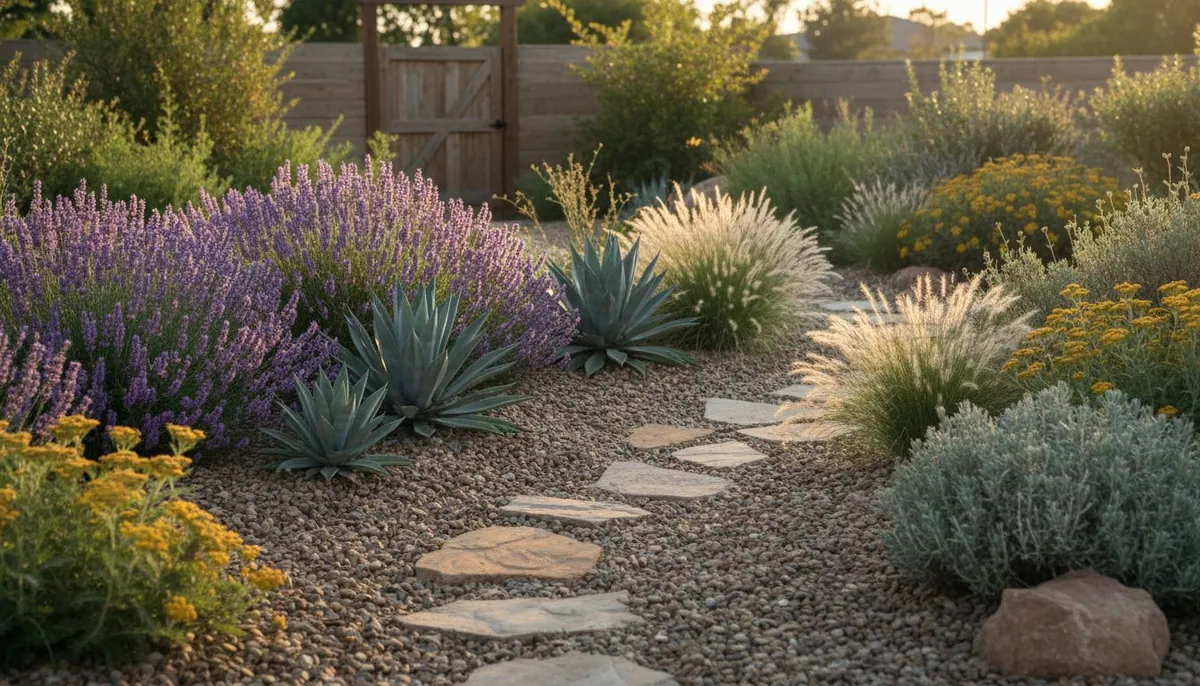
Xeriscaping is the practice of designing a landscape so that it thrives with little or no supplemental irrigation beyond what nature provides. Coined from the Greek word xeros (dry), the term describes a whole-system approach to water-wise gardening rather than a single planting style. Done well, a xeriscape is lush, colorful, and full of life. The persistent myth that xeriscaping means a yard of gravel and a lone cactus does the method a real disservice. In reality, xeriscaping is a set of design principles that any gardener, in almost any climate, can use to grow a beautiful drought-tolerant garden while dramatically reducing water use, maintenance, and cost.
Whether you live in the arid Southwest or a temperate region with periodic summer dry spells, the logic is the same: work with your site's natural rainfall, hold onto every drop, and choose plants suited to the conditions you actually have. This guide walks through the seven core principles of xeriscaping and points you toward the drought-tolerant plants that make it work. For the bigger picture of how these techniques fit together, see our hub guide to water management.
What Xeriscaping Really Means (and Doesn't)
The concept was popularized by Denver Water in the early 1980s during a regional drought, and it has since been adopted by extension services and water utilities across the United States. At its heart, xeriscaping is about matching landscape design to local water availability. It is sometimes called xeriscape, water-wise gardening, or drought-tolerant landscaping, and the goals overlap heavily with permaculture: build healthy soil, reduce waste, and create a resilient system that largely takes care of itself.
Crucially, xeriscaping is not "zeroscaping." It does not mean removing all plants or covering the ground in rock. A well-designed xeriscape can include flowering perennials, ornamental grasses, herbs, shrubs, fruit trees, and even a small patch of lawn where it serves a purpose. The difference is intention: every plant is placed where its water needs match its location, and thirsty species are kept to areas you can realistically irrigate.
The Seven Principles of Xeriscaping
Most xeriscaping frameworks, including those taught by university extension programs, organize the practice around seven interlocking principles. You do not have to apply all of them at once; even adopting two or three will noticeably cut your water use.
1. Plan and Design With Water in Mind (Hydrozoning)
Good xeriscaping starts on paper. Map your yard and note where water naturally collects, where it drains away, which areas bake in full sun, and which stay shaded. Then group plants into zones by their water needs, a practice called hydrozoning. A typical layout uses three zones:
- High-water zone: a small, prominent area near the house or a patio for the plants that need the most attention, such as a vegetable bed or a few showy ornamentals.
- Moderate-water zone: a transition area of plants that need occasional deep watering during dry spells.
- Low-water zone: the majority of the landscape, planted with genuinely drought-tolerant species that survive on rainfall once established.
Grouping plants this way means you never waste water keeping a whole yard alive to satisfy a few thirsty specimens. It also makes irrigation far more efficient, since each zone can be watered on its own schedule.
2. Improve the Soil
Healthy soil is the reservoir that makes a drought-tolerant garden possible. Soil rich in organic matter acts like a sponge, holding moisture longer and releasing it slowly to plant roots. Before planting, work several inches of finished compost into your beds. Compost improves both sandy soils (which drain too fast) and clay soils (which compact and shed water), increasing the amount of rain and irrigation the ground can actually store.
One caveat: some native desert plants, including many cacti and Mediterranean herbs, prefer lean, fast-draining soil and can rot in heavily amended beds. Match your soil prep to the plants you intend to grow, and prioritize good structure and infiltration over sheer fertility in low-water zones.
3. Limit and Rethink Turf Grass
Conventional lawns are among the thirstiest features in any landscape, demanding regular irrigation, mowing, and fertilizer. Xeriscaping does not forbid lawns, but it treats turf as a functional surface rather than a default groundcover. Reserve grass for areas where you genuinely use it, such as a play space for children or pets, and replace decorative turf with planted beds, groundcovers, or drought-tolerant native grasses.
Where you keep lawn, choose a regionally appropriate, low-water species and mow it a little higher, which shades the soil and reduces evaporation. Shrinking the lawn is often the single biggest water saving a homeowner can make.
4. Water Efficiently
Even a drought-tolerant garden needs water while plants establish their roots, and efficient delivery makes every drop count. The gold standard is drip irrigation, which delivers water slowly and directly to the root zone, minimizing the evaporation and runoff that plague overhead sprinklers. Drip systems can be paired with a timer and a soil-moisture or rain sensor so plants are watered only when they actually need it.
Whatever method you use, water deeply and infrequently rather than lightly and often. Deep watering encourages roots to grow downward, where soil stays cooler and moister, producing plants that can withstand dry periods on their own. Watering in the early morning further reduces evaporative losses. Capturing rainfall in a rain barrel or reusing household greywater can supply much of a xeriscape's modest needs while easing demand on municipal supplies.
5. Mulch Generously
Mulch is one of the most powerful and least expensive tools in water-wise gardening. A two-to-three-inch layer of organic mulch such as wood chips, bark, or shredded leaves shades the soil, slows evaporation, suppresses moisture-stealing weeds, and moderates soil temperature. As organic mulches break down, they also feed the soil and improve its water-holding capacity over time.
Keep mulch pulled back slightly from plant stems and tree trunks to prevent rot, and refresh it as it decomposes. In hot, dry regions, mineral mulches like gravel can be used around cacti and succulents that prefer dry crowns. For a deeper look at materials and application, see our guide to mulching the garden.
6. Choose Drought-Tolerant Plants
The plants you select define whether a xeriscape sinks or swims. Favor species adapted to dry conditions, ideally natives and well-behaved regional plants that already suit your climate and soil. Look for water-thrifty traits: deep taproots, silvery or hairy leaves that reflect sunlight, small or waxy foliage that limits water loss, and succulent tissues that store moisture. A detailed plant-selection section follows below.
7. Maintain Appropriately
A xeriscape is low-maintenance, not no-maintenance, and its needs are simply different from a conventional yard. Weed regularly so unwanted plants do not steal water, refresh mulch each season, and prune to keep plants healthy. Go easy on fertilizer, since lush forced growth is thirstier and weaker. Most importantly, taper off irrigation as plants establish; the goal is a garden that, after the first year or two, lives largely on rainfall.
Best Drought-Tolerant Plants for a Xeriscape
The palette for low-water landscaping is far richer than most people expect. Below are reliable, widely available drought-tolerant plants organized by role. Combine several categories to create a garden with year-round structure, color, and habitat value.
Succulents and Architectural Plants
- Agave — bold, sculptural rosettes that store water in their thick leaves and thrive on neglect in hot, sunny sites.
- Aloe vera — a useful succulent for warm climates, tolerating drought while offering soothing leaf gel.
- Yucca — spiky evergreen accents with dramatic flower spikes and exceptional heat and drought resistance.
Mediterranean Herbs
Many culinary herbs hail from the dry Mediterranean basin and are naturally suited to low-water gardens, rewarding you with fragrance and food.
- Lavender — silvery, aromatic, and beloved by pollinators; it demands full sun and sharp drainage.
- Rosemary — an evergreen shrub that shrugs off drought and doubles as a kitchen staple.
- Thyme — a low, spreading groundcover that tolerates poor soil and light foot traffic.
- Oregano — a tough, sprawling perennial herb that flowers freely and needs little water once rooted.
Flowering Perennials for Color
- Yarrow — flat-topped flower clusters in many colors, extremely drought-hardy and a magnet for beneficial insects.
- California poppy — a cheerful, self-seeding native wildflower that thrives on dry, sunny neglect.
- Purple coneflower — a deep-rooted prairie perennial that blooms through summer heat and feeds birds in fall.
Drought-Tolerant Trees and Shrubs
- Olive — a classic Mediterranean tree for mild climates, prized for its silvery foliage and tolerance of dry, rocky ground.
- Manzanita — an evergreen shrub with sculptural red bark, well adapted to lean, dry western soils.
Always confirm a plant's suitability for your specific USDA hardiness zone and check whether any species is considered invasive in your area before planting.
Getting Started With Your Own Xeriscape
You do not need to convert your entire yard at once. Start with a single bed or the hottest, hardest-to-water corner of your property, and apply the principles in order: observe and plan, improve the soil, install drip irrigation, plant your drought-tolerant selections, and blanket everything in mulch. Water attentively through the establishment period, then step back and let the garden settle into its low-water rhythm.
Over a season or two you will notice the payoff: lower water bills, fewer hours spent mowing and watering, and a landscape that stays green and blooming even when the rain does not come. That resilience is the real promise of xeriscaping, and it fits naturally into a broader permaculture approach to managing water across your whole property.
Sources
- Denver Water — origin and promotion of the xeriscape concept and its seven principles.
- U.S. Environmental Protection Agency (EPA) WaterSense program — guidance on water-efficient landscaping.
- Colorado State University Extension — research-based recommendations on xeriscaping and drought-tolerant plant selection.
- University of California Agriculture and Natural Resources (UC ANR) — water-wise gardening and irrigation efficiency resources.
- USDA Natural Resources Conservation Service (NRCS) — soil health and moisture-conservation practices.
About the Author
Lucas is a writer and researcher focused on sustainable agriculture and permaculture practices.