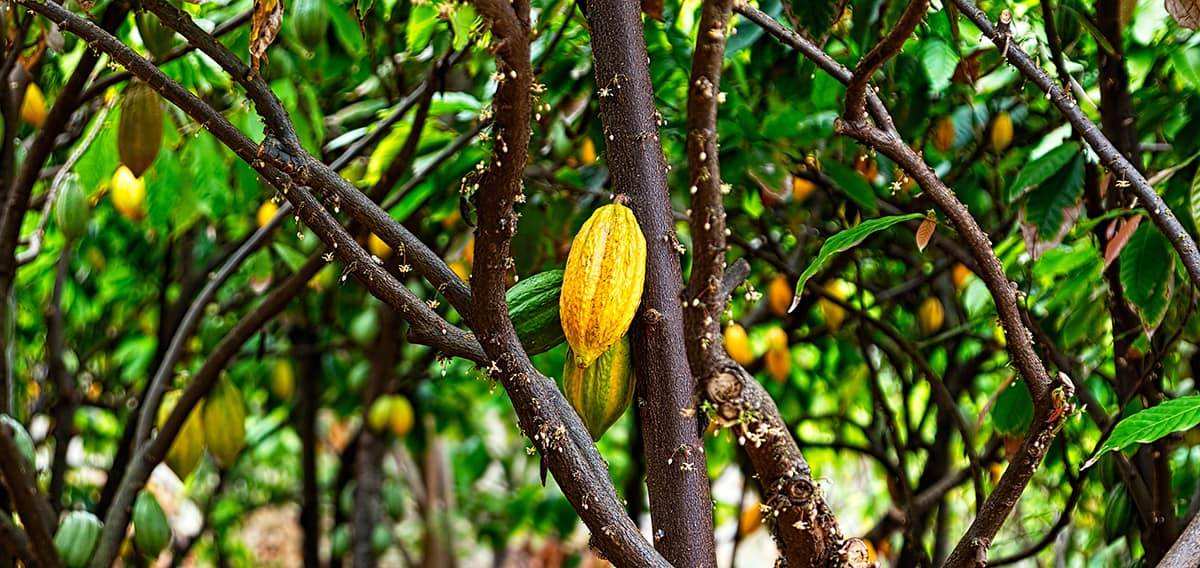
Most people think they love chocolate. What they actually love is sugar, milk fat, and maybe a trace of what cacao once was before it got alkalized, conched, and sweetened into something a Mesoamerican farmer would barely recognize. I had this realization the first time I cracked open a fresh pod in Costa Rica and ate the pulp straight off the seed, which is sweet and floral and faintly citrusy, nothing like chocolate at all. The seed itself, raw and unfermented, is almost unbearably bitter and astringent. There's no chocolate flavor yet. That flavor doesn't exist in the plant. It gets built, through microbial fermentation and heat and chemistry, by human hands, over days. Cacao doesn't make chocolate. We do.
That distinction changes how you think about growing this tree. You're not cultivating a finished product; you're cultivating potential. And the gap between that potential and what ends up in a grocery store wrapper is where most of the plant's genuine complexity, nutritional density, and ecological story quietly disappears. Growing cacao yourself, or even just understanding how it actually works, puts you back at the beginning of that chain, which is a strange and worthwhile place to stand.
Cacao Origin and History
Botanical Background and Native Habitat
If you want to understand what cacao needs in your garden, start where it comes from. Theobroma cacao is a long-lived perennial evergreen in the Malvaceae family, native to the shaded understory of humid tropical rainforests stretching from southern Mexico through Central America down into the Amazon basin, typically below 300 meters elevation, though it can grow as high as 1,200 meters.[1][2] In cultivation it reaches 4 to 8 meters; left to its own devices in the wild, it can push to 15 meters or more.[3][4] Trees typically begin producing pods after 3 to 5 years and can remain productive for 50 to 100 years under optimal conditions, though commercial plantations often cycle them out after 20 to 30.[5] One trait I find endlessly useful from a design perspective: cacao is polycarpic, meaning it flowers and fruits continuously or in multiple flushes throughout the year rather than in a single concentrated season. It genuinely thrives in dappled shade rather than merely tolerating it.[2][6]
Domestication began in the upper Amazon roughly 5,300 years ago, with archaeological residues at Santa Ana-La Florida in Ecuador among the earliest evidence.[7] That long history of selection came at a cost: cultivated cacao (subsp. cacao) has 20 to 30 percent less heterozygosity than its wild relative (subsp. sphaerocarpum), a genetic bottleneck that underlies much of its susceptibility to disease today.[8][9] Monoculture farming amplifies this, increasing disease incidence by 2 to 5 times compared to diverse plantings.[10] It's a cautionary tale I think about every time I'm tempted to repeat a winning plant across a whole system. Diversity isn't decorative; it's structural resilience. Cupuaçu (Theobroma grandiflorum), a close Amazonian cousin, shares cacao's polycarpic habit, shade tolerance, and long productive lifespan of 20 to 50 years, though it typically begins flowering a little earlier, at 2 to 3 years.[11][12]
Visual Characteristics of the Cacao Tree
Cacao has a distinctive presence even before it fruits. The tree grows with an upright pyramidal habit and low branching that forms a dense, rounded to conical crown, with smooth grayish-brown bark and large, glossy leaves that can run 10 to 30 centimeters long.[13][14] The leaves are alternate, elliptical to oblong, dark green above with an acuminate tip, and young growth often shows a reddish flush before hardening off to green.[15][16] What stops people cold the first time they see it is the flowers: tiny, about 1 centimeter across, pink to salmon-red, and emerging directly from the trunk and older branches rather than from new growth.[17] This phenomenon, called cauliflory, is one of those traits that makes a plant feel almost prehistoric.
The pods are equally striking. Each one is an elongated, ridged berry (technically speaking) running 15 to 30 centimeters long, with 10 prominent longitudinal ridges and a pointed tip, ripening to yellow, orange, or red depending on the variety.[18][19] I've spent time studying ripeness cues through documentation from trusted growers in Costa Rica and the Philippines, and color change combined with a hollow tap when knocked is the signal that fermentation can begin. Cupuaçu shows the genus can do even more: it grows taller (commonly 8 to 12 meters), with rough scaly bark, much larger leaves (up to 50 centimeters), larger cream-colored flowers, and thick-rinded pods that can weigh 1 to 4 kilograms.[20][12] Same genus, very different presence in the garden.
Traditional and Cultural Uses
The story of how humans have used cacao builds directly on this early period of Amazonian domestication.[21][22] By the time the Olmec were using it around 1900 to 1500 BCE and the Maya had incorporated it into daily and ritual life by roughly 600 BCE, cacao had become far more than food.[23] The Aztec cultural integration took three main forms: 1) drinking xocoatl, a bitter frothy preparation spiced with chili and vanilla, 2) using cacao beans as currency, and 3) offering them to gods including Ek Chuah. Cacao showed up at marriages, in healing rituals, and as a symbol of life and fertility.[24][25] Ceremonial cacao was never a commodity; it was sacred.
Spanish and Portuguese traders changed all of that in the 16th century, carrying cacao into Europe and eventually to West Africa and Asia, where it was gradually transformed from a bitter medicinal drink into a sweetened luxury.[26][27] Today, global production exceeds 5 million tons annually, concentrated in West Africa (particularly Ivory Coast and Ghana), feeding a chocolate industry worth over $100 billion.[28] That scale comes with serious costs: monoculture disease pressure, ongoing sustainability concerns, child labor issues, and the increasingly visible cultural appropriation of indigenous ceremonial cacao practices by wellness culture.[29] As a designer passionate about regenerative systems, I believe supporting indigenous-led cacao initiatives is the only approach that makes ethical and ecological sense. Cupuaçu carries its own parallel history in the Amazon, used by indigenous peoples for food, medicine, and rituals connected to fertility and forest spirits, though it wasn't formally described by Western science until the 19th century despite centuries of traditional use.[30][31]
Fun Facts About Cacao
Carl Linnaeus named the genus Theobroma in 1753, combining the Greek words for god (theos) and food (broma), literally "food of the gods," pulling directly from the reverence Mesoamerican cultures had for the plant.[13][15] The species name cacao traces back to the Nahuatl word cacahuatl. It's one of those etymological threads that connects a botanical Latin name directly to the people who first cultivated the tree thousands of years earlier, which I find genuinely moving.
Beyond its cultural weight, cacao does remarkable ecological work. Its cauliflorous flowering strategy makes it accessible to a range of small pollinators, and it functions as a pioneer species in forest gaps and along riverbanks, helping to rebuild canopy.[32][33] Pod dispersal relies on monkeys, bats, toucans, and agoutis, animals that are themselves indicators of healthy forest ecosystems. Cupuaçu functions similarly as a keystone species in its native range, with tapirs and peccaries serving as its primary dispersers.[34] Both trees are reminders that productive food plants and ecological function aren't in competition; in a well-designed forest garden, they're the same thing.
Cacao Varieties and Sourcing
The Three Genetic Groups: Criollo, Forastero, and Trinitario
Every cacao tree alive today traces back to one of three genetic groups, and understanding which is which changes how you shop for a tree, choose a bar of chocolate, and plan a food forest planting.[35][36] Criollo is the one chocolate connoisseurs get starry-eyed about: pale, almost white cotyledons, delicate pods, and a flavor profile that needs very little coaxing to shine.[35][37] The catch is that Criollo is also low-yielding and disease-prone, which is why it represents only a small fraction of global supply. Forastero, particularly the Amelonado subtype, is the complete opposite: robust, productive, and responsible for 80 to 90 percent of the world's cacao.[35] The flavor is earthier, more straightforwardly "chocolate," and it handles the humidity and fungal pressures of commercial plantations far better than Criollo ever could. Trinitario emerged in Trinidad as a natural hybrid of the two, and it's arguably the most interesting group for small-scale growers: better vigor than Criollo, more nuanced flavor than most Forastero, and the genetic diversity to express either parent's traits depending on individual seedling.[35]
Notable Cacao Cultivars and Related Theobroma Species
Within those three broad groups, named cultivars tell a more specific story. Nacional (also sold as Arriba) is Ecuador's gift to fine-flavor cacao: floral, lightly spiced, and deeply aromatic in ways that bulk commodity chocolate never approaches.[35][38] I've home-fermented Nacional beans alongside Forastero batches, and the difference is immediate even before you roast them. Sitting right next to Nacional in Ecuadorian growing regions is CCN-51, a high-yielding hybrid bred specifically for resistance to frosty pod rot and witches' broom, two of the diseases that have devastated plantations across Latin America.[35][38][14] After losing a tree to black pod myself, I now reach for CCN-51 or the Brazilian BRS Para 1 whenever disease pressure is a real concern in the planting site.[39] From Venezuela, Chuao remains one of the most storied fine-flavor selections, valued for a nutty, almost delicate complexity tied closely to the specific valley where it's grown.[35] Taiwan's Tainung 7 rounds out the disease-resistant options with combined resistance to black pod rot and witches' broom in high-yield packages.[35]
Cupuaçu (Theobroma grandiflorum) deserves a mention here as a sister species rather than an afterthought. Brazilian breeders at Embrapa have developed cultivars like BRS-156, Tracuateua, and BRS Tg-01 with targeted improvements to fruit weight, pulp yield, and witches' broom resistance, showing what sustained breeding attention can achieve within this genus.[40][41] All of this genetic richness traces back to domestication that began around 5,300 years ago in the Amazon.[42] Wild populations still hold diversity we haven't fully mapped, which makes the ongoing pressure from deforestation and monoculture expansion genuinely sobering.[43][44] Every diverse, fine-flavor planting someone establishes in a home food forest or small agroforestry system is, in a small way, a counter-argument to genetic erosion.
Sourcing Cacao Plants and Seeds in the US
For US growers, Logee's Greenhouses, Miami Fruit, Fresh Tropicals, and Baker Creek (RareSeeds.com) are among the more reliable starting points for both plants and seeds.[45][46][47] Seed packets typically run $5 to $15 for 10 to 20 seeds; young plants or seedlings land somewhere between $20 and $60 depending on size and cultivar.[45][48] There's no centralized official vendor list, so availability shifts seasonally, and I'd recommend calling ahead or checking current stock online before counting on a specific cultivar.[49]
Import regulations are not optional fine print here. USDA APHIS restricts live cacao plants outright without specific permits, and seeds require phytosanitary certificates plus possible fumigation or quarantine before they can enter legally.[50][51] Florida adds its own layer of state-level rules on top of the federal ones, and I keep copies of all phytosanitary paperwork for every plant I bring in because one missing certificate can mean losing an entire shipment.[52][50] These rules exist to protect domestic agriculture from the same witches' broom and black pod outbreaks that have reshaped production regions elsewhere; they're worth taking seriously. Cupuaçu follows the same import framework, with fresh fruit prohibited and seeds or plants requiring certification; Sheffield's Seed Company and Trade Winds Fruit carry seeds in the $10 to $20 range, with saplings running $25 to $75.[53][54][55] For anyone in zones 10 through 12 ready to take the plunge, starting from a nursery-grown plant rather than seed will almost always give you a faster, more reliable path to an established tree.[49]
Cacao Propagation and Planting
Cacao is not a forgiving plant to propagate. It demands fresh seed, precise conditions, and a willingness to work around its genetic quirks, or it punishes you with blank trays and disappointing germination rates. I've started it from seed more times than I can count, and the single most important lesson I've carried away is this: sow the same day you extract the seeds from the pod. Even a few days of delay can drop germination sharply. That urgency sets the tone for everything else in this section.
Understanding Cacao Seeds: Morphology, Recalcitrance, and Genetic Challenges
The seeds themselves are compact ovals, roughly 1.5 to 2.5 cm long and 1.0 to 1.5 cm wide, with two large white cotyledons folded around a small rudimentary embryo.[56][57] Criollo seeds run smaller; Forastero larger. That size difference seems trivial until you're handling nursery trays and trying to calibrate your depth of sow. What matters most, though, is what's happening inside: cacao seeds are recalcitrant, meaning they maintain 40 to 60 percent moisture content and begin dying the moment that drops below 20 to 30 percent.[36][58] Ambient storage buys you two to six weeks at most, and moist cold storage at 15 to 20°C extends that to three to six months before viability collapses. Drop below 10 to 15°C and you trigger chilling injury.[16]
Cupuaçu (Theobroma grandiflorum) shares this recalcitrant behavior, though its larger seeds and occasional polyembryony give it slightly more flexibility in moist storage, sometimes holding viability up to 180 days at 18°C.[59][60] That polyembryony is actually useful because nucellar embryos are genetically identical to the mother plant. Cacao offers no such shortcut.
Here's the other complication: even perfectly fresh, viable cacao seed will not reliably reproduce the parent tree. Cacao is highly heterozygous and exhibits gametophytic self-incompatibility, which means fewer than one percent of seedlings come true to type.[61][62] I've grown out unlabeled seedling rows and been genuinely surprised at fruiting time by what showed up. If you're growing cacao for a specific flavor profile or yield characteristic, seed propagation is a gamble. Vegetative methods are how you lock in what you want.
Germination Requirements and Timeline for Cacao Seeds
Fresh cacao seeds do not need any coaxing to germinate. They lack true dormancy, so the moment conditions are right, they go.[63] Optimal germination happens at 25 to 30°C with 80 to 90 percent humidity, in moist vermiculite or peat.[64] Light scarification can push success rates up to 80 to 90 percent, with sprouts appearing in 7 to 14 days under those conditions.[65] Seedlings are ready for transplant at around 6 to 8 inches tall, which typically takes 3 to 4 months in the nursery.[64][66]
Young cacao seedlings have a distinctive umbrella-like form at first flush, and I've found that consistent labeling at the sowing stage saves enormous confusion later. Seed-grown trees typically take 3 to 5 years to bear fruit, while grafted trees can produce in as little as 2 years.[67] If you're growing for production rather than experimentation, that three-year difference matters enormously.
Vegetative Propagation Methods: Cuttings, Grafting, Air Layering, and Tissue Culture
Grafting is the commercial standard for a reason. It delivers genetic uniformity, faster bearing, and true-to-type plants that seed simply cannot guarantee.[68] After several seasons of experimenting in my own subtropical garden, I've landed on cleft grafts onto 6-month-old rootstocks because they heal faster in humid conditions than side grafts do. Your climate may call for adjustments, but the underlying principle holds: a healthy, well-established rootstock and a sharp, clean cut make or break the union.
Cuttings are another solid option, though success is genotype-dependent and rarely reaches the rates grafting achieves. The protocol is specific: softwood or semi-hardwood cuttings 10 to 15 cm long with 3 to 4 nodes, treated with 1,000 to 3,000 ppm IBA rooting hormone, set into a 1:1 sand and peat mix (or perlite/vermiculite), and held at 25 to 30°C under 80 to 90 percent humidity.[69][70] Roots typically develop in 4 to 8 weeks, with success rates between 20 and 50 percent. High humidity and bottom heat are the two levers I've seen make the biggest difference for growers struggling with lower rates.
Air layering and tissue culture round out the toolkit. Air layering achieves 40 to 70 percent success, while nodal tissue culture on MS medium with BAP and NAA, followed by IBA-induced rooting, reaches 60 to 90 percent under laboratory conditions.[71][72] Both are valuable for preserving elite genetics, but neither is practical for most small-scale growers without specialized equipment.
Soil, Site Selection, and Light Requirements for Successful Establishment
Everything propagation achieves can be undone by wrong soil or wrong light. Cacao demands well-drained loamy or sandy-loam soils with 3 to 10 percent organic matter and a pH of 5.5 to 7.0, with the sweet spot between 6.0 and 6.5.[64][73] In my experience, keeping pH in that 6.0 to 6.5 band has prevented the leaf bronzing I used to see when beds dipped below 5.5; I now test every spring and add lime accordingly. Below pH 5.0, aluminum toxicity becomes a genuine problem.[74] Sulfur brings pH down; lime brings it up; compost improves both organic matter and cation exchange. A basic container mix of equal parts peat or coir, perlite or sand, and bark gives young plants good drainage and aeration from the start.[75][76]
About 80 to 90 percent of cacao's shallow fibrous roots live in the top 30 cm of soil, which makes waterlogging and compaction genuinely dangerous; bulk density above 1.4 g/cm³ is enough to compromise root function.[73] On light: cacao is a committed understory species and needs 50 to 70 percent shade during establishment, with mature trees tolerating slightly less.[77][4] I've watched young cacao seedlings wilt and bleach within hours of direct afternoon sun exposure; mature trees handle it far more gracefully. Gliricidia and Inga are two proven agroforestry shade companions that also contribute nitrogen, tying guild design directly into site prep rather than treating it as an afterthought.
Planting Techniques, Spacing, and Nursery Management
Nursery seedlings should be started under 50 to 70 percent shade at 25 to 30°C and 80 to 90 percent humidity in sterilized, well-draining media at pH 5.5 to 7.0. Copper-based fungicides applied preventively help prevent damping-off and early black pod, which can wipe out a tray before you realize what's happening.[64][66] Transplant at 15 to 20 cm height into a prepared, shaded site with generous organic mulch to retain moisture around those shallow roots.
Commercial spacing runs 3 m × 3 m (roughly 10 ft × 10 ft), supporting 1,000 to 1,200 trees per hectare, with adjustments made for cultivar canopy size, soil fertility, and rainfall patterns.[78][79] Forastero types tend toward larger canopies and want more room; compact Criollo types can handle tighter planting. I initially squeezed trees too close in a small guild and had to thin after year three. Canopy spread and airflow matter more than hitting the minimum number, especially in a humid climate where crowding invites fungal pressure. Bananas planted at establishment can serve as a living shade nurse crop while your primary shade trees catch up, tightening early spacing temporarily without locking you in. Whatever numbers you start with, treat them as a baseline and adjust to your specific soil, climate, and extension service guidance.
Cacao Care Guide
Growing cacao well means accepting one fundamental truth: this tree spent millions of years evolving under a closed forest canopy, and it has absolutely no interest in adapting to conditions outside that narrow comfort zone. Every care decision you make should be oriented around recreating the warm, humid, shaded understory of the Amazon, because when cacao is unhappy, it tells you quickly and dramatically.
Sunlight and Shade Requirements
Seedlings and young trees need 50-70% shade, either from shade cloth or from a well-established canopy layer.[80] In my subtropical trials I use 60% shade cloth for the first two years, then pull it back gradually as the canopy above closes in. Mature plants do fine with 30-50% shade coverage, but expose them to full tropical sun and you'll see leaf scorch within a week.[81][64] I always tell people: if you're growing cacao in a food forest, let your banana and moringa layers do that work for you. If you're in a greenhouse, shade cloth is non-negotiable. Proper light management also reduces water stress by cutting down on transpiration, which matters a lot given how drought-sensitive this tree is.
Watering Needs and Drought Tolerance
Cacao has very low drought tolerance. Full stop. I've watched container specimens show leaf wilt and marginal chlorosis within a week or two of missed irrigation, and drought stretching past four weeks triggers significant leaf drop, yield loss, and opens the door to pest pressure that a healthy tree would otherwise shrug off.[82] The goal is to maintain 60-80% of field capacity in that root zone, which in practice means checking the top inch of soil daily. If it's dry, water. Mature trees need roughly 1-2 inches per week during dry periods; seedlings want slightly less but more frequently, around 0.8-1.2 inches weekly to keep the topsoil consistently moist.[83] Drip irrigation plus a solid 2-4 inch layer of organic mulch is my preferred setup; it stabilizes moisture, keeps roots cool, and reduces how often I'm hand-watering.
The symptoms of getting it wrong in either direction are worth knowing before they appear on your trees. Underwatering shows up as wilting, browning leaf tips and margins, and eventually premature leaf drop.[84] Overwatering looks deceptively similar at first (yellowing, wilting) but is accompanied by root rot and often a Phytophthora infection that can kill a tree fast.[85] Use soft water when possible; cacao is sensitive to salinity and prefers irrigation water with electrical conductivity below 0.5 dS/m and a pH of 5.5-7.0, making collected rainwater ideal.[86]
Fertilizing and Nutrient Management
Cacao is a heavy feeder, and I mean that seriously.[87] During the first two to three years, while the tree is focused on vegetative growth, I use a higher-nitrogen formula (roughly NPK 3:1:2 or 2:1:1). Once flowering and fruiting begin, I shift to a more balanced or potassium-forward blend (1:2:2 or 2:1:2) to support pod development. Young trees need roughly 100-200g of nitrogen per tree annually; mature trees push that up to 300-500g, with potassium requirements climbing even higher.[88] I split applications three to four times per year, timed to rainfall and the tree's phenological state.
The part I wish someone had drilled into me earlier: I never fertilize now without a recent tissue analysis. Guessing at NPK in acidic tropical soils is how you end up with lush, gorgeous foliage and zero pods.[89] Soil tests every one to two years are genuinely non-negotiable here, because acidic conditions lock up micronutrients fast.[90] After seeing brittle shoots and malformed pods in my Florida planting, I traced it back to boron deficiency; now I do foliar boron and magnesium sprays every other year and pod quality has improved markedly. Watch for interveinal chlorosis on older leaves (nitrogen or magnesium), purplish coloration (phosphorus), and tip dieback (calcium) as early warning signs that something is off before it becomes a yield problem.[91]
Frost Tolerance and Cold Protection
There is no such thing as a frost-tolerant cacao. Temperatures at or below 0°C are lethal, and even brief exposure to -1°C can kill a tree outright.[92] Prolonged exposure below 18°C causes leaf drop, growth stagnation, and eventual dieback, so the realistic growing window is USDA zones 11-13, with zone 10b possible only with deliberate cold protection.[93][94] I grow both cacao and cupuaçu, and while cupuaçu handles short-term dips to 10-15°C somewhat better, I treat cacao as the far more tender of the two and never let it get close to those temperatures if I can help it.
My layered protection approach: site selection first (never a frost pocket, always the warmest microclimate available), then tall windbreaks to prevent cold air drainage, then a generous mulch layer around the root zone, and frost cloth on nights when temperatures threaten to drop below 15°C.[65] Overhead irrigation is an emergency tool if frost is actually imminent. Cold damage shows up as water-soaked leaf lesions that turn necrotic, flower bud drop, and cracking on immature pods; none of those symptoms are reversible.[95]
Heat Tolerance and Temperature Management
The comfortable range is 20-32°C, with nighttime temperatures ideally holding between 18-21°C so the tree can recover from daytime heat load.[96] Sustained temperatures above 35°C impair photosynthesis, reduce fruit set, and cause visible scorching on leaf margins; seedlings are particularly vulnerable above that threshold.[97] In my early subtropical trials, I lost young plants to flower drop within days of a heat spike above 35°C simply because I hadn't yet set up adequate shade. That mistake is the reason I now run 40% shade netting as a baseline and treat microclimate management as the most important variable I control.
Shade trees that reduce canopy temperatures by 2-5°C are one of the most effective tools you have, alongside maintaining humidity above 70% and running drip irrigation in the early morning to cool the root zone before peak heat arrives.[98] If you're selecting a cultivar for a warm, marginal site, TSH-555, Amelonado, and UF-273 have demonstrated better heat tolerance than most.[99] Subtropical cultivation in places like Florida remains genuinely experimental; go in with realistic expectations and a good irrigation setup.
Pruning, Maintenance, and Seasonal Care
Formative pruning in years one through three shapes the tree's entire productive life. The goal is a strong central leader with four to six well-spaced scaffold branches and an open crown that light and air can move through freely.[100] Remove basal shoots and suckers early and often; they'll steal energy and create humidity traps right at the base where fungal problems originate. After that first phase, annual maintenance means removing dead, diseased, and crossing wood plus any water sprouts, ideally after the main harvest or during the dry season when infection risk is lowest.[101] Good airflow through the canopy is one of your best disease-prevention tools, and proper pruning can meaningfully lift yields over the long term.
On spacing: plant trees 3-4.5 meters apart for orchard establishment, but plan to thin after 10-15 years if you start dense.[81] One practical note I'll add from bitter experience: cacao seedlings look remarkably like young citrus in the greenhouse, especially at the first true-leaf stage. I now label every row with bright, permanent markers because I've mixed up plantings more than once, and discovering the confusion at transplanting time is not a fun morning. Cacao doesn't enter dormancy; it flowers and fruits continuously throughout the year in tropical climates, with rainfall-driven peaks, and each pod takes 5-6 months from pollination to harvest.[102] That continuous phenology means your maintenance calendar never really stops; year-round humidity control, consistent watering, and vigilant pruning are the baseline, not the exception.
Cacao Harvesting: Timing, Technique, and Yield
From Planting to First Harvest: Timelines and Cultivar Differences
Cacao rewards patience before it rewards you with a single pod. Seed-grown trees typically take 3-5 years to produce their first fruit under optimal conditions, while grafted trees shorten that wait to 2-4 years.[103][104] Criollo types tend to fruit earliest, around three years, while Forastero varieties often push toward four or five.[105] And once a tree does flower, you're still not done waiting: each pod takes 150-180 days from flower to physiological maturity, with Forastero finishing faster (140-160 days) than Trinitario, which can stretch to 190.[106][107] That kind of timeline recalibrates your expectations fast. I've found that growers who enter cacao with a vegetable-garden mentality struggle with it; those who think in orchard rhythms settle in much more comfortably.
Reading Pod Maturity: Visual, Tactile, and Regional Cues
After several seasons, I now tap every pod before I cut it. That hollow sound has saved me from harvesting under-ripe fruit more than once, and it's one of those cues you can't fully appreciate until you've heard the difference between a dense, immature pod and one that rattles slightly with developed seeds inside. The other signals are just as readable once you know them: a color shift from green to yellow, orange, or red depending on cultivar, a hardened outer shell, seeds around 10-12 cm long with moisture content dropping to 40-45%, and a pod weight somewhere in the 0.3-0.5 kg range.[108][109] Time your harvests in the morning to reduce spoilage risk, and skip rainy days when you can.[110] West African cacao operates on a concentrated two-season calendar, with a main harvest from October through March and a mid-crop running April to August.[111] Indonesian production is more continuous, with peaks in May-June and November-December, which actually resembles the year-round fruiting patterns I'm more familiar with from subtropical food forests.[112] Cupuaçu, the Amazonian relative, peaks February-April within a December-May season, a useful reminder that even closely related Theobroma species follow their own regional rhythms.[113]
How to Harvest Cacao Pods by Hand
The cacao tree harvest happens every 10-14 days using either a machete for pods within reach or a pole pruner for anything higher than about six feet (trees can fruit up to twenty feet up).[101] The cut goes close to the trunk or branch, clean and deliberate, without nicking the bark. A careless cut invites the fungal diseases covered earlier in this article, and I've seen trees set back significantly by sloppy harvesting. Pod thinning to 20-40 pods per tree can improve overall yield by 20-30%, which sounds counterintuitive until you watch a well-thinned tree outperform an overloaded one two seasons in a row.[114] I adjust how aggressively I thin based on individual tree vigor; a young tree in its second fruiting year gets more relief than a well-established one.
Yield, Seed Characteristics, and Post-Harvest Timing
Open a ripe cacao pod and you'll find 20-60 seeds, each roughly 2-2.5 cm long, nested in sweet white mucilaginous pulp.[18][19] That pulp is edible and genuinely delicious fresh, which surprises most people the first time. Fermentation must begin within 24-48 hours of harvest to develop the flavor precursors that eventually become chocolate.[115] Everything that happens in those first two days after cutting determines the ceiling on bean quality. The processing itself belongs to the next section, but the message here is simple: harvest promptly, handle gently, and get those beans into fermentation fast.
Cacao Preparation and Culinary Uses
Edible Parts and Essential Post-Harvest Processing
Cacao gives you two edible gifts from one pod: the seeds, which become chocolate, cocoa powder, cacao nibs, and cocoa butter, and the sweet, fruity pulp clinging to those seeds, which gets consumed fresh or fermented into beverages across Latin America and West Africa.[116][117] Most people never encounter the pulp, which is a shame, because it's bracingly delicious. The seeds, though, are where the real transformation happens, and that transformation is non-negotiable.
Fresh cacao beans taste nothing like chocolate. They're bitter, astringent, and faintly sour. Getting from that raw bean to anything resembling the flavor in a bar of dark chocolate requires fermentation (typically five to seven days, though the range runs two to eight), drying down to six to eight percent moisture over roughly five to ten days of sun-drying with frequent turning, and roasting somewhere between 120 and 150°C for twenty to forty minutes.[118][119][120] Fermentation is where microbial succession does its work, yeasts converting sugars first, then lactic acid bacteria, then acetic acid bacteria, each handoff building flavor precursors and killing the seed's embryo to prevent germination. I've seen what happens when you skip adequate turning during drying: the batch I observed on a small trial farm in South Florida developed surface mold because the beans never reached that critical moisture target. The FAO's guidance on frequent stirring isn't bureaucratic caution; it's the difference between cacao powder and compost. Roasting then kills remaining pathogens, including Salmonella at internal temperatures above 110°C,[121] and drives the Maillard reactions that turn pale, acidic nibs into something genuinely chocolatey.
That processing also reduces phytic acid, the antinutrient that binds minerals and limits their absorption, by twenty to thirty percent during fermentation and another twenty to forty percent during roasting.[122] It's a reminder that patience in post-harvest handling isn't just about flavor; it's about making the nutrition in the bean actually accessible.
Nutritional Profile, Flavor Development, and Sensory Characteristics
Raw cocoa beans are nutritionally dense in ways that can surprise people: roughly thirty-five to fifty percent fat as cocoa butter, fifteen to twenty-five percent protein, thirty to thirty-five percent carbohydrates, and striking mineral concentrations including around 485 mg of magnesium and 11.8 mg of iron per 100 grams.[123] The flavanol fraction, particularly epicatechin and catechin, carries the antioxidant activity that researchers associate with cardiovascular benefit,[124] though those flavanols degrade with heavy roasting and alkalization, so minimally processed raw cacao powder preserves more of them than heavily dutched cocoa powder.
Flavor development is a layered story. Variety sets the baseline: Criollo beans bring delicate floral notes, Forastero delivers robustness and volume, and Trinitario sits somewhere between fruity and balanced chocolate.[125] Fermentation then adds fruity, floral, and earthy precursors, while roasting builds caramel, coffee, and woody complexity through over 600 volatile compounds formed via Maillard reactions.[126] In my own kitchen trials, the difference between a 120°C light roast and a 150°C roast is immediately apparent: the lower temperature preserves bright, fruity notes while the hotter roast drives deeper chocolate character. Neither is wrong; it depends what you're making. Cocoa butter then smooths the gritty texture of ground nibs and tempers the lingering bitterness that polyphenols drive, particularly noticeable in high-percentage bars.[127][128] For pairing, molecular gastronomy research supports cacao's affinity with nuts, fruits, and spices in roughly sixty-six to seventy percent of tested combinations due to shared volatile compounds,[129] which explains why cacao powder brownie recipes with chili or orange feel intuitively right rather than experimental.
Cupuaçu, the close Theobroma relative I've grown alongside cacao in tropical guild designs, flips the edible focus entirely. Its white, creamy pulp scores sweet-sour on sensory scales with pineapple, banana, and passion fruit aromas and a mild chocolate aftertaste, while its seeds are pressed mainly for a caffeine-lower cocoa butter substitute rather than eaten directly.[130][131] The pulp itself provides around 47 kcal, 10.4 grams of carbohydrates, 5 grams of fiber, vitamin C, potassium, and polyphenols per 100 grams,[132] and its creamy texture makes it a genuinely useful substitute in recipes calling for banana or pineapple alongside chocolate notes.
Traditional and Medicinal Preparations
Long before anyone tempered chocolate or formulated a hot cocoa mix recipe, Amazonian and Mesoamerican cultures were using cacao medicinally. Maya and Aztec healers prepared cacao pastes and drinks for wounds, fever, fatigue, digestive complaints, and heart conditions; it appeared in topical applications for skin ailments and was considered an aphrodisiac and sacred food linked to fertility.[133] These weren't casual uses. The preparation methods, grinding, mixing with water, spices, and sometimes other plant materials, treated the bean as both food and pharmacy.
Cupuaçu carries a parallel tradition among Amazonian peoples including the Yanomami, Kayapó, and Shipibo, who work with bark decoctions for inflammation and respiratory complaints, leaf preparations for skin conditions, and pulp for gastrointestinal issues like diarrhea and dysentery, with typical tea doses running one to two cups daily from five to ten grams of dried material per cup.[134][135] The preclinical research on cupuaçu's pharmacological activity is promising but thin compared to cacao's clinical data, so I'd approach it as a traditional preparation with early scientific interest rather than a proven therapeutic.
Non-Food Uses, Safety Considerations, and Ethical Sourcing
Cacao is safe for humans in moderate amounts; our theobromine metabolism runs ten to twenty times faster than a dog's,[136] which is why a square of dark chocolate is a pleasure for us and a genuine emergency for them. The canine LD50 for theobromine sits at 100 to 200 mg per kilogram body weight,[137] and the same toxicity applies to cats and horses. In my household, cacao products stay completely away from the dogs, full stop. Cocoa allergies are rare, affecting less than one percent of the population and often cross-reactive with other allergens,[138] and finished chocolate products sit within Codex safety standards for theobromine at up to 200 to 300 mg per kilogram.[139]
Beyond the kitchen, the Theobroma genus supports broader uses: cupuaçu's hard fruit shell becomes traditional utensils and tools, its seed butter serves in cosmetics as an emollient,[140][141] and the genus as a whole supports agroforestry livelihoods across the Amazon basin.[142] The ethics of sourcing matter here. Over seventy percent of the world's cocoa beans come from West Africa,[143] where child labor affects over 1.5 million children in Ivory Coast and Ghana alone,[144] and sun-grown monocultures sacrifice the biodiversity that shade-grown agroforestry systems actively preserve. When I specify cacao or cupuaçu products in a design or recommend them to clients, I look for certifications that trace back to shade-grown, direct-trade, or agroforestry-verified systems. Commercialization of cupuaçu also raises genuine benefit-sharing questions with the indigenous communities who developed its uses,[145] and those questions deserve more than a certification checkbox. The bean's transformation from bitter seed to complex chocolate is one kind of alchemy; sourcing it responsibly is another.
Cacao Health Benefits and Medicinal Uses
Traditional Medicinal Uses of Cacao
Long before any randomized controlled trial, the Maya and Aztec were prescribing cacao. They used it to treat fatigue, diarrhea, dysentery, fever, and heart conditions, and as a general tonic and stimulant.[146][147][15] What strikes me about that list, every time I read it, is how closely it maps to what modern research has since confirmed. These weren't arbitrary remedies.
Key Phytochemicals in Cacao: Theobromine, Flavonoids, and Polyphenols
The active story here begins with two main characters. Theobromine is cacao's signature alkaloid, concentrated in the seeds at roughly 1.2-1.8% dry weight, with caffeine present at a much smaller 0.2-0.5%.[148][149] Cacao does contain caffeine, though theobromine is the dominant stimulant and vasodilator. The second character is the flavanol family: epicatechin, catechin, and procyanidins, with procyanidins alone making up 60-70% of total flavanols and reaching concentrations up to 12% in unfermented beans.[150][146] Total polyphenol content in raw beans sits around 12-18% of dry weight,[151] and the seeds also carry additional phenolics including chlorogenic, ferulic, and caffeic acids that contribute to both antioxidant activity and that characteristic bitterness.[148]
Processing is where this profile can collapse fast. Alkalization alone can reduce flavanol content by up to 90%. Fermentation takes off another 20-40%, roasting another 10-20%.[152] Natural cocoa retains up to 60 mg/g flavanols; alkalized (Dutch-processed) cocoa can drop below 10 mg/g. I've processed home-grown beans myself and can tell you the difference in aroma and bite between a lightly fermented, gently dried bean and a heavily roasted Dutch-process product is striking. One is still pungent, complex, almost medicinal. The other is smooth and mild, in more ways than one. Cultivar and origin also matter: Nacional and Trinitario types tend to have higher theobromine, and Ecuadorian varieties often show stronger antioxidant polyphenol profiles than West African ones.[153] Environmental factors including soil pH, nitrogen levels, and seasonal timing shift the phytochemical makeup too, with lower pH and drier conditions often pushing higher polyphenol and methylxanthine accumulation.[154]
Clinical Research on Cacao's Health Effects
The cardiovascular evidence is the strongest we have. A systematic review published in the British Medical Journal shows that cocoa flavanols at 200-900 mg per day lower systolic blood pressure by 2-4 mmHg in hypertensive individuals, improve endothelial function, and reduce vascular stiffness, with effects more pronounced in at-risk populations and clearly dose-dependent.[155][156] To put that 2-4 mmHg reduction in perspective, it's modest but consistent, roughly comparable to what you'd see from increasing blueberry flavonoids in the diet. The mechanisms behind it are well-mapped: flavonoids stimulate endothelial nitric oxide synthase via the PI3K/Akt pathway, increasing nitric oxide for vasodilation,[157] while procyanidins inhibit ACE in ways that rival some synthetic inhibitors in vitro.[158]
Metabolic benefits are building a stronger evidence base too. Cocoa flavonoids activate AMPK, enhancing glucose uptake and insulin sensitivity through GLUT4 translocation in a way that mimics some of the metabolic effects of exercise.[159][160] Meta-analyses have found improved insulin sensitivity and reduced fasting glucose in type 2 diabetes patients with cocoa consumption, benefits tied directly to flavanol content.[146] Underlying all of this is a solid antioxidant and anti-inflammatory foundation: flavanols scavenge free radicals and upregulate endogenous antioxidant enzymes via the Nrf2 pathway,[161] while flavonoids suppress NF-κB signaling to reduce pro-inflammatory cytokines like TNF-α and IL-6.[162]
The cognitive story is more recent but genuinely interesting. Cocoa flavanol intake has been associated with improvements in executive function, attention, and memory in both healthy adults and those with mild cognitive impairment,[163] likely through increased cerebral blood flow, BDNF upregulation, and direct neuroprotective effects against amyloid-beta toxicity in Alzheimer's models.[164] There is some evidence that cocoa polyphenols act as reversible MAO inhibitors, which could support mood regulation through neurotransmitter effects,[165] though I'd treat that finding as intriguing rather than settled. Claims about cacao as a sedative or adaptogen have no scientific backing; it's a stimulant first and last.
Cupuaçu (Theobroma grandiflorum) belongs in this conversation as a related species with overlapping benefits: comparable antioxidant and anti-inflammatory activity through the same NF-κB and cytokine pathways,[166][167] plus preclinical antidiabetic potential through enzyme inhibition.[168] Its theobromine content is dramatically lower, which makes it a gentler option for those sensitive to stimulants. The honest caveat is that most of its evidence comes from in vitro and animal studies, with very limited human trials to validate therapeutic use.[169]
Nutritional Profile of Cacao
Raw cacao beans are unusually dense for a food that tends to get framed as a treat. Per 100 grams, they deliver 499 mg of magnesium, 1,524 mg of potassium, 13.86 mg of iron, and 37 grams of dietary fiber,[170] alongside theobromine at 1,000-2,000 mg and total polyphenols at 12-18% of dry weight.[170][146] Those are impressive numbers, but processing takes a significant toll: fermentation reduces polyphenol content by 20-50%, and roasting at 120-150°C strips another 30-60% of flavanols, with bioavailability of whatever remains sitting at just 1-10%.[171] When I harvest my own beans and process them minimally, I'm making a conscious decision to keep more of that nutrition intact, even if the final product is more bitter than a grocery-store bar.
Cupuaçu pulp offers a completely different nutritional portrait: roughly 53 calories per 100g, high water content, modest fiber, and highly variable vitamin C (anywhere from 4 to 162 mg depending on the fruit),[172] with antioxidant phenolic activity that can rival many berries. It's a reminder that the Theobroma genus has useful food in more places than just the seed.
Safety Considerations for Cacao Consumption
The most important thing I tell anyone growing cacao around dogs: fallen pods are a real hazard. Theobromine is highly toxic to dogs and cats, causing poisoning at around 20 mg/kg and with a lethal dose near 100-200 mg/kg.[173][174] After noticing neighborhood dogs investigating pods that had dropped in my food forest, I put up cautionary signs and now pick up anything that falls promptly. Humans tolerate theobromine well up to about 1-2 grams per day, with acute toxicity requiring near-impossible quantities under normal use.[175] Cacao seeds carry the highest concentration (1-3% dry weight); cupuaçu seeds are lower (0.3-2%), and its pulp, which is commonly eaten fresh across Amazonia, has far less still.[176][177]
For humans, cacao products are GRAS-recognized and, at moderate consumption, associated with cardiovascular support.[178] True allergies are rare, under 1% frequency and usually mild, more common through occupational exposure than casual consumption, though cross-reactivity can occur in people with tree nut or latex-fruit sensitivities.[179] Those with known chocolate allergies should also be cautious with cupuaçu.[180] On pregnancy, I err on the side of caution: the combined theobromine and caffeine content is a real consideration, and I suggest limiting strong cocoa preparations during pregnancy in line with general guidance on methylxanthine intake.[181]
Cacao Pests and Diseases
Of all the tropical crops I've worked with over the years, cacao ranks among the most disease-prone. Compared to banana, coffee, or oil palm, it requires more intensive management against a wider range of threats.[182] That's not a reason to avoid growing it, but it is a reason to go in with clear eyes and a solid plan.
Major Diseases of Cacao and Cupuaçu
The three fungal diseases that define cacao cultivation worldwide are Black Pod Rot (Phytophthora spp.), Witches' Broom (Moniliophthora perniciosa), and Frosty Pod Rot (Moniliophthora roreri). Add Cocoa Swollen Shoot Virus (CSSV), which can push yield losses past 50%, and Vascular Streak Dieback, and you have a roster of cocoa tree diseases that would humble most growers.[183][184][185] The good news is that resistance breeding has given us real tools: NA-31, PA-150, and Sca-6 show improved tolerance to Black Pod Rot; TSH-1188, IMC-67, and IMC-60 perform better against Frosty Pod Rot; and TSH-1188 along with certain hybrids carry partial Witches' Broom resistance.[185][186][187] No single cultivar is immune to everything, though, and in fifteen years of working with tropical perennials, I've never found a silver-bullet variety. The most resilient systems always pair the best available genetics with proactive cultural practices.
Environment drives disease as much as pathogen pressure does. Humidity above 80%, annual rainfall in the 1,500-2,500 mm range, temperatures of 20-30°C, and poorly drained or acidic soils all create conditions where these pathogens flourish.[188][189][190] That's essentially a description of cacao's ideal growing conditions, which is the uncomfortable irony at the heart of this plant. Good drainage and well-structured loamy soil at pH 5.5-7.5 don't eliminate risk, but they meaningfully tip the scales toward healthier, more resilient trees.[190] It's something I factor into every site assessment before I even think about variety selection.
Cupuaçu shares susceptibility to Witches' Broom, Black Pod Rot, and Frosty Pod Rot, but it also faces a longer list of genus-specific problems including White Mold, stem canker, bacterial wilt, Ceratocystis wilt, and Fusarium wilt, with disease incidence in unmanaged plantations reaching 20-50%.[191][192] The research base for cupuaçu disease management is thinner than for cacao, so treat any resistance claims for that species with appropriate skepticism until more screening data accumulates. For integrated management across both species, the core toolkit looks similar: resistant varieties, sanitation, pruning for airflow, copper-based fungicides and phosphonate treatments where warranted, biological controls, and shade agroforestry to buffer microclimatic extremes.[193][194] In subtropical U.S. settings specifically, approved fungicides like metalaxyl, copper hydroxide, and thiophanate-methyl round out the toolkit alongside improved spacing for airflow and resistant rootstocks.[194][195]
Key Insect Pests and Natural Defenses
Cacao shows only low-to-moderate natural resistance to insects, and the economic stakes are real. Cocoa pod borers (Conopomorpha cramerella and Conotrachelus spp.) and mirid bugs (Helopeltis spp.) can cause yield losses anywhere from 30 to 90% in unmanaged plantations.[196][197] Some cultivars including CCN-51, ICS-1, ICS-95, and certain Trinitario hybrids show partial tolerance through pod husk thickness or biochemical deterrents, but none are reliably resistant across all environments.[92][198]
What I find genuinely fascinating about cacao is how layered its natural defenses are. Theobromine, caffeine, tannins, and flavonoids act as feeding deterrents and neurotoxins against many insects.[199] Trichomes and latex add physical barriers at the pod surface.[200] Endophytic microbes colonizing the plant's tissues can produce antimicrobials or prime systemic resistance responses.[201] I've also noticed in my observation plantings that seedlings expressing thicker, more pubescent leaves seem to show less early damage from leaf miners, which echoes what the research says about physical defenses mattering most at vulnerable growth stages. Most compelling of all, though, is the ant mutualism: Azteca spp. and other canopy-nesting ants patrolling shaded cacao trees can reduce pod borer populations by 40-70%.[202] That's not a marginal effect. It's a reason to design for shade. Cupuaçu shares mirid and fruit borer pressures with cacao, though it shows moderate natural resistance to some insects, supported by thicker bark, pubescence, phenolics, and mycorrhizal associations.[203][204]
Integrated Pest and Disease Management
Early in my career I leaned too heavily on copper sprays as a first response to disease pressure. It worked, sort of, but I was treating symptoms rather than building resilience. The research has since confirmed what experience eventually taught me: a full IPM approach combining cultural practices, biologicals, and targeted chemistry only when necessary can reduce damage by up to 60% and cut chemical inputs by roughly half.[205][206] That means sanitation first: removing infected pods and debris immediately, pruning to open the canopy, and never letting diseased material sit on the ground. Maintaining 30-50% shade does double duty by moderating the microclimatic humidity that drives fungal outbreaks while simultaneously creating habitat for predatory ant colonies.[207][208] I've watched Azteca populations establish and expand in shaded guild plantings, and the visible reduction in mirid feeding damage each season afterward was real enough to change how I design every cacao system now.
Bacillus thuringiensis, parasitoid wasps, pheromone traps for borers, and neem-based treatments round out the biological and low-impact layer before you ever reach for conventional insecticides or fungicides.[205][206] Cacao's pest pressure reminds me of citrus in some ways: both attract a suite of sucking insects and fungal pathogens in humid climates, and both reward growers who treat the whole system rather than chasing individual problems. The difference is that cacao's stakes are higher and its tolerance margins narrower. Resistance varieties, shade design, sanitation, and biologicals are each genuinely useful, and none of them alone is sufficient.
Cacao in Permaculture Design
Every time I explain cacao to someone new to tropical food forestry, I start the same way: forget what you know about fruit trees in open sun. Cacao evolved deep inside the Amazonian and Central American rainforest understory, and every design decision you make with it flows from that single ecological fact. It isn't a tree you plant in a clearing and hope for the best. It's a tree you build a forest around.
Climate and Growing Zones
The non-negotiables come first. Cacao's growth slows noticeably below 15-18°C (59-64°F), and temperatures under 10°C (50°F) cause leaf drop and real damage.[13][14][75] Frost is simply fatal, full stop. I've watched cacao seedlings in my subtropical test beds look sulky and yellowish during a cool November week that never technically frosted, so even marginal dips near 50°F are worth taking seriously. The sweet spot is 20-30°C (68-86°F); push above 32°C and you start losing photosynthesis efficiency and pod set.[75][209] In the continental U.S., outdoor cultivation is realistically limited to USDA zones 10b-11, meaning south Florida and lowland Hawaii with windbreaks and thoughtful siting. Zone 9 experiments exist, but I wouldn't recommend outdoor planting there without serious microclimate engineering or a greenhouse backup.[75][210]
Beyond temperature, cacao needs 1,500-2,500 mm of annual rainfall distributed fairly evenly through the year.[211][212] Dry spells beyond three to four months cause real stress, yet soggy soils above 3,000 mm invite root rot without exceptional drainage. Relative humidity wants to sit around 70-90%, ideally near 80%.[213][214] The canopy layer you build above cacao does double duty here: shading the roots while holding ambient humidity. Cupuaçu (Theobroma grandiflorum) shares virtually the same frost intolerance and zone limits, though it likes slightly higher rainfall and tolerates marginally warmer peaks, making it a useful design companion where site conditions are a touch wetter or hotter.[75][64] With climate models projecting 10-30% yield declines in major cacao regions by 2050 from rising temperatures and erratic rainfall,[215] diversified, shaded systems aren't just philosophically appealing. They're becoming a practical hedge.
Ecosystem Functions and Biodiversity Support
What I find genuinely fascinating about cacao is how its reproductive biology is woven into the fabric of a healthy forest system. The flowers are tiny, cauliflorous, and last only about 24 hours; they're pollinated almost exclusively by Forcipomyia midges measuring 1-2 mm, which need temperatures of 24-30°C and high humidity to be active.[216][217] I learned early on to keep moist, mulched understory patches throughout my cacao guilds and to avoid any broad-spectrum sprays nearby. In areas where I got lazy about that, pod set dropped noticeably. Those midges aren't optional visitors; they're infrastructure.
The ecosystem contributions extend well beyond pollination. In its native understory habitat, cacao supports monkeys, bats, and birds that disperse its seeds, while its leaf litter returns potassium, magnesium, and calcium to the soil.[218][219] In agroforestry contexts, the numbers are compelling: shade-grown cacao systems can increase soil organic matter by 20-30% and reduce erosion by up to 50% when functioning as a windbreak layer.[220][221][222] A well-established cacao guild also draws birds and bats for insect control in ways I've noticed just by walking through; the canopy comes alive in a way that thin, open plantings never quite match.
Expanding into other Theobroma species deepens these services considerably. Cupuaçu produces larger flowers that draw bees, beetles, moths, and bats, though its self-incompatibility means natural fruit set is a low 5-10% without intervention or enhanced pollinator habitat.[223][64] Cacauí (Theobroma speciosum), a smaller understory relative reaching 5-10 m, similarly supports midges, bats, and frugivore dispersal while adding structural complexity to the mid-canopy.[224] Weaving these species together in a design has become a core strategy I use to hedge against the temperature swings and rainfall unpredictability that are already showing up in subtropical growing zones.
Forest Layer and Guild Design
In a food forest, cacao belongs in the mid-layer. Left unpruned in the wild it reaches 4-8 m; in cultivation, most growers keep it to 3-6 m for access and airflow.[225][226] Think of it the way you'd position coffee or young cardamom: it wants a protective canopy overhead but still needs enough diffuse light to flower prolifically on its trunk and branches. That 50-70% shade recommendation isn't arbitrary. I've seen cacao seedlings sit looking pale and spindly under inadequate canopy for months, then visibly fill out and deepen in color once taller Inga and Gliricidia companions closed the overhead gaps. The physiological relief was almost immediate.
The guild design around cacao is where the real leverage sits. Nitrogen-fixers like Inga species are the classic companions, feeding the heavy nutrient demands cacao has without requiring synthetic inputs. Diverse flowering understory plants sustain the midge populations the tree depends on. Mycorrhizal partners improve phosphorus uptake in the acidic soils cacao prefers, which range from pH 5.0-7.5 with organic-rich, well-drained structure at elevations ideally between 100-600 m.[227][228] Cupuaçu fits a slightly higher vertical niche in the same guild, with 40-70% shade tolerance when young and notably higher biomass output that translates into mulch material for the system below it.[229]
Realistic yield expectations matter for planning. A mature cacao tree produces around 20-30 pods per year; cupuaçu, with its larger fruits weighing 1-4 kg each, yields 20-50 fruits annually.[230][231] Pruning both species for an open canopy and good airflow isn't just aesthetic maintenance; it's the foundation of integrated pest management within the guild. Cacao rewards patience and ecological diversity rather than quick yields, which makes it an honest fit for permaculture thinking. Design the forest first, and the chocolate follows.
The Tree That Taught Me to Stop Rushing the Forest
I grew my first cacao in a protected courtyard in zone 10b, babying it through two near-frost events with frost cloth and a prayer. It took four years to set a single pod. When I finally cracked it open, the pulp was sweet and floral in a way I hadn't expected, and I stood there eating it with my hands like I'd discovered something. That pod changed how I think about patience in a food forest. Some plants don't reward urgency. They reward the system you build around them.
Sources 231
- Theobroma cacao - USDA PLANTS Database ↩
- Ecophysiology of cacao ↩
- Cacao Production and Processing ↩
- Theobroma cacao: Past and Future ↩
- Cacao Production and Processing - FAO ↩
- Shade tolerance of Theobroma cacao in tropical forests ↩
- Genetic Evidence for Domestication of Theobroma cacao ↩
- Cacao Domestication and Genetic Diversity ↩
- Genetic Diversity of Wild Theobroma cacao in the Amazon Basin ↩
- Monoculture Effects on Cacao Diseases ↩
- Cupuassu (Theobroma grandiflorum): A valuable Amazonian fruit tree ↩
- Theobroma grandiflorum - Useful Tropical Plants Database ↩
- Theobroma cacao - Missouri Botanical Garden Plant Finder ↩
- Theobroma cacao - Kew Royal Botanic Gardens ↩
- Theobroma cacao - Wikipedia ↩
- Theobroma cacao L. - Kew Royal Botanic Gardens ↩
- Missouri Botanical Garden Plant Finder ↩
- USDA PLANTS Database: Theobroma cacao ↩
- FAO: Cacao Morphology and Cultivation ↩
- Theobroma grandiflorum (Cupuassu) ↩
- Pre-Columbian cacao cultivation in Ecuador ↩
- The Domestication History of Theobroma cacao ↩
- The Use and Origin of Cacao in Mesoamerica ↩
- Cacao in Mesoamerica: A Cultural History ↩
- The True History of Chocolate ↩
- The Spread of Cacao Cultivation ↩
- History of Cacao at Kew Gardens ↩
- Cacao Production Statistics ↩
- Cultural Appropriation of Cacao Ceremonies ↩
- Cupuaçu (Theobroma grandiflorum): A Review of Its Phytochemicals and Potential Health Benefits ↩
- Ethnobotany of the Amazon: Traditional Uses of Theobroma Species ↩
- Theobroma cacao ↩
- Theobroma cacao ↩
- Plants of the World Online: Theobroma grandiflorum ↩
- Cacao Varieties - International Cocoa Organization ↩
- Cocoa Genetic Groups - FAO ↩
- Cacao Varieties and Breeding ↩
- Fine Cacao and Chocolate Institute ↩
- CEPLAC - Brazilian Cocoa Cultivars ↩
- Breeding of Cupuaçu (Theobroma grandiflorum) in Brazil ↩
- Cupuaçu: Propagação e Cultivares ↩
- Cacao Domestication History - Nature Reviews Genetics ↩
- Theobroma cacao - Kew Science ↩
- IUCN Red List: Theobroma cacao ↩
- Cacao Tree (Theobroma cacao) ↩
- Theobroma Cacao - Cacao Tree ↩
- Fresh Tropicals, LLC ↩
- Cacao Seeds for Sale ↩
- Theobroma cacao - Missouri Botanical Garden ↩
- Plant Import Information ↩
- Regulated Plant Materials ↩
- Florida Plant Import Regulations ↩
- Importation of Fruits and Vegetables ↩
- Cupuassu Seeds (Theobroma grandiflorum) ↩
- Theobroma grandiflorum - Cupuassu ↩
- Theobroma cacao ↩
- Cacao Bean Morphology and Dimensions ↩
- Seed Storage Behaviour of Theobroma cacao ↩
- Propagation of Cupuaçu (Theobroma grandiflorum) ↩
- Storage of Recalcitrant Seeds of Theobroma grandiflorum (Cupuaçu) ↩
- Genetic Diversity and Population Structure in Theobroma cacao ↩
- Propagation of Cocoa (Theobroma cacao L.) ↩
- Germination and Dormancy in Tropical Tree Seeds ↩
- Cacao Cultivation Guide ↩
- Cacao Seed Germination and Handling ↩
- Cacao Nursery Management Guidelines ↩
- Cacao Production and Processing ↩
- Theobroma cacao L. - Plant Profile ↩
- Propagation of Cocoa by Cuttings ↩
- Vegetative Propagation of Theobroma cacao L. by Cuttings ↩
- Air Layering Techniques for Cacao Propagation ↩
- Guidelines for Cacao Tissue Culture ↩
- Root System Architecture of Theobroma cacao ↩
- Soil Requirements for Cacao Production ↩
- Growing Cacao Trees ↩
- FAO Guidelines on Cocoa Production ↩
- Shade Management in Cacao Plantations ↩
- Cocoa Planting and Spacing Guidelines ↩
- International Cocoa Organization: Planting and Spacing ↩
- Shade and Water Requirements for Cacao Seedlings ↩
- Cacao Production Guidelines - USDA ARS ↩
- Missouri Botanical Garden - Plant Finder: Theobroma cacao ↩
- Cacao Production and Management ↩
- Missouri Botanical Garden - Theobroma cacao ↩
- Cacao Water Management - USDA ↩
- Cacao Production and Water Management ↩
- Nutrient Management in Cocoa ↩
- Nutrient Management in Cocoa ↩
- Nutrient Management in Cacao - FAO Guidelines ↩
- Nutrient Deficiencies in Cacao ↩
- Cocoa Nutrient Management Guide ↩
- Cacao Cold Tolerance and Frost Damage Review ↩
- USDA Hardiness Zone Map for Cacao ↩
- Theobroma cacao - Royal Horticultural Society ↩
- FAO: Cacao Production and Climate Sensitivity ↩
- Cacao (Theobroma cacao L.) response to heat stress ↩
- Physiological Responses of Theobroma cacao to Heat Stress ↩
- Shade Management in Cacao Plantations ↩
- Cacao Cultivation in Subtropical Florida: Challenges and Opportunities ↩
- Missouri Botanical Garden: Theobroma cacao Plant Profile ↩
- FAO Cocoa Pruning and Canopy Management Guidelines ↩
- Theobroma cacao Phenology in the Amazon ↩
- Cacao Cultivation Guide ↩
- Grafting in Cocoa: A Review ↩
- Growing Cacao Trees from Seed to Harvest ↩
- Cacao Pod Development and Maturity ↩
- Influence of Temperature on Cacao Fruit Development ↩
- FAO Cocoa Manual: From Tree to Bean ↩
- CATIE Cacao Production Manual: Harvesting and Post-Harvest ↩
- Best Practices for Cocoa Production ↩
- Cocoa Harvest Seasons in West Africa ↩
- Cocoa Production and Harvesting ↩
- Theobroma grandiflorum (Cupuassu) ↩
- FAO Guidelines on Cacao Pod Harvest and Maturity Indicators ↩
- The Cacao Pod: Fruit Structure and Maturation Characteristics ↩
- USDA PLANTS Database ↩
- Royal Botanic Gardens Kew ↩
- FAO Cocoa Processing Guidelines ↩
- Cocoa Bean Fermentation: Microbiology and Biotechnology ↩
- Post-Harvest Handling of Cocoa ↩
- Cocoa Processing and Safety ↩
- Antinutrients in Cocoa: Phytic Acid and Processing Effects ↩
- USDA FoodData Central: Raw cacao bean ↩
- Journal of Agricultural and Food Chemistry: Flavanol content in cacao ↩
- Flavor Profile of Cacao: A Review ↩
- Volatile Compounds in Fermented and Roasted Cocoa Beans ↩
- Sensory Analysis of Cocoa and Chocolate ↩
- Chocolate Mouthfeel: The Role of Cocoa Butter and Particle Size ↩
- A quantitative analysis of food pairing hypothesis in cacao-based products ↩
- Cupuaçu - Theobroma grandiflorum ↩
- Cupuassú (Theobroma grandiflorum): Botany, Agronomy, and Nutritional Value ↩
- FoodData Central - Cupuassu, pulp, raw ↩
- Ethnobotany of Theobroma cacao ↩
- Cupuaçu (Theobroma grandiflorum): A Review of Its Traditional Uses and Potential ↩
- Ethnobotany of Cupuaçu (Theobroma grandiflorum) in the Peruvian Amazon ↩
- Theobromine Toxicity ↩
- Chocolate Toxicity in Animals ↩
- Food Allergies: Cocoa ↩
- Codex Alimentarius Standard for Chocolate and Cocoa Products ↩
- IUCN Red List: Theobroma grandiflorum ↩
- Cupuaçu Butter: Properties and Uses in Cosmetics ↩
- Theobroma grandiflorum (Cupuaçu): A Review of Its Phytochemistry and Pharmacology ↩
- Shade vs. Sun-Grown Cacao: Environmental Impacts ↩
- Child Labor in the Cocoa Sector ↩
- Indigenous Knowledge and Cupuaçu: Benefit-Sharing in the Amazon ↩
- Ethnobotany of Cacao in the Americas ↩
- Cacao Use Among the Prehispanic Maya and Aztecs ↩
- Phytochemical Composition of Cacao Beans: A Review ↩
- Alkaloids in Cacao Leaves ↩
- Flavonoids and Procyanidins in Cocoa Seeds ↩
- Flavonoids and Cardiovascular Health: Where Do We Stand? ↩
- Impact of cocoa processing on flavanol content ↩
- Cultivar and Geographic Variation in Cacao Polyphenols ↩
- Influence of Soil and Climate on Cacao Flavonoids ↩
- Effects of cocoa on blood pressure: a systematic review and meta-analysis ↩
- Effect of Cocoa on Blood Pressure ↩
- Flavonoids from Theobroma cacao Enhance Nitric Oxide Production ↩
- Cocoa and ACE Inhibition for Hypertension ↩
- Cacao Flavonoids Activate AMPK for Antidiabetic Effects ↩
- Cocoa Flavanols, AMPK, and Diabetes ↩
- Health Benefits of Cocoa Polyphenols: Antioxidant, Anti-inflammatory, and Cardiovascular Effects ↩
- Cocoa Flavonoids and NF-κB Inhibition in Inflammation ↩
- Cocoa Flavanol Consumption and Cognitive Function: A Systematic Review ↩
- Neuroprotective Effects of Cocoa: Mechanisms and Evidence ↩
- Cocoa Polyphenols and Monoamine Oxidase Inhibition ↩
- Anti-inflammatory and Antioxidant Activities of Theobroma grandiflorum (Cupuaçu) Seed Extract ↩
- Antioxidant and Anti-inflammatory Properties of Cupuassú (Theobroma grandiflorum) ↩
- Phytochemical analysis and anti-diabetic potential of Theobroma grandiflorum ↩
- Cupuaçu (Theobroma grandiflorum): A Review on Its Phytochemical Profile and Pharmacological Potential ↩
- USDA FoodData Central - Cocoa beans, raw ↩
- Effect of fermentation and roasting on the antioxidant activity of cocoa beans ↩
- Nutritional Composition of Cupuaçu Pulp ↩
- Chocolate Poisoning in Dogs ↩
- Methylxanthine Poisoning in Animals ↩
- Theobromine Toxicity - StatPearls - NCBI Bookshelf ↩
- Cacao Bean Theobromine Content ↩
- Chemical Composition of Cupuaçu (Theobroma grandiflorum) Seeds ↩
- Substances Generally Recognized as Safe (GRAS) - Cocoa ↩
- Allergic reactions to cocoa: Frequency and characteristics ↩
- Cross-Reactivity Between Cacao and Related Theobroma Species ↩
- Caffeine in Pregnancy ↩
- FAO Cacao Disease Management Overview ↩
- Cacao Diseases and Pests: Description, Repercussions and Management ↩
- Phytophthora Diseases of Cacao ↩
- Cacao Diseases and Resistance Breeding ↩
- Breeding for Resistance to Black Pod Disease - CATIE ↩
- Management of Frosty Pod Rot of Cacao ↩
- Cacao Diseases and Environmental Factors ↩
- Witches' Broom Disease of Cacao ↩
- Soil and Climate Requirements for Cacao ↩
- Diseases and Pests of Cupuassu (Theobroma grandiflorum) in the Brazilian Amazon ↩
- Diseases of Cupuaçu (Theobroma grandiflorum): A Review ↩
- Integrated Pest Management for Cacao ↩
- Cacao Diseases and Their Management ↩
- Black Pod Rot of Cacao - UF/IFAS Extension ↩
- CABI - Datasheet on Helopeltis theivora ↩
- Cocoa Pod Borer: Biology and Management ↩
- International Cocoa Organization - Pest-Resistant Varieties ↩
- Chemical Defense Mechanisms in Theobroma cacao ↩
- Physical Barriers and Latex in Cacao Defense ↩
- Endophytic Microbes and Cacao Insect Resistance ↩
- Shading Effects on Ant Mutualism and Pests in Cacao Agroecosystems ↩
- Insect Pests of Cupuassu (Theobroma grandiflorum) in the Brazilian Amazon ↩
- Chemical Ecology of Theobroma grandiflorum: Defenses Against Herbivores ↩
- FAO Cocoa Pest Management Guidelines ↩
- University of Florida IFAS Extension: Cocoa IPM ↩
- Integrated Pest Management for Theobroma grandiflorum ↩
- Integrated Pest Management for Cacao and Relatives in the Amazon ↩
- Cocoa Bean Production - FAO Climate Requirements ↩
- University of Hawaii CTAHR - Cacao Cultivation in Hawaii ↩
- Cacao Cultivation Guidelines ↩
- USDA PLANTS Database - Theobroma cacao ↩
- Cocoa Production and Processing ↩
- FAO - Cocoa Cultivation Guidelines ↩
- Climate Change Impacts on Cacao Production ↩
- Theobroma cacao pollination - Royal Botanic Gardens Kew ↩
- Cacao Pollination by Ceratopogonid Midges ↩
- Theobroma cacao - Kew Science ↩
- Ecological Role of Theobroma cacao in Amazon Rainforests (Peer-Reviewed) ↩
- Soil Organic Matter in Shade-Grown Cacao ↩
- Ecosystem Services of Cacao Agroforestry Systems ↩
- Functional Traits of Theobroma cacao in Permaculture ↩
- Pollination Ecology of Cupuaçu (Theobroma grandiflorum) in the Brazilian Amazon ↩
- Theobroma speciosum Willd. ex Steud. | Plants of the World Online | Kew Science ↩
- Missouri Botanical Garden - Theobroma cacao ↩
- Shade Management in Cacao Agroforestry ↩
- Cacao in the Amazon: Ecology and Conservation - Kew Gardens ↩
- Soil and Climate Requirements for Cacao - ResearchGate ↩
- Shade Tolerance and Agroforestry Potential of Cupuassu ↩
- Cacao Yield and Production ↩
- Cupuaçu Production and Uses - FAO ↩
About the Author
Tanya has been contributing to sustainability in Vietnam since 2010. She leads the Wholistik Permaculture team in developing educational programs focused on deep sustainability and designing systems that work in harmony with nature.
Visit Website