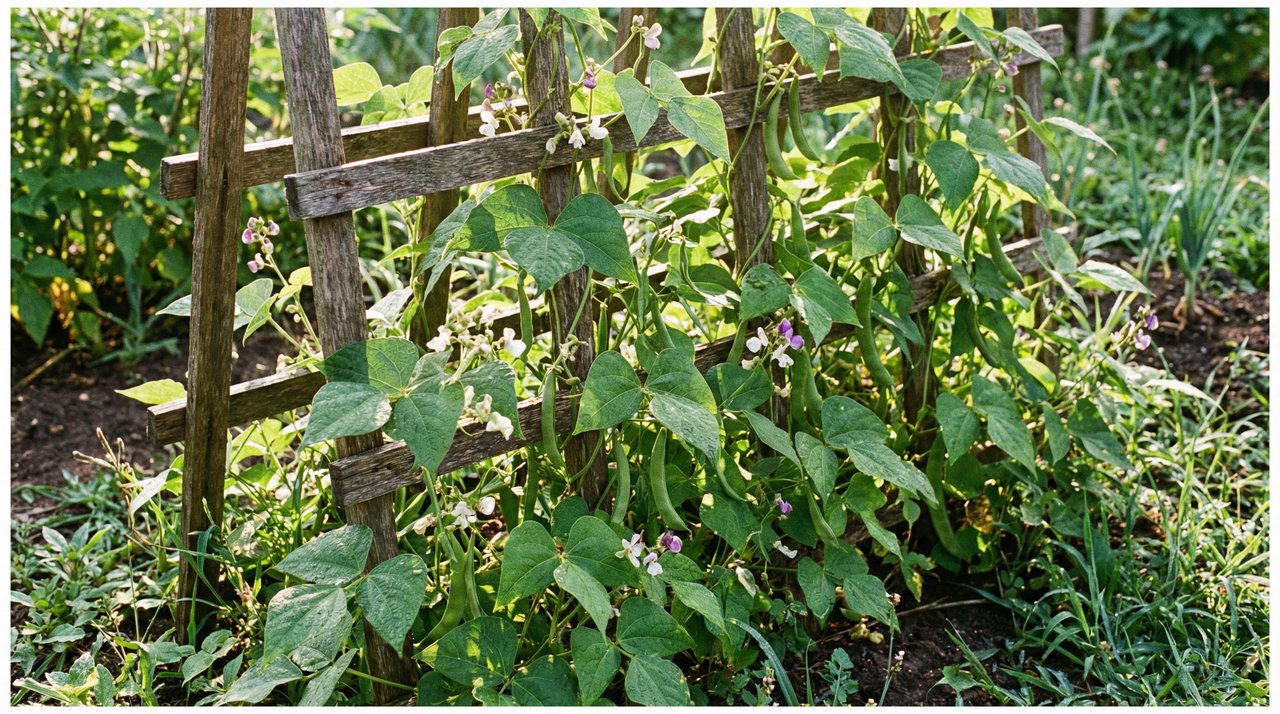
Every bean seed you've ever planted carries two completely separate origin stories inside it, and most gardeners have no idea. Common bean (Phaseolus vulgaris) was domesticated independently, at least twice, in two different places on two different continents: once in Mesoamerica and once in the Andes, roughly 8,000 to 10,000 years ago.[1] That's not a quirk of botanical history. It's the reason you can grow a rattlesnake pole bean in a Central Florida food forest and a black bean in the high-altitude cold of Colorado and have both of them thrive. The genetic breadth baked into this species is extraordinary, and it came from thousands of years of parallel human selection happening simultaneously, worlds apart, with no contact between the farmers doing it.
I think about that every time I'm stringing up pole beans on a trellis or shelling a bowlful of heirlooms in October. There's a tendency to treat common bean as the humble, workhorse crop, the one you grow because it's easy and cheap and your grandmother did. All of that is true. But it's also one of the most genetically complex, culturally layered, and ecologically useful plants you can put in the ground, and understanding why changes how you grow it.
Origin and History of Common Bean (Phaseolus vulgaris)
Botanical Background and Native Range
Few crops have an origin story as compelling as the common bean. Phaseolus vulgaris wasn't domesticated once. It was domesticated twice, independently, on opposite ends of a continent. Archaeological evidence places the Andean domestication at roughly 10,000 years ago, with bean remains recovered from Guitarrero Cave in Peru, and the Mesoamerican event around 8,000 years ago, with evidence from the Tehuacan Valley in Mexico.[2][3][4][5] Its native range spans a broad arc from northern Mexico down through Central America and into the Andean highlands from Colombia to northern Argentina.[6][7] That dual origin is why the species carries such staggering genetic diversity today; there were effectively two parallel experiments in domestication running simultaneously, each adapting bean populations to the subtropical highlands, tropical savannas, and oceanic upland climates of their respective regions.[8]
The common bean plant grows as a warm-season annual, completing its full life cycle in a single season under cultivation, though wild forms in tropical lowlands can persist as short-lived perennials when conditions stay favorable year-round.[9][10] After the Columbian Exchange, Spanish and Portuguese traders carried seeds to Europe by the late 15th century, and from there the common bean spread through trade networks across Africa, Asia, and back to colonial North America, where it eventually became a 19th-century farming staple and is now widely naturalized across the continent.[11][9] A close relative worth knowing is scarlet runner bean (Phaseolus coccineus), domesticated in the Mexican highlands around 7,000 to 9,000 years ago and introduced to Europe in the 16th century, where it became both a food crop and a garden ornamental.[12][13] The two species share enough ancestry to be grown side by side, but they fill slightly different ecological niches, and understanding that helps you choose the right one for your design.
Visual Characteristics
The single most useful distinction between common bean cultivars is growth habit. Bush types are determinate, topping out around 30 to 60 cm, while pole varieties climb indeterminately to 2 meters or more and require trellising.[9][14] I've learned to label my rows carefully in the first three weeks of growth because young bean seedlings look remarkably similar across related legumes, and sorting out which is which after the fact is genuinely frustrating. Once the vines start moving, though, pole beans make their identity very clear.
The stems are slender, angular, and lightly hairy; the leaves are trifoliate with ovate to lanceolate leaflets running 5 to 15 cm long.[9] Flowers are small, papilionaceous (that classic pea-family butterfly shape), and typically white to pale purple, clustered in axillary racemes.[15] Pods stretch 8 to 20 cm depending on variety, and seeds run the full color spectrum: white, black, deep red, tan, mottled, the full breadth of what we call kidney, navy, and snap beans.[16] Below ground, a taproot with lateral fibrous branches hosts the symbiotic Rhizobium nodules that make beans such valuable nitrogen fixers in any polyculture system.[17][18] In my Three Sisters mimic plantings, interplanting pole beans with corn noticeably improves soil tilth the following season, which is exactly what you'd expect once you see how densely those nodules colonize the roots.
Scarlet runner bean offers a vivid contrast in appearance: bright scarlet flowers that draw hummingbirds, large purple-speckled seeds, and vigorous stems that twine clockwise, while common bean twines counterclockwise.[19][20] Growing both side by side on the same trellis, that directional difference becomes weirdly satisfying to watch.
Traditional and Cultural Uses
Long before European contact, the common bean plant was foundational to pre-Columbian food systems across two continents. In Mesoamerica it anchored the milpa, the famous intercropping guild of maize, beans, and squash, while in the Andes it grew in raised fields and terraces alongside crops adapted to high-altitude conditions.[21][22] The Three Sisters system, as it's widely known today, wasn't an agricultural curiosity; it was the caloric and ecological backbone of entire civilizations.
Among the Aztec, Maya, and Inca, beans held significance that went far beyond the dinner table. They appeared in offerings to deities including Centeotl and Tlaloc, were depicted in codices, and featured in agricultural renewal festivals where the harvest was understood as a sacred event, not merely a practical one.[23][24] I think about that sometimes at first harvest, the way even modern gardeners feel a small ceremony in pulling the first ripe pods. The impulse to honor a good harvest is older than any of us. Traditional medicinal use was equally broad: bean preparations appeared across Native American, Andean, and later African systems for digestive complaints, as diuretics, and for anti-inflammatory purposes, though many of these applications still lack clinical validation.[25][26]
That depth of cultural and genetic heritage makes seed sourcing a genuinely ethical question. Traditional landraces carry drought tolerance and adaptive traits built by generations of indigenous farmers, and that germplasm is increasingly at risk from biopiracy and corporate patents on traits derived from indigenous varieties.[27][28] I source only open-pollinated, ethically stewarded heirlooms and steer clear of patented varieties entirely. Every bean seed you plant carries someone's agricultural legacy inside it; that feels like something worth taking seriously.
Fun Facts
The dual domestication story alone makes Phaseolus vulgaris remarkable. Two separate cultures, thousands of kilometers apart, looked at the same wild plant and independently decided it was worth cultivating, arriving at similar results through entirely different agricultural traditions.[2] From those two starting points, beans fed empires, powered ritual life,[23] and then caught a ride on the Columbian Exchange to become one of the most widely eaten legumes on the planet.[11]
On the botanical curiosity side, pole beans are phototropic: their new shoots actively track light as they climb, which is why a trellis in partial shade will produce vines that twist and angle toward the brightest spot in the garden rather than growing straight up.[20] And that twining direction I mentioned earlier is a real thing you can verify: common bean spirals counterclockwise up a support while scarlet runner bean goes clockwise.[29] In USDA trials, top-performing dry bean varieties have reached approximately 4,500 pounds per acre under irrigation, though that figure reflects maximum trial performance rather than anything like a typical backyard yield.[30] Scarlet runner bean closes things out with a small piece of botanical drama: its dry pods dehisce explosively, flinging seeds several meters from the parent plant,[19] and its vivid red flowers pull in hummingbirds with a reliability that makes it a genuinely useful wildlife plant alongside its edible credentials.[31]
Common Bean Varieties and How to Source Them
Notable Cultivars of Phaseolus vulgaris and Related Beans
Every time someone asks me which bean to grow, I start with the same two questions: how much space do you have, and do you want everything at once or a steady trickle over the season? The answers sort almost all common bean cultivars into two axes: growth habit (bush types that stay 1-2 feet tall and pole types that vine 6-12 feet) and use category (snap beans harvested young versus dry or shelling beans left to fully mature).[32][33][34] Some cultivars blur that second line completely, giving you tender snaps early and dry beans if you leave a few pods to mature. Bush types tend to ripen all at once, while pole types keep producing over a longer stretch[33] -- a difference that matters enormously if you're trying to spread your harvest or keep a polyculture guild producing through a long summer.
Growing both habits side by side here in Central Florida taught me to lean on pole types like Kentucky Wonder when my rainy-season schedule makes frequent picking uncertain. That extra production window saves crops that a single-flush bush variety would have lost to a missed harvest window. Kentucky Wonder is a classic for good reason: vigorous climbing, long tender pods, reliable year after year. Blue Lake gives you the same clean, stringless flavor in both bush and pole forms, which is handy if your trellis space is limited. For short seasons or unpredictable weather, Provider and Contender are the cultivars I recommend first, both maturing around 50 days with solid disease resistance built in.[15][35] Royal Burgundy's purple pods turn green when cooked, which never stops being a little magical to show people, and its 55-day bush habit fits neatly into tighter garden plans.[15] Pod colors across the species run green, yellow, purple, and wax, typically 4-8 inches long, and behind those pods lies a seed palette of over 40,000 documented varieties spanning white navy, red kidney, black, speckled pinto, and dozens of regional types most gardeners have never seen.[33]
Scarlet Runner Bean (Phaseolus coccineus) earns its place in any food garden on ornamental value alone, but the edible pods and mature beans are a genuine bonus. Classic tall cultivars like Scarlet Emperor and Painted Lady reach 10-12 feet and stop hummingbirds mid-flight; the dwarf Hestia stays 2-3 feet and suits a container or a small trellis.[36][37] If you're working in an arid climate where standard common bean struggles, Tepary Bean (Phaseolus acutifolius) is worth knowing about. It grows mostly as regionally adapted landraces rather than named cultivars, with a compact bush habit, smaller seeds, and a heat and drought tolerance that most Phaseolus vulgaris varieties simply can't match.[38][39] It's a different plant for a different site, not a drop-in swap.
Sourcing Healthy Seeds and Plants
Common bean seed is widely available and genuinely affordable -- small retail packets run $3-6 and bulk seed costs $8-20 per pound, with transplant flats available from some nurseries at $20-50 for 18-36 plants if you need a head start.[40] The combination of domestic production across North Dakota, Nebraska, Michigan, Wisconsin, Washington, and New York, plus steady imports, keeps beans on shelves year-round.[40] Availability isn't the issue. Quality is.
I now check for disease-free certification every time I buy bean seed, and I have a very specific reason for that habit. I once lost an entire planting to what I later identified as halo blight, a seed-borne pathogen that rode in on an uncertified packet. Common bean can carry bacterial blight, anthracnose, bean common mosaic virus, and halo blight internally in the seed coat with no visible symptoms.[17][41][42] State seed-certification programs require minimum 80-85% germination, varietal purity, and rigorous pathogen testing; USDA Organic and Non-GMO Project verification add another layer of production transparency.[43][44] Suppliers who publish germination rates and certification status openly are the ones I return to. Johnny's, Baker Creek, and Fedco are where I order most often; I've noticed scarlet runner bean packets at Baker Creek and Southern Exposure sell out fast in late winter, so ordering early matters.[45][46] Pricing for Phaseolus coccineus seeds is comparable to common bean, typically $3-8 per packet depending on whether you're buying organic or heirloom stock, and the same standard retailers carry both.
Common Bean Propagation and Planting Guide
Of all the crops I've grown in food forests and kitchen gardens, common bean might be the most forgiving entry point into seed propagation. There's no stratification, no scarification, no fussy moisture protocols. You push a seed into warm soil and stand back. That simplicity isn't an accident; it's the product of thousands of years of domestication selecting for exactly these traits.
Seed Biology and Propagation Methods
Phaseolus vulgaris is propagated by seed, full stop.[47][48] Vegetative methods like softwood cuttings work at around 40-60% success, and layering works better for scarlet runner bean (70-90%), but neither is worth the trouble for a crop you can direct-sow by the handful.[49] Seeds are where the biology is elegant, and understanding a little of that biology makes you a better seed saver.
Common bean seeds follow orthodox storage behavior, meaning they tolerate desiccation and cold without losing viability.[50][51] Under cool, dry conditions (around 5-10°C, below 10% relative humidity), seeds remain viable for 3-5 years; at near-freezing temperatures with proper packaging, that extends to decades.[52] I've been storing common-bean seeds in labeled glass jars in my refrigerator for years now, and I consistently get 90%-plus germination rates four years out. The key is getting moisture content down to 5-10% before sealing.[53] Anything above 12-15% moisture, or stored above 20°C, invites fungal growth and lipid peroxidation that quietly destroys viability before you notice anything is wrong.[54] Glass jars, airtight plastic containers, or Mylar bags with oxygen absorbers are all solid choices; paper envelopes are fine for the short term but not for anything you want to keep beyond a single season.[55][56]
What makes seed saving from common bean so satisfying is the self-pollination rate: 95-99% of flowers set seed without any cross-pollination.[57] Your saved seeds come back true to type without any isolation work required. Scarlet runner bean is the opposite — it's primarily outcrossing and self-incompatible, which is why I isolate my favorite runner cultivars by at least 50 feet or hand-pollinate when I want to keep colors true.[58] With common bean, you just grow it, dry it, jar it, and plant it again. That reliability traces directly to domestication: wild Phaseolus vulgaris seeds average only 20-30 mg with thick seed coats evolved for dormancy and dispersal, while cultivated forms reach 500 mg or more with thinner coats and minimal dormancy barriers.[59] No scarification needed. The embryo follows a standard dicot developmental path through globular, heart, and torpedo stages, with one large embryo axis and bulky storage cotyledons that fuel those quick-germinating seedlings.[60] Under optimal conditions (70-80°F soil temperature), you're looking at 7-10 days to emergence with 80-95% success rates.[34][61]
Soil and Site Requirements
Common bean wants well-drained loamy or sandy-loam soil, pH 6.0-7.0, with decent organic matter (3-5%) and a loose structure that roots can push through without resistance.[62][63][64] Root systems need 12-24 inches of good soil depth; working in compost at 5-8% by volume improves both structure and nutrient availability.[65] Because beans fix their own nitrogen symbiotically, nitrogen inputs should be minimal at establishment; focus supplemental fertilization on phosphorus (40-60 kg/ha P₂O₅) and potassium (30-50 kg/ha K₂O) to support root and pod development.
pH matters more than many gardeners realize. Drop below 6.0 and you're looking at aluminum toxicity alongside impaired iron and manganese uptake, which shows up as dark leaf spots and damaged roots.[66] Go above 7.0 and phosphorus, iron, and manganese all become less available. I've seen this in my own beds: beans in a slightly alkaline section showed that pale, chlorotic foliage that signals iron deficiency, while the same variety in an amended bed nearby was a healthy deep green. Adding compost and gypsum brought things back without overshooting on acidity. If you need to raise pH, lime at 2-3 lb per 100 square feet per unit of change; to lower it, elemental sulfur at 1-2 lb per 100 square feet does the job.[67]
Full sun is non-negotiable: 6-8 hours of direct light daily for healthy growth and yield.[68][69] Less than that and plants get leggy, yields drop, and disease pressure climbs.[70] Drainage is equally critical: maintain soil moisture around 50-70% of field capacity, and never plant into ground that doesn't drain freely.[71][72] I learned that lesson the hard way: planting into compacted clay after spring rains one year led to significant root-rot losses. Now I do a simple percolation test before bed preparation — dig a hole about 12 inches deep, fill it with water, and watch. If it's still sitting there an hour later, you need to amend or raise your bed before you plant a single bean seed.
Spacing, Planting Technique, and Germination Timeline
The most consequential choice you make at planting time is bush versus pole. Bush varieties top out at 18-24 inches, mature in 50-65 days, and go in 2-4 inches apart in rows 18-24 inches wide.[34][73] Pole varieties climb 6-12 feet and need rows 24-36 inches apart with 3-6 inches between plants; they take 65-100 days to first harvest but produce over a much longer window. In my Central Florida garden, pole beans on a solid trellis outproduce their bush counterparts by a wide margin across a season, though I've learned that "sturdy trellis" means sturdier than you think. A full flush of pole beans in humid heat is heavier and windier than it looks in the seed catalog photo.
Whatever type you're planting, push seeds 1-2 inches deep into moist, warm soil after your last frost date, with soil temperature reliably above 60°F.[74][75] Those spacing numbers aren't arbitrary. Good airflow between plants is a primary defense against anthracnose and powdery mildew, both of which thrive when foliage stays wet and crowded. Proper spacing also lets sunlight reach lower leaves and reduces competition for moisture and nutrients across the root zone. Expect germination in 7-10 days, with 80-95% success when soil temperature is in the 70-80°F range.[34]
If you're building a Three Sisters guild, plant 3-4 bean seeds per mound, 6-12 inches out from established corn stalks.[76] The corn provides the climbing structure, the beans fix nitrogen for all three partners, and the squash shades the ground. For scarlet runner bean, give each plant 6-8 inches along a trellis with rows 18-24 inches apart; its vigor and 10-12-foot height demands the sturdiest support in the garden.[67] All spacing recommendations are starting points — local cultivar characteristics, soil fertility, and your specific microclimate will fine-tune the numbers. When in doubt, err toward more space rather than less, because overcrowding a common bean is far easier to do than most growers expect.
Common Bean Care Guide
Growing common bean well is mostly about timing and consistency. Get the temperature windows right, keep moisture even through flowering, and let the plant's own biology do the heavy lifting through nitrogen fixation. Where people run into trouble is usually at the edges: a late frost, a week of drought right when pods are setting, or too much fertilizer undercutting the very symbiosis that makes beans worth growing in the first place.
Watering and Irrigation Needs
Phaseolus vulgaris wants 0.5 to 2 inches of water per week, applied deeply enough to wet the soil 6 to 8 inches down.[77][34] In dry stretches that usually means watering every two to three days.[78] I've switched almost entirely to drip or soaker hoses for beans because wet foliage is an open invitation to fungal problems, and the difference in disease pressure is real.
Where the stakes get genuinely high is at flowering. Vegetative plants can shrug off a dry week or two,[79] but once flowers open, even ten days of water stress can cut yields by 50 to 70 percent.[80] I learned this the hard way during a July hot spell. Came out to the garden expecting pods and found shriveled, aborted flowers instead. Consistent moisture at that stage matters more than anything else I do.
Overwatering causes its own problems: yellowing lower leaves, wilting despite wet soil, root rot, and heightened disease risk.[81] Underwatering shows up as curling leaves, reduced pod set, and pod abortion.[82] Beans prefer a soil pH of 6.0 to 7.0 and are moderately salt-sensitive, with yield reductions starting around an EC of 2.0 dS/m.[83][84]
Sunlight and Light Requirements
Common bean needs full sun, at least 6 to 8 hours daily, for strong growth and productive pod set.[85] That said, during serious heat waves, a 30 to 50 percent shade cloth can drop canopy temperature by 3 to 5 °C and keep flowers from aborting[85] — I've used 30 percent cloth on pole beans in July and it genuinely helps. Scarlet runner bean, which is more heat-sensitive, benefits from afternoon shade in hot climates to prevent leaf scorch.[67]
Fertility and Nutrient Management
Here's the thing I tell every new bean grower: inoculate your seed with Rhizobium before you even think about fertilizer.[86][87] I've grown side-by-side trials with inoculated and uninoculated plants, and the difference is striking: inoculated plants are darker, bushier, and yield noticeably more. When the symbiosis is working, supplemental nitrogen becomes counterproductive, pushing lush leafy growth at the expense of pods and making plants more susceptible to disease.[88]
If your soil tests low in phosphorus or potassium, those are worth addressing. Target levels are roughly 25 to 50 ppm phosphorus and 80 to 120 ppm potassium, with typical application rates of 40 to 80 lb/acre P₂O₅ and 40 to 100 lb/acre K₂O when tests call for it.[89][90] Deficiency symptoms are worth knowing: uniform chlorosis on older leaves points to nitrogen, purplish or dark green stunted growth suggests phosphorus, and marginal necrosis on older leaves indicates potassium.[91] Excess nitrogen shows up as succulent dark green foliage, leaf-tip burn, and delayed maturity.[92]
Frost Tolerance and Cold Protection
Common bean will not tolerate frost. Zero degrees Celsius is the hard limit,[34][93] and growth slows noticeably below 10 to 15 °C. Don't direct-sow until soil holds above 15 °C consistently. Flowers and developing pods are especially vulnerable; frost damage appears as blackening leaves, water-soaked lesions, and potential plant death.[94][95]
I lost an entire early row once to an unexpected late April dip into the upper twenties. Row covers were sitting in the shed twenty feet away. Now they go on any time the forecast drops near freezing, regardless of what the calendar says. Floating row covers add 4 to 8 °F of protection; paired with 2 to 4 inches of organic mulch over the root zone, they've saved plantings for me more than once.[96] Common bean grows as an annual across USDA zones 3 to 11, and tepary bean shows slightly better tolerance of brief dips to around 28 °F once it's established.[97]
Heat Tolerance and Summer Management
The optimal range for common bean is 20 to 30 °C during the day and 15 to 20 °C at night.[98] Above 35 °C, pollen becomes sterile and germination rates fall off sharply.[99] Flowering is again the most vulnerable window, when heat triggers stomatal closure, reduced photosynthesis, and oxidative stress.[100]
When my forecast shows several days above 95 °F during bloom, I pull out the 30 percent shade cloth, run drip irrigation in the early morning, and make sure mulch is topped up to 2 to 4 inches.[101] Cultivar choice matters too. Provider, Contender, Bronco, and Black Magic all show better heat tolerance than most standards.[102] Scarlet runner bean, for all its charm, is actually more heat-sensitive than common bean and needs the same shade and airflow strategies in hot climates.[67]
Pruning, Training, and General Maintenance
Bush types stay around 2 feet and need almost no intervention beyond removing dead or diseased leaves. Pole types are a different conversation: they'll reach 6 to 10 feet and need trellises or poles in place at planting, not after the vines decide to sprawl.[103] I think of training pole beans a bit like managing indeterminate tomatoes: a little regular guidance keeps them productive and manageable. Removing lower leaves that touch soil and occasionally thinning excessive side shoots improves airflow and cuts disease pressure.[104] The extra effort pole types demand is real, but in a small space they reward you with a much longer harvest window than bush varieties.
Mulch 2 to 3 inches deep to hold moisture, moderate soil temperature, and suppress weeds, especially in the first 4 to 6 weeks when young bean plants compete poorly.[105] The Three Sisters guild, with corn for structure and squash as a living mulch, is one I use every year and it earns its permaculture reputation.[106] Rotate bean families at least every three years to avoid disease buildup in the soil. Tepary bean, worth mentioning here, has solid resistance to anthracnose and salinity if those are recurring issues in your garden.[107]
Seasonal Growth Rhythm and Lifecycle
Common bean germinates in 7 to 10 days once soil temperatures hold between 15 and 30 °C, spends 4 to 6 weeks in vegetative growth, then begins flowering 30 to 60 days after planting. Pods mature 30 to 50 days after that, putting the full lifecycle at 50 to 100 days depending on type.[34][108] Bush snap types are at the fast end, ready in 50 to 65 days; pole and dry types take longer. Knowing these windows lets you plan succession sowings so you're not drowning in beans one week and waiting for the next planting the rest of the summer.
As a monocarpic annual, the common bean plant puts every resource into a single reproductive flush and then senesces.[67] That's why the flowering window is so consequential: stress at that moment doesn't just slow things down, it derails the whole mission. Scarlet runner bean behaves similarly as an annual in zones 3 to 8 but can persist 3 to 5 years as a perennial in frost-free zones 9 to 11 when its tuberous roots are protected.[109] For most of us growing common bean, the annual rhythm means staying attentive through that critical mid-season flowering and pod-fill period, then letting the plant finish its work and feeding the spent vines back into the soil.
Harvesting Common Beans (Phaseolus vulgaris)
Harvesting common bean is really two separate practices sharing the same plant. You're either picking snap beans every few days in a race against toughness, or you're exercising real patience while dry beans slowly rattle themselves ready. Getting clear on which crop you're after shapes everything about how you approach harvest time.
When to Harvest: Timing, Maturity Cues, and Days to Harvest
Bush types generally mature in 50-70 days, while pole varieties take 60-90 days or more, depending on climate and cultivar.[110][103] Those numbers shift with temperatures, so treat them as a starting point rather than a fixed calendar. Snap beans are ready around 50-60 days, when pods reach 4-6 inches, snap cleanly with an audible crack, and show no visible seed bulging under the skin.[111] After years of picking, that crisp break and the way a perfect pod bends without stringing becomes second nature. No chart fully captures it, but gardeners learn it fast.
For dry beans, you're waiting 90-120 days until pods turn brown and the seeds audibly rattle inside at around 18-20% moisture.[112][113] Harvest when at least 90% of pods on the plant have dried to reduce mold risk. Scarlet runner bean follows the same general logic but runs slightly slower: fresh pods at 65-75 days, dry seeds 40-60 days after flowering.[67]
How to Harvest and Handle Beans for Peak Quality and Storage
Pick snap beans every 2-3 days, ideally in the morning when temperatures are cooler and pods are crisp.[68] Miss a day or two and you'll find pods that have gone fibrous and seeds swelling inside; the plant also reads that signal as "done flowering," which cuts your total yield. I've learned that lesson more than once. Frequent picking keeps the plant convinced it still has reproductive work to do.
Dry beans need a different kind of attention after harvest. Once the pods are brown and rattling, pull the whole plant or pick pods by hand, then clean and sort out any damaged seeds. The critical next step is curing: spread the beans in a ventilated space at around 20-30°C for one to two weeks to equalize internal moisture, then dry further to 12-14% moisture with good airflow and relative humidity below 60%.[17][114] I once lost a small batch to hidden moisture I thought I'd handled. Watching a jarful of beautiful beans go moldy is a hard but effective teacher. Once properly cured, store at 4-10°C with 60-70% relative humidity for a shelf life of 6-12 months or longer.[115]
Expected Yield and Flavor Profile at Harvest
The sensory payoff for snap beans and dry beans couldn't be more different, and that contrast is part of what makes common bean such a rewarding crop. Just-picked green beans carry a bright, grassy aroma, mild sweetness, and a clean vegetal crunch. The key volatiles behind that character are hexanal (that grassy-green note), 2-nonenal (the classic "beany" quality), and pyrazines that add a subtle nutty, earthy edge.[116] Mature cooked dry beans shift toward deeper earthiness, mild umami from free glutamate (around 100-200 mg/100g), and a gentle sweetness from natural sugars with low bitterness from their flavonoid and saponin content.[117]
Before any of that flavor discussion matters, though: beans must be thoroughly cooked. I never serve undercooked beans. The research on phytohaemagglutinin is clear, and a rolling boil for at least 10 minutes is the reliable safeguard.[118] For dry beans, soak first, then simmer gently for creamy texture. Add salt but hold back any acidic ingredients until the beans are fully tender, since acid toughens skins. Brief steaming or sautéing for 3-5 minutes preserves the crispness in snap beans without losing that fresh grassy brightness.[33] Scarlet runner bean's young pods carry a slightly sweeter, nuttier edge that makes quick steaming a natural choice. Growing both side by side, I reach for the runner pods when I want that little extra depth.
Common Bean Preparation and Uses
Culinary Uses of Common Beans: From Green Pods to Dry Seeds
Pods picked slightly immature for fresh eating need only a few minutes of steaming to reach that grassy, crisp sweetness I find myself craving every summer. The same plant's mature seeds, left to fully dry on the vine, develop something completely different: a deep earthiness with a creamy, starchy quality that no amount of quick cooking can replicate from a young pod. That transformation is the heart of the common bean's culinary identity, and it's why Phaseolus vulgaris has been feeding people for roughly 7,000 years.[119] The edible spectrum runs from immature snap pods through fully dried seeds, and in the case of its close cousin scarlet runner bean (Phaseolus coccineus), also into flowers and young shoots.[120][121]
Before we talk flavor, we have to talk about safety, because this is where a lot of home cooks cut corners they shouldn't. Raw or undercooked dried beans contain phytohaemagglutinin (PHA), a lectin toxin that causes severe nausea, vomiting, and diarrhea within one to three hours of eating it.[122][123] I never skip the vigorous 10-minute boil, even if the beans are destined for a slow cooker afterward. The research is too clear on what happens when you skip it. The protocol is straightforward: soak dried beans 8 to 12 hours, discard the soaking water, then boil in fresh water at a rolling boil for at least 10 minutes before reducing to a simmer.[124][125] Slow cookers alone cannot reliably reach the temperatures needed to destroy PHA without that pre-boil step. Pressure cooking at 15 psi for 20 to 30 minutes is also effective,[124] and canned beans are already pre-cooked and safe to eat straight from the can.
Once properly prepared, the flavor rewards are considerable. Kidney beans land earthy and firm, navy beans mild and creamy, and fresh snap beans bring that grassy crunch no supermarket pod ever quite matches.[126][127] Those beans I grow in a Three Sisters guild with corn and squash taste noticeably sweeter and cleaner than anything I've pulled from a monoculture row, which is one of the quiet joys of designing a guild that's actually working. Regionally, the flavor pairings track the bean: kidney beans in Latin American cooking with cumin, chili, and pork; navy beans in Northern European soups with thyme and bay leaf; green beans in Asian stir-fries with garlic, ginger, and soy sauce, or in Mediterranean preparations with tomatoes and olive oil.[128] Scarlet runner bean flowers make a genuinely beautiful salad addition with their mild flavor, and young shoots can be prepared like spinach, though they warrant moderation given their cyanogenic compound content.[121]
A 100g serving of cooked mature common beans delivers around 8.7g protein, 6.4g fiber, and 127 calories, along with meaningful amounts of folate, iron, magnesium, and potassium.[129] A couple of practical notes before you cook: dried beans store well for two to three years in cool, dry conditions,[130] and if you're foraging or sourcing seeds from a neighbor, be cautious with look-alikes. Vicia sativa, Lathyrus sativus, and some Lupinus species can resemble bean plants but carry real toxicity risks.[131][132] Legume allergies, while uncommon, can be serious, affecting roughly 0.2 to 1% of the population.[133]
Traditional Medicinal Preparations and Safety Considerations
Many gardeners I work with enjoy a mild pod tea as part of their wellness routine, and I always make sure they know this is a complement to evidence-based care, not a substitute for it. Traditional preparations of common bean pods as decoctions for blood sugar regulation and digestive support have deep roots in Mesoamerican and Latin American indigenous medicine,[134] and scarlet runner bean has its own parallel ethnomedical history, with leaf infusions, root decoctions, and topical poultices used for digestive complaints, diuresis, and inflammation, typically at one to two cups of infusion daily.[135][136] These traditions deserve respect as accumulated knowledge, and the deeper research on what's driving those effects is explored in the health benefits section. What I'll say from a grower's perspective is this: beans that fix nitrogen, build soil, and produce nutrient-dense food are already doing something profound for the people who grow and eat them, and that's a pretty good place to start.
Common Bean Health Benefits
There's something quietly remarkable about a plant that has fed entire civilizations for ten millennia and is still turning up in nutrition research as genuinely worthy of attention. Phaseolus vulgaris isn't riding on ancestral reputation alone. The phytochemical complexity packed into these seeds holds up under modern scrutiny, and the health benefits story runs from well-supported metabolic effects all the way into promising but still-preliminary territory.
Key Phytochemicals in Common Beans
Common bean seeds contain a striking diversity of secondary metabolites: phenolic acids including ferulic, sinapic, and chlorogenic acid; flavonoids like quercetin, kaempferol, rutin, and catechin; saponins; tannins; isoflavones including genistein and daidzein; anthocyanins concentrated in the seed coats of black and red varieties; and lectins such as phytohemagglutinin at roughly 0.1–0.5% of seed protein.[137][138][139] These compounds don't operate in isolation either; they show synergistic interactions that enhance antioxidant activity and inhibit enzymes like alpha-amylase, while also serving as the plant's own ecological defense system against herbivores and pathogens.[140]
Where these compounds concentrate matters. Seeds and pods carry the highest phenolic loads, leaves show a broad flavonoid profile, roots contain saponins and alkaloids, and flowers are comparatively modest.[141] Environment shapes levels too: drought stress and sandy soils push flavonoid and phenolic concentrations higher, with seasonal peaks often arriving in late summer.[142][143] I've noticed this in my own garden: beans grown through a dry stretch tend to produce seeds with noticeably darker seed coats and more intense flavor, which tracks with that phenolic research. If you're growing for nutritional density, colored varieties reliably deliver higher anthocyanins and flavonoids than pale-seeded types.
Scarlet runner bean shows similar phenolic richness, with total phenolic content of 500–1500 mg GAE/100g and strong antioxidant scavenging activity.[144] Lima bean, by contrast, adds cyanogenic glycosides like linamarin to the picture, which requires additional processing attention I'll cover in the safety section below.[145]
Medicinal Research and Traditional Uses
Traditional communities across Latin America, Mexico, Peru, Africa, and indigenous North America have long used decoctions of common bean leaves, pods, and seeds for diabetes, inflammation, hypertension, edema, urinary issues, and wound healing.[146][147] These aren't folk curiosities. A lot of the pharmacological research is essentially playing catch-up with what grandmothers in Oaxaca and the Andes already knew.
The best-supported benefits in human studies center on metabolic health. Phaseolus vulgaris extracts inhibit alpha-amylase and alpha-glucosidase, and human trials show reductions in fasting glucose and improved insulin sensitivity.[148] Human studies also show LDL cholesterol reduction through dietary fiber and phytosterols.[149] White kidney bean extract has shown modest weight loss support in meta-analyses, roughly 1–2 kg over 4–12 weeks.[150] These are real human data points, not petri-dish findings.
Beyond those, the picture shifts to preclinical territory. Animal models and in vitro work support anti-inflammatory effects via cytokine and COX-2 reduction, antihypertensive potential through ACE inhibition, antimicrobial activity against E. coli and S. aureus, diuretic effects comparable to furosemide in rat models, and anti-carcinogenic signals from legume meta-analyses.[151][152][153] Scarlet runner bean shows early wound-healing evidence via collagen promotion; lima bean offers preliminary neuroprotective signals through its polyphenols.[154][155] The ethnobotanical knowledge is rich; the large-scale human trial database has a long way to go to match it.
Nutritional Profile
Per 100 grams cooked, mature common bean seeds deliver 127 kcal, 8.7 g protein, 22.8 g carbohydrates, and 7.4 g dietary fiber.[129] Dry seeds concentrate that further, reaching 21–24 g protein and 15–20 g fiber per 100 g.[156] A single cup of cooked kidney beans gives you a meaningful portion of your daily folate (130 µg), plus solid contributions of potassium, phosphorus, magnesium, and iron.[129]
Green snap beans are a different nutritional story: far lower in calories (31 kcal/100 g) and protein (1.8 g), but substantially richer in vitamins A, C, and especially vitamin K at 47.9 µg per 100 g versus 8.7 µg in mature seeds.[157] Colored seed varieties add meaningful antioxidant capacity through anthocyanins and polyphenols concentrated in the seed coat, and kidney beans tend toward higher iron while navy beans lean toward folate richness.[158]
One thing I batch-cook every two weeks is a big pot of beans from dry, then freeze them in two-cup portions. Soaking first reduces phytate content by 25–50%, and proper boiling knocks out lectins and trypsin inhibitors, both of which would otherwise reduce protein digestibility and mineral absorption.[159] You do lose 20–50% of vitamin C and folate to heat, but minerals are considerably more stable through cooking.[160] The batch approach makes the nutrition accessible and removes any temptation to shortcut the process.
Safety Considerations
Raw or undercooked common beans are genuinely toxic. As few as 4–5 raw kidney beans can cause severe nausea, vomiting, diarrhea, and abdominal pain within hours due to phytohemagglutinin (PHA), the lectin present at significant concentration in seeds.[161][162] The fix is simple and non-negotiable: soak overnight, discard the soak water, then boil vigorously at a full 100°C for at least 10 minutes. Slow cookers often don't reach that temperature and are not adequate for this purpose.[163] I learned this more viscerally than I'd like to admit early in my cooking career, when a batch of under-boiled scarlet runner beans made for an uncomfortable afternoon. Proper boiling eliminates more than 99% of lectins; there's no gray area here.
The digestive side effects most people actually encounter are the more benign ones: flatulence and bloating from oligosaccharides like raffinose that our digestive enzymes can't break down. Soaking and thoroughly rinsing before cooking reduces these significantly.[164] Lima bean adds cyanogenic glycosides to the safety conversation; commercial varieties are low, but wild types are higher, and the same overnight soak and boil protocol neutralizes the risk effectively.[165]
A few specific populations deserve extra consideration. If you're managing blood sugar with medication, beans' alpha-amylase-inhibiting activity could enhance the effect and risk hypoglycemia.[166] The high potassium and phosphorus in cooked beans may also require monitoring for those with kidney disease.[129] I'd always recommend talking to your doctor before leaning on bean extracts as a supplement if you're on antidiabetic or anticoagulant therapy. Common bean also carries moderate allergenic potential with cross-reactivity to peanuts, soy, and lentils,[167] and I'll add from a garden-safety standpoint that young bean seedlings can resemble other species. Some Lathyrus, Lupinus, and Lablab plants that turn up in similar garden contexts are toxic and warrant careful labeling at planting.[168] Cooked beans are safe for most pets in moderation; raw beans are not.
Common Bean Pests and Diseases
Common bean comes to the garden with a surprisingly sophisticated defense system. Its leaves carry trichomes and waxy cuticles that deter feeding insects physically, while its tissues produce lectins like phytohemagglutinin, proteinase inhibitors, and phenolic compounds that make life genuinely difficult for many would-be herbivores.[169][170] The plant even recruits endophytic bacteria and its Rhizobium partners as part of its biological armor.[171] None of that means it's bulletproof. What it means is that smart variety selection and a few good cultural habits give you a genuinely strong starting position.
Disease Resistance and Management in Common Bean
The most important thing I can tell you about common bean diseases is that resistance is almost entirely cultivar-dependent. Specific genes do the heavy lifting: the I gene for bean common mosaic virus (BCMV), multiple Co genes for anthracnose, and Ur-3 and Ur-11 for rust.[17][172][173] Modern breeding has made I-gene BCMV resistance nearly universal in commercial varieties, so most reputable cultivars offer that baseline protection.[174] I've trialed several of these in my own beds, and 'Black Turtle Soup' consistently stays cleaner than almost anything else I've grown through humid subtropical springs.
For anthracnose pressure, look for varieties carrying Co genes: 'Mexique 222' (Co-4), 'G 2333' (Co-4²), 'A193', 'ERP23', and 'SEA 5' are the names to know.[173][172] For rust, varieties with both Ur-3 and Ur-11 pyramided together show the strongest field performance.[17] If you're sourcing for BCMV resistance specifically, 'Dark Red Kidney', 'Sierra', 'UI 114', and 'Doric' are solid options alongside 'Black Turtle Soup'.[172]
Environment shapes how much any of those genes get tested. Rust thrives between 15 and 25°C with leaf wetness under high humidity, while Fusarium wilt favors warmer soils around 25 to 30°C, and it gets considerably worse in acidic conditions below pH 6.0.[175][176] Keeping soil pH between 6.5 and 7.5 and giving plants more breathing room than the seed packet suggests genuinely reduces fungal pressure by improving airflow through the canopy.[177] In my guild plantings, I space beans more generously than conventional row recommendations, and the difference in disease incidence is noticeable.
The cultural foundation holds regardless of which variety you choose: rotate beans away from any legume for at least three years, start with certified disease-free seed, avoid overhead irrigation, remove crop debris promptly, and scout regularly.[178][179][180] Fungicides, when needed, should go on preventatively or at first symptom, rotating chemical classes to avoid resistance buildup.[177] Scarlet runner bean handles Fusarium wilt and rust better than common bean in cooler climates, though it trades those advantages for increased powdery mildew susceptibility with fewer resistant lines available.[135][181] Worth knowing if you're deciding which species fits your climate, but check your local extension resources for updated ratings before committing.
Insect Pests and Integrated Pest Management for Common Bean
Common bean's susceptibility to insects varies considerably by pest. Bean aphids (Aphis fabae) and Mexican bean beetle (Epilachna varivestis) hit hardest, while bean leaf beetle, cowpea aphid, bean pod borer, and leafhoppers represent moderate threats. Bean weevils and spider mites cause relatively limited damage under most conditions.[182][183] The plant isn't passive about any of this: its lectins, proteinase inhibitors, trichomes, and leaf waxes work through both antixenosis (deterring insects from settling) and antibiosis (disrupting their biology once they do).[169][171] Breeders have built on those natural mechanisms to develop cultivars with meaningful pest resistance.
'Ex Rico 23' and 'Doric' offer moderate to high aphid resistance; 'Lapins' and 'Contender' carry antibiosis and antixenosis traits against bean leaf beetle; 'Mexicali 85' and 'Puebla 152' perform well against leafhopper pressure; and 'Monarch' combines multiple resistance traits.[182][184][185] Scarlet runner bean, for comparison, tends to shrug off Mexican bean beetles better than common bean. I've watched this side-by-side in my own beds: the runner's pubescent leaves and climbing architecture seem to genuinely frustrate beetles that settle right in on common bean. That said, runner beans have their own vulnerabilities including spider mites and pod borers, so the picture isn't entirely rosy.[186][187]
A good IPM approach combines crop rotation, sanitation, proper spacing, and regular monitoring with biological reinforcement through lady beetles, parasitic wasps, and Bt where appropriate.[188][189] I learned the value of consistent scouting the hard way after missing an aphid buildup one season. Now I check leaf undersides every week once plants are established. Companion planting that attracts beneficials keeps populations manageable most years without reaching for anything. Even neem oil, I only apply after thresholds are clearly exceeded; indiscriminate spraying undermines the beneficial insect populations I've spent years building into my garden.[190] Bear in mind that aphids transmit viruses including BCMV, which connects directly back to why starting with certified clean seed matters so much before any pest pressure even appears.
Common Bean in Permaculture Design
If I had to pick one annual that earns its place in almost every guild I design, common bean would be it. Not because it's flashy, but because it does something no amount of compost tea or granular fertilizer can replicate: it pulls nitrogen straight from the atmosphere and deposits it into the soil through a symbiotic relationship with Rhizobium leguminosarum bv. phaseoli bacteria living in root nodules. We're talking 50 to 150 kilograms of nitrogen per hectare annually.[191][192][193] That's free fertility, cycling season after season when you manage the crop thoughtfully.
Ecosystem Functions and Soil-Building Benefits
I've learned to read nitrogen fixation in the garden without any lab equipment. When I plant bush beans as a living ground cover beneath young citrus in my Central Florida designs, the surrounding foliage gets noticeably deeper green by midsummer compared to patches without legumes. The beans are doing what the research confirms: feeding neighboring plants through root exudates and residue breakdown, building soil organic matter, and improving tilth in ways you can feel when you push a finger into the soil at season's end.[191][194] The clay I started with had the structural coherence of wet concrete. After two seasons of bean rotations, it has actual crumb structure.
Beyond nitrogen, Phaseolus vulgaris acts as a dynamic accumulator, drawing phosphorus and potassium up from deeper soil horizons while its vigorous root and vine growth stabilizes soil on slopes and improves drainage and aeration.[184][195] The flowers also pull in honeybees and bumblebees, supporting broader pollinator habitat in a food forest understory.[196][197] Common bean itself is largely self-pollinating through cleistogamous flowers, so it reproduces reliably even in a low-pollinator year, though bee visits can push yields up 20 to 30 percent when conditions are right.[198]
Scarlet runner bean (Phaseolus coccineus) adds a different dimension to this picture. Its large tubular scarlet flowers are adapted specifically to attract bumblebees via buzz pollination and hummingbirds, and I've spent more than a few summer mornings watching ruby-throated hummingbirds aggressively defend a trellis of runners from one another.[199][200] It also produces biomass up to 10 tons per hectare, making it exceptional for chop-and-drop mulching and green manure applications where bulk organic matter is the priority.[201]
Climate Adaptability and USDA Hardiness Zones
Common bean is a frost-sensitive warm-season annual that can be grown across USDA zones 3 through 10, and some sources extend that to zone 11, but it needs a minimum of 90 to 120 frost-free days to complete its cycle.[9][34][202] Germination stalls below about 10 to 15°C, with the sweet spot sitting between 20 and 25°C; above 30 to 35°C, heat stress drops pod set noticeably.[203][204] In zone 9B, I don't push seeds into the ground until the soil consistently reads 65 to 70°F; cold, wet soil invites rot faster than almost anything else I've dealt with.
The plant also needs adequate moisture to thrive, preferring 600 to 1,000 mm of rainfall annually and distributed evenly through the season, though its taproot gives it some tolerance for short dry spells once established.[205][206] High humidity is where disease pressure becomes the real limiting factor, which shapes guild design choices around spacing and airflow. The crop adapts remarkably across elevations, from sea level to around 3,000 meters, which explains how it became a staple across such wildly different growing regions globally.[207][208]
For designers working in warmer climates, scarlet runner bean opens up a compelling option: it can behave as a short-lived perennial in zones 7 through 11, tolerating brief dips to 28 to 30°F, and living three to five years in frost-free conditions.[209][210] In my zone 9B garden, I grow both: bush snap beans for quick summer harvests and scarlet runner for the extended ornamental structure and pollinator activity it maintains across the cooler months when the snaps have long since finished.
Layer Placement, Guilds, and Companion Planting
Where a bean sits in your food forest depends almost entirely on which type you're growing. Bush varieties top out at one to three feet, functioning as dense herbaceous ground cover beneath taller guild members. Pole varieties climb five to ten feet or more, stepping into a vertical element role wherever you need to connect the ground layer to a mid-canopy support.[9][211] That flexibility is what makes common bean genuinely useful across different design scales, from a small kitchen garden bed to a developing food forest edge.
The most famous application is the Three Sisters guild: corn provides the climbing structure, beans fix the nitrogen, and squash sprawls across the ground suppressing weeds and retaining moisture.[212][213] I use a version of this in small-space designs all the time, sometimes substituting sunflowers for the corn when I want a taller, single-season support with added bird habitat value. One mistake I made early in my career was tucking beans too close to garlic, assuming the allium would simply deter pests. Instead, the interaction visibly suppressed the bean plants' vigor over several weeks before I figured out what was happening. Onions, garlic, and kohlrabi are worth keeping at a respectful distance.
Yield potential rewards the extra planning: bush varieties typically produce 5 to 10 kilograms of green beans per 10 square meters, while pole types can hit 15 to 20 kilograms from the same footprint.[211] Scarlet runner bean rounds out the picture for warmer sites, reaching 6 to 15 feet with its large scarlet flowers and offering edible pods, seeds, and flowers alongside that impressive chop-and-drop biomass potential, making it a strong candidate for trellises, arbors, or as an understory vine where you want maximum visual and ecological impact from a single species.[214][215]
The Bean That Taught Me to Slow Down
I was well into my second food forest before I stopped treating beans as a filler crop, something to tuck in while the "real" plants established. Then I pulled a dry 'Calypso' pod off the trellis late one October, heard it rattle, cracked it open, and just stood there looking at the seeds in my palm. Ten thousand years of careful selection, two separate domestication events on opposite ends of a continent, and somehow they ended up in Central Florida in my hand. It changed how I plant everything.
Sources 215
- Genetic Structure and Domestication of Common Bean ↩
- The Domestication History of the Common Bean (Phaseolus vulgaris L.) ↩
- Archaeological Evidence for the Domestication of Common Bean in Mesoamerica ↩
- Early Plant Domestication in the Andes ↩
- The Phaseolus vulgaris Multiple Domestication Centers ↩
- Origin and Primary Diversity of Common Bean (Phaseolus vulgaris) ↩
- Phaseolus vulgaris - Wikipedia ↩
- Koppen Climate Classification for Latin America ↩
- Common Bean - Phaseolus vulgaris ↩
- Phaseolus vulgaris ↩
- Domestication of Beans ↩
- Phaseolus coccineus ↩
- The Runner Bean: Phaseolus coccineus L. ↩
- Phaseolus vulgaris ↩
- Phaseolus vulgaris ↩
- Bean Production Handbook ↩
- Root System Architecture of Common Bean ↩
- Morphology and Anatomy of Phaseolus vulgaris Roots ↩
- Phaseolus coccineus - Wikipedia ↩
- Phototropism and Gravitropism in Higher Plants ↩
- Pre-Columbian Agriculture in the Americas ↩
- Aztec Agriculture and Ritual: The Role of Beans in the Milpa System ↩
- Ethnobotany of the Common Bean in Mesoamerica ↩
- Florentine Codex: General History of the Things of New Spain ↩
- Ethnopharmacological review of Phaseolus vulgaris ↩
- Native American Ethnobotany Database - Phaseolus vulgaris ↩
- Gene Flow and Adaptation in Phaseolus vulgaris Landraces ↩
- Seed Sovereignty and Biopiracy: The Case of Common Beans ↩
- Scarlet Runner Bean (Phaseolus coccineus) ↩
- USDA National Dry Bean Report ↩
- Beans in Aztec Culture and Diet ↩
- USDA PLANTS Database - Phaseolus vulgaris ↩
- Common Bean | Missouri Botanical Garden ↩
- Growing Beans - University of Minnesota Extension ↩
- Early Maturing Bean Varieties for Northern Gardens ↩
- Royal Horticultural Society - Phaseolus coccineus ↩
- Seed Savers Exchange - Scarlet Runner Bean Cultivars ↩
- USDA PLANTS Database ↩
- Plants of the World Online (Kew) ↩
- Vegetables 2022 Summary ↩
- Anthracnose and Bacterial Blight of Beans ↩
- Managing Seed-Borne Pathogens in Dry Bean Production ↩
- Organic Production and Handling Standards ↩
- Common Bean Seed Certification Guidelines ↩
- Phaseolus coccineus Seeds ↩
- Scarlet Runner Bean Seeds ↩
- Missouri Botanical Garden Plant Finder - Phaseolus vulgaris ↩
- University of Missouri Extension - Growing Beans ↩
- Vegetative Propagation of Common Bean (Phaseolus vulgaris L.) Using Cuttings and Layering ↩
- Seed Storage Behaviour ↩
- Seed Storage of Legumes ↩
- Long-term Seed Storage Guidelines ↩
- Seed Storage Behaviour: Genebank Standards ↩
- Common Bean (Phaseolus vulgaris L.) Crop Profile ↩
- Seed Storage Guidelines ↩
- Storing Seeds ↩
- Dry Bean Production Handbook ↩
- Pollination Biology of Phaseolus coccineus ↩
- Domestication of Phaseolus vulgaris in Mesoamerica ↩
- Seed Development and Anatomy in Legumes ↩
- Home Garden Bean Production ↩
- Dry Bean Production ↩
- Soil Management for Beans ↩
- The Common Bean (Phaseolus vulgaris L.): Origin, Domestication, and Genetic Diversity ↩
- Soil Fertility for Dry Beans ↩
- Nutrient Deficiencies in Beans Due to Soil pH ↩
- Growing Runner Beans ↩
- Growing Green Beans in the Home Garden ↩
- Phaseolus vulgaris ↩
- Photoinhibition of Photosynthesis in Bean Plants ↩
- Water Management for Dry Bean Production ↩
- Effects of Soil Compaction on Root Growth and Yield of Common Bean ↩
- Bean Production Guide ↩
- Dry Bean Production Handbook ↩
- Bean Production: Planting ↩
- Three Sisters Garden: Corn, Beans, and Squash ↩
- Watering Vegetables in Home Gardens ↩
- Irrigation Management for Dry Beans ↩
- Drought Tolerance in Common Bean (Phaseolus vulgaris L.) ↩
- Physiological Responses of Common Bean to Water Deficit ↩
- Bean Root Rot and Overwatering Management ↩
- Water Stress Effects on Common Bean (Phaseolus vulgaris L.) ↩
- Crop Tolerances to Salinity ↩
- Salinity Tolerance of Crops for Irrigation ↩
- Shade Cloth Use for Vegetable Production in Florida ↩
- Nutrient Management for Common Beans ↩
- Legume Inoculation Guide ↩
- Fertilizer Recommendations for Dry Beans ↩
- Dry Bean Fertilizer Guidelines ↩
- Fertilizer Guidelines for Agronomic Crops in Minnesota ↩
- Nutrient Diseases of Common Beans ↩
- Nutrient Deficiencies and Toxicities in Beans ↩
- Common Bean (Phaseolus vulgaris) - Frost Tolerance ↩
- Frost Injury to Beans ↩
- Frost Injury on Vegetable Crops ↩
- Frost Protection for Vegetables ↩
- Tepary Bean Production Guide ↩
- Heat Stress in Common Bean (Phaseolus vulgaris L.): Effects on Growth and Yield ↩
- Temperature Effects on Pollen Viability and Pod Set in Bean ↩
- Physiological Responses of Common Bean to High Temperatures ↩
- Managing Heat Stress in Snap Beans ↩
- Breeding for Heat Tolerance in Dry Beans ↩
- Growing Beans: Bush and Pole Varieties ↩
- Pruning and Training Legumes ↩
- Bean Production ↩
- Bean Companion Planting ↩
- Tepary Bean Production Guide ↩
- Common Bean Growth Stages ↩
- USDA PLANTS Database - Phaseolus coccineus ↩
- Days to Maturity for Bean Varieties ↩
- Snap Bean Production Guide ↩
- Dry Bean Production Guide ↩
- Dry Bean Harvesting and Storage ↩
- Post-Harvest Handling of Dry Beans ↩
- Common Bean Postharvest Management ↩
- Sensory and Volatile Profiles of Cooked Common Beans (Phaseolus vulgaris L.) ↩
- Flavor Compounds in Common Beans (Phaseolus vulgaris) ↩
- Cooking Dry Beans - University of Nebraska-Lincoln Extension ↩
- The Common Bean (Phaseolus vulgaris L.) ↩
- Phaseolus vulgaris - Common Bean ↩
- Edible Parts of Runner Beans ↩
- Know Your Food: Lectins in Kidney Beans ↩
- Phytohemagglutinin Poisoning ↩
- Preparing Dry Beans ↩
- Bad Bug Book: Phytohaemagglutinin ↩
- Royal Horticultural Society: Phaseolus vulgaris ↩
- Flavor Chemistry of Common Beans (Phaseolus vulgaris) ↩
- Common Bean: Traditional Cultures of Use and Food Composition ↩
- Kidney Beans, mature seeds, cooked, boiled, without salt ↩
- Beans and Peas: Storage and Shelf Life ↩
- Vicia sativa - Common Vetch ↩
- Lupin Poisoning ↩
- Allergens in Beans (Phaseolus vulgaris) ↩
- Traditional Uses of Phaseolus vulgaris in Mesoamerican Medicine ↩
- Ethnobotany of Phaseolus coccineus in Traditional Medicine ↩
- Plant Profiles: Scarlet Runner Bean Therapeutic Applications ↩
- Phytochemical Composition of Common Bean (Phaseolus vulgaris L.) ↩
- Phenolic Compounds in Common Bean (Phaseolus vulgaris L.) ↩
- Lectins in Common Bean Seeds: Phytohemagglutinin Content ↩
- Secondary Metabolites in Common Bean (Phaseolus vulgaris L.) and Their Role in Plant Defense ↩
- Secondary Metabolites in Phaseolus vulgaris: Distribution Across Tissues ↩
- Environmental influences on phytochemical composition in common bean cultivars ↩
- Seasonal variation in secondary metabolites in Phaseolus vulgaris ↩
- Phenolic Profiles and Antioxidant Activity of Scarlet Runner Bean (Phaseolus coccineus L.) Genotypes ↩
- Cyanogenic Glycosides in Lima Beans ↩
- Ethnobotany and Ethnopharmacology of Phaseolus vulgaris ↩
- Traditional Uses of Legumes in Folk Medicine ↩
- Phaseolus vulgaris Extract Improves Insulin Sensitivity in Clinical Trial ↩
- Cholesterol-Lowering Effects of Common Beans: Human Study Review ↩
- Efficacy of Phaseolus vulgaris as a Weight-Loss Supplement: A Systematic Review and Meta-Analysis of Randomized Controlled Trials ↩
- Anti-Inflammatory and Anti-Hypertensive Effects in Animal Models ↩
- Antioxidant properties of common beans ↩
- Meta-Analysis of Legumes and Cancer Risk ↩
- Anti-inflammatory and Wound Healing Properties of P. coccineus ↩
- Neuroprotective Effects of Lima Bean Polyphenols ↩
- Nutritional Composition of Common Bean Varieties ↩
- Beans, snap, green, cooked, boiled, drained, without salt ↩
- Phenolic Compounds in Common Bean (Phaseolus vulgaris L.) ↩
- Lectins and Phytic Acid in Beans: Effects of Processing ↩
- Processing Effects on Trypsin Inhibitors in Beans ↩
- FDA Consumer Update: Raw Kidney Beans Can Be Toxic ↩
- Phytohaemagglutinin Poisoning ↩
- Cooking Beans to Destroy Lectins ↩
- Dietary Guidelines for Beans and Flatulence ↩
- Is there cyanide in lima beans? - OSU Extension Service ↩
- Interactions of Phaseolus vulgaris with Antidiabetic Drugs ↩
- Molecular and Clinical Characterization of Phaseolus vulgaris Allergy ↩
- Toxic and Non-Toxic Plants: Bean ↩
- Lectin and Insect Defense in Legumes ↩
- Physical Defenses in Phaseolus vulgaris ↩
- Varietal Resistance to Insect Pests in Common Bean ↩
- Breeding for Resistance to Bean Common Mosaic and Bean Common Mosaic Necrosis Viruses in Common Bean ↩
- Anthracnose Resistance in Common Bean: Research and Breeding ↩
- Phaseolus vulgaris: Genetics and Breeding for Disease Resistance ↩
- Environmental Factors Affecting Bean Rust ↩
- Fusarium Wilt of Beans: Soil pH Influence ↩
- Management of Common Bean Diseases ↩
- Bean (Phaseolus vulgaris) Cultural Practices ↩
- Southern Florida Common Bean Production Guide ↩
- Common Bean (Phaseolus vulgaris) Production ↩
- Common Diseases of Beans - Extension Guide ↩
- Insect Pests of Dry Beans (Phaseolus vulgaris L.) in the United States ↩
- Insect Pests of Beans ↩
- Breeding for Multiple Pest Resistance in Common Beans ↩
- Leafhopper Resistance in Common Bean Cultivars ↩
- Comparative Resistance of Phaseolus Species to Insect Pests ↩
- Pest Management in Beans: Runner vs. Common Varieties ↩
- Integrated Pest Management for Beans ↩
- University of California Integrated Pest Management Program: Bean Pests ↩
- Common Bean Pest Management ↩
- Nitrogen Fixation by Legumes and Acting on Soil Fertility ↩
- Nitrogen Fixation in Common Bean (Phaseolus vulgaris L.) ↩
- Nitrogen Fixation by Legumes and Actinorhizal Plants in Natural Ecosystems: Values Obtained Using 15N Natural Abundance ↩
- Common Bean as a Cover Crop ↩
- Soil Stabilization by Climbing Legumes ↩
- Biodiversity and Habitat Support by Common Beans in Native Ecosystems ↩
- Pollinator-Friendly Plants: Runner Beans ↩
- Pollination Biology of Common Bean (Phaseolus vulgaris L.) ↩
- Pollination Ecology of Phaseolus coccineus ↩
- Hummingbirds and Beans: Pollinators of Scarlet Runner ↩
- Biomass Production and Soil Health Benefits of Climbing Beans ↩
- Phaseolus vulgaris - Common Bean ↩
- Temperature Requirements for Common Bean Production - University of California Agriculture ↩
- Heat and Cold Tolerance in Phaseolus vulgaris - Journal of Experimental Botany ↩
- Common Bean Production Guidelines ↩
- Missouri Botanical Garden Plant Finder - Phaseolus vulgaris ↩
- Kew Science Plants of the World Online - Phaseolus vulgaris ↩
- FAO FAOSTAT - Pulses Production Data ↩
- Missouri Botanical Garden - Phaseolus coccineus ↩
- USDA PLANTS Database: Phaseolus coccineus ↩
- Phaseolus vulgaris ↩
- Vegetable Companion Planting: The Three Sisters ↩
- Legumes in Permaculture Systems ↩
- Phaseolus coccineus ↩
- Phaseolus coccineus ↩