Every cucumber I've ever grown has been a race I almost lost. You turn your back for three days, maybe four, and that perfect slender fruit you were watching has bloated into a yellow, seed-packed club with a bitterness that'll pucker your whole face. That bitterness isn't rot or disease or anything you did wrong; it's cucurbitacins, a class of compounds the plant produces under stress, and they're also part of what makes cucumber one of the most biochemically interesting vegetables most people think of as basically just crunchy water. There's a real plant hiding behind that mild reputation.
Here's the thing nobody mentions at the garden center: cucumbers evolved in the warm, humid foothills of the Himalayas, which means every decision you make growing them in a temperate backyard is a negotiation with a plant that's quietly homesick. Get the conditions right and it's absurdly generous, one of the highest-yielding vegetables per square foot you can grow. Get them wrong and it punishes you fast, in flavor first, then in yield. I've grown them in three different climates now, and I'm still surprised by how much this plant rewards the growers who actually pay attention to it.
Origin and History of the Cucumber
Botanical Background and Native Habitat
Few cultivated vegetables have traveled as far from their wild origins as the cucumber. Cucumis sativus is an annual vining member of the Cucurbitaceae family, native to the broader Indian subcontinent, spanning present-day India, Nepal, and Bangladesh.[1][2][3] That origin matters more than people realize. It explains the plant's deep craving for heat, humidity, and well-drained, moderately fertile soil, the preferences it carries into every garden it enters. Its native climate runs to 1000-2000 mm of annual rainfall in tropical and subtropical zones,[4] and it has never really forgotten that. As an annual, the cucumber completes its entire life cycle in a single season, typically 50 to 90 days from germination to harvest, and won't survive frost.[5][6] Soil needs to be at least 70°F before seeds will reliably sprout.[7] I grow them in Florida and even here I wait until the ground is genuinely warm, not just "technically spring." The speed of reward once conditions click is one of the things I love most about this plant. The flowers are monoecious, meaning male and female blooms appear separately on the same vine and depend on insect pollination, though many modern parthenocarpic cultivars set fruit without it.[8] I've switched largely to parthenocarpic types for indoor and tunnel growing, where bee traffic is unpredictable on humid July afternoons, and the difference in set reliability is immediately obvious.
Visual Characteristics
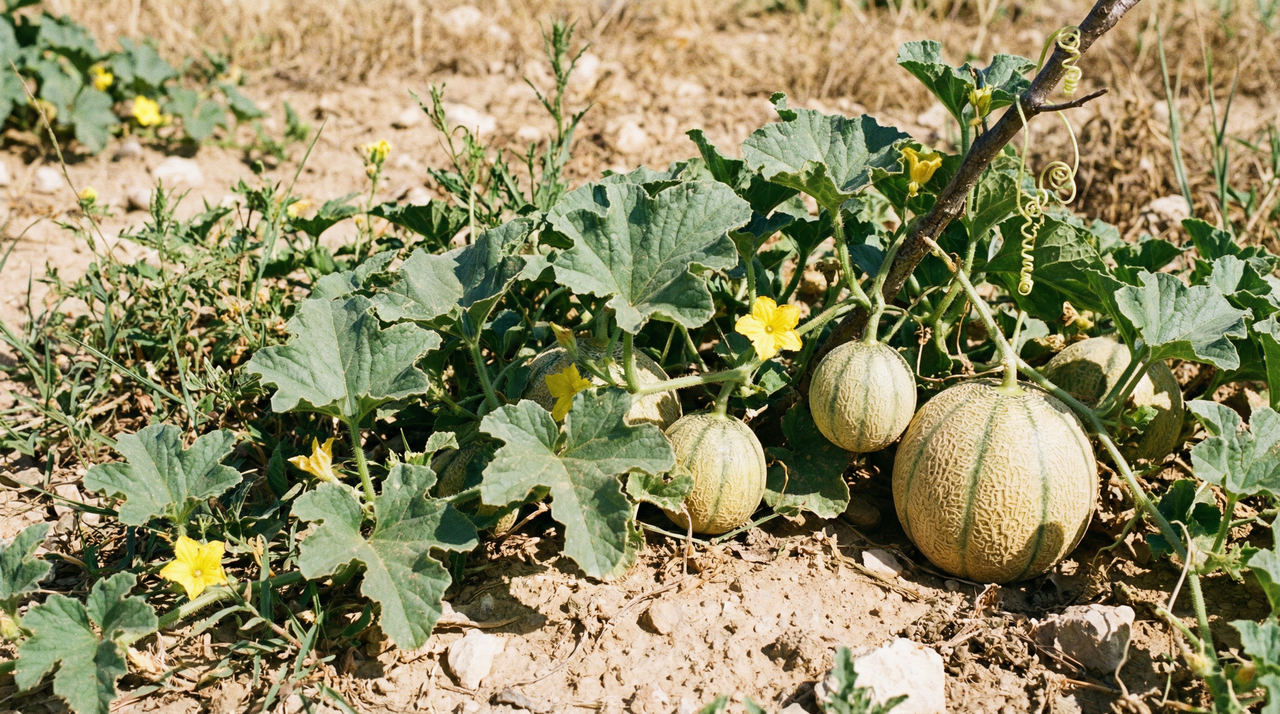
The cucumber vine is a vigorous, slightly bristly thing. Stems are pubescent (covered in fine hairs that catch the light) and the plant climbs aggressively using thigmotropic tendrils that detect contact and coil tight within hours, working something like a grapevine's but faster and more insistent.[9] On a trellis with something to grab, a cucumber can reach 3 to 10 feet; left to sprawl, it wastes energy and invites disease. The flowers are small, bright yellow, barely half a centimeter across, and easy to overlook until you realize you have dozens of them open at once.[10] The fruit is a pepo, technically a modified berry with a distinct outer rind (exocarp), firm flesh (mesocarp), and a seedy interior (endocarp). Most familiar types are cylindrical, 10 to 30 cm long and 3 to 10 cm wide, harvested deep green though cultivar colors range from pale yellow to nearly white.[11] Seeds are flat, cream-colored, roughly the size of a watermelon seed, and the root system is mostly shallow fibrous growth concentrated in the top 30 to 60 cm of soil.[10][6] That shallow root architecture is something I remind people about constantly. Even one dry day in high summer visibly wilts the vines, because those roots simply can't reach far for moisture.
Traditional and Cultural Uses
Humans have been cultivating cucumbers for a very long time. Domestication is traced to northern India and the Himalayan foothills somewhere around 3000 to 2000 BCE, with archaeological evidence from Indus Valley sites.[12][13] From there, trade routes did the rest. By around 1400 BCE cucumbers appeared in Egypt, by 500 BCE they were known in the Greco-Roman world, and the Silk Road carried them into China by roughly 200 BCE.[14][15] They reached the Americas only in the 16th century through European colonization, which is worth remembering when someone implies there's a deep indigenous North American cucumber tradition. There isn't. The plant arrived with colonists, full stop.
Across every culture that received it, the cucumber earned consistent praise for the same qualities: cooling, hydrating, and gently diuretic. Ayurvedic medicine classified it as sheetala, meaning cooling, and prescribed it for heat-related disorders, urinary complaints, and as compresses for tired eyes, a use that clearly survives into modern beauty culture.[16] Traditional Chinese Medicine echoed this, attributing cucumber's action to the liver, lung, and stomach meridians, clearing heat and promoting urination.[17] Egyptian tomb art depicted cucumbers as symbols of prosperity, apparently reserved at times for royalty, and ritual uses tied to purification and renewal appear across Asian, African, and Mediterranean traditions.[18] That's a remarkably consistent cross-cultural message for a vegetable that's mostly water.
Fun Facts and Growth Curiosities
The cucumber holds a few surprises for new growers. Under ideal conditions, 70 to 85°F with consistent moisture and nutrition, a vine can extend 6 to 12 inches per day, with bursts reportedly reaching 18 inches in peak growth phases.[19][20] Those thigmotropic tendrils spin out and latch onto anything they touch, faster than most gardeners expect. I've had cucumbers climb right over neighboring tomatoes in a matter of days after I got distracted. The fruit itself is 95% water by weight,[21] which puts its extraordinary hydrating reputation in immediate context. Potential bitterness comes from cucurbitacins, tetracyclic triterpenoids the plant produces as a herbivore defense, and stress triggers them: drought, heat, nutrient imbalance.[22] Wild types have high levels; domesticated varieties were bred to suppress them, but give a modern cucumber a dry spell and it will remind you of its ancestry. I've tasted it firsthand more times than I'd like after skipping irrigation during Florida heat waves. The yield potential when stress is avoided is genuinely impressive: a well-managed plant can produce 20 to 50 pounds of fruit in a season, and world records include a 109.5 cm cucumber grown in Germany and a single fruit weighing over 13 kg grown in the UK.[23][24] Fast hybrid varieties can mature in as few as 35 to 40 days, while pickling types are bred smaller, firmer, and more uniform than slicing types.[25][23]
Cucumber Varieties for Home Gardens
Before you buy a single seed packet, it helps to know that all cucumber cultivars fall into three main market types: slicing, pickling, and burpless (English).[26][27] That framework tells you more about the right variety for your situation than any seed catalog description ever will. The types differ in fruit size, skin thickness, cucurbitacin levels, and storage behavior, and those differences have real consequences in both the garden and the kitchen.
Three Main Market Types: Slicing, Pickling, and Burpless
Slicing cucumbers are what most people picture: long fruit, typically 6 to 9 inches, with thick skins bred to survive the trip from field to supermarket.[26][27] Workhorses like 'Marketmore' and 'Straight Eight' lean into size, uniformity, and disease resistance. They store reasonably well in the fridge for a week or two, though I find the thicker skin can go waxy if you let them sit too long.[6]
Pickling cucumbers are an entirely different animal. They top out at 2 to 5 inches, with thinner skins that absorb brine beautifully and a firm texture that holds up in the jar.[26][27] 'Boston Pickling' and 'National Pickling' are the classics, and if you're preserving, they're non-negotiable. Slicers just don't take brine the same way. Pickling types are also harvested young to minimize seed development, which keeps texture tight.[6]
Burpless or English cucumbers go long, sometimes 12 to 18 inches, with seedless flesh and almost no cucurbitacin bitterness.[26][27] 'Telegraph' and 'Diva' are the most common home-garden picks, and both are parthenocarpic, meaning they set fruit without pollination. That's a great trait for greenhouse growing but worth knowing if you're planting them outdoors in a dense pollinator garden. The trade-off I warn clients about: that thin skin tastes incredible fresh but needs immediate refrigeration. Slicers give weekend gardeners more flexibility.
Disease resistance is the selection criterion I'd argue matters most for organic growers. I've watched entire plantings of unselected varieties collapse in a humid Florida summer because nobody checked for downy mildew tolerance. 'Marketmore' carries solid downy mildew resistance, and the lemon cucumber plant offers multi-virus resistance that makes it a surprisingly low-maintenance option despite its novelty status.[28][6] Current breeding across all types prioritizes powdery mildew, downy mildew, and cucumber mosaic virus resistance specifically to reduce chemical inputs, which aligns well with permaculture goals.
Regional and Climate-Adapted Cucumber Varieties
Cucumbers grow across USDA zones 3 through 11, thriving between 70 and 95°F, with most varieties hitting harvest in 50 to 70 days from planting.[6][29] But that range hides a lot of variation. In the South, heat-tolerant types like 'Poinsett 76,' 'Dasher II,' and the pickling hybrid 'Calypso' are consistently recommended because they won't stall out when temperatures push past 90°F.[30] Northern gardeners in short-season climates are better served by early-maturing varieties like 'Marketmore 76,' 'Salad Bush,' and 'Picklebush,' which can produce a full crop before the first frost threatens.[31][6]
I learned this lesson the hard way when I trialed several northern short-season picks during a Central Florida summer and watched them bolt and decline by July. 'Calypso,' planted in the same beds, kept producing. Regional adaptation isn't marketing language; it reflects real physiological limits.
Sourcing Cucumber Seeds and Plants
Slicing cucumbers account for roughly 70% of U.S. commercial acreage, with pickling types making up the remaining 30%.[32][33] That dominance explains why your local big-box store will almost always have slicing seedlings in spring, typically 'Marketmore 76,' 'Dasher II,' or a generic English cucumber, priced around $3 to $5 per plant. For types of cucumbers that don't show up on hardware store shelves, including lemon cucumber, Persian cucumber varieties, or specific disease-resistant pickling hybrids like 'Calypso' and 'Explorer,' seeds are the practical path.[34][35]
Seed packets from Johnny's Selected Seeds, Baker Creek Heirloom Seeds, Burpee, and Botanical Interests typically run $2.50 to $6 per packet.[36][37][38][39] I order from Johnny's and Baker Creek most often because their catalog notes on regional performance and disease resistance have consistently matched what I observe when helping clients select varieties. When I'm scanning seed options every January, resistance ratings come first. Novelty colors and exotic shapes come second, if at all.
Cucumber Propagation and Planting
Seed Propagation and Germination
Seed is how nearly every home grower starts cucumbers, and for good reason: modern Cucumis sativus germinates with almost impatient reliability once you give it warm soil. Expect 80–95% germination when soil temperatures sit between 20–30°C (68–86°F), with seedlings typically pushing up in 4–7 days under consistent moisture and decent drainage.[40][41] That's a far cry from wild Cucumis sativus var. hardwickii, which retains seed dormancy as a survival hedge; domestication stripped that trait out and gave us seeds that just want to grow.[42]
I've started cucumbers from seed more seasons than I can count, and the thing I always tell new growers is to label every flat immediately. Cucumber seedlings at the cotyledon stage look nearly identical to squash and melon, and by the time the first true leaves appear you've already lost track of which is which. It's a small thing that saves real headaches later. I also now reach for pathogen-treated seed whenever I can find it, particularly if I'm growing in a bed with any history of soil-borne disease pressure.
For saving your own seed from open-pollinated varieties, isolation of at least half a mile is the standard recommendation, or hand-pollination before bagging the flower.[43] Cucumbers are monoecious (occasionally gynoecious in modern hybrids), and they rely on insect pollination for outcrossing, which means F1 hybrid seed will segregate and produce unpredictable offspring in the F2 generation and isn't worth saving.[44] Stick to open-pollinated types if seed saving matters to you.
Grafting for Disease Resistance and Vigor
Grafting is common practice in commercial production and increasingly relevant for home growers dealing with persistent soil-borne problems. The standard method is a splice graft at 45 degrees: a cucumber scion 7–10 days old with 2–3 true leaves joined to a resistant rootstock, most often bottle gourd (Lagenaria siceraria) for Fusarium and salinity tolerance or a Cucurbita hybrid for broader resistance.[45][46] Healing requires controlled conditions, around 25–30°C with 85–95% humidity for 3–7 days, and success rates run 70–90% when those conditions are maintained.[47]
I've watched grafted plants in my own garden hold on productively into late summer when non-grafted neighbors in the same beds start collapsing from Fusarium pressure. If your garden has a history of wilt or root-knot nematodes, grafting is worth the extra setup cost. For seed-borne pathogen management more broadly, a hot-water seed treatment at 50°C (122°F) for 10–20 minutes before sowing knocks back bacterial and fungal threats without the need for chemical seed dressings.[48]
Cucumber Seed Characteristics and Storage
Domesticated cucumber seeds average 3–5 mm long, noticeably larger than the 2–3 mm seeds of wild relatives, a shift that reflects selection for vigorous, fast-establishing seedlings.[42] They're orthodox seeds, meaning they tolerate dry storage well. Kept at 4–10°C with moisture content around 5–7%, they hold high viability for 5–10 years; drop them to -20°C under the same conditions and you're looking at 20–50+ years of viable storage.[49][50] For most gardeners, a hermetic container with a desiccant pack stored somewhere consistently cool is more than adequate for multi-season use.
Soil, Site, and pH Requirements
Cucumbers want fertile, well-drained loamy or sandy loam with 2–5% organic matter and a pH between 6.0 and 6.8.[6][51] Outside that range, problems compound quickly: below 6.0 you risk aluminum toxicity and increased disease susceptibility; above 7.0 micronutrient deficiencies and chlorosis become common.[52] Waterlogging is the silent killer, capable of cutting yields by up to 50% and showing up as wilting and yellowing that's easy to misdiagnose as drought stress.[6] I learned this the hard way my second season, planting into unamended clay that looked fine on the surface until the first heavy rain. Raised beds changed everything.
This sensitivity makes sense when you trace the plant back to its origins in South Asian Himalayan foothills and alluvial riverine soils, where loose, well-aerated textures let the shallow fibrous root system breathe.[53] For heavy soils I now work in generous compost before planting and test pH 2–3 months ahead so there's time to amend with lime or sulfur before the season starts.[54] For containers, use a mix of equal parts potting soil, compost, and perlite or vermiculite in a pot at least 12–18 inches deep; garden soil compacts too readily and drains poorly in containers.[55] Full sun is non-negotiable: 6–8 hours of direct light daily, with shade reducing yields 20–50%.[56] I've seen insufficient light produce leggy vines with fewer female flowers long before any fruit forms, which is a frustrating problem to diagnose mid-season.
Spacing, Trellising, and Planting Technique
Bush types can go 12–18 inches apart in the row; vining types, which are far more common, need 24–48 inches in-row with 4–6 feet between rows.[6][8] Left to sprawl, vining cucumbers spread 6–10 feet laterally, which is a lot of real estate in a kitchen garden. A sturdy trellis 5–7 feet tall changes the math entirely: vertical growth lets you tighten in-row spacing slightly while dramatically improving airflow, which is your best passive defense against powdery mildew and bacterial wilt.[57][7]
Pack plants too tightly and humidity spikes in the canopy, inviting exactly the disease pressure you're trying to avoid. Space too widely and you're sacrificing yield per square foot with no real benefit.[58] If you're transplanting rather than direct-sowing, harden off seedlings over 7–10 days before they go in the ground. Skipping that step is one of the most common reasons transplants stall or sulk for weeks after planting.
Timeline from Seed to Harvest
Commercial slicing varieties typically mature in 55–65 days from seeding; pickling types run slightly faster at 48–60 days.[59][60] The first 30–40 days are vegetative; then flowering begins and the fruiting phase kicks in, with optimal growth happening in the 70–85°F range.[61] In warmer climates like my zone 9B garden, I direct-sow once the soil has genuinely warmed rather than transplanting, hitting that window naturally and avoiding the transplant shock that cooler-soil starts sometimes cause.
Grafted cucumbers follow a longer runway: graft at 7–10 days, heal for 5–7 days, transplant 10–14 days post-graft, then expect first harvest 45–60 days after transplant, putting the total at roughly 60–90 days from sowing.[62][46] The payoff is that rootstock vigor often sustains production longer into the season, particularly under stress conditions where ungrafted plants would have already declined.[63] Get the propagation and site selection right, and the timeline almost takes care of itself.
Cucumber Care Guide
Cucumbers are not a plant that tolerates neglect gracefully. Their tropical South Asian origins show up in every care requirement: they want heat, consistent moisture, fertile soil, and plenty of sun. Get those fundamentals right and they'll outproduce almost anything else in the summer garden. Let one slip, and you'll notice quickly.
Sunlight Requirements
Full sun is non-negotiable. Cucumbers need at least 6 to 8 hours of direct sunlight daily to photosynthesize adequately, flower reliably, and set fruit.[64][65] In my experience, light is the single biggest predictor of productivity. The vines I've grown in spots with even a few hours of afternoon shade become leggy and pale, producing sparse flowers and fruit that never quite fills out. That's the etiolation response: elongated weak stems, reduced leaf size, and poor fruit set.[64]
The flip side is sunscald, which shows up as bleaching, leaf curl, and necrosis when intense heat combines with low soil moisture.[66] That's mostly a watering and mulching problem in disguise, not a reason to reduce light. While cucumbers are day-neutral, they respond well to longer photoperiods of 12 to 16 hours with enhanced vegetative growth, which is why greenhouse growers use supplemental lighting to push yields.[67] For home gardens, just find the sunniest spot you have.
Watering Needs
Cucumbers need 1 to 2 inches of water per week under normal conditions, rising to 1.5 to 2 inches during fruiting and in hot weather.[6][68] Their shallow roots and high transpiration rate mean drought damage can set in within just 2 to 5 days without water. I've grown okra alongside cucumbers for years, and the contrast is stark: okra will shrug off a missed watering; cucumbers sulk immediately and may never fully recover their production.
Both overwatering and underwatering cause problems, and some of the symptoms overlap confusingly. Overwatered plants show yellowing starting at the bottom leaves and may wilt even in wet soil as roots suffocate and rot.[69][70] Underwatered plants produce curled leaves, reduced fruit size, blossom-end rot, and that bitterness so many gardeners blame on the variety. Consistent moisture is what prevents bitter cucumbers, full stop.
The practical approach: water deeply to 6 to 8 inches to encourage stronger roots, use drip irrigation or soaker hoses to keep foliage dry, and lay 2 to 4 inches of mulch to hold moisture and moderate soil temperature.[71][72] Check soil moisture 2 inches down and scale up as the plant moves from seedling (keep consistently moist) to vegetative growth (1 to 1.5 inches per week) to flowering and fruiting (1.5 to 2 inches).[73][20] Container-grown plants dry out faster and need more frequent monitoring. Keep soil pH between 5.8 and 6.8 for optimal nutrient uptake; salinity above 2.0 dS/m stunts growth and pushes fruit toward bitterness.[74]
Feeding and Fertility Management
These are heavy feeders. Nitrogen drives vine and leaf development, phosphorus supports rooting and flowering, and potassium underpins fruit quality and disease resistance.[75][76] Calcium prevents blossom-end rot, magnesium keeps photosynthesis running, and boron deficiency produces hollow stems and distorted, bitter fruit.[75][77] A soil test before planting saves a lot of guesswork; target pH 6.0 to 6.8, 40 to 60 ppm phosphorus, and 150 to 250 ppm potassium.[78]
Split applications outperform a single pre-plant dump. Apply 60 to 80 percent of phosphorus and 50 to 70 percent of potassium at planting, then side-dress with nitrogen at the early vine stage and again at bloom.[79][80] Favor a higher-nitrogen ratio during vegetative growth and shift toward potassium-heavy formulas once fruiting begins. I once grew a bed of cucumbers on overly rich compost with no potassium correction and had spectacular vines with almost nothing to harvest. The research backs up what that season taught me.
Watch older leaves for early deficiency signals: uniform yellowing progressing up the plant means nitrogen shortage; dark green to purple undersides indicate phosphorus deficiency (seeing that purple coloration on my own plants is what finally pushed me to start routine soil testing before the season); marginal browning on older leaves points to potassium. Avoid late-season nitrogen, which pushes excess foliage and invites disease.[77][81] Organic options that work well include compost at 2 to 4 inches incorporated before planting, blood meal for nitrogen, bone meal for phosphorus, and wood ash for potassium.[82]
Frost and Cold Tolerance
Cucumbers are genuinely cold-intolerant. Chilling injury begins around 50°F, growth slows below 55°F, and a single frost at or below 32°F can kill young plants and damage all tissue across the plant.[8][6] Soil must reach at least 60°F before planting, with optimal germination occurring between 68 and 95°F, and you need a minimum 60 frost-free days from transplant to final harvest.[83][84]
Frost symptoms move fast: wilting, water-soaked lesions, browning, flower abortion, fruit pitting, and collapse can appear within hours of exposure. Mature vines may partially recover from a very brief, light frost if warm weather returns immediately, but seedlings almost never bounce back. In my early years I lost entire plantings by jumping the season. Waiting until the soil thermometer genuinely reads 60°F and keeping floating row covers on hand has made the difference ever since. Row covers provide 4 to 8°F of protection, and 2 to 3 inches of organic mulch buffers soil temperature swings.[20][85] Cloches and cold frames serve the same purpose for earlier starts in cooler regions.
Heat Tolerance
Cucumbers handle heat better than cold, thriving in AHS Heat Zones 1 through 11 with optimal daytime temperatures of 75 to 85°F and nights of 59 to 68°F.[86] Brief spikes to 95°F are manageable if nights cool down, but sustained temperatures above 90°F reduce growth and fruit set noticeably. The reproductive stages are most vulnerable: pollen viability drops sharply above 95°F and fruit set fails when daytime highs stay above 90°F, while vegetative growth tolerates short heat exposure somewhat better.[87][88]
I've found that 'Marketmore 76' holds its fruit set noticeably better during extended stretches above 90°F than many other varieties I've grown, especially when I give it some afternoon shade during heat waves. The research confirms pollen failure at sustained high temperatures, so that observation isn't just anecdotal. Practical management during hot spells includes 30 to 50 percent shade cloth, 2 to 4 inches of mulch, early morning irrigation, and maintaining proper 12 to 18 inch in-row spacing with 4 to 6 feet between rows for airflow.[89] Other reliably heat-tolerant options include 'Poinsett 76', 'Sumter', and 'Dasher II'.
Pruning, Maintenance, and Seasonal Care
Once vines hit 2 to 3 feet, I start pruning lateral side shoots weekly, removing shoots beyond the first leaf after each fruit. It sounds fussy, but it consistently directs energy into the fruit, improves airflow, and can increase yields by 20 to 30 percent.[90] The bigger benefit in humid summers is disease prevention: a dense, tangled vine is an invitation for downy mildew. Trellising reinforces those gains by keeping fruit clean, reducing pest habitat, and making daily inspection and harvest much easier.[91]
Cucumber beetles, aphids, spider mites, and squash bugs are the main pest pressures, with cucumber beetles particularly serious because they vector bacterial wilt. Downy mildew, powdery mildew, and Fusarium wilt round out the disease concerns.[7][92][93] Drip irrigation, consistent pruning for airflow, and regular scouting form the cultural backbone of an integrated management approach; those practices reduce chemical reliance significantly. Fertility matters here too: balanced nutrition, around 80 to 150 lb/acre nitrogen equivalent scaled down for home plots with half pre-plant and the rest as side-dress, supports vigorous plants that shrug off stress better than underfed ones.[94][44]
As a frost-tender annual, the cucumber completes its cycle in 50 to 70 days and won't overwinter outdoors in temperate climates.[95] Keep up with harvest every 2 to 4 days, pulling slicers at 6 to 8 inches and picklers at 3 to 4 inches while they're firm, dark green, and tender.[96] Leaving even one fruit to yellow and swell on the vine signals the plant to stop producing, so frequent picking isn't optional. Store harvested cucumbers in perforated plastic bags at 50 to 55°F and 95 percent humidity for up to two weeks, and pick early in the morning with clean shears to minimize plant stress.[97]
Harvesting Cucumbers for Peak Flavor and Crispness
There's a narrow window with cucumbers, and I mean genuinely narrow. Miss it by a few days and that trellis beauty you were watching ripen becomes overgrown and intensely bitter. Catch it right, and you've got one of the most satisfying harvests in the summer garden.
When and How to Harvest Cucumbers
Once a cucumber flower sets fruit, the clock starts immediately. Slicing types need roughly 10 to 15 days from bloom to harvest, pickling types closer to 7 to 12, and burpless varieties a bit longer at 12 to 18 days.[98][99][8] Counting from seeding, expect your first harvest somewhere between 48 and 70 days depending on type.[98] I've found that once the fruits start coming, checking the vines every single day stops being optional. I follow a strict every-other-day rule once my pickling types hit 4 to 5 inches, because I've learned the hard way that a dry spell plus two skipped days equals a bitter, bloated cucumber no one wants to eat.
The visual cues are straightforward: firm flesh, bright uniform green with no yellowing at the blossom end, and seeds that are still soft and barely formed.[9][100] When you're ready to pick, use shears or a small knife and cut the stem cleanly rather than yanking the fruit off. Pulling stresses the vine and can damage the growth point. Morning harvests are worth the early alarm; the fruits are cooler, crunchier, and hold up better through the day.[101] Peak harvest season across most of the U.S. runs July through August, though the full window stretches from May into November depending on your region and climate.[102][8] For growers who want a longer productive stretch, grafted plants are genuinely worth considering; in my experience they've extended the harvest window by several weeks and yielded noticeably more fruit per plant than standard rootstock, with some data showing a 20 to 30% yield advantage and a sustained productive run of 4 to 8 weeks.[63]
Cucumber Flavor, Texture, and Yield at Harvest
Biting into a cucumber pulled straight from the vine on a cool morning is a genuinely different experience from anything you buy at a grocery store. The crunch is almost percussive, the skin is thin and tender, and there's an immediate cool juiciness that comes from the fruit being nearly 95% water with full turgor still intact.[103][104] That clean, faintly sweet, green flavor comes from specific volatile aldehydes, primarily (E,Z)-2,6-nonadienal, the compound responsible for what most people recognize as the classic "cucumber" scent.[105][106] Slicing varieties like Marketmore tend to carry two to three times the total volatile load of pickling types, which is exactly why they taste more intensely "cucumber-y" fresh off the vine while pickling types can seem milder and more subdued.[107][105]
Bitterness is the flavor story you're trying to avoid. It comes from cucurbitacins, the same compounds introduced in earlier sections, and they spike when plants are drought-stressed, when fruits are left to over-ripen, or in certain older pickling cultivars.[108][109] Modern English and parthenocarpic varieties have been bred down to very low cucurbitacin levels, which has been a real game-changer for me in the kitchen garden.[110] Consistent irrigation (covered in the care guide) and a disciplined harvest schedule are the two most reliable ways to keep bitterness out of the bowl.
Cucumber Preparation, Culinary Uses, and Benefits
Edibility, Flavor, and Safety
The fruit is what we're all here for, obviously, but cucumbers also offer edible seeds worth knowing about. [111] The leaves are technically edible too, usable in salads or as wraps, though I rarely bother because they carry a noticeable bitterness from cucurbitacins and are better left to shade the fruit than end up in a bowl. [112] Skip the roots entirely. [20]
What makes a fresh cucumber so satisfying is simple physics: an incredible water density, negligible calories, high potassium, and that signature crisp snap that turns mealy the moment you let it go too long on the vine. [21] [113] When that familiar stress-induced bitterness does show up, it concentrates mainly in the skin and stem end. [114] [115] I've learned to taste the stem end of every cucumber I pull in my Florida summers, because a drought-stressed plant can look perfect and bite back. When bitterness strikes, peeling the skin, cutting off the stem end, and soaking slices in salted water for 30 minutes will rescue most of the fruit. [116]
For safety: wild cucurbit look-alikes like wild mock cucumber and bur cucumber contain high cucurbitacin levels that cause serious gastrointestinal distress. After teaching plant ID workshops for years, my rule is simple. Check for smooth skin and zero bitterness before eating anything that looks like a cucumber but didn't come from your garden. [117] [118] Some people also experience oral allergy syndrome from cross-reactivity with ragweed pollen, or latex-fruit syndrome, so it's worth flagging if you're prone to those sensitivities. [119] [120]
Fresh cucumbers shine in salads, sandwiches, raita, tzatziki, and cucumber-infused water. Dill, mint, yogurt, and light proteins are natural partners. [20] Pickling and fermentation tell a completely different story. Lacto-fermentation introduces lactic acid, reduces aldehydes, boosts umami, and pulls in terpenes from dill and other spices, transforming that mild fresh flavor into something bright, complex, and genuinely addictive. [121] USDA guidelines call for a 5% vinegar solution for quick pickles or a 5 to 8% salt brine for fermentation to safely prevent botulism while building that characteristic tang. [122] I've grown slicing and pickling varieties side by side for years, and the difference after fermentation is stark. Pickling types, with their bumpy skin, firmer flesh, and higher flavor compound density, hold their crunch in a way that slicing cucumbers simply don't. [123] Store whole, unwashed fruit in the crisper drawer at 45 to 50°F, away from apples, bananas, and tomatoes. I once ruined an entire batch storing cucumbers next to tomatoes and now keep them completely separated. Ethylene is invisible but unforgiving. [124] [125]
Traditional Medicinal Preparations
Most of the traditional cucumber preparations people actually reach for are external rather than internal. Poultices and fresh juice have long been used to soothe sunburn, calm eye puffiness, and address minor skin inflammation, drawing on the plant's cooling, astringent, and antioxidant properties. [126] I keep a few extra cucumbers in the fridge all summer specifically for this. A cold slice on a sunburned arm works, and I've reached for it often enough with my kids that it's become a genuine household habit rather than a novelty. Internally, cucumber infusions and decoctions appear in traditional records as support for urinary and cooling functions, though no standardized medicinal dosages exist since it is used primarily as a food rather than a concentrated medicine. [126] For most people, the most honest framing is exactly that: you're enjoying a cooling, hydrating food with gentle topical benefits, not deploying a potent botanical remedy.
Non-Food and Ornamental Uses
A cucumber vine trained up a trellis or arbor earns its spot visually, not just in the harvest basket. The lush foliage, bright yellow flowers, and vigorous climbing habit make it a genuine ornamental presence in edible landscapes and cottage gardens, especially with varieties that produce decorative or unusually shaped fruit. [127] [128] Vertical training solves the space problem in smaller plots and puts the flowers at eye level, which makes for a pretty garden and noticeably easier harvesting. For a fast-growing annual with so much to offer the kitchen, that kind of visual return feels like a bonus worth accepting.
Cucumber Health Benefits and Medicinal Uses
Most vegetables can't claim to be nearly all water and still deliver meaningful nutrition, but cucumber pulls it off. It sits in a category of its own as a food that hydrates and nourishes simultaneously, which is exactly why it shows up in every traditional medicine system that ever encountered it.
Nutritional Profile of Cucumbers
Raw cucumber with the peel comes in at around 95% water and just 15 calories per 100 grams, with 3.63 grams of carbohydrates, 0.65 grams of protein, and half a gram of fiber.[21] Those calories in a cucumber are essentially negligible, but what you get alongside them matters: vitamin K at 16.4 µg, a modest hit of vitamin C, B vitamins, and potassium at 147 mg with sodium kept to just 2 mg per 100 grams.[21] That potassium-to-sodium ratio is part of why cucumbers feel so genuinely refreshing on a hot afternoon rather than just watery. I eat mine straight off the vine without even rinsing half the time, and I'm convinced there's something to getting them at peak freshness for that electrolyte hit.
Processing changes the picture significantly. Dill pickles carry around 1,208 mg of sodium per 100 grams and lose most of their vitamin C.[129] Fermented pickles do bring probiotic benefits to the table, but if hydration and micronutrients are your goal, fresh is the answer. The peel also matters: flavonoids concentrate there, with total phenolic content running 20 to 60 mg GAE per 100 grams of fresh fruit, so peeling removes a meaningful share of the antioxidant value.[130]
Key Phytochemicals in Cucumbers
Beneath the mild flavor, cucumbers produce a surprisingly complex suite of secondary metabolites: cucurbitacins (the triterpenoids B, E, I, and D), flavonoids including quercetin, kaempferol, and luteolin glycosides, phenolic acids like caffeic, ferulic, and chlorogenic acids, lignans, and trace coumarins such as scopoletin.[131][132] The cucurbitacins are the headline compound, and they deserve attention.
These bitter triterpenoids function as the plant's chemical defense system. Concentrations vary dramatically by tissue: leaves can carry up to 5 mg per gram dry weight, seeds run 0.2 to 2 mg per gram, and the fruit flesh of commercial cultivars stays well below 0.1 mg per gram.[133][134] The flavonoids and phenolics also concentrate in the peel and seeds rather than the watery flesh, and stress conditions -- drought, heat, salinity, low calcium -- push those levels higher as an adaptive response.[135][136] I've noticed this firsthand: cucumbers grown through a brutal dry spell often taste noticeably more bitter, which makes ecological sense when you understand that these compounds evolved to deter herbivores and suppress pathogens, not to make your salad more interesting.[137][138]
Traditional and Modern Medicinal Research
Every major traditional medicine system that knew cucumbers used them for cooling and inflammation. Ayurveda prescribed them as a pitta-balancing remedy for skin irritations and digestive heat, Traditional Chinese Medicine deployed them to clear heat and treat conditions like eczema, and Egyptian and Greek practitioners reached for them to address heat-related ailments and as a mild laxative.[139][140][141] Modern research is starting to explain the mechanisms behind those intuitions.
Cucurbitacin B shows anti-inflammatory and anticancer activity in vitro and in animal models by inhibiting NF-κB and JAK/STAT signaling, inducing apoptosis in cancer cells, and modulating inflammatory cytokines like TNF-α and IL-6 and the enzyme COX-2.[142][143] Quercetin and kaempferol contribute antioxidant activity via free-radical scavenging and enzyme upregulation, while triterpenoids have shown hypoglycemic effects in diabetic animal models.[142][144] On the skin side, a small randomized trial found topical cucumber extract improved skin hydration by 20% over four weeks.[145] The bioactives are concentrated in the skin and seeds more than the flesh, which is why I save cucumber peels to steep in water overnight for a simple refrigerator facial toner; it's low-tech, but the science on peel extracts supports the idea.[146]
That said, I'm honest with myself about what the research actually shows. Most of the exciting mechanisms come from concentrated extracts in lab dishes or animal models, not from the sliced cucumber in a summer salad.[147] The reliable benefits of a cucumber -- hydration, electrolyte support, antioxidants, and anti-inflammatory flavonoids -- are worth celebrating on their own terms without overstating what the clinical data can support.
Safety and Potential Side Effects
Commercial cucumbers are genuinely safe for humans, dogs, cats, and livestock at normal dietary amounts.[148][149] Breeding has brought cucurbitacin levels in cultivated fruit down to well below 0.01 mg per gram fresh weight, far from concerning concentrations.[150] Bitterness is the warning system. After years of growing cucumbers through heat waves and inconsistent irrigation, I've learned to trust my palate: if a cucumber tastes noticeably bitter, it goes straight to the compost. I wouldn't serve it to my family or my dog, and the research on cucurbitacin toxicity supports treating that flavor signal as a genuine red flag.[151][152] Wild relatives and stressed plants carry much higher concentrations, and wild cucurbits should never be eaten.
A few other cautions worth knowing: some people experience oral allergy syndrome with cucumbers due to cross-reactivity with certain pollens.[153] Cucumbers have been linked to Salmonella outbreaks, so washing produce thoroughly under running water is non-negotiable, and pre-cut cucumbers carry added listeria risk for pregnant women and other vulnerable groups.[154][155] During pregnancy, cucumbers as food are fine and provide welcome hydration and nutrients, but concentrated supplements haven't been studied adequately and should be avoided.[156] The vitamin K content (16 µg per 100 grams) is modest compared to leafy greens like kale or spinach, so typical consumption is unlikely to interact with anticoagulant therapy, though anyone on warfarin should always run dietary changes by their prescriber.[157]
Cucumber Pests and Diseases
Early in my growing years I lost entire cucumber plantings before I understood that most of the battle is decided at seed selection, not at the spray bottle. Disease resistance in cucumbers isn't binary; it's rated on a spectrum from immune to highly resistant to moderately resistant to susceptible, and those ratings shift depending on cultivar, local conditions, and which pathogen race is actually in your soil.[158] I now cross-check the Cornell and UF/IFAS resistance tables every season because new races emerge regularly, and what worked last year isn't always a reliable guide to what works now.[159][160]
Disease Resistance and Management
Powdery mildew is the most visible culprit for cucumber plant leaves turning white in most home gardens, and it's where resistant breeding has delivered the most obvious wins. Varieties like 'Marketmore 97', 'Poinsett 76', and 'Dasher II' carry pm-gene resistance that keeps foliage clean through humid summers where susceptible slicers look like they've been dusted with flour by August.[161][162] I've grown both side by side in Central Florida's humidity, and the yield difference by late summer is striking.
Downy mildew is trickier. No widely available immune variety exists; the best cultivars like 'Carolina', 'Corinto', and 'Stonewall' offer partial resistance through dm-1 and related genes, which buys time but doesn't eliminate the problem in wet seasons.[163][162] Fusarium wilt adds another layer of complexity because resistance is race-specific; many varieties handle race 1 but fold against race 2, and the disease accelerates fast once soil temperatures climb above 77°F.[164][162] 'Marketmore 97', 'Poinsett 76', and 'Saladin' hold up well against it.
Aphid-transmitted viruses including cucumber mosaic virus, watermelon mosaic virus, and zucchini yellow mosaic virus cause the mosaic patterns, stunting, and deformed fruit that gardeners often mistake for a nutrient problem.[165] Reflective mulches reduce aphid landing rates significantly, and certain lines like 'Poinsett 97' carry dominant cm-gene immunity to CMV specifically.[162] Root-knot nematodes round out the soil-borne threat list; cucumbers are among the more susceptible cucurbits, so crop rotation is non-negotiable in affected beds.[166]
The cultural backbone of disease management aligns naturally with permaculture principles anyway: keep soil pH between 6.0 and 6.8, use drip irrigation rather than overhead watering to keep foliage dry, space plants generously for airflow, and rotate cucurbits out of any bed for at least two to three seasons.[167] In my own systems, combining resistant varieties with drip irrigation and good spacing has made fungicides unnecessary. I plant at least two different resistant slicers each season, never just one, because no variety covers every threat.
Pest Resistance and Management
Pest resistance follows the same cultivar-specific logic as disease resistance. 'County Fair' and 'Dasher II' perform better against cucumber beetles; 'Poinsett 76' shows aphid tolerance; 'Marketmore 76' holds up under spider mite pressure; 'Calypso' handles whitefly pressure better than most; and 'Poinsett 76', 'Dasher II', and 'Sassy' all carry nematode resistance.[6][168] The reason certain varieties consistently outperform others comes down to real biology: cucurbitacins deter feeding insects, trichomes form physical barriers, and volatile organic compounds actively recruit natural enemies while jasmonic and salicylic acid signaling primes the plant's own defenses.[169][170][171] You can actually feel the difference when you brush against a high-trichome vine, that slightly sticky, prickly texture is the plant doing its job.
Cucumber beetles are the pest I take most seriously. Striped and spotted beetles can cause 50 to 80% yield loss in bad years, and more importantly they vector bacterial wilt (Erwinia tracheiphila), which spreads quickly and kills plants before you've diagnosed the problem.[172] Bacterial wilt is worst in beetle-heavy regions like Ohio, New York, and Michigan, and there are no reliably immune cucumber varieties.[173] After losing plantings to it in my early seasons, I now treat 'County Fair' or 'Dasher II' as my baseline in any new site. Yellow sticky traps placed at vine height early in the season give you a heads-up on beetle arrival before populations build, and interplanting with nasturtium or radish as trap crops pulls pressure away from the cucumbers themselves.
Integrated management across all cucumber pests prioritizes cultural practices first: rotation, sanitation, proper spacing, reflective mulches for aphids and whiteflies, and conservation of parasitic wasps and other beneficials that broad-spectrum insecticides would eliminate.[7][174] One emerging threat worth watching is cucumber green mottle mosaic virus, which spreads through contaminated seeds and tools rather than insects, so seed sourcing and tool sanitation matter more than most growers expect.[175] None of this is complicated, but it does require paying attention from the beginning of the season rather than reacting after symptoms appear.
Cucumber in Permaculture Design
Most gardeners think of cucumbers as a food crop and nothing else. What they're missing is that this vine is doing quiet, useful work at the ecosystem level the whole time it's growing. Positioned thoughtfully, it earns its bed space several times over before the first fruit is ready to pick.
Ecosystem Functions and Companion Planting
Cucumbers can function as trap crops for cucumber beetles (Diabrotica spp.), drawing those pest populations away from other susceptible plants nearby.[176] That alone is worth thinking about. But the vining habit adds another layer: as the foliage spreads, it shades the soil, suppressing weed seedling establishment and reducing erosion on bare ground between longer-lived plants.[177] The leaf litter left behind carries mild allelopathic compounds that can inhibit certain weed species and discourage some pests even after the plants have died back.[178] And because cucumbers are potassium accumulators, chopping spent vines into the bed rather than hauling them to the compost pile returns that mineral fertility directly to the root zone of whatever comes next.[179]
For companion planting, cucumbers play well with beans, peas, corn, sunflowers, nasturtiums, and radishes, all of which contribute something back: nitrogen fixation, structural support, or pest deterrence.[180][6] I avoid putting cucumbers near my potato bed because I've watched shared disease pressure reduce yields on both crops in wet summers. Fennel, sage, and some aromatic herbs are also worth keeping at a distance; they can inhibit cucumber growth or attract the wrong insects.[180]
The pollination piece is where the ecosystem-function story gets really compelling. Cucumbers are monoecious, carrying separate male and female flowers on the same vine, and they rely almost entirely on insect pollination for fruit set rather than wind or selfing.[181][20] Good bee activity increases yield by 20 to 30 percent and produces more uniform, heavier fruit; bumblebees are especially effective because of their buzz-pollination behavior.[182] In my experience, the visible uptick in fruit set that comes once you establish a pollinator strip nearby is one of those garden moments that makes the whole guild concept click. If bee activity is genuinely limited in your site, parthenocarpic varieties can set fruit without pollination, though the results are sometimes smaller or less consistent.[183]
Forest Layer and Guild Integration
In food forest terms, cucumber occupies the herbaceous or ground-cover layer but can be trained vertically on a trellis to reach 5 to 15 feet, freeing up horizontal space for other guild members.[55][184] I've had good results training vines up young fruit tree cages in the early years of food forest establishment, when the canopy is still sparse and the vertical space is sitting empty anyway. It's a way to stack productivity into a gap that would otherwise grow weeds.
At the base of those trellises, pair cucumbers with nitrogen-fixing companions like beans, peas, or clover. They improve soil fertility without competing aggressively for light, which cucumbers need a lot of.[185] What matters is being clear-eyed about what cucumber is: a short-cycle annual that needs full sun, consistent moisture, and active pollinators to perform.[186] It rewards attentive placement but it's not a set-and-forget guild member. Plan its position so it doesn't shade out or root-compete with the perennials that will outlast it by decades.
Climate Requirements and Hardiness Zones
Cucumbers can be grown across USDA Zones 4 through 11, with the easiest, lowest-effort production happening in Zones 7 through 10.[29][6][187] The single most reliable planting cue I use is soil temperature: don't put cucumber seeds or transplants in the ground until you've confirmed at least 60°F at root depth. It's a more honest signal than the calendar. Optimal daytime air temperatures run from 70 to 85°F, with germination happiest between 75 and 95°F and fruit set most reliable between 65 and 85°F.[6][188]
Cold kills cucumbers fast. A single frost at 32°F ends the plant, and growth essentially stalls below 50°F.[6] Heat is trickier. The vine tolerates up to about 90 to 95°F if watered consistently, but above that threshold you'll see blossom drop, pollination failure, and bitter fruit.[189] I've found that afternoon shade cloth and a thick layer of mulch can ease that stress considerably during a hot stretch, buying another week or two of productive flowering when the summer really bears down. Humidity also matters: the 50 to 80 percent range supports healthy growth, but push above 80 percent and you're inviting powdery and downy mildew.[190][191] Rainfall of 40 to 60 inches annually suits them well; below that and consistent irrigation becomes essential, while significantly wetter climates require excellent drainage to avoid disease pressure.[192][190]
For growers in cooler zones who want to participate in cucumber season, the standard toolkit works well: start seeds indoors three to four weeks before your last frost date, use black plastic mulch to pre-warm the soil, and keep row covers on hand for surprise cool snaps after transplanting.[6][193] High tunnels extend the season at both ends and keep humidity more manageable in rainy climates. Full sun is non-negotiable; plan for at least six to eight hours of direct light and protection from strong wind, and site your plantings below about 1,000 meters elevation for reliable productivity.[194][195]
The Cucumber That Made Me Stop and Just Eat It
I've grown hundreds of plants in my food forests, but the cucumber is the one that reliably pulls me off task. I'll go out to harvest and end up standing in the trellis eating one warm from the vine, juice running down my wrist, completely forgetting what else I needed to do. There's no deep ecological lesson in that moment. It's just a good plant doing its job, and sometimes that's enough.
Sources 195
- Origin and Domestication of Cucumis sativus ↩
- Cucumis sativus L. ↩
- Cucumis sativus ↩
- USDA PLANTS Database Profile for Cucumis sativus ↩
- Cucumber (Cucumis sativus) Plant Profile ↩
- Cucumbers in Home Gardens ↩
- UC IPM: Cucumber Growth Stages ↩
- Cucumber Production Guidelines - University of Georgia Extension ↩
- Cucumis sativus L. ↩
- Cucumber (Cucumis sativus) PLANTS Profile ↩
- Cucumis sativus ↩
- Domestication of Cucumber (Cucumis sativus L.): South Asian Origin and Genetic Insights ↩
- Genetic Study of Cucumis sativus Domestication ↩
- The Cucumber: History and Cultivation ↩
- Cucumber Cultivation – Pensoft Publishers ↩
- Cucumber (Cucumis sativus) in Traditional Medicine – PubMed Central ↩
- Traditional Chinese Medicine: An Illustrated Guide ↩
- Cucumbers: History and Uses ↩
- Vegetable Production: Cucumbers ↩
- How to Grow Cucumbers ↩
- Nutritional Composition of Cucumbers ↩
- Cucurbitacin Biosynthesis and Bitterness in Cucumbers ↩
- Fastest Maturing Cucumber Varieties ↩
- Cucumber Production and Yield ↩
- Pickling Cucumbers vs. Slicing Cucumbers ↩
- Cucumber Production Guide ↩
- Cucumber Varieties for Home Gardens ↩
- Breeding for Disease Resistance in Cucumis sativus ↩
- Cucumbers: Planting, Growing, and Harvesting ↩
- Cucumber Production in the Home Garden - University of Florida IFAS Extension ↩
- Growing Cucumbers in the Home Garden - Cornell University Cooperative Extension ↩
- Vegetables 2022 Summary ↩
- Vegetable Production: Cucumbers ↩
- Cucumber Production in Florida ↩
- Cucumber Varieties for Commercial Production ↩
- Johnny's Selected Seeds ↩
- RareSeeds.com | Baker Creek Heirloom Seed Co. ↩
- Burpee Seed Catalog ↩
- Botanical Interests - Seeds, Plants & Garden Supplies ↩
- Cucumber Propagation Techniques ↩
- Seed Germination and Nursery Management for Cucurbits ↩
- Domestication of cucumber (Cucumis sativus L.): its crop wild relatives and crop improvement ↩
- Seed Saving Guide: Cucumbers ↩
- Hybrid Seed Production in Cucurbits ↩
- Vegetable Grafting: A New Technique for Florida Vegetable Production ↩
- Grafting Cucurbits for Disease Management ↩
- Compatible Rootstocks for Cucumber Production ↩
- Seed Treatment Techniques for Vegetable Crops ↩
- Genebank Standards ↩
- Seed Storage Behaviour: A Compendium ↩
- Cucumbers: Growing Tips ↩
- Cucumber Production ↩
- The Wild Progenitor of Cucumber, Cucumis sativus var. hardwickii ↩
- Cucumber Production: Soil Fertility and Nutrient Management ↩
- Cucumber (Cucumis sativus) ↩
- Cucumber Production Guidelines ↩
- Trellising and Training Cucumbers ↩
- Cucumber Production - USDA National Agricultural Library ↩
- Cucumber Production in California ↩
- Commercial Vegetable Production: Cucumbers ↩
- Cucumber Days to Maturity ↩
- Timeline for Grafted Vegetable Crops ↩
- Grafted Cucumbers: Production Guidelines ↩
- Missouri Botanical Garden Plant Finder: Cucumis sativus ↩
- UC IPM: Cucumber Production ↩
- University of Minnesota Extension: Growing Cucumbers ↩
- Greenhouse Grower: Light Requirements for Cucumbers ↩
- University of Florida IFAS: Cucumbers for Home Gardeners ↩
- Missouri Botanical Garden: Cucumber Growing Guide ↩
- Cornell Cooperative Extension: Water Stress in Vegetables - Cucumbers ↩
- UC Vegetable Research & Information Center: Cucumbers in the Home Garden ↩
- Texas A&M AgriLife Extension: Cucumbers ↩
- University of California: Cucumber Production Guidelines ↩
- Missouri Botanical Garden: Cucumis sativus Profile ↩
- UC IPM: Cucumber Nutrient Management ↩
- University of Minnesota Extension: Fertilizing Cucumbers ↩
- University of Florida IFAS: Cucumber Nutrient Deficiencies ↩
- University of Florida IFAS: Cucumber Production in Florida ↩
- University of California Cooperative Extension: Cucurbit Production Handbook ↩
- Cornell Cooperative Extension: Cucumber Nutrient Management ↩
- Penn State Extension: Boron Deficiency and Toxicity in Cucumbers ↩
- Purdue Extension: Soil Fertility for Cucumber - Organic and Synthetic ↩
- USDA NAL: Frost Protection for Vegetables ↩
- Purdue Extension: Cucumber Production Guide ↩
- Missouri Botanical Garden: Cucumber (Cucumis sativus) ↩
- AHS Gardening: Heat Zone Map ↩
- NC State Extension: Cucumber Production ↩
- Frontiers in Plant Science: Abiotic Stresses in Cucumber Production ↩
- Texas A&M AgriLife Extension: Heat-Tolerant Vegetables ↩
- UC IPM: Cucumber Pruning and Training ↩
- Cornell Vegetables: Nutrient Management for Cucumbers ↩
- USDA ARS: Downy Mildew of Cucurbits ↩
- University of Minnesota Extension: Fusarium Wilt of Cucurbits ↩
- University of Florida IFAS: Cucumber Production Handbook ↩
- Missouri Botanical Garden: Cucumis sativus Fact Sheet ↩
- UC ANR: Cucumbers - Growing Tips and Varieties ↩
- USDA ARS: Cucumbers - From Plant to Plate ↩
- Cucumber Production Guide ↩
- Cucurbit Crop Production ↩
- Cucumber Production Guidelines ↩
- Cucumber Production in California ↩
- Vegetable Production: Cucumbers ↩
- Cucumber Production and Quality ↩
- Postharvest Biology of Cucumbers ↩
- Volatile Compounds in Cucumber (Cucumis sativus L.) ↩
- Volatile Compounds in Cucumber (Cucumis sativus L.) ↩
- Flavor and Sensory Characteristics of Cucumber Cultivars ↩
- Cucurbitacin ↩
- Cucurbitacin Content and Bitterness in Cucumber Varieties ↩
- The genome of cucumber (Cucumis sativus L.) reveals insight into its horticultural traits ↩
- Cucumis sativus ↩
- Cucumber Plant Guide ↩
- Cucumber (Cucumis sativus) Profile ↩
- Growing Cucumbers - UC Master Gardener Program ↩
- Cucurbitacin in Cucumbers ↩
- Cucumber Production and Handling ↩
- Wild Cucumber (Echinocystis lobata) Toxicity ↩
- Identification of Edible and Poisonous Cucurbits ↩
- Oral Allergy Syndrome ↩
- Latex-Fruit Syndrome ↩
- Biochemical Changes During Cucumber Pickling ↩
- Home Canning: Pickled Products ↩
- Cucumis sativus - New York Botanical Garden, Food Encyclopedia ↩
- UC Cucurbits: Cucumber Production Guide ↩
- Cucumbers: Harvesting and Storing | MSU Extension ↩
- Cucumber (Cucumis sativus L.): A Comprehensive Review of Its Phytochemistry and Pharmacological Activities ↩
- Cucumber (Cucumis sativus) ↩
- Ornamental Vines for the Garden ↩
- FoodData Central - Pickles, cucumber, dill ↩
- Phytochemical Composition and Antioxidant Capacity of Cucumber (Cucumis sativus L.) ↩
- Phytochemical composition and biological activities of Cucumis sativus L. ↩
- Cucumis sativus L.: A review of its phytochemistry and pharmacology ↩
- Phytochemical Profiling of Cucumber (Cucumis sativus L.) Fruit Peel and Pulp ↩
- Cucurbitacin Content in Different Parts of Cucumber Plants ↩
- Metabolomics of Cucumber under Drought and Salinity Stress ↩
- Soil Nutrient Effects on Secondary Metabolites in Cucurbits ↩
- Secondary Metabolites in Cucurbits: Biosynthesis and Regulation ↩
- Ecological Roles of Cucurbitacins in Plant-Herbivore Interactions ↩
- Traditional Uses of Cucumis sativus in Ayurveda and Siddha Medicine ↩
- Cucumber in Traditional Chinese Medicine: Historical and Modern Perspectives ↩
- Cucumis sativus: A Review of Its Phytochemical and Pharmacological Profiles ↩
- Cucumis sativus L.: Botany, Horticulture, Phytochemistry and Medicinal Properties ↩
- Anticancer Effects of Cucurbitacin B from Cucumis sativus L and Their Mechanisms of Action ↩
- Bioactive compounds and health benefits of cucumbers (Cucumis sativus L.). Review ↩
- Clinical evaluation of cucumber extract for skin hydration ↩
- Chemical Composition and Biological Activities of Cucumber (Cucumis sativus L.) Skin Waste: A Review ↩
- Cucumber (Cucumis sativus L.): A Medicinal Plant with Potential for Therapeutic Applications ↩
- Cucumis sativus (Cucumber): A review of its phytochemistry and pharmacological activities ↩
- ASPCA Toxic and Non-Toxic Plants - Cucumber ↩
- Cucurbitacins in Cucurbits: Biosynthesis and Toxicity ↩
- Bitter Cucumbers: Cucurbitacin Content and Toxicity ↩
- Journal of Agricultural and Food Chemistry - Cucurbitacin Content in Cucumbers ↩
- Oral Allergy Syndrome and Cucurbitaceae Cross-Reactivity ↩
- Foods Linked to Illness Outbreaks ↩
- Selecting and Serving Produce Safely ↩
- Cucumber: Overview, Uses, Side Effects, Precautions - WebMD ↩
- Cucumber During Pregnancy: Health Benefits And Side Effects ↩
- Cucumber Diseases and Their Management ↩
- USDA Cucumber Germplasm Resources for Disease Resistance ↩
- Vegetable Production Guide: Cucurbits ↩
- Cucumber Variety Selection for Disease Resistance ↩
- Cucumber Cultivars and Their Resistance to Diseases ↩
- Cucumber Downy Mildew Management ↩
- Fusarium Wilt of Cucumbers ↩
- Virus Diseases of Cucurbits ↩
- Managing Root-Knot Nematodes in Vegetables ↩
- Cucumber Disease Management: Irrigation and Environment ↩
- Nematode-Resistant Cucumber Cultivars ↩
- Cucurbitacin as a Chemical Defense in Cucumis sativus ↩
- Role of Trichomes in Insect Resistance in Cucumbers ↩
- Volatile Organic Compounds from Cucumber Attracting Natural Enemies ↩
- Cucumber Beetle Management in Cucurbits ↩
- Bacterial Wilt and Cucumber Beetles ↩
- Integrated Pest Management for Cucurbits ↩
- Cucumber Green Mottle Mosaic Virus: An Emerging Threat ↩
- Trap Cropping for Cucumber Beetle Management ↩
- Cucumbers in Permaculture: Ground Cover and Companion Planting ↩
- Allelopathic Effects of Cucumis sativus on Weed Suppression ↩
- Dynamic Accumulators in Permaculture Design ↩
- Companion Planting for Cucumbers ↩
- Cucumis sativus Plant Profile ↩
- Pollinator Dependence in Cultivated Cucumbers ↩
- Pollination Ecology of Cucumis sativus and Wild Relatives ↩
- Cucumis sativus - University of Wisconsin Extension ↩
- Missouri Botanical Garden - Cucumis sativus ↩
- Wild Relatives of Cucurbita and Cucumis ↩
- USDA Plant Hardiness Zone Map ↩
- Cucumis sativus L. BioSum Summary ↩
- Heat Stress in Vegetable Crops ↩
- Cucumber Production Guidelines ↩
- Growing Cucumbers: Humidity and Environment ↩
- UC Agriculture and Natural Resources: Cucumber Production Guide ↩
- Cucumber Production - USDA ARS ↩
- Cucumis sativus ↩
- Elevation Effects on Vegetable Crops ↩