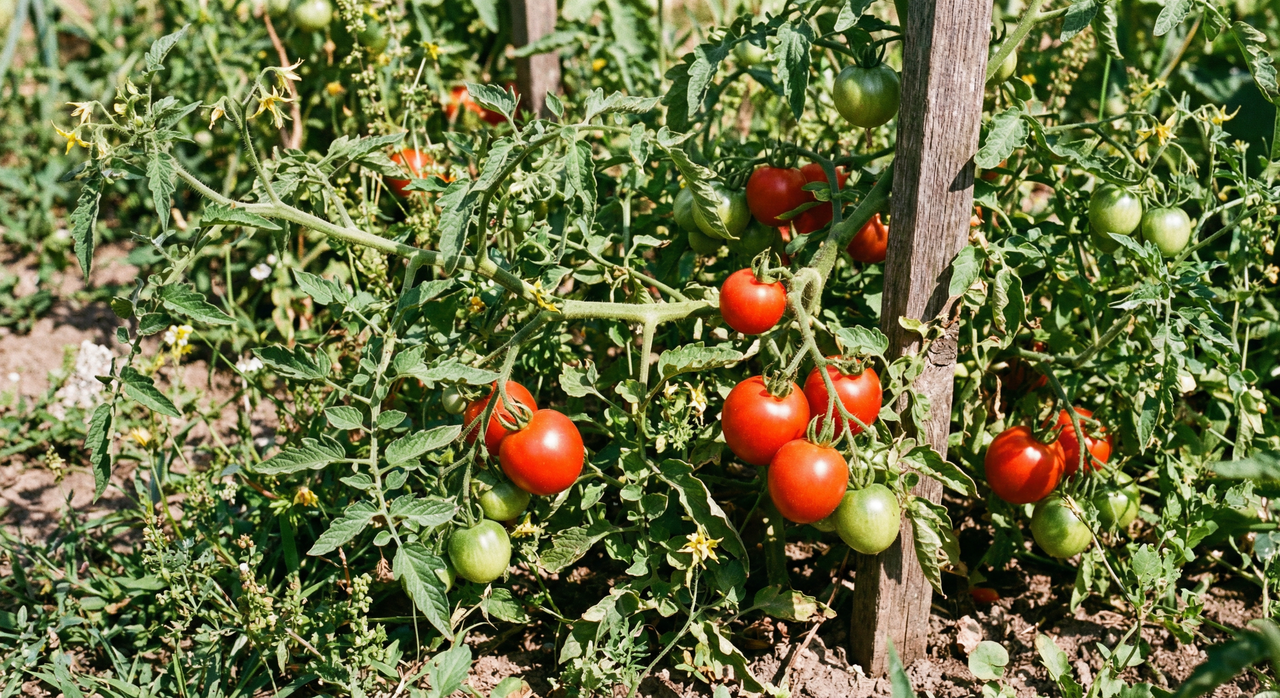
Every gardener I know treats the tomato like an annual, something you start from seed in late winter, coddle through spring, and yank out by October. And honestly, I did too for years. But the tomato isn't an annual. It never was. Solanum lycopersicum evolved as a short-lived perennial vine in the Andes, where it scrambles and reseeds across variable hillsides in climates that never freeze, and in frost-free tropical gardens today it will do exactly that, growing woody at the base, climbing well past any stake you give it, and fruiting for years.[1] We've just spent so long forcing it into a single season that we forgot what it actually is.
That gap between what we assume and what the plant actually does turns out to matter a lot, for how you site it, how you design around it, and even how you understand the flavor of what you're eating. The tomato most of us grow carries centuries of accumulated human selection inside it, shaped first by Andean farmers, then by Mesoamerican ones, then passed through European hands that initially refused to eat it at all, convinced it was poisonous. They weren't entirely wrong about the plant's chemistry, just wrong about the fruit. Getting those details straight changes how you see this thing you've probably grown a dozen times already.
Tomato Origin, History, and Botanical Background
Every tomato you've ever grown descends from something much wilder: a scrambling, sprawling vine clinging to hillsides across the Andes. Solanum lycopersicum is native to the western coast of South America, with wild populations spread across Peru, Ecuador, Chile, and Bolivia, thriving in microclimates that range from coastal desert to highland forest at elevations from sea level to over 3,000 meters.[2][3][4] That ecological range tells you a lot about why the tomato is simultaneously adaptable and opinionated in the garden.
Native Range and Botanical Characteristics of Solanum lycopersicum
The native habitats span several Köppen-Geiger climate types, including tropical savanna with dry winters, subtropical highland, and temperate oceanic zones in higher elevations, with annual rainfall generally between 20 and 40 inches and a preference for well-drained volcanic or alluvial soils in the pH 5.5–7.0 range.[5][4] The wild ancestor, Solanum pimpinellifolium, is a scrappy little thing producing tiny red fruits, and it sits firmly in the Solanaceae family alongside peppers, eggplant, and potatoes.[6][7] Technically a short-lived perennial vine, it behaves as an annual in temperate gardens because frost kills it before it can cycle through a second year.[8]
Growth habits split into two broad camps. Determinate (bush) types top out around 90–150 cm and set their fruit in a concentrated flush, while indeterminate (vining) types can climb well past 180–360 cm with support and keep producing until frost takes them.[9] I've grown both in my Central Florida beds, and I'll say this: label your seedlings early. Before they hit a foot tall, a determinate patio tomato and a sprawling heirloom indeterminate look nearly identical, and that mix-up will cost you a season's worth of spacing decisions. Flowers are small yellow rotators, about 1–2 cm across, and the fruit is technically a berry, not a vegetable, ranging from cherry-sized to multi-pound beefsteaks in colors driven by lycopene, carotenoids, and anthocyanins across red, orange, yellow, purple, and near-black.[8][10] The stems are angular and covered in glandular trichomes that release that sharp, green, unmistakable smell when brushed; anyone who has brushed past a row of tomatoes on a warm morning knows it immediately. The stems readily form roots when in contact with soil.[11]
Traditional and Cultural Uses by Indigenous Peoples
Long before any European set eyes on a tomato, the Aztecs had already given it a name: xitomatl, meaning "plump with navel." Domestication began roughly 8,000 years ago in the Andes, with further development across Mesoamerica, and by the time Spanish explorers arrived, indigenous cooks had already perfected tomato-based salsas, stews, and sauces combined with chilies and beans.[12][13] The plant wasn't just food. Leaves, stems, seeds, and fruit infusions were used to address digestive complaints, inflammation, fever, wounds, and burns, and the tomato carried ritual significance as a symbol of fertility and vitality in ceremonies and offerings.[13][14] I think about that history every time I brew a simple herbal preparation from something I've grown. This knowledge existed for millennia before it had a citation attached to it.
When Spanish explorers carried the tomato to Europe in the early 16th century via the Columbian Exchange, the reception was deeply suspicious. Recognized as a nightshade relative, it earned the nickname "poison apple," though Mediterranean cooks in Italy and Spain eventually adopted it with enthusiasm.[15][16] The "love apple" moniker, tied to aphrodisiac associations, says more about European anxieties than about the plant itself.
From the Columbian Exchange to Modern Cultivation
U.S. cultivation took hold in the early 19th century, beginning in the South before California became the dominant commercial production region.[17] Today, concerns around corporate patents on genetically modified varieties have put seed sovereignty back in the spotlight, raising real questions about who owns a plant that indigenous communities cultivated for thousands of years.[18] Saving seeds from open-pollinated varieties each season is one of the most grounding things a home gardener can do, practically and ethically. It's a small act that reconnects you to that 8,000-year thread.
A few closing facts worth holding onto: the heaviest tomato ever recorded, a 'Sunset's Red Horizon' beefsteak grown in Oklahoma in 2020, tipped the Guinness scale at 10 lb 14.10 oz (4.896 kg).[19][10] I haven't grown anything close to that, but my time with beefsteak varieties has taught me that consistent moisture and disciplined pruning are what separate an impressive fruit from a merely ordinary one. The genetics are wild. The cultivation is craft.
Tomato Varieties and Where to Buy Them
Determinate vs Indeterminate Growth Habits
Before you pick a single variety, you need to answer one question: how does this plant grow? Indeterminate tomatoes vine continuously, easily reaching six to twelve feet, and they'll keep flowering and fruiting until frost kills them.[20][8] Determinate types stop at three to five feet, set most of their fruit in a concentrated window, then wind down.[21] When I'm designing an edible landscape for a client, this is always my first question. One answer means tall trellis systems and a rolling summer harvest; the other means a compact bush that plays nicely in a container or a short northern season.
Fruit Size, Shape, Color, and Culinary Types
Once you've settled on growth habit, fruit type is what connects your garden to your kitchen. The main categories are cherry (small, round, snack-ready), grape (small and oblong), plum and Roma (elongated, meatier flesh for sauce), beefsteak (big slicers), and paste types bred specifically for low moisture and canning.[22][21] Color runs from the familiar reds through yellow, orange, pink, purple, and even ripe green in certain heirlooms.[8] In my experience, the purple and near-black heirlooms I've grown in warm, humid conditions develop a complexity that straight red varieties rarely match at the table.
Heirloom, Hybrid, and Disease-Resistant Options
Heirloom tomato seed comes from open-pollinated, traditional strains that have been selected over generations for flavor. That flavor often comes from higher concentrations of volatile compounds, and it shows.[22][23] Hybrids trade some of that complexity for yield consistency and stronger disease resistance, which is a real trade-off worth taking seriously. I now label every seed packet with the supplier and year purchased after I once planted a late-blight-susceptible variety in a particularly wet season and lost nearly everything. Named cultivars illustrate the spectrum well: 'Mountain Magic' resists both VFN and tomato yellow leaf curl virus while 'Defiant Rose' adds cladosporium leaf spot tolerance, whereas a gorgeous 'Black Krim' stays wide open to late blight.[24][25] For clients who want both flavor and reliability in a single planting, I lean on university-bred releases that stack resistance codes without completely sacrificing eating quality.
Sourcing Tomato Seeds, Seedlings, and Plants
Tomatoes are among the most commercially grown vegetables in the country, with over 950,000 acres planted annually across California, Florida, Michigan, and beyond.[26][27] That scale means certified disease-free seeds and regionally adapted varieties from university breeding programs at UC Davis, Penn State, and the University of Florida are genuinely accessible to backyard gardeners.[28][29] For heirloom tomato seeds specifically, Seed Savers Exchange carries over a thousand varieties and Baker Creek is another reliable source.[30]
Standard seed packets run roughly $3 to $6, with organic seed a dollar or so higher; seedlings from local nurseries usually land between $4 and $6 each.[31][32] The organic or heirloom premium is worth it when you're saving seed, prioritizing flavor, or building long-term garden resilience. For a first-time grower in a high-disease-pressure region, though, a well-chosen hybrid seedling from a reputable local nursery is often the smarter, lower-risk start.
Tomato Propagation and Planting Guide
Tomatoes are among the easiest crops to start from scratch, which is probably why so many gardeners get hooked on growing them. Seed is the default method for good reason: it's affordable, scalable, and gives you access to the full universe of varieties rather than whatever six-packs your local nursery stocks in spring.
Starting Tomatoes from Seed
Tomato seeds germinate best between 70 and 85°F, with that sweet spot around 75 to 80°F where you can expect 70 to 95% germination under consistent warmth and moisture.[20][33][9] I start mine on a heat mat set to 78°F every February, watching for those paired cotyledons that look uncannily like tiny potato seedlings. Every flat gets labeled immediately because once they germinate, they're nearly identical for the first two weeks.
For most Northern Hemisphere gardeners, that means sowing indoors 6 to 8 weeks before the last frost date, typically March or April for a May or June transplant.[34][9] Tomato seeds have a slightly rough, reticulate surface with a mucilaginous coating that helps retain moisture during germination, which is part of why they respond so reliably to a warm, consistently damp seedling mix.[35] Once those seedlings are up, harden them off over 7 to 10 days before any outdoor transition; skipping that step is one of the fastest ways to set yourself back three weeks.[34]
If you want to save seed year to year, grow open-pollinated or heirloom varieties. Tomatoes are largely self-pollinating, so heirlooms come true from seed reliably.[36][37] F1 hybrid seed doesn't breed true; the second generation segregates unpredictably, so save your seed envelopes but don't save the seeds.[38] If you're buying rather than saving, look for certified seed that meets USDA Federal Seed Act standards, which requires at least 80% germination, purity testing, and pathogen screening.[39]
Grafting for Disease Resistance and Vigor
After losing several heirloom beds to Fusarium wilt a few seasons back, I started grafting my favorite Cherokee Purple scions onto Maxifort rootstock, and the difference was genuinely startling. Grafting combines your preferred eating variety with a vigorous, disease-resistant root system; Maxifort (a Solanum lycopersicum × S. hirsutum hybrid) confers resistance to Fusarium wilt, Verticillium wilt, root-knot nematodes, and corky root, and it handles wet soils better than most own-rooted tomatoes.[40][41][42]
Splice grafting on 4 to 6 week old seedlings is the standard technique: a 45-degree cut through both scion and rootstock, joined with a small grafting clip. Under a humidity dome with controlled greenhouse conditions, the union heals in 7 to 14 days, with success rates ranging from 70 to 95%.[43][42] It's a skill with a learning curve, but if you're gardening on ground that's hosted tomatoes for years, it's worth every bit of that effort. For a lower-commitment approach, 4 to 6 inch stem cuttings from new growth will root in 10 to 21 days with a 1000 to 3000 ppm IBA rooting hormone treatment, giving you 70 to 90% success rates.[44]
Soil, Site Selection, and pH Management
Tomatoes do best in well-drained, fertile loam or sandy loam at pH 6.0 to 6.8.[11][9] They'll tolerate a broader range down to 5.5 and up to 7.5, but nutrient availability suffers noticeably outside that optimal window.[45] Below pH 6.0, phosphorus, calcium, and magnesium become hard to access while aluminum and manganese can reach levels that cause blossom-end rot and stunted growth; above 6.8, iron, manganese, and zinc availability drops and you'll start seeing interveinal chlorosis on the youngest leaves.[45][46]
I test my sandy Florida soil every spring because it drifts alkaline on me reliably. Adding elemental sulfur each fall has kept my beds consistently in the 6.2 to 6.5 range and eliminated the chlorosis I used to see every May. If you need to raise pH, calcitic or dolomitic lime works well; to lower it, elemental sulfur applied in fall gives the soil time to react before planting season. Always work from a soil test rather than guessing at rates.[47][48]
Beyond pH, tomatoes need consistent moisture at 60 to 80% field capacity without waterlogging; heavy clay or saturated soils invite Pythium and Phytophthora root rot.[20][49] Incorporating 5 to 10% compost by volume and laying organic mulch 5 to 10 cm deep at planting helps conserve moisture, moderate soil temperature, and suppress weeds from day one.[33] For sunlight, plan for 6 to 8 hours of direct sun daily; in climates where afternoon temperatures regularly exceed 90°F, some afternoon shade protects against leaf scorch and sunscald on the fruit.[9][50]
Spacing, Transplanting Technique, and Timeline
Growth habit determines spacing, and getting this wrong costs you more than just square footage. Determinate (bush) varieties top out at 2.5 to 4 feet tall with a 24 to 36 inch canopy spread; space them 18 to 24 inches apart in rows 3 to 4 feet apart. Indeterminate vining types can easily reach 5 to 10 feet or more and spread 36 to 48 inches; they need 24 to 36 inches between plants and rows at least 4 to 5 feet apart.[9][20][51]
My first season I crammed indeterminates at 18 inches thinking I was being efficient. The resulting tangle was a nightmare to harvest and a perfect incubator for early blight. Thirty-six inches between plants changed everything. Proper spacing keeps airflow moving through the canopy, reduces early blight and Septoria leaf spot pressure, limits root competition, and lets enough light reach the lower branches to keep them productive.[52][53]
Wait until soil temperature reaches at least 60°F before transplanting, and plant deep. Burying the stem up to the first set of true leaves, or 2 to 3 inches deeper than the pot level, encourages adventitious roots to form along the buried stem and produces a noticeably sturdier plant.[33][9] I used to plant at pot depth until I dug up a few transplants mid-season and saw exactly how many roots were forming along that buried stem. Now I plant deep every time without hesitation. From transplant, determinates typically reach first harvest in 50 to 70 days; indeterminates take 60 to 85 days depending on variety and conditions, with grafted plants often coming in on the earlier end of that window.[54][55]
Tomato Care and Seasonal Management Guide
Tomatoes are not difficult plants, but they are communicative ones. They'll tell you exactly when something is off, usually through their leaves before you even check the soil. I've been growing them long enough to know that most problems trace back to four things going out of balance: water consistency, light, fertility, and temperature. Get those four right and the plant practically takes care of itself. Let any one of them slip and you'll be diagnosing symptoms instead of picking fruit.
Watering Needs and Drought Tolerance
The single most useful thing I ever did for my tomato yields was hang a cheap rain gauge next to the bed and start keeping track. Tomatoes need 1 to 2 inches of water per week, applied deeply enough to reach about 6 inches into the root zone, which typically means watering once or twice a week depending on your soil and weather.[56][57] Consistent, even moisture is the whole ballgame. Irregular watering is what causes blossom-end rot and fruit cracking, not poor soil or bad luck.
The requirement shifts across the season. Seedlings need the top inch kept moist, which usually means checking every day or two. Once plants are in vegetative growth, 1 to 2 inches weekly is your baseline. At flowering and fruiting, that range climbs to 1 to 3 inches weekly, and in hot dry stretches you need to water more frequently rather than just more heavily.[20][58] I lost two full crops in my early years to uneven irrigation before I committed to that rain gauge and the finger test together. Blossom-end rot dropped dramatically once I stopped guessing.
Mature plants can survive 5 to 10 days without water under mild conditions, but the yield penalty for prolonged stress runs 20 to 50 percent.[59][60] Keep soil moisture above 50% of field capacity once flowers appear. The visual cues that tell you you've gone wrong in either direction are worth memorizing: overwatering shows as yellowing lower leaves and wilting despite wet soil, while underwatering causes upward leaf curl, reduced fruit size, and that characteristic sunken black rot at the blossom end from disrupted calcium transport.[61][62] For the whole season, a healthy crop uses somewhere between 400 and 600 mm of water total.[63]
Sunlight Requirements
Six to 8 hours of direct sun daily is the floor, not the target.[11] Fewer hours and you get leggy plants and thin yields. But there's a ceiling too, and this is where a lot of gardeners in warm climates get caught off guard. Optimal flowering happens between 68 and 77 °F; once air temperatures push past 90 °F, fruit set starts failing, and a 30 to 50% shade cloth can lower canopy temperatures enough to keep flowers from dropping.[9] I reach for shade cloth around the same time I start seeing my pepper flowers abort, usually the first real heat wave of summer. The light is still adequate underneath; you're just knocking the edge off the heat, not plunging the plant into shade.
Feeding and Nutrient Management
Tomatoes are heavy feeders, and the crop depletes nutrients fast.[64] Before any of the specific numbers make sense, you need soil pH dialed into the 6.2 to 6.8 range, because outside that window nutrients lock up regardless of how much you apply.[65] A soil test targeting phosphorus at 40 to 60 ppm and potassium at 120 to 180 ppm gives you a reliable baseline.[66] At planting, 1 to 2 pounds of a balanced 10-10-10 fertilizer per 1000 square feet is a reasonable start.[9]
The stage-specific shift is where most home growers go wrong. For the first 4 to 6 weeks after transplant, a balanced NPK formula supports healthy leaf and root development. Once the first flowers open, drop the nitrogen and raise the potassium; a 5-10-20 or 8-24-24 formula encourages fruit set rather than leafy growth, and side-dressing 1 pound of nitrogen per 100-foot row at first flower gives the plant what it needs for a big fruiting push.[67][68] I've grown plenty of magnificent leafy monsters by holding onto a high-nitrogen fertilizer too long. The plant looks spectacular until it doesn't fruit. Nitrogen deficiency shows as uniform yellowing of older leaves and stunted growth; calcium deficiency shows up as blossom-end rot.[64] I add crushed eggshells or gypsum at planting every season, but I've learned that consistent soil moisture matters more than calcium amendments once fruit is already setting.
Frost Tolerance and Cold Protection
Tomatoes evolved in the Andes at elevations where days run 70 to 85 °F and nights stay above 55 °F.[69] That origin explains everything about their cold sensitivity. Growth slows and essentially stops below 55 °F, chilling injury begins below 50 °F, and you should be protecting plants at 40 °F or below.[70] At 32 °F, cell damage is real and often fatal. The plant is rated RHS H1c for tenderness and treated as an annual in USDA zones 3 through 11 for exactly this reason.[11][71]
Frost damage looks like blackened or translucent wilting leaves, mushy stems, flower abortion, and pitting or internal rot in fruit.[72][73] Young plants and growing tips are most vulnerable. If the forecast says 32 °F, I cover everything or bring containers inside without exception. I've lost too many early-season transplants by waiting to see how it played out. Row covers and cloches can rescue plants from light frosts, and mild damage sometimes responds to pruning back damaged tissue once temperatures recover, but hard freezes below 28 °F are not something to recover from.[74][75]
Heat Tolerance and High-Temperature Strategies
The sweet spot for a tomato plant is 70 to 85 °F during the day and 60 to 70 °F at night.[8] Above 90 °F, fruit set drops by up to 50%, and above 95 °F growth largely stops.[76] The flowering stage is the most vulnerable window, and the symptoms are easy to spot: leaves curl, blossoms drop, and you might notice reduced photosynthesis showing as pale, tired-looking foliage.[77][78] I see it happen the same week every summer, and I see the same thing in my peppers, which is a useful double-check that it's heat stress rather than disease.
A 30% shade cloth lowers canopy temperature by 5 to 10 °F and genuinely saves fruit set.[79] Combine that with black plastic mulch, early-morning irrigation to cool the root zone before peak heat, and if you're sourcing new plants, varieties like 'Solar Fire' and 'Heatwave II' really do keep setting fruit two to three weeks longer than standard slicers in a hot summer.[80] I've grown both and the difference is noticeable by August.
Pruning, Support, and Maintenance
Everything about pruning and support decisions starts with one question: is your tomato determinate or indeterminate?[20] Determinate bush types set fruit in a concentrated window and need minimal intervention. Indeterminate vining types keep growing all season and require regular pruning and strong structural support to produce well. Most of the classic slicers and heirlooms are indeterminate, and they need 6 to 7 foot stakes or sturdy cages from the start.[81][82]
For indeterminate varieties, remove suckers when they're under 4 inches long, tie stems loosely with soft twine, and mulch 2 to 4 inches deep to retain moisture and regulate soil temperature. Top the plant when it hits your desired height. I used to be timid about removing suckers and ended up with tangled, congested plants that invited disease. Now I prune early and often, and the difference in airflow and fruit size is real; it took me two full seasons to really internalize that lesson. The two mistakes I see most often are over-fertilizing with nitrogen (lush vegetative growth at the expense of fruit) and skipping the pruning until things are already out of hand, which reduces airflow and sets the stage for fungal trouble.[83]
Seasonal Rhythm and Lifecycle
In temperate climates, tomatoes follow a reliable arc: start seeds indoors 6 to 8 weeks before last frost, transplant once soil reaches at least 60 °F, grow vegetatively through spring, flower and fruit through summer, and harvest into early fall before the first frost ends the season.[9][8] Understanding that rhythm helps enormously with succession planning and variety selection.
In zones 10 through 12, or in a heated greenhouse, tomatoes can persist as short-lived perennials for 3 to 5 or more years.[84] For gardeners in cooler zones who want to try overwintering, prune plants back to 12 to 18 inches and provide 12 to 16 hours of supplemental light indoors through the cold months.[85] It's a bit of extra effort, but if you've found a variety that performs exceptionally in your climate, it's worth keeping going rather than starting over from seed each spring.
Harvesting Tomatoes for Peak Flavor and Quality
The difference between a grocery-store tomato and one you've grown yourself isn't just variety or soil. It's time on the vine. Nearly everything that makes a homegrown tomato unforgettable happens in those final days of ripening, which means your harvest decisions matter as much as anything you did during the growing season.
Days to Harvest and Ripeness Indicators
When anticipating that first ripe fruit, remember that the timeline remains anchored to your specific variety selection.[86][87] Determinate types tend to ripen faster (40 to 50 days from bloom), while indeterminate varieties take 50 to 70 days.[88][89] In my garden, the first breaker-stage fruits usually appear right around that 60-day mark from transplant, which is useful because that transition point, when ethylene production surges and climacteric ripening kicks in, is actually observable: look for roughly 10% color change on the shoulder of the fruit.[90][91]
For peak ripeness, wait until the fruit shows 80 to 90% surface color change and yields slightly to gentle pressure.[92] I've learned to taste a few fruits at each color stage on the same vine to calibrate what "full flavor" actually means for that particular variety. No Brix meter tells you what your palate can. The deepest red fruits in my garden don't just taste best; they're also carrying the highest lycopene concentrations, so that visual cue doubles as a nutritional signal.[93]
Harvest Technique and Timing
Pick in the early morning while temperatures are still cool; it reduces sun scald risk and extends the fruit's shelf life considerably.[94] Twist gently or clip the stem rather than pulling, which can tear the plant and invite disease.[9] Cherry tomatoes can be picked dead ripe and handle the trip from garden to kitchen just fine; large slicers are another story. A fully ripe beefsteak bruises if you look at it wrong, so harvest those a shade early and let them finish on the counter.
Check the plants every two to three days. Regular harvesting keeps the plant focused on fruit set rather than seed development, and your overall yield will be noticeably higher for it.[95] If frost threatens before your fruit is ready, pull anything at breaker stage and ripen it somewhere cool and dark, not the refrigerator.[9][96] Off-vine ripening works better than most growers expect, though vine-ripened fruit is always the flavor benchmark.[9]
Flavor, Texture, and Yield at Harvest
Tomato flavor is a balancing act between sugars (glucose and fructose), organic acids, glutamates that contribute umami depth, and over 400 volatile compounds, with molecules like (Z)-3-hexenal responsible for that unmistakable fresh, leafy aroma you only get from a fruit picked warm off the vine.[97] That aroma is also the first thing you lose. I never refrigerate whole ripe tomatoes because I've watched that bright, volatile character disappear within 24 hours of cold storage; chilling below 55°F causes textural mealiness on top of the flavor loss.[98] Room temperature, out of direct sun, is where ripe tomatoes belong, and they'll hold there for five to fourteen days.[99]
Growing conditions leave their signature on every bite. Ample sunlight, potassium-rich soil, and a touch of water stress in the final weeks before harvest all push sugars and aromatics higher.[100][20] After years of side-by-side tasting, I find that plants grown in full sun with compost-amended, potassium-sufficient beds consistently produce sweeter, more aromatic fruit than anything shaded or over-fertilized. Heirloom cultivars typically deliver more intense flavor profiles than modern hybrids bred for shelf life, though ripe pH in both ranges from about 4.0 to 4.6 depending on the stage at harvest.[101] Expect 10 to 20 pounds per plant on average, with cherry types on the lower end and large beefsteaks pushing toward 25 pounds under ideal conditions.[99]
Tomato Preparation and Uses
Safety and Edible Parts
Before anything else: only the ripe tomato fruit is safe to eat. Leaves, stems, and unripe green fruit contain solanine and tomatine, toxic alkaloids that can cause real harm if consumed in quantity.[8][11][102][103] In practice, this is easy to manage. Stick to fully colored, vine-ripened fruit, wash your hands after pruning, and keep curious kids away from the green ones. That's genuinely all it takes.
Culinary Preparation Methods
Start with a good rinse. Even homegrown tomatoes carry soil-borne pathogens and the occasional spray residue, so washing before you slice is non-negotiable.[104] From there, the method you choose shapes everything about the final result.
For raw eating, I salt my slices and let them sit for ten minutes before serving. It draws out excess moisture and concentrates flavor in a way that's especially noticeable after a heavy Florida rain, when fruit can taste a bit diluted straight off the vine. Blanching is my go-to for anything that needs peeling: thirty seconds in boiling water, then straight into ice water, and the skins slip off almost effortlessly. Fresh-picked tomatoes respond even better to this than supermarket ones; there's noticeably less resistance from the skin.
Cooking changes the fruit entirely. Heat caramelizes sugars, mellows acidity, and builds those deep umami notes through Maillard reactions.[105][106] A slow-simmered tomato red sauce tastes nothing like a quick tomato soup recipe, and neither tastes like the raw fruit you started with. Drying concentrates those flavors even further, whether you're oven-drying or running a dehydrator. Just move carefully: inadequate drying creates conditions for microbial growth, so low, consistent heat and good airflow matter.
Canning opens up year-round access to your harvest, but it requires tested, acidified recipes without exception. Botulism risk is real in low-acid or improperly processed tomatoes, and improvising here isn't worth it.[107] I've been canning my own tomato spaghetti sauce and basic tomato sauce recipes every August for years, and the tested NCHFP formulas have never steered me wrong.
Nutritional Benefits of Different Preparations
Here's something I've come to appreciate through years of sauce-making: cooking tomatoes with olive oil isn't just a flavor decision. Lycopene absorption is significantly higher from cooked, processed tomatoes than from raw fruit, and pairing them with fat improves uptake further.[105] A long-simmered pizza recipe tomato sauce or a batch of recipes with tomato sauce finished with good olive oil delivers more bioavailable lycopene than a fresh slice ever could. I make a big pot at the end of every season specifically for this reason.
Non-Food Uses
The culinary uses are the main event, but tomatoes have a few other tricks. Cold-press tomato seed oil is used in cosmetics and cooking for its linoleic and oleic acid content,[108] which means seed-saving doesn't have to mean waste. Peels can yield a natural red dye for textile applications. Plant biomass is being explored for biofuel and animal fodder. None of these replace the kitchen, but for anyone running a zero-waste garden system, they're worth knowing about.
Tomato Health Benefits and Medicinal Uses
Traditional and Modern Medicinal Uses of Tomatoes
When I read how different cultures have used tomatoes medicinally for centuries, it reminds me why preserving plant diversity in the garden matters. These aren't just food plants. The Aztecs called it "xitomatl" and applied it topically to sores and gastrointestinal complaints, while 16th-century European herbalists documented uses ranging from melancholy to urinary ailments, and South American traditional healers boiled leaves and fruit into teas for fever and as diuretics.[109][110] Folk healers also pressed tomato pulp as poultices for burns, acne, and eczema, and used leaf-based preparations for rheumatic pain relief.[109][111]
Modern science has done a reasonable job of catching up to that folk wisdom, at least for the ripe fruit. Lycopene, the pigment behind a tomato's red flesh, scavenges reactive oxygen species, quenches singlet oxygen, and inhibits lipid peroxidation.[112] It also suppresses the NF-κB signaling pathway, dialing down production of pro-inflammatory cytokines like TNF-α and IL-6.[113][114] Clinical meta-analyses confirm that tomato consumption and lycopene supplementation measurably reduce inflammatory markers including CRP and IL-6, along with oxidative stress indicators like MDA and F2-isoprostanes, especially in people with cardiovascular risk factors or metabolic syndrome.[115][116]
The cancer research is genuinely intriguing, though I'd stop short of calling it settled. Epidemiological studies and meta-analyses suggest that higher lycopene intake is associated with a 20-30% reduction in prostate cancer risk, with proposed mechanisms including cell cycle arrest, apoptosis induction, and inhibition of IGF-1 signaling.[117][118] There's also early evidence of DPP-4 and ACE enzyme inhibition in tomato extracts, suggesting potential support for blood sugar regulation and blood pressure.[119][120] The European Food Safety Authority hasn't approved disease-prevention claims for lycopene, and more large-scale randomized controlled trials are needed before we can talk therapeutics rather than associations.[121][118] Promising, not proven. Eat your tomatoes, but skip the supplement aisle until the trials catch up.
Key Phytochemicals and Bioactive Compounds in Tomatoes
Tomatoes evolved in the Andes under relentless pressure from herbivores and pathogens, and that evolutionary arms race is exactly why a ripe fruit contains such a sophisticated cocktail of defensive chemistry.[122] Growing tomatoes through a Florida summer, with its parade of chewing insects and fungal threats, gives you a certain respect for how much chemical armor a tomato plant actually carries. The phytochemical roster includes steroidal glycoalkaloids like tomatine, flavonoids including quercetin and kaempferol, phenolic acids like chlorogenic and caffeic acid, terpenoids anchored by lycopene, and tannins.[123][124] Concentrations shift considerably with cultivar, ripeness, and growing conditions, so the plant you pick in August is chemically different from one harvested in October.[122]
Each major compound plays a distinct biological role. Tomatine disrupts microbial cell membranes, giving it antimicrobial and antifungal activity from the plant's perspective.[125] Quercetin modulates the NF-κB pathway to reduce inflammatory signaling.[126] Chlorogenic acid scavenges reactive oxygen species and shows promise for blood sugar support via Nrf2 pathway activation.[127][128] Lycopene dominates the carotenoid profile, accounting for up to 90% of the pigment in ripe red varieties, with bioavailability that increases meaningfully when the fruit is cooked or eaten with dietary fat.[129][130] In my experience, tomatoes ripened fully on the vine under strong sun develop noticeably deeper color, and that color tells you something real about phytochemical density.
Nutritional Profile of Tomatoes
A raw tomato is mostly water, which tends to surprise people given how rich it tastes. At roughly 94.5 g water per 100 g, it clocks in at just 18 kcal with 3.9 g carbohydrates, 1.2 g fiber, 0.9 g protein, and barely any fat.[131] That low calorie density makes it one of the more forgiving things you can eat in quantity. On the vitamin side, 100 g delivers 13.7 mg of vitamin C (15% of the daily value), 42 µg RAE of vitamin A primarily from beta-carotene, 7.9 µg of vitamin K1, and 15 µg of folate.[132] Potassium stands out among the minerals at 237 mg per 100 g, with magnesium, calcium, and phosphorus rounding out a solid if modest mineral profile.[132]
Where tomatoes really distinguish themselves is in the phytonutrient column. Lycopene runs 2.5-3.5 mg per 100 g of raw fruit, meaning a single medium tomato delivers around 3.2 mg, and bioavailability climbs when paired with a fat source like olive oil or avocado.[132][133] Beta-carotene adds another 0.6-1.5 mg per 100 g, polyphenols contribute 100-200 mg GAE, and the flavonoid fraction includes quercetin and kaempferol at 0.1-0.5 mg each.[134] It's a useful reminder that tomatoes grown to full ripeness in genuine sun -- not gassed in a warehouse -- will consistently deliver more of what you're actually eating them for.
Safety Considerations and Potential Side Effects
After years of growing tomatoes, I've come to a clear personal rule: ripe fruit goes to the table, and green tomatoes, leaves, and stems go straight to the compost. The chemistry backs this completely. Tomatine concentrations in tomato leaves reach 2-5 mg per gram of dry weight, green fruit can carry up to 32 mg per 100 g fresh weight, and stems fall somewhere between the two.[135][136] Ripe red fruit drops to negligible levels.[137] Eating the green parts or leaves can cause nausea, vomiting, diarrhea, and abdominal cramping in people, and poses more serious risks to dogs, cats, and horses.[138][139] Cooking doesn't remove tomatine, so braising green tomatoes doesn't fix the problem.[140]
Tomatoes contain 5-15 mg of oxalates per 100 g, which matters if you're prone to calcium oxalate kidney stones.[141] People with latex allergy have a 30-50% cross-reactivity rate with tomatoes through shared profilin proteins, and oral allergy syndrome or contact dermatitis can also occur in those with pollen-food allergy syndrome.[142][143] Tomatoes are low in vitamin K at roughly 7.9 µg per 100 g, so warfarin interactions are minimal as long as you keep dietary intake consistent.[144] Very high lycopene intake can cause carotenodermia, a yellowish skin tint that's completely harmless and reverses when intake drops.[145] Concentrated tomato extracts or supplements should be avoided during pregnancy due to insufficient safety data, though eating ripe tomatoes as food poses no known risk.[140] Finally, if you're foraging or gardening with less experienced helpers, it's worth knowing that tomatoes can be confused with toxic Solanum relatives like bittersweet nightshade; look for the compound leaves with 5-9 leaflets and classic yellow flowers that distinguish them clearly.[146]
Tomato Pests and Diseases
Tomatoes have a reputation for being high-maintenance in the disease department, and honestly, that reputation isn't entirely unearned. But the more time I've spent with them, the more I've come to see the story as one of remarkable resilience, especially in modern genetics, rather than chronic vulnerability. The plant has tools. Breeders have added more. Our job as growers is mostly to stack the deck in the tomato's favor before problems arrive.
Disease Resistance Genes and Environmental Influences
The letter codes on tomato seed packets aren't marketing fluff. Each letter maps to a specific gene conferring measurable protection against a specific pathogen. Fusarium wilt resistance, for instance, runs through three distinct genes: the I gene handles race 1, I-2 handles race 2, and I-3 targets race 3, but a cultivar carrying only one of them is vulnerable to the others.[147][148] Verticillium wilt is handled by the Ve gene, which works well against race 1 (as in 'Celebrity') but offers nothing against race 2.[147][148] The pattern repeats across the disease spectrum: the Pto gene provides strong but not absolute protection against bacterial speck,[147][149] the Tm-2² gene eliminates systemic tobacco mosaic infection in over 90% of modern hybrids carrying it,[147][150] and paired Ty-1/Ty-3 genes reduce tomato yellow leaf curl virus symptoms by 80 to 95% in cultivars where both are present.[147][151] The Mi-1 gene, which underlies the "N" in VFNT codes, covers multiple root-knot nematode species.[150]
Late blight resistance is where the genetics get particularly compelling. The Ph-3 gene provides broad-spectrum, durable resistance, and cultivars like 'Mountain Merit' and 'Mountain Magic' carry it.[147][149] I've grown 'Mountain Merit' next to 'Brandywine' for several seasons now, and the difference in a wet summer is genuinely striking. The hybrid stands nearly clean while the heirloom needs weekly leaf pruning just to stay ahead of blight. That contrast isn't a knock on heirlooms, which often win on flavor, but it's a real-world reminder that lower foliar resistance is the tradeoff you accept when you grow them.[152][67] Pyramiding multiple resistance genes, combining Ph-2 and Ph-3 for late blight, for example, is now standard practice in post-2020 breeding programs precisely because single-gene resistance erodes faster as pathogen populations evolve.[149][147]
Genetics set the ceiling, but environment controls where you land beneath it. Fusarium pressure climbs sharply once soil temperatures exceed 80°F,[153][154] and relative humidity above 85% with prolonged leaf wetness pushes early blight, late blight, and Botrytis into high gear.[155] Soil pH also matters more than most growers realize: staying between 6.2 and 6.8 keeps both Fusarium and Verticillium suppressed, while acidic soils below 6.0 or alkaline soils above 7.0 tip the balance toward one or the other.[156][157] A three-to-five-year rotation away from all solanaceous crops (tomatoes, peppers, potatoes) starves soil-borne pathogen populations between plantings.[158][159] And when you're planting into a bed with known wilt history, grafting onto a resistant rootstock like 'Maxifort' or 'Beaufort' changes the calculation entirely. Resistant rootstocks allow the plant's root system to stay clean and vigorous even when soil pathogen loads are high.[160]
Major Insect Pests and the Tomato's Natural Defenses
The pest list for tomatoes is long: hornworms, fruitworm, aphids, whiteflies, spider mites, thrips, flea beetles, and tomato pinworm are all regular players depending on your region.[161][162] What the list doesn't tell you is that the tomato plant itself is fighting back on multiple fronts simultaneously. The glycoalkaloid tomatine concentrated in leaves, stems, and green fruit binds to cholesterol in insect membranes, disrupting digestion and deterring feeding from pests like Colorado potato beetles.[163] The glandular trichomes, those sticky hairs you feel when you handle tomato seedlings, secrete acyl sugars and terpenoids that physically trap and chemically repel aphids and whiteflies; the type IV and VI trichomes are particularly effective.[164] Wild-relative-derived varieties carry an especially pronounced version of this stickiness, and I always tell people: if your fingers feel coated after transplanting, that's a good sign.
When chewing insects do break through, the plant broadcasts a chemical distress call. Volatile compounds like methyl salicylate and (E)-β-caryophyllene are released after herbivore damage, and they function essentially as a recruitment signal for parasitic wasps and predatory mites.[165] Beneficial soil microbes add another layer: Pseudomonas and Bacillus species in the rhizosphere prime the plant's jasmonic acid and ethylene signaling pathways, essentially putting it on low-level alert before any pest arrives.[166] This is one of the reasons I'm evangelical about not sterilizing my beds between seasons. Thriving soil biology is a standing immune system for the plants above it. The problem with aphids and whiteflies goes beyond direct feeding damage: both vectors transmit tomato yellow leaf curl virus and tomato spotted wilt virus,[167] which connects back to why those Ty and Sw resistance genes matter so much in high-pressure environments. Keeping vector populations low protects the genetics you paid for. Nitrogen balance plays into this too. I over-fertilized a bed early in my career and watched aphid populations explode within days of the flush of new lush growth. That lesson stuck. Excess nitrogen produces exactly the soft, nitrogen-rich tissue that sap-suckers prefer.[168]
Integrated Management Strategies
The toolkit for keeping tomato problems manageable isn't complicated, but it does work best as a system rather than a collection of individual tactics. Variety selection based on your region's actual disease pressure is the foundation: reading VFNTST codes and matching them to documented local problems costs nothing and prevents a lot of heartbreak.[152] Sanitation rounds out the cultural layer through key practices:
- removing infected debris promptly
- cleaning tools between beds
- starting with certified transplants
For insects, I don't reach for anything in a bottle until I've scouted. My own habit is evening walks through the tomato patch, which is when hornworms are easiest to spot and hand-pick before they strip a stem. IPM combining regular monitoring, pheromone traps, and selective treatments where needed has shown up to 70% reductions in pest populations in field trials,[170][171] and in my experience the results in a well-maintained home garden are at least that good when you add a healthy soil food web into the mix. The plant wants to defend itself. The goal is just to not undermine it.
Tomato in Permaculture Design
Most gardeners think of the tomato as a straightforward annual vegetable, but understanding it as a frost-sensitive tropical perennial that we happen to grow on a yearly cycle changes how you site and design around it. In its native Andean range, Solanum lycopersicum scrambles through disturbed edges, riverbanks, and coastal scrub as a short-lived perennial vine. That heritage shows up in the garden the moment you stop babying a plant and let it sprawl -- suddenly you see the opportunistic, light-hungry climber underneath the tidy cage.
Climate Preferences and Hardiness Zones for Tomatoes
Technically, tomatoes can be grown as annuals across USDA zones 2 through 11, but they really hit their stride in zones 8 through 11, where 200 or more frost-free days support multiple harvests and commercial yields can reach 50 tons per acre.[11][172] The optimal daytime temperature window is 70 to 85°F with nights cooling to 60 to 70°F; push past 90°F and flowers drop, pollen viability plummets, and fruit can crack or sunscald before it ripens.[9][173]
In marginal zones 5 through 7, the playbook is familiar: start seeds indoors 6 to 8 weeks before last frost, use row covers, and lean on cold-tolerant cultivars like 'Siberian' that can brush off brief dips to 40°F.[67][9] Most varieties need 60 to 90 frost-free days to mature, and those season-extension tricks can genuinely add 2 to 4 weeks to a short window.[67] On the other end of the spectrum, the humid Southeast calls for a different strategy: prioritize airflow through aggressive staking and pruning, reach for disease-resistant varieties, and mulch to stop soil splash from seeding early blight on lower leaves.[174] I grow in conditions close to Central Florida, and I learned early on to stop planting in the low spots of my food forest where humidity lingers -- lost two consecutive early plantings to foliar disease before I started treating airflow as a design requirement, not an afterthought. In desert or hot Southwest systems, 30 to 50% shade cloth and deep weekly irrigation become the tools, with heat-tolerant varieties like 'Solar Fire' bridging the gap when temperatures push above that 90°F threshold.[175]
Ecosystem Functions and Pollination of Tomatoes
Cultivated tomatoes are largely self-pollinating, but that doesn't mean pollinators are irrelevant. The flower releases pollen through poricidal anther cones that require vibration to open effectively, and bumblebees do this through sonication, gripping the flower and buzzing at exactly the right frequency to shake loose the pollen.[176][177] I've watched bumblebees work through my garden on warm, breezy mornings. The difference in fruit set compared to still, hot afternoons when I have to manually shake the plants myself is genuinely striking. The heavier-fruited clusters are almost always the ones that got the bees.
Optimal pollination happens between 65 and 85°F, at 45 to 70% relative humidity, with adequate light and gentle airflow.[178][179] Stray outside those conditions and pollen viability drops fast. The flowers themselves produce modest nectar with 15 to 35% sugar content, enough to attract bumblebees and other beneficial insects, and adequate pollinator activity can boost yields by 50 to 70% over inadequately pollinated plants.[180][177] That's a compelling reason to skip neonicotinoid sprays entirely in any guild where tomatoes are growing. The plant also contributes more broadly: foliage and fruit provide forage for birds and beneficial insects, and the organic matter from spent plants feeds soil biology through the off-season.[181]
Tomatoes in Forest Layers and Guilds
In temperate permaculture systems, the tomato occupies the herbaceous layer, though where you land within that layer depends entirely on growth habit. Determinate varieties stay compact at 3 to 6 feet; indeterminate types can climb well past 6 to 12 feet with support.[8][9] I've grown both: squat determinates in containers on a south-facing patio, and tall indeterminates trained up sunflower stalks in the food forest understory. The latter approach captures vertical space that would otherwise sit idle, and once the vines reach head height they actually improve airflow around lower plantings -- a double benefit in humid conditions.
The companion plant guild for tomatoes is one of the more well-studied in the kitchen garden world. Basil interplanted nearby repels aphids and attracts beneficial insects; marigolds deter nematodes and soil pests; borage draws pollinators directly into the guild at the moment flowers need them most.[182][183] Nitrogen-fixing legumes like beans or peas round out the guild by replenishing the soil nitrogen that heavy-feeding tomatoes pull hard on.[184] Low-growing clover as a groundcover can suppress weeds and reduce erosion without competing significantly at the root zone.[185]
The cautions matter just as much as the companions. Tomato root exudates show allelopathic activity that can suppress weeds like pigweed, but the same chemistry can set back sensitive neighbors, particularly brassicas.[186] Keep tomatoes well away from potatoes and other nightshades; they share susceptibility to blights, and a disease front moves through a mixed nightshade guild with alarming speed.[187] Early in my permaculture learning I planted tomatoes adjacent to potatoes and watched blight travel between them within days. That lesson cost me most of both crops. Rotating tomatoes with legumes every 3 to 4 years helps break disease cycles and restores soil fertility, and maintaining the preferred pH of 6.0 to 6.8 keeps nutrients available through the season.[188] Plan the guild with those rotations in mind from the start, and the tomato rewards you with far fewer problems than it would cause in a static, repeat-planted bed.
The Plant That Made Me a Gardener in the First Place
I was seven years old, standing in my grandmother's backyard in August, eating a tomato like an apple over a patch of grass because it was too ripe to make it inside. That's the whole reason I do this work. Every food forest guild I've designed, every seed I've saved, every brix reading I've obsessed over traces back to that one warm, acidic, perfect mouthful. I've never found a good reason to stop chasing it.
Sources 188
- Perennial growth habit of tomato in frost-free climates, CABI ↩
- Solanum lycopersicum in USDA PLANTS ↩
- Genetic diversity, patterns of domestication, and origins of cultivated tomato ↩
- Native Habitat of Tomatoes ↩
- Koppen Climate Classification Map for South America ↩
- The wild tomato species Solanum pimpinellifolium ↩
- Solanum lycopersicum - Kew Science Plants of the World Online ↩
- Solanum lycopersicum ↩
- Determinate vs. Indeterminate Tomatoes (University of Minnesota Extension) ↩
- Tomato (Solanum lycopersicum) - Kew Royal Botanic Gardens ↩
- Solanum lycopersicum - USDA Plants Database ↩
- Domestication of Tomato in the Americas ↩
- The Ethnobotany of Tomato (Solanum lycopersicum L.) in Mexico ↩
- Cultural and Medicinal Significance of Solanum lycopersicum in Indigenous Americas ↩
- Domestication and History of the Tomato ↩
- Tomato History and Cultural Significance - FAO ↩
- History of the Tomato ↩
- Seed Sovereignty and the Politics of Patents ↩
- Heaviest tomato ↩
- Growing Tomatoes ↩
- University of California Agriculture and Natural Resources - Tomato Varieties ↩
- Missouri Botanical Garden Plant Finder ↩
- University of California Research on Tomato Quality and Flavor ↩
- UC IPM Online: Tomato Varieties ↩
- Seed Savers Exchange: Tomato Cultivars ↩
- Solanum lycopersicum - USDA Plants Database ↩
- Tomato Production in the United States ↩
- Seed Quality and Certification ↩
- Disease-Resistant Vegetable Varieties and Hybrids ↩
- Heirloom Seeds from Root to Stem | Seed Savers Exchange ↩
- Tomato Seeds - Burpee ↩
- Organic Tomato Seeds - Johnny's Selected Seeds ↩
- Tomato Production Guidelines ↩
- Growing Tomatoes from Seed ↩
- Tomato (Solanum lycopersicum) Seed Morphology ↩
- Open-Pollinated vs. Hybrid Tomatoes ↩
- Tomato Pollination and Seed Saving ↩
- Heirloom Tomato Seed Saving ↩
- Federal Seed Act Regulations ↩
- Rootstocks for Tomato Grafting ↩
- Tomato Grafting: A Global Perspective ↩
- Grafting Tomatoes for Disease Management ↩
- Tomato Grafting: A Global Perspective ↩
- Propagation of Tomatoes by Stem Cuttings ↩
- Growing Tomatoes in the Home Garden ↩
- Soil pH and Nutrient Availability for Tomatoes ↩
- UC IPM - Soil Acidity and Alkalinity ↩
- RHS Gardening Guide for Growing Tomatoes ↩
- UC IPM: Tomato Irrigation ↩
- Tomato Varieties for Heat Tolerance ↩
- Missouri Botanical Garden Plant Finder ↩
- Tomato Production Guide ↩
- UC IPM Tomato Plant Care ↩
- Grafting Tomatoes for Disease Resistance and Yield Improvement ↩
- Days to Maturity for Tomato Varieties ↩
- Irrigation Management for Tomatoes ↩
- Tomato Care ↩
- Tomato Production in California ↩
- Physiological Responses of Tomato to Water Stress ↩
- Drought Tolerance in Tomato Varieties ↩
- Tomato Problems ↩
- Tomato Plant Problems: Wilting and Leaf Curl ↩
- Crop Water Requirements - FAO ↩
- Nutrient Deficiencies in Tomatoes ↩
- Soil Fertility and Nutrient Management for Tomatoes ↩
- Tomato Nutrient Management ↩
- Tomato Fertilization Guide ↩
- Fertilization Guidelines for Tomatoes ↩
- Kew Science - Solanum lycopersicum ↩
- Cold Tolerance of Tomatoes ↩
- RHS Gardening - Tomato Hardiness ↩
- Frost on Tomatoes ↩
- Tomato Frost Damage ↩
- Growing Tomatoes: Frost Protection ↩
- Tomato Frost Tolerance ↩
- Tomato Heat Stress: Physiology and Management ↩
- Heat Stress Effects on Tomato Plants ↩
- Heat Stress in Tomato Plants: Effects on Growth and Development ↩
- Using Shade Cloths for Heat Protection in Tomatoes ↩
- Heat-Tolerant Tomato Varieties ↩
- Growing Tomatoes ↩
- University of California Integrated Pest Management: Growing Tomatoes ↩
- Tomato Cultivation ↩
- Tomato Plant Care in Winter: Perennial Possibilities ↩
- Overwintering Tomatoes Indoors ↩
- Tomato Production Handbook ↩
- Tomato Production in California ↩
- Tomato Production in California ↩
- Determinate vs. Indeterminate Tomatoes ↩
- United States Standards for Grades of Fresh Tomatoes ↩
- Ripening and Ethylene Biosynthesis ↩
- Commercial Tomato Production ↩
- Lycopene: Food Sources, Properties and Applications ↩
- Growing Tomatoes in the Home Garden ↩
- Tomato Harvest Tips - Cornell Cooperative Extension ↩
- University of California Agriculture: Tomato Postharvest Handling ↩
- Volatile Composition and Sensory Properties of Tomato Fruits ↩
- Tomato Harvest and Postharvest Handling - UC IPM ↩
- Tomato Varieties and Yields ↩
- Flavor Chemistry of Tomato: Influence of Cultivars and Maturity Stages ↩
- Tomato Ripening and Flavor Compounds ↩
- Tomato - RHS Gardening ↩
- Glycoalkaloids in Tomato Plants ↩
- USDA Plants Profile for Solanum lycopersicum ↩
- Michigan State University Extension - Fresh from the Garden: Tomatoes ↩
- Effect of Processing on Tomato Flavor Compounds: Raw, Cooked, and Canned ↩
- National Center for Home Food Preservation - Tomatoes ↩
- Tomato Seed Oil Composition - ScienceDirect ↩
- Ethnobotany of Solanum lycopersicum: Traditional Uses and Phytochemistry ↩
- Tomato in Traditional Medicine ↩
- Tomato Leaves: Traditional Remedies and Phytochemical Analysis ↩
- Lycopene and Its Role in Human Health and Disease ↩
- Anti-inflammatory Effects of Lycopene on NF-κB and COX-2 ↩
- Lycopene and Its Role in NF-κB Inhibition: Anti-Inflammatory Effects ↩
- Effects of lycopene supplementation on inflammatory markers: A systematic review and meta-analysis ↩
- Tomato juice consumption reduces inflammatory adipokine levels in women with metabolic syndrome ↩
- Lycopene and Its Role in Cancer Prevention and Therapy ↩
- Lycopene and Risk of Prostate Cancer: A Systematic Review and Meta-Analysis ↩
- DPP-4 Inhibitory Activity of Tomato Extracts ↩
- ACE Inhibitory Peptides from Tomato ↩
- EFSA Panel on Dietetic Products, Nutrition and Allergies (NDA) - Scientific Opinion on the substantiation of health claims related to lycopene ↩
- Missouri Botanical Garden Plant Finder: Solanum lycopersicum ↩
- Secondary Metabolites in Tomatoes: A Review ↩
- Flavonoids and Phenolic Acids in Solanum lycopersicum ↩
- Tomatine, a Tomato Glycoalkaloid, Inhibits Growth of Cultured Human Prostate Cancer Cells ↩
- Quercetin: A Review of Clinical Applications ↩
- Chlorogenic Acid: Recent Advances on Its Dual Role as a Food Additive and a Nutraceutical ↩
- Tomato Phenolics and Nrf2 Activation in Inflammation ↩
- Lycopene and Risk of Cardiovascular Diseases: A Review ↩
- Tomato Nutrients and Health Benefits - UC Agriculture and Natural Resources ↩
- USDA FoodData Central (FDC ID: 1100277) - Tomato, raw ↩
- Tomatoes, raw - USDA FoodData Central ↩
- Peer-Reviewed Study on Tomato Phytonutrients ↩
- USDA FoodData Central ↩
- Tomatine and Tomato Toxicity - Kew Gardens ↩
- Glycoalkaloids in Tomato Fruit and Related Processing Byproducts ↩
- Tomatine and Its Health Roles ↩
- Tomato Poisoning in Dogs and Cats - ASPCA ↩
- Are Tomato Plants Poisonous? - Royal Horticultural Society ↩
- Tomatoes in Pregnancy: Complete Guide - Pregnancy Food Checker ↩
- Oxalates in Foods and Kidney Stones ↩
- Allergens in Tomato (Solanum lycopersicum) ↩
- Latex-Fruit Syndrome Overview ↩
- Vitamin K Content of Foods ↩
- Lycopenaemia - PubMed ↩
- Nightshade Poisoning - Poison Control ↩
- Tomato Disease Resistance Genes: A Review ↩
- Breeding for Resistance to Fusarium and Verticillium Wilts in Tomato ↩
- Pyramiding Resistance Genes in Tomato: Late Blight and Bacterial Diseases ↩
- Tomato Disease Resistance Review ↩
- Viral Resistance in Tomato: TYLCV and TSWV ↩
- Tomato Diseases and Disorders ↩
- Fusarium Wilt of Tomato - Cornell University Vegetable MD Online ↩
- Tomato Production Guidelines - University of California Agriculture and Natural Resources ↩
- Managing Humidity and Temperature in Tomato Greenhouses - USDA ARS ↩
- Soil pH and Nutrient Management for Vegetables - Ohio State University Extension ↩
- Soil and Water Management for Tomatoes - Penn State Extension ↩
- Managing Fusarium Wilt in Tomatoes ↩
- Verticillium Wilt of Tomato ↩
- Grafting Tomatoes for Disease Resistance ↩
- UC ANR IPM: Tomatoes - Insects & Mites ↩
- Arthropod Pests of Tomato: An Overview ↩
- Tomatine and Its Role in Tomato Defense Against Insects ↩
- Glandular Trichomes in Tomato as a Defense Mechanism ↩
- Volatile Organic Compounds in Tomato Plant Defense ↩
- Induced Systemic Resistance in Solanum lycopersicum by Beneficial Microbes ↩
- Climate Change Impacts on Tomato Pests and Diseases ↩
- Nitrogen Use Efficiency and Plant Stress in Solanum lycopersicum ↩
- Sanitation Practices for Vegetable Crops ↩
- Tomato Pests & Diseases - UC IPM ↩
- Integrated Pest Management in Tomato Production - PLoS ↩
- Tomato Production Guidelines - USDA National Agricultural Statistics Service ↩
- Tomato Temperature Tolerance - Missouri Botanical Garden ↩
- Tomato Production in Florida ↩
- Managing Heat Stress in Tomatoes ↩
- Floral Biology of Tomato - Solanaceae Source ↩
- Pollination Biology of the Tomato and its Wild Relatives ↩
- Temperature Effects on Tomato Pollination ↩
- Humidity and Pollen Germination in Solanum lycopersicum ↩
- Pesticide Impacts on Tomato Pollinators ↩
- The wild relatives of tomato (Solanum section Lycopersicum) and their ecological roles ↩
- Companion Planting for Tomatoes - University of Minnesota Extension ↩
- Companion Planting for Tomatoes: Ecological Benefits ↩
- Intercropping Tomatoes with Legumes - University of Minnesota Extension ↩
- Intercropping Tomatoes with Groundcovers: Root Competition Studies ↩
- Allelopathy in Tomato Root Exudates ↩
- Companion Planting for Tomatoes ↩
- Crop Rotation in the Vegetable Garden ↩