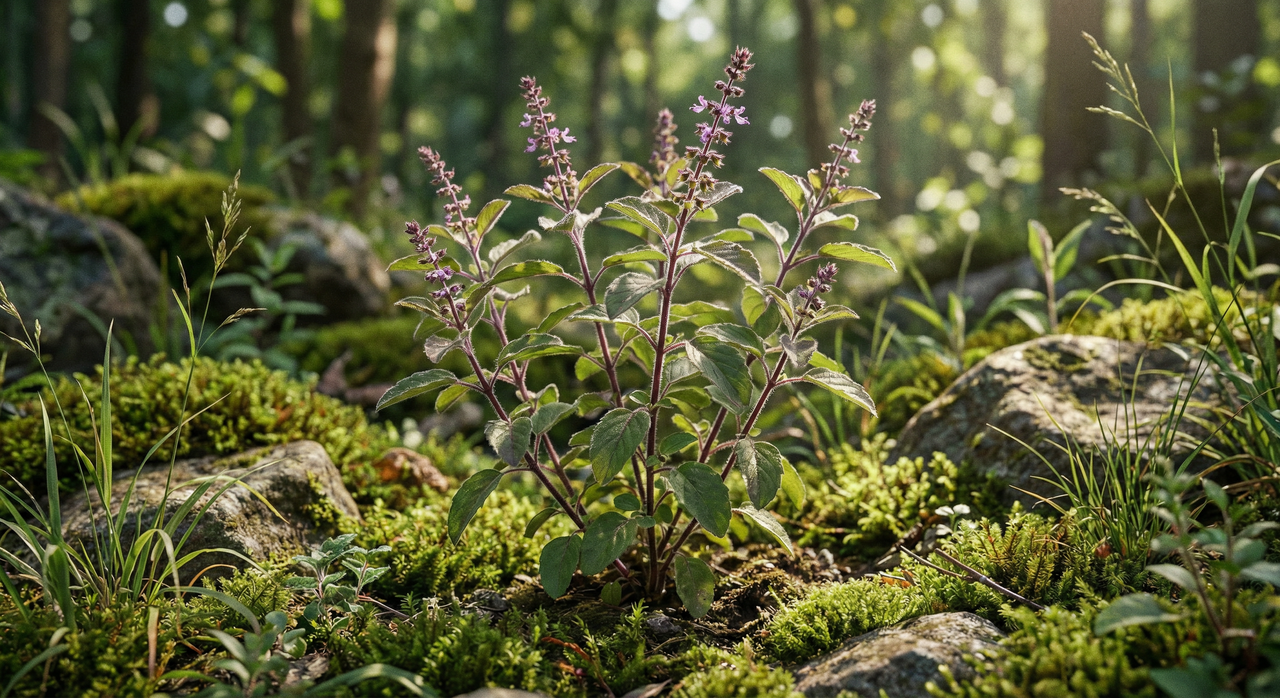
Here's something that stopped me cold the first time I really thought about it: basil is a tropical perennial that most of us grow as a disposable annual, yanking it out every fall without a second thought. In its native range, stretching from Central Africa through India into Southeast Asia, a basil plant doesn't just survive one summer and quit. It keeps going. It gets woody. It becomes something. What we do in a typical kitchen garden is a little like buying a fruit tree, harvesting it once, and composting it in October.
I don't say that to make anyone feel bad. I say it because understanding what basil actually is, biologically and ecologically, completely changes how you grow it, where you place it, and what you ask of it. The moment I started treating basil less like a garnish I was nursing along and more like a heat-hungry, sun-demanding, aromatics-producing plant with real opinions about its environment, my harvests doubled. The flavor got sharper too. Turns out the plant knows what it's doing, if you let it.
Basil Origin, History, and Botanical Background
Botanical Background and Native Origins of Basil
Ocimum basilicum traces its roots to a wide tropical band stretching from central Africa through India and into Southeast Asia, with India considered the primary center of domestication, where it has been cultivated for thousands of years.[1][2][3] That geography tells you everything about what the plant wants: warmth, humidity, and long growing seasons. In my zone 9B garden in Central Florida, basil absolutely explodes in summer heat that would flatten most Mediterranean herbs, and understanding its tropical heritage made that make perfect sense to me.
The genus Ocimum is broader than most gardeners realize. Holy Basil (Ocimum tenuiflorum) hails from the Indian subcontinent and tropical Asia, while African basil (Ocimum gratissimum) is native to tropical Africa, and the genus as a whole spans naturalized populations across the globe.[4][5] Sweet basil behaves as a tender annual in temperate gardens, completing its full lifecycle in a single season, though in frost-free climates like USDA zones 10-11 it can persist as a short-lived perennial for two to three years or more.[6][7] Its relatives offer a useful contrast: both Holy Basil and African basil flower repeatedly across their lifespans and grow as woody perennial shrubs in their native ranges.[8][9] I learned that lesson firsthand when I trialed Tulsi through a particularly humid Central Florida summer and watched it shrug off conditions that had my sweet basil bolting and flagging within weeks. Sweet basil traveled the world through ancient trade routes including the Silk Road and Mediterranean commerce, landing everywhere from Europe to the Americas, where it is now classified as an introduced species in the United States.[10]
Visual Characteristics of Basil Plants
In the garden, sweet basil is a tidy, upright herb typically reaching 18 to 24 inches tall with the square, branching stems that are the Lamiaceae family's reliable calling card.[11][10] I point this out to every beginner I work with: if you can feel that four-sided stem, you know you're in the mint family. The leaves are opposite and ovate, shiny in most cultivars, and arranged along those branching stems in a pattern that makes the plant look deliberately organized. Flowers arrive from June through September in the U.S., produced in whorled spikes called verticillasters, running four to six inches long and colored white to pale pink or soft lavender. After flowering, the plant sets dry schizocarp fruits that split into four nutlets, each capable of carrying a new plant forward. The root system is fibrous and shallow, which matters a great deal for how you site and water it.[12]
With over 50 named cultivars in the species, that basic form shifts considerably.[13] Leaf size, texture, coloration, and scent all vary with the cultivar and with the chemistry driving it: linalool, eugenol, and citral each push the aroma in a different direction. Dark Opal's deep purple foliage comes from anthocyanins, and those pigments seem to give it a touch more resilience through my hottest summers. The plant performs best between 65 and 85°F; growth noticeably stalls below 50°F, and extreme heat above 95°F tends to reduce leaf size and hasten bolting. Preferred soil pH runs from 6.0 to 7.5, and the plant insists on good drainage and full sun.[14] Compare that compact, frost-sensitive annual to its relatives: Holy Basil and African basil grow to one to three meters with woody bases, stronger taproots, clove-heavy scents from high eugenol content, and purple or pink flowers that give them an entirely different presence in the landscape.[15][16]
Traditional and Cultural Uses of Basil Across Civilizations
The earliest written record of Ocimum basilicum appears in Theophrastus's "Historia Plantarum" in the fourth century BC, but by that point the plant had already traveled far. Ancient Egyptians may have used it as early as 1500 BCE, possibly for medicinal purposes and embalming, with references in the Ebers Papyrus, though the evidence for embalming specifically is thin. Greek physicians including Dioscorides valued it for digestion and as an antidote; Pliny the Elder documented its ritual and culinary roles among Romans; Chinese traditional medicine reached for it to address digestive complaints; and Ayurvedic practitioners wove it into treatments for respiratory conditions, stress, and purification.[17][18][19][20][21]
Holy Basil's story runs even deeper. In Hinduism, Tulsi (Ocimum tenuiflorum) is revered as a living incarnation of the goddess Tulsi, consort of Vishnu, and features in daily puja, festivals, and household ritual. Its presence in texts like the Atharvaveda, dated to 1500 to 1000 BCE, and its documented use by more than 50 Indian tribal communities for over 20 conditions speaks to a cultural relationship far older than any written recipe.[22][23] I grow Tulsi partly for that same reason I grow any heritage variety: because the relationship between people and plant is itself worth honoring. African basil carries an equally rich parallel tradition in West and Central Africa, where Ocimum gratissimum appears in treatments for malaria, fever, respiratory infections, and skin conditions, as well as in Yoruba spiritual baths intended to ward off evil spirits and in everyday soups and stews that rely on its clove-forward aroma.[24][25]
Medieval Europe turned sweet basil into a symbol of love, protection against evil, and fertility, and monastic gardeners grew it for headaches and digestion. That ambivalence runs through ancient Greek mythology too, where basil held a strange dual reputation tied to both hatred and Apollo, even while cooks were adding it to salads and perfumers were pressing its oils. In Italy, the symbolism settled into something warmer: a sprig on a windowsill signals hospitality, the plant is tied to the Madonna, and Genovese cuisine made it the heart of pesto in a tradition stretching back to Roman times.[17] Growing Genovese basil has genuinely deepened my appreciation for that connection. There is something about cutting a handful of those big, cupped leaves on a summer morning and knowing the same gesture has been made in Italian kitchens for centuries.
Fun Facts About Basil's History and Ecology
Basil's essential oils do more ecological work than most gardeners credit. The same compounds -- linalool, eugenol, citral -- that give each cultivar its distinctive scent serve as the plant's chemical defense system, repelling certain pests while simultaneously drawing in pollinators.[26][27] Basil also exhibits mild allelopathic effects that can suppress certain weeds and pathogens, which is genuinely useful in a polyculture -- with one caveat I learned the hard way: I've found it's worth spacing basil away from lettuce and other sensitive crops in my guilds, because those same chemical effects can stunt more delicate neighbors.
The cultivar diversity across Ocimum basilicum alone is remarkable. Genovese delivers large, sweet-spicy leaves built for pesto; Thai basil brings anise and licorice notes with better heat tolerance; Lemon basil leans citrusy from its citral content; Dark Opal goes fully purple with anthocyanin-rich foliage that earns its ornamental place in any bed.[13][28] All of them share sweet basil's fundamental vulnerability: frost kills it quickly, and stress triggers bolting that shifts energy from leaves to seeds.[14] That annual tenderness is a direct consequence of those tropical origins, and understanding it is the single most useful thing a new grower can internalize. Holy Basil and African basil, shaped by drier savannas and more variable climates, developed thicker leaf cuticles and drought-tolerance adaptations that let them thrive where sweet basil would collapse.[27][29] Knowing the genus's evolutionary history doesn't just satisfy botanical curiosity; it tells you which species to reach for when your conditions don't match a Mediterranean kitchen garden ideal.
Basil Varieties and Where to Buy Them
Few culinary herbs have diversified as dramatically as basil. Within Ocimum basilicum alone, breeders and seed savers have developed cultivars that smell of lemon, cinnamon, and anise; range in color from bright apple-green to near-black purple; and grow anywhere from a tidy eight-inch mound to a chest-high shrub. Before we get into the standouts, it helps to orient around a baseline most readers already know.
Popular Basil Cultivars: From Classic Genovese to Ornamental and Flavorful Types
'Genovese' is where almost everyone starts. Large, cupped, bright green leaves with that sweet, mildly spicy perfume -- it tops out around 18 to 24 inches, loves full sun, and is the cultivar that defined pesto alla genovese.[30][31] I've grown it for years, and in a good season it yields around 1 to 2 kg per square meter under optimal conditions.[32] The trouble is, older Genovese types are sitting ducks for downy mildew, which is why modern breeding has shifted hard toward resistant F1 hybrids.
If you're in the humid Southeast or anywhere that gets muggy summers, take that seriously. Switching to 'Prospera' or 'Everleaf' completely changed my results with clients in central Florida. We went from watching patches collapse by late July to harvesting well into fall.[33][34] Northern growers with shorter, cooler seasons tend to do better with 'Nufar' or 'Siam Queen', which handle the cold shoulder of early and late summer more gracefully.[35]
Thai basil (Ocimum basilicum var. thyrsiflora) is one of my favorite workhorses in a polyculture bed. The narrow leaves with purple stems and flower bracts look ornamental enough to earn their space, but the real story is flavor -- a spicy anise-licorice punch that holds up to high heat in stir-fries in a way that Genovese simply doesn't.[30][31] That heat tolerance is real and measurable; it self-seeds readily in warm zones, which is both a gift and something to manage.[32] Thai food basil is also linalool-rich, which gives it a slightly rounder aromatic base beneath the anise note.[36]
'Lemon' basil sits at the opposite end of the flavor spectrum -- more compact at 12 to 18 inches, slower to bolt than sweet types, and genuinely citrusy thanks to higher citral content in the essential oil.[31][36] I use it in grain salads and fish dishes where Genovese would feel too heavy. 'Cinnamon' basil, with its reddish-purple stems and warm spiced scent, grows taller (24 to 30 inches) with mauve edible flowers that go straight into spiced teas at my place.[31] 'Lettuce Leaf' (sometimes listed as 'Mammoth') goes even taller -- up to 36 inches -- with enormous crinkled leaves and a mild flavor that works well for wraps and fresh rolls.[31] At the small end, 'Spicy Globe' stays 8 to 12 inches in a dense mound, bred specifically for containers and edging.[31]
'African Blue' deserves its own moment. I've grown it side by side with Genovese for several seasons, and the differences are striking. 'African Blue' is a sterile hybrid (Ocimum basilicum × O. kilimandscharicum) that never bolts -- because it can't set seed -- growing 3 to 4 feet tall with dramatic dark purple leaves and blue-purple flower spikes all season long.[31] It's also highly resistant to downy mildew. The flavor is camphor-menthol rather than the sweet basil I want in the kitchen, so I treat it more as a pollinator beacon and structural plant than a culinary herb. The purple-ruffled and 'Dark Opal' types split the difference -- still ornamentally rich with anthocyanin-loaded foliage, but offering a milder, recognizably basil-like flavor that works fine fresh.[31]
If you want to venture beyond culinary Ocimum basilicum entirely, two species are worth a brief mention. Holy basil, or tulsi (Ocimum tenuiflorum), comes in three main chemotypes: Rama with green leaves, Krishna with purple stems and foliage, and Vana, a wilder type with higher flavonoids.[37][38] I dry both Rama and Krishna for tea and the intensity difference is noticeable -- Krishna hits harder. African basil (Ocimum gratissimum) is an entirely different scale of plant, reaching 3 to 6 feet with a dominant clove-like eugenol scent and impressive yields in tropical conditions, though it reads more as a landscape shrub than a kitchen herb for most gardeners.[39][40]
Sourcing Basil Seeds and Plants: Suppliers, Prices, and Quality Considerations
Basil is about as easy to source as any culinary herb gets in the United States. The U.S. herb market generates over $500 million annually, basil is sold continent-wide with no significant federal cultivation restrictions, and you'll find it at virtually every garden center from March onward.[41][42][10] Potted 4- to 6-inch starts at big-box stores run $3.98 to $6.98 depending on retailer and variety.[43][44]
Personally, I almost always start from seed. A $2 to $3 packet from Johnny's Selected Seeds, Baker Creek, or Seed Savers Exchange gives me 50 to 100 seeds and far more varietal choice than the handful of cultivars on a garden-center bench.[45][46][47] I also label every flat as soon as seeds go in -- lemon and Thai seedlings are nearly indistinguishable in the first four weeks, and mixing them up is a real frustration once they hit the ground. Burpee and Territorial Seed Company are solid alternatives if the above are sold out.[48]
One quality flag worth paying attention to: mislabeling affects somewhere between 10 and 20 percent of commercial herb products, and DNA barcoding is increasingly used to verify cultivar authenticity in the supply chain.[49] Buying from reputable seed companies rather than anonymous online listings reduces that risk considerably. I also default to organic starts and seeds whenever possible. USDA residue monitoring shows low or non-detectable pesticide levels in most basil samples,[50] but for something I'm clipping into food several times a week, starting clean matters to me and fits the permaculture ethos of the systems I design.
For holy basil, expect to shop specialty rather than mainstream. Johnny's, Baker Creek, and Strictly Medicinal Seeds all carry tulsi seed packets in the $2 to $5 range, with live plants from specialty nurseries running $5 to $15.[51][52][53] African basil requires even more hunting -- Strictly Medicinal, Baker Creek, and Horizon Herbs stock seed at $3 to $15 per packet, with live plants from Mountain Valley Growers and Plant Delights in the $8 to $25 range.[54][55][56] If you're sourcing African basil from outside the U.S., be aware that imported seeds and plants may require APHIS permits and phytosanitary compliance, so buying from domestic suppliers sidesteps that paperwork entirely.[57][58]
Basil Propagation and Planting
Basil is genuinely one of the most forgiving plants to start from scratch, which makes it a great first seed-starting project. But "easy" doesn't mean there's nothing to know. Getting the details right on dormancy, drainage, and spacing is the difference between a patchy tray of yellowing seedlings and a thriving row of fragrant leaves ready to pick all summer.
Basil Seed Morphology, Dormancy, and Germination
Fresh basil seed looks almost identical to tiny black poppy seeds: dark brown to black, oval, about 1.8 mm long.[59][10] Drop a few in water, though, and they transform almost immediately into swollen, gel-coated spheres. That mucilaginous coating isn't decorative; it actively aids germination by holding moisture against the seed coat. Still, the coat itself imposes a mild physical dormancy that slows water uptake.[60] A quick warm-water soak or light scarification breaks it quickly, and under warm, consistently moist conditions at 20-25°C (68-77°F) with good drainage and a pH between 6.0-7.5, you can expect 70-90% germination in just 5-10 days.[60][30] That's a reliable number. In my experience, the failures almost always trace back to cold soil or erratic moisture, not bad seed.
One thing I now do religiously is label every tray at sowing. Young basil seedlings have a deceptive resemblance to a handful of other small-leaved seedlings, and I lost an entire row one season to exactly that confusion. A popsicle stick and a marker takes ten seconds and saves real grief. If you're saving seed between seasons, the good news is that basil seed is orthodox, storing well at 3-7% moisture and 3-10°C, with home gardeners typically seeing 2-5 years of viability.[61][62] I keep mine in a small jar with a silica gel packet in the back of the refrigerator and test a few seeds on a damp paper towel each spring before I commit to a full sowing.
Choosing Propagation Methods: Seeds, Cuttings, and Beyond
Seed is the standard approach for a reason: low cost, easy logistics, and that 70-90% germination rate under good conditions make it reliable for both home gardeners and commercial growers.[42][30] But seed does have one real limitation: variability. Sweet basil is primarily self-pollinating, so saved seed stays reasonably true-to-type with proper isolation, but open pollination between varieties grown nearby can still introduce surprises.[63][64] When I want to guarantee the exact leaf size and perfume I rely on for pesto, I reach for cuttings instead. A 4-6 inch softwood tip taken in spring or summer roots in water or moist soil at 80-100% success within 7-14 days; a little IBA rooting hormone at 1,000-3,000 ppm speeds things up and improves uniformity.[42][30] Cuttings are my default for favorite culinary selections where consistency matters more than volume.
Beyond those two methods, tissue culture via nodal explants achieves 80-95% shoot proliferation with up to 10-fold multiplication rates and produces virus-free material for high-value cultivars.[65][66] Grafting onto compatible Ocimum rootstocks works at 60-90% success and is used primarily to confer Fusarium wilt resistance in disease-prone situations.[67] Both techniques live squarely in commercial territory for most gardeners, but they're worth knowing about if you're struggling with persistent soil-borne disease.
Basil Soil and Site Requirements
Basil wants well-drained sandy loam or loamy soil rich in organic matter, a pH between 6.0-7.5, consistent moisture without waterlogging, and at least 6-8 hours of full sun daily.[35][68][69] Its Mediterranean ancestors grew on rocky, well-drained hillsides, and that heritage means it has essentially zero tolerance for heavy or compacted soils. I've seen root rot set in within days on poorly draining clay during a Florida summer: roots go black and mushy, the plant wilts, leaves yellow, and there's a sour smell from the soil.[35][70] I now grow exclusively in raised beds or containers with drainage holes, and I only water when the top inch of soil has dried out.
In intense heat, partial afternoon shade prevents leaf scorch without sacrificing growth.[71][72] A quick soil test before planting will tell you if you need to adjust pH with lime or sulfur; most garden soils need only modest amendment to fall into basil's happy range.
Planting, Spacing, and Initial Care
Space sweet basil 12 inches apart in rows 30-42 inches apart; mature plants reach 18-24 inches tall with a comparable spread.[35][73] Compact container varieties can squeeze to 6-8 inches per pot, while microgreens need 4-6 inches but require extra ventilation to compensate for the density. Wider species like African basil, which tops out at 3-6 feet, need correspondingly more room.[74]
Airflow is where spacing pays dividends beyond square footage. I used to crowd my rows and lost plants to downy mildew every single season. Widening to 12 inches and positioning beds for strong morning sun has essentially eliminated that problem for me. Transplant seedlings once they have 2-4 true leaves, setting them at the same depth they were growing, and the plants establish quickly into that properly spaced framework.
Timeline from Propagation to First Harvest
From seed, sweet basil reaches first mature-leaf harvest in 50-60 days, though you can snip baby leaves as early as 30-40 days once plants hit 6-8 inches.[35][75] Cuttings root in 7-14 days and are ready for first harvest roughly 4-6 weeks after that, so total time from cutting to kitchen runs 5-8 weeks. Cooler starts or indoor conditions under artificial light can add a week or two to any of these timelines. In my zone 9B garden, I start seeds indoors 6-8 weeks before last frost specifically to hit that 50-60 day mark before summer temperatures peak and bolting pressure rises. If you're growing to save seed, plan an additional 30-45 days from flowering to brown, dry capsules ready to collect.[75][76]
Basil Care Guide: Growing Ocimum basilicum Successfully
Every care decision you make with basil flows from one central truth: this is a tropical plant that wants heat, light, and reliable moisture. Treat it like a Mediterranean herb that tolerates neglect and you'll end up with spindly, flavorless leaves that bolt before August. Treat it like the warm-season annual it is in most of North America, and it will produce abundantly from late spring through fall.
Sunlight Requirements for Basil
Basil needs full sun, and I mean that seriously: six to eight hours of direct light daily for optimal growth, flavor, and essential oil production.[77][35] I've never grown genuinely aromatic, flavorful basil in less than six hours. What happens in shadier spots is almost always the same story: etiolated, leggy stems reaching desperately upward, pale or yellowed leaves, reduced leaf size, and noticeably weaker fragrance because essential oil content drops when light is insufficient.[78][79]
In hotter climates, though, full sun all day can tip from beneficial into damaging. During peak summer heat, a 30-50% shade cloth in the afternoon prevents leaf scorch and stress without sacrificing the morning light that drives photosynthesis.[80] For indoor growers, full-spectrum grow lights running 12-16 hours daily placed close to the plants can replicate summer daylight reasonably well.[81]
Watering Needs and Soil Moisture Management
The practical rule is simple: water when the top one to two inches of soil feel dry, which in active summer growth usually means every two to three days, targeting about one to two inches per week total.[68][82] You want consistent moisture without waterlogging. Basil can survive short dry spells of five to ten days once established, but prolonged drought reduces leaf production and degrades essential oil quality noticeably.[83][84]
Learning to read the plant helps. Underwatering shows up as wilting, crispy brown leaf edges, yellowing, and curled leaves, with soil dry two to three inches down.[85] Overwatering looks deceptively similar at first (wilting, yellowing) but starts from the lower leaves and progresses to leaf drop, mushy stems, and root rot.[86][67] Drainage is the deciding factor: basil prefers well-drained, fertile soil with a pH of 6.0-7.5.[87][42] In heavy clay or compacted beds, even correct watering frequency will cause root problems.
Fertilizer and Nutrient Management for Basil
Basil is a moderate feeder. A balanced fertilizer such as 10-10-10 or 5-10-5 applied every four to six weeks keeps plants vigorous without pushing excessive vegetative growth at the expense of oils.[88][89][90] Soil pH in the 6.0-7.5 range optimizes nutrient uptake; calcium, magnesium, and sulfur support both cell wall integrity and essential oil biosynthesis, so don't treat them as afterthoughts.[91]
I now check lower leaves first before reaching for any fertilizer. Yellowing on older, lower leaves usually signals nitrogen deficiency, while too much nitrogen produces lush dark foliage that looks healthy but increases tip burn, salt buildup, and pest pressure while actually reducing essential oil yield.[92][93] Phosphorus deficiency shows up as dark green or purplish leaves with stunted roots; potassium deficiency causes marginal necrosis on older leaves and adequate K actually improves drought tolerance and eugenol content in the oils.[94][95] For micronutrients, look for interveinal chlorosis on young leaves (iron), older leaves (magnesium), stunting and rosetting (zinc), and brittle stems with poor flowering (boron).[96][90] Whenever possible, start with a soil test, favor organic or slow-release formulations to protect flavor and avoid salt buildup, and flush the soil with clean water if you suspect over-fertilization.[91][97]
Frost Tolerance and Cold Protection
Basil is killed by frost, full stop. Growth slows below 50°F (10°C), and a hard freeze at 32°F (0°C) ruptures cell membranes through ice crystal formation, destroying above-ground tissue rapidly.[30][98] The visible result is fast and ugly: black, mushy, water-soaked leaves, wilting, and browning edges that appear within hours of exposure.[99][100] Roots occasionally survive mild events, but don't count on it.
Sweet basil behaves as an annual in USDA zones 2-9 and can persist as a short-lived perennial only in zones 10-11; holy basil extends to zone 12 and African basil can overwinter in zones 9-11 under the right conditions.[101][10] In my zone 9B garden I still watch the forecast through winter, and I've found that moving container plants indoors is almost always preferable to wrestling with row covers because I can keep harvesting a while longer without the fuss.[30][102] If a cold snap does catch plants in the ground, prune the damaged tissue back quickly; roots may push new growth if protected immediately.
Heat Tolerance and Summer Stress Management
Sweet basil thrives between 70-90°F (21-32°C) with nighttime lows above 55-60°F (13-16°C), making it well-suited to AHS Heat Zones 1-12, with the sweet spot around zones 8-11.[80][103] Once temperatures push past 90-95°F (32-35°C) for sustained periods, the plant starts bolting, photosynthesis drops, and susceptibility to aphids, spider mites, Fusarium, and downy mildew all increase.[104][105]
Short spikes to 100-105°F (38-41°C) are survivable if moisture stays consistent and humidity is moderate.[80] My go-to combination in hot summers is morning irrigation, two to three inches of organic mulch over the root zone, and afternoon shade cloth at 30-50%.[106] Plants grown with that afternoon shade consistently produce noticeably stronger aroma than unprotected ones, which tracks with research showing that oil production responds directly to reduced heat and moisture stress. For reliably hot summers, cultivars like 'Everleaf,' 'Siam Queen,' 'Prospera,' and 'Nufar' have been bred or selected specifically for heat tolerance and delayed bolting.[107][108]
Pruning, Maintenance, and Seasonal Rhythm
Wait until after your last frost date and until soil has warmed to at least 70°F before transplanting or direct sowing; if starting indoors, six to eight weeks ahead of that date is the right window.[109][110] Space sweet basil six to twelve inches apart to encourage airflow. The moment plants reach six to eight inches tall, pinch the growing tips just above a leaf node. That single action redirects energy from vertical growth into branching, and it's where a productive summer starts.[111][78]
Removing flower buds the instant they appear is the single most effective thing you can do to extend your harvest. Consistent deadheading has, in my observation, reliably doubled the length of productive summer growing compared with letting plants bolt early. Once a plant commits to flowering, leaf flavor deteriorates quickly. Harvest by cutting above leaf nodes, taking outer growth first, and never removing more than a third at once; doing this every two to four weeks keeps the plant bushy and productive rather than woody and exhausted.[112][68]
A two-to-three-inch layer of organic mulch around the base conserves moisture, suppresses weeds, and keeps roots cooler during heat spells. If you're growing African basil, which can reach considerable height, light staking prevents wind damage. Planting near tomatoes is a classic companion pairing with real functional backing; basil's volatiles help repel aphids and whiteflies from neighboring crops.[113]
In temperate zones, sweet basil's season runs roughly from last frost to first frost, and most growers simply replant each spring. In zone 9B gardens like mine, the productive window stretches from April through November with a bit of management, tapering off as nights cool and occasional cold snaps require protection. Holy basil can persist one to five years as a short-lived perennial in genuinely frost-free tropical conditions, and African basil behaves similarly in zones 9-11 if given protection during rare cold events; everything else gets composted at season's end and replaced from seed the following spring.[110][114] Knowing that rhythm in advance makes it easier to accept the season's end rather than fight it, and to start seeds early the following year with confidence.[35]
How to Harvest Basil for Best Flavor and Yield
Every hour you spend growing basil is really an investment in that moment when you pinch a stem and the air around you fills with that bright, sweet-peppery rush. Getting the harvest right is what cashes in that investment, and the window is narrower than most people expect.
Timing and Visual Cues for Peak Quality
I check my plants every morning once they hit 6 to 8 inches, because the shift from peak leaf to early bud happens faster than you'd think in a warm garden. The sweet spot is leaves that are 2 to 4 inches long, vibrant green, and smell almost aggressively fresh when you brush them.[68][115] For sweet basil, that's typically 50 to 60 days after planting.[10][116] Once flower buds appear, that anise-mint lift starts dulling within days. I've tasted the difference, and it's not subtle. Holy Basil (Ocimum tenuiflorum) is a little more forgiving, staying harvestable 15 to 30 days after flowering if you keep pinching the blooms, though its essential oil quality peaks just before flowers open.[117][118] For sweet basil, there's no such grace period. Flower buds mean harvest now, not tomorrow.
Harvesting Technique and Best Practices
Timing within the day matters too. I harvest after the dew dries but before the midday sun bakes the oils out of the leaves, and the difference in kitchen aroma between a morning-cut stem and an afternoon one is noticeable enough that I've rearranged my entire garden routine around it.[119][120] Use clean, sharp scissors and cut just above a leaf node.[119][121] That single cut triggers two new branches from the nodes below, which is how a plant you harvest weekly stays bushy and productive for months rather than going leggy and bitter.
Never take more than a third of the plant at once.[119][122] I learned this the hard way early on when I stripped a plant down enthusiastically and watched it stall for two weeks. With more forgiving perennials I can push harder, but basil is unforgiving of greed. If you want seeds, let a few stems flower and go to brown; seed heads are ready to collect 90 to 120 days from planting.[116]
Post-Harvest Handling for Maximum Shelf Life and Flavor
How you handle fresh basil after cutting determines whether your harvest lasts days or a week and a half. Refrigeration at 32 to 40°F with 90 to 95% relative humidity gives you a 7 to 10 day shelf life, and I've consistently hit nearly two weeks when those conditions are right.[123][124] Drop the humidity and it wilts in two days. For drying, keep it out of direct sunlight; I've ruined batches by rushing and hanging them in a sunny window, and the volatile compounds that give sweet basil its flavor are the first things to cook off.[125] Properly shade-dried and stored in an airtight container in a cool, dark spot, dried basil holds for one to two years.[124][126] A few well-timed cuts each week, handled carefully after, and two or three plants can keep a kitchen genuinely supplied all season long.
Basil Preparation and Uses
Culinary Uses and Flavor Profile of Basil
Sweet basil's flavor is built from a surprisingly complex mix of volatiles: linalool brings floral citrus sweetness, eugenol adds spicy clove depth, and methyl chavicol (estragole) delivers that signature anise lift.[127][128] I've noticed that plants grown in full sun with lean, well-drained soil produce noticeably more intense aroma than those pushed with rich compost and partial shade -- the stress concentrates the oils in ways that genuinely matter when you get to the kitchen. Those same volatiles explain why fresh is almost always better: drying degrades 20-50% of essential oil content, with eugenol and methyl chavicol breaking down faster than linalool, leaving dried leaves flatter and more one-dimensional.[129] Heat accelerates that loss too, which is why classic recipes from Ligurian pesto to Caprese salad treat leaves as a finishing touch rather than a cooking ingredient.[130]
Once you start growing other Ocimum species, the flavor palette shifts dramatically. African basil (Ocimum gratissimum) translates to an almost overpowering clove-and-mint punch -- I grow a pot of it on my patio and it's genuinely assertive in a way sweet basil never is.[131][132] It belongs in robust West African dishes like Egusi soup and pepper soup, added late to preserve that intensity.[133] Holy basil is different again -- more bitter, peppery, and clove-like, with a cooling edge that makes it the right call for Pad Krapow but a genuinely jarring substitute in pesto if you grab it by mistake from an unlabeled row (I learned this the hard way).[134][135] For storage, keep cut stems in water at room temperature rather than refrigerating, or freeze whole leaves for recipes with basil like pesto sauce or tomato and basil soup where texture matters less than flavor.[136]
Medicinal Preparations and Traditional Applications
All three major Ocimum species share a core traditional role as digestive aids, anti-inflammatory herbs, and antimicrobial agents, with eugenol, linalool, and rosmarinic acid doing most of the heavy lifting biochemically.[137][138] Holy basil is the most studied in this context -- revered in Ayurveda as an adaptogen for stress, respiratory issues, and metabolic balance, with dried leaf extract used at 300-2000 mg daily (often 300-600 mg twice daily) for short-term therapeutic use.[22] African basil has a long history in West African traditional medicine addressing respiratory infections and malaria, typically as a decoction of 5-20 g dried leaves or a tincture of 1-2 ml two to three times daily.[139] For sweet basil, a simple infusion of 1-2 teaspoons dried leaves per cup, taken once or twice daily, is the most accessible preparation at home -- I make it regularly from garden harvests in late summer.[140] Most evidence here is preclinical or ethnobotanical; larger human trials are still needed. And basil essential oil is a separate matter entirely -- it needs professional guidance for internal use and should be diluted to 1-2% for any topical application.[140]
Non-Food Uses and Safety Considerations
Beyond the kitchen and the apothecary, basil has minor uses as a source of green leaf dye, coarse bast fiber, and dried incense material, though none of these are commercially significant.[141] For most gardeners, the real non-culinary value is sensory and ornamental -- the fragrance alone justifies growing a pot near a seating area, and the purple-leaved and variegated forms are genuinely beautiful in borders.[142]
On safety, culinary use of sweet basil is well-established as safe for most adults, even with its estragole content -- the concentrations reached through normal cooking are considered low-risk.[137] Medicinal doses of holy basil require more caution: avoid it during pregnancy, breastfeeding, before surgery, or in children under 12, and check with your doctor if you take antidiabetics, anticoagulants, sedatives, or blood-pressure medications, since interactions are documented.[143] I keep any medicinal use of holy basil to short courses under eight weeks and skip it entirely during pregnancy -- that's not overcaution, it's what the NCCIH guidance actually supports. African basil carries similar pregnancy and anticoagulant concerns due to its high eugenol load and possible uterine-stimulant effects.[144] Basil seeds swell dramatically when wet, so if you're consuming them, always take them with plenty of liquid to avoid any risk of intestinal blockage.[136] The consistent takeaway across all three species is that a handful of fresh leaves in your pesto or your Thai basil chicken is the safest, most enjoyable way to use this plant -- and honestly, it's hard to argue with that.
Basil Health Benefits and Medicinal Uses
I didn't start growing basil for its health benefits. I grew it because I wanted fresh pesto and because it made my tomatoes happier. But the more time I've spent with this plant, the more I've come to appreciate that the same chemistry driving that intoxicating fragrance has been doing serious work in traditional medicine for a very long time.
Traditional Medicinal Uses of Basil
Across European, Mediterranean, Asian, and African traditions, Ocimum basilicum has been pressed into service for digestive complaints, respiratory trouble, and inflammatory conditions, prepared as teas, pastes, and poultices depending on the culture and the ailment.[145][146] In Ayurveda, sweet basil shows up as a cooling remedy for fevers, stress, and digestive disorders, often as a decoction, though holy basil (Ocimum tenuiflorum) holds the more prominent adaptogenic role there, balancing Vata and Kapha in ways that sweet basil doesn't quite replicate.[147][148] Meanwhile, African basil (Ocimum gratissimum) carries an even broader traditional portfolio, used across West Africa for everything from respiratory infections and malaria to postpartum care and dental problems.[146] I make a simple basil leaf tea when my digestion feels off after a heavy meal, and I think of it as supportive comfort rather than a cure. That distinction matters.
Key Phytochemicals in Basil: Rosmarinic Acid, Eugenol, and Linalool
The fragrance you smell when you brush a basil leaf is essentially a readout of its phytochemical profile. Sweet basil's leaves pack terpenoids like linalool (up to 60% of the essential oil in many European cultivars), eugenol, phenolic acids led by rosmarinic acid, and flavonoids including quercetin, rutin, apigenin, and kaempferol.[149][150] Rosmarinic acid and those flavonoids drive most of the antioxidant and anti-inflammatory activity researchers keep documenting. Eugenol tends to dominate in African basil (40-80% of the oil) and holy basil (42-75%), with holy basil also contributing ursolic acid, which gives those species a somewhat different pharmacological character.[150][151]
Nearly all of this chemistry lives in the leaves, concentrated in glandular trichomes, with essential oil content ranging from 0.5 to 2.5% by dry weight.[152][153] After growing several chemotypes side by side, I've noticed that my summer harvests smell markedly more intense than spring ones. That tracks with the research: temperatures above 25°C boost volatile production, and high light intensity elevates phenolics like rosmarinic acid.[154][155] Morning harvests on a hot August day genuinely yield a more potent leaf. These aren't just flavor perks; growing conditions directly shape the concentration of the compounds that make basil medicinally interesting.
Pharmacological Research and Evidence
The strongest preclinical evidence clusters around three areas. For inflammation, basil inhibits pro-inflammatory cytokines like TNF-α and IL-6, suppresses NF-κB signaling, and reduces COX-2 expression, with rosmarinic acid and eugenol identified as the primary drivers.[156][157] For antioxidant activity, the plant scavenges free radicals, enhances enzymes like superoxide dismutase and catalase, and chelates metal ions.[156][158] Antimicrobial work is where the evidence feels most applied: linalool and eugenol disrupt microbial membranes and inhibit biofilm formation, with essential oils showing low minimum inhibitory concentrations (0.5-2 mg/mL) against Staphylococcus aureus.[159]
Beyond those core three, animal models point toward analgesic effects via COX and LOX enzyme inhibition and TRPV1 modulation by eugenol and linalool,[160] sedative and anxiolytic activity through GABA-A receptor modulation by linalool,[161] and antidiabetic potential through improved glucose handling.[162] Holy basil has a human trial showing memory and attention improvements at 300 mg over 30 days,[8] which is genuinely interesting, but that's the exception. Most evidence across the Ocimum genus remains preclinical, from in vitro assays and animal models, with limited human clinical trials requiring further validation.[163][164] Promising, not proven.
Nutritional Profile of Basil
Fresh basil is a surprisingly nutrient-dense herb for the quantities most of us use. Per 100 grams, it delivers approximately 23 calories, 2.65 g carbohydrates, and 3.15 g protein,[165] but the number that genuinely stops people is vitamin K: 415 micrograms per 100 grams, or 346% of the daily value.[165][166] You also get meaningful vitamin A, vitamin C, calcium, magnesium, potassium, and iron from a generous handful. Yes, a typical serving is more like 2 grams (five leaves), so the numbers scale down considerably for everyday use, but it still adds up across a summer of regular harvesting and cooking.
Drying concentrates most nutrients but destroys up to 90% of the vitamin C, and cooking reduces water-soluble vitamins by 20-50%.[167][168] My practical advice from years of cooking with homegrown basil: add it fresh at the end, or as a finishing herb. The flavonoids (quercetin, rutin, apigenin) and phenolic acids are there alongside the macros,[149] and their levels shift with growing conditions just as the essential oils do. A stressed, heat-grown plant in August will often yield a more phytonutrient-rich leaf than a coddled spring seedling.
Safety Considerations for Basil Use
Culinary basil is about as safe as herbs get. The FDA classifies Ocimum basilicum as GRAS (generally recognized as safe), acute toxicity is extremely low (LD50 above 5 g/kg in rodents), and the ASPCA confirms it's non-toxic to dogs, cats, and horses.[169][170] Enjoy it freely in the kitchen.
Essential oil is a different conversation entirely. Concentrated basil oil requires dilution to 1-2% for topical use; undiluted application or internal ingestion can cause irritation, allergic reactions, or hepatotoxicity concerns at high doses.[171] I learned this the hard way years ago with an undiluted batch I applied directly to my forearm during a distillation experiment. The resulting irritation was mild but clarifying. Some methyl eugenol chemotypes (more common in certain Ocimum gratissimum strains) carry additional genotoxicity flags under European regulatory review.[172] Know your chemotype if you're sourcing oil commercially.
Because fresh basil is so high in vitamin K, I always remind anyone on warfarin or other anticoagulants to keep their intake consistent rather than swinging between large amounts and none at all.[173][174] Eugenol can also have mild blood-thinning effects, linalool may potentiate sedatives, and components may enhance hypoglycemic or antihypertensive medications.[175] For pregnancy, large medicinal doses and essential oil preparations should be avoided entirely; both sweet basil and holy basil have documented uterine-stimulant and emmenagogue potential at high doses, and high-dose holy basil raises additional questions around fertility and thyroid function.[176][177] Culinary use in food amounts remains generally considered safe. Finally, basil can bioaccumulate heavy metals from contaminated soil,[178] which is one reason I grow my own in clean, well-amended beds and treat any medicinal preparation differently from what I toss in a salad. Source matters.
Basil Pests and Diseases
Basil has a more sophisticated defense system than most gardeners realize. Those tiny bumps you see on the leaves and stems aren't just texture; they're glandular trichomes that physically trap insects while releasing volatile organic compounds like linalool and eugenol that disrupt feeding and nervous function in herbivores.[179][180] The same VOCs that repel herbivores also recruit parasitoids and predatory insects, essentially calling in backup.[181] I've noticed over the years that seedlings with denser, more visible pubescence tend to sail through the first six weeks with fewer aphid problems. It's become something I actually select for when evaluating seedlings early in the season.
Natural Defenses and Pest Resistance
Basil's essential oils show insecticidal activity against aphids, whiteflies, and beetles, with linalool and eugenol doing a lot of the heavy lifting.[150][182] Field trials using basil essential oils as eco-friendly pest control have achieved 70-80% effectiveness, which is competitive with many synthetic alternatives.[183][155] That said, the protection isn't equal across the genus. African basil (Ocimum gratissimum), with eugenol making up 70-90% of its essential oil, outperforms sweet basil on pest tolerance considerably.[184] Holy basil sits in a similar position, showing moderate to high deterrence against aphids, thrips, and spider mites under good growing conditions.[185] The same compounds that make both species so interesting medicinally are what give them this edge in the field -- a connection I find endlessly satisfying.
Common Insect Pests and Management
Despite its defenses, sweet basil (Ocimum basilicum) carries only low-to-moderate overall pest resistance, and in practice that means you'll be keeping an eye out for aphids (Myzus persicae), spider mites, thrips, whiteflies, leafminers, Japanese beetles, and slugs.[186][187][188] Interplanting with African basil or companion planting with marigolds can meaningfully reduce whitefly pressure; I've seen that combination work reliably in my designs, which aligns with research on resistant landraces of Ocimum gratissimum with enhanced aphid and whitefly resistance.[189][190] Rama Tulsi and Krishna Tulsi are worth keeping in any garden where pest pressure is a recurring headache.[191]
Major Diseases and Prevention
If you grow sweet basil long enough, you'll eventually meet downy mildew (Peronospora belbahrii), and the encounter tends to be memorable. This pathogen has been a major threat since the early 2000s, and it thrives exactly when basil is otherwise loving life: cool to moderate temperatures between 10-25°C with high humidity.[192][193][194] I lost whole rows to it one humid summer before I understood it well enough. Switching to morning base watering and giving plants more breathing room between them changed everything. Basil leaves turning brown or showing yellow patches with grayish fuzz underneath are your early warning signs.
Beyond downy mildew, sweet basil faces Fusarium wilt (Fusarium oxysporum f. sp. basilici), bacterial leaf spot, root rot, and occasional viral infections including tomato spotted wilt virus and cucumber mosaic virus.[195][196][197] If your basil plant is wilting despite adequate water and reasonable temperatures, Fusarium wilt is high on the suspect list. Black spots on basil leaves point more toward bacterial issues, particularly if conditions have been wet. African basil and holy basil handle most of these fungal threats better, owing to their higher concentrations of eugenol, thymol, and phenolic compounds.[198][199] For sweet basil specifically, resistant cultivars are the most practical solution available right now. Prospera has genuinely impressed me compared to older Genovese types; it holds up in humid conditions where I'd previously write off a planting by midsummer. Nufar offers solid Fusarium wilt tolerance, and the Eletta series, CIM-Ayu, and Swansea round out strong downy mildew options bred partly from wild relatives like Ocimum americanum.[200][201][202] Keeping humidity between 50-70% and temperatures in the 25-30°C range, with well-drained soil at pH 6.0-7.5, removes most of the conditions that invite fungal and bacterial disease in the first place.[203][204]
Integrated Pest Management for Basil
The framework I use follows a simple hierarchy: cultural practices first, biological controls and companion planting second, and targeted sprays only when genuinely necessary. Crop rotation, spacing plants 12-24 inches apart for air circulation, watering at the base in the morning, and removing infected material promptly are the foundation.[205][206] Weekly leaf inspection and sticky traps catch problems before they compound.[207] When I do need to intervene, neem oil or insecticidal soap handles most pest pressure; spinosad or mancozeb step in for more serious situations. Honestly, with the cultural basics right and a resistant cultivar in the ground, I rarely reach for anything beyond neem oil and companion planting, and the research on basil's own volatile compounds backs up what I've observed season after season. The same eugenol and linalool that protect the plant from pests are why African and holy basils are valued medicinally -- one more reason to think of this plant as a complete system rather than just a herb that occasionally needs rescuing.
Basil in Permaculture Design
Every permaculture decision about basil starts with one hard fact: sweet basil is a tropical plant that dies at a frost. Below 32°F, it's gone, which means for most of the United States it functions as a warm-season annual rather than a permanent planting.[208][35] That reality shapes every guild you build around it. Once you accept that, though, basil earns its place through ecological services that very few annual herbs can match.
Climate and USDA Zones for Basil
Sweet basil is reliably perennial only in USDA zones 10-11, where it can grow year-round without protection. Zone 9 gardeners can sometimes push it through a mild winter with row covers and heavy mulch, but it's a gamble worth taking only if you're willing to lose the plant in a hard freeze.[208] In my Central Florida garden, which straddles zones 9b and 10a, I treat basil as a year-round plant with a few cautious interruptions when a cold front rolls through, moving potted plants under the eave of the house and draping fleece over the in-ground ones.
The broader Ocimum genus opens up more design possibilities than most people realize. African basil extends hardiness down to zone 9a and handles moderate coastal salinity better than sweet basil will.[209][210] Holy basil pushes to zone 12 and really wants humidity above 60% to produce well.[100] All species share a comfortable optimum between 70 and 85°F, but their upper limits differ: in a humid southeastern garden, downy mildew becomes the limiting factor once humidity consistently exceeds 80%, while in the dry Southwest, sweet basil can tolerate up to 104°F if you give it afternoon shade and steady irrigation.[211][212]
Ecosystem Functions and Guild Roles
What makes basil genuinely useful in a polyculture isn't any single trait but the fact that the same aromatic compounds doing one job are simultaneously doing another. The linalool and eugenol in the flowers attract honeybees, bumblebees, hoverflies, and parasitic wasps throughout the growing season.[213] Those same volatile oils, expressed through the leaves, repel aphids, whiteflies, tomato hornworms, spider mites, and mosquitoes.[214] I've watched this play out season after season in my own tomato beds. The hornworm pressure is measurably lower where basil is woven in, and on a sunny morning the basil flowers are covered with hoverflies whose larvae are eating aphids elsewhere in the garden. That kind of stacked function is exactly what permaculture design is after.
Holy basil adds another layer: moderate allelopathic weed suppression that reduces the time I spend hand-weeding around companion plantings.[215] African basil's high-eugenol oils inhibit some soil pathogens and competing weeds as well.[216] Where basil falls short is in soil building. It's not a nitrogen fixer, and it doesn't accumulate minerals the way comfrey does. The chop-and-drop value from prunings is real but modest; what I tell people is that over a long subtropical growing season, the sheer volume of frequent pinchings adds up to meaningful organic matter, even if basil will never be the backbone of your compost pile.[217] Manage expectations, and it still earns its space.
Holy basil self-seeds aggressively and has documented invasiveness concerns in Florida and Hawaii.[218] I let it naturalize in defined guild areas, but I pull volunteers outside those zones without hesitation. Sweet basil's self-seeding is much more contained, and African basil's cold sensitivity keeps it from naturalizing outside tropical climates in the U.S.[10][219]
Forest Layers and Companion Planting
Sweet basil sits squarely in the herbaceous layer of a food forest or kitchen garden polyculture, topping out at one to two feet and fitting neatly under taller nightshades without competing for light.[220] Its classic role as a companion plant for basil's most famous partner, the tomato, is well-earned: spaced 12 to 18 inches apart, basil and tomatoes create a guild where each supports the other's pest management and pollinator access.[221] Peppers, asparagus, and beans benefit from the same companion dynamic.[214] Research supports yield increases of 20 to 30% in tomato-basil intercropping systems, attributed to reduced pest pressure and improved microbial activity, though adequate spacing and soil fertility matter for that outcome to hold.[222]
African basil changes the design options considerably. Growing as a perennial shrub from three to six feet tall (taller in ideal conditions), it moves up into the shrub layer with enough height and volume to serve structural functions a culinary basil plant simply can't.[210] Holy basil and lime basil, by contrast, stay compact at one to three feet but tolerate 50 to 70% shade, which opens up understory roles in partially canopied food forests where sweet basil would struggle.[223] Thinking in these layers rather than treating "basil" as a single fixed plant is what separates a guild that really functions from one that just looks nice on paper.
The Herb That Taught Me to Slow Down in the Garden
Basil won't let you ignore it. It bolts the moment you get busy, sulks if you water wrong, and turns black overnight if you leave it on a cold counter. I used to find that frustrating. Now I think it's the whole point. Every season I grow it, I'm paying closer attention than I was the season before, and that attention, honestly, is what this kind of gardening is supposed to feel like.
Sources 223
- Kew Plants of the World Online - Ocimum basilicum ↩
- USDA Plants Database - Ocimum basilicum ↩
- The Origin and Domestication of Basil (Ocimum basilicum) ↩
- Ocimum gratissimum - Kew Science Plants of the World Online ↩
- Plants of the World Online - Ocimum tenuiflorum ↩
- USDA PLANTS Database ↩
- Missouri Botanical Garden Plant Finder ↩
- Ocimum tenuiflorum: A Review on Phytochemistry and Pharmacological Profile - NCBI ↩
- Ocimum gratissimum ↩
- USDA PLANTS Database - Ocimum basilicum ↩
- Ocimum basilicum - Missouri Botanical Garden Plant Finder ↩
- Basil (Ocimum basilicum) ↩
- Ocimum basilicum L. (Basil) ↩
- Basil (Ocimum basilicum) Plant Profile ↩
- Ocimum gratissimum L. ↩
- Ocimum tenuiflorum - Kew Science Plants of the World Online ↩
- Basil: History, Uses, and Cultural Significance ↩
- Historia Plantarum ↩
- The Ebers Papyrus: A New English Translation ↩
- De Materia Medica by Dioscorides ↩
- Natural History by Pliny the Elder ↩
- Tulsi - Ocimum sanctum: A herb for all reasons ↩
- Sacred Plants in Hinduism: Tulsi Vivah and Ritual Significance ↩
- Ethnopharmacological uses of Ocimum gratissimum Linn. (Lamiaceae) and its phytochemicals: A review ↩
- Ocimum gratissimum: A Review of its Phytochemical and Pharmacological Profile ↩
- Allelopathic Potential of Ocimum basilicum ↩
- Drought and Heat Tolerance Mechanisms in Aromatic Basil Species ↩
- Basil 'Genovese' ↩
- Morphological and Physiological Adaptations of Ocimum tenuiflorum to Heat Stress ↩
- Basil Growing Guide - RHS ↩
- Ocimum basilicum Cultivars - Missouri Botanical Garden ↩
- Thai Basil Cultivation and Yield Studies ↩
- Basil Cultivar Development Trends ↩
- Downy Mildew on Basil - Recent US Reports 2023 ↩
- Regional Adaptation of Basil in the US ↩
- Essential Oils in Basil Cultivars ↩
- CIMAP research on Tulsi varieties ↩
- Journal of Applied Research on Medicinal and Aromatic Plants - Holy Basil Chemotypes ↩
- Ocimum gratissimum - Missouri Botanical Garden ↩
- Environmental Adaptation and Yield Potential of African Basil (Ocimum gratissimum) Cultivars ↩
- Vegetables 2022 Summary ↩
- Basil Production Guide ↩
- Sweet Basil Plant - 4 in. Herb Plant ↩
- Sweet Basil 4 in. Herb Plant ↩
- Burpee Seeds Product Page ↩
- Basil Seeds ↩
- Basil Seed Collection ↩
- Sweet Basil Seeds ↩
- DNA Barcoding for Herb Authenticity ↩
- Pesticide Data Program Annual Summary ↩
- Holy Basil Seeds ↩
- Ocimum tenuiflorum (Holy Basil) Seeds ↩
- Ocimum tenuiflorum Plants ↩
- Ocimum gratissimum Seeds ↩
- African Basil Plants ↩
- Ocimum gratissimum - Clove Basil ↩
- Importing Plants and Plant Products into the United States ↩
- Regulations on the Importation of Seeds and Plants ↩
- Seed Morphology and Dimensions of Basil (Ocimum basilicum L.) ↩
- Seed Coat Structure and Its Role in Germination of Ocimum basilicum ↩
- Seed Storage of Horticultural Crops ↩
- Genebank Standards for Acquisition, Storage and Management ↩
- Seed Saving for Basil ↩
- Cross-Pollination in Herbs ↩
- In vitro propagation of Ocimum basilicum L. using axillary shoot culture ↩
- Micropropagation of sweet basil (Ocimum basilicum) from nodal segments ↩
- Grafting Herbaceous Plants: Techniques for Basil and Mint ↩
- Growing Basil - Royal Horticultural Society ↩
- Ocimum basilicum - Missouri Botanical Garden ↩
- Root Rot in Basil Plants: Symptoms and Management ↩
- Basil in the Garden ↩
- Herbs for Texas ↩
- Basil Production Guide ↩
- Ocimum gratissimum - African Basil ↩
- Basil in the Garden ↩
- Holy Basil Cultivation Guide - University of Florida IFAS Extension ↩
- Missouri Botanical Garden - Ocimum basilicum ↩
- Royal Horticultural Society - Growing Basil ↩
- Journal of Medicinal Plants Research - Effects of light on Ocimum species ↩
- Horticultural Management of Basil Under High Temperatures ↩
- University of Florida IFAS Extension - Growing Basil Indoors ↩
- University of Florida IFAS Extension - Growing African Basil (Ocimum gratissimum) ↩
- Drought Tolerance in Aromatic Plants: A Case Study of Ocimum Species ↩
- Agrotechniques of Ocimum gratissimum L. ↩
- Missouri Botanical Garden - Ocimum gratissimum (African Basil) ↩
- Royal Horticultural Society - Ocimum gratissimum Care Guide ↩
- Salinity Tolerance in Aromatic Plants ↩
- Basil Production Guide - University of California Agriculture and Natural Resources ↩
- Nutrient Management for Basil - University of Maryland Extension ↩
- Basil Production Guide - Purdue University Extension ↩
- Nutrient Management for Basil Production - University of Florida IFAS ↩
- Nutrient Deficiencies and Toxicities in Basil - University of Minnesota Extension ↩
- Fertilizer Toxicity Symptoms in Herbaceous Plants - University of Minnesota Extension ↩
- Diagnosing Plant Nutrient Deficiencies - University of Minnesota Extension ↩
- Effect of Nutrients on Essential Oil Yield in Basil ↩
- Micronutrient Deficiencies in Basil Plants - University of Minnesota Extension ↩
- Fertilizer Burn in Herbs - Penn State Extension ↩
- Cold Tolerance in Herbal Plants: Focus on Ocimum basilicum ↩
- Basil Cold Tolerance and Frost Protection ↩
- Cold Injury in Tropical Herbs - University of Florida IFAS ↩
- USDA Plant Hardiness Zone Map ↩
- Frost Sensitivity in Aromatic Plants: Ocimum Species ↩
- Growing Basil in Different Climates - University of Maryland Extension ↩
- Physiological Responses of Basil to Heat Stress ↩
- Pest and Disease Interactions Under Heat Stress in Basil ↩
- Mulching Strategies for Hot Weather Gardening - Texas A&M AgriLife Extension ↩
- Heat Tolerance in Ocimum basilicum Varieties ↩
- Temperature Tolerance in Ocimum Species ↩
- Missouri Botanical Garden: Basil Growing Guide ↩
- Growing Holy Basil (Ocimum tenuiflorum) - University of Florida IFAS ↩
- Growing Herbs: Sweet Basil - Missouri Botanical Garden ↩
- Basil Harvesting Guide - Missouri Botanical Garden ↩
- Companion Planting Guide for Basil Species ↩
- Missouri Botanical Garden Plant Finder - Ocimum tenuiflorum ↩
- Basil Production Guide ↩
- Harvesting Herbs: Basil ↩
- Holy Basil (Tulsi) Cultivation Guide ↩
- Harvesting Tulsi for Maximum Essential Oil Content ↩
- Basil Production in Texas ↩
- Harvesting Basil ↩
- How to Harvest Basil ↩
- Growing Holy Basil (Tulsi): A Guide to Cultivation ↩
- Postharvest Handling of Basil ↩
- Basil: Harvesting and Storage ↩
- Post-Harvest Management of Tulsi (Ocimum sanctum) ↩
- Basil Storage and Preservation ↩
- Journal of Agricultural and Food Chemistry - Chemical diversity in basil from Southern Italy ↩
- Volatile compounds in basil (Ocimum basilicum L.) and their importance for aroma and flavor ↩
- Effect of drying methods on the essential oil content and composition of sweet basil (Ocimum basilicum L.) ↩
- Culinary Uses of Basil in Italian Regional Cuisine ↩
- Culinary Uses of Ocimum gratissimum in West African Cuisine ↩
- Flavor Compounds in Ocimum Species ↩
- Scent Leaf (Ocimum gratissimum): Nutritional Value and Culinary Uses in Nigerian Cuisine ↩
- Basil - Wikipedia ↩
- Thai Holy Basil Stir-Fry (Pad Krapow) - Serious Eats ↩
- USDA Forest Service: Ocimum basilicum ↩
- Phytochemistry and therapeutic potential of basil ↩
- Medicinal Uses of Basil ↩
- Ocimum gratissimum: A Review of Its Phytochemical and Pharmacological Profile ↩
- National Center for Complementary and Integrative Health (NCCIH) - Herbs at a Glance ↩
- Plants for a Future - Ocimum basilicum ↩
- Royal Horticultural Society - Basil ↩
- Holy Basil: Safety and Interactions - NCCIH (NIH) ↩
- Safety and Toxicity Studies of Ocimum gratissimum Leaves ↩
- Traditional Uses and Ethnopharmacology of Basil ↩
- Ocimum gratissimum: A Review of its Phytochemistry, Pharmacology and Ethnomedicinal Uses ↩
- Ayurvedic Applications of Ocimum Species ↩
- Tulsi in Ayurveda: Uses and Benefits - Ministry of AYUSH ↩
- Phytochemical Composition and Antioxidant Activity of Basil (Ocimum basilicum L.) ↩
- Essential Oils of Ocimum basilicum L.: Composition and Antioxidant Properties ↩
- Phytochemical Profile and Pharmacological Attributes of Ocimum tenuiflorum (Tulsi): A Review ↩
- Essential Oil Composition in Basil Organs (RSC Advances, 2020) ↩
- Glandular Trichomes in Basil: Morphology, Biochemistry, and Role in Defense ↩
- Environmental Factors Affecting the Production of Secondary Metabolites in Basil (Ocimum basilicum L.) ↩
- Effect of Harvest Time and Growth Stage on the Essential Oil Composition of Sweet Basil ↩
- Bioactive Compounds and Pharmacological Actions of Ocimum basilicum - A Review ↩
- Anti-Inflammatory and Antioxidant Properties of Basil (Ocimum basilicum L.) ↩
- Antioxidant and Antimicrobial Activities of Basil (Ocimum basilicum) ↩
- Antimicrobial Activity of Essential Oils from Ocimum basilicum ↩
- Pharmacological properties of Ocimum basilicum essential oil ↩
- Anxiolytic Effects of Ocimum basilicum Essential Oil in Mice ↩
- Antidiabetic Potential of Ocimum basilicum in Streptozotocin-Induced Diabetic Rats ↩
- Pharmacological Properties of Ocimum basilicum: A Review ↩
- Pharmacological Activities of Ocimum gratissimum: A Review ↩
- USDA FoodData Central - Basil, fresh ↩
- USDA FoodData Central - Basil, raw ↩
- USDA FoodData Central - Basil, dried ↩
- Effect of drying methods on the nutrient composition of basil (Ocimum basilicum L.) ↩
- FDA GRAS Substances List ↩
- ASPCA Toxic and Non-Toxic Plant List ↩
- Toxicology and Safety of Basil Essential Oil ↩
- Methyl Eugenol Toxicity and Carcinogenicity ↩
- Interactions of Herbs with Warfarin ↩
- Vitamin K Content in Herbs - USDA Database ↩
- Review of Herb-Drug Interactions ↩
- Ocimum basilicum (Basil) - Drugs and Lactation Database ↩
- Effect of tulsi (Ocimum Sanctum Linn.) on sperm count and reproductive hormones in male albino rabbits ↩
- Phytoremediation Potential of Ocimum basilicum ↩
- Defense Mechanisms of Basil (Ocimum basilicum) Against Insect Herbivores ↩
- Glandular Trichomes and Chemical Defense in Lamiaceae Plants ↩
- Volatile Organic Compounds in Basil: Role in Plant Defense and tritrophic Interactions ↩
- Insecticidal Properties of Ocimum gratissimum Essential Oil ↩
- Field Trials of Essential Oils for Insect Control in African Basil ↩
- Ocimum gratissimum: A Review of Its Phytochemistry and Pharmacology ↩
- Phytochemical and Biological Activities of Ocimum tenuiflorum: A Review ↩
- Pests and Disorders of Basil ↩
- Insect Pests of Basil and Management Strategies ↩
- Basil (Ocimum basilicum) Pests and Diseases ↩
- Breeding for Resistance in Basil (Ocimum spp.) ↩
- Antifungal Activity of Ocimum gratissimum Essential Oil ↩
- Pest Management in Tulsi Cultivation ↩
- Basil Downy Mildew: Epidemiology and Management ↩
- Downy Mildew of Basil ↩
- Basil Downy Mildew: A New Threat to the Basil Industry ↩
- Basil Disease Management ↩
- Fusarium Wilt of Basil: A Review ↩
- Viral Diseases of Basil ↩
- Disease Resistance in Basil (Ocimum spp.) ↩
- Bioactive Compounds and Disease Resistance in Ocimum sanctum ↩
- Downy Mildew of Basil and Management with Resistant Cultivars ↩
- Fusarium Wilt in Basil: Resistant Varieties ↩
- Breeding for Downy Mildew Resistance in Basil ↩
- Basil Diseases: Identification and Management ↩
- Downy Mildew of Basil: Understanding and Managing the Disease ↩
- Integrated Pest Management for Basil - UC IPM ↩
- Pests of Basil - UC Statewide IPM Program ↩
- UC Integrated Pest Management Program ↩
- Basil - Missouri Botanical Garden ↩
- University of California Agriculture and Natural Resources - Basil Growing Guide ↩
- Ocimum gratissimum - Useful Tropical Plants Database ↩
- Growing Basil in Arizona Deserts ↩
- Basil Production in Florida ↩
- Floral Scent Chemistry in Ocimum Species ↩
- UC IPM - Companion Planting for Tomatoes ↩
- Holy Basil (Ocimum tenuiflorum): A Review of Its Potential for Pest Management ↩
- Insect Repellent Properties of Ocimum gratissimum Essential Oil ↩
- Green Manure Crops Including Herbs ↩
- Invasive Species Compendium - Ocimum tenuiflorum ↩
- USDA PLANTS Database - Ocimum gratissimum ↩
- Food Forest Design - Herb Layer Plants ↩
- Companion Planting with Basil: Pest Repellent and Pollinator Benefits ↩
- Intercropping Benefits of Tulsi ↩
- Ecological Adaptations of Tulsi in Agroforestry Systems ↩