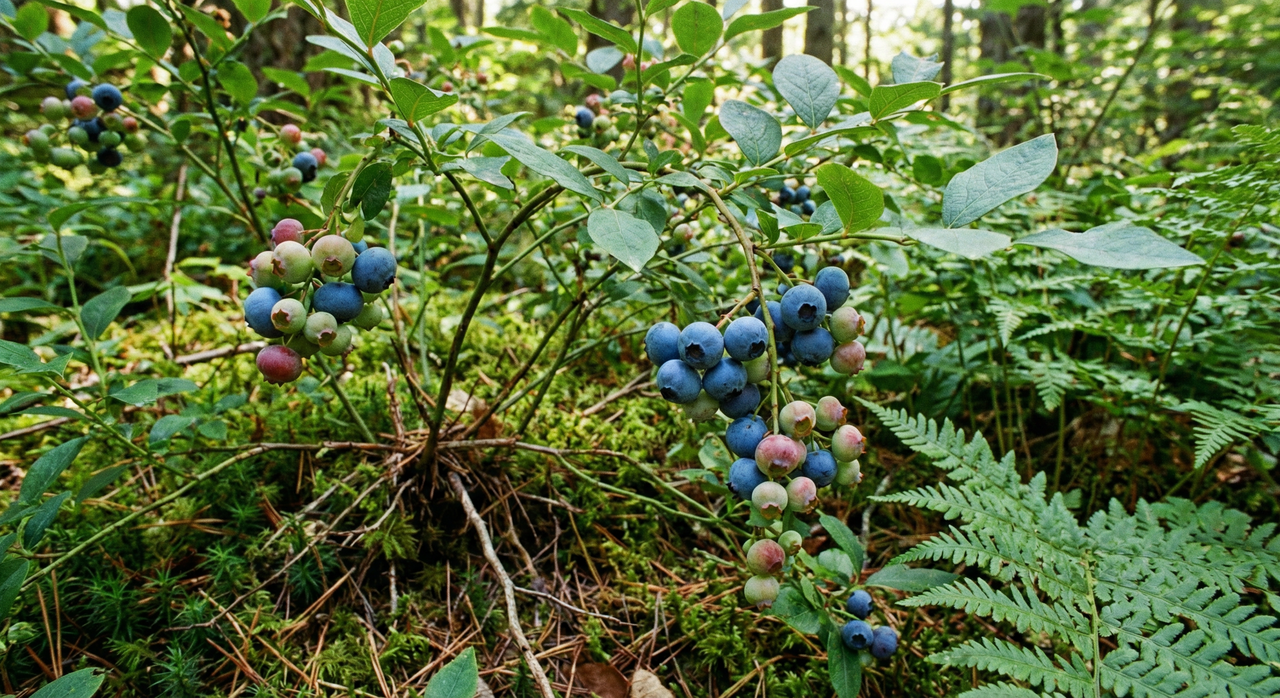
Most people who grow blueberries are actually growing the wrong ones for their site, and they won't find out until year three or four when the plants just sort of... sit there. Not dead. Not thriving. Just existing in a kind of sulky botanical protest. I've watched it happen on client properties more times than I can count, and every single time, the root cause isn't pests or watering or even neglect. It's pH. Highbush blueberries want soil that reads between 4.5 and 5.5 on a meter, which is acidic enough that most ornamental gardens would consider it hostile territory. Drop above 5.8 and the plant can't absorb iron or manganese no matter how faithfully you fertilize it.[1] You're essentially setting the table and locking the kitchen.
What gets me is that this isn't a finicky exotic we've dragged out of its element. This is a plant that shaped ecosystems and fed entire Indigenous nations across eastern North America for thousands of years, long before anyone worried about soil amendments. Vaccinium corymbosum evolved for exactly the kind of lean, sour, poorly-loved ground that stumped European settlers. The plant isn't demanding. It's specific. There's a difference, and once you actually understand it, growing blueberries stops feeling like a gamble and starts feeling like a conversation.
Blueberry Origin, History, and Botanical Background
Stand at the edge of a food forest in May, and if you've planted a highbush blueberry, you'll know it by those small, pendulous clusters of white flowers. They look almost delicate. The plant behind them is anything but. Vaccinium corymbosum is one of the most tenacious, long-lived, and ecologically embedded fruiting shrubs native to this continent, and understanding where it comes from goes a long way toward understanding how to grow it well.
Botanical Background and Native Range of Highbush Blueberry
Highbush blueberry is native across a vast stretch of eastern and central North America, from Nova Scotia and Ontario south through Florida and west into Minnesota, Wisconsin, and eastern Texas.[2][3] It belongs to the Ericaceae family and has evolved for acidic, moist environments: coastal plain wetlands, the edges of bogs, open pine barrens, and forest understories where light might be as low as 10% full sun or as high as full exposure in open fields.[4] That light flexibility surprises a lot of gardeners. So does the lifespan. A well-sited highbush blueberry can remain productive for 35 to 50 years or more.[5][6] I think about that every time I'm planting one. This isn't an annual crop; it's a decades-long relationship, and the upfront investment in soil and siting pays dividends longer than most things in a garden.
The genus Vaccinium spans a surprising range of scales. Lowbush blueberry (Vaccinium angustifolium) grows across similar northern latitudes, from Newfoundland to Manitoba and south to northern Virginia, but it stays low, spreading by rhizomes in rocky or sandy barrens and boreal forests rather than standing upright.[7] On the other side of the Atlantic, bilberry (Vaccinium myrtillus) fills a similar ecological niche across the temperate and boreal forests of Europe and northern Asia, from the British Isles to Siberia and down into mountain woodlands around the Mediterranean.[8] Same family, same preference for cool, acidic soils, but a completely different silhouette.
Traditional and Cultural Uses by Indigenous Peoples
Long before blueberries appeared in grocery stores or garden centers, they were woven into the lives of Indigenous peoples across eastern North America. Tribes including the Wampanoag, Ojibwe, Iroquois, Cherokee, Mi'kmaq, and Passamaquoddy ate the berries fresh, dried them into cakes, mixed them into pemmican, and stirred them with cornmeal.[9][10] Leaf and root teas addressed diarrhea, inflammation, and blood conditions. The berries produced purple dye for textiles and baskets. The Iroquois incorporated blueberries into ceremonial contexts, including the Thanksgiving Address, as symbols of abundance.[11] This wasn't passive foraging; it was integrated, sustainable land stewardship, with careful hand-picking, communal harvests, and a deliberate practice of leaving fruit for wildlife and future seasons.[12]
The lowbush connection runs even deeper in the archaeological record. Wabanaki, Mi'kmaq, and Abenaki peoples have used Vaccinium angustifolium for food, medicine, dye, and ceremony, with evidence of human relationships with wild blueberries dating back over 13,000 years.[13][14] The European parallel is bilberry, with recorded uses stretching back to Theophrastus in the 4th century BC and Pliny the Elder in the 1st century AD, and a long medieval tradition employing leaves and berries for digestion, inflammation, diabetes management, and notably night vision improvement, a claim that found its way into accounts of WWII RAF pilots eating bilberry jam before missions.[15][16] Two continents, two species, the same long arc of human dependence on this genus. Growing blueberries has made me more attentive to that history in a way that reading about it alone didn't. There's something about tending a plant your neighbors' neighbors' neighbors tended for millennia that changes the relationship.
That history also comes with responsibility. Wild harvesting of both lowbush and bilberry faces real pressure today from overexploitation, habitat loss, and commercial mechanization that disrupts the ecological balance those communities carefully maintained.[17][18] Honoring that knowledge means supporting Indigenous co-management, not just admiring the fruit.
From Wild Foraging to Commercial Cultivation
European settlers adopted blueberries gradually, initially calling them "blue huckleberries" and foraging the same wild stands they found established when they arrived.[10] Commercial cultivation didn't take hold until the early 20th century, when New Jersey cranberry farmer Elizabeth White partnered with USDA botanist Frederick Coville around 1906 to 1911 to systematically select superior wild plants and develop named cultivars. The first, 'Brooks,' was released in 1916.[19][20] That partnership essentially created the modern blueberry industry, building on centuries of Indigenous knowledge to produce the large-fruited, reliably productive plants that now support global markets.
Visual Characteristics of the Highbush Blueberry
Highbush blueberry grows as a multi-stemmed, suckering deciduous shrub, typically reaching 6 to 12 feet tall depending on cultivar, with most garden varieties settling around 8 to 10 feet and spreading 4 to 6 feet wide.[21][22] Young stems are smooth and reddish-brown; older growth turns gray and slightly scaly. The root system is shallow and fibrous, concentrated in the top 12 to 16 inches of soil with no taproot.[23] I've noticed that root architecture immediately when lifting a containerized plant. It's almost disconcertingly close to the surface, which is exactly why consistent moisture and a good layer of woodchip mulch aren't optional.
The leaves are alternate, simple, elliptic to obovate, 1.5 to 3 inches long, bright green above and often glaucous beneath. Sun-exposed leaves develop thicker texture with higher leaf mass and chlorophyll density than those grown in shade.[24] Come autumn, those same leaves turn vivid red to purple, which is one of the reasons I keep recommending highbush to gardeners who think edible plants can't carry ornamental weight.[25] Spring brings clusters of small, urn-shaped white to pinkish flowers, 6 to 8 mm each, blooming in April and May; the berries that follow can reach an inch or more in diameter with that characteristic waxy bloom.[2]
The contrast with its relatives is instructive. Lowbush blueberry stays under two feet, spreading outward rather than up, with smaller leaves and smaller but intensely flavored berries.[26] I grow a lowbush patch as a ground-layer companion in one of my guilds, and watching it spread by rhizomes while the highbush specimens tower above it gives you an immediate, physical understanding of how these species fit different forest layers. Bilberry is similar in scale to lowbush, just 6 to 18 inches tall, with small dark berries and revolute leaf margins that give it a slightly different texture.[27]
Fun Facts and Genus-Wide Context
The scale of modern blueberry production is staggering when you hold it against that traditional foraging history. U.S. production reached approximately 828 million pounds in 2022, with global output around 1.1 million metric tons in 2023 and the U.S. accounting for roughly 40% of that.[28][29] All of it traces back to those early New Jersey selections.
The ecological quirks of the genus are just as impressive. Lowbush blueberry is fire-adapted in a way that highbush isn't: rhizomes survive burns and resprout vigorously, and the plant even exhibits masting, synchronizing heavy fruit production every two to three years across large areas.[30][31] And across the genus, blueberry flowers require buzz pollination: native bumblebees grab the urn-shaped flowers and vibrate at just the right frequency to release pollen, a behavior called sonication that honeybees simply can't replicate effectively.[5] I love watching it happen each spring. The bumblebees work methodically along every cluster, and the difference in fruit set between a patch they visit freely and one where bee activity is disrupted is visible by midsummer. It's one of the most direct reminders I know that a productive blueberry planting is never really about just the plant.
Blueberry Varieties and Cultivars
Most of the blueberries people grow in home gardens trace back to Vaccinium corymbosum, the northern highbush species that USDA breeder Frederick Coville began domesticating in earnest around 1908.[32] Over a century of breeding at programs centered at Rutgers, Michigan State, and the USDA's own germplasm repository, that work has produced dozens of named cultivars optimized for yield, flavor, and regional adaptability. The diversity can feel overwhelming at first, but it mostly collapses down to one question: how many chill hours does your winter reliably deliver?
Northern Highbush Blueberry Cultivars
Northern highbush types need 800 to 1,000 hours below 45°F to break dormancy and fruit properly.[33] In return, they're cold-hardy to -20°F or lower and productive enough to yield 10 to 20 pounds per mature plant in a good season.[34] Bluecrop is the workhorse of this group: a vigorous four-to-six-foot shrub with large, firm berries that balance sweet and acidic beautifully, ripening mid-season with decent resistance to mummy berry.[34][35] I've grown Bluecrop myself and the difference between a sun-warm berry off the bush and what you find at the grocery store is frankly embarrassing for the grocery store. Duke ripens early and stays compact at four to five feet, which makes it useful for smaller spaces in zones 4 and 5.[36] Patriot is the one to reach for in zone 3 or anywhere temperatures routinely drop to -25 or -30°F.[37] If you're in zones 6 or 7 and want something with a bit more presence, Legacy and the blueberry chandler plant both reach five to eight feet and suit warmer ends of the northern range.[38][39]
Southern Highbush and Other Vaccinium Types
If your winters are mild, northern highbush cultivars simply won't produce reliably. Southern highbush varieties, bred by crossing V. corymbosum with the heat-tolerant V. darrowii, need only 150 to 600 chill hours and ripen as early as April or May in zones 7 through 10.[40] I garden in conditions that border zone 9, and I've shifted almost entirely to southern highbush types because they don't require counting on a cold snap that may or may not materialize. Emerald and Jewel are the cultivars extension services most commonly recommend for zones 8 through 10 if disease pressure is a concern.[40] Gardeners in the borderline zone 8 or 9 range should prioritize anything with clear V. darrowii parentage and pair it with thick mulch to buffer soil temperature swings.
Elsewhere in the genus, lowbush blueberry (Vaccinium angustifolium) is a different creature entirely: a rhizomatous ground-hugger topping out at two feet, most often managed as wild stands rather than tidy rows, with named selections like Fundy and Pilgrim available for colder zones where highbush would struggle.[41] The European bilberry (Vaccinium myrtillus) is even more compact and virtually uncultivated commercially, though its antioxidant content is extraordinary.[42] Both are worth knowing about, but neither is a practical substitute for a well-chosen highbush cultivar in most home gardens.
Sourcing Blueberry Plants and Seeds
Buy plants, not seeds. Seeds exist, sold in small packets for a few dollars, but vegetative propagation is how cultivar traits get preserved, so seeds introduce genetic unpredictability that makes sense for breeders and almost no one else.[43] Nurseries like Stark Bros., Gurney's, Burnt Ridge, and Fall Creek Farm carry the most commonly grown blueberry plant varieties in bare-root and potted form, with Bluecrop, Patriot, Jersey, Northland, and Legacy among the easiest to find.[44][45] Expect to pay $20 to $35 for a one-gallon pot and $40 to $60 for a three-gallon.[46] I've had good results ordering bare-root plants that ship in early spring; in my experience they establish faster in acidic raised beds than container stock received during summer heat. A two- or three-year-old plant is worth the slightly higher cost because it cuts a full season or two off the wait for a meaningful first harvest. Lowbush selections run cheaper at $5 to $15, while bilberry plants, when available, typically run $15 to $35.[47] One practical note: certain states restrict Vaccinium shipments to prevent blueberry maggot spread, and importing bilberry plants internationally requires USDA APHIS permits and phytosanitary certificates, so check your state's rules before you order.[48]
Propagating and Planting Blueberries
Blueberries are one of those plants where understanding the biology upfront saves you years of frustration. The seeds are genuinely fascinating little things: tiny (1.2-1.8 mm), dark brown, with a reticulate texture and orthodox behavior that lets you dry them down to 3-7% moisture and store them at -18°C for a decade or more.[49][50] But here's the catch: highbush blueberry is highly heterozygous and gametophytically self-incompatible, which means seedlings are genetically variable and almost never true to the parent plant.[51] Breeders love that. Home growers, not so much. I've started seedlings as an experiment, and I can tell you they look deceptively like tiny carrot tops for the first few weeks -- I now label every row meticulously just to keep track -- but the 3-5 year wait for fruit and unpredictable results make seeds a curiosity rather than a practical strategy for most gardeners.
Blueberry Propagation Methods
Softwood cuttings are where most home growers and commercial operations start, and for good reason. Take them from the current season's growth in late spring to early summer, cut to 4-6 inches, treat with IBA at 1,000-3,000 ppm quick dip, and stick them into a sterile 1:1 peat-perlite medium under 80-90% relative humidity with bottom heat around 70-75°F.[52][40] Under those conditions, you'll see roots in 4-8 weeks and can expect 60-90% success.[53] I lost an early batch to damping-off before I got serious about sterile media and consistent bottom heat; since then I routinely hit 70-80%. The humidity tent is non-negotiable.
Hardwood cuttings taken in winter (December through February) are a workable alternative, typically 6-8 inches and pencil-thick, rooting in 8-12 weeks at cool temperatures with IBA treatment, though success rates of 40-80% run lower than softwood.[52][54] Lowbush blueberry hardwood cuttings root at a more modest 20-50%, which gives you a sense of how much easier highbush is to work with compared to its wilder cousins.[55] Layering achieves 70-95% success if you have the patience for it, though it's rarely worth the effort at scale.[54] Grafting onto compatible rootstocks like V. darrowii (for low-chill southern adaptation) reaches 50-90% with cleft or whip-and-tongue methods, though compatibility is poor with V. myrtillus, so know your rootstock.[56][57] Commercial nurseries largely rely on tissue culture, achieving near-100% multiplication rates and 80-95% acclimatization success using nodal explants on Murashige-Skoog medium -- worth knowing if you're sourcing plants rather than making them.[58]
Whatever method you use, acidic sterile media at pH 4.5-5.5 is mandatory, disease-free stock prevents Phytophthora root rot from entering your system, and mycorrhizal inoculation at planting genuinely improves establishment, especially for lowbush types.[52][55]
Soil and Site Requirements for Blueberries
If there is one thing I want every aspiring blueberry grower to internalize before they buy a single plant, it's this: if the newest leaves turn yellow while the veins stay green, stop and test your pH immediately. That's iron chlorosis, the classic symptom of pH creeping above 5.5, where iron becomes unavailable to the shallow fibrous root system.[59][60] The optimal range is 4.5-5.5; below 4.0 you risk manganese and aluminum toxicity, above 6.0 the plant essentially starves.[34]
Highbush blueberry evolved along acidic bog margins and moist coniferous woodland understories in eastern North America, partnering with ericoid mycorrhizal fungi that are optimized precisely for pH 4.5-5.5 phosphorus uptake.[61] The roots it developed in that environment are shallow and fibrous, concentrated in the top 6-12 inches, which means they need well-drained sandy loam or loamy sand with 3-6% organic matter and consistent moisture of about 1-2 inches per week -- without any waterlogging.[62][34] Heavy clay and compacted soils are genuinely inhospitable without major amendment.
If your soil isn't already acidic, apply elemental sulfur (roughly 1-2 lb per 100 sq ft for a pH 6.5 starting point, worked in the fall before planting) and incorporate 20-50% peat moss, pine bark, or compost to build structure and buffer acidity.[34][59] For containers, a mix of 50% peat or coco coir, 30% pine bark, and 20% perlite works reliably.[63] Test regularly; soil pH drifts, and these plants will tell you about it in their leaves before they tell you in their yield. Bilberry and lowbush blueberry share the same preference for acidic, high-organic-matter conditions but show more tolerance for partial shade and lower fertility than highbush, with lowbush spreading happily through rhizomes in infertile open sites where highbush would sulk.[64][65]
Spacing, Timing, and Planting Techniques
Mature highbush blueberries reach 4-6 feet tall and spread 6-12 feet wide, so they need room.[53] Standard spacing runs 4-6 feet within rows and 8-12 feet between rows; hedgerow plantings can tighten to 3-4 feet within a row.[66] In my home plots I tend to plant at 5 feet within the row -- close enough that the canopies eventually touch and shade out weeds, but with enough airflow to keep disease pressure low. That airflow matters: wider spacing measurably reduces mummy berry incidence.[67] Lowbush is a different animal entirely, managed in dense rhizomatous colonies at 12-24 inch spacing or simply left as natural stands.[68]
Plant in early spring after the last frost, or in fall in USDA zones 4-7 where roots can establish before summer heat arrives.[69][70] In climates closer to zone 8 or 9, I've seen fall planting allow enough root establishment that plants sail through their first summer with far less stress than spring-planted ones. Set the plant at the same depth as its nursery container, dig a hole at least 12-18 inches wide to give those fibrous roots room to spread, and mulch immediately with pine needles or bark to retain moisture, suppress weeds, and keep the soil surface acidic as the mulch breaks down.[70]
Blueberry Germination and Timeline to Fruit
Blueberry seeds require 90 days of cold stratification at around 4°C before germinating, then light and temperatures of 20-25°C to achieve 50-90% success.[71] Even under optimal conditions, seedling-grown highbush plants typically take 3-5 years to produce their first fruit.[72] Plants propagated from cuttings or grafted nursery stock fruit in 1-3 years, which is the real reason I start from cuttings or buy from a reputable nursery rather than growing from seed.[73] That's a gap of two or more productive seasons that's hard to justify in a home garden, though growing from seed is genuinely rewarding if you're experimenting or doing any informal selection work. Lowbush wild stands managed by burning take 4-6 years to reach full production on a two-year cycle, which puts the patience required for these plants in useful perspective across the whole genus.[74] Get the right plants in the right soil, and a highbush blueberry will reward you for decades; the upfront work is a one-time investment.
Blueberry Care Guide: Watering, Feeding, Sunlight, and Seasonal Care
Every challenge I've seen home growers run into with blueberries traces back to one thing: forgetting that this plant evolved in nutrient-poor, acidic woodland soils and genuinely doesn't want to be coddled like a vegetable garden crop. Get the pH, moisture, and light right, and the rest of the care calendar falls into place.
Watering Needs and Soil Moisture Management
I test soil pH every spring before bud break, because even a 0.5-point drift above 5.5 locks out iron and manganese at the root level regardless of how carefully you're watering. The blueberry's absolute foundation is acidic soil in the pH 4.5–5.5 range with low salinity; electrical conductivity above 1.0–1.5 dS/m causes leaf burn and yield loss, which is why I prefer collected rainwater or tested low-alkalinity water over straight tap.[75][76]
Once the chemistry is right, highbush blueberries need 1–2 inches of water per week during the growing season, reaching the top 6–12 inches of soil, with that climbing to 2–4 inches weekly during fruit development in summer.[34][77] Drip irrigation is the right tool here; overhead watering invites foliar disease and doesn't target those shallow fibrous roots efficiently. A 2–4 inch layer of pine needles, sawdust, or peat moss mulch (kept away from stems) does a lot of the work, retaining moisture, moderating temperature, and gently reinforcing soil acidity.[34]
The diagnostic I keep coming back to: if leaves are wilting but the soil is wet, suspect Phytophthora root rot from waterlogging rather than drought. Overwatering across Vaccinium species causes yellowing, wilting despite moist soil, mushy roots, and stunted growth.[78][79] Established highbush plants can handle 2–4 weeks of water deficit before yield takes a serious hit, but don't push it during fruit swell.[80]
Sunlight Requirements and Light Stress Symptoms
Highbush blueberries want 6–8 hours of direct sun daily for strong yields and fruit quality.[81] In hotter southeastern climates, though, afternoon shade is a feature rather than a compromise; those peak midday hours are exactly when heat and light conspire to shrink berries and scorch leaves. I've learned to read the plant: too little light shows up as pale, leggy growth and thin fruit set, while too much direct heat produces marginal scorch and browning on the newest leaves first.[82] I keep shade cloth advice for the heat management section below, but the underlying principle starts here with light quantity.
Feeding and Nutrient Management for Acid-Loving Plants
Blueberries are light feeders, full stop. They evolved in acidic, low-nutrient soils with at least 3–5% organic matter, and over-fertilization disrupts their mycorrhizal partnerships, pushes excessive leafy growth at the expense of fruit, and increases disease pressure.[55] I've found that once the soil biology is healthy, I can cut applications roughly in half and still see full crops. Think of it like feeding rhododendrons or azaleas: a little goes a long way.
Use ammonium-based, acid-forming fertilizers, a 10-10-10 for young plants or 12-4-8 for established ones. Start young plants at 1–2 oz of actual nitrogen per plant, scaling to 4–6 oz per mature bush per year in two split applications: one before bud break in early spring, one post-harvest in late summer.[34][5] Avoid any late-season nitrogen; it stimulates tender new growth that's wide open to frost damage.
The deficiency symptoms are worth knowing by sight. Nitrogen deficiency shows as uniform yellowing on older leaves with stunted growth. Iron chlorosis, which I see constantly when pH creeps above 5.5, presents as interveinal yellowing on young leaves. Potassium deficiency scorches leaf margins on older growth. Magnesium deficiency causes interveinal chlorosis lower on the plant.[83] Excess nitrogen causes leaf tip burn and necrosis, which new growers sometimes confuse with potassium scorch. Annual soil testing keeps you ahead of drift, and a leaf analysis every three years gives you the full picture.[84]
Frost Tolerance and Winter Protection Strategies
Dormant highbush plants are impressively tough, handling winter lows of -20°F to -30°F in USDA zones 4–7.[85] The problem is spring. Once buds begin to swell, tolerance drops dramatically: dormant buds handle -25°C, but by pink bud that threshold is -2°C, and open bloom can be damaged at just -0.5°C.[86] I mark bloom stages on my calendar every year and have overhead sprinklers ready to run by the time I see pink buds, because losing those early flowers is the regret I hear most often from new growers.
Passive protection starts with site selection: planting on elevated ground at least 10 feet above cold-air drainage zones, then applying 4–6 inches of organic mulch in late fall to buffer roots against freeze-thaw cycles.[34][87] When a late frost threatens during bloom, overhead sprinkler irrigation at 0.1–0.2 inches per hour starting at 32°F releases enough latent heat to protect flowers, or floating row covers can raise temperatures 2–5°C if that's more practical for your setup.[88]
Heat Tolerance and Summer Stress Management
Highbush blueberries prefer daytime temperatures of 60–80°F and are rated for AHS Heat Zones 3–7; above 86–95°F, photosynthesis slows, berries shrink, sugar drops, and ripening becomes uneven.[89][90] In my warmer growing conditions I've seen the difference firsthand: berries from plants with 20–30% shade cloth during July heat waves are noticeably larger and sweeter than unshaded ones, which is the kind of kitchen-level outcome that makes the physiology data feel real.
The management toolkit combines mulch (2–6 inches), shade cloth at 20–50% during peak summer heat, and consistent drip irrigation increased during heat waves.[91] For growers in warmer zones, cultivar selection matters enormously: 'Sunshine Blue', 'Misty', and 'Sharpblue' handle heat better than standard northern highbush types, though performance still depends on your specific microclimate.[92] Drought compounds heat damage fast, especially at flowering and fruit set, so the water and heat sections of this care guide are really inseparable.
Pruning, Maintenance, and Seasonal Rhythm
Renew mulch annually with 2–4 inches of acidic material, pine bark, sawdust, or needles, and control weeds by hand or with very shallow cultivation (no deeper than 1 inch) to protect those surface roots.[93] Blueberry roots are genuinely shallow; a careless hoe pass does more damage than most growers realize.
Prune in late winter before bud break. The goal is an open vase shape with good airflow: remove canes older than six years, thin 20–30% of the oldest wood annually, and clear basal suckers to keep the form tidy.[34][94] I learned this the hard way in my first few seasons by removing too much wood at once on young bushes, which pushed fruiting back by a full year. For plants under three years old, hold off on anything more than light shaping.
The seasonal rhythm pulls everything together. Dormancy runs September through early spring, bud break arrives March to April, flowering follows in April to May, and fruit development carries through to harvest from May into August with peak production in June through August.[33] In hotter climates those windows shift earlier and afternoon shade becomes more important through fruit swell. Think of early spring as your pruning and frost-watch window, late spring as your irrigation and pollination focus, and summer as the time to monitor heat stress and keep that mulch intact.
Blueberry Harvesting: Timing, Technique, and Flavor at Peak Ripeness
After years of amending soil, adjusting pH, and waiting through those maddening early seasons when you're told not to let the plant fruit, the harvest is when highbush blueberry finally makes good on everything you've put into it. Getting the timing right is what separates a basket of candy from a basket of disappointment.
When to Harvest Blueberries: Regional Windows, Bloom-to-Ripe Timeline, and Ripeness Cues
Harvest windows shift dramatically by latitude. Southern growers are often picking in April or May, while gardeners in the northern states may not see ripe fruit until July or September.[95][96] From full bloom, expect roughly 60 to 90 days to maturity, with early cultivars ready in as few as 40 days and late-season types stretching past 90.[97][98] Wilder Vaccinium species follow the same general arc but tend to ripen in more concentrated flushes, which is both their charm and their challenge for foragers.
The ripeness checklist I actually use on my own bushes: uniform deep blue color with that faint waxy bloom still intact, easy release with a gentle twist (no tugging required), and a slight give under thumb pressure, firm but yielding, a bit like a ripe cherry tomato that hasn't gone soft. Brix readings of 10 to 12% signal peak sweetness for highbush;[99][100] bilberry and lowbush often run higher, between 12 and 16%, which is part of why wild berries taste so concentrated. I've started checking my bushes every morning once berries begin coloring because a few days of summer heat can push a cluster from "almost" to "past it" faster than you'd expect.
How to Harvest Blueberries: Hand-Picking, Thinning, and Sustainable Practices
Highbush blueberries are a hand-pick crop, full stop. Lowbush types grown commercially sometimes get machine-harvested with mechanical strippers or shakers,[101] but for the backyard grower with an established highbush plant, nothing replaces going through cluster by cluster and pulling only the berries that pass the twist test. Pick only ripe berries, avoid anything still reddish, harvest from clean sites well away from roadsides or areas with pesticide drift, and leave a generous portion of fruit for birds and beneficial insects.[102][103] One season I held off picking a cluster for nearly a week because native bees were still working the late-ripening fruit nearby. The harvest was smaller, but that felt like the right call.
If you're willing to do a bit of work earlier in the season, thinning fruit clusters to roughly 4 to 6 inches of spacing pushes the plant's energy into fewer, larger berries.[104] It also opens up airflow through the canopy, which I've found helps reduce the fungal pressure that the pests and diseases section covers in more detail.
Blueberry Yield, Flavor Profile, Texture, and Post-Harvest Considerations
A mature highbush plant will give you several pounds of fruit per season once fully established. The berries themselves are spherical to slightly oblate, averaging 12 to 20 mm across with that characteristic color shift from green to red to deep blue-black as they ripen.[105]
Flavor is the classic sweet-tart balance of natural sugars against citric and malic acid, though cultivar makes a real difference.[106][107] After growing 'Duke', 'Bluecrop', and 'Jersey' side by side for several seasons, I've noticed their sweetness peaks at slightly different Brix levels and in slightly different conditions. 'Bluecrop' is my go-to for fresh eating, mild and consistent. 'Jersey' runs noticeably sweeter. 'Elliott' I basically save for baking, where its intensity really comes through. Bilberries sit at the other end of the spectrum entirely, higher acidity, earthier notes, and an aroma loaded with terpenes, esters, and hints of violet and citrus[108] that make them compelling but unforgiving if you're expecting a cultivated berry's approachability.
Texture-wise, the waxy skin on a fresh highbush berry gives a satisfying pop, and that bloom isn't just pretty, it signals the berry hasn't been overhandled. Compare that to a wild bilberry, which practically bursts the moment you apply any pressure due to its thin, delicate skin.[109] Highbush berries soften considerably when cooked,[110] which shifts flavor toward something more caramelized and rounded. The aftertaste on a well-ripened highbush berry lingers pleasantly for 10 to 30 seconds, fruity and faintly floral with very low astringency.[111]
For preserving what you pick, processing method matters more than most people realize. I've experimented with both conventional hot-air drying and freeze-drying, and the difference in retained aroma is striking. Freeze-dried blueberries hold onto 80 to 90% of volatile aroma compounds, while hot-air drying can strip out as much as half.[112] Freeze dried blueberries taste genuinely like fresh fruit in a way that conventional dried blueberries simply don't. If you have access to freeze-drying equipment or a service that offers it, it's worth the effort for preserving the full sensory experience of a peak-season berry.
Blueberry Preparation and Uses
Culinary Uses and Flavor Profiles of Blueberries
Ripe fruits across the genus are safe, generous, and good to eat. Highbush berries[50][106], lowbush blueberries[7][113], and bilberries[106] are all edible when fully ripe. In all my years growing and foraging Vaccinium species, I've never used anything but the ripe fruit and occasional leaves; stems, roots, and flowers simply aren't food, and stems and roots contain trace cyanogenic glycosides that can cause toxicity if consumed in any real quantity.[50] The flowers are beautiful. Leave them alone.
Flavor is where the species diverge in genuinely interesting ways. Highbush berries are sweet, juicy, and mildly tart[114] -- approachable and crowd-pleasing, but I've noticed mine taste noticeably sweeter in the heat of a Florida summer than descriptions from cooler-climate growers suggest. Bilberries carry a more intense, aromatic punch, with floral and woody notes driven by volatile compounds like linalool and geraniol.[115] Lowbush types land somewhere earthy and resinous, with subtle hints of vanilla and spice that make them especially prized for jams and pies where you want the fruit to actually announce itself.[116][117]
Fresh off the bush is always the first choice, but blueberry recipes span every corner of the kitchen. Classic blueberry pie, muffins, cobbler, and scones are the obvious go-tos, and they hold up beautifully because the berries don't collapse the way soft fruits do. For preserving, gentle heat in jams retains anthocyanins and most nutrients reasonably well, while high-heat baking degrades some vitamin C.[118] I freeze most of my surplus by spreading berries in a single layer on a tray first, then bagging them once solid -- this keeps them from clumping and they'll hold for up to a year. Drying works well too, around 135°F for 10-18 hours until leathery. On the savory side, blueberries pair surprisingly well with goat cheese, balsamic glaze, and rich meats.[119][120] Don't overlook that direction when you're staring at a full harvest.
Medicinal Preparations from Blueberry Leaves and Berries
The leaves are where the plant's medicinal tradition gets interesting. Highbush blueberry leaves have been brewed into tea for blood sugar support, with compounds like chlorogenic acid showing potential to inhibit alpha-glucosidase and moderate glucose absorption.[121] Bilberry leaf and berry preparations have an even longer European record, used as decoctions for digestive complaints and astringent poultices for minor wounds and skin inflammation.[122][123] These aren't fringe applications; they appear in respected European herbal monographs with specific guidance.
For practical home use, a leaf infusion means 1-2 teaspoons of dried leaves steeped 10-15 minutes, taken no more than 1-3 cups daily.[124] I've experimented with stronger infusions over several seasons and they become genuinely unpleasant -- very astringent -- so a light hand is both safer and more enjoyable. Standardized bilberry extract (typically 25% anthocyanins) runs 80-160 mg daily in clinical contexts,[125][126] while lowbush leaf tea estimates from traditional use suggest 1-2 grams of dried leaf per cup, two to three times daily.[127] These are traditional guidelines, not large clinical trial data, so treat them accordingly.
Non-Food Uses for Blueberries
One of my favorite things to do with a bumper crop of overripe berries is make dye. Blueberries produce blue-purple to green hues depending on the pH of your dye bath -- acid shifts toward pink-purple, alkaline toward green -- and Indigenous communities across North America used lowbush berries this way for generations alongside food and medicinal applications. I've gotten better results on wool than cotton without a mordant, though both take the color. It's a genuinely lovely use for fruit that might otherwise go to the compost, and it keeps you connected to the full range of what this plant has offered people for a very long time.
Blueberry Health Benefits and Medicinal Uses
The health story of highbush blueberry doesn't begin in a laboratory. It begins with Cherokee healers, Ojibwa communities, and Iroquois medicine keepers who used Vaccinium corymbosum as a tonic, a blood purifier, a treatment for diarrhea, and a wash for sore eyes, drawing on the berries, leaves, and roots depending on what the body needed.[9][128] What I find remarkable is how consistently modern research has circled back to validate those applications. The anti-inflammatory mechanisms are now well characterized: blueberry compounds inhibit pro-inflammatory cytokines like TNF-α and IL-6 through NF-κB pathway suppression,[129][130] which maps reasonably well onto traditional uses for wounds and systemic complaints. Clinical trials have also shown blueberry extracts improve insulin sensitivity and lower postprandial glucose, with measurable benefits in type 2 diabetes management.[131][132]
Related species add useful depth here. Bilberry (Vaccinium myrtillus) has its own long European tradition and strong clinical evidence for improving visual acuity, reducing eye fatigue, and supporting retinopathy outcomes.[133][134] Lowbush blueberry (V. angustifolium) shows early promise for neuroprotection, with animal model research linking it to reduced amyloid-beta accumulation and improved memory.[135] None of these are reasons to swap your daily bowl of berries for an extract capsule, though. Most of the stronger clinical trials work with concentrated extracts; the food itself is where I'd start, and start daily.
Nutritional Profile of Blueberries
A hundred grams of raw highbush blueberries delivers around 57 calories,[136] which makes the nutritional value of blueberries genuinely impressive relative to their caloric footprint. That same serving carries 2.4g of fiber, 19μg of vitamin K, meaningful manganese, and anthocyanins in the range of 163 to 387mg depending on cultivar and growing conditions.[136][137] That variability in anthocyanins matters more than most people realize. I've grown highbush blueberries in properly acidified raised beds for years, and the berries from my drier, sunnier summers consistently come off the bush darker and noticeably more tart than those from wet, overcast years. Research confirms what my palate has been telling me: acidic soil conditions in the pH 4.5-5.5 range and moderate stress enhance phenolic synthesis.[138]
Wild and related species push these numbers significantly higher. Lowbush blueberries reach an ORAC of around 9,621 μmol TE per 100g, and bog blueberries can exceed 500mg anthocyanins per 100g in wild populations.[139][140] For handling and storage: freezing preserves most nutrients well, but cooking causes real losses in both vitamin C and anthocyanins.[141] I freeze mine in a single layer on sheet trays before bagging, and the color holds beautifully. One practical note for anyone prone to kidney stones: lowbush varieties contain significant oxalates, so moderation is sensible if that's a concern for you.[142]
Key Phytochemicals in Blueberries
Anthocyanins constitute 60-70% of total phenolics in highbush blueberry, dominated by malvidin, delphinidin, and cyanidin glycosides.[143][144] The rest of the phenolic portfolio includes flavonols like quercetin and myricetin, phenolic acids like chlorogenic and ferulic acids, and proanthocyanidins, each concentrated differently across plant parts: fruits pack the anthocyanins, leaves run high in quercetin and chlorogenic acid, bark holds tannins, and roots contain benzoic acids and catechins.[145][146] These compounds aren't just there for us; they're the plant's UV protection, its herbivore deterrent, its pollinator signal, and part of how it supports its ericoid mycorrhizal partners.[147]
Anthocyanin levels peak at fruit ripening and rise under stress: drought, northern latitude, and acidic soil all push synthesis higher.[148] Cultivar choice matters too; northern highbush types generally run higher in phenolics than southern ones, and university trial data backs up what flavor intensity suggests in client gardens.[149] Bilberry pushes the chemistry further, with delphinidin-3-O-glucoside and strong COX-2 and NF-κB inhibition activity,[150] while bog blueberry tops the antioxidant charts with 300-400mg anthocyanins and antioxidant activity sometimes exceeding 20-30 mmol Trolox equivalents per 100g.[140]
Safety and Precautions When Using Blueberries
Ripe highbush blueberries are GRAS, non-toxic to humans and pets, and clinical trials have confirmed safety at up to 300g per day for several months without serious adverse effects.[151][143] Overdo it and you'll know it from the fiber load, but that's about as serious as it gets at food amounts. Concentrated extracts deserve more care: bilberry standardized extract is generally tolerated up to 480mg per day, but there's insufficient data to recommend it during pregnancy or lactation.[152]
For anyone on warfarin or other anticoagulants, the vitamin K content of blueberries (around 19-29μg per cup) is modest, but the antiplatelet effects are real, particularly at extract doses.[153] In my experience working with clients on blood thinners, I always recommend they loop in their doctor before adding bilberry or concentrated blueberry extracts to their routine. A daily handful of fresh berries is unlikely to shift anything meaningfully, but therapeutic amounts are a different conversation. Bilberry may also potentiate diabetes medications, raising hypoglycemia risk.[154]
The most significant real-world hazard with blueberries is misidentification when foraging. Pokeweed, black nightshade, deadly nightshade, and baneberry have all been confused with wild Vaccinium by people who weren't looking carefully enough.[155][156] The features I rely on when foraging wild lowbush blueberries: that powdery waxy bloom on the berry surface, the distinctive urn-shaped flowers earlier in the season (if you can catch them), and the way ripe berries hang in small clusters with a star-shaped crown at the tip. None of the common look-alikes check all those boxes simultaneously. Wash wild berries thoroughly and stay clear of roadsides or areas with potential contamination from heavy metals or pesticides.[157] Unripe berries, leaves, and stems can cause mild GI upset from tannins in quantity, and while cyanogenic glycosides and oxalates are present in the plant, they're at trace levels in ripe fruit that don't present a practical concern for healthy adults.[158]
Blueberry Pests and Diseases
No blueberry cultivar is immune to everything, and I'd be doing you a disservice if I pretended otherwise. What I can tell you, from years of watching these plants in real garden conditions, is that most of the pest and disease drama people experience is preventable with two decisions made before you ever put a plant in the ground: where you site it and which cultivar you choose. Get those right, and you spend your summers harvesting instead of troubleshooting.
Major Diseases and Cultivar Resistance
Highbush blueberry shows moderate overall disease resistance, but that number means almost nothing without knowing which cultivar you're growing and what pathogens your region throws at it.[159][160] Mummy berry, caused by Monilinia vaccinii-corymbosi, is the most serious and widespread disease across highbush, lowbush, and rabbiteye types in North America, and most cultivars sit somewhere in the low-to-moderate resistance range.[161][162] I've grown both 'Duke' and 'Bluecrop' for years, and the difference in mummified berries on the ground at season's end is striking. 'Duke' consistently comes out ahead, and the research backs that up: 'Bluecrop', 'Duke', 'Liberty', and 'Aurora' all demonstrate moderate to high mummy berry resistance compared to more susceptible options like 'Elliott' and 'Jersey'.[163][162]
The contrast with lowbush blueberry is sobering. Unmanaged lowbush fields can lose 50 to 80 percent of their yield to mummy berry in a bad year.[164][165] Bilberry, on the other hand, shows why breeding programs keep raiding wild Vaccinium genetics: in native European forest populations, mummy berry infection rates run below 10 percent, and bilberry demonstrates moderate to high natural resistance to several other fungal threats that routinely plague cultivated types.[166]
Beyond mummy berry, the disease landscape shifts by region. Southern growers prioritize anthracnose and botrytis fruit rot, while the Pacific Northwest deals heavily with phomopsis cane blight and viral pressure, and northern states focus their energy on mummy berry outbreaks.[167][168] For anthracnose, 'Duke' offers moderate resistance, and southern highbush types like 'Star', 'Brightwell', and 'Legacy' perform even stronger.[169] Phytophthora root rot is where I've learned my most expensive lesson: after losing an early planting to waterlogged soil, I now insist on raised beds and pine-bark mulch for every blueberry I put in the ground. The species as a whole has low resistance to this pathogen, but 'Patriot', 'Brightwell', and 'Star' show improved tolerance when drainage is already good.[79][170] Maintaining soil pH between 4.5 and 5.5 is part of the same logic: the right acidity enhances nutrient uptake and reduces vulnerability to root rot and fungal disease; drift outside that range and you're handing pathogens an advantage.[171][172]
Common Insect Pests and Natural Defenses
Highbush blueberry has a surprisingly sophisticated chemical defense system. The same phenolic compounds -- chlorogenic acid, flavonoids, anthocyanins, tannins -- that make the fruit worth eating also deter insect feeding and oviposition, while trichomes on leaf surfaces add physical resistance.[173][174] Crush a blueberry leaf and you'll catch that resinous, slightly astringent scent -- similar to cranberry or huckleberry foliage -- which is exactly that defensive chemistry at work. The plant also emits volatile organic compounds, including terpenes and green leaf volatiles, that actively repel pests like blueberry maggot fly and recruit parasitoid wasps when leaves are damaged.[175]
Aphids are generally a minor concern; most highbush cultivars have high natural resistance, and varieties like 'Bluegold' and 'Patriot' show measurably lower pest populations due to antibiosis and antixenosis mechanisms.[176] The real threats are blueberry maggot (Rhagoletis mendax) and spotted wing drosophila (Drosophila suzukii), where susceptibility is high across cultivars.[177] I check my SWD traps weekly from first color onward; catching that threshold early has genuinely saved entire harvests for me. Spider mites, fruitworms, and oriental fruit moth round out the pest picture at moderate susceptibility levels.[34] For cultivar selection, 'Bluecrop' offers broad insect resistance, 'Duke' combines good insect tolerance with early ripening that sidesteps late-season SWD pressure, and 'Legacy' delivers strong late-season vigor.[178][179] No single cultivar wins on every front, and regional conditions modulate every resistance rating.[180]
Integrated Pest Management for Blueberries
The IPM framework for blueberry maps perfectly onto permaculture thinking: stack your defenses, start with the least intervention, and only escalate when you have clear evidence a threshold has been crossed. Resistant cultivar selection and proper site preparation are the foundation; everything else builds on them.[181] Once you're planted in acidic, well-drained soil with good airflow, the cultural layer kicks in: removing mummified berries, pruning infected canes, avoiding overhead irrigation that prolongs leaf wetness, and keeping mulch consistent so soil moisture stays even without waterlogging.[182][183] From there, biological controls -- predatory insects, entomopathogenic nematodes for soil pests, and the plant's own VOC-driven parasitoid recruitment -- do a surprising amount of work when the system is healthy. Targeted sprays come last, only when monitoring confirms a true threshold. A blueberry planting that starts with the right genetics in the right soil, maintained with consistent sanitation and observation, rarely demands much more than that.
Blueberry in Permaculture Design
What I appreciate most about blueberries as a permaculture plant is how honestly they communicate their needs. Get the conditions right and they'll produce abundantly for decades, feed your local wildlife, and turn your food forest edge into something genuinely beautiful. Get them wrong and they'll sit there sulking, barely growing, never quite thriving. That stubbornness is actually useful: it pushes you to understand the ecological logic behind the plant before you try to fit it into your design.
Climate and Growing Zones for Blueberries
Highbush blueberry (Vaccinium corymbosum) is primarily a zones 4-7 plant, with well-acclimated specimens tolerating winter lows down to -20°F or even -30°F.[184][185] With cultivar selection, that range stretches from zone 3 to zone 8, which is worth knowing if you're on the edge.[73] The plant hits its stride between 60 and 85°F; sustained heat above that slows growth and reduces yields, though southern highbush hybrids handle warmer summers better than straight V. corymbosum.[186][55]
Chilling hours are the variable most gardeners underestimate. Northern highbush types need 800-1,000 hours below 45°F to break dormancy and fruit reliably; southern hybrids can get by on 200-600 hours, which is why breeding matters so much for warmer climates.[40][187] Moisture requirements are substantial too: 30-60 inches of annual rainfall is the sweet spot, and the soil needs to stay consistently moist without becoming waterlogged.[188][189] That requirement for even soil moisture is exactly why I won't skip a deep mulch layer on my plants. It's the single most reliable tool for keeping the root zone stable, and it does double duty maintaining the acidic conditions the plant's mycorrhizal partners depend on. For UK growers, the RHS rates highbush as H6, fully hardy in most of Britain, though spring flowers are vulnerable to frost damage below 28°F and may need overhead protection during late cold snaps.[190][91]
Ecosystem Functions and Ecological Roles
The wildlife value here is immediate and observable. Blueberries support birds including robins and thrushes, and mammals from bears to raccoons, while the dense branching structure offers real cover and nesting habitat.[191] I watch cedar waxwings descend on my ripening bushes every June in a coordinated frenzy that lasts about three days. It's a reminder that you're not just growing fruit for yourself when you plant these; you're restoring a food source that entire bird populations have relied on through evolutionary time.
Beneath the soil, the ecological story is just as rich. Blueberries form a symbiotic relationship with ericoid mycorrhizal fungi, particularly Rhizoscyphus ericae, which unlock nitrogen, phosphorus, and other nutrients from the kind of acidic, organic-matter-rich soils that would leave most plants starving.[192][193] This is not nitrogen fixation in the legume sense; it's something more subtle and arguably more impressive given the challenging substrate. Maintaining this fungal community is a big part of why disrupting blueberry roots with heavy tillage is such a bad idea, and it's another argument for deep, persistent mulch.
Above ground, the pollination story is one I've had to learn through direct observation. Those small urn-shaped flowers, 8-12 mm on highbush types, produce nectar but are structured in a way that rewards bumblebees far more than honeybees.[194] Bumblebees perform buzz pollination, vibrating at 300-400 Hz to shake pollen free from the anthers, and each flower needs 8-10 bee visits for a full berry to set.[195][196] When I planted a second compatible cultivar within 50 feet of my first bush, fruit set improved dramatically compared to what I was getting from the isolated plant. Cross-pollination isn't optional; it's the difference between a handful of berries and a real harvest. Supporting this means providing bee habitat nearby, skipping pesticides entirely during bloom, and if you can, planting native flowering strips that keep bumblebee populations healthy through the season.[197][198]
Root systems also stabilize slopes and contribute to nutrient cycling as leaf litter and fallen fruit break down into humus, and there's some evidence of mild allelopathic activity that suppresses competing weeds, which is a quiet but useful function in an edible landscape.[199][200]
Blueberry in Forest Layers, Guilds, and Food Forests
In a food forest or agroforestry system, highbush blueberry belongs in the shrub or understory layer. At 4-8 feet tall with a 4-6 foot spread (occasionally reaching 12-15 feet in ideal conditions), it works beautifully under a light canopy that allows 50-70% light penetration, mimicking the acidic woodland edges and bogs where it evolved in association with oaks, pines, and rhododendrons.[201][2] Its rhizomatous growth habit slowly fills in gaps over time, and the brilliant red-orange-purple fall foliage is genuinely ornamental in a way that earns the plant a prominent spot on visual design grounds alone.[113]
Guild building around blueberries starts with matching the soil chemistry. Rhododendrons and azaleas are natural companions, both because they share the same pH preference and because growing them together actually helps maintain the acidic environment they all need. Ferns, heathers, and other ericaceous plants fill in beautifully at ground level. For nitrogen contribution, clover works in the herb layer, or alder sited at the guild edge can fix atmospheric nitrogen without disrupting the acidic root zone where the blueberries' mycorrhizal fungi are doing their own nutrient work.[202]
If you're working with multiple layers, the wider Vaccinium genus gives you options worth knowing. Lowbush blueberry (V. angustifolium) forms dense 6-24 inch carpets and serves as a functional ground cover in the same acidic conditions, doubling as living mulch while producing its own smaller berries.[203] Bilberry (V. myrtillus) fills a similar role in shadier European woodland settings, staying 6-18 inches tall with strong shade tolerance.[204] I use the taller highbush form for structural definition and serious fruit production, while lowbush types creep around the base as a living mulch layer. Seeing them work together in a small food forest planting is one of those moments that makes layered design feel less like theory and more like inevitability.
The Bush That Taught Me to Stop Rushing
I planted my first highbush blueberries eight years ago and didn't get a real harvest until year four. I almost pulled them twice. Now they're the oldest, most reliable thing in my food forest, and every July I stand at those bushes longer than I need to, eating berries I didn't earn quickly, from a plant that was never going to be hurried. Some things in the garden teach you more than horticulture.
Sources 204
- Penn State Extension: Blueberry Production ↩
- Vaccinium corymbosum - USDA Plants Profile ↩
- Flora of North America - Vaccinium corymbosum ↩
- Vaccinium corymbosum - Missouri Botanical Garden ↩
- Blueberry Plant Information from North Carolina State University Extension ↩
- Blueberry Lifespan and Life Cycle - University of Maine Cooperative Extension ↩
- Vaccinium angustifolium Aiton - USDA PLANTS Database ↩
- Vaccinium myrtillus L. - Plants of the World Online ↩
- Native American Ethnobotany Database ↩
- History of Blueberry Cultivation - USDA ARS ↩
- Blueberries: A Gift from the Great Spirit - UMaine Folklife ↩
- Native American Ethnobotany Database ↩
- Indigenous Uses of Wild Blueberries - Wabanaki Center ↩
- Indigenous Harvesting and Sustainability of Lowbush Blueberries ↩
- Ethnobotany of Bilberry in Europe ↩
- Pliny the Elder, Natural History ↩
- Sustainability of Wild Berry Harvesting in Europe ↩
- Conflicts in Wild Blueberry Harvesting: Indigenous Perspectives ↩
- The History of the Cultivated Blueberry in America ↩
- New Jersey Blueberry History ↩
- Vaccinium corymbosum - USDA PLANTS Database ↩
- Vaccinium corymbosum - Missouri Botanical Garden ↩
- University of Minnesota Extension - Growing Blueberries ↩
- Light environment and the plasticity of highbush blueberry leaf traits ↩
- Vaccinium corymbosum - Missouri Botanical Garden ↩
- Vaccinium angustifolium - Missouri Botanical Garden ↩
- Vaccinium myrtillus - RHS ↩
- Blueberries: 2022 Summary - USDA NASS ↩
- World Blueberry Production by Country (2023 Estimates) ↩
- Fire Ecology of Lowbush Blueberries ↩
- Lowbush Blueberry Ecology and Management - UMaine Extension ↩
- History of Blueberry Breeding ↩
- Highbush Blueberry Production in the Pacific Northwest ↩
- Blueberry Cultivars for Minnesota ↩
- Blueberry Cultivars and Selections for North Carolina ↩
- Highbush Blueberry Cultivars ↩
- Cold Hardiness of Blueberry Cultivars ↩
- Blueberry Cultivar Recommendations by Zone - University of Maine Cooperative Extension ↩
- Missouri Botanical Garden Plant Finder - Vaccinium corymbosum ↩
- Southern Highbush Blueberries ↩
- Lowbush Blueberry Cultivars - University of Maine Cooperative Extension ↩
- Commercial Bilberry Production in Europe ↩
- Blueberry Plants ↩
- Highbush Blueberries ↩
- Blueberry Plants ↩
- Highbush Blueberry Plant - 1 Gallon Pot ↩
- Plants for Planting Manual ↩
- Importation of Fruits and Vegetables ↩
- Seed Information Database - Vaccinium corymbosum ↩
- Vaccinium corymbosum ↩
- Propagation of Blueberries ↩
- Propagation of Blueberries ↩
- Growing Highbush Blueberries ↩
- Blueberry Propagation ↩
- Vegetative Propagation Methods for Blueberries ↩
- Grafting Blueberries: Techniques and Rootstock Selection ↩
- Blueberry Propagation by Grafting ↩
- Vaccinium corymbosum Softwood Cuttings ↩
- Soil pH and Blueberry Production ↩
- Iron Chlorosis in Blueberries ↩
- USDA PLANTS Database: Vaccinium corymbosum ↩
- Soil Management for Blueberries - Cornell University ↩
- University of Florida IFAS Extension: Blueberry Soil Management ↩
- Vaccinium myrtillus - Kew Science ↩
- Lowbush Blueberry Production ↩
- Highbush Blueberry Production Guide ↩
- Mummy Berry of Blueberry ↩
- Lowbush Blueberry Production ↩
- Missouri Botanical Garden - Vaccinium corymbosum ↩
- Highbush Blueberry Production ↩
- Dormancy and Germination in Seeds of Vaccinium corymbosum ↩
- Blueberry Production Guide ↩
- Growing Blueberries in the Home Garden ↩
- Lowbush Blueberry Management ↩
- Blueberry Soil and Nutrition Management - University of Maine Extension ↩
- Irrigation and Water Quality for Blueberries - Penn State Extension ↩
- Watering Blueberries - Oregon State University Extension ↩
- Root Rot of Blueberry - University of Maryland Extension ↩
- Phytophthora Root Rot in Blueberries - Michigan State University Extension ↩
- Blueberry Irrigation and Water Management - Oregon State University Extension ↩
- Highbush Blueberry Production in the Southeast - University of Georgia Extension ↩
- University of Minnesota Extension - Highbush Blueberry Fact Sheet ↩
- Diagnosing Nutrient Deficiencies and Toxicities in Blueberries - Michigan State University Extension ↩
- Fertilizer Recommendations for Blueberries - University of Maine Extension ↩
- Cold Hardiness of Blueberry Plants - Oregon State University Extension ↩
- Frost Protection for Blueberries - Michigan State University Extension ↩
- Winter Protection for Blueberries - Michigan State University Extension ↩
- Highbush Blueberry Frost Management - Washington State University ↩
- Blueberry Heat Stress Management - University of Maine Extension ↩
- Response of Highbush Blueberry to High Temperatures - ASHS Journal ↩
- Blueberry Heat Stress Management - University of Florida IFAS Extension ↩
- Heat-Tolerant Blueberry Cultivars - USDA ARS ↩
- Highbush Blueberry Growing Guide - Royal Horticultural Society ↩
- Pruning Highbush Blueberries - Michigan State University Extension ↩
- Highbush Blueberry Production ↩
- Blueberry Harvesting ↩
- Blueberry Phenology and Growth Stages ↩
- Fruit Development in Blueberries ↩
- Highbush Blueberry Production Guide ↩
- Factors Affecting Berry Quality in Vaccinium corymbosum ↩
- Lowbush Blueberry (Vaccinium angustifolium) Harvesting ↩
- University of Maine Cooperative Extension - Blueberry Harvesting Guidelines ↩
- Royal Horticultural Society: Growing Blueberries ↩
- Blueberry Production Guide ↩
- Highbush Blueberry - Vaccinium corymbosum L. ↩
- Missouri Botanical Garden - Vaccinium corymbosum ↩
- Flavor and Compositional Analysis of Highbush Blueberry Cultivars ↩
- Volatile Composition of Bilberry (Vaccinium myrtillus L.) ↩
- Bilberry Fruit Quality and Sensory Properties ↩
- Effect of Cooking on Highbush Blueberry Texture ↩
- Sensory and Nutritional Attributes of Blueberries ↩
- Impact of Drying Methods on Blueberry Volatile Compounds ↩
- Lowbush Blueberry - Missouri Botanical Garden ↩
- Vaccinium corymbosum ↩
- Volatile Compounds and Sensory Attributes of Bilberry (Vaccinium myrtillus L.) ↩
- Lowbush Blueberry Flavor and Aroma Profile - University of Maine Cooperative Extension ↩
- Volatile Compounds in Wild Blueberries - Journal of Agricultural and Food Chemistry ↩
- Missouri Botanical Garden - Vaccinium corymbosum ↩
- Missouri Botanical Garden Plant Finder - Vaccinium corymbosum ↩
- North Carolina State University Extension: Highbush Blueberry ↩
- Blueberry Leaf Tea for Diabetes: Traditional and Modern Perspectives ↩
- Bilberry: Traditional Uses and Modern Research ↩
- Vaccinium myrtillus L. – A Review of Its Botanical, Phytochemical and Pharmacological Profile ↩
- Blueberry Leaf - Herbal Monograph ↩
- EMA Herbal Monograph: Vaccinium myrtillus L., fructus ↩
- German Commission E Monograph: Bilberry Fruit ↩
- SMA Use & Ethnobotanical Database - Vaccinium angustifolium ↩
- Medicinal Plants of Native America by Daniel E. Moerman ↩
- Anti-Inflammatory Effects of Vaccinium corymbosum ↩
- Pharmacological Activities of Wild Blueberry ↩
- Blueberries and Diabetes: A Clinical Review ↩
- Pharmacological Potential of Vaccinium Species: A Review ↩
- Traditional Uses of Bilberry in Europe ↩
- Ocular Health Benefits of Vaccinium myrtillus: A Systematic Review ↩
- Neuroprotective Potential of Wild Blueberries ↩
- USDA FoodData Central - Blueberries, raw ↩
- Journal of Agricultural and Food Chemistry - Phenolic Compounds in Blueberries ↩
- Soil pH Influence on Secondary Metabolites in Vaccinium ↩
- USDA FoodData Central - Wild Blueberries ↩
- Phenolic Compounds and Antioxidant Properties of Bog Blueberry ↩
- Impact of drying and freezing on the nutritional quality of blueberries ↩
- Oxalic Acid Content in Vaccinium Species ↩
- Phenolic Compounds in Blueberries: Chemistry and Health Benefits ↩
- Bioactive Compounds in Vaccinium Species: A Review ↩
- Distribution of Phytochemicals in Vaccinium corymbosum Plant Parts ↩
- Phenolic Compounds in Leaves of Highbush Blueberry ↩
- Seasonal Variation of Phenolic Compounds in Blueberries ↩
- Drought Stress and Phenolic Accumulation in Blueberries ↩
- Variation in anthocyanin content among highbush blueberry cultivars ↩
- Phytochemistry and Pharmacological Properties of Vaccinium myrtillus ↩
- Blueberry Bush | ASPCA ↩
- EMA Assessment Report on Vaccinium myrtillus ↩
- Vitamin K Content in Fruits and Vegetables ↩
- Bilberry - Drugs and Lactation Database (LactMed) ↩
- Pokeweed: A Dangerous Blue(ish) Berry Look-Alike ↩
- Toxic Plants Resembling Edible Berries ↩
- USDA Food Safety Guidelines for Fresh Produce ↩
- Cyanogenic Glycosides in Berries: Occurrence and Toxicity ↩
- Blueberry Disease Management - University of Maine Cooperative Extension ↩
- Highbush Blueberry Cultivar Resistance to Diseases - Rutgers NJAES ↩
- Mummy Berry of Blueberry ↩
- Mummy Berry Disease of Blueberry ↩
- Blueberry Cultivars for the Home Garden ↩
- Mummy Berry of Blueberry - University of Maine Cooperative Extension ↩
- Diseases of Lowbush Blueberry - USDA ARS ↩
- Disease Resistance in Wild Vaccinium Species ↩
- Blueberry Disease Management in the Northeast ↩
- Diseases of Bilberry (Vaccinium myrtillus) in Europe - European Journal of Plant Pathology ↩
- Anthracnose Fruit Rot of Blueberry ↩
- Phytophthora Root Rot of Blueberry ↩
- Blueberry Soil and pH Management ↩
- Environmental Factors Affecting Blueberry Diseases ↩
- Chemical Defense Mechanisms in Vaccinium Species ↩
- Trichomes and physical defenses in Ericaceous plants ↩
- Insect Resistance in Blueberries: Secondary Metabolites and Volatiles ↩
- Blueberry Aphid Management ↩
- University of Maine: Insect Pest Management Guide for Blueberries ↩
- Highbush Blueberry Production Guide - University of Maine Cooperative Extension ↩
- Highbush Blueberry Cultivar Selection ↩
- Blueberry Cultivar Resistance to Diseases and Insects ↩
- Integrated Pest Management for Lowbush Blueberries ↩
- University of Georgia Extension ↩
- Blueberry Production - Disease Management ↩
- Blueberry Cold Hardiness ↩
- Vaccinium corymbosum - Highbush Blueberry ↩
- Blueberry Culture - Penn State Extension ↩
- Growing Blueberries in the Home Garden - University of Minnesota Extension ↩
- Missouri Botanical Garden Plant Finder - Blueberry ↩
- North Carolina Extension - Highbush Blueberry Production Guide ↩
- Royal Horticultural Society - Vaccinium corymbosum ↩
- Wildlife and Blueberries: Birds, Bears, and More ↩
- Ericoid mycorrhizal fungi as biostimulants for improving horticultural production of highbush blueberry ↩
- Mycorrhizal Associations in Ericaceous Plants ↩
- Efficiency of Bumblebees vs. Honeybees in Blueberry Pollination ↩
- Blueberry Pollination - University of Maine Cooperative Extension ↩
- Bee Activity and Temperature in Blueberry Pollination ↩
- Declines in Pollinators and Blueberry Yield ↩
- Pollination Management for Lowbush Blueberries ↩
- Allelopathy in Ericaceae: Vaccinium corymbosum ↩
- Ecological role of Vaccinium myrtillus in boreal forests ↩
- Agroforestry with Berry Crops - USDA National Agroforestry Center ↩
- Blueberries in Permaculture - Permaculture Research Institute ↩
- Lowbush Blueberry - Description and Ecology ↩
- Vaccinium myrtillus - Bilberry | RHS Gardening ↩