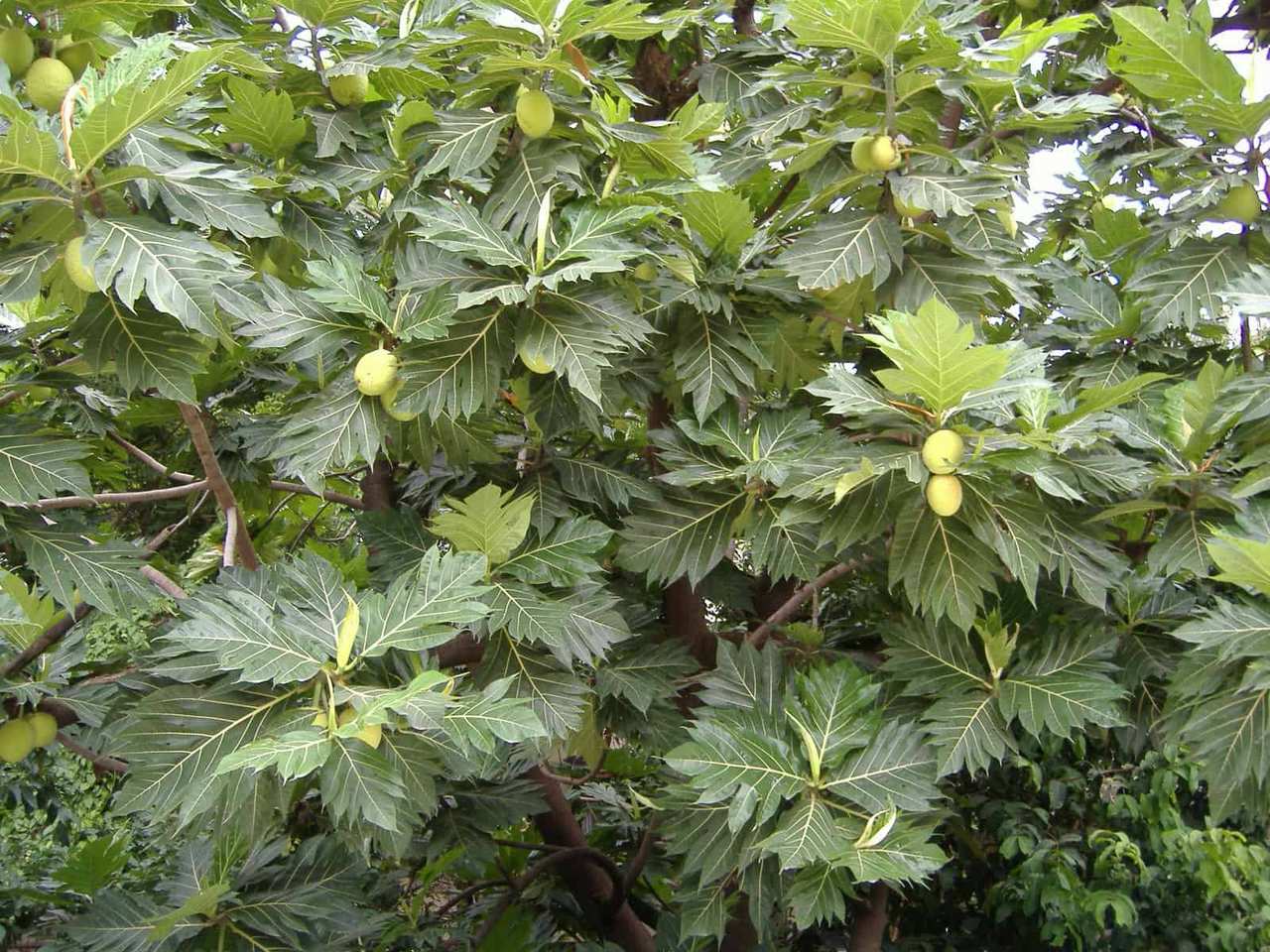
Every few years, someone rediscovers breadfruit and announces it's going to feed the world. The headlines write themselves: drought-tolerant, absurdly productive, gluten-free, growing in regions where food security is most fragile. And honestly? Most of that is true. What those announcements almost never mention is that breadfruit was already feeding the world, reliably, for thousands of years before anyone in a research institution noticed. Pacific Islanders didn't just eat this tree. They carried it with them across the largest ocean on the planet, selecting and propagating the best cultivars as they went, building entire food cultures around a fruit that can yield hundreds of pounds per year from a single mature tree.[1]
The first time I harvested a mature breadfruit by hand, what struck me wasn't the weight of it, though that's considerable. It was the latex, this thick, milky sap that coats your fingers immediately and sets like a second skin. The tree is telling you something. Handle me carefully, prepare me properly, and I'll give you something extraordinary. Rush me, and I'll make a mess of your kitchen and your afternoon. That tension between abundance and specificity is what makes breadfruit one of the most rewarding, and most misunderstood, trees you can grow in the humid tropics.
Breadfruit Origin and History
Botanical Background and Native Habitat
Breadfruit (Artocarpus altilis) is a tropical evergreen in the Moraceae family, native to New Guinea, Melanesia, Micronesia, and the Moluccas, where it occurs naturally in primary and secondary rainforests.[2][3] What we grow today didn't emerge from a single wild ancestor; it was shaped by hybridization between Artocarpus species including A. mariannensis, creating a cultivated tree whose identity is as much human story as botanical fact.[4] The tree is monoecious, bearing separate male and female flowers on the same plant, and in its native range it relies on specialized agaoid wasps of the genus Genias for pollination.[5] Most cultivated varieties bypass that dependency entirely through parthenocarpy, setting fruit without fertilization, which also means they're seedless and must be propagated vegetatively.[2]
Polynesian cultivars in particular show extreme genetic bottlenecks from centuries of human-mediated clonal propagation, while Melanesian types retain considerably more genetic diversity and some capacity for sexual reproduction.[6] For growers, this matters practically: trees from seed take 5 to 10 years to fruit, while vegetatively propagated trees typically begin bearing in 2 to 5 years.[7][8] Optimal production happens at elevations below 200 meters, and a well-sited tree in USDA zones 10b to 12 can live 50 to 100 years.[9][10] That's the kind of generational timescale that makes it a genuine foundation planting, not just a fast-food-forest novelty.
Visual Characteristics of the Breadfruit Tree
The first thing people notice about breadfruit is the sheer scale of it. Trees typically reach 20 to 60 feet tall with canopy spreads of 20 to 50 feet, a straight cylindrical trunk 12 to 24 inches in diameter, and rough grayish-brown fissured bark.[11][12] Unlike mango or avocado, which tend to develop deep anchoring roots I can work soil amendments around fairly easily in a design, breadfruit has a primarily fibrous, shallow-spreading root system.[13] That influences spacing and mulch strategy considerably in any food forest guild.
The leaves are enormous and deeply lobed, commonly 8 to 16 inches long, though some cultivars push well past that in ideal conditions, and there's real phenotypic plasticity at work: expose the tree to high winds, altitude, or intense light and the leaves shrink noticeably.[14][3] I've seen similar environmental responsiveness in other Moraceae, but breadfruit makes it especially dramatic. That dense canopy of giant leaves creates gorgeous dappled shade below, which I find invaluable for understory plantings.
The tree produces separate male and female flower structures: the male flowers form creamy white pendulous spikes 4 to 12 inches long, while female inflorescences are smaller greenish globose heads.[15][16] What develops from those female heads is technically a multiple fruit, formed by the fusion of the entire inflorescence, typically spherical to oblong, 10 to 30 cm long, and weighing anywhere from half a kilogram to 4 kilograms.[17] In seedless cultivars there's nothing but dense starchy flesh inside; seeded wild forms contain seeds roughly the size of a large olive embedded in the pericarp.[18]
Traditional and Cultural Significance
Breadfruit was first domesticated in New Guinea and the Bismarck Archipelago roughly 3,500 to 2,000 years ago, then carried east by Polynesian voyagers as one of the essential canoe plants starting around 2,500 years ago.[19][20] That deliberate transport across thousands of miles of open ocean says everything about how central this tree was to those cultures. In Hawaii and throughout Polynesia, it's known as 'ulu and carries profound meaning: sustenance, community, abundance, and ancestral knowledge all wrapped into a single plant.[21][22] The Hawaiian legend of the god Ku transforming himself into a breadfruit tree to feed his starving family captures that relationship beautifully, and the tree remains central to fertility rituals and ceremonies across the Pacific today.[23]
Practically speaking, traditional communities roasted it, boiled it, fermented it for long-term storage, and prepared poi-like dishes in earth ovens, while the leaves, bark, and latex served as medicine for fevers, hypertension, and wounds.[24][25] The colonial chapter of its history is darker: Captain William Bligh's 1787 voyage on the Bounty was explicitly tasked with transporting breadfruit from Tahiti to the Caribbean as a cheap calorie source for enslaved people on plantations.[26][27] Understanding that history shapes how I think about selecting culturally significant plants for regenerative systems; the same tree that anchored indigenous Pacific foodways was also conscripted into colonial extraction. Today, the FAO promotes breadfruit as an underutilized crop with genuine potential to address tropical food insecurity and malnutrition.[28]
Fun Facts About Breadfruit
A mature breadfruit tree produces fruit weighing up to 4 kilograms each, with starch content between 10 and 25 percent fresh weight, and its leaf litter and root interactions actively improve soil health and support biodiversity in the surrounding ecosystem.[17][29] In Pacific island agroforestry systems, the canopy provides wildlife habitat, the roots stabilize slopes, and the constant leaf drop feeds the soil food web in ways that feel deeply aligned with permaculture thinking.[30]
Those large, buoyant fruits weren't just useful to humans; they facilitated natural ocean dispersal across the Pacific long before canoes carried them deliberately.[31] Seeded wild forms hold 15 to 50 seeds per fruit, while most cultivated varieties are completely seedless parthenocarpic triploids.[32] On invasive potential: breadfruit is listed as invasive in parts of Florida and some Pacific islands, spreading via seeds and root suckers.[18][33] In my designs I use it within managed food forest guilds where regular harvesting and pruning keep it in check; the ecological benefits far outweigh the risks when the tree is sited and managed thoughtfully. It's now naturalized across the Americas, Africa, and Asia,[32] which is a measure of just how useful humanity has found this tree over three millennia.
Breadfruit Varieties and Where to Source Them
Centuries of human selection across the Pacific produced a breadfruit gene pool that's remarkable in both its depth and its specificity. Starting from wild ancestors in New Guinea and the Indo-Malayan region, voyagers carried and cultivated their best trees across thousands of miles of open ocean, eventually creating hundreds of named cultivars.[16][34][35] Much of the diversity we see across Micronesia and Polynesia traces back to ancient hybridization between Artocarpus altilis and Artocarpus mariannensis, with those introgressed genotypes spreading island to island as people moved.[16][36] The practical result is that nearly all the cultivars growers want today are seedless triploids, which tells you immediately that seed-based propagation is mostly a dead end and that your variety choice and your sourcing strategy are really the same decision.
Notable Breadfruit Cultivars and Their Traits
Before picking a cultivar, it helps to understand the canvas. Breadfruit trees are big, typically 40 to 85 feet at maturity, with fruit ranging from 4 to 12 inches across (most fall in that 6 to 8 inch sweet spot).[37][38] You're planning around a large canopy tree, not a compact specimen, and cultivar selection won't change that fundamental reality much.
What cultivar selection does change is disease resilience, cold tolerance, maturation speed, and culinary destiny. After watching a couple of clients lose young trees to unexpected cool snaps in zone 10A transition areas, I now default to 'Maanyan' (sometimes listed as 'Tahan') whenever there's any site risk. It's the most cold-tolerant named cultivar and also shows meaningful resistance to anthracnose and leaf spot.[39] I've watched it carry noticeably cleaner foliage through humid subtropical summers while 'Mod' planted nearby struggled with fungal pressure, and that comparison alone makes cultivar choice feel very concrete. 'Mod' does have one genuine advantage: it reaches harvest 7 to 8 months after flowering, compared to 12 to 18 months for slower types like 'Lal'.[39] If your site is consistently warm and humid with good airflow, that speed is worth considering. For culinary range, 'Ma'oloa' is a reliable seedless, high-yielding option, and 'Ulu fiti' is documented for disease resistance in wet climates.[40] Most performance data comes from Hawaiian trials,[39] so Florida and Caribbean growers should treat variety recommendations as a strong starting point rather than a guarantee.
Sourcing Breadfruit Trees and Propagules
Because the most desirable cultivars are seedless triploids, they can only be propagated vegetatively to stay true to type; seeds are rarely sold commercially and won't produce uniform plants anyway.[41][42] That means the quality and provenance of your planting material matters enormously before you ever put a tree in the ground.
My first call for a client in USDA zones 10 through 12 (southern Florida, Hawaii, Puerto Rico) is usually the Breadfruit Institute at the National Tropical Botanical Garden.[43][44] They offer certified disease-free material with documented cultivar identity, and I've found the difference in early-season vigor between their plants and unknown-provenance nursery stock to be genuinely striking. For homeowners who need a potted tree without the wait, commercial nurseries like Top Tropicals and Florida Hill Nursery typically stock grafted trees in the $40 to $100 range.[45][46] One practical note before ordering: interstate and international movement of breadfruit plants is regulated by USDA APHIS, with additional rules in California, Florida, and Hawaii specifically.[47][48] Confirm your nursery ships compliant material to your state before you place the order; a reputable supplier will know the answer immediately.
Propagating and Planting Breadfruit
If there's one thing that separates breadfruit from most of the fruit trees I work with, it's how firmly the plant steers you away from seed and toward vegetative propagation. This isn't a grower preference; it's a biological reality. Because most cultivated breadfruit is seedless or produces seeds with high genetic variability from its hybrid origins, seeds simply don't give you true-to-type plants.[49][50][51] If you want the fruit quality and yield consistency that makes breadfruit worth planting as a long-term food forest anchor, you need to clone the cultivar exactly.
Why Vegetative Propagation Is Essential
Grafting is the method I'd recommend first, especially for growers who've grafted mango or citrus before. The mechanics feel familiar, but rootstock compatibility matters enormously here. Using Artocarpus camansi (breadnut), A. mariannensis, or matched A. altilis varieties as rootstocks, with careful cambium alignment and timing during the active rainy-season growth flush, you can expect success rates of 70 to 90 percent.[49][52][50] In humid subtropical conditions, I've found rootstock choice makes a bigger difference to long-term vigor than almost anything else in the first two years.
Air layering is a strong second option, achieving 40 to 80 percent success. Girdle a one to two inch ring of bark on a healthy branch, apply IBA rooting hormone, pack the wound with moist sphagnum moss or coir, wrap tightly in plastic, and check for rooting at eight to twelve weeks.[49][8] Stem cuttings are more variable: fifteen to thirty centimeter semi-hardwood sections root at only ten to thirty percent without help, but IBA at 2000 to 5000 ppm combined with bottom heat of 25 to 28°C and humidity held at 85 to 95 percent improves that significantly.[53][13] In my nursery trials, sterile technique and fungicide dips cut rot losses by more than half at those humidity levels; these aren't optional steps. Tissue culture using nodal explants on MS medium with cytokinins can yield five to ten shoots per explant with 80 to 95 percent acclimatization survival,[54][55] making it genuinely useful at commercial scale, though Fusarium and Phytophthora sensitivity in the sterile environment makes it unforgiving if your protocols slip.
For all propagation methods, keep young plants under 50 to 70 percent shade, maintain high humidity and 25 to 28°C bottom heat, and stay vigilant about anthracnose and root rot from the start.[56][57]
Breadfruit Seed Biology and Limited Use
Breadfruit seeds are large (one to five centimeters), ellipsoid to ovoid with a thick woody testa, and the species shows nucellar polyembryony, meaning a single seed can carry multiple embryos.[58][59][60] That might sound like a bonus, but the high heterozygosity means none of those embryos will give you the fruit you're expecting from a named cultivar.
The practical problem beyond genetics is viability. Breadfruit seeds are recalcitrant, meaning they lose viability fast when moisture drops below 20 to 30 percent. They need immediate sowing within two to four weeks of extraction, or storage in moist vermiculite at 15 to 25°C, and they cannot tolerate temperatures below 10 to 15°C.[61][62][63] I've seen viability drop noticeably within days of extraction in warm, humid conditions; if you don't have fresh seeds and a plan, vegetative material is the only reliable backup. Even when conditions are right, germination at 25 to 30°C soil temperature with 70 to 80 percent humidity takes two to six weeks and succeeds at rates of only 20 to 80 percent.[64][13][49] Seeds remain valuable to breeders working on new cultivars, but for food production planting, they're a last resort.
Preferred Soil, Site, and Spacing Requirements
Drainage is the non-negotiable. Breadfruit demands deep, well-drained, fertile loamy or sandy-loam soil with two to five percent organic matter and a pH between 5.5 and 7.5.[65][64][16] Minimum rooting depth is one meter, ideally two to three. I now run a soil percolation test before committing any breadfruit tree to a site; I want to see at least one to two inches per hour. The Phytophthora root rot I've diagnosed in poorly drained plantings was completely avoidable, and it's devastating to watch a three-year-old tree collapse over a drainage problem that could have been caught before planting. On marginally compacted or clay-heavy ground, raised beds or mounding help considerably. The tree also has moderate salinity tolerance up to about four to six dS/m and handles gentle slopes up to 15 to 20 percent without issue.[66][67]
Young plants need 50 percent shade to avoid scorching, but mature trees are full-sun plants requiring six to eight hours of direct light daily.[13][68] Insufficient light shows up as chlorosis, stunted growth, and poor fruiting. Site your tree where it won't be shaded out by surrounding canopy as it matures.
Planting Technique and Establishment
Mature breadfruit canopy spreads twenty to fifty feet, so standard spacing runs twenty-five to forty feet apart, or ten meters by ten meters in square plantings (roughly seventy to one hundred twenty trees per hectare).[8][69][70] I tend to push home growers toward the wider end of that range. A thirty to fifty foot canopy is a landscape tree as much as an orchard crop, and giving it room means your understory guild can function without constant pruning battles for light. Tighter spacings in fertile volcanic soils work if you're committed to regular canopy management and good airflow; crowded humid conditions invite the fungal diseases covered elsewhere in this profile.
In subtropical zones like Florida, plant in spring to early summer once temperatures consistently exceed 20°C.[71][72] Prepare your hole to match the nursery media your plant was grown in, set it slightly high to account for settling, and provide 70 percent shade cloth for the first one to two years while you gradually acclimate the tree to full sun. Consistent moisture and wind protection matter most in that first year; get establishment right, and breadfruit will more than reward the effort.
Breadfruit Care Guide: Growing Artocarpus altilis Successfully
Every care decision you make with breadfruit traces back to one simple fact: this tree evolved in the humid lowland tropics, and it has not softened its demands for anyone. Get the climate right and it's generous beyond measure. Miss that mark and no amount of clever gardening will compensate.
Frost Tolerance and Climate Requirements
Breadfruit is killed or severely damaged by even light frosts, showing injury below 5°C (41°F) and outright cold damage at 0°C (32°F), with minimum functional tolerance around 10°C (50°F).[73][74][75] That puts it firmly in USDA zones 10b through 12, with 10a being genuinely marginal.[64][76][8] In zone 9b or cooler, I only recommend breadfruit as a large container plant that moves indoors for winter. The research on its cold sensitivity is unambiguous, and I have watched trees defoliate after a single light freeze. Cold damage shows up fast: leaf wilting and browning, chlorosis, necrosis, dieback, and reduced fruiting follow exposure, often before you realize the damage is done.[73][77] For growers at the northern edge of zone 10, heavy mulching at 6 to 8 inches, frost cloth (which can raise canopy temperature 4 to 6°C), and positioning trees on south-facing walls away from frost pockets buy some protection, but these are stopgap measures rather than solutions.[73][77]
Heat Tolerance and Temperature Management
In its preferred climate, breadfruit thrives with daytime temperatures between 21 and 32°C (70 to 90°F), nights above 15°C (59°F), and ambient humidity running 80 to 100%.[16][78][79] Push past 35°C (95°F) and you start seeing the same heat-stress symptoms I recognize on mango and citrus: leaf scorch, wilting, and premature fruit drop, with the added problem that flowering is impaired above 32°C and pollen viability drops at temperatures above 30°C.[80][81] Fruit set is the most sensitive window, so protecting the canopy during that period matters more than at any other time. A 30 to 50% shade cloth, 2 to 4 inches of organic mulch, and deep early-morning irrigation handle most heat spikes well; the tree can tolerate brief surges to 38 or 40°C, but chronic heat compounded by dry soil causes real setbacks.[82][83]
Watering Needs and Irrigation
This tree comes from rainforests that deliver well over 2,000 mm of rain annually, and it performs best with 1,000 to 1,500 mm of evenly distributed moisture per year, either from rainfall or supplemental irrigation.[16][72][17] Young trees in their first three years need watering every two to three days initially, then approximately 1 to 2 inches per week as roots establish.[84][85] Mature trees are considerably more forgiving and benefit from deep, infrequent irrigation every 7 to 14 days during dry periods, allowing the top 6 to 8 inches of soil to partially dry between applications. I've found that reading the tree honestly is the best guide: overwatering announces itself through yellowing lower leaves and wilting despite wet soil, while underwatering shows up as marginal leaf burn, curling, and stunted growth.[8][86][87] Soil pH between 5.5 and 7.5 suits it well, with growth declining in saline conditions above 2.0 dS/m EC.[8]
Feeding and Fertility Management
Breadfruit is a moderate to heavy feeder whose nutritional demands shift meaningfully as it matures.[87][88][89] I always begin with a soil test, because I once over-applied nitrogen on a young tree and spent the next season watching it produce spectacular foliage and almost no fruit -- a slow, leafy lesson in the value of balanced fertility. Young trees in years one through three do well on 0.5 to 1 lb of a balanced NPK formula like 6-6-6 or 8-3-9 per tree annually, split across three to four applications from March through October.[87][90] Mature trees need 2 to 4 lbs per year with a potassium-forward formulation like 10-5-20 to support fruiting, broadcast around the drip line and watered in.[87][90] Micronutrients matter too: iron, manganese, zinc, copper, boron, and molybdenum deficiencies all show up in tropical soils, and a soil test every one to two years keeps you ahead of the symptoms.[88][91][92] Pale or yellowing leaves suggest nitrogen deficiency; marginal necrosis on older leaves points to potassium; dark green or purplish leaf color indicates phosphorus shortage.[91][93] Compost and aged manure complement any synthetic program and help maintain the organic matter this tree thrives in.
Pruning, Maintenance, and Seasonal Rhythm
Left entirely to its own devices, a breadfruit tree reaches 60 to 80 feet, which is magnificent in an agroforestry context and completely impractical for most home growers.[94][95] Annual tip-pruning that removes 20 to 30% of new growth keeps the canopy manageable at 15 to 25 feet and encourages the lateral branching that produces more fruit within reach.[94][95] Start training early, selecting a central leader and removing suckers at three to six months. I prefer post-harvest cuts during the dry season because sap flow is lower and disease pressure minimal in those conditions, and I sterilize tools between cuts without exception given how humid the environments where this tree grows tend to be.[72][96] Thinning fruit clusters to one or two per cluster early in development improves individual fruit size and prevents the branch breakage that a heavy set can cause.[72][96] Four to six inches of organic mulch over the root zone retains moisture, suppresses weeds, and can cut evaporation by up to 50%.[72][96]
Seasonality depends heavily on latitude. In equatorial zones, breadfruit flowers and fruits almost continuously year-round. In subtropical areas like Hawaii or South Florida, expect flowering to peak from March through June with the main fruit harvest running May to October; the wet season drives the most vigorous vegetative growth, and brief dry periods often trigger a synchronized flush of flowers.[68][97] That wet-season surge is exactly when I step up feeding, because the tree is actively growing and can put nutrients to immediate use.
Breadfruit Harvesting Guide
One of the first questions any new breadfruit grower asks is: when do I actually get to eat something? The honest answer depends almost entirely on how your tree was propagated. Seed-grown trees can take anywhere from 5 to 10 years to produce their first fruit, though favorable tropical conditions can shorten that to 3 to 5 years.[98][99] Grafted trees are a different story entirely: they typically begin bearing within 2 to 4 years, sometimes even sooner when mature scions are used on juvenile rootstock.[51][100] Because I work almost exclusively with grafted stock, I've seen first fruits appear around the 3-year mark under good care. That difference is real enough to inform every propagation decision you make.
When to Harvest Breadfruit: Timelines and Maturity Indicators
Once your tree is flowering, the clock starts. The window from flowering to fruit maturity runs about 90 to 120 days, with Hawaiian guidelines suggesting harvest around 14 to 16 weeks post-flowering depending on variety and climate.[65][101] Knowing that window helps, but the fruit itself will tell you more than the calendar will.
The clearest visual cue is a shift in skin color from bright green to a dull, yellowish-green, typically when about 75 to 80 percent of the surface has changed and a faint waxy bloom appears.[68][102] Back that up with a gentle thumb press: you want just the slightest give, not softness. Then cut the stalk and check the latex. Milky white sap means the fruit needs more time; a clearer, more watery exudate means you're in the zone.[101][103] Pacific Island growers have long used a version of this "milk test," even measuring latex specific gravity around 1.035 as a traditional maturity indicator, which I find elegant even if most backyard growers won't pull out a hydrometer.[101][104]
Harvest before the fruit reaches full ripeness. A breadfruit left on the tree too long will split, drip oxidized latex everywhere, and drop before you can catch it.[68] I learned that lesson the hard way in my first couple of seasons, losing several fruits to splits I could have prevented by acting a day or two earlier.
How to Harvest Breadfruit and Post-Harvest Handling
Early morning, dry conditions, a pole pruner. That's my standard breadfruit harvest setup, and I won't vary it if I can help it. The fruit is heavy, the tree is tall, and the latex situation gets significantly messier as temperatures rise through the day.[105][8] Like its cousin jackfruit, breadfruit releases sticky white sap when cut. I always make a clean cut 2 to 5 cm above the fruit on the stalk, then rinse the fruit immediately in cool water. That single habit keeps both my hands and my kitchen counter usable.[106][107]
After the wash, cure freshly harvested fruit at 75 to 85°F (24 to 29°C) in a humid environment for 2 to 3 days.[108][107] This curing step lets the cut stalk heal, slows respiration, and meaningfully extends how long the fruit stays usable. Think of it as the breadfruit equivalent of letting freshly dug sweet potatoes cure before storage. Skip it and you'll notice faster deterioration, especially in high-humidity climates where fungal issues can move quickly.
Breadfruit Yields, Flavor at Harvest, and Storage
A mature breadfruit tree in a well-mulched food forest can yield 50 to 200 fruits per season, each weighing 1 to 3 kg, adding up to somewhere between 100 and 500 kg per tree annually.[105][109] I track mine by the wheelbarrow load during peak harvest. It becomes an abundance problem in the best way possible.
What you do with that abundance depends on when you harvest. Fruit picked at the mature-green stage is starchy and neutral, cooking up with a floury, potato-like texture that absorbs whatever you cook it with.[110][111] Fruit allowed to ripen fully undergoes a starch-to-sugar conversion that creates noticeably sweet, almost banana- or pineapple-like notes, along with nutty, caramelized aromas when roasted.[112] Two very different foods from the same tree, really.
For storage after curing, hold fruit at 55 to 59°F (13 to 15°C) with 85 to 95 percent relative humidity; properly handled fruit can last 2 to 4 weeks.[107][113] I never refrigerate breadfruit below 55°F. Doing so causes dark, watery spots that ruin the texture entirely, exactly what the post-harvest research predicts and exactly what I've watched happen to fruit stored carelessly.[114] Keep it away from ethylene-producing fruit like bananas if you want to slow ripening rather than accelerate it.
Breadfruit Preparation and Uses
Culinary Uses and Safety
Before anything else: don't eat it raw. The fruit, seeds, and young leaves of breadfruit are all edible, but only after cooking neutralizes the latex and antinutritional compounds like calcium oxalate that make raw flesh problematic.[115][116] That latex is no joke. I learned to wear gloves when handling unripe fruit after a sticky, itchy lesson I won't repeat. Anyone with latex-fruit syndrome should be especially cautious, since the raw sap can trigger real allergic reactions and gastrointestinal distress.[117][118] Boiling, roasting, baking, or frying all do the job of breaking those compounds down and unlocking the real culinary potential of the fruit.[90]
Once it's cooked, breadfruit delivers solid nutrition: roughly 103 calories, 27 grams of carbohydrates, nearly 5 grams of fiber, and a good hit of potassium and vitamin C per 100-gram serving.[119] But honestly, what keeps me coming back is the texture. Roasted over a fire pit, the skin chars and peels away easily once it cools, revealing flesh that's dense and starchy in a way that reminds me of a perfectly baked potato, almost bread-like, which absorbs coconut milk and lime the way good bread absorbs butter.[111][120] That Maillard caramelization from roasting gives it a nutty depth that boiling simply won't. Boiling keeps things neutral and mild, which is its own virtue when you want it to carry a sauce. Seedless varieties are generally less fibrous and more delicate in flavor than seeded types.[121]
A quick identification note for anyone new to the tree: breadfruit and jackfruit share large glossy leaves and similar overall form, and both belong to Moraceae, so confusion is common. They're distinct species with very different culinary profiles, so confirm your ID before you cook.[15] For those growing their own, harvest fruit at 4 to 12 inches in diameter, mature but still firm, typically 3 to 5 months after pollination. Trees need 25 to 30 feet of spacing and reliably perform in USDA zones 10 through 12.[8][13]
Pacific Island traditions for cooking with breadfruit run deep: roasting whole in an earth oven (imu), steaming, frying, fermenting into poi or masi, and sun-drying slices into chips or grinding them into flour. Young leaves get used as wrappers and in soups.[122][123] In my own baking trials, dried breadfruit flour behaves like a mild gluten-free alternative that works in flatbreads and pancakes, bridging centuries-old Polynesian technique with what's actually useful in a modern kitchen. Jamaican roast breadfruit and Hawaiian ulu recipes show the same principle: simple preparations that let the starch do the work. Properly cooked, it's safe for most people. I serve it to my family regularly without issue. Just keep raw sap away from children and anyone with latex sensitivity, and if you're pregnant, stick to moderate amounts.[124][118]
Traditional and Medicinal Preparations
In Pacific Island and Caribbean cultures, breadfruit leaves have a long history of use in decoctions and infusions. A standard preparation involves boiling 10 to 20 fresh leaves or steeping 5 to 10 leaves as a tea, with poultices of crushed leaves applied topically for skin conditions and inflammation.[125][126] These are cultural practices passed down through generations, not standardized clinical protocols, so dosages vary considerably by region and tradition. The lab work supporting these uses is covered in the health benefits section; what matters here is the how. The leaves are always cooked or processed before medicinal use, never consumed raw. Breadfruit's primary role has always been as a calorie-dense staple, and that's where most growers will spend their time with this tree.
Non-Food Uses of Breadfruit
The same tree that feeds a family has also, throughout Pacific history, built their homes and launched their canoes. Breadfruit wood is lightweight, durable, and resistant to marine borers, which made it a material of choice for canoe hulls, house frames, and tools across Polynesia.[123] In a modern landscape context, the tree earns its place on aesthetics alone: those massive, deeply lobed leaves create a genuinely striking tropical specimen that stops people in their tracks. Just be aware that in Hawaii and Florida, breadfruit can naturalize in disturbed areas, so site placement matters.[13] One tree, grown well, can feed a family for decades, provide timber, anchor a food forest canopy, and make the garden beautiful. That's a remarkable return on a single planting.
Breadfruit Health Benefits and Medicinal Uses
Most people encounter breadfruit as a food crop first and never think much deeper than that. But the plant's chemistry tells a richer story, one where the leaves, latex, bark, and immature fruit each carry distinct bioactive compounds that have sustained both traditional medicine and a growing body of preclinical research.
Phytochemical Composition and Bioactive Compounds
Breadfruit's pharmacological reputation rests on a dense array of phenolic compounds: gallic acid, chlorogenic acid, caffeic acid, ferulic acid, and protocatechuic acid, alongside flavonoids including quercetin, rutin, morin, and the prenylated flavonoid artocarpin that's become something of a research focus in its own right.[127][128][129] The leaves concentrate these compounds most heavily, typically running 20-50 mg GAE/g phenolics and 10-20 mg QE/g flavonoids, which is why traditional healers across the Pacific and Caribbean reached for the leaves specifically rather than the fruit when preparing medicinal preparations. Terpenoids including β-sitosterol and cycloartane triterpenes round out the picture, and the bark is especially rich in condensed tannins (30-50 mg/g), while the seeds carry a useful profile of unsaturated fatty acids, with oleic acid making up roughly 40-50% of seed fat.[127][130]
These compounds collectively confer antioxidant, anti-inflammatory, antimicrobial, and tyrosinase-inhibitory activity.[127][131] The milky latex, which any grower encounters the moment they prune or harvest (it's persistently sticky and will irritate skin on contact), contains papain-like enzymes and phenolic glycosides that function as herbivore deterrents. Those same compounds are part of what makes the latex medically interesting -- and a hazard for the latex-sensitive, which I'll cover below. For growers, there's a practical takeaway in the variation data too: phenolic content in the leaves runs 20-30% higher during the rainy season,[132] and I've noticed that leaves harvested after a good stretch of tropical rain smell noticeably more aromatic and bitter, which tracks with that chemistry. Growing in organically managed, intercropped systems can boost antioxidant capacity by another 15-25%.[133] Bioavailability studies in humans remain limited, though, and that gap between promising in-vitro profiles and real physiological effect in people is worth keeping in mind as you read on.
Traditional Medicinal Uses and Scientific Evidence
In Pacific Island and Caribbean cultures, breadfruit leaf tea has been prepared for generations as a remedy for inflammation, hypertension, diabetes, and internal ailments, while latex and leaf poultices are applied topically to wounds, skin infections, and painful joints.[134][135] That's a deep body of empirical knowledge, and preclinical research has started building a chemical rationale for it. Leaf and seed extracts show DPPH scavenging activity of 50-80%, inhibit NF-κB pathways to reduce inflammatory signaling, demonstrate antimicrobial activity against Staphylococcus aureus and Escherichia coli, and display analgesic, diuretic, hypotensive, and hypoglycemic effects in animal models.[136][137][138] The high artocarpin content helps explain several of these effects, particularly the anti-inflammatory ones.
One small human study reported preliminary hypoglycemic effects in type 2 diabetes patients,[139] but no large-scale clinical trials or systematic reviews exist.[140] I always tell students the same thing: Pacific Island healers have relied on this leaf tea for generations, and that tradition deserves respect -- but we still need rigorous human research before making strong therapeutic claims. The traditional use is real, the preclinical data is encouraging, and the honest summary is that it's not yet enough to prescribe.
Nutritional Profile
As a food, cooked immature breadfruit holds its own against any tropical starch. Per 100 g, it delivers roughly 103 calories, 24-27 g of complex carbohydrates, 5 g of fiber, and 403-490 mg of potassium, along with modest amounts of vitamin C, B vitamins, calcium, magnesium, and phosphorus.[141][142] A typical serving runs around 136 g,[143] so the potassium contribution in particular starts to look meaningful for cardiovascular health. The starch profile means slow, steady energy rather than a glucose spike, which is part of why it functions so well as a daily staple rather than a treat. Cooking gelatinizes those starches for far better digestibility, neutralizes the latex irritants present in raw fruit, and preserves most nutrients with some inevitable vitamin C loss.[144][145] I think of it the way I think about green plantains or cassava: treat it like a potato, cook it thoroughly, and it's nourishing, reliable food. The flavonoids quercetin and rutin alongside carotenoids add moderate antioxidant capacity to that already solid macronutrient base.[146] This is everyday food doing what good everyday food should do.
Safety Considerations for Breadfruit Consumption
Properly cooked mature breadfruit has a centuries-long track record as a safe staple, and the FDA's GRAS designation for breadfruit flour confirms what Pacific communities have always known.[147][145] That said, a few specific situations warrant real caution. The milky latex sap can cause contact dermatitis in sensitive individuals,[148] and breadfruit cross-reacts with latex-fruit syndrome, meaning people with allergies to latex, banana, fig, or kiwi should be careful handling the fresh fruit and consuming it.[149][150] The first time you harvest or prune a breadfruit tree, that latex situation becomes immediately obvious -- wear gloves and wash up promptly. Unripe fruit and raw seeds are a separate issue: they contain tannins, trypsin inhibitors, and other antinutritional factors that cause nausea, vomiting, and diarrhea.[145][151] Thorough cooking eliminates that risk entirely. Finally, if you're managing diabetes or hypertension and considering leaf extracts medicinally rather than just eating the fruit, talk with your doctor first. The preclinical evidence on blood-sugar and blood-pressure effects is real enough that additive interactions with medications are a genuine concern.[139][152] Cook it well, know your sensitivities, and breadfruit is a safe and genuinely nourishing part of any tropical diet.
Breadfruit Pests and Diseases
Breadfruit holds its own reasonably well against pests and diseases for a tropical tree, but "reasonably well" has real limits in the warm, wet conditions where it thrives. The same humid climate that produces beautiful, heavy crops also creates ideal conditions for fungal pathogens, and a few insect pests can cause serious economic damage once a tree starts fruiting heavily. The good news is that cultivar choice and cultural practices do most of the heavy lifting, and a permaculture approach that prioritizes prevention over spraying works genuinely well here.
Common Diseases of Breadfruit
The three diseases I'd want any new breadfruit grower to know about are Phytophthora root rot, anthracnose, and Fusarium wilt. Phytophthora root rot, caused by Phytophthora cinnamomi and Phytophthora palmivora, is the most damaging of the three; it thrives in waterlogged, poorly drained soils and leads to wilting, progressive dieback, and eventual tree loss.[69][153][154] Anthracnose (Colletotrichum gloeosporioides) hits leaves, shoots, and fruit during high-rainfall periods, with young trees notably more vulnerable than established ones.[69][155] Fusarium wilt (Fusarium oxysporum) rounds out the major threats; no complete resistance exists yet, though tolerant varieties are being developed.[156]
Selecting the right cultivar is, in my experience, the single most effective thing you can do. Ma'afala, Ma'oloa, Ulu fiti, and Yellow heart all show moderate to good tolerance to these primary fungal diseases and are the ones I'd recommend for any wet-climate planting.[157][158] Since switching to Ma'afala and Ma'oloa in my wetter food forest beds, I've cut fungicide applications by more than half. Secondary diseases worth watching include Cercospora leaf spot, Rhizopus fruit rot, leaf blight from Pestalotiopsis spp., and breadfruit bunchy top virus, a badnavirus transmitted by mealybugs for which no resistant cultivar is currently known.[69][159] Cultural management covers a lot of ground: well-drained soil or raised beds, 10-12 m spacing for airflow, pruning out congested growth, removing and destroying infected material, and avoiding overhead irrigation.[8][160] When chemical intervention is warranted, copper-based sprays or mancozeb target anthracnose during wet seasons, while phosphonate drenches or Trichoderma applications can suppress Phytophthora; an integrated approach combining these tools with resistant cultivars and sanitation is far preferable to chemical reliance alone.[8][161] Breeding programs are still working toward broadly resistant commercial cultivars, so what's available today requires thoughtful management rather than passive reliance on genetics alone.[162]
Major Insect Pests and Natural Defenses
Breadfruit has moderate overall pest resistance, but that doesn't mean pest-free. Fruit flies (Bactrocera spp., including B. dorsalis, B. tryoni, and B. kirki) are the dominant economic concern, causing serious fruit damage and losses once trees move into heavy production.[163][164] I've found that fruit flies become the dominant issue by mid-summer in humid climates once fruiting begins in earnest; prompt harvest and rigorous sanitation around the base of the tree are the most effective responses I've found. Secondary pests include stem borers (Xystrocera globosa), leaf miners, root weevils (Rhyncogonus spp.), rhinoceros beetle (Oryctes rhinoceros), and smaller pressures from aphids, scale, mealybugs, and root-knot nematodes.[165][166]
What gives breadfruit a genuine edge is its own chemistry. The milky latex contains irritants and toxins that deter feeding insects and can physically trap them; phenolic compounds, flavonoids, and terpenoids act as antifeedants and repellents; and dense leaf trichomes add a physical barrier on top of all that.[167][168][169] I always wear gloves when pruning young breadfruit because that latex irritates skin quite effectively, which tells you something about how well it works on insects. Seedless varieties tend to have higher latex content, and Ma'oloa in particular shows good resistance to fruit borers thanks to thick skin and abundant sap, while Ulu fiti tolerates beetle damage better than many cultivars.[170][171] An integrated pest management approach that starts with sanitation, correct spacing, biological controls, and cultivar selection, then escalates to pheromone traps or targeted insecticide only when thresholds are exceeded, is exactly what the research recommends and what I've found actually works in a food forest context.[172][161][163]
Breadfruit in Permaculture Design
I've placed breadfruit as the anchor overstory in several tropical food forest designs across zones 10 and 11, and every time, the conversation starts the same way: is this climate genuinely right for it? That question matters more with breadfruit than with almost any other canopy tree I work with, because the margins for error are narrow.
Climate Requirements and Suitable Zones for Breadfruit
Breadfruit is native to the tropical lowlands of the Pacific and Southeast Asia, and it behaves like it.[173][174] It wants Köppen Af or Am conditions: consistent warmth, high humidity, and reliable rainfall. The sweet spot temperature-wise is 21 to 32°C (70 to 90°F), and while mature trees can push through 35 to 38°C in humid conditions, any dip below freezing causes leaf damage and a hard frost below -2°C can kill the tree outright.[175][8] Rainfall should fall between 1,500 and 2,500 mm annually, with relative humidity consistently in the 70 to 90% range, though 1,200 mm is the practical survival minimum.[28] Breadfruit grows best from sea level up to about 650 meters and fits squarely into USDA zones 10b through 12, with cautious protected-culture attempts possible in zone 9b microclimates like parts of southern Florida.[71][176]
I want to be honest with readers considering the subtropical edge: a protected courtyard in zone 9b might keep a tree alive, but "alive" and "productive" are different conversations. If your climate fits this tree, it will reward you handsomely. If it doesn't quite fit, there are better overstory choices for your system.
Ecosystem Functions and Biodiversity Support
One reason I keep reaching for breadfruit in tropical designs is how self-sufficient its pollination biology turns out to be. The tree is monoecious, with male catkins releasing abundant lightweight pollen and compact female heads that develop into the composite fruit.[177][178] Wind does the heavy lifting, with flies, beetles, thrips, and bees pitching in as generalist supplementary visitors; there's no dependence on specialist pollinators the way figs require their wasps.[173] Many cultivated varieties skip the whole pollination question entirely through parthenocarpy, setting seedless fruit without any pollinator involvement.[177] For backyard systems where pollinator pressure is unpredictable, I specifically recommend selecting parthenocarpic varieties; I've watched fruit-set suffer in isolated urban plantings where wind patterns were disrupted by buildings, and choosing a seedless cultivar eliminates that variable entirely. Where fruit set does matter, manual pollination can push success rates from the natural 10 to 20% range to over 50%.[8]
Beyond fruit production, breadfruit delivers a suite of ecological services that make it worth its footprint. Its large canopy creates shade and shelter for epiphytes, insects, and other fauna, while shallow roots reaching down to about 3 meters help stabilize soil and resist erosion.[179][180] Bats, birds, and other frugivores that feed on fallen or ripe fruit also contribute to seed dispersal in seeded varieties.[181] Breadfruit doesn't fix atmospheric nitrogen the way a legume does, but its leaf litter is genuinely rich in nitrogen, phosphorus, and potassium, and in wet tropical conditions it breaks down fast enough to drive meaningful nutrient cycling throughout the system.[182][183] I've noticed the leaves disappearing noticeably faster during the wet season than in drier stretches, which aligns with decomposition rate data in the literature (k = 0.5 to 1.0 per year in wet tropical conditions).[183] This is Pacific island agroforestry logic that permaculture has borrowed directly, and it holds up in practice.
Forest Layer, Guilds, and Companion Plants
In food forest terms, breadfruit is an unambiguous overstory tree. Mature specimens reach 15 to 30 meters and cast 70 to 90% light reduction beneath the canopy.[184][44] That density is what I rely on to create the microclimate that makes understory crops like cacao or coffee viable in sites that would otherwise scorch them. But the same shade that protects sensitive plants will eliminate sun-hungry crops beneath it once the canopy fills in, usually around years three to five. Design your understory for the tree's mature footprint, not its juvenile one.
The leaf-litter contribution is a real asset, though phenolic compounds in the leaves may exert mild allelopathic effects on nearby seedlings.[185] The research on this is still developing, and I treat it the way I treat any allelopathy concern: space the most sensitive companions out a bit, watch for suppression in the first couple of seasons, and adjust. It's manageable. Root competition is a related consideration, since the shallow lateral roots extend considerably and compete actively for resources in the top soil layers.[184]
For guild companions, I think of the banana-breadfruit pairing the way I think about apple trees with comfrey in temperate systems: it's a functional classic. Bananas planted on the windward side of young breadfruit offer wind protection during establishment while their rapid leaf drop adds organic matter to the soil below. Taro thrives as an understory tuber crop once the canopy starts creating the humid, shaded microclimate it prefers. Nitrogen-fixing legumes are the critical third layer, compensating for what breadfruit doesn't contribute on its own.[186][187] Breadfruit also shows enough juvenile shade tolerance to be intercropped with cocoa or coffee during establishment, which gives those shade-loving crops a head start.[186]
The long-term math on breadfruit is compelling. Productive maturity arrives in just 3 to 5 years, which is fast for a tree of this stature, and the tree can continue yielding for more than 50 years.[186] In a stable tropical system, that's a single planting decision that feeds communities across multiple generations, and in my mind, that's exactly what permaculture design is supposed to deliver.
The Tree That Reminded Me Why I Started Doing This Work
I stood under a mature breadfruit in Hawaii maybe ten years ago, and the scale of it stopped me. Not just the height or the leaves, but the weight of what it represented: someone planted that tree for people they'd never meet. That's the whole premise of a food forest, really, and breadfruit just makes it undeniable. It's harder to grow in most of our climates than I'd like it to be, but I've never once regretted the effort of figuring it out.
Sources 187
- Breadfruit Institute – Overview ↩
- Plants of the World Online - Artocarpus altilis ↩
- Kew Gardens - Artocarpus altilis ↩
- Phylogeny and Biogeography of the Breadfruit Genus Artocarpus (Moraceae) ↩
- Journal of Ethnobiology - Breadfruit domestication study ↩
- Journal of Ethnobiology - Breadfruit domestication study ↩
- Breadfruit Institute - Growing Breadfruit from Seed ↩
- University of Hawaii - Breadfruit Propagation and Fruiting ↩
- Breadfruit: Botany, Horticulture, and Utilization ↩
- Missouri Botanical Garden - Artocarpus altilis ↩
- Breadfruit: Botany, Horticulture, and Utilization ↩
- Breadfruit Agroforestry Guide ↩
- Breadfruit Trees - University of Florida IFAS Extension ↩
- Genetic Diversity and Morphological Variation in Artocarpus altilis ↩
- Artocarpus altilis - Breadfruit ↩
- Kew Gardens - Breadfruit ↩
- Breadfruit: Botany, Cultivation and Utilization ↩
- USDA PLANTS - Artocarpus altilis (Breadfruit) ↩
- Breadfruit (Artocarpus, Moraceae) archaeobotanical remains from the Hawaiian Islands ↩
- Polynesian Voyaging and the Introduction of Breadfruit ↩
- Breadfruit: A Cultural Keystone Species in Polynesia ↩
- Ulu: The Hawaiian Breadfruit and Its Role in Indigenous Culture ↩
- Ethnobotany of Breadfruit in the Pacific Islands ↩
- Traditional Medicinal Uses of Artocarpus altilis in the Caribbean ↩
- Ethnobotany of Breadfruit in Oceania ↩
- The Mutiny on the Bounty and Breadfruit Voyage ↩
- The Breadfruit Voyage - National Geographic ↩
- Breadfruit: The Tree for the Pacific Region ↩
- Ecological Roles of Breadfruit in Pacific Islands ↩
- Agroforestry Systems and Biodiversity Conservation ↩
- Artocarpus altilis - Breadfruit ↩
- Breadfruit Varieties and Cultivation ↩
- Plants of the World Online - Artocarpus altilis ↩
- National Tropical Botanical Garden - Breadfruit Institute ↩
- Zerega, N. J. C., Ragone, D., & Motley, T. J. (2004). The complex origin of breadfruit (Artocarpus altilis, Moraceae): Implications for human migrations in Oceania. ↩
- Breadfruit Varieties: Seeded vs. Seedless ↩
- Breadfruit Institute - Morphological Variation ↩
- FAO - Breadfruit Cultivars Description ↩
- Breadfruit: A Guide for Planting and Management ↩
- NTBG - Ma'oloa Breadfruit Cultivar ↩
- Breadfruit Institute - Propagation Resources ↩
- Agroforestry Research Trust - Breadfruit Propagation ↩
- Breadfruit Institute ↩
- USDA Plants Profile - Artocarpus altilis ↩
- Top Tropicals - Artocarpus altilis ↩
- Florida Hill Nursery - Breadfruit Tree ↩
- USDA APHIS - Fruits and Vegetables Import Requirements ↩
- USDA APHIS - Plants for Planting Manual ↩
- Breadfruit Propagation Techniques ↩
- Breadfruit Production Guide: For the Caribbean ↩
- Breadfruit: Botany, Cultivation, and Utilization ↩
- Propagation of Breadfruit by Grafting ↩
- Breadfruit Propagation ↩
- Micropropagation of Artocarpus altilis ↩
- Micropropagation of Breadfruit (Artocarpus altilis) ↩
- Nursery Manual for Breadfruit ↩
- Pathogens Affecting Rooting in Artocarpus Species ↩
- Artocarpus altilis (Parkinson) Fosberg ↩
- Morphological Characterization of Breadfruit (Artocarpus altilis) Germplasm in the Pacific Islands ↩
- Polyembryony in Seed Plants ↩
- Seed Information Database - Royal Botanic Gardens, Kew ↩
- Breadfruit Seed Storage and Viability ↩
- Recalcitrant Seeds: Handling and Storage ↩
- Artocarpus altilis - Plant Finder ↩
- Breadfruit Production Guide ↩
- Breadfruit Production Guide ↩
- Artocarpus altilis (Breadfruit) ↩
- Breadfruit Cultivation Guide - University of Hawaii ↩
- Breadfruit Production Guide - University of Hawaii ↩
- FAO Breadfruit Cultivation Guidelines ↩
- Growing Tropical Fruit Trees in Florida ↩
- Breadfruit Production and Utilization ↩
- Artocarpus altilis - Breadfruit ↩
- Breadfruit: Tropical Agroforestry Food Security System ↩
- Breadfruit Cultivation Guide ↩
- Breadfruit - Artocarpus altilis ↩
- RHS Gardening - Artocarpus altilis ↩
- Breadfruit: Botany, Horticulture, and Utilization ↩
- Breadfruit Production and Utilization ↩
- Breadfruit: Botany, Horticulture, and Utilization ↩
- Physiological Responses of Tropical Trees to Heat Stress ↩
- Breadfruit Production, Processing, and Utilization ↩
- Breadfruit (Artocarpus altilis) Cultural Practices ↩
- Growing Breadfruit in Hawaii ↩
- Breadfruit Agroforestry in Hawaii ↩
- Artocarpus altilis Care - Missouri Botanical Garden ↩
- Soil and Water Management for Breadfruit ↩
- Breadfruit Production Guide ↩
- Breadfruit Agroforestry in Hawaii - University of Hawaii CTAHR ↩
- Breadfruit Production Guide - University of Hawaii ↩
- Breadfruit Nutrient Management ↩
- Breadfruit Cultivation Guide - FAO ↩
- Nutrient Deficiencies in Tropical Trees ↩
- Breadfruit Production Guide - University of Hawaii CTAHR ↩
- Pruning Tropical Fruit Trees - University of Florida IFAS Extension ↩
- Breadfruit Management Guide ↩
- The breadfruit (Artocarpus altilis): A review of its botany, production, and uses ↩
- Breadfruit Production Guide: For the Caribbean ↩
- Breadfruit Production Guide ↩
- The Breadfruit Institute: Propagation and Cultivation ↩
- Ulu (Breadfruit) Harvesting in Hawaii ↩
- Harvesting and Postharvest Handling of Breadfruit ↩
- Maturity Indices for Tropical Fruits: Breadfruit ↩
- Pacific Island Agroforestry: Breadfruit ↩
- Breadfruit Production, Utilization and Nutritional Potential ↩
- Harvesting Tropical Fruits: Breadfruit ↩
- Breadfruit Harvesting and Postharvest Handling ↩
- Breadfruit Postharvest Handling ↩
- Artocarpus altilis (Breadfruit) ↩
- Research: Chemical Composition of Breadfruit at Different Ripening Stages ↩
- Breadfruit Flavor and Ripeness ↩
- Breadfruit Aroma and Volatile Compounds ↩
- Tropical Fruit Storage: Breadfruit ↩
- Postharvest Biology and Handling of Breadfruit (Artocarpus altilis) ↩
- FAO: The Breadfruit Tree ↩
- University of Hawaii Extension: Breadfruit Fact Sheet ↩
- Toxicity of Raw Breadfruit Latex ↩
- Latex Fruit Syndrome ↩
- USDA FoodData Central - Breadfruit, raw ↩
- Missouri Botanical Garden - Artocarpus altilis ↩
- Varietal Differences in Breadfruit ↩
- Breadfruit in Pacific Island Agriculture ↩
- Traditional Uses of Breadfruit in Polynesia ↩
- Useful Tropical Plants Database - Artocarpus altilis ↩
- Breadfruit (Artocarpus altilis) - Traditional Uses ↩
- Traditional Hawaiian Medicine: Ulu ↩
- Phytochemical and Pharmacological Review of Artocarpus altilis ↩
- Phytochemical Constituents of Artocarpus altilis: A Review ↩
- Phenolic Content and Antioxidant Properties of Breadfruit Parts ↩
- Secondary Metabolites from Artocarpus Species: Chemistry and Biology ↩
- Bioactive Metabolites and Plant Defense in Artocarpus Species ↩
- Seasonal Variation in Phenolic Content of Artocarpus altilis Leaves ↩
- Impact of Soil Types on Secondary Metabolites in Artocarpus altilis ↩
- Breadfruit (Artocarpus altilis): A review of its traditional uses, phytochemistry and pharmacology ↩
- Ethnobotanical survey of medicinal plants used for pain and inflammation in Fiji ↩
- Anti-inflammatory activity of Artocarpus altilis leaf extract in rats ↩
- Antioxidant and Anti-Diabetic Properties of Breadfruit Extracts ↩
- Antioxidant and antimicrobial properties of breadfruit seed extract ↩
- Hypoglycemic Effect of Artocarpus altilis in Type 2 Diabetic Patients ↩
- ClinicalTrials.gov Search for Artocarpus altilis ↩
- Breadfruit, raw - USDA FoodData Central ↩
- Breadfruit: Botany, Production and Uses - FAO ↩
- Phytochemical Composition and Antioxidant Activity of Breadfruit (Artocarpus altilis) ↩
- Breadfruit: A multipurpose tree crop for the Pacific ↩
- Breadfruit: Processing, nutritional quality, and food applications ↩
- USDA FoodData Central - Breadfruit, raw ↩
- FDA GRAS Notice 596 - Breadfruit Flour ↩
- Update on latex allergy: New insights into an old problem ↩
- Urticaria and rhinitis to Ficus benjamina and breadfruit in a banana-allergic road worker ↩
- Revisiting Latex-Fruit Syndrome after 30 Years of Research ↩
- Breadfruit (Artocarpus altilis): Processing, Nutritional Quality, and Food Applications ↩
- Toxicological Evaluation of Artocarpus altilis Extracts ↩
- Phytophthora Root Rot in Breadfruit - University of Hawaii Extension ↩
- Phytophthora Diseases of Tropical Fruit Trees ↩
- Breadfruit Anthracnose Management - Tropical Agriculture Research and Extension ↩
- Fungal Pathogens of Artocarpus altilis: Fusarium and Colletotrichum ↩
- Disease Resistance in Breadfruit Cultivars ↩
- Screening Breadfruit Cultivars for Resistance to Phytophthora palmivora ↩
- Breadfruit Bunchy Top Virus: Distribution and Management ↩
- FAO Pacific Islands Breadfruit Production Manual ↩
- Integrated Pest Management for Breadfruit in the Pacific ↩
- Germplasm Evaluation for Disease Resistance in Breadfruit ↩
- Breadfruit Pests and Diseases ↩
- Journal of Economic Entomology: Insect pests of breadfruit ↩
- Insect Pests of Breadfruit ↩
- Breadfruit Pests and Diseases in Hawaii ↩
- Chemical and Physical Defenses in Artocarpus altilis Against Insect Herbivores ↩
- Secondary Metabolites of Breadfruit (Artocarpus altilis) and Their Role in Plant Defense ↩
- Leaf Morphology and Trichome Density in Tropical Trees: Implications for Insect Resistance ↩
- FAO Breadfruit Cultivation Manual ↩
- Breadfruit Pest Management Guidelines ↩
- Integrated Pest Management for Breadfruit ↩
- Artocarpus altilis - Wikipedia ↩
- Breadfruit - CABI Compendium ↩
- Artocarpus altilis - Missouri Botanical Garden ↩
- USDA Plant Hardiness Zone Map ↩
- Breadfruit: Botany, Horticulture, and Utilization ↩
- Reproductive Biology of Artocarpus altilis ↩
- Nutrient return by leaves of Breadfruit (Artocarpus altilis) ↩
- Breadfruit Ecology and Agroforestry ↩
- Kew Bulletin - Seed Dispersal Study ↩
- Breadfruit in Food Forest Systems ↩
- Nutrient Cycling in Breadfruit-Based Systems ↩
- Breadfruit: Botany, Cultivation, and Utilization ↩
- Ecological Role of Breadfruit in Pacific Agroforestry Systems ↩
- Agroforestry with Artocarpus altilis ↩
- Agroforestry Systems in the Pacific Islands ↩
About the Author
Timothee is a 28-year-old Naturalist, Agricultural Specialist, and Author. He believes that environmental writing provides the information necessary for the cultural transformation needed to stabilize the climate.