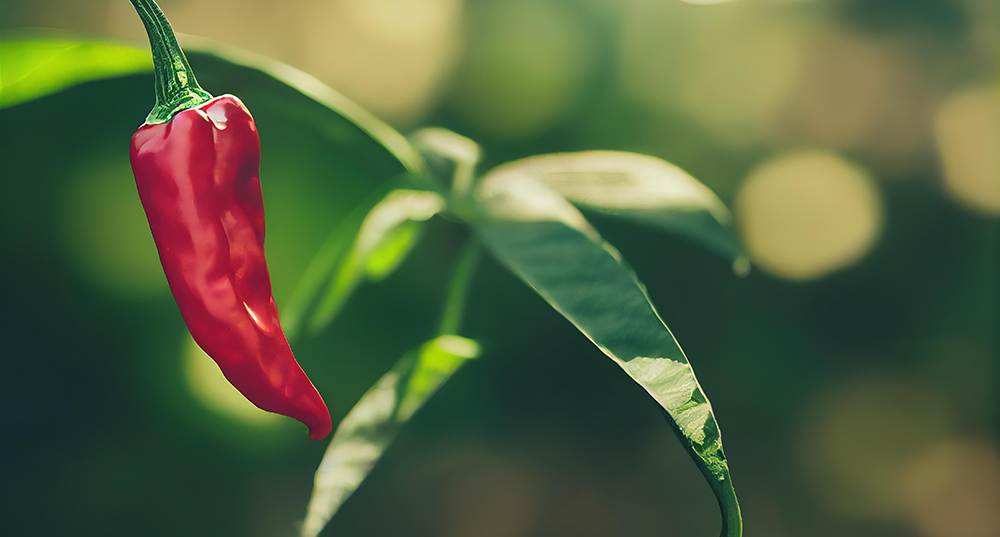
Capsaicin, the compound that makes chili peppers burn, exists specifically to stop you from eating them. That's not a metaphor. Plants in the genus Capsicum evolved that fiery chemical as a mammal deterrent, a way to protect seeds from being chewed up and destroyed in a gut. Birds, which can't detect the heat and pass seeds intact, were always the intended audience.[1] So when you bite into a Tabasco pepper and feel that slow, building fire crawl up the back of your throat, you're experiencing a defense mechanism that, somewhere along the line, we decided to turn into a cuisine. Humans are the only mammals who do this, by the way. We tasted something that was literally designed to repel us, and then domesticated it.
I think about that a lot when I'm harvesting a cluster of those small, upright red fruits on a warm October morning. Six thousand years of intentional cultivation[2] went into the plant sitting in my garden, carrying both ancient Amazonian knowledge and a global trade history so dramatic it rewired the flavor of entire continents. Most people think of chili peppers as a pantry staple. What they actually are is one of the most consequential plants in human history, hiding in plain sight behind a lot of hot sauce.
Chili Pepper Origin, History, and Botanical Background
Few plants have traveled as far, or changed as many kitchens, as the chili pepper. What most of us grab off a grocery store shelf has roots stretching back thousands of years into the forests and river edges of Central and South America, and understanding that story makes you a better grower.
Native Range and Domestication of Capsicum frutescens
Capsicum frutescens, the chili plant behind Tabasco sauce and the fiery bird peppers found across the tropics, is native to a sweeping arc from southern Mexico through Guatemala, Honduras, Nicaragua, Costa Rica, and Panama down into Colombia, Ecuador, Peru, and Bolivia.[3][4] Archaeological seeds and phytoliths from the Bolivian Amazon date domestication to around 4150 BCE, placing intentional cultivation of chili peppers firmly in the pre-Columbian world.[5] In the wild, this species favors disturbed forest edges, riverbanks, and well-drained soils in tropical rainforest and savanna climates, thriving from sea level up to about 1,200 meters with annual rainfall between 1,000 and 2,500 mm.[6][7]
Capsicum frutescens is technically a short-lived perennial shrub, living three to five years or more in its preferred tropical conditions.[8][9] We only grow it as an annual in temperate climates because frost kills it outright, but in warmer gardens it can be overwintered indoors and pushed into a second or third productive season.[10] That contrast between lowland Capsicum frutescens and its genus relatives is striking: Rocoto (C. pubescens), for instance, is adapted to cool high-Andean zones up to 3,200 meters, while Habanero (C. chinense) hugs the humid lowland Amazon, and Aji Amarillo (C. baccatum) settles into mid-elevation Andean slopes.[11] Each species carved out its own ecological niche across the continent long before any of them ended up in our gardens.
Visual Characteristics and Growth Habit
Capsicum frutescens reaches between 0.6 and 1.5 meters as a compact shrub, with alternate lanceolate leaves that are dark green and mostly smooth.[12] The flowers are small, white, and star-shaped, appearing in leaf axils from midsummer onward. Then come the fruits: small, conical, 1.3 to 3.8 cm long, and distinctly upright on the stem rather than hanging downward.[6][13] That upright orientation is the quickest field identification marker I've found. After growing enough Capsicum species side by side, the moment those first flower buds appear pointing skyward, you know exactly what you have. Habanero fruits hang like small lanterns; Rocoto carries apple-shaped pods with unmistakably purple flowers and black seeds; Aji Amarillo produces elongated, variably-shaped pods from white flowers with purple spots.[14][15] Capsicum frutescens stands alone with those tidy, upright red fruits that ripen to a heat of 30,000 to 100,000 or more SHU depending on conditions.[12] In food forest designs, I've used the compact bushy form as a low-layer accent that earns its keep visually and culinarily.
Traditional and Cultural Uses Across the Americas and Beyond
Long before it became a commercial hot sauce ingredient, Capsicum frutescens was woven into the daily and ceremonial lives of indigenous peoples including the Maya, Yanomami, and Shipibo, who used it for flavoring, wound treatment, digestive complaints, and pain relief via the capsaicin that Western researchers later isolated and studied.[5][16] Parallel traditions ran through the whole genus: Andean Rocoto and Aji Amarillo appeared in offerings to Pachamama and rituals like Inti Raymi, symbolizing fire, fertility, and protection, while Habanero carried roles in Mayan purification ceremonies and Amazonian shamanism.[17] Culinary identity followed the same lines: Rocoto went into Peruvian rocoto relleno, Aji Amarillo into ceviche and ají de gallina, and Capsicum frutescens into what would eventually become Tabasco sauce, Philippine siling labuyo dishes, and Brazilian malagueta preparations.[18][19]
Spanish and Portuguese trade routes in the 16th century carried all of these species out of the Americas with startling speed, and within decades they were transforming cuisines from West Africa to South and Southeast Asia, with no evidence of any Old World presence before that contact.[20] That dispersal is remarkable. So is what followed it: genetic erosion from hybrid commercialization, overharvesting of wild populations, and the ongoing pattern of indigenous knowledge being sidelined while corporations profit from branding built on those traditions.[21][22] As a regenerative designer, I think about this every time I source chili seed. Choosing open-pollinated landraces from indigenous-led seed projects over patented hybrids is one of the most concrete ways a home grower can push back against that erosion and honor the living cultures these plants come from.
Fun Facts About Chili Peppers and Their Relatives
Capsicum frutescens is now naturalized in over 50 countries across Africa, Southeast Asia, the Caribbean, and the southern United States, a testament to just how aggressively the colonial spice trade moved biological material around the globe.[23] Its heat sits at 30,000 to 100,000 SHU in most plants, but heat isn't fixed: growing temperatures between 25 and 30°C push capsaicin production higher, so the same variety can bite harder in a hot summer than a mild one.[12][24] Across the genus, the range is almost absurd: Aji Amarillo clocks in at a relatively gentle 5,000 to 30,000 SHU with noticeable citrus notes across more than 100 cultivars, Rocoto reaches 25,000 to 150,000 SHU with thick apple-like flesh, and Habanero tops out at 350,000 SHU in standard cultivars, with modern selections like Pepper X surpassing two million.[25][26][27] I always grow a few species side by side just to watch the differences: Rocoto's hairy leaves and purple-veined flowers against the clean, upright red candles of Tabasco-type fruits. It's a good reminder that the chili pepper family is far more than one plant with one flavor.
Chili Pepper Varieties and Where to Buy Them
Notable Varieties of Capsicum frutescens
Capsicum frutescens is what I'd call the reliable workhorse of the genus. It's a compact, upright shrub that typically settles in between two and four feet tall, though I've had a particularly happy Tabasco plant push close to six feet after a few seasons in the ground.[3][28] The fruits are the giveaway: small, slender, and held upright on the plant, which makes them surprisingly easy to spot and harvest once you're hunting through dense foliage. They ripen from green through to red (sometimes yellow, orange, or purple depending on cultivar), and the heat can range from a manageable 10,000 SHU up to a face-scorching 500,000.[3][29] I've grown Tabasco and Bird's eye side-by-side with habaneros for several seasons, and that upright fruit habit on the frutescens types consistently makes harvest faster and less fumbling. The named cultivars worth knowing are Tabasco, Bird's eye (including the Filipino Siling labuyo), Malagueta, and Piri piri; collectively they cover hot sauces, pickles, and ornamental containers with genuine elegance.[3][30] Outside of tropical climates, treat it as an annual started indoors eight to ten weeks before the last frost.[31]
If you want to branch into the wider genus, a few species offer genuinely different experiences. Rocoto (Capsicum pubescens) is the oddball: hairy leaves, purple flowers, and distinctive black seeds set it apart visually before you even taste it.[32] The fruits are round or bell-shaped, running 25,000 to 100,000 SHU with a smoky, floral quality that Tabasco doesn't approach. Cultivars like Manzano (apple-shaped, orange or red) and Chocolate Rocoto are worth seeking out if you garden in cooler highland climates where C. frutescens struggles.[32] The habanero side of the genus (Capsicum chinense) goes in a different direction entirely: those wrinkled, lantern-shaped pods pack intense fruity and tropical aromatics alongside serious heat, anywhere from 50,000 to well over 500,000 SHU.[33] The scotch bonnet chili pepper (100,000-350,000 SHU) brings bright citrus notes, while Fatalii leans almost lemony; both are C. chinense, which is a point worth clarifying since the scotch bonnet name sometimes gets misapplied to rocotos at markets and seed swaps.[34] I made that exact mix-up myself early on and ended up with a very different plant than expected. Rounding out the genus, the Aji Amarillo (Capsicum baccatum) delivers a fruity, tangy heat at 30,000-50,000 SHU from elongated yellow-orange fruits; Lemon Drop and Aji Cristal are compact, approachable cultivars from the same species.[15]
Sourcing Capsicum frutescens Plants and Seeds
For seeds of the core C. frutescens types (Tabasco, Bird's eye, Malagueta), Baker Creek Heirloom Seeds, Johnny's Selected Seeds, and Pepper Joe's are my go-to sources. I've had consistently strong germination from Johnny's and Baker Creek in particular, which matters since the Federal Seed Act sets minimum germination standards at 80-85% and not every vendor hits that mark reliably.[35][36][37] Seed packets typically run $3 to $6, and starter plants in spring hover around $5 to $10.[38] The good news for US gardeners is that C. frutescens carries no federal noxious weed designation and is already widely distributed across southern states, so there's no regulatory friction buying or growing it at home.[39]
For habaneros and scotch bonnets, the same major catalogs carry solid selections, with Refining Fire Chiles and The Chile Guy filling in specialty cultivars; expect to pay $6 to $12 for live plants.[40][41] Rocoto seeds, sold variously as Manzano or Locoto, show up at Baker Creek and Seed Savers Exchange, though live pubescens plants are genuinely harder to find and can cost $10 to $25 when you do track them down.[42] One practical tip I've passed along to anyone starting multiple species at once: label your seedling pots immediately and obsessively, because young Capsicum plants across the genus look nearly identical until they're well established.
Chili Pepper Propagation and Planting
Capsicum frutescens is genuinely one of the easier hot peppers to propagate, but "easy" still requires understanding what the plant actually needs. Get the fundamentals right and you'll have transplant-ready seedlings in about six weeks. Get them wrong and you'll be staring at a tray of nothing three weeks later wondering what happened.
Seed Propagation and Germination Timeline
Seed is the most accessible starting point, and fresh seed is your best friend here. Sow at about a quarter inch deep in sterile, well-draining mix, keep soil temperature between 25-32°C (77-90°F), and germination typically happens within 7-21 days.[10][43][44] After that, seedlings are ready for transplant around the four to six week mark once they carry four to six true leaves, and fruiting begins roughly 60-90 days after transplant, putting the full seed-to-harvest window at 90-120 days under good conditions.[10] I start mine indoors 8-10 weeks before last frost to build sturdy transplants before the soil warms up outside.
One hard lesson I learned early: I lost several batches to damping-off before I committed to sterile seed-starting mix and a bottom heat mat. I haven't lost a tray since. The 25-32°C soil temperature isn't just a preference; without that warmth you'll get stalled, uneven germination that leaves seedlings vulnerable for too long. Rocoto (C. pubescens) will tolerate a mat that only reaches 70°F reasonably well, but standard Tabasco-type and Habanero seeds are noticeably sulkier at lower temperatures in my experience. If you're working with home-saved seed, the good news is that C. frutescens seeds are orthodox, tolerating desiccation down to 5-10% moisture and staying viable for 3-7 years when stored cold and dry.[45][46] I keep my saved pepper seed in labeled jars with silica desiccant packets in the refrigerator and have germinated four-year-old seed at over 80% success using this method. Fresh seed with minimal dormancy is ideal,[47] but well-stored seed is nearly as reliable.
Vegetative Propagation Methods
If you've grown a Tabasco or Bird's Eye plant that produces phenomenally and you want to clone it exactly, stem cuttings are the route to take. Because C. frutescens is predominantly self-pollinating but can cross with neighboring plants via insects,[48] seeds from open-pollinated garden plants can't guarantee the genetics you're after. A 4-6 inch semi-hardwood cutting dipped in rooting hormone, kept at 21-27°C with 70-90% humidity, will root in 2-4 weeks at 60-90% success rates.[49] A humidity dome and a heat mat handle most of that for you.
Grafting is the method I reach for when Phytophthora has become a recurring problem in a bed. C. frutescens itself is a valuable rootstock for more susceptible varieties, offering solid disease resistance. Using cleft or whip-and-tongue grafts on four to six week old seedlings, healed at 20-30°C and 85-95% humidity, you can expect 70-90% success.[50] In my Central Florida garden, grafted plants on Tabasco-type rootstock have shown noticeably better resistance to root issues in our wet summers. After successful grafting, plan for 8-12 weeks to first harvest including the healing period.[51] Tissue culture achieves 80-95% success for producing disease-free stock at scale,[52] but that's a lab operation, not a garage shelf project.
Soil, Site Selection, and pH Requirements
The two fastest ways to kill a chili pepper plant in the ground are waterlogged soil and the wrong pH. C. frutescens evolved in humid tropical environments with excellent drainage, and that ancestry means standing water around the roots is lethal. Aim for well-drained loamy or sandy loam soil with 2-5% organic matter and a minimum rooting depth of 12-18 inches.[10][53] If your native soil is heavy clay, amend it or raise your beds before you plant anything.
Soil pH should sit between 6.0 and 7.0; outside that range you start running into aluminum toxicity on the low end and iron, zinc, and phosphorus lockout on the high end, with blossom-end rot risk climbing as pH rises above 7.5.[54][53] Blossom-end rot was a persistent headache in my garden until I started annual soil testing and applying gypsum to supply calcium without shifting pH.[55] I haven't had a significant outbreak since. On the light side, full sun is non-negotiable: 6-8 hours of direct sun daily for proper flowering and fruit development, with some afternoon shade appreciated during extreme heat events.[56] Insufficient light produces leggy, unproductive plants that are more susceptible to disease. Consistent moisture at 1-2 inches per week rounds out the site requirements, always without letting the root zone sit saturated.[10]
Spacing, Planting Technique, and Initial Care
Mature C. frutescens plants typically reach 2-4 feet tall with an 18-36 inch spread, so crowding them is a mistake that shows up quickly as fungal disease pressure.[57] Space plants 12-18 inches apart within rows and keep 24-36 inches between rows to allow enough airflow to keep leaves drying between waterings.[58] For containers, a 12-18 inch diameter pot is the practical minimum. If you're growing Rocoto, its larger perennial habit calls for 24-36 inches between plants and 36-48 inches between rows to accommodate mature size,[59] while Habanero types generally fit the 18-24 inch plant spacing range adjusted for cultivar vigor.[60]
After transplanting hardened-off seedlings, stake or cage plants you expect to carry a heavy fruit load, and lay down 2-4 inches of organic mulch immediately.[57] That mulch layer is doing real work: it moderates soil temperature, retains moisture during dry spells, and suppresses the weeds that would otherwise compete during establishment. Keep watering consistent but never saturating, give the plants their full sun, and they'll settle in quickly.
Chili Pepper Care Guide: Growing Tabasco Peppers Successfully
Every care decision you make with Tabasco pepper flows from one central reality: this is a tropical perennial that lives or dies by heat. Get the warmth, light, and moisture right, and the plant practically grows itself. Miss any of those, and you'll spend the season chasing problems instead of harvesting fruit.
Sunlight Requirements for Tabasco Pepper
Tabasco pepper needs 6-8 hours of direct sun daily for strong vegetative growth, good fruit set, and full capsaicin development.[6][61] In my Central Florida garden, full sun drives everything I want from this plant through spring and early summer. But once daytime temperatures climb past 90°F, that same unfiltered sun starts working against you. I hang 30-50% shade cloth over my beds during the worst weeks, and the difference in leaf condition is immediate. Without it, I see scorching along the margins within days. Seedlings started indoors need at least 14 hours of light to develop properly before transplant, so a good grow light setup matters more than most people realize.
Watering Needs and Drought Tolerance
Tabasco pepper comes from tropical habitats that receive 1,500-2,500 mm of rainfall annually, so consistent moisture is baked into its genetics.[62][63] The simplest rule I've settled on after years of trial: water when the top 1-2 inches of soil feel dry, which usually means once or twice a week and about an inch per session. I used to water daily and kept running into yellowing lower leaves and root rot. Letting that top inch dry between sessions solved both problems immediately.
A 2-4 inch layer of organic mulch is the single best tool in the watering toolkit. It reduces moisture loss by up to 30%, moderates soil temperature, and cuts down on how often you need to actually pick up the hose.[64][65] Container plants dry out much faster and need daily checks in summer heat. For those, I use a soil moisture meter rather than guessing. Yellow lower leaves and wilting despite moist soil signal overwatering; leaf curl, wilting in dry soil, and small or misshapen fruit point toward drought stress.[66][67]
Feeding and Nutrient Management
Tabasco pepper is a moderate to heavy feeder, and the feeding strategy needs to shift as the plant moves through its growth phases. Early on, higher nitrogen supports the vegetative push. Once flowering starts, you want to back off nitrogen and lean into phosphorus and potassium to drive fruit set and quality.[68][69] I lost a lot of early fruits to blossom-end rot before I started soil testing consistently. That's a calcium issue, usually compounded by uneven watering. Once I got my pH dialed into the 6.0-6.8 sweet spot and kept moisture consistent with mulch, it stopped happening.
For ground beds, a balanced 10-10-10 or 5-10-10 applied at 4-6 lbs per 100 square feet at planting works well as a foundation, shifting to a higher P/K formula at flowering.[70][71] Container plants do better with half-strength liquid fertilizer every 2-4 weeks rather than slow-release granules. Compost and bone meal are lower-risk organic options that feed slowly and rarely cause the leaf burn you can get from overdoing synthetic inputs. Before adding any micronutrients for suspected iron, zinc, or boron deficiencies, get a soil or tissue test first; symptoms overlap with heat and water stress, and correcting the wrong thing makes matters worse.[69][72]
Heat Tolerance and Management
Tabasco pepper thrives between 70-85°F with nights around 59-64°F.[73][74] Above 90°F during the day or 75°F at night, expect flower drop, reduced fruit set, and leaf scorch. Short spikes to 95°F won't kill a healthy plant, but sustained heat above that threshold seriously hammers yields. This is where Tabasco's tropical genetics give it a real edge over highland species like Rocoto, which struggles in conditions Tabasco shrugs off.
The most effective integrated approach combines 30-50% shade cloth (which can drop canopy temperature by 3-10°C), 2-4 inches of organic mulch, and early-morning or evening irrigation rather than midday watering.[64][75] Used together, these strategies can improve yields by up to 25% in sustained high heat. I've watched my Thai Hot and Piri Piri plants outperform standard bell peppers by a wide margin during Florida summers, and that heat-adapted genetics piece is a real factor.
Frost Tolerance and Cold Protection
There's no sugarcoating Tabasco's cold sensitivity. Growth slows below 55°F, damage begins at 45°F, and a hard frost at 32°F will kill the plant outright.[76][77] In USDA zones 9-11, it can live as a true perennial with basic protection. Everywhere else, treat it as a warm-season annual or commit to overwintering it indoors. Rocoto handles brief dips to 28-30°F thanks to its hairy leaves and highland genetics; Habanero, by contrast, is even more frost-tender than Tabasco.[78][79]
I've overwintered Tabasco plants indoors for three seasons running, and the key is getting them inside before temperatures drop to 50°F rather than waiting for the first frost warning. Row covers raise air temperature around 4-8°F and buy time, but they're not a substitute for bringing container plants indoors. Once inside, I move them to a south-facing window, reduce watering significantly, and accept that some leaf drop is normal. Given good light and temperatures between 60-70°F, they come back strong every spring.
Pruning, Maintenance, and Seasonal Rhythm
Tabasco pepper grows 2-5 feet tall with a dense bushy habit, and a well-loaded plant carrying hundreds of small fruits will lodge or split branches without support.[80][81] Stake or cage plants early, before the fruit load builds. For pruning, I keep it light during the growing season: remove suckers below the first flower fork, take out any dead or crossing branches, and retain 3-6 main stems for good airflow. Pinching shoot tips encourages lateral branching and a fuller plant. Avoid heavy pruning while the plant is actively flowering or setting fruit.
For overwintering, I cut plants back by one-third to two-thirds in late fall before bringing them inside. That harder cutback is different from the light spring tidy-up I do once growth resumes. With good care, these plants can live 3-5 years,[82][83] though most gardeners in cooler climates reasonably treat them as annuals and start fresh each spring. The full seasonal arc runs from indoor germination in late winter through transplant once soil hits 60°F, peak growth at 70-85°F days through summer, fruiting into early fall, then dormancy or overwintering.[10][73] Every section of this care guide feeds back into that rhythm. Nail the temperature windows, keep moisture consistent, feed for the growth stage you're in, and this plant will reward you generously.
Harvesting Chili Peppers: Timing, Technique, and Flavor at Peak Ripeness
When to Harvest Tabasco and Bird's Eye Chilies
The benchmark I work from with Capsicum frutescens is 100-120 days from seed or 45-70 days from flower, watching for the full shift from green to glossy red on fruits that are just 1-2.5 cm long and firm to the touch with no splitting.[84][85][86] In the Southwest US, that typically plays out September through October, though a warm summer can push first harvest into August and a mild fall can stretch picking into November.[87][88] I treat those dates as a rough frame, not a promise. A cooler-than-usual summer will push everything back by weeks, and those first fruits to turn red are almost always the ones lower on the plant. I've started flagging those for seed saving because they ripen most reliably season after season.
Sister species run on longer schedules. Habanero needs 120-150 days from seed, with harvest from late summer through fall when fruits reach full orange or red and yield slightly to gentle pressure.[89][90] Rocoto takes the longest at 120-180 days, signaling readiness through a color shift to yellow, orange, red, or purple plus a barely perceptible softening in that thick wall.[91][92] Calendar days give you a starting point, but visual and tactile cues are always the real answer.
Best Practices for Picking and Handling
I harvest at dawn now without exception. Picking in midday heat taught me the hard way that fruits soften faster in storage and lose that crisp snap that makes fresh Tabasco-types so satisfying. Early morning is when temperatures are coolest and the fruit's structure is most intact.[93][94] Use clean pruners or scissors and cut the stem about a quarter inch above the fruit rather than pulling. Pulling stresses the branch and, on hairy-leaved relatives like Rocoto, it can tear off more than you intend.[95] I never harvest without gloves anymore; the capsaicin transfers instantly and the burn on your hands can last hours.
Post-harvest, rinse fruits in cool chlorinated water at 100-200 ppm, air-dry completely, and hold them at 45-50°F with 85-95% relative humidity for up to 2-4 weeks if you need to store fresh.[93][96] Those conditions hold the volatile aromas and firm texture that make ripe fruits worth growing.
What to Expect: Yield, Heat, and Flavor Profiles
Ripe Capsicum frutescens fruits are tiny, just 1-2.5 cm long and barely half a centimeter wide, but the punch is serious: 50,000-175,000 SHU with a crisp-juicy bite and a flavor arc that surprises first-time growers.[97][98] Green fruits smell grassy and sharp; fully ripe red fruits carry fruity-sweet notes with a subtle sourness and umami depth underneath all that heat. That shift happens because ripeness roughly doubles soluble sugars from around 2-3% to 5-7% while capsaicin levels stabilize, and key volatiles like hexanal (the green note) give way to linalool's floral quality, β-caryophyllene's spice, and earthy pyrazine compounds.[99][100] The first time I bit into a just-picked ripe Tabasco I understood why people put up with the burn: the sweetness underneath is genuinely surprising.
For contrast: Rocoto's thicker walls remind me of a small bell pepper crossed with a hot chili, firm enough to stuff, with moderate 30,000-50,000 SHU heat that builds gradually and lingers with apple-citrus sweetness.[101][102] Habanero goes the other direction entirely: 100,000-350,000+ SHU with a burn that can last thirty minutes to an hour, juicy flesh, and complex tropical-floral notes of mango, apricot, and citrus.[103][102] Whatever species you're growing, individual heat perception varies, so gloves during harvest are non-negotiable regardless of your tolerance.[104] Leaving a few late-season fruits to over-ripen on the plant also keeps foraging insects active through fall, which I've found extends pollinator activity in the garden well into November.
Chili Pepper Preparation and Uses
Culinary Uses and Flavor Profiles of Capsicum frutescens
The chili pepper fruit is where everything starts. Fresh, dried, pickled, fermented, or ground into spice, Capsicum frutescens delivers a sharp, fruity heat ranging from 30,000 to 50,000 Scoville units with bright citrusy and grassy undertones that set it apart from the tropical floral burn of Habanero or the apple-like sweetness of Rocoto.[3][105] Seeds are fully edible and push the heat noticeably higher when eaten alongside the flesh.[3][62] Young leaves show up in Filipino and Vietnamese kitchens as a cooked green, though they need a thorough parboil first to address the solanine concerns common to nightshade relatives.[3][106][107] I've harvested young leaves from my own plants a handful of times for Asian-style soups, but I treat them as a minor green and always parboil, never raw.
How you process the pepper changes it completely. Drying at 50 to 60°C preserves most of the capsaicin while building smoky, woody pyrazine notes; roasting triggers Maillard reactions that bring out caramelized, nutty furan compounds; and lacto-fermentation with Lactobacillus mellows the raw heat while concentrating free amino acids, phenolics, and umami depth.[99][108][109] My home lacto-fermented hot sauces are noticeably smoother and more savory than the raw-pepper versions; that mellowed complexity is exactly what makes a three-year-aged Tabasco sauce so different from a fresh salsa.[110] Across cultures this pepper earns its place by balancing against rich proteins and fatty broths: siling labuyo in Filipino kinilaw and adobo alongside garlic and vinegar, bird's eye in Thai nam prik with lemongrass and galangal, malagueta stirred into Brazilian moqueca with coconut milk.[111][112]
Medicinal Preparations from Chili Pepper
The same capsaicin that makes your eyes water in the kitchen gets concentrated into tinctures, decoctions, and topical creams for therapeutic use. Standard preparations follow general capsaicin guidelines rather than species-specific dosing: tinctures at 0.3 to 1 mL taken one to three times daily, simple infusions using 0.5 to 1 gram of dried fruit per cup of water, and topical ointments formulated at 0.025 to 0.075% capsaicin applied three to four times daily to affected areas.[113][114][115] Traditional preparations often combine the pepper with other herbs or apply it as a poultice rather than using isolated capsaicin. The clinical evidence and safety considerations around these uses live in the health benefits section; here the point is simply that preparation method matters enormously, and working with a qualified herbalist or practitioner before treating yourself therapeutically is the sensible starting point.
Non-Food Applications and Preservation Techniques
Before refrigerators and spice aisles, communities throughout the Americas were crushing Capsicum frutescens fruits into water to stun fish, burning dried residues to repel insects and animals, and intercropping seedlings with maize to deter pests through capsaicin volatiles alone.[112] That last use maps neatly onto modern companion planting logic, and it's one reason I always tuck a few plants near the edges of my vegetable beds.
For preservation, the simplest reliable method is air-drying in a shaded, well-ventilated spot at 77 to 95°F for five to ten days, finishing in a dehydrator at 50 to 60°C until the peppers reach 10 to 12% moisture and snap cleanly.[116][117] In humid Central Florida summers, I skip straight to the dehydrator; anything left to air-dry in August retains just enough moisture to mold before it crisps. Stored cool and dark, dried peppers keep well; frozen at 0°F after blanching or full drying, they'll hold for six to twelve months without significant flavor loss. I always wear gloves for every stage of this process. Even after years of handling these plants, one careless swipe at my face has ruined more than one afternoon.
Chili Pepper Health Benefits and Medicinal Uses
There's a reason chili pepper has been used medicinally for thousands of years across cultures that had no contact with each other. The plant is genuinely bioactive in ways that modern research keeps confirming. What I find fascinating is how much of the therapeutic action traces back to compounds that evolved for completely different reasons than human health.
Key Compounds in Chili Pepper: Capsaicinoids, Carotenoids, Flavonoids, and Vitamins
Capsaicin is the headliner. In Capsicum frutescens, capsaicinoids make up 0.1 to 1.5% of dry weight, with capsaicin itself accounting for 50 to 70% of that total and dihydrocapsaicin contributing another 20 to 30%.[118][119] But capsaicin doesn't work alone. Flavonoids like quercetin, kaempferol, and luteolin contribute antioxidant and anti-inflammatory activity, with phenolic concentrations reaching 10 to 50 mg per gram in some fruit preparations. Carotenoids like capsanthin can also hit 20 to 30 mg per 100g in fully ripe red fruits.[120][121] These compounds work synergistically, so thinking about capsaicin in isolation misses most of the picture.
What I love about the underlying ecology here is that none of this was designed for us. Capsaicin specifically binds to mammalian TRPV1 receptors to deter consumption, functioning purely as an ecological defense mechanism.[122][123] Flavonoids in high-altitude Rocoto peppers likely evolved as UV and cold protection. We're essentially borrowing a chemical defense toolkit and finding it remarkably useful. After growing Tabasco-type peppers in humid Florida conditions for years, I've noticed that fruits harvested after a dry spell are noticeably hotter and more aromatic, which tracks with research showing drought and heat stress can boost capsaicinoid and phenolic content by 20 to 50%.[124] Stress the plant slightly, and it loads up on exactly the compounds we're most interested in.
Nutritional Profile of Chili Pepper
Chili peppers are low-calorie foods, around 40 kcal per 100g, with modest protein and fat and roughly 7 to 9g of carbohydrates per 100g.[125] Where they genuinely shine nutritionally is vitamin C. A C. frutescens fruit carries around 144 to 150 mg of vitamin C per 100g, which means a single 10g Tabasco pepper can deliver more than 15% of your daily value.[126] For reference, that's a meaningful fraction of what you'd get from an entire orange, in a fruit you'd casually toss into a sauce without thinking about it.
Ripe red fruits also provide beta-carotene and other carotenoids that convert to vitamin A, along with B6, niacin, and potassium.[127] Processing matters here. Drying concentrates capsaicinoids and minerals but destroys 40 to 70% of vitamin C; boiling is even harder on C, though it improves carotenoid bioavailability significantly, especially when fat is present.[101][128] My practical approach: eat some raw for vitamin C, cook others in olive oil or coconut milk for fat-soluble carotenoid uptake. Both strategies have merit and they're not mutually exclusive.
Medicinal Research on Chili Pepper Benefits
The strongest clinical evidence for Capsicum frutescens medicinal uses centers on pain relief. Capsaicin activates TRPV1 receptors, triggers an initial burning sensation, then depletes substance P, effectively blocking pain signaling. Topical preparations at 0.025 to 0.075% concentration, applied three to four times daily, have demonstrated genuine efficacy for neuropathic pain and osteoarthritis in peer-reviewed trials, and these preparations carry FDA clearance.[129][130][131] I keep a carefully labeled capsaicin-infused oil in my home apothecary for sore joints after long days in the garden; it's a gentler version of what the clinical creams do.
Beyond pain, capsaicin inhibits NF-κB and reduces COX-2 expression, which translates to measurable anti-inflammatory effects, while the carotenoids, flavonoids, and vitamin C in the fruit activate the Nrf2 antioxidant pathway.[132][133] Metabolic research is encouraging too: human trials have shown capsaicin can increase energy expenditure by 50 to 100 kcal per day through thermogenesis, with some evidence for fat oxidation and weight management.[134][135] Anticancer signals from related species like Rocoto and Aji Amarillo, including apoptosis induction and antioxidant enzyme upregulation, are genuinely interesting, and Habanero shows strong Nrf2 activation at its much higher capsaicin concentrations.[136][137] Most of that, though, comes from in vitro and animal models. The honest summary: pain relief has robust human evidence, metabolic effects have moderate human support, and the rest needs more clinical trials before drawing firm conclusions.
Safety Considerations for Chili Pepper Consumption and Use
For most people, culinary use is safe. The FDA and EFSA both recognize capsicum as generally safe at typical food quantities, up to around 5 to 10g of dried pepper daily, roughly 1 to 2 mg of capsaicin, and the LD50 in rats indicates low acute toxicity risk from normal food consumption.[138][139][140] That said, dose-dependent GI irritation is real. If you have GERD, ulcers, IBS, or gastritis, even small amounts of hot chilies can flare symptoms; this isn't overcaution for its own sake, the research and my own kitchen experience align here.[141][142] High doses during pregnancy and use alongside blood-thinning medications also warrant caution due to potential antiplatelet effects.[143]
Handling is where I've learned hard lessons. Wear gloves when cutting hot peppers, especially anything above 30,000 SHU, because capsaicin penetrates skin and can transfer to eyes or mucous membranes without you realizing it.[144] If you do get capsaicin burn, reach for vegetable oil, milk, or dairy, not water; water disperses it, oil and fat actually neutralize it.[145] One more thing worth knowing: the ornamental Jerusalem cherry (Solanum pseudocapsicum) can look superficially similar to small chili pepper plants, but it's toxic. Learn to distinguish them by flower and fruit structure before foraging anything unfamiliar, and note that unripe chili fruits carry higher alkaloid content than fully ripe ones.[146] Ripe red fruits are your safest, most nutritionally complete option across the board.
Chili Pepper Pests and Diseases
Natural Defenses and Pest Resistance in Capsicum frutescens
Capsicum frutescens has a genuinely impressive chemical toolkit. The same capsaicin that makes Tabasco fruits scorching to eat also acts as a repellent against aphids, whiteflies, thrips, leafminers, and pepper weevils; glandular trichomes secrete these compounds directly onto leaf surfaces, creating both a physical and chemical barrier, while the plant's volatile organic emissions actually recruit predatory insects to handle whatever breaks through.[147][148][149][150] I think of it like how marigolds release compounds that deter nematodes -- it's not magic, but it gives the plant a real edge that most gardeners never consciously appreciate.
The honest caveat is that these defenses are imperfect. Field studies report 20-40% yield loss from thrips and aphids in untreated conditions, and Spodoptera litura (tobacco caterpillar) can defoliate plants at alarming rates, rating 7-9 on a 0-10 severity scale in some trials.[151][67] For context, Rocoto (C. pubescens) has notably dense pubescence that can cut small pest populations by up to 70%, though it pays for that armor with high susceptibility to Colorado potato beetle and leafminers.[152] C. chinense (Habanero) generally handles sap-feeders better than most C. annuum types, but faces heavier virus pressure in return.[153] C. frutescens sits somewhere in between, and some lines -- including the Tabasco cultivar itself -- show moderate resistance to aphids and spider mites through their compact growth and hairy leaves, with AVRDC breeding programs actively working to strengthen these traits.[154][155] I source AVRDC-derived germplasm for my permaculture guilds partly for exactly this reason.
Common Pests of Chili Pepper
The main offenders are aphids, spider mites, thrips, whiteflies, leafminers, pepper weevils, and root-knot nematodes.[156][151] Whiteflies and aphids thrive in the same warm, humid conditions (around 25-30°C) that C. frutescens prefers, which means your ideal growing climate is also ideal for the insects you least want.[157] In my experience, checking the undersides of leaves weekly is worth more than any spray -- the first sign of trouble is usually subtle leaf curling long before a colony explodes into something harder to manage.
I don't reach for chemicals first. Rotating away from solanaceous crops for two to three years, encouraging ladybugs and parasitic wasps, and only spot-treating with insecticidal soap or neem oil when populations clearly exceed threshold has kept my chili peppers productive without wrecking the surrounding ecosystem.[158][159][160] Predatory mites handle spider mite outbreaks well if you introduce them before populations spike.
Disease Susceptibility and Integrated Management
Bacterial wilt from Ralstonia solanacearum is the disease I worry about most with C. frutescens -- there are no commercially available resistant cultivars, and once it's in warm, wet soil, the plant collapses fast.[161][162] Rocoto, by contrast, offers moderate to high resistance and is actually valued as a grafting rootstock for this reason.[163] Bacterial leaf spot (Xanthomonas spp.) is more manageable, with some accessions performing better than others depending on environment.[164]
Phytophthora blight and root rot (Phytophthora capsici) come down almost entirely to drainage. Poor drainage, overwatering, and compacted soils trigger wilting, yellowing, and dark mushy roots that are nearly impossible to reverse.[165][166] I plant in raised beds or amended mounds specifically to sidestep this -- in Central Florida's heavy summer rains, that's not optional, it's essential. Habanero is particularly vulnerable here, collapsing rapidly in saturated conditions, while Aji Amarillo accession PI 260435 carries notable field resistance.[167][168]
Fungal threats include Fusarium and Verticillium wilts (moderate susceptibility, variable by line), powdery mildew under warm humid conditions, and anthracnose affecting fruit quality late in the season.[169][170][171] On the viral side, some C. frutescens cultivars carrying the L gene show tolerance to Tobacco mosaic virus, while Tomato spotted wilt virus (thrips-transmitted) and Pepper yellows leaf curl virus (whitefly-transmitted) require vector control as the primary defense.[172][173] Root-knot nematodes are managed through soil solarization, multi-year rotation, and -- where disease pressure is high -- grafting onto resistant C. pubescens or C. baccatum rootstocks.[174]
The throughline in all of this is environment. Temperature above 20-30°C combined with humidity over 80% and any soil compaction stacks the odds toward an outbreak across nearly every pathogen category.[175][176] Cultural practices -- strict rotation with non-solanaceous crops, sanitation, overhead-irrigation avoidance, copper fungicides or Trichoderma applications where warranted -- do more long-term work than any single resistant variety.[177][178] Prevention, consistently applied, beats treatment every time.
Chili Pepper in Permaculture Design
Most people think of chili pepper as a garden crop you slot into a raised bed and forget about until harvest. But spend time in the humid subtropical understories where Capsicum frutescens actually comes from, and a different picture emerges: a woody-based shrub fruiting continuously, birds carrying its seeds into disturbed gaps, and a whole community of insects working its small white flowers. That native ecology is the best map I know for placing chili pepper intelligently in a designed system.
Climate and Growing Zones for Chili Pepper
Tabasco pepper is a true perennial in USDA zones 9-11, where it can persist and fruit year after year given frost-free conditions.[6][179] Below that, it becomes an annual unless you intervene. Growth slows noticeably once temperatures drop below 50°F, and even a brief dip to 28-32°F can kill the plant outright.[6] The sweet spot for productive growth sits between 70-85°F during the day, with nights staying above 55°F and humidity in that 50-70% range.[180][62] That description fits Central Florida pretty well for most of the year, which is part of why I find Tabasco so reliable here.
Heat tolerance is real but not unlimited. Plants can handle up to 95-100°F, but once daytime temperatures climb above 90°F you'll see blossom drop, which is a frustrating way to lose fruit set mid-summer.[181][62] A thick organic mulch layer goes a long way toward buffering root zone temperatures and keeping moisture consistent during those stress periods. For permaculture purposes, think of mulch as the microclimate tool that extends your productive window.
The genus gives you real range if you're designing for climates outside the humid subtropics. Rocoto (Capsicum pubescens) evolved at Andean elevations of 1,000-3,200 meters and handles cold down to 28°F, making it genuinely useful for temperate food forest guilds that would kill a Tabasco.[182][117] Habanero (Capsicum chinense) runs in the opposite direction, preferring 60-90% humidity and lowland subtropical conditions like coastal Florida and South Texas.[183] For gardeners in zones 7 or 8, the practical permaculture move is treating Tabasco as a container plant you overwinter indoors above 50°F, similar to how you'd protect a tender basil or a young fig in a pot. I've had good luck pulling plants before the first frost, cutting them back by about a third, and keeping them in a bright window until spring.[39][184]
Ecosystem Functions and Guild Placement
Capsaicin's evolutionary origin is a guild story in itself. The compound deters mammals from eating the fruits, which would chew up and destroy the seeds, while leaving birds completely unaffected since avian digestive systems don't bind to the TRPV1 receptor that makes capsaicin burn.[185][186] Birds eat the fruits whole, fly elsewhere, and deposit seeds in new gaps. The plant essentially selected for a specific dispersal partner by making itself inedible to everyone else. That's elegant design, and it's a good reminder that capsaicin isn't just a culinary trait.
In the garden, that same chemistry functions as pest repellency. Root exudates with allelopathic properties suppress weeds while the fruits and foliage deter aphids, spider mites, squirrels, and deer.[187][188] I've placed Tabasco plants along the edges of beds where squash was getting hammered by squirrels, and the difference in damage was noticeable compared to unguarded areas. That's not a controlled experiment, but over several seasons the pattern held.
Chili pepper doesn't fix nitrogen, so it won't enrich the soil the way a legume would. What it does do is form mycorrhizal associations that improve phosphorus uptake and support microbial life, which matters especially in volcanic or nutrient-depleted soils.[189][190] Its leaf litter adds organic matter, and the fibrous root structure helps hold soil on slopes. Moderate biomass makes it a reasonable chop-and-drop candidate when you're cycling plants out at end of season.
Pollination is worth thinking about deliberately. Tabasco flowers are self-pollinating, but insect visitors can boost fruit set and yield by up to 45%.[191][192] In calm, sheltered spots where wind and insect activity are low, I've found that gently shaking the flowering branches on still mornings improves set noticeably. Rocoto leans harder on buzz pollination by bumblebees and is mostly outcrossing, so guild placement near diverse native plantings matters more for that species.[193][194] The flowers of all Capsicum species produce nectar and pollen that support a range of native bees, butterflies, and flies, which feeds back into the broader food web. On naturalization risk: chili pepper has low to moderate invasive potential in humid subtropical zones, but check your local regulations before planting near natural areas.[195][196]
Forest Layer Role and Companion Strategies
Tabasco pepper settles into the shrub or understory layer of a tropical food forest, typically reaching 0.6 to 1.2 meters and occasionally pushing to 2 meters in ideal conditions, with a woody base that persists year-round in frost-free climates.[197][185] It wants full sun to light partial shade, good drainage, and warmth, so the southern or eastern edge of a canopy gap is usually the right placement. Tucking it against a wind-breaking hedge or a wall with thermal mass gives marginal-zone growers a meaningful microclimate advantage.
Basil, onions, and marigolds work well alongside chili pepper:
- basil confuses pest insects
- onions discourage aphids
- marigolds provide nematode suppression at the root level.
If your design leans toward cooler elevations, Rocoto earns its keep as an understory plant beneath citrus or avocado, where its preference for 40-60% dappled light matches what those canopy trees provide naturally.[201][202] Its woody stems reaching 1-3 meters give it more structural presence than Tabasco, and its cold tolerance extends the guild into conditions where most other Capsicum species would stall. Habanero, with moderate shade tolerance and reliably pollinator-friendly flowers, fits well in a mid-layer position in warmer humid systems where you want something that actively draws bees while fruiting prolifically.[203] Across all three, the fibrous root systems contribute to slope stability, and the seasonal biomass adds meaningfully to chop-and-drop mulch or compost cycles.[204]
The Plant That Taught Me to Respect Heat in the Garden and the Kitchen
I still think about the first time I bit into a Bird's eye pepper straight off the bush, convinced it couldn't be that hot. It was. What I've come to love about growing chilis is that they don't let you be careless; the plant asks you to pay attention, whether you're timing the harvest, managing irrigation, or deciding which variety belongs in your guild. That kind of honesty from a plant is something I've learned to trust.
Sources 204
- Evolutionary ecology of pungency in wild chilies – PNAS ↩
- The origins of plant cultivation and domestication in the New World tropics – Journal of Archaeological Science ↩
- Capsicum frutescens - Wikipedia ↩
- Native Distribution of Chili Peppers - USDA Plants Database ↩
- The Domestication History of Chili Peppers (Capsicum spp.) ↩
- Capsicum frutescens - Missouri Botanical Garden ↩
- Kew Science Plants of the World Online ↩
- Kew Gardens - Plants of the World Online ↩
- Flora Neotropica Memoir 95 ↩
- Pepper Plant Care - University of Minnesota Extension ↩
- Habitat and Ecology of Wild Capsicum Species in the Andes ↩
- Capsicum frutescens - Missouri Botanical Garden ↩
- Morphological Characteristics of Capsicum Species ↩
- Capsicum pubescens - Plants of the World Online ↩
- Capsicum baccatum - Wikipedia ↩
- Ethnobotany of Capsicum Species: A Review ↩
- Indigenous Ritual Uses of Chili Peppers in Amazonia ↩
- Traditional Uses of Chili Peppers in Peruvian Cuisine ↩
- Ethnobotany of Capsicum pubescens in the Andes ↩
- The Global Dispersal of Chili Peppers: Portuguese Trade Routes ↩
- Genetic Erosion in Capsicum Species Due to Commercialization ↩
- Biopiracy and Indigenous Rights: The Case of Aji Peppers ↩
- Capsicum frutescens: Plant Fact Sheet ↩
- Capsicum Garden Plant Trials ↩
- Hottest Chili: Pepper X ↩
- Capsicum pubescens: Cultivation and Varieties ↩
- Pepper Geek - Aji Amarillo ↩
- Capsicum frutescens - Missouri Botanical Garden ↩
- Bird's Eye Chili - Britannica ↩
- Chili Pepper Species Guide - ChilePlants.com ↩
- Royal Botanic Gardens, Kew - Annual Pepper Fact Sheet ↩
- Capsicum Species - New Mexico State University Chile Pepper Institute ↩
- Habanero Pepper Production Guide ↩
- Capsicum chinense - Habanero Pepper ↩
- Capsicum frutescens Varieties ↩
- Hot Pepper Seeds and Plants ↩
- Federal Seed Act Regulations ↩
- Bird's Eye Chili Pepper Seeds ↩
- Capsicum frutescens Profile ↩
- Habanero Pepper Seeds ↩
- Live Pepper Plants for Sale ↩
- Plant Finder - Missouri Botanical Garden ↩
- Capsicum frutescens - Growing Guide ↩
- Bird's Eye Chili Pepper: From Seed to Harvest ↩
- Seed Storage of Horticultural Crops ↩
- Genebank Standards for Acquisition, Management and Characterization of Plant Genetic Resources ↩
- Seed Dormancy and Germination in Capsicum Species ↩
- Morphological Characterization of Chili Pepper (Capsicum spp.) ↩
- Propagation of Chili Peppers by Cuttings ↩
- Pepper Grafting Techniques and Rootstock Selection ↩
- Grafting Tomatoes and Peppers ↩
- Micropropagation of Chili Pepper (Capsicum spp.) ↩
- Soil Management for Pepper Production ↩
- Pepper Production Guide - NC State Extension ↩
- Pepper Production - Purdue University Extension ↩
- Capsicum frutescens - Missouri Botanical Garden ↩
- Chili Pepper Production Guide - University of Florida IFAS Extension ↩
- Growing Chili Peppers: Spacing and Support - Royal Horticultural Society ↩
- Capsicum pubescens Cultivation Guide ↩
- Growing Habanero Peppers: A Complete Guide ↩
- Pepper (Capsicum) Care Guide ↩
- Pepper Production Guide - University of Florida IFAS Extension ↩
- Botanical Description and Habitat of Capsicum frutescens ↩
- Heat Stress Management in Chili Peppers: The Role of Shade and Mulch ↩
- Pepper Production Guidelines ↩
- Pepper Plant Problems: Yellow Leaves and More ↩
- Effects of Water Stress on Capsicum frutescens ↩
- Fertilizer Guide for Chili Peppers ↩
- Nutrient Deficiencies in Vegetable Crops: Peppers ↩
- Pepper Production Guide ↩
- Fertilizing Vegetable Crops ↩
- Pepper Production Guide - University of Florida IFAS Extension ↩
- Temperature Effects on Growth and Development of Pepper (Capsicum spp.) ↩
- Heat Stress Effects on Capsicum Species ↩
- Guidelines for Bird's Eye Chili Cultivation in Tropical Climates ↩
- Pepper Plant Cold Tolerance - University of California Agriculture ↩
- Capsicum frutescens Plant Profile ↩
- Pepper Frost Protection - University of California Agriculture and Natural Resources ↩
- Cold Hardiness of Solanaceae Species ↩
- Pepper Production Guide - University of Florida IFAS Extension ↩
- Pruning Pepper Plants - Missouri Botanical Garden ↩
- How to grow peppers ↩
- Capsicum frutescens Growing Guide ↩
- Capsicum frutescens Production Guide ↩
- Production of Chilli (Capsicum frutescens) ↩
- Bird's Eye Chili: Harvesting and Post-Harvest Management ↩
- Chili Pepper Production Guide ↩
- Pepper Production in Arizona ↩
- Habanero Pepper Production Guide ↩
- Pepper Production Guide ↩
- Growing Rocoto Peppers (Capsicum pubescens) ↩
- Capsicum pubescens Cultivation Guide ↩
- Capsicum Production Guide ↩
- Chili Pepper Harvesting and Storage ↩
- Harvesting Peppers ↩
- Postharvest Handling of Peppers ↩
- Chemical Composition and Sensory Evaluation of Capsicum frutescens ↩
- Capsaicinoids in Peppers: Content and Heat Units ↩
- Capsaicinoids in Bird's Eye Chili: Content and Changes with Ripeness ↩
- Volatile Compounds in Capsicum frutescens ↩
- Chemical Composition of Capsicum pubescens Fruits ↩
- Scoville Scale for Chili Peppers ↩
- Aroma compounds in Habanero pepper (Capsicum chinense) ↩
- Flavor Profile Analysis of Andean Chili Peppers ↩
- Habanero Pepper Information - Chile Pepper Institute ↩
- Edibility of Pepper Plants - The Spruce ↩
- Toxicity of Nightshade Plants ↩
- Maillard Reaction Products in Cooked Capsicum Fruits ↩
- Fermentation Impacts on Capsicum frutescens Aroma ↩
- Tabasco Pepper: History and Uses ↩
- Culinary Properties of Bird's Eye Chili ↩
- Ethnobotany of Capsicum Species ↩
- Capsicum (Cayenne) - Herb Profile ↩
- American Herbal Pharmacopoeia: Capsicum ↩
- Efficacy and safety of capsaicin for the management of painful diabetic neuropathy ↩
- Drying and Storage of Chile Peppers ↩
- Drying and Storing Chili Peppers ↩
- Capsaicinoids of Capsicum frutescens: A Review ↩
- Quantification of capsaicinoids in Malagueta peppers from Brazil ↩
- Flavonoids and Phenolics in Capsicum frutescens ↩
- Carotenoid Profiles of Different Capsicum Cultivars ↩
- The Evolutionary Puzzle of Capsaicin in Wild Chili Peppers ↩
- Capsaicin as an Anti-Mammal Defense in Bird-Dispersed Fruits ↩
- Phytochemical Composition and Antioxidant Properties of Capsicum frutescens ↩
- USDA FoodData Central - Peppers, hot chili, red, raw ↩
- USDA FoodData Central - Peppers, hot chili, red, raw ↩
- USDA FoodData Central - Peppers, hot chile, red, raw ↩
- Nutritional Changes in Peppers Due to Processing: An Overview ↩
- Capsaicin: Current Understanding of Its Mechanisms and Therapy of Pain and Other Pre-Clinical and Clinical Uses ↩
- Topical Capsaicin for Chronic Neuropathic Pain in Adults ↩
- Efficacy of topical capsaicin in osteoarthritis pain: a randomized trial ↩
- The Anti-Inflammatory Properties of Capsaicin and Its Analogues ↩
- Antimicrobial Properties of Capsaicin Against Bacterial Pathogens ↩
- Metabolic Effects of Capsaicin ↩
- Capsaicin and Weight Management: A Systematic Review ↩
- Nrf2 Activation by Capsaicin in Oxidative Stress Models ↩
- Anticancer Potential of Capsaicinoids from C. pubescens ↩
- EFSA Opinion on Capsaicin and Capsaicinoids as Food Additives ↩
- Acute oral toxicity of capsaicin in mice and rats ↩
- FDA CFR - Capsicum Oleoresin ↩
- NCCIH - Capsaicin ↩
- Capsaicin and Capsaicinoids: A Review of Safety and Toxicology ↩
- Capsicum - Uses, Side Effects, and More ↩
- University of Minnesota Extension - Handling Hot Peppers Safely ↩
- Capsaicin Toxicity - StatPearls ↩
- Jerusalem Cherry: A Toxic Look-Alike ↩
- Capsaicinoids in the plant protection industry: A review ↩
- Glandular trichomes of pepper (Capsicum spp.) ↩
- Induced defense responses in Capsicum against aphids ↩
- Volatile emissions from Capsicum frutescens attract predatory insects ↩
- Insect Pests of Capsicum: A Review ↩
- Insect Resistance in Capsicum Species: A Review ↩
- Pest Resistance in Capsicum Species: A Review ↩
- Breeding for Insect Resistance in Solanaceae ↩
- Pest Management in Chili Peppers ↩
- Capsicum Diseases and Pests - University of California IPM ↩
- Environmental Influences on Whitefly and Aphid Dynamics in Peppers ↩
- Integrated Pest Management for Peppers ↩
- Pepper Pest Management ↩
- UC IPM: Peppers ↩
- American Phytopathological Society: Bacterial Wilt of Pepper ↩
- University of Hawaii CTAHR: Bacterial Wilt ↩
- Genetic Resistance to Bacterial Wilt in Pepper Species ↩
- University of Georgia Extension: Bacterial Spot of Pepper ↩
- Managing Root Rot in Peppers ↩
- Cornell University Vegetable MD Online: Phytophthora Blight ↩
- Evaluation of Resistance to Phytophthora capsici in Wild Capsicum Species ↩
- Susceptibility of Capsicum chinense to Phytophthora capsici ↩
- University of Florida IFAS: Fusarium Wilt of Pepper ↩
- University of California IPM: Powdery Mildew on Vegetables ↩
- Michigan State University Extension: Pepper Diseases ↩
- Phytopathology: TMV Resistance in Capsicum ↩
- University of Massachusetts Extension: TSWV in Peppers ↩
- University of Florida IFAS: Nematode Management in Peppers ↩
- Iowa State University Extension: Managing Pepper Diseases ↩
- University of Kentucky Cooperative Extension: Pepper Disease Guide ↩
- Florida-IFAS: Pepper Production Guide ↩
- Genetic Resources of Capsicum pubescens for Disease Resistance ↩
- USDA Plant Hardiness Zone Map ↩
- Pepper Growing Guide - USDA ARS ↩
- AHS Heat Zones for Tropical Peppers ↩
- Capsicum pubescens (Rocoto Pepper) Plant Profile ↩
- Growing Habanero Peppers - University of Florida IFAS Extension ↩
- Growing Peppers in the Home Garden - Penn State Extension ↩
- Capsicum frutescens - Useful Tropical Plants Database ↩
- The Evolution of Capsaicin in Wild Chilies ↩
- Capsaicin as a Natural Pesticide ↩
- Allelopathic potential of Capsicum pubescens ↩
- Mycorrhizal Associations in Solanaceae Family Plants ↩
- Biodiversity and Ecosystem Services in Tropical Understory Plants ↩
- Pollination Ecology of Capsicum Species in Central America ↩
- Pollination of Capsicum frutescens by stingless bees ↩
- Pollination Biology of Andean Solanaceae ↩
- Bee Diversity and Pollination Services in South American Pepper Crops ↩
- Invasive Plants in Florida: Peppers ↩
- Capsicum frutescens - Kew Science ↩
- Capsicum frutescens - Missouri Botanical Garden ↩
- Companion Planting Guide for Peppers ↩
- Companion Planting for Peppers ↩
- Allelopathy in Capsicum Species ↩
- Influence of shade and companion planting on pepper (Capsicum spp.) agroecosystems ↩
- Rocoto Pepper (Capsicum pubescens) ↩
- Habanero Pepper Production Guide ↩
- Permaculture Plants: Capsicum Database ↩
About the Author
Farmer Noelle has been farming for over 12 years between Washington and Michigan. Her experience ranges from small-scale biointensive operations to a 40-acre CSA with over 300 members.