Corn is not a plant. Not really, not in any natural sense. What I mean is this: every other crop I grow has some wild ancestor it could theoretically return to if I stopped tending it. Corn can't. Without human hands to strip the husk, separate the kernels, and put them back in the ground, Zea mays goes extinct. It is, as far as botanists can tell, the only major food crop that literally cannot reproduce without us.[1] I find that quietly astonishing every time I push a seed into warm soil, knowing I'm holding up one end of a 9,000-year-old bargain.
That bargain started in the Balsas River Valley of southern Mexico, where Indigenous farmers looked at a scraggly wild grass called teosinte and saw something nobody else could see. The cobs were barely an inch long, each kernel locked inside a stony shell practically designed to resist eating. What those farmers did to that grass over thousands of generations of careful selection is one of the most radical acts of biological transformation in human history, and we're still living inside the results. Growing corn well, I've come to think, means understanding the deal you've made.
The Origin and History of Corn (Zea mays)
Botanical Background and Domestication
Few crops carry a origin story as remarkable as corn's. Around 9,000 years ago, Indigenous farmers in the Balsas River Valley of southern Mexico began the slow, deliberate work of selecting seeds from a scraggly wild grass called teosinte (Zea mays ssp. parviglumis), and through generations of careful cultivation they transformed it into something the world had never seen.[2][3] Archaeological cobs from Guilá Naquitz cave push that record back at least 7,000 years in physical evidence.[4] The Balsas Valley itself sits in a tropical savanna climate with hot temperatures, a sharp wet season from May through October, and annual rainfall of 800 to 1,200 mm, which is exactly why corn to this day wants warmth, seasonal moisture, and room to surge.[2][5]
Corn is a monoecious annual grass that completes its entire lifecycle in roughly 90 to 150 days, from germination through tasseling and kernel set to senescence.[6][7] That short, explosive lifecycle is backed by C4 photosynthesis with Kranz anatomy, a metabolic architecture that allows efficient carbon fixation even under scorching summer heat.[8] I think of this as the reason corn functions so well as a pioneer annual in permaculture clearings: it colonizes open, sun-drenched ground with a speed and productivity that's hard to match. And those same traits made it the perfect structural partner for beans and squash in the Three Sisters polyculture that Native American farmers developed and refined across the continent.[9] Having grown Three Sisters guilds in my Central Florida food forest, I can tell you the corn stalks really do become living trellises for the climbing beans, while the squash sprawls beneath shading out weeds. The elegance of that system didn't arrive by accident; it arrived after millennia of attentive observation.
Visual Characteristics
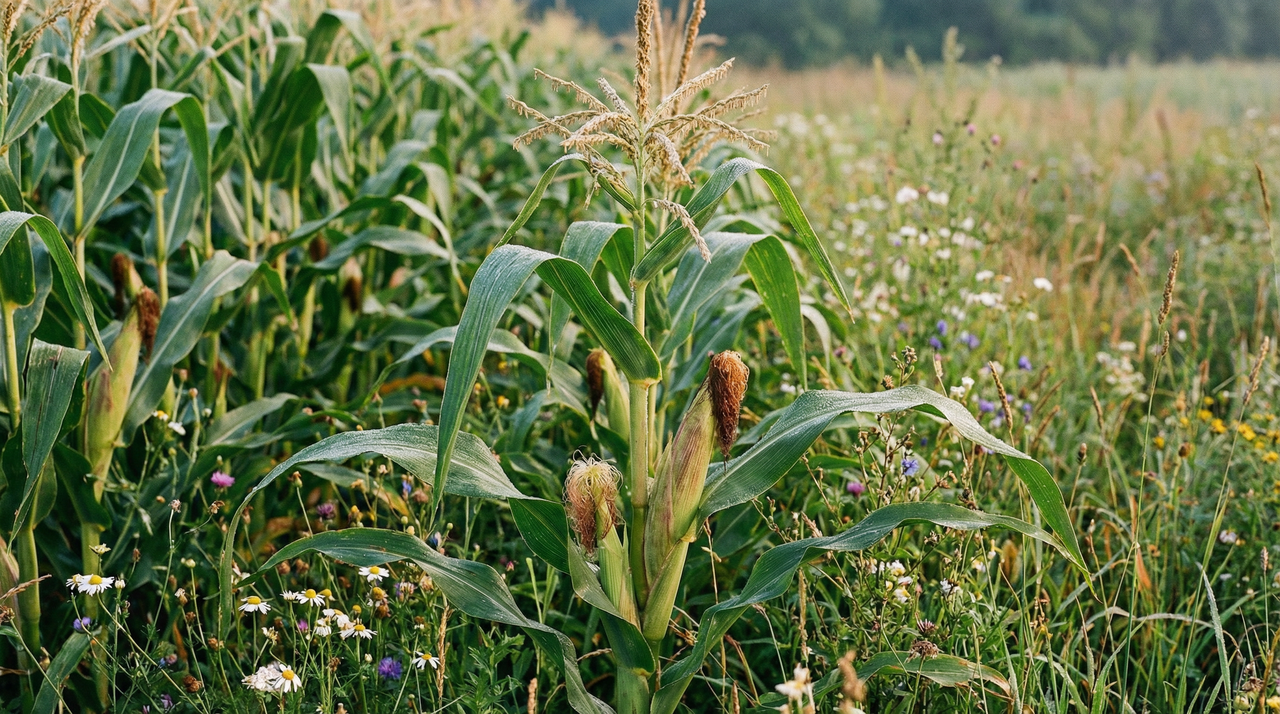
Corn grows as a tall, upright, typically unbranched grass reaching 1.5 to 3 meters, with some cultivars pushing well past 3.7 meters depending on genetics, fertility, and climate.[10][11] Below ground, a fibrous root system reaches 1 to 2 meters deep; above ground, the stem moves through distinct nodes and internodes while long, alternate, strap-like leaves (up to 1.2 meters long) arch outward from each node.[12][13] The male tassel crowns the plant at the top, releasing pollen that drifts on the wind, while the female ears form lower on the stalk, each wrapped in husks with silky threads extending out to catch that pollen. It's a clever monoecious arrangement, with both sexes on one plant but physically separated to encourage cross-pollination.
The kernels themselves (botanically caryopses) range from 6 to 13 mm and come in yellow, white, red, blue, purple, and multicolored forms depending on the cultivar.[10][14] I save ears of 'Bloody Butcher' every fall, those deep red-maroon kernels drying on my kitchen windowsill before they go back into the ground the following spring, beautiful enough to be a decoration and functional enough to be next year's seed. That dual life as ornament and food is one of the things I genuinely love about heirloom corn.
Traditional and Cultural Uses
Genetic changes at key loci like tb1 distinguish domesticated maize from its wild ancestor, and once that transformation took hold, the crop spread fast.[15] Pre-Columbian trade networks carried maize to the American Southwest by around 2100 BCE and into South America by 1000 BCE.[16] After European contact, it reached Spain by 1493 to 1496 and then moved with stunning speed into Europe, Africa, and Asia, supporting population growth in Italy, the Balkans, and sub-Saharan Africa in ways that reshaped those regions permanently.[17][18]
The cultural weight of maize in Mesoamerica runs deeper than agriculture. The Popol Vuh describes humans being formed from corn; the Codex Mendoza records it in Aztec tribute; the Green Corn Ceremony of Southeastern tribes and the Hopi Corn Mother dances wove it into spiritual practice; Andean communities fermented it into chicha; and corn pollen carried meaning in blessings and rituals across many traditions.[19][20][21] Indigenous peoples also developed nixtamalization (processing maize with calcium hydroxide) to improve nutrient bioavailability, a technique I've experimented with at home and found genuinely transforms both flavor and digestibility.[22][23] Even popcorn is ancient; carbonized Zea mays everta kernels from eastern North America predate European contact.[24] That's a tradition I'm happy to keep alive.
The living legacy isn't without tension. Modern monoculture corn raises serious concerns about soil depletion, biodiversity loss, and water use, and patents on genetically modified varieties have sparked ongoing debates about biopiracy and Indigenous intellectual property rights.[25][26] Growing corn regeneratively, with rotation and companions, feels like the least I can do to honor the plant's origins.
Fun Facts About Corn
Corn grows at 5 to 8 cm per day during its peak vegetative sprint,[27] and I mark seedling emergence dates on stakes every season just to watch the surge. During Florida's hot, humid summers, the growth is almost audible. The world record for a single stalk stands at 12.08 meters, set in Japan in 2010, and the longest recorded ear stretched 90.5 cm in New York in 2011.[28][29] A typical ear holds 800 to 1,200 kernels, and wind can carry corn pollen hundreds of meters, which is the same biology that Indigenous farmers understood intimately when they laid out their Three Sisters plantings.[7][9] Add the C4 photosynthetic engine and a rhizosphere teeming with microbial partnerships,[8] and you have a plant that earns every inch of the reverence humans have shown it for nearly a hundred centuries.
Corn Varieties and Sourcing
Main Corn Types: Sweet, Dent, Flint, and Popcorn
Zea mays is officially divided into four main cultivar groups based on kernel type and endosperm composition: sweet corn (Zea mays var. saccharata), dent corn (Zea mays var. indentata), flint corn (Zea mays var. indurata), and popcorn (Zea mays var. everta).[30][31] Modern breeding blurs these lines constantly, so treat the categories as a decision framework rather than a rigid taxonomy.[30]
Sweet corn carries a mutation that blocks sugar-to-starch conversion, so kernels stay tender and high in sucrose right up to the milk stage -- harvest 18 to 24 days after silking before that sweetness disappears fast. Silver Queen is the benchmark I keep returning to in my own garden: white kernels, 8- to 9-inch ears with 18 to 20 rows, and reliable sweetness even through heavy summer rain.[32][33] The tradeoff is that sweet corn is genuinely perishable, with smaller yields per acre than the storage types because you're harvesting an immature ear.
Dent corn accounts for over 90% of U.S. production and is grown almost entirely for feed, ethanol, and processed ingredients.[34] For home growers, Bloody Butcher is the heirloom dent type worth knowing: a pre-1845 variety with deep maroon kernels rich in anthocyanins, solid disease resilience, and enough versatility for cornmeal, flour, or even decoration.[35] I've seen those deep-red kernels milled into a beautifully colored meal that makes any cornbread look intentional.
Flint corn's hard, vitreous outer endosperm is what I reach for when I want corn I can store for months without spoilage. That rock-solid kernel resists insects and moisture far better than any sweet type ever will, and the anthocyanin-rich colors make it genuinely useful as an ornamental corn plant alongside its role in polenta and hominy. Popcorn is its own category entirely: a tight, moisture-proof pericarp surrounds a high-starch core that explodes at 13.5 to 14 percent kernel moisture, which is why it's the only type grown exclusively to pop.
Modern hybrid breeding keeps pushing dent and flint types toward better drought tolerance, shorter seasons, and Bt pest resistance,[36] which matters if you're selecting for climate resilience in a changing garden.
How to Source Quality Corn Seed
For garden-scale growers, sourcing heirloom maize seeds or open-pollinated varieties in the U.S. is genuinely easy. Johnny's Selected Seeds, Burpee, Gurney's, and Native Seeds/SEARCH all carry solid selections of heirloom maize and specialty types, available seasonally in spring with packets typically running somewhere in the $5 to $20 range depending on variety.[37][38][39] I personally trust Johnny's and Native Seeds/SEARCH because their germination rates have been consistently high in my trials. Native Seeds/SEARCH is especially worth bookmarking if you want Southwest-adapted types with deep cultural lineage.
Commodity dent corn seed is sold by weight or per acre for large-scale planting, and patented commercial hybrids won't show up in any heirloom seed bank because of intellectual property restrictions. For most home growers, that's a non-issue. If you're considering importing seed from abroad, know that USDA APHIS requires a permit, a phytosanitary certificate from the exporting country, and compliance with the Federal Seed Act.[40][41] I never import corn seed myself; the regulations exist to protect domestic agriculture from pathogens like smut and Fusarium, and the domestic selection is honestly excellent. Spring is your planting window in most regions, with the bulk of U.S. corn in the ground from April through early June and harvest running September into November.[42]
How to Propagate and Plant Corn (Zea mays)
Every kernel you drop into the ground carries roughly 9,000 years of human selection behind it. Corn was domesticated from teosinte (Zea mays ssp. parviglumis) in the Balsas River Valley of southern Mexico, and the genetic changes that transformed a small, shattering seed head into the large, non-shattering cobs we grow today were profound.[43][44] For practical purposes, all of that history means one thing: corn is seed-propagated, full stop. Vegetative propagation has essentially zero practical success rate, and while tissue culture and double haploid techniques exist in breeding programs, they're genotype-dependent and firmly in the lab, not the garden.[45][46] Seed is your only path, and fortunately it's a reliable one.
Corn Seed Morphology, Storage, and Viability
A corn kernel is a caryopsis, meaning the seed coat and fruit wall are fused together into one structure. The endosperm makes up 80-85% of the kernel and is mostly starch; the germ sits at the base and carries the embryo along with the oils and proteins that fuel germination.[47] Understanding that anatomy matters when you're evaluating seed quality or deciding what to store.
Corn seeds are orthodox, meaning they can be dried down to 5-10% moisture and stored for years without losing viability.[48][49] For home storage, keep seeds at 4-10°C with relative humidity between 10-20%, sealed in a hermetic container; a mason jar with a silica gel pack works well.[50][51] Under those conditions you can expect 80-90% germination after five years, dropping to 50-70% after ten.[52] If you're uncertain about older seed, do a paper-towel germination test before committing to a full bed.
The hybrid versus open-pollinated question matters most if you're saving seed. Corn is monoecious and wind-pollinated, with outcrossing rates between 20-80%, so variety purity requires real spatial separation.[47] Maintaining true-to-type open-pollinated seed means isolating by at least a quarter to a half mile, or staggering planting dates by 12-14 days so tasseling doesn't overlap.[53] I learned this the hard way with a sweet corn hybrid I tried saving years ago; the resulting F2 plants were a chaotic mix of ear sizes and sugar levels. Hybrids are highly heterozygous, so that variability in saved seed is expected and unavoidable.[47] If seed saving is part of your plan, start with an open-pollinated or heirloom variety and respect those isolation distances.
Optimal Soil, pH, and Site Conditions for Planting Corn
Corn wants well-drained loam or silt loam with 2-5% organic matter and full sun, no less than 6-8 hours daily.[54][55] As a C4 plant, corn has a high light saturation point, and partial shade translates directly into 20-50% yield loss, delayed flowering, and undersized ears.[56] Don't compromise on site selection if you can avoid it.
Drainage is non-negotiable. Corn roots can reach 3-6 feet deep under ideal conditions, but they're easily restricted by compacted soil (bulk density above 1.4-1.5 g/cm³ stops root penetration) or by waterlogging, which causes rot, chlorosis, and stunted growth almost immediately.[57][58] Compare that to beans, which tolerate a moderately compacted bed with relative ease; corn planted in the same spot would struggle from week one. If your beds have been walked on or were under a lawn, invest in deep loosening before you plant.
Target a soil pH of 6.0-7.0, with 6.5 as the sweet spot.[59] Drop below 5.5 and aluminum toxicity inhibits root development; push above 7.0 and iron, manganese, and phosphorus become unavailable, showing up as the interveinal chlorosis that looks like a nutrient deficiency but is really a chemistry problem.[60][61] In my experience, a soil test in fall followed by a modest lime application has reliably eliminated that yellowing on slightly acidic beds by the following season. Corn is also a heavy nitrogen feeder, requiring 1.0-1.2 lbs of nitrogen per bushel of expected yield, ideally applied in splits rather than all at once.[62][63] Phosphorus and potassium rates should come from a soil test, not guesswork; 40-60 lbs P₂O₅ per acre is a common target on low-testing soils.[62] Don't skip that test. Poor drainage or a wrong pH at establishment sets up every pest and disease problem you'll face three months later.
Corn Planting Density, Spacing, and Technique
Standard field spacing runs 30-inch rows with 6-8 inches between seeds in the row, putting you somewhere in the 28,000-36,000 plants per acre range.[64][65] Sweet corn tops out at 4-7 feet with a 2-3 foot canopy width; field corn can hit 6-10 feet.[64] Walking 30-inch rows once the canopy closes, I've noticed the lower leaves hold their color longer than in tighter spacings, which tells me they're still capturing enough light to support kernel fill rather than senescing early. Narrow that to 15-20-inch rows and you can pick up a 5-10% yield gain through better light interception; widen to 36-40 inches in humid climates and you improve airflow, which helps with foliar disease pressure.[66]
Wait until soil temperature has held at 55°F (13°C) for at least three to five consecutive days before sowing, and plant seeds 1-2 inches deep.[67][68] After losing an entire early planting to cold, wet soil one spring, I bought a cheap soil thermometer and haven't planted without checking it since. That threshold isn't arbitrary; germination success climbs to 90-95% in warm, well-prepared soil and drops sharply below that temperature.[69] Spacing also connects back to the seed-saving discussion: in a home garden polyculture, keeping your corn block compact (rather than scattered rows) concentrates pollen and improves pollination, which means fuller cobs and better isolation from neighboring varieties.
Germination Timeline and Growth Stages
Plan your planting date so the full season fits before your first fall frost. Sweet corn needs 60-100 days from sowing to harvest; field corn runs 90-120 days; popcorn falls in the 85-120 day range.[70][71] The crop requires roughly 2,500-3,000 growing degree days from planting to physiological maturity, which makes local GDD data a more reliable planning tool than days-to-maturity alone in marginal climates.[72] If you're in zones with shorter seasons, choose early-maturing varieties rather than pushing a full-season hybrid and hoping for warm fall weather.
You may come across research on corn grafting, where cleft or wedge grafts on two-to-three week seedlings can shorten maturity and improve yields under experimental conditions.[73][74] It's genuinely interesting science, but it's a research technique, not a garden practice. Seed remains the only practical, proven method for growing corn, and under the right conditions it will do everything you need it to do.
Corn Plant Care Guide
Corn is a fast, hungry, unforgiving annual that rewards growers who match their inputs to what the plant actually needs at each stage. The good news is that once you understand its rhythms, the whole system clicks into place.
Watering Requirements for Corn
Water demand changes dramatically as corn moves through its life cycle. During germination and early vegetative growth, 0.5 to 1 inch per week is plenty.[75] That climbs to 1 to 1.5 inches during active vegetative growth, then peaks hard at 1.5 to 2.5 inches per week from tasseling through early grain fill.[75] Tasseling is the danger zone. Let moisture slip during pollination and you will see poorly filled ears with skipped rows, no matter how well you fed the crop. Total seasonal demand runs 20 to 30 inches across the growing season.[75] For home gardens, drip irrigation delivering 1 to 2 inches weekly keeps soil evenly moist without the foliar disease pressure that overhead watering can trigger.[71]
Sunlight Needs
Corn needs full sun, at minimum 6 to 8 hours of direct light daily. Its C4 photosynthesis pathway is built for high-light grassland conditions and genuinely thrives at intensities most other vegetables find punishing. The canopy of a mature stand intercepts 80 to 95 percent of available light by tasseling,[76] which is one reason shading even a few plants early on compounds into noticeable yield losses at harvest. Most modern sweet corn hybrids are day-neutral, so photoperiod sensitivity is rarely a concern for home growers in temperate zones.[76] Once the canopy closes, the plant largely manages its own light capture. Your job is just to get it there without competition from shade trees or tall companions to the south.
Fertilizer and Nutrient Management
Corn is about as heavy a feeder as annuals get. Typical Midwest recommendations for average fertility soils run 150 to 200 lbs of nitrogen, 40 to 80 lbs of P2O5, and 40 to 100 lbs of K2O per acre.[77][78] A useful rule of thumb is 1.0 to 1.2 lbs of nitrogen per bushel of expected yield.[79][80] Those numbers are starting points, not targets. A soil test always overrides them.
Soil pH should sit between 6.0 and 6.8, with target phosphorus levels of 30 to 50 ppm and potassium at 150 to 250 ppm.[81][82] I soil-test every three to four years at minimum and adjust from there. Splitting nitrogen applications (20 to 30 percent pre-plant, then 50 to 70 percent sidedressed at V4 to V6 when plants are 12 to 30 inches tall) dramatically improves uptake efficiency and cuts losses compared to applying everything up front.[83][84] Shifting my sidedress timing to V6 was genuinely one of the bigger single-season yield improvements I made in my garden. If you're rotating with legumes, count on 30 to 40 fewer lbs of nitrogen needed thanks to the residual credit.[83]
Learn to read your leaves. Nitrogen deficiency shows as yellowing that starts at the tip of older leaves and progresses inward in a distinct V-shape. Phosphorus deficiency turns older leaves purple with visible stunting. Potassium runs as marginal yellowing or browning along the edges of older leaves. Iron deficiency, by contrast, shows as interveinal chlorosis on young leaves near the top.[85][86] I scout lower leaves first when I suspect N or K problems, and upper leaves when I think I'm dealing with iron. High pH or sandy soils can also trigger zinc, boron, manganese, and copper deficiencies even when fertility looks adequate on paper.[87] And going too heavy is its own trap: salt or ammonia toxicity from excess fertilizer causes tip burn, chlorosis, and stunted seedlings, particularly in early stages.[88][63]
Frost Tolerance and Cold Protection
Corn originated in the subtropical Balsas River Valley and has essentially no tolerance for frost as a mature plant.[89] It's rated RHS H1c, meaning it needs frost-free conditions, and grown as an annual across USDA zones 3 through 9 with a required 90 to 120 frost-free days.[90] Minimum soil temperature for germination is 50°F, though anything below 55 to 60°F produces slow, patchy stands.[91] I learned the hard way that planting into marginally warm soil meant half the block emerged a week late and never fully caught up. Seedlings can briefly tolerate 28 to 32°F but won't survive prolonged freezes or even light frost in the pre-V1 stage.[92] If a cold snap threatens after planting, I reach for lightweight floating row covers rather than overhead sprinkling. Covers provide 4 to 8°F of protection[93] and avoid the prolonged leaf wetness that I once found contributed to early disease problems. Cold-tolerant sweet varieties like 'Early Sunglow' and 'Trinity' also help if you're pushing the front end of the season.[94]
Heat Tolerance and Stress Management
The other end of the temperature window is just as narrow. Corn fits AHS Heat Zones 5 through 11, with optimal growth above 50°F, but sustained daytime temperatures above 95°F during tasseling and silking cause pollen sterility and kernel abortion, with yield losses of 20 to 50 percent.[95][96] Short spikes to 104°F may be tolerated if nights cool back below 77°F, which is why desert-edge growers sometimes get away with conditions that look terrifying on paper.[95]
In my experience, two to four inches of organic mulch and evening irrigation together make a bigger difference than any other single management decision once heat sets in. Mulch cools the root zone by 3 to 5°C,[97] and I've seen visibly better tip fill on mulched blocks compared to bare-soil plants right next to them during a hot spell. Wider row spacing of 30 to 36 inches improves airflow, and if conditions are extreme, 30 to 50 percent shade cloth during peak afternoon hours gives reproductive-stage plants some relief.[98]
Pruning, Maintenance, and Seasonal Care
Corn is genuinely low-maintenance in terms of hands-on work. The most common mistake I see is pulling suckers (tillers) thinking they're wasting the plant's energy. In field corn, tillers actually contribute to yield and should be left alone. In sweet corn, only remove excessive suckers (more than two or three per plant) after silking.[99][100] Remove lower leaves only if they're visibly diseased. Staking is rarely worth the effort except in high-wind sites with heavy-eared varieties.
The plant's whole season runs on a growing-degree-day clock, accumulating 2,000 to 3,000 GDD (base 50°F) from emergence through black-layer physiological maturity.[101][102] In a small garden planting, hand-pollinating by shaking stalks mid-morning during silking improves kernel set dramatically, especially if your block is fewer than four rows wide. After harvest, dry grain corn to 13 to 15 percent moisture for safe storage, and leave residue on the soil surface through winter for erosion control and organic matter return.[103] A cover crop sown into the standing residue is even better if your season allows it.
When and How to Harvest Corn (Zea mays)
From silking to physiological maturity, corn moves through its reproductive phase in roughly 55 to 65 days.[104][105] What you do within that window determines whether you're eating corn on the cob, grinding dried kernels into meal, or popping it on the stovetop. The decision point isn't arbitrary; it's written right on the ear if you know how to read it.
Timing and Maturity Indicators for Sweet Corn, Field Corn, and Popcorn
Sweet corn is ready at the milk stage (R3), roughly 70 to 90 days after planting, when kernels are plump, husks are still tight and green, and about half the silks have turned brown.[106][80] I teach clients the thumbnail test: press a kernel gently. If you get a squirt of milky juice, you're there. Watery means too early, pasty means you've already lost ground on sweetness. It's the same instinct as pressing a tomato for give or snapping a bean to check its snap; the fruit tells you.
Field corn runs a different calendar. You're watching for the black layer at the kernel base, which signals physiological maturity, and you want the milk line progressed 50 to 75 percent down the kernel before that point.[102][107] That typically puts you at 90 to 120 days after planting.[108] Popcorn wants even more time on the plant, usually 100 to 110 days, with kernel moisture down to 14 to 18 percent before you pull ears.[109] Rush a popcorn harvest and you'll get sad, chewy kernels that barely pop.
In the Midwest Corn Belt, grain harvest typically kicks off in late September in southern areas, peaks through October, and finishes by mid-to-late November.[110][111] Irrigated stands in Nebraska and western states can start a bit earlier, around mid-September, since controlled water supply often speeds uniform maturation.[112]
Harvest Techniques, Moisture Targets, and Post-Harvest Handling
For grain corn, target 18 to 24 percent kernel moisture at harvest, then dry down to 13 to 15 percent for safe long-term storage, ideally at temperatures below 50°F.[113][114][115] If it's been raining, wait two to three days for field drying before you run equipment or pull ears for drying racks.[116] I once rushed a blue corn harvest after a wet stretch and dealt with mold in storage that could have been completely avoided with a little patience. The extension advice exists for a reason.
For sweet corn, the technique is simple but the timeline is unforgiving. Twist each ear downward and away from the stalk, husk immediately, and get it cold fast, ideally to 32°F at 95 percent relative humidity.[117][118] Even with husks on, shelf life only stretches one to two weeks under ideal cold storage.[119] At a farmers market cooler, that degradation is slowed considerably; left on the kitchen counter for a few hours, you can actually taste the sugars converting to starch. I've done the side-by-side comparison enough times to say the difference is real and dramatic.
That sugar-to-starch shift is exactly what fact #12 is really about: a high-yield ear might carry 800 to 1,200 kernels,[120] but yield is irrelevant if flavor has already peaked and passed. Pick at milk stage for the table, or wait deliberately for dry storage. There's no good middle ground.
How to Prepare and Use Corn (Zea mays)
Edible Parts and Culinary Uses of Corn
The kernel is where almost all the culinary action happens, but there's more edible territory than most gardeners realize. Baby corn, harvested before pollination when the whole cob is still finger-sized and tender, is entirely edible raw or stir-fried. Corn silk can be steeped into a mild, grassy tea.[121][122][123] Husks, mature cobs, and stalks are too fibrous to eat, though they have plenty of other uses I'll get to below.
Corn Flavor Profiles by Variety and Cooking Method
One thing I wish someone had told me early on is how dramatically variety changes the eating experience. Fresh sweet corn right off the stalk has that juicy, grassy sweetness from high sucrose content, sometimes hitting 10-25% sugars depending on the type.[124][125] Dent corn, by contrast, is starchy and mealy even at peak ripeness; it's designed for grinding, not eating straight.[126] Popcorn is its own sensory category entirely, developing nutty, buttery flavors through Maillard reactions as the moisture inside each kernel superheats and ruptures the hull.[127]
Cooking method matters just as much as variety. I've grilled ears right out of my garden and been stopped mid-bite by how different the smoky, toasty character is from a boiled cob's creamy sweetness. That shift is real chemistry: boiling preserves buttery volatile compounds while grilling adds pyrazines and caramelized notes, and raw corn retains hexanal, the compound responsible for that distinctly grassy freshness.[128][129] For a Mexican street corn recipe, grilling is non-negotiable. The charred kernels paired with lime, chili, and cotija are doing something a boiled cob simply can't. For a corn chowder or corn souffle casserole, that gentle boiled creaminess is exactly what you want.[130]
Traditional Processing Methods: Nixtamalization and Fermentation
This is where I have genuine respect bordering on reverence for Indigenous food science. Nixtamalization, the process of simmering dried corn in an alkaline solution before grinding it into masa, isn't just a culinary tradition; it's a nutritional intervention. The process reduces phytic acid by up to 90%, dramatically improves niacin bioavailability (explaining why pellagra didn't historically appear in Mesoamerican communities that ate corn as a staple), enhances mineral absorption, and helps mitigate mycotoxins.[131][132] When I make homemade masa from dried dent corn, that lime-soaked process connects the tortilla on my counter to thousands of years of hard-won knowledge. Fermentation achieves similar results by different means, reducing phytates by 50-70% and improving digestibility across African and Asian corn-based fermented foods.[133]
Corn Nutrition, Health Benefits, and Safety Considerations
Per 100g, whole corn delivers roughly 74g carbohydrates including 9g fiber, 9g protein, meaningful amounts of phosphorus, potassium, magnesium, zinc, and iron, plus beta-carotene for vitamin A activity.[134][135] Its protein is incomplete, low in lysine, which is worth knowing if corn is a dietary staple rather than an occasional side dish.[136] The fiber supports digestion and heart health, and the complex carbohydrates provide sustained energy, though the moderate-to-high glycemic index is worth considering for anyone managing blood sugar.[137][138]
A few safety notes worth knowing. Individuals with PKU need to monitor intake since corn contains phenylalanine at roughly 100-200mg per 100g.[139] Those with IBS may find the insoluble fiber aggravating.[140] Mycotoxins like aflatoxin are a genuine concern with improperly stored grain; in my Florida garden, humid summers demand thorough drying and airtight containers before any dried corn goes on a shelf. Poorly dried corn stored in humidity is an aflatoxin risk that's easy to prevent and serious to ignore.[141] Corn allergies are rare, affecting less than 1% of the population, and pesticide residue data from USDA sampling shows 99% compliance with safety standards.[142][143] GMO varieties have been assessed as safe by both the FDA and WHO, with no unique health risks compared to conventional corn.[144] One foraging caution I take seriously: Johnsongrass (Sorghum halepense) resembles young corn but releases cyanide compounds and is toxic; I've seen it growing in Central Florida fields alongside cultivated plots, and I'd never harvest any young grass stalk without being certain of the identification.[145][146]
Medicinal Preparations from Corn
Corn silk has a long history as a gentle diuretic in traditional medicine, prepared as a simple infusion (steeping dried silk in hot water), a decoction, or a tincture.[147][148] I save the silk from every ear I shuck and dry it for tea through summer. It's mild, slightly sweet, and the diuretic action is real enough to notice. Corn oil extracted from the germ finds topical use in salves for skin conditions like eczema, and traditional applications have also used cob and leaf poultices for wounds and inflammation.[149] These are gentle, food-adjacent uses with a long track record; the deeper phytochemical and clinical research has been covered in the health benefits section.
Non-Food Uses for Corn in the Home and Garden
A permaculture system doesn't produce waste, and a corn plant at the end of the season is nowhere near finished. Husks become material for basket weaving, traditional corn husk dolls, and garden crafts. Stalks have been used historically for thatching, fodder, animal bedding, and are increasingly valued as biomass for bioplastics and paper production.[150][151] In my garden beds, spent stalks go straight into the chop-and-drop pile or get layered into sheet mulch. Ornamental varieties like 'Glass Gem' and 'Indian Corn' dry beautifully for seasonal decoration. At industrial scale, corn is a major ethanol feedstock and corn starch has pharmaceutical applications as an absorbent.[152][149] Even pollen has been used as a natural dye. From silk tea to biofuel, from tamales to thatch, this plant earns every square foot it occupies.
Corn Health Benefits and Medicinal Uses
Most people think of corn as a food crop and nothing else. But Zea mays has a long parallel life as a medicinal plant, and once you start digging into that history, it's hard to look at a fresh ear the same way again. The part that gets the most attention isn't the kernel at all -- it's the silk, those fine golden threads we usually yank off and toss in the compost.
Traditional Uses and Modern Medicinal Research on Corn Silk
Across Native American, Aztec, Traditional Chinese Medicine, and Filipino traditions, corn silk has been used for centuries as a diuretic for urinary tract complaints, kidney stones, and edema, and also for gastrointestinal and inflammatory conditions.[153][154][155] I've made corn silk tea myself, usually from fresh silks right at harvest, and the mild, slightly sweet brew doesn't feel like medicine -- which is probably why it was such a natural fit in everyday herbal practice across so many cultures.
Modern pharmacology is catching up to that traditional knowledge, at least in animal models. Corn silk extracts show significant diuretic activity through multiple mechanisms: increased urine output, natriuretic effects, improved renal blood flow, potassium-sparing properties, and mild carbonic anhydrase inhibition, with effects in some studies compared to furosemide or hydrochlorothiazide.[156][157] That potassium-sparing quality is interesting to me because it aligns with what traditional herbalists observed -- corn silk as a gentler option compared to harsher pharmaceutical diuretics, rather than something that strips electrolytes aggressively. The anti-inflammatory picture is similarly promising: silk and leaf extracts inhibit pro-inflammatory cytokines like TNF-alpha and IL-6, suppress NF-κB pathway activation, and reduce COX-2 and lipoxygenase activity in animal models.[158][159]
Preclinical research also points to anti-diabetic effects via alpha-glucosidase inhibition and improved glycemic control, cholesterol-lowering activity, ACE inhibitory potential relevant to blood pressure, and xanthine oxidase inhibition with possible relevance to gout.[160][161][162] Antioxidant, hepatoprotective, neuroprotective, and antimicrobial properties also show up across the literature, with corn husk extracts active against E. coli and S. aureus in vitro.[163][164] The honest caveat is that the vast majority of these studies are preclinical -- in vitro or animal-based -- with only limited small-scale human trials and no large randomized controlled studies to back most of the claims.[165] The traditional knowledge came first, and the science is still working to catch up.
Key Phytochemicals in Corn: Phenolics, Flavonoids, Carotenoids, and More
The chemistry behind corn's bioactivity is layered by plant part and growth stage. Young seedlings produce benzoxazinoids like DIMBOA as front-line chemical defenses against herbivores and pathogens.[166] When insects attack mature plants, terpenoid volatiles like (E)-β-caryophyllene are released to recruit natural enemies -- a kind of chemical SOS that I find remarkable every time I think about it.[167] Phenolic acids, primarily ferulic acid and p-coumaric acid at up to 200-300 mg per 100g dry weight, are bound into cell walls for structural defense.[164]
The silks are where flavonoids concentrate, particularly maysin at 0.1-0.5% -- the same compound responsible for much of the anti-insect and anti-inflammatory bioactivity noted in the research above.[168] Kernels carry the carotenoids: lutein, zeaxanthin, and β-cryptoxanthin, with concentrations varying significantly by variety.[169] I've noticed this firsthand growing blue, red, and orange flint corns alongside standard yellow sweet corn -- the colored varieties consistently produce more vivid silk extracts, and their kernels have a noticeably richer, more complex flavor that hints at denser phytochemical profiles.
Nutritional Profile of Corn Kernels
The kernel is what most of us eat, and globally it's a serious caloric foundation -- providing 20-30% of daily calories in many diets worldwide.[170] Raw yellow sweet corn comes in at around 86 calories per 100g, with 3.27g protein, 18.7g carbohydrates (including 2g fiber and 6.26g sugars), 6.8mg vitamin C, roughly 0.25mg lutein and zeaxanthin for eye health, about 50mg ferulic acid, and meaningful amounts of magnesium, phosphorus, potassium, zinc, iron, and manganese.[171] When I'm picking sweet corn from my own garden and eating it the same day, I feel confident I'm getting close to that full lutein and zeaxanthin profile. Store-bought corn, depending on how long it's traveled, is a different story.
How you cook it matters too. Boiling can leach up to 50% of water-soluble vitamin C, while steaming retains around 90%.[172] Corn also contains phytic acid at 0.5-1.2% in the bran, which can reduce mineral bioavailability -- soaking or fermenting mitigates this significantly, something traditional cultures figured out long before the research confirmed it.[173] Corn allergy is genuinely rare, affecting less than 1% of the population, with zein proteins as the primary allergens and pollen cross-reactivity sometimes involved.[174]
Safety Considerations and Potential Risks
Uncontaminated corn is inherently non-toxic and safe for humans, pets, livestock, and during pregnancy in normal food amounts; it's naturally gluten-free and corn syrup carries GRAS status from the FDA.[175][176] One exception for pet owners: corn cobs can cause intestinal obstruction in dogs if swallowed whole, so keep those out of reach.[177]
The real hazards with corn aren't in the plant itself -- they're acquired. Mycotoxin contamination from molds (aflatoxins, fumonisins, zearalenone) under poor storage conditions can cause acute liver failure, increased cancer risk, and other serious toxicities.[178][179] The FDA sets an action level of 20 ppb for aflatoxins in human food. After a few seasons drying and storing my own field corn, the lesson I've absorbed is straightforward: keep moisture below 15% with good airflow, store below 50°F, and mold rarely becomes an issue.[180] No chemical treatment substitutes for dry, cool conditions.
On the corn silk side, supplements appear safe up to about 5g per day with only mild GI upset or rare allergic reactions reported.[181][182] Caution applies for people with kidney issues or those already on prescription diuretics -- the mechanisms are clear enough that adding corn silk tea on top isn't harmless synergy, it's stacking diuretic effects with real dehydration and electrolyte risk.[183] I always tell people in that situation to check with their doctor first, full stop. Pregnancy is another category where limited data warrants caution beyond normal food use.
Corn Pests and Diseases: Resistance, Management, and Prevention
Corn has a complicated relationship with the things that want to eat it. The good news is that decades of breeding have made modern hybrids significantly tougher than their open-pollinated predecessors, with research showing 50-65% reduced severity of major foliar diseases compared to older varieties.[184] The honest caveat is that "moderate resistance" and "manageable" are not the same as "immune," and growers who treat hybrid ratings as a substitute for good cultural practice tend to find that out the hard way.
Disease Resistance in Modern Corn Hybrids
Northern corn leaf blight and gray leaf spot are the two diseases I field questions about most often, and for good reason. NCLB resistance ranges from partial to moderate in most modern hybrids, with resistance genes Ht1 and Ht2 slowing lesion development without eliminating it entirely.[185][186] Gray leaf spot follows a 1-9 susceptibility scale, and in humid seasons I've watched that rating play out in real time: hybrids sitting at a "Moderate" rating stayed productive with minimal intervention while susceptible plots needed early fungicide calls to salvage yield. Varieties like DKC66-84 and P34N90 consistently land in the tolerant range,[187][188] while open-pollinated dent varieties tend to be more variable. Southern corn leaf blight is less of a modern concern thanks to intensive post-1970 breeding, with most current hybrids rated low to moderate susceptibility.[189]
Bacterial and viral threats round out the picture. Goss's wilt sits at low to moderate resistance across most hybrids, with no immune varieties identified yet.[190] Maize dwarf mosaic virus resistance is often tied to the Rmd gene, and hybrids like DKC64-61 show notably reduced symptom expression.[191] For open-pollinated growers in permaculture contexts, I'll mention that Bloody Butcher shows useful resistance to gray leaf spot and common rust,[192] which is part of why it keeps showing up in my food forest plantings. Corn smut is moderate across the board under good conditions but spikes under plant stress.[193]
What often matters more than the variety rating are the environmental thresholds: soil temps below 50°F invite soil-borne disease, humidity consistently above 85-90% triggers gray leaf spot and northern leaf blight, and repeated rainfall events keep foliage wet long enough to splash inoculum between plants.[194][195] Much like early blight in tomatoes, prolonged leaf wetness is the real trigger. A hybrid rated "Moderate" in a dry year can look like a different plant entirely after two weeks of humid, rainy weather.
Insect Pest Resistance and Defense Mechanisms
Corn's physical defenses are more sophisticated than they look. Young leaves carry benzoxazinoids like DIMBOA that are genuinely deterrent to feeding insects, and older leaves develop siliceous cells that make them abrasive to chew through.[196][197] I notice the sticky, slightly waxy feel of seedling leaves when thinning; that's the benzoxazinoid chemistry at work. Jasmonate-triggered systemic responses add another layer when damage begins.
For borers and rootworms, Bt corn is genuinely transformative. I've grown Bt and conventional lines side by side and seen the difference firsthand: stalk tunneling from European corn borers was dramatically reduced in the Bt plots, with unmanaged borers capable of 20-30% yield loss in susceptible lines.[198][199] Western corn rootworm is similarly well-managed by Bt hybrids, which can reduce larval survival by over 90%, though this pest is a particular problem in continuous corn systems where rotation has been abandoned.[200] Earworm and fall armyworm are trickier. Resistance to earworm is partial and variable, concentrated mainly in tropical and subtropical germplasm,[201] while fall armyworm resistance runs higher in tropical lines thanks to leaf toughness and chemical defenses.[202] For aphids and stink bugs in my garden plantings, I don't rely on genetics at all; the cultural tactics and beneficial insects do more work there.
Integrated Pest and Disease Management Strategies
Genetics only carry you so far. The growers I've seen stay out of trouble year after year combine variety selection with 2-3 year rotations away from corn, which breaks both disease inoculum cycles and rootworm populations effectively.[203][204] Planting at appropriate density (roughly 60,000-80,000 plants per hectare with 75-90 cm row spacing) improves airflow and directly reduces the humidity conditions that foliar fungi need to establish.[205] In my landscape designs I plan guild diversity and rotation sequences from the start, because the research and years of trial and error consistently show they are the real foundation of resilient corn plantings.
Scouting matters too. Fungicides and insecticides are worth applying only when economic thresholds are genuinely exceeded, and that judgment requires eyes in the field, not calendar-based spraying.[206] Biological controls like Trichogramma wasps support borer management, and maintaining habitat for these beneficials fits naturally into a polyculture design.[207] For anyone using Bt hybrids, I always plant the required refuge strip. The science on delaying resistance is clear, and these tools need to stay effective for the growers who come after us.[199]
Corn in Permaculture Design: Ecosystem Roles, Climate Needs, and Guilds
Corn gets a bad reputation in permaculture circles, and honestly, some of that reputation is earned. Grown as a monoculture, it's a heavy feeder, a water hog, and a biodiversity desert. But that's not the plant's fault. That's a design problem. When I started growing corn in polyculture systems, the whole picture changed, and the key was treating it like the deeply social plant it actually is.
Ecological Functions and Three Sisters Guild
Corn is a monoecious, wind-pollinated annual, meaning each plant carries separate male tassels and female silks.[208][209] That architecture has design implications: because pollen is viable for only 24 to 48 hours and travels best at 2 to 10 mph with humidity in the 50 to 70% range, you need block planting rather than long single rows to ensure adequate cross-pollination.[209] This is as true in a guild as in a conventional bed.
The Three Sisters polyculture -- corn, beans, and squash grown together -- is the most elegant answer to corn's ecological liabilities.[210][23] Corn provides the vertical trellis. Beans fix nitrogen and feed back into the hungry soil corn depletes. Squash sprawls underneath as living mulch, suppressing weeds and holding moisture. Each partner compensates for the others' weaknesses in a system that's been field-tested for roughly 9,000 years. After growing this guild for several seasons, I can tell you the biggest beginner mistake is sowing all three at once. The beans need something to climb. I wait until the corn is 4 to 5 feet tall before transplanting or direct-seeding the beans; otherwise they sprawl on the ground and the whole trellis relationship falls apart.
Beyond the Three Sisters dynamic, corn contributes meaningfully to soil ecology on its own terms. As a C4 grass, it influences soil microbial communities and nitrogen cycling during its season, and the stalks and residues left after harvest add real biomass back to the system as mulch or compost material.[211] Its root exudates carry mild allelopathic properties that suppress some weed competitors,[212] and those deep fibrous roots stabilize soil against erosion. Carbon sequestration as an annual is moderate at best, but no-till and cover crop strategies at the guild level shift that calculus in a more positive direction.[211]
Climate Requirements and Hardiness Zones
Corn is a tender annual with zero frost tolerance. Seedlings die below 28 to 32°F, and germination won't happen unless soil temperatures hit at least 50 to 60°F.[213][214] I treat it like tomatoes in that regard: if it's still too cold for tomatoes, it's too cold for corn. Optimal vegetative growth happens between 70 and 85°F, and the reproductive stages -- tasseling, silking, pollination -- sit in that same sweet spot.[215] Push above 95°F and pollen viability drops sharply, which means heat waves during pollination can gut your yield even when everything else looks good.[215]
Humidity matters too, and not always in the ways people expect. Corn prefers moderate humidity in the 50 to 80% range and needs 20 to 30 inches of water distributed across the growing season.[37] High humidity above 85% during warm weather creates the conditions gray leaf spot and other foliar diseases love.[216] In my humid subtropical context, I've found that wider spacing and positioning the guild where it catches morning sun and afternoon airflow makes a real difference in reducing disease pressure on small-scale plantings.
Corn grows as an annual in USDA Zones 3 through 11, with the best results in Zones 5 through 9.[217] You need 60 to 100 frost-free days and 2,400 to 3,000 growing degree days above the 50°F base threshold.[218] For growers in Zone 4 or shorter-season areas, early-maturing varieties are the solution. I've trialed several early sweet corn types in marginal seasons and they're a reliable path into corn growing for anyone who's been told their climate is too short. Salt tolerance is low, so coastal saline sites above 4 to 6 dS/m aren't good candidates regardless of zone.[219]
Forest Layer Placement and Companion Planting
Corn reaches 6 to 12 feet tall with fibrous roots pushing 4 to 8 feet deep,[37] which sounds like canopy layer material, but it's not. It's an annual. It has no place as a permanent food forest element -- no woody biomass, no year-round shade, no persistent root architecture. Where it fits best is in seasonal annual beds and at garden edges, where its height and structure can serve a defined purpose for one growing season before it returns to mulch and compost.[220]
What makes it worth including in a regenerative system is those soil relationships. Corn forms symbioses with arbuscular mycorrhizal fungi and beneficial rhizobacteria that enhance phosphorus uptake and stress tolerance.[221] The first season I started inoculating my transplant holes with mycorrhizal fungi, the difference in root development was visible at the end of the season. Deeper roots, more robust plants, and noticeably better drought recovery during dry spells. It's a small step with outsized returns.
As a companion plant for corn, beans are the non-negotiable partner, but the guild expands well beyond squash and legumes. Spacing in the guild runs 1 to 2 feet between corn plants in mounds or rows set 3 to 4 feet apart, leaving room for companions to establish without getting shaded out too early.[220] Planted at garden edges, the tall stalks provide afternoon shade for heat-sensitive crops on the south or west side. The mild allelopathy that suppresses some weeds is a real workload reducer in the guild; I spend far less time hand-weeding a Three Sisters bed than I do in comparable monoculture rows. That's the design doing its job: corn's intensity becoming an asset because the right plants are placed around it.
The Year I Finally Grew Corn for the Grinding
I'd grown sweet corn for summers my whole career, but the first season I let a row of Bloody Butcher dry on the stalk, husked it in November with cold fingers, and ran the kernels through my hand mill, something shifted. It wasn't nostalgia exactly; it was more like finally understanding the whole sentence after years of reading only the first word.
Sources 221
- Genetic evidence and the origin of maize - PNAS ↩
- The Domestication of Maize in the Balsas River Valley ↩
- Starch grain and phytolith evidence for early ninth millennium B.P. maize from the Central Balsas River Valley, Mexico ↩
- Archaeological Evidence for the Domestication of Maize at Guilá Naquitz ↩
- Maize: Origin, Domestication, and Its Role in World Food Production ↩
- Zea mays - Missouri Botanical Garden ↩
- Life Cycle of Corn (Zea mays) ↩
- C4 Photosynthesis in Maize: Mechanisms and Adaptations ↩
- The Three Sisters: Corn, Beans, and Squash ↩
- Zea mays L. Plant Guide ↩
- Zea mays - Missouri Botanical Garden ↩
- Zea mays ↩
- USDA PLANTS Database - Zea mays L. ↩
- Botany of Corn (Zea mays) ↩
- Molecular Evidence for a Single Origin of Maize ↩
- The Global Spread of Maize ↩
- Maize in Europe: The First Arrival and Its Impact ↩
- Maize in Africa: The Historical and Cultural Context ↩
- Popol Vuh ↩
- Green Corn Ceremony ↩
- Sacred Corn: Its Role in Native American Ceremonies ↩
- Ethnobotany of Maize in Native North America ↩
- Maize: The Domestication and Use of a Global Crop ↩
- Ancient Maize: The Archaeobotany of Domestication ↩
- Environmental Impacts of Maize Monoculture ↩
- Indigenous Rights and Plant Genetic Resources ↩
- Corn Growth and Development ↩
- Guinness World Records: Tallest maize plant ↩
- Largest ear of corn ↩
- Maize Varieties - Wikipedia ↩
- Corn Types and Characteristics - USDA ↩
- University of Illinois Extension - Sweet Corn Varieties ↩
- University of Florida IFAS - Sweet Corn Production ↩
- FAO Statistical Data: Corn Production and Utilisation ↩
- Seed Savers Exchange - Bloody Butcher Corn ↩
- Corn Breeding for Drought Tolerance - Crop Science Society ↩
- Zea mays (Maize) Profile ↩
- Native Seeds/SEARCH - Heirloom Corn Varieties ↩
- Johnny's Selected Seeds - Corn Varieties ↩
- Importation of Plants and Plant Products ↩
- Federal Seed Act Regulations ↩
- Corn Planting and Harvesting Practices ↩
- The Origin of the Cultivated Maize ↩
- Evolutionary and Genetic Aspects of Maize Domestication ↩
- Tissue Culture of Zea mays ↩
- In Vitro Propagation of Maize (Zea mays L.) ↩
- Corn Seed Morphology and Endosperm Development ↩
- CGIAR Genebank Standards for Orthogonal Seeds ↩
- FAO Seed Storage Manual ↩
- FAO Seed Storage Guidelines ↩
- Seed Storage of Maize (CIMMYT) ↩
- Effect of Moisture Content and Temperature on Maize Seed Longevity ↩
- Seed Saving from Hybrids: What to Expect ↩
- USDA PLANTS Database: Zea mays ↩
- Missouri Botanical Garden Plant Finder ↩
- Shade Avoidance in Maize: Mechanisms and Agronomic Implications ↩
- Soil Compaction | University of Minnesota Extension ↩
- Corn Root Systems: Development and Function ↩
- Soil pH Effects on Corn ↩
- Aluminum Toxicity in Acid Soils for Maize ↩
- Corn Production Handbook - Soil pH Management ↩
- Illinois Extension: Corn Fertilization ↩
- USDA NRCS: Corn Nutrient Management ↩
- Corn Planting Guide - University of Minnesota Extension ↩
- Corn Plant Population Guidelines - Iowa State University Extension ↩
- Corn Row Spacing Considerations ↩
- Soil Temperature Considerations for Corn Planting - University of Minnesota Extension ↩
- Corn Planting Guide ↩
- Corn Planting Guide ↩
- Corn Growth and Development ↩
- Sweet Corn Production ↩
- Relative Maturity and Hybrid Selection in Corn ↩
- Grafting Techniques in Maize (Zea mays L.) for Physiological Studies ↩
- Yield Impacts of Peduncle Grafting in Field Corn ↩
- Irrigation Management for Corn ↩
- Photoperiodism in Maize - Crop Science Journal ↩
- Corn Nitrogen Rate Calculator ↩
- Fertilizer Recommendations for Corn ↩
- Nitrogen Recommendations for Corn in Illinois ↩
- Nutrient Removal by Corn Grain and Stover ↩
- Corn Soil Fertility ↩
- Best Practices for Maize Fertilization ↩
- Nitrogen Management Guidelines for Corn in Minnesota ↩
- Corn Nitrogen Management in the Corn Belt ↩
- Nutrient Deficiencies in Corn ↩
- Corn Nutrient Deficiency Symptoms ↩
- Zinc Deficiency in Corn ↩
- Salt Tolerance and Management in Corn ↩
- The Balsas River Valley and the Origin of Maize ↩
- RHS Hardiness Ratings ↩
- Corn Growth and Development ↩
- Frost Tolerance in Corn ↩
- University of Minnesota Extension: Frost Protection for Vegetables ↩
- Cold Tolerant Corn Varieties - Johnny's Selected Seeds ↩
- Corn Heat Stress Management ↩
- AHS Heat Zone Map and Plant Selection ↩
- Heat Stress Effects on Corn Pollination ↩
- Heat-Tolerant Maize Hybrids: Varietal Recommendations ↩
- Managing Corn Tillers and Suckers ↩
- Sweet Corn Production ↩
- Corn Growth and Development ↩
- Corn Growth and Development - Iowa State University Extension ↩
- Corn Production Guide, Iowa State University Extension ↩
- Corn Growth and Development ↩
- Corn Growth Stages and GDD Information ↩
- Sweet Corn Production Guide ↩
- Black Layer in Corn Kernels ↩
- Corn Harvest Management ↩
- Popcorn Production Guide ↩
- Crop Progress & Condition ↩
- Corn Harvest Management ↩
- USDA Crop Calendar ↩
- Corn Harvest Management ↩
- Harvesting Corn ↩
- Maize Drying and Storage Guidelines ↩
- Best Practices for Corn Harvest Timing ↩
- Postharvest Handling of Sweet Corn ↩
- Sweet Corn: Recommendations for Maintaining Postharvest Quality ↩
- Sweet Corn Production and Postharvest Handling ↩
- Corn Yield and Components ↩
- Corn Parts and Edibility - USDA ↩
- Zea mays - Wikipedia ↩
- Edible Parts of Corn Plant - Kew Gardens ↩
- Sweet Corn Flavor Profile ↩
- Sensory Evaluation of Corn Kernels ↩
- Dent Corn Characteristics ↩
- Volatile Compounds in Popcorn ↩
- Volatile Compounds in Corn: A Review ↩
- Aroma Chemistry of Popcorn ↩
- Sensory Analysis of Sweet Corn Aftertaste ↩
- Nixtamalization: A Traditional Process for Enhancing Nutritional Value of Corn ↩
- Effect of Processing on Anti-Nutritional Factors in Maize ↩
- Phytic Acid in Cereal Grains: Structure, Healthy or Unhealthy, and Diet Recommendations ↩
- USDA FoodData Central - Corn, sweet, yellow, raw ↩
- Mineral Content in Cereals - USDA Nutrient Database ↩
- Amino Acid Content in Corn - FAO ↩
- Health Benefits of Whole Grains Including Corn - AHA ↩
- Glycemic Index of Foods Including Corn ↩
- Phenylketonuria (PKU) Nutrition Management ↩
- Irritable Bowel Syndrome and Diet ↩
- Mycotoxins in Corn: Prevention and Control ↩
- Corn Allergy: Symptoms, What to Avoid, and More ↩
- Pesticide Data Program Annual Summary ↩
- GMO Crops: Past, Present and Future ↩
- Cyanogenic Glycosides in Sorghum and Johnsongrass ↩
- Prussic Acid Poisoning from Sorghum Species ↩
- Zea mays (Corn) in Traditional Medicine ↩
- Corn Silk Tea Benefits and Safety ↩
- USDA PLANTS Database - Zea mays ↩
- Traditional Uses of Maize Stalks in Rural Architecture ↩
- Zea mays - Missouri Botanical Garden ↩
- Ethanol Production and Uses ↩
- Corn Silk - Traditional Uses and Ethnopharmacology ↩
- Medicinal Uses of Corn Silk ↩
- Zea mays in Traditional Medicine ↩
- Diuretic and natriuretic activities of the ethanol extract of corn silk (Zea mays L.) ↩
- Diuretic and natriuretic activities of the ethanolic extract of corn silk ↩
- Flavonoids from Corn Silk: Anti-inflammatory and Antioxidant Effects ↩
- Anti-inflammatory activity of the methanolic extract of Zea mays leaves ↩
- Antidiabetic Effects of Corn Silk in Clinical Trials ↩
- Corn Fiber and Cholesterol Reduction in Humans ↩
- Enzyme Inhibitory Potential of Corn Silk Phytochemicals ↩
- Antioxidant Phenolics in Corn By-products ↩
- Phenolic Compounds in Maize ↩
- Diuretic and anti-inflammatory effects of corn silk in humans ↩
- Benzoxazinoid biosynthesis, a model for evolution of secondary metabolic pathways in plants ↩
- Herbivore-induced terpenoid emissions in maize ↩
- Flavonoids in Corn: Occurrence and Bioactivity ↩
- Carotenoid composition in maize kernels ↩
- FAO - Maize Nutritional Composition ↩
- USDA FoodData Central - Sweet corn, yellow, raw ↩
- Effects of Cooking on Vegetable Nutrients ↩
- Phytic Acid in Cereals ↩
- Corn Allergy Overview ↩
- ASPCA Non-Toxic Plant List for Dogs ↩
- Pregnancy Nutrition: Safe Foods ↩
- Corn Cob Obstruction Hazard in Dogs — Pet Poison Helpline ↩
- Mycotoxins in Corn: Occurrence, Impact, and Management ↩
- Aflatoxin in Corn - FDA Guidance ↩
- USDA Grain Storage Guidelines ↩
- Safety evaluation of corn silk supplements ↩
- Zea mays L. (Corn) Silk: Pharmacology and Toxicology ↩
- Herbal Interactions with Diuretic Medications ↩
- Trail, T. et al. (2021). 'Quantifying Disease Resistance in US Commercial Corn Hybrids'. Plant Pathology Journal, 67(4): 789-801 ↩
- Corn Disease Management Guide - USDA ARS ↩
- Northern Corn Leaf Blight Resistance - Iowa State University Extension ↩
- Gray Leaf Spot of Corn ↩
- University of Minnesota Extension: Gray Leaf Spot in Corn ↩
- Southern Corn Leaf Blight ↩
- Goss's Bacterial Wilt and Leaf Blight of Corn - University of Nebraska-Lincoln ↩
- North Dakota State University Extension: Maize Dwarf Mosaic Virus ↩
- Corn Pests and Diseases - Purdue University ↩
- Corn Smut ↩
- Environmental Factors Affecting Corn Diseases ↩
- Corn Disease Management in the Midwest ↩
- Maize Defense Mechanisms Against Insect Herbivores ↩
- Induced Defenses in Maize to the European Corn Borer ↩
- Bt Corn and Insect Pest Management ↩
- European Corn Borer ↩
- Western Corn Rootworm Resistance Strategies ↩
- Integrated Pest Management for Corn Earworm in Maize ↩
- Maize Resistance to Fall Armyworm ↩
- USDA Corn Production Handbook: Disease Management ↩
- Crop Rotation for Disease Management in Corn ↩
- Corn Insect Management Guide - University of Illinois ↩
- USDA National IPM Database - Corn ↩
- Biological Control in Corn IPM - Trichogramma ↩
- Missouri Botanical Garden - Zea mays ↩
- Corn Pollination: Environmental Factors ↩
- The Three Sisters: Corn, Beans, and Squash ↩
- Nitrogen Cycling in C4 Grasses: Implications for Maize ↩
- Maize Allelopathy and Root Exudates ↩
- Corn Growth and Development ↩
- Corn Planting Guide ↩
- Temperature Effects on Corn Yield ↩
- Heat Stress Effects on Maize Pollen Viability ↩
- USDA Plant Hardiness Zone Map ↩
- Corn Production Handbook - Purdue Extension ↩
- Salinity Tolerance in Plants: Wheat, Rice, and Maize ↩
- Review: Benefits of Intercropping Maize with Legumes ↩
- Arbuscular Mycorrhizal Fungi in Maize: A Review ↩