Here's the thing nobody mentions at the nursery: quince is probably the only fruit tree you can grow where the raw fruit will make you wince and the cooked fruit will stop you mid-bite and make you genuinely wonder why you've been eating jam made from anything else. I had my first real quince moment standing over a pot of membrillo in a friend's kitchen in Portugal, watching what had been a hard, chalky, almost inedible yellow lump turn blush-pink and fragrant and silky over the course of a slow afternoon. That transformation isn't a cooking trick. It's chemistry, biology, and about four thousand years of human beings figuring out how to unlock something extraordinary from a fruit that otherwise resists you completely.
Most people in the US either don't know quince exists or vaguely associate it with old-fashioned preserves and grandmothers. What they're missing is that this tree was once *the* fruit of the ancient world, culturally significant across Greece, Persia, Rome, and the Islamic world long before the apple muscled everything else aside.[1] It's also, from a permaculture standpoint, quietly one of the most low-maintenance and ecologically generous small trees you can put in a temperate garden. The contradiction at its heart, that raw astringency hiding all that cooked fragrance, turns out to be a pretty good metaphor for everything else about it.
Origin and History of Quince (Cydonia oblonga)
Botanical Background and Native Range
Long before apples dominated Western fruit culture, quince was already ancient. Cydonia oblonga is native to the rugged terrain of western Asia, the Caucasus, and Central Asia, ranging across Iran, Turkmenistan, Uzbekistan, Tajikistan, Afghanistan, and Pakistan, and extending into southeastern Europe.[2][3] It grows on rocky slopes, limestone outcrops, and forest margins from sea level up to around 1,800 m elevation. That origin story matters: this is a plant shaped by hardship, and it shows.
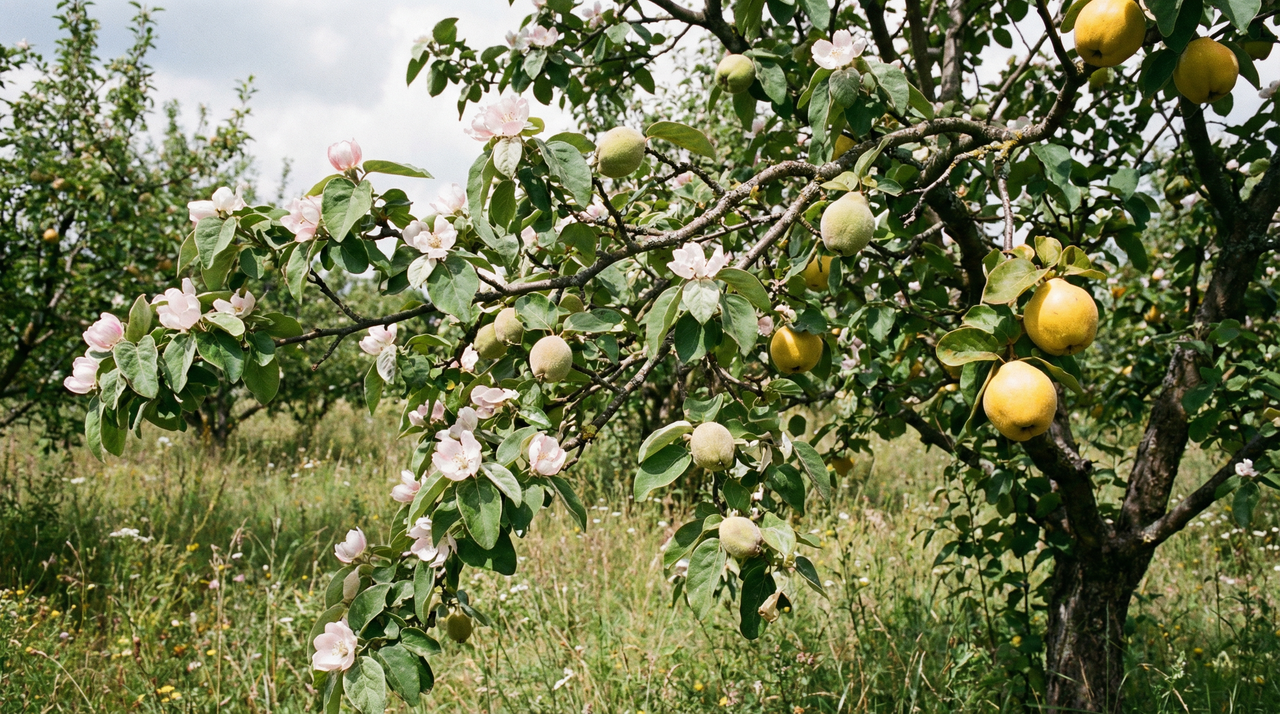
In the garden, quince is a deciduous small tree or large shrub in the Rosaceae family, typically reaching 3 to 6 meters tall with a rounded or vase-shaped form.[4][5] The leaves are elliptic and slightly woolly when young, the late-spring flowers are solitary, white to pale pink, about 4 to 5 cm across, and the autumn fruits are fragrant, fuzz-covered yellow pomes, 7 to 12 cm long.[6] That fuzzy fruit skin is one of the easiest ways to distinguish true quince from its Rosaceae cousins, including the ornamental flowering quince (Chaenomeles spp.), which carries smaller, harder fruits and a very different habit.[7] The quince also develops a strong, deep taproot, which I learned the hard way years ago when I tried to relocate a two-year-old specimen that was already more committed to its spot than I expected. I've planted from small nursery stock or grafted trees ever since.
Given the right conditions, quince is remarkably long-lived. Commercial orchards get 30 to 50 productive years from a planting, but heritage specimens in Mediterranean regions have been documented exceeding 200 to 400 years.[8][9] It's not invasive in North America, and in my own temperate-climate projects I've never seen it spread aggressively.[3] The deep taproot that complicates transplanting is the same feature driving its moderate drought tolerance once established.[10]
Traditional and Cultural Uses Across Civilizations
Quince has been cultivated for at least 4,000 to 5,000 years. Evidence of domestication traces back to Mesopotamia, Anatolia, and ancient Persia around 3000 to 2000 BCE, with records from Egypt by 2000 BCE.[11][12] From there it spread westward along the Silk Road and Mediterranean trade routes into Greece by the 12th century BCE, through the Roman Empire, and later through Islamic networks into medieval Europe and beyond.[13]
In ancient Greece, quince was sacred to Aphrodite, offered at her temples, and woven into wedding ceremonies as a symbol of love and fertility.[14] Many scholars believe it was the original "golden apple" awarded to Paris, and possibly the fruit referenced as the apple of the Hesperides, long before anyone was growing actual apples in the region.[15] Some researchers even suggest that certain "apple" references in the Song of Solomon may refer to quince rather than the fruit we now picture.[16] The mythological weight this small, woolly fruit has carried across millennia is genuinely staggering.
Physicians leaned on quince just as heavily as poets did. Hippocrates, Galen, and Pliny the Elder all prescribed it for digestive complaints, diarrhea, sore throats, and coughs, while the seeds provided a mucilaginous remedy for respiratory and skin conditions and the leaves were brewed as an anti-inflammatory tea.[11][17] Persian and Islamic traditions held the fruit as a symbol of health, longevity, and divine blessing; Avicenna detailed its use in Unani medicine for heart, stomach, and fever conditions, and quince appears in the poetry of Rumi and the Shahnameh.[18]
The culinary thread connecting every one of these cultures is the fruit's extraordinary pectin content, which makes it ideal for jams, jellies, and pastes. The Portuguese word "marmelo" for quince gave us the word marmalade, and the Spanish membrillo paste tradition survives right into contemporary kitchens.[11][19] Quince recipes appear in Apicius, The Forme of Cury, and Libro de Sent Soví, a culinary lineage that spans Roman feasts through medieval courts.[20] A high-pectin fruit that preserves beautifully, travels well, and carries symbolic weight was always going to cross borders.
Fun Facts and Notable Characteristics
Here's the thing about quince that surprises almost everyone who hasn't grown one: you cannot eat it raw. The fruit is so astringent and tannic off the tree that even a small bite is genuinely unpleasant.[21] Yet by October, a ripe quince sitting on the counter fills the whole room with something that reads like pineapple, pear, and flowers braided together. I find myself checking on mine more than I need to, just for the scent. Heat breaks down the tannins and unlocks that perfume completely, which is why every culinary tradition that ever touched this fruit reached for the cooking pot. A smaller safety note: the seeds contain amygdalin and should never be chewed or crushed, as they can release cyanide when processed that way.[21]
Cultivar diversity adds another layer of interest. 'Smyrna' is prized for its intense aroma and pear-shaped fruit, while 'Pineapple' lives up to its name with a notably sweet, tropical flavor that surprised me the first time I tasted it alongside a more traditional variety. 'Vranja' and 'Gibbs Giant' produce substantial cooking fruits, with some specimens reaching 1 to 2 kg.[22] The varieties section covers this in more depth, but knowing the range exists helps when sourcing trees.
Ecologically, quince earns its keep well beyond the kitchen. In its native Central Asian range it provides early-spring nectar for bees and autumn fruits for birds and mammals that assist with seed dispersal.[23] It's cold-hardy to around -26 to -32°C, covering USDA zones 5 through 9, and once that taproot is established the tree handles dry spells with composure.[24] Fire blight is the disease concern worth knowing about, though that's covered thoroughly in the pests and diseases section.[25] What I keep coming back to, after planting several quince trees in different projects over the years, is how much year-round interest a single specimen delivers: woolly spring growth, fragrant blossom, bold summer foliage, and then that unmistakable golden fruit hanging in the autumn garden long after most other trees have gone quiet.
Quince Varieties and Where to Buy Them
As a deciduous small tree or large shrub in the Rosaceae family, Cydonia oblonga typically tops out somewhere between 10 and 20 feet tall with a similar spread.[4][26] That size is actually one of its quiet virtues in a backyard orchard setting. It doesn't dominate the canopy, it doesn't demand a ladder, and it fits comfortably in a guild with other productive trees.
Notable Quince Cultivars
The cultivar landscape for quince is richer than most US gardeners realize, with selections bred or selected for fruit size, aroma, flavor, ripening time, and disease resistance.[8][27] Named cultivars you'll encounter include 'Pineapple', 'Smyrna', 'Orange', 'Portugal', 'Champion', 'Vranja', 'Aromatnaya', 'Serbian Gold', 'Major', 'Mammoth', and 'Champagne', among others. After evaluating quince for multiple client food forests, I consistently default to recommending 'Pineapple' for US gardeners. It's widely available through domestic nurseries, it produces aromatic pear-shaped fruits in the one-to-two pound range,[4] and it tolerates the kind of variable conditions that come with real backyards rather than research stations.
If you have access to European-sourced stock, the Vranja quince tree is worth pursuing for its larger fruit and deeper flavor profile, though it can be genuinely hard to find stateside.[8] The Smyrna quince tree is another US-available option with good flavor; the Smyrna quince tree size is similar to the species standard, so it won't surprise you with unexpected vigor. For disease resistance, I steer clients toward 'Champion' or 'Pineapple' without hesitation. I've watched entire young quince plantings get devastated by fire blight in humid climates, and those losses almost always hit the more susceptible cultivars hardest.[4][28] Where fire blight pressure is known, disease resistance matters far more than novelty.
Sourcing Quince Trees in the US
Retail quince trees from reputable specialty nurseries typically run $25 to $50. One Green World, Burnt Ridge Nursery, and Raintree Nursery are worth checking first.[29][30] I routinely ask nurseries directly about rootstock, because quince grown on its own roots develops a deep taproot that makes transplanting genuinely difficult, and knowing what you're getting upfront saves headaches at installation. Certified disease-free and organically grown stock is limited, and "disease-free" claims on websites don't always hold up under scrutiny. Call the nursery, ask specific questions about their propagation source and any fire blight history, and you'll quickly learn whether they actually know their trees or are just reselling catalog stock.
How to Propagate and Plant Quince Trees
Quince propagation is a study in trade-offs. You can go the slow, botanical route and start from seed, or you can buy a grafted tree and cut years off the wait. Both paths teach you something different about the plant. I've done both, and I have opinions about which one makes sense for most people.
Understanding Quince Seeds: Size, Structure, and Reproductive Biology
Quince seeds are small, ovate to oblong, dark brown, and typically only 4-6 mm long with a hard seed coat enclosing a straight or slightly curved embryo with two cotyledons.[31][32] The reproductive biology is standard sexual reproduction through double fertilization following the Polygonum-type pattern, with a single zygotic embryo and no apomixis or polyembryony.[33][34] That last bit is technically fascinating, but the practical upshot is less exciting: because the seeds are heterozygous and monoembryonic, seedlings show high genetic variability and won't come true to the parent cultivar.[35][36] You might get something delicious. You probably won't know for half a decade.
Seed Storage, Viability, and Germination Timeline
The seeds themselves are orthodox, which means they store well. Medium-term storage at 0-10°C with 5-10% moisture content keeps viability for 2-5 years, and properly dried seeds held at -18 to -20°C can remain viable for decades.[37][38] Storage viability and physiological dormancy are separate problems, though. Even a perfectly stored seed still needs 60-90 days of cold moist stratification at 3-5°C before it will break dormancy, and after that germination takes another 4-8 weeks at around 70°F.[39] I'll add from personal experience: those first-year seedlings look almost identical to young apple or pear seedlings coming out of the flat, so label everything obsessively or you'll spend spring guessing.
The timeline question is where seed propagation really loses the argument. Seed-grown quince trees typically take 5-8 years to bear their first meaningful crop, while grafted trees on dwarfing rootstocks can produce fruit in 2-5 years, sometimes as early as the second season with attentive management.[8][27] After growing both from the ground up, I now always recommend grafted stock to new gardeners. The genetic lottery plus the multi-year wait is a tough sell when reliable trees are available.
Vegetative Propagation: Grafting, Cuttings, and Layering
Grafting is the standard for commercial and serious home production, and the rootstock choice matters beyond just tree size. Quince A gives semi-dwarfing habit, Quince C gives a more compact tree, and OHxF or Pyrus communis pear rootstocks bring added disease resistance, particularly against fire blight.[40][8][41] In my zone-9-adjacent projects I've noticed markedly better fire-blight outcomes on trees grafted to Quince C compared with own-root plants, which aligns with what the research suggests. Whip-and-tongue grafting and chip budding are the preferred techniques, performed either in late winter/early spring or late summer, with success rates reaching 80-95% when the cambium alignment and timing are right.[8][42][43]
If grafting feels like too much infrastructure, cuttings and layering are genuinely accessible alternatives. Softwood or semi-hardwood cuttings taken in late spring to early summer, treated with 1000-3000 ppm IBA rooting hormone and held under mist at 20-25°C, root in 4-8 weeks.[36][35] Simple layering in spring is even more forgiving, hitting 80-90% success with minimal equipment.[44] These own-root plants won't carry the rootstock benefits for fire-blight resistance or size control, but for a home gardener who wants a backup tree or to share plants with neighbors, they're a solid option.
Soil, Site Selection, and Sun Requirements
Start with sunlight because no amount of good soil fixes the wrong location. Quince needs a minimum of 6-8 hours of direct sun daily for productive fruiting and healthy growth; in lower light it gets leggy, chlorotic, and stingy with fruit.[8][45] Shelter from strong winds matters too, partly for fruit set and partly because damaged wood creates entry points for disease.
For soil, quince wants well-drained, fertile loam with a pH of 6.0-7.5, optimally 6.5-7.0, with moderate organic matter around 3-4% and a rooting depth of at least 60-90 cm.[46][45] Heavy clay without amendment, compaction, and waterlogging are all genuine problems. Poorly drained sites invite Phytophthora root rot, which can take a tree out quietly and quickly.[47] Before I plant any quince, I test the soil; in slightly acidic beds I've found that raising pH toward 6.5 with lime produces visibly healthier foliage and heavier crops in the seasons that follow. Think of it the same way you'd approach a peach or cherry site: drainage first, fertility second.
Spacing, Planting Technique, and Timeline to First Fruit
For home gardens and high-density dwarf plantings, space quince trees 10-15 feet apart. Standard orchard rows want 15-20 feet within the row and 20-25 feet between rows.[39][48] Those numbers aren't arbitrary. Airflow through the canopy directly reduces fungal pressure, including fire blight, so the spacing decision you make at planting does real disease-management work for the life of the tree. Pruning can keep a tree smaller later, but you can't undo a crowded planting without significant effort.
Quince is hardy in USDA zones 5-9 and requires 400-600 chill hours to break dormancy and fruit reliably.[39][49] Plant bare-root stock in late winter or early spring while the tree is still dormant; in milder zones, fall planting of potted stock works well. Stake the tree for the first two to three years while the root system establishes. The spacing numbers I use for quince aren't far off what I'd apply to apple or pear on semi-dwarfing stock, so if you've placed those trees before, the logic translates directly. Get the site right from day one and a grafted tree can reward you with fruit inside three years. That's a calendar worth planning around.
Quince Care Guide: Watering, Feeding, Pruning & Seasonal Care
Quince is genuinely one of the easier fruit trees to grow once you understand what it actually wants. The trouble is that most people treat it like an apple, reaching for the hose on a schedule or dumping fertilizer every spring without testing first. What I've found after years of working with slow-to-fruit perennials is that quince rewards observation far more than intervention.
Watering Needs for Quince Trees
Mature trees want deep, infrequent watering that reaches 12 to 18 inches down, triggered only when the top two or three inches of soil are dry, with roughly an inch per week during dry stretches of the growing season.[46][4] Shallow daily sprinkles are the wrong approach. They keep roots near the surface and make the tree dependent on you instead of anchoring it into deeper reserves. In the first year, though, expect to water every two to three days and aim for one to two inches weekly; young trees have no reserves to fall back on.[39][50]
I use the screwdriver test rather than the calendar: push a long screwdriver into the soil near the drip line. If it slides in easily to six inches, you're fine. If it hits resistance, water. Overwatering shows as yellowing leaves and wilting despite moist soil; underwatering shows as wilting with dry, crumbly soil and stunted growth.[51][52] Two to four inches of organic mulch pulled several inches back from the trunk helps hold moisture, moderate soil temperature, and reduce how often you need to intervene.[8][53]
Fertilizing and Nutrient Management
Before I plant any new quince, I always run a soil test. I learned this the hard way after watching fruit from an untested planting come out small and underwhelming despite good care. The culprit was potassium deficiency, and once I corrected it, both size and flavor improved noticeably. Quince does best in soil with a pH of 6.0 to 7.5, and leaf tissue analysis can confirm you're hitting the target ranges for nitrogen, phosphorus, and potassium.[54][8]
For most home trees, a pound or two of balanced 10-10-10 applied in early spring is a reasonable starting point, with emphasis on getting potassium right for fruit quality and disease resistance.[55][56][57] Ease up on nitrogen; excess pushes lush foliage at the expense of fruiting. Watch older leaves for yellowing (nitrogen), purplish tones (phosphorus), or marginal leaf scorch (potassium) as early signals something's off.[58][59] Reduce feeding in late summer so the tree can harden its wood before winter rather than pushing soft new growth.
Frost Tolerance and Winter Protection
Quince is hardy across USDA zones 5 through 9, and established mature trees can handle temperatures down to around -4°F, with protected specimens tolerating even lower.[60][61] The vulnerability that actually keeps growers up at night isn't winter cold; it's a late-spring frost hitting open blooms. Flowers and buds can sustain damage below about 28°F, showing up as blackened tips and shriveled blooms that translate directly to lost fruit.[62][63]
After losing an early crop that way, I now keep frost cloth staged and ready whenever bloom coincides with a forecast dip below 28°F. More importantly, I prioritize sites with good air drainage. Cold air settles in low spots; a gentle slope or an elevated position in the garden can make the difference between a full harvest and none. For young trees, trunk wraps add protection against sunscald and rodent damage over winter. Cultivars like 'Pineapple' and 'Smyrna' offer a bit more cold tolerance if you're at the northern edge of the range.[64][65]
Heat Tolerance and Summer Care
Quince comes from hot, dry Mediterranean summers, so it handles heat better than most temperate pome fruits. It's rated for AHS Heat Zones 1 through 8, and established trees tolerate brief exposure to 100°F with adequate moisture.[66][67][68] Prolonged temperatures above roughly 95°F are a different story: leaf scorch, slowed growth, and reduced fruit set start to appear. In that regard it handles summer humidity better than apples, though it still appreciates some afternoon shade during the hottest weeks, something I've seen make a real difference for fruit quality in warmer climates.
Seedlings and trees in active bloom or fruit set are the most vulnerable to heat stress.[35][69] Deep early-morning irrigation keeps roots cool, and a thick mulch layer does as much work in summer as in winter. Shade cloth at 30 to 50 percent density can protect young trees through the worst heat spells.
Pruning, Maintenance, and Seasonal Rhythm
Dormant-season pruning in late winter or early spring, February through March, is the one annual task with the biggest payoff. Train toward an open-center vase shape with three or four main scaffold branches, and each year remove dead, damaged, crossing, or rubbing wood to open up airflow and light penetration.[8][70][71] Early on I made the mistake of pruning too aggressively, and it set fruiting back by a full year. Quince bears on older wood, so a light, selective hand gets you more fruit faster than hard cuts do. The open-center form has a bonus beyond yield: it puts the fragrant spring blooms and golden fall fruit right at eye level, which is reason enough to get the shape right from the start.
Keep mulch topped up at two to four inches through the season, always keeping it away from the trunk, and pull back on fertilizer in autumn to push the tree toward wood hardening rather than soft new growth.[70][8] A well-sited quince can easily outlive the gardener who planted it, with a productive lifespan of 30 to 50 years or more under good care. That kind of longevity is exactly why I focus on building soil health from year one rather than chasing quick fixes. The tree will be there long after most of your other garden decisions have come and gone.
Harvesting Quince (Cydonia oblonga)
Quince isn't a fruit you rush. From full bloom to a mature pome ready for picking takes 120 to 180 days,[72][8][73] and the whole arc of that season is building toward a harvest window that, if you get it right, rewards you with something genuinely extraordinary once it hits the pot.
When to Harvest Quince: Timing, Maturity Cues, and Cultivar Differences
In temperate US gardens across USDA zones 5 through 9, that window typically opens in September and closes by October. The fruit signals readiness through a cluster of cues: full size, a shift from green to golden yellow skin, brown seeds when you cut one open, slight give under gentle pressure, and sugar solids in the 12 to 15 Brix range.[27][74][75][76] Honestly, though, the most reliable cue I've found is aroma. Even when the skin is still patchy yellow-green, a ripe quince smells unmistakably fruity and floral in a way that stops you in your tracks. When that scent hits you as you walk past the tree, it's time.
Pick before the first frost and while the fruit is still firm; frost softens quince quickly and opens the door to pest damage and fruit drop.[27][76] Cultivar timing matters here: 'Pineapple' ripens noticeably earlier than late-season types like 'Smyrna' or 'Vranja', so if you're growing more than one variety, keep a separate mental calendar for each.
How to Harvest Quince: Technique, Thinning, and Post-Harvest Storage
A step most gardeners skip is fruit thinning, done three to four weeks after petal fall. Reducing clusters down to one or two fruits improves size noticeably and prevents branch breakage under a heavy load.[8][76] I learned the hard way that skipping this step produces smaller, denser, woodier fruit that takes forever to cook down properly.
At harvest, pick by gently twisting or lifting; a ripe quince releases from the stem easily.[27][8] Handle every fruit as if it's a bruised peach, because any damage will limit its storage life significantly. Stored at 32 to 40°F (0 to 4°C) with moderate humidity, quince keeps for two to three months,[77][8] and it continues mellowing in storage, developing deeper aroma as it sits. Properly stored fruit that comes out of a cool basement in December cooks up more fragrant than anything harvested and used immediately.
Quince Flavor, Texture, and Aroma: From Raw Astringency to Cooked Delight
Raw quince is essentially inedible. The flesh is rock-hard, intensely astringent, and sour from high concentrations of tannins, organic acids, and stone cells called sclereids.[78][79][80] It behaves less like an apple and more like an extremely astringent rose hip; you really cannot taste your way to ripeness with this one. Cooking is what does the work, breaking down tannins and stone cells, releasing natural pectin, and transforming the texture into something soft and jammy with a sweet-tart fragrance unlike any other temperate fruit.[81]
The ripe fruit itself is golden yellow and typically two to four inches across,[4][26] and its volatile aroma profile blends notes of apple, pear, pineapple, and guava, driven by compounds including ethyl acetate, hexanal, benzaldehyde, and linalool.[82][83] Exact aroma intensity varies with cultivar and growing conditions, but the first time you cook one down and that perfume fills your kitchen, you'll understand immediately why this fruit has been treasured for thousands of years.
Quince Preparation and Uses
Culinary Uses of Quince: Transforming the Astringent Fruit
The first time I cooked down a batch of quince, I wasn't prepared for what happened. The kitchen filled with this extraordinary floral perfume, almost tropical, with hints of spice I couldn't quite name. The chunks I'd thrown in pale and hard came out ruby-red and yielding, tasting like something between apple, pear, and citrus with a caramel warmth underneath. That transformation is the whole story with quince. Raw, it's genuinely unpleasant: hard, woody, and so astringent your mouth puckers.[84][85] Heat unlocks everything. Maillard reactions and ester formation amplify those tropical, spicy, caramel-like aromatics that were barely hinted at in the raw fruit.[82][86]
Before you cook anything, core and seed thoroughly. The seeds contain amygdalin, a cyanogenic glycoside that releases cyanide when broken down in the gut.[3][87] Small amounts might not cause acute harm, but it's a risk I've never considered worth taking. Compost the seeds. Leaves, flowers, and bark aren't edible either, so stick to the fruit flesh itself.
Once prepped, quince takes beautifully to boiling, roasting, baking, and slow stewing with cinnamon, vanilla, or a splash of wine. Its naturally high pectin content means jams and jellies set without any added thickener, which I appreciate.[88] When I make quince membrillo, I keep the sugar low and let it reduce slowly so the natural flavor changes can build rather than hiding behind sweetness. The resulting quince paste firms up into something extraordinary alongside aged manchego. Beyond preserves, quince works beautifully in savory applications: Moroccan lamb tagine with quince, roasted pork with a quince pan sauce, even a quince compote alongside duck.[89] That sweet-tart edge cuts through rich, fatty meats in a way that feels both ancient and somehow perfect every time.
Traditional Medicinal Preparations
Across Greek, Roman, Persian, and Middle Eastern traditions, quince was valued as an astringent medicine for digestive complaints, sore throats, and inflamed skin.[88] Traditional preparations range from leaf and fruit infusions and decoctions to poultices applied directly to wounds.[90][91] I personally treat a quince leaf tea the way I'd treat a strong black tea for a scratchy throat: useful, mildly astringent, worth having around. The deeper research on phytochemicals and clinical evidence is covered in the health benefits section, but modern validation for most traditional claims remains promising rather than conclusive. I'd never replace conventional care with a decoction, but I also don't dismiss several thousand years of accumulated observation.
Non-Food Uses of Quince
Quince wood is notably hard and durable, historically used for small tools, crafts, and turned objects. The bark has traditional uses in natural dyeing and fiber extraction. As a permaculture designer, I see these as the bonus yields that justify the space a quince occupies when it's already earning its keep as a food producer and pollinator plant. Prunings make decent material for smaller woodworking projects, and if you're doing any natural dye work, the bark is worth experimenting with. For its deeper ecosystem services, including slope stabilization and guild planting roles, the permaculture design section covers that ground thoroughly.
Quince Health Benefits
Quince has a longer medicinal resume than most gardeners realize. What gets sold today as a niche jam fruit was, for centuries, a go-to remedy across a wide swath of the world. I find that history genuinely useful context, because it grounds the modern research in something more than lab curiosity.
Traditional Medicinal Uses of Quince
Across Middle Eastern, European, and Asian folk medicine, Cydonia oblonga was prescribed for digestive ailments including diarrhea, dysentery, and stomach ulcers, as well as respiratory complaints like coughs and sore throats, and topically for skin irritations, burns, and wounds.[92][90][93] The seeds, specifically, were valued for their mucilage, a slippery, gel-like substance used to soothe both the gut and the respiratory tract, and small-scale clinical work has found some support for quince syrup in relieving sore throats.[92][94]
Modern pharmacology has started unpacking why these traditional applications might work. Quince has demonstrated anti-inflammatory activity through inhibition of NF-κB signaling, antioxidant effects via Nrf2 pathway activation, enzyme inhibition relevant to blood sugar regulation, antimicrobial activity through disruption of microbial cell membranes, and immunomodulatory effects from polysaccharides that enhance macrophage activity.[95][96] The peel, worth noting for anyone making preserves, consistently outperforms the pulp in antioxidant and anti-inflammatory assays, while the leaves show strong antioxidant activity in their own right.[97][98]
That said, I always remind friends who get excited by this research that nearly all of it comes from in-vitro and animal studies. No large-scale human clinical trials have been completed on Cydonia oblonga,[99][100] and while I love incorporating quince into seasonal preserves partly for its traditional digestive-soothing reputation, the exciting pharmacological findings are still potential rather than proven. Please don't treat your quince jam as a substitute for medical care.
Key Phytochemicals and Their Properties
The bioactive story of quince centers on a rich phenolic profile: over 50 identified phytochemical compounds, with phenolics ranging from 150 to 800 mg GAE per 100g fresh weight, including chlorogenic acid, catechins, and hydroxycinnamic acids.[101][102][103] Flavonoids such as quercetin, kaempferol, and rutin contribute to the antioxidant and anti-inflammatory activity, while triterpenoids like ursolic and oleanolic acid (particularly concentrated in leaves) and tannins round out a profile that collectively drives most of the pharmacological effects seen in the literature.[104]
As a grower, I find fact #7 genuinely useful here: phenolic concentrations peak in late autumn,[105] vary by as much as 30% between cultivars,[106] and can increase 15 to 25% under drought or UV stress.[107] I always try to harvest after the first cool spell of the season, because that's when aroma peaks too, a signal the chemistry is shifting in your favor. I also prefer to include the peel in my jams and syrups rather than discard it, since that's where the antioxidant concentration is highest.[108]
One caveat before we move on: quince seeds contain amygdalin, a cyanogenic glycoside present at 0.5 to 5% dry weight, which hydrolyzes to release hydrogen cyanide when crushed or chewed.[109][110] The flesh and leaves carry negligible levels by comparison. Seed toxicity will be covered fully below, but I want it flagged here because the seeds are often mentioned in the same breath as their useful mucilage.
Nutritional Profile of Quince
Raw quince is modest in its conventional nutritional numbers: roughly 57 kcal per 100g, about 15g of carbohydrates with nearly 2g of fiber, approximately 15mg of vitamin C (around 15 to 17% of the daily value), and 197mg of potassium, with smaller amounts of calcium, magnesium, and iron.[111] The real story is its polyphenol content, with quercetin and chlorogenic acid as standouts, which places it well above most everyday fruit in antioxidant capacity.[104][112]
Here's something I learned the direct, mouth-puckering way: quince cannot be eaten raw. The tannins are intense enough to cause real oral and gastrointestinal irritation, and the texture is closer to a raw potato than any soft fruit.[112] Cooking is non-negotiable. That does mean some nutrient trade-offs: boiling or baking can degrade vitamin C by 20 to 50%, while drying tends to concentrate phenolics even as some heat-sensitive compounds decline. Overall nutrient retention across preparation methods typically falls between 70 and 90%.[105] Vitamin C is the bigger loss; the polyphenols are more durable, which is fortunate since they're the more compelling part of the nutritional picture.
Safety Considerations and Potential Risks
Cooked quince fruit flesh is broadly safe. It holds GRAS status for culinary use, carries low toxicity, and has minimal allergen potential for most people.[21] Raw consumption is more likely to cause mild GI discomfort from tannins, and anyone sensitive to Rosaceae pollen should be aware that quince flowers can trigger allergic rhinitis.[113] These are manageable concerns. The seeds are a different matter entirely.
Quince seeds contain amygdalin at approximately 2 to 4 mg per gram, concentrated enough that crushing or chewing them releases meaningful quantities of hydrogen cyanide.[114][115] Swallowing a few whole seeds poses low risk since the seed coat slows hydrolysis, but significant quantities of crushed seeds can cause nausea, dizziness, headache, rapid breathing, and in severe cases respiratory failure.[116] I treat quince seeds exactly like apple seeds: I never intentionally consume them, and I always remove and discard every single seed before cooking or preserving. No exceptions.
Pet owners should take this seriously too. The same cyanogenic compounds make quince seeds potentially toxic to dogs and cats, with signs including vomiting, diarrhea, and hyperventilation at higher doses.[117][118] The flesh and leaves carry much lower cyanogenic levels and are generally non-toxic when properly prepared. During pregnancy, cooked quince fruit in normal culinary amounts appears safe, but seeds must be strictly avoided, and the fruit's fiber content could theoretically affect absorption of certain medications.[119][120] Washing fruit thoroughly before use is standard good practice, especially for a fruit where the peel, with its superior phytochemical concentration, is worth keeping in your recipe.
Quince Pests and Diseases
Quince holds up pretty well against the typical Rosaceae pest-and-disease parade, but "pretty well" isn't the same as immune. Resistance varies significantly by cultivar and flips quickly when the weather turns cool and wet for a few weeks running.[121] I've watched trees sail through a mild, breezy spring looking spotless and then struggle the very next year after two extra rainy weeks in April. The difference isn't the tree; it's the conditions.
Quince Disease Resistance and Management
Quince has moderate resistance to scab (both Venturia inaequalis and Fusicladium quince scab) and Gymnosporangium rusts, with cultivars like Champion, Orange, and Devlins Wonder performing better than average. But humidity pushes all of them toward susceptibility, and in wet seasons you can see enough defoliation to affect next year's yield.[121][122][123] Rust on quince tree leaves is a particular signal to watch; if you have junipers within 300 feet, removing them eliminates the alternate host entirely and dramatically reduces pressure.[124]
Fire blight is the disease that demands the most respect. Quince tree blight from Erwinia amylovora is less devastating here than on susceptible pears, but no cultivar is immune, and warm humid conditions between 20-30°C with humidity above 70% create real risk.[125][126] I lost a young tree to it during a particularly wet spring before I learned to monitor humidity forecasts closely. Now when I see nights forecast in the low 70s with persistent moisture, I hold off on any nitrogen push and get copper bactericides ready for bloom. If blight does appear, I prune 8-12 inches below the visible shepherd's crook in dry weather and disinfect my tools with 70% alcohol between every cut.[126][127] I've found that starting with a known-resistant variety like Smyrna or Spissans saves years of frustration compared to gambling on an unnamed nursery tree.[128]
Poorly drained sites open the door to Phytophthora root rot and bacterial canker (Pseudomonas syringae), both of which can explain quince tree leaves turning brown when you've ruled out everything else.[129][130] Good drainage is non-negotiable. For quince tree leaf diseases more broadly, the cultural toolkit is consistent: rake fallen debris, improve canopy airflow through pruning, avoid overhead irrigation, and apply fungicides like captan only when infection conditions (cool, moist weather around 10-20°C, humidity above 90%) are actually present rather than on a rigid calendar.[131] I always start new trees from certified virus-free stock; aphid-vectored viruses like quince chlorotic leaf spot are the one category where prevention is essentially the entire strategy.
Common Pests of Quince and Natural Defenses
Quince holds its own reasonably well against insects compared to many of its Rosaceae relatives, though codling moth, European apple sawfly, spider mites, leaf miners, apple blossom weevil, and several aphid species are all capable of causing real problems depending on where you're gardening.[132][133] What gives quince a fighting chance is a suite of physical and chemical defenses: tannins that complex insect proteins and deter feeding, leaf trichomes, and a thick waxy cuticle that acts as a genuine barrier to both insects and pathogens.[105][134] If you rub a young quince leaf between your fingers, it feels noticeably tougher and waxier than an apple leaf; that's not incidental.
My IPM approach on established quince trees leans hard on beneficial insects, pheromone traps for codling moth, and sanitation (removing fallen fruit, clearing debris) before I consider any spray.[135][136] I also interplant with strong-scented herbs and have noticed consistently lower aphid pressure as a result. Broad-spectrum sprays are genuinely rare on my mature quinces. The tree's own defenses do a lot of the work when you choose the right cultivar, site it well, and don't undercut it with excessive nitrogen fertilizing during warm, humid stretches.[60] With attentive observation and a few good cultural habits, quince can be one of the more forgiving pome fruits to maintain over the long run.
Quince in Permaculture Design
Quince earns its keep in a designed landscape not through any single dramatic function but through a steady accumulation of useful roles: decent fruit, early nectar, biomass, erosion control, and enough structural character to anchor a guild for decades. Getting there starts with knowing whether your site can actually support it.
Climate Suitability and Hardiness Zones
Quince is reliably hardy in USDA zones 5 through 9, with some varieties pushing into zone 4, though optimal production generally falls within zones 5-8.[3][85][137] That wide band means gardeners across the Pacific Northwest, California, the Midwest, and much of the Northeast and Southeast can grow it well.[3][85] The tree handles winter lows down to around -20°F to -25°F and can push through summer heat above 100°F with adequate water.[39][46]
The chill requirement is the first real filter. Quince needs 200-500 hours below 45°F to set fruit reliably.[138][139] If your winters don't consistently deliver that, fruit set will disappoint regardless of how well everything else goes. I run into this calculus a lot in my Central Florida work, where most deciduous pome fruits are simply off the table; understanding a species' hard climatic limits is always the first design decision.
Once the chill requirement is met, the second siting concern is late-spring frost. Quince blooms early, and those blossoms are vulnerable below 28°F.[140] I apply the same "wait until after last frost" caution here that I use with loquat in the Gulf South. A low spot that drains cold air can wipe out an entire year's crop in a single night. Beyond frost, the tree prefers 20-32 inches of annual rainfall and moderate humidity; high humidity specifically increases fungal disease pressure, so good air circulation matters at the siting stage.[141][8][142]
Forest Layer and Guild Integration
At 13-20 feet tall with a rounded, spreading habit and those famously gnarled, twisting branches, quince occupies the low-tree to high-shrub layer in a food forest stack.[143][3][4] I've used it as a structural element in espalier and mixed edible hedgerows precisely because of that sculptural form; the branching alone earns its keep through winter when everything else is dormant.
Its open, somewhat airy canopy is a genuine guild asset. Light filters through to understory layers, which means you're not forced to sacrifice ground-level productivity the way you might under a denser apple or pear.[144][145] Classic guild companions include legumes like clover and beans to fix nitrogen, rosemary and lavender for insectary function and drought tolerance, borage for its pollinator pull, and compatible pome fruits like apples and pears as cross-pollination partners. Quince also forms arbuscular mycorrhizal associations that improve phosphorus uptake, so keeping soil fungal networks intact under the drip line pays dividends.[146][8] One planning note: roots run 3-6 feet deep and demand sharp drainage, and there's good reason to keep quince away from potatoes and other nightshades to avoid sharing soilborne disease vectors.
Ecosystem Functions and Services
The pollination story is where quince's ecological contributions become most tangible. The flowers are hermaphroditic, white to pale pink, around 4-5 cm across, genuinely fragrant, and nectar-rich; they bloom April through May and bees find them immediately.[46][147] Even a single tree draws noticeable insect activity in early spring, when forage options are still thin. That said, most varieties are self-fertile but set significantly better crops when cross-pollinated; planting a second compatible cultivar like 'Smyrna', 'Pineapple', or 'Champion' within 50-100 feet is worth doing.[39][8][76] In practice I've seen noticeably heavier crops from paired plantings versus singletons, and the yield difference is hard to ignore. Interplanting lavender and borage in the guild supports pollinator visitation at the optimal temperature range of 59-77°F[8][148] while buffering against the broader habitat loss pressures that suppress native bee populations.
Beyond pollination, quince delivers a handful of quieter services. Leaf litter and prunings cycle back as biomass for compost or surface mulch. The root system stabilizes soil on gentle slopes, and I routinely specify it on low berms for clients because the open canopy still lets sun reach lower guild layers while the roots are knitting the soil below. Aromatic compounds in the leaves and fruit appear to repel certain insects including codling moth, though I'd treat that as a supporting benefit rather than a management strategy on its own. The tree also functions as a modest dynamic accumulator of potassium and calcium, and its dense branching provides some windbreak function and wildlife forage for birds and small mammals. None of these are reasons by themselves to plant quince, but together they make a strong case for including it when the climate, drainage, and frost protection conditions are already in your favor.
The Fruit That Taught Me to Stop Judging by the First Bite
I still remember the first time I bit into a raw quince, expecting something like a pear, and immediately understood why every culture that ever grew it reached for the cookpot instead. There's a lesson in that, honestly. Quince doesn't perform for you; it asks you to do the work, to apply heat and patience, and then it gives you something no other fruit in your garden will. That bargain, for me, never gets old.
Sources 148
- Quince (Cydonia oblonga Mill.): A comprehensive review ↩
- Cydonia oblonga - Kew Royal Botanic Gardens ↩
- Cydonia oblonga Mill. - USDA PLANTS Database ↩
- Cydonia oblonga - Missouri Botanical Garden ↩
- Cydonia oblonga - Royal Horticultural Society ↩
- Quince (Cydonia oblonga) - University of Florida IFAS Extension ↩
- Flowering Quince (Chaenomeles) - Missouri Botanical Garden ↩
- Royal Horticultural Society - Quince Growing Guide ↩
- Purdue University Center for New Crops and Plant Products - Quince ↩
- Quince in the Landscape - Penn State Extension ↩
- Quince - Cydonia oblonga ↩
- The Domestication of Quince (Cydonia oblonga) ↩
- Ethnobotany of the Mediterranean Region ↩
- The Cultural History of the Quince ↩
- Fruits in Ancient Mediterranean Mythology ↩
- Plants in the Bible ↩
- Quince in Traditional Medicine ↩
- Medicinal Uses of Quince in Traditional Persian Medicine ↩
- The Oxford Companion to Food ↩
- Ethnobotany of Quince (Cydonia oblonga) in the Mediterranean Basin ↩
- Quince - Wikipedia ↩
- Notable Quince Cultivars ↩
- Rosaceae Family Ecology in Central Asia ↩
- Hardy Fruits: Quince ↩
- Pest Management for Quince ↩
- Quince (Cydonia oblonga) ↩
- Cydonia oblonga Cultivars - University of California Agriculture ↩
- Fire Blight Resistance in Quince Varieties ↩
- Quince 'Pineapple Quince' Tree ↩
- Smyrna Quince ↩
- Plants of the World Online ↩
- USDA PLANTS Database Fact Sheet for Chinese Quince ↩
- Embryology of Quince (Cydonia oblonga Mill.) ↩
- Embryology of Angiosperms: Quince (Cydonia oblonga) ↩
- Propagation of Quince (Cydonia oblonga) ↩
- Seed Propagation in Fruit Trees: Quince ↩
- Seed Storage Behaviour: Dignity in Diversity ↩
- Quince (Cydonia oblonga) Seed Germination and Storage ↩
- Growing Quince - University of Minnesota Extension ↩
- Quince Rootstocks ↩
- Fire Blight Management in Rosaceous Crops ↩
- Grafting Fruit Trees: Quince ↩
- Grafting and Budding Fruit Trees ↩
- Plant Finder: Cydonia oblonga ↩
- Cydonia oblonga - Missouri Botanical Garden ↩
- RHS Gardening - Growing Quince ↩
- Phytophthora Root and Crown Rot of Fruit Trees ↩
- Quince Production Guide - Penn State Extension ↩
- Quince Production and Propagation ↩
- Drought Tolerance of Deciduous Fruit Trees ↩
- Quince Growing Guide ↩
- Quince Tree Care - Gardening Know How ↩
- Irrigation Management for Fruit Trees - University of California Extension ↩
- Soil Nutrient Management for Fruit Trees ↩
- Nutritional Management of Quince - FAO Fruit Trees Guide ↩
- University of California Agriculture - Quince Cultivation ↩
- Fertilizing Fruit Trees - Penn State Extension ↩
- Nutrient Deficiencies in Fruit Trees ↩
- Fertilizer Injury in Fruit Orchards ↩
- USDA Plant Hardiness Zone Map ↩
- Quince (Cydonia oblonga) - RHS Gardening ↩
- Royal Horticultural Society - Quince (Cydonia oblonga) ↩
- USDA PLANTS Database - Cydonia oblonga ↩
- Winter Protection for Fruit Trees ↩
- Protecting Fruit Trees from Frost ↩
- Physiological Responses of Quince to Environmental Stresses Including Heat ↩
- Quince Production and Heat Stress Management ↩
- AHS Heat Zone Map and Plant Ratings ↩
- Temperature Tolerance in Flowering and Fruit Set of Quince Cultivars ↩
- Quince (Cydonia oblonga) Care Guide ↩
- Pruning Fruit Trees: Quince ↩
- Quince Production Guide ↩
- Cydonia oblonga Cultivation ↩
- Quince Production Guide ↩
- Home Orchard Management: Quince ↩
- Quince Cultivars: Maturity Differences and Orchard Management ↩
- Quince Production and Handling ↩
- USDA PLANTS Database - Cydonia oblonga ↩
- Missouri Botanical Garden - Plant Finder: Cydonia oblonga ↩
- Quince (Cydonia oblonga) Fruit Sensory Evaluation ↩
- Royal Horticultural Society - RHS Plant Selector: Cydonia oblonga ↩
- Volatile Composition of Quince Fruit (Cydonia oblonga) and Its Changes during Ripening ↩
- Quince (Cydonia oblonga L.) Fruits: Volatile Compounds and Sensory Evaluation ↩
- Quince (Cydonia oblonga) - RHS Gardening ↩
- Quince - Missouri Botanical Garden ↩
- Sensory and Chemical Characterization of Quince (Cydonia oblonga Mill.) Cultivars ↩
- Cyanogenic Glycosides in Food Plants - NCBI ↩
- Medicinal Uses of Quince ↩
- Traditional Quince Recipes with Lamb and Pork ↩
- Quince (Cydonia oblonga) in Traditional Medicine ↩
- Medicinal Uses of Quince Fruit and Leaves ↩
- Medicinal Uses of Quince (Cydonia oblonga) - NCBI ↩
- Traditional medicinal uses of quince (Cydonia oblonga Mill.) in the Middle East ↩
- Clinical Trial on Quince for Sore Throat: A Randomized Study ↩
- Molecular mechanisms underlying the biological effects of quince (Cydonia oblonga Mill.) and its bioactive compounds ↩
- Pharmacological Effects of Cydonia oblonga Mill. (Quince) and Its Active Compounds: A Review ↩
- Anti-inflammatory and antioxidant activities of quince (Cydonia oblonga Miller) fruit and peel extracts ↩
- Phytochemical composition and biological activities of Cydonia oblonga Mill. (quince) fruit: A review ↩
- ClinicalTrials.gov - National Institutes of Health ↩
- PubMed - National Library of Medicine ↩
- Polyphenolic composition of Cydonia oblonga fruit ↩
- Phytochemical composition of Cydonia oblonga Mill. peel ↩
- Review on Cydonia oblonga phytochemistry and pharmacology ↩
- Phenolic Compounds and Antioxidant Activity of Quince (Cydonia oblonga Mill.) Fruit ↩
- Seasonal Changes in Phenolic Compounds of Quince Fruits ↩
- Cultivar-Dependent Variation in Secondary Metabolites of Cydonia oblonga ↩
- Abiotic Stress and Phenolic Accumulation in Quince under Mediterranean Conditions ↩
- Phytochemicals and Pharmacological Properties of Cydonia oblonga Mill.: A Review ↩
- Amygdalin content in seeds of Prunus and Cydonia species ↩
- Cyanogenic Glycosides in Rosaceae Fruits Including Quince ↩
- Quince, raw - USDA FoodData Central ↩
- Nutritional Composition and Bioactive Compounds of Quince (Cydonia oblonga) Fruit: A Review ↩
- Oral Allergy Syndrome - Mayo Clinic ↩
- Cyanogenic Glycosides in Edible Plants ↩
- Phytochemistry of Cydonia oblonga: Focus on Amygdalin Content ↩
- Toxicity of Quince (Cydonia oblonga) Seeds and Cyanide Potential ↩
- Quince (Cydonia oblonga) Toxicity ↩
- Prunasin and Amygdalin in Quince Plant Parts ↩
- Herbal Medicine Safety During Pregnancy: Quince Overview ↩
- Quince: Health Benefits, Side Effects, Uses, Dose & Precautions ↩
- Disease resistance in quince germplasm. ↩
- Quince Scab and Rust Management ↩
- Rusts of Rubus, Cydonia and Quercus in Arkansas. ↩
- Quince Rust ↩
- Fire Blight of Quince ↩
- Fire Blight of Apples and Pears in the Home Orchard ↩
- University of California Integrated Pest Management ↩
- Fire Blight Resistance in Quince Cultivars ↩
- Phytophthora Root Rot in Fruit Trees ↩
- Royal Horticultural Society Plant Information ↩
- Managing Pome Fruit Diseases: Leaf Spots ↩
- Royal Horticultural Society - Cydonia oblonga ↩
- Codling Moth Management in Pome Fruits ↩
- Cuticular Wax and Insect Resistance in Fruit Trees Including Quince ↩
- Quince: Pest Management Guidelines - UC IPM ↩
- Integrated Pest Management for Quince Trees - Penn State Extension ↩
- University of California Agriculture and Natural Resources - Quince ↩
- Penn State Extension - Chill Hours for Deciduous Fruit Trees ↩
- UC Cooperative Extension - Quince Production in California ↩
- University of California Agriculture and Natural Resources - Frost Protection for Fruit Trees ↩
- FAO - Quince Production Guide ↩
- University of Maryland Extension - Quince Tree Care ↩
- Royal Horticultural Society - Cydonia oblonga ↩
- MDPI - Intercropping Nitrogen-Fixing Plants in Fruit Orchards ↩
- Missouri Botanical Garden - Quince ↩
- NCBI - Mycorrhizal Associations in Rosaceae ↩
- Missouri Botanical Garden - Quince ↩
- NCBI - Pollinator Decline Impacts on Fruit Orchards ↩