Popeye was wrong, and it took a 19th-century decimal error to make him famous. The iron content that turned spinach into a symbol of superhuman strength was based on a miscalculation: a German chemist named Erich von Wolff misplaced a decimal point in 1870, overstating spinach's iron by a factor of ten, and that inflated number quietly circulated through scientific literature for decades before anyone caught it.[1] By the time the error was corrected, the myth had already been animated into cartoons, fed to children as motivation, and baked into cultural memory. Spinach's real nutritional story is genuinely impressive, but it's not the one most people think they know.
What I find more interesting is that spinach doesn't need the mythology. I've grown it in Pacific Northwest rain, in a dry New Mexico kitchen garden, and in a humid Florida winter plot, and in each place it surprised me with how little it asked for and how quickly it delivered. It's also one of those plants where the gap between "growing it fine" and "growing it well" is entirely about timing, and almost nobody talks about that gap honestly. Get the timing wrong by three weeks and you're harvesting bitter, bolting stems. Get it right and you're pulling leaves so tender and mild they barely taste like the spinach from a grocery bag.
Origin and History of Spinach (Spinacia oleracea)
Spinach didn't arrive on the world stage through ancient Egypt or Rome the way so many garden staples did. It's a relative latecomer to Western tables, and its story begins much further east. Spinacia oleracea is native to temperate Central and Western Asia, with its center of origin in the mountainous regions of what is now Iran, Afghanistan, and the broader Caspian and Himalayan belt.[2][3][4] In the U.S. it's considered introduced, not native, yet it now covers roughly 27,400 acres of commercial farmland with a crop value exceeding $300 million, with California alone accounting for over 80% of that production.[5][6] Seeing those numbers confirms something I've noticed in my own planting calendars: spinach is a creature of cool seasons and coastal fog belts, and commercial success just tracks those same environmental limits the rest of us work within at home.
Botanical Background and Visual Characteristics of Spinach
Botanically, spinach sits in the Amaranthaceae family as a cool-season annual, occasionally biennial, that hits its stride between 50 and 65°F.[3][7][8] Where you find it naturalized in the wild, it tends to pop up as a ruderal species in disturbed ground and waste places, which tells you something about its character: it's an opportunist, built to germinate fast and complete its lifecycle before conditions shift.[3] That instinct to rush through reproduction is the same reason new gardeners complain their spinach "went to seed too fast." I tell everyone who asks: understanding this cool-season urgency is the single biggest key to success with this crop.
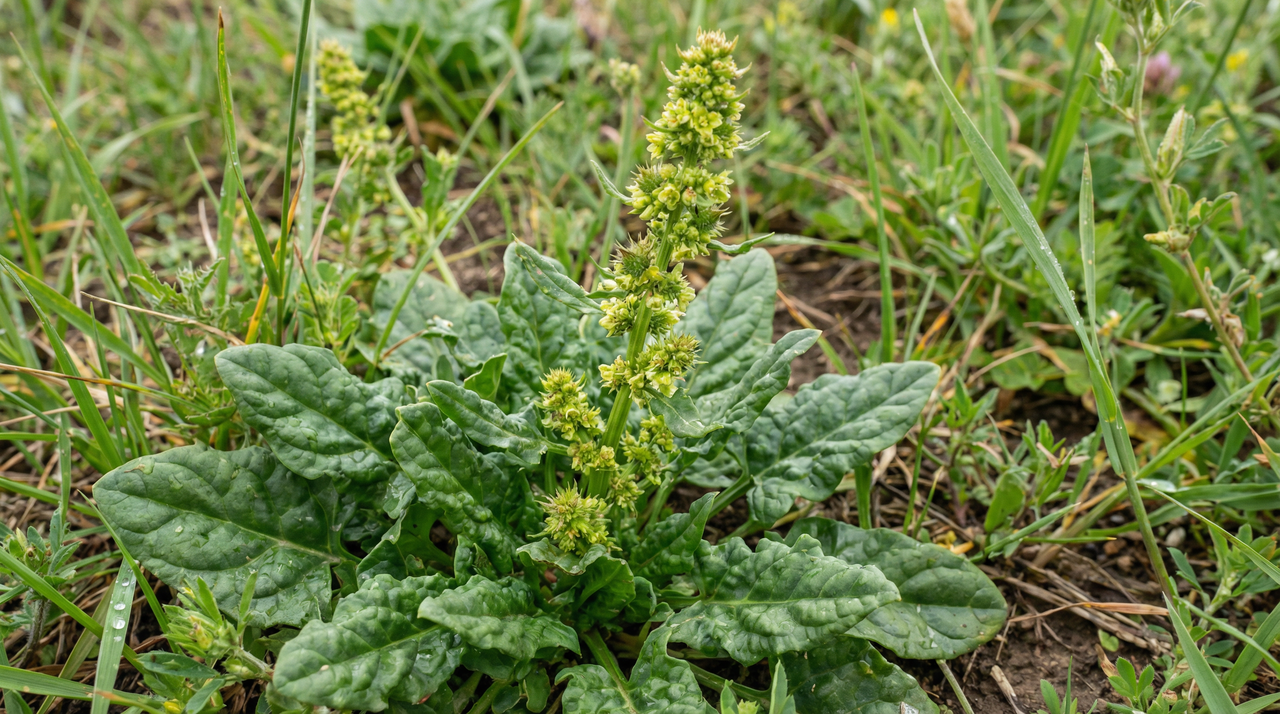
The plant forms a compact basal rosette, typically 6 to 12 inches tall with a spread of 6 to 10 inches, with smooth, erect stems and a taproot that handles nutrient uptake efficiently but resents being disturbed by transplanting.[9][10] The leaves are what draw your eye: alternate, typically arrowhead-shaped with a cordate base, deep green, and measuring anywhere from 4 to 10 cm long with prominent pinnate venation running from a thick midrib.[11][12][13] Cultivar type changes that texture dramatically: savoy types have crinkled, puckered leaves while smooth types are flat and glossy.[14][15] After growing both side-by-side for several seasons, I've found the savoy types hold up better to light frosts but need far more thorough washing to get the grit out of all those folds — a real consideration if you're harvesting after a muddy rain.
When the plant senses lengthening days or temperatures climbing past 59°F, it shifts gears, producing small, inconspicuous greenish flowers 40 to 60 days after planting.[16][17][14] Most spinach is dioecious, with male and female flowers on separate plants, though many modern cultivars are monoecious. The first warning sign I watch for is the rapid upward stretch of the central stem. Once that happens, leaf quality drops fast and bitterness follows. Modern bolt-resistant cultivars have been bred specifically to delay this response, giving gardeners a longer harvest window before the plant shifts into reproductive mode.[3][13][14]
Traditional, Cultural, and Medicinal Uses of Spinach
The historical journey of spinach reads almost like a Silk Road travelogue. It was first domesticated in ancient Persia around the 4th century CE, cultivated from wild mountain plants in the region we now call Iran and Afghanistan.[18][19][7][20][21] By the 7th century, Nestorian monks had carried it to China along trade routes, where it found a receptive climate and an enduring culinary home. Arab traders brought it west through the Islamic world, reaching Moorish Spain by the 11th and 12th centuries, and Spanish colonizers eventually introduced it to the Americas in the 16th century.[18][7] Notably, spinach was completely unknown to the ancient Egyptians and Romans[21] — civilizations we associate with sophisticated agriculture — which reminds me that Mediterranean-type climates weren't the origin point but became such a natural fit for the crop that it's now inseparable from dishes like Greek spanakopita and Indian palak paneer.[22][23]
Arab scholars in medieval Spain documented and advanced its cultivation practices, preserving agronomic knowledge that would have otherwise been lost to European upheaval.[22] Traditional medicine systems across the plant's range recognized its therapeutic potential long before modern nutrition science caught up. Chinese physicians from the Tang Dynasty onward used it for its cooling and laxative effects to address constipation and fever. Ayurvedic practitioners valued it as a cooling, diuretic herb, and the 11th-century physician Avicenna documented its cooling properties in his Canon of Medicine.[24][25][26][27]
Fun Facts About Spinach
No origin story for spinach would be complete without Popeye. The cartoon sailor's iron-fisted relationship with a can of spinach, which began airing in the early 20th century, genuinely boosted U.S. consumption and lodged the plant's reputation for strength-building nutrition into popular culture in a way no agricultural extension bulletin ever could.[23] The reality is still impressive on its own terms: commercial yields can approach 30 tons per acre, and the plant tolerates frost down to around 15°F before leaf quality starts to suffer.[28][29] That cold-hardiness is part of what makes it such a workhorse in shoulder-season gardens.
The flip side of that toughness is its sensitivity to heat and long days. Once temperatures exceed 75°F or day length pushes past 12 hours, I stop expecting quality leaves and start planning what comes next in that bed. Bolting is a rapid-stem-elongation stress response that makes leaves bitter almost overnight.[3][13][30][14] Modern breeders have done real work here, developing cultivars with significantly delayed bolting, improved disease resistance, and better seasonal adaptability. I still lose the occasional spring planting to an unexpected heat spike, but succession sowing every two weeks and leaning on those bolt-resistant varieties has made the difference between frustration and consistent harvests.
Spinach Varieties and Where to Buy Them
Variety selection in spinach is really about one thing: buying yourself time. Every spinach plant is a little biological clock ticking toward bolting the moment temperatures climb or day length extends, and the cultivar you choose determines how much of a head start you get. Flavor is also genuinely in the mix here. Heat-tolerant, late-maturing types tend to deliver milder, more pleasant leaves, while many early-season varieties skew toward bitterness and sharper oxalate intensity.[31][32] If you've ever grown spinach and found yourself wondering why it tasted so much better from the farmers market, variety could easily be the answer.
Popular Spinach Cultivars for Home Gardens
After trialing several cultivars side by side over multiple seasons, I keep coming back to two: 'Tyee' and 'Bloomsdale Long Standing.' They're not flashy choices, but they consistently hold on through fluctuating spring temperatures when other varieties are already sending up seed stalks.[8][28] 'Bloomsdale Long Standing' is a classic heirloom with deeply crinkled, savoyed leaves that mature in 40 to 50 days and work beautifully at the baby-green stage or left to size up.[33][34] Fair warning on the savoy types: those ruffled leaves trap grit after rain in a way that smooth varieties simply don't, so you'll want to rinse them thoroughly. 'Tyee' is a hybrid that forgoes the texture drama in favor of reliable bolt resistance and clean, uniform growth. For cold-hardiness, 'Giant Winter' and 'Winter Bloomsdale' are worth keeping in the seed tin, and 'Space' is a solid smooth-leaf option if you're managing downy mildew pressure.[33]
Sourcing Spinach Seeds and Plants
Good spinach seed is genuinely affordable and widely available. Reputable suppliers like Johnny's Selected Seeds and Burpee sell non-GMO seed with solid germination data and planting guides that I've used to refine my own succession schedule over the years. A standard packet runs roughly $3 to $6 for 100 to 500 seeds, with per-ounce pricing around $10 to $20 for larger quantities. If you'd rather start from transplants, six-packs typically run $5 to $8 at the nursery, and flats of 72 plants land somewhere between $20 and $35. Either way, the barrier to getting started is low, and following the packet's germination temperature guidance will do more for your success rate than almost anything else you can do at planting time.
Spinach Propagation and Planting Guide
Spinach is a seed crop, full stop. Because of its sensitive taproot and annual life cycle, it doesn't lend itself to cuttings or division the way many perennial herbs do, and while tissue culture exists in a research context, it has no practical application for home gardeners.[35][36][37] You grow a spinach plant from seed, and how you handle that seed before it ever hits soil matters more than most people realize.
Spinach Seed Characteristics and Viability
Mature spinach seeds are small, 2 to 3 mm, dark brown to nearly black with a slightly ridged, kidney-shaped surface and a tiny hilum at the apex.[38][39] They look a little like tiny armadillos, honestly. Because spinach seed is low in oil (only 2 to 5%) and stores as an orthodox seed type, you can keep a packet viable for 3 to 5 years at cool temperatures (5 to 10°C) and low humidity, with viability often holding at 70 to 90% through year two under good conditions.[40][41] I keep my spinach seed in a small airtight jar in the fridge and do a quick paper-towel germination test every spring before I commit to sowing a bed. Old seed that only sprouts 40% on paper isn't going to do you any favors in cold soil.
One thing worth understanding before you buy seed is the open-pollinated versus hybrid distinction. Because spinach is dioecious and wind-pollinated with outcrossing rates above 90%, open-pollinated lots naturally show 10 to 20% variation in bolting tendency and leaf shape.[42] That variability can work in your favor for season-long harvest, but if uniformity and bolt resistance are your priorities, hybrid seed is worth the extra cost.
Soil Preparation and Site Selection for Spinach
Spinach's Central Asian heritage tells you everything about what it wants underfoot: loose, well-drained loam with genuine organic matter, a slightly acidic to neutral pH, and reliable moisture without waterlogging. The sweet spot is pH 6.5 to 7.0, though plants tolerate a range of 6.0 to 7.5.[34][43] Dip below pH 6.0 and you risk aluminum toxicity and stunted roots; push above 7.5 and iron-deficiency chlorosis shows up fast as yellowing between leaf veins. I always wait for a soil-test result before adding lime or sulfur because I've watched iron deficiency appear quickly in the slightly alkaline soils common in Florida, and correcting an overcorrection wastes a whole season.
The shallow root system, mostly confined to the top 6 to 12 inches of soil, demands consistent moisture at 60 to 80% field capacity and zero compaction.[35][44] Work in 2 to 4 inches of compost or well-rotted manure before planting; for container growing, use a light, organic-rich mix targeting pH 6.0 to 6.8.[45][46]
Full sun (6-plus hours) is ideal, but 4 to 6 hours works if that's what you have.[47][48] For those of us gardening in zone 9B, afternoon shade isn't optional. I sow in late September or early October and hang 30% shade cloth once days start warming; without it, the plants bolt before I can get more than two cuts.
Direct Seeding, Spacing, and Planting Technique
Direct seeding is the right method for nearly every home gardener. Sow seeds ½ inch deep and plan to thin; you'll always plant spinach seed thicker than the final stand you want.[34][49] For a cut-and-come-again harvest of full-size leaves, thin to 4 to 6 inches between plants in rows spaced 12 to 18 inches apart. Baby leaf production can tolerate tighter spacing of 2 to 4 inches, while savoy types benefit from the wider end of the range for airflow and disease prevention.[48]
A north-to-south row orientation maximizes light interception, and in organic or lower-fertility systems, erring toward wider spacing improves air movement and compensates for slower nutrient availability.[50][51] I label my rows obsessively now after spending a confused afternoon trying to figure out which seedlings were spinach and which were beet thinnings; they look remarkably similar at the cotyledon stage.
Germination Timeline and Early Care
Expect germination in 7 to 14 days when soil sits between 40 and 75°F, but the real sweet spot is 50 to 60°F soil temperature.[34][52] I now check soil temperature with a cheap probe thermometer before I sow anything in early spring, because I once lost an entire planting to soil that was still too cold, delaying germination long enough that heat arrived before the plants had sized up. Above 75°F germination drops sharply, which is why planting timing is non-negotiable with this crop. Once seedlings emerge, consistent surface moisture and prompt thinning are the two moves that set up everything that follows.
Spinach Care Guide: Growing and Maintaining Healthy Plants
Caring for spinach is mostly an exercise in reading the thermometer and staying one step ahead of the season. Nearly every decision you make, from when to water to how much shade to throw over a bed, circles back to keeping this crop in its sweet spot: cool, moist, and out of direct afternoon sun before the heat arrives.
Seasonal Rhythm and Sunlight Requirements
Spinach is a 30-to-60-day crop that performs best between 50-70°F, and once sustained temperatures creep above 75°F, you're done.[53][54] Bolting kicks in fast, typically within 30-50 days of emergence when heat or day length tips past 12-14 hours.[55][56] That narrow window is exactly why succession sowing every two weeks is the strategy that actually keeps you in leaves all season.[55][57] What a lot of gardeners miss is that planting in late summer for a fall crop isn't just a second chance -- it's often the sweeter harvest. A light frost actually converts starches to sugars in the leaves, and I think fall spinach tastes noticeably better than anything I grow in spring.[58] For overwintering in cold climates, put cold-hardy varieties in the ground before fall sets in, then layer on 4-6 inches of mulch once the ground starts to freeze.[59][60]
Sunlight Needs and Light Management
Spinach wants full sun in cool weather but becomes genuinely stressed by intense midday light as temperatures climb, with leaf scorching and bleaching the visible result.[61][62] I've found that in warmer spells, reaching for 40% shade cloth rather than 30% buys an extra week before bolting without visibly slowing leaf production -- that extra ten percent makes a real difference when temperatures are flirting with 70°F in late spring.[8][63] In cool, overcast climates shade cloth may be unnecessary entirely, but anywhere south of zone 7 it's essentially a seasonal tool I pull out on schedule.
Watering Requirements and Moisture Management
Spinach needs about 1 to 1.5 inches of water per week, with irrigation when the top inch or two of soil starts to feel dry, which in practice means every 3-5 days.[64][65] I check the top inch with my finger most mornings -- if it's dry, I water at the base. Keeping the leaves dry isn't optional; overhead watering is the fastest way to invite fungal disease in a crop this sensitive.[66][67] Under cool conditions, plants can handle 4-7 days of dry soil, but once temperatures climb, stress symptoms appear within 2-4 days and drought alone can push the plant toward bolting.[22] Overwatering is equally punishing: bottom leaves yellowing on otherwise moist soil is a red flag for root rot, not a nutrient issue.[68][69]
Feeding and Nutrient Needs
Spinach is a heavy feeder, and nitrogen is the nutrient that drives it.[70][71] For a home bed, work a balanced 10-10-10 fertilizer into the top few inches at 1-2 pounds per 100 square feet before planting, then side-dress with the remaining nitrogen once plants reach 4-6 inches tall.[8][72] When I see the older leaves going pale green or yellow, that's my cue to reach for blood meal before the plants stall. Nitrogen deficiency shows up on older foliage first, while potassium shortage scorches leaf margins and iron deficiency shows as interveinal yellowing on the younger leaves, often in alkaline soils.[73][74] Keep soil pH between 6.5 and 7.5, and get a soil test before you start fertilizing.[75][76] I've watched excess nitrogen turn otherwise perfect spinach bitter; a $15 soil test kit is now non-negotiable in my garden.
Frost Tolerance and Cold Protection
Mature spinach is genuinely cold-hardy, surviving short dips to around 20°F (-6 to -7°C), though young seedlings are considerably more vulnerable.[3][34] The plant grows across USDA zones 3-9, and frost tolerance increases as plants establish and harden off.[34][77] After losing a flat of early seedlings to a surprise late frost, I now wait until the second set of true leaves appears before trusting plants to handle even light freezes unprotected. Floating row covers add 4-8°F of warmth and are worth keeping on hand through spring and fall shoulder seasons; 2-4 inches of mulch will protect soil and reduce frost heaving.[34][78] Varieties like 'Winter Bloomsdale' can push through temperatures near 0°F with the right mulch coverage.[79]
Heat Tolerance and Bolting Prevention
Once sustained heat exceeds 75°F, the plant redirects its energy from leaves to flowering, and germination itself becomes unreliable above 77-86°F.[80][22] My standard approach for stretching the spring crop is 40-50% shade cloth combined with consistent soil moisture, and I've reliably bought two extra weeks with that combination before finally pulling the plants. Choosing heat-tolerant cultivars matters too -- 'Space', 'Tsunami', and 'Tyee' are the ones I return to when I know warm weather is coming early.[81][82] Organic mulch around the root zone helps regulate soil temperature when air temps start creeping up, and it's one of those low-effort steps that pays back several times over in a short-season crop like this.
Pruning, Maintenance, and Growing Considerations
There isn't a lot of pruning involved with spinach, but prompt removal of flower stalks the moment they appear can squeeze extra days of leaf production out of a planting that's beginning to bolt.[83][66] Keep a layer of organic mulch around plants at all times -- it retains moisture, moderates soil temperature, and cuts down on the weeding that would otherwise compete with shallow-rooted spinach for both nutrients and water.[83] The maintenance rhythm that actually keeps spinach on the table for months isn't heroic -- it's succession planting every two weeks, harvesting consistently before plants have a chance to bolt, and pulling spent beds promptly so the next sowing has clean ground to go into.[55][57] Almost everything about caring for this plant comes back to the same two variables: temperature and moisture. Get those right and spinach is genuinely easy; let either slip and no amount of fertilizer or fussing will save it.
Spinach Harvesting: Timing, Technique, and Flavor Optimization
When to Harvest Spinach for Peak Quality and Nutrition
Spinach gives you a clear signal when it's ready: leaves reach 4 to 6 inches long, the rosette sits low and full, and the plant is somewhere between 40 and 50 days from sowing (30 to 45 days if you're after baby leaves).[84][34][85][48] What I watch for is the center of the plant. The moment that growing point starts to lift and the youngest leaves begin reaching upward rather than spreading outward, the bolt signal has fired. At that point I harvest whatever's left, immediately. Once bolting starts, oxalic acid and phenolic compounds rise sharply, pushing the flavor from mild and slightly sweet to pronouncedly bitter, and nutritional value drops along with palatability.[31][86] That's not a subtle difference; it's the gap between spinach you want to eat raw and spinach you're trying to hide in a smoothie.
Regionally, that window shifts depending on where you garden. Northeast and Midwest growers chase spring harvests in April and May, then again in September and October; Southern growers get a much longer run from October through March; and California produces essentially year-round.[87][88][28] The care guide section covers temperature triggers in more detail, but the short version is that your harvest window is determined as much by the calendar and your climate as by the plant itself. If you want to save seed rather than eat the leaves, let a few plants bolt and expect 60 to 90 days from that point to mature seed, depending on your conditions and the variety.[89][90]
How to Harvest Spinach: Cut-and-Come-Again vs. Whole-Plant Methods
There are two ways to harvest spinach and they serve different goals. The cut-and-come-again method means snipping outer leaves at 4 to 6 inches while leaving the central growing point intact, which keeps the plant producing for 4 to 6 weeks of continuous harvest.[91][48][34] I do this on cool mornings, cutting just above the base of the outer leaf stems, and in my experience the regrowth that follows is consistently sweeter and more tender than the first flush. The whole-plant method, cutting at the base when the plant is fully mature, makes more sense at the end of the season when bolting is imminent and you want everything at once.
Post-harvest handling matters more than most people realize. Spinach has a high respiration rate, which means it's actively consuming its own sugars and nutrients from the moment you cut it. Store harvested leaves unwashed in a perforated plastic bag in the coldest part of your refrigerator, ideally right around 34°F rather than the warmer end of the crisper drawer.[92][93] Commercial guidelines recommend 32 to 34°F with 95 to 100% relative humidity for a reason; that narrow range is what separates five to seven days of good storage from three days of wilted mediocrity.[53][94] I've tested this enough times to say confidently: the temperature difference between a 34°F dedicated vegetable zone and a 42°F crisper shelf roughly doubles how long your spinach stays crisp and usable.
Spinach Flavor, Texture, and Post-Harvest Storage
Raw spinach flavor is a combination of mild umami from glutamic acid, a grassy green note driven by volatile compounds like (Z)-3-hexenal and hexanal, and that characteristic earthy bitterness from oxalic acid.[95][96] The oxalic acid is also what creates that slightly gritty, chalky sensation on your teeth, and it binds minerals in ways that reduce their bioavailability.[97][98] The crisp, tender texture of a good harvest comes from high water content, and you can feel the difference between baby leaves snapped in a cool morning garden and leaves cut from plants that have been sitting in 80°F heat for a week. The former almost pops; the latter is already partway toward tough.
Everything in the flavor profile connects back to harvest timing. Cool-season, pre-bolt leaves cut at the right size give you the balance of mild sweetness and gentle mineral earthiness that makes spinach genuinely pleasant to eat fresh. Overgrown or bolting leaves are a different vegetable entirely, more bitter and more astringent, and no amount of dressing fixes that in a salad. Get the timing right, chill the leaves quickly, and what lands in your kitchen is the spinach this plant is actually capable of producing.
Spinach Preparation, Culinary Uses, and Medicinal Applications
Flavor, Texture, and How Cooking Transforms Raw Spinach
The leaves are the whole story here. Stems, roots, seeds -- none of them offer much in the kitchen, and I don't bother with them.[99] What you're working with is a leaf that tastes completely different depending on what you do to it. Raw spinach has that crisp, earthy, mineral bite with a noticeable bitter edge.[100][85] Apply heat, and something genuinely interesting happens: bitterness softens, a faint sweetness emerges, and you get subtle nutty undertones you'd never guess were hiding in a raw leaf.[85][13]
The science behind this is satisfying to understand. Heat triggers the formation of volatile compounds like dimethyl sulfide and pyrazines, which build those earthy, slightly sulfury, nutty notes while dialing back the grassy intensity of raw leaves.[101][96] Pectin breakdown and water loss account for the dramatic texture shift; steaming keeps some firmness, sautéing gives you slight chew, but either way you're looking at a 70-90% reduction in crispness compared to raw.[102] Boiling leaches out substantial amounts of oxalic acid, which is the main driver of bitterness in mature leaves.[48]
My own kitchen habit is a quick wilt rather than a full blanch. Blanching strips out oxalates but also pulls away the grassy volatiles that make fresh spinach smell like a garden.[103] Wilting, even just from residual heat in a hot pan, preserves more of that character. I've also found that starting with younger, cool-season leaves side-steps most of the bitterness problem entirely -- you don't need to engineer out a quality problem you avoided by harvesting at the right time.
Once you know how the flavor behaves, pairing it becomes intuitive. Spinach's mineral edge responds beautifully to acid (lemon juice, vinegar) and dairy, which is probably why the dishes that made it famous worldwide all work some variation of that combination. Spanakopita layers it with salty feta, palak paneer cushions it in spiced cream with fresh cheese, and creamed spinach -- a genuinely good spinach dish recipe no matter what the food snobs say -- leans entirely into dairy richness to round out that assertive green flavor. Nuts and seeds, alliums, and aged cheeses all pull their weight here too.
Traditional and Modern Medicinal Preparations
I'll be straightforward: I treat spinach as food, not medicine. The traditional uses -- cooling preparations in Ayurvedic practice, diuretic applications in Chinese medicine -- are fascinating history, and the health_benefits section covers the phytochemical research in depth. But spinach isn't a regulated medicinal plant anywhere, with no standardized dosages from WHO, FDA, or EMA.[104] There's no tincture protocol, no clinical dosing table. What we have instead is the general guidance that 1-2 cups of raw leafy greens daily aligns with standard vegetable intake recommendations,[105] and an enormous body of nutritional evidence that makes eating it regularly a genuinely worthwhile habit.
In practice, that means blending it into smoothies, wilting it into soups, or eating it raw in salads -- all of which deliver the nutrients without requiring any preparation more specialized than a sharp knife. Growing it organically in cool soil, harvesting before bolt, and using it fresh produces the most nutrient-dense leaves you'll find anywhere.[106] That's a preparation philosophy I can stand behind.
Spinach Health Benefits and Medicinal Uses
Spinach has a reputation that honestly undersells it. Most people know it's "good for you," but the actual numbers from USDA data stop me in my tracks every time I look them up. A hundred grams of raw leaves, roughly two generous handfuls, delivers 482.9 mcg of vitamin K1, 9,377 IU of vitamin A as beta-carotene, 194 mcg of folate, 28.1 mg of vitamin C, and 2.03 mg of vitamin E, all for about 23 calories.[100] That's an extraordinary return on a plant that thrives in marginal cool-season conditions and grows itself back after you harvest it.
Nutritional Profile of Spinach: Vitamins, Minerals, and Phytonutrients
The standout nutrients in Spinacia oleracea are vitamin K1, vitamin A, lutein and zeaxanthin, and folate. The carotenoid numbers alone are striking: 12,198 μg of lutein plus zeaxanthin per 100g raw.[100] For eye health, that density is genuinely hard to match in a garden bed. Cooked spinach holds similar protein and calorie values, but what changes significantly is vitamin retention and mineral bioavailability.[107] Boiling causes 50% or more loss of water-soluble vitamins like C and folate through leaching, while steaming for just two to five minutes keeps those losses to 10-20%.[108][109] After years designing edible landscapes, I always steer clients toward a quick steam rather than a rolling boil, and it's not just about taste. Steaming also reduces oxalic acid by up to 50%, which improves calcium and iron absorption directly,[110] making it a more nutritionally complete meal than the raw equivalent for most people.
Key Phytochemicals in Spinach and Their Roles
Beyond the headline vitamins, spinach contains a broad array of phenolic compounds: flavonoids including quercetin (about 1.6 mg/100g) and kaempferol (about 1.4 mg/100g) alongside glycosides like patuletin and spinacetin, phenolic acids such as ferulic, coumaric, and chlorogenic, and proanthocyanidins.[100][111][112] The carotenoid fraction is similarly rich, with lutein concentrations ranging from 4.5 to 11.8 mg/100g fresh weight depending on cultivar, flat-leaf types consistently landing at the higher end.[113] From my experience growing both savoy and flat-leaf types side by side, I've found the flat-leaf varieties deliver more consistent phytochemical yields, which is why I tend to recommend them for clients who are growing specifically for nutritional density.
These compounds didn't evolve for our benefit. Flavonoids serve the plant as UV protectants, and oxalates deter feeding insects and herbivores.[114] Growing conditions matter here more than most gardeners realize. Light, temperature, soil fertility, and season all shift secondary metabolite concentrations, with phenolics ranging from 20 to 150 mg GAE/100g depending on cultivar and environment.[112] A spinach grown in thin, depleted soil under stress isn't delivering the same phytochemical profile as one grown in rich, well-structured ground with adequate moisture.
Medicinal Research and Evidence for Spinach Benefits
The mechanistic research on Spinacia oleracea is genuinely compelling. Spinach extracts suppress pro-inflammatory cytokines TNF-α and IL-6, inhibit the NF-κB inflammatory pathway, and demonstrate strong antioxidant activity from their combined flavonoid, polyphenol, and fat-soluble vitamin load.[115][116] Preclinical studies also show ACE-inhibitory peptides with antihypertensive potential, α-amylase inhibition that could support blood sugar regulation, neuroprotective effects via Nrf2 activation, and apoptosis induction in cancer cell lines.[117][118][119]
At the specific nutrient level, lutein and zeaxanthin are associated with reduced age-related macular degeneration risk, dietary nitrates (200-300 mg/100g) support blood flow and vascular function, vitamin K1 supports blood clotting and bone health, and folate drives DNA synthesis and red blood cell formation.[120][121][100] In terms of lutein density specifically, spinach competes closely with kale in my garden, though kale edges it out in certain cultivars; for my clients who won't eat kale, spinach is the practical alternative.
The honest caveat is that most of the exciting findings come from animal models or isolated extracts, not from feeding people whole spinach in clinical trials. Meta-analyses and small RCTs do show modest blood pressure reductions and inverse associations with cardiovascular disease, type 2 diabetes, and certain cancers, but high-quality human trials on whole spinach are limited.[122][123][124] That gap between extract studies and whole-food evidence matters. I focus on what I observe in the kitchen and garden: people who eat steamed spinach regularly as part of varied diets tend to do well. Every benefit doesn't need a Phase III trial to justify growing a flat of this stuff every spring.
Traditional systems arrived at similar conclusions through observation over centuries. In Traditional Chinese Medicine, spinach clears heat and supports digestion; Ayurvedic practitioners used it as a blood purifier for anemia and skin conditions; Avicenna documented its diuretic and laxative properties from its Persian origins; and African ethnobotanical traditions employ it for wound healing and nutritional support.[125][126][127] The alignment between those traditions and modern mechanistic findings is striking, even if the mechanisms were unknown at the time.
Safety Considerations and Potential Side Effects
Spinach is generally recognized as safe in normal dietary amounts for most people, and there's no reason to approach it with anxiety.[100] That said, a few specific situations warrant real attention. Oxalic acid content ranges from 200 to 1,200 mg/100g fresh weight, higher in mature and savoy-type leaves, lower in baby leaf and flat-leaf hybrids.[128][129] Oxalates bind calcium in the gut and can increase calcium oxalate kidney stone risk in susceptible individuals; boiling and discarding the water reduces oxalate content by 30-87%, though at the cost of water-soluble vitamins.[130][131] When I'm growing for clients with kidney concerns, I specifically recommend baby leaf cultivars and always advise steaming over raw consumption, since it splits the difference between oxalate reduction and nutrient retention.
Nitrate accumulation is another real consideration, particularly for infants under six months. Spinach can contain 1,000-4,500 mg/kg fresh weight of nitrates, levels that climb with heavy nitrogen fertilization, low light, and cool temperatures below 20°C.[132][133] Nitrites converted from dietary nitrates can cause methemoglobinemia in very young infants, so spinach in baby food is best avoided before six months.[134] For adults, those same nitrates contribute to the cardiovascular benefits discussed above, so context matters.
If you're on warfarin, the high vitamin K1 content is worth a conversation with your prescriber, but the practical advice I give gardeners is to keep your intake consistent rather than cutting spinach out entirely. Sudden swings in vitamin K intake are what cause INR instability, not steady moderate consumption.[135] Goitrogenic effects are possible in large raw amounts for those with iodine deficiency, purines are mild enough to be a low priority except in severe gout cases,[136][137] and allergic cross-reactivity with birch pollen exists but is rare.[138] One note for growers specifically: spinach can bioaccumulate heavy metals like cadmium and lead from contaminated acidic soils,[139] which is a genuine reason to know your soil's history before planting in urban beds or on formerly industrial land.
Spinach Pests and Diseases
Spinach doesn't have the chemical armor that brassicas carry. No glucosinolates, thin leaves, shallow roots -- it's relatively exposed compared to kale or arugula, and pests and pathogens know it.[140] That said, modern breeding has made enormous progress, and a thoughtful home grower with the right cultivar selection and some basic cultural hygiene can keep problems well within acceptable limits.
Common Diseases and Resistance
Downy mildew is the disease that spinach growers lose sleep over. It's the most economically significant disease in the U.S., and resistance varies considerably depending on cultivar, region, and what the weather has been doing.[141][142] I lost an entire fall bed to it one humid October before I understood that not all "disease-resistant" labels mean the same thing. Breeders have now identified 18 races of the pathogen, and modern varieties like Tyee, Falcon, Palco, Space, and Corvair carry stacked resistance to multiple races.[143][144] Since I switched to those, I haven't had a major outbreak. The pathogen thrives when temperatures sit between 50-68°F, humidity climbs above 85%, and leaves stay wet for more than six hours at a stretch, so good airflow and avoiding overhead irrigation at dusk matter enormously.[145]
Fusarium wilt is the other big one, especially in California's Salinas Valley. It behaves almost like the verticillium wilt I see in my tomatoes -- once it's in the soil, cultural controls are your only real option, because curative treatments don't exist for the home gardener.[146] It favors warm soils above 77°F and waterlogged conditions, so well-drained beds and timely planting are your first line of defense. Resistant cultivars like Falcon, Corbett, and Spokane rate 3-5 out of 5 for Fusarium resistance.[141] Rounding out the disease list: Cercospora and bacterial leaf spot thrive in warm, wet weather;[147] powdery mildew shows up more often under greenhouse conditions; curly top virus is an emerging concern in the Southwest, spread by beet leafhoppers; and Pythium or Phytophthora root rots develop fast in poorly drained, overwatered soils.[148]
Major Insect Pests and Plant Defenses
The insect pressure on spinach is real and moves fast. Aphids are probably the most consequential because they transmit viruses as they feed. Spinach leafminers are the ones that frustrate me most personally -- those winding white serpentine tunnels through the leaf blade are unmistakable, and once the larvae are inside, you can't spray your way to a solution.[140] I now float row cover over young transplants from day one and leave it on until they have four to six true leaves. Flea beetles chew small shot holes, thrips rasp the leaf surface, and caterpillars like cabbage loopers and beet armyworm can defoliate a planting quickly. In sandy soils, root-knot nematodes are worth watching for too.[149]
Spinach isn't defenseless, though. Leaf trichomes create physical friction that deters egg-laying insects, and the plant's oxalic acid -- the same compound that gives raw spinach its characteristic slightly gritty bite -- makes the tissue less palatable to some feeders. Induced jasmonic acid pathways release volatile organic compounds that recruit natural predators when damage occurs.[150] Some cultivar-level resistance exists too: Tyee and Space show moderate aphid resistance, and savoy-leaved types tend to take less flea beetle damage.[151] No single variety solves everything, but healthy, well-chosen plants are simply less attractive to opportunistic insects.
Integrated Pest and Disease Management
Untreated plots can lose 50-70% of yield to disease and pest pressure, which sounds grim until you realize how much of that is preventable.[152] My approach starts before any seed goes in the ground: resistant varieties, a three to four year rotation with cereals or other non-hosts to break disease cycles, and beds with real drainage.[153] From there, spacing and airflow are non-negotiable -- crowded plants stay wet, and wet plants get sick. I monitor aphid colonies weekly and give beneficial insects, particularly lady beetles and parasitic wasps, the first opportunity to work before I reach for anything else.[154] When thresholds are genuinely exceeded, spinosad handles caterpillars, Bt works for loopers specifically, and neem oil covers a range of soft-bodied insects without hammering pollinators. For fungal diseases, preventive fungicide applications at seven to ten day intervals during high-risk weather can help, but they must be rotated by FRAC code to prevent resistance buildup.[153] Because resistance races in downy mildew continue to evolve, checking with your local extension service for current cultivar recommendations is genuinely worth the ten-minute phone call.
Spinach in Permaculture Design
Most gardeners think of spinach purely as something to eat, and fair enough, it's exceptional in that role. But in a designed polyculture or food forest system, it earns its place for reasons that go well beyond the salad bowl. I've watched it function as a living soil improver, a weed suppressor, and a ground-layer stabilizer all in one short season, and that combination is genuinely hard to find in a cool-season annual.
Ecosystem Functions and Ecological Roles
Spinach is what botanists call nitrophilous, meaning it actively scavenges nitrogen from the soil. That trait cuts both ways: it pulls excess nutrients before they leach away, and when you incorporate the spent plants as green manure, that organic matter feeds the next crop in your rotation. [3][155][156] In my own rotations, I've seen a well-timed spinach crop noticeably boost organic matter in beds that get planted with heavy feeders the following season. The root system also supports soil microorganism communities and helps reduce erosion in bare-soil gaps between other crops. [157]
In polycultures, the low dense rosette suppresses weeds efficiently during cool months when many other ground covers aren't yet active. That's a meaningful ecological service, especially in a food forest understory where bare soil is an open invitation for opportunistic weeds. Spinach in these systems also supports beneficial insects and small wildlife as both habitat and food source, adding another layer of biodiversity to what might otherwise be a fairly sparse early-season bed. [157]
The human yield from these systems is exceptionally high, too. The plant delivers immense micronutrient density straight from the understory. [100][158] The health benefits section covers those details fully; for permaculture design purposes, the point is that incorporating spinach into a guild rewards you with genuine nutritional density on top of everything it's doing for the soil. Historically, the leaves have also been used as a source of green dye for food coloring and textiles, and its fiber has seen use in paper-making in some cultures. [159] These are minor functions in most garden contexts, but they're worth noting as part of the plant's broader yield profile.
Climate and USDA Zones for Spinach
Spinach is hardy across USDA zones 3 through 9, but "hardy" can be misleading here. The plant tolerates frost down to around 20°F in young plants and holds on to about 25-30°F once mature, [160][34] but the upper end of its range is where it gets truly unforgiving. Optimal growth relies on a strict cool-season window, and missing that window triggers rapid bolting. [161] No amount of irrigation or shade cloth fully compensates once heat stress sets in above 77°F. That narrow sweet spot is the central design constraint you're working around every time you place spinach in a system.
Consistent moisture matters almost as much as temperature. Spinach needs roughly an inch of water per week and performs best with even soil moisture rather than boom-and-bust irrigation cycles. [34][162] Good air circulation is equally important because stagnant humid conditions accelerate fungal problems. Mulching addresses both concerns at once by keeping soil cool, moderating moisture swings, and extending the harvest window into shoulder seasons. I succession plant every two to three weeks specifically because no single sowing stays productive for long, and row covers let me push plantings a bit earlier or later than the calendar would otherwise allow.
Regional timing shifts considerably by zone. In zones 3 through 6, spring and fall are the primary windows; zones 7 through 9 can grow spinach through fall and winter; and in zones 10 through 11, October through April is the realistic season. [34][163] Northern gardeners can overwinter young plants under heavy mulch or row covers; [164] southern gardeners treat it as a winter crop. Vegetative growth is favored by day lengths under 14 hours, so as days lengthen in spring, you're racing the light as much as the heat. [165] Soil pH in the 6.5 to 7.5 range supports the best growth, and that's worth checking before planting rather than troubleshooting after. [166]
Spinach Pollination and Reproduction in Garden Systems
Spinach is one of the few common vegetables that relies entirely on wind for pollination. It's dioecious (separate male and female plants, though some varieties are monoecious), and its flowers reflect that wind-dependent strategy: tiny greenish blooms two to three millimeters across, no petals, no nectar, no scent, just exposed stamens designed to release pollen into moving air. [167][7] Male flowers appear in racemes with four to five tepals and five stamens; females cluster with a pistil enclosed by fused tepals. [39]
For most gardeners growing spinach for the table, pollination is irrelevant. For seed saving, it becomes the whole game. Pollen viability is short, just one to three days, and optimal conditions for pollination are 50 to 75°F with gentle winds around five to fifteen miles per hour. [150][168] Because there are no insect pollinators to attract or support, this actually simplifies some guild design decisions. I don't need to worry about pollinator corridors for spinach seed beds, but I do think carefully about wind flow. My seed-saving beds are positioned where air moves freely but isn't channeled into destructive gusts. Windbreaks that moderate rather than block wind help pollen disperse without knocking plants flat or desiccating emerging flowers.
Wild spinach populations show considerably more genetic diversity than cultivated lines because wind-mediated outcrossing maintains broader genetic polymorphism. [169] That's a good argument for growing multiple varieties in separate blocks rather than consolidating everything into one bed where you may lose distinct traits to unintended crossing.
Spinach as a Ground Layer and Forest Guild Companion
Spinach sits in the herbaceous ground layer of a designed forest garden, and it fits that role remarkably well given its growth form. The rosette reaches only six to twelve inches tall with roots that rarely go deeper than twelve to eighteen inches, so it occupies space without competing for deep water or nutrients with the fruit trees, shrubs, and legumes growing around it. [170][171] After harvest, incorporating the plant mass into the bed delivers green manure right where the roots of companion plants can access it.
Spinach isn't a true forest species by any stretch, its Central Asian origins are in open, disturbed soils with cool springs, but that background actually maps onto a forest understory niche in temperate systems. It tolerates and often benefits from fifty to seventy percent sunlight, [48][172] which means the dappled shade beneath a young fruit tree or a trellis of climbing peas can actually extend its season into warmer months when full-sun beds would bolt within days. I've learned the hard way that without mulch and some afternoon shade in warm spells, spinach turns to seed before you've gotten a second harvest. Mimicking its native cool microclimate, using taller companions to filter light, is one of the most effective design moves I know for this crop.
Companion guilds for spinach work best when you lean into the nitrogen story. Peas are a natural pairing because the legume fixes nitrogen that a nitrophilous neighbor like spinach can immediately use. Strawberries and radishes also work well as companions, with radishes doing double duty as a quick-maturing crop and a soil loosener for spinach's shallow roots. [173] I stay away from potatoes and beets nearby; over a few seasons of mixed planting I found more aphid pressure and obvious competition for similar soil resources in those combinations than in the pea or strawberry pairings. The guild that's consistently worked best for me is spinach under young fruit trees with peas running up a nearby trellis, radishes dotted through, and a thick straw mulch holding everything together through temperature swings.
The Plant That Taught Me to Stop Fighting the Season
I've killed more spinach than I care to admit by pushing it just a few weeks too late into spring, convinced I could outrun the heat. I couldn't. But every fall, when I direct-seed into cooling soil and the first true leaves emerge while everything else in the garden is winding down, I remember why I keep coming back. Spinach doesn't negotiate with the calendar. Honestly, I respect that about it.
Sources 173
- Popeye was right about spinach after all - BBC News ↩
- Plants of the World Online - Kew Science ↩
- USDA PLANTS Database ↩
- Missouri Botanical Garden - Garden Spinach ↩
- Vegetables 2022 Summary ↩
- Spinach Production and Market Overview ↩
- Britannica - Spinach ↩
- UCANR - Life Cycle of Spinach ↩
- Missouri Botanical Garden - Plant Finder: Spinacia oleracea ↩
- USDA PLANTS Database ↩
- Missouri Botanical Garden - Plant Finder ↩
- USDA PLANTS Database ↩
- Missouri Botanical Garden - Spinacia oleracea ↩
- UCANR - Spinach Varieties and Types ↩
- RHS - Spinacia oleracea ↩
- UCANR - Spinach ↩
- Journal of Experimental Botany - Flowering in Spinach ↩
- The Cultural History of Plants ↩
- Vegetables: A Global History ↩
- Plants of the World Online ↩
- Spinach: A Brief History ↩
- Spinach Production and Cultural Practices ↩
- The Cambridge World History of Food ↩
- Spinach in Traditional Chinese Medicine ↩
- Ethnopharmacological uses of Spinacia oleracea in traditional medicine ↩
- Ayurvedic perspectives on Palak (Spinacia oleracea): A review ↩
- Avicenna and Medieval Medicine ↩
- Spinach Production Guide ↩
- Temperature Tolerance in Leafy Greens ↩
- UCANR - Growing Vegetables in Colorado ↩
- Missouri Botanical Garden Plant Finder - Spinacia oleracea ↩
- USDA PLANTS Database - Spinacia oleracea ↩
- Spinach Production Guide ↩
- Home Garden Spinach Varieties ↩
- Spinach Production in California ↩
- Spinach in the Home Garden ↩
- Micropropagation of Spinach (Spinacia oleracea L.) from Shoot Tip Explants ↩
- Plant Finder - Spinacia oleracea L. (Spinach) ↩
- Spinacia oleracea L. in Flora of North America ↩
- Spinach Seed Germination and Storage Guidelines ↩
- Seed Storage of Horticultural Crops ↩
- Genetics and Breeding of Spinach ↩
- Growing Spinach ↩
- FAO Irrigation and Drainage Paper: Vegetable Water Requirements ↩
- Spinach Production Guide ↩
- Container Vegetable Gardening ↩
- Gardening Solutions for Summer: Spinach & Other Cool Season Greens ↩
- Spinach Growing Guide ↩
- Spinach Production Guidelines ↩
- Spinach: Botany, Use, and Production ↩
- Organic Spinach Production ↩
- Spinach Production Guidelines ↩
- Spinach Production Guide ↩
- Growing Spinach ↩
- Spinach Production Guidelines ↩
- Phenology of Spinach (Spinacia oleracea L.) ↩
- Spinach Production Guide ↩
- Spinach Production Guide ↩
- Overwintering Vegetables in Minnesota ↩
- Growing Spinach in the Home Garden ↩
- Missouri Botanical Garden Plant Finder - Spinach ↩
- Light Stress in Leafy Greens ↩
- Preventing Bolting in Leafy Greens ↩
- Spinach Production Guidelines - USDA ↩
- anrcatalog.ucanr.edu ↩
- University of Minnesota Extension: Growing Spinach ↩
- Pests and Diseases of Spinach ↩
- Spinach Production Guide - USDA ↩
- Overwatering Symptoms in Leafy Greens ↩
- Spinach Nutrient Management Guide ↩
- Fertilizer Recommendations for Spinach ↩
- UC IPM Online: Spinach Fertilization Guidelines ↩
- Nutrient Management for Spinach ↩
- Diagnosing Nutrient Deficiencies in Vegetable Crops ↩
- Soil and Fertility Management for Spinach ↩
- Growing Spinach ↩
- Frost Tolerance in Vegetable Crops ↩
- Frost Protection for Vegetables ↩
- Cold-Hardy Vegetables for Winter Harvest ↩
- Spinach Production Guide ↩
- Spinach Production in Warm Climates ↩
- Managing Heat Stress in Leafy Greens ↩
- Spinach - Problems ↩
- Growing Spinach ↩
- Spinach Production ↩
- Nutritional Quality of Spinach at Different Maturity Stages ↩
- Spinach Production Guide ↩
- Spinach ↩
- Spinach Seed Production Guide ↩
- Vegetable Seed Production ↩
- Spinacia oleracea Plant Guide ↩
- Postharvest Handling of Spinach ↩
- Commercial Vegetable Production: Spinach ↩
- How to Harvest and Store Spinach ↩
- Phytochemical Composition and Taste Perception in Spinacia oleracea - Journal of Agricultural and Food Chemistry ↩
- Volatile Composition and Sensory Properties of Fresh and Processed Spinach ↩
- Spinach (Spinacia oleracea) ↩
- Oxalate Content of Foods ↩
- Spinacia oleracea - Garden Spinach ↩
- Spinach, raw ↩
- Flavor and Aroma of Fresh and Cooked Spinach: A Sensory and Instrumental Analysis ↩
- Effects of Domestic Cooking Methods on the Texture of Spinach ↩
- Effects of blanching and wilting on spinach quality ↩
- USDA PLANTS Database: Spinacia oleracea ↩
- Spinach (Spinacia oleracea) - PMC Nutrition Review ↩
- Sustainable Cultivation Practices for Spinach ↩
- USDA FoodData Central: Spinach, cooked, boiled, drained, without salt ↩
- Nutrient Retention in Cooked Vegetables ↩
- Cooking Methods Affect Nutrient Retention ↩
- Oxalic Acid Content and Calcium Binding in Spinach ↩
- Flavonoid Content in Spinach Varieties ↩
- Phytochemical Composition and Health Benefits of Spinach (Spinacia oleracea L.): A Review ↩
- Carotenoids in Spinach: Lutein Content and Health Benefits ↩
- Secondary Metabolites in Spinach: Defense Mechanisms ↩
- Antioxidant and Anti-inflammatory Activities of Spinacia oleracea Extracts ↩
- Anti-inflammatory Effects of Spinacia oleracea via NF-κB Inhibition ↩
- ACE Inhibitory Peptides from Spinach for Antihypertensive Effects ↩
- Apoptosis Induction by Spinach in Cancer Cells ↩
- Neuroprotective Mechanisms of Spinacia oleracea ↩
- Lutein and Zeaxanthin Supplementation to Increase Macular Pigment Optical Density: A Systematic Review and Meta-analysis of Randomized Controlled Trials ↩
- Health Benefits of Nitrates from Leafy Greens like Spinach ↩
- Systematic review and meta-analysis of the health benefits of spinach consumption ↩
- Effects of spinach juice supplementation on blood pressure and vascular stiffness: Randomized controlled trial ↩
- Spinach Consumption and Health Outcomes: A Systematic Review and Dose-Response Meta-analysis ↩
- Traditional Chinese Medicine: Materia Medica ↩
- Ayurveda: The Science of Self-Healing ↩
- The History of Spinach ↩
- Oxalate Content of Foods and Its Effect on Humans ↩
- Oxalates in Spinach: Content and Reduction Methods ↩
- Calcium Absorption and Oxalates ↩
- Effect of Cooking on Oxalate Content of Spinach ↩
- Nitrate and Nitrite Content of Vegetables, Fruits, Grains, Legumes, Dairy Products, Meats, and Processed Meats ↩
- Nitrate and Nitrite in Vegetables ↩
- Methemoglobinemia in Infants from Vegetable Nitrates ↩
- Vitamin K and Warfarin Interaction ↩
- Mayo Clinic Q&A: Hypothyroidism, Spinach and Kale ↩
- Purine-Rich Foods and Gout ↩
- Cross-reactivity between spinach and birch pollen ↩
- Heavy Metal Accumulation in Leafy Vegetables: Spinach as a Case Study ↩
- Insect Pests of Spinach - UC IPM ↩
- Spinach Disease Management ↩
- Downy Mildew of Spinach ↩
- Breeding for Downy Mildew Resistance in Spinach ↩
- Downy Mildew on Spinach ↩
- Downy Mildew of Spinach ↩
- Fusarium Wilt of Spinach ↩
- Bacterial Leaf Spot on Spinach ↩
- Spinach Curly Top Virus: An Emerging Threat ↩
- Spinach Pest Management Guidelines ↩
- Plant Defense Mechanisms Against Herbivores in Spinach ↩
- Resistant Varieties for Aphid Control in Spinach ↩
- Spinach Disease Management Guide ↩
- Spinach Disease Management Guidelines ↩
- University of Minnesota Extension: Insect & Disease Guide for Spinach ↩
- Spinach Production ↩
- Penn State Extension: Cover Crop Toolbox for Growing Systems ↩
- Ecological Roles of Leafy Greens in Sustainable Agriculture ↩
- Spinach, Spinacia oleracea L.: A Review on Nutritional Profile and Health Benefits ↩
- Traditional Uses of Plant Fibers and Dyes from Vegetables ↩
- Temperature Requirements for Spinach - University of California Agriculture ↩
- Missouri Botanical Garden - Spinacia oleracea ↩
- Crop Water Requirements - Spinach ↩
- Growing Spinach in Texas ↩
- Overwintering Vegetables ↩
- Spinach Production ↩
- Spinach in the Home Garden ↩
- Pollination in Spinach - UC IPM ↩
- USDA Plant Guide: Spinach ↩
- Wild Relatives of Spinach: Genetic Diversity and Pollination ↩
- Spinach (Spinacia oleracea) Plant Guide ↩
- Spinach in Agroforestry Systems ↩
- Spinach (Spinacia oleracea) ↩
- Companion Planting Guide for Spinach ↩