
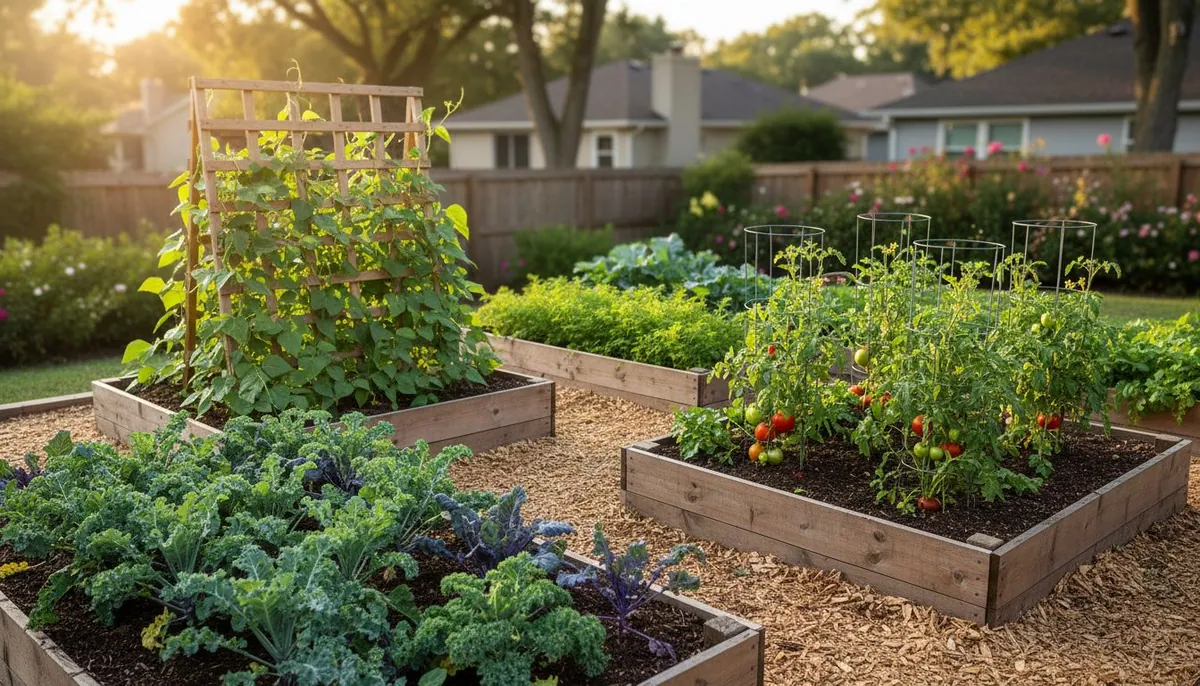
Crop rotation is the simple practice of not growing the same type of plant in the same spot year after year. Instead, you move each family of vegetables to a fresh bed on a repeating cycle, usually over three or four seasons. It is one of the oldest and most reliable tools in gardening, and it costs nothing but a little planning. Done well, crop rotation quietly breaks the cycles that let pests and soil-borne disease build up, and it keeps your soil's nutrients in better balance so heavy feeders do not strip a bed bare. For anyone building a resilient, low-input permaculture garden, understanding how rotation works is a foundational skill.
This guide explains what crop rotation actually does, introduces the main plant families you will be rotating, and gives you a straightforward three-to-four bed plan you can adapt to any backyard. It also looks at how rotation fits into a permaculture system built around polycultures, cover crops, and living soil rather than tidy monoculture rows.
Why Crop Rotation Works
The logic behind crop rotation rests on two observations that every gardener eventually makes. First, plants in the same botanical family tend to share the same pests and diseases. Second, they tend to draw on the soil in similar ways. If you plant the same family in the same ground repeatedly, you are effectively feeding a resident population of problems and depleting the same nutrients over and over.
Breaking pest and disease cycles
Many of the most stubborn garden problems overwinter in the soil or in crop debris, waiting for their preferred host to return. Classic examples include soil-borne disease like clubroot in the cabbage family, early blight and verticillium wilt in tomatoes and potatoes, and onion white rot in the allium family. Their spores, cysts, or resting bodies can persist in the ground for one to several seasons, and in some cases much longer.
When you move a family to a different bed, you deprive these organisms of the host they need. Without their target plant present, many pest and pathogen populations decline before that family cycles back around. Rotation does not eliminate disease, but it keeps pressure low enough that healthy plants can usually outgrow it. The same principle applies to soil-dwelling pests such as certain root maggots, nematodes, and beetle larvae that specialize on one crop group.
Balancing soil nutrients
Different crops are, in effect, different eaters. Leafy greens and the cabbage family are hungry for nitrogen. Fruiting crops like tomatoes and squash demand a broad, steady supply of nutrients. Root crops prefer soil that is not freshly manured and draw more on phosphorus and potassium. Legumes, meanwhile, give back: with the help of Rhizobium bacteria in their root nodules, they fix atmospheric nitrogen and leave the soil richer than they found it.
By sequencing these groups thoughtfully, you let each crop take advantage of what the previous one left behind. The traditional order places nitrogen-fixing legumes ahead of nitrogen-hungry leaf and brassica crops, followed by fruiting crops and then roots, which prefer the leaner, more settled soil at the end of the cycle. Rotation also disrupts the buildup of specific nutrient deficiencies and helps preserve soil structure, since deep-rooted and shallow-rooted crops explore different layers of the soil profile.
The Main Plant Families and Rotation Groups
Effective rotation depends on knowing which vegetables belong together. Grouping by botanical family is what makes the whole system work, because family members share pests, diseases, and feeding habits. Here are the groups most home gardeners organize their rotation around.
- Legumes (Fabaceae): peas, common beans, fava beans, lentils, and cover crops like clover and vetch. These are the soil builders of the rotation, fixing nitrogen and leaving fertility behind for the crops that follow.
- Brassicas (Brassicaceae): the cabbage family, including cabbage, broccoli, cauliflower, kale, Brussels sprouts, turnips, and radishes. They are heavy nitrogen feeders and are vulnerable to clubroot, so they benefit most from following legumes and from a long gap before returning.
- Alliums (Amaryllidaceae): garlic, onions, shallots, leeks, and chives. Light feeders prone to white rot, alliums are often given their own slot in the cycle.
- Solanaceae (nightshades): tomatoes, potatoes, peppers, and eggplant. These fruiting crops are demanding feeders and share blight and wilt diseases, so keeping them moving is especially important.
- Root crops: carrots, parsnips, celery, parsley, and dill from the umbellifer family (Apiaceae), along with beetroot, which is botanically a goosefoot but is grouped here with the other roots because it shares their growth habit and preference for loose, unmanured soil. Most root crops pull nutrients from deeper in the profile.
- Cucurbits (Cucurbitaceae): squash, pumpkins, cucumbers, melons, and gourds. Sprawling, thirsty, and hungry, they are often grouped with or beside the fruiting crops.
A few common vegetables sit outside these tidy groups. Sweet corn, lettuce, and members of the goosefoot family such as chard and spinach are relatively easygoing and can often fill gaps wherever space allows. Perennial vegetables like asparagus and rhubarb stay put and are simply left out of the rotation entirely.
A Simple 3 to 4 Bed Rotation Plan
You do not need a complicated chart to get most of the benefit of crop rotation. The classic approach divides your growing space into equal beds, assigns a rotation group to each, and shifts every group one bed forward each year. With four beds, any given family only returns to its starting bed once every four years, which is enough of a gap to suppress most soil-borne disease.
The four-bed cycle
Here is a reliable four-group sequence. Each year, everything moves forward one bed, and the last group wraps around to the first.
- Bed 1 — Legumes: peas and beans, which fix nitrogen and leave the bed enriched.
- Bed 2 — Brassicas: the cabbage family, planted to capitalize on the nitrogen the legumes left behind.
- Bed 3 — Fruiting crops (Solanaceae and cucurbits): tomatoes, peppers, squash, and cucumbers, fed with compost to satisfy their appetite.
- Bed 4 — Roots and alliums: carrots, beets, onions, and garlic, finishing the cycle in leaner soil before legumes return to rebuild it.
In year two, legumes move to Bed 2, brassicas to Bed 3, and so on. Keep a simple garden journal or a labeled sketch so you remember what grew where. That record is the single most useful tool for making rotation work over the long term, because memory alone rarely survives a busy growing season.
How long before a family returns
The longer the gap before a crop group comes back to the same ground, the more time soil-borne problems have to fade. As a rule of thumb, aim for at least a three-year break, and stretch it further for the troublemakers. Brassicas ideally wait three to four years or more, since clubroot spores are notoriously long-lived. Potatoes and tomatoes benefit from a similar gap to keep blight and potato cyst nematode in check, and onions and their relatives do best with about a three-year rest to limit white rot, which can linger in the soil for many years. If a bed has had a serious outbreak, err on the side of a longer break than your rotation strictly requires.
Making a three-bed version
If your garden is small, a three-group rotation still helps. A common split is: legumes and leafy greens, then brassicas and alliums, then fruiting and root crops. The gap between repeats is shorter, so you lean more heavily on compost and healthy soil life to make up the difference. Even a two-year alternation between two halves of a bed is far better than growing tomatoes in the same square of earth every summer.
How Crop Rotation Fits a Permaculture Garden
Strict crop rotation was designed for orderly rows of single crops, and permaculture gardens rarely look like that. When you interplant, grow in guilds, or fill a bed with a dozen species at once, tracking a clean four-year cycle becomes impractical. That does not mean the underlying principles stop mattering. It means you apply them more loosely and lean on other tools to achieve the same ends.
Polycultures and companion planting
Mixing plant families within a single bed is itself a form of rotation in miniature. In a diverse polyculture, no single pest or pathogen finds a solid block of its favorite host, so populations stay naturally in check. Interplanting alliums among carrots, or beans among corn and squash in the classic Three Sisters arrangement, spreads risk and shares nutrients across the same ground. The gardener's job becomes making sure that a given family does not dominate the same spot season after season, rather than marching rigid blocks around the plot.
Cover crops and living soil
Permaculture leans hard on feeding the soil rather than the plant, and rotation dovetails naturally with that goal. Slotting a legume cover crop into the cycle, or oversowing one after a harvest, adds nitrogen and organic matter exactly where the next hungry crop will need it. Our guide to nitrogen-fixing cover crops covers which species to sow and when. Adding homemade compost between plantings keeps the soil food web active, and a thriving population of soil microbes is one of your best defenses against the very pathogens rotation is meant to suppress. A resilient, biologically active soil forgives a lot of imperfect rotation.
Keeping it practical
The goal is not a perfect chart but a garden where problems never get a chance to entrench. A few habits carry most of the weight: never follow a crop with a close relative, always move the nightshades and brassicas, work a legume or cover crop in wherever you can, and keep notes on what grew where. Combine those habits with generous mulching, diverse plantings, and healthy soil, and you get the full benefit of crop rotation without turning your garden into a spreadsheet. It is a small discipline that pays off in fewer pests, steadier fertility, and healthier plants year after year.
Sources
- USDA Natural Resources Conservation Service — guidance on crop rotation and soil health management
- Cornell University College of Agriculture and Life Sciences, Cornell Cooperative Extension — vegetable crop rotation and plant family groupings
- University of Minnesota Extension — planning a vegetable garden crop rotation
- Oregon State University Extension Service — rotating crops to manage soil-borne disease and pests
- Royal Horticultural Society — crop rotation for the home vegetable garden
About the Author
Lucas is a writer and researcher focused on sustainable agriculture and permaculture practices.