
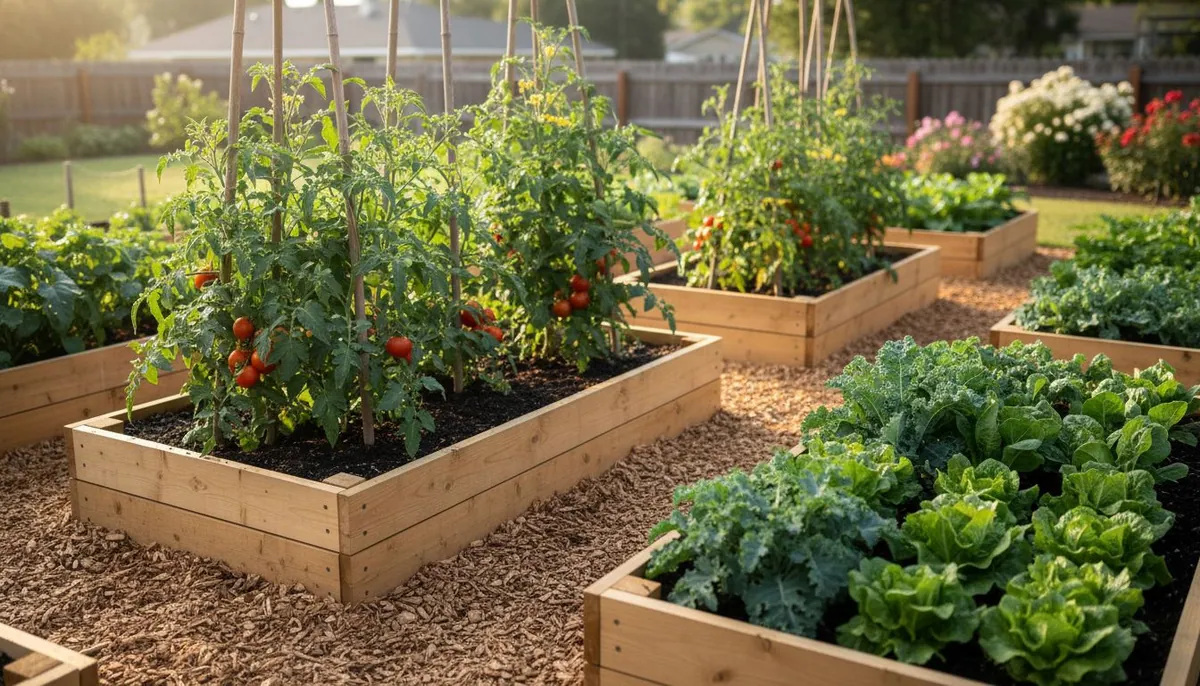
Raised bed gardening is one of the fastest ways to turn a patch of lawn, a gravel driveway, or a compacted backyard into a productive vegetable plot. Instead of fighting poor native soil, you build a contained frame, fill it with a loose, fertile mix, and garden from day one. The result is warmer, better-drained soil in spring, fewer weeds, less back strain, and tidy beds you can plant intensively. This guide walks through the genuine benefits of raised beds, how to choose materials and dimensions, how to mix and fill the soil economically, and how to plant and space your crops for a productive raised bed vegetable garden.
Why raised bed gardening works so well
A raised bed is simply a mound or framed box of soil sitting above the surrounding grade. That small change delivers a stack of advantages that compound over a growing season.
- Better drainage and earlier planting. Elevated soil drains faster and warms sooner in spring, so you can often plant a few weeks earlier than in-ground beds. This matters for heat-loving crops like tomatoes and peppers.
- Loose, uncompacted soil. Because you never walk on a properly sized bed, the soil stays fluffy. Roots push down easily, water infiltrates, and crops like carrots and other root vegetables grow long and straight.
- Fewer weeds and easier maintenance. You start with clean fill, and the defined edges make it obvious what belongs and what doesn't. A layer of mulch on the bed surface suppresses weeds further and holds moisture.
- Higher yields in less space. Rich soil plus intensive spacing means a small footprint can out-produce a much larger row garden.
- Comfort and accessibility. Taller beds reduce bending and kneeling, a real benefit for gardeners with limited mobility.
Raised beds aren't the answer to every situation. They dry out faster in hot climates, cost money and effort to build, and need topping up with compost each year. But for most home gardeners the trade-offs are well worth it.
Choosing materials for your raised beds
The frame holds your soil in place and defines the look of the garden. There is no single "best" material, only the one that fits your budget, climate, and aesthetic.
Untreated wood
Wood is the most popular choice because it's affordable, easy to work with, and looks natural. For the best wood for raised beds, choose naturally rot-resistant, untreated species such as cedar, redwood, black locust, or white oak. These resist decay for many years without chemicals leaching into your soil. Cheaper untreated pine or fir will work too, but expect it to break down in roughly three to seven years depending on climate. Avoid older pressure-treated lumber for food gardens; if you use modern treated wood, line the inside with heavy plastic to keep the soil separated from the boards.
Stone, brick, and concrete block
Stone and masonry beds are essentially permanent. They look beautiful, never rot, and store daytime heat that gently warms the soil into the evening. The downsides are cost, weight, and the labor of building them. Concrete blocks are a budget-friendly middle ground, and the open cores double as planting pockets for herbs or flowers.
Metal
Galvanized steel beds and corrugated metal troughs have become popular for their clean, modern look and long lifespan. Metal warms quickly in spring, which is a plus in cool regions but can overheat roots in hot southern gardens, so mulch well and water consistently. Look for beds rated food-safe.
Dimensions and depth
Getting the size right is what makes a bed pleasant to work in rather than a chore.
- Width: Keep beds no more than 4 feet wide if you can reach from both sides, or about 2 to 3 feet if the bed sits against a wall or fence. The rule is simple: you should be able to reach the center without stepping onto the soil.
- Length: Length is flexible. Eight to twelve feet is common and easy to source lumber for, but you can go longer.
- Paths: Leave at least 18 to 24 inches between beds, and 3 feet for a main path if you'll bring a wheelbarrow through.
The right raised garden bed depth depends on what you grow. A bed of 6 inches is the practical minimum and fine for shallow-rooted greens and herbs, especially if it sits on top of decent native soil that roots can penetrate. For a mix of vegetables, aim for 10 to 12 inches. If your bed sits on concrete, gravel, or hard pan where roots cannot reach the ground below, go deeper, 18 inches or more, particularly for root crops and tomatoes. Deeper beds also drain better and need topping up less often.
The ideal raised bed soil mix
The soil is where raised bed success is truly made. Because you're filling from scratch, you get to build the ideal growing medium rather than inheriting whatever is in your yard. A reliable, well-tested raised bed soil mix balances three things: structure, nutrition, and moisture retention.
A reliable starting formula is roughly equal parts by volume of:
- Good-quality topsoil or garden soil for body and mineral content.
- Finished compost for fertility and biology. Blend several sources if you can, including your own homemade compost, aged manure, and leaf mold.
- An aeration and moisture ingredient such as coarse sand, perlite, or coconut coir to keep the mix light and prevent compaction.
Don't obsess over exact ratios. The essential idea is a blend that is roughly one-third to one-half compost, holds moisture without turning to mud, and stays crumbly. Square-foot gardeners often use the well-known "Mel's Mix," which is equal parts by volume of finished compost, peat moss or coconut coir, and coarse vermiculite; it contains no topsoil and is another proven, if pricier, option. Avoid filling a deep bed with pure bagged potting mix, which is expensive and can dry out or slump, and avoid straight topsoil, which compacts. Each spring, top the bed with an inch or two of fresh compost to replace what the previous crops used and to feed the soil life. If your beds need an extra push, work in a balanced natural amendment; see our guide to the best organic fertilizers.
Filling raised beds economically
Filling a deep bed entirely with purchased soil and compost gets expensive fast. The smart approach is to fill the lower two-thirds with cheap or free organic bulk and reserve the good soil mix for the top planting zone where most roots live.
Hugelkultur core
The most rewarding way to fill a deep bed is to build a hugelkultur core: a base of logs, branches, and woody debris buried under your soil. As the wood slowly decomposes it acts like a sponge, holding water and releasing nutrients for years, which means less watering and less fertilizer over the long haul. Use well-aged or hardwood logs at the bottom, then twigs and smaller material, then leaves and grass clippings, and finally your soil-and-compost mix on top. Note that fresh wood ties up nitrogen as it starts to break down, so add extra compost or a nitrogen source in the first season.
Sheet mulching and layered fill
Another low-cost, no-dig strategy is to layer organic materials the way you would in sheet mulching, or lasagna gardening. Alternate carbon-rich "browns" (cardboard, dried leaves, straw) with nitrogen-rich "greens" (kitchen scraps, fresh grass clippings, manure), then cap the whole thing with several inches of finished soil mix so you can plant immediately while the layers below compost in place. A sheet of plain cardboard laid directly on grass at the very bottom smothers weeds without digging.
Whichever method you use, expect the fill to settle over the first year. Plan to top up with compost as the organic core shrinks.
Planting and spacing your beds
Because raised bed soil is so loose and fertile, you can abandon traditional wide rows and plant intensively, spacing plants equidistantly so their leaves just touch at maturity. This living canopy shades the soil, conserves moisture, and crowds out weeds.
A square-foot approach is an easy way to think about it: divide the bed surface into one-foot squares and plant each according to the crop's size. As a rough guide per square foot, that's about 1 tomato or pepper, 4 lettuces, 9 spinach or bush beans, and 16 carrots or radishes. Give tall or sprawling crops room and put them on the north side so they don't shade shorter plants.
A few planting habits pay off in a raised bed vegetable garden:
- Interplant and rotate. Mix quick crops like radishes among slower ones, and move plant families around each year to reduce pests and disease.
- Succession sow. As soon as one crop finishes, refresh the square with compost and replant. A raised bed can produce two or three rounds of vegetables per season.
- Mulch and water consistently. Raised beds drain quickly, so a moisture-holding mulch and steady watering, ideally with drip irrigation, keep growth even.
Beyond the basic box: raised bed variations
Once you're comfortable with a standard bed, a few variations solve specific problems. In hot, dry climates a keyhole garden, a round raised bed with a central composting basket and a notch cut in for access, concentrates water and nutrients right where plants need them. Vertical trellising on the sunny side of a bed lets vining crops like cucumbers, pole beans, and squash grow up instead of out, multiplying your yield per square foot. And grouping several beds together with permanent paths creates an efficient, attractive kitchen garden that's easy to tend for years.
Start with one well-built, well-filled bed this season. Get the width, depth, and soil right, plant it densely, and keep it mulched, and you'll quickly see why raised bed gardening has become the backbone of so many productive home gardens.
Sources
- Oregon State University Extension Service, publications on raised bed construction and garden soil preparation
- University of Minnesota Extension, guidance on raised bed gardening and vegetable spacing
- United States Department of Agriculture Natural Resources Conservation Service, resources on soil health and organic matter
- Cornell University College of Agriculture and Life Sciences (Cornell Cooperative Extension), home vegetable gardening resources
- Royal Horticultural Society, advice on raised beds and soil improvement
About the Author
Lucas is a writer and researcher focused on sustainable agriculture and permaculture practices.