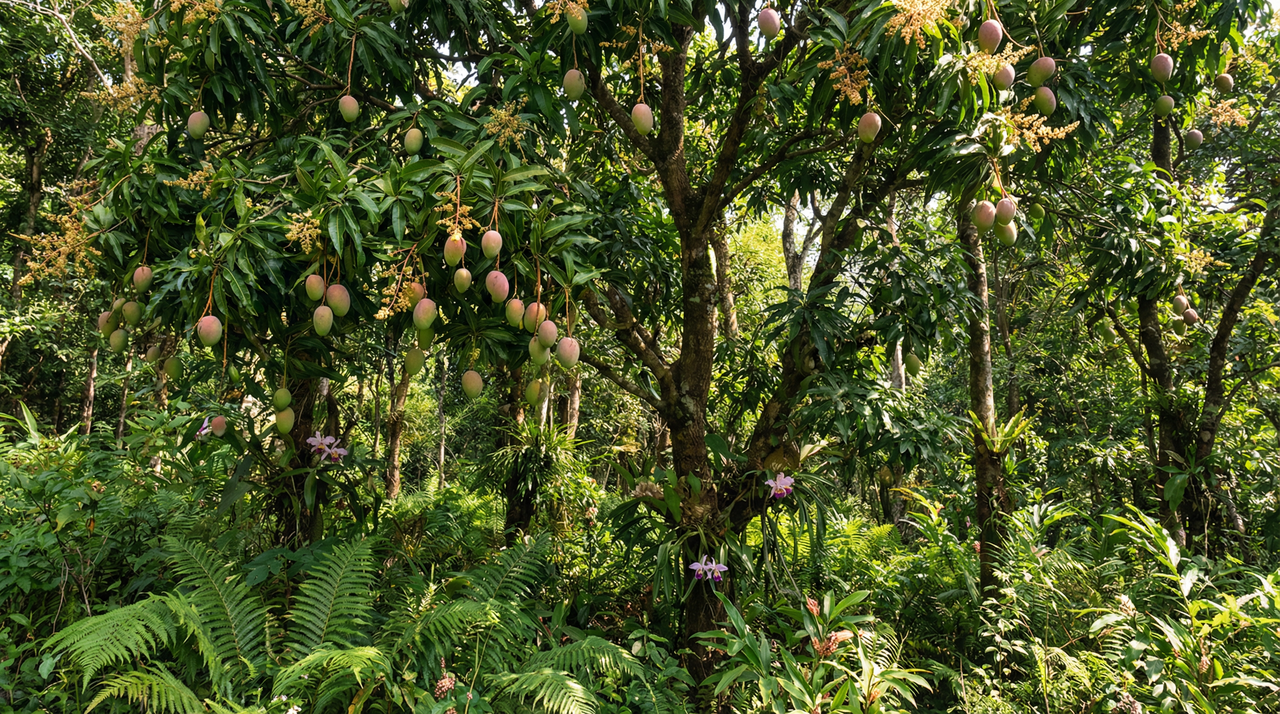
There's a moment every serious mango grower knows: you bite into a fruit you've waited five months for, juice running straight past your wrist, and you think, nothing I have ever grown tastes like this. Then someone standing next to you eats the same variety off a grocery store shelf and shrugs. That's not a minor difference in personal taste. The volatile aromatic compounds responsible for mango's extraordinary flavor, the terpenes and lactones and esters that make a ripe Alphonso smell faintly of peach, coconut, and something you genuinely cannot name, degrade rapidly after harvest and under cold storage.[1] What most people think of as "mango flavor" is a pale, refrigerated ghost of the real thing.
I've grown mangoes in South Florida, watched them fruit in zone 10b microclimates where they had no business surviving, and eaten them warm off the tree in July heat so thick you could wear it. The experience reframes everything: why this tree has been cultivated for over 4,000 years, why it appears in Sanskrit texts and Mughal garden paintings, why it became the national fruit of three countries. This isn't nostalgia. It's a flavor argument the grocery industry has been quietly losing for decades, and your backyard might be the only place left to win it.
Origin and History of Mango (Mangifera indica)
Botanical Background and Native Range
Mangifera indica is the scientific name of a tree that has been growing in the same corner of the world for an extraordinarily long time. Native to the tropical and subtropical region spanning northwestern India through Myanmar, it has been cultivated there for over 4,000 years.[2][3][4] What makes that number feel real to me is the tree's biology: mango is a polycarpic evergreen that can live well over a century, with some historical specimens reportedly reaching 300 years.[2][5] Commercial orchards typically replace trees after 20 to 40 years once yields drop off, but left to its own devices, this is a tree that outlives the people who plant it by generations. In every subtropical food forest I've designed where mango is appropriate, I treat it as a legacy planting, a centerpiece you're building the rest of the guild around, not just another fruiting tree.
Visual Characteristics of the Mango Tree
In a landscape, mango commands attention. Mature trees reach 30 to 100 feet tall with broad, dome-shaped canopies that start upright when young and gradually spread with age.[6][7][8] The bark is rough, grayish-brown, and deeply furrowed. Leaves are alternate, lanceolate, 6 to 12 inches long, and one of my favorite things about the tree is that flush of coppery-red new growth each spring before the leaves harden to deep, glossy green. I watch for that color change every year as my cue to time fertilizing and light pruning. The flowers emerge in dense terminal panicles 10 to 40 centimeters long, pale yellow to whitish, and numerous enough to be frankly showy. Fruit shape, size, and skin color vary enormously across cultivars.
The related species Mangifera caesia gives some useful contrast here. It can grow even taller in the wild, past 130 feet, with smoother bark and leaves often clustered at branch tips.[9][10] Its fruit is smaller, with thin yellowish-white skin and fibrous white flesh carrying a sweet-sour turpentine note that's an acquired taste. Compared to the juicy, fiberless fruit I harvest from good Florida selections, the contrast is stark. It's a useful reminder of why indica became the global standard.
Traditional and Cultural Significance
Mango seeds recovered from Indus Valley archaeological sites date to around 2000 to 2500 BCE, and written references appear in Vedic texts from roughly 1500 to 500 BCE.[4][11][12] By the time the tree began spreading beyond South Asia, it had already accumulated centuries of meaning. Mango is the national fruit of India, Pakistan, and the Philippines, and across Hindu, Buddhist, and Jain traditions it symbolizes love, fertility, prosperity, and spiritual attainment; leaves are still used in festivals to repel evil spirits and attract good fortune.[13][14] I grow mango primarily for fruit and for the food forest ecosystem it anchors, but I have genuine respect for that cultural depth, and for the South Asian communities whose accumulated knowledge preserved so many extraordinary varieties.
In Ayurvedic and folk medicine, the tree has long served as a kind of whole-pharmacy: fruit and leaves for digestive complaints, leaves for diabetes and hypertension, bark for gastrointestinal issues.[15][16] From its South Asian homeland, the mango tree traveled along ancient trade and pilgrimage routes, reaching Persia and the Arab world by the 10th century, China during the Tang dynasty via Buddhist monks, East Africa by the 15th century, and the Americas through Portuguese and Spanish colonizers in the 16th and 17th centuries.[17][18] Its arrival in Florida in 1833, introduced by British horticulturist Dr. Henry Perrine, launched cultivation in what would become the most mango-friendly corner of the continental United States, alongside Hawaii and, to a lesser extent, parts of California and Texas.[19][20]
Fun Facts About Mango
The ecology of mango reproduction is genuinely interesting. Flowers depend on honeybees, wild bees, flies, and butterflies for pollination, while ripe fruits are dispersed by fruit bats, hornbills, bulbuls, and primates.[21][22] That's a meaningful ecological web for a backyard tree to be part of. A healthy mature tree typically produces 300 to 500 fruits per year, though high-yielding cultivars under ideal conditions can push past 1,000.[23][24] The first time I stood under a mature tree absolutely loaded with fruit, I understood immediately why entire cultures built ritual and symbolism around it. The heaviest mango ever recorded weighed 4.25 kilograms (9 lb 6 oz), grown in the Philippines in 2018.[23] On the propagation side, many commercial cultivars are monoembryonic, producing seeds that yield genetically variable seedlings, which is why grafting is the standard approach for true-to-type fruit. Some varieties produce polyembryonic seeds with clonal offspring, and after years of growing both types I've settled firmly on grafted trees for anything I want to harvest predictably.[25][26]
Mango Varieties and Cultivars
Before you buy a mango tree or plant a mango seed, there's one piece of information that changes every decision you'll make afterward. It doesn't show up on most nursery tags, and I didn't fully appreciate it until I had a tray of seedlings that looked completely uniform but were genetically all over the map.
Polyembryonic vs Monoembryonic Mangoes
Mango cultivars fall into two seed types, and the difference is fundamental. Polyembryonic seeds contain multiple embryos, including nucellar ones that are clones of the parent, so seedlings from those seeds grow true to type.[27][5] Monoembryonic seeds produce one zygotic seedling that's a genetic gamble, the offspring of two parents, not a copy of either.[28] Polyembryonic cultivars like 'Nam Doc Mai', 'Kent', and 'Carabao' are common across tropical Southeast Asia; monoembryonic ones like 'Alphonso', 'Tommy Atkins', and 'Haden' dominate Florida and Indian breeding programs.[28] I now label every seedling tray within the first month, because at the cotyledon stage you genuinely cannot tell a clonal polyembryonic sprout from a variable zygotic one. They're identical. Months later, they're not.
Popular Mango Cultivars for Home Growers and Commercial Use
An unpruned mango tree will expand quickly to dominate the canopy space.[6] In a managed food forest or home orchard, regular pruning keeps most trees in the 15 to 30 foot range, which is still a serious canopy commitment. Fruit size alone spans 2 to 12 inches depending on cultivar, and the flavor profile shifts just as dramatically, from peach-pineapple-citrus in some to straight honeyed richness in others.[6] A grafted tree typically fruits in 3 to 5 years; grow from seed and you're looking at 5 to 8.[6] That timeline alone is worth understanding before you pick a variety.
For home growers in the U.S., the University of Florida IFAS breeding program is where I'd start the conversation. Their selections were developed specifically for subtropical conditions, and they show it. 'Pickering' is the one I keep coming back to in small spaces: a dwarf tree topping out around 10 feet, 8 to 10 ounce fruit, high disease resistance, and consistently good flavor.[5] 'Julie', 'Carrie', and 'Cogshall' round out the compact-to-medium options with solid anthracnose resistance, which matters enormously in humid microclimates.[5] I learned that lesson the hard way after losing an 'Alphonso' to anthracnose in a wet season. Beautiful tree, wonderful fruit, but it needs drier conditions than my site offered.
'Keitt' has become one of my recommendations for anyone dealing with humidity. The fruit runs up to 3 to 4 pounds and it carries genuine resistance to anthracnose, powdery mildew, Verticillium wilt, and bacterial black spot.[29] Commercially, 'Tommy Atkins' produces reliably at 12 to 18 tons per hectare and dominates North American imports, while the beloved 'Alphonso' maxes out around 5 to 10 tons but commands a premium for flavor.[30] 'Nam Doc Mai' and 'Tommy Atkins' both handle water stress better than 'Alphonso', which wants consistent irrigation.[31] For those of us pushing into marginal zone 9, 'Pickering', 'Carrie', 'Julie', and 'Irwin' can briefly tolerate dips to around 25 to 30°F with protection, though the care guide covers cold management in more detail.[32][5]
The related species Mangifera caesia, sometimes called jack mango, offers a useful contrast here. It can reach 40 meters with kilogram-sized fruit and regional forms like 'Mangga Madu' with a honey-like taste, but it has far fewer standardized cultivars and is anthracnose-susceptible in humid conditions.[33][10] The breadth of refined, disease-resistant Mangifera indica cultivars available today reflects millennia of selection that its relatives simply haven't had.
Sourcing Mango Trees and Fruit in the United States
If you're buying fruit, the regulatory picture is straightforward but worth knowing. Fresh mangoes can be imported from approved countries like Mexico, Brazil, and Peru with phytosanitary certification, and Mexican fruit specifically requires a minimum 400 Gray irradiation treatment to control fruit flies and seed weevils.[34] Mango seeds are generally prohibited from import unless destined for approved research or propagation programs.[34] So if you're dreaming of planting a seed from a market mango you loved on vacation, that path is mostly closed.
In U.S. grocery stores, Ataulfo (the honey mango) and Tommy Atkins together account for roughly 70% of imports, with Ataulfo alone at about 40%.[35][36] Kent and Keitt round out what you're likely to find. Florida leads domestic production with Tommy Atkins, Kent, and Keitt; California has small-scale production, mostly Ataulfo and Tommy Atkins.[35]
For trees, grafted specimens suited to zones 10 to 11 are available from subtropical nurseries including Florida Hill Nursery, Everglades Farm, Moon Valley Nurseries, and Armstrong Garden Centers, typically running $20 to $100 for seedlings and $40 to $70 for 5-foot grafted trees.[37] My honest advice: always buy grafted. The 3 to 5 year wait for fruit on a grafted tree already feels long enough; there's no reason to double it with a seedling of unknown genetics when you have a known variety right there on the shelf.
Mango Propagation and Planting Guide
Every mango tree in your landscape starts with a single decision: do you want to wait, or do you want to harvest? That's not a flippant question. How you propagate a mango tree sets the trajectory for everything that follows, and getting it wrong means years of patience with nothing to show for it.
Choosing Your Propagation Method: Seeds, Grafting, Budding, and Air Layering
Grafting and budding are the commercial standard for good reason. Both methods produce true-to-type plants with the exact fruit characteristics of the parent, and grafted trees typically begin bearing in 3 to 5 years versus the 5 to 8 (sometimes up to 15) you'd wait on a seed-grown tree.[38][39][40][41] After working with both seed and grafted trees across multiple food forest projects, I now default to grafted stock almost every time. Clients who commission a landscape want to taste the fruit, not pass the tree on to their grandchildren.
For grafting technique, veneer and cleft grafting are the most reliable approaches, with chip budding and T-budding also widely used.[42] Temperatures between 70 and 90°F favor successful union, which makes late winter through early summer the sweet spot in most subtropical climates.[42] Rootstock selection matters too. Polyembryonic varieties like 'Vellaikolamban' and 'Kurkan' are widely recommended, and in Florida, seedlings of 'Tommy Atkins' or 'Haden' work well, with the G7 selection particularly valued for its tolerance of soilborne pathogens in subtropical conditions.[43]
Air layering (marcotation) is a solid home-scale option, with success rates between 75 and 90% when done during the active growing season, roughly March through July. For those willing to experiment, semi-hardwood stem cuttings treated with IBA rooting hormone at 5,000 to 10,000 ppm can root, though success rates of 20 to 50% make it a less reliable path.[44] Tissue culture achieves over 90% success but requires sterile lab facilities that put it firmly outside the home grower's toolkit.[45]
Understanding Monoembryonic vs. Polyembryonic Mango Seeds
Before you plant a single mango seed, you need to know what's inside it. Mango seeds are classified as either monoembryonic or polyembryonic, and this distinction is the first decision that can save you years of disappointment.[46]
As discussed in the varieties section, monoembryonic seeds produce a seedling that is a genetic recombination of both parents. Popular cultivars like 'Tommy Atkins,' 'Keitt,' and 'Haden' are monoembryonic, which is precisely why they're propagated commercially by grafting rather than seed.[47][46] Polyembryonic seeds are a different story entirely. They contain multiple embryos, most of which are nucellar clones of the mother plant, making them reliably true-to-type and ideal for producing rootstock.[48][49] 'Kensington Pride' and 'Nam Doc Mai' are polyembryonic examples.[46]
One practical note from the nursery bed: when a polyembryonic stone sprouts, you often get three or four seedlings pushing up at once, all looking nearly identical. I've learned to label my rows carefully because sorting out the zygotic seedling (the genetic variable one) from the nucellar clones at that stage requires close attention to relative vigor, not appearance.
Seed Storage, Viability, and Germination Timeline
Mango seeds are recalcitrant, meaning they cannot be dried and stored like orthodox seeds. Let them drop below roughly 15 to 20% moisture content and viability crashes fast.[50][51] If you need to hold a fresh seed before planting, pack it in moist sand, vermiculite, or sphagnum moss at 80 to 90% relative humidity and 4 to 15°C. Even under those conditions, expect significant viability loss after one to three months, and don't count on storing beyond six months at all.[52][53]
I've run the tetrazolium test on fresh versus five-to-six-week-old mango stones, and the drop in red staining by week eight is genuinely startling. The TZ test works by showing which embryo tissue still has active dehydrogenase enzymes; viable tissue turns red within hours, saving you weeks of waiting on germination tests.[54] The lesson: plant fresh, or graft promptly.
For germination, fresh seeds do well at 75 to 85°F in a well-draining, slightly acidic medium (pH 5.5 to 7.5). Lightly scarifying the woody husk or soaking the seed briefly can speed things up, and under good conditions you can expect germination in 10 to 21 days.[55][56] From there, seed-grown trees bear fruit in 5 to 8 years under optimal conditions, with grafted trees delivering in 3 to 5 years -- sometimes as early as 2 to 3 years for precocious varieties.[41][57]
Soil, Site Selection, and Planting Requirements
Mango grows across a wide pH range of 5.5 to 7.5, with the sweet spot sitting between 6.0 and 7.0 for optimal nutrient uptake and fruit production.[5][58] Drop below 5.5 and you risk aluminum and manganese toxicity along with nutrient lockout; push above 7.5 to 8.0 and iron chlorosis becomes a regular headache.[26] Lime raises, elemental sulfur lowers, and testing every two to three years keeps you ahead of drift in either direction.
The soil itself should be well-drained loamy or sandy loam with some organic matter, at a minimum depth of 1 to 1.5 meters so roots have somewhere to go.[41][59] Poor drainage is non-negotiable territory. I've watched mangoes in low-lying Florida sites decline quickly during wet summers, not from pests or disease but from waterlogged roots and the secondary issues that follow. A gentle slope or a raised planting position solves this before it starts. For containers, a mix of roughly 40% coarse sand, 30% loam-based potting soil, 20% organic matter, and 10% drainage material gives roots the aeration they need while retaining enough fertility.[60]
Full sun is not negotiable for fruit production. Mango wants at least 6 to 8 hours of direct light daily; young trees tolerate partial shade, but reduced light shows up quickly as weaker flowering and lower fruit set.[61][62] I see the same pattern with citrus in my designs, and mango is even less forgiving. Pick the sunniest spot on the property and plan everything else around it.
Spacing, Technique, and Early Establishment
A mature mango tree is a serious commitment to space. Most cultivated trees reach 40 to 60 feet tall with canopy spreads of 30 to 75 feet, growing at 3 to 4 feet per year under good conditions.[6][18] Standard commercial spacing runs 20 to 30 feet between trees; high-density systems can go tighter at 10 to 15 feet, but only if you commit to intensive annual pruning and a proper training system.[63]
Early in my career I planted two standard trees 18 feet apart because the site felt tight and I thought I'd manage canopy competition as they grew. By year six they were a tangled mess, flowering poorly and nearly impossible to harvest without serious ladderwork. The lesson I've never forgotten: plan for 25 to 30 feet on full-sized trees, or commit to a high-density system from day one with the maintenance calendar to match. Half-measures cost you more labor and yield loss than doing it right the first time.
Hardy in USDA zones 10 to 11, mango wants formative pruning in the first three to four years to establish an open-center structure that allows light into the canopy and simplifies later harvests.[25][64] Good airflow through an open canopy also reduces fungal pressure during humid summers, a practical payoff that connects site planning directly to disease management down the line.
Essential Mango Tree Care Guide
Caring for a mango tree rewards you most when you stop treating it like a big houseplant and start thinking like a tropical orchardist. The tree has a rhythm: a flush-and-rest growth cycle, a thirst that changes dramatically with age, and a hunger for nutrients that shifts with every season. Match your management to that rhythm, and the tree practically runs itself. Fight it, and you'll be chasing problems year-round.
Water Needs for Young and Mature Mango Trees
The irrigation switch that happens as a mango tree matures is one of the sharpest in subtropical fruit growing. Young trees, anything under three years, need frequent, relatively shallow irrigation every two to four days, typically 10 to 20 gallons per week, to keep moisture at 12 to 18 inches depth.[65][66] Once a tree crosses five years, flip that script entirely: deep, infrequent soaks every 7 to 14 days at 50 to 100 gallons per session, wetting soil down to 18 to 24 inches.[65][67] I follow the same general approach with my established citrus, and it translates well here: infrequent deep watering builds deep roots that buffer the tree through dry spells. A healthy established mango can go three to six weeks without supplemental irrigation once it's well rooted.
The total annual water target for mature trees lands around 800 to 1,200 mm,[68] but on Central Florida's sandy soils, surface appearance tells you almost nothing useful. I've learned to push a thin rod or finger down six inches before deciding whether to irrigate. Yellow leaves with a soggy smell say overwatering and possible root rot; wilting with crispy margins usually means the tree ran dry.[69][18] Both are avoidable. Trust what's actually happening at root depth, not what you can see from the surface.
Sunlight Requirements and Light Stress Symptoms
Mango is not a shade-tolerant tree. Six to eight hours of direct sun daily is the baseline for consistent flowering and fruiting; anything less and you're looking at a 20 to 30 percent yield reduction at minimum.[25][70] The tree's thick, lanceolate leaves, 15 to 30 cm long and highly glossy, evolved specifically to capture intense tropical light,[71] which makes sense until you're running one in a Florida summer where afternoon sun hits like a blowtorch.
Inadequate light shows as yellowing, etiolation, and poor flower set. Too much direct intensity on young bark causes scorching and wilting once temperatures push past 35 to 40°C.[72][73] I use 30 percent shade cloth on newly planted trees through July and August specifically to avoid that leaf scorch, and the difference in foliage quality compared to unprotected trees in the same garden is not subtle.
Feeding and Nutrient Management
Mango is a heavy feeder, and the appetite is real. Mature trees need roughly 200 to 400 g of nitrogen, 100 to 200 g of phosphorus (as P₂O₅), and 200 to 400 g of potassium (as K₂O) per tree per year; young trees take about half those amounts.[5][74] For young, non-bearing trees in the Florida home landscape, a balanced granular fertilizer like 6-6-6 or 8-3-9 applied four to six times between March and September covers the basics.[75][25] Bearing trees want split applications from March through August with deliberately reduced nitrogen in late summer; during flowering, shift the emphasis to phosphorus (200 to 300 g/tree), potassium (300 to 500 g/tree), and a boron supplement to support fruit set.[25][76]
Soil pH between 6.0 and 7.0 is the sweet spot where macronutrients and micronutrients stay available.[5] On sandy or calcareous soils, working organic matter in regularly makes a measurable difference. I've seen zinc-deficiency "little leaf" and rosetting firsthand on trees in sandy Central Florida soil, which the research confirms can cut yields by 20 to 40 percent.[77] I now apply a micronutrient foliar spray preventatively at each flush rather than waiting for symptoms. Iron shows as interveinal chlorosis on young leaves; boron deficiency shows up as gum exudate and poor fruit set. Confirm visuals with a soil and leaf test before adjusting, because these symptoms overlap.
Frost Tolerance and Cold Protection
Mango requires a hot, frost-free climate.[78] Mature trees may survive a brief dip to 28 to 30°F, but prolonged exposure below freezing means leaf drop, branch dieback, or death outright.[18] Young growth and open flowers are the first casualties; a hard freeze during bloom can erase the entire harvest regardless of tree health. I've protected trees through upper-20s events in Central Florida using a combination of overhead sprinklers and frost cloth, and the outcome between a young tree and a six-year-old established tree is night-and-day.[79] The big tree shrugged it off; the younger ones needed more intervention. If you're pushing into Zone 9b, site selection and microclimate matter as much as any covering strategy.
Heat Tolerance and Management Strategies
Mango handles heat better than cold, rated for AHS Heat Zone 12 with more than 210 days above 86°F. Optimal growth happens in the 75 to 86°F range, and trees can tolerate sustained temperatures up to 100 to 104°F with short spikes even higher.[80][81] The catch is that flowering and fruiting stages are the most heat-sensitive; prolonged heat above 35 to 40°C triggers flower drop, fruit cracking, and sunburn, and yield losses of 20 to 50 percent are documented.[82][83] Cool nights in the 59 to 68°F range are genuinely restorative for stressed trees.
Practically speaking, four to six inches of organic mulch under the canopy and 30 percent shade cloth on young trees through peak summer are the two things I do that visibly reduce leaf scorch and improve fruit hold.[5] If you're choosing cultivars for a hot, exposed site, Tommy Atkins, Keitt, and Kent all carry solid heat tolerance.[84]
Pruning, Training, and Seasonal Maintenance
Structure your tree early and you'll thank yourself at harvest time. Train young trees to an open-center or vase system with three to four main scaffold branches angled at 45 to 60 degrees from a trunk cleared to three to four feet.[25][85] Mature trees get pruned annually right after harvest, removing no more than 25 percent of the canopy per session along with water sprouts, dead wood, and crossing branches. I aim to keep my trees at 10 to 15 feet, which makes hand-harvesting actually possible and keeps the canopy open enough that anthracnose pressure noticeably drops.[25] Removing more than 25 percent at once risks sunscald on exposed bark, so resist the urge to take everything in one session.[86]
Fruit and flower thinning close the management loop. Thin flower panicles by 50 to 70 percent at bloom, then reduce fruit to one or two per branch after set.[25][86] It seems counterintuitive to remove fruit, but the result is larger fruit, less branch breakage, and trees that don't slip into biennial bearing cycles.
Seasonal Rhythm and Growth Cycle
Mango flowering is triggered by two to three months of cool, dry conditions in the 50 to 70°F range, typically late winter into early spring.[25][61] During that induction period I reduce irrigation by 50 to 70 percent, mimicking the seasonal dryness the tree expects. When those panicles start emerging in late January or February, it's one of the more satisfying moments in the subtropical garden. Moderate irrigation resumes during bloom, around 20 to 30 liters per tree every seven to ten days, with humidity maintained and nitrogen kept deliberately low so the tree pushes flowers rather than leaves.[25]
After harvest, prune immediately so the tree has enough recovery time before the next flowering cycle begins.[87] Young trees put on half a meter to a meter of growth per year under good conditions, so that post-harvest window also sets the scaffold for the following season. Let the dry season do its work in winter, and the tree will respond on schedule.
Mango Harvesting: Timing, Technique, and Flavor Payoff
After months of watching those fruits swell on the branch, getting the harvest moment right is everything. Pick too early and you get a starchy, resinous disappointment that never properly ripens off the tree. Wait too long and the fruit drops, bruises, or ferments before you can enjoy it. That long bloom-to-harvest window, anywhere from 150 to 250 days depending on the variety, is exactly why I treat harvesting decisions with so much care.[88]
When to Harvest Mangoes: Maturity Indicators and Regional Seasons
No single cue tells you a mango is ready. You use a toolkit. Skin color shifting toward yellow, orange, or red (depending on variety), shoulders filling out and rounding above the stem end, specific gravity dropping to between 1.0 and 1.04, Brix levels reaching 15 to 20 degrees, and the seed hardening are all part of that toolkit.[39][89][90] The one I rely on most is sap taste: when the latex from a cut stem shifts from sharp and bitter to bland or faintly sweet, you're close.[91] It took me several seasons of tasting sap from my Florida trees across different cultivars to really trust that cue, but now I wouldn't skip it.
In Florida, peak harvest typically runs June through July, with the broader season stretching into September.[61][18] California growers see a later window, generally August through November.[92] If you're growing for any kind of extended shelf life or sharing fruit with neighbors across town, harvesting at 75 to 80% maturity is the smarter call, giving you two to three weeks of ripening window post-pick.[93]
Best Practices for Picking and Post-Harvest Handling
I learned the hard way about harvesting in midday heat. Once, early on, I picked a batch of Kents in the afternoon and ended up with sticky latex all over my hands and brownish sap streaks baked into the fruit skin. Now I'm out there with my clippers at first light. Morning harvesting reduces sap flow and the risk of latex staining, and the cooler temperatures are gentler on both fruit and harvester.[93] Clip each fruit with clean pruning shears, leaving a short stem, and lower it gently onto padded surfaces rather than letting it drop.
If you've been proactive during the growing season, bagging your developing fruit about three to four weeks after fruit set with breathable kraft paper or newspaper bags can cut pest damage by up to 90%.[25] Once picked, wash everything in chlorinated water at 100 to 200 ppm to remove surface pathogens and field debris, then air dry before sorting.[94][95] Sort by size (under 10 oz, 10 to 14 oz, and above 14 oz) and visible maturity for market or processing decisions.[94]
Storage is where a lot of home growers stumble. Mangoes hold best at 12 to 13°C with 85 to 90% humidity.[94][95] I once refrigerated a batch at standard fridge temperature (closer to 5°C) and pulled them out days later with deep skin pitting and a faintly fermented smell that no amount of optimism could save. Chilling injury is real, and it's irreversible.[94]
Mango Flavor, Texture, and Yield at Harvest
The edible mesocarp, that thick, juicy flesh surrounding the seed, runs 80 to 85% moisture and is the whole reason you waited eight months.[8][81] As the fruit ripens, sugars climb from around 5 to 10% Brix up to 15 to 20%, the acid-to-sugar ratio softens dramatically, and the sharp green volatiles like hexanal fade while tropical esters and terpenes build.[81][96] A perfectly ripe mango smells like a collaboration between peach, pineapple, and citrus, with the resinous undertone coming from myrcene and limonene and the fruity lift coming from esters like ethyl butanoate.[97][98]
The cultivar you're growing shapes all of that considerably. An Alphonso at peak ripeness is intensely sweet and almost perfumed, creamy-textured, with next to no fiber.[99] I grew one for several years and the first time I ate fruit off my own tree I genuinely stopped what I was doing. Tommy Atkins, by contrast, is milder, a little tangier, with a pinier aromatic note and more noticeable fibrous strands through the flesh.[100] Neither is wrong; they're just very different rewards for the same patience.
Post-harvest handling choices affect what ends up on your tongue. Controlled atmosphere storage and ethylene treatments can shift the volatile profile, sometimes for better, sometimes producing off-flavors if poorly managed.[101] Drying at 60°C preserves roughly 70% of the volatiles, making dried mango a reasonable way to capture the season, though some of those high-note terpenes do fade.[102] And if chilling injury sets in, ethanol and acetaldehyde accumulate, turning that sweet tropical aroma into something distinctly fermented.[101] It's a useful reminder of how much chemistry is happening inside that fruit even after it leaves the branch.
For perspective on just how good Mangifera indica is, consider its relative, the horse mango (Mangifera foetida). I've encountered it growing in similar subtropical conditions, and ripe or not, that characteristic turpentine-resin smell lingers in the skin, and the flesh is fibrous and considerably more sour and astringent than any indica cultivar.[103][104] It has its uses, mostly cooked or pickled, but eating it out of hand next to a ripe Kent makes the case for why indica became the global standard without any argument needed.
Mango Preparation and Uses
Culinary Uses and Edibility of Mango
The pulp is the whole point, and it earns that status. Rich in vitamins A and C,[105][37] a ripe mango also carries over 300 volatile aromatic compounds that produce that unmistakable floral-tropical perfume, a dramatic shift from the green-resinous, tart notes of unripe fruit.[106][107] I've noticed this shift dramatically between fruit I pick straight from a tree at peak ripeness versus anything harvested early for shipping. The commercially picked version just doesn't hit the same register.
Varietal character matters here. Alphonso leans intensely sweet with floral-tropical aromatics, while Tommy Atkins offers milder sweetness and subtle tartness.[106] Those flavor differences are baked into centuries of recipes. Unripe fruit's sharp acidity drives South Asian preparations like aam ka achar (mango pickle) and functions as a souring agent where tamarind might otherwise go.[27] Ripe fruit becomes mango lassi, mango chutney, mango sago, and the Thai classic of mango sticky rice where glutinous rice steamed with coconut milk meets fragrant ripe slices.[108][94] Mango salsa recipes play the same bridge between sweet and savory, pairing beautifully with cilantro, chili, cumin, and lime.[109]
The skin is the one thing I'd steer people away from eating fresh. It contains urushiol, which causes contact dermatitis in sensitive individuals.[110][111] Boiling for 10 to 20 minutes or pasteurizing at 80 to 90°C can reduce urushiol content by up to 90%, and fermentation or pickling further degrades allergenicity through acidification and microbial activity.[112][113] Raw seeds should be processed too; roasting or boiling before grinding unlocks their potential as mango butter or flour.[114][115] I tried using raw kernels once out of curiosity. Don't. Roasting changes everything.
Related species like Mangifera caesia and Mangifera foetida expand what the genus can do in the kitchen. Horse mango (M. foetida) works as a souring agent in curries, rojak, and sambals, with cooking mellowing its bitterness into something closer to umami.[104] M. caesia carries comparable vitamins A and C with about 80% water content[116] but shares the same urushiol precautions.[111] Good to know before you start improvising with them.
Medicinal and Traditional Preparations
Mango leaves, bark, and seeds appear in Ayurveda, Unani, Traditional Chinese Medicine, and various folk traditions, with applications ranging from leaf decoctions for diabetes and inflammation to bark preparations used as an astringent and seed extracts for skin conditions.[117] The ethnobotanical record is genuinely deep. The modern clinical record is considerably thinner. Dosages aren't standardized; studies reference 100 to 400 mg per day of polyphenol extracts while folk practices vary widely, with bark powders cited anywhere from 1 to 3 grams per dose.[105] I've read through a fair bit of the ethnobotanical literature, and my honest advice to friends is always the same: the cultural knowledge is real and worth respecting, but concentrated leaf teas or bark preparations should be discussed with a doctor before anyone adds them to a health routine.
Non-Food Uses of the Mango Tree
The tree itself earns its space in a landscape well beyond the harvest basket. That dense, spreading canopy with its striking flush of red-bronze new growth[118][119] makes mango one of the most visually arresting shade trees in a subtropical yard. When I see that new foliage flush, it reminds me of the bronze emergence on some of my citrus; it's the same moment that tells you the tree is actively investing in itself.
Mature mango timber is hard, fine-grained, and golden-brown, prized for furniture, flooring, carvings, and musical instruments.[120] Prunings and fallen leaves feed the mulch cycle,[17] and processed seeds yield oil or flour with genuine commercial potential.[16] Even the leaves and bark carry mangiferin and related compounds that deter certain insects including mosquitoes,[17] a quiet functional benefit that fits neatly into the permaculture ideal of every element earning multiple roles. When a single tree provides fruit, shade, timber, mulch, and pest deterrence, it's doing exactly what a well-designed food forest asks of its canopy layer.
Mango Health Benefits and Medicinal Uses
Traditional and Modern Medicinal Research
People have been using mango as medicine for a very long time. Ayurvedic texts dating back to the 4th century BCE describe medicinal applications for the tree, and traditional healers across Africa and the Philippines independently arrived at many of the same uses, which tells you something about how consistently this plant delivers.[105][121][122] What I find most compelling about the ethnobotanical record is how systematically people worked through every part of the tree. Leaves were decocted for diabetes, hypertension, diarrhea, and respiratory complaints at a traditional dose of roughly 2-4 g dried leaf in 500 mL water daily.[105] Bark served as an astringent decoction for dysentery and wound healing.[105][122] Seeds addressed asthma and acted as a diuretic, pulp was applied to eczema and burns, and flowers were brewed for nausea and digestive disorders.[105][122]
Modern research has largely validated the instinct behind those traditions, even if it's still working out the details. The key driver is mangiferin, a xanthone concentrated in leaves and bark that activates the Nrf2-ARE pathway, upregulating protective antioxidant enzymes like HO-1 and NQO1.[123][124] Its anti-inflammatory action comes through inhibition of the NF-κB pathway and suppression of COX-2 and pro-inflammatory cytokines.[125][126] For metabolic health, mangiferin inhibits α-glucosidase, DPP-4, and PTP1B while activating AMPK, hitting multiple antidiabetic targets at once.[127][128][129] Neuroprotective effects via BDNF/TrkB signaling show promise in Alzheimer's and Parkinson's models,[130][131] and cardioprotective work includes ACE inhibition and protection against cardiac hypertrophy.[132] Anticancer researchers have documented apoptosis induction through mitochondrial pathways and Bax/Bcl-2 modulation.[133][134]
Clinical trials suggest mango supplementation may modestly improve glycemic control and reduce oxidative stress in overweight or prediabetic individuals, but the evidence is inconsistent and the studies are small.[135][136] Coming from a regenerative gardening background, my honest recommendation is to focus on eating ripe fruit as part of a varied diet rather than chasing unstandardized leaf supplements. The preclinical science is genuinely exciting, but "exciting in a petri dish" is different from a proven human therapeutic. Related species like Mangifera foetida have shown similar COX-2 and NF-κB inhibition in studies,[137] which adds depth to the genus-level picture while the clinical validation catches up. If you're growing mango trees and interested in using leaves medicinally, keep in mind that sustainable harvesting means taking no more than 20% of leaves or bark from any mature tree in a year, which also happens to align nicely with routine pruning maintenance.[138]
Key Phytochemicals in Mango
Mangifera indica synthesizes a genuinely diverse chemical arsenal: alkaloids, flavonoids, terpenoids, phenolic acids, glycosides, saponins, tannins, steroids, and coumarins have all been documented across the plant.[139][140] The standout compounds are mangiferin, quercetin, kaempferol, catechin, gallic acid, ferulic acid, lupeol, beta-carotene, and mangiferin glycosides.[139][141] Mangiferin itself can reach 1-10% of dry weight in leaves and bark depending on variety, which is a striking concentration for a single xanthone.[142][143]
These compounds aren't distributed randomly. Leaves and bark carry the highest mangiferin and polyphenol loads; fruit peel is rich in phenolic compounds and flavonoids at 20-100 mg/g total phenolics; seeds hold phenolic antioxidants and tocopherols; and flowers concentrate monoterpene and sesquiterpene essential oils.[142][143][144][145] From a permaculture perspective, I think about this the way I think about plant resilience under stress: the same phytochemicals defending the mango tree from UV radiation, herbivores, pathogens, and competing plants[146][147] are the same ones that activate Nrf2 pathways in us. The clinical evidence for functional food and nutraceutical applications remains preliminary,[148] but the phytochemical infrastructure that makes it plausible is clearly there.
Nutritional Profile of Mango
The edible part is the fleshy mesocarp, eaten raw after peeling and pitting in most of the world.[149] Per 100 grams of raw pulp, the USDA reports 60 calories, 83 g water, 15 g carbohydrate (mostly sugars at 13.7 g), 0.82 g protein, 0.38 g fat, and 1.6 g fiber.[150] Vitamin C comes in at 36.4 mg, with meaningful amounts of vitamin A (54 µg RAE) and B6 (0.119 mg).[150] Potassium leads the mineral profile at 168 mg per 100 g, with modest calcium, magnesium, and phosphorus.[150] The pulp also delivers polyphenols including gallic and ellagic acid, beta-carotene, and smaller but real amounts of mangiferin and quercetin.[151]
Mango is not a nutritional unicorn, but it's a genuinely good fruit with a satisfying phytonutrient package. A few processing notes worth knowing: ripeness drives up sucrose and total carotenoids while dropping starch and acid,[152] so waiting for full ripeness matters for both flavor and nutrition. Drying concentrates sugars and minerals but significantly reduces vitamin C,[153] and cooking with heat will degrade vitamin C but can actually increase carotenoid bioavailability, especially when fat is present.[154] If you're making a mango curry or sauté, that coconut milk is doing double duty.
Safety Considerations for Mango
Ripe mango pulp is safe and non-toxic for human consumption with no significant toxicity concerns.[155] The more complicated story involves urushiol, the same compound responsible for poison ivy reactions. Sap carries the highest concentrations (up to 10-30 mg/g dry weight), followed by leaves, then fruit peel, with minimal amounts in seeds.[156] Unripe fruit contains more urushiol than ripe fruit, with ripening reducing levels through enzymatic breakdown.[157] Reactions can range from contact dermatitis and oral allergy syndrome to, in rare cases, anaphylaxis,[158][159] and cross-reactivity with cashew and poison ivy is real due to shared Anacardiaceae chemistry.[160]
After years of installing and pruning mango trees in edible landscapes, I've watched multiple clients with known poison ivy sensitivity react to unripe mango sap during pruning. My standing advice is simple: wear gloves when handling any part of the tree other than fully ripe peeled fruit, and wash affected skin immediately with soap and water if sap contacts you.[94][161] If you have a known cashew or poison ivy allergy and haven't eaten much mango before, start with a small amount of fully ripe, commercially peeled fruit and see how you respond. I've recommended this to many clients and it prevents unpleasant surprises.
Mangiferin may inhibit CYP3A4, which could affect metabolism of drugs like warfarin or statins,[162][163] and mango leaf extracts can amplify the effects of antidiabetic medications like metformin, glipizide, and insulin in ways that require monitoring.[164] These are supplement-level concerns, not "eating a mango for breakfast" concerns, but they're worth knowing if you're exploring leaf preparations. For pets, the flesh is fine in moderation but the pit is a genuine choking and obstruction risk.[165] Cattle should be kept away from leaves and bark, which contain anacardic acids that can cause gastrointestinal distress.[166] Mangiferin itself shows low acute toxicity with an LD50 above 2000 mg/kg in animal studies,[167] so the overall safety profile is reassuring when you respect which parts of the plant you're working with and how.
Mango Pests and Diseases
Mango is not a low-maintenance tree when it comes to keeping it healthy. Compared to many tropical fruit crops, it carries low to moderate overall pest resistance and faces pressure from a broad spectrum of pathogens and insects that can devastate harvests if you're not paying attention.[168] I say that not to discourage anyone, but because going in with clear eyes makes the difference between a productive tree and a frustrated grower.
Major Diseases of Mango: Anthracnose, Powdery Mildew, and Bacterial Black Spot
Anthracnose is the disease that haunts every mango grower in a humid climate. Caused by Colletotrichum gloeosporioides, it attacks blossoms, leaves, and fruit simultaneously, and in wet conditions it can take out 40 to 70 percent of a crop before harvest.[169][170] I've watched it accelerate alarmingly after a week of warm rain, turning healthy-looking flower clusters black almost overnight. What I didn't fully appreciate until I was actually growing trees is how much simple pruning for canopy airflow changes the equation. Opening up the center of the tree dries out the interior faster than any spray schedule I've tried.
Powdery mildew (Oidium mangiferae) behaves almost like anthracnose's opposite in terms of weather preference: it favors dry days paired with cool, humid nights and coats inflorescences and young fruit in a chalky white film that signals serious yield loss ahead.[171][172] Bacterial black spot (Xanthomonas axonopodis pv. mangiferae-indicae) rounds out the trio, spreading on wind-driven rain to leave lesions across leaves, stems, and fruit that ruin both appearance and marketability.[173] Storm-prone growing regions see the worst of it. No mango cultivar is fully immune to all three, and local pathogen strains combined with seasonal weather can shift severity dramatically from one year to the next.[174] That said, cultivar choice still matters: 'Tommy Atkins' and 'Kent' hold up noticeably better against anthracnose than 'Keitt' does in humid field conditions, which I've seen play out clearly across multiple seasons of side-by-side observation.[175]
Key Insect Pests and Natural Defenses
On the insect side, the list is long and the damage numbers are sobering. Fruit flies (Bactrocera dorsalis complex) cause 50 to 80 percent losses in untreated orchards, mango hoppers (Idioscopus spp.) wipe out 20 to 40 percent of flowers, and fruit borers can damage 30 to 50 percent of fruit in tropical regions.[176][170] Mealybugs, thrips, scale insects, and leaf caterpillars round out the roster of regulars.
What I find genuinely fascinating is how the mango tree fights back on its own terms. The extrafloral nectaries scattered across young growth attract ants, and I've watched ant activity on my trees suppress hopper populations during dry spells in a way that feels almost deliberate. The tree also deploys tannins, phenolics, and the xanthone mangiferin as chemical deterrents, and trichomes on young tissue add a physical barrier against soft-bodied feeders.[177][178] Genetic resistance varies widely by variety: 'Tommy Atkins' shows moderate resistance to fruit flies and mealybugs, 'Alphonso' handles thrips well but struggles against hoppers, and several Indian cultivars like 'Dasheri' and 'Langra' show meaningful hopper resistance.[176][179] Selecting the right cultivar for your region can reduce infestation pressure by 30 to 70 percent according to breeding research, and wild relatives like Mangifera caesia are being studied for their thicker skin, denser pericarp, and higher latex content, which cuts fruit fly damage by 30 to 50 percent compared to cultivated types.[176][180] In my experience, though, M. caesia is more valuable to breeders than to home growers; the flavor trade-offs are real.
Cultivar Resistance and Integrated Pest Management
The honest conclusion from all of this is that no single cultivar or cultural practice holds the line on its own. Integrated pest management is the framework that ties everything together: scouting every 7 to 10 days during flowering and fruit set, using pheromone traps for fruit flies, encouraging natural enemies, pruning for airflow, maintaining orchard sanitation, and applying neem-based or targeted conventional sprays only when monitoring thresholds are crossed.[181][182] I learned the cost of skipping that scouting window the hard way: one season I stretched my checks to two weeks during a busy stretch and came out to find hopper populations had exploded across three trees. Switching to weekly checks with pheromone traps and rotating neem sprays brought things back without broad-spectrum chemicals, and that season's fruit was fine. The pruning work you're already doing for tree structure pulls double duty here, reducing both disease pressure and the dense canopy that pest colonies love to hide in.
Mango in Permaculture Design
When I first started designing food forests in Central Florida, I kept reaching for mango as the anchor canopy tree almost by instinct. The shade it throws, the fruit loads it produces, the sense of permanence it brings to a guild. Once you've stood under a mature mango in July and watched the fruit hang in clusters, you understand immediately why tropical food forest designers orbit their whole system around this tree. The question isn't whether to include it. It's whether your site can actually support it, and how to build around it responsibly.
Mango as a Canopy Layer Tree and Guild Partner
Mangifera indica is a large evergreen native to the tropical forests of South Asia, primarily India, Bangladesh, and Myanmar, where it can reach 15 to 30 meters tall with some specimens stretching to 40 meters in ideal conditions.[183][184] In a managed food forest, most growers prune to 15 to 30 feet, which still delivers real canopy shade and substantial structure while keeping harvests accessible.[6][185] That canopy earns its place: mature trees can yield between 200 and 500 kg of fruit annually depending on variety and management.[27]
The root system is something I wish I'd understood better before planting my first mango close to a swale edge. The roots spread 6 to 10 meters laterally but only penetrate 1 to 2 meters deep, and they form mycorrhizal associations with arbuscular fungi that help the tree pull phosphorus from the soil.[186][187] That shallow lateral spread creates real competition with understory plants in the first few years, and I've learned to give mango a generous guild radius and mulch heavily to help mycorrhizal networks establish without fighting the neighbors. What I can't do is rely on mango to build nitrogen. It simply doesn't fix it.[187] So every mango guild I design includes nitrogen-fixing companions in the sub-canopy and shrub layers, things like pigeon pea, moringa, or Gliricidia, specifically to compensate for what this tree won't do on its own. The mango is a heavy feeder. Plan accordingly.
Site requirements are non-negotiable here. Mango wants well-drained sandy loam, a soil pH between 5.5 and 7.5, full sun, and 750 to 2,500 mm of annual rainfall.[37][188] This is not a tree you stretch into marginal conditions and hope for the best.
Ecosystem Functions and Services of Mango Trees
In its native South Asian forests, mango behaves like a keystone species, providing food and habitat for an impressive range of wildlife including epiphytes, insects, birds, bats, and small vertebrates.[189][17] In a food forest setting, that ecological generosity translates directly. Fallen leaves and fruit build organic matter, the root system stabilizes slopes and controls erosion, and rows of mango can cut wind velocity by up to 50 percent.[17][190]
Leaf mulch from mango exhibits mild allelopathic properties that can suppress weed germination under the canopy, which sounds useful until it starts interfering with your carefully planted ground covers.[191] I work around this by composting mango leaf litter rather than leaving it in thick layers directly over shallow-rooted companions. Second, and I say this from watching Florida landscapes closely, mango carries real invasive potential in tropical and subtropical regions outside its native range, including Hawaii and parts of Australia.[192][37] Having seen how easily seedlings pop up from discarded pits in Florida landscapes, I now recommend removing volunteer seedlings promptly in any region where it appears on invasive species lists. Responsible guild design includes managing what the tree spreads, not just what it produces.
Pollination is where permaculture design can genuinely move the needle on yields. Mango flowers are small, fragrant, and white to pale yellow, lasting 2 to 4 weeks with peak receptivity in the first week or two.[6][193] They're protandrous and many commercial cultivars are self-incompatible, meaning cross-pollination isn't just helpful, it's necessary.[194] Insect pollination can improve fruit set by 20 to 50 percent over self-pollination, with ideal conditions running 75 to 85°F and 60 to 80 percent humidity.[40][195] The main pollinators are honeybees, stingless bees (particularly effective in humid tropics), flies, and beetles.[35] In my own plantings during the hot, humid bloom season, I've been genuinely surprised by the diversity of flies and beetles working the flowers alongside bees. It's a buzzing, fragrant spectacle. Placing 2 to 5 honeybee hives per hectare can boost fruit set by 30 to 50 percent,[35][196] and maintaining understory flowering plants through bloom time keeps a diversity of native pollinators working the area. I've also had good results keeping stingless bee boxes in sheltered spots near the canopy drip line. Heavy rain during bloom washes away pollen, temperatures above 95°F inhibit pollen germination, and thrips pressure or anthracnose can all cut pollination success by 10 to 30 percent,[197][196] so reducing pesticide applications during flowering and diversifying habitat for beneficial insects aren't optional extras. They're core design decisions.
Climate Requirements and Suitable Hardiness Zones
Mango has no chill hour requirement whatsoever. It's a tropical evergreen that needs warmth year-round, performs best in USDA zones 10b through 11, and tolerates minimum temperatures of roughly 30 to 40°F, with young trees considerably more vulnerable than established ones.[25][70][188] Below 30°F, real damage sets in. Below 25°F, you're likely looking at severe injury.[198][199] I think of it similarly to avocado or sensitive citrus cultivars: a brief dip into the low 30s won't necessarily kill a mature specimen, but it will stress it, and a few nights in the upper 20s will cause real setbacks, especially on young trees still establishing canopy.
Humidity matters just as much as temperature. Mango thrives with 60 to 80 percent humidity, ideally closer to 70 to 85 percent during fruiting.[198] This is where coastal Florida has a natural advantage and why California growers find it much harder to produce reliable crops outside the warmest southern coastal microclimates, even in zone 10.[200][201] Zone 9b attempts are possible with significant frost protection, but I wouldn't call them reliable without dedicated microclimate engineering and frost blanket routines.[188]
For growers in zones 10 and 11 working near coastlines or in humid subtropical sites, mango pairs naturally with companions that share its climate needs. Coconut palms, suited to the same zones with their tolerance of saline soils and coastal conditions, make compatible design partners in those settings.[202][203] The practical takeaway is this: site selection, cultivar choice, and honest zone assessment will determine more of your mango's long-term success than any other single design decision. Get those right, and this tree will reward you generously for decades.
The Tree I'd Plant First If I Were Starting Over
I've stood under mature mangoes in South Florida in July, fruit hanging so heavy the branches bowed, and felt something close to disbelief that I get to grow this. My first harvest off a 'Cogshall' I'd planted in a tight courtyard food forest took six years; I almost pulled it twice. I didn't, obviously, and I'm grateful every single summer that I held on.
Sources 203
- Postharvest flavor and aroma volatiles in mango fruit ↩
- Mangifera indica - Kew Science ↩
- Mangifera indica - Missouri Botanical Garden Plant Finder ↩
- Origin and Domestication of Mango (Mangifera indica L.) ↩
- Mango Growing in the Florida Home Landscape - University of Florida IFAS Extension ↩
- Mangifera indica - Missouri Botanical Garden ↩
- Mangifera indica - Wikipedia ↩
- Mangifera indica L. - USDA Forest Service ↩
- Mangifera caesia - Kew Royal Botanic Gardens ↩
- Mangifera caesia - Useful Tropical Plants ↩
- Archaeological Evidence for Mango Cultivation in Ancient India ↩
- Mango in Ancient Indian Literature ↩
- Mango Uses in Indian Rituals ↩
- Mangoes and the Making of Identity in Indian Culture ↩
- Traditional Uses of Mangifera indica in Indian Systems of Medicine ↩
- Mangifera indica - Ethnopharmacology, Phytochemistry and Pharmacological Activities ↩
- The Mango: Botany, Production and Uses ↩
- History of Mango Cultivation ↩
- Mango Growing in the Florida Home Landscape ↩
- Mango History and Horticulture in Florida ↩
- Pollination Ecology of Mango (Mangifera indica L.) ↩
- Seed Dispersal by Bats and Birds in Tropical Forests ↩
- Guinness World Records: Heaviest Mango ↩
- Mango Production Guide ↩
- Grafting Mango Trees ↩
- Polyembryonic Seeds in Mango ↩
- Classification of Mango Cultivars: Polyembryonic vs Monoembryonic ↩
- Mango - Polyembryony and Seed Types ↩
- Keitt Mango Disease Resistance ↩
- Mango Cultivars and Characteristics ↩
- Drought Tolerance in Mangifera indica ↩
- Cold Hardy Mango Varieties ↩
- Mangifera caesia - Missouri Botanical Garden ↩
- Importation of Mango Fruit Into the Continental United States ↩
- Mango Varieties in Florida ↩
- US Mango Import Data ↩
- Mangifera indica (Mango) ↩
- Mango Propagation ↩
- Propagation of Mango ↩
- Commercial Mango Production in Florida ↩
- Mango Growing in the Florida Home Landscape ↩
- Propagation of Mango ↩
- Mango Rootstocks for Florida ↩
- Propagation of Mango by Cuttings ↩
- Micropropagation of Mango - ScienceDirect Article ↩
- Mango Seed Types: Monoembryonic vs Polyembryonic ↩
- Seed Propagation of Mango: Monoembryonic vs. Polyembryonic Cultivars ↩
- Polyembryony in Mango (Mangifera indica L.) ↩
- Nucellar Embryony in Tropical Fruits: Focus on Mangifera indica ↩
- The Storage Behaviour of Seeds of Mangifera indica ↩
- Kew Millennium Seed Bank - Recalcitrant Seeds ↩
- Viability and Storage of Mango Seeds ↩
- Seed Storage of Tropical Tree Species ↩
- Tetrazolium Testing for Seed Viability ↩
- Mango Production Handbook ↩
- How to grow mangoes ↩
- Mango Production Manual ↩
- Mango Production - FAO ↩
- Mango - FAO ↩
- Soil Fertility and Plant Nutrition of Mango - University of Florida IFAS Extension ↩
- Mango Growing in the Florida Home Landscape - University of Florida IFAS Extension ↩
- Mangifera indica - Kew Gardens Plant Profile ↩
- High-Density Planting in Mango Orchards - ICAR-Central Institute for Subtropical Horticulture ↩
- Mango Orchard Establishment and Management - USDA ARS ↩
- Mango Irrigation in Florida ↩
- Mango Water Requirements by Soil Type ↩
- Irrigation Management for Mango Orchards - FAO ↩
- Irrigation Management for Mango Orchards - FAO ↩
- Mango Production Handbook ↩
- Mango (Mangifera indica) Growing Guide ↩
- Light Requirements and Photosynthesis in Mangifera indica ↩
- Mango Cultivation Guide - Light Requirements ↩
- Mango Leaf Disorders: Sunburn and Scorch ↩
- Fertilization of Mango Trees - FAO ↩
- Mango Growing in the Florida Home Landscape - University of Florida IFAS Extension ↩
- Nutrient Management in Mango ↩
- Mango Nutrient Deficiencies and Management ↩
- Mangifera indica - USDA Plant Hardiness Zones ↩
- Frost Protection for Tropical Fruits ↩
- AHS Plant Heat Zone Map ↩
- Mango: Botany, Production and Uses ↩
- Heat Stress in Mango: Symptoms and Management ↩
- Physiological Responses of Mango Trees to Heat Stress ↩
- Heat Tolerance in Mango Cultivars: A Review ↩
- Mango Pruning and Training - University of Florida IFAS Extension ↩
- Pruning Mango Trees to Avoid Sunscald ↩
- University of Florida IFAS Extension: Mango Growing in Florida ↩
- University of Florida IFAS Extension - Mango Production ↩
- Determination of Mango Fruit Maturity Using Specific Gravity ↩
- Maturity Indices for Mango Fruit ↩
- Mango Sap Taste as a Maturity Indicator ↩
- Mango Production in California ↩
- Mango Harvesting and Postharvest Handling ↩
- Postharvest Handling of Mangoes ↩
- Mango: Post-harvest Operations ↩
- Biochemical Composition and Flavor Profile of Mango Cultivars ↩
- Volatile Composition and Sensory Properties of Mango (Mangifera indica L.) Cultivars ↩
- Aroma-Active Compounds in Mango (Mangifera indica L.) Fruits ↩
- Volatile Compounds in Mango (Mangifera indica L.) Cultivars ↩
- Flavor Changes During Mango Fruit Ripening and Processing ↩
- Changes in Volatile Compounds During Mango Ripening and Post-Harvest Storage ↩
- Sensory Analysis of Mango Purees and Dried Products ↩
- Mangifera foetida - Useful Tropical Plants Database ↩
- Mangifera foetida - Wikipedia ↩
- Mango: Nutrition and Health Benefits ↩
- Volatile Compounds in Mango Fruit ↩
- Flavor of Mango (Mangifera indica L.) ↩
- Culinary Uses of Mango in Thailand ↩
- Traditional Food Pairing of Mango in Food Science: A Review ↩
- Urushiol in Foods from Toxicodendron and Mangifera Species ↩
- Mango Species and Allergens - Anacardiaceae Family ↩
- Processing of Mango By-Products for Allergen Reduction ↩
- Fermentation Effects on Plant Allergens: Mango Peel Study ↩
- Traditional Uses of Mangifera indica ↩
- Detoxification Methods for Mango Seed Kernels ↩
- Binjai (Mangifera caesia Jack.) Fruit: A Review on Nutritional Values and Traditional Uses ↩
- Memorial Sloan Kettering Cancer Center: Mango (Mangifera Indica) Leaf & Bark ↩
- Missouri Botanical Garden Plant Finder ↩
- Kew Gardens - Mangifera indica Fact Sheet ↩
- Missouri Botanical Garden Plant Finder: Mangifera indica ↩
- Ethnomedicinal Uses of Mangifera indica L. in the Philippines ↩
- Traditional Uses of Mango in Ayurveda ↩
- Mangiferin: A review of sources, bioactivities, and therapeutic applications ↩
- Mangiferin activates Nrf2/ARE pathway ↩
- Pharmacological Activities of Mangifera indica: A Review ↩
- Mangiferin inhibits NF-κB activation in macrophages ↩
- Mangiferin and diabetes: α-glucosidase inhibition and insulin sensitization ↩
- Mangiferin as PTP1B inhibitor ↩
- Mangiferin inhibits DPP-4 ↩
- Therapeutic potential of mangiferin in metabolic and neurodegenerative diseases ↩
- Neuroprotective role of mangiferin via BDNF/TrkB signaling ↩
- Cardioprotective effects of mangiferin: ACE inhibition and beyond ↩
- Anticancer effects of mangiferin: Focus on apoptosis induction ↩
- Mangiferin-induced apoptosis via caspase-3 ↩
- Effects of Mango (Mangifera indica L.) on Inflammation and Glycemic Control in Overweight Individuals ↩
- Mango Polyphenols and Metabolic Syndrome: A Systematic Review ↩
- Anti-inflammatory Effects of Mangifera foetida in Animal Models ↩
- Sustainable Harvesting of Medicinal Plants: Guidelines for Mangifera indica ↩
- Phytochemical composition of Mangifera indica: A review ↩
- Secondary metabolites from Mangifera indica: Flavonoids and phenolics ↩
- Mango (Mangifera indica) phytochemicals: A review ↩
- Phytochemical Profile of Mangifera indica Leaves ↩
- Phenolic Compounds in Mango Bark and Their Bioactivity ↩
- Phenolics in Mango Fruit Peel ↩
- Bioactive compounds in mango peel: Opportunities and challenges ↩
- Ecological Roles of Phenolic Compounds in Mangifera indica ↩
- Insect Deterrent Properties of Mango Leaf Extracts ↩
- Journal of Functional Foods: Mango phytochemicals and health benefits ↩
- USDA PLANTS Database ↩
- USDA FoodData Central - Mango, raw ↩
- Bioactive Compounds in Mango (Mangifera indica L.) ↩
- Changes in phenolic compounds and antioxidant activity in mango (Mangifera indica L.) during ripening and processing ↩
- Comparative study on the effects of drying methods on the physicochemical properties and antioxidant activity of mango (Mangifera indica L.) ↩
- Influence of heat treatment on the bioavailability of carotenoids from mango ↩
- Urushiol-induced contact dermatitis from mango ↩
- Mango Dermatitis: Allergic Contact Dermatitis Caused by Mangifera indica Sap ↩
- Toxicity of Mango (Mangifera indica) - Poison Control ↩
- Contact Dermatitis from Mango (Mangifera indica) ↩
- Anaphylaxis to Mango: A Case Report ↩
- Mango Allergy - Anacardiaceae Cross-Reactivity ↩
- Urushiol in Mangoes and Dermatitis - USDA ARS ↩
- Mangifera indica extract modulates CYP450 and UGT enzymes in human hepatocytes ↩
- Metabolic insights into the warfarin-mango interaction ↩
- Mangiferin: Pharmacological Properties and Drug Interactions ↩
- Mango (Mangifera indica) - ASPCA ↩
- Toxicity of mango leaves to cattle ↩
- Mangiferin: A Review of Sources and Biological Activities ↩
- Integrated Pest Management Journal ↩
- Mango Anthracnose - IFAS Extension ↩
- Mango Pests and Diseases Management ↩
- University of Florida IFAS Extension: Mango Disease Management ↩
- Powdery Mildew on Mango ↩
- Bacterial Black Spot of Mango ↩
- Mango Diseases and Their Management ↩
- Cultivar Resistance to Anthracnose in Mango ↩
- Insect Pests of Mango and Their Management ↩
- Tannins and Phenolics in Mango Leaves: Implications for Insect Resistance ↩
- Extrafloral Nectaries in Mangifera indica and Their Role in Ant-Mediated Defense ↩
- ICAR-Directorate of Mango Research, India ↩
- Pest and Disease Management in Wild Mango Species of Borneo ↩
- Mango Integrated Pest Management ↩
- UC IPM: Mango Pest Management Guidelines ↩
- Mangifera indica - Missouri Botanical Garden ↩
- Kew Science - Plants of the World Online: Mangifera indica ↩
- Royal Horticultural Society - Mango ↩
- Mango Tree Morphology and Root System ↩
- Mycorrhizal Fungi in Mangifera indica ↩
- Missouri Botanical Garden - Mangifera indica ↩
- Plants of the World Online ↩
- Tropical Agroforestry Systems ↩
- Allelopathic Potential of Mango Leaves ↩
- Agroforestry Benefits of Mango Trees ↩
- Mango Flower Biology - ResearchGate ↩
- Pollination in Mango - ScienceDirect ↩
- Environmental Factors Affecting Mango Flowering and Fruit Set ↩
- FAO Mango Pollination and Production Guide ↩
- Challenges to Mango Pollination Due to Climate and Habitat ↩
- Environmental Requirements for Mango Trees - FAO ↩
- Frost Protection for Subtropical Fruits - University of Florida IFAS ↩
- Mango Production in California ↩
- Subtropical Fruit Cultivation in Southern California ↩
- Kew Gardens - Coconut Palm Fact Sheet ↩
- USDA PLANTS Database - Cocos nucifera ↩