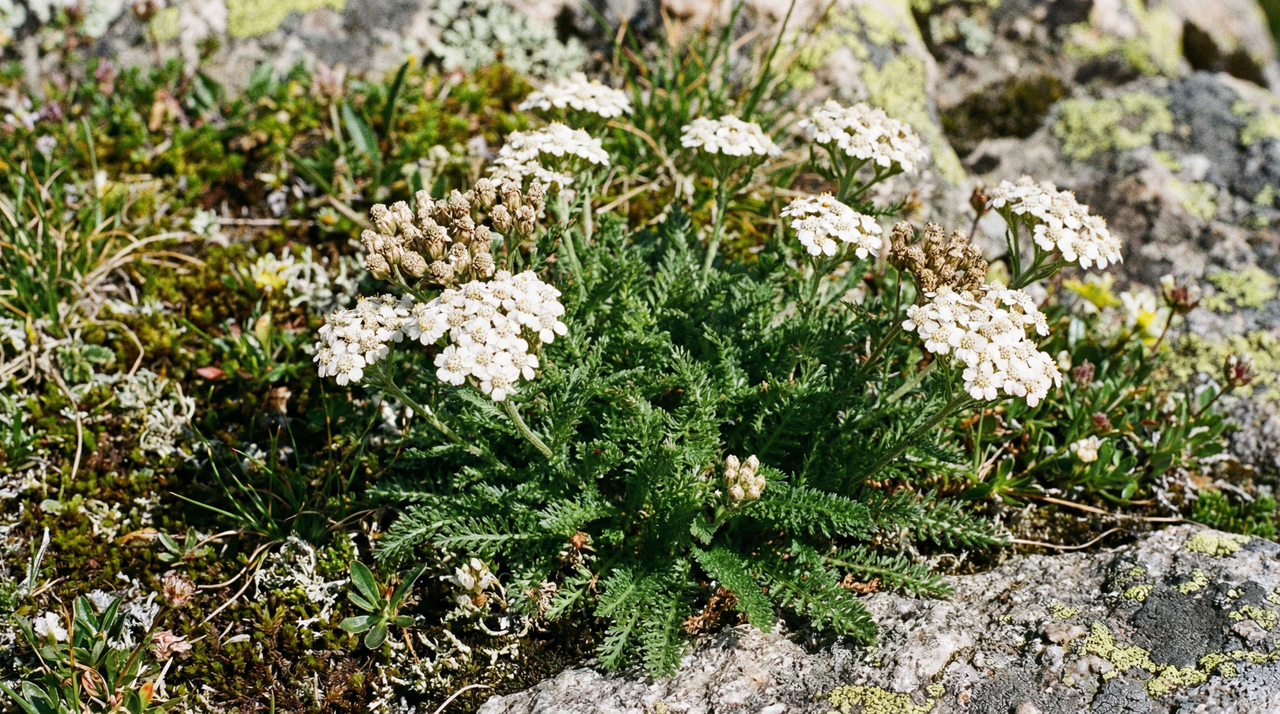
Soldiers called it "herbe militaire." Before antibiotics, before field surgery, before anything resembling modern medicine, yarrow was the plant you grabbed when someone was bleeding. The name goes back further still: Achillea millefolium reflects a reputation for saving lives on the battlefield that was so enduring it became woven entirely into heroic mythology.[1] I've always found that detail quietly astonishing. We're talking about a plant so reliably useful that humans wove it into mythology just to explain why they trusted it with their lives.
Yarrow's tendency to look like a weed at first glance often masks its deep historical value. It volunteers in gravel paths, stitches itself along roadsides, and spreads in ways that can politely be described as enthusiastic. I've pulled it from places I didn't plant it and coaxed it into places it didn't want to grow, and that tension, between wild tenacity and designed intention, is exactly what makes it worth understanding deeply. Because once you know what this plant actually does, for your soil, your insects, your medicine cabinet, and yes, occasionally your dinner, you stop seeing a weed and start seeing infrastructure.
Yarrow Origin, History, and Botany
Achilles, Ancient Healers, and Yarrow's Medicinal Legacy
Few plants carry a mythological origin story quite as vivid as yarrow. The genus name Achillea comes directly from the Greek hero Achilles, who was said to have used yarrow to staunch the bleeding wounds of his soldiers on the plains of Troy.[2] That story gave rise to folk names like "soldier's woundwort." While the myth is dramatic, the historical record that follows it is remarkably solid. Hippocrates documented yarrow for treating inflammation and wounds in the 5th and 4th centuries BCE.[2] Theophrastus described millefolium-like herbs in the 4th century BCE.[3] By the 1st century CE, both Dioscorides in De Materia Medica and Pliny the Elder in Natural History had formalized yarrow as a styptic and digestive aid.[4][5]
The Greek and Roman legacy wasn't the only ancient tradition reaching for this plant. In China, yarrow stalks appear in oracle bone inscriptions dating to around 1200 BCE, where they were used in divination rituals.[2] Medieval Europe then picked up where the classical world left off: Hildegard of Bingen wrote about it in the 12th century, and John Gerard enshrined it in his Herbal of 1597.[6] Across the Atlantic, Cherokee, Navajo, Ojibwe, and dozens of other Native American peoples had arrived at many of the same conclusions independently, using yarrow for wounds, fevers, colds, headaches, and digestive complaints.[7][8] Mongolian and Central Asian medicine added it to treatments for digestive disorders and fevers.[9]
When cultures on opposite sides of the planet, with no shared pharmacopoeia, settle on the same plant for the same ailments, it says something worth paying attention to. I try to honor that history by prioritizing cultivated yarrow in my own practice rather than pulling from wild populations, especially since overharvesting for herbal supplements is a growing concern in some regions.[10]
Botanical Background and Global Distribution
Achillea millefolium is a polycarpic herbaceous perennial native to temperate regions of Europe, western Asia, and parts of North America.[2][11] It has since naturalized in 49 U.S. states (Hawaii being the lone holdout), plus South America, Australia, New Zealand, and parts of Africa, making it about as cosmopolitan as a plant gets outside the tropics.[12][13] Its ecological range runs from sea level up to 3,500 meters (roughly 11,500 feet) in North America, which tells you something about its adaptability.[14] Ecologists classify it as a ruderal pioneer, well suited to disturbed soils, roadsides, and open meadows where more finicky plants can't get a foothold.[13]
The plant spreads through both prolific seed production and a fibrous, rhizomatous root network that can colonize new ground year after year.[12] Under optimal conditions it typically lives 3 to 5 years, though well-tended clumps can persist for a decade or more.[15] I learned early in my design work that yarrow in rich, moist soil becomes a very different plant from yarrow in lean, well-drained ground. The latter stays tidy and purposeful; the former can outcompete everything around it within a few seasons if you don't divide it every couple of years. That lesson left some gaps in a few of my early beds that I'd rather forget.
Visual Identification and Morphological Traits
Start at the roots and you'll understand yarrow's behavior: a shallow, mat-forming network of fine horizontal rhizomes rather than a taproot, which is precisely why it spreads laterally and why it holds slopes so effectively.[16] Above ground, stems run typically 8 to 36 inches tall, erect and wiry, simple near the base and branching upward.[17] The leaves are alternately arranged, lanceolate in outline, and finely dissected through two or three levels of pinnate division into dozens of narrow segments, creating that unmistakable fern-like, feathery texture.[18] The strong spicy-aromatic scent released when you bruise a leaf is the essential-oil signature that identifies it, and honestly it's never let me down in the field. Crushed leaf plus flat-topped white flower cluster equals yarrow; no ambiguity needed.
Flowers are tiny, 2 to 5 mm across, arranged in flat-topped corymbs that bloom from May through August depending on region.[15] Wild type flowers are white to faintly pinkish; cultivars extend the palette through pink, red, yellow, and lavender.[19] The look-alike risk from poison hemlock and wild carrot is worth taking seriously, but the spicy aromatic test combined with the deeply feathery leaf texture distinguishes yarrow clearly from both.[20] In my Central Florida pollinator gardens I've consistently noticed that white-flowered wild type plants draw more hoverflies and parasitic wasps than even the most vivid ornamental cultivars, which suggests that whatever visual or chemical cues those beneficial insects are tracking, breeding for color sometimes trades them away.
Fun Facts and Cultural Lore
The name "soldier's woundwort" stuck across centuries for good reason, but yarrow's cultural reach extended well beyond the battlefield. In European folklore it was hung over doorways and carried as a talisman against evil spirits.[21] Scandinavian farmers suspended it in barns to protect livestock and bring good harvests.[22] Shakespeare referenced it as a battlefield remedy in Henry V.[23] A plant that appears in both ancient Chinese oracle practice and Elizabethan theater has clearly found a way to make itself useful across a remarkable range of human concerns.
The contemporary tension is equally interesting. Yarrow spreads via rhizomes at 1 to 3 feet per year and is considered invasive in parts of the Pacific Northwest and wetter northeastern regions of the U.S.[24][25] A plant with three thousand years of healing mythology can still create real ecological problems if introduced carelessly into moist, fertile sites where it's not native. That tension feels like a useful reminder that respect for a plant's history doesn't substitute for paying attention to where and how it's planted today.
Yarrow Varieties and Where to Buy Them
The common yarrow plant, Achillea millefolium, is the species you'll encounter most in nurseries, seed catalogs, and wildflower mixes, and for good reason. It's remarkably plastic as a species, spanning heights of one to three feet with feathery, aromatic foliage and flower colors running from pure white through every shade of pink, red, coral, and gold.[12][26] The cultivar list is genuinely long: 'Apple Blossom', 'Cerise Queen', pink yarrow favorites like 'Summer Pastels', red yarrow standouts including 'Paprika' and 'Red Beauty', and the soft yellow yarrow 'Moonshine' that seems to appear in every well-designed perennial border.[27][28] Among those, 'Walther Funcke', 'Terra Cotta', and 'Credo' have earned the Royal Horticultural Society Award of Garden Merit, which is a trial-based endorsement I respect.[29]
Notable Achillea Cultivars: From Garden Favorites to Wild Types
Here's the honest trade-off I've watched play out in my own plantings: cultivars like 'Cerise Queen' reliably produce more and larger blooms, which is exactly what you want for cut flowers or border drama. But wild-type Achillea millefolium outperforms them in drought, spreads more vigorously, and carries a higher essential-oil load that translates to better natural pest resistance.[30][31] I first noticed this when I grew both side-by-side through a dry August: the wild form barely flinched; the cultivar needed a rescue watering. If you rub a leaf of each between your fingers, the wild plant announces itself with a sharper, more medicinal scent. That aromatic intensity is the essential oil talking, and it matters in a polyculture.
For purely ornamental goals, yellow yarrow fans should also look at Achillea filipendulina, which leans taller and bolder. 'Gold Plate' reaches three to four feet with wide, flat golden heads; 'Coronation Gold' is a bit more compact; 'Goldfever' comes in at two to two-and-a-half feet with vivid flowers that photograph beautifully.[27][32][33] At the other end of the spectrum, species like A. falcata, A. formosa, and A. aegyptiaca have no widely available named cultivars at all; they're used primarily in wild form for native restoration and xeriscaping, which is exactly the right context for them.[34][35][36] The practical takeaway: choose a cultivar when the garden demands color and form, choose the wild type or a locally adapted ecotype when you're building a functional guild.
Sourcing Yarrow Plants and Seeds
Achillea millefolium is one of the easiest native perennials to source anywhere in the country. Prairie Moon Nursery and Prairie Nursery are my first calls for regionally adapted plugs and seed; Johnny's Selected Seeds, Burpee, and High Mowing Organic Seeds cover the commercial and organic seed angles; White Flower Farm and Proven Winners carry cultivar plugs; and American Meadows folds yarrow into several wildflower mixes.[37][38][39][40] Seed packets typically run two to six dollars, starter plugs in four-inch pots around six to twelve, and larger container plants ten to twenty.[41][42] For ecological plantings, I've learned the hard way to skip the big-box plugs; they often arrive root-bound or mislabeled, and locally adapted seed from a native-plant specialist will establish faster and perform better in a meadow guild. Achillea falcata is a different story entirely: almost no US nurseries carry it, and you're looking at niche international seed suppliers if you want it at all. For most gardeners, A. millefolium in its wild or locally native form is the right starting point.
Yarrow Propagation and Planting Guide
Yarrow has a reproductive strategy that should make more gardeners curious about plant biology. It frequently reproduces via facultative apomixis, meaning the seeds it produces are largely genetic clones of the mother plant.[43][44][45] Sexual reproduction still happens, though, allowing hybridization and polyploidy to creep in, which is why wild populations carry so much genetic diversity even as garden strains stay relatively uniform. That's good news for seed savers: save from a named cultivar in a reasonably isolated garden bed and you'll likely get plants that look like the parent.
Yarrow Seed Morphology, Viability, and Storage
The seeds themselves are tiny achenes, only 1-2 mm long, cylindrical to oblong, dark brown to nearly black with five to ten faint longitudinal ribs.[25][46] They're easy to overlook in a seed packet. Fortunately, yarrow seeds store beautifully: dried to around 3-7% moisture content and sealed in an airtight container with a desiccant at cool temperatures (refrigerator for short-term, freezer for long-term), they remain viable for five to ten years and often hold germination rates above 80%.[47][48] If you're unsure about an older packet, a quick tetrazolium stain test on fresh seed typically shows 70-90% viability, or you can simply do a damp paper towel germination test.[49][50]
Some seed lots show light dormancy, which you can break either by leaving the seeds at room temperature for one to three months after harvest (after-ripening) or by cold moist stratification at around 4°C for four to six weeks.[51][52] Once you sow, keep temperatures between 15-20°C and don't bury the seeds, as they need light to germinate well. Under those conditions, expect 50-80% germination in ten to twenty-one days.[53]
Propagation Methods: Seeds, Division, and Cuttings
For commercial production, seed is the go-to method, achieving 60-80% success under optimal conditions.[54][53] For home gardeners, though, root division is genuinely the easiest and most reliable route, consistently hitting above 90% success when done in spring or fall.[55] Dig up a clump, tease apart the crowns, replant the outer sections with some good root attached, and you're essentially done. If you want to preserve a specific named cultivar exactly, division or stem cuttings are your only safe bet, since open-pollinated seed can drift due to cross-pollination in sexually reproducing populations.[56] Stem cuttings, taken in summer from softwood basal growth, root in three to four weeks under humidity and achieve 70-90% success.[54]
One thing I wish someone had told me early on: label your yarrow seedling trays and do it well. The feathery, finely divided seedlings look remarkably similar to chamomile, tansy, and several other Asteraceae in the first four to six weeks, and without clear labels you'll be second-guessing yourself at every watering. Tissue culture is used commercially for certain cultivars like Achillea ptarmica, but grafting isn't a practical or standard method for any yarrow, so you won't need to think about that at home.[57]
Soil, Site, and Light Requirements for Yarrow
Yarrow genuinely wants lean, well-drained soil. Sandy, loamy, gravelly, or rocky ground suits it perfectly; rich, moist soil turns it into a floppy, sprawling mess that's more work than it's worth.[27][12] Waterlogging is the one thing it genuinely cannot tolerate; roots rot surprisingly fast in standing water. I routinely test soil before planting yarrow in new landscape beds, particularly in clay-heavy areas where I need to confirm drainage before committing. The roots reach twelve to eighteen inches deep when conditions allow, so compacted subsoil is worth addressing at planting time rather than after.[12]
Soil pH between 6.0 and 7.5 covers the sweet spot, though yarrow tolerates a broader range of 5.5-8.0.[53][58] Drop below 6.0 and you'll see chlorosis from nutrient lockout, the foliage going pale and yellow as iron becomes unavailable. I've corrected this in acidic beds with a lime application and watched leggy, struggling plants turn into vigorous bloomers within a single growing season. It's one of those simple fixes that makes a dramatic difference. For sunlight, yarrow insists on full sun, at least six hours of direct light daily.[59][60] Partial shade produces leggy stems and sparse, washed-out flowers, which defeats most of the reason you're growing it.
A useful comparison for choosing among Achillea species: common yarrow behaves like Echinacea in its drought tolerance and preference for exposed, well-drained sites, while Achillea ptarmica (sneezewort) leans more toward the moisture preferences of an Astilbe, preferring moist but still well-drained meadow conditions.[61][15] Knowing which species or cultivar you're working with can save a lot of troubleshooting later.
Planting Spacing, Technique, and Establishment
Mature yarrow reaches twenty-four to thirty-six inches tall with a twelve to twenty-four inch spread.[62][63] Space plants twelve to twenty-four inches apart for most situations, tighter at twelve to eighteen inches for dense mass plantings, with eighteen to thirty-six inches between rows to keep air moving through the foliage.[12] That airflow matters more than most people realize; it's the first line of defense against the powdery mildew that loves to settle on crowded clumps in humid summers. In my earlier designs I planted yarrow on the tighter end in moderately fertile soil and ended up with vigorous but floppy patches that needed dividing far sooner than I'd planned. I space on the wider end now, especially in beds that get any supplemental water.
For containers, use pots at least thirty centimeters wide with drainage holes and fill them with a mix of equal parts compost, horticultural sand or grit, and perlite; set them in the sunniest spot you have.[64][58] Once past establishment, yarrow in poor, well-drained soil is genuinely forgiving. It's getting those first conditions right that sets the trajectory for everything else.
Yarrow Care Guide: Growing and Maintaining Achillea millefolium
Yarrow is one of those plants that teaches you to get out of your own way. I've grown it in lean, sandy soils where coneflowers sulked and salvias barely hung on, and it just thrived, compact and blooming its head off without a single bag of fertilizer. Once you understand its two core preferences, full sun and sharp drainage, almost every other aspect of caring for yarrow falls into place naturally.
Sunlight Requirements for Healthy Growth and Flowering
Yarrow wants six to eight hours of direct sun daily, and it genuinely means it.[15][58] Research confirms that higher light intensity also boosts essential oil content and overall biomass, which matters if you're growing it for anything beyond ornament.[65] In my experience, full-sun plants stay noticeably more compact and attract far more bees and hoverflies than those growing at the edge of shade. Plants tucked into partial shade will survive, but they grow leggy, produce fewer flower heads, and lose much of that tight, tidy habit. Site it in your sunniest spot and you'll rarely have to do anything else to coax good performance.
Watering Needs and Drought Tolerance
Once established, yarrow is as close to self-sufficient as a perennial gets. Mature plants need roughly an inch of water per week during active growth, applied deeply and infrequently, and in many climates they'll sail through on rainfall alone.[66][53] That deep taproot system is the key; it reaches well beyond what most perennials access, which is how established clumps handle Florida's dry spells without wilting. New plantings are a different story. During the first growing season, water weekly to help roots settle in, then gradually step back to every two to three weeks or only during extended dry spells.[17]
Reading the plant is more useful than following a schedule. Overwatered yarrow shows yellowing lower leaves that feel soft when you pinch them; the soil smells off and roots may be mushy.[63][67] Underwatered plants show the opposite: crisp brown tips on the upper leaves, brittle foliage, and a reduction in flowering. Those are two very different problems requiring opposite responses, so checking the soil before reaching for the hose is always worth the extra ten seconds. On pH and salinity, yarrow is broadly tolerant, handling a range of 5.5 to 8.5 and moderate salt levels without complaint.[68]
Soil Fertility and Feeding Requirements
I learned this one the hard way: I top-dressed a bed of yarrow with a generous layer of compost one spring, thinking I was doing it a favor. By midsummer the plants were flopping over themselves, all lush stem and very little flower. Yarrow thrives in low-fertility soil and genuinely does not need regular fertilization.[69][15] Excess nitrogen in particular drives the kind of weak, leggy growth that invites flopping and reduces the flowering you actually want.[70][71]
If your soil is genuinely poor to the point of showing symptoms, yellowing lower leaves suggest nitrogen deficiency, interveinal chlorosis on young leaves points to iron (common in alkaline conditions), and purplish discoloration indicates phosphorus stress,[72] then a light application of balanced slow-release fertilizer (5-10-10 or 10-10-10) once in early spring is all you need.[69] A thin layer of compost worked into the soil annually is plenty. The plants growing in my leanest, sandiest beds are the ones that perform best every year.
Frost Tolerance and Winter Protection
Hardy in USDA zones 3 through 9 with survival temperatures down to around -40°F, yarrow holds the RHS's highest hardiness classification, H7.[12][73] Established crowns are genuinely tough. Where it gets vulnerable is in early spring, when new growth emerges before the last frost date has passed. Temperatures dipping below 28°F can blacken those fresh tips, and I've seen whole flushes of new growth go limp overnight.[74] The good news is that when I prune the damaged tissue back cleanly, the crown rebounds quickly with fresh growth from the base, usually within a couple of weeks.
For winter preparation, cut foliage back in late fall and apply two to four inches of organic mulch after the ground freezes to reduce heaving and insulate roots.[58][53] Sharp drainage through wet winters is non-negotiable; soggy crowns are far more dangerous to yarrow than cold temperatures alone.
Heat Tolerance and High-Temperature Management
Yarrow handles heat well once established, rated across AHS Heat Zones 1 through 10 and capable of tolerating temperatures up to around 95 to 104°F before showing real stress.[15][58] Its fine, pubescent leaves with their hair-like trichomes actually help reduce leaf temperature, and deep roots keep it pulling moisture long after shallow-rooted neighbors have wilted.[75] Heat stress symptoms to watch for include scorching on leaf edges, bronzing or yellowing foliage, and reduced blooming,[76] all signs the plant needs a bit of help.
In the hottest weeks of a Florida summer, I find that two to three inches of mulch and deep watering every seven to ten days is usually enough to keep things stable.[77] I've shifted to a gravel mulch around crowns in humid summers rather than organic material because organic mulch held too much moisture against the base and I once lost a planting to crown rot as a result. In genuinely brutal heat, a bit of afternoon shade helps, and cultivars like 'Moonshine' and 'Coronation Gold' are worth considering for their documented heat tolerance.[77]
Seasonal Rhythm and Phenological Cycle
Yarrow follows a steady, predictable annual pattern once you've watched it for a season. Rhizomes begin breaking dormancy in early spring (March to April depending on latitude), and in my zone yarrow is often among the first perennials to show green at the soil surface. Vegetative growth fills out through spring, with flowers opening from late spring onward and peak bloom typically landing in June and July.[12][78] Seed set follows in late summer, then the plant retreats into winter dormancy while its spreading rhizomes persist underground, ready to push new growth again in spring. Knowing this calendar makes it easy to time deadheading, division, and the fall cutback without second-guessing yourself.
Pruning, Maintenance, and Division
Deadheading spent flower heads is the single most effective way to keep yarrow blooming through summer and to prevent aggressive self-seeding, which is the main way yarrow spreads beyond its intended space.[79][53] Clip spent stems back to just above the next set of leaves and you'll often get a second flush. In fall, cut the whole plant down near the ground before mulching. Come spring, once new growth is a few inches tall, trim back any remaining old stems to about four to six inches to encourage clean development from the crown.[79]
Division every three to four years keeps clumps vigorous and is the best way to control how far yarrow spreads.[53][80] I do it in early spring when new growth is just emerging, which makes the crowns easy to read and gives divided sections the whole growing season to establish. A clump that's been in the ground for five or six years will have a woody center and noticeably fewer flowers; dividing it and replanting the younger outer sections fixes that immediately, and it gives you plenty of divisions to share or expand the planting. Staking is rarely necessary given yarrow's naturally sturdy habit, though very tall varieties on a windy site may appreciate a bit of support. Rich soil, as with feeding, is the main culprit when stems flop: the leaner the soil, the more upright the plant.[12][53]
How to Harvest Yarrow Sustainably
Yarrow is generous, but it rewards patience. In my eagerness with new plantings I once stripped too many leaves from first-year rosettes, and the plants spent the rest of the season recovering instead of establishing roots. The lesson stuck: a light hand early on pays real dividends later.
Timing and Visual Cues for Peak Potency
Once a first-year rosette fills in, typically 3-6 months after sowing, you can take a few young leaves without guilt.[81][82] They're mild, feathery, and pleasant fresh. But the real medicinal harvest, leaves and flowers at full potency, arrives in year two. For dried yarrow intended for teas or tinctures, harvest leaves before the plant flowers, then catch the flowers themselves approximately 7-10 days after they open. That window, right around peak bloom, is when essential oils and compounds like achilleine peak; wait past 14 days and you're already into seed set and declining quality.[81][83]
The flowering window runs June through August across most temperate regions, though elevation and climate shift that considerably. Southern or low-elevation gardens may see peak bloom as early as May, while high-elevation sites above 3,000 feet often don't hit their stride until July or even September, with roughly a two-to-three week delay for every thousand feet of gain.[84] I think of it the same way I track coneflowers in my designs: the plant tells you when it's ready, regardless of what the calendar says.
On harvest morning, wait until dew has dried but get out before the heat of the day. On clear mornings I notice the scent is noticeably sharper and more resinous than after rain; that aromatic intensity signals the oils are where you want them.[85] Look for flowers that are fully open, white to pink, with that classic feathery texture and no browning at the edges. Stems should feel firm and upright, not woody or brittle. Leaves that are soft, fern-like, and strongly aromatic are what you want; anything yellowed or limp goes in the compost.[27][82]
Harvesting Technique and Sustainable Practices
After watching yarrow patches rebound season after season when I take no more than a third of the aerial parts per plant, I've stopped thinking of the 10-30% rule as etiquette. It's what keeps the clump vigorous and the medicinal quality high.[86][87] Over-harvesting even once teaches that lesson quickly. Leave enough foliage for photosynthesis, rotate among plants rather than hammering the same ones, and avoid taking yarrow root from wild populations entirely.[82]
Cut flowering stems 4-6 inches above the ground or just above the basal leaves with clean, sharp shears.[81] Bunch them loosely and hang or lay them in a shaded, well-ventilated spot right away; heat and direct light degrade the same oils you harvested carefully all morning.[83] This cut also encourages a second flush of bloom, which is one of the reasons yarrow fits so naturally into a permaculture planting: the more thoughtfully you harvest, the more it gives back.
Yarrow Preparation, Uses, and Safety
Culinary Uses and Flavor Profile of Yarrow
Stick to the young leaves and flowers. That's the rule I repeat to anyone who asks about eating yarrow. The mature stems get fibrous and unpleasant, and the roots belong in a medicinal context, not on a plate.[88][89] Spring is when I harvest for the kitchen, pulling tender rosette leaves before the bitterness intensifies. Once the plant is tall and flowering hard in midsummer, those same leaves are a different beast entirely.
Yarrow's flavor is genuinely complex: bitter, astringent, with aromatic herbal notes that remind me more of very assertive tarragon than anything gentle.[90] Fresh leaves carry that sharp, almost camphor-pine scent that catches you off guard the first time.[91] Dried herb shifts toward something earthier and mustier, and an infusion softens everything considerably. The flowers are milder than the leaves, which is why I reach for them when I want the flavor without the full punch.[90]
Raw, keep it to one or two teaspoons at most. Tossed into a salad, yarrow functions as a bitter accent, not a base green. Boiling for five to ten minutes softens both the feathery texture and the intensity, making it usable as a potherb. I've had success pairing it with fatty meats and oily fish, where lemon and garlic do the real work of taming the astringency.[12][92] European and Native American traditions used it exactly this way, as a seasoning that adds depth rather than volume.[93] It also turns up historically in amaro liqueurs and herbal infused vinegars, where bitterness is the whole point.
Medicinal Preparations and Dosages
For medicine, you're working with the aerial parts: leaves and flowers, dried properly or used fresh as a poultice.[94] How you dry them matters more than most people realize. I bundle the stems loosely and hang them upside down in my shaded drying area at around 70 to 90 degrees F, out of direct light, for one to two weeks until brittle.[82] High heat degrades the volatile compounds you're actually after, including chamazulene, by as much as 20 to 30 percent.[95] Store in an airtight container away from light and moisture.
Yarrow tea is the most accessible preparation: one to two teaspoons of dried herb steeped in hot water for ten to fifteen minutes, up to three cups daily.[96][97] I sometimes blend it with mint to soften the bitterness. Tinctures run twenty to thirty drops two to three times daily, with total dried herb intake staying under six grams per day.[96] Short-term, moderate use at these doses is the consistent guidance across sources.
Non-Food and Traditional Uses
Beyond food and medicine, yarrow has genuine craft utility. Flowers yield yellow or green dyes for textiles, and Indigenous peoples have used the stems for cordage and basket-making.[98] The plant's traditional wound-healing, anti-inflammatory, and digestive applications are now supported by peer-reviewed research confirming antimicrobial, analgesic, and antioxidant activity.[99] For ecological plantings, I recommend cultivated stock over wild-harvested material; it's a more sustainable choice and easier to verify identity.
And identity matters enormously here. Poison hemlock shares habitat with yarrow and has killed people who confused the two. Every time I'm in the field, I check for yarrow's feathery, finely divided leaves and flat-topped flower clusters with their tight white or pink florets, versus hemlock's hairless purple-blotched stems and musty, unpleasant scent. If you're uncertain, don't harvest. Beyond identification, know that Asteraceae allergies are a real contraindication, pregnancy is a firm no, and anyone on blood thinners needs to consult their doctor before using yarrow medicinally. The achillea millefolium essential oil carries thujone and should not be used undiluted or ingested. The plant is powerful, which is precisely why it deserves a careful hand.
Yarrow Health Benefits and Medicinal Uses
Few herbs in the Western tradition carry the kind of cross-cultural medicinal resume that yarrow does. From ancient Greece to the woodlands of the Pacific Northwest, healers independently arrived at many of the same conclusions: this plant stops bleeding, cools fevers, and settles a troubled gut. That convergence isn't coincidence. It's chemistry.
Traditional and Ethnobotanical Uses of Yarrow
Across Native American peoples, European herbalists, and Middle Eastern traditions, yarrow was applied to wounds, used as a diaphoretic to bring on sweating during fevers, taken as a digestive aid, and prescribed for women's health complaints.[100][83][101] Traditional European use specifically centered on topical application of fresh leaves for their hemostatic and anti-inflammatory effects, bile stimulation for digestion, and fever reduction through sweating.[83] What's remarkable is how far that pattern extends: related Achillea species across the Mediterranean, Egypt, and South Africa were employed for wounds, burns, respiratory complaints, and digestive issues, suggesting consistent genus-wide activity rather than one culture's lucky guess.[102][103]
I'll admit that when I first grew yarrow seriously, I was more focused on its ecological role than its medicine. But after years of working with plants that have that kind of global healing consensus, I've come to trust the ethnobotanical record as a genuine signal worth investigating. And in this case, the science has mostly caught up.
Key Phytochemicals in Yarrow
The medicinal reputation makes a lot more sense once you look at what yarrow actually contains. The phytochemical profile is impressively complex: flavonoids including apigenin, luteolin, quercetin, and kaempferol; phenolic acids like chlorogenic and caffeic acid; sesquiterpene lactones such as achillin and matricin; essential oil components including chamazulene, β-caryophyllene, camphor, and borneol; alkaloids like achilleine; plus tannins and coumarins.[104][105] The flowers and leaves carry the highest concentrations, with flowers particularly rich in essential oils and flavonoids, while roots contain distinct sesquiterpene lactones at higher terpenoid levels.[106][107]
Growing conditions shift these profiles meaningfully. Plants grown at higher altitude or in full sun produce 30 to 60 percent more flavonoids and phenolics, and drought stress can boost protective sesquiterpenes and flavonoids by 25 to 35 percent.[108] Harvesting at peak flowering maximizes essential oil yield by 20 to 40 percent over material cut too early or too late.[109] In my own landscape work, yarrow growing in lean, sunny, well-drained spots always produces noticeably more aromatic material for teas or salves than the same plant struggling in shade or rich soil. That's not a minor difference when you're making medicine. These compounds also serve the plant ecologically: bitter sesquiterpene lactones deter herbivores, root exudates influence neighboring plants through mild allelopathy, and floral volatiles attract the pollinators yarrow depends on.[110][111]
Pharmacological Research and Medicinal Properties
Modern research has identified several mechanisms behind yarrow's traditional reputation. Its anti-inflammatory activity runs through inhibition of TNF-α, IL-6, COX-2, and NF-κB signaling, the same molecular pathway targeted by many pharmaceutical anti-inflammatories.[112][113] Its essential oils, particularly the sesquiterpenes and monoterpenes, disrupt bacterial membranes and show activity against both Staphylococcus aureus and E. coli.[114][115] The wound-healing evidence is among the most clinically supported, with tannins and volatile oils promoting hemostasis alongside enhanced epithelialization, collagen synthesis, and angiogenesis in both animal models and limited human trials.[116][117] I've applied fresh yarrow poultices to minor cuts and scrapes in the garden more times than I can count, and I'd call the results genuinely useful, though I'm not claiming it replaces a bandage and antiseptic wash for anything serious.
Antispasmodic effects in smooth muscle, demonstrated in gastrointestinal models, help explain the traditional use for digestive cramping and discomfort.[118] Analgesic and antioxidant activity from phenolic compounds round out the picture.[119][120] That said, the honest picture is that most of this evidence comes from preclinical in vitro and animal studies. Small human trials have shown mild improvements in dyspepsia and topical skin inflammation, and preliminary findings suggest potential antidiabetic and anxiolytic effects, but robust clinical data is still thin.[121][122] Yarrow tea for wound healing and digestive support is well-grounded in both tradition and preclinical science; yarrow as a cure-all is not.
Nutritional Profile of Yarrow
Yarrow's young leaves and flowers have been used as a supplementary wild edible across Native American and European traditions, appearing in salads, teas, and as a seasoning, though always in small amounts.[123] Standardized nutritional data is limited and not captured in major databases, so values vary considerably by species, growing conditions, plant part, and preparation. Fresh leaves run roughly 20 to 60 kcal per 100g with 2 to 6g protein and 3 to 12g carbohydrates, including meaningful fiber; dried material jumps substantially in caloric density.[124] Vitamin C reaches 10 to 50 mg per 100g fresh, with useful amounts of vitamins A, K, and E, and minerals including calcium (up to 400 mg), iron (up to 15 mg), and potassium (up to 700 mg).[125][126]
Compared to something like nettles or dandelion greens, yarrow's nutritional contribution is modest. Think of it as a bonus from a plant you're already growing for its medicinal and ecological value, not a dietary cornerstone. Light steaming preserves vitamin C better than boiling, and typical serving sizes are small, around 5 to 10g of fresh leaves per cup of tea.[123] I forage a handful of young spring leaves for yarrow tea occasionally and enjoy the mild, slightly bitter flavor, but I always harvest sparingly and from plants I've positively identified.
Safety Considerations and Contraindications
Yarrow's overall acute toxicity is low, but it has real contraindications that deserve direct attention rather than a generic disclaimer.[127] The sesquiterpene lactones responsible for much of its medicinal activity, including achillin and alpha-peroxyachifolid, are also the compounds that cause allergic contact dermatitis, skin irritation, and in sensitized individuals, anaphylaxis.[128][129] If you have Asteraceae allergies, meaning reactions to ragweed, chamomile, or related plants, skip medicinal yarrow and talk to your doctor first. That cross-reactivity is well-documented.[97]
Pregnancy is a firm contraindication. Yarrow contains thujone and has documented uterine stimulant and emmenagogue effects, with genuine miscarriage risk.[130][131] I never recommend yarrow medicinally to anyone on blood thinners or during pregnancy; the anticoagulant interactions from coumarins and the uterine stimulant risk are too well-established to treat casually.[132] Interactions with sedatives, antidiabetics, and blood pressure medications are also documented.[131] Large ingested doses can cause gastrointestinal upset, dizziness, or vomiting, and the plant is toxic to dogs, cats, and horses.[133]
Positive identification is absolutely critical before you harvest anything. Young yarrow rosettes can look deceptively similar to wild carrot and, more dangerously, to poison hemlock and water hemlock, both of which contain lethal alkaloids.[134] I've seen yarrow seedlings confuse even experienced gardeners. Traditional medicinal use runs at 2 to 6g dried herb per day as a tea or tincture, and continuous use beyond one week without professional guidance isn't recommended.[135] Respect the plant's potency, confirm your identification, and yarrow will reward you generously.
Yarrow Pests and Diseases
Yarrow is one of those plants that makes you realize how much unnecessary spraying happens in conventional gardens. In my years of designing food forests and pollinator strips, I've watched yarrow sit happily beside roses and garden phlox that required repeated fungicide applications through Florida's humid summers, while the yarrow just kept going. That resilience isn't accidental.
Natural Defenses Against Pests and Diseases
Grown in full sun with sharp drainage and good airflow, yarrow resists the vast majority of common pests and diseases across USDA zones 3 through 9.[58][63] Its leaves are covered in dense glandular and non-glandular trichomes that act as both a physical barrier and a chemical release system, secreting sticky resins that deter feeding insects before they even get started.[136][137] Beneath those trichomes, yarrow deploys a cocktail of monoterpenes like camphor and 1,8-cineole, flavonoids, and sesquiterpene lactones that function as feeding deterrents for both insects and browsing mammals.[138][139] The volatile organic compounds yarrow releases may also actively recruit natural predators of herbivores, which is one reason I position it throughout polycultures rather than isolating it to a single bed.[140] It's noticeably more resistant than Achillea ptarmica, which in my experience is a bit fussier all around.[53]
Common Pests of Yarrow
The pest list for yarrow reads longer than the actual threat level suggests. Aphids (particularly green peach aphid and yarrow aphid), spider mites, leafhoppers, caterpillars, leaf beetles, leaf miners, grasshoppers, and gall wasps have all been documented on Achillea, but infestations tend to be mild precisely because that aromatic foliage sends most insects looking elsewhere.[141][142]
Aphids are the most frequent visitor I actually see, and they show up reliably on plants that have been over-fertilized with nitrogen, producing that soft, succulent new growth aphids love. Symptoms are the usual: distorted tips, curled leaves, and sticky honeydew that can lead to sooty mold.[58] Spider mites cause stippling and yellowing and tend to appear during hot, dry stretches rather than humid ones, which is the opposite pattern from most fungal issues.[143][142] Chewing insects like leaf beetles and grasshoppers leave notched edges and defoliation, while leaf miners create the characteristic serpentine trails, and gall wasps produce swollen tissue.[142][144] Cultivars like 'Moonshine', 'Paprika', 'Red Velvet', 'Cupido', and 'Cerise Queen' carry strong inherent resistance through their aromatic foliage, and I've recommended 'Moonshine' specifically in pollinator gardens because its resistance holds up better in humidity than older seedling varieties.[145][53]
Common Diseases of Yarrow
Bacterial and viral diseases are rare on yarrow; the real vulnerabilities are fungal, and they're conditional.[58][141] Leaf spot caused by Septoria or Alternaria species appears in wet, humid conditions as discolored lesions on foliage.[58][146] Powdery mildew (Erysiphe cichoracearum) shows up as white powdery patches on leaves in poorly ventilated spots; I see it almost exclusively on overcrowded plantings or after stretches of rain followed by warmth.[58][147] Rust diseases (Puccinia species) appear as orange pustules on leaf surfaces and are worth watching for in cooler, damper seasons.[58][148]
Root rot from Phytophthora, Pythium, Fusarium, or Rhizoctonia is, in my experience, the only genuinely serious threat yarrow faces, and it's almost always caused by waterlogged soil. The symptoms, wilting and yellowing despite adequate watering, are easy to misread as drought stress until you check the roots.[149][141] Once drainage is corrected, the plant typically rebounds quickly. For a bit of reassurance on cultivar selection, 'Moonshine' holds the Royal Horticultural Society's Award of Garden Merit partly on the strength of its reliable disease tolerance.[150] Among related species, Achillea falcata and Achillea filipendulina perform well in dry conditions with better rust and mildew tolerance, while Achillea formosa shows moderate susceptibility to powdery mildew when humidity climbs.[151][152]
Prevention and Integrated Management
Almost every pest and disease problem I've seen in yarrow traces back to a siting mistake. Full sun, sharp drainage, a soil pH between 5.5 and 7.5, spacing that allows air to move through the planting, and no overhead irrigation will handle the vast majority of issues before they start.[63][53] Excess nitrogen is worth flagging specifically: it drives the kind of lush, soft growth that aphids and fungal pathogens exploit, so I keep feeding minimal on established plants.[153] In healthy, well-sited stands, disease incidence typically stays below ten percent without any chemical intervention.[149][141]
Chemical fungicides aren't part of my approach here, and the research backs that up: cultural practices are the primary and most effective strategy.[53] For the occasional aphid outbreak, I lean on the ladybugs and hoverflies that yarrow itself draws in. If populations spike before natural predators catch up, a quick spray of insecticidal soap handles it without disrupting the broader food web. Yarrow placed correctly in a guild rarely needs even that much attention, which is exactly why it earns a spot in almost every design I put together.
Yarrow in Permaculture Design
If I had to pick one plant that earns its keep in almost every layer of a permaculture system, yarrow would be a serious contender. It's not a nitrogen fixer, it's not a canopy tree, and it won't feed your family on its own. What it does is hold everything together, quietly and reliably, while doing about six jobs at once.
Climate Adaptability and Hardiness Zones
The first thing to understand about Achillea millefolium is just how wide its climatic range actually is. It's hardy from USDA zone 3 all the way through zone 9, tolerating lows of -40 °F and handling heat well into the Deep South.[17][12][154] The Royal Horticultural Society rates it H7, frost hardy to -20 °C, which tells you this is a genuinely tough perennial, not just a plant that "can survive" cold winters. Once established, it thrives on just 8 to 20 inches of annual rainfall and can push through as little as 8 to 10 inches without complaint.[12][20] Flowering peaks around 70 to 80 °F, and optimal growth happens between 60 and 75 °F.[15]
The one non-negotiable is drainage. Yarrow wants full sun and well-drained sandy or loamy soil with a neutral to slightly alkaline pH, and it will not tolerate waterlogged conditions.[155][156] High humidity also raises the risk of fungal problems, making good air circulation important in wetter climates.[157] I learned this the hard way in my Central Florida work: several plants died in spots where summer irrigation pooled even briefly. Now I always amend heavy soils with extra sand or grit before planting, and the difference is dramatic. If your site has any drainage doubt, resolve it before yarrow goes in the ground.
The genus offers some useful variations for trickier sites. Achillea ptarmica is similarly hardy in zones 3 to 9 but actually prefers moister conditions, making it worth considering for wetter guild edges where common yarrow would struggle.[158] On the other end of the spectrum, Achillea aegyptiaca handles zones 8 to 11 and is adapted to arid Mediterranean climates receiving as little as 4 to 20 inches of rain annually,[159] which matters if you're designing in a truly xeric climate where the common species might still want a little too much water to establish.
Ecosystem Functions and Services
Yarrow anchors its ecosystem with a dense, rhizomatous mat, supporting a long season of flat-topped corymbs of tiny white-to-pink composite flowers blooming from late spring through fall.[12][160][161] In early spring, before the flower stalks shoot up, those feathery leaves form a soft green carpet at ground level. It's easy to underestimate how much is happening in that modest rosette.
Those flat-topped flower heads are a pollinator feeding station that runs for months. Yarrow is insect-pollinated rather than wind-pollinated, and its self-incompatibility promotes outcrossing, which keeps populations genetically diverse.[162][163] The individual florets are tiny, just 2 to 3 mm, but nectar sugar concentration runs 20 to 30 percent, and UV-reflective petals combined with a spicy aromatic scent pull in pollinators from a wide area.[164] Over 100 insect species visit yarrow flowers, including honeybees, bumblebees, solitary bees, butterflies, hoverflies, and other flies, with peak visitation on warm, dry days between 15 and 27 °C.[165][166]
The predatory insect story is where things get really interesting for food-garden design. Yarrow attracts ladybugs, lacewings, parasitic wasps, and hoverflies, all of which target aphids and other soft-bodied pests.[58][167] After planting yarrow in several Central Florida pollinator strips, I consistently saw noticeably higher populations of hoverflies and parasitic wasps within two growing seasons. The aphid pressure on nearby vegetables dropped alongside it. The aromatic foliage also confuses many pest insects, and deer tend to avoid it entirely, which is a genuine relief in suburban and exurban food forests where browsing pressure can be relentless.[58]
Below ground, yarrow's extensive fibrous and rhizomatous root system stabilizes soil, binds slopes, and improves soil structure in disturbed or restoration sites.[25][12] As a dynamic accumulator, it mines potassium, phosphorus, calcium, and sulfur from deeper soil layers and makes those nutrients available to neighbors through rapid leaf decomposition.[168][169] Its abundant biomass is ideal for chop-and-drop mulching, suppressing weeds and feeding the soil food web without any off-site inputs.
That same vigor carries a caution. Yarrow spreads aggressively through both rhizomes and self-seeding, forming dense stands that can outcompete surrounding vegetation, and it exhibits moderate allelopathic effects that may inhibit germination of certain grasses, herbs, and tree seedlings.[170][171] That's not a reason to avoid it, but it is a reason to place it with intention.
Forest Garden Layer and Guild Placement
In a food forest or forest garden, yarrow belongs in the herbaceous and groundcover layer, placed in sunny openings, meadow guilds, or forest edges where it won't be shaded out by a dense canopy.[169][12] It's a reliable yarrow companion plant for roses, vegetables, herbs, lavender, and echinacea, with a recommended spacing of 12 to 24 inches to accommodate its spreading growth.[58][15] I've used it as a living aromatic barrier along the edges of vegetable guilds with good results, essentially letting its scent do some of the pest-confusion work while the flowers bring in the beneficials overhead.
Different Achillea species can fill slightly different niches within the same designed system. Achillea ptarmica, at 2 to 4 feet tall with moisture tolerance, suits damper guild edges where common yarrow would fail.[158] Lower-growing mat-forming types like Achillea falcata fit drier or rockier niches,[172] while Achillea aegyptiaca adds nurse-plant and mycorrhizal traits for arid or degraded sites where establishing any ground layer is a challenge.[173]
One misconception worth clearing up: yarrow does not fix nitrogen. Claims about nitrogen fixation in the genus are simply incorrect. Its soil-building role comes through nutrient accumulation, biomass contribution, and decomposition, not symbiotic fixation. Useful, absolutely. But understanding what it actually does lets you design around it honestly.
On the spreading question, I contain aggressive rhizomes with buried edging in smaller ornamental or kitchen beds, but in larger meadow guilds I let them roam freely where the spreading habit becomes a feature rather than a problem. Context determines whether yarrow's tendency to colonize is an asset or something to manage. Design for it, and it'll serve you well for decades.
The Plant I Keep Reaching For Without Thinking
I nicked my hand badly on a pruning saw once, deep in a back corner of a client's property with nothing nearby but a dense patch of yarrow. I grabbed a handful, pressed it against the cut, and held it there for a few minutes. It worked well enough to get me through the afternoon. That moment wasn't a revelation; it was a reminder that some plants have simply been doing this longer than we've been gardening, and yarrow doesn't need us to believe in it to be useful.
Sources 173
- Yarrow | Britannica ↩
- Achillea millefolium ↩
- Enquiry into Plants by Theophrastus ↩
- De Materia Medica by Dioscorides ↩
- Natural History by Pliny the Elder ↩
- The Herbal of John Gerard ↩
- Yarrow: Ethnobotany and Traditional Uses ↩
- Medicinal Plants of Native America ↩
- Traditional Herbal Medicine in Mongolia ↩
- Common Yarrow: Sustainability and Harvesting Guidelines ↩
- Achillea millefolium L. ↩
- Achillea millefolium (Common Yarrow) ↩
- Yarrow (Achillea millefolium): Distribution and Invasion ↩
- Achillea millefolium ↩
- Achillea millefolium ↩
- Achillea millefolium (Common Yarrow) ↩
- Achillea millefolium ↩
- Achillea millefolium ↩
- Achillea millefolium ↩
- Yarrow (Achillea millefolium) ↩
- Royal Horticultural Society - Yarrow: Common Yarrow, Milfoil ↩
- Kew Gardens - Achillea millefolium ↩
- National Center for Biotechnology Information: Achillea millefolium - Historical Uses ↩
- Achillea millefolium ↩
- Yarrow (Achillea millefolium) ↩
- Achillea millefolium ↩
- Achillea millefolium ↩
- Yarrow (Achillea millefolium) ↩
- Award of Garden Merit Plants ↩
- Yarrow (Achillea millefolium) Cultivars and Wild Types: Growth and Resistance ↩
- Pest Resistance in Wild vs. Cultivated Achillea ↩
- Achillea filipendulina - Royal Horticultural Society ↩
- Perennials.com - Achillea filipendulina 'Goldfever' ↩
- Achillea falcata - Kew Science Plants of the World Online ↩
- USDA PLANTS Database - Achillea formosa ↩
- Achillea aegyptiaca - Wikipedia ↩
- Common Yarrow Seeds ↩
- Yarrow Seeds ↩
- Organic Common Yarrow Seeds ↩
- Common Yarrow Seeds ↩
- Yarrow Plant for Sale ↩
- Common Yarrow ↩
- Apomixis and Genome Evolution in Achillea ↩
- Genetic Diversity and Reproduction in Yarrow ↩
- Apomixis in the Achillea millefolium Complex ↩
- Flora of North America: Achillea millefolium ↩
- Millennium Seed Bank Partnership - Seed Storage Guidelines ↩
- Orthodox Seed Storage Behaviour in Achillea millefolium ↩
- Tetrazolium Testing for Seed Viability ↩
- Seed Viability Testing Protocols - ISTA Handbook ↩
- Achillea millefolium Germination and Dormancy ↩
- Germination Ecology of Achillea Species ↩
- Achillea millefolium Propagation ↩
- Achillea millefolium - Missouri Botanical Garden Plant Finder ↩
- Propagating Yarrow (Achillea) ↩
- Vegetative Propagation of Perennials ↩
- Achillea ptarmica (Sneezewort) ↩
- Yarrow Cultivation - University of Minnesota Extension ↩
- Achillea millefolium ↩
- Yarrow ↩
- Achillea ptarmica - Royal Horticultural Society ↩
- Achillea millefolium ↩
- Achillea millefolium ↩
- Achillea ↩
- Effects of Light Intensity on Growth and Essential Oil Yield of Achillea millefolium ↩
- Achillea millefolium (Common Yarrow) ↩
- Common Yarrow Care and Growing Guide ↩
- Achillea millefolium: A Review of Its Phytochemistry, Pharmacology and Therapeutics ↩
- Yarrow (Achillea millefolium) Plant Profile ↩
- Effect of Nitrogen Fertilization on Essential Oil Yield in Yarrow ↩
- Yarrow Care and Growing Guide ↩
- Nutrient Deficiencies in Ornamental Plants ↩
- Yarrow (Achillea millefolium) ↩
- Frost Damage on Perennials: Identification and Recovery ↩
- Physiological Adaptations for Drought Tolerance in Achillea millefolium L. ↩
- Physiological Responses of Achillea falcata to Heat and Drought Stress ↩
- Yarrow (Achillea millefolium) Plant Profile ↩
- Achillea millefolium L. ↩
- How to Prune Yarrow ↩
- Achillea millefolium (Yarrow) Plant Profile ↩
- Achillea millefolium: A Review of Its Uses and Pharmacology ↩
- Yarrow Plant Guide ↩
- Ethnobotany of Achillea Species ↩
- Phenology of Native Plants in the US ↩
- Harvesting Herbs for Medicinal Use ↩
- Wildcrafting Guidelines for Yarrow ↩
- Harvesting and Using Yarrow Sustainably ↩
- Achillea millefolium - North Carolina Extension Gardener Plant Toolbox ↩
- Yarrow (Achillea millefolium) - USDA Forest Service ↩
- Missouri Botanical Garden Plant Finder - Achillea millefolium ↩
- Yarrow: Edible and Medicinal Uses ↩
- Traditional Uses of Achillea in Mediterranean Herbalism ↩
- Traditional Uses of Yarrow in Native American Cuisine ↩
- Plant Finder - Achillea millefolium ↩
- Effects of Drying Methods on Yarrow Essential Oils ↩
- Yarrow: Health Benefits, Side Effects, Uses, Dose & Precautions ↩
- Yarrow: Usefulness and Safety | NCCIH ↩
- Yarrow (Achillea millefolium) - Traditional Uses ↩
- Medicinal Uses of Achillea millefolium: A Systematic Review (Peer-Reviewed) ↩
- Yarrow: Ethnobotany and Traditional Uses ↩
- Moerman, D.E. (1998). Native American Ethnobotany. ↩
- Ethnobotany of Achillea Species in Native American Traditions ↩
- Traditional medicinal uses of Achillea species in the Mediterranean ↩
- Phytochemical and Pharmacological Review of Achillea millefolium ↩
- Flavonoids and Sesquiterpene Lactones in Yarrow (Achillea millefolium L.) ↩
- Phytochemical Profile of Achillea erba-rotta ↩
- Phytochemistry of the Genus Achillea: A Review ↩
- Effects of Altitude and Light on Secondary Metabolites in Yarrow (Achillea millefolium L.) ↩
- Harvest Time and Cultivation Practices Impact on Yarrow Essential Oils ↩
- Secondary Metabolites of Achillea millefolium L. as Defense Against Herbivory ↩
- Phytochemical Diversity and Adaptation in Achillea Species ↩
- Anti-inflammatory Effects of Yarrow (Achillea millefolium L.) via NF-κB and COX-2 Inhibition ↩
- Review of pharmacological properties of Achillea millefolium ↩
- Antimicrobial Properties of Essential Oils from Achillea millefolium ↩
- Antibacterial Mechanisms of Achillea millefolium Essential Oils ↩
- Wound Healing Potential of Yarrow Genus Plants ↩
- Efficacy of Achillea millefolium in Wound Healing: A Randomized Controlled Trial ↩
- Antispasmodic properties of Achillea millefolium ↩
- Analgesic and antipyretic effects of Achillea millefolium in mice ↩
- Antioxidant Activity of Phenolic Compounds in Achillea millefolium ↩
- Yarrow for Gastrointestinal Disorders: Human Trial Results ↩
- Achillea millefolium L.: Pharmaceutical and Medicinal Uses ↩
- Achillea millefolium (Yarrow) - PFAF.org ↩
- Nutritional Composition of Wild Edible Plants: Yarrow (Achillea millefolium) ↩
- Nutritional Composition of Achillea millefolium ↩
- Nutritional and Phytochemical Evaluation of Yarrow (Achillea millefolium L.) ↩
- Final report on the safety assessment of Yarrow (Achillea millefolium) Extract ↩
- Allergic Contact Dermatitis from Yarrow ↩
- alpha-Peroxyachifolid and other sensitizing sesquiterpene lactones from yarrow ↩
- Achillea millefolium (Yarrow) - Drugs and Lactation Database ↩
- Yarrow: MedlinePlus Supplements ↩
- Yarrow - Mayo Clinic ↩
- Yarrow (Achillea millefolium) Toxicity ↩
- Water Hemlock (Cicuta spp.) ↩
- Assessment Report on Achillea millefolium ↩
- Trichomes and Plant Resistance to Herbivores ↩
- Plant Trichomes and Defense Against Herbivores in Asteraceae ↩
- Chemical and Physical Plant Defences Against Herbivores ↩
- Essential Oils of Achillea millefolium: Chemical Composition and Bioactivity ↩
- Chemical Defense Mechanisms in Achillea Species Against Herbivores ↩
- Yarrow (Achillea spp.) Diseases and Pests ↩
- Insect Pests of Yarrow ↩
- Yarrow ↩
- Insect Pests of Yarrow ↩
- Achillea millefolium - Yarrow ↩
- Fungal Leaf Spots on Perennials ↩
- Yarrow (Achillea spp.)-Powdery Mildew ↩
- Rust Diseases on Perennials ↩
- Achillea millefolium ↩
- Achillea 'Moonshine' ↩
- Achillea falcata - Plant Profile ↩
- Fernleaf Yarrow Pests and Diseases - University of Minnesota Extension ↩
- Achillea millefolium (common yarrow) ↩
- Achillea millefolium - RHS Gardening ↩
- Achillea millefolium ↩
- Drought Tolerance in Western Yarrow Species ↩
- HortScience Journal - Drought Adaptation in Mediterranean Achillea Species (2016) ↩
- USDA Plants Database - Achillea ptarmica ↩
- Missouri Botanical Garden Plant Finder ↩
- Missouri Botanical Garden - Achillea millefolium ↩
- Royal Horticultural Society - Achillea millefolium ↩
- Pollination Biology of Achillea millefolium ↩
- Flora of North America: Achillea millefolium ↩
- Pollination Ecology of Yarrow ↩
- Insect Pollinators of Yarrow (Achillea millefolium) ↩
- Common Yarrow (Achillea millefolium) ↩
- Companion Planting with Yarrow - Royal Horticultural Society ↩
- Dynamic Accumulators in Permaculture ↩
- Yarrow in Permaculture Guilds ↩
- Invasive Plant Atlas - Yarrow ↩
- Allelopathy in Yarrow (Achillea millefolium) ↩
- Flora of North America - Achillea falcata ↩
- Mycorrhizal Associations in Arid Land Plants: Case of Achillea aegyptiaca ↩
About the Author
As an herbalist, Rhianna's mission is to bridge the healing capacities of nature to her community through her writing and crafted formulas, offering ancient pathways to health.