
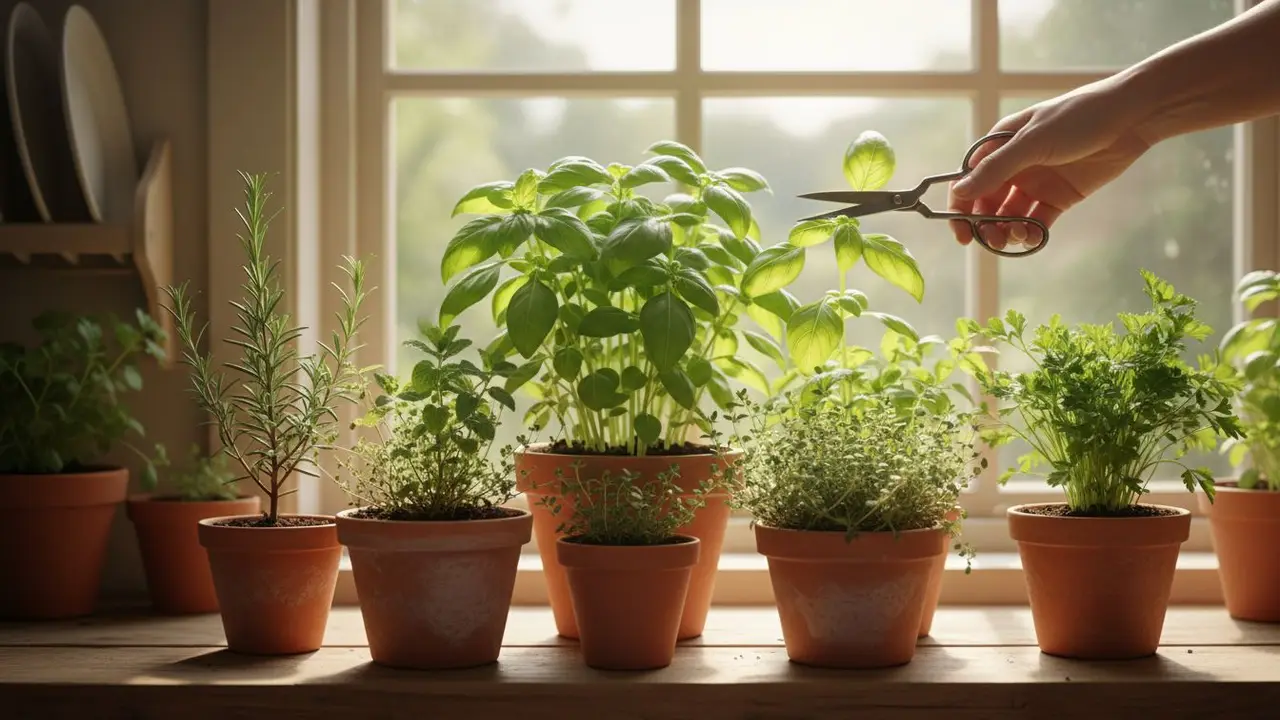
If I could send a new gardener home with just one thing, it would be a few pots of herbs. Growing herbs in containers is the single easiest, most rewarding way to start growing your own food, and it is where my own gardening began: a windowsill of basil and parsley long before I had a single garden bed. Herbs are compact, forgiving, and astonishingly productive, many of them actually prefer the confinement and sharp drainage of a pot, and a handful of them by the kitchen door will transform your cooking while saving you a small fortune in grocery bunches. Better still, you can keep them going indoors on a sunny sill for fresh flavor all year. This guide covers why herbs are the perfect container crop, which ones to grow, how to keep them thriving, and how to grow them indoors.
Why Herbs Are the Best Container Crop
Herbs and containers are a natural match. Most herbs are compact and shallow-rooted, perfectly content in a small pot, and they are the definition of a cut-and-come-again crop, so a tiny footprint yields a steady supply all season. Many of the most popular culinary herbs are Mediterranean natives, and plants like rosemary, thyme, and oregano genuinely prefer the lean, fast-draining, on-the-dry-side conditions a pot provides; they resent the rich, damp soil of a pampered garden bed. A pot also solves the mint problem: vigorous spreaders like mint and lemon balm will colonize an entire bed if planted in the ground, so keeping them contained is not just convenient but necessary. Add in the sheer convenience of snipping fresh herbs a step from the stove, and it is easy to see why herbs are the gateway crop of the whole container garden.
The Best Herbs to Grow in Pots
Almost any herb grows well in a container, but it helps to group them by what they want, because their needs fall into two broad camps.
- Sun-loving Mediterranean herbs want full sun, lean and gritty soil, and to dry out between waterings. This group includes rosemary, thyme, oregano, sage, and lavender, most of which are perennial and will return or overwinter with a little protection.
- Leafy, tender herbs prefer richer soil and steadier moisture. This group includes basil, parsley, cilantro, and dill, most of them fast-growing annuals.
- Vigorous spreaders like mint and lemon balm deserve their own pot, both to contain them and because they will bully anything they share a container with. I learned to keep mint firmly potted after it swallowed an entire corner of a bed one summer; confined to a container it is a delight, but loose in the ground it is a slow-motion takeover.
The practical lesson is to pot herbs with similar needs together: the dry-loving Mediterranean herbs in one container, the thirstier leafy ones in another, and mint always on its own. Michigan State University Extension's guidance on growing herbs in containers is a good reference for matching herbs to conditions.
How to Grow Herbs in Containers
The care is simple once you understand the two camps above. Here is what matters.
Pots and soil. Most herbs are happy in a 6- to 12-inch pot with drainage holes; larger perennials like rosemary appreciate more room. Use a well-draining potting mix, and for the Mediterranean herbs, lean it out with extra sand or perlite so it drains fast. Resist the urge to make the soil too rich, because high fertility pushes soft, watery growth with less of the concentrated flavor and aromatic oils you are growing herbs for in the first place.
Sun. Most herbs want six or more hours of direct sun, and the Mediterranean herbs and basil are happiest in full sun. Parsley, cilantro, and mint will tolerate a bit of shade.
Water. This is where most herbs are lost, and the killer is overwatering, not under. Let the Mediterranean herbs dry out noticeably between waterings; they would rather be too dry than too wet. The leafy herbs like basil and parsley want more consistent moisture but still need good drainage. I learned this the hard way by drowning a beautiful rosemary that just wanted to be left alone to dry.
Feeding. Herbs need far less feeding than vegetables. A little compost in the mix and an occasional weak organic feed for the leafy growers is plenty; overfeeding, again, trades flavor for floppy leaves. You can start herbs from transplants, which is easiest, from seed in the case of quick growers like basil, cilantro, and dill, or from cuttings, since mint and rosemary root readily in water.
Perennial and Annual Herbs
It pays to know which of your herbs are one-and-done and which will keep giving for years, because it changes how you handle them over winter. Many of the woody Mediterranean herbs, along with mint and chives, are perennials that return season after season: thyme, sage, oregano, rosemary, lavender, and mint. In cold-winter regions you overwinter potted perennials by moving them into an unheated garage, a cold frame, or a sheltered spot against the house, and tender rosemary is best brought fully indoors before a hard freeze. The tender annuals, basil, cilantro, and dill, live a single season and are killed by the first frost, so enjoy them all summer and simply resow or buy fresh plants each spring. Knowing which is which tells you at a glance which pots to protect and which to replant.
Harvesting and Pruning for More
Here is the happy paradox of herbs: the more you harvest, the more you get. Regular snipping makes a plant bushier and more productive, so do not be shy. A few rules keep them going strong.
- Cut just above a leaf node, the point where leaves branch off, and the plant will send out two new stems from below the cut.
- Pinch leafy herbs from the top. With basil especially, pinch out the growing tips regularly and remove any flower buds; once basil flowers it turns bitter and slows down.
- Never take more than about a third of a plant at once, so it can keep photosynthesizing and recover.
- Succession-sow the bolters. Cilantro and dill run to seed quickly in warm weather, so sow a fresh little pot every few weeks using succession planting to keep a supply coming.
When a plant gives you more than you can use fresh, preserve the surplus by drying or freezing it, or, in the case of lavender, by turning it into something lasting like homemade lavender oil.
Growing Herbs Indoors
One of the joys of herbs is that they do not have to stop at the back door. A sunny windowsill can keep you in fresh herbs straight through winter, and as Michigan State University Extension notes, many herbs can be grown indoors with a little attention to light. Light is, in fact, the whole game indoors. Herbs want the brightest window you have, ideally south-facing with six or more hours of sun, and in the short days of winter even that is often not enough. A small, inexpensive LED grow light makes an enormous difference; my windowsill basil used to stretch pale and leggy toward the glass until I added one, after which it grew bushy and green.
The easiest herbs indoors are basil, chives, parsley, mint, thyme, and oregano. Rosemary is the tricky one, wanting more light and better airflow than most homes provide and prone to powdery mildew indoors. Give your indoor pots good drainage and a saucer, avoid overwatering in the low light, and rotate them every few days so they grow evenly rather than leaning toward the window.
Growing Beyond the Pot
Herbs have a way of turning a curious beginner into a devoted gardener, and containers are only the start. When you want to grow more, an in-ground herb garden opens up culinary and medicinal possibilities, and a clever herb spiral packs herbs with different sun and water needs into a single compact, beautiful feature. On a balcony or patio, herbs slot naturally into the wider world of urban and balcony growing.
But there is no need to rush. Start this week with three or four pots by the kitchen door, a basil, a thyme, a mint, and a parsley, give them sun and go easy on the water, and snip from them often. Fresh herbs are the fastest way I know to feel the payoff of growing your own, they cost a fraction of the grocery-store bunches you would otherwise toss half-wilted, and they may just be the thing that pulls you into a lifetime of gardening. For more on growing food in any space, our gardening library has a guide for every step.
Sources
About the Author
Lucas is a writer and researcher focused on sustainable agriculture and permaculture practices.