
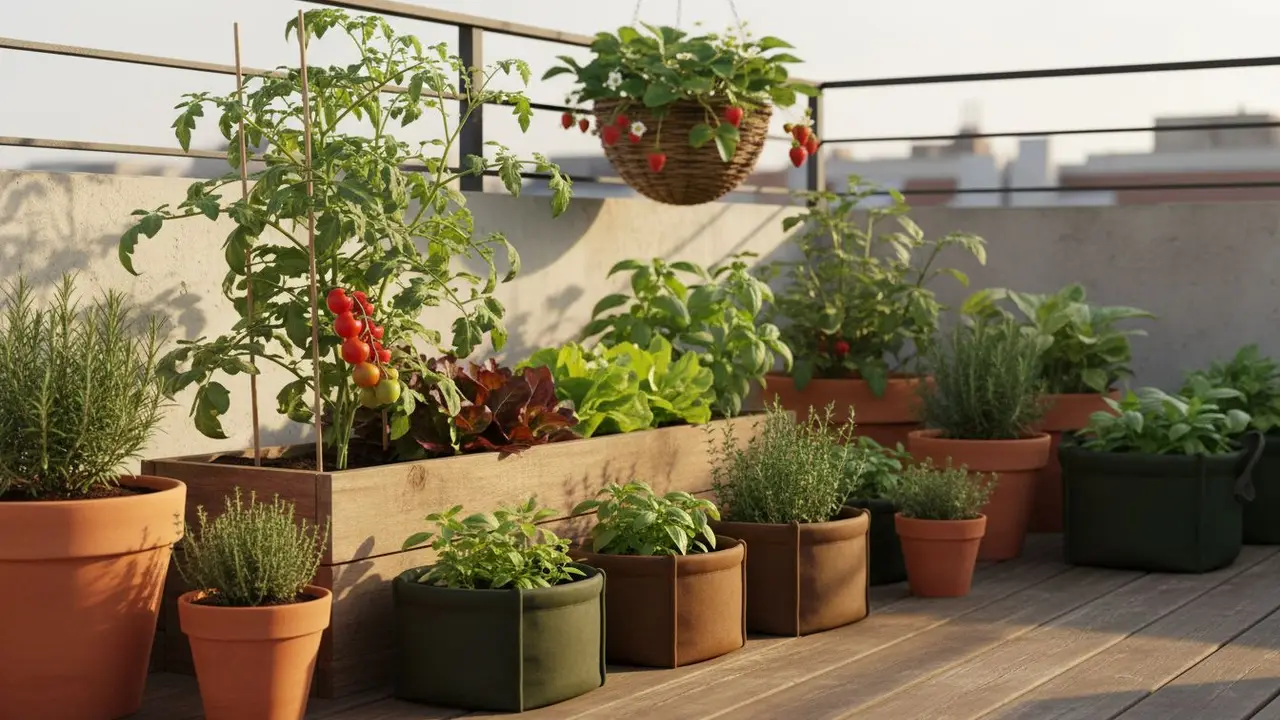
You do not need a yard to grow your own food. A sunny balcony, a patio, a set of front steps, or even a bright windowsill is enough to raise a surprising amount of fresh vegetables and herbs, and container gardening is how you do it. It is the most accessible way into growing food that I know of, perfect for renters, small spaces, and anyone who wants to start simple. My own gardening life began with a handful of pots of herbs and cherry tomatoes on a small balcony, years before I ever dug a bed. Get a few basics right, container size, drainage, the right soil, and steady water, and you can grow a genuine harvest almost anywhere the sun reaches.
In this guide I will cover why containers work so well, how to choose them, the one soil rule that matters most, how to water and feed for success, and which crops thrive in pots.
Why Grow in Containers?
Containers solve problems that stop many people from gardening at all. The obvious one is space: a container garden needs no ground, so a balcony or paved patio becomes growing room. But the advantages go further. You get complete control over the soil, filling each pot with a perfect mix instead of fighting whatever is in your yard. You deal with far fewer weeds and soil-borne diseases. And containers are portable, so you can chase the sun, pull tender pots in ahead of a frost, or rearrange your whole garden in an afternoon. Raised to waist height on a table or rail, they are also gentle on the back. It is no wonder container growing is the backbone of urban permaculture and the starting point for most balcony gardens.
Choosing Your Containers
When it comes to pots, the single most important rule is that bigger is better. A larger container holds more soil, which means more of a buffer of water and nutrients, less frequent watering, and far more forgiveness for a busy gardener. Small pots dry out and starve fast. Match the size to the crop:
- Small pots (6 to 10 inches): herbs, lettuce, radishes, and other shallow-rooted greens.
- Medium pots (2 to 3 gallons): peppers, bush beans, compact crops.
- Large pots (5 gallons or more): tomatoes, cucumbers, and anything big or long-season, which also need support.
Material matters less than size. Terracotta breathes but dries out quickly; plastic and resin hold moisture and stay light; fabric grow bags give superb drainage and air-prune the roots; wood and metal both work, though metal can overheat in full sun. Almost anything can be a container, including a repurposed bucket or storage tote, as long as it meets the one non-negotiable requirement: drainage holes. Without holes in the bottom, water pools and roots drown, and no plant survives that for long. And skip the old advice about adding a layer of gravel at the bottom; it does not improve drainage and only steals room from the roots.
The Right Soil: Do Not Use Garden Soil
This is the mistake that sinks more first-time container gardeners than any other, and I made it myself early on. Do not fill your pots with soil dug from the garden. In the confines of a container, garden soil compacts into a dense, airless block that drains terribly, and it brings weed seeds, pests, and disease along with it. The pots I once filled with garden dirt set up like concrete and my plants sulked all season.
Instead, use a quality potting mix, sometimes labeled container mix. Both Michigan State University Extension and Utah State University Extension, in its guidance on vegetable container gardening, stress using a light, well-draining potting medium rather than native soil. A good mix is fluffy and holds moisture while still draining freely. I enrich mine with a few handfuls of compost or worm castings for fertility and living biology, which turns a sterile bag of mix into something closer to real soil.
Watering and Feeding: The Two Things That Matter Most
If containers have a downside, it is that they depend on you completely, and the two ways they depend on you are water and food.
Watering. Pots dry out far faster than garden beds, because the soil volume is small and the sides are exposed to sun and wind. In summer heat I check my containers every single day, and the biggest ones sometimes need water twice. Water thoroughly until it runs from the drainage holes, then let the surface dry slightly before the next round; never let a pot bake bone-dry, since peat-based mixes are hard to re-wet once they do. A heatwave early on taught me just how quickly a pot can go from moist to crisp. Mulching the surface of the pot, grouping containers together, and running a drip system or using self-watering containers all take the pressure off.
Feeding. All that frequent watering steadily flushes nutrients out of the limited soil, so container plants are hungry plants and need regular feeding to keep producing. I mix a slow-release organic fertilizer into the potting mix at planting, then supplement through the season with a liquid feed such as a diluted fish emulsion or compost tea every couple of weeks while plants are growing hard.
The Best Crops for Containers
Nearly anything can grow in a pot with the right size and care, but some crops are especially rewarding for beginners.
- Herbs are the natural first crop: basil, thyme, rosemary, parsley, and chives all thrive in pots. Mint practically demands a container, since it runs rampant and takes over any bed you plant it in.
- Salad greens like lettuce, spinach, and arugula are shallow-rooted and quick, and a wide, shallow pot re-sown every couple of weeks through succession planting gives a steady supply of cut-and-come-again salad.
- Compact fruiting crops such as cherry and patio tomatoes, peppers, and bush beans do beautifully in a large pot with support.
- Strawberries are made for containers and hanging baskets; my first basket of strawberries outproduced expectations and kept the fruit up off the ground and away from slugs.
Look for varieties labeled "bush," "patio," "dwarf," or "container," which are bred to stay compact and productive in a pot. The crops to approach with caution are the big sprawlers like winter squash and corn, and deep-rooted crops like full-size carrots, which need a genuinely deep container to develop properly.
Common Container Mistakes to Avoid
Nearly every container failure traces back to one of a handful of mistakes, and knowing them in advance saves a season of frustration.
- Pots too small. This is the most common error of all. Undersized containers dry out and run out of nutrients quickly, so when in doubt, size up.
- No drainage. A pot without holes is just a bucket that drowns its roots. Check every container before you fill it.
- Garden soil instead of potting mix. As above, native soil compacts into an airless block in a pot and brings weeds and disease with it.
- Letting pots dry out. Erratic watering stresses plants and triggers problems like blossom end rot on tomatoes; aim for steady, even moisture.
- Forgetting to feed. The limited soil runs out of nutrients fast, so a plant that started strong and then stalled is very often simply hungry.
Tips for Container Gardening Success
A few final habits make all the difference. Give your pots as much sun as you can, since most vegetables want six or more hours a day, and take advantage of a container's portability to move it into the light; a crop that struggles in a shady corner will often thrive once you shift its pot a few feet into the sun. Group your pots together to raise humidity and make watering quicker. Keep sowing salad pots in succession so something is always ready, and do not be afraid to add a pot or two each season as your confidence grows. And as the season turns, use that same portability to extend it, moving tender pots indoors or protecting them the way I describe in my guide to growing through the cold months.
Container gardening is, in my honest experience, the friendliest possible on-ramp to growing your own food, and for many people it is all the garden they will ever need. When you are ready for more, the natural next step is a raised bed, which is really just a very large container. But start small: set a few pots of herbs and a cherry tomato in your sunniest spot, keep them watered and fed, and let one good harvest pull you in. For more on growing food in any space, our gardening library has a guide for every step.
Sources
- Michigan State University Extension — Container gardening basics
- Utah State University Extension — Vegetable Container Gardening
- West Virginia University Extension — Container Gardening
- University of Illinois Extension — Successful Container Gardens
About the Author
Lucas is a writer and researcher focused on sustainable agriculture and permaculture practices.