
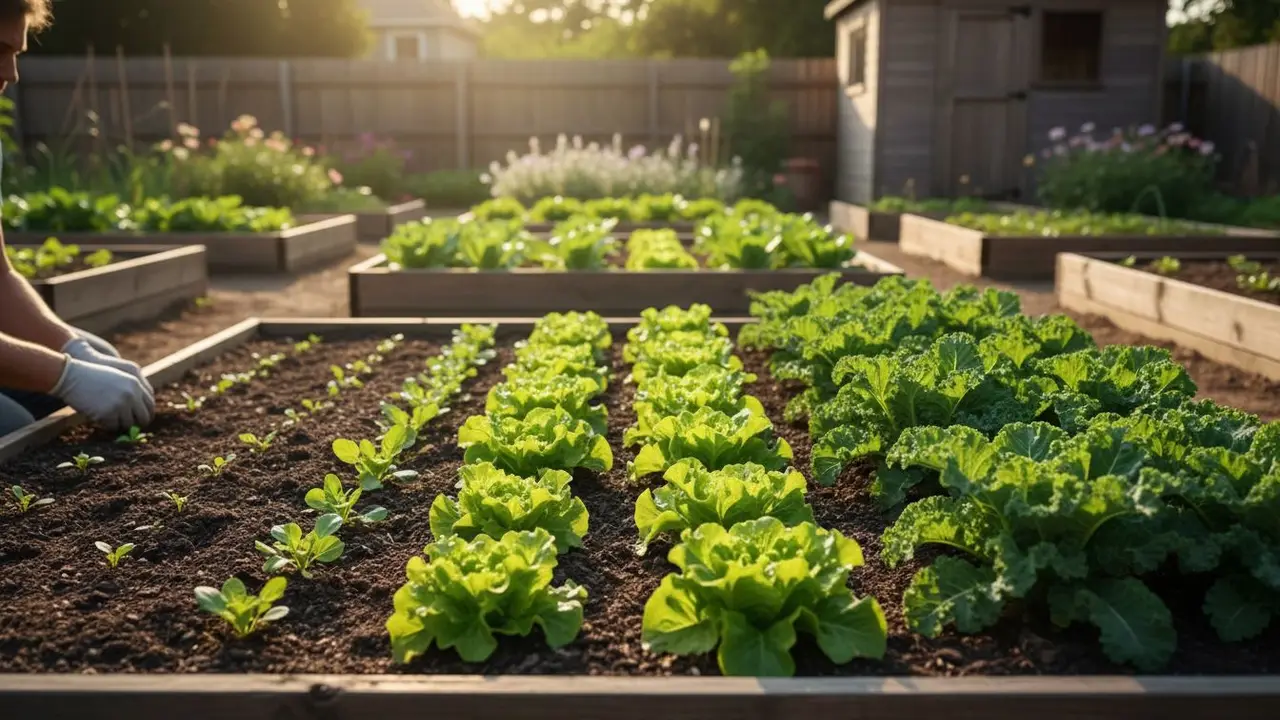
For years my garden followed the same frustrating rhythm: I planted everything in one hopeful burst each spring, drowned in more lettuce and beans than I could eat by July, and stared at bare, weedy beds by August. The fix, once I learned it, changed the way I garden more than almost anything else. It is called succession planting, and it simply means planting in stages, and replanting beds as they empty, so that food comes in a steady stream from early spring right through to hard frost instead of all at once. If cold frames and tunnels extend your season with structures, succession planting extends it with timing, and the two together are how you eat from the garden for most of the year.
In this guide I will explain the several forms succession planting takes, why it is worth the small effort of planning, how to actually schedule it, and which crops reward it most.
What Is Succession Planting?
Succession planting is really an umbrella term for a few related timing techniques. Michigan State University Extension frames it as planting for a continuous harvest, and there are four main ways to do it.
- Staggered sowings of one crop. Instead of sowing a whole packet of lettuce or radishes at once, sow a short row every two to three weeks. You get a manageable, steady supply rather than a glut that bolts before you can eat it.
- One crop following another in the same bed. When a spring crop finishes, replant that space with a summer one, then a fall one. A bed of early peas becomes a bed of bush beans, which becomes a bed of fall spinach. Every bed keeps working all season.
- Different varieties with different maturities. Plant early, mid-season, and late-maturing varieties of the same crop at the same time, and they ripen in sequence rather than all together.
- Interplanting fast and slow crops. Tuck a quick crop like radishes between slow ones like carrots or cabbage; you harvest the radishes long before the slow crop needs the room.
The Royal Horticultural Society calls the first of these successional sowing, and it is the easiest one to start with. Master a short row every couple of weeks and you have already solved the glut-and-gap problem.
Why Succession Planting Is Worth It
A little planning pays off in several ways at once.
- A continuous harvest. The whole point: a steady supply of what you actually eat, with no floods and no empty stretches.
- More food from the same space. Keeping every bed in production two or three times over a season dramatically raises the yield of a small garden.
- A longer season. Deliberate early and late sowings push the harvest out toward both ends of the year.
- Less waste. Smaller, timed plantings mean you eat crops at their peak instead of watching them bolt or over-mature.
- Healthier soil. A bed that is always growing something stays covered, suppresses weeds, and fits naturally into a no-dig system.
How to Plan Your Succession Plantings
Succession planting is mostly a matter of a little arithmetic with two numbers: your frost dates and each crop's days to maturity, which is printed right on the seed packet. Utah State University Extension's guidance on succession planting is a good reference for the timing, but the core method is simple.
Count backward from fall frost. To know the last date you can sow a crop, count its days to maturity back from your average first fall frost, and add a couple of weeks because growth slows as the light fades. That tells you how late you can start each fall planting.
Keep two running plans. The first is your re-sow schedule for quick crops: mark your calendar to sow a short row of lettuce, radishes, or beans every two to three weeks. The second is your bed-sequence plan: what follows what in each bed as it clears, moving through a cool, then warm, then cool rhythm across the season.
Have the next crop waiting. The secret to losing no time is to start seedlings indoors while the current crop is still finishing. The day a bed comes empty, you set out transplants that are already weeks old, rather than starting from seed in bare ground. That single habit can add an entire extra crop to a bed's year.
A Season of Succession in One Bed
It helps to see how this plays out on actual ground. Here is roughly how one of my four-by-eight-foot beds earns its keep across a year in a temperate climate:
- Early spring: as soon as the soil can be worked, I sow cold-hardy spinach, radishes, and a first short row of lettuce.
- Late spring: the radishes are long gone and the spinach is finishing, so I clear them and set out bush bean seed and a second lettuce sowing in their place.
- Midsummer: as the spring lettuce bolts in the heat, that corner becomes room for another planting of beans or a heat-tolerant green like chard.
- Late summer: once the beans wind down, I pull them and sow fall crops, more spinach, arugula, and a row of carrots timed to mature before hard frost.
- Fall and beyond: a row cover or cold frame over those fall greens carries the harvest weeks past the first freeze.
One bed, four or five distinct harvests across the year, and it was never sitting bare for long. That is the whole promise of succession planting made concrete, and it is why a modest garden run this way can out-produce a much larger one that is planted only once.
The Best Crops for Succession Planting
Not every vegetable suits this approach, and knowing which do saves a lot of wasted effort.
Quick crops to re-sow every one to three weeks: radishes, lettuce, arugula, spinach and other salad greens, bush beans, baby beets, turnips, cilantro, and dill. These grow fast, are eaten young, and are the backbone of a succession plan.
Long-season crops to plant once: tomatoes, peppers, eggplant, winter squash, and Brussels sprouts occupy their space for the whole season and produce over a long window from a single planting, so they are not succession crops. You do, however, want them in your bed-sequence plan so you know what a bed becomes after an early crop comes out.
Classic follow-on pairings I lean on every year: spring peas or early lettuce followed by summer bush beans; early spring radishes followed by summer squash; and garlic, which I harvest in midsummer, followed immediately by a sowing of fall greens or carrots. Herbs like basil can be tucked in wherever a warm-season gap opens up.
A Few Pitfalls to Avoid
A handful of mistakes trip up most beginners, and every one is easy to sidestep once you know it.
- Sowing too much at once. The instinct to empty the whole seed packet is exactly what creates the glut you are trying to avoid. Sow short rows and trust that another sowing is only two weeks away.
- Forgetting to replant. An empty bed in July is a wasted bed. Keep the next crop, or its transplants, ready so a cleared space is replanted within days rather than left to grow weeds.
- Skipping the soil. Growing three crops where you used to grow one draws heavily on fertility, so top up with compost between plantings instead of expecting tired soil to keep delivering.
- Ignoring the fall clock. Days shorten and growth slows dramatically in autumn, so start your fall successions earlier than instinct suggests, or they will not finish in time.
Succession Planting Meets the Rest of Season Extension
Timing and structures work best hand in hand. A cold frame or row cover lets you start the very first succession weeks earlier and protect the very last one well past frost, stretching the whole succession calendar wider at both ends. And because you are asking your beds to produce two or three crops a year, the soil needs generous support: replenish it with compost and organic amendments between plantings, and let your bed-sequence plan double as a crop rotation by never following a crop with a close relative.
All of that continuous harvest also feeds directly into keeping food for later; a steady stream of produce is far easier to eat fresh, preserve, and store for winter than a single overwhelming glut. My honest experience is that succession planting is the highest-value planning habit a food gardener can build. Start this season with one easy step: sow a short row of lettuce or radishes, then sow another two weeks later, and keep going. Before long you will have traded the feast-and-famine garden for one that simply keeps feeding you. For more on growing more food in every season, our gardening library has a guide for each step.
Sources
- Michigan State University Extension — Succession planting for continuous harvest
- Royal Horticultural Society (RHS) — Successional sowing
- Utah State University Extension — Succession Planting
- University of Illinois Extension — Succession Planting for Continuous Harvest
About the Author
Lucas is a writer and researcher focused on sustainable agriculture and permaculture practices.