
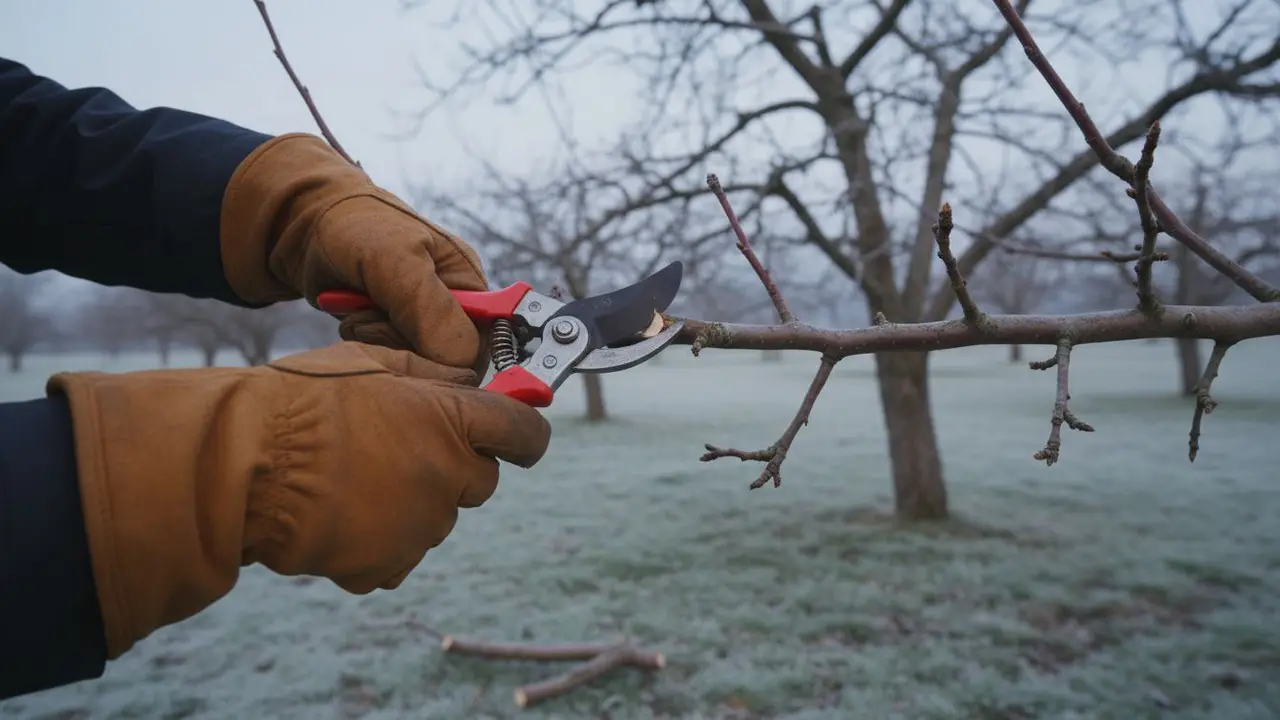
Of all the jobs in the fruit garden, pruning is the one that intimidates beginners most, and the one that rewards them most. A well-pruned tree is healthier, easier to manage, and far more productive, while a tree left unpruned slowly becomes a tangled, shady thicket that produces a lot of wood and very little good fruit. I know, because I once let a young apple go untouched for years until it was exactly that, and the fruit had shrunk to marbles. Learning how to prune fruit trees turned that tree around, and the good news for anyone nervous about it is that the basic principles are simple and fruit trees are forgiving; you will not kill one with an imperfect cut. This guide covers why we prune, when to do it, the two basic tree shapes, the cuts that matter, and the mistakes to avoid.
Why Prune a Fruit Tree?
Pruning is not about neatening the tree for looks; every cut serves the tree's health and harvest. There are three main goals. The first is health: removing dead, diseased, and damaged wood, and opening up the canopy so air and light can move through it, which dries the leaves and dramatically reduces the fungal problems covered in my guide to preventing plant disease. When I finally opened up that same crowded apple, the leaf scab that had plagued it every damp spring eased noticeably the following year. The second is structure: building a strong framework of well-spaced branches that can carry a heavy crop without splitting. The third is productivity: sunlight reaching into the canopy means more fruit buds, better ripening, and larger, sweeter fruit, while keeping the tree at a size you can actually reach to pick. As Utah State University Extension puts it in its guide to pruning fruit trees, the aim is an open, well-lit canopy, and everything you cut serves that end.
When to Prune
Timing matters, and for most fruit trees the main event is the dormant season. Pruning in late winter, before spring growth begins, has real advantages: the tree is dormant so it loses no stored energy, the bare branches make the structure easy to read, and the tree responds with vigorous new growth in spring. Dormant pruning is invigorating, which is exactly what you want for shaping a young tree.
There is also a place for summer pruning. A lighter cut in summer has the opposite, calming effect: it slows growth, which helps keep a vigorous or dwarf tree in bounds, removes the fast vertical "water sprouts," and lets light into ripening fruit. A useful rule of thumb is that winter pruning pushes growth while summer pruning restrains it. Dormant pruning slots neatly into the quiet winter stretch of the gardening year, alongside the rest of your off-season garden tasks. Avoid pruning in fall, however, when wounds heal slowly and invite disease, though you can and should cut out dead or diseased wood at any time of year. One exception worth knowing: stone fruits like cherries and apricots are best pruned in dry summer weather rather than winter, to avoid the diseases that enter fresh dormant-season cuts. Always work with clean, sharp tools, and wipe the blades between cuts when you are removing diseased wood.
The Two Basic Tree Shapes
Most fruit trees are trained to one of two forms, and knowing which suits your tree guides every cut you make.
- Central leader. This is a pyramidal, Christmas-tree shape with one dominant central trunk and tiers of side branches spiraling out and getting shorter toward the top, so light reaches all the way down. It suits apples and pears.
- Open center (vase). Here there is no central trunk; instead three to five main branches radiate from a short trunk into an open, vase-like bowl that floods the middle of the tree with light and air. This form suits stone fruits such as cherries, peaches, and plums.
You establish the chosen shape in the tree's first few formative years, and then maintain it. Do not agonize over perfection; the tree only needs a sound, open framework, not a textbook diagram.
A quick note on the fruits that break these two molds: grapevines are pruned hard every winter back to a permanent framework, because they fruit on the current season's growth; a fig needs only light shaping; and the bramble berries have their own cane-pruning rhythm, which I cover in my guide to growing berries. When in doubt about a specific fruit, look up its particular habit before you start cutting.
How to Make Pruning Cuts
Faced with a tree full of branches, work through it in a logical order rather than snipping at random.
Start with the three D's. Always remove anything dead, diseased, or damaged first. This alone improves most trees, and it is impossible to get wrong.
Then remove the problem branches. Take out branches that cross and rub against each other, that grow inward toward the center, or that crowd their neighbors, thinning until each remaining branch has space and light around it. Remove suckers growing from the base or the rootstock, and the vigorous vertical water sprouts, since neither bears good fruit.
Understand your two cut types. A thinning cut removes an entire branch back to where it joins a larger one; it opens the canopy without triggering a rush of regrowth, and it is the cut you will use most on a healthy tree. A heading cut shortens a branch back to a bud and stimulates bushy new growth just below it, so it is useful for building structure on a young tree but should be used sparingly, since overusing it creates a dense, waterspout-choked mess.
Cut in the right place. Make thinning cuts just outside the branch collar, the slightly swollen ring where the branch meets the trunk, without cutting flush into the trunk and without leaving a long stub; a flush cut wounds the trunk and a stub dies back and rots. Make heading cuts about a quarter-inch above an outward-facing bud. And do not overdo it: as a rule, remove no more than a quarter to a third of the canopy in any single year, because harder pruning stresses the tree and triggers exactly the thicket of water sprouts you are trying to avoid. The classic target, quoted by generations of orchardists, is a canopy open enough that a bird could fly through it.
Do Not Forget to Thin the Fruit
There is a second, easily overlooked kind of pruning: thinning the young fruit itself. When a tree sets a heavy crop, removing a good portion of the small green fruits in early summer, so the remainder are spaced out along the branches, produces larger, better-ripened fruit, keeps limbs from breaking under the weight, and helps prevent the "biennial bearing" habit where a tree crops heavily one year and barely at all the next. It feels wasteful the first time, but the year I finally thinned my overloaded apple hard, the fruit that remained grew to twice the usual size and not a single branch snapped.
Common Pruning Mistakes to Avoid
A few errors account for most pruning regret, and every one is easy to sidestep.
- Not pruning at all. A neglected tree becomes a shady thicket of small, disease-prone fruit, the very situation that first taught me to prune.
- Overpruning. Cutting away too much, or "topping" a tree, stresses it and provokes a forest of water sprouts. I hacked one tree too hard early on and spent the next two summers dealing with the regrowth; now I take a quarter of the canopy at most.
- Pruning at the wrong time. Save the main pruning for the dormant season, and keep stone fruit to summer.
- Flush cuts and stubs. Both prevent proper healing; cut just outside the branch collar every time.
- Dull, dirty tools. Ragged cuts heal poorly and spread disease, so keep blades sharp and clean.
Pruning as Part of the Whole
Pruning is one thread in the care of a fruit tree, woven together with getting the planting right, preventing disease, and a light hand with organic pest control. It is worth noting that pruning for fruit is a different craft from the harder pruning of coppicing and pollarding used to harvest wood, which I cover separately in pollarding and coppicing; a fruit tree wants a light, thoughtful touch, not a hard cutback.
If you take away one thing, let it be this: do not be afraid of the shears. Fruit trees are remarkably forgiving, and the worst thing you can do to most of them is nothing at all. Start this winter with a single tree. Remove the dead, diseased, and damaged wood, take out a few crossing branches to open the center to the light, thin the fruit come summer, and step back. Do that each year and you will be rewarded with a healthy, shapely tree and the best fruit it has ever given you. For more on growing food of every kind, our food forests library has a guide for each step.
Sources
- Utah State University Extension — Pruning Fruit Trees
- Michigan State University Extension — Pruning fruit trees
- University of Minnesota Extension — Pruning trees and shrubs
- Royal Horticultural Society (RHS) — Pruning apple trees
About the Author
Lucas is a writer and researcher focused on sustainable agriculture and permaculture practices.