
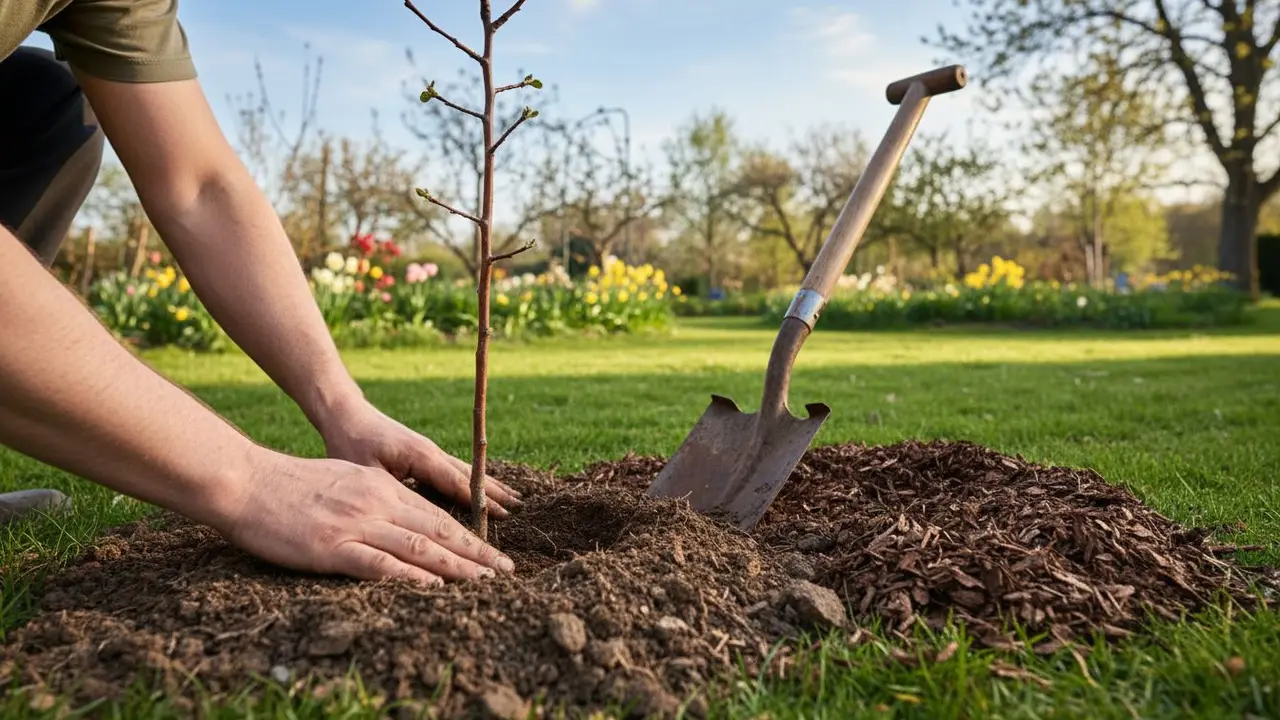
There is an old proverb that the best time to plant a tree was twenty years ago, and the second best time is today. Nowhere is that truer than with fruit trees. If berries are the fastest fruit to reward a new gardener, a well-chosen fruit tree is the most abundant over a lifetime: a single apple or pear can hand you bushels of fruit every year for decades. Learning how to plant a fruit tree properly is one of the most valuable and optimistic things you can do in a garden, and it is not complicated once you understand a few make-or-break details. This guide walks through choosing the right tree, planting it correctly, and caring for it through the crucial early years.
Choosing the Right Fruit Tree
More fruit-tree disappointment comes from the wrong choice at the nursery than from anything you do later, so choose carefully.
- Match it to your climate. Pick species and varieties rated hardy for your zone. Many temperate fruits also need a certain number of winter "chill hours" to fruit well, so choose varieties suited to how cold your winters actually get.
- Plan for pollination. This is the detail beginners most often miss. Many fruit trees, including most apples, pears, and sweet cherries, need a second, compatible variety blooming nearby to set fruit. Others, like peaches, sour cherries, and figs, are self-fertile and will crop alone. A lone apple that barely fruited for me came good only once a second variety went in nearby.
- Mind the rootstock and size. Fruit trees are grafted onto rootstocks that control their eventual size, from full-sized standards down to semi-dwarf and dwarf. For a home garden, dwarf or semi-dwarf trees are almost always the right call: they stay small enough to prune, pick, and net easily, and they bear fruit years sooner than a standard tree.
- Choose disease resistance. Especially with apples, selecting a disease-resistant variety spares you a season of spraying against problems like scab.
Trees are sold either bare-root, as dormant plants for late-winter and early-spring planting, or growing in containers, which can go in through much of the season. Bare-root trees are cheaper and establish well, and they are how I have planted most of mine.
When and Where to Plant
Timing and siting set the tree up for its whole life. Plant bare-root trees in late winter or early spring while they are dormant, or in fall in mild climates; container-grown trees can go in whenever the ground is workable, with spring and fall the easiest on the tree.
Site matters even more. Give a fruit tree full sun, ideally six to eight hours or more, for the best crops. Above all, it needs well-drained soil, because fruit trees hate wet feet and will succumb to root rot in soggy ground, so test your soil and work to improve heavy clay or plant on a mound if drainage is poor. Avoid low frost pockets, where a late spring frost can kill the blossom and cost you the year's fruit, give the tree shelter from harsh wind, and leave enough room for its mature spread.
How to Plant a Fruit Tree, Step by Step
The planting itself is simple, but two details make all the difference. The Utah State University Extension guide to planting fruit trees and Michigan State University Extension both stress the same fundamentals.
- Dig wide, not deep. Make the hole no deeper than the roots but two to three times as wide, and roughen the sides so roots can push out into the surrounding soil.
- Do not over-amend the backfill. Contrary to old advice, refill the hole with the same native soil you dug out rather than loading it with compost or peat. A rich pocket of amended soil encourages roots to circle inside the hole instead of spreading into the wider ground, leaving the tree poorly anchored and dependent.
- Keep the graft union above the soil. This is the single most important step. Find the graft union, the swollen kink low on the trunk where the variety was joined to the rootstock, and set the tree so that union sits two to four inches above the finished soil line. Bury it and the variety can root above the graft, defeating the dwarfing rootstock and inviting disease. I planted one tree too deep in my early days and learned this lesson the slow way.
- Firm, water, and mulch. Backfill, firm the soil gently to remove air pockets, and water deeply to settle it. Spread a wide ring of mulch, but keep it a few inches clear of the trunk, since mulch piled against the bark invites rot and rodents.
- Stake only if needed. On a windy site, a stake helps for the first year or two, but remove it after that so the trunk can strengthen on its own.
Caring for a Young Fruit Tree
The first two or three years determine whether a tree merely survives or truly thrives, and a little attention now pays off for decades.
Water deeply and regularly. This is the number one job. A newly planted tree has a small root system and can easily die of drought in its first summer, so water it deeply and consistently through the establishment years, especially in dry spells.
Keep grass and weeds away from the trunk. Turf growing right up to a young tree competes fiercely for water and nutrients and genuinely stunts it. A grassed-in young tree of mine sat still for two seasons until I cleared a wide mulched circle around it, after which it finally took off. Keep a clear, mulched ring around the base.
Feed lightly and prune for structure. Do not overfeed a young tree; too much nitrogen pushes soft growth at the expense of fruit, so a little compost or a balanced organic fertilizer is plenty once it is established. In the dormant season, a light formative prune builds a strong framework of branches. It also helps to pinch off most of the fruit in the first year or two, hard as that feels, so the young tree pours its energy into roots and structure rather than a premature crop.
Protect it. Guard the trunk from rodents and sunscald with a tree guard, shield the blossom from late frosts, and net the ripening fruit from birds. And then, mostly, be patient: depending on the type and rootstock, most trees take two to five years to bear their first real harvest.
Common Fruit-Tree Mistakes to Avoid
A handful of errors account for most young-tree failures, and every one of them is avoidable.
- Burying the graft union. The most common fatal mistake. Keep that swollen kink on the lower trunk proud of the soil line.
- Planting in wet ground. Fruit trees drown in soggy soil. I lost an early tree to root rot in a low, damp corner before I learned to plant only where water drains freely, or to build up a mound where it does not.
- Forgetting the pollinator. A single tree of a variety that needs cross-pollination will flower beautifully and set almost no fruit.
- Letting it go dry. More young trees die of thirst in their first summer than of anything else, so never assume a new tree can fend for itself.
- The mulch volcano. Mulch heaped against the trunk traps moisture against the bark and rots it; make a doughnut, not a volcano.
The Long Game: Fruit Trees in a Food Forest
A fruit tree is the canopy of a productive, perennial garden, and it grows even better in good company. Underplanting it with berries, herbs, and pollinator-friendly flowers creates a "guild" that feeds the soil, draws in pollinators, and makes the most of the space, which is the heart of food-forest design. If you want fruit with even less fuss, the easygoing, largely pest-free trees are worth seeking out: a persimmon, a native pawpaw, or a mulberry will often thrive with almost none of the care a temperamental peach demands. And when your tree finally comes into full bearing, the happy problem becomes what to do with all the fruit: store apples and pears in a cool cellar, or turn a glut into sauce, butter, and jam through water-bath canning.
My honest advice is not to overthink it and not to wait. Choose one dwarf, disease-resistant tree that suits your climate, make sure it has a pollination partner if it needs one, and plant it this season in a sunny, well-drained spot with the graft union proud of the soil. Water it faithfully, keep the grass at bay, and in a few short years you will be picking your own fruit from a tree that will go on feeding you, and quite possibly the next family to live there, for decades. For more on growing food of every kind, our food forests library has a guide for each step.
Sources
About the Author
Lucas is a writer and researcher focused on sustainable agriculture and permaculture practices.