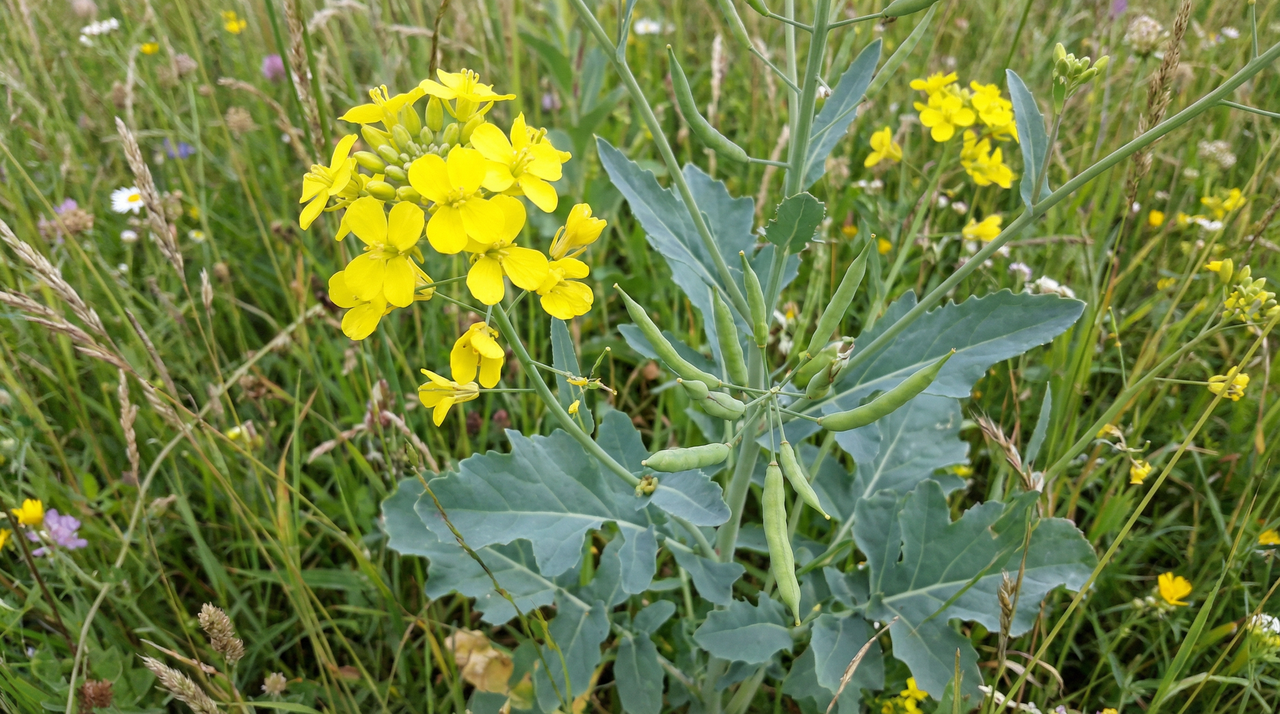
Cabbage has a reputation problem. It's the vegetable people remember from bad school lunches and overcooked Sunday dinners, that heavy sulfur smell hanging in the air like an accusation. I used to hear it constantly at farmers markets: "I don't really like cabbage." And then I'd hand them a leaf of a fresh-cut savoy, grown in cool fall soil, still a little dewy. Every single time, they'd look mildly confused, then ask what variety it was. The thing is, most people have never actually tasted cabbage at its best, because most cabbage they've encountered was stored too long, cooked too hard, or harvested in the wrong season entirely.
The lush, heavy-headed vegetable sitting in your garden shares almost its entire genome with broccoli, kale, Brussels sprouts, and kohlrabi.[1] They're not just cousins; they're the same species, shaped by thousands of years of humans noticing small differences and selecting for them. One gene shift here, one trait amplified there, and a leafy coastal cliff plant becomes a tightly wrapped head weighing over a hundred pounds in the right hands.[2] That history, and what it means for how you grow and eat this plant, is worth a much closer look.
Origin and History of Cabbage (Brassica oleracea)
Botanical Background and Wild Ancestor
Before cabbage was anything close to the tight, layered head we pull from the garden, it was clinging to sea cliffs. Brassica oleracea, the scientific name of the cabbage plant and its wild ancestors, is native to the rocky coastal shores and chalk cliffs of western and southern Europe, ranging from the British Isles and Ireland down through France, Spain, Portugal, and into the Mediterranean.[3][4] Most wild populations hug sea level, rarely climbing above 300 meters, thriving in the mild, wet oceanic climates that characterize those coastlines.[3] In the wild, this is a short-lived perennial, capable of living three to five years and flowering repeatedly, while cultivated forms are selected as biennials or simply harvested before they ever get the chance to flower.[5][6]
I always tell people to do the crush test when they think they've spotted wild Brassica oleracea relatives: rub a leaf and that unmistakable sulfurous smell is your confirmation.[5] The four-petaled yellow flowers are classic Brassica, but without that smell, you could mistake it for wild mustard or wild radish, and a truly dangerous lookalike, black nightshade, grows in similar disturbed coastal habitats.[7] It's an easy habit to build, and it matters.
Visual Characteristics of Wild and Cultivated Cabbage
The cultivated cabbage that most gardeners recognize grows as a compact rosette with a short, thick stem rarely more than six inches above ground, reaching an overall height of 12 to 24 inches.[5] Beneath the soil, what starts as a seedling taproot matures into a shallow, spreading fibrous network that typically reaches only 12 to 18 inches deep.[8] Those thick, waxy, blue-green leaves are the most immediately recognizable feature, and they're a direct inheritance from the coastal ancestor that needed a waterproof cuticle to survive salt spray. I've grown kohlrabi, broccoli, and savoy cabbage in the same guild bed, and even side by side, that waxy sheen links them all back to the same genetic origin in a way I find genuinely satisfying to observe.
The contrast with upright relatives is striking. Indian mustard and black mustard grow erect and branching, reaching 0.6 to 1.5 meters tall with taproots that anchor them differently in the soil.[9][10] Turnip grows erect too, but stores its energy in a swollen root rather than a leafy head.[11] These differences aren't accidents of evolution; they reflect thousands of years of humans selecting for entirely different plant parts, all from a shared ancestor on those same European cliffs. When I'm designing a polyculture and I need a tall canopy-edge plant versus a low weed-suppressing layer, understanding these contrasting architectures within a single genus is actually useful information.
Traditional, Cultural, and Historical Uses
Humans were gathering wild Brassica oleracea from European coastal populations long before anyone systematically cultivated it, with archaeobotanical evidence pointing to a transition into Mediterranean cultivation somewhere between 2000 and 1000 BCE.[12][13] By the 4th century BCE, Theophrastus was writing about it, and by the 1st century CE, Roman authors Cato, Columella, and Pliny the Elder had documented it extensively, with Pliny alone noting over 20 distinct types.[14][15] The Romans credited it with treating gout, ulcers, and digestive complaints, and that medicinal reputation traveled with the crop.[16]
Medieval Europe made cabbage a genuine staple precisely because it could survive cold, store through winter, and be fermented to last even longer.[17] Fermented cabbage went aboard ships to fight scurvy, a practical application of its vitamin C content that sailors may not have understood chemically but clearly trusted.[17] Meanwhile, across the genus, parallel domestications were producing their own fermented traditions: Korean kimchi traces back to at least the 3rd century CE, Chinese suancai to the Han Dynasty.[17][18] I find it remarkable that fermentation as a preservation strategy emerged independently across so many cultures working with members of this same family.
Fun Facts and Ecological Insights
What makes Brassica oleracea genuinely extraordinary as a crop species is the developmental plasticity buried in its genome. Single gene changes, steered by centuries of human selection, are what separate a broccoli floret from a kohlrabi bulge from a tightly wrapped cabbage head.[19][20] I've grown kale, cabbage, and kohlrabi as companions in the same bed, and the fact that they're not just related but literally the same species, shaped by selection into radically different architectures, never stops impressing me.[21]
Back on those sea cliffs where it all started, wild cabbage earns its keep ecologically: its fleshy, wax-coated leaves tolerate salt spray, its rosette form resists wind, and its roots stabilize eroding chalk and limestone.[22][23] The glucosinolates that give all Brassicas their pungent edge are a chemical defense system inherited from those original wild populations.[24] Today, China produces roughly 33.3 million metric tons of cabbage annually, with India and Russia following behind.[25] And if you want a sense of how far selective breeding can push a willing genome, consider that the world record cabbage weighed 62.71 kilograms, grown in Palmer, Alaska.[25] Same species. Same coastal cliff ancestor. Quite a journey.
Cabbage Varieties and Where to Buy Them
Notable Cabbage Cultivars and Brassica Relatives
What I love about Brassica oleracea is that it's essentially one species that humans have coaxed in wildly different directions. The same genome gave us kale, Brussels sprouts, broccoli, cauliflower, and kohlrabi through separate cultivar groups.[5][26] Within the Capitata Group, the heading cabbages themselves break into four types: smooth white, red, savoy (crinkled leaves), and pointed (conical heads).[26] From a design standpoint, mixing a deep burgundy red alongside a ruffled savoy and a sharp-headed pointed variety in the same bed gives you genuine visual drama, not just vegetables.
If you're choosing by garden performance, look at hybrids that have earned recognition through actual trials. 'All Year Round' holds an RHS Award of Garden Merit,[27][28] and university research has identified cultivars like 'Stonehead' and 'Market Prize' for genuine resistance to clubroot, black rot, and aphids.[29][30][31] In my zone 9B trials, 'Stonehead' has consistently held up under heat and humidity pressure where open-pollinated types gave out early. That's not marketing; that's breeding doing real work.
The broader genus offers useful context here. Brassica rapa includes napa cabbage and bok choy alongside turnip types like 'Purple Top' and 'Hakurei.'[32][33] Brassica juncea splits into leafy mustard greens and oilseed lines,[34] while Brassica carinata (Ethiopian mustard) is primarily a biofuel crop,[35] and Brassica nigra is the black mustard of the spice trade.[36] Fascinating genus, but that's the supporting cast; cabbage itself is what we're growing.
Sourcing Cabbage Seeds, Plants, and Sustainable Practices
Cabbage seed is genuinely easy to find. Major production happens in California, Texas, and New York,[37][38] which means supply chains are solid. Burpee, Johnny's Selected Seeds, and High Mowing Organic Seeds all carry strong cabbage selections by mail,[39][40] and live transplants show up at Home Depot and local nurseries each planting season. I've learned the hard way not to buy unlabelled transplants from big-box stores; mystery varieties with unknown days-to-maturity are how I've ended up with bolted heads. Named cultivars from a reputable catalog are worth the small extra effort.
For heirloom flavor, Seed Savers Exchange and Baker Creek carry classics like 'Early Jersey Wakefield' and 'Red Acre.' They taste wonderful, but they're more susceptible to disease than modern hybrids.[41][42] I think of heirloom cabbages the way I think of charming but finicky perennials: perfect for the right niche, less forgiving when conditions aren't ideal. Hybrids like 'Stonehead' behave more like reliable F1 bedding plants: compact, vigorous, and consistent.[43][44] Conventional seed packets run $2 to $10, organic seed costs more, and live seedlings are typically $2 to $5 each.[45]
Whatever you buy, prioritize cultivars with documented resistance to clubroot, black rot, and aphids, and pair that choice with a four-year Brassica rotation and soil solarization where clubroot pressure is high.[46][47] After watching clubroot flatten an entire client planting, I now consider resistant varieties and rotation non-negotiable. One last note: some Brassica relatives have invasive status in certain states (black mustard in California, some mustard and turnip lines in western states), but these concerns don't apply to cabbage itself.[48][49] Stick with the headed Brassica oleracea types and you're in clear territory.
Cabbage Propagation and Planting Guide
Most vegetables don't reward you for thinking carefully about their seeds before you sow them. Cabbage is the exception. Getting a few fundamentals right up front, what the seed actually is, how long it stays viable, and how the plant reproduces, saves a lot of frustration later, especially if you're saving your own seed or working from old stock.
Understanding Cabbage Seeds: Morphology, Viability, and Storage
Cabbage seeds are tiny, globose to broadly oval, 1.5-2.5 mm long, dark brown to nearly black, with a smooth to finely textured coat.[50][51] Inside, almost the entire volume is occupied by a curved embryo with two cotyledons and minimal endosperm, which is part of why young seedlings emerge so quickly once conditions are right. I always label my saved batches immediately because in the first two weeks, cabbage seedlings look nearly identical to volunteer mustards or even young carrot tops in my garden. I've pulled the wrong plants more than once before I started labeling rows religiously.
The seeds are orthodox and desiccation-tolerant, meaning proper dry storage extends their life considerably. Under typical ambient conditions, viability holds for 4-5 years; in cool, dry hermetic storage between 0-10°C, you're looking at 10-20 years.[52][53] I've started cabbage from saved seed for several seasons running, and I always cold-stratify a test batch first because Florida's humidity can shorten viability faster than the textbooks suggest. Testing every batch before you commit a whole bed is non-negotiable.
One nuance worth understanding if you want to save seed: cabbage exhibits sporophytic self-incompatibility, which means it needs insect pollinators to set seed and requires isolation distances of 0.5-1 km between varieties to come true.[54][55] For most home gardeners growing multiple brassicas, crossing is a real risk. Turnips, by contrast, self-pollinate at 80-95% efficiency, making them far simpler for seed saving in a mixed planting.[56]
Seed is by far the most practical propagation method for cabbage, and it's what commercial growers use for its uniformity and efficiency.[57] That said, grafting onto compatible rootstocks like Brassica juncea or Brassica rapa is a genuinely useful technique in soils with a history of clubroot or Fusarium wilt, reducing disease incidence by up to 70% and cutting chemical inputs by 30-50% while potentially increasing head weight by 20-30%.[58][59] I've grafted heirloom cabbage onto Indian mustard rootstock in beds I knew harbored clubroot and watched the results match the literature. The yield bump is real, and so is the peace of mind.
Germination Timeline and Starting Methods
Cabbage takes 70-120 days from seed to harvest depending on variety, with early types ready in 60-70 days and late-season varieties running 100 days or more.[26][29] That's a long commitment relative to most vegetables, and it's why starting seeds indoors 4-6 weeks before the last frost date is the standard approach; transplanting gives you a meaningful head start. Optimal germination happens between 10-20°C, and seeds showing sluggish germination often benefit from a brief cold stratification at 4-10°C for 2-4 weeks to break physiological dormancy.[60]
Starting indoors also keeps young seedlings out of reach of early-season flea beetles, which can devastate a direct-sown bed before the plants are big enough to tolerate it. In contrast, mustard greens and turnip tops can be direct-sown and ready to harvest in 30-45 days, making them natural quick-fill companions in a cabbage guild while the main crop matures.[61] Cabbage is the long-haul anchor; the faster brassicas cycle in and out around it.
Soil, Site Selection, and Sun Requirements
Cabbage wants full sun, at minimum 6-8 hours, with 8-10 hours giving the best head development.[26][62] In climates where summer pushes above 80°F regularly, some afternoon shade can prevent bolting, but this is a plant that evolved on exposed coastal sea cliffs in western Europe where sun and wind are constants.[63] That origin explains a lot about soil preference too: wild cabbage grows in calcareous, low-organic-matter, sharply draining cliff soils, which is why it handles salt spray but sulks in waterlogged ground.
For cultivated beds, well-drained loam or sandy loam with a pH of 6.0-7.5 (optimally 6.5-7.0) and 2-5% organic matter is the target.[26][29] Roots can reach 30-90 cm in loose soil, but compaction above 1.4 g/cm³ restricts development sharply, and anaerobic conditions invite Pythium and Phytophthora root rots before you even see a symptom above ground.[64][65] Heavy clay soils should be amended with compost and, if necessary, planted into raised beds. A soil test before planting is something I treat as non-negotiable: lime at 2-5 lb/100 ft² to bring a low pH up, or sulfur at 1-2 lb/100 ft² to bring a high pH down.[29] Keeping pH at 6.5-7.0 is also the most effective cultural control I know for clubroot; I lost an entire bed before I understood how sharply pH influences Plasmodiophora brassicae.
Companion planting with black mustard is worth considering here. Its glucosinolates break down into biofumigants that suppress soil pathogens when turned in as a cover crop, a useful rotation tool in a permaculture system where you're managing the same beds year after year.[66] Ethiopian mustard brings a different angle, handling moderate salinity and drought while roots reach 1.5-2 m deep, making it a strong choice for difficult spots where cabbage wouldn't thrive.[67]
Spacing, Transplanting, and Planting Technique
Cabbage plants need room. The standard recommendation is 12-18 inches within the row and 24-36 inches between rows, with mature spread reaching 12-24 inches depending on variety.[29][68] In my experience, crowding is the fastest route to disease problems; airflow through the canopy matters as much as fertility for keeping fungal pressure manageable. Mini varieties can be squeezed to around 4 inches, but for standard heads, err toward the wider end of the range.
Transplanting from indoor-started seedlings is strongly preferred over direct sowing, both for timing control and to avoid early pest exposure.[69] Cabbage heads are self-supporting once established and need no staking. Set transplants at the same depth they grew in their cells; burying the stem deeper than that invites rot at the soil line.
For comparison, turnips grown for roots need only 2-4 inches in-row, while mustard greens for cutting can be sown at 4-6 inches and thinned as you harvest.[70][71] This tighter spacing for quick-turnover greens is exactly why they work so well as short-season gap fillers or succession crops in the same beds where cabbage anchors the longer rotation. Adjust all spacing based on your specific variety, local fertility, and climate; a productive planting in one region may need different density in another.
Cabbage Care Guide: Sunlight, Water, Temperature, Feeding, and Maintenance
Cabbage rewards the attentive gardener and punishes the inattentive one. Get the fundamentals right and you'll pull tight, sweet heads from the garden. Neglect any one of them and you'll end up with loose, bitter rosettes that bolt before you can blink. Here's how I think about the daily and weekly decisions that make the difference.
Sunlight Requirements for Cabbage
Cabbage needs full sun, at least 6 to 8 hours daily, to form dense heads.[29] Eight to ten hours is the sweet spot according to Brassica research, but beyond 10 to 12 hours in hot weather you're inviting bolting and sunscald.[72][73] In my experience, a bit of afternoon shade during a hot spell doesn't hurt leafy brassicas and can actually save your crop from early bolting. Know the difference between strategic shade and genuine low light, though. Inadequate light produces etiolated plants: elongated leggy stems, pale yellowing leaves, and weak growth that never recovers into a useful head.[29][74] Studies across the Brassica genus show up to 50% biomass loss under chronic shade conditions.[75] If your plants are reaching rather than forming, the site is the problem.
Water Needs and Irrigation for Cabbage
Aim for 1 to 1.5 inches of water per week, delivered into a root zone that runs 6 to 12 inches deep.[76][29] Keep soil moisture consistent at 60 to 80% field capacity with a good layer of mulch, and skip overhead irrigation, which sets up the humid leaf surfaces that fungal diseases love.[77] Seedlings need lighter, more frequent watering every one to two days; once plants hit the vegetative and heading stages, bump that up to 1.5 to 2 inches per week.[78]
Learning to read water stress symptoms has saved more than a few of my crops. Underwatering shows as dry soil past 6 inches, leaves curling upward, and stunted growth. Overwatering is sneakier: if you see wilting but the soil is wet, back off the hose because root rot is likely, and you'll find soft brown roots when you check.[79] Cabbage can survive 7 to 14 days of drought before major loss once established, but seedlings are far less forgiving.[80] That inherited resilience traces back to wild Brassica oleracea's coastal Mediterranean origins, but I wouldn't push it with a heading crop you've been growing for two months.[5]
Frost Tolerance and Cold Protection
Cabbage is a genuine cool-season crop. It grows best between 45 and 75°F, with the ideal window sitting at 60 to 65°F.[81] Mature plants handle temperatures down to 15 to 20°F, though young seedlings are considerably more vulnerable.[82] A light frost in the 28 to 32°F range often sweetens the flavor, which is one of my favorite things about fall-harvested cabbage. Drop below 28°F and the story changes: you'll see wilting, blackened leaf edges, and mushy water-soaked tissue.[83] Leaves and growing points take the hit first; roots protected by soil are much safer.[84]
For protection, I rely on lightweight row covers (0.5 to 1.0 oz/yd²), which reliably add 4 to 8°F of warmth.[85] Securing them with bricks rather than clips means they don't blow off overnight when you need them most. Two to four inches of organic mulch insulates the root zone and slows temperature swings.[86] Siting matters too; low spots collect cold air and turn a survivable night into a crop loss.
Heat Tolerance and Summer Stress Management
Sustained heat is cabbage's real nemesis. Once temperatures hold above 80 to 85°F, you're looking at bolting, reduced head formation, and lower yields.[81][87] Cabbage fits comfortably in AHS Heat Zones 1 to 6 (fewer than 45 days above 86°F); beyond that, yields fall off meaningfully.[88] What saves it in warm seasons is cool nights: temperatures of 50 to 65°F overnight allow recovery, while nights above 70°F compound the damage.[89] The heading stage is the most vulnerable, so timing is everything.
I've had good results with 30% shade cloth on 'Golden Acre' types during warm spells, which cools the canopy by 5 to 10°C and delays bolting long enough to get a decent harvest.[90] Pairing that with early-morning irrigation and a 2 to 4 inch organic mulch layer keeps root-zone temperatures manageable. Indian mustard and Ethiopian mustard handle AHS zones 7 to 10 and intense summer heat respectively,[91] which is worth remembering if you're in a hot climate and want productive Brassica crops through summer while cabbage takes a break.
Feeding and Nutrient Management
I never fertilize brassicas without a soil test. Guessing leads to lush leaves and tiny heads, and that's not a trade anyone wants to make.[92] Cabbage is a genuine heavy feeder: 1) nitrogen drives leaf growth, 2) phosphorus supports root function and energy transfer, and 3) potassium builds disease resistance and regulates water use.[93] Research rates run 100 to 200 lbs/acre nitrogen, 40 to 80 lbs/acre P₂O₅, and 80 to 180 lbs/acre K₂O in split applications,[93] but your soil test will calibrate those numbers for your actual ground.
Optimal pH sits at 6.5 to 7.0, which maximizes nutrient availability and meaningfully reduces clubroot risk.[92][94] Secondary nutrients matter here too: calcium prevents tip burn, magnesium deficiency shows as interveinal chlorosis on older leaves, and sulfur supports the glucosinolates responsible for both flavor and pest resistance.[95] When I see yellowing between the veins on young leaves on alkaline soil, I reach for chelated iron before the deficiency compounds.[96] Boron deficiency produces hollow stems and cracked roots at soil levels below 0.3 ppm; zinc stunts growth and causes rosetting below 2 ppm.[97] Stage your applications: a low-nitrogen starter at planting, a nitrogen-rich feed through vegetative growth, then shift emphasis toward P and K as heads form. Too much nitrogen gives you a spectacular plant that never closes up.[95]
Pruning, Maintenance, and Seasonal Rhythm
Once heads start forming, I remove yellowing or damaged lower leaves weekly. It improves airflow, drops humidity at the crown, and keeps fungal disease pressure down without leaving the head exposed to sunscald.[98] Space transplants 12 to 24 inches apart in rows 24 to 36 inches apart; that spacing isn't just about head size, it's the single cheapest disease-prevention tool you have.[98][29]
Cabbage is technically a biennial, requiring 4 to 8 weeks of cold temperatures (0 to 10°C) to flower in its second year.[99] In practice, we harvest it as an annual and never let it see that second season. Premature bolting is the risk when heat, drought, or transplant stress mimics that vernalization signal, which is why steady conditions through the heading stage matter so much. I've grown kale, another Brassica oleracea variety, that persisted two to three years in mild winters,[100] which is a useful reminder of how much cultivation choices shape a plant's expressed lifecycle.
Rotate brassicas on a strict 3 to 4 year cycle to break clubroot and other soilborne disease cycles.[101] I plant cabbage alongside dill, sage, celery, and onions, which deter pests, and keep it well away from tomatoes and strawberries.[102] For overwintering in cold climates, 6 to 12 inches of straw mulch combined with row covers gives hardy varieties like 'January King' a real fighting chance.[103][104] That mulching habit has kept my overwintered kale productive well into the following spring, and the same logic applies anywhere you're pushing the edges of cabbage's cool-season window.
When and How to Harvest Cabbage
After years of growing cabbage, I've learned to trust my hands more than any calendar. Variety tags say 70 days, 90 days, 120 days, but conditions vary so much that the real test is always the squeeze. A ready head feels like a well-inflated basketball: firm all the way through with no give, no soft spots, and wrapper leaves pulled taut and glossy.[26][105][106] Visually, you're looking for compact heads 5 to 15 centimeters across with deep, uniform color.[26]
Timing and Visual Cues for Perfect Cabbage Heads
Most temperate gardens see peak cabbage harvest from July through October, with August and September being the sweet spot for the majority of cultivars.[107] The window closes fast if heat rolls in. Temperatures above 25°C (77°F), sudden dry spells, or a rapid shift in day length can trigger bolting or cause heads to split before you're even thinking about cutting.[26][108] I've lost entire spring plantings in Central Florida to this exact scenario; now I plant early enough to get ahead of the heat rather than racing it.
Contrast that urgency with how the rest of the Brassica family operates. These quicker-growing brassica relatives offer early yields while the main crop matures,[109][110] while cabbage heads need 60 to 120 days depending on the variety class.[111] Turnip roots fall somewhere in the middle, ideally pulled at 40 to 60 days when they hit 2 to 4 inches across; wait longer and they go pithy and bitter in a hurry.[70][112] The genus gives you options spread across the whole season; cabbage just asks for the most patience.
Harvest Techniques and Post-Harvest Handling
Cut cabbage in the cool of the morning before the plant is stressed by heat.[26] A sharp knife matters more than most people realize; a dull blade crushes the stem, which invites rot right at the cut. Slice cleanly at the base, leaving the outer wrapper leaves behind in the garden or trimming them away after the fact. Either way, keep the stem short and the cut clean.
For mustard greens or turnip tops grown alongside your cabbages, the approach is totally different. Snip young tender leaves at 6 to 12 inches long, never removing more than a third of the plant at once, and you can return every 7 to 10 days for another flush.[109][110] Growing both in the same patch taught me a lot about how the same plant family can reward two completely opposite harvest strategies. Once you cut the cabbage head, that plant's done. The mustard keeps giving.
Post-harvest, brush soil off without washing. Getting roots or heads wet before storage shortens their life noticeably, and this has become such a reflex for me that I keep a dry brush right at the garden gate.
Yield, Flavor, and Storage Across the Brassica Family
Cool-season harvest consistently produces the best-tasting cabbage. Heat stress or bolting leads to bitterness and reduced head density;[26] the same principle holds across the genus. Turnip roots pulled at the right size offer mild sweetness, while mustard leaves shift from tender and mildly pungent when young to sharp and fibrous when harvested late.[70][112] Timely harvest and cool conditions are genuinely the biggest flavor levers you have.
Storage expectations vary by what you're putting away. Turnip roots kept at 32 to 40°F with high humidity will hold for 2 to 4 months; at room temperature you're looking at 2 to 4 weeks.[113][114] Mustard greens need cold and humidity too, lasting 10 to 14 days under ideal conditions.[115] Cabbage heads, especially tight late-season ones harvested before frost, can do remarkably well in a cold cellar. And of course fermentation extends usability dramatically, turning a surplus head into something shelf-stable and genuinely delicious; that's a story the preparation section tells properly.
Cabbage Preparation and Uses
Flavor Profiles and Culinary Transformations
Brassica oleracea is one plant that gave us an extraordinary range of edibles: the tightly packed head we call cabbage, the florets of broccoli and cauliflower, the swollen stem of kohlrabi, and the leafy rosettes of kale, all from selective pressure on a single coastal ancestor.[5][116] Understanding that everything in this family shares a common chemical foundation, glucosinolates that hydrolyze into pungent, sometimes bitter, sulfurous volatiles, is the key to working with these vegetables rather than fighting them.[117]
Raw cabbage is crisp and mildly sweet, with that familiar green, slightly sulfurous edge from dimethyl sulfide and isothiocyanates that tell your nose exactly what it is.[118][119] I harvest outer leaves young for slaws and salads because younger tissue has a sweeter, more delicate bite before glucosinolates really intensify. Heat changes everything: cooking degrades those compounds and softens bitterness, coaxing out nuttier, umami-forward flavors through the Maillard reaction and amino acid release, though overcooking tips back toward heavier sulfur notes like hydrogen sulfide that make the whole kitchen smell like a school cafeteria.[119][120] Short, high-heat cooking is almost always better than a long braise.
Fermentation takes cabbage somewhere else entirely. Lactic acid bacteria convert sugars into lactic acid, tangy sourness, and a layered umami depth that raw or cooked cabbage never quite reaches.[121][122] I make small-batch sauerkraut from my own heads because I can control harvest timing precisely, pulling at peak sugar content so fermentation kicks off cleanly and reliably. Compared to the sinus-clearing heat of Indian mustard or black mustard seeds, where allyl isothiocyanate is almost medicinal in intensity, well-grown cabbage is a gentle entry point into the family.[123][124] Cool growing conditions push that mildness even further,[125] which is why my fall-harvested heads make the best kraut.
Classic pairings lean into the plant's earthy, slightly bitter character: apples and vinegar cut through richness, caraway seeds echo the sulfurous aromatics in a complementary way, and potatoes or cream soften the edges. Sausage and bacon add fat and salt that make brassica earthiness sing rather than dominate.[118] A simple recipe of cabbage braised low with onions, caraway, and a splash of apple cider vinegar is one I come back to every autumn without getting tired of it.
Traditional Medicinal Preparations
Folk traditions across Europe and Asia have used Brassica leaves and roots medicinally for centuries, typically as leaf or root decoctions of 5 to 30 grams of dried material steeped as a tea, seed powders taken at 1 to 3 grams daily, or topical poultices applied to skin for 10 to 30 minutes at a time.[126][127] These are empirical uses, not standardized clinical dosages, and they work best understood as food-first traditions rather than prescriptions. I enjoy cabbage in meals daily for its nutritional value, and if I ever wanted to explore more concentrated preparations, especially seed-based ones that carry real irritant potential, I'd talk to my doctor first, particularly since interactions with medications are a genuine concern at those concentrations.[128] As a food, it's one of the most rewarding crops you can grow. As a medicine, respect the dose.
Cabbage Health Benefits and Medicinal Uses
Cabbage has been earning its keep as medicine long before anyone knew what a glucosinolate was. Across European folk traditions, Traditional Chinese Medicine, and Ayurveda, healers reached for this plant to calm digestion, clear heat, and speed wound recovery.[129][130][131] Leaves were pressed into poultices for abscesses, swollen joints, and engorged breast tissue; seed decoctions addressed constipation and respiratory complaints; the raw juice was a folk remedy for ulcers.[132] Much of this holds up under modern scrutiny because the phytochemistry of Brassica oleracea is genuinely sophisticated.
Key Phytochemicals in Cabbage: Glucosinolates, Isothiocyanates, and Phenolics
The headline compounds in cabbage are its glucosinolates: sinigrin, glucobrassicin, and glucoraphanin, among others. These hydrolyze into isothiocyanates like sulforaphane, which are the molecules doing much of the heavy lifting therapeutically.[133][134] Flavonoids, phenolic acids, saponins, and coumarins round out a dense secondary metabolite profile that makes cabbage far more interesting nutritionally than its grocery-store reputation suggests.[135]
Where you find the highest concentrations matters practically. Glucosinolate levels are highest in the outer leaves (20–100 μmol/100g fresh weight) and drop off significantly toward the core,[136][137] which is something I started paying attention to once I understood this. I now set aside those outer leaves specifically for ferments or fresh slaws rather than tossing them on the compost. Cultivar choice and season amplify this even further: glucosinolate profiles can vary 2- to 10-fold between varieties, and cool autumn and winter conditions tend to concentrate them.[138][139] Sulfur-rich soil boosts aliphatic glucosinolate synthesis while heavy nitrogen fertilization can dilute secondary metabolites overall.[140] When I'm selecting varieties for clients who want maximum antioxidant potential, I steer toward red or savoy types grown into the cooler months; the difference in intensity is something you can actually taste.
Antioxidant, Anti-Inflammatory, and Anticancer Mechanisms
Sulforaphane activates the Nrf2 pathway, which triggers phase II detoxification enzymes and strengthens cellular defenses against oxidative stress.[141] On the inflammation side, cabbage's flavonoids and phenolic compounds suppress the NF-κB signaling pathway, dialing down pro-inflammatory cytokines like IL-6 and IL-1β.[135][142] Isothiocyanates work both pathways simultaneously, interacting with Keap1 to free Nrf2 while also tamping down NF-κB activity.[143][144] The antimicrobial activity is real too: cabbage extracts show activity against Staphylococcus aureus and E. coli through glucosinolates and phenolics that disrupt bacterial cell membranes and inhibit biofilm formation.[145][146]
The cancer-preventive evidence is the strongest clinical ground here, particularly for digestive tract cancers.[147][148] Claims about analgesic or diuretic effects remain preliminary, with limited human trials to back them up.[147] How you prepare cabbage genuinely affects how much of this you're getting: raw cabbage preserves myrosinase enzyme activity, which drives glucosinolate conversion to active sulforaphane, while boiling essentially kills that conversion. Steaming is a good middle ground.[149][141] I've found a quick 2–3 minute steam on homegrown cabbage gives the best balance of retained activity and palatability; boiling just leaves it flat.
Nutritional Profile of Cabbage
A 100g serving of raw cabbage comes in at about 25 calories with 2.5g of fiber, 36.6mg of vitamin C (47% DV), 75.8mcg of vitamin K (25% DV), and useful amounts of folate, potassium, and manganese.[150][151] That fiber matters for the same digestive reasons traditional healers valued cabbage; it supports gut motility, satiety, and blood sugar regulation in ways that map neatly onto the historical uses. The glucosinolate contribution to cancer-preventive chemistry sits on top of all that,[152] which is why I'd rather grow a daily serving of this than take a supplement. A simple slaw or quick stir-fry covers most of these bases without any effort at all.
Safety Considerations and Practical Guidance
Cabbage is GRAS (generally recognized as safe) for food use, and for the vast majority of people eating it as part of a normal varied diet, there's genuinely nothing to worry about.[153] Like broccoli or kale, raw cabbage consumed in large quantities can mildly suppress thyroid function in people with existing iodine deficiency, but cooking reduces these goitrogenic effects by up to 90%.[154][155] I've grown and eaten plenty of Brassicas without issue; a balanced plate makes this a non-problem for most gardeners.
The vitamin K interaction with warfarin deserves clearer treatment than it usually gets. If you're on blood thinners, the guidance isn't to avoid cabbage; it's to keep your intake consistent so your anticoagulation stays stable.[156][157] Sudden large servings after a period of avoidance are the actual risk, not regular moderate consumption. On the food-safety side: remove the outer leaves before washing (even though they're phytochemically rich, they carry the most surface contamination), wash thoroughly under running water, and if you're fermenting, use at least 2% salt concentration to keep harmful bacteria including Clostridium botulinum out of your kraut.[158][159] Allergic reactions exist but are rare, and histamine-sensitive individuals should go slowly with fermented forms. None of this is cause for alarm; it's just the kind of practical awareness that makes enjoying cabbage confidently, and frequently, a straightforward thing.
Cabbage Pests and Diseases: Identification, Resistance, and Integrated Management
Cabbage has been feeding humans for thousands of years, and it has spent most of that time in an arms race with everything that wants to eat it first. The good news is that the plant brings real chemical and physical defenses to that fight. The better news is that growers who understand the enemy roster and choose cultivars strategically can stay ahead of most problems without reaching for a sprayer every week.
Major Insect Pests of Cabbage and Varietal Resistance
The cabbage pest lineup in North America is long and regionally variable.[160][161] Diamondback moth larvae skeletonize leaves and, left unmanaged, can cause complete crop loss.[160] Cabbage loopers chew irregular holes and defoliate fast; aphids curl and yellow leaves while transmitting viruses and cutting yields by 20 to 50 percent.[162][163] Flea beetles, imported cabbageworm, cutworms, cabbage root maggots, and corn earworm round out the cast depending on where you garden.[160] In California, flea beetles are the primary headache; in the eastern US, it's more likely root maggots; in the South, harlequin bug can be devastating, and diamondback moth has developed resistance to many common insecticides across the continent.[161][164][165]
Cultivar selection is one of the most practical tools you have. High-glucosinolate types like Brophy show moderate diamondback moth resistance through leaf waxiness and chemical deterrence.[166][167] For aphids, waxy-leaved types like Couve Tronchuda carry antibiosis that reduces colonization; I've watched fewer aphids take hold on waxier leaves and have reduced insecticide use accordingly in those beds.[166][168] Caraflex F1 and Romeo F1 offer better tolerance to root maggot damage, while glabrous (smooth-leaf) cultivars like Star King tend to see less flea beetle feeding.[169][170] I've noticed this pattern holds in my own garden: the waxier and smoother the leaf surface, the fewer shot-hole symptoms I see early in the season. Ethiopian mustard (Brassica carinata) takes this to an extreme with thick leaf wax and very high glucosinolates, which is why it works well as a trap crop planted at the border to pull flea beetles away from your cabbage rows.[171]
Key Diseases of Cabbage and Resistance Levels by Cultivar
Disease resistance in cabbage is always cultivar-specific, always regional, and never complete.[29][172] That's not pessimism, it's just how pathogen strains work. Keep that in mind as you read the variety names below, and always cross-reference with your local extension service before committing to a block of transplants.
Clubroot is the disease I worry about most because its spores persist in soil for 20 years or more. Resistant hybrids like Badger Shipper, Cheers, and Genesis significantly reduce losses, and keeping soil pH above 7.0 through liming can sharply reduce spore germination.[173][174] I test pH every season before putting any brassica in the ground, and the difference in root health between a bed sitting at 6.5 versus one I've limed to 7.2 is not subtle. Black rot is another serious threat; Defender, Stonehead, and Red Dynasty carry moderate-to-higher resistance, but hot-water seed treatment, copper bactericides, and avoiding overhead irrigation remain essential management layers.[175][176]
Downy mildew is a cool, humid weather problem, most aggressive at 55 to 65°F with relative humidity above 90%, and it largely stops developing above 77°F.[177][178] Hybrids like Integro and Kamome show high resistance and are worth trialing if downy mildew has been a recurring issue in your garden.[179] White blister tends to get less press but it's genuinely difficult; cabbage shows generally low resistance, with only modest progress in some Brussels sprout breeding lines.[180][181] Fusarium wilt is less alarming for cabbage specifically since many commercial lines carry solid resistance, with Market Prize being a well-documented option.[182] Alternaria leaf spot, Sclerotinia, powdery mildew, and several viruses including cabbage mosaic and turnip yellows round out the disease picture; cabbage is notably susceptible to Alternaria and to the major viruses, and breeding is still catching up in those areas.[183]
Across the broader Brassica genus the resistance patterns are telling. Ethiopian mustard handles blackleg strongly and offers moderate Sclerotinia resistance but is vulnerable to Alternaria and viruses. Indian mustard lines like Pusa Bold carry high Alternaria resistance. Black mustard is a useful breeding source for clubroot tolerance. Turnip can suffer near-total clubroot losses without resistant cultivars.[184][185][186] These patterns matter if you're running a diverse brassica guild or intercropping species for biofumigation.
Defense Mechanisms and Environmental Factors
Cabbage is not a passive victim in any of this. When damaged, Brassica oleracea tissues convert glucosinolates into pungent isothiocyanates like allyl isothiocyanate, which deters a broad range of insect herbivores.[187] Trichomes on the leaf surface act as physical barriers, and glandular types secrete additional deterrent chemistry.[188] After herbivory, the plant emits volatile organic compounds that attract natural predators and prime neighboring plants to ramp up their own defenses.[189] That last point is a real argument for polyculture planting: in a dense, mixed guild the plant's chemical signaling has neighbors to warn.
Environmental conditions set the stage for how much pressure builds. Most fungal pathogens thrive at 59 to 77°F with humidity above 80% held for six or more hours, and high soil moisture amplifies both clubroot and downy mildew risk.[174][190] Understanding those windows gives you a genuine forecasting tool: when overnight humidity is high and temperatures are sitting in that range, that's the moment to check for early symptoms, not after yellowing has spread across half the bed.
Integrated Pest and Disease Management for Cabbage
No single variety provides complete protection from all the pests and pathogens cabbage faces, and I'd be doing you a disservice to suggest otherwise.[191][192] What actually works is layering resistant cultivars with sound cultural practices. I rotate brassicas on a minimum three to four year cycle for downy mildew prevention and a full seven to eight years in beds where clubroot has appeared; I maintain soil pH above 7.0 through seasonal lime applications; I keep plant spacing generous enough that air moves through the canopy; and I never use overhead irrigation if I can avoid it.[177][193] Infected debris gets removed and destroyed rather than composted. Transplants come from certified clean sources whenever possible, and tools get sanitized between beds.[194]
I trial new hybrids like Integro, Badger Shipper, and Stonehead in small test blocks each season before committing to them wholesale, because local pathogen races shift and what performed well two years ago sometimes disappoints. I scout weekly, keep records of what worked, and only intervene with targeted controls when pest populations cross economic thresholds rather than at the first sign of a single aphid.[191] These cultural steps also build soil health and encourage beneficial insects, which means the system gets more resilient each season rather than more dependent on inputs. Local extension recommendations remain essential because pathogen strains and regional pest pressure genuinely vary, and no general guide can fully substitute for advice calibrated to your climate and soil.[29]
Cabbage Permaculture Roles and Guild Placement
Ecosystem Functions and Soil Health Benefits
Most people think of cabbage as a vegetable. I think of it as a soil tool that also happens to feed you. That reframe comes directly from looking at wild Brassica oleracea on its home turf: the calcareous sea cliffs of western and southern Europe, where it grows as a pioneer species, stabilizing eroding soil, feeding pollinators with nectar-rich yellow flowers, and establishing itself in conditions most plants reject.[195][107] That wild toughness is encoded in every cultivated cabbage we grow.
The soil-building case gets even stronger when you treat cabbage as a cover crop. The glucosinolates in Brassica tissues break down into isothiocyanates upon incorporation, a process called biofumigation that can suppress soil-borne pathogens, nematodes, and weeds with real measurable force.[196] I've been chopping and incorporating Brassica cover-crop residues in early spring for years, and the reduction in soil disease pressure for the nightshades that follow has been consistent enough that I now consider it a standard rotation step rather than an experiment. On the dynamic accumulation side, cabbage draws up potassium, sulfur, and calcium from deeper soil layers, with leaf tissue reaching up to 5% potassium, cycling minerals back to the surface when the plant decomposes.[197]
The genus expands these functions considerably. Indian mustard (B. juncea) and black mustard (B. nigra) are documented phytoremediators, extracting lead, cadmium, and zinc from contaminated soils.[198] Turnip relatives and Ethiopian mustard contribute deeper taproots for compaction-breaking and add another layer of biofumigation potential,[199] while komatsuna (B. perviridis) works well as a living mulch or trap crop in lower guild layers, scavenging nitrogen and phosphorus and attracting beneficials that buffer pressure on nearby cabbage plants.[200] The Brassicaceae also recruit parasitic wasps, predatory beetles, and parasitoids that handle pest populations without any intervention from me.[201]
One caveat I take seriously: several of the most useful relatives, particularly B. juncea, B. nigra, and B. rapa, can form invasive stands in parts of North America, reducing local biodiversity and shifting soil chemistry in ways that are hard to reverse.[202][203] I don't let B. nigra or B. juncea go to seed in any of my designs after watching volunteers escape into natural areas near a client's property in central Florida. The soil gifts are real. So is the responsibility to manage them.
Climate Adaptability and USDA Hardiness Zones
Cabbage is technically adapted across USDA zones 2 through 11, but that range conceals an important truth: the plant has a narrow sweet spot.[204] Head formation really wants daytime temperatures between 60 and 70°F with cooler nights in the 45 to 55°F range.[29] Once the thermometer stays above 85°F, you start seeing wilting and stunting; persistent warm nights above 55°F, in my experience, reliably trigger bolting right on schedule with what the research predicts. On the other end, established plants will shrug off light frost and survive down to about 20°F, and flavor often improves after a cold snap.[205]
In zones 8 through 10, the planting window shifts to September through February, and variety selection becomes critical for avoiding premature bolting.[206] I grow cabbage through Florida winters with a layer of straw mulch that mimics some of the moisture retention the wild ancestor gets from coastal fog, and I lean on heat-tolerant varieties when the calendar pushes toward late winter warmth. Cabbage also needs consistent moisture, roughly 1 to 1.5 inches of water per week, and it genuinely prefers the well-drained loamy or calcareous soils it evolved on.[29][207]
For hotter or drier permaculture sites where cabbage simply won't thrive, the genus offers alternatives. Brassica carinata handles temperatures up to 104°F and brief cold down to -5°C, covering zones 7 through 11 with far greater heat and drought tolerance.[208] Indian mustard tolerates similarly high heat while also thriving in zones 2 through 11, making it one of the more climate-flexible genus members for bridging cool-to-warm-season gaps in a guild.[209] Cabbage itself remains the cool-season anchor, but knowing the genus-wide range means you're never without a Brassica option for soil work or food production regardless of your climate.
Forest Layer Integration and Guild Design
Wild B. oleracea is a basal-rosette forb that reaches up to 2 meters at maturity, preferring full sun to partial shade in well-drained, fertile, slightly alkaline soils.[210][211] That profile translates directly into herbaceous-layer or edge placement in a forest garden, ideally beneath a canopy open enough to admit significant light. I usually position cabbage at the drip line of fruit trees or in the south-facing edge gaps where light runs long in shoulder seasons.
The guild functions stack well in that position. A growing cabbage canopy suppresses weeds through shading, and incorporated residues can reduce nematode populations by 70 to 90% while cutting nitrate leaching by up to 50%.[199][212] Companion plantings of dill, chives, or yarrow nearby mask the volatile scent signals that cabbage moths use to locate their host plant; I've found that scattered dill through a cabbage planting drops the level of larval damage noticeably compared to a solid block of brassicas with no aromatic interruption. Marigolds, sweet alyssum, and phacelia add pollinator draw that benefits the whole guild, and insect visitation can improve Brassica seed set by 20 to 70% when you're saving seed.[213][214]
One thing I watch for in mixed plantings is correctly identifying cabbage volunteers versus escapees from nearby mustard relatives. The slight blue-green waxy bloom on a young cabbage rosette is distinct once you know it, but in a busy polyculture bed it's easy to let an unwanted seedling establish before you've noticed. Label your transplants, and if you're growing any of the more aggressive Brassica relatives for biofumigation or phytoremediation, deadhead before seed set in any region where they're documented as invasive.[202] The same species that builds your soil this season can become someone else's problem next season if you're not paying attention.
The Head That Humbled Me
I spent an embarrassing amount of time one November convinced my first savoy was a failure, poking at it every morning, waiting for something. It had been weeks past my expected date and the head felt loose, papery almost. Then one cold morning after a hard frost it had tightened into something beautiful, dense and almost sweet-smelling when I cut it. Cabbage taught me that patience isn't passive; sometimes you just have to let the cold finish the job.
Sources 214
- The genome of the domesticated apple (Malus × domestica Borkh.) — Nature Genetics ↩
- Heaviest cabbage — Guinness World Records ↩
- Kew Science Plants of the World Online - Brassica oleracea ↩
- Brassica oleracea L. - Wild Cabbage - GBIF Occurrence Data ↩
- Brassica oleracea - Wikipedia ↩
- Reproductive Biology of Wild Cabbage (Brassica oleracea) ↩
- Look-Alike Plants: Distinguishing Wild Cabbage from Mustard Family Weeds ↩
- Brassica oleracea (Cabbage) Plant Profile ↩
- Brassica juncea (Indian mustard) Plant Profile ↩
- Brassica nigra - Missouri Botanical Garden ↩
- USDA PLANTS Database - Brassica rapa ↩
- Brassica oleracea L. ↩
- The Domestication of Brassica oleracea ↩
- Enquiry into Plants ↩
- Natural History ↩
- Natural History by Pliny the Elder ↩
- The Cultural History of Plants ↩
- History of Horticultural Crops ↩
- Plants of the World Online: Brassica oleracea ↩
- Genomics of Allopolyploidy in Brassica ↩
- Plants of the World Online: Brassica oleracea ↩
- The Ecology of Wild Cabbage on Coastal Cliffs ↩
- Salt Tolerance Mechanisms in Brassica oleracea ↩
- Invasive Potential and Allelopathy in Introduced Brassicas ↩
- Cabbage production statistics ↩
- Cabbage Varieties ↩
- Award of Garden Merit ↩
- Brassica oleracea Cultivar Descriptions ↩
- Cabbage Growing and Care ↩
- Cabbage Varieties and Pests ↩
- Brassica Variety Trials for Disease Resistance ↩
- The Plant List - Brassica rapa Subspecies ↩
- Turnip Varieties for Minnesota ↩
- Brassica juncea ↩
- Brassica carinata: An Emerging Oilseed Crop ↩
- USDA Plants Profile for Brassica nigra ↩
- Brassica oleracea ↩
- Vegetables 2022 Summary ↩
- Seed Catalogs and Suppliers ↩
- Cabbage Seed Varieties ↩
- Cabbage Varieties Guide ↩
- Heirloom Cabbage Collection ↩
- Organic Cabbage Seeds ↩
- Organic Non-GMO Cabbage ↩
- Home Vegetable Gardening Price Guide ↩
- Royal Horticultural Society: Growing Cabbages - Disease Resistance ↩
- UC IPM Crop Rotation Guidelines for Brassica ↩
- Black Mustard ↩
- Noxious Weeds Program ↩
- Flora of North America: Brassica rapa ↩
- Seed Morphology of Brassica Species ↩
- Long-term Seed Storage at NCGRP ↩
- Seed Information Database (SID) ↩
- Self-Incompatibility in Brassica ↩
- Seed Saving Guide: Brassicas ↩
- Pollination Biology and Gene Flow in Brassica rapa ↩
- Propagation of Brassica oleracea ↩
- Grafting for Disease Resistance in Cabbage ↩
- Review: Grafting Techniques in Brassicaceae ↩
- Seed Germination of Brassica oleracea ↩
- Brassica juncea: Botany, Agronomy and Uses ↩
- Horticultural Science Journal: Sunlight Effects on Brassica Crop Yield (2020) ↩
- Brassica oleracea - Kew Science ↩
- Soil Compaction Effects on Cabbage and Broccoli Root Growth ↩
- Response of Brassica oleracea to Waterlogging Stress ↩
- Using Mustard as a Cover Crop ↩
- USDA Plant Guide: Ethiopian Mustard (Brassica carinata) ↩
- Cabbage Production - Purdue University Extension ↩
- Cabbage Production Guide - North Carolina State University ↩
- Growing Turnips - University of Minnesota Extension ↩
- Mustard Greens Production Guide ↩
- Sunscald on Vegetables - University of Minnesota Extension ↩
- Light Stress in Crops - Effects on Brassicas ↩
- Shade Avoidance Syndrome in Plants ↩
- Effects of Shade on Growth and Yield of Brassica carinata ↩
- Cabbage Production Guidelines - UC ANR ↩
- Cabbage - Missouri Botanical Garden ↩
- UC IPM Cabbage Production Guidelines ↩
- Cabbage - Overwatering and Root Rot - University of Minnesota Extension ↩
- Drought Stress in Cabbage: Physiological Responses ↩
- Cabbage Growing Guide - The Old Farmer's Almanac ↩
- Cold Hardiness of Cabbage (Brassica oleracea var. capitata) ↩
- Frost Damage in Vegetable Crops - University of Minnesota Extension ↩
- Frost Protection for Cabbage and Other Brassicas - University of Minnesota Extension ↩
- Row Covers for Frost Protection - Cornell University ↩
- Protecting Vegetables from Frost and Freeze - University of Minnesota Extension ↩
- Heat Stress Responses in Brassica rapa: Physiological and Molecular Insights ↩
- Heat Zone Map and Plant Selection - American Horticultural Society ↩
- Effects of High Temperature on Turnip (Brassica rapa) Growth and Yield ↩
- Mitigating Heat Stress in Brassica Crops Using Shading and Mulching ↩
- Brassica carinata: A Potential Oilseed Crop for Semi-Arid Regions ↩
- Soil Test Interpretation for Vegetables - University of Minnesota Extension ↩
- Fertilizer Recommendations for Brassica Vegetable Crops - Penn State Extension ↩
- Soil Fertility Recommendations for Turnips - NC State Extension ↩
- Nutrient Disorders in Brassica Vegetables - University of Maryland Extension ↩
- Micronutrient Deficiencies in Brassicas - University of Minnesota Extension ↩
- Zinc and Manganese in Vegetable Crops - University of Missouri Extension ↩
- Cabbage Production Guide - UC ANR ↩
- Vernalization in Brassica oleracea - Journal of Experimental Botany ↩
- Kale Growing Guide - Royal Horticultural Society ↩
- Integrated Pest Management for Brassica Crops - University of Maryland Extension ↩
- Companion Planting for Brassica Crops - Rodale Institute ↩
- Overwintering Vegetables in the Home Garden - University of Minnesota Extension ↩
- Protecting Brassicas Through Winter - Cornell University ↩
- Harvesting Cabbage ↩
- Cabbage Production Guide ↩
- Brassica oleracea var. capitata (Cabbage) Plant Profile ↩
- Cabbage Production Guide ↩
- Turnip Production ↩
- Mustard Greens Production Guide ↩
- Growing Indian Mustard (Brassica juncea) ↩
- Turnip Production Guide ↩
- Root Crop Storage Guidelines ↩
- Post-Harvest Management of Root Vegetables ↩
- Mustard Greens - Postharvest Handling ↩
- The Vegetables of Brassica oleracea ↩
- Glucosinolates and Glucosinolate Breakdown Products in Brassica oleracea ↩
- Cabbage - Brassica oleracea ↩
- Flavor Chemistry of Cabbage ↩
- Sensory Profiles of Cooked Cabbage ↩
- Sauerkraut Fermentation: Microbiology and Flavor Development ↩
- Glucosinolates and Aroma in Fermented Brassica ↩
- Flavor Chemistry of Mustard Greens - Journal of Agricultural and Food Chemistry ↩
- Brassica juncea - Wikipedia ↩
- Brassica oleracea L. - USDA PLANTS Database ↩
- Ethnobotany of Turnip in Traditional Medicine - NCBI ↩
- European Medicines Agency Assessment Report on Brassica nigra ↩
- Brassica juncea - An Overview ↩
- Ethnobotany of Brassica oleracea ↩
- Cabbage in Traditional Chinese Medicine ↩
- Ayurvedic Uses of Cabbage ↩
- Kew Medicinal Plant Names Services - Brassica oleracea ↩
- Secondary Metabolites in Brassica oleracea: Glucosinolates and Their Hydrolysis Products ↩
- Brassica oleracea L. – A Review of Phytochemicals and Bioactivities ↩
- Phenolic Compounds in Brassica Vegetables (Brassica oleracea L.) and Their Potential as Health-Promoting Phytochemicals ↩
- Glucosinolate occurrence in Brassica vegetables: a review ↩
- Glucosinolate contents in different parts of Brassica oleracea ↩
- Glucosinolate contents in different Brassica oleracea cultivars ↩
- Seasonal variation of glucosinolates in white cabbage ↩
- Effects of nitrogen and sulfur on glucosinolates in Brassica ↩
- Sulforaphane: Its 'Coming of Age' as a Clinically Relevant Nutraceutical in the Prevention and Treatment of Chronic Disease ↩
- Flavonoids in Brassica oleracea: Health Benefits and Biosynthesis ↩
- Isothiocyanates from Cruciferous Vegetables and Their Cancer Preventive Effects: A Review ↩
- Isothiocyanates from Brassica vegetables and their anti-inflammatory mechanisms ↩
- Antimicrobial Activity of Brassica oleracea Extracts Against Pathogenic Bacteria ↩
- Phenolic Compounds in Cabbage: Antibacterial Properties Against Staphylococcus aureus ↩
- Sulforaphane and Cancer Chemoprevention: Clinical Trials Overview ↩
- Cruciferous Vegetables and Cancer Prevention: Human Studies ↩
- Glucosinolates and Health Benefits ↩
- Cabbage, raw FoodData Central ↩
- Cabbage: Health Benefits, Nutrition, and Downsides ↩
- Glucosinolates in Brassica Vegetables ↩
- FDA GRAS Substances ↩
- Cruciferous Vegetables and Thyroid Function ↩
- Goitrogenic Effects of Brassica Vegetables ↩
- Vitamin K and Warfarin Interactions ↩
- Vitamin K and Warfarin Interaction ↩
- Foodborne Pathogens in Raw Vegetables ↩
- Fermenting Vegetables at Home ↩
- Diamondback Moth Management in Brassica Crops ↩
- Flea Beetles in Brassica Crops of the Western US ↩
- Cabbage Looper: Biology and Management ↩
- Aphids on Cruciferous Vegetables ↩
- Cabbage Root Fly Management in Eastern North America ↩
- Harlequin Bug: A Pest of Cruciferous Vegetables ↩
- Insect Resistance in Brassica oleracea: A Review ↩
- Diamondback Moth on Brassicas - Cornell Vegetables ↩
- Aphid Resistance in Brassica oleracea ↩
- Resistance of Brassica oleracea to cabbage root fly ↩
- Breeding for Insect Resistance in Crucifers ↩
- Evaluation of Brassica carinata as a Trap Crop for Flea Beetles in Canola ↩
- Disease Resistance in Brassica Crops ↩
- Clubroot of Crucifers: Disease Cycle and Management ↩
- UC IPM: Clubroot of Crucifers ↩
- Black Rot of Crucifers - Cornell Vegetables ↩
- Black Rot of Crucifers ↩
- UC IPM: Downy Mildew on Brassicas ↩
- Downy Mildew on Brassicas ↩
- Management of Downy Mildew in Crucifers ↩
- White Rust (White Blister) of Crucifers ↩
- White Rust on Brassicas - University of Minnesota Extension ↩
- Fusarium Wilt in Vegetables ↩
- Disease Resistance in Brassica oleracea ↩
- Disease Resistance in Brassica carinata: A Review ↩
- Disease Resistance in Brassica juncea: A Review ↩
- Sources of resistance to clubroot (Plasmodiophora brassicae) in Brassica spp. ↩
- Glucosinolates in Brassica oleracea: Defense Against Insect Herbivores ↩
- Trichomes and Insect Resistance in Brassica oleracea ↩
- Induced Volatiles in Brassica oleracea After Herbivory ↩
- Influence of Temperature and Humidity on Alternaria Blight of Indian Mustard ↩
- Cabbage and Broccoli: Integrated Pest Management ↩
- Pest Management Guidelines for Vegetables: Brassicas ↩
- UC IPM: Clubroot Management ↩
- RHS: Cabbage Diseases ↩
- Brassica oleracea - Plants of the World Online | Kew Science ↩
- Cabbage as a Cover Crop for Biofumigation and Soil Health ↩
- Dynamic Accumulator Plants: Brassica oleracea ↩
- Phytoremediation Potential of Brassica Species ↩
- Brassica Cover Crops for Biofumigation and Weed Control ↩
- Komatsuna (Brassica rapa var. perviridis) Production Guidelines ↩
- Beneficial Insects Associated with Brassica oleracea ↩
- Invasive Plant Atlas: Black Mustard ↩
- California Invasive Plant Council - Brown Mustard ↩
- Cabbage Growing Guide - USDA ↩
- Cabbage Production | Oklahoma State University Extension ↩
- Cool-Season Vegetables for Warm Climates ↩
- Cabbage Production Guidelines - University of California Agriculture ↩
- Brassica carinata Production Guide ↩
- Brassica juncea - Purdue University Horticulture ↩
- Brassica oleracea - Royal Horticultural Society ↩
- Brassica oleracea - Missouri Botanical Garden ↩
- Allelopathic Effects of Glucosinolates from Brassica Species ↩
- Pollination of Brassica Crops ↩
- Environmental Factors Affecting Pollination in Brassicaceae ↩