Most people who grow cassava in a home garden treat the cyanide thing as a footnote. A little disclaimer to read once and forget. What I've come to understand, after growing it in Florida and watching it thrive in food forests across two other subtropical climates, is that the cyanide isn't a footnote at all; it's the whole story. The same chemistry that makes raw bitter cassava genuinely dangerous is the reason this plant survived long enough to become a staple crop for over half a billion people. Pests don't want it. Drought doesn't stop it. Poor soil barely slows it down. The toxicity is the armor, and somewhere in the Amazon basin, thousands of years ago, indigenous farmers figured out how to live inside that armor rather than around it.
What gets me every time I pull a root is how much accumulated human knowledge is baked into something as simple as a bowl of properly prepared cassava. The processing traditions aren't folklore; they're applied biochemistry, developed without laboratories, passed down because the alternative was watching people get sick. That tension between danger and sustenance, between a shrub that could hurt you and one that has fed civilizations, is what makes cassava one of the most genuinely fascinating plants I've ever grown.
Cassava Origin and History
Botanical Background and Amazonian Origins
Cassava (Manihot esculenta) is one of those plants that makes you stop and appreciate just how far back human ingenuity goes. A perennial shrub in the Euphorbiaceae family, it was domesticated from its wild ancestor Manihot melanobasis in the Amazon basin somewhere between 8,000 and 10,000 years ago.[1][2][3] Starch grains recovered from tools at sites in southwestern Brazil, dated between 7000 and 3000 BCE, and evidence from Xingu River sites dating to around 8,000 years BP confirm just how ancient this relationship between people and plant really is.[4][5] In its natural state the plant behaves as a monocarpic perennial, flowering once before senescing, though cultivated plants are managed quite differently, with productivity peaking in that first year before declining sharply.[6][7] That distinction matters to growers: humans have spent millennia shaping this plant away from its wild life history toward the fast, productive cropping system we rely on today.
Visual Characteristics of the Cassava Plant
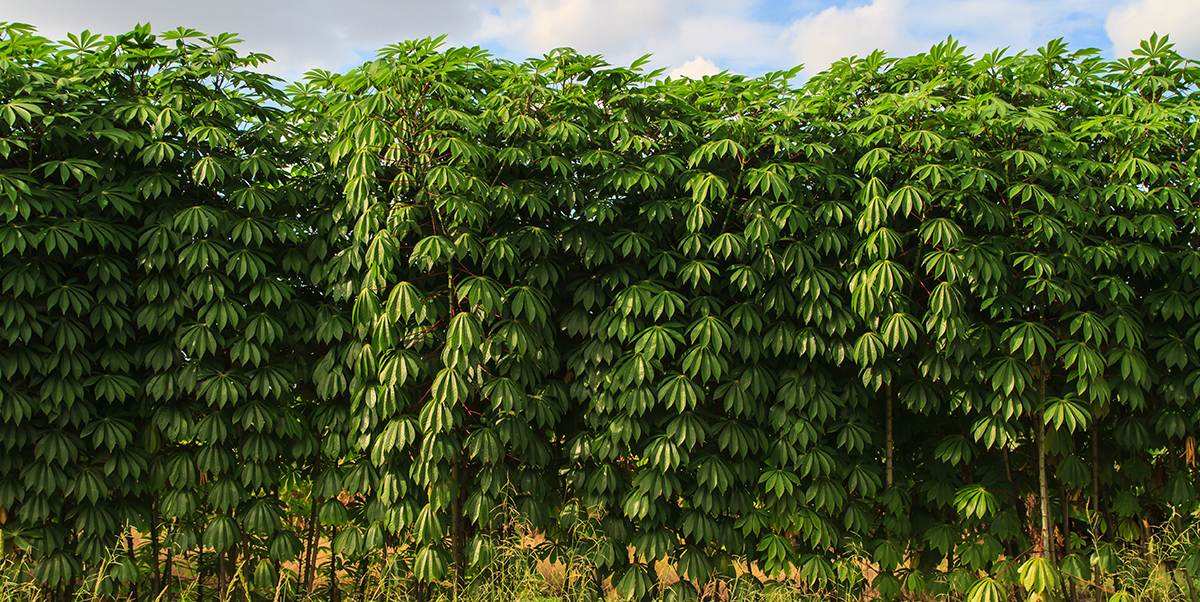
In the garden, cassava is hard to mistake. It grows as an upright woody shrub, typically reaching 2 to 5 meters tall in cultivation, though under optimal conditions some plants push toward 6 meters.[8][9] The stems are woody at the base, more herbaceous toward the tips, and prominently scarred where old leaves have dropped.[10] Cut into a stem and you'll see milky latex bleed from the wound, a classic Euphorbiaceae trait that tells you something important about the plant's chemistry before you've even dug a root.[9]
The leaves are showstoppers: palmate, deeply lobed into typically 5 to 7 segments, attached to long petioles that can reach 50 cm.[8][11] Petiole color is one of the things I watch closely in my own plantings; a shift toward deep reddish-purple can signal nutrient stress or, depending on the variety, simply reflect the genetic tendency toward anthocyanin pigmentation that some cultivars carry as a natural pest deterrent.[12] I've had the same variety produce dramatically different leaf sizes and plant heights across plots with different soil fertility and moisture levels, which the research on phenotypic plasticity confirms is entirely normal.[13]
Below ground is where the real story lives. A fibrous adventitious root system supports some roots that swell into starchy storage tubers, typically 30 to 100 cm long and 5 to 15 cm in diameter.[14][9] The flowers are modest by comparison, small and inconspicuous on axillary panicles, with male and female flowers carried on the same plant.[15] Most growers never think much about the flowers; it's those deep, starchy roots that command attention.
Traditional and Cultural Uses of Cassava
Long before European contact, cassava sat at the center of indigenous life across South America and the Caribbean. The Taíno used it to make casabe flatbread, flour, and fermented beverages sturdy enough to provision ocean voyages.[16] For the Tupi-Guarani of Amazonia, the plant carried profound spiritual weight: origin myths describe manioc emerging from the buried body of a young girl, a story that ties the crop directly to fertility, life, and ancestral memory.[17] The botanical name Manihot, formally assigned by Carl Linnaeus in his 1753 Species Plantarum, is itself derived from the Tupi-Guarani words "mani oca," a linguistic thread connecting modern taxonomy back to the people who first cultivated it.[18][19]
Indigenous communities developed sophisticated multi-step processing techniques to detoxify a crop containing cyanogenic glycosides capable of releasing hydrocyanic acid. Grating, soaking, fermenting, boiling: these weren't arbitrary kitchen habits but carefully refined technologies for making a toxic plant safe to eat.[20] I always approach processing with that same seriousness; the stakes are real, and the traditional knowledge deserves full respect rather than shortcuts. Portuguese traders carried cassava to Africa around 1558 via Brazil, and from there colonial networks moved it across Asia over the following centuries.[21] In West Africa it wove itself into Yoruba and Igbo harvest ceremonies and initiation rituals, becoming as culturally embedded there as it had been in its homeland.[22]
Fun Facts About Cassava
Global cassava production reached 304 million metric tonnes in 2022, supporting food security for hundreds of millions of people across the tropics.[23][24] Every time I consider that number I think about the plant in my own garden: a single shrub, a modest footprint, roots you can eat within a year of planting. That one Amazonian domestication event, scaled across continents and millennia, feeding that many people. It's a lot to take in. What made that scale possible is the same deep-rooting architecture and leaf adaptations that let cassava survive and produce in marginal soils where most other crops simply give up. Resilience, built into the plant from the ground up, quite literally. The processing requirements that come with that resilience are non-negotiable, something I'll return to throughout this guide.
Cassava Varieties and Where to Source Them
Sweet vs. Bitter Cassava: The Most Important Distinction
Before you pick a cultivar, you need to understand the one trait that overrides everything else: cyanogenic glucoside content. Sweet cassava varieties carry low enough toxicity to be safe to eat after simple cooking, while heavily cyanogenic bitter types require grating, fermenting, or drying to detoxify.[15][25] In Africa, bitter types dominate industrial flour production because high-volume processing handles the cyanide problem at scale. In the Americas and Asia, sweet manioc varieties are generally what home growers and fresh markets want. I grow both, and I'll tell you from experience that young plants of each look nearly identical in the ground. I now label every single cutting the moment I take it, because losing track of which is which is not a paperwork inconvenience; it's a food safety issue.
Root flesh color is a secondary but nutritionally meaningful trait layered on top of that sweet-versus-bitter divide. White-fleshed roots are common across most sweet varieties, but the yellow cassava plant types bred for higher beta-carotene content are genuinely worth seeking out if nutrition is a priority.[26] I've grown a yellow-fleshed clone alongside a standard white supermarket variety, and the difference at the table is noticeable: slightly richer, almost buttery, with a texture that holds together better when boiled. The provitamin A improvement is the breeding goal, but better eating quality comes along with it.
Notable Improved Cultivars and Breeding Trends
CIAT (focused on Latin America) and IITA (African adaptations) launched formal cassava breeding programs in the mid-20th century and have since delivered 20 to 50 percent yield gains over traditional landraces.[27][28] The flagship cultivars from that work are worth knowing. TMS 30572 from IITA is high-yielding (30 to 40 t/ha under good management), resistant to cassava mosaic disease, and widely adapted across West Africa. TME 14 is a disease-resistant sweet type. NR 8083 from CIAT was bred specifically for Latin American drought conditions. UF-IFAS in Florida has released selections tuned for subtropical performance, and those are the ones I pay attention to most closely.[29][24][30]
Reliable cultivation of Manihot esculenta in the United States is essentially limited to USDA zones 8b through 11, with zones 9 through 11 being where it really performs.[31][32] In my zone 9B garden, the UF-IFAS selections I've trialed mature several weeks earlier than the standard West African types, which matters a lot when you're trying to get a harvest in before the first light frost. For anyone gardening on the cooler edge of cassava's range, early maturity is the trait to prioritize. Current breeding has moved into genomic selection and marker-assisted approaches to accelerate development of climate-smart, low-cyanide, mosaic-resistant varieties, so the cultivar options available to home growers will keep improving.[28][29]
Sourcing Cassava Plants and Cuttings in the United States
Cassava is almost always propagated from stem cuttings rather than seed, and that's the right approach for home growers too. Clonal material guarantees you're getting the sweet or low-cyanide trait you actually want, and it establishes faster. Specialty tropical nurseries and online suppliers typically charge $5 to $50 for live plants or unrooted cuttings; seeds, when available at all from heirloom suppliers, run $20 to $100 per packet and don't preserve the parent plant's traits reliably.[33][34][35] I source my cuttings from established Florida growers rather than seeds, specifically because I need that sweet-type guarantee for safe home use.
Don't expect to find manihot esculenta at a mainstream garden center. Your options are specialty tropical nurseries, online suppliers, and occasionally university programs like UF-IFAS. If you're bringing in material from outside the country, be prepared for real regulatory steps: USDA APHIS requires phytosanitary certificates and import permits for live cassava plants and cuttings under 7 CFR Part 319, because of the genuine disease and pest risks the plant can carry.[36][37][38] I complete that paperwork whenever I'm acquiring new germplasm and only buy from suppliers who take phytosanitary compliance seriously. It's a bit of extra effort upfront, but once you have the right clone established, cassava is one of the most productive plants you can grow in a subtropical food forest.
Cassava Propagation and Planting Guide (Manihot esculenta)
If you've read through the varieties section, you already know that cassava's useful traits, whether that's low cyanide content, disease resistance, or reliable yield, don't reliably pass through seed. That's the whole reason vegetative propagation dominates this crop, from subsistence plots in West Africa to food forests in Florida. Stem cuttings are how cassava is grown, full stop.
Preferred Propagation Methods: Stem Cuttings vs. Seeds
Cassava is propagated almost exclusively from stem cuttings in both commercial agriculture and home gardens because seeds produce genetically variable offspring and lose viability quickly.[39][40][41] The ideal cutting is 20 to 30 cm long with 3 to 5 nodes, taken from mature, disease-free stems that are 8 to 18 months old, and under optimal conditions you can expect 70 to 90 percent rooting success.[15][29] I select only stems that snap cleanly when bent. If it bends without breaking, it's too young and watery; if the latex at the cut end is milky and the nodes are prominent and evenly spaced, you're holding good planting material. Rooting happens quickly in warm, humid conditions, with optimal temperatures between 25 and 30°C and relative humidity of 70 to 90 percent.[15] I've had cuttings show root nubs in as little as seven days in a humid subtropical summer.
I have never started cassava from seed in a garden setting, and I don't plan to. Seeds exhibit polyembryony (both nucellar and zygotic embryos are present), are recalcitrant and desiccation-sensitive, and germinate at only 20 to 50 percent even under decent conditions.[42][43] Even if you get germination, the genetic variability defeats the whole purpose of cloning a high-yielding or low-cyanide mother plant. Seeds can be stored for 6 to 18 months at 15 to 20°C and 80 to 90 percent humidity before viability drops off sharply.[44] For long-term conservation of genetic resources, researchers rely on in vitro culture, cryopreservation of embryonic axes, or field genebanks rather than seed banks.[45][46] Tissue culture does play a role in producing certified disease-free planting material and multiplying elite clones; grafting is used occasionally in breeding for disease resistance with success rates of 50 to 80 percent.[47] For most growers, though, those elite clones eventually reach you as cuttings from a nursery or a trusted grower's established stock.
Soil and Site Requirements for Cassava
Here's the thing about cassava's reputation as a "poor soil crop": it will survive on infertile sandy ground, yes, but it absolutely cannot tolerate waterlogged soil. The roots need depth, ideally more than 100 cm of freely draining, light- to medium-textured soil, with 60 cm as a bare minimum, and waterlogging can cut yields by up to 50 percent while causing root rot, chlorosis, and wilting.[10][48] Early in my food forest career I planted a small stand in a low corner of a garden bed that collected runoff during summer storms. The plants wilted despite plenty of rainfall and never recovered properly. Raised beds in humid subtropical climates aren't optional; they're the difference between a productive stand and a frustrating one.
Cassava's ideal pH sits between 5.5 and 6.5, with a wider tolerance of 4.5 to 7.5; below 5.0 you risk aluminum toxicity, and above 7.5 nutrient availability declines noticeably.[15] The plant tolerates soils with as little as 1 to 3 percent organic matter, which is why it performs on degraded land where other staples struggle, but modest organic matter genuinely helps with nutrient retention without pushing the plant toward excessive leaf production at the expense of tubers. If you're working with heavy clay or compacted soil with bulk density above 1.6 g/cm³, amending with perlite, coarse sand, or pumice and adding organic matter before planting is worth the effort; container mixes work well at roughly 50 to 60 percent potting soil to 40 to 50 percent perlite or sand.[49] Cassava is a full-sun plant, requiring 6 to 8 hours of direct light daily, and needs 1,000 to 1,500 mm of rainfall or equivalent irrigation; shade can reduce yields by up to 50 percent.[50] In the United States, it's restricted to frost-free USDA zones 9 through 11, performing best in zones 10 and 11 at elevations below 1,000 m.[51]
Planting Technique, Spacing, and Timeline
Mature cassava plants reach 1.5 to 3 meters tall, occasionally pushing to 4.5 meters, with a canopy spread of 1 to 2 meters.[52] Understanding that scale before you plant is what determines whether your companions, sweet potato, leguminous groundcovers, or low herbs, actually get the light they need. The standard spacing is 80 to 100 cm between plants within a row and 1 to 1.5 meters between rows, which works out to roughly 10,000 plants per hectare.[52][53] I've experimented with both 1-meter and 1.5-meter grids in food forest guilds, and the wider spacing consistently produced better tuber size and made interplanting much more practical. In humid summer climates, wider rows also improve airflow, which I've found reduces disease pressure noticeably.
Plant cuttings vertically, horizontally, or at a 30 to 45 degree angle, burying 5 to 10 cm of the stem in moist soil after the last frost, typically between March and May in warm zones.[54] Choose stems from healthy 6 to 8 month old plants and treat cut ends with a fungicide or wood ash to reduce disease entry points; I source only from my own healthy stock or trusted nurseries specifically to avoid introducing cassava mosaic virus through contaminated material. Sweet and bitter varieties follow the same spacing and planting protocol, so variety choice doesn't change the basic setup.[55] Get the cuttings in the ground with warm soil temperatures and consistent moisture, and you can reasonably expect roots within a week to two weeks and visible shoot growth shortly after.
Cassava Care Guide: Water, Nutrients, Sunlight, and Seasonal Management
Cassava has a reputation as a low-maintenance crop, and that reputation is mostly earned -- but it comes with a catch. The plant's remarkable resilience kicks in only after it's established, and how you manage the first three months sets the tone for everything that follows. Get those basics right and cassava will largely take care of itself. Skip them, and you'll be chasing problems all season.
Water Requirements and Drought Tolerance
Cassava needs 500-1500 mm of rainfall or equivalent irrigation annually, but the distribution matters as much as the total.[50][56] During establishment, aim for 1-2 inches per week, applied by drip or furrow to keep moisture consistent without saturating the root zone.[15] Once the plant hits the three-month mark, it can survive months of drought without irrigation, though prolonged stress will shrink your tuber yield.[57] In my Central Florida garden, the summer rainy season usually takes over right around that transition point, which is convenient timing. Spring dry spells are where I stay alert and keep a hand on the soil.
The visual symptoms are worth learning because they'll tell you what's going wrong before yield suffers. Overwatering or waterlogged soil shows up as yellowing leaves, wilting despite wet soil, and eventually stem softening from oxygen deprivation at the roots.[58] Underwatering looks different: curling leaves, browning edges, premature leaf drop, and eventually cracked tubers.[59] A 5-10 cm layer of organic mulch does a lot of work here, conserving soil moisture, moderating temperature, and reducing how often you need to intervene.[15] Cassava prefers a soil pH of 5.5-6.5, and if you're irrigating with municipal or well water, keep an eye on salinity; yield starts declining when soil EC climbs above 4-6 dS/m.[50]
Feeding and Nutrient Management
Cassava is a genuinely heavy feeder, and potassium is where it spends most of its nutrient budget, with moderate demands for nitrogen and phosphorus alongside.[60] The split-application approach is the most reliable method I've found: put roughly half your fertilizer in at planting, focusing phosphorus there to support early root development, then apply the remainder around months two to three when vegetative growth is hitting its stride.[15] Too much nitrogen early on is the classic first-year mistake. I did it myself and ended up with gorgeous, lush canopy and disappointing tubers. The plant channeled everything into leaves instead of storage roots.
I check older leaves first before reaching for any fertilizer bag. Yellowing on the lower canopy usually means nitrogen; purplish leaves and stunted roots suggest phosphorus; marginal leaf scorch or necrosis points to potassium deficiency.[61] I've seen zinc deficiency show up as mottled, rosette-forming growth in one bed but not the adjacent one, even ten feet away. A $15 soil test every couple of years has become my most reliable tool for consistent cassava yields. Organic amendments are worth serious consideration: 10-20 tons per hectare of compost or well-rotted manure can reduce synthetic fertilizer needs by 30-50% while increasing yields 25-40%.[62]
Sunlight and Heat Tolerance
Full sun is non-negotiable for serious tuber production. Cassava wants 6-8 or more hours of direct light daily, and insufficient sun directly limits how much starch the plant can accumulate below ground.[15] The only exception I make is for fresh transplants during Florida's brutal July heat, where I'll drape 30-50% shade cloth over young plants for the first few weeks to prevent photo-inhibition.[63] After that, the shade cloth comes off.
Optimal daytime temperatures run 25-30°C, and cassava handles short spikes to 35-40°C reasonably well.[50] Sustained heat above 35°C for ten days or more, though, can cut tuber yield by 20-50%.[29] The early warning signs look a lot like what I see in my okra and sweet potatoes during peak summer heat waves: leaves curling upward, wilting midday even with adequate soil moisture, some chlorosis and scorching on the margins.[64] When temperatures are consistently severe, mulch, supplemental irrigation when soil moisture drops to around 50% field capacity, and temporary windbreaks are the practical toolkit.[65] If you're choosing varieties for a hot region, TME 419 and TMS 30572 have better heat tolerance profiles than many common clones.[66]
Frost Sensitivity and Cold Protection
This is cassava's hard limit. Temperatures at or below 0°C kill the aerial parts immediately, and while underground roots sometimes survive a light frost and resprout from the base, you cannot count on it.[15] The plant is a reliable perennial only in USDA zones 10-11; in zone 9B, where I garden, it needs either a protected microclimate or to be treated as a warm-season annual.[67][68] When forecasts drop toward freezing, I cover plants with old bedsheets and pile a thick mulch layer over the root zone. That combination has saved the roots more than once while the tops died back and regrew in spring. No variety is truly frost-hardy; this is a tropical plant and should be treated as one.
Pruning, Maintenance, and Seasonal Rhythm
I top my cassava plants religiously at around three months, or when they hit about 1.5-2 meters. Removing the apical bud forces three to five lateral branches and can increase yields by 20-30%.[10] Before I started doing this consistently, I'd end up with tall, spindly plants that shaded themselves out and produced fewer, smaller tubers. Keeping the lower stems clean to about 50-80 cm by removing basal side shoots and older leaves also improves airflow around the canopy. In a small food forest garden, that height control alone makes cassava much easier to manage alongside companion plantings. Mulch at 4-6 inches takes care of weeds and moisture retention; staking is almost never necessary unless you're on a genuinely windy site.[15]
The full growth cycle runs 8-18 months: sprouting in the first month, rapid vegetative growth through month four, tuber initiation from months four to eight, then bulking and maturation from eight months onward.[15][63] Flowering starts around months three to four and can continue for much of the season.[69] There's no true dormancy; the plant slows under drought stress but doesn't shut down the way a temperate perennial would. In frost-free subtropical gardens, this flexible phenology is an advantage, and established plants can even be ratooned for two to three cycles from the same stems before you need fresh cuttings.[70]
Cassava Harvesting Guide and Yield Expectations
When to Harvest Cassava: Timing and Maturity Cues
Most cassava plants reach harvest maturity somewhere between 8 and 12 months after planting, though sweet varieties can be ready closer to 6-10 months and bitter types often need the full 10-12 months or more before cyanogenic glycoside levels have declined enough to make processing more manageable.[29][71] Cyanogenic compounds are highest in young plants and drop markedly with age, so rushing a bitter variety is a mistake on two counts: smaller roots and a heavier processing burden.[72][10] One thing I genuinely rely on after several seasons is the feel of the root itself before I even pull it: mature roots are firm, roughly 25-40 cm long, with that distinctive corky, brownish skin that resists a thumbnail press rather than denting. The plant tells you too, with the lower canopy going 70-80% yellow and the stem bases taking on a reddish or purplish cast.[73][51] Some modern improved varieties show subtler senescence signals, so don't rely on leaf drop alone. If you're not sure, roots can safely stay in the ground up to 24 months, which gives you a genuine harvest window rather than a hard deadline.[29][74] Time your dig to dry weather whenever you can; in humid conditions I've watched a harvest spoil faster than I could process it, and the 20-30% post-harvest loss figure I'd read suddenly felt personal.[15]
How to Harvest and Handle Cassava Roots
Work in dry weather with a fork or hoe to loosen the soil around the base, grip the stem low, and pull the whole plant up carefully before cutting the roots free.[75] Skin damage is the enemy here. Once you wound a root, the clock toward deterioration accelerates. Wash off soil and debris gently, keeping the periderm as intact as possible, then move the roots straight into curing: a shaded, well-ventilated spot at around 25-30°C and 80-95% relative humidity for 2-4 days.[76][77] My first season I skipped curing entirely and lost a significant portion of the harvest to rapid shriveling within a week. That lesson stuck. If you need longer storage, 4-10°C at 85-95% relative humidity can extend shelf life to 2-4 weeks, but don't drop below 4°C or you'll get chilling injury.[78][79] For anything beyond a few weeks, plan to dry, ferment, or otherwise process promptly.
Cassava Yield, Flavor, and Texture After Harvest
Under good conditions, expect roughly 5-15 kg of fresh roots per plant, with elite varieties pushing 20-25 kg; global farm averages tend to land lower, around 2-10 kg, depending heavily on variety, soil, and timing.[80][15] I grow both sweet and bitter types, and the flavor difference is substantial enough that they almost feel like separate crops. Sweet varieties (below roughly 50 mg/kg cyanogenic glycosides) are mild and starchy with a gentle sweetness, forgiving for beginners and ready for simple cooking with minimal processing.[81] Bitter varieties carry pronounced bitterness that demands thorough grating, fermenting, and drying before they're safe, but that processing is exactly where the complex, nutty, tangy character of gari and similar products comes from.[81] Fresh from the ground, both types smell faintly earthy and nutty with almost no complexity. Boiling brings out a creamy, floury sweetness; frying builds a genuinely satisfying crunch; baking yields something firmer with a slightly fibrous texture.[82][83] The fermented products carry a sour, tangy edge that makes them genuinely irreplaceable in traditional dishes. Soil fertility and climate will also shift bitterness subtly from season to season, something I've noticed over multiple harvests from the same plants in different years.
Cassava Preparation, Uses, and Safety Considerations
Understanding Cyanide Content and Safe Processing Methods
Every conversation about cooking with cassava has to start here. The raw plant contains cyanogenic glucosides, primarily linamarin and lotaustralin, which can release hydrogen cyanide at concentrations ranging from 10 to 500 mg HCN per kilogram of fresh root depending on variety and growing conditions.[84][85][86] Sweet varieties sit at the low end of that range and can tolerate shorter preparation times, while bitter varieties demand extensive processing before they're safe to eat.[15][85] I don't take shortcuts on bitter varieties. The research and traditional practice both show that proper fermentation or extended boiling is essential to stay well below the WHO threshold of 10 ppm, the level at which poisoning and chronic conditions like konzo become a real risk.[87]
The good news is that effective methods have existed for centuries. Boiling for 20 to 60 minutes can reduce linamarin content by over 90 percent; fermentation for 2 to 5 days reduces cyanide by 90 to 97 percent; and combinations of grating, soaking, and drying compound those reductions further.[84][88][89] Traditional African and Asian communities developed grating, fermenting, and drying precisely because microbial activity during fermentation breaks down cyanogens, producing safe staples like gari and fufu in the process.[15][84] I process my Florida-grown roots the same day I dig them, partly because cassava is perishable (best stored at 4 to 10°C for only 2 to 4 weeks[60]), but also because starting the detoxification process immediately matters.
One practical note on identification: early in my career I nearly confused young cassava seedlings with castor bean in a mixed bed. Both have deeply lobed palmate leaves, but castor bean contains ricin and is far more dangerous even to touch.[90][91] Jatropha curcas is another look-alike worth knowing.[92] Get your identification solid before you harvest anything.
Nutritional Value of Cassava Roots and Leaves
The roots are primarily an energy food: around 160 kcal, 38g of carbohydrates, 1.4g protein, 1.8g fiber, and 20 to 27mg vitamin C per 100g raw.[93][60] The leaves, though, are where the nutritional picture gets genuinely interesting: roughly 7.3g of protein and up to 500mg of vitamin C per 100g raw, at only 91 kcal.[60][94] Young leaves and tender stems are harvestable from around 3 to 6 months after planting, while the starchy storage roots come at 8 to 18 months.[95] The catch with leaves is that they require a full 15 to 30 minutes of boiling and should be eaten in moderation; I think of it similarly to preparing other high-cyanide greens where a long, rolling boil is non-negotiable before anything goes on the plate.[60][41]
Traditional and Modern Culinary Uses
Once properly processed, cassava becomes one of the most culinarily flexible staples I know. The flavor profile shifts with preparation: sweet varieties taste mildly starchy when boiled, reminiscent of potato, while correctly processed bitter cassava develops a neutral, slightly nutty earthiness; fried, it goes satisfyingly crispy.[15] Boiled cassava fries are a revelation if you've only ever had potato fries, and a cassava fries recipe is genuinely simple once you've detoxified the root: peel, boil until just tender, then fry or roast.
African culinary traditions use the whole plant. Leaf dishes like Congolese saka-saka and Ghanaian kontomire stew simmer thoroughly boiled leaves with palm oil, fish, or meat, often served alongside fufu pounded from fermented roots.[41][96] A cassava fufu recipe follows the same detoxification logic that applies to any bitter-variety preparation. In Brazil, cassava flour gets toasted into farofa, a crunchy side made with bacon and onions served with feijoada or grilled meats, and it forms the base of pão de queijo.[97] For gluten-free baking, I prefer cassava flour over most alternatives because its neutral flavor and strong binding properties translate well to brownies, flatbreads, and cookies without the gummy texture some substitutes produce.[98] Recipes with cassava flour have genuinely improved in the last decade as more bakers have figured out its quirks.
Medicinal Preparations from Cassava
Ethnobotanical traditions across the Amazon and sub-Saharan Africa document cassava in treatments for diarrhea, wounds, malaria, and as an antidote for certain poisons, using leaf decoctions, root infusions, and crushed-leaf poultices applied topically.[99][100] I respect this knowledge deeply, but I'd emphasize that any medicinal preparation still requires the same detoxification rigor outlined above. A leaf decoction I'd consider only after confirming a full processing boil; the cyanide chemistry doesn't change because the application is medicinal. For clinical evidence on phytochemicals and specific therapeutic research, that's covered in the health benefits section earlier in this profile.
Non-Food and Industrial Applications
Cassava is the third-largest carbohydrate source in the tropics after rice and maize, with global annual production exceeding 300 million tons and an outsized role in food security across sub-Saharan Africa and Asia.[101][50] Beyond food, cassava starch extracted by peeling, rasping, washing, and drying roots at 50 to 55°C goes into textiles, paper, adhesives, and bioethanol production.[76][102] And for anyone gardening in zones 9 through 11, the ornamental value is real: I've used cassava's bold palmate foliage as a tropical accent in Central Florida landscape beds where I needed height and drama without sacrificing harvest potential.[9] That said, the crop faces serious sustainability pressures from cassava mosaic disease and cassava brown streak disease, which can cause up to 100% yield loss under bad conditions, and bioprospecting of indigenous processing knowledge without fair benefit-sharing remains an unresolved ethical concern.[103] Choosing resistant cultivars and sourcing from ethical suppliers is the least a conscientious grower can do.
Cassava Health Benefits and Medicinal Uses
Cassava feeds more than 800 million people worldwide, and that fact alone tells you something important: this is a plant that works. But the health story of Manihot esculenta begins not with its benefits but with what makes it dangerous, because you genuinely cannot understand the nutritional value of cassava root without first grasping the chemistry that governs every preparation decision.
Cyanogenic Glycosides and the Critical Need for Proper Processing
Every part of cassava contains cyanogenic glycosides, primarily linamarin and lotaustrasin, which release hydrogen cyanide when plant tissue is damaged. The range is enormous depending on variety: sweet types carry less than 50 mg HCN per kilogram of fresh root, while bitter varieties can reach 500 mg/kg, leaves can hit 2,000 mg/kg, and seeds go higher still.[104][105][106] I always confirm variety type before handling any unfamiliar root, because that single data point determines everything about how careful I need to be.
The WHO and FAO set the safe threshold for processed cassava products at no more than 10 mg HCN equivalents per kilogram, with fresh peeled roots acceptable below 50 mg/kg.[107][60] Getting there requires real effort: peeling removes 70-90% of cyanide, but fermentation or soaking for two to five days, combined with sun-drying (which cuts cyanide by 70-85%) or boiling for at least 30 minutes (which reduces it by 80-97%), is what brings bitter varieties into safe territory.[50] Having studied those FAO and WHO guidelines closely, I don't shortcut the three-day fermentation step for bitter cassava; the evidence on konzo makes that non-negotiable.
Konzo is an irreversible spastic paralysis caused by chronic cyanide exposure, and it disproportionately affects children and women in drought-affected communities where cassava is processed hurriedly and dietary protein is insufficient to support detoxification.[108][109] Acute poisoning moves faster: dizziness, convulsions, respiratory failure within hours.[110] Thiocyanates produced during incomplete detoxification also interfere with iodine uptake, creating thyroid risk in people already iodine-deficient. Extra caution is warranted during pregnancy and for anyone with thyroid disorders.[111][112] When I plan a kitchen garden that includes cassava, I always think about the broader diet: companion crops that supply sulfur-containing amino acids, legumes nearby, leafy greens in the guild. Cassava thrives in a system, and so does the body eating it.
Nutritional Profile of Cassava Roots and Leaves
Once properly detoxified, cassava root becomes a genuinely useful food. A 100-gram serving of boiled root delivers around 160 calories, 38 grams of carbohydrate, 271 mg of potassium, modest vitamin C, and small amounts of B vitamins, calcium, and iron.[93] The protein content is low at about 1.4 grams per 100 grams, which is one reason cassava-dominant diets need complementary protein sources. Think of it the way you'd think of sweet potato: high-energy, mineral-present, but not a complete meal on its own.
The leaves are a different story. Cooked cassava leaves can contain up to 25% protein on a dry-weight basis, along with meaningful vitamins A and C.[15] Processing does reduce water-soluble vitamins like C and some B vitamins through heat and leaching, and it's worth knowing that fermentation and sun-drying improve mineral bioavailability by reducing phytates even while they lower cyanide.[113] In sub-Saharan Africa, where per capita consumption can reach 80-100 kg per year, cassava supplies a substantial share of daily calories for entire populations.[114] The leaves, eaten the way you'd eat cooked spinach or collards, add the protein dimension that makes this a more complete crop system.
Phytochemical Composition: From Defensive Toxins to Antioxidant Compounds
The cyanogenic glycosides are cassava's primary chemical defense, and their concentrations shift with environmental stress: drought and high-nitrogen soils push levels higher, while altitude tends to lower them.[104][115] I've noticed that plants under mild water stress do seem to produce more pungent, darker leaves, which aligns with the research showing environment-driven shifts in secondary metabolite production.
Beyond the cyanogens, though, the leaves and bark carry a rich secondary chemistry:
- flavonoids including quercetin and kaempferol derivatives
- phenolic acids like chlorogenic and coumaric acid
- tannins, terpenoids, saponins, and coumarins
Medicinal Research and Traditional Uses
Across Africa, South America, and Asia, cassava preparations have long been used as diuretics, expectorants, antispasmodics, and wound poultices, and as treatments for hypertension, diabetes, and digestive complaints.[117][14] Preclinical research has since given those traditions some biochemical grounding: leaf extracts inhibit TNF-α and IL-6, show antimicrobial activity against E. coli and S. aureus, and demonstrate wound-healing effects through enhanced collagen synthesis and epithelialization in animal models.[118][119] Analgesic effects comparable to aspirin have appeared in rodent studies as well.
The antidiabetic research is worth watching. Leaf extracts reduce blood glucose and improve insulin sensitivity via alpha-glucosidase inhibition in diabetic rat models, and at least one randomized trial found that resistant starch from processed roots may support glycemic control in type 2 diabetes patients.[120][121] Linamarin itself has shown apoptosis-inducing activity in tumor cell studies, which is a reminder that the same compound responsible for acute toxicity may eventually find a controlled therapeutic role.[122]
All of that said, the clinical picture remains thin. Large-scale human trials are limited, and the evidence base is overwhelmingly preclinical.[123] Any medicinal use of cassava leaves carries the same cyanogen load as culinary use; the same detoxification rigor that applies in the kitchen applies here. When properly processed according to FAO and WHO standards, cassava is safely eaten by hundreds of millions every day. The manioc health benefits outlined by traditional practitioners and now partially confirmed in the lab are real and worth further investigation. But they sit inside the same frame as everything else with this plant: preparation is the foundation everything else rests on.
Cassava Pests and Diseases
Cassava has moderate overall pest resistance, which sounds reassuring until you learn it still contends with roughly 150 insect species worldwide.[124][125] Pests and diseases together account for more than 20% of global yield losses annually.[126] The good news is that smart variety selection and ecosystem thinking dramatically change the picture on the ground.
Major Insect Pests and Cassava's Natural Defenses
Three insects do the most economic damage. Cassava green mite (Mononychellus tanajoa) hammers photosynthesis through leaf scarring, cassava mealybug (Phenacoccus manihoti) can distort growth badly enough to cause yield losses up to 80%, and whitefly species (Bemisia tabaci and Aleurotrachelus socialis) cause direct feeding damage and, more critically, vector both cassava mosaic disease and cassava brown streak disease.[127][128][129] Green mite pressure tends to be worst in Africa, while mealybug is more prominent across tropical America and Asia.[128][50] Secondary pests including stem borers (Alcidodes leucogrammus) and armyworms (Spodoptera litura) round out the picture, causing wilting, dead hearts, and defoliation in younger growth.[130][127]
What I find genuinely fascinating about this plant is how it fights back. Part of why cassava survives in tough tropical systems is its layered defense strategy. Cyanogenic glucosides, primarily linamarin, release hydrogen cyanide when tissue is damaged (the same compounds discussed in the health benefits section). Physical barriers include glandular trichomes and a latex sap containing proteolytic enzymes that are rough on soft-bodied insects. Then there are the ecological defenses: extrafloral nectaries that recruit predatory ants, and herbivore-induced volatile compounds that signal parasitoid wasps to come looking for a meal.[131][132][133][134][135] In my experience growing several TMS lines, whitefly pressure drops noticeably when you allow those nectaries to do their job by avoiding broad-spectrum sprays that wipe out the predatory insects the plant is actively recruiting.
IITA's Tropical Manihot Series has done impressive work capturing and amplifying these traits through breeding. TMS 30572 shows moderate resistance to green mite, TMS 91/0113 and MB52 show high resistance to mealybug through antibiosis and antixenosis, and TMS 92B/00061 and NR 8082 carry whitefly resistance linked to thickened leaves and trichomes. The TMS program now includes over 50 varieties with enhanced multi-pest resistance.[136][137][138][29] For IPM, I've found that releasing or conserving Anagyrus lopezi parasitoids for mealybug and encouraging predatory mites for green mite is more reliable than calendar sprays. Cultural practices come first: certified disease-free cuttings, crop rotation, sanitation. When chemical intervention becomes necessary, neem-based products applied only at economic thresholds are the sensible entry point. Registered options for mites include abamectin, though cassava's minor-crop status in the US limits the EPA-registered product list considerably.[128][139][140][141]
Key Diseases and Cultivar Resistance
Disease resistance in cassava is cultivar-dependent, continuously improved by programs at IITA, CIAT, and USDA-ARS, and rated on a 1-9 susceptibility scale where 1 means immune or highly resistant.[29][142] Starting from the right variety is the single highest-leverage decision a grower can make.
Cassava mosaic disease (CMD) is the worst of them. Transmitted by whiteflies, it can kill plants within one to two years and cause up to 100% yield loss in susceptible varieties in endemic African regions. TMS 30572 is immune; other improved lines carry polygenic resistance that holds well in the field.[29][143][55] I think of it the way I think about aphid-vectored mosaic viruses in my vegetable garden: once pressure is high and vectors are abundant, even a brief window of susceptibility can mean losing the planting entirely. Cassava brown streak disease (CBSD), also whitefly-vectored, is harder to breed around. Truly immune varieties are rare, and it causes 20-70% losses in coastal East Africa. TME 3 and TME 419 offer better tolerance than most available options.[144][145]
Beyond the viral threats, bacterial blight (Xanthomonas axonopodis pv. manihotis) is more manageable; many modern cultivars show high to moderate resistance, though conditions of 25-35°C and humidity above 80% tip the balance toward infection. Fusarium wilt becomes a problem mainly in compacted or wounded root zones, while anthracnose flares in persistently humid conditions. Cercospora leaf spots and Phytophthora root rots round out the disease complex.[146][147][148][127] Acidic soils below pH 5.5 and rainfall patterns at the edges of the 1000-2000 mm range both amplify disease expression, so the site decisions covered earlier in this profile matter here too.[149]
Africa carries the heaviest viral disease burden because of whitefly vector pressure; the Americas see more bacterial and fungal issues instead.[50][150] I always source TMS 30572 or a similarly proven line for new plantings because I've watched susceptible varieties collapse under humid summer pressure faster than you'd believe. Management across all these diseases comes back to the same IPM core: certified clean planting stock, rotation, sanitation, vector control, and region-appropriate variety choice, with copper-based bactericides reserved for bacterial blight when necessary. Genomic tools including CRISPR and multi-disease resistant breeding through IITA, CIAT, and USDA-ARS are pushing toward the next generation of resilient lines, and the trajectory is genuinely encouraging.[126][151][152]
Cassava in Permaculture Design
Cassava occupies a genuinely unusual position in permaculture design: it behaves like a pioneer species with the caloric output of a staple crop, which means it can pull real work during the chaotic early years of a food forest when you need fast biomass, erosion control, and edible yield all at once. Understanding that combination, and its hard climate limits, is what separates a productive cassava guild from a disappointing one.
Climate and Hardiness Zones for Cassava
The non-negotiable reality is that cassava is frost-tender to the point of intolerance. Even a cold snap that stays above freezing but drops below 10°C will stunt growth, and temperatures between 5-10°C cause visible cold stress.[153][51][9] Before you read another word about guild design, ask yourself whether your site clears that bar. It's reliably perennial in USDA zones 9-11, and marginally possible in 8b with serious protection.[8][67]
Where cassava does fit the climate, it thrives at 25-30°C, tolerates a range of 18-35°C, and starts losing root quality and starch content above 35°C.[154][15] Rainfall of 1000-1500 mm annually is ideal, but once that deep taproot establishes, the plant can push through on as little as 500 mm; what it cannot handle is waterlogged soil, so drainage trumps fertility in site selection.[58][155] Optimal humidity sits around 70-80%, and while the plant grows from sea level to 2000 m, productivity starts dropping above 1500 m as temperatures cool.[8]
In zone 9b, where I garden, I've found that siting cassava against a south-facing wall or fence and mulching heavily at the root zone through winter makes the difference between a plant that dies back to nothing and one that sulks briefly and keeps growing. Raised beds help too, as does choosing an early-maturing variety you can treat as an annual if a hard frost is genuinely on the cards.[51][50] I also pay attention to when morning sun hits the planting -- getting that early warmth on the leaves burns off dew fast and cuts down on the foliar disease pressure that humid nights invite.
Ecosystem Functions and Soil Health Benefits
Cassava's wild roots are in the Cerrado and disturbed forest edges of central Brazil, and that origin shapes how it behaves in designed systems.[156] It's a colonizer: fast-growing, resourceful, and quick to build organic matter. The large palmate leaves break down within 30-60 days of falling,[156][157] which is genuinely rapid -- I'd compare it to comfrey in temperate systems, that satisfying chop-and-drop speed where you can almost watch the soil darken. On slopes, the fibrous lateral roots bind topsoil and reduce erosion while the deep taproot accesses subsoil moisture without competing directly with shallower companions.
Cassava forms arbuscular mycorrhizal associations that improve phosphorus uptake on poor tropical soils, but it does not fix nitrogen.[158][159] That's why pairing it with nitrogen-fixing companions is so central to a good guild design. Intercropping with cowpeas, pigeon peas, peanuts, Gliricidia sepium, or even staples like maize, sweet potato, and banana can increase overall system yields by 20-30% while preventing erosion and building biodiversity.[160] Pigeon pea is my personal favorite pairing here: it feeds the soil, its branching habit simplified my harvest access, and the hedgerow it forms buffers wind while adding leaf litter. Tall grass or legume hedgerows around cassava beds serve the same double function of windbreak and ongoing organic matter input.[160]
The honest design caveat is this: cassava's ecological contributions are strongest during early succession. Run it in the same bed for more than two cycles without rotation or an integrated fertility guild and you'll watch yields drop as soil nutrients and organic carbon decline.[156][161] I've seen it happen, and I now plan a legume companion from the start rather than adding fertility as an afterthought.
Forest Layer Position and Guild Companions
Despite its tropical abundance, cassava is a shrub, not a tree. That distinction matters for design: at 1-5 m with a branching, upright habit and woody jointed stems,[9][162] it belongs in the mid-story but only in full, unshaded sun. Tuck it under a dense canopy and you'll get leggy, unproductive growth and disappointing root development. Its root architecture is deep and distinct enough that it competes minimally with shallow-rooted ground covers, which makes the space below it genuinely useful.
A practical guild sketch I've used successfully is cassava anchoring a mid-story position with pigeon pea on the windward edge, sweet potato carpeting the ground beneath, and banana standing taller at the back. The cassava's mild allelopathic root exudates suppress some weeds around it,[163] so the ground cover layer faces less competition from unwanted plants. The leaves are edible once properly processed to remove cyanogenic glycosides[164] -- preparation details live in a later section, but the design point is that this plant offers yield from multiple layers: root, stem for propagation, and leaf.
Supporting Pollinators in Cassava Systems
Cassava's small greenish-yellow flowers are protogynous: female flowers open first, typically between 6 and 9 am, followed by males.[165] The plant is self-incompatible and depends on cross-pollination from stingless bees, honeybees, flies, thrips, and wasps.[166] In monocultures, natural seed set rarely exceeds 10%, but diverse companion plantings and hedgerows can push that toward 50-70%.[167][168] Optimal pollination conditions mirror the plant's growing optimum: 25-30°C and 70-90% humidity.[167]
I noticed a clear uptick in stingless-bee activity around my cassava once I added Pentas and Bidens pilosa nearby as companion flowers. That's the kind of observation that matters more than seed-set statistics in a home food forest -- the insects that visit cassava for pollen are the same ones working your other crops, so building a no-spray zone around the guild protects the whole system. The practical design moves are simple: plant flowering companions in the hedgerow, keep pesticides out entirely, and let the protogynous timing work in your favor by ensuring pollinators are active in the early morning when female flowers are open.
A Final Thought on the Resilience of Cassava
I'll be honest: cassava humbled me early. I assumed I understood it well enough, pulled a root, tasted it raw out of curiosity, and spent the rest of that afternoon reminding myself that confidence without caution is just another word for careless. It's still the plant I point to when someone asks me what permaculture actually requires of you. Not just enthusiasm. Attention.
Sources 168
- The Domestication of Cassava (Manihot esculenta Crantz) ↩
- Archaeological Evidence for Cassava Domestication in Brazil ↩
- Ancient DNA and Manihot esculenta Domestication ↩
- Early Cultivation of Manihot esculenta in the Xingu Region, Brazil ↩
- The Domestication of Cassava (Manihot esculenta Crantz) ↩
- Kew Science - Plants of the World Online - Manihot esculenta ↩
- Biology of Cassava ↩
- Cassava (Manihot esculenta) - Kew Royal Botanic Gardens ↩
- Manihot esculenta - Missouri Botanical Garden Plant Finder ↩
- Cassava Plant Description - FAO ↩
- Cassava (Manihot esculenta) Leaf Morphology - FAO Description ↩
- Morphological Characterization of Cassava (Manihot esculenta Crantz) Landraces in Nigeria ↩
- Environmental Effects on Cassava Morphology and Yield ↩
- Root System Architecture in Cassava ↩
- Cassava Flower Description - FAO ↩
- Taíno Use of Cassava in Pre-Columbian Caribbean ↩
- Cassava: Its Cultural and Symbolic Importance in the Americas ↩
- Species Plantarum ↩
- Cassava: A Model for Indigenous Crop Domestication ↩
- Cyanogenic Glycosides in Cassava: Toxicity and Processing ↩
- The History of Cassava in Africa ↩
- Cultural Significance of Cassava in Africa and Latin America ↩
- FAOSTAT: Crops and livestock products ↩
- Global Cassava Strategy and Roadmap ↩
- Cassava ↩
- Cassava: Biology, Production, Utilization, and Biotechnology ↩
- Cassava Breeding at CIAT: Past, Present, and Future ↩
- Genomic Selection in Cassava Improvement ↩
- Improved Cassava Varieties ↩
- Cassava Production in Florida ↩
- Growing Cassava in the Home Garden ↩
- Manihot esculenta - Cassava ↩
- FAO Cassava Information: Propagation ↩
- Cassava Cuttings ↩
- Cassava - Manihot esculenta ↩
- Growing Cassava in Florida ↩
- Importation of Fruits and Vegetables ↩
- Cassava (Manihot esculenta) Import Regulations ↩
- FAO AGRITROP Faocrop Manuals: Cassava Production Practices ↩
- Cassava (Manihot esculenta): Crop Profile ↩
- Cassava Production Guidelines ↩
- Polyembryony in Cassava (Manihot esculenta Crantz) ↩
- Recalcitrant Seeds: Biology and Storage ↩
- Longevity of Cassava Seeds Under Different Storage Conditions ↩
- FAO Seed Technology Guidelines ↩
- CIAT Cassava Germplasm Conservation Guidelines ↩
- Tissue Culture of Cassava: Methods and Applications ↩
- Effects of Waterlogging on Cassava Physiology ↩
- Royal Horticultural Society - Wisdom of Plants - Cassava ↩
- FAO Cassava Production Guidelines ↩
- Growing Cassava in Florida ↩
- FAO Cassava Crop Management Overview ↩
- University of Florida IFAS Extension: Cassava Production ↩
- FAO Crop Production Manual: Cassava ↩
- FAO: Cassava Production Guidelines ↩
- Cassava: Production Guidelines - University of Florida IFAS Extension ↩
- CIAT: Cassava Drought Tolerance ↩
- Cassava Crop Management: Water Stress Symptoms ↩
- Water Stress Effects on Cassava ↩
- Cassava Fertilization Guidelines ↩
- Nutrient Deficiencies and Toxicities in Cassava ↩
- Organic Fertilization Effects on Cassava Yield - Journal of Plant Nutrition ↩
- Agronomy of Cassava ↩
- Heat Stress Effects on Cassava (Manihot esculenta Crantz) Physiology and Yield ↩
- Cassava Production Manual ↩
- Screening Cassava Cultivars for Heat Tolerance ↩
- Manihot esculenta - USDA Plants Database ↩
- Cassava Production in Florida - UF/IFAS Extension ↩
- Reproductive Biology of Cassava - CIAT ↩
- Manihot esculenta - Plants of the World Online (Kew Science) ↩
- Agronomy of Cassava ↩
- Cassava Root Yield and Maturity Assessment ↩
- FAO Cassava Production Handbook ↩
- Cassava: Botany, Production and Utilization ↩
- Cassava Harvesting Techniques ↩
- Cassava: Post-harvest Operations ↩
- Handling and Storage of Cassava Roots ↩
- Cassava: Post-harvest Operations ↩
- Postharvest Handling of Cassava ↩
- Cassava: Biology, Production and Utilization ↩
- Cyanogenic Glycosides in Cassava and Their Influence on Taste ↩
- FAO Food and Nutrition Paper 148: Cassava ↩
- Ethnobotanical studies on cassava processing ↩
- FAO Cassava Processing Guidelines ↩
- USDA Plant Fact Sheet: Cassava ↩
- WHO: Cassava Toxicity and Processing ↩
- Cyanide in Cassava and Processing Methods - WHO ↩
- Peer-reviewed Article: Cyanide Removal from Cassava by Boiling and Fermentation ↩
- University of Florida IFAS Extension: Cassava Production and Processing ↩
- Missouri Botanical Garden Plant Finder: Manihot esculenta ↩
- Center for Disease Control (CDC): Ricinus communis Toxicity ↩
- U.S. Environmental Protection Agency (EPA): Jatropha curcas Information ↩
- USDA FoodData Central - Cassava, raw ↩
- PROTA - Manihot esculenta ↩
- FAO Cassava Production Handbook ↩
- Ghanaian Cassava Leaf Recipes ↩
- Farofa: Brazilian Cassava Dish Guide ↩
- Gluten-Free Baking with Cassava Flour ↩
- Ethnobotany of Cassava in the Amazon - Journal of Ethnobiology ↩
- Ethnobotanical Uses of Manihot esculenta ↩
- Cassava - FAO ↩
- Processing of Cassava for Food ↩
- Cassava Diseases and Climate Change Impacts ↩
- Cyanogenic Glycosides in Cassava (Manihot esculenta Crantz) ↩
- Cyanogenic Glycosides in Cassava: Biosynthesis and Metabolism ↩
- WHO Food Additives Series: 30 - Cyanogenic glycosides ↩
- WHO Guidelines for Cassava Flour Cyanide Content ↩
- Konzo: From Poverty, Cassava, and Cyanogen Intake to Toxin Effects in the Brain ↩
- National Center for Biotechnology Information - Konzo: a distinct neurological disease associated with food cyanotoxicity ↩
- WHO - Cyanogenic Glycosides ↩
- WHO: Cyanide from cassava ↩
- Cassava: Cyanogenic glycosides and health implications ↩
- Cassava: Nutritional Composition and Processing Technology ↩
- FAO Statistical Yearbook: Cassava Consumption Data ↩
- Environmental Factors Affecting Cyanogenic Glucosides in Cassava ↩
- Phytochemical Composition of Cassava (Manihot esculenta Crantz) Leaves and Roots ↩
- Ethnopharmacology of Manihot esculenta Crantz (Euphorbiaceae) - A medicinal review ↩
- Antioxidant and anti-inflammatory properties of cassava leaves ↩
- Wound healing activity of Manihot esculenta leaf extract in rats ↩
- Hypoglycemic and Hypolipidemic Effects of Ethanol Extract of Manihot esculenta Leaves in Alloxan-Induced Diabetic Rats ↩
- Resistant Starch from Cassava in Type 2 Diabetes Management: A Randomized Trial ↩
- Cyanogenic Glycosides and Anticancer Activity of Linamarin ↩
- Pharmacological Properties of Manihot esculenta: A Review ↩
- FAO Cassava Fact Sheet ↩
- CGIAR Research Program on Roots, Tubers and Bananas - Cassava ↩
- Integrated Management of Cassava Pests and Diseases ↩
- Cassava Pests and Diseases - USDA ARS ↩
- Integrated Pest Management for Cassava ↩
- Cassava Green Mite in Florida ↩
- Stem Borer Control in Cassava - FAO IPM Manual ↩
- Cyanogenesis in Cassava (Manihot esculenta Crantz) and Its Role in Plant Defense ↩
- Trichomes and Physical Defense in Manihot esculenta ↩
- Defensive Role of Latex in Cassava Against Herbivores ↩
- Extrafloral Nectaries in Cassava: Attraction of Ants for Biological Control of Pests ↩
- Herbivore-Induced Plant Volatiles in Cassava: Indirect Defense Mechanisms ↩
- Resistance of Cassava Genotypes to the Green Mite Mononychellus tanajoa ↩
- Breeding for Resistance to Cassava Mealybug in Manihot esculenta ↩
- Whitefly Resistance in Cassava: Screening and Selection ↩
- FAO: Integrated Production and Pest Management in Africa - Cassava ↩
- IITA: Cassava Pest Management Guide ↩
- EPA Pesticide Registration for Minor Crops ↩
- Cassava Production in Florida ↩
- Peer-Reviewed Article: Palukaitis and Parnell (2019) on Cassava Mosaic Disease Resistance ↩
- Breeding for Resistance to Cassava Brown Streak Disease ↩
- Plant Pathology Journal: Susceptibility to CBSD in Cassava ↩
- Resistance to Bacterial Blight in Cassava ↩
- Fusarium Diseases of Cassava ↩
- Anthracnose in Cassava: Management and Resistance ↩
- International Institute of Tropical Agriculture (IITA) Cassava Research ↩
- Cassava Diseases - International Institute of Tropical Agriculture (IITA) ↩
- Recent Advances in Cassava Disease Research 2023-2024 - CIAT ↩
- Cassava Disease Management - FAO ↩
- Cassava: Botany, Production and Utilization ↩
- Cassava: Biology, Production, Utilization, and Biotechnology ↩
- CIAT: Cassava Climate Requirements ↩
- FAO - Cassava (Manihot esculenta) in Tropical Agroecosystems ↩
- Cassava Root Architecture and Plant Competition in Agroecosystems ↩
- Mycorrhizal Symbiosis in Cassava: Implications for Agroforestry ↩
- Ecological Role of Cassava in Amazonian Agroecosystems ↩
- Agroforestry Intercropping with Cassava and Legumes ↩
- Environmental Factors Affecting Cassava ↩
- Manihot esculenta - Royal Horticultural Society ↩
- Allelopathy and Root Exudates in Manihot esculenta ↩
- Edibility and Toxicity of Cassava Leaves ↩
- Cassava Flower Morphology and Pollination ↩
- Pollination Biology of Cassava ↩
- Environmental Requirements for Manihot esculenta Flowering ↩
- Agronomic Practices for Cassava Pollination Enhancement ↩
About the Author
Timothee is a 28-year-old Naturalist, Agricultural Specialist, and Author. He believes that environmental writing provides the information necessary for the cultural transformation needed to stabilize the climate.