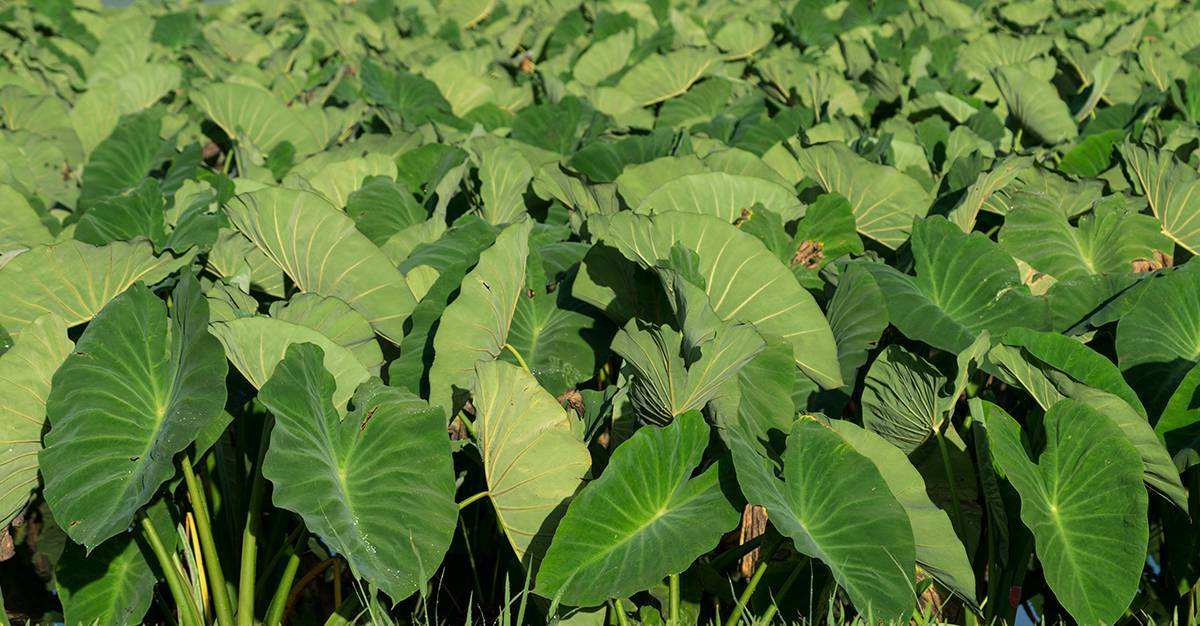
Every taro plant in your garden is trying to hurt you, and that's precisely why I find it so compelling. The corm sitting in the ground right now is loaded with calcium oxalate raphides, microscopic needle-shaped crystals that, if you bite into the raw flesh, will shred the soft tissue of your mouth and throat badly enough to feel like you swallowed fiberglass. I've watched well-meaning gardeners snack on a raw slice thinking it was just another root vegetable, and the look on their faces about thirty seconds later is unforgettable. Yet this same plant has been one of humanity's most important food staples for somewhere close to 28,000 years.[1] People figured out the cooking requirement and kept right on growing it anyway, across every wet tropical landscape they could reach.
That contradiction is the whole story with taro. It's simultaneously ancient and misunderstood, nutritious and genuinely hazardous if you skip a step, a sacred food in Hawaiian tradition and a $6 ornamental impulse-buy at a big-box garden center. I've grown it in Florida, in a Zone 8 garden where I babied it through cold snaps, and in a subtropical food forest where it basically grew itself in a damp swale. Each time, I came away more convinced that most people are either too afraid of it or not respectful enough of it, and very rarely somewhere in the middle.
Taro Origin, History, and Botanical Background
Few plants have traveled as far, fed as many people, or carried as much cultural meaning as taro. Known scientifically as Colocasia esculenta, this perennial herbaceous member of the Araceae family originated in the tropical and subtropical belt stretching from Northeast India through southern China down to Indonesia and the Philippines.[2][3] It's a plant that grows from large, starchy underground corms, sending up fresh leaves and stems each season while producing new corms for the next.[4] That architecture, deceptively simple from the outside, underpins one of the longest relationships between a crop and its human cultivators anywhere on earth.
Botanical Background and Morphology of Taro (Colocasia esculenta)
The taro plant spreads almost exclusively by vegetative means: corms, offsets, and suckers rather than seed, which means a single well-placed planting can persist and expand for years.[5][6] One thing I've learned from growing several Hawaiian and Asian cultivars side by side in my Central Florida beds is to label every corm the moment you plant it, because the first juvenile leaves of different varieties look nearly identical and you will absolutely mix them up otherwise. In the ground, taro builds up to 3 to 6 feet tall with a 3 to 5 foot spread, forming dramatic clumps of glossy, dark green, heart-shaped leaves 20 to 90 centimeters long, held aloft on stout, succulent petioles that can reach 150 centimeters.[7][8] The central corm anchors a fibrous adventitious root system, and flowers, the classic Araceae spathe and spadix, appear so rarely in cultivation that many growers never see them.[9]
What makes taro genuinely remarkable as a crop plant is how it handles wet feet. Specialized aerenchyma tissue ferries oxygen down to the submerged root zone, letting it thrive in waterlogged soils that would kill most vegetables.[10] It wants warmth, specifically daytime temperatures between 68 and 86°F, and it essentially stops growing below 50°F.[11] Depending on cultivar type, the corm takes 8 to 12 months to reach harvest maturity, with dasheen types needing the full year and eddoe types coming in a bit sooner.[12][5] For comparison, Colocasia formosana, a related species endemic to Taiwan's central and southern mountain ranges at 500 to 3,000 meters elevation, can live 5 to 15 years and occupies a notably cooler, more continental climate than its lowland cousin.[13][14] That elevation-adapted resilience is something I think about whenever I'm placing aroids in a landscape, because the genus holds far more climate range than most people realize.
Traditional and Cultural Uses Across the Tropics
Taro root has one of the deepest archaeological footprints of any cultivated plant. Starch residues on stone tools from the Solomon Islands date to roughly 28,000 years ago, making it one of the earliest documented plant foods used by humans.[15] By around 7,000 BCE, early farmers at Kuk Swamp in Papua New Guinea were managing drainage systems specifically for taro cultivation, and residues appear in Chinese pottery by roughly 6,500 BCE.[16] From there, Austronesian voyagers carried it across the Pacific beginning about 3,500 years ago, and Indian Ocean trade routes delivered it to Africa after 1,000 BCE.[17] The Chinese Zhou Dynasty was writing about it by 1046 BCE, and the Charaka Samhita, the foundational Ayurvedic text, referenced it around 200 BCE.[18]
No cultural relationship with taro runs deeper than Hawaii's. In Hawaiian creation mythology, taro is the elder brother of the first human, a sacred elder sibling named Hāloa, which puts the plant in a category I'd compare to other spiritually central crops like sweet potato or cassava in their own cultural contexts, plants that carry meaning far beyond nutrition.[19] Polynesians developed the lo'i, sophisticated wetland irrigation systems, to sustain over 300 named Hawaiian varieties, with the corm traditionally cooked and pounded into poi.[19] Across Africa and Asia, the corm is boiled, pounded into fufu, or added to soups, while the leaves and petioles are cooked as greens, with Ayurvedic and traditional Asian practitioners using poultices of cooked leaf and corm for inflammation, wounds, and digestive complaints.[20][21] The one non-negotiable across every tradition: taro must be cooked. Its raw tissues contain calcium oxalate raphides that cause painful burning in the mouth and throat, and every culture that has grown it has developed the processing knowledge to neutralize them.[22]
Among Taiwan's indigenous Atayal, Seediq, Amis, Rukai, and Bunun peoples, Colocasia formosana has filled parallel roles as a famine food, a leaf wrapper, a medicinal poultice for inflammation, and a fixture in ritual and harvest celebrations.[23] It's now listed as Vulnerable by the IUCN due to habitat loss, a quiet reminder that the wild and semi-wild relatives carrying irreplaceable ethnobotanical and genetic knowledge are under real pressure.[24]
Fascinating Facts About Taro's Ecology and Human Journey
Taro isn't just a passive crop occupying wet ground. In its natural wetland habitat, its robust root system stabilizes soil and prevents erosion, leaf litter feeds decomposer communities, and its thermogenic flowering strategy, where the spadix heats up to volatilize scent compounds and lure beetles and flies, is the kind of ecological trick that makes aroid enthusiasts genuinely excited.[25] From a permaculture perspective, the sheer biomass those leaves produce before they collapse into mulch is part of what makes taro such a useful soil-builder in the herbaceous layer. The cultivated diversity is equally astonishing: centuries of farmer selection have produced varieties with wildly different corm sizes, starch profiles, oxalate concentrations, and resistance traits, including some Philippine landraces with thicker cuticles that offer partial resistance to leaf blight and leafhoppers.[26]
On the safety front, I want to be clear from the start: raw taro is not food. The calcium oxalate crystals that make raw corms and leaves toxic can be reduced by up to 90 percent through proper preparation, specifically peeling, soaking, and then boiling or steaming for 30 to 60 minutes.[22][21] In my years of growing and preparing taro, I've found that a solid 45-minute vigorous boil followed by a cold-water rinse consistently renders even higher-oxalate cultivars perfectly safe and creamy. University of Hawaii researchers are still working on breeding disease-resistant varieties, particularly against the devastating Phytophthora leaf blight that threatens plantings in humid climates, while also working to document and preserve the cultural heritage bound up in Hawaiian taro traditions.[19] The conservation stakes for Formosan taro serve as a pointed reminder that stewardship of this genus means honoring both the cultivated forms and the wild relatives that may hold tomorrow's resistance genes.
Taro Varieties: Edible, Ornamental, and Related Species
Taro is one of those plants that rewards you differently depending on what you're after. I've grown it for corms and grown it for drama, and the choices available to a gardener today span everything from ancient Hawaiian food-forest cultivars to inky-black ornamentals that stop people in their tracks. Getting clear on the taxonomy first saves a lot of confusion later.
Botanical Varieties and Major Cultivars of Colocasia esculenta
At the species level, Colocasia esculenta splits into two botanical varieties.[2][27] Var. esculenta, the dasheen taro type, produces one large central corm that can hit 10 to 20 pounds at harvest.[28] Var. antiquorum, the eddoe type, skips the big central corm and throws a cluster of smaller cormels instead. If you're growing primarily for food, that distinction matters before you plant. I've grown 'Bun Long', a dasheen-type, for years in Central Florida's wet summers; it reliably produces large, earthy corms with a flavor somewhere between chestnut and potato.[28] 'Mana Ulu' leans creamier and milder, while 'Chinese Taro' is the sweetest of the bunch.
The Hawaiian cultivar tradition runs incredibly deep, with over 300 named varieties shaped by thousands of years of selection, split between wetland lo'i types and upland dryland types.[29][30] 'Lehua', 'Palulu', and 'Kaualoha' represent just a handful of those culturally specific selections, each suited to particular microclimates and culinary uses. That genetic breadth traces back to Southeast Asia, where the highest diversity in the entire species still exists.[31]
On the ornamental side, the breeding priorities flip entirely. Cultivars like 'Black Magic', 'Red Edge', 'Black Coral', and 'Black Dragon' were selected for foliage drama, not corm size.[32][33] 'Black Magic' typically reaches 4 to 5 feet with deep purple-black leaves that hold their color through intense heat and humidity better than most green-leafed cultivars I've tried.[34][7] Their corms exist, but palatability isn't the goal. Edible types tolerate flooding and genuinely prefer wet feet, while some ornamentals handle moderate drought a bit better, though all want consistently moist, rich soil to look their best.[28][35] Cold tolerance varies by cultivar within USDA zones 8 through 11, though essentially everything in this species is damaged below 28 to 32°F.[34][36] One quick note for anyone tempted to snack straight from the garden: every variety contains calcium oxalate crystals, and all parts need thorough cooking before they're safe to eat.[34]
Formosan Taro (Colocasia formosana) as an Ornamental Relative
Formosan taro, Colocasia formosana, native to Taiwan, is a genuinely different species rather than just another cultivar.[37][38] Its leaves are narrower and more elongated than the broad, peltate leaves of standard esculenta, reaching 2 to 3 feet long on a plant that grows 4 to 6 feet tall and shows real shade tolerance as an understory species.[39] When I'm designing a shadier microclimate where standard colocasia would stretch and sulk, formosana is often the better fit. The cultivars 'Variegata' (cream-edged leaves) and 'Purpurea' (purple stems and petioles) lean fully ornamental.[40] It shares hardiness across zones 8 to 11 and is susceptible to aphids and spider mites in dry conditions, though it shows moderate resistance to leaf blight and root rot relative to C. esculenta.[41]
Sourcing Taro Plants, Corms, and Tubers
Ornamental cultivars are genuinely easy to find. 'Black Magic', 'Black Coral', and 'Fontanesia' show up regularly at garden centers, Home Depot, and online through Logee's or Plant Delights Nursery, typically ranging from $5 to $25 for a small pot or tuber and up to $80 for a mature specimen.[7][42] Edible corms turn up in Asian and Caribbean grocery stores for roughly $2 to $5 per pound.[43] Spring and summer bring the widest selection of potted plants; ornamentals are available year-round from greenhouse suppliers.[44]
For edible varieties specifically, I learned the value of disease-free planting material the hard way. An early batch I bought from a big-box store came in with dasheen mosaic virus, and the corms never developed properly. The University of Hawaii CTAHR program offers virus-indexed, heirloom, and organic taro stock, and it's worth the extra effort to source from them or a certified nursery if food production is your goal.[44] Always inspect corms for soft spots before planting; rot problems almost always start with compromised planting material.
Regulatory realities vary by where you garden. If you're in Florida like I am, treat taro as potentially invasive and keep it contained; I've watched it spread enthusiastically in wet areas near retention ponds. Florida and Louisiana both flag it as a plant requiring containment, and Hawaii has strict importation rules requiring permits for live material.[45][46] Live corms intended for food production require phytosanitary certification.[47] Formosan taro is available from specialty tropical nurseries in the $15 to $80 range and isn't on the federal noxious weed list, though import permits and phytosanitary certificates still apply.[48]
How to Propagate and Plant Taro
If there's one thing I've learned after propagating dozens of Colocasia selections over the years, it's that taro almost never asks you to mess with seeds. This plant has been reproduced vegetatively for thousands of years, and for very good reason: corm divisions, offsets, and huli (topped corms with petioles still attached) produce true-to-type plants with 80-95% success rates under good conditions.[49][11][50] Compare that to seed, which can take two to four years to produce a harvestable corm and often doesn't bother germinating at all, and the choice is obvious.[51]
Vegetative Propagation Methods
Corm division is the method I come back to every spring. You wait until plants are dormant, then cut the corm so each section has at least one visible bud or growing point and some roots still attached.[52] I always label divisions immediately, because first-year leaf shape can look deceptively similar across varieties, and mixing up an ornamental type with a food-grade cultivar in a guild planting is exactly the kind of mistake that wastes a whole season. The divisions want warmth: temperatures between 25-30°C (77-86°F), humidity in the 70-90% range, and consistently moist but well-draining soil are the sweet spot.[32] Commercial operations sometimes use tissue culture for disease-free starts at over 90% success,[53] but for home and small-farm scale, a healthy division from a productive mother plant is all you really need.
I tried saving taro seed once, early in my career, mostly out of curiosity. It did not go well. Taro is frequently sterile in cultivation, germination rates without intervention sit below 20%, and the seeds themselves are recalcitrant, meaning they can't tolerate drying or freezing and lose viability fast even under careful storage.[51][54] These days I just keep a few mother plants in containers for easy division each spring rather than fight the seed storage battle. Seed work is genuinely useful for breeders chasing genetic diversity, and wild relatives like Colocasia formosana do set viable seed more regularly,[55] but for anyone growing taro for food or forest design, vegetative starts are the only sensible path.
Soil, Site Selection, and Light Requirements
Taro evolved in tropical wetlands and riverbank edges across Southeast Asia, and its preferences reflect that origin. It wants fertile, loamy or clay-loam soils loaded with organic matter (3-5% or higher), with enough moisture retention to never fully dry out, but enough aeration that roots don't suffocate.[56][32] It handles flooding through aerenchyma tissue in its roots and stems, but compaction and salt stress are real problems, and poor drainage is a fast track to rot.
Soil pH sits at the center of most site-selection decisions. The optimal window is 5.5-7.0, with the 6.0-6.5 range delivering the best nutrient balance and corm yield.[57][58] Drop below 5.0 and you risk aluminum and manganese toxicity along with phosphorus lockout; push above 7.5 and iron and zinc deficiencies show up as chlorosis on the big leaves.[59] I test my Central Florida beds twice a year because summer rains reliably push pH down, and I'd rather catch drift early than diagnose a nutrient problem mid-season. For in-ground beds, incorporating generous compost or aged manure and preparing the soil to 12-18 inches depth gives roots the run they need.[57] Container growers can use equal parts potting soil, compost, and perlite or coarse sand with regular pH monitoring.[4]
Light is the third piece of the site puzzle, and it connects directly to moisture and heat stress. Taro prefers partial shade to filtered sun, with 4-6 hours of direct light, ideally morning sun with afternoon protection.[60] In my region, plants that get morning sun and afternoon shade consistently produce larger, darker leaves and heavier corms than those in full exposure. Too little light and you get pale, etiolated growth; too much afternoon sun and the leaf margins brown and curl. Its understory origins explain all of it.
Spacing, Planting Technique, and Timeline to Harvest
Mature taro reaches 3-6 feet tall with a 2-4 foot spread, so spacing isn't something to guess at.[7] For home gardens and upland dryland systems, plant corms or suckers 4-6 inches deep once soil temperatures hit 60-65°F (15-18°C) after the last frost, spacing plants 2-3 feet apart with 3-4 feet between rows.[61][32] Wetland and flooded systems can go tighter, 12-24 inches between plants and 24-36 inches between rows, since standing water suppresses some of the weed pressure that wider spacing is partly managing in dryland settings.[62][63] Upland plantings actually benefit from the extra airflow that wider spacing creates, since it slows fungal disease spread.
From a vegetative start, expect 6-15 months to a harvestable corm, with 7-12 months typical in the tropics and 10-15 months in subtropical conditions.[64][65] Start with disease-free material and select offsets from your most productive plants each season; that habit alone will keep quality high across years.[66]
Seed Propagation and Storage (For Breeders)
The seed route deserves a brief, honest treatment. Under lab conditions with scarification or gibberellic acid treatment, germination rates climb to 50-70% and take 2-4 weeks at 25-30°C with high humidity.[6] But those conditions are demanding, and the resulting seedlings still require 2-4 years to produce a meaningful corm.[67] Storage is equally difficult: recalcitrant taro seed can't be dried below 12-31% moisture content without losing viability, can't be frozen, and remains viable for only 1-3 years even under optimal conditions of 15-20°C and 50-60% relative humidity.[54][68] Wild species like Colocasia formosana set seed more reliably in nature and are useful in breeding programs for that reason,[69] but they're grown for diversity in crosses, not as a food crop. My honest recommendation: unless you're running a deliberate breeding project, stick with vegetative starts entirely.
Taro Care Guide: Growing Colocasia esculenta Successfully
Taro doesn't ask for much variety in its care routine, but it does ask for consistency. Get the water, warmth, and feeding right, and you'll have a plant that practically grows itself. Let any one of those slip, and the leaves will tell you immediately.
Watering Needs for Taro
Water is the single most critical factor in taro care. This plant evolved along pond margins and in flooded paddies, so consistently moist to boggy soil isn't a preference, it's a baseline requirement.[7][70] In my experience, if the top inch of soil has been dry for more than a couple of days in summer, you're already behind. During active growth, plan to water every two to three days, targeting roughly one inch per week and increasing that during dry spells.[71][72] The root zone is shallow, sitting mostly in the top six to twelve inches, so surface moisture matters more than deep soaking.
Overwatering and underwatering both have clear signatures. Too much standing water without drainage causes root rot, mushy corms, and a foul smell you won't miss. Too little produces wilting, brown or curling leaf edges, and brittle foliage that looks almost crispy.[73][74] Water quality also matters more than most growers expect: aim for irrigation water with a pH of 5.5 to 7.0 and low salinity (EC below 1.0 dS/m), since high salt levels reduce corm size and can cause leaf scorch.[75][76] Rainwater or dechlorinated tap water is ideal. As tubers develop, bump up irrigation to maintain 60 to 80 percent field capacity; then pull back during dormancy to avoid rot.[32]
Formosan taro (Colocasia formosana) needs even more consistent moisture and prefers 70 to 90 percent humidity, reflecting its origins in misty Taiwanese mountain forests.[77] Occasional leaf misting during dry spells helps it along if you're growing it outside its preferred range.
Sunlight Requirements
Taro grows well in full sun to partial shade, ideally getting four to six hours of direct light daily.[78] In cooler regions, full sun is fine. But in hot climates, afternoon shade becomes genuinely protective. I've watched taro under a light canopy maintain its deep color and produce noticeably better corms than plants baking in unfiltered afternoon sun all summer. Scorched leaves aren't just cosmetic damage; they're a sign that photosynthesis is being impaired at exactly the time the plant needs to be building corm mass. Formosan taro leans much further toward shade, preferring a partial to full understory position that mirrors its native montane forest habitat at 800 to 2,000 meters elevation in Taiwan.[79]
Feeding and Fertilization
Taro is a heavy feeder, and it will show you immediately when its nutrient needs aren't met.[80] Soil testing every one to two years is worth doing before you plant and periodically through the season, because deficiencies and excesses both translate directly into corm quality. I always look at the oldest leaves first. Yellowing working its way up from the bottom is almost always a nitrogen signal, and catching it early means a quick correction rather than a wasted season.[81]
Start with a balanced slow-release fertilizer worked in at planting. A 10-10-10 or 5-10-10 NPK blend works well for most home gardens, with higher nitrogen emphasis during vegetative growth and a shift toward phosphorus and potassium as corms develop.[66][32] Phosphorus deficiency is easy to overlook: stunted growth and smaller-than-expected corms are the main signs, sometimes with a purplish discoloration on leaves. Potassium shortfalls show up as leaf tip burn and marginal necrosis on older foliage.[82] Beyond the big three, magnesium deficiency produces interveinal chlorosis, and boron shortfall creates distorted, brittle leaves that sometimes crack at the lamina.[81] Keep soil pH between 5.5 and 6.5 to keep all of these nutrients accessible.[49] Over-fertilizing, especially with nitrogen, produces lush growth that's more attractive to pests and contributes to salt buildup in the root zone.[82]
Temperature, Heat, and Frost Tolerance
Taro's sweet spot is 70 to 85°F, with peak yields recorded between 77 and 82°F.[83] Growth slows noticeably above 86°F, and sustained temperatures over 95°F cause real physiological damage: leaf scorch, reduced photosynthesis, wilting, and yield losses that can reach 40 percent when heat stress hits during tuber formation.[84] Taro under 30 percent shade cloth during hot summers holds its leaf color and corm size better than plants in full afternoon exposure. That single intervention has made a significant difference in my summer plantings. High humidity (70 to 90 percent) and nighttime cooling to 60 to 70°F help the plant recover from hot days.[85] If you're choosing between dasheen and eddoe types in a hot climate, dasheen cultivars show better heat tolerance due to superior membrane stability and antioxidant activity.[85]
On the cold end, taro is hardy in USDA zones 8 through 11. Growth halts below 59°F, and frost kills the plant outright.[83][36] Cold damage shows up as wilting, purpling, marginal leaf scorch, and eventual foliage collapse. In zone 8, I dig corms after the first frost, clean and dry them, and store them at 50 to 60°F in slightly damp peat moss. Bone-dry storage tends to desiccate the corms over winter; a small amount of moisture in the medium has consistently given me better spring viability after several seasons of trial and error.[86] Replant after the last frost once soil temperatures reach 65°F. In marginal zones, 8 to 12 inches of organic mulch can sometimes protect tubers through mild winters without digging.[61] Formosan taro is a bit tougher here, tolerating brief frosts down to about 23°F with heavy mulch protection and entering dormancy rather than dying back completely.[87]
Pruning, Maintenance, and Seasonal Care
Sucker management is where most home growers leave yield on the table. I learned this the hard way: letting suckers multiply freely produces a crowded clump of small corms rather than a few large, harvest-worthy ones. At establishment, retain only two to three strong suckers; during active vegetative growth, allow three to five, removing the rest with sterilized shears when they reach four to eight inches tall.[88] Flower spikes should be removed the moment they appear; that bloom energy goes straight into corm development once you redirect it.[88]
For leaf pruning, only take yellowing, damaged, or diseased leaves, cutting cleanly at the base. Removing healthy leaves reduces photosynthesis and shrinks corm size, so resist the urge to tidy aggressively.[89] Crowded clumps benefit from division every two to three years in early spring, with each offset carrying at least one visible bud.[90] Rotate taro out of the same bed every three years and sterilize tools between plants to limit disease spread.[88] And always cook corms and leaves thoroughly before eating; I've tasted the oxalate itch from an undercooked batch myself, and it's an experience that makes the safety advice feel very real. Formosan taro needs less intensive sucker management, mainly benefiting from periodic leaf removal and division every three to four years while doubling as an ornamental in water garden settings.[91]
Harvesting Taro: Timing, Technique, Yield, and Flavor
Taro rewards patience. The corms of Colocasia esculenta need 8-12 months in the ground before they're worth digging, reaching 4-10 inches in diameter and anywhere from one to five pounds at maturity.[92][93] The exact window shifts by cultivar: dasheen types with their large central corms typically need 9-12 months, while eddoe types, with their smaller clusters of cormels, can be ready in 6-8.[49][94]
When to Harvest Taro: Reading the Plant's Signals
The calendar gives you a rough target, but the plant tells you the truth. Watch for leaf senescence: when most of the foliage yellows and starts dying back, the corms have generally finished bulking up. I've learned to wait for at least 75% leaf die-back before digging, because corms pulled too early are watery, low in starch, and never develop the chestnut-like flavor that makes taro worth growing. Firm, plump corms when you probe the soil edge are a better confirmation than any date on the calendar.[95] In subtropical settings like Florida, harvest typically falls in late summer to fall after 10-12 months; in true tropical climates, you can harvest year-round with peaks between May and October.[66][96]
How to Harvest Taro Without Damaging Corms or Soil
Leaves are actually the first harvest opportunity. Starting around 3-6 months after planting, once petioles reach 12-18 inches, you can begin selectively cutting leaves; this encourages side shoot production and extends the plant's productive life.[92] I'll say this plainly because I never want a guest at my table to experience it firsthand: every part of this plant contains calcium oxalate crystals, and nothing goes into the kitchen raw. Not a leaf, not a corm, not a stem.[4] I also mark my taro rows carefully because young leaves look similar enough to ornamental colocasias that it's easy to grab the wrong thing.
For corm harvest, choose a dry morning, use a digging fork to loosen soil well outside the root zone, and lift the whole plant without puncturing or bruising the corm.[97] Bruises invite rot fast. After digging, cure the corms at 77-86°F with very high humidity (95-100%) for 2-4 days before moving them to cooler storage at 50-59°F.[98][99] In my experience, this curing step is the difference between corms that last a few weeks and corms that stay firm and sound for several months.
Taro Flavor, Texture, and What to Expect from Your Harvest
Raw taro smells mildly earthy with a faint pungency from oxalates; it is not food yet.[100] Once cooked above 60°C, the crystals neutralize and the flavor transforms into something genuinely lovely: mildly sweet, nutty, starchy, with a subtle umami depth that often gets compared to chestnuts or a good potato.[101] Texture varies by method: boiled taro goes dry and floury, very much like a russet potato; fried (after pre-boiling) crisps on the outside while staying dense within; baked comes out mealy and dense.[28][102]
Per-plant yields in home garden conditions typically run 10-20 lbs, with well-fed, intensively managed plants capable of significantly more.[97] Cultivar choice, soil fertility, and how consistently you kept moisture up all shape what you actually dig. The related Colocasia formosana, while edible when cooked, follows similar harvest timing but carries high oxalate levels that make it unsuitable for regular table use; its preparation remains identical to the main species.[103]
Taro Preparation, Culinary Uses, and Traditional Applications
Edible Parts and Essential Safety Requirements
Both the corms and leaves of taro are edible, and I mean edible in the strict sense: after cooking, full stop.[2] Every raw part of the plant contains calcium oxalate raphides, needle-like crystals that cause immediate mouth and throat irritation, swelling, and digestive misery.[2][104][105] I never serve taro to guests without confirming it has boiled or steamed for a full 30 minutes -- the difference in mouthfeel and safety is unmistakable. That process reduces oxalate content by 50 to 90 percent, and it's not optional.[106][107] Leaves and petioles need the same treatment: boil or steam them before eating.[105]
A quick field ID note worth knowing: Colocasia leaves attach at the notch of that classic heart shape, while the toxic lookalike Alocasia has a peltate attachment where the stem meets the center of the leaf blade.[108] I use that distinction constantly when identifying seedlings in my food forest. Formosan taro (Colocasia formosana) follows the same preparation rules and may carry slightly higher oxalate levels than the cultivated species, so if anything, cook it a little longer.[109]
Nutrition, Flavor Transformation, and Global Culinary Traditions
Once cooked, taro delivers a genuinely impressive nutritional profile. A 100g cooked serving provides around 112 calories, 26g of carbohydrates, and 4.1g of dietary fiber, along with meaningful amounts of potassium (591mg), vitamin B6, magnesium, and phosphorus.[110][111] As a slow-digesting starch, it's one of the more satisfying root crops I grow.
The cooking method itself shapes the flavor considerably. Boiling or steaming for 20 to 40 minutes produces a mild, sweet, lightly vegetal corm with pleasant caramel-adjacent notes from pyrazines and furans.[112][100] Roasting at 150 to 200°C pushes the Maillard reaction further, producing a chestnut-like, caramelized character that I find genuinely delicious straight from the oven.[113] Fermented preparations like Hawaiian poi take a different path entirely, developing a tangy, yogurt-like flavor from lactic acid while further reducing oxalates in the process.[114]
Taro's culinary reach spans tropical Africa, Asia, Oceania, and the Caribbean. Philippine ginataan pairs corms with coconut milk; Caribbean callaloo puts the leaves center stage; Thai and Indonesian cooks fold it into curries; and Taiwanese indigenous communities including the Atayal and Bunun have long relied on Formosan taro in soups, porridges, and vegetable wraps.[2][115] Whatever the tradition, the rule is the same one wild taro taught early foragers: cook it first. For storage at home, I keep corms just above 10°C in a cool, dark, well-ventilated spot, which prevents sprouting better than refrigeration and preserves them for up to four to six months.[98]
Traditional Medicinal Preparations
Building on the same preparation steps used for food, traditional practitioners across South Asia, Taiwan, and the Pacific have long made decoctions from cooked corms for digestive complaints and applied boiled or processed leaves as poultices for wounds and inflammation.[116][117] Atayal communities in Taiwan have used Formosan taro similarly for stomach aches, diarrhea, and wound care, always with proper cooking or fermentation to neutralize oxalates before internal use.[118][119] These aren't edge-case curiosities. They reflect centuries of accumulated knowledge about how processing unlocks a plant's value while eliminating its risks, and I find that kind of embedded wisdom deeply worth preserving and understanding.
Non-Food and Practical Uses
Taro's large, water-repellent leaves have served Pacific Island communities as woven containers, hats, and mats for generations, a kind of on-site packaging that costs nothing and composts when you're done.[120] In my garden I've found the leaves break down beautifully as mulch in humid conditions, suppressing weeds and feeding the soil as they go. In Taiwan, Formosan taro corms and young leaves served as famine food for indigenous communities through cycles of scarcity, always prepared through boiling or stewing to ensure safety.[121] That same zero-waste ethic, eat what you need, mulch the rest, feed the soil for next season, is exactly the kind of closed-loop thinking that makes taro such a rewarding plant to grow in a regenerative system.
Taro Health Benefits and Medicinal Uses
People have been turning to taro for more than food for a very long time. Across Ayurvedic medicine it's been used for digestive complaints, piles, ulcers, and inflammation; Traditional Chinese Medicine practitioners prescribed it to support detoxification, reduce phlegm, and address edema; Pacific Island healers applied the leaves as poultices for wounds and boils; and in African traditional medicine, taro appears in treatments for respiratory ailments and diarrhea, and as nutritional support during periods of food scarcity.[122][123][124][125] In my experience working with underutilized crops, that kind of cross-cultural convergence usually signals something genuinely worth paying attention to -- traditional knowledge systems don't persist for thousands of years by accident.
Key Phytochemicals in Taro
The bioactive story behind taro's traditional uses centers on a rich mix of secondary metabolites. The phenolic acids, ferulic, caffeic, and chlorogenic, along with flavonoids including quercetin, kaempferol, rutin, orientin, vitexin, and isoorientin, are especially concentrated in the leaves.[126][127] Beyond that, you've got alkaloids, terpenoids, sterols like beta-sitosterol, saponins, tannins, glycosides, and a lectin called tarin with studied antiviral and anticancer interest.[128] These compounds underpin the antioxidant, anti-inflammatory, and antimicrobial effects noted in the research below.
One thing that surprised me early on: how dramatically these levels shift depending on cultivar, growing conditions, and which part of the plant you're sampling. Wild Formosan taro (Colocasia formosana), grown under mountain stress at altitude, accumulates 2-3 times the phenolic and flavonoid content of cultivated Colocasia esculenta.[129] Environmental stressors, higher temperatures, acidic soils, and altitude, push secondary metabolite production upward,[130] which makes sense from an evolutionary standpoint but matters practically when choosing what to grow. Calcium oxalate raphides, the needle-shaped crystals that cause taro's notorious raw-irritation problem, are themselves a secondary metabolite, running higher in leaves (0.64-2.01% dry matter) than in corms (0.13-0.83%).[131] These are the same crystals that have caught my bare forearm more than once during a pruning session -- a sharp, lingering itch that reminds me every time to wear gloves.
Pharmacological Research and Potential Benefits
The preclinical research on taro is genuinely impressive in breadth, if not yet in clinical depth. In vitro and animal studies demonstrate strong antioxidant activity from those phenolics and flavonoids, with Formosan taro showing DPPH and ABTS inhibition comparable to ascorbic acid.[132][133] Anti-inflammatory effects are well-documented too, with extracts inhibiting TNF-alpha, IL-6, COX-2, and the NF-kB pathway in rat models; Formosan taro specifically shows 40-60% edema reduction in paw models.[134] Antimicrobial activity against Staphylococcus aureus, E. coli, and Candida albicans has also been documented, attributed to the flavonoids, alkaloids, and saponins.[135]
Dig further and you find hepatoprotective effects in liver-damage models, antidiabetic potential through enzyme inhibition and blood glucose reduction, wound-healing activity promoting collagen synthesis, and antinociceptive effects comparable to standard analgesics in writhing tests.[136][137][138][139] Formosan taro adds cytotoxic activity against HeLa and MCF-7 cancer cell lines, plus immunomodulatory effects through macrophage enhancement.[140] That's a lot of activity for one genus. The honest caveat, though, is that almost all of this comes from in vitro and animal studies; human clinical trials are essentially absent.[141][142] I always tell people: preclinical data is exciting, but until human trials exist, stick to culinary amounts. That cautious approach has served me well with other medicinal perennials.
Nutritional Profile of Taro
For everyday gardeners and cooks, the nutritional case for taro is straightforward and solid. A 100g serving of cooked corm delivers around 140 calories, 33g of carbohydrates, 591mg of potassium (more than a banana's typical 422mg), and a meaningful 24% of daily vitamin B6.[110] It's not a protein powerhouse at 1.3g per 100g, but as a starchy staple it holds its own, and purple-fleshed cultivars add anthocyanins on top of the standard polyphenol and flavonoid content for extra antioxidant value.[126] Anti-nutritional factors like phytates and tannins do reduce mineral bioavailability in raw taro, but they diminish substantially with boiling, fermentation, or drying.[143] Proper cooking, in other words, handles both the safety issue and the nutrient availability question at once. I've found that a long boil gives the corm its characteristic creamy, slightly dense texture and leaves essentially no acridity -- a sign that oxalate reduction is doing its job.
Safety Considerations and Preparation
Raw taro is not a gray area. Every part of the plant, corms, leaves, petioles, contains calcium oxalate raphides that cause immediate oral and throat burning, swelling, and gastrointestinal upset if eaten uncooked.[144][145] Leaves carry higher concentrations than corms, which is something I'm reminded of every time I harvest without full arm coverage. Thorough boiling, steaming, or baking reduces oxalates by 50-70% or more, and soaking in salted or limed water before cooking pushes reduction further; properly prepared poi and cooked corms are generally well-tolerated by healthy adults.[146][147] I think of it the way I think of spinach or rhubarb: oxalate-rich plants aren't dangerous if you handle them correctly, but they do demand respect.
A few groups need extra caution. People with kidney disease should limit taro intake due to oxalate's role in stone formation.[148] The antidiabetic and antithrombotic activity documented in preclinical studies suggests potential interactions with diabetes medications and blood thinners, so medicinal use beyond normal cooking amounts warrants a conversation with a doctor. Occupational processors have developed asthma-like respiratory symptoms from chronic airborne exposure during commercial handling.[149] Taro is also toxic to dogs and cats, causing drooling, vomiting, and difficulty swallowing.[150] And it's worth being careful about identification -- Dieffenbachia and other toxic Araceae are commonly mistaken for taro.[151] The bottom line: cook it well, choose lower-oxalate cultivars like 'Bun-long' for edible plantings if sensitivity is a concern, and treat any internal medicinal use beyond culinary amounts with the same caution you'd apply to any herb with limited human trial data.
Taro Pests and Diseases: Identification and Management
Growing taro in a warm, humid climate is a bit of a double-edged situation. The same conditions that push this plant to its full, lush potential are exactly what its worst pathogens love too. I learned this the hard way during my first Central Florida summer with a large taro planting: the humidity that made those leaves enormous also rolled in disease pressure fast. Understanding what you're dealing with, and having a plan before problems appear, makes all the difference.
Major Diseases of Taro and Cultivar Resistance
Phytophthora colocasiae, the pathogen behind taro leaf blight, is the disease every grower in a humid region needs to know by name. It can take a healthy planting to a soggy, collapsing mess in days during wet weather.[152][153] I think of it as late blight on tomatoes, but faster. Beyond blight, taro contends with a full roster of fungal threats: Fusarium oxysporum causes corm rot and wilt, Alternaria leaf spot targets older leaves in warm humid air, and Pythium or Rhizoctonia move in quickly wherever drainage is poor.[154][155] Bacterial soft rot (Erwinia spp.) exploits wounds and waterlogged conditions, while Xanthomonas leaf spot tracks humidity closely. Virally, taro mosaic virus (TaMV) and taro vein-banding disease are real concerns, especially where leafhoppers and aphids move freely through a planting.[154]
Resistance is almost never a species-wide trait; it's cultivar-specific, so variety selection matters enormously.[156] Colocasia formosana offers a hopeful contrast here. Its mountain-adapted physiology, thicker leaf cuticles, and higher phenolic content give it partial resistance to Phytophthora blight and Alternaria that most common edible cultivars don't share.[157][156] Breeders are actively working to introgress those traits into commercial cultivars, making Formosan taro a genuinely valuable genetic resource.[157] That said, Formosan taro is still susceptible to bacterial wilt under wet conditions, and no cultivar of either species achieves complete immunity.[156] Good drainage and air circulation remain the most reliable tools available to any grower today, regardless of what's in the breeding pipeline.
Common Insect Pests, Nematodes, and Natural Defenses
The insect pressure on taro is substantial. Taro leaf beetles defoliate young growth, leafhoppers (Tarophagus proserpina and Perkinsiella spp.) transmit viruses as they feed, aphids and mealybugs sap vigor while vectoring additional pathogens, and taro weevils (Papuana spp.) bore directly into corms, causing up to 50% yield loss in severe cases.[158][159] Stem borers, spider mites, armyworms, and slugs round out the list in humid areas.[158] Below ground, root-knot nematodes (Meloidogyne spp.) form galls on roots, blocking nutrient uptake and opening the door to secondary infections.[160]
Taro is far from defenseless, though. The plant deploys calcium oxalate raphides, phenolics, alkaloids, saponins, and latex against herbivores, backed by physical barriers like leaf toughness and trichomes.[161][162] When tissue is damaged, volatile organic compounds draw in parasitoids and predatory insects, a passive recruitment system I find genuinely impressive.[163] I always wear gloves when dividing corms because those raphide crystals cause real, lasting skin irritation, which is a good reminder that the plant's chemical toolkit is not subtle. On the cultivar side, selections like Niue, Mana Ulu, and Manaia carry useful resistance to specific pest pressures, while Formosan taro shows moderate advantages against sucking insects like aphids and planthoppers.[164][165]
My approach is straightforward IPM: yellow sticky traps at the garden edge, weekly checks of leaf undersides during the rainy season, crop rotation, and strict sanitation around any damaged tissue.[166][167] I keep neem oil and Bt on hand but use them only after scouting confirms a real threshold, because over-relying on any spray quickly disrupts the predatory wasps and lady beetles that quietly do most of the work. Copper-based bactericides and insecticidal soaps have a place when pressure escalates, but biologicals and cultural practices come first, every time.[168]
Taro in Permaculture Design
Start with what taro is trying to be, and everything else follows. Colocasia esculenta evolved along riverbanks, in freshwater marshes, and beneath the filtered light of tropical forest canopies stretching from India and southern China through Indonesia, Malaysia, and the Philippines, eventually carried across Oceania by Polynesian voyagers.[169][7] Its natural habitat is waterlogged soils, high humidity, and dappled shade,[169][170] and once you see that, you know exactly where to put it in a food forest design.
Forest Layer, Guilds, and Ecosystem Functions
In a layered food forest, taro belongs in the herbaceous layer, occupying the ground-level space beneath canopy trees and shrubs. Growing 3 to 6 feet tall at maturity,[171] it uses those enormous paddle-shaped leaves to capture light in ways that most understory plants can only dream about. I've noticed that beneath mature taro, hand-weeding becomes almost optional. The leaf canopy closes so completely over moist soil that competing weeds simply don't get the light they need. That's not an accident of scale; it's a function of the wetland niche the plant has been perfecting for millennia.
Beyond suppressing weeds, taro is doing real soil work. It functions as a dynamic accumulator, drawing potassium and nitrogen from deeper soil horizons and banking them in its leaves.[172] When those leaves senesce and collapse, that nutrient load returns to the surface. I chop and drop the spent foliage onto adjacent beds each season, and over several years in my subtropical food forest, the soil tilth and moisture retention in those areas have visibly improved. The rhizomatous root network also stabilizes wet ground against erosion,[170] which matters enormously if you're working with a slope that gets seasonal flooding. Taro also forms mycorrhizal associations that aid phosphorus uptake,[173] so you're working with a plant that is actively building relationships underground, not just passively sitting there.
The genus runs wider than the common edible species. Colocasia formosana, native to shaded montane forest understories in Taiwan at elevations of 1,000 to 3,000 meters,[174] shares the same aeration, organic matter incorporation, and erosion-control functions while tolerating somewhat cooler and seasonally drier conditions. It's a useful reminder that the understory accumulator role isn't unique to C. esculenta; it runs through the genus. That said, C. formosana can spread aggressively in warm, wet climates and outcompete native plants.[175] I've found C. esculenta stays manageable when kept in defined beds, but always monitor either species carefully if you're near sensitive riparian or wetland ecosystems.
For guild companions, taro pairs well with bananas, legumes, pigeon pea, sweet potatoes, and ginger,[176][177] and the logic differs depending on the companion. Bananas provide overhead shelter that softens light and buffers temperature swings in the layer where taro wants to live, while legumes and pigeon pea feed nitrogen into the soil that taro will gladly use. Ginger slots in at the same moisture level without competing aggressively for space. Remember that while all parts of the plant are edible after thorough cooking, they contain oxalates that make raw handling and consumption problematic.[176]
One thing that surprises people is taro's pollination biology. The spadix heats itself up to 40°C to volatilize odors resembling rotting flesh or dung, a mechanism that lures in flies and beetles through a kind of olfactory deception rather than nectar reward.[178][179] Seed set outside the native range is low because the specialist pollinators aren't present,[180] and most growers in a typical food forest will never see a taro fruit. It's a fascinating aside, but practically speaking, it explains why taro is always grown from corms and divisions rather than seed.
Climate Requirements and Hardiness Zones
Taro is reliably perennial in USDA zones 8 through 11,[4][36] and its sweet spot for active growth sits between 21 and 27°C (70 to 80°F), with growth slowing noticeably below 15°C and stopping around 10°C.[7][181] Frost is a hard limit; even a brief dip below 28°F (-2°C) will turn leaves to mush overnight.[4][182] I've successfully overwintered corms in a garage in marginal zone 8 conditions by digging them after the first cold spell and storing them in slightly damp peat moss or vermiculite at 50 to 60°F. It works, but it requires attention to timing.
Moisture and humidity are just as defining as temperature, maybe more so in practice. Taro wants at least 1,000 to 1,500 mm of annual rainfall to survive and genuinely thrives with 1,500 to 2,500 mm, ideally spread evenly across the year, along with humidity levels between 70 and 90 percent.[183][22] In my humid subtropical garden, I've found the real limiting factor is almost never winter cold; it's sustaining consistent soil moisture through dry periods. Where taro has taken off best for me, there's either a low spot that stays naturally moist or a reliable drip system running underneath the banana circle it anchors.
Beyond its core native range, taro has naturalized and thrives across West and Central Africa, the South Pacific, South America, the Caribbean, and parts of the American Southeast like Florida.[184] The montane relative C. formosana offers a slight margin of extra cold tolerance, surviving brief dips to around -7°C (20°F) with protection and tolerating modestly lower humidity in the 60 to 80 percent range,[185][182] which makes it worth considering for designers pushing the genus into zone 8 conditions. But for most food-focused systems, C. esculenta grown in a warm, humid microclimate with consistent moisture remains the plant to build your herbaceous layer around.
The Corm That Made Me Slow Down
I still think about the first time I burnt my hands processing a fresh corm, rushing through it the way I rush through everything. Taro doesn't let you do that. It demands attention, proper technique, patience, and some genuine respect for where it came from. That's not a flaw in the plant; it's the whole point. There are very few things in my food forest that ask something of me before they give something back, and I've come to trust those plants most.
Sources 185
- Taro: An Overview of Its History, Cultivation, and Uses ↩
- Colocasia esculenta - Wikipedia ↩
- Taro (Colocasia esculenta) - Kew Science ↩
- Colocasia esculenta - Missouri Botanical Garden ↩
- Taro Production Guidelines - FAO ↩
- Colocasia esculenta - Kew Royal Botanic Gardens ↩
- Colocasia esculenta - Missouri Botanical Garden Plant Finder ↩
- Colocasia esculenta - Kew Royal Botanic Gardens ↩
- Colocasia esculenta - Missouri Botanical Garden Plant Finder ↩
- Oxygen Transport in Flooded Taro (Colocasia esculenta) ↩
- Growing Taro: Soil, Water, and Temperature Requirements ↩
- Taro (Colocasia esculenta) Production Guidelines - University of Hawaii ↩
- Flora of China - Colocasia formosana ↩
- Colocasia formosana ↩
- Direct evidence for human use of plants 28,000 years ago - Antiquity, Cambridge ↩
- The Origins and Domestication of Taro (Colocasia esculenta) ↩
- Taro - Colocasia esculenta (L.) Schott ↩
- Early Taro (Colocasia esculenta (L.) Schott) Management in Southeast Asia ↩
- Taro in Hawaii: Past, Present, and Future ↩
- Ethnobotany of Colocasia esculenta in India ↩
- Taro: A Review of Agronomy and Processing ↩
- Calcium Oxalate Content in Taro Cultivars ↩
- Ethnobotany of Colocasia formosana in Taiwan's Indigenous Communities ↩
- IUCN Red List: Colocasia formosana ↩
- Thermogenesis in the Araceae: A Review ↩
- Variation in Taro Cultivars: Nutritional and Morphological Traits ↩
- FAO Taro Production Guide ↩
- Colocasia esculenta Varieties and Cultivation ↩
- Taro Varieties in Hawaii ↩
- Taro (Colocasia esculenta) Cultivars - FAO ↩
- Genetic Diversity of Colocasia esculenta in Southeast Asia ↩
- Taro Cultivars - University of Hawaii ↩
- Colocasia esculenta Cultivars - RHS ↩
- Colocasia esculenta - Royal Horticultural Society ↩
- Taro Production in the Asia-Pacific Region ↩
- Colocasia esculenta - USDA PLANTS Database ↩
- USDA Plants Database - Colocasia formosana ↩
- Plants of the World Online - Colocasia formosana ↩
- Missouri Botanical Garden Plant Finder ↩
- Missouri Botanical Garden ↩
- Taro Genetic Resources in Taiwan ↩
- Taro Market Overview in the United States ↩
- Hawaii Taro Production and Prices ↩
- Taro Program at University of Hawaii ↩
- USDA PLANTS Profile: Colocasia esculenta ↩
- Taro (Colocasia esculenta) Biosecurity in Hawaii ↩
- Importation of Plants and Plant Products ↩
- Horticultural Availability of Colocasia Species ↩
- Taro Production Guidelines - University of Hawaii ↩
- Taro: Botany and Propagation ↩
- Colocasia esculenta ↩
- Colocasia formosana ↩
- Micropropagation of Taro ↩
- Seed Storage Behaviour of Taro (Colocasia esculenta) ↩
- Colocasia formosana ↩
- Kew Science - Colocasia esculenta ↩
- University of Florida IFAS Extension: Taro Production Guide ↩
- Taro Production - University of Hawaii ↩
- FAO Soil Management for Taro Production ↩
- Colocasia esculenta - North Carolina Extension Gardener Plant Toolbox ↩
- Growing Taro in Florida ↩
- Taro Cultivation in Hawaii ↩
- FAO Taro Cultivation Manual ↩
- Taro Cultivation Guide ↩
- Colocasia esculenta: Botany and Horticulture ↩
- Growing Taro in Florida ↩
- Taro (Colocasia esculenta) Production ↩
- Kew Royal Botanic Gardens - Seed Information Database ↩
- Reproductive Biology and Conservation of Colocasia formosana ↩
- Colocasia spp. - University of Florida IFAS Extension ↩
- Colocasia esculenta Care Guide ↩
- Horticulture Guidelines for Taro ↩
- Taro Root Rot and Overwatering Issues ↩
- How to Grow and Care for Taro ↩
- Taro Production Guidelines - University of Hawaii ↩
- Salinity Tolerance of Crops - FAO ↩
- Growing Colocasia Species in Temperate Climates ↩
- Missouri Botanical Garden Plant Finder ↩
- Colocasia formosana ↩
- Nutrient Management for Root Crops - Cornell University ↩
- Nutrient Deficiencies in Taro (Colocasia esculenta) ↩
- Taro Nutrient Deficiency and Toxicity Symptoms ↩
- Colocasia esculenta - Missouri Botanical Garden ↩
- Heat Stress Effects on Taro (Colocasia esculenta) Physiology ↩
- Heat Tolerance in Taro Cultivars: Dasheen vs. Eddoe ↩
- Overwintering Elephant Ears (Colocasia) - University of Minnesota Extension ↩
- Colocasia formosana Care Guide ↩
- FAO Taro (Colocasia esculenta) Production Guide ↩
- Taro Production Recommendations ↩
- Royal Horticultural Society: Colocasia Care ↩
- Growing Elephant Ears: Colocasia Species ↩
- Harvesting Taro Leaves and Corms ↩
- Taro: Harvest and Post-Harvest Handling ↩
- Colocasia esculenta (Taro) Cultivation ↩
- Harvesting and Post-Harvest Handling of Taro ↩
- Taro Production Guidelines ↩
- Taro (Colocasia esculenta) Production in the US ↩
- Postharvest Handling of Taro ↩
- Taro: Post-harvest Operations ↩
- Taro: A Review of Chemistry and Food Applications ↩
- Sensory Evaluation of Taro (Colocasia esculenta) Corm ↩
- Taro - Factsheet - Australian Government Department of Agriculture, Fisheries and Forestry ↩
- Colocasia formosana Hayata: A Review of Its Botany, Cultivation, and Utilization ↩
- Taro (Colocasia esculenta) and Related Species: Nutritional and Toxicological Profiles ↩
- Edible Aroids: Toxicity and Preparation ↩
- Oxalate Content in Edible Aroids ↩
- Calcium Oxalate in Taro ↩
- Poisonous Plants of the Araceae Family ↩
- Colocasia formosana - Useful Tropical Plants Database ↩
- USDA FoodData Central - Taro, cooked, without salt ↩
- Nutritional Composition of Taro (Colocasia esculenta) and Related Species ↩
- Aroma Profile of Colocasia esculenta ↩
- Sensory Evaluation of Taro (Colocasia esculenta) Genotypes ↩
- Fermentation Effects on Root Vegetables ↩
- Indigenous Plants and Foods of Taiwan ↩
- Medicinal Uses of Colocasia esculenta in Traditional Medicine ↩
- Ayurvedic Pharmacopoeia of India - Colocasia esculenta ↩
- Ethnobotanical Study of Colocasia Species in Taiwan ↩
- Traditional Uses of Wild Taro in Austronesian Cultures ↩
- Ethnobotany of Taro in Polynesia ↩
- Ethnobotany of Colocasia formosana in Taiwan ↩
- Taro (Colocasia esculenta) in Traditional Medicine ↩
- Ethnobotanical Survey of Colocasia esculenta in Asia and Pacific ↩
- Medicinal Uses of Taro in African Folk Medicine ↩
- Ayurvedic and Chinese Medicinal Applications of Colocasia esculenta ↩
- Phenolic Compounds and Antioxidant Properties of Taro (Colocasia esculenta L.) Corm ↩
- Phytochemical profiling of Colocasia esculenta (L.) Schott (Araceae) leaf extracts ↩
- Comparative analysis of phytochemicals in different parts of Colocasia esculenta ↩
- Comparative Analysis of Phenolics in Colocasia esculenta and C. formosana ↩
- Environmental Factors Affecting Oxalate Accumulation in Root Crops ↩
- Oxalate Content of Taro Leaves Grown in Central Vietnam - PMC ↩
- Phytochemical Analysis and Antioxidant Activity of Colocasia formosana ↩
- Phenolic Compounds in Leaves and Corms of Taro Plant ↩
- Anti-inflammatory and antioxidant activities of Colocasia formosana leaf extracts in rat models ↩
- Antimicrobial Properties of Taiwanese Colocasia Species ↩
- Hepatoprotective effect of Colocasia esculenta against paracetamol-induced hepatotoxicity in rats ↩
- Evaluation of the antidiabetic potential of Colocasia esculenta in streptozotocin-induced diabetic rats ↩
- Wound healing activity of Colocasia esculenta root extract in rats ↩
- Antinociceptive and anti-inflammatory activities of Colocasia esculenta leaves extract ↩
- Antimicrobial and Cytotoxic Activities of Taiwanese Taro (Colocasia formosana) ↩
- Phytochemical and Pharmacological Profile of Colocasia esculenta ↩
- Phytochemical and Pharmacological Review of Colocasia Species ↩
- Anti-Nutritional Factors in Edible Aroids and Their Reduction Methods ↩
- Oxalate Content of Taro (Colocasia esculenta) and Its Reduction by Cooking ↩
- Calcium Oxalate Raphides in Taro: Allergenicity and Processing Effects ↩
- Calcium Oxalate in Taro and Safe Handling ↩
- Taro (Colocasia esculenta) - Toxicity and Preparation ↩
- Dietary Oxalates and Kidney Stone Disease ↩
- Occupational Asthma in Taro Processors ↩
- Taro - ASPCA ↩
- Calcium Oxalate Plants ↩
- Phytophthora Blight of Taro ↩
- Taro Leaf Blight: A Major Fungal Disease of Taro ↩
- Disease Resistance in Colocasia esculenta: A Review ↩
- University of Florida IFAS Extension: Taro Production ↩
- Breeding for Resistance to Taro Leaf Blight in Taiwan ↩
- Disease Resistance in Wild Taro Species - Journal of Phytopathology ↩
- Taro Pests and Management ↩
- Insect Pests of Taro ↩
- Nematode Problems in Taro ↩
- Calcium Oxalate Crystals and Plant Defense in Araceae ↩
- Secondary Metabolites for Pest Control in Taro ↩
- Volatile Organic Compounds in Aroids: Attraction of Natural Enemies ↩
- Pest Resistance in Taro (Colocasia spp.) Varieties: A Review ↩
- Insect Pests of Taro in Taiwan: Focus on Colocasia formosana ↩
- Taro Pest Management - University of Hawaii CTAHR ↩
- Integrated Pest Management for Taro ↩
- University of Hawaii - Taro Diseases and Pests ↩
- Colocasia esculenta - Kew Science ↩
- Ecological Role of Colocasia esculenta in Wetlands ↩
- Missouri Botanical Garden - Colocasia esculenta ↩
- Nutrient Accumulation in Taro: Dynamic Accumulators Database ↩
- Mycorrhizal associations in Colocasia esculenta - Peer-reviewed article ↩
- Flora of Taiwan: Colocasia formosana ↩
- Invasive Potential of Colocasia spp. in the US ↩
- Permaculture Plants: Taro (Colocasia esculenta) ↩
- Intercropping benefits of taro in agroecosystems ↩
- Pollination Biology of Colocasia esculenta ↩
- Floral Thermogenesis in Araceae ↩
- Pollinators of Colocasia esculenta in Natural and Agricultural Habitats ↩
- Taro Production Guidelines ↩
- Cold Tolerance in Colocasia Species ↩
- Taro (Colocasia esculenta) - Crop Production Guidelines ↩
- FAOSTAT, Production of crops and livestock products ↩
- Colocasia formosana - North Carolina Extension Gardener Plant Toolbox ↩
About the Author
Timothee is a 28-year-old Naturalist, Agricultural Specialist, and Author. He believes that environmental writing provides the information necessary for the cultural transformation needed to stabilize the climate.