
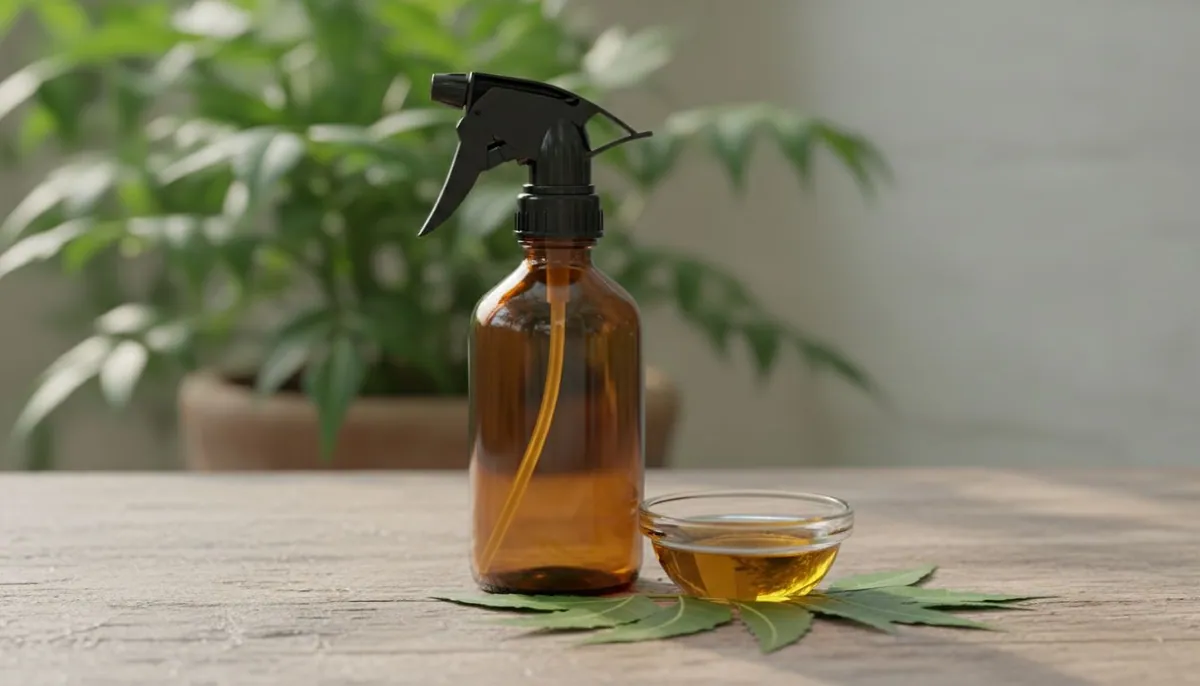
If you have spent five minutes in the organic gardening aisle, you have seen the amber bottles promising to fix everything from aphids to mildew. I want to cut through that noise, because learning how to use neem oil correctly is the difference between a genuinely useful tool and a bottle of disappointment on the shelf. Neem oil is one of the most versatile products I keep in my potting shed, but it is also one of the most misunderstood. It is not a knockdown spray, it is not a cure-all, and it rewards patience over panic. In this guide I will walk you through what neem actually is, how the active compound azadirachtin works, how to mix and apply it without scorching your plants, and where it fits in a broader organic pest control plan.
What Neem Oil Actually Is
Neem oil is a naturally occurring pesticide pressed from the seeds of the neem tree (Azadirachta indica), a fast-growing evergreen native to the Indian subcontinent. People have used neem for pest control and medicine for centuries, and the raw oil is a bitter, yellow-brown liquid with a sharp garlic-and-sulfur smell that you will not soon forget. According to the National Pesticide Information Center, that oil shows up in more than 100 registered pesticide products in the United States alone.
Here is where a lot of confusion starts. What you buy at the garden center falls into a few different categories, and they do not all behave the same way:
- Cold-pressed (raw) neem oil contains the full spectrum of neem compounds, including the highest concentration of azadirachtin. This is what I mix myself, and it does double duty as both an insecticide and a smothering oil.
- Clarified hydrophobic neem oil is the fraction left over after most of the azadirachtin has been extracted. It is rich in fatty acids and essential oils, and it works mainly by suffocation. Most ready-to-use spray bottles at the store are this type.
- Azadirachtin concentrates isolate the star compound itself for a more targeted insect growth-regulator effect.
Knowing which one is in your hand matters, because a clarified product is a fine contact spray but will not deliver the same hormonal disruption that raw oil or an azadirachtin concentrate provides.
How Azadirachtin Works
Azadirachtin is the compound doing most of the heavy lifting, and it is genuinely clever. Rather than poisoning insects on contact the way a synthetic nerve agent does, it works through three overlapping mechanisms. First, it is a powerful antifeedant — treated foliage tastes so foul that many insects simply stop eating. Second, it is an insect growth regulator: it interferes with the hormone system that controls molting and reproduction, so larvae cannot mature properly and females struggle to lay viable eggs. Third, it acts as a repellent, discouraging new pests from settling on treated plants. NPIC notes it can even reduce feeding by nematodes in the soil.
The raw and clarified oils add a fourth, purely physical action: they coat soft-bodied insects and block the breathing pores they use to respire, killing them by suffocation. That is why neem is most effective against immature, soft-bodied pests and far less reliable against hard-shelled adults. It is worth setting your expectations here — the University of New Hampshire Extension points out that mature adults often survive a spray and keep feeding for a while. Neem breaks the life cycle; it does not vaporize an infestation overnight.
Which Pests and Diseases Neem Oil Targets
Neem earns its keep against soft-bodied, sap-sucking insects — exactly the pests that plague greenhouse plants and tender new growth. Based on the extension guidance I trust and my own results, it is worth reaching for against:
- Aphids, which cluster on new shoots and are the pest I treat most often with neem.
- Spider mites, whose fine webbing and stippled leaves signal a fast-building problem.
- Mealybugs, those cottony clusters that hide in leaf axils.
- Scale insects in their vulnerable crawler stage before they harden off.
- Thrips, along with whiteflies, leafhoppers, leafminers, and young caterpillars.
On the disease side, neem oil has real value as a preventive fungicide. It is best known for suppressing powdery mildew, and UF/IFAS Extension notes it can also help with black spot and rust by inhibiting spore germination and growth. The critical word is preventive. Neem stops fungal spores from taking hold; it will not cure a plant that is already heavily infected. I treat it as insurance on disease-prone plants, not a rescue remedy, and I lean on cultural practices covered in my guide to plant disease prevention to do the real work.
How to Mix Neem Oil Spray
Oil and water do not mix — this is the single biggest reason homemade neem sprays fail. Neem oil beads up and separates unless you add an emulsifier to bind it into the water, so a few drops of mild liquid soap (a pure castile or insecticidal soap, not a degreasing dish detergent loaded with additives) is non-negotiable. The soap also adds its own softening effect on soft-bodied pests.
My standard neem oil spray recipe, drawn from the ratios extension services recommend, looks like this:
- 1 to 2 teaspoons of neem oil per quart of water (roughly a 0.5 to 1 percent solution), scaling up to 2 tablespoons per gallon.
- About ½ teaspoon of mild liquid soap per quart to emulsify.
- Warm water, not cold — cold water lets the oil congeal and clog your sprayer.
The order of operations matters more than people expect. I stir the soap into the warm water first, then drizzle in the neem oil while agitating, and shake hard until the mix turns a uniform milky color. Here is the hard-won lesson from my own garden: neem breaks down quickly once emulsified, so I mix only what I will use in a single session. I made the mistake early on of saving a half-full sprayer overnight, and by morning it had separated into a useless oily sludge that did nothing but gum up the nozzle. Mix fresh, every time.
How to Apply It for Full Coverage
Neem is a contact and ingestion product, which means it only works where it lands. Thorough coverage is everything. Pests overwhelmingly hide and feed on the undersides of leaves, so I flip foliage and spray upward, wetting the whole plant until it glistens without dripping. Missing the leaf undersides is the same as not spraying at all.
Because neem works on the insect life cycle rather than on contact alone, a single application rarely finishes the job. The rhythm I follow matches standard extension advice: reapply every 7 to 14 days as a preventive, tightening to every 4 to 7 days during an active outbreak. Persistence is the point. You are steadily suppressing each new generation of pests until the population collapses, not scoring a one-shot kill.
Foliar spraying is not the only way to use neem. Because azadirachtin can be taken up through the roots, I sometimes apply a diluted neem solution as a soil drench around a plant fighting a stubborn infestation. The plant absorbs the compound systemically, so sap-feeding pests ingest it as they feed — even on new growth I never wet directly. A drench works more slowly than a foliar spray, and I treat it as a supporting tactic rather than a first response, but it reaches pests that shelter where spray droplets never land.
How to Use Neem Oil Safely While Protecting Pollinators
Neem has a reassuring safety profile — NPIC describes it as practically non-toxic to birds, mammals, bees, and plants — but "practically non-toxic" is not the same as "harmless in every situation," and how you spray matters a great deal. Two cautions guide every application I make.
Spray at dusk or dawn to protect bees. The reason neem is relatively gentle on pollinators is that an insect generally has to eat treated foliage to be affected, and bees are foraging nectar and pollen, not chewing leaves. But wet spray can still coat a bee, and any oil can clog a small insect. I only spray in the early morning or, more often, at dusk when honeybees and bumblebees have finished foraging and open blooms are quiet. Spraying at dusk also gives the oil time to dry before the next day's sun hits it. I never spray open flowers if I can help it, and I keep the same care in mind for the beneficial insects — the lady beetles and lacewings — that I work hard to attract.
Always test for phytotoxicity first. Oil plus sunlight plus heat can scorch foliage, and some plants are simply sensitive. Before I treat a whole plant, I spray a few leaves and wait 24 hours to check for burn or spotting. I learned to respect this the hard way after lightly scorching a flush of tender new growth on a stressed seedling. The rules that keep me out of trouble:
- Never spray in direct midday sun or when temperatures climb above about 85°F (30°C).
- Avoid spraying drought-stressed plants, recent transplants, or wilting foliage — wait until they recover.
- Skip tender new growth on plants you have not tested before.
One reason I reach for neem in the vegetable garden is that it is approved for use on many edible crops right up to harvest, which a lot of synthetic options are not. I still follow the product label, keep spray off the parts I am about to pick when I can, and give produce a good rinse before it comes indoors.
Finally, keep neem in perspective. It is not a fast knockdown, and it is not a substitute for the foundational work of healthy soil, good airflow, resistant varieties, and a garden full of natural predators. I think of neem as one tool on the bench — a genuinely useful one for aphids, mites, mealybugs, and early mildew — rather than the whole toolbox. Used that way, within an integrated approach and strictly according to the product label, it has earned a permanent spot in my routine.
Sources
About the Author
Lucas is a writer and researcher focused on sustainable agriculture and permaculture practices.